Showing posts with label TV Film. Show all posts

Saturday, 11 June 2022

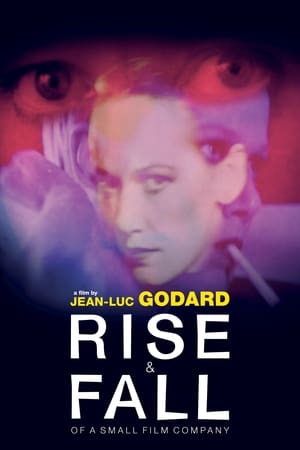
Rise And Fall Of A Small Film Company (1986)


Director: Jean-Luc Godard

Screenplay: Jean-Luc Godard

Meant to be based on the novel The Soft Centre by James Hadley Chase

Cast: Jean-Pierre Léaud as Gaspard Bazin; Jean-Pierre Mocky as Jean Almereyda; Marie Valera as Eurydice

An Abstract Candidate Re-Review


ALBATROSS

FILMS


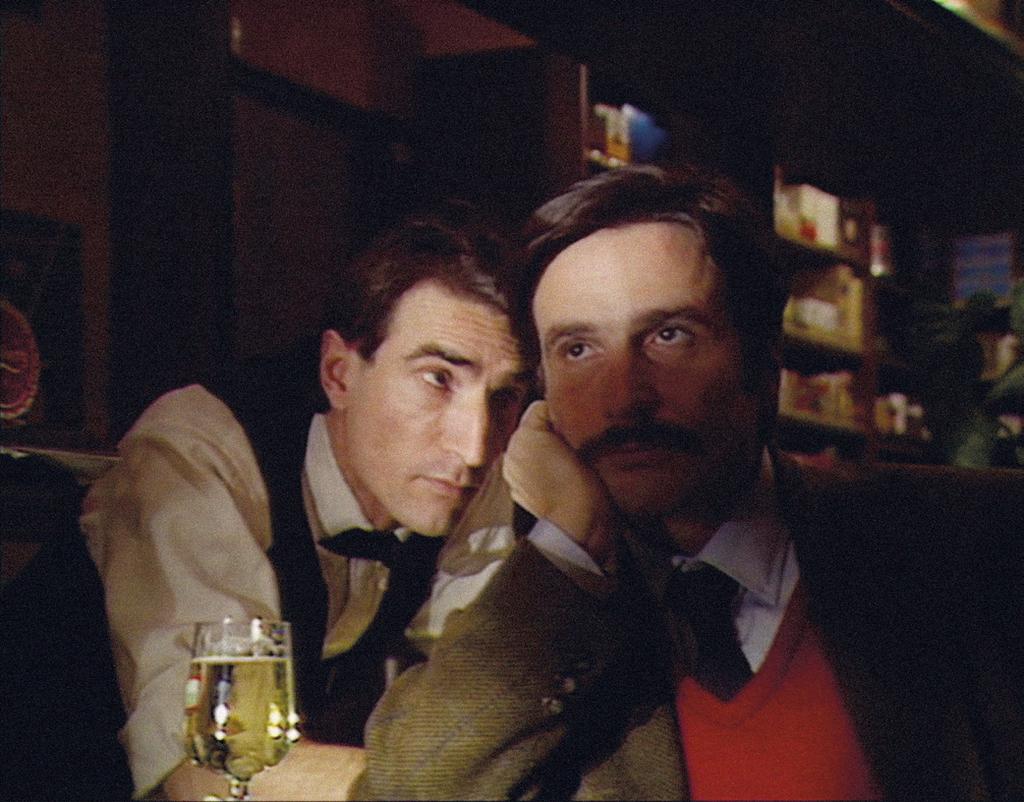
For Jean-Luc Godard, the state of cinema is assessed by way of an adaptation of a James Hadley Chase crime novel, or what should have been one, originally produced for the crime story series Série noire (1984–1991) in France. In this episode of the series, we are introduced to producer Jean Almereyda (Jean-Pierre Mocky), once a matinee idol and major producer explicitly referenced later on in this world to having funded Georges Franju's Head Against the Wall (1959), and lost his career from the failure of Sergei Parajanov's The Colour of Pomegranates (1969), now reduced to TV movies. He is also now dogged by a case of stolen money, all whilst his main director Gaspard Bazin (Jean-Pierre Léaud), once an acclaimed figure, spends his time in an obsessive ritual for casting extras that eats up the funds they do have. Almereyda's wife Eurydice (Marie Valera), feeling herself a caged bird, crosses paths with Bazin, becoming a potential creative source when she desires to be an actress.

This, in that premise, befits the time period of theatrical films Godard made, but as mentioned, this was for television, clearly shot with video. It is strange we can uncover lost films by Jean-Luc Godard, one of the biggest names in all cinema, but we can forget that even after ten years, obscurer films in a director's filmography can be neglected absentmindedly, especially when Godard's career for many was the sixties French New Wave era, or his Film Socialisme (2010) period onwards, not even considering his work in television or short film creations. That even a great American director can have material not available means that the Swiss director, even if he is a legend in cinema, can have probably more unavailable, as both being a director who worked in a foreign language to English, and has experiments in television and short work more rife than many in his career. Rise and Fall..., taking place when he returned with his second "debut" Every Man For Himself (1980) after his experimental and Dziga-Vertov Group era, comes a year before his infamous Cannon Films production King Lear (1987), but even here, as a big name to bring in to his assignment with Série noire, he did not do as likely intended.

At one point, Godard does buries the book through Jean-Pierre Léaud's Bazin, and Rise and Fall..., rather than the adaptation of a crime novel as like intended, is a meeting place between his return to narrative cinema in the eighties, and the video experiments that would lead him to his career in the current day, the video and use of clips here a prototype for Histoire(s) du Cinema (1988-1998). The noticeable limitations - the TV screen ration, the limited aesthetic, the video sheen and digital text captions - are things that would undermine another director, but are like providing Godard with new tools to work with here. He is someone, known to use VHS rips of old films on purpose still to this day, completely polymorphous when it comes to technology, already working on television productions in the seventies and, in the 2010s in his older statesman position, having his own 3D camera built by scratch and making a 3D feature in Goodbye to Language (2014). Still working with a plot, he uses this context around one which contrary to his famous quote does have a beginning, middle and end in that order, the struggles of a TV movie company mid adaptation of James Hadley Chase's The Soft Centre, the novel Godard is meant to adapt, in which he weaves his state of unrest, looking at cultural critiques in the midst of the tired producer Jean Almereyda, and the deranged genius Gaspard Bazin.

Léaud, meeting back with Godard and thus evoking his many moments in the latter's work, could if you cheated a little be the exact character he would later play in Olivier Assayas' Irma Vep (1996). The same director hired to remake Les Vampires (1915-16) in that film, he here as Bazin rather than that film's character is stuck in a wilderness era in the late eighties, his obsessive ritual with the extras of having them move through rooms in a conveyor belt his fixation. Having them quoting at one point the same passage contracted together between them, the ritual is much him attempting to find his creative sanity as madness. He is less irritated by being stuck making television work, but more that, (with the film biting the hand financing this feature), he wished he was adapting Dashiell Hammett instead, alongside the sense of the world being entirely alien to him, someone in his back story having been as broken mentally as his producer Almereyda in status by the industry.

In a world where he and his producer sit in front of a television showing a fire, rather than a real one, to stay warm, the world has become stranger than the sixties they made their fames in, that strange and very funny moment pretty much the best statement from Godard of what he is aiming at, in the all pervasive air of a television, all within telling a really good narrative in his unconventional way. The film making world is so different from France's before, where Bazin's arcane ritual with the casting chews up money for a company who cannot even get a TV movie off the ground and shown. That Jean Almereyda has stolen German marks, an act that will doom him, to run the company, is as much caused by the struggle of his own career as it is because Bazin is not helping.

Admittedly, Godard's criticisms of the state of cinema and life, as he has been doing them since the sixties, could dangerously fall into shouting into the wind, worse a man trying to joust windmills thinking they are dragons. I view the Film Socialisme Godard, onwards to this day, as cinema's Prospero now, in his magical tower in Switzerland creating his cinematic incantations, or like his character Professor Pluggy in King Lear with patch-cord dreadlocks in his hair, isolated from the world entirely but still incanting on the state of it with a world weariness to his voice. Bazin's test to people, which Eurydice actually succeeds in, of being able to see the true number of characters within classic art, not the exact number but those who are the most important, feels like Godard himself. We must realise in hindsight, for the innovations he brought to cinema with his peers with Breathless (1960) onwards, his career has morphed from the innovator to the figure looking even beyond art to culture in general. Going into literature, classical art, older films, and with this having a crow's murder of soundtrack choices - Leonard Cohen, Bob Dylan, Janice Joplin's Mercedes Benz perfectly used for an intertitle - Godard became someone who is not just the cineaste but the curator of art, a man who can appreciate Jerry Lewis in his youth, but by this point in his career brought in classical music and even Scott Walker into his scores.

His philosophical concerns here are not only enlightening but constantly evolving over time, the ones of yore still relevant to the current day or time capsules to new problems per era, especially as like many of the films from this eighties period, he returned to narrative, and the narratives are interesting even if unconventional. Here, ironically when he was asked to make this TV film, he is practically spiting at the producers by having the pair of Bazin and Almereyda as doomed figures of the past, floundering even in commercial television, but that is still a compelling little noir tale in itself. Calling the female lead Eurydice is a loaded choice too, but like the women and femme fatales of noir, she is also the focal point here for the drama, as the female heroine also dragged down in tropes of those films of corrupt and the underbelly of life, here the figure kept in an unhappy marriage as a trophy wife to an older husband. She is ultimately not the person that leads someone to doom unlike other noirs, instead the one who, from an unhappy marriage, actually finds happiness in the end here.

Their lives are small scale, the television budget and style of Rise and Fall... helping this. It is too rye to be an out-and-out comedy, but humour is to be found especially in side characters like the accountant, who in deadpan handing out paltry earnings to the extras discounting their social security. Or Léaud playing up his character's out-of-control behaviour, be it interrupting a phone call between a potential actress with acute abruptness, brought to she suspiciously suspected to be erotic shot, when asked to bring a bikini alongside her, or breaking into a Woody Woodpecker impression. Godard's also one of the few directors able to get away with casting himself as the wise sage as well. Much of it, by this time, is because Godard was such an iconic name it was impossible to get around this, common in narrating his own films since the sixties and having a reputation as a figure outside of cinema, making his work (usually dialectic anyway) completely attached to him. Rise and Fall... offers him playing himself, amusingly (as I want to picture it) visiting Reykjavik in Iceland because he had to witness the greatest chess game being played there, but here appearing to find a deal back in France, his scene turns into something else with his talk about Romy Schneider.

Schneider's reference is also one of the most important, and bitterly sweetest, of this film, as thus his scene turns to an appropriate melancholic air about the period, of Schneider, in real life, passing in 1982 in only her early forties. An actress of considerable talent, starting in the fifties and connected to the multi-continental era of European cinema, from France to Italy, the scene in general as well as the clear empathy for her in the dialogue becomes one of the film's most meaningful scene, with Godard with his fictional creation Jean Almereyda, of two old professionals lamenting their careers in cinema being affected by the change in tide, left adrift within it, with Schneider's death for Godard marking a symbolic change in the industry. Even if Godard would become more and more a legendary filmmaker who made films to the current day, he eventually drifted far from narrative cinema again into the nineties, into experimental features entirely, all bolstered by the reputation he developed allowing him to leave mainstream cinema behind whilst French cinema would evolve again into the Millennium into its own form.

His critiques are matched by a willingness to play with the form of film a way few would. The limitations, the flaws, of this television work are devices for him to exploit, superimposition to the hair-raising use of slow motion on a female extra's emotions mid-performance all his hand with collaborators constructing the images and audio. He even deliberately has the sound abruptly halted as if the film has failed, followed by a technical difficulties screen, for a joke about how that would have likely happened in television in that era. The marriage between the two sides is like a much underrated theatrical feature Godard made within this era, Detective (1985) with Johnny Hallyday and Nathalie Baye, a small scale crime narrative confined to one hotel, perfect for Godard's experimentation as well as providing an actual story. Rise and Fall... still tells an interesting tale - for Jean-Pierre Léaud's Bazin, a spark of life is found in Eurydice, who he compares to actress Dita Parlo known for films like Jean Renoir's Grand Illusion (1937); for Almereyda, an embarrassing conclusion to his life, made more embarrassing trying to flee in the silliest costume possible for an escape. Bazin's connection to Eurydice is also not a romantic or sexual relationship either, instead Bazin finding artistic clarity, Eurydice her independence and freedom, finding business in the end to work as head of. Even when the tables turn, and Bazin is now an extra by the ending, he finds happiness nonetheless.

Restored and premiering at the 2017 Locarno Film Festival, sadly the reappearance of Rise and Fall of a Small Film Company is not as readily available as one would hope. However if Godard's Dziga Vertov years can be accessed, insanely difficult to appreciate (and even defend) films, and high definition versions no less, than one day one hopes Rise and Fall... would join those available. It is a title absolutely worthy of availability, like many of Jean-Luc Godard's eighties and early nineties work a hidden part of his career which is compelling and virtuous.


Abstract Spectrum: Avant-Garde/Diegetic

Abstract Rating (High/Medium/Low/None): Low

Friday, 7 August 2020

Generation X (1996)

Director: Jack Sholder

Screenplay: Eric Blakeney

Based on the Generation X comic book series from Marvel Comics

Cast: Matt Frewer as Russel Tresh; Finola Hughes as Emma Frost; Jeremy Ratchford as Sean Cassidy; Heather McComb as Jubilation Lee / Jubilee; Agustin Rodriguez as Angelo Espinosa / Skin; Randall Slavin as Kurt Pastorius/ Refrax; Bumper Robinson as Mondo; Suzanne Davis as Arlee Hicks; Amarili as Monet St. Croix / M

Ephemeral Waves


You know I don't like Jello.

There for me is a dividing line between when superhero films meant just Superman and Batman, with the others for theatrical cinema and television a random assortment, with DC Comics in dominance and no standard template, and then the moment Marvel Comics managed to get its act together, leading to the current era which began as far back as Blade (1998) when they got their foot through the door, then the X-Men (2000) firmly planting their flag in the genre. Personally, I find the older era for more interesting, a lot of esoteric productions I am more inclined to watch, as decisions  even with great films like Batman Returns (1992) you get something idiosyncratic, whilst the template the Marvel Studios films have stuck to bored me to the point I have not watched them at all. Which is a shame as, open to American comics as a medium, Marvel have a fascinating history of figures and stories I would be interested to look, even the bad creative decisions, and whilst The Cannon Group did release Captain America (1990), the company were mostly regulated to television and had to also deal with rights issues in lieu to that company, hence why it took the 2000s when Spider Man finally had a theatrical movie.

That television should not be ignored though, and whilst the elaborate films of now sadly, from the few I saw up to the early 2010s, been very predictable, there is a greater joy in those titles which were not high budget films but attempts at hits like Generation X. It is ironic that the 2000 X-Men film had a huge significance on the way superhero films would dominate cinema globally, apt as this review is about the first attempt to adapt the characters to live action, a TV movie that acted as a pilot for a show that never came to be, trying to adapt these iconic characters created by Stan Lee and Jack Kirby at a time when they were a big seller in the nineties.

The X-Men, and I say this as an outsider with lack of knowledge on the actual comics, had to take a while to get to that success, steadily growing as a franchise since the sixties. Created in 1963, they were a metaphor for racial intolerance, as outsiders marginalised by society and even seen as a threat, one which has lasted as long as it has due to the fact the metaphor can still tragically relevant to the modern day and that, for a reader, that metaphor can also extend to anyone LGBT, trans, even just an outsider like the loners at a school could easily see themselves as these characters and have someone to represent themselves with. This was  especially when through the seventies onwards more characters were added, including the iconic Wolverine, and X-Men became an actual rainbow of figures of all ethnicities, men and women, even characters with disabilities, as the character of M here, just an overconfident girl with insane levels of invulnerability, was all this in the comics by accounts but also autistic.

By the time of this TV movie, we already had the 1992 X-Men animated series, which I have fond memories of watching as a young kid at the time. I would have been too young to know of this, especially as this is not based on the main series but the titular spin off, part of a time when the X-Men comics were very popular and these spin-offs could exist. This film however, which yet has a fitting connection or two with what came before and after in the franchise, was definitely a failure. A curious one, from the director of A Nightmare on Elm Street 2: Freddy's Revenge (1985), a film without his knowledge was coded with blatant metaphors of the main male character's struggle with his own homosexuality, and The Hidden (1987). Someone also clearly saw Batman Forever (1995), the Joel Schumacher films in that franchise with Batman & Robin (1998) closing off the old superhero films, as Batman & Robin was reviled and Superman was M.I.A since the Cannon Group acquired the rights and fumbled the character in the late eighties with Superman IV: The Quest for Peace (1987). I like the Joel Schumacher Batman films, and I will not try to defend them nor claim them as guilty pleasures. In fact, whatever you think of their erratic natures and ridiculous camp, you cannot just lift Schumacher's trademark that he wanted to make every location bold and distinct even in all the neon gels he used. He made more grounded films, but the former production designer had an eye for aesthetic which is an acquired taste but I admired.

Batman Forever was actually a hit, so Generation X borrows all the canted camera shots and coloured gels it can get. That is actually one of the best bits of the TV movie, alongside Max Headroom star Matt Frewer looking at Jim Carrey's performance, playing one of the villains in that earlier film, and thinking he can be even more over the top and a sex pervert too. What likely killed the show before it even got started were many creative choices which feel like the screenwriter was bored with the comic they had and decided to doodle off to the side. Writer Eric Blakeney, whose career before was writing television like 21 Jump Street, could have easily went with the main metaphor of these characters. For those who have no ideas what the X-Men are, or at least going to their origin to scrutinise where someone deviated greatly from the source material, in the world of the comic people have mutant genes which provide them superhuman abilities or drastic bodily changes when they hit puberty, also leaving a potentially subversive metaphor that the cruelty and bigotry the normal world has for them is a jealously as much as a fear that they are now evolutionarily inferior. It also leaves many metaphors of the existential and moral crisis teenagers and even adults have in drastic circumstances, as these "mutants", in coping with the changes few can share the equivalent of and affecting them physically and mentally.


In the world of Generation X, this has already lead to the darkest timeline as, when the comics had the likes of giant "Sentinel" robots created to hunt down mutants, where Frewer's evil scientist Russel Tresh tries to lobotomise a mutant, to get his pineal gland, just to only get a discharge for medical misconduct and the poor mutant victim gets shipped off to a mutant camp ran by the government. The nineties, as we neared the Millennium, even with a title like this speculated about the future ahead, where here night time in the setting is a neon soaked dark metropolis, and Tresh lands on his feet well after his dismissal. Now he has joined an advertisement company where he is paid to brainwash people with subliminal messages for Slick Lips Lipstick, Coffin Nail Cigarettes and, with wonder why Sega thought it was a wise decision contextually to allow this, the real life beat em up arcade game Virtua Fighter. He only comes off as going too far when he now wants to control people in their dreams.

With a little research, the production had to change and create new characters because of the budget being preventative from trying to bring certain characters onscreen, comics with a lot more ability to push imagination with fewer resources required. Set at the Xavier Academy where young mutants have been rescued from the camps and persecution, at the same real building used in the Bryan Singer X-Men films, the two adults in charge are Emma Frost, soap actress Finola Hughes wandering around in sexy leisure wear, and Banshee, played by Jeremy Ratchford who also voiced him in the animated show I grew up with, even though his Irish accent is terrible. The teens, a little group in a giant school are thus: Refrax (eye lasers), Mondo (a toned down gift from the source character of being able to briefly absorb the density of what he touches), Skin (one of the leads, with a super stretchy body), M (perfect, but does little, original a more interesting sounding character due to being with a learning disability), Buff (an interesting female character in this time period as, with a super muscular body, she is uncomfortable with her appearance before such body types were more accepted), and Jubilee, a character I also saw in the animated series who was clearly meant to be a character sold to viewers at the time. It is strange how Jubilee, standing out in the animated series is the mall rat teen who shot fireworks out of her hands, was a trend character who never became as big as the attempts to sell her did, especially as the character would appear in other live action films.

Inexplicably the screenwriter, like the one I have imagined in this review for a joke and build up, was much more interested in writing a premise about a fifth dimension, where dreams are a real life version of Plato's realm of perfect forms, and can be accessed with psychic powers and a dream machine. I am sure one mutant, maybe more, exist who could tap into dreams, and considering Dr. Strange in the Marvel back catalogue and all their creations there has to be a few, but baring every mutant now being a "little" psychic", someone got bored and accidentally created a premise befitting a director of a Nightmare on Elm Street sequel instead. I am not precious about accuracy to source material, the man who has no real investment in the X-Men, but there was a fine line between a drastic story risk which still played to the premise about adolescent mutants with powers, and a premise which limits this aspect almost entirely even in knowledge of the budgetary restraints.

Beyond this, Generation X has a lot of plot, but is vet limited to what actually transpires. Whilst X-Men gained so many parallels to keep the metaphor alive, this is instead the school of TV action, drama and exposition, a constant flux of event which when works is why television is compelling, makes the notorious oddities like Steel Justice (1992) (about a detective in a futuristic Los Angeles who can make a dinosaur robot toy a giant one with magical powers) more compelling, but also makes anything which does not really push the limited budget or characterisation less exciting. This story eventually becomes a group of over powered mutants against one normal man, more severe as a plot fault if you stop and think about it. Matt Frewer's Russel Tresh is a deeply creepy figure, who coxes Skin in dreams to become a voyeur to and [Trigger warning] threats to "mind rape" his little sister to get his to follow orders, but he never has any sense of threat to suggest this film, with no greater depth to it. There is no real sense of threat from this character even when he gets dream powers. The only time that he stands out in terms of how he should have been written as is when the film recreates the scene from Batman Forever where he kills his boss from a fall from a giant window in a tall building; using television budget effects to conjure dreamt shadows of birds, in a dream sequence surrounded by business people at conference table, it is one of the only moments  where the film gets vaguely imaginative as well.

The darker tone is surprising, as the release that came after, not for television but beyond on VHS, even has cursing, not dancing around the subject but a scene just created for Jubilee to say "shit" and "fuck" for go measure in the same sentence. The result however, in spite of this clear attempt at a darker and neon stained tone is something missing the mark. Definitely, with good reason, it never got the television series - tonally it varies drastically, where Tresh can be an uncomfortably menacing figure but who also auto suggested a board of potential investors beforehand in their dreams to fart at the same time at a certain hour mid-meeting. The only constant detail is the aesthetic, which is compelling even on this television budget as hyper-saturated. Even the teen protagonists are not likable, bickering and insulting each other to the point of being detestable. The only time, and the one plot detail that stands out, is when Refrax suddenly shows real nobleness, when in his affections with Buff, going on a date at a country fair, an ability to see through clothes finally clicks; he goes before anything transpires, with actual honour, only for her to think otherwise, his sincere attempt to tell the truth and show his love for her a good moment.

I admit I enjoyed Generation X, just as a failed curiosity sadly ignored, as it never had a DVD release. X-Men, the Bryan Singer film, came only a few years later and erased this title from existence. Ironically, it was Wolverine, a grizzled old vet, rather than the teenagers who broke out, all because the production hired an unknown named Hugh Jackman at the last minute that ran with the role and made his own career. X-Men has had a lot of films over the 2000s, from 21st Century Fox, to a varying amount of success but with the perverse tale of New Mutants (20??) as a fitting coda, an attempt to go back to young teen mutant characters which has been in limbo since it was first announced for release in 2018, between Fox being gobbled up by the House of Mouse and the COVID-19 pandemic. Generation X itself was meant to be a big title, causing one to wonder how the production and Marvel reacted to its clear failure; Stan Lee himself made the unfortunate comment, in an L.A Times article just before its television premiere1, that "[if" this thing doesn't create demand[...] I'll eat my hat!". One wonders whether he would have lived up to the bet and ate said hat, considering how gun-ho and passionate he was.

=======

1) Source HERE.

Friday, 1 November 2019

The Sweet House of Horror (1989)

From https://images-na.ssl-images-amazon.com
/images/I/51AHG170RML._SY445_.jpg


Director: Lucio Fulci
Screenplay: Lucio Fulci, Vincenzo Mannino and Gigliola Battaglini
Cast: Jean-Christophe Brétignière as Carlo; Cinzia Monreale as Marcia; Lubka Lenzi as Mary Valdi; Lino Salemme as Guido; Franco Diogene as Mr. Coby; Vernon Dobtcheff as The Exorcist; Giuliano Gensini as Marco; Ilary Blasi as Sarah; Dante Fioretti as Father O'Toole; Pascal Persiano as Roberto Valdi

As expected for a late period Fulci film, this has gore, kicking off with a thief who is discovered in a heterosexual couple's home deciding to silence them in particularly nasty ways, even involving eyeball trauma.

You'd not expect a Fulci film to have a tone closer to a family film after that however, in which their orphaned children, living with their uncle and aunt in the same house, stay in contact with the ghosts of their parents. That certainly leaves the film a difficult one to market, which it proved to be - The Sweet House of Horror was originally part of a planned four part TV anthology of feature length films, two made by Fulci (the second The House of Clocks (1989)) and two by Umberto Lenzi. All of them were deemed inappropriate to show on Italian television and weren't even released in Italian until the 2000s. They did however get worldwide release, as two shot on 16mm films, possibly why we got the benefit of Fulci's two getting UK releases through Vipco, an infamous company who held a banner aloft for Video Nasties in the 90s VHS, lurid TV ads late at night on the Sci-Fi Channel when I was growing up, and films with some exceptions now getting Blu-Ray releases which could even be VHS rips on DVD depending on the title.

The Sweet House of Horror also comes from the last period in Fulci's career before his 1996 death, in which even to the bizarre films he made before in horror, his cinema got stranger and much more difficult to pin down as his late period from the late eighties to nineties when they were not held considerably well at all. This was when A Cat in the Brain (1990) was released, in which he made a meta-film about himself being influenced by the gory horror films he was making using clips from his and others' work from the time. The tone is perfectly encapsulated by the funeral scene, in which the kids, two moppets who could be irritating to many, are sad their father and mother are dead but have been allowed to chew bubblegum throughout and mock the aging priest for his rambling in the sermon. From there they will have to go against a real estate man, mainly by tormenting him and breaking his leg with psychic stair manipulation powers, and a Rasputin-like medium, all whilst the film has this whimsical tone about them hanging around their parent's ghosts despite the tone suggesting Henry James ' The Turn of the Screw at first.

From https://m.media-amazon.com/images/M/MV5BODAwYjkzNGQtNmQyMS00NjFjLTgwZjctNmU4ZmYyYmVjZmJkXkEyXkFqc
GdeQXVyNzU1NzE3NTg@._V1_CR0,45,480,270_AL_UX477_CR0,0,477,268_AL_.jpg

These films at this point are difficult to define for their genre in Fulci's career*, particularly as the film is clearly meant to be a whimsical supernatural drama but there's the horror trademarks of his still pronounced throughout, looking like a film of the director's at the time right down to the obsession with fake fog on the set, to the gore which is only a couple of times but has his trademark. That, even if incredibly fake, that arguably makes it more disgusting and unsettling in how prolonged and pornographic his gaze at it is against the fake texture of the practical effects. Which is definitely out of place in the tone, where a lot of the film is also clearly meant to play off as comedic or charming - an attempt by the owners to leave the house leads to the car floating in the air with its wheels spinning, a practical effect I will admit I wonder how they pulled off, to the delight of the kids when the car's turned back. Even when the kids try to communicate to the dead and use black magic, in trick and treat costumes, it's meant to be light. But the presentation is incredibly jarring.

Tonally coming off like it is originally going to be the ghosts corrupting the children, its instead something curiously odder with the English dub having a sloppier air to it than usual in Italian genre cinema. Beyond this, there is a lot of tangents that are dishevelled in placement furtger. The theft responsible for the original murders does reappear, leading to an Omen-like scenario where Fulci returns to the dog-on-human violence. The buffoonish real estate agent, a complete caricature, is utter hateable but the malice the kids show, permanently damaging one of his legs, raises a lot of questions alongside the fact one of his only really defining properties is that he's overweight and obnoxious. Even our Rasputin-like medium, the true villain of the piece, is only introduced near the end trying to cast the ghosts out, screaming over the top proclamations as he does.

The result isn't an accessible film in Lucio Fulci's filmography at all, only for the diehard fans to which I am one of them. I liked the film, found entertainment in it, but in lieu to the fact that it's a curiosity, its source as a TV film that wasn't even premiered on television as they were planned to be adding to its weirdness. The film is still, in spite of the English dub, to the usual quality of this type of Italian genre film from the period, which in the eighties always had a bit of cheesy exaggeration to it, something of a perverse charm in how (in another scene I would like to know how it was executed) the ghosts appear to their children in bed as lit flames. The film altogether is peculiar to say the least, sometimes an unintentional joy, other times a head scratcher. And the surprise is knowing there were many more films like this and, even before his final period, films like City of the Living Dead (1980) were already weird; he was dabbling in this even in his seventies work with the likes of A Lizard in a Woman's Skin (1971), making this a fascinating progression when a genre to hang around his work disappeared entirely. (Try watching Conquest (1983), his sole swords and fantasy film, for an example of where genre gets distorted into his vision rather than the other way around). This is admittedly not a good place to start for this late era, but for me, it was an interesting experience to say the least.

Abstract Spectrum: Tonal Whiplash/Whimsical
Abstract Rating (High/Medium/Low/None):  None

From https://horrornews.net/wp-content/uploads/2012/06/
The-Sweet-House-of-Horror-1989-Movie-5.jpg

======
* Touch of Death (1988), which I've covered on the blog and had footage used in A Cat in the Brain, was an incredibly weird film I do actually recommend tracking down from this era.

Monday, 18 March 2019

Non-Abstract Review: Cry Baby Lane (2000)

From https://hiddenhorrors.files.wordpress.com
/2014/01/cry-baby-lane.jpg


Director: Peter Lauer
Screenplay: Peter Lauer and Bob Mittenthal
Cast: Jase Blankfort as Andrew; Trey Rogers as Carl; Larc Spies as Kenneth; Frank Langella as Bennett; Anne Lange as Ann Weber; Marc John Jefferies as Hall; Allison Siko as Louise; Jessica Brooks Grant as Megan; Sheri Drach as Kathy; Gary Perez as Gary; Steve Mellor as Dick Weber

Synopsis: In a small town, there is a tale of a pair of conjoined twins who, when they died as infants, were severed from each other, one buried in the cemetery and the other buried at a place called Cry Baby Lane. Andrew (Jase Blankfort), and his older brother Carl (Trey Rogers), have a mock séance at a grave to exploit this with a group of girls, only to release an entity that is significantly malicious.

The story goes, like any good spooky tale, that on October 28th 2000, a TV movie was shown on the American channel Nickelodeon that was deemed inappropriate for its young audience, and buried never to be heard of again. Over the decade or so that would follow, this work directed by Peter Lauer and originally meant to be a theatrical release, costing $800,000, was even questioned in terms of whether it actually existed. Some suggested, on the other side of the spectrum in a form of Creepy Pasta (online created urban legends) that it was suppressed for having incredibly disturbing material onscreen. Finally in 2011, a viral Reddit thread lead to a user ugnaught1, who claimed to on the "lost" film on a VHS copy, uploading it online. Having seen the original broadcast version, which began with an introduction by Melissa Joan Hart, who I grew up with watching Clarissa Explains It All (1991–1994) and Sabrina the Teenage Witch (1996–2003), I can attest that such a film did exist and, when that leaked VHS copy came about, Nickelodeon played into the hype by showing Cry Baby Lane again, claiming it was a "banned" film and then eventually showing it at Halloweens over the 2010s, particularly in a nod to a 90s nostalgia boom.

The fable of the horrible things said to exist in the film - as Creepy Pasta have included a SpongeBob Squarepants episode that was created by a psychologically disturbed figure which horrified the producers, or a cursed Mickey Mouse animation - is probably more horrifying than the actual TV movie, but it itself in the context of a one-off for a young audience is still weird, gruesome and frankly creepy in implied metaphors even for a crowd (like myself) who grew up on Goosebumps. Beyond the initial story told by the undertaker character Bennett (Frank Langella, who director Peter Lauer originally wanted to be played by Tom Waits) - where two conjoined twins (one good and one evil) die in infancy and are sewn away from each other - there's still a film here where which plays into a dark and fascinating premise. That, once the evil twin is accidentally released as a malevolent spectre, he infects people in the central town and makes them destructive and evil, particularly a group of girl scouts who become sadists, building off as well a central theme of our young male protagonist Andrew (Jase Blankfort) and his fears of puberty and masculinity.

And no, that's not between the lines either in the text, as he's shy and hates how he's scared all the time, at point confessing this and accusing his mother for having caused this by being over protective. His older brother Carl (Trey Rogers), obsessed with being macho and a diehard pro wrestling fan (1999 WCW and WWF merchandise on the walls), constantly picks on him and calls him a wimp, all whilst their father is a fascinating character, laid back and sardonically charming, also with one gag about him implying so much complexity when, watching monster trucks on the TV when his wife's in the room, one scene has him switch to coverage of supermodels on a catwalk when she's out the room.

From http://3.bp.blogspot.com/-xaz5GrH_-WI/Vh_YkulS3uI/
AAAAAAAAJ78/GR4AlB153n8/s1600/CryBabyLane5.jpg

Andrew's life is complex as he has a crush on a girl, who unfortunately is among those scouts possessed and becoming evil, among those tormenting him alongside his eventually possessed older brother and even trying to harm him; it reaches the point mid way through of him being stripped to his underwear, nearly being gored by a bull, and having to flee for his life half naked. Then there's the threat to kiss his beloved, whilst she's possess and threatening this or "chi chi", involving a significantly bigger and gigantic girl looking at him as if she'll easily break his spine in two. That's without his mother not believing him and even the adults, like a version of Invasion of the Body Snatchers, becoming possessed, where police will try to run you off the road, farmers with trying to run you over with a combine harvester, and guys for shits and giggles with beer will blow up their own boats in madness.

The eccentricity grows as a virtue. Whilst it would've been interesting to see Tom Waits in the role, Frank Langella, the major actor hired, also happens to be a great character actor who in his mere presence raises the material up. More so as, part of the film's sick sense of humour, he's openly a bad undertaker who will even replace coffins of those about to be buried with cheaper ones, as scummy as you can get despite still being a good, moral man at heart. His assistants include a stoner, (well an implied stoner who just acts sleepy), and another who digs the graves who pretends to always be ill but, when no one is looking, dresses up as a cowboy listening to country music in his home and prepares the dining table as if he's about to have a date there, never seen or even hinted at for a weirder twist. The production is as much like this, even if it evoked my childhood of watching shows like Goosebumps, with its moody atmosphere on such a low budget and the instrumental surf rock theme sounding like it's going to break into a song by The Cramps.

The result, appropriate for a more mature young teenage audience, is one I really liked and wished was more easily available. Yes, I admit the mythos is fun and there's something really rewarding in seeing old American commercials - alongside probably one incredibly weird and inspired mock "news report" that, barring one cringe worthy reference to Mexican food, is from a reporter inside a young boy's intestines, interviewing the staff within it just before it's about to blow with potent gestated fart gas. But, again, it'd be something great to see a proper release of just to learn more of its background - just to have witnessed a film which, far from below my expectations, provided its own interesting and blatant subtexts to its horror was enough for me to admire it.

From https://m.media-amazon.com/images/M/MV5BODQ4YjExM
jgtNjEyNi00YmY1LWI5NzAtMmZmNTlmYjhiZWU1XkEyXkFqcGdeQXVyMTM0ODAyOTc@._V1_.jpg

====
1. https://archive.is/20130204104051/http://www.thedaily.com/page/2011/08/13/081311-tech-news-crybaby-1-2#selection-345.12-345.20

Saturday, 8 September 2018

The Clowns (1970)


Director: Federico Fellini
Screenplay: Federico Fellini and Bernardino Zapponi
Cast: Federico Fellini as Himself and a cast of real life clowns

Synopsis: In his childhood, recreated for this TV movie that is a hybrid between fiction and documentary, the legendary director Federico Fellini recounts being taken to the circus as a child only to be frightened by the clowns. Having a lasting effect, he with his motley production crew tour around Italy and France exploring the history of some of the greatest professional clowns to have ever existed, intermixing their histories with recreations by the newest generations of clowns.

In the midst of his golden period of filmmaking Fellini made The Clowns. He'd become a recognisable name even in the USA by this point, having already become a legend with films like La Dolce Vita (1960) and entering his hyper surreal and dream influenced era with Juliet of the Spirits (1965). By the point of The Clowns, he was moving on to be the Italian maestro whose name would be put in the title of his productions (Satyricon (1969) and Roma (1972)). Here, able to make this television movie, he recreates an incident where clowns traumatised him as a child and, coming as an adult with a longing to fully appreciate and admire their craft, creates a document dealing with their history. After the elaborate prologue, which feels like a prelude to the likes of Amarcord (1973), which shows child Fellini seeing a circus tent being erected outside his window, and the trauma he'd have with said clowns, what you get is an unconventional hybrid.

Whilst it's not as unconventional as Orson Welles' F For Fake (1973), it's the perfect comparison as the tag of "documentary" comes off as a joke itself when The Clowns defies and flaunts being an actual document, with the crew characters themselves, cameos from the likes of Anita Ekberg, and culminating into countless recreations and performances in a circus ring by clowns. It gleefully undercuts the border between truth and recreation fully, Fellini the director and the character within his own film grabbing together a crew, including the comically underappreciated female assistant, to begin an escapade to learn of the history of clowning in Italy and France. "Escapade" is perfect as the level of mirth on display if infectious, the film artificial and Fellini playing as jokes with real former clowns as characters playing themselves, and yet discussing their lives and craft even in the midst of this. Willing, as the symbolic moment of the entire film itself, to have a bucket land over his mid-speech for a one shot joke. If it's all true, and hasn't been lying like Orson Welles was in F For Fake, it's a fascinating take at a dying art, going into the past with clown archetypes of yore examined. Tipping the hat to legends, it's a noble task, cutting to recreations of these clowns by new disciples of face paint and slapstick who stand out as well.

From https://theleastpictureshow.files.wordpress.com/2014/10/clowns-1.jpg

Fellini
at this point was exceptionally indulgent, the discovery of Carl Jung and the esoteric permanently changing his cinema after 1965. Even when fantasy appeared in the likes of 8½ (1963), and overblown spectacle matched by his stand-in Marcello Mastroianni getting a space rocket launch built for his next feature, it tipped over the edge further mid-sixties onwards. I was once not a huge fan as a younger and dumber viewer to these later spectacles, though I still sympathise with those who'd agree with my younger self arguing his later work leaves one with cinematic indigestion, especially if one is not used to Fellini's style. For me now, older and smarter, and able to digest said style fully, I now adore it and am amazed he was able to get away with some of the sights you see in these films. Even on a TV budget, Fellini gets away with a lot even in the "normal" scenes for The Clowns, deliberately staged. Anita Ekberg playing herself can cameo to pose around big cat cages at the circus whilst legendary French actor/director/former clown Pierre Étaix, obscurer in English speaking worlds but a significant figure in his homeland, has a segment as himself where his recorded film from his own clowning family's past sadly burns up in the projector. In neither case, as with any appearance, is the film trying to be real document in the slightest which deliberately undermines the viewer's sense of reality. Even if real facts are on display, it's a very interesting viewing experience when the film's presentation gleefully undercuts the notion of documented verisimilitude.

All playful, entirely irrelevant. Utterly unconventional as it still maintains absolute respect for the clowns themselves, a sadness felt as a circus which had its own building became a beer hall after the decades past. The sense that clowning will become lesser appreciated, more so nowadays, is more enforced as even on the cusp of the seventies The Clowns talks of it being forgotten. In the modern era the likes of Stephen King's It, coulrophobia is a more known idea and the bizarre phenomena that was the 2016 evil clown sightings, really cruel jokes that got out of hand in multiple countries with people dressing as clowns and frightening members of the public, didn't help in the slightest. But it really makes a startling reminder, even in this humorous tribute, that by the seventies clowning was seen as antiquated by this film's viewpoint. That a lot of its figures, the archetypes of clowns and those who donned their face paint in real life, vary from before the 20th century to before the 1950s really does emphasise how old a profession it is. In The Clown's testament, it makes itself a real document by just talking about the subject matter in detail.

From http://images3.static-bluray.com/reviews/5065_1.jpg

The clowns here are not creepy Its either, not even the mainstream examples like Ronald McDonald, but an old profession with a real, tangible history to it untainted at this point by crass commercialisation. To those of the clowning profession reading this review, or if you the reader know any as friends or relatives, The Clowns is absolutely rewarding just for the clowning sequences themselves, which become the most unconventional aspect of the entire film. Farces in a circus ring where all manner of surreal gags involving their exaggerated movements and props, on and off themselves, entertain us the viewer. Some assistance are helped by the power of cinema, but most of what is seen is likely what would be performed on stage, and they are bizarre. Fellini, in one of the odder moment very early on, has a montage of various types of public figures drawn very likely from his own childhood, from gossipers to members of the fascistic Italian office, portrayed as pure caricatures to show that the clowns themselves usually took inspiration from the manners of real people, their exaggerations given context in a very inspired and clever inclusion on his part. Taken to its most extreme is when, lamenting the tragedy of clowning's failing fortunes, the film ends on a literal clown funeral. It is arguably one of the standout sequences in any Fellini film, a mad scenario between clowns lamenting the loss of their friend and also prating around or the carriage driver arguing with one of his own horses. Eventually it goes on so long clowns start to have to bow out in exhaustion, a feverish end for a high note. Certainly a  stand out as a big sequence within the director's career.

Abstract Spectrum: Delirious/Eccentric/Expressionist
Abstract Rating (High/Medium/Low/None): Low

Personal Opinion:
An obscure but rewarding entry in Fellini's career. Certainly a film I have immense interest in for him and my ongoing obsession with anything involving circuses and carnivals. Also in term of his career, The Clowns is not only a great film by itself but a very interesting prelude to his later work. I can see when he jumped away from conventional narrative structure with this film, and the breaking down of features into vignettes and segments interlinked is certainly see here more than the work of the sixties. So it's also a good film to find to bridge to the likes of Amarcord too.


From http://www.emiliodoc.it/wp-content/uploads/2017/08/clowns8.jpg

Monday, 27 August 2018

Rise And Fall Of A Small Film Company (1986)

From https://image.tmdb.org/t/p/w300_and_h450_
bestv2/3CmVcJhPYWcJCue3fs38SaiFyoi.jpg


Director: Jean-Luc Godard
Screenplay: Jean-Luc Godard
Meant to be based on the novel The Soft Centre by James Hadley Chase
Cast: Jean-Pierre Léaud as Gaspard Bazin; Jean-Pierre Mocky as Jean Almereyda; Marie Valera as Eurydice

Synopsis: The state of cinema by way of an adaptation of a James Hadley Chase crime novel, originally produced for the crime story series Série noire in France. Where producer Jean Almereyda (Jean-Pierre Mocky), once a matinee idol and major producer, is now reduced to TV movies and dogged by a case of stolen money from his past. All whilst Gaspard Bazin (Jean-Pierre Léaud), a director who now, after acclaim, spends his time in an obsessive ritual for casting extras that eats up their budgets, finds Almereyda's wife Eurydice (Marie Valera) a potential creative source when she desires to be an actress.

It's strange we can uncover lost films by Jean-Luc Godard, one of the biggest names in all cinema, but we can forget that even after ten years obscurer films in a director's filmography can be neglected absentmindedly. There is, of course, when new blood in the fan base don't know common knowledge that the older members do, something which can happen be it for horror fans to art house aficionados, and in that case we need to provide that information or doom ourselves to obscuring works of the past. Retrospectives are thankfully more common too as are physical released, but there are cases, with a director like Godard who made so much outside of theatrical screenings, that once it was a lot more difficult to access this material and a lot of it hasn't even been gotten around to until now. That even a great American director can have material not available means that the Swiss director, even if he is a legend in cinema, can have probably more as both being a director who worked in a foreign language to English, made very difficult work that contrasts his famous early sixties works immensely, and has experiments in television and short work more rife than many other filmmakers which always tend to be neglected with any auteur. So, yes, you have the clues to why we trip over these obscurities like so.

Even in the theatrical corner of Godard's wing, where for many his debut Breathless (1960) is his most well known film, there are productions neglected especially in the late eighties when, returning with his second "debut" Every Man For Himself (1980) after his experimental era, which are not available. Now which his Dziga-Vertov Group films (mostly) available in high definition, even if many are some of the most painful failures of his career, the Holy Grail alongside films like the controversial Hail Mary (1985) is his television work. Experiments like Rise and Fall of A Small Film Company.  From a time where he was going to return back to experiments until the unforeseeable day and was in-between various projects, a year before his infamous Cannon Films production King Lear (1987). One very much not taking his assignment with Série noire as intended.

From https://medias.unifrance.org/medias/252/193/180732/
format_page/rise-and-fall-of-a-small-film-company.jpg

Rise and Fall
, rather than the adaptation of a crime novel as likely intended, is that meeting place between the return to narrative cinema in the eighties and the video experiments that would lead him to his career in the current day. The noticeable limitations - the TV screen ration, the limited aesthetic, the video sheen and digital text captions - are things that would undermine another director, but are like providing Godard with new tools to work with. He's someone, know to use VHS rips of old films on purpose still to this day, completely polymorphous when it comes to technology, already working on television productions in the seventies and, in the 2010s in his older statesman position, having his own 3D camera built by scratch and making a 3D feature in Goodbye to Language (2014). Here though he's still working with a plot, around one which contrary to his famous quote does have a beginning, middle and end in that order. The struggles of a TV movie company mid adaptation of James Hadley Chase's The Soft Centre, the novel Godard is meant to adapt, which he weaves his state of unrest cultural critiques in the midst of through the tired producer Jean-Pierre Mocky (Jean Almereyda), and the frankly deranged director Gaspard Bazin (Jean-Pierre Léaud).

Léaud, meeting back with Godard and thus evoking his many moments in the latter's work, could if you cheated a little be the exact character he would later play in Olivier Assayas' Irma Vep (1996). The same director hired to remake Les Vampires (1915-16) in that film, who decided to cast Maggie Cheung, once before with an entirely different name stuck in these wilderness years in the late eighties, his obsessive ritual with the extras of having them move through rooms in a  conveyor belt, quoting at one point the same passage contracted together between them, as much him attempting to find his creative sanity as a madness. He's less irritated by being stuck making television work, but as he confesses (and shows Godard biting the hand financing this feature) wishing he was adapting Dashiell Hammett instead. In a world where he and his producer sit in front of a television showing a fire, rather than a real one, to stay warm, the world has become stranger than the sixties they made their fames in. It's not an absurd comparison either between films as, whilst the ending of this suggests a happy ending for Léaud's character, the film making world is so different from France's before, where his arcane ritual with the casting is chewing up money for a company who can't even get a TV movie off the ground and shown.

From https://i.ytimg.com/vi/069Xaf__6nM/maxresdefault.jpg

Admittedly Godard's criticisms of the state of cinema and life, as he's been doing them since the sixties and hasn't stopped since, could dangerously fall into shouting into the wind, worse a man trying to joust windmills thinking they're dragons. (Even if that's the case for some now, I'd at least want to picture him as cinema's Prospero, in his magical tower in Switzerland creating his cinematic incantations, or like his character Professor Pluggy in King Lear with patch-cord dreadlocks in his hair). What doesn't allow this to be the case is that, generally, his philosophical concerns are not only enlightening but constantly evolving over time, the ones of yore still relevant to the current day or time capsules to new problems per era. Here, ironically when he was asked to make this TV film, he's practically spiting the producers by having the pair of Bazin and Almereyda as doomed figures of the past floundering even in commercial television. Their lives are small scale, the television budget and style of Rise and Fall... helping this. It is too rye to be an out-and-out comedy, but humour is to be found especially in characters like the accountant, who in deadpan just doing his job hands out paltry earnings to the extras discounting their social security. Or Léaud playing up his character's out-of-control behaviour, be it interrupting a phone call between a potential actress with acute abruptness, brought at what she suspiciously suspected to be erotic when asked to bring a bikini alongside her, or breaking into a Woody Woodpecker impression.

Godard's also one of the few directors able to get away with casting himself as the wise sage. Much of it, by this time, is because Godard was such an iconic name it was impossible to get around this, common in narrating his own films since the sixties and having a reputation as a figure outside of cinema, making his work (usually dialectic anyway) completely attached to him. Rise and Fall... offers him playing a character as himself, amusingly (as I want to picture it) living in Reykjavik in Iceland because he had to witness the greatest chess game being played there, here appearing to find a deal back in the left for him with a (fictional?) producer and Romy Schneider. Thus his scene also turns to an appropriate melancholic air about the period, when both said producer is dead and Schneider, in real life, passed in 1982. When that comes to pass it becomes one of the film's most meaningful scenes, more so because Godard is playing himself interacting with a fictional creation of his, two old pros lamenting their careers in cinema being affected by the change in tide and left adrift within it. Even if Godard would become more and more a legendary filmmaker who made films to the current day, he's eventually drift far from narrative cinema into experimental features entirely, all bolstered by the reputation he developed allowing him to leave mainstream cinema behind.

From http://media.flix.gr.s3.amazonaws.com/cache/
bf/17/bf17279cd12d76950b8214b952776420.jpg

His critiques are matched by a willingness to play with the form of film a way few would. The limitations, the flaws, of this television work are devices for him to exploit, superimposition to the hair-raising use of slow motion on a female extra's emotions mid-performance. He even deliberately has the sound abruptly halt as if the film's failed, followed by a technical difficulties screen, for a joke. Musically he picks interesting pieces like from Leonard Cohen to Janice Joplin, the latter's famous rendition of Mercedes Benz amusingly used on a moving computer square with the technical screen colourbars. The marriage between the two sides is like a very underrated theatrical feature Godard made within this era, Detective (1985) with Johnny Hallyday and Nathalie Baye, a small scale crime narrative confined to one hotel, perfect for Godard's experimentation as well as providing an actual story. Rise and Fall... still tells an interesting tale - for Jean-Pierre Léaud's Bazin, a spark of life is found in his producer's wife Eurydice (Marie Valera), who he compares to actress Dita Parlo known for films like Jean Renoir's Grand Illusion (1937). Theirs is not a romantic or sexual relationship, instead Bazin finding artistic clarity as, testing her, she is one of the only people when giving an old painting will not point out all the figures within it but say the characters are actually the most important themes of said painting. Sadly, apt for a small scale crime drama about a little company, it's the producer's shady past with stolen money that does them in.  

Abstract Spectrum: Avant-Garde/Diegetic
Abstract Rating (High/Medium/Low/None): Low

Personal Opinion:
Hopefully, restored and premiering at the 2017 Locarno Film Festival, the reappearance of Rise and Fall of a Small Film Company is not restricted from public access beyond being temporally streamable on MUBI. If Godard's Dziga Vertov years can be accessed, as difficult and un-cinematic in his career's work as you can get, an uncovered gem like this can have appeal. If anything it hopefully leads closer to the vast television and video work in his catalogue finally appearing in wider access.


From https://assets.mubi.com/images/notebook/post_
images/26139/images-w1400.png?1530550709