Showing posts with label Mythological. Show all posts

Tuesday, 30 January 2018

The Bloodettes (2005)

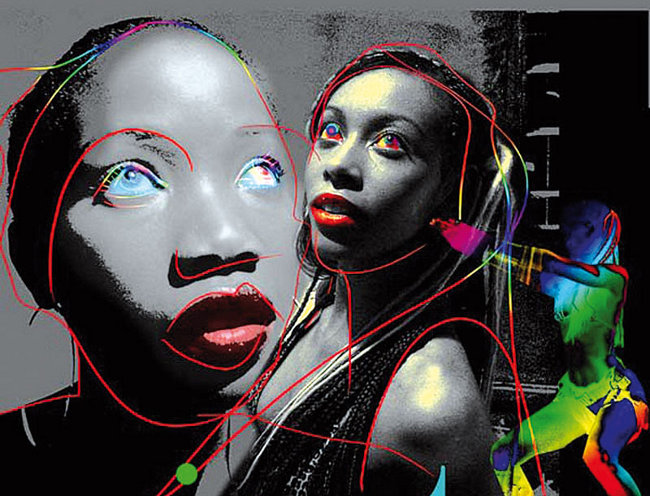
From http://superselected.com/wp-content/uploads/2014/08/Les_Saignantes.jpg

Director: Jean-Pierre Bekolo
Screenplay: Jean-Pierre Bekolo
Cast: Majolie as Adèle Ado); Chouchou (Dorylia Calmel); Emile Abossolo M'bo as Ministre d'Etat;  Josephine Ndagnou as Natou; Essindi Mindja as Essomba; Alain Dzukam Simo as Rokko Véronique Mendouga as Dr. Amanga

Synopsis: In an unknown African state in 2025, a Bloodette named Majolie (Adèle Ado) accidentally kills the Secretary General of the Civil Cabinet, a very important man in the government, after sex. Getting the assistance of another Bloodette and close friend Chouchou (Dorylia Calmel) to dispose the body, they find themselves pulled into the local custom of funeral mornings for important figures, which immediately causes problems with their attempts to dispose the SGCC, particularly as a corrupt male political figure in the government becomes aware of the pair and tries to sexually blackmail them in exchange for money. The women however have one advantage on their side, the ancient ritual of the Mevoungou, presided over by older sorceresses and their own abilities.

The Bloodettes, even if it isn't perfect, presents an ambitious idea of a Film Noir soaked political sci-fi film made in Cameroon. Shot on the streets rather than attempting an elaborate fantasy world, the film's minimal nature is for the better and for a sense of mood. Director Jean-Pierre Bekolo explicitly presents an African country of 2015, not dissimilar to 2005 Cameroon or  to most places within the 2010s. Barring the voice automation to drive cars and little details, post-colonial Africa is still stuck in a terrible scenario, corrupted by politics and industry regardless of the era. Whilst old depictions of the future, even the campiest, can be as rewarding Bekolo's intent for the film is greatly helped by shooting in real locations. That amongst the murky back streets and industrial areas, it's an environment which suits the sense that his lead heroines have to scrape to survive.

Patriarchy is still a huge issue within this world that is very bleak and inhospitable. The Bloodettes, Majolie and Chouchou, have the advantage of an ancient magical rite. Yes, said rite to a Western viewer can literally be described as a woman's own sex being magical. This ritual, the Mevoungou, is however a real custom that was eroded away by Western influences and the director discovered through anthropological documentation of his own Beti heritage. One of the biggest problems  so what may seem strange and trite for a Western viewer is actually a very political and feminist subject being brought to screen.
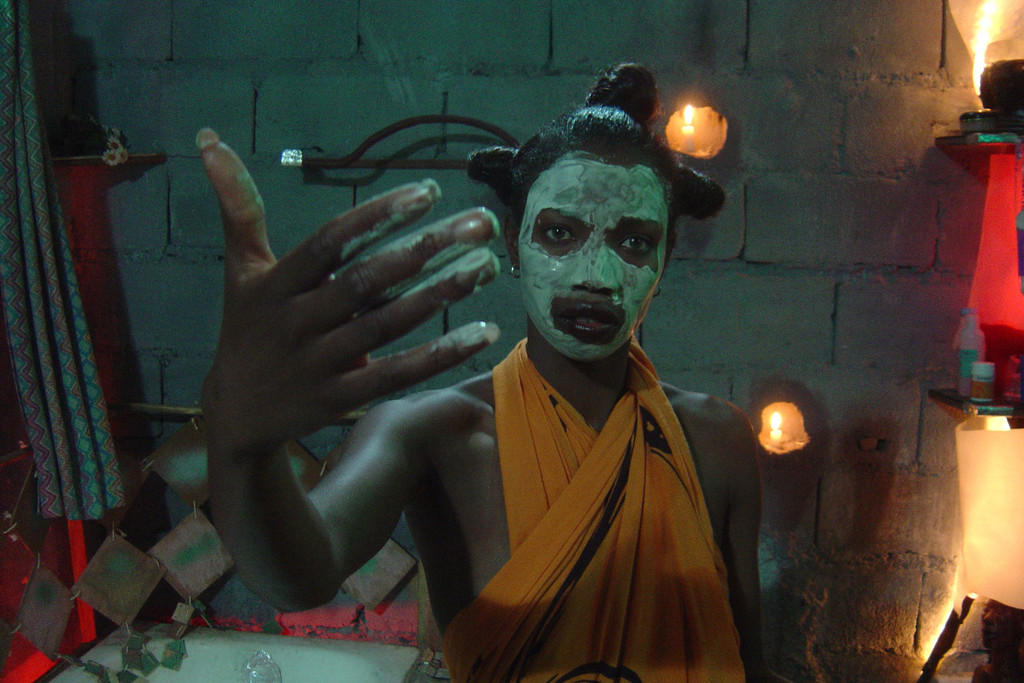

There is, without any of this context, a slight absurdity at first to the Bloodettes using their sexuality to force stun people a couple of times, through synchronous dancing and gyration. But that not only reveals a  conscious bias and shame in a viewer (even myself honestly) when talking of sexuality, but knowing that it's based on a real culture of female empowerment, lost in the wave of Western influence and practices like female genital circumcision, forces one to step out of this childish viewpoint. To realise how sex magic (magick) alongside ancient traditions like Mevoungou come from the state of reassessing the human sexual body as a force of great power. Its more significant as this is an African custom, not a Western one, and alongside the huge stumbling blocks in Western culture itself with sexuality, there's also the huge issue of how the West ostracises "exotic" customs behind our history of material social progression by showing it as another even within that culture's own history, forgetting that we're viewing a lot of this never actually within these countries. In this film's case as well, this is a topic with racial and engendered politics which means not knowing the context of the Mevoungou, which I only learnt of through writing this, places a viewer in danger of entirely dismissing a film as merely a cultural oddity when it's a cultural film in its own country with a very loaded context.

Two very strong women are our leads. Whilst they are likely in sex work, they are very strong figures looking out for themselves. Barring one shower scene, very little in terms of sexualisation of a male gaze is found, instead the sensuality of the protagonists theirs and in their control, both of their own bodies in front of others and the Mevoungou. Everything else is entirely about these figures trying to overcome corrupt male figures. Sometimes with their whits about them, like trying to convince a butcher that the  SGCC's body is good beef, eventually trying to acquire a body for the head when they find themselves in the midst of funeral morning customs. Then however they have the Mevoungou. An essay Re-Imagining West African Women’s Sexuality: Jean Pierre Bekolo’s Les Saignantes and the Mevoungou by Naminata Diabate describes that, yes, the Mevoungou is literally a Beti custom surrounding the female clitoris. That it has a profound magical importance which older and younger Beti women were participants of and gave their power with a literal spiritual edge over men. In this, even against the corrupt younger male politician with his own strategies, our heroines have their ancestral ritual to assist them, alongside a council of older women who can bend reality such as vanish in a blink of the eye.

From https://images-na.ssl-images-amazon.com/images/
M/MV5BM2NiNzI5YjEtZWU5OS00ODFkLTlmNzItMjA4
NzAwZGM3ZWMyXkEyXkFqcGdeQXVyNzczOTc5ODI@._V1_.jpg

If the film has a problem is that it's trying to flesh itself out as a fully built work but with some obvious problems with its structure. What happens in the plot does feel anaemic by the end, an attempt to rip off a corrupt politician losing a great deal without knowing its context in terms of feminist/folk cultural politics. Neither does it help that this involved awkward under-cranked fight scenes which don't help any production. That the subplot where morning very influential people have replaced night's entertainments could've been established further more too, especially as disposing a body is a huge part of the plot originally. Where The Bloodettes stands proud and can overcome these issues is its attitude and style. How stylish its low budget and economic look is, especially as its entirely shot at night, an atmosphere both in the dark streets and the harshness of indoor lighting. Even the almost Godardian cutaways, to a bill board with different statements on them commenting how different genres are not possible - such as horror when death is a party - mean a lot more on this viewing as interesting self-reflections on the content within, the director clearly pastiching genres on purpose. And of course there's its empowerment of women, and especially black women from a non-English speaking country, with this film both in its use of a cultural ritual for women that could've been lost in history and how it generally depicts its leads as very resourceful figures helping to push over the stain on their country's soul. Something which we are in dire need of more in cinema and preferably in an unconventional work like The Bloodettes, not a sanitised and toothless creation to appeal to bland white English speaking middle class communities like some of the worst films for tokenism are made for.

Abstract Spectrum: Genre Hybrid/Psychotronic
Abstract Rating (High/Medium/Low/None): None

Personal Opinion:
A gem. Imperfect but shining with originality. It's a film in dire need of rediscovery for this and as a capsule of both an environment and a folklore that, alongside being more progressive than some modern "progressive" ideals, is something that you wouldn't know of unless you had films like this, the Mevoungou and its importance for women of a specific African culture allowed to thrive onscreen and not seem like a mere relic. 

From https://images-na.ssl-images-amazon.com/images/M/MV5BZWI3ZGU5OTQtNzFjZC00NWU2LTgy
MWEtOGE3ZGQ5OWU2MTVmXkEyXkFqcGdeQXVyNzczOTc5ODI@._V1_.jpg

Saturday, 28 May 2016

Mystics In Bali (1981)

From https://s-media-cache-ak0.pinimg.com/736x/b5
70/e8/b570e890a2c08e2041b6043e70ca4d3b.jpg
Director: H. Tjut Djalil
Screenplay: Putra Mada (novel), Jimmy Atmaja (scenario)
Cast: Ilona Agathe Bastian (as Catherine 'Cathy' Kean); Yos Santo (as Mahendra); Sofia W.D. (as Old Leák Queen); W.D. Mochtar (as Machesse); Debbie Cinthya Dewi (as Young Leák Queen)


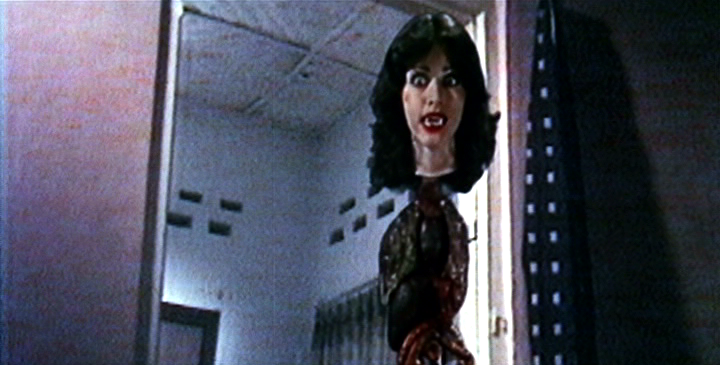
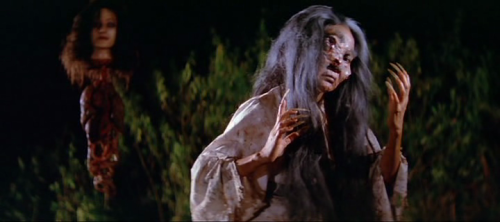
Synopsis: Travelling to Indonesia, an American woman Cathy (Bastian) is assisted by a local who is her boyfriend, Mahendra (Santo), in finding a witch who can teach her black magic for a research paper on the subject. Her training however turns her into a puppet for the witch who can transform her at will into a Penanggalan, a vampire whose head detaches from the body leaving a trail of entrails hanging off the severed neck, the head sent off to feed on the blood of pregnant women and devour their still unborn children so the witch can vicariously gain immortality and youth. Can Mahendra and his religiously pious uncle stop the deaths and what will become of Cathy?

One of my biggest compulsions is to see horror and fantasy stories from around the world. Mythology is an obsession which fits my other obsession, cinema, like a hand in a silk glove, bleeding into genre storytelling greatly and allowing one the curiosity of seeing how legends and bogeymen are depicted. With Mystics in Bali you have a representation of the Penanggalan, a completely unique figure not found in Western mythology as it's shown; floating heads and skulls are common, but the details of the entrails dangling from the neck and the connection back the body, not to mention the vampiric detail involving pregnant women, makes the mythological creature stand out greatly as something idiosyncratic to its country of origins. It's as much seeing another country's culture onscreen, even if liberties have been taken for the transition, as much as seeing genre tropes filter through the introduction of such a peculiar monster to the wide audience.

From http://2.bp.blogspot.com/_gsZ4xh0K_5Y/TRxy_Wmq4rI/
AAAAAAAAGvQ/T77L7bOlnMA/s1600/MIB-001.png
Mystics In Bali as a film turned out to be disappointing in some ways after hearing of it years ago - one of the many curiosities from around the world I learnt of and became desperate to see including its fellow Indonesian films like The Queen of Black Magic (1981) - only to find out viewing it that it's more of a garden variety horror film than one which lets the mythology take the plot into some interesting directions. This could turn out to be like another Indonesian film called The Devil's Sword (1984) where it took more viewings to appreciate it, but it's a surprise how truncated and minimal Mystics In Bali in terms of an actual narrative. Effectively a low budget horror film, it has a repetitive narrative once Cathy is turned into a Penanggalan where her head is sent off to terrorise the populous repeatedly. With only a few sets, only a few main characters and background faces, and a very tight plot  it has the presentation of an old American b-movie from the fifties or from someone like William Beaudine in style.

One of the potential issues with the delights of pulp cinema - psychotronic, weird, intercontinental - is that there's a huge balancing act that need to take place where just sticking to filming the plot will leave a film being a dull, plain viewing experience. The ones that have stood out for me, even if by accident, have had style or a personality to them. In Mystics In Bali's favour it does have an odd air around some of its scenes. Shot in what can vary between on-location places and sets, especially on a battered print, it looks less like real life than a purely fantastical environment onscreen with strong eighties lighting and bold colours. With an English dub that evokes having watched too many Godfrey Ho movies in my life, the world onscreen is caught between the individual edits of each frame than the film as recorded on the camera during the production.

From http://4.bp.blogspot.com/_gsZ4xh0K_5Y/TRx31EtJ0gI/
AAAAAAAAGwI/ScLjXCcLNDI/s1600/MIB-007.png
The problem with Mystics In Bali is that for me beyond this there are so many of the cardinal flaws of genre films regardless of their country of origin inherent in it. Where the film drags and, without relishing incredibly silly dialogue, characters don't know when to be quiet. Films like this are cursed with actors merely standing around and explaining the most rudimentary and disinteresting dialogue possible, a lack of pleasure in it that is matched by the unwillingness the opposite way to make the "action" scenes have a spice and fun to them. It also unfortunately has a nasty taste to it in how conservative it is. For a film infamous for its special effects - Cathy turning into the Penanggalan or into a pig by way of a rubber pig person suit, or puking up mice in the bathroom - the film is pretty restrained than lurid and devotes more of its time to the good guys against the evil women with the least interesting consequences as a result. This terminology is apt as it has a real discrepancy between the good religious men and the evil women in the witch and eventually Cathy, without kitsch or a strange vicarious joy in the villains' behaviour to soften this. Putting up with bland male leads is an issue in any genre work, but it can be argued some of the worst cases of sexism is when you cannot go against the original message and cheer on the villains. At least if the hero was memorable or if the film was more entertaining there would be a balance, even if it wasn't the filmmaker's intentions, where you could secretly cheer on both sides of the square jawed hero and the fatale. Especially when the boyfriend in Mystics In Bali is guilty of both being tedious to see and in bringing Cathy to the witch in the first place, and is pardoned of any guilt by his uncle, you wish the both of them were turned into frogs by the witch. If it wasn't for the fact that the Penanggalan feds off pregnant women, I'd wish the villainess won. If any virtue is to be found in this film for me of great substance in terms of this, I see now why people rooted for the Christian Satanists in the likes of Hammer horror films and why with more morally sympathetic figures, like the Universal horror monsters, you get figures of global popular iconography.

From http://4.bp.blogspot.com/-ztvpQgSA_KA/VLs9lhSDwwI
/AAAAAAAAMi4/G2oy2VWvPMQ/s1600/bali.jpg
Technical Details:
Like a lot of pulp genre cinema, unless one encounters a very artistic or radical change in cinematography and visuals, this type of cinema is based on there being a standard structure and presentation, emphasising instead the quirks. An innate issue covering this film on this site, with the blog title being "Cinema of the Abstract", is that I could easily slip into an accidental xenophobia by calling it "alien" because it's not like a western genre movie in presentation. Thankfully as I've seen plenty of low budget films from this era from other countries, Western and Eastern, that share similar production techniques, the issue is less about Mystics In Bali as a representation of an Indonesian film culture in general but what this particular production had access to in terms of technical resources and time.

The special effects are going to be the most memorable aspects of anyone's first viewing of the film, and barring the poor mice dunked in goo meant to represent them being vomited on a tiled bathroom flaw, you couldn't argue that the results are entertaining and a virtue in spite of the film's flaws. Basic blue screen is used especially in bringing the Penanggalan to life, a drastic change in the visual look of the shots when Cathy's head casually floats off the torso; in lieu to what the production could pull off, I actually admire them attempting this even though it might have been wiser to use more model heads and implied reference to show the creature. It would mean less of the shock of the head popping off or floating down an Indonesian motorway which would've deprived the fun from it.  When Cathy learns to turn into a snake and than a pig respectively during her training with the witch and subsequent transformation into an evil minion, I'm glad of the lo-fi prosthetics used as they are. Utterly strange to witness regardless - seeing an actress become graphically distorted to the point she becomes a mix of Pigsy from the Monkey King stories and a kaiju - it's why the term "psychotronic film"  was coined by Michael J. Weldon in describing the entertainingly bizarre in genre cinema. The texture of the rubber prosthetics, their inherent fakeness, is as important to how odd the moments are helping against the dreary material outside these scenes.

From http://3.bp.blogspot.com/_gsZ4xh0K_5Y/TRx3UwiFwaI/
AAAAAAAAGwA/wqa5Bg3SxaI/s1600/MIB-003.png
Abstract Rating (High/Medium/Low/None): None
Again, there is the issue for a blog that calls itself "Cinema of the Abstract" that I could accidentally espouse a racist viewpoint by saying this film is "abstract" (i.e. weird) because of its cultural heritage and that it speaks a different language even if dubbed in English. I've always had an immense concern with "weird [insert name of country]" rhetoric for pop culture; the use of "Weird Japan" has also always, for example, been undeniably racist for me as a term even as an outsider who has never set foot in the country, painting an entire culture let alone pop culture as weird, even if the examples are legitimately bizarre, when it could be seen as strange to those born in the country too and different from regular Japanese life. Likewise, depicting another country or continent's religious and mythological beliefs as alien is problematic; as Christianity to another land, especially the uncensored version where Cherubs are actually four faced multiple winged entities, would be just as strange to an Indonesian, than a Penanggalan would be weird to a Westerner. Instead if there's anything strange about these beliefs, it's that they belong to the general weirdness of the human concept of spirituality and folklore across the entire species, a head popping off a human body and carrying its entrails with it strange in any language. Depicting these legends and stories on camera leads to them developing dreamlike airs to them where you have to figure out what to do to depict them and whether you have the technical resources to even show a floating head.

Unfortunately Mystics In Bali is conventional in plot and style to the point it deadens a great deal of its potential strangeness. Despite having a final straight out of the aforementioned Godfrey Ho films, an inexplicable fight with added laser effects, I still can't put it on the Abstract List. You have to compare it to something like The Devil's Sword, an Indonesian film that starts with a man surfing a boulder in the air and keeps piling on moments one after another, and you realise Mystics In Bali neuters a lot of its strangest moments (puking mike, detached heads threatening traffic) with constant dull dialogue from unlikable male heroes. Also, with black magic its central theme, there's a white elephant in the room called The Boxer's Omen (1983), a Hong Kong horror film hybrid from the Shaw Brothers that lives up to its reputation as one of the strangest, disgusting and artistically inspired films about Asian black magic you could see. A film like Mystics in Bali doesn't need to be like it, but you see how plain and ordinary it is in comparison to such a film, especially as The Boxer's Omen amongst its other fits of madness includes a scene involving a Penanggalan that's done significantly better than in the Indonesian film.

Abstract Spectrum: Psychotronic
Abstract Tropes: Mythological figures and Black Magic; floating heads; obvious blue screen; unexpected puking up of animals;

From http://24.media.tumblr.com/tumblr_lp1xutalSl1qzgz32o1_500.png
Personal Opinion:
Fun can be found in Mystics In Bali, but personally this turned out to be a disappointment in how ordinary it turned out to be. I've become softer and more amused by aspects of the film since starting to write this review, but especially as it's one of the most well known Indonesian films with horror tropes to it, it doesn't hold a candle to something like The Devil's Sword which I would recommend readers to check out first instead.

Tuesday, 12 August 2014

Medea (1969)

From http://www.parchiletterari.com/files/image/pasolini_vita14.jpg

Dir. Pier Paolo Pasolini

These sense of who Pasolini was is far more complicated when his filmography is build up. The Marxist who yet has a considerable chunk of his filmography based on mythological and literary historical pieces. The politics can still be seen in the Trilogy of Life (1971-74), Oedipus Rex (1967), and what was left of the uncompleted adaptation of Orestes, but the willingness, even in a social realistic form, to depict the fantastical, is eye opening when all that one knows of him is a Salò, or the 120 Days of Sodom (1975), or The Gospel of St. Matthew (1964). The words of a centaur to a grown up Jason, who is seen raising the Greek mythological individual up from infancy, include that reality is fantastical, and that the fantastical is reality. The abstract supernatural tone of Teorema (1968), the absurdity of The Hawks and Sparrows (1966) and such films leads to an immense centre of dreamlike material which the politically minded director managed to sew to the bare reality to stress his point. The reality is depicted through them - the failed yet beautiful faces and bodies, the elaborate yet handmade and theatrical costumes, and real locations substituting fantasy ones. Even the most fantastical moments in his films - the bronze man in Arabian Nights (1974), the centaur here with his fake horse legs etc. - are depicted as obviously practical effects, theatre tricks, but given a reality for them. You can still see the fantasy, the myth, but its appropriated for a clear meaning of his own.

From http://marfapublicradio.org/wp-content/uploads/2014/05/CallasMedea.jpg

Appropriating the play by Euripides, the film after the prolong follows the titular protagonist, played by opera singer Maria Callas, a sorceress in her land who sacrifices her position to go with Jason, played by Olympic triple jumper Giuseppe Gentile, and his Argonauts, on the search for her land's golden fleece which she steals for him. The next and final half depicts the years later when, married, Jason betrays her by planning to marry the daughter of a king he was originally opposing, leading to tragedy and revenge. Medea is the old world, Jason the new world, Medea losing her abilities in a spiritual crisis for her betrayal. The film succeeds in that it is just a step ahead of fully being understood, scenes playing out that seemingly have no connection to what has transpired, leading to the uncanny. There is an abstract tone to the film in its pure fantasy, an ancient world interpreted in a theatrical way. Yet it is realistically made. Locations in Turkey and Syria make up the world shown amongst others, buildings carved from the sand as empires. Wooden masks, capes, gowns, metal chain jewellery, a coarse aesthetic beauty to the content. Pasolini went further and handpicked a score based on various types of traditional music. African. Music I recognise, in the squealing high horns, of Tibetian Buddhist monks or the same instrumentation and chanting. Even what I felt, how my ears interpreted them, as a East Asian string instrument with matching vocals nearly synched onto post synched actors. The world shown is of no clear time, timeless, a mass of cultures made into a cohesive world in terms of look and presentation. A sacrifice shown where a virile young man's blood and organs are painted onto a harvest to grow, a key and memorable sequence, using real natives of the local environment shot in as extras, feels as if one is in the same place as the characters. Pasolini made a fake world into a reality in how it is shown, connectable to even if also completely alien in culture.

From http://www.actingoutpolitics.com/wp-content/uploads/2014/01/Medea.2jpg.jpg

Maria Callas, close to middle aged grace, commands the screen even if the film is viewed without her original voice in Italian dubbing. While never singing once, it's clear the prescience required for opera is shown in the performance. As well as sympathy for the old world, the apparently barbaric one, the director also created a feminist film, the plight of Medea that she is seen as a barbarian to her husband Jason even after rearing children from him. Killing her own brother early on, she is still sympathetic, the role of mythology to step back and see the complexities of gods and mortals, their worst and best sides, as well as the relation to normality to the fantastical. Pasolini doesn't over explain what is going on, confusing at first but ultimately more rewarding because the images and few words said speak much more than exposition. This shows the lack of boundary between the mythological and the contemporary which rears itself in existence in films like Teorema, the atheist still able to evoke more powerfully the unknown to rational human logic then a Christian or spiritual filmmaker. This paradox is at its most distinct that it was Pasolini, not a Christian like Mel Gibson, who made the greater portrait of Jesus Christ in The Gospel According To St. Matthew, not just for his down-to-earth, rational portrait of the Son of God but also the mystery he still leaves in. Had his take on Orestes been made, remaining in the filmed draft Notes Towards an African Orestes (1970), then he would, in filming the Greek play in current day Africa, have melded two sides, his real environments and the old world he felt nostalgia for, that were far closer bed fellows than presumed..

From http://img841.imageshack.us/img841/9040/e783.jpg

The film is subtle, yet is full of pronounced, powerful moments. The sight of the two sides of the centaur, how they represent the mind of Jason to express and evoke, the old world and the old world desecrated represented by both sides. The potential flash forward in the future of the princess being struck down by accident, or purpose, by the curse of Medea, panic felt when scenes and dialogue almost repeat again suggesting it will actually happen in narrative time. The eloquence of the dialogue even in subtitles, how every character is not just an archetype, but gives a depth. How sumptuous the film is. Colourful but earthly, the blazing sun enough to symbolise the old God of the Sun reappearing to Medea to regain her power, one of the many subtle editing or short composition practices Pasolini used. It's surprising as well how gory and considerably nasty the film is too, the effective of severed prosthetic limbs not overbearing, not over elaborate, making an effect but linking the ancient plays and myth to today's horror films in comparison, how the physical, exaggerated violence is as much representative of the emotions behind them as they are probably more accurate to what happened in real history. Pasolini was able to evoke these tales, beautifully in films like Arabian Nights, without losing sight of a clear interpretation of his own thoughts, usually condemnation of modern life. Even as he rejected his own work, and made Salo in rampant disgust of the world he lived in, he still made the horror of that film with the same theatrics seen here or in a Oedipal Rex. Medea itself ends with this despair. We sympathise with the titular character in her abandonment. She takes a violent extreme, but in context of mythology, and the potential feminist reading, her despair is rational, despite its brutality. She shouts down Jason that nothing is possible anymore, the last line. 'Fin' is shown then, the film ends. Stark, cuts to the point. The old world dies screaming under her own terms. Pertinent now as it was in the Sixties when the film was first show. Usually the past is misappropriated, distorted or manipulated, so to encounter it in its true form is potent, shocking for the modern eye and liberating, which Pasolini was able to translate to the modern day.

From http://1.bp.blogspot.com/-XutalbIgm4s/UjOrZ-vYNlI/
AAAAAAAAG24/BuIPgQ_QpGA/s1600/medea.png

Abstract Scale (High/Medium/Low/None) - Low
Pasolini managed to make a clear, unique style of his own that shifts closely to a series of images that connect and have effect rather than a clear cut narrative. A film like Porcile (1969) or Teorema is this taken to its furthest, but Medea still has the same energy. That Pasolini deliberately used a highly well known opera singer, a celebrity, and an Olympic champion as his main protagonists here adds a specific detail unique to this film. Like Terence Stamp in Teorema, deliberate in using actors as well as non-actors, the director is able to take a recognisable face and give it new meaning in context of his work. This as much applies for the adaptations of the ancient and classical literary sources and the materials he uses too, creating new and alien contexts for recognisable material. Using other nations' environment and other cultures' music and making them gel perfectly with others. The clear moral battle for Pasolini, the existential fight, between the modernity he hated and the past he desired, is littered and shown through all his work I've seen, and in deciding to depict this through the mixing of the recognisable, the universal, with the abstract creates a peculiar but effective mix. Certainly enough for the scale.

Personal Opinion:

It's amazing that a director I first approached as a mere intellectual art director has a significant chunk of his filmography devoted to films like Medea or the Trilogy of Life. Myths, fantasies, the erotic, comedic, even films that are legitimately great entertainment. Even his most abstract films has bursts of humour. Even Salo has a sick sense of one despite the abomination and shit eating. The films, alongside gems like Porcile, have been a revelation, more so when the same attitude and presentation is given to the depiction of the modern day as the ancient worlds. His works are an open dialogue to his issues with the present and the past, depicting the unreal faithfully and adding oddness to its nature alongside his own pertinent political ideas, startling as a result. On first glance Medea might be seen as a lesser work, but then one compares it to other films based on Greek myths and would see how significantly superior it is to most films.

From http://38.media.tumblr.com/174da74f58234e752eecaff10a984494/
tumblr_mxk8lctBP41t27f1no9_1280.png