Showing posts with label A Night of a Thousand Horror (Movies). Show all posts

Friday, 15 November 2024

The Gore-Gore Girls (1972)


Director: Herschell Gordon Lewis

Screenplay: Alan J. Dachman

Cast: Frank Kress as Abraham Gentry; Amy Farrell as Nancy Weston; Hedda Lubin as Marlene; Henny Youngman as Marzdone Mobilie; Russ Badger as Lt. Anderson; Ray Sager as Grout; Nora Alexis as Lola Prize

A Night of a Thousand Horror (Movies)


Lt. Anderson, one of my friends seems to have run into a bit of trouble... and lost her face.

Thinking he was ending on this film in terms of his film directing career, Herschell Gordon Lewis felt he wanted to go out with a bang, with more production value and shock as he was closing the door on his exploitation film career. Starting with the image of a woman, Suzie Cream Puff, "being creamed" by having her face hit through a mirror, he wanted to deliver on that premise. Here I will say, as one of the first Lewis films I had seen, I hated this film once. Hated it to the point it was actually held as one of the worst films I had ever seen. What changed in all the time that passed?

The immediate thing is this film embraces its sense of humour. Introducing our detective lead, Abraham Gentry (Frank Kress), stroking a pet cat in his lounge only to insert it into a cupboard when someone knocks outside, he is lured by a female reporter Nancy Weston (Amy Farrell) to investigate a series of gristly go-go dancer murders. The Gore-Gore Girls is a scuzzy and nasty little production, clearly influenced by the Italian giallo from the period as the unseen killer is even wearing black gloves for the job, but it is also a film so proudly with its tongue in its cheek it has pierced through the flesh. Gentry, as played by Kress, is immediately a stand-out even in terms of characters and acting performances in a Lewis film, playing a sarcastic dick but delightfully so, apt for the tone of the production with his many quips to people who irritate him during his work. He eventually even comes to like Nancy, despite their stand-off nature at first and questionable decisions nowadays; though he does nothing and makes sure she gets safely home, getting her drunk off her face on zombie cocktails repeatedly is not something we would consider heroic nowadays even if the joke back in the early seventies.

The film is a procedural where he investigates who the killer could be. Is it Grout (Ray Sager), the man at the Go-Go club bar who draws faces on vegetables and fruits, crushing them in a mania started on corpses in his Vietnam war service, or the leader of a feminist group, whose group storms a Go-Go club halfway through? Lewis even touching upon the Italian giallo genre by accident is a curious nod to this era Lewis would bow out OF, as horror cinema changed in the seventies and diversified further. This is including the fact he might have not been able to match the gore and splatter becoming more acceptable even in mainstream cinema from the period, such as The Omen (1976) having a full decapitation by way of pane of glass shown at multiple angles. Some of this film has aged and is of the era, as Gentry has no time for any woman, even when he is condescending to everyone, and eventually going to bond and have a romance with Nancy. Coming off as a chauvinist, there are many moments, before that romance too, Gentry feels like he is clearly not interested in women at all and could be read as gay.

Thankfully, a bit has aged well. Even with the feminists involved, the film never takes pot-shots with them even when their leader is a possible suspect, their huge storming scene more of a scuffle between actors then anything that comes off as offensive. It feels like Lewis, and his screenwriter Alan J. Dachman, who has a brief scene as a young male bystander asked where a suspect is, just took notice of the world around them and put in a touch for more interest. Gentry is also inclined to screwing with the male police lieutenant, hiding info and telling him the killer is a religious fanatic stealing the victims' Bibles, which is a legitimately funny running joke especially when the cast playing the fellow officers, who Gentry likes more, play it with their senior looking like an idiot.

One of the other aspects of the film was also one of the huge reasons I hated it originally, because I was offended by it, were the gore scenes, not used to the type of films Lewis made and the splatter genre. That they all involve female victims is going to be an issue for many, though Lewis was happy to have violence against men and women; the issue is entirely that, with the plot choice, some will find this uncomfortable whilst for Lewis, wishing to leave his career at this point as the inventor of the splatter genre, he decided to leave as gruesomely as possible. This is as extreme as Lewis could get, even next to Blood Feast 2: All You Can Eat (2002), with openly absurd shock value and violent about it, where one person dies to a wooden meat tenderizer to the buttocks followed by salt and pepper being added the wounds. A lot of handling organ meat is involved, and the one scene that is the most infamous was also the one which really shocked me back in the day, still out-there in Lewis' filmography when a female victim has her nipples cut off, one producing milk and the other producing chocolate milk, among the other things that already happened. These scenes, even if played for the bleakest of humour, are going to shock and make people uncomfortable, especially because the targets are all women, which was the aspect which caught me off-guard when I first saw the film back in the day and also could not see the intentional absurdity in its grossness. Details of the film do feel of their time, like this or Gentry getting Nancy drunk continually, but what is also felt is that Lewis is not taking anything serious and being mischievous at the same time. Particularly with the look of the film, shot in Chicago, The Gore-Gore Girls was a shock for me back in the day for feeling rancid let alone looking it, and that I did not appreciate this type of cinema at all, especially when it came to its very twisted sense of humour.

It has a clear witty, very dark humoured tone, which helps the film so much in the modern day, but in hindsight this film should probably be a later work for a newcomer to watch from Lewis, just in case the content leaves a bad taste in the mouth without seeing Lewis' sense of humour in context. Nonetheless I have changed my tune considerably to the film, and if this had been his last film, it would have been a good one to have closed the curtains of his career on, with all his quirks, all his divisive content, and a fitting final image. One breaking the forth wall, the screen being closed by a character as a literal curtain closer, feeling closer to a touch from a forties screwball comedy than a splatter film conclusion. That was not the end, as he would return to cinema in the 2000s after a very successful career in advertising, but for the original era, this was an apt closure.

When it comes into asking why he even decided to end his career at this point as he did, some of it is the fact he was struggling to make these films and felt he could have less stress in his life, especially as his advertising career for decades after made him a very well off man. Interviewed on The Incredibly Strange Film Show, a 1988-9 Channel 4 series by Jonathan Ross where he tackled "psychotronic" or B movie figures, the episode entirely devoted to Lewis had him absolute at bliss, happy to look back on his career with mirth but also, playing tennis and well off, a man who did well as a lucrative writer and speaker on the subject of advertising, his film career a well kept secret. He came back to cinema, which was a happy thing, but there was in itself a happy end there just as well. Lewis, in spite of his notorious gore films, has something sweet to his life in that he managed to have happy conclusions to his life and career in cinema twice. It is an odd thing to consider, as his career was devoted to make the audience throw up and throwing entrails around, but he would have found that hilarious.

Thursday, 31 October 2024

Thirst (2009)


Director: Park Chan-Wook

Screenplay: Park Chan-wook and Jeong Seo-kyeong

Inspired by Thérèse Raquin by Émile Zola

Cast: Song Kang-ho as Fr. Sang-hyun, Kim Ok-bin as Tae-ju, Kim Hae-sook as Mrs. Ra, Shin Ha-kyun as Kang-woo, Park In-hwan as Fr. Roh, Song Young-chang as Seung-dae, Oh Dal-su as Young-du

A Night of a Thousand Horror (Movies)


When I think about what helped me become a huge cineaste, the 2009 Cannes Film Festival was a huge turning point for this among other factors, a strong line up in terms of just the competition when I took interest in reading the coverage. That festival had the infamous Lars von Trier film Antichrist, and Gaspar Noe's Enter the Void, had acclaimed films likes Quentin Tarantino's Inglourious Basterds, Jacques Audiard's A Prophet and the eventual Palme D'or winner for that year, Michael Haneke's The White Ribbon. There are also the other fascinating films in the official selection, not even factoring in the other screening categories for awards or not, such as Hong Kong film maker Johnnie To collaborating with French actor/singer Johnny Hallyday on Vengeance, or Thirst, Park Chan-Wook making his way from the acclaimed Oldboy (2004), part of a trilogy on vengeance which premiered at Cannes, into a vampire film.

Chan-Wook, a decade later, has had a strong career, The Handmaiden (2016) another huge film alongside a career with a divisive American production (Stoker (2013)) that are mandatory, but also something I would have never had predicted on the bingo card when I first saw films like Thirst, a BBC mini-series called The Little Drummer Girl (2018) based on a John le Carré novel. Thirst comes from a time before this where I vividly remember Western audiences asking themselves what he would do next now the then-completed Vengeance trilogy had ended. Chan-Wook was helped considerably by the wave of interest in Asian cinema, including South Korean, that came in the early 2000s, and whilst the middle film of this eventual trilogy, Oldboy was the film which caught attention and could have won the Palme D'Or in 2004, the unofficial Vengeance trilogy as a whole was what was on peoples' minds especially when he finished it, starting with Sympathy for Mr. Vengeance (2002) and ending with Lady Vengeance (2005). Before Thirst was I'm a Cyborg, But That's OK (2006), a divisive but necessary move into a comedy with melancholic edges about a young woman in a mental hospital because she thinks she is a cyborg. Thirst took a further direction in being a horror film whose erotic and violent love plot centers on a Catholic priest Fr. Sang-hyun (Song Kang-ho) being turned into a vampire. It was a step confidently forwards, whilst absolutely staying as idiosyncratic as I remembered it even in terms of its sudden switches to comedy.

Kang-ho's priest Sang-hyun goes to a research lab tackling a near-if-not-fully fatal disease, and is the one man who survives as a willing test subject. He finds himself meeting a childhood friend as a result of his miraculous recovery, one whose adopted member and wife of this male friend, Tae-ju (Kim Ok-bin), is treated like trash by the mother. This is all in mind his survival comes due to a blood transfer of his involving vampiric blood and that he has fallen in love with Tae-ju; when he changes fully into his new form, alongside the taste for blood, so does the subtext of a man who lived his faith only to be drawn to earthly pleasures. It feels less like an anti-religious film, before one asks, but explicitly riffing on the French novel Thérèse Raquin by Émile Zola, his fight against his own Catholicism part of the psychodrama that this film has, one which just happens to involve vampirism, where it becomes the catalyst for both power but an unquenchable thirst.


The title is perfect for its themes where we sympathetic with our two leads who fall in love but see them slip into a downward spiral confusing between sensual pleasure and needing to murder the son, all amongst the reasons for a growing body count. It is a tangled web where Tae-ju was treated terribly by the mother, overprotective of her hypochondriac adult son, tormented to the point that, when power comes to her in her romance with Sang-hyun, simply running at night to avoid contemplating the son's murder is not enough. Even if she does love Sang-hyun, the tragedy is still there are the film escalates, and here I also have to credit co-writer Jeong Seo-kyeong who became a frequent collaborator from his final Vengeance film onwards, Lady Vengeance (2005). She is arguably a huge factor for the turn of his films from then on, as she worked with him on films like The Handmaiden to Decision To Leave (2022),. She could been seen as a huge catalyst for where his career would go in-between projects with other writers, alongside how she became acclaimed in South Korea for her work as a screenwriter not only his films.

The complexity has grown in this film when having returned to it. Faith exists but if you struggle with your emotions, you will suffer the infernal war, and that is not helped when you've been turned into a vampire that ramps up this war. Song Kang-ho plays his character as a priest that even to the end, when he has killed in horrible ways, is struggling with his real morals as a good person, neither helped that people close to him turn around him at his lowest. Even the priest who raised him spiritually, who willingly slices a wrist to feed him and listens with concern for his vampiric issues, just wants to be turned into one due to a life blinded in the eyes. Tae-ju too, whilst loving him dearly, has been twisted by her situation to effectively use him to get power in her household. It is a great performance from Kang-ho, but that it isn't a surprise, whilst Kim Ok-bin goes between sympathetic, disturbing and, when she becomes a vampire with the makeup and costume upgrade to match, devilish in a compelling way.

Reading the synopsis to Zola's Thérèse Raquin, a surprising amount of the narrative was transferred, a film like Zola's story about studying temperaments of its cast, even when it is reinterpreted in humorous ways here like the dead refusing to leave their murderers' lives even when it comes to the coital bed. Sensuality here is a vibrant, explosive act even in the joys of kissing bruises from self flagellation for sinful thoughts to toe and armpit sucking, the eroticism on display here something that would return significantly with The Handmaiden. The tonal flip-flops make sense in mind to this presentation of these complicated characters in terms of morals and their emotions, a melodrama between comedy and extreme violence for a film that was a huge hit back in its native South Korea. The emotional mind field here is what is central to the story, whilst the horror premise becomes itself the stylization, yet to the production's credit, how this is depicted still stands out. The plasticity of the special effects, in terms of depicting Sang-hyun being able to leap tall buildings and even crawl on walls, is great because it doesn't try to ground the unnatural power he now has. It has a major part to the emotions, like punching a lamppost in half in anger, or the least expected and abrupt neck break in the final act, and the tone of scenes alongside the bloodshed itself befits this hyper-stylized tone to the drama.

Winning the Jury Prize at that Cannes Film Festival where the film premiered, Park Chan-Wook didn't really have to worry in regards to his career after this, and from the strong acclaim he got from his earlier films in 2000s, he has continued on with a healthy career. Thirst itself would have stood out of interest for me just for the fact it was a director not known for horror tackling the subject, catnip for me for what he would bring differently to this area of cinema. Revisiting it this year again, a lot of that different and the surprise in the best of ways is what makes Thrist still a strong film, of tawdry, explosive passion and violence by way of its horror theming.

Tuesday, 29 October 2024

Little Otik (2000)


Director: Jan Švankmajer

Screenplay: Jan Švankmajer

Cast: Veronika Žilková as Božena Horáková, Jan Hartl as Karel Horák, Kristina Adamcová as Alžbětka, Jaroslava Kretschmerová as Alžbětka's Mother, Pavel Nový as Alžbětka's Father, Dagmar Stríbrná as Pani spravcova (the caretaker), Zdenek Kozák as Mr. Žlábek

A Night of a Thousand Horror (Movies)/Canon Fodder


Jan Švankmajer’s tale of a couple who merely wanted a child, but cannot, opens with such strange images like the husband envisioning a fishmonger wrapping a baby up in newspaper outside the pregnancy clinic. Unable to have children due to medical sterility, the couple’s life takes a drastic turn when, as a sweet joke, the husband Karel Horák (Jan Hartl) finds a tree stump that looks like a child vaguely and dresses it up as one, only for Božena Horáková (Veronika Žilková) to literally take the carved and varnished stump as a literal child to his horror. After a contrived nine month pregnancy they fake, a be-careful-for-what-you-wish-for tale transpires when after this pregnancy the tree stump now christened Otik comes to life.

Švankmajer had nearly three decades as a stop motion animator before this film, working on shorts and even one music video for Hugh Cornwell named Another Kind of Love (1988), before he made his first theatrical film with Alice (1988), an Alice in Wonderland interpretation which is whimsical, if surreal and embraces macabre horror tropes, more so as he used real taxidermy animal and bones to create some of the denizens of his Wonderland. Švankmajer made his craft from his native Czechoslovakia/Czech Republic literally animating anything from paper furniture to paper, his later films after Little Otik going onto real cow tongues (Lunacy (2005)) to photo cutouts in Surviving Life (2010), and his work here embraces a macabre humour contrasting the tragedy that will transpire.

For the Horáks, children are what are important for their community in the apartment complex as much as they sincerely want kids, not just take the cat out on a leash for walkies. Whether a good thing or not, it is turned into an obsession that is not just that of Alžbětka (Kristina Adamcová), the one child in the complex lamenting the lack of other children, and overenthusiastic to the point of reading medical texts about sterility and “slow semen”. The set up is from a fairy tale, of the Otesánek by Karel Jaromír Erben which is retold in fairy tale illustrations animated onscreen, but it is streaked by Švankmajer as a card carrying surrealist skewering the weird ritual of proud parents and those around the Horaks who celebrate their consummation of parenthood. Alžbětka’s obsession is as an over inquisitive child, but her mother celebration of the fake pregnancy cycle in the first act is as odd when viewed from afar, as is Mr. Horák being congratulated at work with drinks. Children are a positive thing in the right context, an important moment for any parent even with adopted sons and daughters to undertake, but the ritual is seen as having existed for its own sake. With Mr. Horak’ early hallucinations of babies being everywhere before the tree stump is literally dug out, their wish for parenthood is arguably one as much pressured and forced onto people even when they wish and feel lost without this in their lives.


Švankmajer uses his career to prod at human behavior in its curiosities in the theatrical and short length films. Virile Games (1988) mocked the sport of soccer as a television event as much for an excuse for significant food consumption as much as violence, whilst Conspirators of Pleasure (1996), the theatrical film before this one, whilst sympathetic to its anthology cast was about sexual fetishes, done with the least conventional ones where his own hand crafted pieces for the film, like kitchen utensils like rolling pins fashioned to give pleasurable massages with artificial tongues, matched how all the pieces within itself showed these men and women painstakingly crafting the items and costumes needed for their elaborate sexual fantasies, even the man who dresses up as a papier-mâché bird creature to swoop on a woman who has a stand in he also built.  With Alžbětka’s father always watching adverts on TV and getting drunk constantly, or the really twisted joke you normally would never get, that the old man in the complex is a pervert eyeing up Alžbětka, you see Švankmajer turning ordinary Czech lives into his creations to scrutinize them, as he did literary sources. His obsession with food, the destructive act of eating and its strangeness, is the most prominent example of this from his entire filmography and perfect to see here, as Otik when he comes alive is very hungry and, as he grows, even the post man isn’t safe. Food has been one of Švankmajer’s obsessions for his whole career, continuing it even in one-off surreal moments here like nails being seen in a broth or a sentient breathing pancake.

This is one of his most robust narratives too, where the first act fully sets up the sick humored turn to Otik’s parents having to hide his consumed victims. Little Otik at that point definitely belongs to the horror genre among others as, stripping his food down to freshly bloodied bones by his crib, or guts and blood split on the glass of his bedroom’s windowed door, we will see Otik move from an incredible piece of stop motion magic to a giant practical suit and off-camera implications. Otik himself, let alone the rest of the animation in the film, is visibly the craft of a veteran animator (and all his collaborators on this production) who had four decades before the film to hone his skills, let alone is an acclaimed artist in his own right in various forms of materials shown in galleries over the decades after. Just Otik himself in his initial living version is the result of having to find and put together real pieces of wood visible for all the titular child’s mannerisms and facial expressions in his initial form. All the stop motion in general, whilst at this point in his theatrical career fully focused on making sure his human actors and their performances also suit, had to be painstakingly put together even for pure gags, with the knowledge Švankmajer’s trait of not using conventional items for the motion would have added new challenges for him and an animation team to work with. Even if giant Otik becomes an entity not shown fully onscreen when his parents finally lock him down in the coal cellar of the apartment complex, I see they depict his hands with real twigs that had to be painstakingly collected and likely led to multiple hands needed to accomplish the whole film.

Švankmajer is truly an artist but, whilst Alice is a masterpiece in its own right, the real turn by Conspirators of Pleasure and this film is that he fully embraced these longer films for being dramas too. Whilst Alice focused on one young girl in the lead and his stop motion, here he has a full cast and it feels he felt completely comfortable there too. Actors did exist in his short films, and one The Garden (1968) is entirely around people without animation its central focus, but you see here he found a new side to filmmaking he embraced as he made more theatrical length films which had longer stories. A corpse humour, even pure silliness, is found in the performances too to be as dynamic as the animation, the tragedy matched with the farce. He finds humour in, say, a man pretending to be the postman your child ate and post his mail deliveries at night, even if it leads to questions from far away onlookers of why the postman is late posting his mail. Or the nonchalant conversation that, if forced horrifically to cut your tree child to pieces, you can just ask your soused neighbor for his chainsaw with no questions asked.

Because of this, the story is as good, with its own twisted turns as, with the naivety of a child but her innocence causing as much harm, Alžbětka in the second half befriends Otik in his cellar confinement. Feeding the local pedophile to him is one thing the viewers will applaud, but when she has no qualms in debating to feed anyone including her family members to him, when she cannot get any food for him anymore, you see a nasty little parable about how childhood for all its innocence has a naivety which does not process the consequences of life and death. This can be revealed in as a subversion of proper etiquette but it also shows that, like with Otik himself, our perceived notion of the beautiful innocence of children is just as strange and deserves to be subverted as seen in both children we follow here, all needing to be resolved by the elderly female neighbor in the end. Tellingly the film ends before this inevitable finale to stop all this is seen onscreen, as Švankmajer has already told his parable in its fullest with the fairy tale sequences telling Karel Jaromír Erben’s original story. The parable is this strange tale of wanting a child regardless of the cost, and its sickly humored morals close us out before the unfortunately meeting of an Otik with a garden hoe because that was always inevitable, whilst the journey itself is the delirious and impressive ride we had just experienced over two hours.

Monday, 28 October 2024

Tilbury (1987)


Director: Viðar Víkingsson

Screenplay: Þórarinn Eldjárn and Viðar Víkingsson

Cast: Kristján Franklin Magnúss as Auðun; Helga Bernhard as Gudrún; Karl Ágúst Úlfsson as Tilbury; Erla Skúladóttir as Sigrún; Róbert Arnfinnsson as Rev. Thorfinnur; Aðalsteinn Bergdal as Barði Kemp; Bryndís Pétursdóttir as Lilja; Magnús Bjarnfreðsson as Gen. Tilberry

A Night of a Thousand Horror (Movies)


Explained in the opening voiceover, an Icelandic production with a British voiceover for this opening to befit the importance of the British characters in this story, the “tilberi” is a witchcraft creation, born from a human rib taken from a grave and kept by a female creator’s breast. Fed on communion wine, it stole milk from other peoples’ cows unless caught and uses it to create “tilberi butter”. This TV movie takes this mythology, and creates a complicated horror period story, in less than an hour, dealing with a changing Iceland during the early 1940s when World War II is in full swing. On the 10th May 1940, the British and Canadian militaries invaded Iceland in 'Operation Fork' due to the concern German forces would take over the country. By 1941, as the film ends its own narrative on, the defense of the country was given to the United States in agreement by Iceland itself. The country was officially neutral during the world, but cooperated with British, Canadian and American military1, but through this supernatural story we see how this would drastically alter Iceland when forced to open up to the new influences.

Auðun (Kristján Franklin Magnúss) is a young man training to become a swimmer and is asked by a priest to talk to his daughter Gundrun (Helga Bernhard), who was caught taking an excessive amount of wine during communion, and fears she has fallen from her religious upbringing. Because they grew up together, in the same church, the priest naturally thinks Auðun is a more appropriate person to win her own from what are her perceived sins of drunkenness, when it is obviously set up that her story is connected to the tilberi. Set in the capital of Reykjavík, with members of the public working with the British soldiers, the tone is grounded and keeping with the period, but also emphasizes the circumstances is their strangeness. In evoking the period with this grounded nature, we see the banality of the scenario without the glamour of the war, with the male soldiers cavorting with the local women. There is a possible flaw with the film that, at less than an hour, it fudges the complexity, such as having Gundrun come off as a stereotypical femme fatale in the midst of this, or demonizing the Allied forces whilst having one of the characters Auðun encounters being a literal Nazis they have captured. Particularly with that one scene character that yet has a major scene, that tries to throw in anti-Jewish beliefs in his explanation of what a tilberi, you can easily see flaws in nuisance here lost in the storytelling. There is however the sense that Tilbury the film is about the chaos of all this period, which influences the storytelling.

Isolated until this war, this is an Iceland being abruptly thrown into the cultural exchange without a knowledge, from how director/co-writer Viðar Víkingsson depicts it, of how bad the Nazis were, instead that a war is apparently happening but feeling like a place of banality. There is no combat, just sights like seeing a British soldier having sex with a woman at one point, possible a sex worker but at least with an older male driver as their cab waiting with them in the driver’s seat during the act, which completely undercuts the sense of historical importance of all this as the days pass. With soldiers occupying the place, everyone is however just floating along. Trucks drive around and mortar firing practice is done completely isolated from the real war, as despite all the sandbagged protective walls built. The soldiers are mostly comparing condoms (and laughing at the local guy who thinks its chewing gum), cavorting with the local women or at the parties at night, whilst the local women like Gundrun link up with said soldiers. Even if there is a sense of corruption from the Allied forced, it is not as if Iceland, as represented by Auðun, is a noble figure, instead a little naïve itself when the world around them has grown and become more complicated.

Within this sense of stagnation is the mysterious British colonel Tilbury who gives the TV movie its title, a young actor clearly in old man white makeup and a fake nose who is clearly unnatural. Among the British soldiers coming off more as nuisances, or arresting random locals who may be Nazi sympathizers, Tilbury is just hiding among them without anyone questioning his involvement as a general, who is connected to Gundrun. This does lead to Tilbury being a revealed as a goblin-like entity puking green goo, but Gundrun’s relationship to his is interesting as it is clearly weighing in on Iceland’s relationship with the British and how complicated it clearly became, such as the fact that this is shown as a very religious country. Thrown into a relationship to foreigners of the island who will undercut this in their relationships, when not on military drills, the world cannot go back to the perceived morals of the past as now the 20th century has fully arrived, and it seems neither that the old Christian ideals are celebrated because they were merely what the likes of Auðun were raised with. Spirituality did not really form him for the better as his involvement is less for saving Gundrun, but as a fawning crush from her past that cannot get past her. Central to this is Tilberi butter chocolate disguised as Cadburys chocolate; as symbolic of Britain’s status to the Icelandic as with the Americans, when they appear in the last moments appear with their Hershey’s chocolate bars, there is definitely a negative or at least concerned view of what had possibly been lost due to this occupation over time.


At the same time, however, even Gundrun’s plan for this chocolate, which is not recommended to eat due to it causing seizures, whilst a negative on the types of influences on Iceland from the bigger countries is undercut (even if the script being vague) by her being on her own unknown mission. Tilbury the goblin-creature intends to influence Iceland with these chocolate bars, and it is important to remind one selves that, whilst World War II had clear-cut villains that had to be defeated in Nazis, it was still a morally complicated war where the Allies were not clear-cut themselves at times. It was not a good idea, in the moments where the film undercuts itself, to have Tilbury depicted with the fake nose, which unfortunately throws up anti-Semitic stereotypes. There can be arguments to be made that the film needed a lot more time to really explain some of its content to avoid these unfortunate aspects, like presuming that since he is helping Auðun, the openly fascist person who the soldiers arrested would be viewed as virtuous when he is forced into a hole in the soldiers’ camp like he deserves. I will give the film and its creators’ the benefit of the doubt as, in this war depicted onscreen, the severity of its fight is lost to this world, Iceland shown oblivious and just going off these soldiers, on the outskirts, who don’t present themselves as a positive but something even frightening. They treat the locals like crap despite being there to protect them, and the locals just get on with life. Tilbury comes off less like a problematic dog whistle stereotype but a strange creature of misfit whose chocolate, even if contaminated, is never shown in its full effect, likely more a comment that, even if they were fighting this major war, the British and American soldiers to the locals were less than graciousness in spite of the Icelandic people contributing to them helping the war. Even if the heroes, this presents that, as in the morally complex reality, that didn’t mean ever British soldier and general was exactly a bastion of virtue, cavorting and partying at night, even with a joke later on that one or two are doing inappropriate things to local farm animals.

Auðun himself is also a complicated lead. His love for Gudrún, including intonations that he had relations with her when they were young teenagers, the barn where this transpired to haunt him as he literally sinks into the hay in the last moments, is less a virtuous hero than a putz being dragged along. He comes along not really as a person who deserves pity, but a version of Iceland which will be obsolete and left out, mad, at the end whilst the influence of the other Western states come to Iceland. He is naïve to what is going on and that, whilst horrified by Gudrún’s openly promiscuous ways even before he learns the truth of Tilbury, he comes off less a bastion of virtue himself, but a naïve figure who can’t really talk as he has unfulfilled urges for her that were suppressed. His views of her open sexuality in the cold light of the modern day, decades after the film was made, come off as a prude or just clueless with hindsight. The most overtly elaborate scene, a sudden dance sequence with Gudrún and Tilbury, is clearly his jealous imagination, literally filtered in a green light, with them separated from the world and presuming he is an emotional vampire on her when she is clearly the one in control.

He is an appropriate figure in a world where the less likable people can still help him, but can’t be trusted. There is a joke that even the minor Nazi sympathizer is revealed to have been kicked out of the Olympics, as a swimmer in the Nazi held one, due to accidentally splashing Hitler’s personal viewing box, so there is even in the cynical humour the sense he too is just among a bunch of drifters, losers, also-rans and very confused Icelandic people just living through a major war. Iceland did lose casualties as a result, including 200 Icelandic seamen who died from war related deaths1, so the country was integral to the war, but as we see in various works of various tones and realities on World War II. Its lasting shockwave on the world includes all the banal moments where things awkwardly transpired, like being stuck with numerous British and Canadian soldiers initially on your soil without warning, and the complicated relationship this would have caused.

Viðar Víkingsson’s film does had a greater sense of complication to this all. You can make the argument, for Tilbury’s biggest flaw, that it could dangerously flub some of its themes, in terms of the fact that less than an hour may be enough to examine some very significant historical themes. However how much it managed to depict, with the matter-of-fact naturalism undercutting any glamour to the proceedings, is still to be acclaimed. [Huge Spoiler] In the end, due to the lore of the tilberi, Auðun gets Gudrún killed by her own creation, so he is not a noble white knight rescuing the local maiden from the invading British, just a man lost in this goal to find her, lost in his madness at the end with the only lingering thoughts left rekindled when he realizing Tilbury is now just posing as an American soldier with Hershey’s chocolate with his own special ingredient added. Nothing he had done was helping at all, and he is a confused Icelandic man just seeing the world turn. [Spoilers End] For its possible flaws in not getting a clear message carefully out, this strange and fascinating folk horror work still comes off as very cynical about this major part of Icelandic culture on both sides. I’m not Icelandic, ironically British like those invading soldiers, so the irony is not lost if I stupidly presume to know what it would have been like for that generation when Operation Fork happened, but in spite of the fact that the UK military were on Icelandic soil to fight the Nazis, there is a greater sense of weight in how this depicts it almost as a farce, a stop gap where bars of chocolate are likely to have a more lasting influence than the biggest conflict on the 20th century.

========

1) The Occupation of Iceland During World War II, written by Sunna Olafson Furstenau and published for Icelandic Roots on May 25th 2023.


Sunday, 27 October 2024

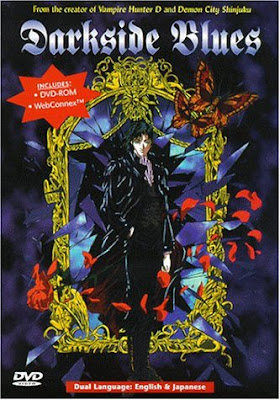
Darkside Blues (1994)


Director: Nobuyasu Furukawa

Screenplay: Mayori Sekijima

Based on the manga by Hideyuki Kikuchi and Yuho Ashibe

(Voice) Cast: Akio Ohtsuka as Kenzou; Hideyuki Hori as Gren; Kotono Mitsuishi as Mai; Kouichi Yamadera as Enji; Masako Katsuki as Tamaki; Maya Okamoto as Selia; Natsuki Sakan as Darkside; Nozomu Sasaki as Katari; Shinichiro Miki as Chris; Yasunori Matsumoto as Tatsuyairector: Viðar Víkingsson

A Night of a Thousand Horror (Movies)/A 1000 Anime Crossover


Darkside Blues isn’t really horror, though it has plenty of supernatural and Gothic touches worthy of the season, and I am glad to have revisited this, as this is a fascinating genre hybrid between dystopian sci-fi about corrupt corporations, which is still salient as a theme, that however has magic exist as well as a titular figure who rides around on a horse drawn carriage which can fly. It is fascinating, even with less than ninety minutes to try to depict this world, and a source manga which did not last long enough either to expand it further, to see what interesting things this depicts, be it a titular figure who acts more like a supernaturally powered advisor for freedom fighters to the sight of someone being tortured by being turned to gold whilst alive with alchemy. From the same author of Vampire Hunter D, and the infamous Wicked City as per its own animated adaptation, you see the threads for those here too, but in this melancholic and fascinating one-off.


For the full review, follow the link HERE.


Friday, 25 October 2024

The Lure (2015)


Director: Agnieszka Smoczyńska

Screenplay: Robert Bolesto

Cast: Marta Mazurek as Silver, Michalina Olszańska as Golden, Kinga Preis as the nightclub singer, Andrzej Konopka as the drummer, Jakub Gierszał as the bass player, Zygmunt Malanowicz as the house manager, Magdalena Cielecka as Divine Furs, Marcin Kowalczyk as Triton / Daedalus

A Night of a Thousand Horror (Stories)


With animated illustrated opening credits, we are introduced to The Lure, a Polish horror musical which caught a lot of interest, more so as it gained distribution through Janus Films/Criterion as a rare new release from some of the biggest names in distributing and releasing classics of cinema. It opens with two mermaids, Silver (Marta Mazurek) and Gold (Michalina Olszańska), taking interest in humans singing and dancing one night on the beach, joining in the singing and catching all off guard. Obvious, in folklore, mermaids in certain forms lured men with their beautiful singing to their demises, which is something director Agnieszka Smoczyńska and screenwriter Robert Bolesto are going to subvert in terms of the gender stereotypes. We will sympathise with these ones even if they are literal man eaters, but at this point, the trio of an older female singer, her musician husband, and the young male bassist instead decide to bring them on land to work at the restaurant bar they perform at as strippers and backup singers.

Set in Poland by way of an alternative eighties, where seventies disco did not die out, the world is grounded in reality in spite of the fantastical plot, clearly reflecting a fondness to this type of world of nightclubs from the director if not hiding the environments' moments grunginess and seediness, with a place where the older man running the club has no qualms with the mermaids working for him as long as he gets them to strip first to demonstrate they are mermaids. In this world, no one bats an eye to their clear unnaturalness, the two sisters able to grow human legs and wander the land as long as they do not stay too long from water. Even if they have Barbie doll anatomy, they look identical to everyone else if seemingly more naive from the off-set, and they re-grow their tales when in contact with water, which does well for business as spectacle. It emphasised a corporal fleshy scaly take on these folklore entities which does not hide from the sexual aspects at all in their desires and humans' desires for them. It is definitely horror too as these mermaids eat people, specially Gold who will eat men, even having a tryst with an older female police officer who finds the giant tail arousing.


The Lure is absolutely a musical too, with full songs and occasional dance numbers, such as one with a full dance chorus in a shopping mall as Gold and Silver are brought into the world of showbiz. This is all in mind that, whilst also depicting these two mermaids as outsiders being exploited and trying to figure themselves out in this world on-land, the film is explicitly a reinterpretation of Hans Christian Anderson's Little Mermaid, the story recreated as Silver falls for the young male musician. It takes a more adult dimension in that the equivalent for full proper legs, as in Anderson's tale, is to have full human anatomy beneath the waist to be as physically loved let alone romantically, but the biggest lesson to learn from the film is never to trust men who ask you to drastically change yourself for their sake, as between his place as the lover of their female manager, or how he has a wandering eye anyway, Silver's story is going to be tragic especially as this follows the story of Anderson's tale that she will lose her voice. As proclaimed by the one merman Gold has a friendship with, Triton (Marcin Kowalczyk), a punk rock singer who literally bites the heads off animals on stage, he wanrs as well that, if Gold's love is unrequited, she will turn to foam and dissipate after a certain time after the heartbreak.

The difference with The Little Mermaid to this is that you do not expect the legs to be acquired through a back alley doctor who switches lower halves between two women to complete a tail/lower waist transplant surgery in musical song. Moments like this are why The Lure does stand out, with its wayward tone in shifting along with these strange and idiosyncratic characters even among the humans in the cast. In another film, it may seem abrupt for the mermaids to just be briefly disposed off midway through, in carpets into a body of water, when they are leaving a body count, only to be brushed under the carpet and everyone getting together, by way of a cold turkey musical number where the three human characters are emotional messes. Here however, it works within the logic of the film fully. All of it works as its own idiosyncratic form, tonally able to sustain itself with its combination of seemingly out of place parts, where the musical numbers work, with the music good, where the gore when it arrives fits especially with the sick humoured tone, and that it does have an emotional finale, even if it leads to the natural idea that guys who cheat on their girlfriends should be eaten instead.

Fugue (2018) caught people off-guard including myself, as a film less easy to sell for its cult appeal, a fitting title in atmosphere where we follow a woman who lost her memory reconnecting to her old environment, whilst The Silent Twins brought Agnieszka Smoczyńska to the United Kingdom in a drama co-produced with Poland based on the lives of a real pair of female twins. This is still a filmmaker who started theatrical length films in the 2010s, with The Lure as her debut, so the question of whether Smoczyńska will ever return to the tone of this debut is to be left on the table as a what-if. Suffice to say, having taken time to digest the film over multiple watching, I finally came to appreciate this interesting and idiosyncratic production which felt like all the best parts of a first theatrical film firing with ambition.

Thursday, 24 October 2024

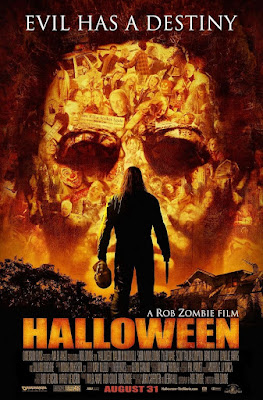
Rob Zombie's Halloween (2007/2009)


Director: Rob Zombie

Screenplay: Rob Zombie

Cast:

Halloween:

Malcolm McDowell as Dr. Samuel Loomis, Brad Dourif as Sheriff Leigh Brackett, Tyler Mane as Michael Myers, Daeg Faerch as Michael Myers (age 10), Sheri Moon Zombie as Deborah Myers, Scout Taylor-Compton as Laurie Strode, William Forsythe as Ronnie White, Danielle Harris as Annie Brackett

Halloween II:

Scout Taylor-Compton as Laurie Strode, Malcolm McDowell as Dr. Samuel Loomis, Tyler Mane as Michael Myers, Chase Wright Vanek as Young Michael Myers, Sheri Moon Zombie as Deborah Myers, Brad Dourif as Sheriff Lee Brackett, Danielle Harris as Annie Brackett, Brea Grant as Mya Rockwell, Howard Hesseman as Uncle Meat, Angela Trimbur as Harley David, Mary Birdsong as Nancy McDonald

A Night of a Thousand Horror (Movies)


Rob Zombie's remake/reimagining of the Halloween franchise was always going to be divisive. I was even an admirer of Halloween 2 (2009) originally, as the film defended as being a powerful and underrated work. Returning to it however, even that has fallen in lustre for the sense that you can be too nihilistic that it actually undermines the virtues of the films, that and the fact that this tone would have made sense for a more riskier, less crowd pleasing horror film, not how to continue the Halloween franchise as a crowd pleasing franchise and still needing to complete the checklist for this. There is a sense that, for me, if Rob Zombie did not have to have the gore and the body count, we would have gotten a superior work that just happened to use the Michael Myers character. People would still hate these films, others will defend them, and they would still be grim, expletive filled takes that is not glamorous about a child who became a serial killer, but why ultimately these films do not work for me is that Rob Zombie needed a striped down version of this premise like Halloween H20 (1998) in structure. Instead, its contractual agreement and his interest in still being a gristly slasher film becomes an albatross around its neck.

The first film is an ugly new take for the time on Michael Myers' childhood. His stepfather is abusive, eyeing up his older step-daughter, whilst Michael himself is being bullied at school about his mother (Sheri Moon Zombie) working at a strip club. From the get-go you also see the era this film was made in too in tone; when Zombie was transitioning to film directing from his music career from House of a 1000 Corpses (2003), we had a run of more extreme horror films from the United States even if the theatrical releases were altered and Director's Cut/Uncensored versions were a popular selling point for DVD/HD-DVD/Blu-Ray releases. Remakes to The Hills Have Eyes to The Last House on the Left also came at this point, and a lot of the era has been described in terms of post-9/11 mood, the result of September 2001 and the Twin Tower attacks, alongside the resulting second Gulf War. This was said to have left the horror films from the United States to reflect the time period in the likes of the "torture porn" sub-genre and more bleaker films, more grimly toned and lacking less hope for its characters to survive, but to have significantly less trauma after the end credits roll.

Brutally, however, I think this era is going to age so much more badly than even the nu metal/pop rock of the early 2000s due to their bleakest being found wanting and grim dark at times. These films can be grim at points to the point of comical levels, like Michael killing animals whilst listening to the band KISS, which poses an issue that the more interesting and emotionally rewarding moments are undercut by the moments which do not work. The most rewarding details of these Halloween films find the right balance between their nihilism, contrasting Rob Zombie's eccentric tastes against moments of quiet pain and psychological damage. Everything in the first act of the first film, Michael's childhood, is actually good despite the points that try too hard, Myers as a psychologically damaged kid from a rough family who is allowed to become a psychopath without intervention to prevent this. Some of the more interesting details reflect too that Zombie was raised as a seventies kid, just from the soundtrack between both films from Nazareth's Love Hurts to Blue Oyster Cult, but also because he grew up in the decades of serial killers that became an obsession in American culture. From Charles Manson (name checked in the film) to Ted Bundy and his ilk by the time the band that made his name originally, White Zombie, formed in 1985, we see him using Halloween to clearly deal with them as a pop cultural concept. We lost a great Zombie film as a result, between grim thriller and sick humoured satire, about serial killers and the culture around them, Zombie able to stop and allow characters to show grief of the loss of loved ones between both films, as we recreate Myers rampage in Haddonfield twice, but also showing there being the fixation of them in unhealthy ways after the survivors are left picking up their psychological pieces.

The controversial decision to turn Dr. Sam Loomis, his psychiatrist, into an alternative world version who sold his soul was clearly meant to depict this. Malcolm McDowell's Loomis becomes one of the actual successes of both films for me, and we forget that Donald Pleasence's take was distorted in later sequels, so a sacred cow was already undercut. McDowell's trajectory is one of the strongest aspects even in its slightness; able to see a young Michael Myers in an asylum, devolving behind his own crafted masks, it does not feel like it is fetishing serial killer iconography, instead the first film meant to be a tragedy as Myers loses what is left. It becomes one including of Sheri Moon Zombie's mother figure, which is heartbreaking with her playing it beautifully, and how McDowell's take becoming an ill fated turn that adds a newer weight, that of if Loomis had not become the noble hero of Donald Pleasence's version. With Loomis as a child psychologist whose heart effectively died, whose first marriage lasted less than the fifteen years working with Michael, the arch of him fully selling out by the sequel is compelling. 

Far from having complete disregard for the source, it feels a widening of the possibilities in the source material, where there is a mocking of the fetishisation of serial killers in Loomis' book tour in the sequel, the book signing scene in that film both with the fan way too into Myers as a person is as well as the father of a slain victim from the first film pulling a gun on him. Zombie rebuts the danger of himself fetishing these types of figures, which slasher films do not tend to do, and it is here where the grim tone can work fully. Where they lose their power is when their relentlessness becomes their ultimate failure, as they numb the pace and emotional weight by their final acts. Zombie managed to do more not in the numerous murders and stalking scenes in Myers, but getting a pointed criticism of media culture on celebrities even in a very silly piece of stunt casting, with musician "Weird Al" Yankovic as himself on a talk show helping to mock Sam Loomis. With one joke, he got a far more compelling take on the lingering nature of gristly murders at the same time.


In their best forms, these films would have allowed more moments of levity if not able to stop the horrors of Michael Myers. Levity comes in moments such as Ken Foree in the first film, with mutton chops and reading porn on the can, but he still dies, levity fleeting in a way that works to emphasise the tragedy Rob Zombie was clearly reaching for. Some moments for the sake of them - one of the guards in the asylum Myers is in during the first film lets his cousin try to rape a new female patient, letting Myers escape - dangerous veer into edge lord territory when there is enough misery and pessimism to work with. There is also the issue that, when it comes to remaking the original 1978 Halloween in the second act, I stopped taking notes and started to switch off.

This proves an Achilles' Heel for the Rob Zombie films as it is important to set up one of the more admirable aspects of these two films, setting up how this world's version of Laurie Strode, played by Scout Taylor-Compton, develops PTSD she has to cope with through Halloween II, and we follow both her at her best coping with the trauma and the worse when she cannot. This is also the one time, when dealing with this, playing as a traditional slasher film succeeds, in how it recreates the original 1981 Halloween II as a fake out dream to establish said trauma. We get to see the aftermath in the hospital of Laurie having her wounds treated even in the dream structure, forcing one to see this, and I will still respect the film, despite my new misgivings, for its use of Nights in White Satin by The Moody Blues, which is exceptional. We also see the flaws still of Zombie overdoing the misanthropic aspects, as whilst I can appreciate the surrealism of Michael Myers' escape from a morgue wagon because it crashed into a cow, having the driver and attendant talking about having sex with the female corpses however undercuts this. In one hand we see one of the best ways to use the slasher structure for a reason, and in the other, there are still the issues that plague the two films.

My problems become that the entire remake project was an ungainly work for a director far more interesting when he is not shooting stranded horror and gore scenes. The whole journey of Laurie is absolutely sympathetic, the White Zombie singer not the first person I would have ever shown such heart in his work, but showing it admirably in how we see her on medication and struggling in therapy, something I have to respect him for. When certain characters die between both films, it is tragic and Zombie actually shows grief. Despite the stunt casting, that fits still; beyond the curious sight of Udo Kier and Clint Howard in the first film sharing the same screen with McDowell, it also leads to one of the best aspects being Brad Dourif, given a great deal to do in terms of a rich performance for a slasher film.

It sucks that, for all these virtues, I have to be a Debbie Downer about how too bleak tonally this becomes. Even if Zombie deliberately changed the film stock used for the sequel to emphasise the grimmer reality, the violence becomes number to the point of not registering emotionally or causing me to question why certain moments were even necessary. There is the sense of the slasher template not helping at all, as Zombie's thesis on trauma is pointless when he has to have random by bystanders killed, like a horny older strip club owner wanting to get it on in a Frankenstein's mark with a female dancer, to keep to the body count high. Even the deeply surreal moments of Halloween II that I initially liked felt bolted on this time, with Sheri Moon Zombie as an apparition with a white horse visiting Michael Myers, because there is no set up for this in the prequel. When seen close to each other, it sticks out from the film two years earlier; despite the fact it gives us one weird, almost Guy Maddin-like dream of pumpkin kings at a dining table, the kind of moment I am into within an instance, it is the only moment of overt surrealism and thus loses power. Bringing this nightmarish side to the film, but never capitalising on it, felt like an abrupt Rob Zombie music video that appears, never meaning anything to the plot trajectory.

None of the deaths are "fun" in these films, all uncomfortable and all awful. There is not enough, even with moments of humour, to separate from the inevitable, the death and tragedy of the characters. But you can overstate this and grind a viewer down to the point this theme itself is lost, which is the issue with the Rob Zombie Halloween films for me. It is to the point they lose their virtues, and Halloween II was not financially good enough to continue on to a third film either, so it lost a few people as well. By Halloween II, it feels for me that for the films which still came out in the early 2010s that continued this trend, this era of edgier horror films from the United States lost their ground by this point. Saw's last entry, before its reboot, was in 2010, and telling a far more financially success horror film in terms of box office in 2009, when the second Halloween reboot film was released, was Paranormal Activity. Still a film with a ghoulish ending, it was not as nihilistic and upfront in its violence, instead capturing peoples' imaginations in terms of supernatural horror. It was also one of the first horror films of note produced by Jason Blum, whose Blumhouse Productions would be a monolith for the US horror cinema into the 2010s onwards. The lasting irony is in knowledge he would be a producer of the next attempt to reboot the Halloween franchise with 2018's Halloween with David Gordon Green, where we close off another part of this franchise's many strange dimensional turns. 

Wednesday, 23 October 2024

Bangkok Haunted (2001)


Director: Oxide Pang and Pisut Praesangeam

Screenplay: Pisut Praesangeam and Sompop Wetchapipat

Cast: Pimsiree Pimsee as Paga / Jieb, Dawan Singha-Wee as Pan, Kalyanut Sriboonrueng as Kanya, Pete Thongchua as Nop

A Night of a Thousand Horror (Movies)


A horror anthology from Thailand, Bangkok Haunted however does something very different in not having the wraparound start the feature, but immediately lunging into the first of three stories, so let us begin as such too. An ancient drum, for the first story, is being transferred in a truck. It is established to have a ghost woman haunting the instrument as the man watching the items in the back is more concerned of leaping out at speed onto the road to get away. The young woman that receives this drum, Jieb (Pimsiree Pimsee), is going to have to deal with the haunted consequences.

We see the drum's origins in 1917, as it is connected to an adopted girl whose parents died of sickness and whose adoptive father is a scholar of music. Raised to become a dancer, Paga (also played Pimsee) befriends another child, a disfigured and ostracised one, who when they become adults is infatuated with her despite Paga only views him as a brother whilst loving another man. This is the most conventional of the three stories in plotting, yet allowed enough space to breathe as Jieb in the modern day with an older male scholar, wandering into flashbacks in the past within her dreams without warning, realise something is amiss with the drum and research its past. It seems like a critique, for a forty four minute segment, that I will not write a lot about this segment beyond this, but it starts with a sound opening for the entire project by co-director Oxide Pang. Oxide Pang with his twin brother Danny came into prominence by the 2000s for films that caught the "Tartan Asian Extreme" wave of interest in the West for Asian genre cinema. Born in Hong Kong, they have juggled genres, action with Bangkok Dangerous (1999) and its 2008 remake with Nicolas Cage, alongside the original 2002 version of The Eye, a horror film about a woman who sees ghosts as a blind woman who was given her sight back through a donor's set of eyes. Their work outside the director's chair deserves credit too as Danny Pang was the editor on the Infernal Affairs trilogy (2002-3), the first one of the many films from the East which caught on fire with interest for Western film fans. They have worked together as brothers but also separately, Oxide Pang making this film instead with Pisut Praesangeam, a Thai filmmaker/producer/screenwriter in the latter's home country, setting this anthology within Bangkok.

The first segment is the pair's most traditional anthology story in tone, one which does provide an appropriately macabre twist - [Spoiler Warning] one of Paga's arms was inside the drum and we learn how it got there [Spoilers End] - and feels the perfect length for its micro-feature tone by itself. After this, Bangkok Haunted's stories are more idiosyncratic in their structures. Probably the biggest virtue, for a film for whatever inexplicable reason I hated when I first saw it, likely due to its slow burn pace, is that all three segments are distinct. Even if the next two as tales entirely set in the modern urban landscape of Bangkok, those two managed to stand out from each other in tone, and since the entire feature is over two hours long and lets them all feel like micro-features, there is no sense of rushing plot points or losing their individual moods either. The wraparound, whilst with a spooky gotcha in the final shot, is not really a story but I still liked it, especially as it feels more like a nice wrapping that does not need to have a dynamic build. It is a curveball when that, only after a forty four minute tale, we have it established three female friends are telling scary stories in a cafe, with them critiquing plot logic or trying to figure out cool titles for each other's stories. It is actually a cool twist on the horror anthology tone to not have a twist, just a trio of interesting story tellers who are friends and engaging with each other.

Story two could be said to be too convoluted and weird for its own good, but it is weird for me as much in a good way. The mature tale of the three, with its explicit nudity and grotesqueness, it is about an essence called Phy Essence. The segment is almost out of order in explaining the plot details, which is why it could be extremely confusing, but as for our female lead, the Phy Essence is a love potion which you can buy hush hush, here in a funny moment in a sex shop where a male customer complains the porn tape he has rented is too damaged at the best parts. The essence is seen once slipped into a man's drink, but is a McGuffin, not really explained but designed to make men fall inescapably in love with the woman who uses it.


The essence, as established in the first scene in a hospital morgue with necrophilia overtones, is collected by one guy who finds recently dead and beautiful female corpses, and is made from the blood collected from their slit open necks. It is a task he secretly gets on with even if he is in danger of being caught, or finds a male colleague getting drunk on the shift and sleeping under a blanket on one of the gurneys among the corpses. That we see the corpses occasionally open their eyes or move their hands suggests that the Phy Essence has ill advised magical aspects too, more so as there is a ghost woman looming about, and that with one of the male suitors, you see the harmful effects of the essence. Not only does he effectively sleep with both a living and dead woman at the same time on a one night stand, but ends up first puking up for the initial symptoms, only to be at death's door with a Buddhist priest trying to help him. Another will be killed by a car and immediately come back as a ghost due to the essence, and it is clear the magic behind it has dangerous properties alongside the gristly nature of the concoction just making the dead angry and come back to haunt those involved in using it.

It is a very idiosyncratic story, probably more vague then it itself realises, very erotic and sexually explicit in a way that it is quite striking with time passing, be it the humour of the lead living next door to a couple in an apartment who are too loud in their passions, or the necrophilia aspects at the morgue. We had some transgressive films from this early 2000s wave that dealt with sexuality - like Takeshi Miike from Japan and the late Kim Ki-duk from South Korea, the later sadly someone we have to put a caveat around due to sexual misconduct allegations - but sexuality was not really as prominent in this era of violence, of action and genre films which did not really tackle those subjects, or the trend for ghost stories influenced from Asian filmmakers modernising them, only to get remade as American films that same decade. You can make the argument this is erotic for the sake of titillation, not for profoundness, but at the same time, you also have a story where despite this women are central to the plot, which is striking within itself. It is effectively a moral tale of women stuck in the position of needing the Phy Essence, because they feel they need to go out into night clubs for men to date, with the essence whose gift is too dangerous. It is a tale when even men who die from its effect become ghosts too, leading to a haunting here where those made to love a woman will do so even if, in one of the best shots of the whole film, they live together in physical embrace after her death in the same grave. With its very electronic, New Age tinged music, it has for all its all-over-the-place plotting a distinct tone that I appreciated, effectively a cousin to a segment for the Three Extremes (2004) anthology, which was expanded into a 2004 feature film by itself, a work directed by Hong Kong director Fruit Chan called Dumplings. Three... Extremes leant into the growing interest in Asian cinema at the time with three directors from three different countries - Fruit Chan from Hong Kong and known for films like Made in Hong Kong (1997), Takashi Miike from Japan, and one of the biggest figures to gain prominent and his career grown from this trend, Park-Chan Wook from South Korea. Dumplings itself in either its versions was explicitly about the theme I feel the Phy Essence is about, the idea of women forced to follow gendered conventions, in that case to stay youthful in a world when men's eyes wander to younger women, through the very twisted concept of Chinese dumplings made with human foetuses. Whilst Bangkok Haunted's own tale of ill advised love charms is stranger, they make a fascinating pair on the cursed love remedies from the perspectives of women if you have a strong stomach for one of the pair mentioned.

Story three begins with a scene of a crime, where a woman has hung herself in a warehouse. The police office on the case suspects it was not a suicide but a murder, believing there was no way for her to get up to where she was found alongside evidence of a struggle beforehand. Whilst the police chief refuses to press on with this idea, he investigates on his own terms, and the coroner cements his concerns when there are suspicious clues complicating her death. This is interesting as a crime mystery steeped in the supernatural; when a scene transpires when a random couple following him swear they saw a woman trying to get out of the moving vehicle, it is clear he is now haunted by her too. All three stories involve ghostly women wronged, and that really becomes apparent for this tale of a horrible series of circumstances for its one innocent, the woman herself.

Whilst in dire need of a high definition re-release, it is by this segment I came to appreciate Bangkok Haunted's general washed out and dingy aesthetic with moments of subtle colour. Even though one of the tales is partially set in 1917, with significantly more colour in the forest locations, this film really emphasises the idea of the back alleys and dark night streets of Bangkok throughout itself. With there being a second scene in this segment within a sex shop, as the lead makes enquiries on the woman leading to her husband, it is very atmospheric in imagining these ghosts drifting among the living in these cramped environments, the places not seen as idyllic and grungy but the real world for normal people stuck in crammed apartments trying to find ways to get on in life. They are not disconnected from the living either, which makes this aesthetic more appropriate, as it leads to suspicion of domestic abuse from her husband, seemingly changed and wheelchair bound from a car crash. The key to the segment from here is a series of red herrings, including a male lover of hers who is a boss at a construction site, where the many men in her life are not good people. This includes the lead himself who is revealed to have been part of it too. There is a sick humour as more people are revealed to be innocent when information is learnt when it is too late, including unfortunate deaths of suspects, and one of the best turns when someone's innocence is proven but through his involvement for another crime of political corruption. One twist comes fully from a murder mystery pot boiler - [Huge Spoiler] with the help of ice to be able to reach a hanging spot [Spoilers End] - and ultimately not even our white knight lead is a good man, just finding excuses to purge his own guilt from the things he did to the woman.

The story has many trigger warnings as already brought up and also revealed, including a deliberate miscarriage with a coat hanger that is not comfortable to witness without being tasteless. They lead to this being the saddest tale of the three about a woman who did not deserve her lot, whose affairs were clearly to escape her misery, and whose fate leaves her a ghost watching those involved discover their own complicity and fall off the rails. It is a perfect conclusion to a trio of stories I unfairly dismissed in my youth, and I have absolute respect for the entire project, with three strong entries, being a very good horror anthology which took risks, be it telling a traditional ghost story, being very weird and sexual, and for this one to actually force one to sympathise for its female lead in its uncomfortable nods to how bad human beings can be to each other.