Showing posts with label 2007. Show all posts

Monday, 31 March 2025

Diary of a Secretary (2007)


Watched Tuesday 4th March 2025

Director: Francesco Fanelli

Starring: Roberta Gemma, Julie Silver, Victoria Lanz, Veronica Belli, Rossella Conti, Marco Nero, Franco Trentalance, Johnny Montoya, Dieter von Stein, Leonardo Conti and Teo Mantera


I decided, like a mad man, to try to rent and watch every new release in 2025 on DVD or Blu Ray from the sole postal rental service to my knowledge that still exists. I made one exception, the later seasons of long running television, but this challenge whilst not likely to be finished also raises that I'll be out of my comfort zone greatly too, as this includes genres and television series I normally would not venture into.

The decision to even break the fourth wall and admit that, whilst this review will be written and completed in March 2025, is to be made available time after is telling. Its not out of embarrassment of watching a softcore cut of an Italian 2000s hardcore porn film, but because this is not a film of any kind to start this idea off with whenever published, the kind that feels disjointed to a negative point regardless of what you were watching it for. Released on Blu Ray in 2025 among imported CGI animated films for families and a David Attenborough documentary series about animals in Asian countries, watching this deliberately distancing yourself from its intended goal of arousal is a very weird thing to do, I admit that, if as a result strangely fascinating to ever do like a bizarre visual experience. However, with this particular one, director Francesco Fanelli's utterly exposes many problems with this on many levels, even if it feels cruel to bury any film for me nowadays.

Distanced from its intentions, the film feels like a series of choreographed rituals, rather than actual erotica, and it is confounded by the very little plot it intended to have, feeling like a distracting factor. The first question to ask, about this tale of a female secretary Roberta (Roberta Gemma) being hired by a male member of the mafia to document his family's sordid behaviour, is why softcore releases are still being produced. Considering the internet exists, that this let alone is available in a high definition version is a side of physical media in the UK of curious note. "Smug without smut", to borrow the term the American Genre Film Archive coined for screening (and releasing) pornography with cut versions in the United States, is a concept of being able to excise the actual sex, which is still divisive for people, and present the story around it as entertainment. Also, the United Kingdom still has stricter rules on pornography, and whilst the internet does exist, still so do the licensed sex shops which find themselves ostracised in the wasteland of cities next to petrol stations. Even without the possible shame, or disinterest, in viewing the extended real sex scenes, there may be additional income to selling these cuts still, and what has to be factored in with this version, and the modern releases in Britain, is that they almost all come now from Salvation Group. A significant company in the history of cult British VHS and DVD cinema under their label Redemption Films, they're behind most of these releases like today's review in the current day, and there's more to releasing this than the factors suggested already.

Salvation/Redemption is a multimedia concept founded in 1993 by Nigel Wingrove, who beforehand was involved in design and is also a man who managed to get one of his short films banned under British blasphemy laws, with Visions of Ecstasy (1989), the only film to only have been in the British Isles. Alongside its promos evoking the more explicit designer work for the metal band Cradle of Filth, who Wingrove has collaborated with, Redemption Film became an arm in making European horror and genre cinema onto British VHS shelves. In the DVD era, it became a way for me to first encounter Jean Rollin and various obscure titles from countries like Italy alongside the likes of Arrow Video's earliest releases. Wingrove has also since the start been fascinated with erotic filmmaking, distributing it in the United Kingdom. Be it softcore/sexploitation cinema through the Jezebel label started in 1994, to Japanese pinku releases and edited version of hardcore filmmaking, the company through its various labels has embraced these films as much as horror and other genres since the origin point. Even including edited versions of modern 2010s-onwards American pornographic cinema, these titles are still appearing in the high street here in Britain, and with Blu Ray releases coming out in 2025, there is a view here of celebrating these types of films too clearly felt.

The delay in the review is out of hindsight that, with respect for the cultural institution, this is mean to Redemption Films as much as to the creators of Diary of a Secretary, because this particular production is neither one thing nor another as desired. Mid-2000s modernist erotica shot in middle class Italian homes, likely rented out to adult productions, could be my thing with its stark, matter-of-fact lighting. Its style would befit a crime soap opera, something that even if sparse and clichéd could've at least gotten to something compelling. Sadly it never gets to this or whatsoever having a real story, not even a low budget aesthetic to depict this premise of the sordid criminal life and the sexual relationships of mafia, which would've least been interesting in itself. Someone in a flashback making life miserable by complaining about a Japanese restaurant's food and then sleeping with the owner's wife is the most dynamic moment, but it leads nowhere. Even if there's a charm to just staging it in someone's home masquerading as a restaurant with some sushi on a plate acquired, you could've had fun, for all the additional issues a lot of pornography still has for people, with the material.


Even with a lack of budget, there's a charm for this particularly viewer in micro budgets, and the idea of pornography with its rented out homes, wondering how much of the backdrop and items around the shelves belong to someone, is a compelling aesthetic if a curious one. Even if it leads to the most uncomfortable idea of having a person's bare torso pressed into the cold steel handle of a weight lift machine, whilst I won't kink shame anyone, at least the production had the wherewithal to hire a gym. None of these locations feel like they were needed, and could be removed, which presents the huge problem here that this all feels perfunctory regardless of the reason you came to it as an audience member.

If this film had entirely embraced being pornography and rested on its visuals, we could've had something interesting, and there is another film Redemption Films released that I still owe an apology for as an example, which was Michael Ninn's Cashmere (1999). Entirely a work about staged real sex scenes, what however stood out about it, and why I completely understand Nigel Wingrove releasing this on DVD back in the day even censored, was that he used it to tackle the sixties, specifically the early sixties where he has adult actresses dressed like Jackie Kennedy and cheerleaders, and fetishises fifties era diners and the colour pink as much as the bodies of his male and female cast. Diary of a Secretary, even if the English dub nearly pushes this into an episode of an old Channel 4 series Eurotrash, could have entirely played off even its look and tone like a televised gangster pastiche even if also erotic scenes only, playing up to this aesthetic and type of characters. The lack of prop firearms on the male cast by itself adds to the perfunctory nature.

The discrepancy in not doing more with the material is felt when this is definitely a softcore cut, as there are moments clearly reshot with clothing still worn obscuring details. Thus, literal dry humping, abstracting the content further as the amount of pouting, gurning and grunting become odd performative rituals here and are abstracting sexual desire. It is 99% of the film, the sex scenes, and without the salacious content, the issues of the film lacking spark is felt in that there is no flair or sense of idiosyncrasy to the footage. The film doesn't help when one woman is offered to mob goons as a gift, and the last line even if being jolted is a misogynistic barb, but I'd prefer women to be the ones to give the opinion on depictions of themselves, and damn specific films like this, whether it be the Andrea Dworkin anti-pornography side or the pro-sex feminists. The actresses here follow a type - all barring lead Roberta Gemma having blonde hair, and even she shares a similar body type to appeal to the targeted male audience - so there is absolutely an issue too that this is very perfunctory in how it depicts these idealised male and female erotic figures too, which I think I can criticise.

The women at least stand out more whilst the men, as is a problem for me even in regular films, are virtually interchangeable in themselves barring their hairstyles. Even if a form of objectification, even a film like this has its actresses in distinct clothes with prop jewellery, whilst the men could have their heads blurred and one would not care who was who, which raises issues for a film trying to be about gangsters and inherently meant to be of interest as cast members. It also raises an issue that porn as much objectifies men at its worse as much as it objectifies the women in the worse cases, if in different ways. Here, one guy is different because he has spiked his hair out with wax, whilst at least the actresses can have access to mesh body costumes, floral dresses, and exaggerated blue eyeliner John Waters would gush over. It is not enough to defend their generic depiction, but is at least something to cling onto, emphasising for me with the male cast in similar dark suits how limited and crap men's fashion can be in comparison.

It feels like shooting fish in a barrel, particularly as other Francesco Fanelli films have had Blu-Ray releases in 2025 and may offer works with more on their mind even in terms of titillation. However, this particular case was abrupt to witness in something which feels as blank as this. In this case, it's with a sense that, even on a purely crass level, there's a complete lack of aesthetics even on a horniness level, nor any sense of the film really revealing in its content. Roberta only starts writing in the first pages of the diary in the last act, as if an accidental metaphor the plot's lack-there-of, and if one has a mad roulette of films they want to see in a year like I want to, you really do feel gut disappointment, even on behalf of the director and cast, when the result feels like it is going through the motions in any medium and genre.

Thursday, 24 October 2024

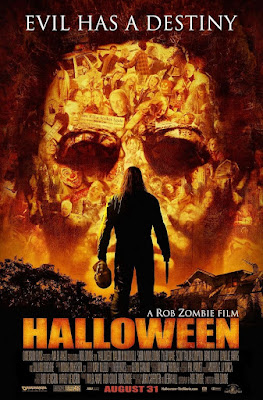
Rob Zombie's Halloween (2007/2009)


Director: Rob Zombie

Screenplay: Rob Zombie

Cast:

Halloween:

Malcolm McDowell as Dr. Samuel Loomis, Brad Dourif as Sheriff Leigh Brackett, Tyler Mane as Michael Myers, Daeg Faerch as Michael Myers (age 10), Sheri Moon Zombie as Deborah Myers, Scout Taylor-Compton as Laurie Strode, William Forsythe as Ronnie White, Danielle Harris as Annie Brackett

Halloween II:

Scout Taylor-Compton as Laurie Strode, Malcolm McDowell as Dr. Samuel Loomis, Tyler Mane as Michael Myers, Chase Wright Vanek as Young Michael Myers, Sheri Moon Zombie as Deborah Myers, Brad Dourif as Sheriff Lee Brackett, Danielle Harris as Annie Brackett, Brea Grant as Mya Rockwell, Howard Hesseman as Uncle Meat, Angela Trimbur as Harley David, Mary Birdsong as Nancy McDonald

A Night of a Thousand Horror (Movies)


Rob Zombie's remake/reimagining of the Halloween franchise was always going to be divisive. I was even an admirer of Halloween 2 (2009) originally, as the film defended as being a powerful and underrated work. Returning to it however, even that has fallen in lustre for the sense that you can be too nihilistic that it actually undermines the virtues of the films, that and the fact that this tone would have made sense for a more riskier, less crowd pleasing horror film, not how to continue the Halloween franchise as a crowd pleasing franchise and still needing to complete the checklist for this. There is a sense that, for me, if Rob Zombie did not have to have the gore and the body count, we would have gotten a superior work that just happened to use the Michael Myers character. People would still hate these films, others will defend them, and they would still be grim, expletive filled takes that is not glamorous about a child who became a serial killer, but why ultimately these films do not work for me is that Rob Zombie needed a striped down version of this premise like Halloween H20 (1998) in structure. Instead, its contractual agreement and his interest in still being a gristly slasher film becomes an albatross around its neck.

The first film is an ugly new take for the time on Michael Myers' childhood. His stepfather is abusive, eyeing up his older step-daughter, whilst Michael himself is being bullied at school about his mother (Sheri Moon Zombie) working at a strip club. From the get-go you also see the era this film was made in too in tone; when Zombie was transitioning to film directing from his music career from House of a 1000 Corpses (2003), we had a run of more extreme horror films from the United States even if the theatrical releases were altered and Director's Cut/Uncensored versions were a popular selling point for DVD/HD-DVD/Blu-Ray releases. Remakes to The Hills Have Eyes to The Last House on the Left also came at this point, and a lot of the era has been described in terms of post-9/11 mood, the result of September 2001 and the Twin Tower attacks, alongside the resulting second Gulf War. This was said to have left the horror films from the United States to reflect the time period in the likes of the "torture porn" sub-genre and more bleaker films, more grimly toned and lacking less hope for its characters to survive, but to have significantly less trauma after the end credits roll.

Brutally, however, I think this era is going to age so much more badly than even the nu metal/pop rock of the early 2000s due to their bleakest being found wanting and grim dark at times. These films can be grim at points to the point of comical levels, like Michael killing animals whilst listening to the band KISS, which poses an issue that the more interesting and emotionally rewarding moments are undercut by the moments which do not work. The most rewarding details of these Halloween films find the right balance between their nihilism, contrasting Rob Zombie's eccentric tastes against moments of quiet pain and psychological damage. Everything in the first act of the first film, Michael's childhood, is actually good despite the points that try too hard, Myers as a psychologically damaged kid from a rough family who is allowed to become a psychopath without intervention to prevent this. Some of the more interesting details reflect too that Zombie was raised as a seventies kid, just from the soundtrack between both films from Nazareth's Love Hurts to Blue Oyster Cult, but also because he grew up in the decades of serial killers that became an obsession in American culture. From Charles Manson (name checked in the film) to Ted Bundy and his ilk by the time the band that made his name originally, White Zombie, formed in 1985, we see him using Halloween to clearly deal with them as a pop cultural concept. We lost a great Zombie film as a result, between grim thriller and sick humoured satire, about serial killers and the culture around them, Zombie able to stop and allow characters to show grief of the loss of loved ones between both films, as we recreate Myers rampage in Haddonfield twice, but also showing there being the fixation of them in unhealthy ways after the survivors are left picking up their psychological pieces.

The controversial decision to turn Dr. Sam Loomis, his psychiatrist, into an alternative world version who sold his soul was clearly meant to depict this. Malcolm McDowell's Loomis becomes one of the actual successes of both films for me, and we forget that Donald Pleasence's take was distorted in later sequels, so a sacred cow was already undercut. McDowell's trajectory is one of the strongest aspects even in its slightness; able to see a young Michael Myers in an asylum, devolving behind his own crafted masks, it does not feel like it is fetishing serial killer iconography, instead the first film meant to be a tragedy as Myers loses what is left. It becomes one including of Sheri Moon Zombie's mother figure, which is heartbreaking with her playing it beautifully, and how McDowell's take becoming an ill fated turn that adds a newer weight, that of if Loomis had not become the noble hero of Donald Pleasence's version. With Loomis as a child psychologist whose heart effectively died, whose first marriage lasted less than the fifteen years working with Michael, the arch of him fully selling out by the sequel is compelling. 

Far from having complete disregard for the source, it feels a widening of the possibilities in the source material, where there is a mocking of the fetishisation of serial killers in Loomis' book tour in the sequel, the book signing scene in that film both with the fan way too into Myers as a person is as well as the father of a slain victim from the first film pulling a gun on him. Zombie rebuts the danger of himself fetishing these types of figures, which slasher films do not tend to do, and it is here where the grim tone can work fully. Where they lose their power is when their relentlessness becomes their ultimate failure, as they numb the pace and emotional weight by their final acts. Zombie managed to do more not in the numerous murders and stalking scenes in Myers, but getting a pointed criticism of media culture on celebrities even in a very silly piece of stunt casting, with musician "Weird Al" Yankovic as himself on a talk show helping to mock Sam Loomis. With one joke, he got a far more compelling take on the lingering nature of gristly murders at the same time.


In their best forms, these films would have allowed more moments of levity if not able to stop the horrors of Michael Myers. Levity comes in moments such as Ken Foree in the first film, with mutton chops and reading porn on the can, but he still dies, levity fleeting in a way that works to emphasise the tragedy Rob Zombie was clearly reaching for. Some moments for the sake of them - one of the guards in the asylum Myers is in during the first film lets his cousin try to rape a new female patient, letting Myers escape - dangerous veer into edge lord territory when there is enough misery and pessimism to work with. There is also the issue that, when it comes to remaking the original 1978 Halloween in the second act, I stopped taking notes and started to switch off.

This proves an Achilles' Heel for the Rob Zombie films as it is important to set up one of the more admirable aspects of these two films, setting up how this world's version of Laurie Strode, played by Scout Taylor-Compton, develops PTSD she has to cope with through Halloween II, and we follow both her at her best coping with the trauma and the worse when she cannot. This is also the one time, when dealing with this, playing as a traditional slasher film succeeds, in how it recreates the original 1981 Halloween II as a fake out dream to establish said trauma. We get to see the aftermath in the hospital of Laurie having her wounds treated even in the dream structure, forcing one to see this, and I will still respect the film, despite my new misgivings, for its use of Nights in White Satin by The Moody Blues, which is exceptional. We also see the flaws still of Zombie overdoing the misanthropic aspects, as whilst I can appreciate the surrealism of Michael Myers' escape from a morgue wagon because it crashed into a cow, having the driver and attendant talking about having sex with the female corpses however undercuts this. In one hand we see one of the best ways to use the slasher structure for a reason, and in the other, there are still the issues that plague the two films.

My problems become that the entire remake project was an ungainly work for a director far more interesting when he is not shooting stranded horror and gore scenes. The whole journey of Laurie is absolutely sympathetic, the White Zombie singer not the first person I would have ever shown such heart in his work, but showing it admirably in how we see her on medication and struggling in therapy, something I have to respect him for. When certain characters die between both films, it is tragic and Zombie actually shows grief. Despite the stunt casting, that fits still; beyond the curious sight of Udo Kier and Clint Howard in the first film sharing the same screen with McDowell, it also leads to one of the best aspects being Brad Dourif, given a great deal to do in terms of a rich performance for a slasher film.

It sucks that, for all these virtues, I have to be a Debbie Downer about how too bleak tonally this becomes. Even if Zombie deliberately changed the film stock used for the sequel to emphasise the grimmer reality, the violence becomes number to the point of not registering emotionally or causing me to question why certain moments were even necessary. There is the sense of the slasher template not helping at all, as Zombie's thesis on trauma is pointless when he has to have random by bystanders killed, like a horny older strip club owner wanting to get it on in a Frankenstein's mark with a female dancer, to keep to the body count high. Even the deeply surreal moments of Halloween II that I initially liked felt bolted on this time, with Sheri Moon Zombie as an apparition with a white horse visiting Michael Myers, because there is no set up for this in the prequel. When seen close to each other, it sticks out from the film two years earlier; despite the fact it gives us one weird, almost Guy Maddin-like dream of pumpkin kings at a dining table, the kind of moment I am into within an instance, it is the only moment of overt surrealism and thus loses power. Bringing this nightmarish side to the film, but never capitalising on it, felt like an abrupt Rob Zombie music video that appears, never meaning anything to the plot trajectory.

None of the deaths are "fun" in these films, all uncomfortable and all awful. There is not enough, even with moments of humour, to separate from the inevitable, the death and tragedy of the characters. But you can overstate this and grind a viewer down to the point this theme itself is lost, which is the issue with the Rob Zombie Halloween films for me. It is to the point they lose their virtues, and Halloween II was not financially good enough to continue on to a third film either, so it lost a few people as well. By Halloween II, it feels for me that for the films which still came out in the early 2010s that continued this trend, this era of edgier horror films from the United States lost their ground by this point. Saw's last entry, before its reboot, was in 2010, and telling a far more financially success horror film in terms of box office in 2009, when the second Halloween reboot film was released, was Paranormal Activity. Still a film with a ghoulish ending, it was not as nihilistic and upfront in its violence, instead capturing peoples' imaginations in terms of supernatural horror. It was also one of the first horror films of note produced by Jason Blum, whose Blumhouse Productions would be a monolith for the US horror cinema into the 2010s onwards. The lasting irony is in knowledge he would be a producer of the next attempt to reboot the Halloween franchise with 2018's Halloween with David Gordon Green, where we close off another part of this franchise's many strange dimensional turns. 

Sunday, 3 March 2024

Bludgeoning Angel Dokuro-Chan (2005/2007)


Director: Tsutomu Mizushima

Screenplay: Tsutomu Mizushima

Based on a light novel by Masaki Okayu

(Voice) Cast: Reiko Takagi as Sakura Kusakabe; Saeko Chiba as Dokuro-chan; Ayako Kawasumi as Shizuki Minagami; Rie Kugimiya as Sabato-chan; Akeno Watanabe as Zakuro-chan; Atsushi Imaruoka as Umezawa; Ayako Kawasumi as Shizuki Minagami; Daisuke Kirii as Seargent/Zamuza; Fumitoshi Miyajima as Nishida; Reiko Takagi as Minami-san


"It can't be helped that the class representative has been turned into a monkey, so Dokuro-chan may sit next to Sakura-kun."

Bludgeoning Angel Dokuro-Chan, to use its full name, could be seen as a true stereotype of anime. A young teen male has a guiding angel, a cute girl, protecting over him, with wacky sex comedy hijinks ensuring. Even if a parody of these tropes, it might prove an eyebrow rising take on them for an outsider to the medium, so this title does come with a caveat that it is an acquired taste. However, considering immediately into the first episode she kills her charge with her giant spiked club the first moment she is introduced, caught getting changed in his room, only to resurrect him as she will do at least two more times that same episode, we are dealing with something more openly twisted in its humour than other anime parodies or sex comedies. It really works as a parody for people who have actually seen anime tropes it is parodying, but as much of my interest in this straight-to-video production, whilst slight in length is seeing it take the stereotypical love-hate romantic relationship found in many stories, not just animated, and take it seriously whilst with its macabre sense of humour, as if there could have been a version of this with a regular of romantic comedies, Jennifer Aniston, could constantly bash her love interest's brains out everywhere only to oops, resurrect and apologise for this over and over. 

The story of this production, and this theme of love even if the female lead will kill the lead, is also as much to do with its director Tsutomu Mizushima for me, who I fully believe has always approached his career as an animation director with a macabre sense of humour, which is more implicit as he is the screenwriter for this two series straight-to-video production too rather than just their director, adding a greater connection potentially to the material. Mizushima has fascinated me for a while. Arguably, as much of this may be for the wrong reasons, as his stints in horror after Dokuro-Chan have been divisive to say the least. This is where the question of what is intentional or not gets confusing, but also compelling, as there is a title like Another (2010), a supernatural mystery series, which violently contrasts its serious tone with over-the-top deaths that you could call comedic, such as the first being an unfortunate encounter with an umbrella and a staircase. The Lost Village (2016) really comes in as the production which raises this concern. With its main composition by the acclaimed screenwriter Mari Okada, a huge figure in anime, let alone a significant and prolific female screenwriter in the industry, who has even directed a theatrical work named Maquia: When the Promised Flower Blooms (2018), it was a very divisive television series, one which many would argue was terrible, but has been argued to have been a satire of the genre which took people by surprise. Between a character who has forever stayed with me and could have been a character here in Dokuro-Chan, Lovepon, a young woman even a tragic back story whose obsession with execution becomes delightfully absurd, and material that even for horror would be balked at, like a giant monstrous silicon breast implant, it emphasised the really unpredictable nature of the director Mizushima.

Because of how many tangents there are in his career, I have always been wary of dismissive some of these projects even if they were failures. Even for the work of his that is more wholesome, like the Girls und Panzer franchise1, Tsutomu Mizushima has also had a streak of misanthropy found in his career, especially in the comedies from his earlier productions in the straight-to-video format. These are the points, including how gory he could get with his horror work to a hyper-exaggerated form, which raised this question of deliberateness for me as an anime fan. An obscure set of shorts less than thirty minutes long for online viewing, Plastic Neesan (2011), is an absurdist comedy about a group of model making schoolgirls which never got to model making, and was instead about characters who could be really spiteful or just weird. There was also Magical Witch Punie-chan (2006-7), which envisioned a magical girl if she was the evil despot heir of a magical kingdom, an inspired and dark premise which went as far as a comedy as having her cute animal mascot as an indentured slave constantly trying to murder her. The infamous one of this trio is Bludgeoning Angel Dokuro-Chan itself, as whilst the USA also got Magical Witch Punie-chan, Dokuro-Chan was the one which gained a wider attention when it was released in the United States by Media Blasters back in the day, a straight-to-video work which is brazen with its tone despite juxtaposing it against its fluffy presentation.

This, including its source material, a light novel series, is clearly a parody of a couple of works. Ah My Goddess, originally started as a 1988-2014 manga by Kōsuke Fujishima, was about a young man who accidentally summons a titular goddess to his world as a new roommate; famously, as nodded to in a joke here, is Rumiko Takahashi‘s Urusei Yatsura, a legendary manga (including its animated adaptations) where a young teen male finds himself with a female alien named Lum living with him on Earth. Dokuro-Chan herself is an angel from the future with a halo and a giant spiked kanabō club called Excalibolg,  which she can use to both resurrect the dead unscathed as well as splatter a torso into chunks with one swing. The tone of the straight-to-video series, and why it may raise an eyebrow from anime fans as much as non-anime viewers, is that the initial set-up is legitimately twisted despite most of the story in these episodic episodes being more a sex comedy in the traditional sense from anime. In context to the fan base, even some of the lewder jokes are normal, but the cutesy tone occasionally gives way to jokes which with hindsight are quite transgressive, softened yet paradoxically heightened by the tone.

Dokuro-Chan was originally assigned to the past to bump off the male lead, the young teenager Sakura Kusakabe, as he was foretold to accidentally defy God by giving people immortality despite being the typical horny male lead, one whose hormones make it impossible to get past a girl he takes interest in without embarrassment. Where the joke might be more shocking nowadays, casually used as part of the humour, is that for the price of immortality, it meant finding immortality by accident by permanently stunting women from growing biologically from twelve years old. With very casual jokes of people calling Sakura a paedophile much to his horror, it never gets any further in terms of transgression, but is causally brought up to torment him quite a few times and emphasises that, whilst portrayed as a light hearted comedy, this is for the first "season", not conventional in episode number or length, it taps occasionally on bleaker humour whether it has all aged well or not multiple times. This is the kind of joke that occasionally appears within this, which means I would not recommend this series for most. It also falls back into a type of sex comedy which is common in Japanese animation, including a potential issue for anyone outside anime fandom that many sex comedies involve teen leads in general, as here, that will also not be for everyone either. A lot of this in this case, as per the genre's tropes, is usually the gag of embarrassment and the male lead being tormented for a mistaken comment or being in the wrong place of mind (or actual location) at the wrong time, and ending up being called a pervert, which is not for everyone even for anime fans. That idea of male sexual neurosis, whether intentional or not, is found in a lot of anime, and befits this story with hindsight. The difference here is that this has an outlier tone which affects this too, that a lot of it is very light and fluffy sex comedy, with the bright colours and tone of early 2000s anime, but contrasted by the twists of dark humour. The most prominent is that, even if played for light hearted chuckles in tone, we will be seeing a lot of Sakura’s intestines and guts being split over and over, lovingly animated in his repeated dismemberment by Dokuro.

The tone is perfectly set up in the opening credits song, redone with newer lyrics for the second set of episodes released in 2007, a charming ditty from Dokuro's perspective where even if she will maim, disembowel and mutilate her crush, it is out of pure love, infectious and completely setting up the cutesy misanthropic tone. Dokuro-Chan does not play safe with its humour when it wants to, its eight fifteen minute episodes for the first series placing itself in regular slapstick with added gory violence, and deeply weird one-off gags which are strange with clear knowledge that is the intended result. Dokuro decides, rather than kill him as assigned, that she will try to change Sakura whilst becoming smitten with him, but that this pretext is more that he is stuck with an impulsive id of an angel who likes him but also indulges her pure obsessions whether beneficial for him or not. Sakura will die a lot at her hands and the Excalibolg despite the initial promise to protect and change him, usually because of her reactions to his lewdness (or accidentally seeing her undressed), or even trying to get a mosquito off him at one point with the club. It is to the point permanent psychological trauma is likely from the many deaths and resurrections he has had.  The lack of consequence, or anyone else reacting badly to this even among his classmates, who at times do witness this carnage, is part of the joke, even if eventually there is the current that he is crushing on her despite being attracted more to other classmates.

The resulting work for the first "series", eight fifteen minute episodes compiled into four full ones, is to be honest one you would not show a person if they are new to anime unless you knew their sense of humour or taste in the perverse was strong. A lot of it inherently would baffle or even make someone uncomfortable, particularly many of the sex gag are about near nudity or perceived sexual innuendo with its teen cast, despite never showing anything actually explicit unlike some sex comedies have. It is the kind of work, out of context, which supports all the clichés that give anime a bad name, and one has to remember that Reiko Takagi, who voices Sakura, is actually an adult voice actress who however manages to make Sakura sound like he is actually voiced by a young teen boy, one who will be battered and smashed into chunks of meat repeatedly by Dokuro. Within context however, the really misanthropic humour actually softens the discomfort and a lot of it feels like it is playing up to clichés only to twist the knife into them. Dokuro is the lovable heroine if you can get into her headspace. Alongside the cliché of the female lead beating up the male lead for a perceived (even accidental) slight of perverseness being taken to an extreme, she is very much an anti-heroine, someone who can destroy for the sake of it, as much as lovable in her earnestness for Sakura and her growing crush for him.

It is, however, a relationship has its difficulties, whenever she will eventually even say very random and illogically things, and is suggested to have tortured a teacher to start a club entirely devoted to the sport of watching woodwork glue dry. In the wrong frame of mind, these characters including Sakura may put you off, but the clichés they are as characters meant to be add to the dark humour. Such as the fact, when his class is informed he will eventually cause the entire female gender to be stuck at the age of twelve, they do not defend him in the slightest, and were already going to beat him up or ostracise him beforehand. The sole exception is Shizuki, whose crush on him is countered by his to her, undercut by Dokuro blundering through, and their own chemistry as the leads who clearly have fondness for each other, playing to the cliché of a love triangle with actual seriousness. This does emphasis, at the end of the day, this was always going to play in the source as a conventional teen romantic comedy, but that the set-up is deeply surreal. Then there is another angel (with horns) called Sabato, who with an electric cattle prod powerful enough to kill a sperm whale is there to murder Sakura but you feel sorry for, as the joke is how to torment her over and over, forced to live in the streets, and under a bridge cold and miserable, to the point the end credits song is from her perspective as she is miserable and cold.

All these characters exhibit the tropes of their archetypes - Sakura is the typical "potato-kun" generic male lead, a term I am using from online slag as many male protagonists have a passiveness with a sense of being stand-ins for viewers, to the point they have the danger of being blander than a raw potato, contrasted by fighting against his puberty badly as a teenager whilst trying to be a good person. Dokuro is mostly depicted as a bright, light voiced ditz who happens to have a giant spiked club. The clichés of some anime and manga, the sex comedy, is contrasted by the hyper violence or the perverseness of some of the gags, even cruder ones like the fact that, in this series' dogma, if you remove an angel's halo (as razor sharp as a sword) it causes one to have continuous and life draining diarrhoea. For all its crassness, there are moments which are deliciously peculiar. Surreal anime comedy is distinct from surreal comedy in other mediums and other animation from other countries, and a production will win me over if it manages to use its visual style, the writing and/or pure strange ideas to least get a memorable highlight or two. No series, in one episode, is just dumb when it inexplicably references Franz Kafka's Metamorphosis, only with the protagonist Gregor Samsa waking up to discover, in a surreal dreamscape of a bedroom, he has grown a bug in terms of morning wood with the sexual anxiety metaphor apt for Kafka, as well as be a good joke when half of these sex comedies in anime, as alluded too, do end up being the existential nightmares of teen males when they reach and pass puberty.

There is, even for a work which clearly does not have a high budget, also moments of real experimentation too. The class rep, in the first episode when Dokuro is introduced to class as a student, is turned into a monkey, with a real stock image of a howler monkey used for his head in jerky stop motion. It is a joke paid off in further episodes on when she turns someone into a dog, or when the second series, just four more additional episodes, there is now a giraffe and a few others in their class from incidents we do not see. Little oddball flourishes, such as cutting to two wild bears looking nervously briefly watching at the carnage of Dokuro playing on Sakura in a river (with sweat drops signifiers for this), show even if the humour is crude and playing to vulgarity at times, it does so with a wink. Even those cruder jokes are helped by one of the huge advantages animation has, that you can exaggerate to an extreme, make even your female characters, no matter how cute and colourful, distort and even look corpse-like when the halos are unfortunately removed, including the strength of the voice performances from the cast.

This explains so much about its director Tsutomu Mizushima for me, even if all his productions are animation made by staffs of various collaborators. Working in comedy greatly, he likes broad and heightened extremes. When this applies to horror, even a goreless work like The Lost Village, the exaggeration is there and a dichotomy can arise in what was intentional or not with any work I will see of his in what was a success, what was not, and what was deliberately done as a joke or deliberately cutting the legs under expectations. Certainly as well, he does eventually lean further to absurd comedy through the first season, something to bear in mind even if still with the twisted logic of the original premise. The one crux for this production thought is that, for better and for worse, whilst this does have an ending in the first season, it really does not conclude the story. How you would conclude this premise I have no idea, and it would be compelling to know how the source material did so. Two years later, a sequel of four episodes (leading up to an hour's length) was created. It is, in honesty, bonus material. Set after the first series, with new characters fully introduced like Zakuro, Dokuro's nine year old sister who is yet in voice and appearance like an older sibling remotely not of that age, it is more a series of one-off scenarios with the cast even next to the first season, which was a set of one-off stories itself like Sakura being invited to the cinema by Shizuki on a date. Like the original, it is bright and cheerful in a good way in terms of appearance, but there is also clearly a sense of the series moving more to its sex comedy, lightly humoured tone than the first series, jettisoning most of the more twisted jokes entirely.

The first series had some weirder jokes, like explicitly referencing North Korea multiple times, and whilst the second series has its moments, including Dokuro trying to get Sakura is eat living chocolate versions of himself for Valentine's Day, there is a clear change in tone even if aspects, like dismembering Sakura at least once per episode, remain.  One of the things which does work in those later episodes favour is that they just emphasis some of the weird jokes from the first season, which feel weird even in context then from cultural differences, and let them be expanded upon. The entirety of the “Sensitive Salaryman” running joke grows thanks to these two series, a one off gag about a TV series (with a film spin-off) starring a man who emotionally and physically cannot live a day without his body riddled in hyper-sensation; I still do not get the joke in its full meaning, and the figure really only crops up in the background as a TV series character who got a film adaptation, but it works as a strange gag. More as it allows as well the multiple times the tie-in “Sensitive Sausage” branded food to be unfortunately in Sakura’s vicinity for ingestion for the second season, a tie-in probably requiring health warnings unless you want to be curled up in the foetal position with your body writhing in hyper-sensitivity, and hear that melancholic moaning that cues up in the score when the salaryman is evoked, which is what ultimately made the joke funny for me. And this feels deeply weird on purpose for any audience regardless of their native language and culture, and is one of the moments where the second series does have highlights to appreciate. For the most part, it feels like bonus material in the truest sense.

The original, even if the sequel still has Sakura being smashed to bits by Dokuro constantly, is in itself enough, especially if there was a sense of losing its misanthropic attitude. It feels too short as a fully fleshed out story, but the most subversive moment where the show there ends is trying for a dramatic conclusion, the cliché of the magical figure being forced to leave for her world which the show plays straight and has had enough time to have built up to. Knowing the premise is based on clichés eventually works in its favour as it is mixing the cute with the lurid and the serious. (More so, in the least expected scene, when the final episode even has a sombre and strangely ill-eased sequence of Sakura without memories of before and feeling he has lost something whilst spending time with Shizuki at a cafe). The entire running gag that this is effectively a male protagonist who is a submissive among more stronger and openly sadistic female figures, with the women in their twisted ways lovable and he the butt of the jokes, is pretty striking too from the first season, a trope that I have found finds itself in these sex comedies even if they still raise concerns for sexualising the female leads and, especially with the "harem" genre, the idea of all these female characters in a variety of romantic shapes all vying for the conventional male lead's affections. A lot of them end up, even if by accident, being about the male being entirely out of his comfort zone to confident figures, and here it is more obvious, so much so that whilst the episodes have grow stronger with hindsight, I do see the danger with the second series, if this had continued, of losing the female cast’s original tones in favour of more submissive fan service figures, which is no way near as entertaining. I see with the second series, when it spends an episode about the cast taking a bath together, that this even if you are a fan of the medium that can get past the sex comedy could have dangerously lost its initial spark if we got more from this narrative.

Whether you could have actually gotten this on to a further longer work, in mind to it likely needing to be censored for the television screenings for even the gore, is merely a guessing game. A title like this however presents, even in its own ballpark, the idea that you can parody the clichés of your genres but still be earnest in them. One joke far less palatable as the show aged, that Dokuro wishes to change Sakura because his older self would have lead half the world's population to being permanently twelve years old, has not helped, but most of this is a timeless joke which has aged well and allows one to still like these characters, the oddball couple who, even if one is not attracted to the other, will realise in the end he loves her as dearly even if he has yet to say "I love you" beyond friends. The reference to romantic comedies early on was a nod to this, as it is a joke as old as a screwball comedy from thirties Hollywood like Bringing Up Baby (1938), without Katharine Hepburn repeatedly bashing Cary Grant in the face with a club, but the exasperated male lead dragged along by the firecracker of a personality still found in many stories across mediums, and gender swapped, into the modern day. The idea of people who work together despite one being as much a frustration to the other is universal, and with Bludgeoning Angel Dokuro-Chan, the joke comes with a very sick sense of humour too in this case.

Abstract Spectrum: Cute/Dark Humoured/Wacky

Abstract Rating (High/Medium/Low/None): Low

========

1) Girls und Panzer might seem surreal still for outsiders to anime as a franchise about an all-high school female team of World War II tank drivers, in a world where they are kept and used for non-violent public activity, and it is considered a martial arts commonly practiced by women. To an anime fan, this is just Tuesday night viewing, so the bar for surrealism in premises is different.