Showing posts with label Letter: U. Show all posts

Tuesday, 7 June 2022

The Ultimate Ninja (1986)


Director: Godfrey Ho

Screenplay: Godfrey Ho and AAV Creative Unit

Cast: Stuart Smith; Bruce Baron; Sorapong Chatree; Anne Aswatep; Pedro Massobrio; Timothy Nugent; Rick Jenkins; Naiyana Shewanan

Canon Fodder


Be a good ninja...

I am back on Planet Godfrey Ho, and there is a fondness already to witnessing a man in a store bought ninja costume, a scratch which needed to be itched again. This film however feels different from others, to the point it surprises that its release date is 1986, around the same time as the truly infamous cut-and-paste ninja films like Ninja Terminator (1985) made by Ho and producer Joseph Lai at the time. This feels like a very early title from them, rather from that time period, before they figured out the presentation of these films, infamous in capitalising on the popularity of ninjas in the eighties by taking pre-existing films, some even unfinished, and splicing in an additional plot with new footage involving ninja. Usually leading to white men (likely bystanders floating around Hong Kong) in said costumes with obvious stunt doubles, this template created an infamous series of films, which this is still connected to if more tentatively. The Ultimate Ninja still has the Golden Ninja Warrior of Ninja Terminator, which can provide "supreme ninja power", but this feels older than the mid-eighties, not just from the film used, but in tone. Richard Harrison is also not here, the American actor synonymous with these films, and the absence is felt.

The film is a case where the ninja footage really does feel incongruous to the original film used, even if this also includes another ninja figure you could win for four hundred tickets at a seaside arcade prize counter. This still exemplifies the absurdity of the spliced-in ninja footage, before Ho got to his most compellingly weird content in this field, but the threading of the footage was more frequent in other well known films. Here, barring wondering what the "supreme ninja power" actually is, you still get some of the idiosyncrasies there. Especially with the evil ninja leader, the English dubbing for these films, in their unique inflections and ejaculations of words, is unmistakably of these movies, but this feels its primordial form. Even if this was actually made after Ninja Terminator, and those more well known films, it feels befitting this strange world of accidentally going backwards in logic, like a project which never got as much attention, for a lack of a better phrase, than those which were stranger then this.

It is a shame the ninja footage is unnecessary. With ninjas hiding under piles of leaves, and that they have an unlimited number of shurikens that can be used to swat stray ninja away like wasps at a picnic, and this has the sense of unintentional humour of the other films. It does however feel like, onscreen within itself, The Ultimate Ninja was still figuring out how to use ninja, before getting a named actor and abusing the footage you got, of trying to figure out how to make them interesting. With the good ninja indicated by having "ninja" on their headbands, skulls on those for the villains, or practicing on picnic benches, this does have a charming homemade quality yet combined by the fact that most of The Ultimate Ninja is the pre-existing film. As a result, the ninja footage becomes arbitrary, despite the production hired doubles who could do back flips and some homemade creativity, like editing around throwing swords at each other, feeling like padding.

It is perfunctory, even in mind these Godfrey Ho films are an acquired taste. This is before the likes of a Garfield novelty phone provided easier ways to intercut a ninja plot to the original film, and more use of splicing the two stories in general with these productions, with the only time they are linked properly being a single scene, with close-ups of faces from two different sources in indiscriminate tree covered grassland. The film that this originally way, also all told in just a new dubbed narrative, is a traditional martial arts film and is surprisingly complicated by itself, in which the leader of the village was killed, leaving his two sons and daughter to be rescued by the uncle, and then split off separately. One son becomes Jimmy is trained to get revenge. The daughter Sarah is with the uncle, named Eagle, who was left stuck training the men of the boss who had his brother killed, whilst Sarah fights behind his back to protect the village from their protection racket. The last son, John, is the klutz working at the noodle shop who wants to learn kung fu.

There is some fun with the source film where you prove you are the evil boss by perfecting your throwing axe technique, or that Jimmy's training for martial arts power involving the excessive breaking of mirrors with a staff, hoping to compromise for many seven years of bad luck by developing martial arts prowess. Truthfully though, with The Ultimate Ninja's source having a lot of characters and plot, a long winded plot at that, means that nothing, even if material was cut out, really required more than Godfrey Ho to have dubbed the film. Even if this was an unfinished film he worked on and completed, it felt enough for itself unless there was a mandate for a running time. Even the source material has aspects which feel underutilised too, if you just wanted a silly martial arts film, such as a bald fighter in a pink tank top who keeps tapping his head and looks like a beat 'em up character, one that could have been included in more prominently than he was. There are arguably, in fact, too many characters, as Jimmy is pointless, especially as a far more obvious plot is how Sarah, with her uncle Eagle forced to work for the enemy, should be the protagonist, capable of fighting to protect the village without anyone else blundering as a protagonist. Godfrey Ho films are messy affairs in narratives anyway, but this definitely was a mess among them improvised on. My love of the Godfrey Ho films does redeem what, even for a director who is an acquired taste, a film I once considered a slog, and should not be the film you dare try to introduce these films to someone for even for ironic viewing. It is still sluggish nowadays despite my fun with the movie. It is, for those curious about these artefacts, the fun oddity among them as a result.

Sunday, 24 October 2021

Unfriended (2014)


Director: Leo Gabriadze

Screenplay: Nelson Greaves

Cast: Shelley Hennig as Blaire Lily; Moses Storm as Mitch Roussel; Renee Olstead as Jess Felton; Will Peltz as Adam Sewell; Jacob Wysocki as Ken Smith; Courtney Halverson as Val Rommel; Heather Sossaman as Laura Barns

A Night of a Thousand Horror (Movies) #258


I love the tops of toes.

Sometimes you have to watch a film to see what the popular culture is like. Pretentious to write, but as someone who fully immersed himself into the outskirts of the moving pictures medium, I rarely if ever catch up with what is popular. One company I have tried a few times with, Blumhouse, has been for me really disappointing. They on paper have promised so much - their 2018 remake-sequel of Halloween which suggests updating Halloween H20's PTSD themes with Jamie Lee Curtis with David Gordon Green as the director, or their 2020 The Invisible Man being a salient take on domestic abuse themes - only to disappoint me when they barely cover the promising and thoughtful ideas of those particular examples. How ironic now that, with a film that was popular but suggests nothing of the sort profound, Unfriended manages whilst still being an entertaining thrill ride first to live up to more than those two films above I have mentioned. From a Georgian-Russian filmmaker Leo Gabriadze, who in a really curious cross-pollination of cinema had a major role in his teens in the cult Soviet sci-fi film Kin-dza-dza! (1986), this probably stands out more for me from an unexpected source, an influence who, as I will get into, with Gabriadze have taken a really inventive direction with horror cinema. With one of the producers being Timur Bekmambetov, this involves the Russian company he founded the Bazelevs Company and is part of a fascinating little niche of theirs, an attempt at a new genre Bekmambetov has had his company involved in called "Screenlife" films.

For me, Bekmambetov came to attention as for many outside Russian for Night Watch (2004), his ambitious dark fantasy adaptation of a novel series, part of a series, and it is fascinating that the man who attempted to make a very unique, but extensively CGI heavy and glitzy, horror-fantasy work that managed to get a 20th Century Fox release internationally has taken it into his stride to bring modernity into cinema further. They have made a few of these films, including Searching (2018) with John Cho, in this "screenlife" genre and the idea behind them is to tell narratives from the point-of-view of a computer or Smartphone. Without even knowing this originally coming into this film, I wanted to see Unfriended just because it was a modern film, literally because it was one about the internet, something I am in a weird position with as a Millennial still older than most that use YouTube and Skype more than me, and Generation Zs ("zoomers") who are even younger, but with still enough of an upbringing (and fascination) to take real interest in a film like this. Unfriended is very much a modern take on a slasher film crossed with supernatural horror, but the individuals actually behind the film, released by Blumhouse, gave me something really clever and interesting.

I am from the time, in the early 2000s as a young teenager, when the internet was still new but not some alien technology. It was in secondary school (high school) with the school computers when the internet really felt prominent for me, when Wikipedia was a new thing that came to be, and already allowed someone too young to in learning of some of the lurid genre films I would get to, and one day in the late 2000s or even start of the 2010s did I adapt to YouTube. Skype is something that exists as a way to communicate, but despite having once signed up on Twitter, I never used it and barely use Facebook. This is important as, whilst keeping myself (without boasting) up to date with trends over that decade to now, I am still alien to this whilst not lost in the dark, making Unfriended a curious film for me to see in mind to the ideals of "screenlife" films, clearly meant to follow up on the modern trends in culture. Considering horror films still have to negotiate around mobile phones being a factor in screenplays, this feels extremely advance and current as a film where, told on one computer, it belongs here to Blaire Lily (Shelley Hennig). She is an absent friend to Laura Barns (Heather Sossaman), a girl who committed suicide with gunshot after being bullied and humiliated online. One night, when Blaire with friends get together on Skype for an online video call together, there is an unknown additional member of the group call, deciding to punish these friends over Laura's death, all told without leaving the computer and its many functions many of us use part of the storytelling.

Verisimilitude is a huge factor, Timur Bekmambetov having become someone, when he developed this concept of cinema in the Bazelevs Company, who found this concept of using computer's functions for drama and storytelling a meaningful one to investigate, experimenting in multiple genres with collaborators and being accurate with the technology even in post-production and the filmic equipment used1. This is meaningful, where at the same time this goes out of its way to have real media used, to the point I wonder how many fake Facebook profiles were created for the social media site to make this film possible, it also exposed whatheever the intention, and to the film's benefit, the problematic and unexpected issues with these sites and tech morally with how it relates to use. Unfriended in its own way is the pulpier, brattier cousin to Kiyoshi Kurosawa's Pulse (2001). Pulse was a sombre, superior film where ghosts haunt the new medium of the internet, but Unfriended envisions less an apocalyptic scenario with the older film but a morality tale, where this interest in seeing the drama exposed when someone using their computers, taking calls online even mid-conversation with someone else for example, exposes who they are or, in a way, the masks worn online.  The characters in this film are revealed to not be likable figures, none of them, as this opens with the lead watching a leaked video of Laura committing suicide at school on an obscure site. Obviously, this presents Unfriended as a film where some will cheer on their demises, including by way of self-infliction of a blender to the face, but this follows an old school morality tale of just punishment and tells the flaws of human beings, especially when forced by threat to expose their lies and fatal flaws, in gristly manner.

It is pretty simple, though the reference to the slasher genre is befitting as, structurally, it takes the template of picking people off but boils it down and bolts it to this morality tale, which is pretty poignant in what it is talking of. Films like the 2018 Halloween felt pretentious and barely tackled their themes. Here it is blatant and obvious, but stands out because it does not deviate from the subject even if surface level, still gaining something from pointing out the obvious but tragically significant still. That unfortunately concepts like bullying and hierarchy even among teenagers still existed when this film was released but, as gotten to the point social media sites among other issues were being taken to task even in court hearings in the 2010s, these concepts bled and changed with new technology. The film is not profound in terms of suggesting greater meaning, but sometimes having the obvious told in a gristly morality play like this is enough to praise especially as this tackles the subject in a new way.

For me, the most interesting thing that led to me watching this was the decision to portray the narrative through other online media, and it works. It would have been perversely delightful to have seen this on a cinema screen, the computer screen's fragmentation in distractions and screens-within-screens made more if seen projected on a giant theatrical screen. Screens and windows cover each other, as the film economically tells its simple narrative without feeling contrived or limited by its format restrictions. It presents the moving picture image in a new way, and far from trivialising it, forcing one to look at one's computer (or Smartphone if the other "screenlife" films are as successful) in a meaningful shade by forcing it into the world of the cinematic image.

It feels fresh even if tropes for old slasher films still exist - the stoner, now a vulgar computer hacker, is here for example - but takes the logical step in mind to what the target audience for such a film would be interested in whilst not feeling like a contrived cash-in, but something more meaningful. It offers director Leo Gabriadze and his production team a lot of interesting challenges and innovations for an obvious plot narrative, so much so this feels fresh even now the film had a sequel and time has passed. And it finds, even if not a scary film for me, suitably creepy ways to make the idea of ghosts not alien to the modern world. It felt, to be brutally honest, Western horror films took a longer time than the East did, even in mind that may be an inaccurate bias I may have even stating that. Japanese horror cinema was tackling these subjects with mobile phones and the VHS tape in the nineties at least, but here with a film trying it with thought, even a music player, which will not stop playing a certain track, is startling, as is the unseen additional member of the Skype call show. Even if obvious, the really creative ways to scare someone here are surprising.

It also presents, in a more accessibly and less bleak way, the darker side of the internet. The sequel is subtitled "The Dark Web", based on the real concept, though already mythologized, of how with certain software like Tor that allowed anonymous communication, there is an alternative world of the internet, for some the liberated and uncensored form, but also unfortunately the place of horrible real activities, let alone ones fabricated through Creepy Pasta scare tales. Unfriended just with the surface level version, baring the suicide video linked to, already presents the horrors of how a blog or twitter page can paint an image of one, how one's skeleton in the closet can easily leak online to expose your corruption, or how it can encourage the potential barbarism in a person. Even the suicide video, a little aspect, reaches an uncomfortable truth of how suicide videos do leek online in reality. Even though this was, for me, a fun horror film that I had low expectations for but appreciated, Unfriended does so subconsciously because these ideas come together alongside this unique way to adapt to the modern world. Even if "screenlife" films become antiquated in a decade or so, they offer if they are like this one a fascinating historical marker for how one should gauge with this online technology, and I have to praise everyone involved with the film for doing this.

=======

1) An article that talks of this idea of the "screenlife" films can be found HERE.

Sunday, 20 June 2021

United Trash (1996)


Director: Christoph Schlingensief

Screenplay: Christoph Schlingensief and Oskar Roehler

Cast: Udo Kier as UNO-General Werner Brenner; Kitten Natividad as Martha Brenner; Thomas Nicolai/ Thomas Chibwe as Peter Panne; Joachim Tomaschewsky as Bischof Pierre; Jonny Pfeifer as Lund; Jones Muguse as Afrikanischer Diktator Hassan

An Abstract Film Candidate


It's not shit, its chocolate.

With United Trash, I introduced myself to German filmmaker Christoph Schlingensief. Making films since he was seven, the best way to read Schlingensief's career is either as a provocateur or the more brazen comment of a shit-stirrer, who viewed his home country and its society, including the middle class, in constant need to be attacked. Particularly once he transitioned from cinema to reality television and staged provocations, Schlingensief in his homeland of Germany went for the juggler. In that later period, after United Trash into the 2000s, he provocatively staged performances and becoming a media figure himself. This includes allowing members of the public to vote for whether asylum figures living in a Big Brother environment were allowed to stay or not in the notorious “Please Love Austria – First Austrian Coalition Week" stunt in 2000, after Austria gained a government including far right nationalists, whose outcry and success as a televised and public event, staged next the Vienna State Opera. A later work, originally a reality show on German television which became a 2004 documentary, was Freakstars 3000 which was a talent competition for people with disabilities.  

His lack of worldwide reputation for provocation is bizarre; especially when I get to United Trash and try to comprehend the barrage of transgressive lunacy I sat through, it is strange Schlingensief never really got his work a wider cult attention to my country knowing that the likes of Lars von Trier from Denmark were as capable of the same thing. For all I will bring up, United Trash is a well made film in terms of scale and its elaborateness, unexpectedly taking its influence from transgressive cult genre films for its goal to shock and awe the viewer. I will say, immediately, this is not a film for the sensitive. Shot in Zimbabwe, set in a mysterious African country with a dictator having been provided a German V2 rocket by a UNO general he intends to blow up the US president with, United Trash is going to offend someone, and that is not a lazy comment in this particular case.

It is the story of Peter Panne, son of a former sex worker and a UN German member. The UN member is UNO-General Werner Brenner as played by Udo Kier, the cult actor and a von Trier collaborator who worked extensively with Schlingensief, whilst his wife is Martha Brenner as played by Kitten Natividad, a cult and adult star whose early career includes later films of the cult director Russ Meyer. Already when you begin the film, chaos transpires. Surprisingly elaborate, even acquiring a helicopter for the opening, you already have a sense of the tone where everyone is shouting and nothing is sacred, including a side character called Bischof Pierre who is an excommunicated Austrian priest preaching to the locals an anti-Roman Catholic rhetoric, including wanting to drink the blood of the Pope, and Lund, Werner's bodyguard and lover. In the opening, Martha is ready to give birth to Peter abruptly, all set to what sounds similar to the Naked Gun theme.

United Trash, trying to figure out its purpose, is a complete burial of the United Nations and other groups with the ideal of trying to help in third world countries. You could lose sight of this in the film's willingness to throw itself into the truly bizarre, or that you have a barrage of multiple narrators and onscreen captions, male and female narrators and even Peter himself elaborating the tale, even subliminal messages onscreen the film warns of ahead of time. Alongside the distinct production style, with elaborate camera movements and time transitions shown through extras carrying signs stating them on handwritten signs, United Trash as a later film from Schlingensief is a rare transgressive film with a bit of a budget and benefits from Schlingensief's clear experience from his work since the eighties.

It is also a film, more so now, which is still shocking and at times in danger of just being politically incorrect with no real need to; eventually, due to a very unfortunate incident of getting a marble stuck up his nose as a baby, and his mother's attempt to remove it with a spike backfiring, Peter ends up with a huge gape in the top of his head, a slit which there is no way for me to circle around in description as it is called a "pussy" at points, which seemingly oozes squirty cheese. He is also meant to be a potential new Messiah, as if talked of in the prologue, one as a pawn for both Bischof Pierre for his anti-Catholic plan, who has seduced his mother, but also for the dictator who wants to drop the V2 into the president's bedroom. Your reaction to the film, barraging through its length in a quick pace, is entirely that it is not taking prisoners at all.

It has, when Peter gets the unfortunate injury, a scene of a doctor and his assistant in bloody surgery carving a prosthetic baby up like a turkey of fake blood, somehow managing to become an actor later than mere bloody offal. The film skirts homophobia, but only because Wrner's lover Lund is a degenerate, a comedic foil who is buff and has a fake tan, but for a joke also a pederast with a young infant Peter and marbles. A half-dead man, blown full of holes when a disgruntled local woman accidentally misses with a uzi, sits around Werner's sitcom home just wanting access to a public phone, and only in the country looking for sausages is a running joke for a large segment. This is a film where "pouring whiskey into his pussy" is an actual line. It also, bluntly, has a scene of Kier in black face (and blackened torso) wanking a banana off his banana skirt which would have not aged well even then, meant to be shocking in a scene where Kier in a UN military cap, black face and a banana skirt entertains the laughing locals on a stahe with Lund in a seventies tracksuit, all of which is beyond bafflement.

It is meant as satire, the UN and frankly Western involvement in general in the African continent viewed as inherently corrupt and misguided, let alone any specific African country, bringing their idiocies over to another land and making it worse. References to Yugoslavia, and the bloody collapse of that former country into multiple in the nineties clearly hinted at, are evoked as being one of the UN's achievements, and the film even to the point Martha and Werner's home is depicted in as a sitcom with canned laughter, burying its leads as misguided figures farcing around in another country. That the local extras are sidelined, mostly background figures with many performing songs and music nearby, can be seen as much as a mistake of the film alongside its provocations. Ironically, Christoph Schlingensief himself clearly must have realised the film as a satire of Western involvement in Africa did not work, or at least went further in a way that sooths the film's scattershot nature. He would go on to create the Operndorf Afrika (Opera Village Africa) in Burkina Faso in 2010, a cultural institution that would include a school, an opera house and a clinic1.  

The film in truth is a mess, but I will openly admit to having been taken aback by the film, compelling in its own right for how far it goes in its humour. It is also a rare case for Udo Kier having a lead role, and it is amazing to see him act with the energy of 110% extra force than previously seen in films from him, a rewarding experience to see him unleash a level of energy I have never seen from an actor I have always admired. He is matched by a cast as equally willing to fling themselves into this twisted farce. Kitten Natividad in particular, factoring in her willingness to be naked on screen including covered in mud, has as much energy as the brash American figure among the cast, a distinct presence physically but matching it with a bravado as much too in her performance.

Tonally too, the film does come off as a completely alien and perplexing work. Neither is it just how transgressive the film is - in the fake blood, or playing to taboos or the nudity - but even in the little touches like a kazoo suddenly appearing in the score which disarms the viewer. Your willingness to adapt to the film is a factor, including how brazen the film is to drag the viewer along, pulling them back and forth with the constant narration or jumps forwards. It will feel too much for some viewers even before factoring its transgressive nature. Certainly where the film heads to even when described does not begin to spoil the experience of what is seen - the US White House depicted within Zimbabwe with the local cast, cameos by a fake Cicciollina and Jeff Koons, obliteration followed by a happy ending by way of incestuous marriage, and a strange blob creature infant from a Frank Henenlotter film as an ending shock from the later's films - and realising this is the European art house equivalent to a Basket Case (1982) or one of the cult American films, only with its idiosyncratic choice of location and higher production value, is an experience which catches one off-guard.

Abstract Spectrum: Grotesque/Transgressive/Weird

Abstract Rating (High/Medium/Low/None): Low


======

1) As talked of HERE.

Wednesday, 17 April 2019

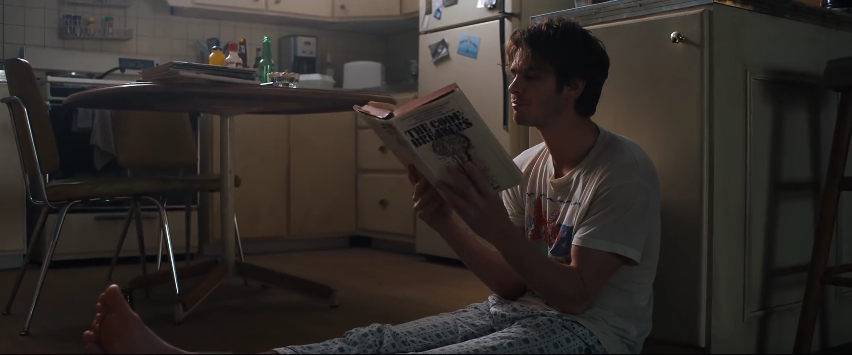
Under the Silver Lake (2018)

From http://www.vanessasnonspoilers.com/wp-content
/uploads/2018/08/Under-the-Silver-Lake-Poster.jpg


Director: David Robert Mitchell
Screenplay: David Robert Mitchell
Cast: Andrew Garfield as Sam, Riley Keough as Sarah, Topher Grace as the Man at the Bar, Laura-Leigh as Mae, Zosia Mamet as Troy, Jimmi Simpson as Allen, Patrick Fischler as the Comic Fan

Synopsis: Sam (Andrew Garfield) is a slacker who becomes fixated on his new female neighbour Sarah (Riley Keough), only for her to immediately vanish. His search for her across --- Los Angeles will include the King of the Homeless, conspiracies, a serial killer of dogs, and codes in Nintendo games.

Well, at least David Robert Mitchell was ambitious, which is not something you say a lot when, frankly, most American directors (and some beyond the States) when they have just made something interesting now get sucked into blockbusters with no creative control in the slightest. It's a view easily bias to how Under the Silver Lake is absolutely indulgent and not without faults, but God only knows how many filmmakers, when they've done well even in art house cinema, tend to now go for the blandest and predictable of routes with their newest films too. The comparisons to Richard Kelly have been apt - Kelly gained a reputation for Donnie Darko (2001), less when it actually debuted theatrically but from word of mouth, the follow up the notorious Southland Tales (2006). Tales was even more ambitious, comic book prologues and all tied in, and was also debuted at the Cannes Film Festival as Under the Silver Lake was, getting a good thrashing between them. Time is looking to potential give Southland Tales a chance, but Under the Silver Lake's too young to start asking about this.

Mitchell's journey is curious as, three films in when Kelly's was just a debut before he got to Southland Tales, he started with an indie The Myth of the American Sleepover (2010), then suddenly got a surprise hit by entering the horror genre, It Follows (2014) getting a lot of traction. So he decides to take his chips accumulated and gamble them all on this two and a half hour neo-noir pastiche which gets through so many weird tangents I don't know when to begin. Definitely, absolutely, the legacy of Thomas Pynchon is growing even outside of literature into cinema - amazingly, there's only been one official Pynchon adaptation in Inherent Vice (2014), but filmmakers like Mitchell have instead appropriated his style of numerous tangents and conspiracies interweaving into each other, loose ends, eccentrics and a lot of pop culture. Under the Silver Lake, whether you like it or not, is surprisingly faithful to his style even if by accident, even the length befitting some of his monolithic tomes like Gravity's Rainbow.

Mitchell's film is strange, a farce to be honest whose central figure, an obsessive compulsive conspiracy nut and slacker, is inherently a dick, who indulges in his old Playboys and Nintendo Power magazines, and is a peeping tom who gets distracted by eyeing up women. Andrew Garfield imbues him with some charisma, but he's having sex with an on-and-off-again girlfriend whilst having women's tennis on the television at the same time, beating up children for vandalising his car the next. The voyeurism has put people off with the film, and I'll admit that whilst we get to see Garfield's bared arse a lot for balance, the amount of female nudity is not helped by how the female characters really blur into each other; its far more problematic than the nudity itself, or that our protagonist thinks with his smallest head too much, or that it's roping in noir tropes of mysterious femme fatales. And Mitchell does make it clear he's flawed, a little pathetic, even sprayed by a skunk for a lasting plot effect, even having a voyeuristic scene involving a drone deliberately being a challenge to the viewer when the woman being spied on in a screen on screen is in tears.

Sympathy is to be had for him as much as failure, the film a long journey for him to potentially grow. A weird journey, crammed to the point it's wrong to follow the story as a concise one but, like Pynchon, a tangent factory. LA here is a place of odd events and mysteries, just from the outset with a squirrel dropping to its death off a tree in front of our lead and (visibly a puppet) gasping in a way that's sickly humorous, an immediate warning Under the Silver Lake is going to get silly on purpose. Independent comics talk of a spate of dog serial killers and killer owl women, that the secrets of the city can be found in an old fifties cereal's game on the box, or how the elite and rich are naturally getting up to hysterical hodgepodges out of boredom. The only sane ones, or in a way in control, are naturally the homeless or coyotes. The fact I first though the film was set in the nineties, because of the strange logic gap where our lead was able to see Kurt Cobain but is still young, does also suggest that, eventually, the nostalgia for the eighties is finally going to be punted off the throne in favour of a much more interesting and weirder nostalgia that is the nineties, where Cornershop is on the soundtrack side-by-side with R.E.M.

It's also, dangerously, riffing on the past whilst constantly undercutting it as being merely a distraction. It's an odd paradox that it gets a lot of humour from even a help guide for a video game being actually of importance, but that we also encounter a master songwriter who undercuts any sense even the most rebellious of pop culture is of actual subversion if it's mainstream. It comes off as bleaker, as a film, than anything I've yet read of Thomas Pynchon, and does show the real issue I have about Under the Silver Lake for all my enjoyment of it, a second viewing allowing any clouding of judgement to take place, that Mitchell's visibly crammed numerous obsessions together but the underlying idea that should tie it all together isn't cognitive enough. Even a much weirder, scattershot experimental film would at least lean on atmosphere and dream logic more, whilst Under the Silver Lake still plays out as a quirky mystery.

This also includes some of the mysteries and conspiracies as well, playing off coincidence or just an insane amount of planning for a New World Order to make reality - it does make an argument that such a conspiracy doesn't make sense in real life, due to how chaotic on a large scale it would be, unless one takes the idea that it's as shambolic of everything on the surface or that some really coordinated calculations make us all sheep. Either way, going for the obvious like the sexual suggestions of advertisement and such parts are the weakest moments in Under the Silver Lake, "duh" moments no way near as simple and crisp as when They Live (1988) just had signs everywhere, black text on white, just telling us all to marry and procreate.

This is more so as a lot is brought in - silent cinema, Hollywood itself, hobo sign language, fifties culture, and poignantly sixties and seventies cults alongside the type of modern art performances you'd get now. The centre of this film is, arguably, that nothing is resolved, which is a huge risk to take - details, without spoiling anything, allow for interpretation, such as Sam carrying dog biscuits and having dreams of women literally barking at him, or how the owl woman's identity is resolved. (Then there's the caged bird whose one word he says everyone including the viewer is trying to figure out). It's as much this why I liked Under the Silver Lake immensely, but I will be the first to throw out (if it hasn't already) that even Southland Tales, the notorious film it's compared to from a decade earlier, was at least circling the idea of how mad, chaotic and strange America had gotten and exaggerated it in terms of a plot. Whilst it took multiple viewings to get and love the film, which it at least went a direction with progression. Here, aware of its clear leanings to the idea of lack of resolution, or that the final scene at least has Sam finding a serenity seeing the apartment he's about to be evicted from through a new light, it was a gamble that a few people didn't like to be a lot more vaguer in terms of plot expectations.

A lot of this is as well why the languid pace and sense of nonsense is a good thing for Under the Silver Lake, less a mystery in the conventional sense but an Alex in Wonderland tale of Andrew Garfield encountering strange figures. A literal layabout, a semblance of (legitimate) skill to be a good detective when he's actually focused, but he's lead on a wild goose chase that we follow as confused as he is. This is the best way to view the film, and thankfully, it's a well made accomplishment technically to work in this direction, right down to the funny end credits animation. Bright, colourful and vivid in a way that's drastically different from It Follows. Disasterpiece, who made his name known to the public conscious through his score for that earlier work, comes with Mitchell here too and also takes a new direction, an orchestral score which does riff on Bernard Herrmann's work with Alfred Hitchcock but has its own playful richness to it.

Abstract Spectrum: Playful/Weird
Abstract Rating (High/Medium/Low/None): None

Personal Opinion:
The resulting film's a divisive one even for a defender like myself, just for the fact that it's decision to be a maximalist work in detail, but ensue a primary theme, is going to cause a lot of misreading or confused ones over multiple viewings. There's also just the fact it's a director going into his foibles despite the mystery/noir genre suggesting there'll be a conclusion at the end of everything.

What is there though, beyond this, is still a playful, very funny and sometimes poignant work. A brave risk which was worth taking, but what David Robert Mitchell is going to do next after this one is up in the air now.


From https://ilarge.lisimg.com/image/16416730
/852full-under-the-silver-lake-screenshot.jpg

Sunday, 11 November 2018

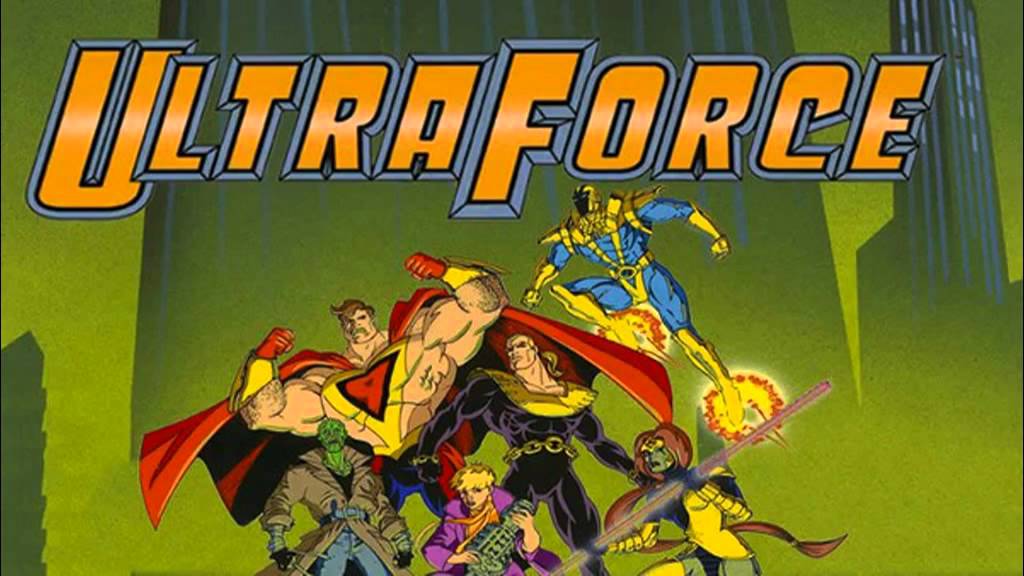
Non-Abstract Review: Ultraforce (1995)

From https://i.ytimg.com/vi/U_-dJdiOdEI/maxresdefault.jpg


Screenplays: Marty Isenberg, Robert N. Skir, Martha Moran, Dennis O'Flaherty, Doug Booth, Bob Forward, Diane M. Fresco, Steve Gerber, Eric Luke and Richard Mueller
(Voice) Cast: Andrew Jackson as Prime; Alyson Court as Pixx; Catherine Disher as Topaz; Janet-Laine Green as Contrary; Rino Romano as Prototype; Peter Wildman as Ghoul; Rod Wilson as Hardcase

Synopsis: In a world where vampires, fire people living underground, Jack O-Lantern headed maniacs and evil doers in general threaten the world, a team of super powered "Ultras" form Ultraforce to stop them.

[Spoiler for a Major Plot End in the first three episodes]

A memory, from childhood when I fed on nineties children's animation and live action programming over multiple channels, from the BBC to American ones like Fox Kids to Nickelodeon, had lingered in my mind as has happened for many. An image without a context, little else known as is the case for many in such a circumstance, maybe something even you the reader can appreciate with a likewise image from a work you have no idea of the origins of; in my case, in which a boy develops a goo-like substance from his body and, when it swallows him up, turns him into Superman on steroids.

Looking on Amazon Prime1 finally revealed this image came from Ultraforce, an attempt at spreading the word on the characters of Malibu Comics that was kneecapped the moment the thirteen episode length series was released, cancelled soon after. Part of the growth of comic books culture into the nineties, Malibu was founded in the eighties and were growing, introducing the Ultraverse concept in 1993 to put together all their characters into one shared series, of importance as Ultraforce and the characters even making cameos here would be tied to it. Unfortunately, the comic books industry in 1994 took a sizable impact and Malibu's properties were bought up by Marvel Comics. Marvel attempted to reboot the Ultraverse, even bringing in their own characters like Black Knight and Juggernaut into the world, but many problems came to be. Marvel's own flagging work and creative decisions that went against the original Malibu fans didn't help. By 1995, when the Ultraforce series started, there were enough tensions and issues that it would be cancelled after those thirteen episodes, also the cause of the two season adaptation of Night Man (1997-9). By 1996/7 the Ultraverse was effectively killed off, and as the 2010s the only Malibu character who has actually appeared in a Marvel source is Topaz; once in the 1995 series an intergalactic Amazon who's abruptly introduced in the series dropping through an intergalactic warp hole at a sports stadium and confuses American football players as warring soldiers, as of Thor: Ragnarok (2017) a tiny role played by New Zealand actress Rachel House.

All of this admittedly is coming from someone whose knowledge of comic books in general could easily be replaced by a wiser expert, but at least in the small research I've done, the tale of Malibu Comics is a tragedy, Ultraforce for all the ways I'll count how bad the series is at least giving me a fascination for this company and their creations. Any creation, no matter how ridiculous, can be redeemed and the nineties are the same even if it was the era of comical amounts of pouches on characters, and too many holographic and gimmick issues inflating the market until it collapsed. For all the criticisms I'm going to level on the series I'd gladly own the toys (which did exist) and have them on my shelf even if second hand, my love for the gaudy bright coloured forms of nineties pop culture also marked by a sense of respect for any creator even of bad ideas, that no idea is too bad or stupid if the right version can be created, and that whilst a couple of these particular characters have ridiculous names or dangerously verge on copyright infringement, they actually have a lot that would be awesome to see in a better context.

From https://s1-ssl.dmcdn.net/CcOKS/x720-TbJ.jpg

Ultraforce itself was an attempt to celebrate the titular group - in 1993 Malibu, doing well just before 1994, wanted to capitalise on their existing characters by enforcing a collected, interconnected world by way of a comic where they teamed together, the exact idea as the Justice League for DC Comics or the Avengers (or various groups) have been for Marvel. Throughout the series characters, villains and heroes alike who had their own comics, cameo in one episode roles, and the success of the nineties X-Men animated series is visible at least in the beginning credits, mimicry in the heroes standing next to their own names for introduction and the strangely catchy techno theme where the only lyric is "Ultraforce!" screamed over and over again. If anything, whilst a peculiar bunch, Ultraforce has the right sense of the ridiculous in terms of heroes, though one of the sloppier traits of the series is that, whilst some character might have to be in the background for some stories, characters can disappear completely off-screen for whole episodes without rhyme or reason, a shame as they are a fascinating bunch to work with for stories.

Prime, the poster boy for Malibu, the figure I had remembered who is a young boy who can turn into a muscled giant, someone who gets the most storylines and, honestly, is an interesting character as he's an immature young teenager living with his family, the threat to his family jarring against him trying to keep his secret from his mother as one of the episode stories show, whilst playing up how his naivety makes him incredibly cocky and misguided, the worst thing possible when he's over-muscled giant in Prime form who can obliterate things by punching them. Hardcase, generic super strong hero whose ability to fly or not varies wildly per episode, is interesting at least as he's a leader of the team that were mostly killed or left in a coma, producing a hardening of him opinions, alongside also being an actor as a day job who uses his abilities for his fame. Topaz, a generic Amazon who, alongside the Professor Xavier of the group, a woman named Contrary, unfortunately leave the series with a nasty case of underwriting its female cast. Prototype, effectively Iron Man even in design only with a cocky youth being paid by a major company to helm a super armoured suit, and Ghoul the undead sidekick who I openly admit is useless, barring being invulnerable and being telepathic to the point he can communicate to the dead and even the entire Moon, but was one of my favourite characters for being the sardonic corpse who makes terrible puns, even making a Grateful Dead reference at one point. They are, for all the stereotypes, figures you could easily wring a good story from if anything.

I haven't described any of the episodes and won't even try to because, honestly, they're pedantic. Ultraforce the series is terrible; growing up with DiC Entertainment animated shows, I suspect that if I went back to some of the programmes of theirs I did watch properly many of the worst aspects of this superhero show would also be found in them, even the likes of Inspector Gadget which made a cultural impact. Whilst the plots vary in ideas, they eventually are what would happen if you had the action figures and bashed them together at the end over and over again; a lot of comic books usually end in good heroes punching evil villains, but even if I wasn't spoilt by Japanese television anime, this is not a well structure show in terms of scripts and animation. The scripts feel rushed here at points and the animation can be shocking especially in the later episodes, even something an illiterate in animation technique like me can witness seeing fighter planes literally being moved as slides across the screen. The stories, only over twenty minutes per episode, do not have breathing room or well plotted. I give Ultraforce some credit as some of the episodes are stories split over multiple episodes; especially the first three episodes where, follow a single plot involving the fire people under the Earth's surface stealing nukes, it kills off a young heroine named Pixx, a really brave move for a children's show as she sacrifices herself to save the day, brave regardless of the sloppiness of the plot and complete disregard even in superhero logic of how nuclear radiation works. However, after that, you have very simplistic plots; many not well thought out at all, many which waste time on explaining obvious things for no particularly good reason or just bad ideas.

From https://s2-ssl.dmcdn.net/Jbmuj/x480-l89.jpg

It's entirely due to the charisma of the characters themselves, even when unintentional or calling each other nouns for names, that any claim to entertainment can be found. The episodes vary in who is used, and the cameos add more to this. The Strangers, another superhero team, appear in the final two part arch among a reoccurring plot thread of a mysterious bold of blue electricity striking a tram cart and turning many into heroes. One such figure, the aforementioned Night Man, appears in episode 7, a saxophone player (sadly with his music done in awful bedroom MIDI) becoming a body armoured vigilante with natural night vision, a cameo who ends said episode on top of a skyscraper in full costume playing a saxophone in one of the series' most (unintentionally) memorable moments.

The villains are also from various Malibu properties - an energy vampire named Rune (who appears twice) had his own comic, as did Sludge, a minor henchman here who was actually by all accounts a tragic figure like Man-Thing/Swamp Thing for Malibu in his own series. And then there's the character who steals the show for me, right from the sight of him in the opening credits animation, by the name of Lord Pumpkin, a giant Jack O'Lantern headed figure in a purple suit and magical powers whose voice actor was clearly enjoying himself, investing more in the lines by chewing the walls of the recording booth, and the bizarre introduction of being in a gang war over a fantastical narcotic with a regular gang, as mad as a plot as you could get.

The idiosyncratic and weird juxtapositions, a few mentioned above, are where any fun comes into Ultraforce when frankly most of the time it panders to a child audience way too much and feels like the screenwriters weren't reading the original Malibu comics to properly depict the characters. Even for all my jokes, these characters deserved better. Characters like this, even if looked down on as was the case here even if by proxy, deserved better than a really slap dashed production this poor. It's a strange case of having utter admiration for the materials, the accomplishment of finally figuring out what that strange image stuck in my head since childhood was, and being proud to say I saw all thirteen episodes, but openly admitting Ultraforce was a terrible viewing experience.

From https://i1.wp.com/www.retroist.com/wp-content/uploads/
2014/10/lordpump-3.jpg?resize=600%2C453

=====
1) Although it wasn't appreciated when the show was pulled off in the middle of me viewing it, forcing me to look elsewhere; moments like that are what drive people to horde shiny discs and bootleg material, which helps no one.

Saturday, 7 October 2017

Uzumaki (2000)

From http://www.new-video.de/co/uzumaki.jpg

Director: Higuchinsky
Screenplay: Kengo Kaji, Takao Nitta and Chika Yasuo
Based on a manga by Junji Ito
Cast: Eriko Hatsune as Kirie Goshima; Fhi Fan as Shuichi Saito; Hinako Saeki as Kyoko Sekino; Eun-Kyung Shin as Chie Marayama; Keiko Takahashi as Yukie Saito; Ren Ôsugi as Toshio Saito
A 1000 Anime Crossover
A Night of a Thousand Horror (Movies) # 122

Not seen for many, many years the filmic adaptation of Uzumaki still retains a lot of its utterly odd power still. Between that time I've become acquitted with Junji Ito's original source material and all the other manga of his available in the United Kingdom finally. It's impossible to argue against his work being abstract on literal paper, cosmic horror in the Lovecraftian sense depicted through a streak of the openly absurd. But an absurdity that is nonetheless disturbing especially due to the incredibly quality of his own artwork. His world is that of simple, usually episodic tales of horror, only with the horrors not the conventional bogeymen but horrifying sights like people hung by the neck off balloons with their own faces over them, undead fish on robot legs, or in Uzumaki the symbol of the spiral and everything that contains it a cursed images that poisons and distorts people and reality. The tightrope walk between being utterly silly and how creepy is as much how the manga works in its power.

The adaptation, flaws and all, manages its hardest. Even if it's had to use a more conventional narrative, director Higuchinsky still embraced the surrealism of the material. He also, in a rare moment for an adaptation, turned it into something visually and tonally entirely different from said manga while paying immense respect to it. His technique heavy style never loses the original tone but is entirely different from Ito's original aesthetic, adding to the adaptation's weirdness in his use of everything from CGI manipulation to the colour scheme. For more detail, and why Uzumaki is sadly with flaws, follow the link HERE to the full review on my other blog 1001 Anime where it is a bonus review.

Abstract Spectrum: Grotesque/Surreal/Weird
Abstract Rating (High/Medium/Low/None): Medium

From https://images-na.ssl-images-amazon.com/images/M/MV5BOTI0YmYwNjktODNjMS00Mzc2LWIyOWItNDU5NTNlMW
NjODY3L2ltYWdlL2ltYWdlXkEyXkFqcGdeQXVyNzA0MTYzNTM@._V1_.jpg

Monday, 8 August 2016

The Undertaker and His Pals (1966) [Mini Review]

From http://ayay.co.uk/backgrounds/b_movie_posters/
1960s/THE-UNDERTAKER-AND-HIS-PALS.jpg
Director: T.L.P. Swicegood
Screenplay: T.L.P. Swicegood
Cast: Warrene Ott (as Friday/Thursday); James Westmoreland (as Harry Glass);  Marty Friedman; Sally Frei (as Ann); Rick Cooper
A Night of a Thousand Horror (Movies) # 14

Post Blood Feast (1963), when gore first made its real impact American genre cinema, The Undertaker and His Pals starts with three masked motorcyclists breaking into a woman's apartment and killing her, stealing a leg or so for their nefarious means with red paint blood split . The photograph of her sailor boyfriend reacts to all this with a variety of horrified expressions as he watches on, the same ghoulish humour here as in Herschell Gordon Lewis' splatter films. Like Blood Feast, this is a one hour long film about cannibalism, an undertaker and two dim-witted owners of a rundown diner killing people (mainly women) to improve their businesses, the undertaker able to charge ridiculously expensive funeral costs for the victims and the diner owners able to supply their courses with cheaper meat. It does emphasis that, once the door was kicked down in terms of adult content - gore, sex and nudity etc. - sixties American cinema got even more stranger as small independent companies churned out these exploitation films, and that's before the decade changed to the seventies and even stranger materials were produced. The film gets weirder from the opening, but whether it's a detriment to the film or for future enjoyment on re-watches is entirely vague for me, especially from how much slapstick there is between the gruesome content. This silly humour works at points, like the unfortunate person who's dunked into a vat of acid, but you also have the undertaker accidentally stepping on a skateboard and gliding along a long stretch of street in a moment of Jerry Lewis slapstick.

The result feels like a mutated cross between more older innocent films in its comedic content and tone, like the cast waving to the viewer in the end credits in their various forms of death, really stands out against the violence and sick humour. Not only, while sparse, is the gore actually quite gruesome for its time and the film has a misanthropic streak that tonally jars against the broad humour. Blatant sight gags, puns and absurd jokes, such as actress Warrene Ott playing twins named after the days of the week, contrast against some of the more eyebrow raising content, such as how main hero detective Harry Glass (Westmoreland) glibly accepts that his lovesick secretary has been killed and is immediately lusting after women after her death, part of the continuing question of where the film's gender politics lay. Particularly when the film has an intentionally exaggerated tone, the undertaker played as flamboyantly as possible with his two cronies as dumb as you could get, the moments of meanness in the humour or sights such as someone getting run over by a truck really do stick out more. No surprisingly to match this the ending is a series of absurdities of increasing insult to injury and a door literally backfiring for someone. This tonal discrepancy, between the sick humour and moments of innocence, is likely to charm many as it is to baffle others. It's a step higher in quality than some of Herschell Gordon Lewis' work at this time, but is still likely to even baffle some diehard fans of this weird type of American exploitation cinema. 

From https://horrorpediadotcom.files.wordpress.com/2013/05/under6.jpg

Sunday, 18 January 2015

Archival Review: Under The Skin (2013)

From http://troublewithfilm.com/wp-content/uploads/2014/12
/under-the-skin-alternative-poster.jpg
Dir. Jonathan Glazer

In the review that I am linking to below, I hesitated whether I would come to love Under The Skin in its unsettling beauty long afterwards. Its nearly a year now, and the film has stayed as one of the most important films I saw in 2014 because it's refused to leave my mind. Revisting it, it still retains its power, though I wish that as many people saw the film on a cinema screen for its full effect. Also of significance since I last saw this is my growing admiration for Scarlett Johansson. As an actress, not the person where there is the Soda Stream controversy to pick over, (look it up if you're curious), she starred in three very unconventional sci-fi films in 2014 in British cinemas - Under The Skin, Lucy (2014) and  Her (2013) - and in all of them she showed a talent that's won me over. Not just taking into account she has three very "different" films in her filmography, all three films stand out as being among the most interesting of the year, which places her up on a higher pedestal for me for the willing to take a risk with all three films. Out of the three, Under The Skin is the one stands out potentially as my favourite film for last year. I intend one day to cover a Best of 2014 post, though with some greater consideration, which is why I did not post one by the start of this January, and this will be a film virtually impossible to knock off number one unless I find another that had such a sensual effect on me.

From https://laceysfilms.files.wordpress.com/2014/04/under-the-skin.jpg
Abstract Rating (High/Medium/Low/None): Medium
Between Mica Levi's incredible score, her first for any film mind you, to the juxtaposition of semi-documentary with the most abstract of science fiction, a lot in Under The Skin feels utterly alien, if you mind the pun. The juxtaposition of this story with a realism of being set in Scotland is the deciding factor of the film's effect on me, such ordinary things, even Tescos, turned into things you look at with a new perspective. The result feels like stepping through the world as an extraterrestrial like Johansson.

From http://selectiveviewing.files.wordpress.com/2014/04/under-the-skin.jpg
Personal Opinion:
For the full review, written when I first viewed the film, and whose content still apply perfectly, follow the link to my old blog here

Thursday, 2 October 2014

Halloween 31 For 31: Unhinged (1982)

From http://ia.media-imdb.com/images/M/MV5BMjEw
ODgyOTYzOV5BMl5BanBnXkFtZTcw
MDY4ODUyMQ@@._V1_SY317_CR7,0,214,317_AL_.jpg

Dir. Don Gronquist

As you watch a lot of video nasties, you realise that, with a few exception, it was politicians and moral crusaders picking on little companies and non-Hollywood films - low budget independent movies for the most part, Italian and European imports, and the few Hollywood films were the likes of the slasher films that were made with small cost. The films themselves are varied in qualify, drastically so, but they're becoming closer to what I view horror cinema as, disreputable, critically unpopular movies made sometimes by small crews, with low budgets, fighting the restraints of the material available to them as they filmed. Unhinged is one of the greatly obscure entries for the video nasties list, which has a taste of the slasher movie, horror and a lot of dialogue sequences. Upfront, the younger Michael Hewis would've hated this film, not at a time before to be patient with this film's flaws, an unconventional pace or the mood common with a lot of these American independents, stripped of gloss, of having to build the films up in very limiting conditions. Quite a few viewers will find this film to be awful, as many have become fans of it as, when this review exists, a new restored DVD version will be released in Britain in the late 2014. It's a film that is difficult to gauge with through any of the above mentioned factors, while as for myself, my tastes having come to embrace such things, I was very surprised with how good Unhinged is.

From http://4.bp.blogspot.com/-8vnrBituWPg/T1Hm5MiU4EI/AAAAAAAAJTk/
dCbcsZDY-SY/s400/Unhinged%2B%255B1982%255D%255B%2528068
742%252913-49-33%255D.JPG
Three young women get into a car accident on the way to a music concert. They are taken in by a mysterious mother and daughter of another time and reality in mind. The mother, of a upper class family, is delusional, wheelchair bound and believes her daughter keeps bringing men into the house, while said daughter merely puts up with it, looking after the home and interacting with their accidental guests, the first in a very long time. There is something obviously amiss with the house, as one of the girls keeps hearing rough male breathing at night and there is someone clearly stalking outside, though the danger is far more complicated than merely that. Especially when you find a tooth on the bedroom carpet but don't find anything disconcerting about it. Unhinged cannot be dismissed as a badly made film. Barring one moment where a boom mike is clearly visible poking in at the top of the screen, for the most part it has what I'm finding myself adoring in these films of a rough atmosphere, of these films of a small crew filming in the woodlands of the United States, the clothes worn by the cast possibly their own or bought at a local store. The acting may not be perfect, but its immensely interesting, especially as the background to why the mother is the way she is becomes apparent and the slasher aspect appears.

From http://3.bp.blogspot.com/-fkOtv5Yioq8/TkuyUeq-LjI/AAAAAAAAAXA/SxlENID1G_g
/s400/Don+Gronquist%2527s+Unhinged+%25281982%2529+04.jpg
It was befitting, while obvious differences were there, that I encountered my first Andy Milligan films around the same time of seeing this. In both cases the flaw that they are too prolix is obvious, Unhinged full of lengthy dialogue sequences that are longer than the gore or horror content, making up most of the film, over elaborate, wordy conversations. Three quarters of the film is this, the two young women who weren't badly hurt by the car crash spending nights having awkward dinners with the owners, the mother going on about her daughter being a slut and staring at what appears to be glass dining table ornaments in brief trances, as if with a fascination of bric-a-brac that borders on the psychotic. The young women in smart dress, playing dominoes in the lounge while the daughter plays the piano, the film is closer to an unconventional drama than a Friday The 13th movie. The moment the daughter mentions how this all doesn't really make any sense, or the elaborate argument about whether one of the girls should trek in the woodlands to phone their parents. While able to appreciate these sort of films now, I'm still at the stage where the beginning, and all these dialogue exchanges, were disarming at times, difficult to sit through even, the film concerned with putting in a sordid backstory for the house while still having the actors talk out the lengthy dialogue. Once I was part of the way through the film, I could adapt to this tone, find enjoyment in this alienating presentation and then have the horror content when it appears that one is hopeful for from the movie. I can reveal in the messy, somewhat illogical tone of the film and over excess of dialogue, more so when the creators of the film did at least try.

From http://www.devildead.com/uncut/unhinged08.jpg
The main location, an elaborate mansion heavily decorated and from another era, greatly helps the film in tone, with many an image of the building in the dark, in the rain, as lightning flashes, evoking a Gothic horror story though the film mostly feels like a throwback to dingy, seventies horror films. I also like the synth score immensely, by composer Jon Newton, a basic series of notes and drones that add an appropriate mood to the proceedings. When the film reaches its finale, having grown fond of its tone throughout before, it really became something good, from an exceptional use of slow motion for a major, gruesome revel to the utterly bleak ending, all of which, making the last quarter of the film, being the reason why this film has stood out for me. Limited to only six actors onscreen, one main location and its surroundings, and very few deaths, it works immensely well despite the flaws as a gristly chamber piece that for its moments of silliness - the lengthy dialogue, the sequence with the tooth - is suitable creepy and gave me a chill in the spine through its ending. With a passing, clear nod to a famous film which is a clear influence on Unhinged, without giving anything away, the uneasiness and sinister undercurrent to the indie shocker worked immensely for me. Especially with the variability of the video nasties, this is a great advantage to have.

From http://www.devildead.com/uncut/unhinged02.jpg

Abstract Rating (High/Medium/Low/None): None
Not quite. Aspects push it towards being a Low. The droning synth score. The setting. It's mood. That finale. It all adds a lot to it, as does the structure which could alienate certain viewers or add to the effect, but I've set the bar to how to get a rating too high, making it difficult to add because of how most of it is still a narrative driven horror rather than something else.

A Cinema of the Abstract movie?
As I find myself forgiving mistakes in these earnestly made, lower budget genre movies, yes. While not going to be on the abstract list, Unhinged has everything I'd want - feeling like it was hard work the creators put everything into, was different from the run-of-the-mill, and unpredictable. Weaknesses and all, it's the kind of maligned, obscurer movie I'd be drawn to and can appreciate more now.