Showing posts with label Director: Jean-Luc Godard. Show all posts

Saturday, 6 July 2024

First Name: Carmen (1983)


Director: Jean-Luc Godard

Screenplay: Anne-Marie Miéville

Loosely based on Georges Bizet's opera Carmen.

Cast: Maruschka Detmers as Carmen X; Jacques Bonnaffé as Joseph; Myriem Roussel as Claire; Christophe Odent as Le chef; Jean-Luc Godard as Jeannot

Canon Fodder


No one needs an atomic bomb. Nor a plastic cup.

Jean-Luc Godard is Mr. Jeannot, a patient stuck in a health clinic, a has-been director pretending to be sick to stay in his room on threat that he will be kicked out by the staff. "Uncle Jean" as he is explicitly called by his niece Carmen (Maruschka Detmers), who visits, is a filmmaker who refuses to make films again, lost to his boom box matching classical piano pieces to combat sounds. Said niece Carmen, part of Godard's loose adaptation of Georges Bizet's opera Carmen, comes to her uncle, during his stint in getting stick every week to find somewhere else to live, to ask to use his paid up place at the coast for a film production she is currently in the middle of with friends. This is however a cover, as she is part of a gang, posing as a film crew, who intend to rob a bank. The equivalent of Don José, the soldier who falls in love with Carmen from the source, is Joseph (Jacques Bonnaffé), one of the bank guards there who falls in love with her mid robbery, joining her.

Godard was always unconventional. His eighties output is stranger knowing he clearly wanted to transition to experimentation post 1968, his Dziga-Vertov Group work, due to his concerns of trying to be a political filmmaker, but returned back to narrative cinema from his second "debut" Slow Motion (1980). This second "mainstream" run before he went to, arguably, the post Film Socialisme (2010) era as the elder statesman still has experiments within them, and the more I see these films, the more it becomes obvious he was still interested in narrative dramas even if he would gracefully move away from them. The thing about his films however, in the same way as with the original run of his first successes in the sixties, is how he would structurally undercut them in presentation.

First Name: Carmen is narrative drive, among films where he found narratives which he could tell, with his other concerns, which were still interested in the experimentation around the plot. This is also at the point when Anne-Marie Miéville, an important Swiss filmmaker by herself, is important to consider, meeting Godard by accounts in 1970, at the Cinémathèque Suisse, and their relationship growing further after his near-fatal motorbike accident in 19711. Their collaborations in the seventies into the eighties mean a lot for me in context - the Historie(s) du Cinema and post-Film Socialisme work feel indebted to their collaborations, experiments in video for television and short films sadly not readily available to see, and for the eighties films, she worked in this "mainstream" period as a screenwriter, a co-writer or here for First Name: Carmen the sole screenwriter. She would also work as an editor, and as a general collaborator, which gives her significant weight to this era of films alongside how Godard was changing in his own right too in this later period.

Here, Godard with Melville makes a narrative film but, like even his sixties output, this among the other eighties and early nineties films I have seen move like sketches and character dramas than actual plots, even when a group armed with gun abruptly storm a bank out of nowhere. That Godard has an older man sitting nonchalantly during a gun fight, reading his newspaper until he is shot, or a female cleaner left to sort out the mess with her mop, really emphasises as well how he had a tangential attitude to plot, include farcical moments like this, even if the character drama still drives this film far more than others from his output. With this central pair of Carmen and Joseph hiding out in Uncle Jean's apartment, the later falling for Carmen fully, there is still the set up of a poetic story, contrasted by scenes of a string quartet that score this narrative almost entirely outside the main narrative. This drama is sincere even if with the scenario undercut by grim and absurdist moments of humour. The central romance a tense one, effectively a more sexually frank take on his sixties films where Carman's romance with Joseph has left her precarious among her own group, he a latch-on to theirs. It is frank in how sexually explicit it is in nudity, but it is equal opportunity, Bonnaffé as much as Detmers to bravely bear all onscreen. Bonnaffé also has the most explicit moment of self touching; in fact, whilst an entirely different film in attitude, that moment does feel like it would appear in French New Extreme films decades later, a prototype more appropriately to the type of naturalism, including sexual explicitness, a director like Bruno Dumont would casually depict.


Godard is also making a film in eighties urban France, not the classic sixties France which he himself idealise with his pop art films. Neither is this the France of later productions from the nineties on with middle class characters in the narratives, but the world of gas station France with some extravagant locations just in-between a locations. Eric Rohmer and Jacques Rivette among others like Godard wandered into this world, and whilst elegance is here, it feels fascinating to see a film this grounded and closer to the modern day in look, despite some technology and fashion, with its idiosyncrasies like VHS tapes and shell suits just touches of the time. Godard would even explicitly touch on these subjects, in dialogue and in terms of playing with the medium, like playing with a Triple XXX sign in neon and videotape in Détective (1985), so he was more naturally suited to play with the changing France onscreen. There is a sense, honestly as I will get into later, this era feels neglected from Godard's career, because of the iconography of his sixties films was what codified what his style was for many, even parodied in the mainstream, alongside when he fully embraced colour in magnificent visual choices in films like Pierrot le Fou (1965). By the later renaissance in the 2010s, that final era before Godard's passing in 2022 was experienced in real time when he was already canonised as a filmic giant.

In contrast, something this grounded, even if of the past, feels less comparable and closer to the modern day than images from the likes of Breathless (1960), its own rich art style of naturalism constantly punctured by the experimentation. Godard's films, from the eighties within these environments, fascinate between how he stretches and kicks even against plots, wanting to clearly wanting to bend the form, and also a sense of melancholia found in certain films. This does admittedly provide his humorous side including the delight of how he would parody himself, here lovably goofy as an older befuddled man in one scene who just wanting some baked productions and a wardrobe woman to mend his coat. He is riffing on a man who exists out of time and even bumbling in-between a second fake film shoot, to kidnap a man and daughter at a casino, channelling his love of Jerry Lewis in awkward form. Even this character though has his moments of clarity and show Godard's mood from this era, the quotation opening this review his, of a man who has seen time continue, and neither likes the threat of nuclear war nor the consumerism of the time.

First Name: Carmen is almost the least experimental of a lot I have seen from the eighties period barring its use of sound. Intercutting continually to a strings quartet practicing in a room, the soundtrack is very idiosyncratic and one you would never get for a film like this in another context. The soundtrack can switch to gulls, to abrupt silence, to using Godard's beloved Beethoven but also suddenly having Tom Waits at one point, even within that scene having both Waits and strings at the same time. Here, as he would also lean on very recognisable names in his work onwards, from Bob Dylan to Scott Walker, Godard would be playing with soundtracks onwards, heavily as well showing he was good at choosing choice music cuts for whatever purpose.

In terms of the melancholia the film has, in contract to a King Lear (1987), the most infamous of his films from this run, a Shakespeare adaptation by Cannon Group not made by someone who read Shakespeare, or to actually follow the source, First Name: Carmen is a languidly paced and tragic tale of love between two people which will not come to be. He has his humour within this still as mentioned - the man spooning a jar of food, in a Mobil garage mini-market bathroom of all places, springs to mind whilst two people handcuffed together attempt to negotiate around one of them needing to pee whilst he is in the same bathroom - but this still a sombre and ultimately rewarding drama as a result. It feels a forgotten film for me, which is odd to say, felt only in how, with titles from the eighties in general, even King Lear, his output from this era is frankly maligned, Carmen not a film talked of greatly. Again, his sixties work, to be honest, casts a shadow on who he is as a film maker until Film Socialisme onwards, where his more experimental work from the 2010s has the benefit, for incredibly radical work that would be difficult to sell, of a legendary name to sell them on. This is a shame as, with the eighties films incredibly rewarding, this among them as a drama is a highlight.

======

1) Love and work differently: Anne-Marie Miéville’s cinema of companionship, written by Albertine Fox and published for Sight and Sound magazine, in an updated version, on June 20th 2018.

Saturday, 5 November 2022

Made in U.S.A (1966)


Director: Jean-Luc Godard

Screenplay: Jean-Luc Godard

Cast: Anna Karina as Paula Nelson; Jean-Pierre Léaud as Donald Siegel; László Szabó as Richard Widmark; Ernest Menzer as Edgar Typhus; Kyôko Kosaka as Doris Mizoguchi; Yves Afonso as David Goodis; Sylvain Godet as Robert MacNamara; Jean-Claude Bouillon as Inspector Aldrich

An Abstract List Candidate


It’s like being in a Disney film starring Humphrey Bogart

The last Jean-Luc Godard film starring Anna Karina is a bright pop art crime pastiche, making this known just from the outset. Karina is in a checkered primary colored knit dress, taking out a diminutive man in her hotel room with a shoe; his unconscious form is left with his younger male relative and his girlfriend, the prone form laid in the middle of the bed as a typical Godardian conversation transpires around him. Looking for the murderer of Richard P…, the man Karina’s Paula was close to, Made in U.S.A. is however also stepped in melancholia. It was made on request of a friend of Godard’s, long-term producer Georges de Beauregard1, but for me from the context of all films having a point eventually in the end, Made in U.S.A. was always a significant film, not the one which never got even a USA premiere until 20092, in how this would mark how the marriage of Godard and Karina would end, this would be her last film with him, and politics are unavoidable. In among its bright colours and the closing aesthetic of the later sixties is however around the auteur’s world absorbing the political world around them, even seen in how, in a fake out against Paula in a doctor’s office, she uncovers a fake skeleton wrapped in bandages and fake blood which befits the motifs of war and violence referred to over and over, including people being tortured off screen for information.

It marks a goodbye to two collaborators who were intertwined at the time, but in 1967 we would also see Week End, Godard proclaiming his career dead, and marking the end of his most well known era of cinema for more “difficult” films. Watching Made in U.S.A., marked as well by Jean-Luc Godard’s passing in 2022, his films even when he was “popular” in the French New Wave make that fame a weird lightning in a bottle moment for a director, at the right time, which always was unconventional. The title Made in U.S.A. is clearly fed on old American pulp with Karina as the sleuth figure, as much as pastiche French crime films, but most of this film is a series of sketches, wrapped around a narrative, with a lot of Godardian monologues. Many are clearly from him speaking through his characters, on the climate of politics as much as the past and future, the socialist left wing and the authoritarian right wing central here. His relationship with other cinema – the pastiches to Quentin Tarantino referencing Bande à part (1964) even for the name of a VHS publishing arm – really becomes curious when, digging into his career, Godard was from day one was undercutting his work. Passages here are close to the kind of non-narrative tangents of independent dramas and comedies, such following a male patron viewing the world in a bar as the counter kicking Katrina than visa-versa. Where this becomes marks his later “difficult” films is how more and more the political and sociological concerns are impossible to ignore.

The actual plot, splice and obfuscated here, is explicitly referring to Mehdi Ben Barka, the bright colours hiding a really dark and very real incident in its pastiche form. A left-wing Moroccan politician, Barka vanished in Paris in October 19653, in which it was learnt the French police force were involved in helping Mossad, the national intelligence agency of Israel,  by making Barka “disappear”1. Whilst it could be seen in bad taste to have this in context as the film’s template, especially as this was made only a year later from the disappearance, the film is not avoiding the real life politics it is made within, as Godard’s cinema could not avoid them by this point. The film, without any context of this, is a film noir tale re-imagined – the Walt Disney film with Humphrey Bogart and politics to smash together two different pieces of Paula’s narration – through a mess of intrigue and backstabbing, still political in how it deals corruption, how Richard P…., heard in voiceover only, is a victim of a conspiracy to silence him. Stills from American film noir representing his death, and it befits a film touching on a real conspiracy that this is how cinema and reality intermingle.

Whilst he praised Monogram Pictures in Breathless (1960), Godard also name checks literature and classical music in his work, and the cocktail here contrasting the encroaching political strife of the world ahead, reference to war throughout, against the luster of pinball machines befits this complete disregard between what is low and high brow subjects. The film, not withstanding one “Chinese” eye movement which has not aged well, does feel ageless elsewhere, a snapshot of the era where Godard was using his experimental style beyond just narrative to outside stories. This is also at the time when Godard got colour film in his hands and, undeniably, this alongside Pierrot le Fou (1965) and Week End emblazoned it in an incredible glow even for one of his more melancholic works. With how well composed this film is even among strong colour films from Godard in just this tiny window of his career, red as a colour looks entirely of Godard’s here with cinematographer Raoul Coutard, and that it is contrasted with the banal “real” France, of urban gas stations and apartments, does emphasis this aesthetic beautifully. Even here in the film’s melancholia, right down to Katrina’s blue eye shadow, the film can still have elegance to it, openly playing to comic book and pulp tropes, even stylistic ticks in a Batman-like sound effect onscreen for someone being knocked out at one point. Even when it stops for an extended Marianne Faithful cameo where the sense of sadness starts to rear its head, this film is thinking with its style and composition to a level that is unparallel, no longer the freeness of Breathless’s energy but thinking of how to look with meaning, something really important when Godard, even alienating his audiences, came to his later films.

When a character says Dickens and Melville were better than the search for truth, that rings as Godard himself speaking as he yet still embraced the trends of the time, something you realize when other members of the French New Wave were as much interested in pop culture as they were high minded, such as when Alain Resnais nearly collaborated with Marvel Comic’s Stan Lee4, or when decades later Chris Marker embraced Second Life5, an online multiplayer platform, for a virtual identity and to do interviews with the public from5. Whilst politics came to many of these directors from this movement, Godard was heavily affected by them, far from out of place here as a mere joke about having goons named Richard Nixon and Robert McNamara is contrasted by how, in its narrative about trying to find out what caused Richard P…’s death, and the political conspiracy behind it, Paula will still be affected by the emotional journey of the answer even if played as a jaunt at times. It feels, though she stands tall in the end, Paula feels desensitized, as with the sense Godard became. Despite a sweet final monologue between her and a male character that fascism will have to fade out as surfing and rock music does, it comes in mind that this would lead into the notorious Dziga-Vertov Group era of Godard’s career, where whether he succeeded or not, and at times even crossed the line by documenting how to create bombs in one of the films, it came apparent for him that more was required for him as a creator politically than he ever did before.

Made in U.S.A still has a lot of playful to it – the character of Richard with his unfinished novel, or Jean-Pierre Léaud playing a buffoonish goon revealed to deserve a gunshot for his troubles – but as the central plot involves past political campaigns, even the final monologue states how the old versions of left and right wing politics were not enough. As you see as Godard and Karina departed, so would Godard begin to change. The 1968 Cannes Film Festival, where he and François Truffaut led protests to shut the festival down in mind to protests transpiring at the same time in France6, would come as would Week End, and Godard would shift styles. The film, if marking close to the end of this period with other films up to Week End, does still have its frolicking experimentation, this passage where Godard was allowed to be experimental and playful all whilst seen as a huge figure at the period. Again, it is strange in a great way he was able to make films like this, and was seen as a sellable figure, but that was for the better. It also means that this does not feel like a “small” film despite the circumstances of its creation, as important and idiosyncratic as the others from the period, and full of its own creative virtues.

Abstract Spectrum: Avant-Garde/Whimsical

Abstract Rating (High/Medium/Low/None): Low


=====

1) For Nick, Sam, Nixon and Karina: Jean-Luc Godard’s Made In U.S.A, written by Adam Bat for Medium.com and published on November 13th 2012.

2) Made in U.S.A. – Godard spilt the beans on politics and atrocity, written by Peter Hulm and published by Global Geneva on December 3rd 2019.

3) France accused 44 years on over Moroccan's vanishing, written by Lizzy Davies for The Guardian and published on October 29th 2009.

4) Marvel mon amour: Stan Lee and Alain Resnais’s Unmade Monster Movie, from Criterion Channel, released February 26th 2018.

5) Chris Marker’s Second Life, published for The Criterion Collection on May 13th 2009.

6) Cannes 1968: The Year Jean-Luc Godard and François Truffaut Led Protests That Shut Down The Festival, written by Damon Wise and published by Deadline on May 18th 2018.

Tuesday, 28 June 2022

First Name: Carmen (1983)


Director: Jean-Luc Godard

Screenplay: Anne-Marie Miéville

Loosely based on Georges Bizet's opera Carmen.

Cast: Maruschka Detmers as Carmen X; Jacques Bonnaffé as Joseph; Myriem Roussel as Claire; Christophe Odent as Le chef; Jean-Luc Godard as Jeannot

Canon Fodder

No one needs an atomic bomb. Nor a plastic cup.

Jean-Luc Godard is Mr. Jeannot, a patient stuck in a hospital, a has-been director pretending to be sick to stay in his room on threat that he will be kicked out by the staff, living there with a stereo player which he will have at his head like boom box sometimes. His niece Carmen (Maruschka Detmers), who visits, becomes one of the leads, Godard's loose adaptation of Georges Bizet's opera Carmen having her be a member of a group, posing as a film crew, who rob a bank. The equivalent of Don José, the soldier who falls in love with Carmen from the source, is Joseph (Jacques Bonnaffé), one of the bank guards there who falls in love with her mid robbery, joining her.

Godard was always unconventional. His eighties output is stranger knowing he clearly wanted to transition to experimentation post 1968, his Dziga-Vertov Group work, but returned back to narrative cinema from his second "debut" Slow Motion (1980). This second "mainstream" run before he went to, arguably, the post Film Socialisme (2010) era as the elder statesman, still has experiments within them, and the more I see these films, First Name: Carmen the more narratively driven of a few, the more it becomes obvious he was still interested in narrative dramas even if he would gracefully move away from them. Far from having to become "mainstream", it was more he found narratives which he could tell, with his other concerns, which were still interesting to the audience alongside the experimentation.

This is also the films from when Anne-Marie Miéville, an important Swiss filmmaker by herself, is important to consider, meeting Godard by accounts in 1970, at the Cinémathèque Suisse in 1970, their relationship growing further after his near-fatal motorbike accident in 19711. Their collaborations in the seventies into the eighties mean a lot for me in context - the Historie(s) du Cinema and post-Film Socialisme work feel indebted to their collaborations, experiments in video for television and short films, sadly not readily available to see, and for the eighties films, she worked in this "mainstream" period as a screenwriter, a co-writer or here for First Name: Carmen the sole screenwriter, as an editor, and as a general collaborator which gives her a significant weight to this era of films alongside how Godard was changing in his own right too in this later period.

Here, Godard with Melville makes a narrative film but, like even his sixties output, this among the other eighties and early nineties films I have seen move like sketches and character dramas than actual plots, even when a group armed with gun abruptly storm a bank out of nowhere. That Godard has an older man sitting nonchalantly during a gun fight, reading his newspaper until he is shot, really emphasises as well how he had a tangential attitude to plot, include farcical moments like this, even if the character drama still drives this film far more than others from his output. The central romance a tense one, effectively a more sexually frank take on his sixties films where Carman's romance with Joseph has left her precarious among her own group, he a latch-on to theirs. It is frank in how sexually explicit it is in nudity, but it is equal opportunity, Bonnaffé as much as Detmers to bravely bear all onscreen. Bonnaffé also has the most explicit moment of self touching; in fact, whilst an entirely different film in atittude, that moment does feel like it would appear in French New Extreme films decades later, a prototype more appropriately to the type of naturalism, including sexual explicitness, a director like Bruno Dumont would casually depict.

Godard is also making a film in eighties urban France, not the classic sixties France which he himself idealise with his pop art films. Neither is this the France of later productions from the nineties on with middle class characters in the narratives, but the world of gas station France with some extravagant locations just in-between a locations. Eric Rohmer among others like Godard wandered into this world, and whilst elegance is here, it feels fascinating to see a film this grounded and closer to the modern day in look, despite some technology and fashion, with its idiosyncrasies like VHS tapes and shell suits just touches of the time. Godard would even explicitly touch on these subjects, in dialogue and in terms of playing with the medium, like playing with a Triple XXX sign in neon and videotape in Détective (1985), so he was more naturally suited to play with the changing France onscreen. There is a sense, honestly as I will get into later, this era feels neglected, and because of the iconography of his sixties films codified what his style was for many, even parodied in the mainstream, whilst something this grounded, even if of the past, feels less comparable and closer to the modern day than images from the likes of Breathless (1960).

Godard's films, from the eighties within these environments, fascinate between how he stretches and kicks even against plots, wanting to clearly wanting to bend the form, and also a sense of melancholia found in certain films. First Name: Carmen is the least experimental of the lot I have seen barring its use of sound. Intercutting continually to a strings quartet practicing in a room, the soundtrack is very idiosyncratic and one you would never get for a film like this in another context. The soundtrack can switch to gulls, to abrupt silence, to using his Beethoven but also suddenly having Tom Waits at one point, even within that scene having both Waits and strings at the same time. Here, as he would also lean on very recognisable names in his work onwards, from Bob Dylan to Scott Walker, Godard would be playing with soundtracks onwards, heavily as well showing he was good at choosing choice music cuts for whatever purpose.

As for the melancholia, in contract to a King Lear (1987), the most infamous of his films from this run, a Shakespeare adaptation by Cannon Group not made by someone who read Shakespeare, or to actually follow the source, First Name: Carmen is a languidly paced and tragic tale of love between two people which will not come to be. He has his humour within this still - the man spooning a jar of food, in a Mobil garage mini-market bathroom of all places, springs to mind - but this still a sombre and ultimately rewarding drama as a result. It feels a forgotten film for me, which is odd to say, felt only in how, with titles from the eighties in general, even King Lear, his output from this era is frankly maligned, Carmen not a film talked of greatly. Again, his sixties work, to be honest, casts a shadow on who he is as a film maker until Film Socialisme onwards, where his more experimental work from the 2010s has the benefit, for incredibly radical work that would be difficult to sell, of a legendary name to sell them on. This is a shame as, with the eighties films incredibly rewarding, this among them as a drama is a highlight.

======

1) Love and work differently: Anne-Marie Miéville’s cinema of companionship, written by Albertine Fox and published for Sight and Sound magazine, in an updated version, on June 20th 2018.

Saturday, 11 June 2022

Rise And Fall Of A Small Film Company (1986)


Director: Jean-Luc Godard

Screenplay: Jean-Luc Godard

Meant to be based on the novel The Soft Centre by James Hadley Chase

Cast: Jean-Pierre Léaud as Gaspard Bazin; Jean-Pierre Mocky as Jean Almereyda; Marie Valera as Eurydice

An Abstract Candidate Re-Review


ALBATROSS

FILMS


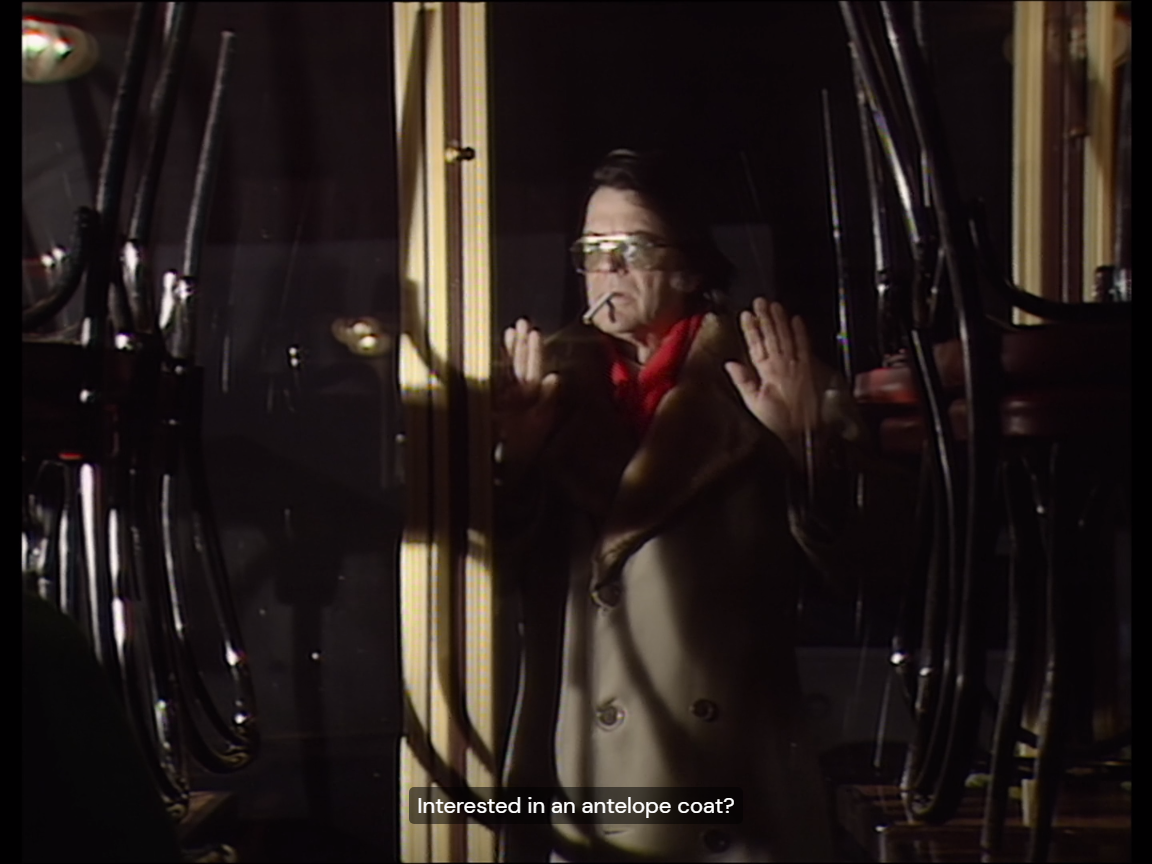
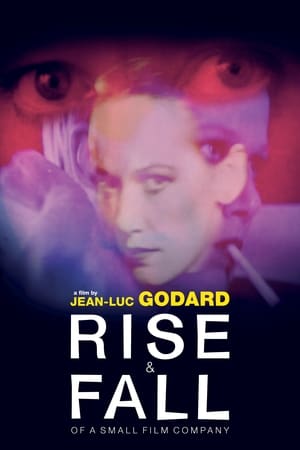
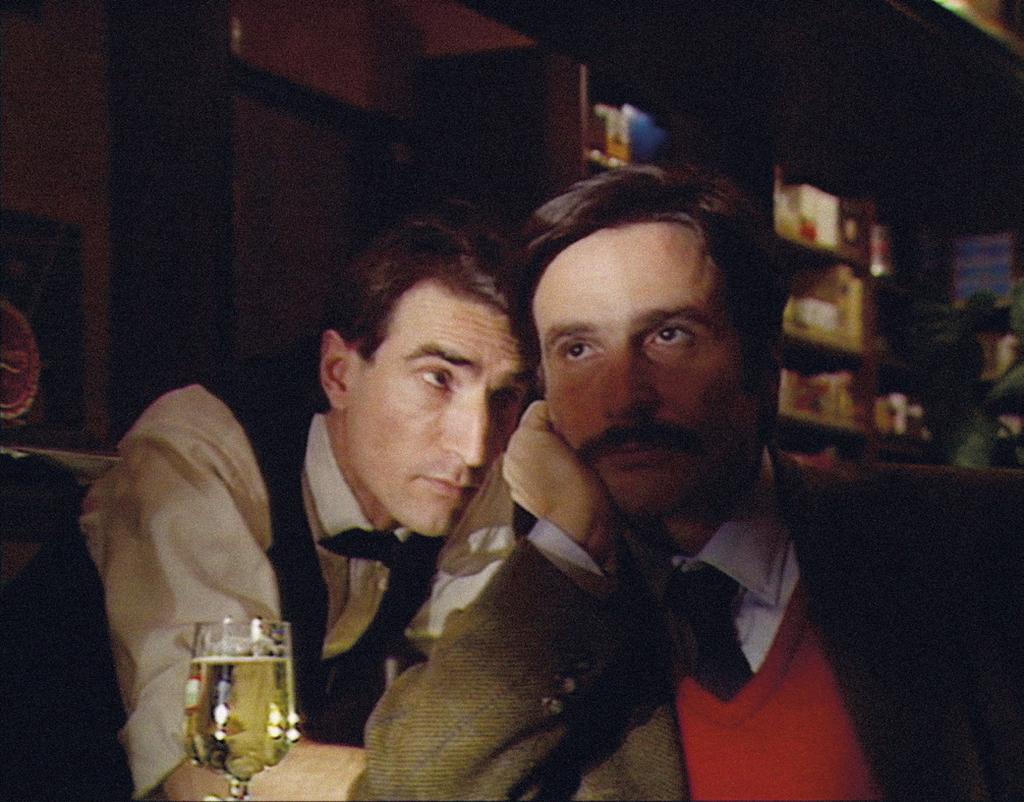
For Jean-Luc Godard, the state of cinema is assessed by way of an adaptation of a James Hadley Chase crime novel, or what should have been one, originally produced for the crime story series Série noire (1984–1991) in France. In this episode of the series, we are introduced to producer Jean Almereyda (Jean-Pierre Mocky), once a matinee idol and major producer explicitly referenced later on in this world to having funded Georges Franju's Head Against the Wall (1959), and lost his career from the failure of Sergei Parajanov's The Colour of Pomegranates (1969), now reduced to TV movies. He is also now dogged by a case of stolen money, all whilst his main director Gaspard Bazin (Jean-Pierre Léaud), once an acclaimed figure, spends his time in an obsessive ritual for casting extras that eats up the funds they do have. Almereyda's wife Eurydice (Marie Valera), feeling herself a caged bird, crosses paths with Bazin, becoming a potential creative source when she desires to be an actress.

This, in that premise, befits the time period of theatrical films Godard made, but as mentioned, this was for television, clearly shot with video. It is strange we can uncover lost films by Jean-Luc Godard, one of the biggest names in all cinema, but we can forget that even after ten years, obscurer films in a director's filmography can be neglected absentmindedly, especially when Godard's career for many was the sixties French New Wave era, or his Film Socialisme (2010) period onwards, not even considering his work in television or short film creations. That even a great American director can have material not available means that the Swiss director, even if he is a legend in cinema, can have probably more unavailable, as both being a director who worked in a foreign language to English, and has experiments in television and short work more rife than many in his career. Rise and Fall..., taking place when he returned with his second "debut" Every Man For Himself (1980) after his experimental and Dziga-Vertov Group era, comes a year before his infamous Cannon Films production King Lear (1987), but even here, as a big name to bring in to his assignment with Série noire, he did not do as likely intended.

At one point, Godard does buries the book through Jean-Pierre Léaud's Bazin, and Rise and Fall..., rather than the adaptation of a crime novel as like intended, is a meeting place between his return to narrative cinema in the eighties, and the video experiments that would lead him to his career in the current day, the video and use of clips here a prototype for Histoire(s) du Cinema (1988-1998). The noticeable limitations - the TV screen ration, the limited aesthetic, the video sheen and digital text captions - are things that would undermine another director, but are like providing Godard with new tools to work with here. He is someone, known to use VHS rips of old films on purpose still to this day, completely polymorphous when it comes to technology, already working on television productions in the seventies and, in the 2010s in his older statesman position, having his own 3D camera built by scratch and making a 3D feature in Goodbye to Language (2014). Still working with a plot, he uses this context around one which contrary to his famous quote does have a beginning, middle and end in that order, the struggles of a TV movie company mid adaptation of James Hadley Chase's The Soft Centre, the novel Godard is meant to adapt, in which he weaves his state of unrest, looking at cultural critiques in the midst of the tired producer Jean Almereyda, and the deranged genius Gaspard Bazin.

Léaud, meeting back with Godard and thus evoking his many moments in the latter's work, could if you cheated a little be the exact character he would later play in Olivier Assayas' Irma Vep (1996). The same director hired to remake Les Vampires (1915-16) in that film, he here as Bazin rather than that film's character is stuck in a wilderness era in the late eighties, his obsessive ritual with the extras of having them move through rooms in a conveyor belt his fixation. Having them quoting at one point the same passage contracted together between them, the ritual is much him attempting to find his creative sanity as madness. He is less irritated by being stuck making television work, but more that, (with the film biting the hand financing this feature), he wished he was adapting Dashiell Hammett instead, alongside the sense of the world being entirely alien to him, someone in his back story having been as broken mentally as his producer Almereyda in status by the industry.

In a world where he and his producer sit in front of a television showing a fire, rather than a real one, to stay warm, the world has become stranger than the sixties they made their fames in, that strange and very funny moment pretty much the best statement from Godard of what he is aiming at, in the all pervasive air of a television, all within telling a really good narrative in his unconventional way. The film making world is so different from France's before, where Bazin's arcane ritual with the casting chews up money for a company who cannot even get a TV movie off the ground and shown. That Jean Almereyda has stolen German marks, an act that will doom him, to run the company, is as much caused by the struggle of his own career as it is because Bazin is not helping.

Admittedly, Godard's criticisms of the state of cinema and life, as he has been doing them since the sixties, could dangerously fall into shouting into the wind, worse a man trying to joust windmills thinking they are dragons. I view the Film Socialisme Godard, onwards to this day, as cinema's Prospero now, in his magical tower in Switzerland creating his cinematic incantations, or like his character Professor Pluggy in King Lear with patch-cord dreadlocks in his hair, isolated from the world entirely but still incanting on the state of it with a world weariness to his voice. Bazin's test to people, which Eurydice actually succeeds in, of being able to see the true number of characters within classic art, not the exact number but those who are the most important, feels like Godard himself. We must realise in hindsight, for the innovations he brought to cinema with his peers with Breathless (1960) onwards, his career has morphed from the innovator to the figure looking even beyond art to culture in general. Going into literature, classical art, older films, and with this having a crow's murder of soundtrack choices - Leonard Cohen, Bob Dylan, Janice Joplin's Mercedes Benz perfectly used for an intertitle - Godard became someone who is not just the cineaste but the curator of art, a man who can appreciate Jerry Lewis in his youth, but by this point in his career brought in classical music and even Scott Walker into his scores.

His philosophical concerns here are not only enlightening but constantly evolving over time, the ones of yore still relevant to the current day or time capsules to new problems per era, especially as like many of the films from this eighties period, he returned to narrative, and the narratives are interesting even if unconventional. Here, ironically when he was asked to make this TV film, he is practically spiting at the producers by having the pair of Bazin and Almereyda as doomed figures of the past, floundering even in commercial television, but that is still a compelling little noir tale in itself. Calling the female lead Eurydice is a loaded choice too, but like the women and femme fatales of noir, she is also the focal point here for the drama, as the female heroine also dragged down in tropes of those films of corrupt and the underbelly of life, here the figure kept in an unhappy marriage as a trophy wife to an older husband. She is ultimately not the person that leads someone to doom unlike other noirs, instead the one who, from an unhappy marriage, actually finds happiness in the end here.

Their lives are small scale, the television budget and style of Rise and Fall... helping this. It is too rye to be an out-and-out comedy, but humour is to be found especially in side characters like the accountant, who in deadpan handing out paltry earnings to the extras discounting their social security. Or Léaud playing up his character's out-of-control behaviour, be it interrupting a phone call between a potential actress with acute abruptness, brought to she suspiciously suspected to be erotic shot, when asked to bring a bikini alongside her, or breaking into a Woody Woodpecker impression. Godard's also one of the few directors able to get away with casting himself as the wise sage as well. Much of it, by this time, is because Godard was such an iconic name it was impossible to get around this, common in narrating his own films since the sixties and having a reputation as a figure outside of cinema, making his work (usually dialectic anyway) completely attached to him. Rise and Fall... offers him playing himself, amusingly (as I want to picture it) visiting Reykjavik in Iceland because he had to witness the greatest chess game being played there, but here appearing to find a deal back in France, his scene turns into something else with his talk about Romy Schneider.

Schneider's reference is also one of the most important, and bitterly sweetest, of this film, as thus his scene turns to an appropriate melancholic air about the period, of Schneider, in real life, passing in 1982 in only her early forties. An actress of considerable talent, starting in the fifties and connected to the multi-continental era of European cinema, from France to Italy, the scene in general as well as the clear empathy for her in the dialogue becomes one of the film's most meaningful scene, with Godard with his fictional creation Jean Almereyda, of two old professionals lamenting their careers in cinema being affected by the change in tide, left adrift within it, with Schneider's death for Godard marking a symbolic change in the industry. Even if Godard would become more and more a legendary filmmaker who made films to the current day, he eventually drifted far from narrative cinema again into the nineties, into experimental features entirely, all bolstered by the reputation he developed allowing him to leave mainstream cinema behind whilst French cinema would evolve again into the Millennium into its own form.

His critiques are matched by a willingness to play with the form of film a way few would. The limitations, the flaws, of this television work are devices for him to exploit, superimposition to the hair-raising use of slow motion on a female extra's emotions mid-performance all his hand with collaborators constructing the images and audio. He even deliberately has the sound abruptly halted as if the film has failed, followed by a technical difficulties screen, for a joke about how that would have likely happened in television in that era. The marriage between the two sides is like a much underrated theatrical feature Godard made within this era, Detective (1985) with Johnny Hallyday and Nathalie Baye, a small scale crime narrative confined to one hotel, perfect for Godard's experimentation as well as providing an actual story. Rise and Fall... still tells an interesting tale - for Jean-Pierre Léaud's Bazin, a spark of life is found in Eurydice, who he compares to actress Dita Parlo known for films like Jean Renoir's Grand Illusion (1937); for Almereyda, an embarrassing conclusion to his life, made more embarrassing trying to flee in the silliest costume possible for an escape. Bazin's connection to Eurydice is also not a romantic or sexual relationship either, instead Bazin finding artistic clarity, Eurydice her independence and freedom, finding business in the end to work as head of. Even when the tables turn, and Bazin is now an extra by the ending, he finds happiness nonetheless.

Restored and premiering at the 2017 Locarno Film Festival, sadly the reappearance of Rise and Fall of a Small Film Company is not as readily available as one would hope. However if Godard's Dziga Vertov years can be accessed, insanely difficult to appreciate (and even defend) films, and high definition versions no less, than one day one hopes Rise and Fall... would join those available. It is a title absolutely worthy of availability, like many of Jean-Luc Godard's eighties and early nineties work a hidden part of his career which is compelling and virtuous.


Abstract Spectrum: Avant-Garde/Diegetic

Abstract Rating (High/Medium/Low/None): Low

Sunday, 28 February 2021

King Lear (1987)


Director: Jean-Luc Godard

Screenplay: Peter Sellars and Tom Luddy

Based on the play by William Shakespeare (I)

Cast: Peter Sellars as William Shakespeare Jr. the Fifth, Burgess Meredith as Don Learo; Molly Ringwald as Cordelia; Leos Carax as Edgar; Julie Delpy as Virginia; Jean-Luc Godard as Professor Pluggy; Freddy Buache as Grigori Kozintsev ("Professor Quentin"); Woody Allen as Mr. Alien; Norman Mailer as himself; Kate Mailer as herself

An Abstract List Candidate


Do I need a name to see thy beauty?

It feels befitting King Lear's conception, as a film ultimately on the subjective nature of the word and image which is deceptive in how it can be read, was a contract signed on a napkin between the Cannon Group's Yoram Globus and Menahem Golan with Jean-Luc Godard. The napkin itself, not literally but subjectively, would form a divisive and curious production in Godard's career in its existence, especially apt as viewers can see that napkin themselves - whilst King Lear is dismissed, you see the contract in Mark Hartley's documentary on Cannon called Electric Boogaloo: The Wild, Untold Story of Cannon Films (2014), one film interlinking and weaving into this one as King Lear itself interlinks in a variety of ways to history (even if own notorious one) in profound ways.

It was not really necessary for a viewer to read King Lear, as whilst contrary to its infamy of a Shakespeare adaptation by someone who never read the play, the truth is more that it does have quotations from the play but Godard specifically stretches one moment, the rejection on the daughter Cordelia from her father King Lear, and transforming it into his ongoing issues with the notion of language and communication.

The work's origins would have been fascinating to witness - author Norman Mailer as King Lear, Woody Allen as the Fool - as a Cannon produced film which, for the company's love and notoriety as the creators of the likes of the American Ninja franchise, comes from the period where they signed contracts with major filmmakers like John Cassavetes to Raul Ruiz for prestige and gave them some leeway as a result1. The sense that Menahem Golan in particular was out of step to who Godard was becoming, dealt with in Electric Boogaloo as being dismissed by Godard, is when a real phone call from him to the Swiss filmmaker during its protracted gestation, where he wishes for it to be get premiered at the Cannes Film Festival, is played in the opening over the words:

A

Picture

Shot in the Back


Whilst a playful film at times, King Lear is also a melancholic work. Beyond the constant seagull sounds in the soundtrack, there is a droning nature that appears here and there in the soundtrack, a vast tapestry, where the orchestral music on the score malfunctions constantly, and many voices interlacing and overlapping each other. It feels apt as, in this world set post Chernobyl where everything returned except art and culture, this follows Godard's ongoing issues with the state of the world in terms of cinema and culture in general. The film is from the second "mainstream" era of his career in the eighties, which is inherently deceptive as Godard, whilst a legendary filmmaker, was never conventional from the beginning, already slipping away from his original popular films in the sixties until his complete rejection of it in Week End (1967). The misbegotten Dziga-Vertov Group era, whilst with its virtues, took place and then there is the ultra obscure mid-to-late seventies era including extensive television work. This second mainstream era, from Every Man For Himself (1980) until into the nineties, is deceptive in that he works with name stars and fictional narratives, from a Isabelle Huppert in that film to Johnny Hallyday in the underrated Détective (1985), but his narratives are giving way to didactic essay structures which would eventually turn into essay films in his late years.

It could come off as an older man shouting at clouds, to paraphrase the Simpsons, as Godard complains of the state of culture, but this has clearly been something which enters his work very early in his career and took hold of him. But let us not forget that this is also one of the more perplexing things to exist, in context, which I also wish was more readily available. That, with its initial set up we follow William Shakespeare V, the ancestor of the Bard played by Peter Sellars, not that Sellers before anyone is surprises, the legendary British comedian, but the American theatre director who co-wrote this adaptation and plays a descendent, hired by the Queen of England and the Cannon Cultural Division, absorbing the producers of this film into its world, to recreate the lost texts of his legendary ancestor.

Its key plot points are that one of the people who can help him is Professor Pluggy, played by Godard himself as a barely coherent and yet wise sage whose assistants are a fire obsessed young man played by Leos Carax, soon to be the legendary director of the likes of Holy Motors (2012) and his girlfriend played by Julie Delpy. Godard in manner and acting, especially when he has the red woollen hat on, even with his trademark cigars and glasses, looks like a drunken character you find in a bar scene in a Basil Rathbone Sherlock Holmes film. His voice is close to it too and early in narration, you effectively get what would happen if he wanted to try a Michael Caine voice. That narration is there as Norman Mailer was briefly in the production, at the same time directing the notorious Cannon produced Tough Guys Don't Dance (1987). We see Mailer, proud as only a legendary Pulitzer Prize winning author can be with the tenor of his voice to match, completing the script to a King Lear adaptation set in the world of mafia, which is not absurd and blasphemous to consider when Akira Kurosawa just two years earlier adapted this play to Ran (1985) in the world of samurai and created a late masterpiece. Mailer left the production as, with his real life daughter Kate Mailer playing Lear's daughter to him, an incest aspect was being placed into the material. So instead, in stand ins to Norman and Kate Mailer, as much as playing King Lear and one of his daughters Cordelia, we get Burgess Meredith of the 60s Batman series as well as a prolific acting career, and Molly Ringwald of The Breakfast Club (1985).

King Lear from that could be held as a perplexing surprise as a result. It is actually a film of three sides - a serious film, a humerous film, and a later narrative Godard film, such as Hélas pour moi (1993), where the drama is fragmented in heavy analytical theories and references to other culture. One is that, yes, this cast and the context make the film one of the oddest to exist, especially as (whilst a figure cancelled in modern culture in the 2010s onwards) Woody Allen is in the film in a small cameo at the end still. Godard himself was a big figure so his own role, part Holmes film side character but with electric cables dangling out of his hair like dreadlocks, like a Swiss Techno-Hippy, is a cherry on the cake when he mumbles in English and, in one rebuttal to Sellar's Shakespeare, farts as his answer. This film not surprising befuddled many, a review from Vincent Canby of the New York Times saying that this is "as sad and embarrassing as the spectacle of a great, dignified man wearing a fishbowl over his head to get a laugh"2, which I think Godard could have easily done here in character for a point. Poignantly however is that, alongside not being dissimilar to the rest of his films from the era, how this farcical light is contrasted by an ominous mood is palpable, where pig noises eventually hit the soundtrack, screaming, and one scene has a bed soaked in blood when the sheets are lifted up. For all the chaos and farce, the one aspect from King Lear kept, alongside quotations from the text, is itself a huge part of his film's heart. Cordelia, in the play, rejects her father King Lear's offer, which here has Molly Ringwald's word of wanting "Nothing" turned to "No Thing" in the Godard trademark of onscreen text. This is a prominent aspect of the film, its true narrative, because of how Shakespeare V learns how the image itself is subjective, its emotional effect more important but the image is not tangential, prominent as Shakespeare himself has to travel around and effectively recreate his ancestor's work from inspiration of those around him he meets.

The struggle of artistic work, and the fact that language and images themselves are fickle, could sound like Godard is a fuddy duddy, but it has been a huge part of his work including the moral conundrums it also raises. He had probably been inspired to create the project years before, as Histoire(s) du cinéma's first "episode" appeared in 1988, but here in a scene in Professor Pluggy's editing room you have two tiny screens which splice and juxtapose different images, from a Tex Avery cartoon to the famous razor to the eyeball sequence from Un Chien Andalou (1929), a prototype of that project's M.O. Here I will admit that, having once in my early twenties hated most of Godard's work trying to watch it, and only becoming an admirer after a lot of adaptation and patience, I personally have never attempted to analyse Godard, and think even blasphemously that his cinema is as much improvised as it is razor focused. What you can grasp, and helped if you can get the references, does favours, as for a film with its absurd origins and content has a darkness felt in the juxtapositions of art by Francisco Goya, a bleakness of the state of the world. For all the dicey politics Godard has nearly shot his feet off with, one of the most noble found in Histoire(s) du cinéma, and evoked again and again in his later essay films of the Millennium, is that cinema failed civilisation when the World War II and the Holocaust happens, and to not turn this lighter hearted film review in a bleak one, his later years beyond his sixties feels like a man, after his ill advised Dziga-Vertov Group years, who has felt the weight of responsibility in his own films and grappled with the morality of filmmaking as a result of ideas like this of his.

King Lear is still bonkers, frankly batshit insane, and I do not think curse words in a Godard review is inappropriate. Godard as the wise Prospero of The Tempest, in his Swiss island away from the world making films like The Image Book (2018), would probably not find it an insult when the entire project comes from strange circumstances. (Sweetly, when interviewed by Katherine Dieckmann for an interview called "Godard in His Fifth Period", in the run up to his King Lear production, it does have the sentence from him saying "I haven't seen any of the movies they [Golan and Globus] financed, but I really want to see the Chuck Norris movie...", whichever that one was he was referring too3.) Yet there are snippets which reflect he was taking this film seriously. It does look gorgeous, even if you were stuck with a VHS rip for a film not easily available, as cinematographer Sophie Maintigneux imbues the film, shot in Switzerland, with both moments of serenity in the woodlands but also moodiness whenever indoors. The sound design is startling once you get past the seagull sounds.

And there is meaning here. Ringwald, on the Electric Boogaloo document, expressed confusion about the whole project, but her Cordelia is one of the more consistent figures. A figure of innocence, she rejects her father's love and is willing to endure the most of it. Her confusion is that as ours, looking at herself in the mirror in a green tiled room at herself, but when the film is explicitly referencing Joan of Arc (including Robert Bresson's 1962 adaptation) that is a loaded metaphor to place on the character. ([Spoilers] Especially as she is found dead on a rock sacrificed by the end, by a executioner with a spear, which is taken from the original play itself. [Spoilers End].) Even accidental connections have greater weight, such as Meredith starring in a Jean Renoir film The Diary of a Chambermaid (1946), apt as Sellars' Shakespeare V is introduced at a restaurant with a book on film "auteurs", with no text, legends like Orson Welles without the context of their filmographies as he ponders on Renoir's father, the acclaimed painter Pierre-Auguste Renoir, becoming more fixated on young women in his art as he aged.

That the film, for all its notoriety and dense difficulty, obtuse to say the least, has one legitimately beautiful and profound moment does spar it from any accusations of Godard pissing against Cannon's wishes. Breaking his own rules by presenting an actual moment of magic only possible in film, he shows the reconstruction of a flower, with its petals reattached, in reversed footage in a scene Jean Cocteau would have been proud of. That this act, in narrative, is from Godard's Professor Pluggy, sacrificing himself to do this act, and with his body dissipating into a reel of film afterwards is itself a profound image to leave on. That the film itself was never going to be a box office success was obvious, as Cannon should have realised even his eighties films, with narratives, were not like Breathless (1960) at all. But they should have been proud, for all their annoyances with him, for not being lazy either.

Abstract Spectrum: Avant-Garde/Moody/Weird

Abstract Rating (High/Medium/Low/None): High


=============

1) Even if, as talked of by him in the Electric Boogaloo documentary, French filmmaker Barbet Schroeder had to take a chainsaw into the Golan-Globus office and threaten to cut his own fingers off to finish Barfly (1987) the way he wanted to, impressing Golan as a result.

2) Sadly requires a subscription to read, but the link to the original review is HERE.

3) From Jean-Luc Godard: Interviews (Conversations with Filmmakers) (Conversations with Filmmakers S.) from the University Press of Mississippi.

Monday, 27 August 2018

Rise And Fall Of A Small Film Company (1986)

From https://image.tmdb.org/t/p/w300_and_h450_
bestv2/3CmVcJhPYWcJCue3fs38SaiFyoi.jpg


Director: Jean-Luc Godard
Screenplay: Jean-Luc Godard
Meant to be based on the novel The Soft Centre by James Hadley Chase
Cast: Jean-Pierre Léaud as Gaspard Bazin; Jean-Pierre Mocky as Jean Almereyda; Marie Valera as Eurydice

Synopsis: The state of cinema by way of an adaptation of a James Hadley Chase crime novel, originally produced for the crime story series Série noire in France. Where producer Jean Almereyda (Jean-Pierre Mocky), once a matinee idol and major producer, is now reduced to TV movies and dogged by a case of stolen money from his past. All whilst Gaspard Bazin (Jean-Pierre Léaud), a director who now, after acclaim, spends his time in an obsessive ritual for casting extras that eats up their budgets, finds Almereyda's wife Eurydice (Marie Valera) a potential creative source when she desires to be an actress.

It's strange we can uncover lost films by Jean-Luc Godard, one of the biggest names in all cinema, but we can forget that even after ten years obscurer films in a director's filmography can be neglected absentmindedly. There is, of course, when new blood in the fan base don't know common knowledge that the older members do, something which can happen be it for horror fans to art house aficionados, and in that case we need to provide that information or doom ourselves to obscuring works of the past. Retrospectives are thankfully more common too as are physical released, but there are cases, with a director like Godard who made so much outside of theatrical screenings, that once it was a lot more difficult to access this material and a lot of it hasn't even been gotten around to until now. That even a great American director can have material not available means that the Swiss director, even if he is a legend in cinema, can have probably more as both being a director who worked in a foreign language to English, made very difficult work that contrasts his famous early sixties works immensely, and has experiments in television and short work more rife than many other filmmakers which always tend to be neglected with any auteur. So, yes, you have the clues to why we trip over these obscurities like so.

Even in the theatrical corner of Godard's wing, where for many his debut Breathless (1960) is his most well known film, there are productions neglected especially in the late eighties when, returning with his second "debut" Every Man For Himself (1980) after his experimental era, which are not available. Now which his Dziga-Vertov Group films (mostly) available in high definition, even if many are some of the most painful failures of his career, the Holy Grail alongside films like the controversial Hail Mary (1985) is his television work. Experiments like Rise and Fall of A Small Film Company.  From a time where he was going to return back to experiments until the unforeseeable day and was in-between various projects, a year before his infamous Cannon Films production King Lear (1987). One very much not taking his assignment with Série noire as intended.

From https://medias.unifrance.org/medias/252/193/180732/
format_page/rise-and-fall-of-a-small-film-company.jpg

Rise and Fall
, rather than the adaptation of a crime novel as likely intended, is that meeting place between the return to narrative cinema in the eighties and the video experiments that would lead him to his career in the current day. The noticeable limitations - the TV screen ration, the limited aesthetic, the video sheen and digital text captions - are things that would undermine another director, but are like providing Godard with new tools to work with. He's someone, know to use VHS rips of old films on purpose still to this day, completely polymorphous when it comes to technology, already working on television productions in the seventies and, in the 2010s in his older statesman position, having his own 3D camera built by scratch and making a 3D feature in Goodbye to Language (2014). Here though he's still working with a plot, around one which contrary to his famous quote does have a beginning, middle and end in that order. The struggles of a TV movie company mid adaptation of James Hadley Chase's The Soft Centre, the novel Godard is meant to adapt, which he weaves his state of unrest cultural critiques in the midst of through the tired producer Jean-Pierre Mocky (Jean Almereyda), and the frankly deranged director Gaspard Bazin (Jean-Pierre Léaud).

Léaud, meeting back with Godard and thus evoking his many moments in the latter's work, could if you cheated a little be the exact character he would later play in Olivier Assayas' Irma Vep (1996). The same director hired to remake Les Vampires (1915-16) in that film, who decided to cast Maggie Cheung, once before with an entirely different name stuck in these wilderness years in the late eighties, his obsessive ritual with the extras of having them move through rooms in a  conveyor belt, quoting at one point the same passage contracted together between them, as much him attempting to find his creative sanity as a madness. He's less irritated by being stuck making television work, but as he confesses (and shows Godard biting the hand financing this feature) wishing he was adapting Dashiell Hammett instead. In a world where he and his producer sit in front of a television showing a fire, rather than a real one, to stay warm, the world has become stranger than the sixties they made their fames in. It's not an absurd comparison either between films as, whilst the ending of this suggests a happy ending for Léaud's character, the film making world is so different from France's before, where his arcane ritual with the casting is chewing up money for a company who can't even get a TV movie off the ground and shown.

From https://i.ytimg.com/vi/069Xaf__6nM/maxresdefault.jpg

Admittedly Godard's criticisms of the state of cinema and life, as he's been doing them since the sixties and hasn't stopped since, could dangerously fall into shouting into the wind, worse a man trying to joust windmills thinking they're dragons. (Even if that's the case for some now, I'd at least want to picture him as cinema's Prospero, in his magical tower in Switzerland creating his cinematic incantations, or like his character Professor Pluggy in King Lear with patch-cord dreadlocks in his hair). What doesn't allow this to be the case is that, generally, his philosophical concerns are not only enlightening but constantly evolving over time, the ones of yore still relevant to the current day or time capsules to new problems per era. Here, ironically when he was asked to make this TV film, he's practically spiting the producers by having the pair of Bazin and Almereyda as doomed figures of the past floundering even in commercial television. Their lives are small scale, the television budget and style of Rise and Fall... helping this. It is too rye to be an out-and-out comedy, but humour is to be found especially in characters like the accountant, who in deadpan just doing his job hands out paltry earnings to the extras discounting their social security. Or Léaud playing up his character's out-of-control behaviour, be it interrupting a phone call between a potential actress with acute abruptness, brought at what she suspiciously suspected to be erotic when asked to bring a bikini alongside her, or breaking into a Woody Woodpecker impression.

Godard's also one of the few directors able to get away with casting himself as the wise sage. Much of it, by this time, is because Godard was such an iconic name it was impossible to get around this, common in narrating his own films since the sixties and having a reputation as a figure outside of cinema, making his work (usually dialectic anyway) completely attached to him. Rise and Fall... offers him playing a character as himself, amusingly (as I want to picture it) living in Reykjavik in Iceland because he had to witness the greatest chess game being played there, here appearing to find a deal back in the left for him with a (fictional?) producer and Romy Schneider. Thus his scene also turns to an appropriate melancholic air about the period, when both said producer is dead and Schneider, in real life, passed in 1982. When that comes to pass it becomes one of the film's most meaningful scenes, more so because Godard is playing himself interacting with a fictional creation of his, two old pros lamenting their careers in cinema being affected by the change in tide and left adrift within it. Even if Godard would become more and more a legendary filmmaker who made films to the current day, he's eventually drift far from narrative cinema into experimental features entirely, all bolstered by the reputation he developed allowing him to leave mainstream cinema behind.

From http://media.flix.gr.s3.amazonaws.com/cache/
bf/17/bf17279cd12d76950b8214b952776420.jpg

His critiques are matched by a willingness to play with the form of film a way few would. The limitations, the flaws, of this television work are devices for him to exploit, superimposition to the hair-raising use of slow motion on a female extra's emotions mid-performance. He even deliberately has the sound abruptly halt as if the film's failed, followed by a technical difficulties screen, for a joke. Musically he picks interesting pieces like from Leonard Cohen to Janice Joplin, the latter's famous rendition of Mercedes Benz amusingly used on a moving computer square with the technical screen colourbars. The marriage between the two sides is like a very underrated theatrical feature Godard made within this era, Detective (1985) with Johnny Hallyday and Nathalie Baye, a small scale crime narrative confined to one hotel, perfect for Godard's experimentation as well as providing an actual story. Rise and Fall... still tells an interesting tale - for Jean-Pierre Léaud's Bazin, a spark of life is found in his producer's wife Eurydice (Marie Valera), who he compares to actress Dita Parlo known for films like Jean Renoir's Grand Illusion (1937). Theirs is not a romantic or sexual relationship, instead Bazin finding artistic clarity as, testing her, she is one of the only people when giving an old painting will not point out all the figures within it but say the characters are actually the most important themes of said painting. Sadly, apt for a small scale crime drama about a little company, it's the producer's shady past with stolen money that does them in.  

Abstract Spectrum: Avant-Garde/Diegetic
Abstract Rating (High/Medium/Low/None): Low

Personal Opinion:
Hopefully, restored and premiering at the 2017 Locarno Film Festival, the reappearance of Rise and Fall of a Small Film Company is not restricted from public access beyond being temporally streamable on MUBI. If Godard's Dziga Vertov years can be accessed, as difficult and un-cinematic in his career's work as you can get, an uncovered gem like this can have appeal. If anything it hopefully leads closer to the vast television and video work in his catalogue finally appearing in wider access.


From https://assets.mubi.com/images/notebook/post_
images/26139/images-w1400.png?1530550709