Showing posts with label Director: Raul Ruiz. Show all posts

Wednesday, 8 March 2023

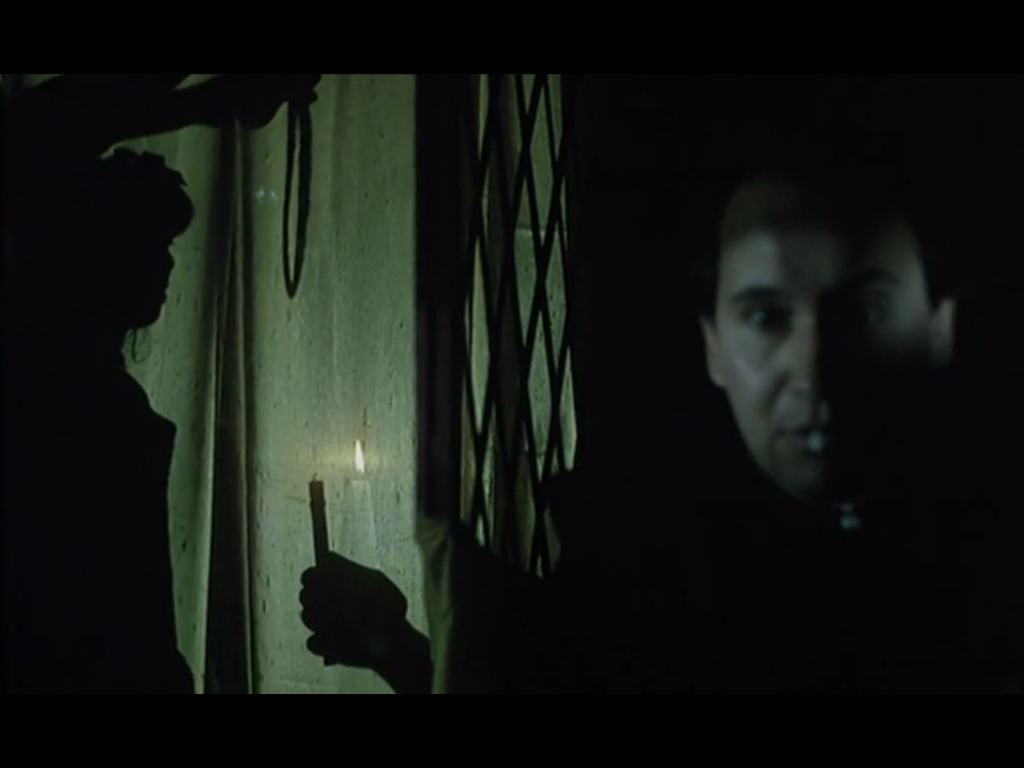
Treasure Island (1986)


Director: Raúl Ruiz

Screenplay: Raúl Ruiz

Based on the novel by Robert Lewis Stevenson

Cast: Melvil Poupaud as Jim Hawkins; Vic Tayback as Silver; Martin Landau as the Captain; Anna Karina as the Mother; Jean-Pierre Léaud as Midas; Sheila as Aunt Helen; Lou Castel as the Doctor / the Father; Jean-François Stévenin as Israel Hands (The Rat); Yves Afonso as  the French Captain; Tony Jessen as Ben Gunn

An Abstract Candidate


Don't hit a blind man if you want to find treasure. Let a blind man hit you.

Among the curiosities Cannon Group produced or/and released, they secured a film by Raúl Ruiz, in the midst of his glorious eighties era, adapting Robert Lewis Stevenson's legendary pirate novel. The film we received, likely acquired due to the cache the novel has, is one which would have not been suitable for a family audience, in spite of the amount of death in the source novel, and is one that would befuddle many. Ruiz however loved the author, so this subversion of the text is not to destroy it at all, his own drastic adaptation not an absurd project he ended up on, such as Cannon financing Jean-Luc Godard's King Lear (1987) where Godard completely went against the plan, but one Ruiz deliberately turned into the film it became.

It was a film too, mind, which he would come to revisit, the resulting production here fascinating as a mixtures of those who got involved with the film just in the cast - Martin Landau as the sea captain who visits our protagonist Jim Hawkins' home and begins the narrative, Anna Katrina as Jim Hawkins' mother, and Jean-Pierre Léaud as a mysterious writer following Hawkins as an outsider to the story itself. The dubbing adds to the strangeness to what is a film fully from this phantasmagorical era of Ruiz's career, set in the current day yet existing in a dream world. With the romantic music, of the tone not of a love story, at one point a constant in the early scenes, it feels unreal as we meet Jim Hawkins (Melvil Poupaud), a young boy living on an island at his parents' inn, only to be violently contrasted by the grimness of just content in the first act. This is not a film for the family as previously mentioned, for its tone and because this becomes a tale of a Jim Hawkins who, as a bystander, finds himself going through horrible events the adults play. As much as in the original novel, this includes the reoccurring theme for Ruiz of the menace of death. A blind man, as from the novel, signals the first outside threat when at first a sea captain (Landau) stays at the inn, leaving a glass eye as a threat. There is no innocence here, as before he even reaches Treasure Island, Jim will be traumatised by thugs raiding his home, being punished by them with belt shots, or his father's many staged suicide attempts finally succeeding.

But credit to Ruiz, his take on Treasure Island, whilst drastically altered and eventually a meta-textual interpretation fully retells the story in some new form, including nodding the source as a text within this world itself. It is an obsession for characters, the film eventually becoming a meta-dissection whilst reinterpreting the source, the adults actually playing out roles with Jim Hawkins a reluctant stand-in for this lead. It offers Long John Silver as Silver (Vic Tayback), the shoe maker who runs a Lebanese restaurant. Even if he makes a great omelette, done by using a syringe to extract the egg yolk, he is still the nefarious Silver, and this still involves ships and eventually getting to the titular island. The aspects which are entirely Ruiz stand out more as a result, torturing someone to know what their favourite song is, or this character believing all, regardless of virtue or sin, go to Heaven and thus a socialist.

Production wise, there is clearly the fact Treasure Island, if you attempted to film a faithful adaptation, would have been expensive, and there is the other fact that between Errol Flynn to Pirates of the Caribbean: The Curse of the Black Pearl (2003), pirates in cinema were not financially successful, in 1986 as well Roman Polanski's Pirates, as well as being a tumultuous production, was not a box office success at all as a big budget "proper" pirate film. Treasure Island is curious in its production companies as well, handled between Cannon Group, BFI Production, the film producing arm of the British Film Institute, our most significant institution in Britain for cinema, and Les Films du Passage, who produced other Ruiz films. None of them, even Cannon with their attempts to with the likes of Lifeforce (1985), were companies who specialised in big budget works either, so Ruiz's adaptation is as much improvised as throughout his career, shot in Senegal for a portion of the film, but changing galleons to modern ships and with the pirates their modern equivalents with assault rifles.

The sense of adventure is still there with only the edge of the morbid added. The compositions also stand out; shot by Acácio de Almeida, a regular collaborator at this point and prolific in Portuguese cinema, Treasure Island has Ruiz's trademarks of deep focus scenes (figures and objects like cats in the fore ground, characters in the background), and his vivid use of colour and lighting. Once we actually get to Treasure Island itself, the pace of the film fully, proudly, becomes its own spin of the source text as the meta-textual nature fully takes over, that this story and the character names are literally personas, for a game even with real casualties that has continued over many times. Arguments about game theory transpire over gun fire, whilst the one native on the island, the Ben Gun equivalent, has been using the treasure, diamonds in this world, as the perfect slingshot ammo. By the point of the finale, any question of wanting a faithful adaptation dissipates as this drastic reinterpretation of Robert Lewis Stevenson stands out as an admirable and strange adventure. Works of canonical legacy, especially when they enter the public domain, gain so much because the source text still exists proud of its virtues, with this one absolutely the case, and that the adaptations can vary so wildly with their own flourishes as the tale survives in multiple forms.

The first take of this tale I grew up with, with fond memories of, is a musical version with the Muppets and Tim Curry as Long John Silver, for Muppets Treasures Island (1996), and it is perversely appropriate that it can co-exist as Ruiz's, dimensions connected by the same text, even if Ruiz's has more cursing and significantly less Kermit the Frog. Ruiz's even takes its playful unrevealing of the reality into the oneiric, with a reoccurring obsession for Jim Hawkins being an action television show set in Africa the adults around him may be the stars of, which blurs the lines between what is real for him in the world, and what is staged and he needs to not take seriously for his safety. Sadly, even as a Cannon Group release, this has become obscure, Raúl Ruiz one of my favourite filmmakers still doomed to hazy VHS images even if appropriate for the sources, including if you find it with Spanish subtitles. It is a credit to Raul Ruiz that, in 1986 alone, he also released four others films, so Treasure Island even if an imperfect work was contrasted by the vast tableau of titles which came at the same time. It is telling he returned to this film, with the 2008 novel In Pursuit of Treasure Island, which in itself befits the project and his entire career, a text which can grow and change in new telling within another text.

Abstract Spectrum: Dreamlike/Eccentric

Abstract Rating (High/Medium/Low/None): Low

Tuesday, 7 February 2023

The Penal Colony (1970)


Director: Raúl Ruiz

Screenplay: Raúl Ruiz

Based on the short story by Franz Kafka

Cast: Mónica Echeverría as the Journalist; Luis Alarcón as the President; Aníbal Reyna as the Minister

Ephemeral Waves


A woman, a female journalist (Mónica Echeverría), upon entering a country is taken by their soldiers to their headquarters to document their new president's politics for an article in the outside world. If you did not know this was an adaptation of a Franz Kafka story, which raises concerns of what will be in front of the journalist the longer she stays here, this immediately sets up this country being ruled under repressive rules. Hotel Turismo is chosen for her to stay at whilst working, and it is clear that she is in a world which could easily turn on her. This is all in mind of its director, Raúl Ruiz, who would eventually have to flee his home land of Chile due to the Augusto Pinochet dictatorship, starting in September 11th 1973 and ending March 11th 1990, something pertinent in how even this early film is depicting a fictional one. There is a tense air here from the get-go in the set up.

Set in a former leper colony near Ecuador, the Latin American island of Captiva, the elephant in the room is also that this is very early Raul Ruiz, a director I admire and yet is hard to find the films off outside of VHS rips. This is Ruiz at his most primordial, a reminder that for someone into the seventies, but especially his phantasmagorical eighties period as an exile, had to begin somewhere and develop as an auteur who made over a hundred productions in his life. The eighties period  especially produced incredible films but also made films which felt like fragments of larger texts, in a great way, and in contrast, The Penal Colony is absolutely a raw template for these films. Some of the style and imagination is here, but it feels a sudden jolt in how he has not found all his traits yet. There is thankfully the eccentricities slowly burning through the limited budget that has not fully taken advantage of it as Ruiz would later expertise, how the one man who comes to warn the journalist in her hotel room of the circumstances sneaks alcohol around in a hot water bottle. A foreigner in his own right, greeting and warning her of what to expect, jaded to how the island has turned, even sneaks poems to her to be read as if illegal contraband, to be memorised and to be burnt afterwards. The polyglot language that is spoken, and is said in dialogue to shape shift everyday, also would be a theme he would return to with greater weight with On Top of the Whale (1982), explicitly about this theme of language and cult in being about a Dutch anthropologist trying to study the last two surviving Yachanes Indians.

The film's plot, mostly dialogue based and set in confined rooms, enters the obvious conclusions. The rumours of torture rear their head quickly, and as a low budget piece with a few actors, it still shows slithers of Ruiz's idiosyncratic style as it progresses. His interest in deep focus aesthetic, with details in the foreground and background as in the later films, is yet to fully arrive but the world of its own logic is growing already. This "island of surprises" our lead enters, like asking why a man is on the floor in one room being guarded, really does not feel like a true Kafka adaptation, but Ruiz's attitude slowly cementing whilst presenting this paranoid tone. The aesthetic, its monochrome photography as a chamber piece, even in a grotty preserved copy or cleaned, also befits Kafka in its pure starkness to match the simmering tensions.

The hall full of screaming is not a good sign, like a Gothic horror movie in tone but with more meat packing freezer meat hooks on the walls, but there is an eccentricity throughout, such as the sword fighting practice which is transpiring throughout the film. Swords are very poignant in context in terms of power dominance, at one point a literally sword fight happening between the president and another man, but it also feels like Ruiz showing his surrealistic tendencies in how this, in this former penal colony from colonial rule of South America, is just an everyday hobby all men on the island practice. The tale within a tale, being told, of a man who turns into a woman, marries and ends up in a tragedy involving her husband and family is certainly Ruizian when it appears. Especially moments like this or the cut to pure black screen with a short musical interval show that this is proto-Ruiz. The nudges to satirizing a dictatorship, in-between are also there, such as the focus on singing and group song; on one hand, it is culture surviving, but as seen here, as it is the fictional military figures who sing, it is a propagandist masculinity on their part, matched by the fact the sole woman in the main cast is our protagonist trapped between them, contrasting as a nameless bystander these acts of proving masculinity in a fascistic way.

It is a difficult film to watch, just for the fact it is very limited with only the potential for Raúl Ruiz seen here. It is a film, certainly, that is text book example of an auteur where a film grows for all its flaws in context of the others, and connected to the films dealing with these themes, and unfortunately even reality forcing Ruiz having to leave his country due to a real dictator, The Penal Colony grows fleshed out as a result.  

Monday, 27 December 2021

The Hypothesis of the Stolen Painting (1978)


Director: Raúl Ruiz

Screenplay: Raúl Ruiz

Cast: Jean Rougeul as the Collector

An Abstract Candidate


Established in the beginning, with the unseen narrator and an art collector (Jean Rougeul) onscreen establishing the set-up and the later correcting the later onwards, The Hypothesis of the Stolen Painting was originally meant to be an actual documentary on author, theorist, and artist Pierre Klossowski. Instead becoming a pastiche of a documentary, and paying tribute to Klossowski still with explicit references to his provocative last novel The Baphomet (1965), The Hypothesis... as with many other Ruiz films becomes of work of layers upon layers even in a work just over sixty minutes.

The set-up in itself is something you could expect in a more conventionally told mystery tale. A fictitious artist is created here, Fredéric Tonnerre, whose exhibition of a series of seven paintings caused a major yet mysterious scandal in the Parisian court in nineteenth century France. The art collector we follow believes the seven paintings were coded for a true meaning, the documentary we now see intending to demonstrate this to the viewer as, recreating the paintings onscreen with actors, the codes are found in replication and decoded. That one painting is lost causes an elusiveness to this, and as with other Ruiz tales, the point is never the conclusion but the hidden fragments and the journey we experience.

As with anything the Chilean director touches, more is to be revealed onscreen and early into his exile from his homeland in France, an added factor here is cinematographer Sacha Vierny. A true legend behind countless films, the film to touch on, and would be referred to in Vierny's work with Welsh director Peter Greenaway, is Last Year at Marienbad (1961), itself a curiosity as whilst a legendary title of its director Alain Resnais, more and more I myself look to its story writer, legendary author and later filmmaker Alain Robbe-Grillet, as much the author with Sacha Vierny. Whilst eventually unfolding with an unnerving beauty in the end, The Hypothesis... gets the initial parody successful, as this journey with the unnamed art collector raises a scandal of secret codes, connected directly to a novel written at the time, related to a secret cult. One which evokes The Baphomet novel, the piece of the puzzle for an actual viewer, like me, which would answer a lot of questions but many may not be even aware of or have read. By itself, it is a fascinating enough take on the notion of interpretation, especially as the mock up enactments of the paintings, heavy handed works of kitsch in some cases, force one to rethink the difference between how a film to a painting stages scenes, Ruiz not hiding when the actors, whilst standing still, sway a little and have to keep themselves steady.

The original figure of the project, before he transformed this documentary to one of his most well known films, is Pierre Klossowski, a polymath especially in where and how he crossed multiple mediums in his homeland of France. Translating Franz Kafka and Ludwig Wittgenstein at one point, acting in Robert Bresson's Au hasard, Balthazar (1966) at another, an author in his own right as much as writing on the likes of the Marquis de Sade, with his last novel The Baphomet, when a synopsis is glanced at, being of the Knights Templar, after their dissolution of heretical rights, reassemble as ghosts and leads to Klossowski himself, a Templar grand master and Frederick Nietzsche being introduced debating notions of morality between themselves. To some that would sound impossible for some to ever be able to engage with, whilst just that synopsis by itself, even with the director is not known for lengthy philosophical discussions in his works, sounds like something Ruiz dreamt up for his later films.

There is an irony knowing this is probably one of his most accessible films, as in one hour it encapsulates a very easy to grasp premise, but is one with enough in itself innately to fully serve his style. It is more restrained as, before his full blown eighties period of delirium, this is kept in a sedate elegance with its monochrome appearance, absolutely stunning to witness thanks to Sacha Vierny. Even Klossowski himself is much part of a greater mystery this hints at, more so as beforehand Ruiz had adapted one of his novels The Suspended Vocation, a 1950 publication, into a 1978 film from the same year. Alongside the narrative being about a seminarian in a Catholic Church organisation caught between jostling sides, one which might not even exist, Ruiz himself added a layer in how the film is structured as if one half was made at a significantly different time, alongside presentation, to evoke a production with its own mysteries in its incomplete form. (Apt as the novel is structured as a critique of a fictitious book of the same name). The Hypothesis... does not play these games, instead its own simple game. Even a painting of the hunter goddess Diana can be linked to a nineteenth century scandal, especially when the mirror is pointed out and the clues start to appear for the art collector.

Its elegance as a film makes sure as much that its mystery does not come off potentially ridiculous and overcooked, something it is in danger of when the art collector reads the entire narrative summary of a nineteenth century novel, a drama of deceit and hidden homosexuality, which may have easily turned the mystery in a cliché by trying to link everything together. It is helped considerably that the film is one of the best to start a novice to Ruiz's world with, but with fans seeing other films, it grows even beyond the obviousness of its material. It is, without trouble, a beautiful and eerie production, stunning especially when it begins with the staged recreations bleed into each other. With knowledge to Ruiz's career, the more mysteries at hand, the more questions are raised. Beyond the obvious, that the mystery's answer suggested here could merely be a theory, there is fixed a missing piece of the puzzle too, and also the fact that even in theory, one can find oneself caught in debate on interpretation, the art collector correcting the narrator, undercutting their place in a documentary as the authoritative voice that knows everything, and even questioning himself in the end.

Strange details alone raise questions, like the collector taking male plastic dolls, like Barbie ken dolls, out of a drawer as if to use them for a demonstration, only to put them away in another drawer in the same scene, and that he has used them in stages photos we see, add strange jokes and questions the more you see the film. Raúl Ruiz is a director perversely apt for the modern age, where you can return to films over and over, even if his work is ingrained into the past and history with great intelligence. (He is annoyingly never however one director among many others who have been betrayed by the lack of availability of his work by ignorance.) Ruiz here is as much compelling for the pleasure of his work, the imagination, as that in it is intellectual dissection. One of his fascinations was the concepts of doubles, drawing from theories of a 19th century Algerian activist and scholar Abd al-Qādir whose notion of the "veiled vision of divinities" was transposed to cinema by Ruiz. Ruiz, taking Qādir's concept of the divine being concealed within images of this world, which in turn reflect invisible realities with divine sparks, theorised that films themselves contained a hidden film, and every frame thus a secret frame1. As an amateur fan, this stems more in his other work, especially the eighties work which, embracing almost pulp and cult-like film tropes as much as being serious works, the tales behind them as much as the images and how they connect together on-screen in one film having worlds-within-worlds for the filmmaker. Yet The Hypothesis of the Stolen Painting radiates such virtue in itself, its simplicity growing to a beauty in its questions. Even with the morbidness of its final reveal, demon worship by holy orders, sacrificial child-boy priests and the material of gothic novels, the film eventually grows into something dreamlike when the art collector wanders a manor, once a stage for elaborate recreations, bled into by figures from paintings in living compositions more beautiful than the ones they originated from.

Reality, as mist enters rooms in the end, and Sacha Vierny guides such beautiful images with his director, dissipates as happens in a Raúl Ruiz film but it in itself feels more real and tangible, apt for a director where the dead do not disappear and immediately get back up in many cases, and the unnatural is as real and imposing in a film like City of Pirates (1984) after the initial set-up. It itself, with The Suspended Vocation, this film marked the early stages of a director who fled his home, due to a Chilean dictatorship, and yet found himself lost at sea in Europe managing a run, into 1990, that is as spectacular as cinema can be.

Abstract Spectrum: Eerie/Playful

Abstract Rating (High/Medium/Low/None): Medium


=============

1) I myself will openly admit to taking this from The Brooklyn Rail website, from their Critics Page on the film by Dalia Neis from their May 2019 issue. It refers to material from the Poetics of Cinema, a book of Ruiz's transcribed lectures from 1992, which is both befitting a review of a work with many layers upon layers, and felt necessary to reference. It encapsulates a huge part of Raúl Ruiz the filmmaker in ideology for me now as a huge fan of his work.

Thursday, 9 December 2021

Comedy of Innocence (2000)


Director: Raúl Ruiz

Screenplay: François Dumas and Raúl Ruiz

Based on a novel by Massimo Bontempelli

Cast: Isabelle Huppert as Ariane; Jeanne Balibar as Isabella; Charles Berling as Serge; Edith Scob as Laurence; Nils Hugon as Camille; Laure de Clermont-Tonnerre as Hélène; Denis Podalydès as Pierre; Chantal Bronner as Martine; Bruno Marengo as Alexandre

Canon Fodder


Judging its initial tone, with a significant French actress in Isabelle Huppert in the lead, Comedy of Innocence feels like a conventional film from the Chilean director Raúl Ruiz. However, as with Huppert's own career being full of idiosyncratic films, and Ruiz's sense of "conventional" filmmaking (including one American film with William Baldwin called Shattered Image (1998)) being unpredictable in itself, Comedy of Innocence does change as it goes along. It is, in a period of working with bigger budgets and actors like Catherine Deneuve, an attempt to make a Ruiz film for a wider audience. But this is still a Ruiz film. This is not even factoring its source material being from a novelist and playwright, Massimo Bontempelli, who worked magic realism, and especially when you compare this to a true exception from the radical career of Ruiz, of a compromise, Comedy of Innocence does prove more radical than presumed. That exception came with one of Ruiz's last films before his 2011 death, A Closed Book (2010). A British produced novel adaptation, of a Gilbert Adair novel with the author penning the screenplay, it was thankfully not his last production, its themes of art and with a lead character being blind, including how he literally has no eyes due to an accident, fully making sense as a subject for Ruiz to tackle but feeling like a movie from a working direction contributing little of their own personality to it. It feels conventional and also feels perfunctory, lacking Ruiz's personality, which would have found its mystery thriller plot twists far less interesting than they are in the actual film we got. Comedy of Innocence, even when it tries to rationally explain key plot points, cannot be extracted from Ruiz's willingness to undermine conventions.

Huppert's lead Ariane finds, after her son Camille's birthday, him telling her he wants to see his real mother. This figure, Isabella (Jeanne Balibar), commands a significant prescience when she enters Ariane's life, a mother who lost her son and with Ariane's son seeing himself to be Isabella's. The film eventually offers an explanation grounded in reality - manipulation both by Isabella but also Camille the son himself being more mysterious than presumed - but Ruiz's film even in the later plot reveal, Camille wanting a different family, feels ghostly and ill-at-ease in spite of its title. This belongs as well to a period of cinema of my youth called the "Artificial Eye" era, which helps considerably for its tone, where the former British distribution company, before becoming Curzon Artificial Eye in the 2010s, distributed world cinema especially French and European films of the late nineties and 2000s very much with this film's presentation. Prominent actors like Huppert herself were in them, many like this are set among middle class or well off families, and their cinematography and visual looks were relaxed with very little to radically challenge the aesthetics, with the use of normal urban environments a commonplace aspect.

This could however prove a fascinating aesthetic for certain directors to make a film within. Again with Huppert, you can look to another film she made within the same year, Claude Chabrol's Merci pour le Chocolat (2000), which in a major spoiler disrupts the idealised middle class French family with the reveal of poison having been used in hot chocolate. Likewise, Ruiz's film here is calm and almost alien to his legacy before, especially his golden era of the eighties for me of delirious filmmaking, but the ghost of that era between the late seventies to The Golden Boat (1990), is evoked. That era was distinct as, working in whether context he could, in a prominent cinematic style especially in the obsession with colour gels, and the ghost of his unconventional plot structures breaks through here in its lapses away from its apparent rational explanations and sudden distorted coloured scenes, the later evoking those eighties films. This film has a lot in common with his previous films. Despite being her beloved son, Camille is very close to a figure like the boy from City of Pirates (1983), who talked of being a killer, Camille here sinister eventually in how he gets more serious, beyond his years, and that when he gets angry. Carrying all the time a film cassette camera, he can even use it to torment a person, even his real mother Ariane, by filming them at a vulnerable moment. Despite very little seemingly happening onscreen beyond the grounded drama, this film's narrative feels haunted as other Ruiz narratives were in strange magical touches beyond logic.

Even within its aesthetic, cutting away many of his flourishes from the past, Ruiz still has his traits here. The cuts to coloured distorted views, or for when Isabella suggests Ariane's own wall paintings in her home on the wall look like pregnant women, all intrude and make the film more elusive than presumed. It is a film, in spite of trying to ground itself in the finale, which feels increasingly at odds to itself on purpose. And whilst more rationalised - i.e. more accessible to a wider audience - this is still a film about eventually Camille having two mothers in a fraught psycho dramatic relationship. That the ghost of Isabella's son may have possessed Camille is evoked, and that his seemingly imaginary friend Alexandre is revealed to be a real boy, who can appear out of nowhere when the crisis even connects to his relationship to Camille, offers a film more than it may suggest on purpose. It lacks the tangents of other Ruiz films, but in mind to the source material's author and he himself, Ruiz makes a film fully of his own still with is dramatically also compelling on a surface level.

It emphasises Ruiz as an auteur, but credit is where it is due too, that this is also a compelling narrative which defies a thriller or a mystery genre template in its structure, and that Isabelle Huppert is a huge virtue here too. Mentioned before, her career, whilst as well being a legend in French and European cinema, has always been idiosyncratic, from a cameo in her earliest roles in novelist Alain Robbe-Grillet's Successive Slidings of Pleasure (1974) to Jean Luc-Godard's Every Man For Himself (1980). She is a great case of the star as an idol who also encourages creativity in her desire to grow as a performer as, alongside the tradition of idiosyncratic figures like Ruiz being work in French co-franchised films, she is a paradox of a immediately recognisable and bankable actress on the marquee yet one who wants to make her own creative choices which allow unique productions being made. Tilda Swinton is one of the sole figures outside of the European stars, with great legacies, who immediately springs to mind as an equal comparison, and here particularly, this film for me, as a later film from Ruiz, manages to build a rewarding parallel between two different eras of cinema (Ruiz and this era of world cinema) I love to considerable effect.

Tuesday, 9 March 2021

Fado, Major and Minor (1994)


Director: Raul Ruiz

Screenplay: Raul Ruiz

Cast: Jean-Luc Bideau as Pierre; Melvil Poupaud as Antoine; Ana Padrão as Ninon; Jean-Yves Gautier as Joachim; Arielle Dombasle as Leda; Bulle Ogier as Katia

An Abstract List Candidate


This dream only contains overseas products.

Obscurer in the career of Raul Ruiz - it was effected early after its release due to rights issue1 - Ruiz was originally going to Portugal, which he had already made a film within and would after, to adapt Fyodor Dostoevsky’s The Eternal Husband. This film turned out differently and, coming off as a broken record or fittingly having a line from a previous Raul Ruiz review echo in another from a director known for ghosts hovering in his work, this seems deceptively subdued for the Chilean filmmaker. Then, having thought this, the film decides to go into his stranger territory when a young girl submerged her face into a glass jug of water, spooling tuberculosis related blood from her mouth like a ribbon.

This is, however, a film which feels like a transition point for Ruiz is approaching. Gone is the unpredictability in Ruiz's filmmaking from the eighties - the bizarre and memorable camera angles and shots, the heightened colour palettes - but focused on a further eeriness which is coupled, with a small role by French legend Bulle Ogier, to the films he would make with huge European stars and John Malkovich. Fado... is a strange, increasingly darkening film in which we start with Jean-Luc Bideau          as Pierre, a tourist guide who suddenly forgets what he is meant to talk about and slowly unwinding as a person. A young man called Antoine (Melvil Poupaud), a cruel man, with his daughter appear in his life. Unable to remember his past, Pierre is encountered by this young man in connection to the death of a young woman, a spectre of an incident where a woman hung herself he was connected to.   

Spiralling from there, Pierre encounters Ninon (Ana Padrão), a young woman who is an erotic dancer as well as a maid, intertwined with a series of increasingly dark and perverse vignettes which intertwine with Pierre's past. Following Ruiz's love for stories-within-stories, Pierre's past when learnt, shot in monochrome, is of being an encyclopaedia salesman, one whose habit of seducing married women comes to haunt him as he sees both side of a relationship, between the husband who goes to erotic shows off to the side, and the woman herself who is a gilded bird in a cage, one whose life ends in tragedy. Fado... definately follows closer to Ruiz's interest in films following their own worlds then necessarily consistent elaborate plots, sinking further into perplexing and unsettling territory.

Definitely, this even in a filmography of a director who will gladly tackle the subject, is the most kinky and even perverse of the Ruiz films I have seen, where images seen and not seen (and merely talked of) add a corporeality and even bleak humour, such as eating soup in front of a hanged woman by accident, or when Ninon offers to have sex with Pierre in a men's bathroom, turning into a farce when other men complain that it should be a place of relief, watching through the open cubicle door, not for fun. Some of the content, merely evoked, is extreme and fully into transgression when Pierre is taken to a home ran by women, and dominated by them, despite being the harem for a male character, where the abortions are done downstairs and the obsession of Antoine to shot the dogs they keep owning stems from a sexual taboo. At some point, including the later revelation, even Pierre, a man comfortable with a lot of sex and even keeps scented cards of the women he has been with, finds himself learning of material which is too much.

It is an acquired taste, but Ruiz's film has a progression in mixing the darkness and a twisted sense of humour with ease, feeling for the most part in the first half fully grounded into reality until Antoine suddenly starts eating glass, blood coming from his mouth, and not batting an eye to this. There is an entire tangent in Pierre's past, arguing with a man over a hat, which leads to said hat floating in front of them in public, the film's more and more dripping in the surreal without losing its more calmer and mood based production. Cinematographer Jean-Yves Coic sadly did not do much more after this film, which is a shame as, with Ruiz moving away from his complete unpredictability from the eighties to gestating the irrational in a grounded aesthetic look, Coic makes the film look appropriately moody to match the tone. The Portuguese location as well, an idyllic coastal town our initial setting, is appropriately calming at first until the film descends into the peculiar. The cooler colour palette itself adds a distinct touch.

The humour is there too, which balances this out. For all the heightened melodrama, taken to its extreme by the finale which could be confusing for some on the first viewing figuring out what has been resolved, touches show the absurdity. Like all Ruiz films, penned by him usually, the dialogue is memorable when someone says "An encyclopaedia is a luxury.", or that the response to seeing his master dead, hung upside down and shot in the head, a male staff member weeping copious tears running down his face in cartoonish exaggeration. The references to the Tarot, cards which have developed occult symbolism, will likely to be found the more you see the film. That Fabo, Major and Minor is sadly an obscure film is tragically going to undercut the ability for many to even see the movie, but if access was easier I can see as with all the director's work a lot to uncover.

Two years later to this film, Ruiz would make Three Lives and Only One Death (1996), one of Marcello Mastroianni's last films, and I can see the inevitable leanings to a different type of Ruiz gestating. Including an unexpected tangent in the United States, a thriller with William Baldwin called Shattered Image (1998), Ruiz's career would go through a brief huge tangent in big adaptations like Marcel Proust, and there is a sombre richness prickling through Fado... alongside his dark humour and absurdity which would grow.


Abstract Spectrum: Grotesque/Weird

Abstract Rating (High/Medium/Low/None): None


==========

1) Referred too HERE.

Saturday, 6 March 2021

Three Crowns of the Sailor (1983)


Director: Raúl Ruiz

Screenplay: Raúl Ruiz

Cast: Jean-Bernard Guillard as The Sailor; Philippe Deplanche as Tadeusz Krasinski, The Student; Jean Badin as The First Officer; Nadège Clair as María; Lisa Lyon as Matilde; Claude Derepp as The Ship's Captain; Franck Oger as The Blind Man; Diogo Dória as The Sailor's Sister's Fiancé

An Abstract Candidate


Don't stare or you'll end up like me.

Initially, I could almost view Three Crowns of the Sailor as being more subdued than some of the other productions I have seen just from Raúl Ruiz's eighties period, but then again his films can be subjective, and as this French production continues its world becomes more and more dreamlike as it continues. It is certainly one which is structured carefully and simple to grasp - a student (Philippe Deplanche), after murdering hsi professor, encounters a nameless sailor (Jean-Bernard Guillard), who will help him escape onto his ship providing he provides him three Danish crown coins before dawn and listens to his tale. Set in (mostly) black-and-white, this bookend follows on, in full colour to the sailor's experiences when he encountered the crew of the Funchalense and left home. The ship, naturally, is mysterious, travelling on its way from Singapore to Tangiers, the sailor encountering various people who will become memories to create a new family from when he has left his.

The crew themselves are eccentric and alien. The captain is obsessed, even in his dreams, of singing Beethoven's Ode to Joy, and there is a cruel hierarchy including that those loyal to the ship have letters marked in tattoos to their skin, connected to a tapestry the captain is sewing with the letters on in his spare time. When one crew member decides to throw himself overboard in disgust to his lot, he immediately appears the next day obvious to what he has done. They do not even use the bathroom; at least defecate, as the sailor learns when instead they sweat maggots from their skin. Obviously, something is amiss, [Spoilers] as Ruiz is adapting the Chilean legend of the Caleuche, the ship of the dead, from the Chilean director. [Spoilers End] But he is less interested in the obvious narrative then the sailor's journey, which in itself is an ode to the world of storytelling, where Ruiz himself in his career would have tangents, diversions and layers of stories upon layers which is continued here.

The sailor's life on the ship will lead him to encounter in Singapore a doctor in the body of a young boy, aging backwards like Benjamin Button if not fed, to a young woman in a Columbian brothel called Maria whose meek manner is contrasted by her living quarters, a bedroom where on the bed and even hung on the ceiling are many dolls, with glowing ominous eyes, and where she keeps her possessions in a full sized coffin, including marking all the men who come to her on the lid in chewed up multi-coloured gum she has had. To see Ruiz's work, especially in the rare moment you are graced with a fully restored version than the VHS hazed rips that a lot of his career exist in, shows how exceptional he is as a filmmaker but also how unconventional. The eighties was his most prolific and weirdest part of his career, and with the legendary Last Year in Marienbad (1961) cinematographer Sacha Vierny with him, Ruiz's world here is a thing of eerie beauty. Rich coloured gels and lighting dye the world, filmed in natural locations, from the purplish of purples to the reddest of reds. One thing, seeing his work as it should, which stands out is his curious and inspired framing of shots which keeps one off-guard, inspired by his love of Orson Welles and his use of the visual frame. He is obsessed with objects and figures in the foreground and background, taking advantage of the three dimensional space in the two dimensional image, whether a hand buttering food, a cup or even a scabby wart covered foot.

The most amazing thing about this beautiful aesthetic is that Three Crowns of the Sailor was originally commissioned as a made-for-television film. That is not a bias against made-for-television films, as if anything with a man who made moving images in all mediums as one breathed oxygen, Ruiz here with Vierny, ­his wife and frequent editor Valeria Sarmiento, and everyone who collaborated on the project effectively show the a television commission is good enough to be shown on even a theatrical screen. This style is, also, where Ruiz can wrong foot a viewer. Sometimes it is overt - a bravado first person shot from the captain of the ship playing cards with the sailor, giant hands with cards greeting one in the image - but as the film becomes more and more haunted, and weirder, the style is able to effortlessly bring this about in mood. Three Crowns is subdued at first, a slow burn as the sailor enters the world of sailing, but even this is marked in oddness. The celebration for his leaving by his family and the neighbourhood is heightened, even before a frame or two is edited in of men with masks on, and whether a result of damage of the restored negative/film source or intentional, it starts the many scenes with blue faded marks on the image itself.

The introduction to Maria, in her oblique and apologetic tone and her collection of dolls, introduces more of the surreal in the sailor's tale. His story is less overtly bizarre, fed on the influence of classic storytelling Ruiz will gladly even evoke in a library shelf of such titles in one scene, but in exaggeration. A scene with a young boy who saves his life has many globes of the world in the room, and when he does become overtly surreal, the sequences are more striking. The most striking is Mathilde (Lisa Lyon), the erotic dancer the sailor becomes fixated on, until the point he learns that beyond her mouth, her body is literally like a doll's. This can be interpreted in a crass way, that she herself blatantly says she has to do everything with her mouth, but even to the point of fake female genitalia we discretely see placed on the table, the most surreal of scenes in Three Crowns of the Sailor, and its most extreme, also is definitely one few would have expected to find in a film. It also still means something as, in his search for something real, the sailor's finds himself trapped in another illusion again as a result than what he wanted.

On a surface level, Three Crowns of the Sailor was just a wonderful, strange pleasure of storytelling itself. A work which is entirely about the spun stories of the sea, the sailors exchanging them and spiralling out in their elaborateness as they are retold by others. The only consistent, between the ship sinking only to return in another harbour to a blind man who lied so much one cannot gather truth from him, is money which proves the sailor's downfall. Even said money, in various currencies, blurs into each other in what it is. Said film, by itself, is a thing of utmost beauty even in its strangest and unnerving aspects, for the story of the student returns and, in his hasty and violent reaction to the sailor's stalling, he realises the trap he has found himself in. As a film, part of the tapestry I found myself submerged in years ago, tales-within-tales, it is an experience I am ever grateful to have had finally.


Abstract Spectrum: Dreamlike/Surreal

Abstract Rating (High/Medium/Low/None): Medium


Friday, 6 March 2020

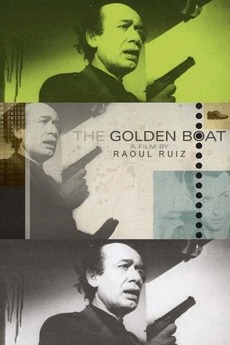
The Golden Boat (1990)


Director: Raul Ruiz
Screenplay: Raul Ruiz
Cast: Michael Kirby as Austin; Federico Muchnik as Israel Williams; Brett Alexander as Doc; Mary Hestand as Alina; Michael Stumm as Tony Luna; Kate Valk - Amelia Lopes

On a New York City street, the protagonist Israel (Federico Muchnik) finds a line of discarded shoes that leads to an older man Austin (Michael Kirby), covered in blood and proceeding to stab himself in the guts, all whilst saying he's from Los Angeles. Thus begins this jaunt by Chilean director Raul Ruiz, accompanied by a score by legendary experiment jazz musician John Zorn blaring on the soundtrack.

It was natural for Raul Ruiz, a true journeyman who made films throughout the Americas and Europe, to make at least one American film, though its notable he only ever made two films in the United States, this and thriller Shattered Image (1998), most of his career entirely out of this and mainstream cinema. Of note is The Golden Boat being from 1990, also when he was finally able to step back on his homeland's soil, fleeing Chile in 1973 during a military coup d'état and witnessed in The Wandering Soap Opera (2017), a 1990 workshop production finished in the 2010s by his widow Valeria Sarmiento, and also arguably ending his 1980s work with a bang. The eighties was the most delirious point of his career, alongside one of his most prolific, where his Euro co-productions were at their most heightened and surreal, including an English language adaptation of Treasure Island (1985) funded by the Cannon Group.

The Golden Boat is just as strange, as soon after this beginning a man wanders to Israel on the street with a stereo, claiming it is now his despite it never being Israel's either, only for Austin to stab the guy to death and follow Israel. In this tale, Austin now becomes a shadow picking people off around Israel, sometimes people die only to reappear again, as death is always a vague thing for Ruiz, a man who lived up to this in his own life as with Sarmiento's help he's still releasing films even after his own. One man, a neighbour of Israel, when stabbed by Austin just gets into a sit down conversation with him whilst tending to his stomach wound, a religious figure as unnatural as Austin watching on at Israel from afar.

To attempt to create a plot line, the only things I can say is that these two characters do know each other, spectres of a greater form who have wandered into Israel's life, Austin the atheist and the neighbour the religious. Israel's female neighbour, even when Austin kills her, will still be there, in the midst of this and even hypnotised to pose for a classroom's worth of people drawing her crammed into a small New York Apartment at one point. The eighties for Ruiz has been accounted for its full dream logic, reoccurring in all his career at its extreme then as plots regardless of budget, length or medium and be it for mini-series or a dance film Mammame (1986). In some cases they could be sketched loosely as novel adaptations of the likes of The Blind Owl (1987) as if crib noted.


This is also his New York City film, which allows for an alien view of the world to be shown; one of the funnier jokes, that has stuck with me, is a throwaway line about a cafe selling sushi hotdogs and won ton enchiladas. A tangent in a university turns into a bloody farce when a bathroom full of guys, spying on a female teacher, peeves Austin off as he cannot stand voyeurs. The Golden Boat has also never had a release in the 2010s, so it's vague to see his distinct visual style in the per-usual VHS form, strong artificial lighting and sudden changes to monochrome affecting his take on the United States.  Halfway through he even has an audience laugh track, as Austin is obsessed with a female soap opera star whose very well spoken husband is not impressed by his existence, even hiring goons in hope to silence him. Ruiz when you can see his films, as intended, was a great visual artist and its significant for how random he could seem to be, as liable to have purely surreal jokes as he is to have clear themes, he was very precise in his craft. One notable thing, which is part of the film's effect but worth mentioning, is that some of the performances' have a stilted air to them, in-between characters arguing about God or Israel being the hapless figure in the midst of all this, which can be very distinct.

The score is good and adds to the film's peculiar energy. By 1990, after developing his reputation for distorting jazz through various genres or reinterpreting the likes of Ornette Coleman, was when he had created Naked City and their innovative untitled debut, where his interest in extreme metal like grindcore met lounge music, surf rock and even the James Bond theme. I'd like to say this score, whilst not as extreme, feels from the same category of experimentation from that period, suiting The Golden Boat fully with eerie wordless vocals in-between crime jazz melodies and sparks of general strangeness by a talented legend. In general The Golden Boat is of note of having a who's-who of figures from filmmaker Jim Jarmusch, writer Kathy Acker (who plays the university professor), installation artist Vito Acconci (as a Swiss Assassin who may have killed the wrong person but denies it), the experimental theatre company the Wooster Group, filmmaker Mary Hestand or former porn actress/sex campaigner Annie Sprinkle (as a waitress).

It fits in the sense that The Golden Boat, one of Raul Ruiz's obscurer titles, was a trawl through American culture in general, where Israel is a music journalist, just for a joke about loud rock music causing him to become deaf, or its absorption of crime stories in hit men who repeat themselves. It's an acquired taste, but The Golden Boat does compel me, a curiosity whose off-kilter tone won me over, interrupting the digging up of a character buried at the beach at Coney Island with a random woman appear to give the two diggers sandwiches, or a boy claiming he's actually a dwarf in his thirties. Some of the dialogue referring to sexual violence is uncomfortable, like art being described as a form of rape, but The Golden Boat for all its lightness is still tinted in darkness, a tenseness where for how absurd it is Austin spends most of the film covered in other people's blood or his own, this a world with death hanging over people, in a pre cleanup New York City which looks dank and claustrophobic. The film also ends tragically, a death that lasts even if the story itself looks cyclical.

Considering Raul Ruiz's career, I am also forgiving of some of the more uncomfortable lines in this film as his career, even in the eighties weirdness, is permeated with a darkness of a man who fled a dictatorship, and was constantly obsessed with death and murder even in terms of films like City of Pirates (1983) involving a serial killer who is a child. He merely tinted it with a lot of bleak humour, as far as depicting Cantos 9 through 14 of Dante's Inferno, infamously, with ordinary location shots of his homeland of Chile in the 1991 A TV Dante sequel as a literal depiction of hell.

That it's not easily available is sad, even thought you'd presume an English language film like this might've been a lot easier to access or distribute. Shattered Image, a more structured crime film about a woman existing in multiple realities of herself, would've likewise made sense to be available. (Also A Closed Book (2010), whilst not regarded well at all, was a British production also shot in English that was a chamber piece thriller). Again, Ruiz has had a bad hand dealt to him in accessibility, despite his significant reputation, so obsessive devotees like me try to find what I can and write reviews like this to change that. A film like The Golden Boat definitely deserves this kind of support.

Abstract Spectrum: Mindbender/Surreal/Weird
Abstract Rating (High/Medium/Low/None): Medium


Friday, 21 February 2020

The Wandering Soap Opera (2017)


Directors: Raul Ruiz and Valeria Sarmiento
Screenplay: Raúl Ruiz and Pía Rey
Cast: Luis Alarcón, Patricia Rivadeneira, Francisco Reyes, Roberto Poblete , Liliana García, Mauricio Pesutic

How befitting Raul Ruiz as a director, when he made a career of characters that even when passed from the mortal plain still wandered around the living, who made over a hundred plus films in his life as elaborate labyrinths and mysteries in themselves, still releases films long after his 2010 passing. This is entirely due to him having so many fragments he recorded to film, secret productions that may still be uncovered or just known about online filmographies and yet to be fully available, but it is a specific virtue he can now add to his reputation, his widow and fellow filmmaker Valeria Sarmiento making such an admirable effort in finishing unfinished projects like this with the advantage that she was his editor for many of his productions since the beginning. With a career full of dreams within dreams and mysteries, he feels the right person to become a ghost who can still release cinema in the 2020s, as an unfinished 1967 production next to be premiered at the 2020 Berlin Film Festival. Even the fact that Orson Welles has managed this feat, releasing The Other Side of the Wind (2018) decades after his mortal passing, feels symbolic as Ruiz influenced by him.

The Wandering Soap Opera itself is vignettes with actors playing multiple roles. It was one of many workshop projects as Ruiz would in his career also teach, becoming a film studies professor even at the University of Aberdeen in Scotland for a brief period alongside two volumes of film theory texts. The workshops being filmed isn't surprising in a career of a man who worked regardless of the type of project or any restrictions.

The most prominent historical detail, which adds a lot of context to this project, is that this was made the first time Ruiz set foot back in his home country again after fleeing in the seventies at the beggining of the Pinochet regime, Augusto Pinochet leading a dictatorship that would end in 1990 when a 1988 national referendum voted against him extending his rule a further eight years. Fleeing his country with his wife Sarmiento led him to France, eventually working in various multi-national projects over the eighties onwards to the end of his career. The Wandering Soap Opera is a film that, whilst a fun series of odd fragments, has a darker side which makes sense learning this detail. It says a lot that, with chapters with titles, one is a quote by Ruiz himself saying that when you die, you could be stuck being a Chilean.

The title refers to this being a Chile, as the initial idea was, where it was all actually a giant telenovelas, a special form of soap opera found in Latin American countries. Whilst there are differences, soap operas are something which the English like myself can attest to the powerful aura of and see his idea for implementing this, as TV magazines are devoted in their covers to the lives of fictitious characters played by actors as if real people, in decades long ongoing "soaps" like Eastenders (1985) which rarely end if successful. Ruiz takes it to an extreme where everyone in Chile is in a soap opera, sometimes watching other people in other soap operas, even soap operas entirely devoted to watching to soap operas and commenting on them. Effectively Raul Ruiz predicted Gogglebox (2013-), a British series entirely about ordinary families being watched watching TV shows viewers also watch and commenting on them which has lasted at least seven years.


There's no sense whether anyone has a job outside from being in these soap operas, and everything has a sense of a) being in a heightened absurdity in Ruiz's mind, and b) a sense of everyone being watched by everyone else, which just evokes the dictatorship that existed a year before this film's initial creation. Some of the skits explicitly show this, the first segment in-between a man trying to seduce another man's wife and showing her his muscles, i.e. producing two pieces of meat out into her hand and offering to eat them raw with lemon with her, hinted at this with them aware they might be watched. (Even the joke, when the husband appears, that he's more concerned about the lemons likely being poisoned, alongside a whole array of lemons of various shapes or just other types of fruit, suggest paranoia of a metaphorical level). One of the soap operas, watched by a star of another show and a man (who turns into a priest and another person by an edit on the sofa) leads to him pointing out the humane rules of torture of the Catholic Inquisition, that they made sure the families were warned ahead of time and the tortured still had to be able to leave on their feet, juxtaposed by only sound and dialogue of the programme they are watching involving people being tortured and crucified.

The best segment for myself too is entirely explicit in what it is parodying, in which one duo of political assassins get killed by another as they procrastinate trying to write a note about their political message over their slain targets, only for the other duo to procrastinate about their message and be killed by another pair of assassins and so forth until its repeated ad nauseum to ridiculous lengths. The Wandering Soap Opera beyond this is a very whimsical work with moments of darkness, reflected in the fact that this is Sarmiento's film as much as her husband's, bookmarked by behind the scenes footage of his filming, one that reflects his reoccurring motifs between light weird humour and darkness. The later is found prominently in moments like a soap opera within a soap opera where young wives discover their husbands have died (their ghosts wandering past) only to decide to stay as a friendship of young widows. The lightness is found continually, such as the segment of people who all have "H" at their forename which eventually leads to someone growing tiny eggs out of their person (which are eaten) to the titular Wandering Soap Opera, a Turkish melodrama whose heckling as an outside program feels like a comment on xenophobia in itself.

The production, even in mind that this was a workshop originally, looks handsome with the additional symbolic weight that this and The Golden Boat (1990), a production in the United States, feel like the tail end of Ruiz's eighties period. That was a decade which managed to be more prolific and bizarre than even than any other of his, involving the fact he could make up to over four productions a year at his peak, alongside crystallising trademarks such as bright coloured lighting (pinks here particularly in The Wandering Soap Opera) and striking visual set pieces. Eventually it gets to the point cast are on TV screens watching other TV screens, and this level of delirium is inspired. This is more significant as this is a rare case of being able to view a Raul Ruiz film as was intended, as my admiration for the director is confounded by the fact his eighties period let alone any other is usually available only by a low resolution VHS rip, versions online being the only way to see them.

Seeing The Wandering Soap Opera as intended, Ruiz had an incredible visual eye as much as in his ideas, a visual richness which was always happy to go for cheap visual techniques too as much as an incredibly heightened style, from shooting on everyday streets on location to an erotic dancer (the daughter of one of the characters in the audience) being only seen in silhouette. The result is special for me, and it's certainly abstract. Quieter than most I've seen by the director, who can be insanely surreal, but the format actually helps especially as the cast have multiple roles, everyone doing well with such idiosyncratic material, and providing the film an added weirdness in that everyone literally changes places and roles like soap opera cast members.

The final segment, involving male cast members with a piglet and a kitten and a rabbit whilst attempting a spiritualist channelling, ends the film on further dark humour and melancholy, death and two mysterious sewing women alongside a man appearing inside a crystal ball presenting his suicide note like a broadcast host. It perfectly encapsulates Raul Ruiz's style before the end credits. It's probably a film to tackle later if you are new to him, due to the archival context, and sadly it's a film not likely to be as easily accessible as one hopes, just for the fact that Raul Ruiz is still despite his reputation not as highly regarded (and accessible) as he should be. But I've nothing by happiness that it exists and I saw it. Knowing another film is to be restored and finally released in the 2020s, and that there's probably more material Valeria Sarmiento is going to find from her husband, adds to his enigmatic aura for the better especially as he was a great director already.

Abstract Spectrum: Dreamlike/Surreal/Weird
Abstract Rating (High/Medium/Low/None): Medium