Showing posts with label Political Satire. Show all posts

Wednesday, 31 January 2024

Themroc (1973)


Director: Claude Faraldo

Screenplay: Claude Faraldo

Cast: Michel Piccoli as Themroc, Béatrice Romand as the Sister of Themroc, Marilù Tolo as the Secretary, Francesca Romana Coluzzi as the Female Neighbour, Jeanne Herviale as the Mother, Patrick Dewaere as the Police Officer, Coluche as Male Neighbour, Miou-Miou as the Young Neighbour

An Abstract Candidate


Themroc has an interesting legacy in Britain, though one interlaced with a time of moral panics. Channel 4 in Britain, when it was first launched in 1982, was literally the fourth terrestrial television station in Britain. Television was dominated in my country by the BBC, who had two stations, and ITV, who was originally a series of regional stations that shared programming and had advertising unlike the BBC. Channel 4 would eventually over the decades become more conventional, but at first they were very controversial, an alternative choice even into the nineties and into the Millennium as, even when they were drawing bigger numbers creating shows which could get complaints. They had a few notorious moments over the decades, be it satirist Chris Morris' incredibly controversial Brass Eye (1997), which tackled biting topics like the fear of paedophilia in the media with a scathing surrealism, to even TFI Friday, a live music comedy show hosted by Chris Evans originally between 1996 and 2000, which had its own controversies to the point Happy Mondays frontman Shaun Ryder was not allowed on the show in live form to get around his passive habit for cursing. Even now, toning down, you still get something like Naked Attraction, started in 2016, which is a dating show where you literally first get to know someone from their naked body first before their face or personality, which got the danders up for some1 and thankfully shows that old school side to them.

Themroc is important for them as, whilst only a series with ten films2, Channel 4 showed Claude Faraldo's experimental satire as the first film for the Red Triangle series between 1986-7, a curated series of international and experimental films which were marked as after midnight broadcasts, warned in their promotion as having adult content. This was a literal red triangle promising adult material, with many of the choices having sexually explicit content even if they were cerebral works, like Michelangelo Antonioni's sexually explicit but ennui drenched Identification of a Woman (1982). Some films were not this, like the devastating Brazilian film Pixote (1981), films which have slowly been rediscovered and some, like the two from Japanese filmmaker Shūji Terayama in the line-up, in dire need of actual releases in the West still. Themroc among them is the entry from the French industry after the French New Wave, least the time after Jean-Luc Godard proclaimed the medium dead and made experimental projects in a variety of forms over the seventies, a time which could give you Jacques Rivette's Out 1 (1971), but also Can Dialectics Break Bricks? (1973), a project by the Situationist movement which took a martial arts film, and added a new dub which was a left wing political satire intermingled with the fight scenes. 

Themroc immediately stands out as entirely wordless or depicted with the cast speaking complete gibberish, a tale of art house film legend Michel Piccoli as an ordinary working Joe who ends up descending into an urban caveman after one bad day at work after being disciplined for eyeing in on his boss and his sexy secretary. The film depicts this all in his performance, the cast and the world without needing dialogue, and one of its first idiosyncratic touches tells his back story by repeating each day of this dead end job through tiny moments from days pass, the same moments but with the cast in different clothes per day of Piccoli's life. Among the things which influences this character's descent is also with the opposite gender and sex. Thankfully, this does not factor in with a way which could horribly date as this progression goes on; even if he commits to an incestuous relationship with his sister (Béatrice Romand), this feels like a perverse touch even if a discomforting one, one of the first stabs at the taboos this film is playing with than a male fantasy. It is certainly an eccentric production, where a very sick sense of humour goes a long way into appreciating this, and a sense of the weird too, witnessing the likes of the guard obsessed with sharpening pencils only to break the tips so he can sharpen them again, not that dissimilar to the man polishing his posh car over and over living in the same apartment complex as our lead when the events transpire, strange irrational behaviour between with hindsight that make Piccoli's turn, even if transgressive, more sane in comparison. Cemented together by Piccoli himself, in primal scream form in a damn good performance, he is not playing a troglodyte stereotype but this force of confidence in urban form. This is one or two aspects which may have aged, but not in the ways expected, in that he does begin to entice the women around him, including the secretary, with his charms, but it becomes more complicated. Far more likely to have aged, just in the incestuous relationship, is how Béatrice Romand is a much younger woman in various states of undress throughout the film rather than them being siblings, all because the transgression is more clearly the point but the presentation is what is closer to the reductive alternative version what could have gotten in Themroc as a bad film. A lot has surprisingly gained more as time passed for the production. The first person to follow his charge is the best example of this, as it is a  housewife played by Francesca Romana Coluzzi, a statuesque figure who escapes her doldrums and whose less dominant, small nerdy husband joins her more cautiously, with a regular hammer to break their possessions and walls down next to her with a sledgehammer.


Literally building a cave out of his apartment with a few adjustments, the production getting access to an old building complex they could literally destroy the outer walls of in real time, the police do come for Piccoli, only to become figures in a farce where tear gas is an aphrodisiac when you turn feral. Tellingly, post May 1968 and the riots which brought France to a close, it is the police who are the real monsters, a bumbling mass who for the sake of it assault a young boy out of frustration or even commit sexual assault, coming off as clueless and lost entities are mindlessness. That or as food, as authority figures become the antelopes for urban lions to barbecue for tribal bonding over a meal, with the act of cooking authority the most overtly surreal and transgressive moment, and not even hiding the meaning in subtext. There is even a hint of bisexual cavemen, or at least toying with male-male eroticism where, in an attempt to bring back human respectability by bricking the cave up with walls again, men can show sensual respect for their own beauty by stroking each other, especially to tempt them from being a mindless brick layer for authority and to join this cave person tribe.

The ending furthers this subversive streak of how Piccoli and the others are not regressing but stripping away the horrors of modernity, contrasting their few transgressions against greater horrors as the buildings allowed to be destroyed for this film's production are later contrasted by the new apartment complexes shown at the end, white fortresses which look depressing even shot from afar. Sexuality itself is part of this as is control; there is one police officer living in the apartment complexes as this all transpires who keeps his daughter under his thumb, even striking her out of discipline, regardless of her own freedoms and passions in vicinity to these events. That or the older woman, Piccoli's mother, almost having a constant panic attack between her horror at what has happened but also, even if a taboo is involved, the attack of her social morals clashing within something primordial. That there are taboos that, in any other circumstance, would rightly be considered unacceptable is understandable to consider, but Themroc clearly has these hypothetical scenarios not to suggest they are the right way forwards, like cannibalism, but as a deliberately shock.

Whilst that might be the aspect which has aged the most, the sight of values being raged and challenged in this has not, as Piccoli and his tribe manage to live in peace baring the killed and eaten police officers. His tribe's primal screams in the finale, starting to affect others across the city, cause these figures to question themselves, to break from a repetition, break from materialism by means of destroying one's car they were obsessed with, becoming part of this hymn to a singular human form of passion and life without the trappings of mindless social structure and repression. Again, all of this is conveyed without dialogue and explicit political grandstanding, and that becomes one of the best aspects of Themroc, how pure gibberish from the cast and using performance even from the non-feral figures conveys this all perfectly. Even that it manages to move away from potentially contentious aspects, the strong macho lead who woos women with his feral charms, to become much more interesting in the turns it takes with other characters means it never becomes trite and obvious.

Hilariously, it was the government of Margaret Thatcher who are to be thanked for Channel 4; a deeply controversial figure, a scourge to many and also connected to the attempts to ban "Video Nasties" in the video tape rental stores too through members of her government, they nonetheless wanted to force competition against the BBC, creating an entrepreneurial setup allowing smaller television production companies to create programming the channel could buy off them3. This ended up creating a channel that, in this original form, was everything her conservative ideals would have been aghast with, showing a film like Themroc which rebels at everything her government's ideals would have aspired to just in terms of materialism and family values. That in itself adds a delicious layer to the story, even if this screening happened before I was born, in terms of this film with a legend just in terms of British television.

Abstract Spectrum: Transgressive

Abstract Rating (High/Medium/Low/None): None


======

1) Naked Attraction won’t be laid bare by Ofcom as Channel 4 show escapes investigation, written by Kirsty Bosley and published for Metro.co.uk on August 7th 2017.

2) Too hot for TV? Inside Channel 4’s doomed Red Triangle experiment, written by Stephen Armstrong and published for The Telegraph July 14th 2021.

3) I owe Margaret Thatcher a debt of thanks for creating Channel 4. Now her heirs could destroy it, written by David Olusoga and published by The Guardian on July 25th 2021.

Sunday, 23 April 2023

Britannia Hospital (1982)


Director: Lindsay Anderson

Screenplay: David Sherwin

Cast: Leonard Rossiter as Vincent Potter; Graham Crowden as Professor Millar; Jill Bennett as Dr. MacMillan; Joan Plowright as Phyllis Grimshaw; Malcolm McDowell as Mick Travis; Mark Hamill as Red

Ephemeral Waves


You wouldn’t know Karl Marx from a toffee apple!

Lindsay Anderson’s success, after his short documentary work from the fifties and This Sporting Life (1963), would reach an unofficial trilogy of loosely tied films, starting with If… (1968), the breakout success at the right time and place in history, in the late sixties during a politically tumultuous time, a tale of the final violent breakdown between roles at a boys' boarding school that would win acclaim and the Palme d'Or at the 1969 Cannes Film Festival. It continued with O Lucky Man! (1973), apt for the strange and freewheeling seventies, three hours long, and an indulgent production varying between weird animal person experiments, an idiosyncratic Pilgrim’s Progress-like take about then-Britain, and one unfortunate aspect of English actor Arthur Lowe in black face among the multiple characters he plays. Britannia Hospital, set within a day at the titular hospital when the Royal Highness is meant to visit, is the film to end the trilogy and appeared at the wrong time be to appreciated, brought out knee deep into the Margaret Thatcher era of British politics where this bleak satire on the state of the union would have violently contrasted her push as Prime Minister for Conservative capitalism.  

It is, with the opening an old man left dying in the middle of a hospital, an unfortunate reminder that the National Health Service, and the issues of health care and how it runs, has been with us for decades. Britannia Hospital is an ensemble tale where this tour of the Queen is going to collapse as the kitchen staff is on strike, there are protests about the African dictator in the private ward, and one of your staff is building a Frankenstein body even if it means ending someone’s life support for the perfect head. Malcolm McDowell is Mick Travis, following this tentative trilogy built around the actor, secretly entering the hospital as a window cleaner to get a secret scoop (with a duo including Mark Hamill in the truck outside to record everything, if they are not getting stoned watching documentaries about battery chicken farms). Lindsay Anderson’s film is the bleakest of black comedies, a snapshot of how he views Britain and humanity through many sides. Aggravated workers on strike, blocking ambulances; Professor Millar (Graham Crowden) with his built man and his Genesis Project; the overwhelmed staff in non-medical levels having to be bribed with hot breakfasts to clear the entrance for a huge emergency; and just a general sense of nothing working, as this hospital is merely a metaphor for Britain in general from a very jaded perspective. Even the union protests can be as bad in their choices of racist language and how they can be bribed with OBEs, even when they find their courage to follow their beliefs afterwards. Even the private patients, the example of the corruption of the hospital, and in the middle of a class and privilege war, feel they are paying too much for their treatment even if they get exclusive luxury lunches and their own private rooms, so no one is really winning from this system.


What this becomes is a work not trying for answers, and is a bleak work at its heart. There is absurdity however to undercut this, coming in touches. The consultants for the Royalty, for example, have a male actor playing a woman without a deliberate joke on this, and the Lord with her significantly shorter by her waist for contrast. Alongside a murderer's row of recognizable British actors of television and cinema from this era, they also have characters even as archetypes they can embellish. Graham Crowden's Miller is a show stealer by himself, a megalomaniacal egotist who wants to be God and literally blends a brain into a drinkable smoothie at one point, who yet gets the sanest rant of how damned humanity is in the ending, even allowing Anderson to bury Hollywood when one of the lines in that final speech is how the money put on one film could have fed an entire third world tribe for a long time. Leonard Rossiter, who would be famous for the likes of the BBC sitcom The Fall and Rise of Reginald Perrin (1976-1979), plays Potter, another show stealer as the man who really runs Britannia Hospital, its negotiator who actually makes sure the place is still working even if it means bribing people with the promise of the aforementioned OBEs, even brain staff to death with a shovel. Whether it is from the series Dad's Army (Arthur Lowe in one of his last appearances in a memorable one off scene) to British theatre with Joan Plowright, vast swathe of British culture comes together in this film, like so many even into the modern day, and like the best of these, you have character actors who can stand out and add so much particularly to a work like this, so barbed yet fully one scathing one-liners, they make stand out. Even Mark Hamill, the least expected person to be here, works in his scenes perfectly.

The film is difficult, arguably too nihilistic and too scattershot to work for some, but the problem is one accepting that in real life, as not much has changed in Britain decades later, too many problems let alone with the NHS are to be spun like plates and are always a threat, especially as this film's subjects are not just health care but universal, such as the treatment of manual labor staff and class biases. There are moments though which succinctly get a point across, such as the Rudyard Kipling ward, an advanced ward where one nurse looks after more than seven people. Even before you glance side eye at the tech bros nowadays obsessed with cutting out human beings, with computer run hospital wards something one would try, and cut the nurse out of it entirely, there is also the very British joke that this advanced ward is closed due to the lack of cleaning staff, wasting all that money on something not likely to have worked and also named after a contentious author of the British colonial era.

It is a compelling film, one where the mad scientist, despite being one who builds a human being (and results in a very gory finale as a sub plot), turns out to be the sanest one. Even when lamenting humanity's lost potential and presenting a future of a brain in a jar as the superior evolution, his final words are not funny but tragic. Sadly for Lindsay Anderson, whose career was already small in terms of the amount of theatrical films he actually helmed, this would be one of his last films. There is a documentary covering the music group WHAM! touring China from 1986, and television work, but the last theatrical film before his 1994 passing was The Whales of August (1987), a drama which in tone feels of a very different type of film from the three politically charged works (and This Sporting Life), followed by Glory! Glory! (1989), a TV movie about televangelists and his last before his death. Britannia Hospital is absolutely a cult film in its form and existence; where as If... came in 1968, where a sudden political earthquake happened which it befit the time, O Lucky Man and this for the other two films in this unofficial trilogy are strange satires, of their times in their casts and even getting made as they turned out, but alien even to their time periods. They are unique and to approach Britannia Hospital, one needs to be willing to laugh even at the absurdity of life to be able to appreciate its caustic nature.


Sunday, 20 June 2021

United Trash (1996)


Director: Christoph Schlingensief

Screenplay: Christoph Schlingensief and Oskar Roehler

Cast: Udo Kier as UNO-General Werner Brenner; Kitten Natividad as Martha Brenner; Thomas Nicolai/ Thomas Chibwe as Peter Panne; Joachim Tomaschewsky as Bischof Pierre; Jonny Pfeifer as Lund; Jones Muguse as Afrikanischer Diktator Hassan

An Abstract Film Candidate


It's not shit, its chocolate.

With United Trash, I introduced myself to German filmmaker Christoph Schlingensief. Making films since he was seven, the best way to read Schlingensief's career is either as a provocateur or the more brazen comment of a shit-stirrer, who viewed his home country and its society, including the middle class, in constant need to be attacked. Particularly once he transitioned from cinema to reality television and staged provocations, Schlingensief in his homeland of Germany went for the juggler. In that later period, after United Trash into the 2000s, he provocatively staged performances and becoming a media figure himself. This includes allowing members of the public to vote for whether asylum figures living in a Big Brother environment were allowed to stay or not in the notorious “Please Love Austria – First Austrian Coalition Week" stunt in 2000, after Austria gained a government including far right nationalists, whose outcry and success as a televised and public event, staged next the Vienna State Opera. A later work, originally a reality show on German television which became a 2004 documentary, was Freakstars 3000 which was a talent competition for people with disabilities.  

His lack of worldwide reputation for provocation is bizarre; especially when I get to United Trash and try to comprehend the barrage of transgressive lunacy I sat through, it is strange Schlingensief never really got his work a wider cult attention to my country knowing that the likes of Lars von Trier from Denmark were as capable of the same thing. For all I will bring up, United Trash is a well made film in terms of scale and its elaborateness, unexpectedly taking its influence from transgressive cult genre films for its goal to shock and awe the viewer. I will say, immediately, this is not a film for the sensitive. Shot in Zimbabwe, set in a mysterious African country with a dictator having been provided a German V2 rocket by a UNO general he intends to blow up the US president with, United Trash is going to offend someone, and that is not a lazy comment in this particular case.

It is the story of Peter Panne, son of a former sex worker and a UN German member. The UN member is UNO-General Werner Brenner as played by Udo Kier, the cult actor and a von Trier collaborator who worked extensively with Schlingensief, whilst his wife is Martha Brenner as played by Kitten Natividad, a cult and adult star whose early career includes later films of the cult director Russ Meyer. Already when you begin the film, chaos transpires. Surprisingly elaborate, even acquiring a helicopter for the opening, you already have a sense of the tone where everyone is shouting and nothing is sacred, including a side character called Bischof Pierre who is an excommunicated Austrian priest preaching to the locals an anti-Roman Catholic rhetoric, including wanting to drink the blood of the Pope, and Lund, Werner's bodyguard and lover. In the opening, Martha is ready to give birth to Peter abruptly, all set to what sounds similar to the Naked Gun theme.

United Trash, trying to figure out its purpose, is a complete burial of the United Nations and other groups with the ideal of trying to help in third world countries. You could lose sight of this in the film's willingness to throw itself into the truly bizarre, or that you have a barrage of multiple narrators and onscreen captions, male and female narrators and even Peter himself elaborating the tale, even subliminal messages onscreen the film warns of ahead of time. Alongside the distinct production style, with elaborate camera movements and time transitions shown through extras carrying signs stating them on handwritten signs, United Trash as a later film from Schlingensief is a rare transgressive film with a bit of a budget and benefits from Schlingensief's clear experience from his work since the eighties.

It is also a film, more so now, which is still shocking and at times in danger of just being politically incorrect with no real need to; eventually, due to a very unfortunate incident of getting a marble stuck up his nose as a baby, and his mother's attempt to remove it with a spike backfiring, Peter ends up with a huge gape in the top of his head, a slit which there is no way for me to circle around in description as it is called a "pussy" at points, which seemingly oozes squirty cheese. He is also meant to be a potential new Messiah, as if talked of in the prologue, one as a pawn for both Bischof Pierre for his anti-Catholic plan, who has seduced his mother, but also for the dictator who wants to drop the V2 into the president's bedroom. Your reaction to the film, barraging through its length in a quick pace, is entirely that it is not taking prisoners at all.

It has, when Peter gets the unfortunate injury, a scene of a doctor and his assistant in bloody surgery carving a prosthetic baby up like a turkey of fake blood, somehow managing to become an actor later than mere bloody offal. The film skirts homophobia, but only because Wrner's lover Lund is a degenerate, a comedic foil who is buff and has a fake tan, but for a joke also a pederast with a young infant Peter and marbles. A half-dead man, blown full of holes when a disgruntled local woman accidentally misses with a uzi, sits around Werner's sitcom home just wanting access to a public phone, and only in the country looking for sausages is a running joke for a large segment. This is a film where "pouring whiskey into his pussy" is an actual line. It also, bluntly, has a scene of Kier in black face (and blackened torso) wanking a banana off his banana skirt which would have not aged well even then, meant to be shocking in a scene where Kier in a UN military cap, black face and a banana skirt entertains the laughing locals on a stahe with Lund in a seventies tracksuit, all of which is beyond bafflement.

It is meant as satire, the UN and frankly Western involvement in general in the African continent viewed as inherently corrupt and misguided, let alone any specific African country, bringing their idiocies over to another land and making it worse. References to Yugoslavia, and the bloody collapse of that former country into multiple in the nineties clearly hinted at, are evoked as being one of the UN's achievements, and the film even to the point Martha and Werner's home is depicted in as a sitcom with canned laughter, burying its leads as misguided figures farcing around in another country. That the local extras are sidelined, mostly background figures with many performing songs and music nearby, can be seen as much as a mistake of the film alongside its provocations. Ironically, Christoph Schlingensief himself clearly must have realised the film as a satire of Western involvement in Africa did not work, or at least went further in a way that sooths the film's scattershot nature. He would go on to create the Operndorf Afrika (Opera Village Africa) in Burkina Faso in 2010, a cultural institution that would include a school, an opera house and a clinic1.  

The film in truth is a mess, but I will openly admit to having been taken aback by the film, compelling in its own right for how far it goes in its humour. It is also a rare case for Udo Kier having a lead role, and it is amazing to see him act with the energy of 110% extra force than previously seen in films from him, a rewarding experience to see him unleash a level of energy I have never seen from an actor I have always admired. He is matched by a cast as equally willing to fling themselves into this twisted farce. Kitten Natividad in particular, factoring in her willingness to be naked on screen including covered in mud, has as much energy as the brash American figure among the cast, a distinct presence physically but matching it with a bravado as much too in her performance.

Tonally too, the film does come off as a completely alien and perplexing work. Neither is it just how transgressive the film is - in the fake blood, or playing to taboos or the nudity - but even in the little touches like a kazoo suddenly appearing in the score which disarms the viewer. Your willingness to adapt to the film is a factor, including how brazen the film is to drag the viewer along, pulling them back and forth with the constant narration or jumps forwards. It will feel too much for some viewers even before factoring its transgressive nature. Certainly where the film heads to even when described does not begin to spoil the experience of what is seen - the US White House depicted within Zimbabwe with the local cast, cameos by a fake Cicciollina and Jeff Koons, obliteration followed by a happy ending by way of incestuous marriage, and a strange blob creature infant from a Frank Henenlotter film as an ending shock from the later's films - and realising this is the European art house equivalent to a Basket Case (1982) or one of the cult American films, only with its idiosyncratic choice of location and higher production value, is an experience which catches one off-guard.

Abstract Spectrum: Grotesque/Transgressive/Weird

Abstract Rating (High/Medium/Low/None): Low


======

1) As talked of HERE.

Thursday, 6 June 2019

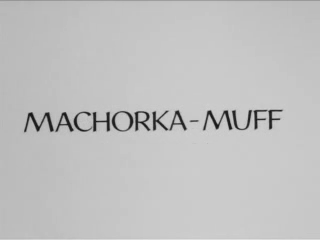
Machorka-Muff (1963)

From https://66.media.tumblr.com/74eb93ec8ddcd123be6593d
1ecff29c8/tumblr_pqmqfqlU7O1w7unbto1_400.png


Directors: Jean-Marie Straub and Danièle Huillet
Screenwriter: Jean-Marie Straub and Danièle Huillet
Based on Bonn Diary by Heinrich Böll
Cast: Erich Kuby as Oberst Erich von Machorka-Muff; Renate Lang as Inniga von Zaster-Pehnunz
Obscurities, Oddities and One-Offs

Straub-Huillet, Jean-Marie Straub and Danièle Huillet, are a duo that evokes weight. They are heavy weights of European art cinema but, in the many discrepancies where prolific names weren't available to us plebeians, are not as well known in English language cinematic culture in comparison to their reputation. Thankfully, knock on wood, the current restorations of their catalogue and widening availability (even physical releases in the USA by Grasshopper Film) will rectify this. Interestingly the first work they ever put together was a short named Machorka-Muff, a very straightforward fragment of narrative stepped in a thick morass of satire. This was far from the image of "difficult" filmmaking as has been presented, and eventually appears, in this duo's work.

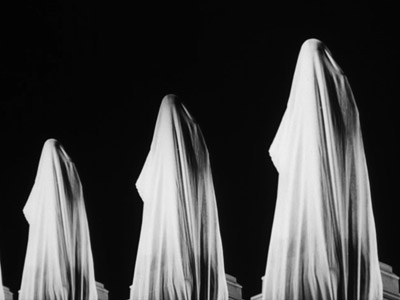
Machorka-Muff the character (Erich Kuby) is a former colonel for the Nazi army who is to preside over an opening ceremony for a new institute, as much to salvage the reputation of another high ranking Fascist soldier of yore. He plans to marry Inniga von Zaster-Pehnunz (Renate Lang), in spite of her previous seven marriages and she being a Protestant to his Catholic, with interest in having an adulterous relationship with another's wife since he does enjoy "petty bourgeois eroticism". (Actually, in muted tone, a hilarious line the many times I've watched this eighteen minute short this year; again not expected from Straub-Huillet in the damnedest to be writing actual jokes in their scripts).

He gets the girl, gets to preside over the ceremony and political powers coinciding with public opinion may push for more pro-militarisation, the fragment of a world here, based on a short story by Heinrich Böll, entirely to his favor. And yes, made in 1963, this is only two decades after the defeat of the Fascists and World War II, and is made in West Germany, so this is all disturbing. Hell, this feels disturbing and close to the bone in the 2010s even if you the reader have more conservative politics to me the writer, as it feels the coolest of satires as Machorka-Muff gets all he wants without his past with the Nazis flashing consciousness of guilt.

From https://www.jonathanrosenbaum.net/wp-content/
uploads/2012/10/machorka-muff3.jpg

Straub
, in a written title card, calls this an abstract visual dream, but not abstract in what my view of avant-garde/weird cinema is, played as a narrative clear, calmly (but very well made) short film. It feels however, just into the 1960s, modern for the time, not needing to hammer its concerns home as it itself as a subject should alarm. This also shows their tendencies, within an accessible context, of the directors' trademark of very precisely put together films, cut and constructed so there's no fat to this particularly story; this is something to bear in mind as, with the same author, they also made Not Reconciled (1965), a story told in only fifty three minutes which weaves multiple time frames and situations into one of the densest films possible. Almost deadpan, Machorka-Muff has lines which should elicit perverse amusement as well as disbelief, such as comparing his seven war wounds to Inniga's former seven husbands. How banal all is, even her threat in the last dialogue, that her family's influence can alter politics, just a casual remark pouring tea, is a dark and more honest swipe at far-right wing politics, also itself satire as even these worse case scenarios of the upper class in power are utterly bland individuals if you stop and stare at them like here as zoo exhibitions.

It's not a surprise, when even after World War II former Nazis were said to just be able to go into German politics or the economy without fuss, that Straub-Huillet would make this short as a warning. I suspect all the newspapers they cut to in montage are all real, arguing for remilitarisation of Germany, even Christians arguing that violence can be necessary in opinion pieces, despite a) there being a clear cut difference between just war for soldiers to protect and rampant violent militarisation, and b) no sane Christian should argue for violence over benevolence, and c) this is just over twenty years from when Adolf Hitler was in power.

It's a nice, sudden and sly short to being from; Straub-Huillet, even Straub himself when his life partner passed, have a daunting and large filmography, going from ancient Greek texts to documentaries, a non nonsense almost-documentary view on the legendary composer Bach (originally their intended debut before falling onto Machorka-Muff) to even adapting Franz Kafka. It is nice to know though, like all interesting auteurs, that if they only had a short length of film, they could make something still compelling, and that they weren't averse to accessible cinema as long as it stuck in the craw of the viewer.


From https://assets.mubi.com/images/notebook/post_
images/28029/images-w1400.JPG?1556114804

Monday, 20 November 2017

Weekend (1967)

From https://www.filmonpaper.com/site/media/2017/08/Weekend
_1967_onesheet_2011ReRelease_USA_SteveChow-6.jpg

Director: Jean-Luc Godard
Screenplay: Jean-Luc Godard
Cast: Mireille Darc as Corinne; Jean Yanne as Roland; Paul Gégauff as the Pianist; Jean-Pierre Léaud as Saint-Just; Blandine Jeanson as Emily Brontë; Yves Afonso as Tom Thumb; Juliet Berto as the Radical

Synopsis: Both of them have separate lovers and are planning to bump the other off, but married couple Corinne (Mireille Darc) and Roland (Jean Yanne) nonetheless have greater concerns as they need to make sure Corinne's dying father leaves his fortune entirely to them even if it's by force. The journey to and from her parents' home however over one weekend in the French countryside is significantly more complex. Outside on the long, sprawling roads the world is entirely stranger. Endless, unexplained car crashes on the side of roads. Characters from history and literature wandering through the woodland and fields, sometimes played by notable actors of French cinema. And a cannibalistic, extreme left wing terrorist group in the forests who pick on tourists and bourgeoisie.

My relationship with the film "found in a dump" as it proclaims itself has been a hate-love relationship. First seen in university when one has access to the library's extensive DVD collection and a sudden interest in diving into everything within it book or disc in general, I hated Weekend on my first viewing with a passion. A violent, blackened passion. Pretentious and disjointed to my younger eyes. And yet I had an obsession with what critics found in the film and rewatched it over and over again despite still hating it. Over five or six times I saw the film, the same old Artificial Eye DVD I probably borrowed more than anyone else, until a mutual acceptance of its virtues was reached. On this viewing, I understand why I eventually admired it.

It's a poisonous film in mood. From his debut Breathless (1960) to Weekend, Jean-Luc Godard was a trendy, popular filmmaker amongst the French New Wave group. Even amongst them, a whos-who of legendary filmmakers who are still held aloft now, his work in its unconventional and openly introspective was idiosyncratic but also what led to the most parodies of what French art cinema  in reflection of. Loose stories filtered through political and cultural monologues, the manipulation of the structure of filmmaking, everything onscreen and in its creation visual and audio to be manipulated by him. Yet the films he made between 1960 and 1967 were still in an area of popular culture, making a lot of films just between those years, just for the fact he had named actors and still kept the material for the most part in stories of some sort. By Weekend however, you get a pissed off spiteful Godard who'd give up on cinema in the populist sense and start an even more prolific increase of productions, entirely in political documents and video experiments in the seventies until his first "proper" theatrical feature with named actors and fuller plots came in 1980.

It's only a year before the May 1968 riots that shook France, so it can be argued Weekend is a prophecy of a breaking point and an apt time for Godard to dive headfirst afterwards into "difficult" essay work after. Here he decides to mix satire and Alice in Wonderland with a tale of two utterly loathsome figures, stereotypes of the worst of upper middle class French bourgeoisie. Dumped into a surreal netherworld of the French countryside, we see all the political concerns played out in absurd scenarios, already warning of the chaos about to be witnessed before the couple get out of their driveway, an argument with another family that involved intentionally hitting a car bumper with your vehicle and tennis balls used as ammunition. Slapstick but the humour's a little too dark.

It's still twisted to this day. Moments of Weekend feel even more transgressive now despite Darc and Yanne playing central characters you'd never defend. Roland willingly lets a hobo rape Corinne in a roadside ditch off-screen, for the most extreme example of this, only to intercut this between failed attempts by Roland to hitchhike undercut by wrong answers to political questions by the people in the vehicles, humour that could make the scene utterly tasteless if the film wasn't already a film of the bleakest kind. One with few redeemable figures and willing to break taboos beforehand. There's a warning of what to expect, parodying a sexually explicit monologue from Ingmar Bergman's Persona (1966), set to ridiculously bombastic music, as Corinne describes a profusely pornographic descriptions of sexual acts with the blankest line readings possible, including an  egg being used George Bataille style. The film from then on goes to include the likes of a whole family being massacred, cannibalism, to even real death of animals by the techniques used by real slaughterhouse workers, only done in the middle in the woods rather than in their work environment, material that can be debated whether its defendable for artistic purposes or not but still shocks the viewer. If the film's still disturbing it's that Godard at his angriest has managed to made such a vicious film still to this day, and that inexplicably it's also capable of being one of his funniest too like two perverse sides of the same coin, both existing and jarring intercutting into each other for sharp, discomforting effect.

From http://altscreen.com/wp-content/uploads/
2011/10/Editors-Pick-Weekend-Godard.jpg

It's important to realise that, proclaiming this to be his last "real" film, Godard would indeed leave theatrical cinema for his diegetic era. Baring Tout Va Bien (1972) with Jane Fonda, which does have a narrative, he'd form the Dziga Vertov Group with Jean-Pierre Gorin to make very left wing essay work over eight long/feature length films, then proceed to make various feature length, short and television projects which were extensions of his thoughts. Godard's films were already experiment and clashed with their need for a narrative structure since his earliest work, but Weekend feels like the literal car crash between both sides where things will change. Aspects of this do succeed perfectly. Some work for the humour too. Some work for the absolutely nastiness in its veins. There's also one moment which still is an issue for the film - a prolonged political monologue by two garbage men (one African, one Arab) which is of its time, one I still drifted listlessly through switched off completely as I did on that first viewing back in university. The sequence will be a major issue for any viewer of the film, but this is a rare case where a scene that would destroy other films cannot undermine everything good before and after it. It's merely now part of the demonically charged tone of a film purposely trying to attack the viewer constantly even if it's by boredom. Hell, it could've actually been intentional knowing the rest of the film, learning of a contemporary review where that was the scene recommended for viewers to leave in the cinema to go get a coffee before heading back.

The good in the film is the madness that takes place, Godard using his habit of even manipulating the film's title sequences to embrace the absurd and sickly humorous. Whilst Weekend is a vicious film in tone, it nonetheless has snippets of pure silly humour too, intercut within the same scenes to add to its darkness but also show Godard can be whimsical, the last thing people normally associate with him on the surface. Where suddenly Emily Bronte and Tom Thumb appear and, even if tragically Bronte is set on fire and burns to nothing, she still gets to ask nonsensical questions the lead characters aren't appreciative of. Where Jean-Pierre Léaud both gets to play a historical figure in Napoleonic era military costume and also a man who sings his phone calls with considerable skill and talent in a phone box being pestered by the leads. And there's plenty of the more darker moments of humour which are as surreal. The number of car accidents seen almost become post-apocalyptic in their reoccurring images, and then there's the legendary tracking shot over a traffic jam that begins the series of bizarre incidents for the anti-heroes, arguably the best moment in the entirety of Godard's cinema. Technically complex, done in a perfect one shot over a long space of time and full of sight gags - cars the wrong way around, an elderly couple playing chess in the middle of the road - before ending with the first of many gristly road accidents encountered.

It helps Godard's technical awareness of the structure of cinema, and the kind of skilled production crews he used at this time, were always of incredible quality. By this point with Weekend, his earliest style drastically switched from the raw, on-the-fly virtues of Breathless to full colour, heavily orchestrated films that are luscious as he uses their look and style to dictate his political concerns. A primary coloured, bold aesthetic washed over his last films of this era which used striking compositions to catch the viewer's eyes and make them think about what was onscreen. The use of sound and wordplay, which would continue onwards whether on film or video in his career, is playful and purposely keeps the viewer on their toes. And brilliantly he does use his deconstructive style for humour, the film reel literally coming of just before the leads end up totalling their car in reckless driving.

As a result Weekend is actually a good film to get into Godard's more difficult work in spite of its more nasty, poisoned streak. This is ironic considering how much I once hated this film, but alongside some of the cruellest moments of Godard's filmmaking, material which will make viewers uncomfortable and should be approached with caution, you yet also get some of the openly funniest and inventive which leads to a paradoxical situation that it's still the better way to get into his deeper filmography in spite of its more darker moments. It's a film as much a document of its time and something beyond. Of its time as the sixties would die miserably and, predated by the cannibalistic left wing terrorists, revolutionary factions would get far more extreme and even un-defendable in morals in the late sixties and seventies (the Red Army Faction in West Germany, the Red Army in Japan etc.). It feels beyond its time as, whilst the world no longer looks like this film, sadly its twisted jokes still resonate. An encounter between the rich and the poor - when a farmer crashes his tractor into a trendy sports car and kills a man, leading his girlfriend (an early Juliet Berto role) to get into a screaming match with him - ends with both sides siding together in an anti Semitic comment at the fleeing central characters. Much of the humour in this Bourgeois in Wonderland scenario sadly has not been lost in the modern day but it means the humour's still scathing and keeps the film alive.

Abstract Spectrum: Avant-Garde/Grotesque/Surreal/Transgressive
Abstract Rating (High/Medium/Low/None): High

Personal Opinion:
A hard film, one I have had a complex relationship with for over ten years with. I've despised Weekend and now I admire it. Appropriate for a film that can leave some viewers feeling like they need a shower afterwards from. 

From https://images-na.ssl-images-amazon.com/images/M/MV5BZjBiMmNlOGEtN2JhNC00YzVjLTlh
Y2UtMGIwYjk1NTYzMmVhXkEyXkFqcGdeQXVyMjUyNDk2ODc@._V1_.jpg

Tuesday, 8 August 2017

Masters of Horror Season 1 Part 4

From https://www.cinematerial.com/media/
posters/md/bg/bgi45iz5.jpg?v=1456219749

Deer Woman (2005)
Director: John Landis
Screenplay: Max and John Landis
Cast: Brian Benben as Dwight Faraday; Anthony Griffith as Officer Jacob Reed; Cinthia Moura as the Deer Woman; Sonja Bennett as Dana; Julian Christopher as Chief Einhron; Don Thompson as Detective Fuches; Alex Zahara as Detective Patterson
A Night of a Thousand Horror (Show) #10

By this point in Masters of Horror - at halfway through in my viewing - the first season is actually disappointing. There's a visible sense that, whilst it was an inspired idea to hire the most acclaimed horror directors to helm episodes, if the scripts aren't strong enough they don't work, more so as the restricted structure of this type of television production drastically limits the visual distinctions that many of these directors had for theatrical cinema for the small box. With this in mind, with a director like John Landis who only directed two major horror films and mainly has worked in comedy for his career, he manages to at least provide me with a laugh with Deer Woman. As his story's protagonist Detective Dwight Faraday (Brian Benben)  tries to picture multiple theories to how a truck driver was turned to mince by way of deer hooves, the same two metaphorical figures involved (the truck driver and the woman he went out a bar with) a repeatedly shown in each scenario, wearing different clothes, all of which end like the music video for Queens of the Stone Age's No One Knows. In a series where a major failing is that they're failing to provide eye-catching and memorable scenes that short form horror storytelling should provide, with the exception of one or two stand outs, this entire passage of Deer Woman is such refreshing change of pace.

It's as much, from the director of An American Werewolf in London (1981) and Innocent Blood (1992), that Landis is directing an openly comedic episode. Other episodes have had humour, but the entirety of everything I've watched so far has had a seriousness to them all. Landis with his son and future cultural commenter Max decided to pen a farce instead. It's a story whose explanation is already told to us the viewer in the title and the opening - that the figure behind random killings of men is a deer woman, an American Indian mythological figure of a beautiful woman whose half-deer.  The lack of mystery is replaced by one of the series many depressed cop protagonists having to catch up with us and being unable to accept the absurdity he's finding out. What's dismissed by a random American Indian character as an old, misogynistic tribe tale in the deer woman becomes something that utter jars with modern life, and that's where the story is actually concerned about alongside the gags.

Far from glib and insulting however, this is yet the same episode where you see the ghastliness of a Native American themed casino where patrons have to suffer through a mechanical deer's head telling god-awful pun jokes. The lack of a deeper message on the surface doesn't mean there's ideas still to read into Deer Woman, the inexplicable nature of mythological creatures running around modern civilisation far more appropriate than trying to rationalise them. It's befitting the Deer Woman, played mute by the utterly gorgeous Cinthia Moura, is a force of nature whose motif for targeting men makes little sense, barring hints at it happening centuries ago and always involving anything evoking colonisation of Native American land. That and how she's merely a force with no resolution either, a protagonist and his friendly ally Officer Jacob Reed (Anthony Griffith) always behind her. This is also an episode where a scene where Faraday confesses guilt for the death of a partner is seen as a metaphor for John Landis dealing with the aftermath of The Twilight Zone: The Movie (1983), the tragedy of the deaths of actor Vic Morrow and two child actors one which, alongside the reputation of that accident, would weigh heavily on a person's life if they were in the director's chair when the tragedy happened. If the case, that scene does bring a level of emotional depth that none of the other Masters of Horror can touch.

That's neither to dismiss the humour to which Deer Woman can be bizarre as it is slapstick - men crying over dead monkeys against muggers being stabbed by potential victims with their own knives. That tone where the only rationalise why to deal with these bizarre murders is to imagine a deer man carrying a woman off like a Universal horror movie monster is far more rewarding in dealing with mythology as someone to "modernise" and complete de-fang their iconography. Far from the insulting nature of codifying such figures, letting it loose into the modern world and leaving its cast baffled is more aspirated. And as this played out, I laughed and laughed a lot, and considering my eventual reaction to Joe Dante's Homecoming (2005), which wanted to be taken serious as a legitimate political polemic, Deer Woman is one of the strongest entries and an example of when not being blatant in one's messages means far more in depth.

From http://2.bp.blogspot.com/-oEXjy9j2yfE/Uh4wSrhRnMI/
AAAAAAAAJx0/woyQeNQBHYs/s640/deer_woman.jpg

=========
From https://mangpong.co.th/Product
Image/product/003749.jpg

Homecoming (2005)
Director: Joe Dante
Screenplay: Sam Hamm
Based on the short story by Dale Bailey
Cast: Jon Tenney as David Murch; Thea Gill as Jane Cleaver; Wanda Cannon as Kathy Hobart; Terry David Mulligan as Marty Clark; Robert Picardo as Kurt Rand
A Night of a Thousand Horror (Shows) #11

Out of all the Masters of Horror episodes, Homecoming is vividly remembered for me as the critical darling of the whole first season, all entirely in context of it being an attack on George "Dubya" Bush during a controversial period of his already divisive presidency. Before this sounds like a liberal cheaply attacking a Republican president again, it's potent in spite of my belief Homecoming has dated as a work with a message that I view it now during the Donald Trump era. Bush Deux was the president in the unfortunate position of having to react to the 9/11 Twin Towers disaster, one of the most monumental  events in my generation's life because of how tragic it truly was but also how the shockwaves from it (arguably) influenced events even still. Whether his decision to go to war in the Middle East was right is complex in lieu of an utter tragedy on American soil which no one could've been able to decide with difficulty. Certain people look on Trump as being Satan incarnate but also forget Bush Jr., whether it was wise for his party to have done in lieu of said tragedy, also brought in the Patriot Act in US law, allowing police greater power to protect their land but with all the potential for it to be as much abused.

This isn't even an era I lived through as a child that's entirely to do with the Americans either, as our Prime Minister at the time in Britain Tony Blair is still dogged by his ethics of joining the war on the Middle East with actual court investigations involved. All of this seems heady stuff some may find inappropriate to talk of, believing politics shouldn't be mixed into horror, but Joe Dante decided to take a pre-existing short story and reinterpret it as a direct comment on said political period at a bleak time, making it impossible to ignore its real life genesis. One cannot ignore either whether that message, when it was championed in context, has actually any depth beyond that period now with Trump in the White House and the effects of the wars in the Middle East leading to new concerns in the regions, whether it has any meaning still or like Michael Moore documentaries it's a fragile cultural fossil from only a decade or so ago already.

Homecoming is laborious to revisit, out of time context probably the most aged and overrated of the lot from the series. Its critical idea should've been played as a universal one, where as with the Monkey's Paw story a wish made is shown to be one to regret, in this case as political spin doctor David Murch (Jon Tenney) saves himself during a rare moment of hesitance on live television by coming up with an emotionally exploitative comment of wishing the dead soldiers who fought overseas could return back home and vote in the presidential election taking place. He lives to regret this decision when the aforementioned dead soldiers do return back but are far from please with the side he's been writing speeches for.

Whatever one's political beliefs, whether there's a "just" war in existence or not, if a morally good man or woman, one's neighbour or even yourself, wishes to serve their country in the military to protect their land and those of people in other countries, that's truly is noble and self sacrificing an act. The issues stories like this should tackle is always the moral ambiguity of said wars, or when to paraphrase Black Sabbath's War Pigs, if the generals are treating people like pawns in chess. If Homecoming had entirely been about the grief of these soldiers then we would've had a great story, figures of sadness who only bite and assault the living provoked, instead the zombie as the memories of the lost who can still influence the living. This is seen in the one good scene, where a decayed solder is welcomed openly by the owners of a cafe into their building, parents of a son off in war to treat him as someone in need of warmth and empathy, comforting him even when potential patrons are scared off by his appearance.

Instead, from the director of such manic, Looney Tunes inspired madness like Gremlins 2: The New Batch (1990), you get such a pretentious, bloated presentation for a one note gag, its humour entirely deciding to paint right wing Republicans, in Murch or political commentator Jane Cleaver (Thea Gill), as selfish, vain idiots. Even when Murch has back-story suggesting more complexity, it's cheap sympathy for him. Even Robert Picardo, as a Republican party member, is wasted as a villain just missing a moustache to twirl. Its unsubtle and when there's living cartoons in both left and right wing American politics to be embarrassed about, to merely throw faeces at one side with such obvious, clanging political comments is so simpleminded, even in the context of such a politically low period of 2005/6 a waste of material. It's amazing for me to think this was feared as being dangerous back when it was first produced as, nowadays, it completely misplaces emotional sympathy for moral superiority, so right its head's up its own arse and creases to be good horror or message.

From http://wickedhorror.thunderroadinc.netdna-cdn.com/wp-content/
uploads/2016/03/Masters-of-Horror-Homecoming.jpg