Showing posts with label Screenwriter: Chiaki J. Konaka. Show all posts

Sunday, 23 October 2022

Mononoke (2007)


Director: Kenji Nakamura

Screenplay: Chiaki J. Konaka, Ikuko Takahashi, Manabu Ishikawa and Michiko Yokote

"Voice" Cast: Takahiro Sakurai as the Medicine Seller

Viewed in Japanese with English Subtitles

A Night of a Thousand Horror (Shows) / An Abstract Candidate


Mononoke originates as a spin-off, from a 2006 animated horror anthology named Ayakashi: Samurai Horror Tales. Both came from the Noitamina bloc, a syndicated time space on Fuji Television in Japan which, whilst have had more action and genre orientated anime shows over the decades, has however stayed with its origins, designed explicitly to cater to anime for multiple audiences and encouraging experimentation even with the more overtly genre productions. It is where Eden of the East (2009) came from, a conspiracy thriller about a young man possessing the ability to unlimited resources to grant wishes, or, for the perfect example, Masaaki Yuasa's The Tatami Galaxy (2010), an eccentric adaptation of a Tomihiko Morimi novel in which a university student, in a Groundhog Day scenario, finds himself repeating his school life in various clubs in an existential crisis, Masaaki Yuasa before he finally gained his fame in the Western helming series for this block beforehand. Ayakashi, for two of its three tales, adapted ghost tales from classic authors, whilst Mononoke comes from the one tale which was entirely original, contrasted by its absolutely idiosyncratic art style. This third tale was an original story also directed by Mononoke's Kenji Nakamura, which first introduced the world to the Medicine Seller, a figure in his own series here who follows the trope within a lot of anime of occult and supernatural figures, in episodic stories, who investigate and resolve paranormal scenarios, only in this case set in Japan's ancient past.

Mononoke itself is a series of five stories, all taking two or more episodes to tell, set between the Edo and Meiji periods of Japan, the nameless Medicine Seller found wherever there is a mononoke - when a supernatural spirit (an Ayakashi) is corrupted by the worst of humanity and starts to interact with the human world in violent ways. He can only exorcise them with his magical sword when he finds out their shape (form), the cause of their creation (truth) and why this was (reason in the English subtitles). The series, from the first (two episode) tale Zashiki-warashi, immediately stands out as a beautiful production. The tale is very obvious in plot, in which a pregnant woman on the run stays in a hotel with a sinister past, but the way Mononoke presents this is entirely unique in terms of its art style, and in terms of plotting, emphasising the sins of human beings as the cause of the mononoke. Whilst a beautiful story to look at, it is soon revealed this inn was once a brothel whose owner was the woman who did the abortions for the sex workers, hiding the foetuses in the wall of the room the pregnant woman is occupying, and not pulling its punches in this theme.

Mononoke is an exceptional looking show which appears to have been made with cut outs or even with paper used as animation cels, making the fact (as behind the scenes footage on its US DVD shows from Flatiron Film Company) that it is a computer animated production which layered this two dimensional look on top of computer drawn sketch lines a perfect marriage between the two styles. It argues the balance between the old hand drawn era and the digitised era perfectly, having aged without fault from 2007, and that some of the best anime of the 2000s onward made a conscious decision to marry the two sides or embrace the expressionistic. It looks like, as with the original Ayakashi story, that it was drawn using glossy paper, a tactile appearance which is contrasted by the use of colour, significant in how bright and vivid a show with such morbid subject matter becomes, drastically contrasting what is expected from the tropes of horror in what aesthetic palettes are usually used. Even with stories which had intentionally dank, dark looks, the visual and colour palette is significant with many of these stories in terms of aesthetic detail, even when with the absence of colour, used to signify details carefully.

The stories tread on well worn tropes but the unconventional look through the stories, alongside the time given to them over two to three episodes, gives them new personality here. The tone for Mononoke as a result is openly symbolic and surreal both for style and to tackle exceptionally grim subject matter, where the titular beings known as Zashiki-warashi in the first story are connected to the aforementioned unborn children, symbolic imagery blatant in meaning like red cloth being ripped, but allowing material that would be gristly to actually depict to be shown in a heightened, meaningful manner. Sometimes it is useful for the limitations of a TV anime production whilst presenting an utterly artistic flair, such as the final arc of the series replacing moving crowds of bystanders with mannequins in costume, all felt having be practiced with the Ayakashi episodes and perfected here.


A story like Umibōzu, in which there are a group of people on a boat in the midst of a haunted area of the sea, shows how all the stories are effectively chamber pieces, supernatural detective stories where the Medicine Seller is the judge of mortal sins. As he has to figure out the cause of the mononoke to cleanse them away, he becomes the auditor who usually extracts the truth from all the characters with him in each particular story, especially as many have a tendency to lie. Rather than laborious plot twists, its closure is equivalent of peeling away the layers of an onion and using the stories to depict human fallacies, Umibōzu particularly poignant for this as its about guilt, the masks people in any stature wear and how cleansing it actually transforms a person for the better. That story also shows how proudly strange these tales are, openly riffing on folklore from Japanese history whilst improvising around the lines, such as a surreal sight of a ghost biwa player, a fish creature with one leg, who forces mortals to experience their worst fears as if real, even if it makes you puke up your prized giant goldfish.

This could also alienate the viewers in place expecting actual monsters, the next story Noppera-bō about a woman who might have murdered her husband and his family which is instead an existential drama all within her own head. Constantly, however, in these tales they are using conventional plot structure to tackle human drama through these folk creatures. Noppera-bō for me is a great story, within a series of consistently perfect narratives in themselves, as this is an existential drama in which, whilst with an obvious twist, uses its artistry and symbolism perfectly to tell the story of a woman without a real self, helped to free herself, based around very surreal imagery of Noh masks and faceless beings. As with all three stories of Ayakashi: Samurai Horror Tales, these are tales based on human behaviour and the acts we commit, and it feels more sincere to depict them as such than the (usual) Western model of such creatures being mere monsters outside our species.

Also as a result of this, openly existential and psychological tales using the wild and wonderful yōkai of Japanese folklore, the series openly embraces the strange even if it is by means of rewriting said creatures of Japanese culture for new meanings for the stories too. Nue, the fourth tale, is openly weirder than the others, a literal chamber piece involving two dead bodies, four people including the Medicine Seller and a mystery to solve...only that its surrounded by an incense smelling competition between the individuals where, for one game, the answers have to be named after chapters of Murasaki Shikibu's The Tale of Genji (1021), the first ever Japanese novel ever written. The oddest arc of the series, which includes visual clues that on future watches will immediately show the story showing its hand early, naturally it comes from one of the most interesting anime screenwriters I have encountered over the years by the name of Chiaki J. Konaka, who has made a career of this type of distinct writing. Both loved and notorious for his existential and abstract plotting, his work goes from fan favourite Serial Experiments Lain (1998) to frustrating viewers of the second season of The Big 0 (1999-2003), a legitimate candidate for an auteur screenwriter in anime who just happens to be in a production like Mononoke, one where the scripts by all the screenwriters involved are all strong too.

The only issue with Mononoke is that it could have been longer, but in 2022, a feature film was announced in production1, making this a production which has all the ease in being able to be returned too over and over again. Mononoke for its finale offers a tantalising conclusion by jumping forward abruptly in time to the 1920s and the Taisho period, the story Bakeneko about a group of people trapped on an underground train that may have all been responsible for a death of a young female journalist. This jump offers an obvious realisation - our sardonic Medicine Seller is not human, clear as his real form when he can use the mononoke killing sword transforms into a golden gold-like figure - but it also offers the tantalising fact that, if this had continued, Mononoke whilst getting its personality from its Edo period narratives could have continued in various periods of modern Japanese history too. This three-part narrative does stand out for its bold style in this historical time period as well, with moments of legitimately gruesome horror by way of expressionistic imagery and the nihilistic tone it has for three quarters of its length. Even if it offers a happy ending, as argubly most do, that people can redeem themselves, it still has imagery of people scratching out the limb or organ which sinned, being mauled by cats, or that unlike others, where the mononoke punishes the transgressor, there is in this a macabre conclusion where the one truly guilty person (or two) who compromised does not get to escape their sins.  

It is a great way to have ended the series, with the obvious connotations, with the Medicine Seller ageless on the train, that it does leave one gasping for more episodes about the character existing in modern day Japan, standing out in his appearance but still have a cool, humorous air to him dealing with mononoke still. With Ayakashi: Samurai Horror Tales the bleakest tale, as a prototype, which is worthy of seeing too, they all together are among one of the best anime horror series in existence. The art style alone, alongside its use of symbolism, is truly a one-off, but the stories themselves are just as exceptional as ghost tales, the aesthetic and storytelling sides fully succeeding..

Abstract Spectrum: Abstract/Avant-Garde/Grotesque/Surreal

Abstract Rating (High/Medium/Low/None): High

=======

1) Mononoke Anime Gets New Film in 2023, Stage Play, written by Crystalyn Hodgkins and published by Anime News Network on June 18th 2022.

Sunday, 23 June 2019

Serial Experiments Lain (1998)

From http://st.cdjapan.co.jp/pictures/l/03/
19/GNXA-1159.jpg?v=2


Director: Ryutaro Nakamura
Screenplay: Chiaki J. Konaka
(Voice) Cast: Ayako Kawasumi as Mika Iwakura; Rei Igarashi as Miho Iwakura; Ryunosuke Ohbayashi as Yasuo Iwakura; Yoko Asada as Alice Mizuki
A 1000 Anime Crossover

This is from my other blog 1000 Anime, the same review but with additional material added to the end. As not all my reviews for that blog, covering anime, would be appropriate for this blog's subject, follow the link to the original review HERE and take a gander at the various other reviews you have been missing out on from there.

When Neon Genesis Evangelion (1995) became a massive cultural supernova, including its 1997 theatrical alternative ending End of Evangelion, there were many attempts to ride its coat tails in terms of more adult anime. There were many attempts at an "Evangelion Killer", mecha shows which tried to follow varying from highly regarded work like RahXephon (2002) to failures like Brain Powrd (1998). The other aspect about Evangelion is that it almost became a giant flag held aloft for more unconventional and experimental anime television series to appear even if it never had any direct influence. Certainly though, between the controversies surrounding some of Evangelion's content and that, in the last half, Hideaki Anno's known personal and mental health issues were literally leading to episodes using line drawings, the fact Envangelion actually succeeded rather than crashed and burned would've allowed braver work to appear more easily if other production companies wondered if there was now a market to start creating them. Certainly experimental OVAs and theatrical films existed, but in terms of television series before Evangelion? A question to consider, mainly due to the difficult in watching every show that came before and after Evangelion to plot out a history, especially as under its shadow into the modern day, there's been many odd and bold creative works in existence even in micro-series comedies that have appeared. One of the earliest to appear immediately after Evangelion, which can be confirmed, was the cerebral sci-fi series Serial Experiments Lain, which still has a warm reputation in the West to this day.

Lain's story is incredibly relevant in the 2010s, amazingly prescient on issues we are coming to terms with about the internet and the potential existential and sociological problems with it, all in mind that whilst the internet is briefly references, this exists in a world where it's been replaced with the Navi instead of computers and its own form of the internet called the "Wired". Thankfully, this means, regardless of visual details, there's no concern of this having dated anyway since the technology already looked alien to any world and the ideas are of greater concern. It helps, from this, the series never tried to create an accurate vision of the future, instead looking at the fears and concerns of this machinery even in terms of spirituality as we follow the titular Lain, a teenage girl stuck in perpetual childishness at first and utterly computer illiterate until she and the girls in her class start getting texts from a classmate who had commit suicide previously. As she becomes obsessed with the Wired, head screenwriter Chiaki J. Konaka nosedives as she does into a world of philosophy, a potential God on the Wired communicating to her, and some sobering and accurate predictions on concerns we are getting to twenty plus years later from Serial Experiments Lain.

Identity theft and the obscurity the web allows? Lain finds there's an alternative version of herself online who is much bolder and even evil. Data security and personal information being compromised? Said version of Lain leads to Lain herself being accused as a peeping tom at school. Secret online groups and computer hacking? The Knights of Eastern Calculus, eerily similar to the semi-fictional organisation of expert Lisp and Scheme hackers called the Knights of the Lambda Calculus, a hacking group who will even lead people to being harmed or maimed by attacking any technology, such as traffic light systems to blurring a children's tag game with a shooter, who want to break the barrier between the "Real" World and the digital one. Existentialism and post-humanism? The idea some individuals want to evolve human beings to leave their bodies and becoming permanent consciousnesses online. Hell, throw in conspiracy theories in general too, though the only weird detail, which is weird and the only one which dates the series to back when the nineties run of The X-Files was, is where the hell the cameo by a literal green alien came from in Konaka's mind.

Lain as a series does eventually become esoteric; at first, it skims the waters of horror so much it feels like it's going to become a permanent resident, with literal phantoms haunting Lain even in the day and the telephone lines bleeding. It also emphasises how good the show was aesthetically. Now, probably the biggest surprise for me returning was that, having always been available on DVD through MVM, the original version was incredibly muddy in hindsight to the point it added to the mood, leaving the experience of seeing this thirteen episode series again on a recent restoration looking like a brand new work. Its emphasised how even on a television budget the production took its potential restrictions as an advantage, boldness in its natural look contrasting heightened colour and lighting choices. Of note too, more pertinent now in comparison to each other, the character designer is Yoshitoshi ABe, creator of the original dōjinshi of Haibane Renmei, adapted into a 2002 anime which also feels like it's in the shadow of Evangelion in terms of very creative and utterly unique animated television, a very unconventional afterlife parable with the same muted style and slow burn pace Serial Experiments Lain has1.

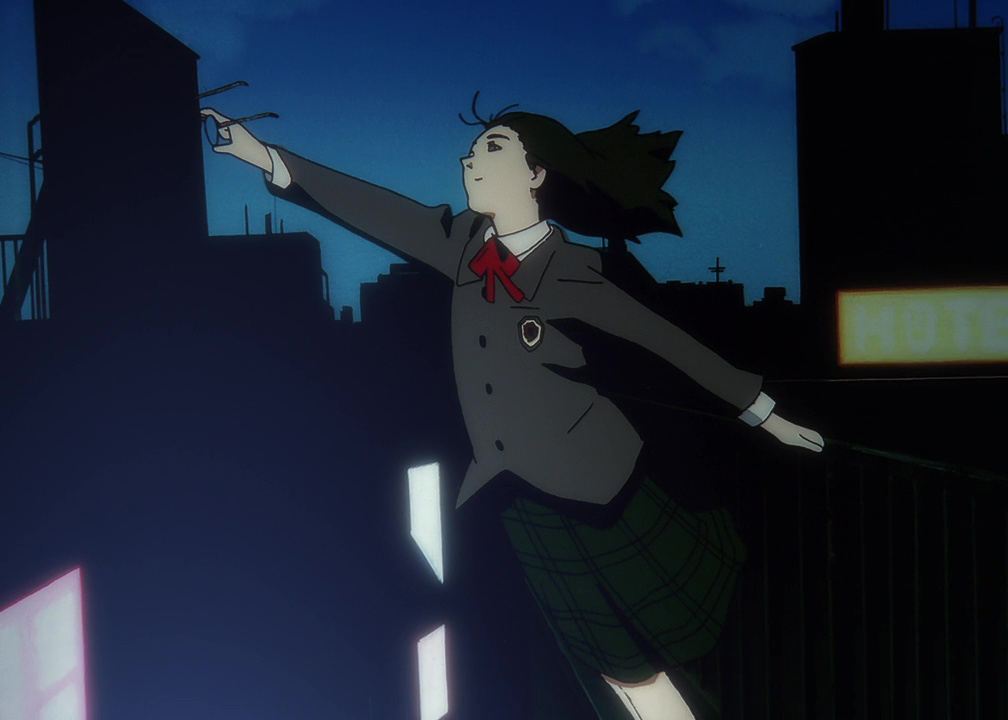
Again, as I've rightly remembered for years, the first few episodes feel like sci-fi horror, the images of humming electrical wires and the sense of desolate streets even in ordinary busy Japanese streets evoking what Kiyoshi Kurosawa would later go with for Pulse (2001). Contrast this with the night time scenes, with heavy neon green lighting, or the increasing influence of the computer technology through the plot, even turning into an almost bio-mechanical entity in Lain's bedroom, the floor wet in coolant, covering the entire room where once she still had plush toys everywhere. The world of the Wired is just as distinct and strange, metaphor and symbolically doing its best to perfectly imaging  an internet chatroom by representing gossiping avatars by being merely lips or eyes, or how in fear of others taking her identity, the same figures have mannequin heads of Lain on their shoulders in a darkened room in cyberspace. In knowledge that in this world, Lain herself practically enters the Wired beyond symbolic meaning, these literal visitations around unique environments are as much there to get to Chiaki J. Konaka's obsession with constantly breaking reality into pieces in most of what he writes, he both notorious and distinct in how the literal and the metaphorical are deliberately blurred in his work even for live action films like Evil Dead Trap 2 (1991); even for a children's show like Princess Tutu (2002) about ballet and fairy tales, when it gets to an inter-dimensional clockwork world where the "author" of the show exists, you can tell which episode Konaka was writing among other script writers when it's the one with the most meta and unconventional philosophy even if the target demographic was kids first. 

From https://www.otakuusamagazine.com/wp-content/
uploads/2018/09/lain06.jpg

Sound is also of importance, and not just for the inspired choice of a song by a British band on the opening credits, Bôa given a lasting cult reputation just from anime fans who had their song ] become an earworm, but on the emphasis too on sound design that crawls under the skin. It's completely comparable to Boogiepop Phantom (2000), another highly experimental show fromn this era, between them offering nuisance noise and electronic effects.

[Major Spoiler Warning]

As mentioned, this series is from Konaka, an incredibly divisive screenwriter who leads Lain to becoming difficult at points, early into the series shattering reality when even a giant deity like Lain, to her own surprise, appears up in the clouds for children to stare up to. Later episodes get into even arguments about the existence of God, an entire episode on intermingling real history of the internet and the likes of Project Xanadu with UFO conspiracy and the introduction of "Deus", a figure (Eiri) formerly human who has become a self proclaimed God of the Wired, and one episode (Infornography) whose first half if a compilation of images from previous episodes, all to represent Lain downloading an entire Navi system into her own brain, matched by a guitar riff you could grow a mullet from. Probably the biggest factor, though, which might divide viewers, is when Lain is shown not to merely by an ordinary character, who is brought into these strange events, but is part of a character arch of a unique one-off figure rediscovering her own abilities, a being (possibly through an ESP experiment talked of halfway through) capable of going beyond the Wired to actual God-like abilities. This is controversial as a plot point as, as shown in the worst examples of modern franchise blockbusters in fact, it does limit the connectability of the story from the viewer. I feel however that, especially as the first few episodes feel random, the narrowing of the narrative not only helps the show and but, as it focuses on specific characters, the real virtue of the characterisation appears.

[Spoilers End]

Another thing I forgot, for all its esoteric and eerie shenanigans, was how emotional the show eventually is. Here I admit, for its entire cool atmosphere, and general sense of complete strangeness, actually the real virtue turns out to be the bitter-sweet tale of Lain trying to find happiness. Only close to Alice Mizuki, a school friend, her isolation in the world and how attempt to grow on the Wired (literally) is fraught with further isolation, here a tale which does anchor the entire series with a greater meaning. All the philosophy is weighted ultimately by how as much it connects to her too, evoked when rather than the usual opening before the credits (a male voice over text) she opens the final episode talking directly to us about whether she actually exists or not. All the eccentricities are softened by how utterly emotional the show finally is within the final scenes.

This means Serial Experiments Lain earns its pretensions. Chiaki J. Konaka is notorious for his clear hatred for conventional linear storytelling, but there is so much about the dangers of the physical world against the digital one which have become ever more salient. It also makes sure the characters are of interest around Lain too. Her family, very disconnected, are so for a reason and builds itself to one single scene of emotional resonance; even two men in black, with cybernetic eyeglasses which stalk outside her house, get personalities and enough humanity to why they are there that their fate as everything turns pear shape is significant. That's ultimately, upon returning to this show, why I still love Serial Experiments Lain.

I once, on the first viewing, dismissed it with the same misguidedness I dismissed Boogiepop Phantom, another of these bold and innovative works from under the shadow of Neon Genesis Evangelion. Second time, many years later, it was the surreal and unconventional tone, on the borderline to horror and sci-fi, completely introspective and psychological, which won out. Now, this is in mind still but the drama is all what's left at the end and actually touching in the end. Certainly for me, when you start most series, you should hope for a progression where the final episode is that you'd never expect it to end as from just the first episode, said progression felt throughout natural or at least an escalation in drama, emotional and/or spectracle. Certainly, with Lain this is as good as you could get with this natural progression.

Abstract Spectrum: Atmospheric/Avant-Garde/Psychotronic/Weird
Abstract Rating (High/Medium/Low/None): Medium

From https://archive-media-1.nyafuu.org/bant/image/
1552/37/1552372338723.png

=====
1) It would be an utter disservice not to mention producer Yasuyuki Ueda, who helped put together this show knowing the risk. He produced Lain, Haibane Renmei (working with Yoshitoshi ABe a lot), and a lot of work between the experimental to more adult, from Texhnolyze (2003) to Hellsing Ultimate (2006), that have been pretty well regarded and even successful.

Tuesday, 18 September 2018

A 1000 Anime Marathon

A huge amount to cover from my other blog 1000 Anime, a frenzied month or more covering all of the following alongside Cinema of the Abstract reviews. So lets not dither about shall we?

Bubblegum Crash!
From https://www.midnightpulp.com/wp-content/
uploads/2017/02/07YlWL72-320.jpg

The first admittedly wasn't a great experience to revisit, Bubblegum Crash! (1991) an attempt to capture the lightning in a bottle of its more successful predecessor which failed considerable. As someone with a morbid fascination with old Manga Entertainment licenses, it was worthy of revisiting but as you will read in the review HERE, it managed to be worse than some of the more technically and dramatically incompetent anime I've covered on that blog.

A Branch of a Pine is Tied Up
From http://www.shortshorts.org/2018/tmb/2216.jpg

Taking a different direction came A Branch of a Pine is Tied Up (2017). Sadly Tomoyasu Murata's short, probably the first stop motion work I have covered, was a short only made available through MUBI's streaming side, so I felt guilty even reviewing the short, praising it as an emotionally affecting take on Japan's history of natural disasters and loss by magical realism and stop motion, but aware how difficult now it will be for many to see. Nonetheless the review is HERE  and in the perfect world, such reviews and potential interest could help make Murata's work more easily available.

Dragon Half
From https://somewhereinthemidstofnowhere.files.wordpress.com/
2014/01/super-deformed-mink.png

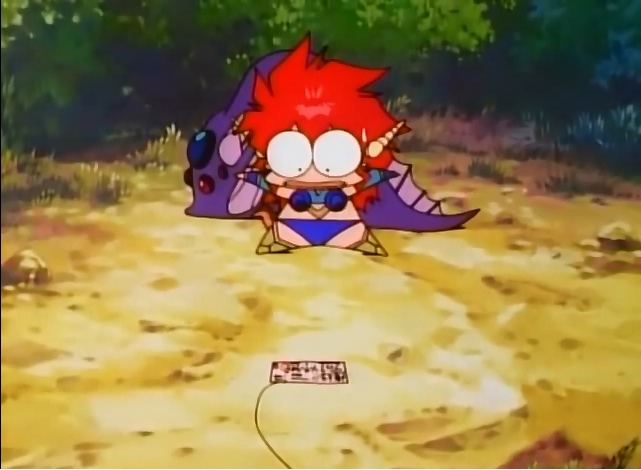
Thankfully Dragon Half (1993), be it by the American release by Discotek or various old releases, is more readily available, sadly an OVA which barely got out of the gate before it was officially cancelled but in its two short episodes managing to have a lasting impact still. Especially for those who cannot stand most high fantasy, like myself, this is a perfect antidote and you can read of the absurd comedy HERE.

Armitage III: Poly-Matrix
From https://conceptionclearinghouse.files.wordpress.com/
2013/03/vlcsnap-2013-02-28-18h38m05s254.png

Somewhat more divisive for myself, though a fascinating curiosity from the past is Armitage III: Poly-Matrix (1997), a theatrical length re-edit of a larger OVA which brought in name stars for the English dub. Not a perfect production, definitely the weakest of all the works one of my favourite screenwriters, Chiaki J. Konaka, has ever had his hands in but, especially next to Bubblegum Crash!, a better example of the nineties sci-fi anime about robots and their interactions with human beings. The review can be found HERE.

Princess Tutu
From https://ibhuluimcom-a.akamaihd.net/ib.huluim.com/
video/50081816?size=1024x576

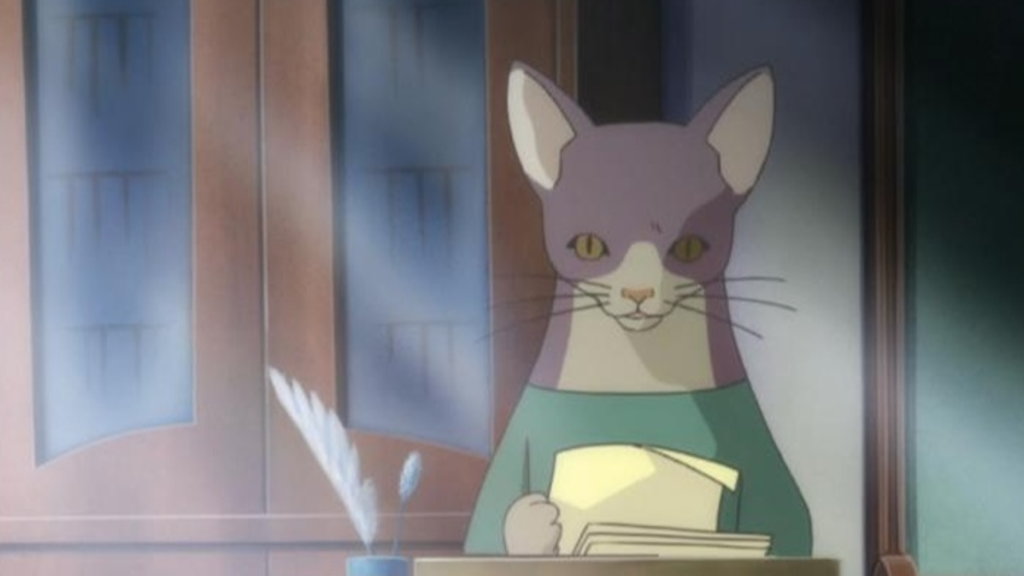
A significantly better production Chiaki J. Konaka had involvement in was the brainchild of female screenwriter Michiko Yokote, a two season production that is arguably one of the few anime I have covered appropriate for all the family. Its also arguably one of the most unique and best so far covered on the entire blog too, the meta-tribute to fairy tales and ballet named Princess Tutu (2002-3). Sadly not a series with named recognition in the British Isles, and a cult one only in the USA, a tragedy as this is one of the those rare cases of something so sweet but so clever at the same time. Out of all these reviews in this post, this is the one you should follow the review link for, found HERE, first as a priority than go back to the others.

Batman: Gotham Knight
From https://i.ytimg.com/vi/Ok0WAzAUZYg/maxresdefault.jpg

Tonally completely at odds, this ginormous bundle of reviews almost included the US-Japan co-production of Batman: Gotham Knight (2008), which should've been a triumphant anthology of Japanese animators tackling probably the best and most well known superhero characters ever. It wasn't to be but, as always when covering anthologies which take longer to detail for each segment, the results even if a disappointment in production still has moments of inspiration. Find the link HERE.

Thunderbolt Fantasy
From https://myanimelist.cdn-dena.com/s/common/uploaded_files/
1472670840-8bd87069a8c7cf3af00c0b5ba2ded010.jpeg

Finally, and again stepping outside of conventional anime, is the Taiwanese-Japanese glove puppet series Thunderbolt Fantasy (2016). Openly, my review which you can find HERE is probably not a common one in opinion, but if anything is to be gained from the series (planned for a second series in 2018) its that it at least encourages more puppetry based productions like it in the future. I just wish the screenplays were better in this particular case...

Back here in Cinema of the Abstract land, hopefully more reviews in the future. Prioritizing 1000 Anime is as much the maddening number of anime I have watched over the last month or so, but for this blog there are some choice entries to cover, so keep your eyes glued here.

Tuesday, 10 October 2017

Evil Dead Trap II (1992)

From https://pics.filmaffinity.com/shiryo_no_
wana_2_hideki-419711928-large.jpg

Director: Izô Hashimoto
Screenplay: Izô Hashimoto, Chiaki J. Konaka
Cast: Utako Nakajima as Aki Ôtani; Rie Kondoh as Emi Kageyama; Shirô Sano as Kurahashi; Shôta Enomoto as Hideki; Shino Ikenami as Kan-nadzuki Chiyo; Sei Hiraizumi as Muraki; Kazue Tsunogae as Noda
A Night of a Thousand Horror (Movies) #125

Synopsis: Aki (Utako Nakajima) is a projectionist at a cinema who kills random women she crosses at night. Her friend Emi (Rie Kondoh) is a reporter of a morally dubious late night news show who're not above lurid reports on murders, including those committed by Aki. When a married man, Kurahashi (Shirô Sano), enters their lives, a romantic triangle is created. Kurahashi however is connected to something deeply unnatural, personified by a little boy named Hideki that randomly appears on TV or in rooms.

Evil Dead Trap II is not an actual sequel to the original 1988 film of the same name. Instead, the original director left, returning to the series for part 3, and was replaced by Izô Hashimoto, most well known for co-writing the legendary 1988 anime adaptation of Akira. His co-writer is someone whose name immediately pricked up my ears when I first heard of the film, Chiaki J. Konaka, a man who almost completely switched to animation after the mid-nineties onwards, becoming the man known for extremely esoteric storytelling. (Alongside scripts for the 2000-2 Digimon series, probably because the anime industry is one where everyone works in every genre). Evil Dead Trap 2 couldn't be so dramatically opposite from the prequel, even an entirely different cinematic species from the splatter/slasher hybrid the first was.

From https://image.tmdb.org/t/p/original
/lTWymbo1CXJikbJbuJoUhpSdpdh.jpg

Whilst its prequel was a mess in tone and pace, for most of its length the immediate sequel is a drama with an incredibly glacial pace, one which just happens to involve one of the women in the romantic triangle in the centre being a killer who commits random murders of other women at night. A larger weighted woman, Aki is immediately intrigued the moment a man named Kurahashi is seemingly attracted to her, the relationship complicated by the fact that he's involved with her friend Emi, or that he has a wife who is seemingly traumatised by the loss of their son, one she believes is still there and acts as if he does in their family home. The film takes it time with this drama, stretching over forty minutes or more with a lingering, creepy atmosphere being built up over time. Most of the film is set at night or in darkened rooms, the early to mid-nineties tone of many Japanese genre films from the period having a sordidness even in neon light lit urban areas, a sense of strange and gristly things taking place just beyond a back alley. It's a tone which somehow allows one to imagine Ryū Murakami's erotic adaptation of his own novel Tokyo Decadence (1992) to co-exist with a full on horror film like this, a post-bubble urban Japan which feels grotty and claustrophobic as these films characters drift through their ordinary lives. It explains why I've collected all these various genres of Japanese cinema - pinku erotica, anime, crime, horror, even sci-fi - into one glorious mass as many of the best and/or most interesting emphasise the most diverse and character filled environments in the country, both its urbanscape and the rural areas. (Something which also can be seen in the period set films too). Even the scenes which are set in the day or the light have a bleakness to them, the most colour and vibrancy to be found when Aki joins a religious cult, one not taken seriously but whose elder female head immediately realises someone is lurking inside Aki the moment she joins them.

From https://image.tmdb.org/t/p/original
/4Rq8mbkIgdWHdfEV8EuaEeIxqU3.jpg

At some point, Evil Dead Trap II reaches a crescendo and completely detaches itself from a clear narrative, becoming entirely subjective and weird. The genre starts to shift to the supernatural and horror when Kurahashi is shown to be more sinister than a potential romantic interest for either woman, a being whose calm manner and politeness starts to shift as his actual being becomes entirely subjective. At this point, any sense of logic breaks and a viewer caught off guard (like I was) enters a irrational dream logic. This is something particularly common with co-writer Konaka, as notorious for this completely subjective tone for the endings of his scripts as it led to acclaimed work like the animated series Serial Experiments Lain (1998).  

From http://www.horror-extreme.com/Content/images/
evil-dead-trap-2-hideki/evil-dead-trap-2-hideki-4.jpg

The experience of entering a Konaka story when it reaches this expressionist end stage, where chronology is fixed but the world is entirely subject, within the space of internal emotions and, as in this case, with characters being teleported to a multilayered warehouse environment out of time is always startling. Also prone to alienating some viewers, which is why Konaka has always been a divisive screenwriter, but a unique trait of his. Here, alongside with how its presented, the switch is with our anti-heroines ending up trying to stab each other with knives and kill each other, one whcih is sent up in plot points before the ending sequences but still disorientating. This entire ending is also when the build up and lingering pace of Evil Dead Trap II before makes the wait worth it, a delirious finale where the warehouse exists as a entity out of existence. One with a flooded subterranean level that goes underground and the sense, as the prequel did, of being in an actual nightmare realm, one here whose cold concrete and industry look is more disarming than having vibrant colour. That's before the body horror, specifically one elaborate prosthetic effect in a film that's mainly been gory than surreal, takes the symbolism to an extreme for a powerful punch line. When the first Evil Dead Trap was a disappointment for me, this disconnected sequel stood out considerably.

Abstract Spectrum: Expressionist/Mindbender/Psychotronic/Weird
Abstract Rating (High/Medium/Low/None): Medium

From http://www.horror-extreme.com/Content/images/
evil-dead-trap-2-hideki/evil-dead-trap-2-hideki-3.jpg

Tuesday, 3 October 2017

Mononoke (2007)

From https://chinesecartoons.files.wordpress.com/2010/12/2007-mononoke.jpg

Director: Kenji Nakamura
Screenplay: Chiaki J. Konaka; Ikuko Takahashi; Manabu Ishikawa; Michiko Yokote
(Voice) Cast: Takahiro Sakurai as the Medicine Seller, and various others
A 1000 Anime Crossover
A Night of a Thousand Horror (Shows) #28

Abstract Spectrum: Abstract/Expressionist/Surrealist/Weird
Abstract Rating (High/Medium/Low/None): Medium

Mononoke, a spin-off series from the 2006 horror anthology Ayakashi: Samurai Horror Tales, is an incredible example of television anime which pushes the artistic medium. Like the best of anime horror - such as Requiem from the Darkness (2003) - the stories are well trodden and known, but what stands out is the quality of how they've been told, in this case a strong surrealistic artistry with vibrant colour. The result looks like a paper puppet theatre onscreen, one which just happens to tackle abortion, conspiracy, guilt and murder amongst its various subjects, the brightness of the visual defying its dark, humanistic tales. When you have the director of Gatchaman Crowds (2013), an idiosyncratic take on the legendary superhero franchise, and a cast of screenwriters including the idiosyncratic existentialist Chiaki J. Konaka amongst the production staff, naturally Mononoke would stand out but it's been a delight to find a series I always wanted to see is as unique and good as I hoped it to be.

For the full review, following the link to the 1000 Anime review HERE.

From http://i.imgur.com/Vpt1dfp.jpg