Showing posts with label Director: John Carpenter. Show all posts

Monday, 8 July 2024

Ghosts of Mars (2001)


Director: John Carpenter

Screenplay: John Carpenter & Larry Sulkis

Cast: Natasha Henstridge as Lieutenant Melanie Ballard; Ice Cube as James "Desolation" Williams; Jason Statham as Sergeant Jericho Butler; Clea DuVall as Officer Bashira Kincaid; Pam Grier as Commander Helena Braddock; Joanna Cassidy as Dr. Arlene Whitlock; Richard Cetrone as Big Daddy Mars; Liam Waite as Officer Michael Descanso; Duane Davis as "Uno" Williams; Lobo Sebastian as "Dos"; Rodney A. Grant as "Tres"

Canon Fodder


Ghosts of Mars was just okay. That really is not a good place to put oneself in a review, but for what was once a loathed film for me from John Carpenter, that pretty much is the perfect irony when returning to this. This was not even with the loaded issue for other viewers of the weight of his legacy against his later films before he retired and became fully a touring musician. It is deemed that John Carpenter’s career ended on much weaker films, and sadly that is a concept which I have heard with the legacies of a few big names. It seems absurd, and the argument that directors as they get older lose their spark misses context, when some get better and more interesting the less “popular” they are, and when you have a case like Portuguese filmmaker Manoel de Oliveira was getting critical acclaim when he was making films past a hundred years old. With Ghosts of Mars, it feels less like a film of an older director losing his style; in fact, if this came from a young director in their twenties, it feels like the film that catches attention with hope that they capitalize on the style they have and add more personal voice to the later films. That is the real irony here, as Ghosts of Mars is sound in scope, with ambitious aspects, but the presentation is conventional at times to the point it lacked something, which could be found from anyone of any age.

The setting is a tantalizing one, with this one tiny story within it even if with grander concerns. Mars is colonized, and unfortunately, an entity of its past are possessing the settlers in isolated colonies, turning them into husks to be controlled and kill those not taken over. A Martian police unit has been sent to pick up a criminal, James "Desolation" Williams (Ice Cube), from a jail in a mining colony. In attempting to collect Williams, the group find themselves within a colony where no one is around, until they find the headless bodies strung up and survivors turned into a horde of killers responsible for this. The tone of this, including that their only form of escape from these killers is a giant space railway train, evokes the western genre in an outer space setting. We never got a western from John Carpenter despite the fact he has always been open in his admiration for them and inspired by them. One of the most obvious examples is how the premise of Rio Bravo (1959) inspiring Assault on Precinct 13 (1976), and this is important as that is an earlier Carpenter film evoked in Ghosts of Mars as the police and Williams find themselves trapped in a place of head hunters.

The one thing which has not aged well – in a film where the practical art design is juggled with working with CGI, for a film from the early 2000s with a soundtrack by Carpenter full of heavy metal riffs – is actually that parallel to old western films. Space westerns as a concept allow the idea, through a new frontier that is uncharted, to explore the issues of the western, allow us to reflect on the past. One of the most loaded of these is colonization of land, especially as the American Wild West is set in the context that land actually belonged to the many tribes of Native Americans. Ghost of Mars never explicitly refers to this, but by accident the film is riffing on the idea of this, which is not good by mistake as these titular ghosts, literal as we learn of who they are, are psychopaths who disfigure their hosts with body piercings, wearing victims’ faces and collect their severed heads on pikes. It is a dicey position to deal with themes of white colonization in horror with plot tropes like this, even when the colonialists are to also be criticized or even if all of this is unintentional. There is a reason why S. Craig Zahler, when he made an actual horror western with Bone Tomahawk (2015) went out of his way with the script to distance ideas to avoid this, with an actual Native American character on the leads’ side, as they are about to enter the hostile lands of a cannibal tribe, openly dismisses the “troglodytes” as they are called as being nothing like an indigenous American tribe but simply monstrous, and even that film still got called out by some reviewers as racist. You cannot really nod to themes of outsiders fighting the hostile forces of uncharted landscapes without bringing up uncomfortable colonial issues, or racial stereotypes, and Ghosts of Mars even when dealing with hostile Martian ghosts unfortunately falls into this.

Everything else about Ghosts of Mars beyond this is just okay, entertaining but just not at the batting average expected from John Carpenter, which becomes the curse for any creator who manages to string a series of legacy defining works, more so when just one of them would have been enough to cement a legacy, but Carpenter managed multiple in a row. That is the issue, that his highs were so big, even the less regarded ones, or under seen, like Christine (1983) appear with hindsight to be better than most. The issue here is that we are just missing that one twist in the plot, missing that one turn or shock of his style of the films before to stick out. The whit is still there, and actually this is jokier even if the nastiness of the threat is here. In the downtime, whilst some of the nods to the female cast being gay are crassly put, there is a fascinating nod I completely missed in my youth to the setting being a matriarchal colony. It is merely the backdrop, causing one to wish this film had been more a success and Carpenter could have made another film in this world, as it provokes a fascinating turn on gender politics without needing to be the central concern. At a period where Mars’ colonization has been dealt with in areas like the lack of breathable oxygen but is still early days, we have already set up that the figures in high power of women, that is never explained aside from the fact that, barring Ice Cube as the anti-hero, our lead is Natasha Henstridge, allowing her a good meaty role as a result of this. Men are still here, including a baby Jason Statham before his career grew, but the women are in charge, with Pam Grier as the head of the police group, and the script making jokes the explicitly cut down to size macho bullshit, even accidentally cutting their own thumb off whilst high at one point, in the downtime. Whilst Statham plays his character as a horn dog who tries too hard to proposition to Henstridge multiple times, his is one of the only male characters with Ice Cube’s "Desolation" Williams to be reliable, the most comedy coming from William’s supposed savors from jail, his brother and his two colleagues, who become the butt of most of these jokes. Cube himself, doing better than Busta Rhymes infamously in Halloween: Resurrection (2002) as a hip hop star in a genre film at this point, is stiff at first, too much attempt to make him edgy and cool, and thankfully he is able to get to the point of standing out when he and Henstridge just get to play a buddy cop duo role stuck in this hellish scenario.

The aesthetic also stands out. The practical effects are still visible, in the production design juggling the aesthetics of the western genre with science fiction on a lower scale genre film, working around ways to depict details like the giant tank-like train, a symbol from western iconography, which still work and have their own distinct sheen. There is a sense of cool pulp sci-fi in the Millennium, and it feels closer to this new century and decade than a film washing over in aesthetics from the nineties either. The music is also strong for me, in mind that there is now a greater emphasis on chugging metal riffs, prominently involving the thrash metal band Anthrax but also including guitarists of note like Steve Vai, Buckethead and Nine Inch Nail’s Robin Finck. It feels less nu metal, as the time frame have shown to have been prevalent, but feeling part of what was to become the “New Wave of American Heavy Metal” that fully formed in 2005 onwards if in context of a John Carpenter score. Some may find it inappropriate, but for me it befits the aesthetic of the entire film, which is strong in itself. With the isolation of the red earth of the setting, all the colonial town setting has lo-fi science fiction aesthetics, with steel grey and heavy looking vehicles, heavy looking guns, and the costumes either suggesting struggling on in life or the uniforms of officers designed more for practicality in this environment. The world does breath into life in the little details.

It is just a shame that the film is missing just the last little thing to get it over, the iconic aspect that a lot of Carpenter’s most well appreciated films had. This was also the film, until Carpenter’s final theatrical work The Ward (2010), we were left with as it did not do well at the box office at all. It is, in its own context, a good as a solid genre film, even in spite of issues raised by accident with the narrative. It is just a shame that this is missing that one diversion away from an A-to-B plot, which made Carpenter’s films from his golden era stand out, something which could have made this more of a highlight within the filmography.

Sunday, 26 November 2023

Halloween III - Season of the Witch (1982)


Director: Tommy Lee Wallace

Screenplay: Tommy Lee Wallace

Cast: Tom Atkins as Daniel Challis); Stacey Nelkin as Ellie Grimbridge); Dan O'Herlihy as Conal Cochran); Michael Currie (as Rafferty); Ralph Strait (as Buddy Kupfer)

A Night of a Thousand Horror (Movies)

After Halloween II (1981) was meant to close the story of Michael Myers – someone who could only die, like Jason Voorhees has, from production hell and copyright issues than by a final girl’s hands - John Carpenter and the late Debra Hill decided to turn the franchise into something doomed from the start as an idea, but one I glad existed in a single attempt. They decided to turn the franchise into a series of episodic films based around the Halloween season with different stories and, ironically, this is what American Horror Story as a TV series would be doing with such success decades later, making each series not even themed around a holiday like Halloween, but entire series based on one setting and premise with their own narratives. That series immediately started this plan from the second series onwards however, not after two films like the ill-fated Season of the Witch did. Season of the Witch, whilst it has given a boost in name recognition, should not have been part of the Halloween franchise if you were a producer of this project - it has had last laugh in its critical reappraisal within the last decade, but being part of the franchise was immediately a hindrance, as audiences were not surprisingly confused why Myers was not in it, and the jarring context of it being a Halloween film when it is completely alien in tone and ideas. Whilst it has Carpenter's guiding hands over it, directed and with the screenplay credited to Tommy Lee Wallace with the tough task to adapt this, the film becomes one of the weirder turns for a horror franchise sequel to ever had. It is one of the best in production quality - Carpenter's score here with Alan Howarth is arguably one of his best, and Dean Cundey's incredible cinematography painted onto the scenes adds more to the proceedings in atmosphere, but its connection to the franchise is just the in-joke of the original Halloween (1978) playing on TV in scenes. That would have made it a galling experience, in the midst of the slasher boom as well, when most would presume that this was even in the same genre.

Barring this, I adore Season of the Witch as a grim, unsettling take on Halloween as a seasonal holiday both in its symbology and as someone who adores the holiday like many do. The premise is simple and works as a strange and compelling short story chiller - after a patient is murdered in his hospital of work, Dr. Dan Challis (Tom Atkins) is pulled into a conspiracy with the victim’s daughter Ellie Grimbridge (Stacey Nelkin) that involves a novelty and toy manufacture’s series of Halloween masks and the sinister intentions behind them. As someone who loves even the tacky decorations and sweets of the season - the plastic skeletons, the novelty foods and biscuits etc - Season of the Witch leads to a nasty point, based on a single extended monologue explaining the truly horrifying intentions behind a set of masks being sold, referencing the history of the likes of Samhain but perversely turned into an evil act of ritual sacrifice that is seen as right to do for the sake of humanity. Even if the satire about consumerism is broad, it eventually leads to one having to think carefully about what Halloween means, at a time in the year said to be when the border between the living and the dead is at its thinnest, and how its macabre imagery is so codified against this nasty reality check shown in the film.

A large factor to why this works is the subconscious influence of legendary British screenwriter Nigel Kneale. Kneale, famous for the Quatermass franchise, and famous British television horror and sci-fi stories, was brought in for the original story of Season of the Witch. This however lead to a disappointing fallout to take place, Kneale objecting incredibly to the level of violence that the film had2, and Tommy Lee Wallace to adding a lot of his own touches to the final work2. This is not surprising considering the final work is surprisingly brutal in this area, with someone even pulling another's head clean off with their bare hands with a giant blood squirt at one point, a level of violence rarely found in any of the non-Rob Zombie versions for the whole franchise, and if anything could make this film divisive for certain viewers, it is that some of the more eccentric touches I have grown to love and helped its legacy, alongside likely being the kind which made it an odd sell in the day, were not from  Kneale.

Despite taking his name off the final script, his fingerprints are still visible from his original work. Having now seen a lot of his work, the world of Silver Shamrock, a novelty mask and toy factory who have their own tiny rural town, evokes the sinister rural town of Quatermass II (1955 for the TV mini-series, 1957 for the Hammer feature film version) and how its nebulous nature, everyone within part of a conspiracy, are visible to any stranger who keeps their eyes open about their surroundings. Kneale is also someone who is able to deal with occult and supernatural ideas with far greater nuance even if he was to rationalise them through science and sci-fi concepts like aliens, to the point that, even if left a mere fragment now in the final film, the far better use of Samhain and pagan references in Season of the Witch over any of the other Halloween films is likely influenced by his ability to rationalise even the strangest of ideas with real weight, even if rewritten in the hands of another going for a more pulpy premise. A sense of the ludicrous has to be appreciated with the final work, but for me this thankfully became in a positive, such as involving a piece of Stonehenge being stolen, which automatically evokes Spinal Tap nowadays whenever I think “Stonehenge” in any context, or how Daniel and Ellie, even without the significant age difference, in little time manage to end up romantically linked as abruptly as you can because they could not get an additional room in a motel.

The other significant factor, which is a trope very common in British horror storytelling, is the importance of objects having magical properties, not merely being connected to an evil other but in them as cursed and maleficent, objects which can be used as part of something else but, as much constructions with their own histories and character to them. (I.e. a certain whistle found on a beach in a famous MR James short story; for an American example with a wider scope the Necronomicon in HP Lovecraft's fiction and how merely reading the book is inherently a dangerous act for the reader from its history). The three masks in the centre of the film - a witch, a skull, a Jack O'Lantern - are objects that are revealed as eventual catalysts to a horrifying mass outbreak of death, with many children who will immediately die as a result of those whose parents bought them, their constant appearance throughout the film invoking a greater sense of character and threat from their apparent innocuous nature. Even the Silver Shamrock theme on television,  which has become an ear worm for many viewers of the film, has a mantra like nature close to a magical incantation in how catchy it is (and especially with how a television sweepstake for the company will be the spark for the tragedy to start in connection with the masks directly). That this all involves Stonehenge will baffle some, as mentioned, but another factor to my love of the film that has grown on this viewing is that Season of the Witch is also a strange, strange sequel for any franchise to have regardless of it having any connection to the first two films or not from all these factors.

It is also a strange film just by itself, a baffling little oddity to throw at a mainstream horror audience. I like the weird in cinema but I also find upon revisiting this film that weird horror films are actually a lot of effecting and creepy for me, their irrational content leading a sense of unpredictability and greater threat. The clockwork robot minions of the main evil figure, Conal Cochran (Dan O'Herlihy), could come off as silly, but they add to the creepiness of the final work, particularly playing into the fear one can have for nameless thugs, played by actors without masks but with their identical haircuts and suits have a menace particularly in how brutal their methods of killing people are. And of course the final scene is one of the best for any horror film to end on, the sting in the tale that cements its qualities. In the middle of a franchise of slasher movies, its position now is a curiosity in terms of how the project was allowed to exist in the first place, a curveball that you would rarely find in most franchises from then on. This has added to my love for the film, now that it should have been an entirely different project for Carpenter and Hill that merely existed amongst their regular collaborators. We should have just skipped forwards to Halloween 4: The Return of Michael Myers (1988) in the late eighties but we thankfully got this; it belies other sequels in the history of horror franchises for how idiosyncratic it was, and alongside its virtues, its grown just from that context’s aura.

====

1) Nigel Kneale and ‘Halloween III’, written by Andy Murray and published for We Are Cult on October 31st 2019.

Monday, 13 November 2023

Halloween II (1981)


Director: Rick Rosenthal

Screenplay: John Carpenter and Debra Hill

Cast: Jamie Lee Curtis (as Laurie Strode); Donald Pleasence (as Dr. Sam Loomis); Charles Cyphers (as Leigh Brackett); Lance Guest (as Jimmy Lloyd); Pamela Susan Shoop (as Nurse Karen Bailey)

A Night of a Thousand Horror (Movies)


One of the crap shoots with horror franchises, not just Halloween, is how their existence to continue a huge success, and then sustain the newly made franchise, will cause confusion in the time line let alone divided opinion on the entries' interpretation on the original premise. By the point of Part 6: The Curse of Michael Myers (1995), you are also contending between the released theatrical cut and the intended "Producer's Cut", let alone the occultists introduced to explain Michael Myers when he was a literal boogieman in the first film without need for context, and that is without the reboots of the chronology of this franchise to match the Texas Chain Saw Massacre's. Halloween II at least in its slow, glacial tone is more effecting, but alongside the confusion now between this and Rob Zombie's Halloween II (2009), there is also already from the gate even with John Carpenter and Debra Hill on the script immediately struggles with following the source film.

Setting the film directly after the first was a risk, particularly with three years passing enough to have changed the fashions, and it is felt with issues as much as there are virtues, such as a more manic Dr. Loomis for Donald Pleasance to play, as his desperation is felt and the aftermath of the first film has a psychological effect on everyone that adds to this immediate continuation. There is a perturbing sense of the film, despite having enough years to capitalise on Halloween's success, and the boom in slasher films at the time, to feel rushed. For a film which originates from Carpenter's original, which was very precise in creation, this feels more an issue than a new slasher film made at the time made quickly and trying to find its audience off the back of the likes of Friday the 13th (1980). Contextually, a huge factor to consider was that, whilst Carpenter himself did direct a considerable portion of this1, and there is a real schism here between the film recreating the original's languid ill-ease and a visible upping of the adult content for the new slasher audience. This could have still worked as a pairing, especially s the production value is still here, where Dean Cundey's cinematography is still magnificent as it was in the prequel, the mostly if not all nocturnal setting for this film having an immense effect particularly for the isolated hospital setting, and Carpenter's music as naturally as good as his other work. There is however a sense, especially with the plot, that this was not allowed to fully flesh out the ideas in the simple premise.

More so as that simple premise works fully as a sequel, even if this should have come out quicker than it did. Laurie Strode (Jamie Lee Curtis) after the fallout of the first film is taken to a hospital and Michael Myers, learning of this from a radio boom box in a moment of actual plot logic despite the absurd image, decides to finish the job. Yes, jokes have been made of Lee Curtis' wig worn in the film, which stands out, but the idea of Strode being more vulnerable, especially when already injured adds a new threat. As much as it sadly means Jamie Lee Curtis is not allowed to show the great performance she showed in the first film, having her medicated to the point of lethargy and having to drag herself around from Myers is actually a scary proposition in terms of a viewer imagining themselves in her hospital gown. That the film has the least populated hospital you can find, even at night for a small town, does however raise issues that, whilst fun as a slasher film, its struggling in a way you can pass with other slashers, where I have slowly come around to them with charm, but here shows a slip in making the premise not have logistical holes, especially as even a contrived series of reasons could have made the premise of struggling through an isolated hospital actually make sense in premise.


The little details become the things which undercut Halloween II in truth, where we will have to accept that, whilst therapeutic hot tubs are not a strange thing you would not find in a hospital, we only have one here clearly for a prominent nude scene for actress Pamela Susan Shoop, a concession to the slasher film tropes of the time, with the more absurd idea being that the temperature settings able to go up to "Scalding". Even that Michael Myers got bored and started using more creative ways to kill people, from syringes and even bleeding someone in the most patient way possible, feels less incongruous than things other slasher films from this period, the early boom, were managing to figure out like making sure you got time to like even the characters who were cannon fodder.

Spoilers have to be brought up, but the aspect of the film which does feel like the most divisive aspect is when it is revealed Laurie and Myers are siblings. It is a plot twist which would be used to good used, redeemed by the likes of Halloween H20: 20 Years Later (1998) in the nineties, which managed to have more power than if Myers was just as homicidal non-entity trying to finish off a surviving victim he randomly choose. In context here, when first introduced however, it is a contrived plot twist. It presents not only the issue with trying to continue franchises, and trying to explain to the viewers the back story, but as well the desire people have with real life murders wanting to know why they were committed, when many can be utterly irrational and un-explainable. The world of horror movies can deal with these real events through a safe veneer, but the fact you could write in why the fictitious killer committed their crimes can completely negate the point of such films as a healthy way to release fears about such violence. There is also the fact that in context to this, Halloween II does not really even work with this plot twist either, which makes it pointless until films decades later would begin to flesh out the weight of it.

It becomes a film which feels, when last time I came to appreciate it, less interesting as a result of me now appreciating slashers for what they are. The sense of expectation should not distort the film's virtues by itself, but it cannot be denied that, after the weight of expectations of the follow up, this feels flat than if we gotten the over-the-top ridiculous sequel instead, the Friday the 13th: A New Beginning (1985) sort of sequel. Films like Psycho 2 (1983) managed to overcome the fear of this leading to disappointment and took stock of the slasher boom, with a film decades older from its own sequel too, whilst The Texas Chainsaw Massacre 2 (1986) managed to have its cake and eat it in being both a proper follow on and mad as a box of frogs even next to the slashers. In comparison, Halloween II does feel a weird way to try to continue the series, more so as this was meant to finish the story too. Halloween III: Season of the Witch (1982) is its own idiosyncratic creation, the attempt at an anthology scenario with an entire different narrative story which was doomed to have been too late to begun, forcing the franchise back to Michael Myers, but in itself, this definitely feels like a letdown for the follow up. A fun one in the right mindset, but you really should not attempt to compare it to the prequel to avoid the shadow that casts.


====

1) Halloween II: Behind the Scenes, from HalloweenMovies.com. Archived from the original on June 29, 2012.

Tuesday, 31 October 2023

Halloween (1978)


Director: John Carpenter

Screenplay: John Carpenter and Debra Hill

Cast: Jamie Lee Curtis (as Laurie Strode); Nick Castle (as Michael Myers); Donald Pleasence (as Dr. Sam Loomis); Charles Cyphers (as Sheriff Leigh Brackett); Nancy Kyes (as Annie Brackett); P. J. Soles (as Lynda Van Der Klok)

A Night of a Thousand Horror (Movies)


It would be impossible to add anything else to the view of Halloween analytically or in aesthetic. In fact the most interesting thing from my perspective I can add is that it was an immensely slow period of rewatches before I held Halloween as beyond an okay film to one of the best horror films I had seen from the seventies. By this point, I can now watch the film and soak in its virtues with ease, and whilst this review is inevitably going to just going to praise it to the hilt, the most surprising thing for me to revisit here is how for what innovated the slasher as a fully formed genre, it feels an outlier for the tropes it created. For all the films which came after, as frankly it can be said Friday the 13th (1980) kicked the door open and let the eighties in general be the decade we usually think of tied to the genre. Halloween became its own work in the sub-genre standing proud by its reputation.

This also comes with the fact I used to have a divided attitude to slashers, growing to accept them more and more over the years as I have seen plenty of fun ones, and always willing to give a chance to one I have not seen. Even slasher fans will have to admit, the diehard fan base for that genre, that the level of quality in terms of how well made and beautiful Halloween is a high bar here for others to reach. Even if it deals with exceptionally grim subject matter, it is an entire mountain that John Carpenter with his collaborators has managed to achieve when this film was first released. In the context of said slasher films, and their constant repetition of plot lines, their tropes followed over decades even when they became self-aware, Halloween is simplistic in plot to others and next to its sequels, as while later films including Friday the 13 (1980) would have more complicated back stories, all there is about the first Halloween is a boy named Michael Myers who killed his older sister in the past. After escaping a mental asylum years later, he targets three young woman, Jamie Lee Curtis as Laurie Strode, Nancy Kyes as Annie Brackett and P. J. Soles as Lynda Van Der Klok, and that is all we have in terms of the plot

None of the Thorn mythos of later sequels and no folktale mythology is found here, and there is little in terms of an actual body count is even found. This is minimal next to the extremely threadbare slashers of later years is found here, only Donald Pleasance as Myers' psychologist Dr. Sam Loomis giving chase qualifying as a subplot. It was a deceptively simple, explaining why my younger self was not interested in the film at first, and there is little to Myers barring being a figure who stalks a couple of suburbia houses, its economy more frightening in this especially when you view it as a cinematic mirror of the serial killings starting to take their place in urban folklore in the late fifties onwards in the USA. This reality, of a kid who kills for no reason, taps directly into then-modern idea in horror films of remorselessness, as Loomis says there is nothing behind Myers' eyes, crossed with the supernatural by making him a literal bogeyman for Tommy Doyle (Brian Andrews), the young boy Laurie is babysitting, to see outside his window at night and be terrified of. Because of Dean Cundey's awe-inspiring cinematography there are times it feels like Myers literally disappears and re-materialises from the shadows like a spectre.

It of course helps that the people he terrorises are written and acted like real people. It is a problem with horror cinema in general, where even in fun and ridiculous movies, unless you are a great writer of esoteric or funny dialogue, I have to admit that they are never necessarily "real" people. Now as a more open minded figure to slashers too, there are also those films still where they have characters who merely speak in quips and generic exposition could annoy me even at my most patient. The combination of John Carpenter openly admitting his influence from classic Hollywood and the unsung quality of the late Debra Hill as a writer means that, alongside great performances, you have characters you care completely for in the context of a minimalistic chiller. Jamie Lee Curtis in particular stood out this time and it is baffling that people created the virginal Final Girl stereotype from the Laurie Strode character when its completely alien, feeling like a puritanical bastardisation of a more complicated and interesting figure. She is a sarcastic but thoughtful figure, who smokes pot but is utterly reliable as a person, merely shy around boys and has other peoples' work begrudgingly dumped on her lap including by her friends. For her first performance in a film, it is great acting by Lee Curtis even when she has to play the moments of screaming and cowering from Myers before she starts to retaliate back. It says a lot that, for the attempts to continue the film without her, by the return of the franchise in the late 2010s, Jamie Lee Curtis is as integral to the legacy as its villain.

As a horror film, the languid pace is perfect. Cundey's cinematography adds a realistic, Americana look in the daytime scenes but at night gives a story almost grounded in reality a phantasmagoric edge in how Michael Myers blends into the shadows. The music by Carpenter himself is iconic, tapping into similar unease from the use of electronic music. What is also worth motioning, whilst a film about death and terror, is that it lavishes a love to Halloween the holiday itself. Old horror films playing on the televisions, including The Thing from Another World (1951) as a premonition of Carpenter's career, to the various appearances of pumpkins beyond the ominous opening credits emphasise the aesthetic of the setting. Barring Halloween III: Season of the Witch (1982), none of the later films' references to ancient ritual and Samhain had any sense of real mythos to it, more a proudly cheesier pulpy story telling with its own sense of fun but not the same as what this establishes. Here everything is as simple as a very American phantom of a killer who murders indiscriminately, but also treats Halloween as a festival as a homespun and warm holiday, of trick and treating to dressing up in costumes. Not a lot of the slashers I have seen have ever had the sense of a community, merely setting with stock types, to make the terror more disturbing, so the sense of frivolity and childhood innocence found in Haddonfield's suburbia is more startling in hindsight to what horrible things will happen in the narrative. It is a line where, when Annie's father Sheriff Leigh Brackett (Charles Cyphers) scares Laurie and says everyone deserves a scare on Halloween, that is the core of the namesake film over it, less the gore and big hair of the eighties slashers, but a creepy ghost ride which is yet so close to the places its original audience would be living it that it has grounded, real chill to it. Watching it many Halloweens like many others, it is both a comfort film but, especially with its almost surreal ending where Carpenter shows shots of empty rooms after the tragedy has taken place, also a film that efficiently scrapes a primal nerve of discomfort every single time I view it now.

Tuesday, 13 December 2022

The Fog (1980)


Director: John Carpenter

Screenplay: John Carpenter and Debra Hill

Cast: Adrienne Barbeau as Stevie Wayne; Jamie Lee Curtis as Elizabeth Solley; Janet Leigh as Kathy Williams; John Houseman as Mr. Machen; Tom Atkins as Nick Castle

A Night of a Thousand Horror (Movies)


It is pretty much established how legendary John Carpenter is in genre cinema, so there is little point in overturning heavily covered ground already. What is worth repeating, especially as you hit his legendary run between the late seventies to the late eighties, is the importance of how classic Hollywood cinema has influenced his work. Also factoring in that into the nineties his work is underrated, least if you bear in mind the existence of In the Mouth of Madness (1994), the factor which comes in to a film like The Fog is how heavily indebted to slow, atmospheric world building, depicted with the help of cinematographer Dean Cundey and carefully managed to pull a viewer into the stories. The first ten minutes of The Fog are completely alien to how many horror films multiple decades after set themselves up; a ghost story on a beach establishing the plot, about the ghosts of men wrecked at sea getting their revenge on a coastal town, followed by snatches of different characters going about going about their lives as a series of ghostly circumstances take place at the witching hour. It is the hundredth university of the town of Antonio Bay, and from this night onward through the film, a supernatural fog envelops the region and anyone caught within its prescience is under threat from the ghosts within it.

The film altogether has the tone of a short ghost story in its simple, sharp sense of foreboding, as much as the story itself is short in its time frame of only a couple of nights and the events. The resulting film feels expertly put together as a classic chiller, bolstered by its short running time and the incredible sense of mood which sends shivers down one's spine.  As with Jaws (1975), the coastal town both evokes a quaint and peaceful community with rich personality, but also fears of the unknown connected to the sea, ancient lore of the ghosts of the shipwrecked in this case where the malevolent figures, with their shrouded faces and ragged clothes, evoke more the Knight Templers of the Tombs of the Blind Dead films from Spain than the ghosts that would appear over the decades from the eighties. Were it not for the brief moments of gristly death, aspects of the new slasher films Friday the 13th (1980) would bring in appearing in characters trying to escape the ghosts, than The Fog would entirely by closer to the films of Val Lewton, drenched in the environments of fog shrouded sea banks as easy listening jazz plays on late night community radio, hosted by Stevie Wayne (Adrienne Barbeau).

The cast as well adds to the class of the film. An argument can be made, for an intentionally small tale, that there are probably too many characters, meaning the likes of Jamie Lee Curtis as a young free spirit do not get a great deal of screen time, but having even small characters like the priest Father Malone played by someone like Hal Holbrook who can add gravitas to exposition is a virtue a lot of horror films would actually benefit from. Curtis, her own mother Janet Leigh as the wife of the town major Kathy Williams, Tom Atkins as the male hero, and people from Nancy Loomis to Holbrook among the cast all raise the bar by being interesting in their appearances. The individual who stands out the most, with the most screen time and with a role delicately written for her, is Adrienne Barbeau; her voice as the radio host having been canonised by horror fans, she is also completely believable as a single mother who, in the midst of this supernatural fog, has to turn her concerns in protecting her young son. A simple character as the mother fearful of harm to her son not turned into merely one note but, for a straightforward ghost story, done with character to it. It is an example like with the best of short form storytelling that streamlined characterisation does not mean being one dimensional but still sympathetic in mind to the limited length and plotting available.

In general the reason why The Fog stands out as well as it is, as with Halloween (1978) to The Thing (1982) among other films by John Carpenter, is due to the high standard of quality felt in the film. It explains why the likes of Village of the Damned (1995) struggle as, whilst again not as bad as its reputation suggests, it was a film which felt cracks in this quality. Closer to his idols of classic Hollywood cinema, Carpenter even though he innovated and was part of the more explicit horror and action genres of the seventies onwards had feet firmly entrenched in the past where the importance of character actors and production style were incredibly important. The result of this, like other American directors who innovated in the seventies but were firmly influenced by older cinema, is that he is able to bring the best of classic Hollywood cinema but invest it with new ideas to create visceral and moody films like The Fog.

Tuesday, 29 October 2019

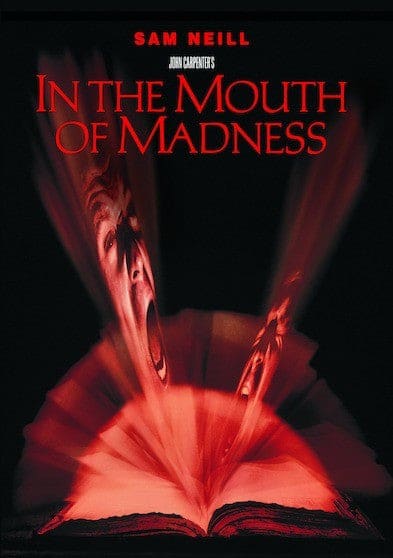
In the Mouth of Madness (1994)

From https://pisces.bbystatic.com/image2/BestBuy_US/images/
products/3231/32317207_sa.jpg;maxHeight=640;maxWidth=550


Director: John Carpenter
Screenplay: Michael De Luca
Cast: Sam Neill as John Trent; Julie Carmen as Linda Styles; Jürgen Prochnow as Sutter Cane; David Warner as Dr. Wrenn; John Glover as Saperstein; Bernie Casey as Robinson


[Major Spoiler Warnings]

Surprisingly difficult to see in the United Kingdom, especially as Carpenter is as popular here as anywhere else, but between this and his collaboration with Tobe Hooper for television called Body Bags (1993), it's one of the few blind spots in a career where even the 1979 Elvis TV movie was released on physical media in the UK. This is a shame as, lore tells us, that In the Mouth of Madness was the last great Carpenter film, which isn't as accurate as that claims but is a tag that was given to one of his most underappreciated works. The nineties was held as where his career wavered, ironically my first films of his Vampires (1998) and Ghosts of Mars (2001) as they were early Sony Pictures DVD released when I grew up with that format becoming a big thing. Before then, Memoirs of an Invisible Man (1992) was seen as a big slip as his first film of the nineties - not as bad as its reputation suggests, but definitely a film lacking his personality. Village of the Damned (1995) has actually grown on me, but it was not seen a powerhouse, and we'll see if the special effects and surfing in Escape from L.A. (1996) are as bad as it sounds.

The first positive credit to In the Mouth of Madness is actually to the screenwriter Michael De Luca, whether his work was adapted exactly from the page or modified out of his hands, as that is a huge factor to this film. His CV as a screenwriter only has three films alongside this, more of executive producer in his career, which include the divisive 1995 Judge Dread film with Sylvester Stallone and Freddy's Dead: The Final Nightmare (1991), the most derided of that series barring the 2010 remake; in comparison he managed here however to hit the ball out of the park. This film does suggest it's going to be pure cheese, a big metal guitar riff on the John Carpenter and Jim Lang soundtrack just when Sam Neill's name is on the opening credits, but this alongside Wes Craven's New Nightmare (1994), rectifying that previous Nightmare on Elm Street film, are two incredibly fascinating meta horror films that came out the same year, certainly a superior pair to Craven's own Scream (1996), which felt pointing out the clichés but not subverting them beyond plot was enough. De Luca with this script found a take on the meta-texture, significantly, which is truly weird and, without nasal gazing, is still idiosyncratic today.

That, in lieu to the King of Yellow, in which author Robert W. Chambers envisioned a text that drove people insane, this film envisions a text, the work of a prolific horror writer Shutter Cane, which will induce nervousness, anxieties and fear upon reading. That's his usual work, and Cane has done so well he's ended up breaking reality itself, as insurance detective John Trent (as played by Sam Neill) is sent on his trail; believing its all a con, Trent instead wanders into the plot of a pulp horror film and eventually an actual pulp horror nightmare land. Its pulp in the truest sense, but it chills the bones a little when Cane, revealed as Jürgen Prochnow with a giant spread of white hair, talks about his work being more wildly read than the Christian Bible. Star Wars has a religion, Jedi, and more people are more likely to know the innings and outings of Harry Potter lore than actually read the Book of Revelations all the way through.

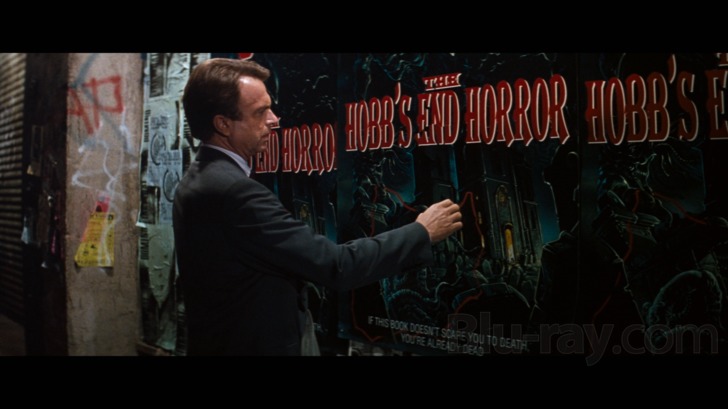
Now imagine if this new book was even more infectious and could poison people further, to madness and violence, even the apocalypse, and In the Mouth of Madness is the closest John Carpenter touched upon the cosmic horror of H.P. Lovecraft, in which beyond the perception of fragile mortal humankind, a novelist can distort reality and be a vessel for horrifying Old Ones to appear through. That they might've been created by him, as it's entirely subjective what exactly his work is or not in what we see, is even more terrifying. It's far more terrifying, as reality eventually splits, the tear reveals that a) the protagonist is a created character, and b) reality has no rules and for a man who believed in logic that term losing meaning is more frightening than monsters. This review has a major spoiler warning, but you couldn't get the true effect of any plot point without the images themselves.

From https://images3.static-bluray.com/reviews/8897_1.jpg

Carpenter
as always is a classist who shots the film with elegance, famously a man who grew up admiring film makers like Howard Hawks, wanted to make films like his in genres like Westerns, but came about in a time where he proved a daub hand in horror and sci-fi. Any moments of broadness - a bicyclist turning husk-like or the guitar riffs in the score, don't undercut the tone in the slightest or his precise filmmaking. In fact the film itself eventually gets around to mocking plot points in pulp horror, like Neil's counterpart, Julie Carmen, suddenly trying to seduce him in the nightmare town "because the author wrote it that way". (Which is hilarious as, whilst he didn't write the film but collaborated on it greatly, Halloween III: Season of the Witch (1982) despite being one of my favourite horror sequels has this absurd cliché depicted completely seriously).

The distinction here to Carpenter's other films is how over-the-top and phantasmagoric this gets. We've had The Thing (1982) in terms of body horror, but In the Mouth of Madness is lurid and intense with this from the beginning. All when a publicist goes axe happy, the film gets increasingly weirder and more grotesque in body mutations and freakishness as the film draws from horror as a genre in general, the Lovecraftian horrors against a pastiche of Stephen King's popularity, apt as by this point even TV let alone film gorged on adapting King's books.

The film finds the right balance of credibility by having seriousness against this, because it plucks symbolism from the entire genre - terrifying possessed children; monstrous entities; religious horror; plenty that is slowly drip feeding and helped by Sam Neill being the cynical sceptic who plays the anchor. We realise his fate already - the film starts with him in a mental health hospital as he tells his story to David Warner - but Neill finds the right tone for a man who is stoic even to the most horrifying things until it gets too much, not surprising as whilst the New Zealand born actor as always come off as meek and affable, he was in Andrzej Żuławski's Possession (1981) going batshit insane, so this film would've been a cakewalk.

The build for the film, when it's already gone off the deep end, is still slow burn because Carpenter finds idiosyncratic ways to move the film's nightmares. A reoccurring image of a police officer randomly beating a man up in a dark alley or how the author's favourite colour drives a man to screaming are among such examples; all never heavy handed because the film is so over-the-top its gone to that tone the moment you encounter Hobb's End, the nightmare town whose own name is even a reference to Quatermass and the Pit, giving you an idea how in depth some of the references are.

The other aspect, in honesty, that whilst H.P. Lovecraft is an author whose work is still innovative and powerful for me, I am also aware that a reader can find his elaborately descriptive vocabulary and exaggerated tone utterly ridiculous, befitting this film's many moments of absurdity, like strange fish-like Old Ones they wisely left as shadows only, and possibly another reason why it's been a huge issue to adapt his work straight rather than evoke for cinema. Befittingly like those stories, insanity is the end, though few would watch themselves in the film they have seen when they finally snap; between this and Wes Craven's New Nightmare we had two of the best of these meta films as far back in the nineties, where more well known films like Scream and The Cabin in the Woods (2012) just come off as flaky in comparison. This, really needing to be more easily available, is definitely as well a gem in John Carpenter's crown.

Abstract Spectrum: Grotesque/Surreal/Meta
Abstract Rating (High/Medium/Low/None): None

From https://offscreen.com/images/made/images/articles/_resized/Review_167_Photo_6_-_In_the_Mouth_of_Madness_(John_Carpenter,_1994)_1000_420_90_c1.jpg

Thursday, 14 September 2017

Masters of Horror Season 2 Part 2

From http://www.theofficialjohncarpenter.com/wp-content/uploads/2016/
01/john-carpenter-masters-of-horror-pro-life-poster.jpg

Pro-Life (2006)
Director: John Carpenter
Screenplay: Drew McWeeny and Scott Swan
Cast: Caitlin Wachs as Angelique; Ron Perlman as Dwayne; Emmanuelle Vaugier as Kim; Mark Feuerstein as Alex O'Shea; Biski Gugushe as Kiernan
A Night of a Thousand Horror (Shows) #19

Openly Pro-Life is superior to Cigarette Burns (2005) from the previous season. A contrary statement but whilst the Season 1  episode from John Carpenter reduced a great idea for me to dull didactic series of exposition, Pro-Life takes an idea (the moral quandary of abortion), and through adding Satan to the proceedings, creates a story that doesn't need to be paused constantly but climbs in event fully to the ending. I will openly admit that, from Carpenter, it's still not as good as it should've been, and in terms of a story tackling abortion, barely gets out of the gate in terms of tackling it with any depth. Probably the best thing about Pro-Life however is that, whilst Cigarette Burns felt like any other person could direct it, the tone of Pro-Life evokes the more nihilistic entries that formed Carpenter's series of "apocalyptic" films; even if it's not up to the quality of even Prince of Darkness (1987), that same streak of grit missing from Cigarette Burns is appreciated and gives this episode a closer bond to the director's career.

It's a broad film in tone, in which the daughter of an anti-abortionist preacher named Angelique (Caitlin Wachs) enters one such clinic with a conscious desire to terminate her unborn child only for said father (Ron Perlman) to follow with her brothers and firearms in tow. It's a pretty liberal leaning film in its politics on the subject although the real issue is entirely the lack of subtlety without all the teeth being in its mouth to make a nasty bite. Lack of subtlety, as with films in the director's filmography like They Live (1988), doesn't detract from their worth in the ideas still sting. It tries - a father of another young girl in the clinic is utterly loathsome and the head doctor of the clinic immediately snaps when threatened, going immediately to his own firearm cabinet - but this proves to be the less interesting aspect of the episode. It does thankfully have Ron Perlman as the anti-abortionist preacher which softens how blatantly sociopathic the character becomes. Even a viewer like myself pro-choice will appreciate Perlman's ability to give the character's arguments some weight even if he's a stereotype. The slithers of moral greyness are far more interesting, despite being jettisoned early, when it comes to the fact the daughter's unborn child is likely Satanic in origins but the father has voices in his head he believes are heavenly and asking him to protect it, leading to all manner of existential devastation even for his character is a one note figure.

It's also interesting to see how it also evokes Carpenter's filmography in general. The action director in its scenes of gunfire which are solidly handled. And of course the apocalyptic tone within the main clinic setting as the deaths start to pile up. It gets more gruesome than even Carpenter's previous episode, with Ron Perlman experimenting with some of the equipment in the clinic, but there's also a more tragic and severer tone which benefits Pro-Life. Whilst Cigarette Burns felt like it was trying too hard to surf on its trendy cine-literate plot without fully fleshing it out, Pro-Life is entirely within a morally complex subject that strays outside of cinema into real life, and even if it could've done so much more, it stands out more inherently for this for the better. Even if it leads to at least one ridiculous full body costume I appreciate what starts off with a tantalising start and leads to a fully successful conclusion of what would likely happen if this type of event ever took place. Where the ending is technically happy but with a terrible emotional aftermath that you never see as, like in a classic Carpenter film, he's cuts immediately beforehand and deprives you of a comfortable denouement.

From http://film.thedigitalfix.com/protectedimage.php?
image=JohnWhite/PRO_LIFE-2.jpg_14042007

=====

From https://blogger.googleusercontent.com/img/b/R29vZ2xl/AVvXsEgbT8bEfUEssDW3DfLGZC3oO4LEhKw1Jj8-Z5mdEYYtpxFbGz-eWuMwczIApFW616ChV88DSG_NimLqwvfiL1uSUVx0RqXZ1gaPHX1D0LJffzgNsyoMiFLp15hb9jtLKAdmFKa5hfCvdbJ2/s1600/MastersOfHorrorFamilyMoviePoster.jpg

Family (2006)
Director: John Landis
Screenplay: Brent Hanley
Cast: George Wendt as Harold Thompson; Meredith Monroe as Celia Fuller; Matt Keeslar as David Fuller; Haley Guiel as Sarah; Kerry Sandomirsky as Jane; John B. Scot as Grandpa; Nancy Whyte as Grandma
A Night of a Thousand Horror (Shows) #20

John Landis, as of seeing Deer Woman (2005) from the first season and Family now in Season 2, is two for two for great segments in Masters of Horror. Again, like with Deer Woman, it's surprising that whilst he is known for An American Werewolf in London (1981) his career is mainly been outside of horror, and yet within the series named Masters of Horror he's been the figure the most consistent out of the old guard. It may however be that discrepancy which has helped with these episodes of his. Deer Woman was a comedy first within the horror genre, likely sneaking in more serious material within the farce, but still a comedy. Family is a grim, nasty little tale but there's still a streak of gallows humour presiding it, and with at least a cast member from Cheers helping him out in the lead.

Structurally, from screenwriter Brent Hanley (most well known for the script of the late Bill Paxton's Frailty (2001)), the story's a simple and low key tale with an easy to understand set up. A middle aged, single man Harold (George Wendt) lives in peaceful Americana suburbia, only for it to be immediately revealed that he's been kidnapping people, murdering them and with the help of a bathtub of acid building up his own perfect family from their bones and clothes they were taken in. His world is idealised - wife, daughter, even grandparents - with the episode cleverly depicting this through having actors in the roles for his delusions but also intercutting the prop skeletons in the same costumes during these conversation scenes. Very simple, easy to accomplish things which should be obvious for a good story, which even a layman like me who doesn't work in the film and television industry would know would help lead to a good production. The flashiest things about the entire episode is just how Landis decided to be more flamboyant in visual style, with swooping cameras, and in terms of music with the curious (but rewarding) choice of old, beautiful gospel songs chosen in a rather sacrilegious ways. The rest of Family is deceptively simple in presentation.

And that's actually why it's one of the best episodes of both seasons so far, as this basic and well thought out plotting succeeds as expected. Harold takes interest in a younger couple (Meredith Monroe and Matt Keeslar) who have moved in across the street, having interest in the wife much to his skeleton wife's chagrin. This obviously leads to a sting in the tail, but everything fleshed up around this (pun not intended) is done well. The most important factor is how George Wendt excels in the lead. This is not his first time in the horror genre - he was in House (1985) in a major role [a review is available HERE], but most of his career is outside of said genre. But it feels as if this helps allow him to really flesh out the character from a career that includes playing Santa Claus in a TV movie the same year as this, giving him the ability to depict a character who comes off as actually lovable were it not for the fact of how horrifying his behaviour is outside his warm, family valued hallucinations. There's been a little disappointment in how, in spite of Season 2 being far more consistent and better in terms of the quality of the episodes, the stand out character performances haven't been as noticeable yet, but out of both seasons Wendt is going to be amongst the best particularly in the lead.

His delusions talking back to him, even as far as potential victims speaking directly to him (and to us) from afar in one sequence all simplistic and yet credible way to depict this. And also, considering where the story goes, there's definitely moments where the viewer would question on a rewatch what was within Harold's head and what was actually said, having some clever whit to the material from Brent Hanley. Between him and Landis, the story never overcomplicates itself with subplots and plays its tone as both humorous and dark before the ending. Said ending, which I won't spoil, is as twisted as you can get, and even if you guessed it before the end, it still has that aforementioned sting because of the quality of everything built from beforehand. In general Family will rank amongst one of the best of the series and its simplicity is the reason.

From http://cps-static.rovicorp.com/2/Open/Hulu_1693/Program/5939882/_
derived_jpg_q90_600x800_m0/hulu039c2fd49-822b-48e0-b864-467ad98d95ff.jpg?partner=allmovie_soap

Monday, 17 July 2017

Masters of Horror Season 1 Part 1: Cigarette Burns (2005)

From http://movieworld.ws/wp-content/uploads
/2013/12/Cigarette-Burns-2005.jpg

Director: John Carpenter
Screenplay: Drew McWeeny and Scott Swan
Cast: Norman Reedus (as Kirby); Colin Foo (as Fung); Udo Kier (as Bellinger); Christopher Redman (as Willowy Being); Chris Gauthier (as Timpson); Zara Taylor (as Annie)
A Night of a Thousand Horror (Shows) #5

I felt a need to revisit Masters of Horror. Having only seen the first season years ago when it first came out, I remember the initial anticipation and public response of the episodes, a project which immediately stood out. It was a tantalising premise. Mick Garris, of many a Stephen King adaptation, produced an anthology series with no restrictions in content and some of the greatest horror film directors at the helm of individual episodes - John Carpenter, Tobe Hooper, Stuart Gordon - alongside new talents of that period like Lucky McKee to Takashi Miike. The result was a lot more complicated in result after one other season and an unofficial third called Fear Itself for another channel, but Season 1 of Masters of Horror itself was a curious creation, not just in the episodes themselves but at least one major controversy that questioned its original premise. In the UK, just for our American cousins who may be confused how these reviews will be orders, there was a very different order for the episodes from the initial (ill advised) attempt to release two episodes at a time on 2 disc DVD sets released separately, and then even in the two part season box sets, John Carpenter's Cigarette Burns the first of the episodes.

It itself was likely chosen as the first episode to release as it caught horror fans' interest immediately. The last major production before Cigarette Burns was Ghosts of Mars (2001), a divisive sci-fi horror film which would be his last theatrical film until 2011. Back then, I was watching this episode with a passing interest in Carpenter, growing up with The Thing (1982) and Halloween (1978). Now revisiting the episode, its having grown to admire Carpenter as a working director so good technically at his work he deserved auteur status regardless.

Cigarette Burns is sadly terrible. It follows the notion of a cursed film, Norman Reedus as a cinema owner and private collector of rare prints for wealthy customers searching for a legendary work called La Fin Absolue du Monde for Udo Kier, a film when screened in the seventies in a cinema caused deaths and violence in the audience. With a heap of personal tragedy in his own life, Reedus himself enters a vortex of strange phenomenon just on the hunt for the film before actually finding a print. It's an instantly fascinating idea, meta and potentially pretension with its continuous film references but a premise following Ringu (1998), has a great urban legend within itself of objects having a greater power than mere material of recording, cinema as a medium that can tap into a person's subconscious beyond simplistic surface emotions. Like Ringu, it also suggests the inherently haunted notion that film can resurrect the dead by their repeating images being permanently attached to film as long as it survives, which within a story where the protagonist is haunted by the death of his girlfriend, with her father with a gun at his side hanging outside Reedus' cinema, would be pertinent.

What happens however is that rather than leaving La Fin Absolue du Monde as a mere McGuffin whilst the hero investigates its existence, so many scenes even into the finale constantly repeat of how La Fin Absolue du Monde is an evil creation rather than demonstrate way and let the images or implications mortify the viewer. It's called evil. The people who saw it in the cinema call it evil in their scenes. One as a viewer has no ideas why it's exactly evil but characters keep banging on that its evil. So much so that not only will the images briefly seen won't live up to its build-up, closer to one of those intros Redemption Video would put in front of one of their Jean Rollin DVD releases barring the softcore nudity, but it's a crass implication of a far more powerful premise which wastes dialogue on repeating the exact same dialogue that La Fin Absolue du Monde is evil without depth.

Instead of the film being a haunted entity, the celluloid equivalent of Nigel Kneale's stone tape, it becomes part of an undeveloped pseudo Christian myth about angels and people driven to making snuff films, all of which that trivialises the inherent provocation of cinema as a construct, something which is more than an item to shot footage on but can be manipulated in material (physical or digital) to cause effects on the viewer. The subplot about Reedus' girlfriend cannot sustain itself either, evoking a lesser version of Event Horizon (1997) instead of slow burn psychological horror. In presentation, Carpenter like the other directors follows the strict production schedule of the series, although it's nice to see another Carpenter named Cody score his father's work, but honestly the real issue is the entire tone of Cigarette Burns from the beginning, reducing its premise to a faux evil which leads to a gory ending without any sense of actual dread to it. It's a disappointing way to begin Masters of Horror, surprising for me considering the praise the episode originally got as one of the strongest parts when The Ward (2011) was far more interesting than this. 

From http://4.bp.blogspot.com/-TEvJn9WYjco/UF6YrtdYEQI/
AAAAAAAAAMU/GQkuVCix1Q8/s1600/MOH+CB+1.jpg