.jpg)
Director: Jim
Jarmusch
Screenplay: Jim
Jarmusch
Cast: Masatoshi
Nagase as Jun, Youki Kudoh as Mitsuko, Screamin' Jay Hawkins as the Night Clerk,
Cinqué Lee as the Bellboy, Jodie Markell as Sun Studio Guide, Nicoletta Braschi
as Luisa, Elizabeth Bracco as Dee Dee, Sy Richardson as the Newsvendor, Tom
Noonan as the Man In Diner, Joe Strummer as Johnny "Elvis", Rick
Aviles as Will Robinson, Steve Buscemi as Charlie, Vondie Curtis-Hall as Ed, Tom
Waits as the Radio D.J.
Canon Fodder
His name is Dave.
An anthology produced with backing from JVC, the Japanese electronics company did work in multiple mediums such as video games to anime, so this is not an alien concept to them alongside their main form of business, including their legacy in televisions and videotape recorders. Thankfully, among their investments was also Jim Jarmusch's 1989 tribute to Memphis and its music, the beginning of his series of anthologies over these years such as Night on Earth (1991) to compiling the Coffee and Cigarettes films started in 1986 into one film from 2003.
Mystery Train really is not a film about a dramatic plot, instead three interconnecting mood pieces, with the first absolutely setting up this greater emphasis away from dramatic tension as there is none, only the adventures of a young man and woman from Yokohama in Japan. They do argue whether Elvis Presley or Carl Perkins was better, but are a loving couple. They are tourists out of their element, star struck by the home of their favourite music, without any cheap jokes at their expense; even the later presentations of this film through Criterion went further to fix issues in the past with the subtitles for their dialogue, mostly in Japanese, which prevented viewers from knowing everything they say. They say a lot, as loving music fans who wonder the real locations of Memphis, including a confused tour of Sun Records, with a language barrier, a leather jacket between them on her, and their large red luggage case being carried by the pair on a giant wooden pole. Both of the actors, Masatoshi Nagase as Jun and Youki Kudoh as Mitsuko, stand out with personality, both with prolific careers after this. There is also the added delight that, looking the part for a youthful rockabilly here or a Wong Kar-Wai protagonist, Masatoshi Nagase became grizzled as he got older and starred, in just one year, in Sion Sono's Suicide Club (2001), Gakuryū Ishii's Electric Dragon 80.000 V (2001), and Seijun Suzuki's Pistol Opera (2001), three of the most idiosyncratic Japanese filmmakers at their most idiosyncratic and interesting.
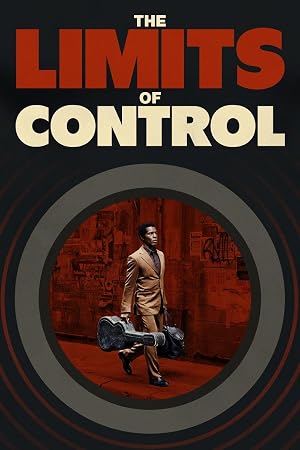
Their story is entirely about two people talking and bonding, some arguing and the cool trick of using a lighter with your feet being demonstrated. To be honest, Jarmusch's tone for many of his films, whether a good comparison for some or not, is closer to Quentin Tarantino's throughout his career, extensive conversation from characters about their obsessions, only with the emphasis on Jarmusch further from cinema to an entire spectrum of tangents, from Jack and Meg White of the White Stripes being obsessed over a Tesla Coil in Coffee and Cigarettes to Mystery Train having a tangent over one of the characters being named Will Robinson, after the Lost in Space television series, which he dismisses as dumb white people being stuck on an asteroid. Though Jarmusch has dabbled in more overt plots too - Dead Man (1995), Ghost Dog: The Way of the Samurai (1999) - another factor to his career, unlike Tarantino, is a more warm and humane tone, where even when it comes to his horror film Only Lovers Left Alive (2013), it is more about bonding over awesome old LPs and character dynamics with the horror coming unexpectedly, even as a punch line for sick humoured gags. The Limits of Control (2009), his drone metal scored assassin narrative, plays like a pastiche but not in an ironic way, and with Mystery Train, though a gun is set off at two points, it feels entirely like an empathetic ode to these characters obsessed with culture of all kinds.
%20a.jpg)
Thankfully, Jarmusch has always been able to make likable characters, the first act's outsiders who go along without unnecessary contrivances against their expense. They also set up the central hub to all the scenes, as they are the first to enter the hotel everyone in the three stories reach, where you have Cinqué Lee, Spike Lee's brother, as the bellhop, and legendary proto-shock rock musician and singer Screamin’ Jay Hawkins, in an incredible red suit, as the hotel manager. When not eating a Japanese plum, these two are in the centre as a Greek chorus to all the other stories. This includes a grieving Italian widow Luisa (Nicoletta Braschi), travelling to Rome with her husband's casket, in a story where she is able to overcome this in spite of this. This involves Tom Noonan, being very creepy, talking about encountering the ghost of 1956 Elvis in the night, forced to flee him but encountering another woman lost also by herself to share a hotel room with. For the third story tension does come in, but with a comedic edge, involving Joe Strummer of The Clash, the legendary punk band. By this point, Strummer had disbanded the band in 1986 after the infamous Cut the Crap (1985) album, compelling to listen to as a strange mix of football chanting, layered audio and cheap synth beats, but understandably a misfire of big proportions even as someone who found songs likable on it. It was the ill-advised decision by Strummer to have key members of the band forced out the band, replace them and attempt to return to their roots without doing so at all. He would move onto solo projects and also start a film career, such as here or with Doctor Chance (1997) by F.J. Ossang, a French film maker whose films I wish was more readily available, where he has a small cameo talking about his gonads. Strummer is Johnny, or Elvis as everyone calls him due to a passing similarity, an English ex-pat who has lost his wife and job. Drunk, and with a loaded gun, his brother-in-law as portrayed by Steve Buscemi, continuing a career here of always getting the worst luck, having to be brought in with Will Robinson (Rick Aviles) to stop him doing mischief. "Elvis", due to one racist liquor seller later, does end up firing the gun and they find themselves hiding in the hotel as a trio, stuck talking in one of the rooms about the fact there should be a Malcolm X suite instead of Elvis photos everywhere.
Mystery Train is not a dramatic, plot driven film even by this point, and this is factoring in that the real ghost of Elvis Presley accidentally appears in a hotel room for a cameo. Mystery Train is about the characters in place, not forced to move for the sake of drama but allowed to breathe, Jarmusch liking to write extensive dialogue between them hanging out. His cinema is not as overt as Tarantino's in being post-modern or self-reflective either, instead name checking his favourite things but Jarmusch still emphasising the characters existing in the pretence of narrative structures. They are characters with suggested lives, unlike early Pulp Fiction era Tarantino where they were absolutely archetypes. Set around one specific time period, with Tom Waits as the radio announcer's voice heard through all this, Memphis itself and the cultural heritage is as much the subject, the title of the film itself a song heard in both versions by Elvis Presley and Carl Perkins. A warm film, it nonetheless does also tackle some serious topics in this mood; the two covers of Mystery Train in itself two also name checks the issue of Elvis being placed as a white musician seen as appropriating black musicians' work and being easier to sell to white audiences, which is a subject of discussion alongside tensions of race occasionally raised in the film. Elvis himself is not demonised, but for a fond film, which is charming and sweet, it still nods to complexities which Jim Jarmusch has shown throughout his career, as it is using these three stories to create a work about Memphis as a place with its rich history just in terms of music, let alone the actual urban landscape as shown throughout.
Mystery Train has always been a film I admired, in mind that it is a film literally about nothing if you take a simple view of it - no consequences, even of firing a gun into someone, or two, are shown at all with an open ending to the third story. Nonetheless it does feel like an experience, lived in, enjoyed, with a few one liners which are hilarious, and it wins me over repeatedly every time I return to this film.
%20b.jpg)