Showing posts with label Built From Pre-Existing Footage. Show all posts

Sunday, 21 July 2024

Dünyayı Kurtaran Adam aka. Turkish Star Wars (1982)


Director: Çetin Inanç

Screenplay: Cüneyt Arkın

Cast: Cüneyt Arkın as Murat; Aytekin Akkaya as Ali; Necla Fide as the Queen; Hüseyin Peyda as Bilgin; Hikmet Taşdemir as Sihirbaz


I considered films through a black and white viewpoint when I was younger. They had to have clear narratives and be well made, something which made “Turkish Star Wars”, as I first learnt of it as, one of the worst films I had ever saw when I viewed it at sixteen or so in a bender of Google Video viewings. Now my views have changed, where films of immense quality become greater but I can appreciate something like this, which comes in the context where Turkey’s film board was not allowing Western films like Star Wars (1977) into the country1, leading to one of the most infamous “Turkploitation” films to be produced by a director known as a “jet director” for getting films made within ten days1. Let us not kid ourselves, even next to other Turksploitation films, this is one of the more erratic I have ever seen, its infamy deserved for its shamelessness and how, honestly, it is an utter mess even if its unpredictability is something to also admire.

After centuries of change where atomic wars have decimated most of it and pieces of the continents have drifted off into space, Earth (which suspiciously looks like squashed Death Star) is under attack by an immortal wizard. With the planet protected by a force field created from human brainwaves, the wizard needs human brains, or at least one, to destroy it and attack Earth, forcing two Turkish space pilots onto his own planet where they must face his bizarre hordes of monsters and stop his plans of galactic destruction. Turkish Star Wars is infamous, as a low budget Turksploitation film, for taking footage from Star Wars and using music from everything from that film to Flash Gordon (1980). The montage of attractions theory created by Sergei E. Eisenstein is decimated by the slapdash editing of this, where even the use of music and sound clips is as hastily put together as the visuals, and yet has a drastic effect on the viewer when viewed together in this narrative. The difference is that, while Eisenstein wanted to elicit certain emotions from the viewer, this film causes stupefied amazement instead.

Turkish Star Wars, revisiting it, is a glorious mess, the plot synopsis my attempt to comprehend a film which can suddenly lunge forward, even into the middle of a fight without warning, to the next plot point, where monsters suddenly appear out of nowhere and the theme from Indiana Jones, used behind the main hero, suddenly battles with the villain’s Flash Gordon synth within the same scene. Random zombies or the fact there are nunchaku in space are the less strange aspects to this film, which is frankly a disaster in terms of the material being put together if you were to judge it severely for its technical qualities.  Even with the English subtitles over the years not being perfect, this as well in terms of the script feels an over-elaborate take, where its lead actor Cüneyt Arkın, a well regarded and prolific figure in his homeland, got to write the script too but it feels like everything he wanted to go with too ambitious for its production craft. For what is a simple tale of heroes versus a human blood drinking space wizard who just wants a human brain, not plural, to destroy the Earth he was once a person on, this lost a lot of the point with everything else Arkın wanted to include for profoundness. The result in watching it, and trying to understand it, is like becoming a paper bag in the wind which drops you off by the end confused and alarmed.


The decision to use so much pre-existing work is as much part of the confusion, as using the Star Wars footage for production value makes less sense as the film goes, a detriment to sanity as none of the re-appropriated Star Wars footage makes sense, especially if suggested (by the Death Star in another role) the Earth is destroyed at one point only to not. It is as much a collage of pre-existing science fiction and fantasy works beyond that film, in its premise and pieces, including things that were not directly included in the film but evoked for me accidentally, as the creators of the film could cram into a single movie and made into a cabinet of baffling curiosities. With our main hero (played by Cüneyt Arkın), who bounces around like Taylor Kitsch in John Carter (of Mars) (2012), and his womanising friend whose famous whistle to attract women accidentally conjures up skeletal horsemen to his annoyance, we see them fight everything from TV headed robots and cybermen from a fifties b-movie, toilet paper mummies out of genre, and to paraphrase a description my younger self used when he viewed this the first time, the bastard feral children of Elmo from Sesame Street. There are even henchmen clearly wearing budget Fu Manchu and Devil masks among the goons. My struggles with the film still are softened because of this, where the film does drag but, if you can tolerate its tone, is starling and hilarious in a positive way. Between the lengthy narrative exposition, it is effective a series of long, continuous fight scenes where anti-war philosophy and appropriated Western iconography is matched with a beast having its head karate chopped off or a severed head thrown at another so hard they explode.

The philosophy and mythology in the film adds the cherry to the top of its cake, where knowing its lead actor is writing this provides a sympathy for the film even if, from the first few minutes in with the narration trying to explain the world it is setting up, his script did not translate onscreen in a way that would be coherent for everyone. The film is a stream of consciousness of unconventional ideas, quaint ideas of hope, and erratic science fiction ideas that adds to the incomprehensible but delightfully creative mass you see (and hear and read) onscreen. That it includes religion, with an Islamic subtext, adds to the sincerity of the film that is an unexpected turn as well, even if it goes towards putting context to a sacred sword and a brain. There is also the bromance between the leads which also is admirable, one so strong your brains are psychically linked and, regardless of the running gag of one of them believing himself to be a womanizer, becomes the real romance of the production.

The flaws even in terms of this type of cinema is that it does rush through so much of itself with far more concern, for all things, for its lore about the “13th Tribe” of Earth’s ancestors blown off the planet, literally, rather than making sure the work is a little bit more cohesive to appreciate its simple premise. When it can stay for a minute and take a breath, even some of its goofier moments also become better for this, like the training montage of punching rocks, tying them to ones legs to run and jump, or just kicking then as projectile weapons. It is a film on a purely silly level something you are glad exists, because it has someone karate chop a monster’s arms off and then impale them claw first into their torsos, and it would be improved simply if this had been a little bit more cohesive then what we got. What you get nonetheless, as an artefact from filmmaking history is nonetheless compelling if you have the patience for this.

For those people, over eighty minutes, this is the kind of janky spluttering that would be a breath of fresh air for those willing to experience it. There is more pain to be experienced with something which is technically more cohesive but has no effect, whilst here the vividness of Turkish Star Wars and its own unpredictability is worth cherishing even if we all admit that would never win any technical awards for quality. It is a film you need to see once, even if you hate it, and now that my tastes have changed and I can see its virtues, I look back at my younger self who found it unbearable and ponder how much of a naive sourpuss he was.


=====

1) The strange case of Turkish Star Wars, written for Esquire Middle East.

Wednesday, 15 March 2023

Fire Dragon (1983)


Director: Chester Wong Chung-Gwong

Cast: Chung Kwan as John; Yi-Chan Lu as Jessie; Chien-Ping Li as Jessie; Hung-Lieh Chen as Sai-ichi; Ti Chin as Wesley; Jackie Chan as Alan (archive footage); Brigitte Lin as Lily (archive footage)

An Abstract Candidate


It is nice to know, early in his career, martial arts superstar Jackie Chan’s filmography gets into the more unashamed luridness and exploitation of Hong Kong cinema, where it is not enough to fire guns at a car in the opening scene to kill the driver, but to drop a giant net over it, as nets even confound automobiles let alone human beings, and then blow it up with a rocket launcher. The opening theme is going to break out into Donna Summer’s I Feel Love and Hi-NRG dance music, and between this and Fantasy Mission Force (1983), Chan has even in just two films has a surprising amount of times where Nazis have been the villains, which is fitting as, part of its own tradition in this region’s cinema, this shamelessly recycles and re-contextualizes Fantasy Mission Force footage into a new film from the same year that film was released.

That film can be viewed as an early production in the “mo lei tau film” genre which the likes of Stephen Chow became famous for, which as a phrase can be translated as “makes no sense”1 and in itself explains the tone of Fantasy Mission Force perfectly. That film was already weird and on purpose, with actors abruptly in a variety of costumes from steel helmets to dressing up as Scotsmen in kilts, to its tonal shifts from slapstick comedy to a jarring serious ending with characters dead. Fire Dragon manages to be its own take on what is usually equated to Godfrey Ho and producer Joseph Lai, a duo infamous from this period of re-contextualizing existing or unfinished films into what I have called for myself cut-and-paste ninja films, and here Fire Dragon shows this was something others did themselves, with the added peculiarity that the director of this film, Chester Wong Chung-Gwong, only has this film on their Internet Movie Database page. This possesses the same unpredictability of a Godfrey Ho film, when you can have someone get decapitated underwater abruptly by a motorboat engine passing by, or killers jumping out of birthday cakes to knife someone. The use of Fantasy Mission Force alone, a film where Chan was a comedic side character who took centre stage in the ending, is to the point of retelling a new story from it even when it makes no sense to, the scenes involving a haunted house of real ghosts from the previous film, strange in themselves, more strange here to use to introduce the characters, leading to actually bizarre results.

There is new footage here, a plot involving Chinese Nazis, nefarious individuals connected to two new heroes to fight them, a man and a woman, whilst the original cast of Fantasy Mission Force (including Brigitte Lin, a star in her own right including in Wong Kar-Wai films) are reused and attempted to be linked to as a band of criminals after gold. Jackie Chan gets ridiculous dubbing here as in the older film, more goofball with random blues guitar licks scoring his fight scenes here rather than the Godfrey Ho-like English dubbing he got earlier, reintroduced as in FMF fighting an evil sumo for his first scenes. It is clear this also comes when Chan started becoming a big name in his homeland, as there is a stand-in used in scenes whose face we never seen, even introduced in a room with posters and photos of Chan himself from other films used for the close-up shots instead of an actual face. Martial arts cinema had done this before Fire Dragon with Bruce Lee after his abrupt death in 1973, but there were actual actors playing Lee such as Bruce Lai as “Bruceploitation” stars, with their faces seen, which makes Fire Dragon a very odd contrast especially in mind that, decades after this film, Chan was very much alive and breaking in Hollywood by the nineties.

Adding to the strangeness is that this stunt double, alongside weaving new footage around Fantasy Mission Force (and old costumes from that film), does their own elaborate fight scenes with comedy and that blues lick. That is certainly memorable, and it explains touches like having the Nazis, or that they have women in cave women costumes, even fighting to the death, reflecting the scene where the leads (as reused here) encounter a village of Amazons. Fantasy Mission Force was already a bizarre film, and needing to match the footage here for a new narrative, the results get even weirder at times here even if they co-exist as equals in different ways of strangeness. It is also clear this managed to even access unused footage, or more versions of Fantasy Mission Force exist, as there are a few scenes that I never saw and feel hallucinated from out takes there, like torture involving German shepherds licking one’s feet on pain of a metal ball hitting repeatedly in the head when you twitch your legs back. There is also an attempt, not well, to link such scenes, such as the potential death by snu snu with regular sized, petite model-like Amazons for one too-lucky male figure. Fire Dragon, for someone not used to this type of cinema from Hong Kong, would not be viewed as good film making, not how cinema is meant to be constructed this way. Even Bernard Hermann’s legendary shower scene score for Psycho (1960) is used at one point, this region of martial arts cinema its own mad delirium that has to be accepted on its own terms.

It is the kind of film you still also have to admire for the chutzpah, where people were still filmed as extras on crucifixes at the Nazi camp, there just because as set dressing even if it would have cost more to film than add more spare old footage, the logic not found yet still earnestly trying to be entertaining if still exploitation. The story is thread bare, and yet as a Frankenstein’s project to retell a new film with vast limits of new footage, that in itself if you are prepared becomes the pleasure in its own form, the mechanizations of trying to make a new film from an old one like an experimental game, including the Jackie Chan factor, adding to the curiosity factor.

Abstract Spectrum: Random/Weird

Abstract Rating (High/Medium/Low/None): Low

============

1)      Stephen Chow & Hong Kong Mo Lei Tau Comedy, written by Nick Dodet and published for Pig China on March 8th 2016.

Wednesday, 7 December 2022

Run Coyote Run (1987)


Director: James Bryan

Screenplay: Renee Harmon

Cast: Renee Harmon, Frank Neuhaus

An Abstract Candidate


The gods have indeed blessed her body bountifully.

Within the space of two months, I once unintentionally saw Lady Street Fighter (1981) three times, even if just in clip form in other films, as director James Bryan and star/writer/producer Renee Harmon milked that earlier film twice, unintentionally creating two sequels to the previous film with chronological time line differences and reused footage. Revenge of the Lady Street Fighter (1990) is just the entirely the first film again, all the footage with a tiny bit more new context, playing with Harmon's original lead character being followed by a new female character. Run Coyote Run is an unofficial sequel because it follows the premise of the prequel, even if shown onscreen reused footage, and turns it into a new story with the surrealism of pre-existing footage from earlier Harmon productions being incorporated into new scenes. With one little plot difference – the original film being about a tape containing the names of assassins, this about tape with drug smuggler leaders on a similar list – these technically do not co-exist as films in the same world, but it feels truthfully they should. With this film particularly, even if you include the three as a perverse little trilogy in the same world, this makes at times even Godfey Ho, the infamous Hong Kong director who created films from pre-existing and unfinished movies with new footage, look conventional at times.

Harmon is Anna, a female police officer with psychic abilities. Again, as mentioned, this is not intentionally a sequel to Lady Street Fighter, but it is tied to that film's plot, the McGuffin of a master tape of concern here again and Harmon’s original character Linda now re-contextualised with having a sister (who is unintentionally identical) searching for clues to what has happened to her deceased reporter twin. The film, unlike Revenge of Lady Street Fighter, has much more plot and new footage, and in Anna 's search for the truth, people are being silencing by those connected to a criminal cartel, including an evil biker priest who comes off as a joker among the bunch. This in itself, as shot-on-video genre cinema from the late eighties, is goofy, with stock footage of a hospital having to be used to introduce our heroine in her first scene, and a lot of silly dialogue such as the suggesting, despite being a reporter, Linda could not even spell “cat”. A torture scene from the original film is now casually turned into a new one with spliced in footage and voice, but this also leads to the most curious aspect of the film.


It is not just the original Lady Street Fighter which is re-used for footage but also, to compensate for a lack of budget, footage from previous films by Harmon and Bryan is used, specifically Frozen Scream (1975), The Executioner, Part II (1984), and Hell Riders (1984). This is where the Godfrey Ho comparison comes in, with his infamous cycle of ninja movies from the eighties like Ninja Terminator (1985) where new footage with the likes of actor Richard Harris in camouflage ninja outfits was spliced in with existing films he had acquired. In all my Godfrey Ho viewing though, unless deepest cuts may lead to some stranger surprises, he never reused footage from a prequel he made and replayed it with new inserts like what happens with these Harmon films, déjà-vu and the cyclical nature of violence taken here to an absurd depth. The most delirious thing, where Run Coyote Run gets weirder, is realising new actors are being dressed as actors from the old footage so they can connect, like a trick Chilean director Raul Ruiz might have deliberately done in his films with an intentionally alienating effect. Realising very obvious old man makeup on an actor was for a murder scene from Harmon’s Frozen Scream to be spliced in, a seventies film from a different era of cinema with its contrast in celluloid film to a video production, added a new level of weirdness here.  Adding to this is that you can tell the seams, such as with a fight scene on steel steps latter on, or how there is a strange woozy tone to the production even if replaying Lady Street Fighter again.

It did feel like a dream as a result. As a film, Run Coyote Run is a curio only for those who can appreciate these films, which can be said of all the Renee Harmon /James Bryan collaborations I have seen. Coyote though has the advantage that it is a curious attempt at a lower budget genre film which is at the price of a VHS instructional film budget, using a remix technique you use for an artistic plunder phonics-like project but never expect for a production like this. That is not an insult either as, regardless of this being visible, the reused footage done to work around this creating a compelling strangeness within itself. As a result too, the genre burps between occultism, as yes, Harmon is psychic and has flashbacks to Linda’s experience, with horror incorporated by use of the Frozen Screams scenes, with their black hooded murderers evoking a slasher instead and with unexpected gore scenes within what is meant to be an action film.

It emphasises the fascinating with this ultra low budget cinema alongside something I admire, that of trying in spite of obvious handicaps to make a film. Common taste would dictate a lot of this film is (bluntly) "amateurish", from its acting to the contrast in footage types, but for a person like me or Bleeding Skull, a website devoted to this cinema, that is meaningless to the pleasure in them. Bleeding Skull have to be thanked for this film even being known, as they found the film in the trunk of a used car, first releasing the film themselves in a short lived VHS series in 20141, before the American Genre Film Archive included it as an extra to Jungle Trap (2016), a larger scale salvage by the website of a lost Harmon/Bryan film they worked with the director on to finally finish.  Standard technical bars presumed to be what makes a good film are alien to a film like Run Coyote Run, where even its rediscovery raises tantalising questions of how it ended up in that trunk in the first place. Instead, the joy of what, without safety barriers, a film can end up as are to be found here for the adventurous.

Abstract Spectrum: Dreamlike/Minimalistic/Weird

Abstract Rating (High/Medium/Low/None): Low


=====

1) Bleeding Skull! Video VHS page for Run Coyote Run (BSV-003), written by Joseph A. Ziemba and published for Bleeding Skull on November 28th 2014.

Wednesday, 17 March 2021

Ninja Dragon (1986)


Director: Godfrey Ho

Screenplay: AAV Creative Unit and Godfrey Ho

Cast: Richard Harrison as Ninja Master Gordon; Paulo Tocha as Paul; Pierre Tremblay as Pierre; Chung Tien Shih; Jean Tang; Tien Miao; Hsieh Wang

Canon Fodder


Benjamin-chan, that sort of thing went out with the ark.

Whilst Ninja Terminator is a more infamous film, and has the more compellingly weird content, there was a time I liked Ninja Dragon more even if surprisingly drier in comparison, owned back in the days when not only these films were second DVDs which got their own martial arts section in second hand stores, but that two sided DVDs were commonplace. The reason, to immediately get to the point, is that when Godfrey Ho and his producer at a time Joseph Lai started buying up pre-existing and even unfinished Asian films, and cutting them together with newly filmed footage for the eighties ninja craze,  Ninja Dragon's source material would have been fascinating to see as it was originally.

They used some odd choices, not just martial arts films but a variety of genres for stranger results, but Hei juan tao (1982), the source film, would be interesting for me to see as it was intended. Immediately, as a Taiwanese production, this is from the final years of the Taiwanese black cinema movement, genre films from the country which could vary between films with legitimate political themes and/or pure exploitation, Hei juan tao showing this with the nude scenes it has. In fact, with the knowledge of the movement, and seeing the down-to-earth film here being used, the ninja footage does feel exemplary in its bright and gaudy nature. It does even add charm due to this odd juxtaposition of tones now as a result, from seeing it crammed in, set up from a truly international poker game where ninja master where Ninja Master Gordon (Richard Harrison) will have to deal with

In fact, the ninja footage really does feel exemplary adding to the charm of seeing it crammed in, set up from a truly international poker game where Ninja Master Gordon (Richard Harrison) will have to deal with gang leader Paul (Paulo Tocha) attempting to take over in power and wealth among their peers, cutting to the original source film. The leader of a gang called the Black Tigers, Ronald, is murdered on Paul's orders by his group and his henchman Mr. Fox, with his oldest daughter Phoenix taking over with a figure called Dragon the aloft man at her side. With the other group attempting to bump them off, from trying to kill Dragon with his door booby trapped with a rifle or kidnapping Phoenix's younger sister Fanny, Dragon will have to help from moles and turncoats in their own group too wishing to help Mr. Fox and Paul. As with all Ho ninja films, the two worlds are disconnected, even if they cut to close ups to Harrison's face and splice them in to footage talking to the main actor of the original film, or have Paulo Tocha spliced in shooting the heads off flowers for target practice with his own minions.

Ninja Dragon is a drier viewing experience but it has its charm, even in something that is inherently part of these films in their contraction, such as the dubbing and writing of new dialogue to make this all have "sense", characters in these films with quasi-English accents from the then-British commonwealth Hong Kong having their own weird charm, and English language names and a tendency for calling people "bastards" to go along with this. The one major difference here with this film is that Hei juan tao was not even a martial arts picture, instead a crime narrative where conflicts were resolved with guns and shooting people, meaning that the ninjas involved and all being (mostly) Western white men is surreal to consider as a juxtaposition. In fact this film even takes this aspect of these films, which were churned out by Lai and Ho at the time each year, to an added subjective tone in that the Ninja Masters live in their own heightened world of politics and high tier intrigue, only pushing pawns outside their own worlds with phone calls.

Enough is to be found in the source material itself that does have some unintentional humour, such as the fact (when it happens twice) that people will bash their own skulls in on rock (or gravestones) to kill themselves rather than be taken prisoner, but this is one of the most straightforward and sombre narratives to latch ninjas upon. It does change how to view the film as, even with some of its broader moments, it is much more grounded then some of the stranger films. It even has more subplots and narrative complexity then others, which adds a great deal, such as Paul's gang having a mole kindly helping the Black Tigers or the figure of Benny, at first the comedic foil trying to woo Phoenix, even in something misguided as hiring goons to pretend to threaten her for a fake rescue, only to become a creepy whose involvement in the narrative adds an unexpected turn. That this is a Taiwanese film, from a crop of genre films that were made before the Taiwan government cracked down on them and the Taiwanese New Wave of art films came to be, now adds a greater weight as, for all the ones which were just pulp, this has their grounded and gritty tone even in its action, the matter-of-factness of the confrontations and ploys by the gangs standing out now for me.

Even the great music choices "borrowed" from other sources are deep cuts, as the main theme for this film, at least the ninja training sequences with Richard Harrison, is from the anime film called The Dagger of Kamui (1985), a sadly obscure theatrical anime by the veteran director Rintaro which was befittingly a period ninja epic.  This film Ninja Dragon, surprisingly, even has an unexpected twist which shows the source film used was a bit more creative, a wedding reception leading to a tragedy and a bleak ending even if Ho includes a ninja battle to leave the film patrons happy. That even that ninja fight has its own charm, set among urban Hong Kong and still having talented martial artists in the ridiculous ninja costumes fight, shows that this is one of the times Ho's weird logic with Joseph Lai to make these films, whilst still an awkward creation, almost makes sense when it works as here. This is definitely a film you visit later into your obsession with Godfrey Ho, as you do not get as much as the absurd lunacy that made these cut-and-paste ninja films notorious. It was one of the first I ever saw, and did leave a good impression, but I will admit that, if you were to even to attempt to argue for these films, this was one of the many he and Joseph Lai churned out should be one of the later ones to visit. It is, however, one of the ones which I can argue is legitimately entertaining though too, and I am only arguing for seeing later as, whilst more accessible, you need to understand the weird world of these films by jumping on a Ninja Terminator, then seeing how these films could have almost seemed a sane concept when one like this actually works.

Saturday, 13 March 2021

Ninja Terminator (1985)


Director: Godfrey Ho

Screenplay: AAV Creative Unit, Godfrey Ho and Warren See

Cast: Richard Harrison as Ninja Master Harry; Jang-Lee Hwang as Tiger; Jack Lam as Jaguar Wong

An Abstract List Candidate


Yes, that's my ninja star.

I once binged on Godfrey Ho like a mad man once, acquiring a large quantity of his films on second hand DVD, even the "straight" martial arts films his name was put onto let alone the films he was notorious for. A Hong Kong born director, those notorious films, including Ninja Terminator, were his "cut-and-paste" ninja films. They are not the only part of his filmography - he directed martial arts films and even worked with Cynthia Rothrock - but they are his most infamous work with Ninja Terminator one of the most well known. When I first reviewed this film on a blog - back in January 1st 2012 - the film had a 4.4 rating on the Internet Movie Database, and as I blog this time the score has climbed to 4.6 as of the 12th March 2021. Ho's legacy is marked with this notoriety, and internet cult status, for said films.

Ho's career with the ninja films are tied to producer Joseph Lai, and his video production company called IFD, these films now are a cultural artefact which are fascinating to look back onto, especially when they managed to be successful with said films . Ninjas became popular, with the Israeli cousins and film moguls Menahem Golan and Yoram Globus began a string of films on ninjas like Enter the Ninja (1981), and a fictionalised form of the Japanese mercenary came to be of note. Lai and Ho acquired martial arts films, even unfinished ones, from around Asian and spliced in new footage with Western actors like Richard Harrison (even non-actors) in costume store ninja costumes and churned them out. Like its own perplexing web of narrative, the ninja films due to how many were made, where Richard Harrison only shot footage for a few only to end up in far more, and that they have reoccurring themes have a perverse Borgian lunacy to them if anyone was mad enough to watch them all.

In this one, three ninjas (including Richard Harrison) steal from their ‘Ninja Empire’ the pieces of the Golden Ninja Warrior, an artefact that can turn your body and arms into living shields able to deflect even sword blades, crafted from a prop which looks like a nifty gift store present. Yes, there is a weakness to this artefact I am not surprised is never brought up in the film, that one’s legs could still be lopped off from under you regardless by a sword, but such a powerful McGuffin kickstarts the ball rolling. The Ninja Empire is on the hunt for the individuals responsible for its theft and one of the three ninja thieves is killed, leaving Harrison’s Ninja Master Harry fighting for good, while his conspirator within the two years that have past is leading a crime syndicate and wants to claim the remaining pieces. From here, the new footage is spliced with a film acquired to cut into this one, through scenes of characters calling others from an entirely different source by phone, including Harry with his infamous Garfield telephone which closes its eyes when the receiver is put down.

Through his second in command - who dresses in a white suit and a lovely blonde curled wig - and his own set of minions, the syndicate goes after the surviving sister of the murdered ninja to claim her piece of the Golden Ninja Warrior. To protect her, Harry sends in his own man Jaguar Wong (Jack Lam), a suave and skilled fighter who intends to help her and generally undermine the actions of the syndicate with his fist. It is fascinating to watch Ho and Lai's work nowadays again as experiments in trying to create new material with mostly old work, an experiment which even becomes nearly meta as, in another infamous aspect, the Ninja Empire send toy robots to give characters warnings, including video tapes which use footage from pre-existing films shown on television screens. Godfrey Ho, alongside his producer Joseph Lai, is infamous for this run of ninja films which take pre-existing films and re-edit them, intercutting new scenes of ninja combat and Richard Harrison, to weave together  new narratives using the English dubbing script and some blatant editing techniques. It was done mainly to capitalise on the bludgeoning obsession with ninjas in American culture in the 1980s, so you can view this as a questionable practice as well as ramshackle to the extreme. Nowadays however, this cinema is now an artefact of an old era, as even the time when these films managed to get on DVD, and shipped in the United States and Britain, is now the past alone in the eighties when they were first commissioned.

Time now allows you to learn the film spliced in is Uninvited Guest (1984), a South Korean production, and that the film gets away with a lot of borrow music, not least a Japanese band Logic System. Even if something I am amazed never got them into trouble, especially when they were pinching from Pink Floyd too for this film, the soundtracks in hindsight were always awesome from these films when they worked. How these films have not occurred the wrath of the original musicians, especially since they have been released on DVD unlike rip-off films that have borrowed music too, I have no idea. No one care, no one knows about their existence, or Roger Waters really adored cut-and-paste ninja films. We will never know.

They are accidently, if blundering through the experiments, demonstrations of the ‘Montage of Attractions’ theory that Sergei E. Eisenstein, the legendary director of Battleship Potemkin (1925), had developed. Eisenstein believed that by juxtaposing two single images together in a specific way would have a certain effect on the viewer, and that it could be used in different ways to have significant power to them. This is seen at it best with Lev Kuleshov’s experiment known as the Kuleshov Effect, where the same image of Tsarist actor Ivan Mosjoukine was spliced together alternately with an image of a plate of soup, a person in a coffin, and a young girl playing, each version having a drastic change in effect on the viewer in each combination. By utter accident, in an attempt by Ho and Joseph Lai to take unfinished and obscure films from South Korea, Taiwan etc. they ended up practicing the same methods Soviet filmmakers perfected to make numerous films over the eighties and early nineties even if for financial reasons. It does not completely work, as much because the pleasures fans of these films have is also the seams being visible, but the illusion is a curious experiment, especially as they did not just use martial arts films, but at least one softcore soap opera set in the fashion industry as well that was remade into Ninja The Protector (1986).

Admittedly, Ninja Terminator does have one huge flaw, even in context of this series of films, that the source film is not as energetic as it could have been. Clearly a film focused more on a conventional crime genre, where a villainous minion has to cut off his finger or that this film has to weave in a drug deal Jaguar Wong hijacks, the ninja material for the most part of the more memorable content for good reason. There is so absurdity, like a female lead being threatened with a ticking clock out of a cartoon, or a final fight with the blonde wigged villain on the beach, where sand proves a weapon in immobilising a person, but this is one of the films Lai and Ho used which is less distinct than the ninja footage. With a plot that, because of two different sets of footage being spliced together, doesn’t really make sense, the film ends up being an abstracted version of these sorts of c-level movies. The tiers of each side face other but do not interact with members of their own side in other tiers, outside the moments when they are connected together by editing of course, and fights break out about almost every five minutes. Nothing is seen as ill-advised production decisions either. No one raised an issue about toy motorised robots being the messengers of death for the Ninja Empire, walking into rooms under the veil of ominous smoke or getting stuck on the raised doorway, but its charming and hilarious to see especially when the robots boom with the voices foreboding doom on those who trespassed against them.

Everything that transpires in the film either undermines conventions of plotting, such as having a henchman of the villains get his own prolonged sex scene, or all the tangents of the life of Master Ninja Harry and his wife being witnessed, such as her trying to cook crabs or her career in the fashion industry, making up for the fact most viewers would find this a nightmare to sit through. Any moment it seems to slog through the minutes is undermined by the fact that something interesting is going to happen, as much now because the world here of Hong Kong is now a lost one. Ho would retire from cinema in the late nineties, and whilst not really connected to the fact Hong Kong would go back to China after 1997, there is something more profound now in seeing the city in this film, even if there is one scene where a post card or an image was clearly used to establish locations.

Godfrey Ho and Joseph Lai, while they could be taken to task for their idea of generating as many films they could sell from existing materials, at least, when their creations succeeded, made movies that are entertaining, and used pre-existing materials that had something inherently watchable about them for any viewer even if they were trash. Even the ninja sequences, with stunt actors clearly doing the fighting in the cheap ninja suits for the likes of Richard Harrison, are competent and have skilled performers involved so that, despite most ninja fights in Ho’s films consisting of flips and repeated sword clash sounds, they have something of worth even over some martial arts films made out of Asia, where non-martial artists are hired and have to be covered over in editing.

The real disappointment, if any, is not the final product, as these films were an acquired taste even when they developed an ironic enjoyment or even had legitimate fans. The issue is that, particularly with Ninja Terminator, it does not have the same impact as for my younger self that it once had. It does feel like a Frankenstein stitch job, and suffers from a result, able to see the original source film awkwardly fit the new frame. It is neither particularly abstract either, but I feel as much of this is from the choice of source film as I suspect, one day, one of these cut-and-paste ninja films I will reintroduce myself to or learn of will be legitimately weird to see. Instead, this one was even quaint to see, something charming in its wonky nature even in terms of the English dubbing, where Asian characters all have English names like Victor, all if most rarely threatening, and a comical and excessive use of swearing used. With this film, generic tropes are cut to shred like an unfortunate watermelon Richard Harrison practices on with his katana and is repeated again later in the film to compensate for the lack of a second training montage, and in terms of a climax, one involving the trademark of these films of coloured smoke bombs and back flips between three ninjas definitely makes up for the failings, even if I am fully aware of this film's many setbacks.

Abstract Spectrum: Erratic/Weird

Abstract Rating (High/Medium/Low/None): None

Thursday, 13 February 2020

Doggiewoggiez! Poochiewoochiez! (2012)


Directors: Everything is Terrible!
Cast: Hundreds of dogs and James Belushi's reaction faces

To begin with, this compilation of existing footage comes from Everything Is Terrible, a video blogging website whose origins go as far back as 2000 but properly launched their website in 2007, collecting together various pieces of filmed ephemera, for YouTube and online videos, publics screenings and DVD releases. In this case they can be can be seen as cinema's version of "plunderphonics", a term especially with the group Negativland who used existing sources to subvert their content and wider meanings.

Everything Is Terrible were likely helped through their existence by the burgeoning fascination with eighties VHS culture, purveyors and archivists of all the bizarre self released material even into the nineties that was available in the United States, even commercial tapes from that era onwards that we look on in hindsight at on YouTube dumbfounded with. The British like myself know this through anything from exercise videos and instructional films, but the United States is a significantly bigger country, with a bigger industry, and Everything Is Terrible can also add to this the likes of public access television, able to draw on the religious (Christian work about a dog puppet praying to Jesus) to whatever odd things are possibly found at the back of a garage.

Poochiewoochies admittedly, in its tale to retell Alejandro Jodorowsky's The Holy Mountain (1973) with dog videos, pulls from more Hollywood films and straight to video work, but when you see the likes of the dog message segments, that's the type of work EiT is famous for, cutting out some of the choice titbits alongside the most banal of dog films to create this production. Also, yeah, let's step back as The Holy Mountain in cult circles is a big film, Jodorowsky off the back of funding from the Beatles manager Allen Klein making a tale of spiritual discovery which was surreal and truly bizarre. The initial text is already weird, so this framework retold with dogs is admittedly intriguing. It is one of Doogiewoogiez's crutches to hinder it however as, whilst it could work perfectly as a template for an odyssey, it's barely used and vague here as a structure.

Why was it used? Possibly the idea of "God = Dog" joke and there is the scene where the group of followers wishing to become enlightened have their consciousnesses connected to an actual dog, a sequence whose sound clip to first person dog shots from various sources does work in Doogiewoogiez. As a result, the vagueness of the structure means this still requires the other film to work, which wouldn't be an issue weren't it not for the fact that it's left as a disjointed collection of pieces which can tire without context. The structural choice only works occasionally when it's explicitly pulling from the source material, including the introduction of those followers, who were given little stories each within The Holy Mountain, here used to go into segments such as dogs and sex, dogs in sports etc.

It does tap into the really questionable attitudes we have when it comes to our pets, and I say this as someone who grew up with dogs (specifically boxers) all my life and love them. Alongside our habit to fixate over animals even over fellow human beings - such as is the case with us British - alongside the complacent view we have about how unique human beings are. This works both ways as, in one of the best aspects of the film, the research done, you see just how much embarrassing material our four legged friends have had to put up with, be it being forced into costumes or a cavalcade of badly animated mouth movements plastered over their faces. Even before I consider my own opinions, that as there is no Dr. Doolittle available, and thus we cannot truly talk to dogs and gauge a similar intelligence to ours or not, the deep pit of dog films and television churned out since the dawn of cinema, be it monochrome scenes of dogs being dressed like cowboys to Marmaduke's artificial distorted facial features, is a real sign of how we've come to abuse this is cinema, even before the film shows all the times in fiction dogs were kicked, threatened with being shot or having a blowtorch to their face in stories.


I say this as someone who argues no idea, even a dog being allowed to play American football as in one film here, is inherently bad, and that a great funny dog film can be made, but that the evidence here shows all the ways we miss the mark without having to see the entire length of them. Some pretty infamous material makes its appearance. Poochinski (1990), a failed TV pilot about Peter Boyle being killed and returning back as an English bulldog puppet, or Karate Dog (2004), one of Bob Clark's last films about Chevy Chase as a dog who has eventually has a fight with Jon Voight in the finale. James Belushi also becomes the unofficial mascot for all the reaction shots he has over the film, all possibly because (like Cuba Gooding Jr and even older Vincent Price) he made one film involving a dog, K-9 (1989), which is gone to constnalty through the film for clips.

Many mainstream films like Snow Dogs (2002) and Air Bud (1997) appear. With all the narratives excised, you forget how bizarre a lot of these films are in hindsight, and there is a good moment where, in pain staking research, the same plot points are repeated together from these films, from child protagonists always losing parents to vague film disease/car crash incidents off-screen or how dog related genital/buttock trauma is a common joke throughout these films.

The reference to Negativland is appropriate as, honestly, there was many missed opportunities in terms of subverting their material. Negativland can be humorous but also hit salient points, and the only time Doogiewoogiez stands on that band's shoulders, heavy handed but perfectly justified, is the segment that starts with racial stereotypes (both dogs literally dressed as stereotypical African tribes people to the obsession with "urban" slang even from young male characters let alone dogs) before getting into the idea of dog breeds I myself have always had a concern about. The idea that the obsession with breeding exact breeds and marginalisation of "mongrels", if applied to human beings, would be eugenics, which EiT in their one great moment here don't pussyfoot around mocking, alongside bizarre clips like a British woman being interviewed and presuming because she has a Chihuahua, a dog of Mexican origins, it presumably likes Mexican food.

Mostly Doogiewoggiexz goes for obvious jokes, some choice cuts of weirdness that are too many to pick out, from farts being used to stop dog chupacabras, to dogs playing baseball. It does cause one to be amused that, in a hundred years, we've covered so much with dogs you can have the aforementioned brawl between Jon Voight and a CGI dog, or that certain actors like Cuba Gooding Jr. appear in these films in their long, varying careers. It's a shame the structure isn't enough still, the weakest material all the manipulation of used images into psychedelic video collage material, not exactly compelling to be frankly. The only aspect of those sequences, which look like the kind of online videos that became dime a dozen on YouTube, is how Harry the Bigfoot, from Harry and the Hendersons (1987), is an honorary member of that collage despite being a cryptozoological ape creature that the creators clearly were obsessed with since childhood.

The other issue is that frankly Doggiewoggiez is ironic to a fault. A sarcasm does feel pronounced throughout, and it's felt especially with the use of Christian material as there's always a cheapness to the humour, a laboured nature when the material itself, when bad, should be allowed to hang itself on its own petard, and other moments like the humanoid dog puppet who prays to God, who in scenes is panicked and scared, would be far more fascinating for me to see in their original context to unpick. Material like a young boy dancing and singing Magic Dance by David Bowie with actors in dog costumes, after a talking well has told him he can do so if he wishes to, is weird but there's a charm too, a production like this not realising that for every eyebrow raising and questionable piece there's others which are more sympathetic for me beyond taking lines of dialogue out of context for crude jokes or to be just laughed at. Yes, some of it deserves to be questioned, like Tim Allen in a family film being naked in front of his wife and kids after turning back from being a dog, but even the dippy and strange things like people who believing their dogs are psychics and reincarnated spirits are still human beings to be considered. And all of this is in knowledge that the project was always meant to be fun first; it's just that it needed to be more focused and sharper.

Abstract Spectrum: Kitsch/Psychotronic/Surreal
Abstract Rating (High/Medium/Low/None): None


Thursday, 30 May 2019

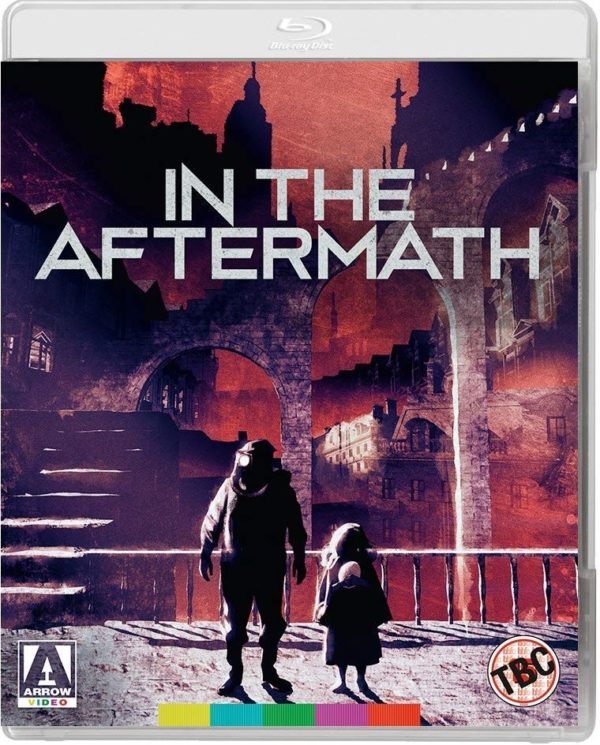
In the Aftermath (1988)

From https://cdn.flickeringmyth.com/wp-content/
uploads/2019/05/In-the-Aftermath-600x745.jpg


Directors: Carl Colpaert (Based on a film by Mamoru Oshii)
Screenplay: Carl Colpaert (Based on a film by Mamoru Oshii and Yoshitaka Amano)
Cast: Katie Leigh as Angel (voice); Tony Markes as Frank; Rainbow Dolan as Angel; Kenneth McCabe as Goose; Kurtiss J. Tews as the Psycho Soldier; Bryan Ellenburg as the Soldier; Ian Ruskin as Jonathan (voice); Lisa Maxwell as the Older Angel (voice); Filiz Tully as Dr. Sarah; Mike Hickam as the Officer
A 1000 Anime Crossover

This is from my other blog 1000 Anime, the same review but with additional material added to the end. As not all my reviews for that blog, covering anime, would be appropriate for this blog's subject, follow the link to the original review HERE and take a gander at the various other reviews you have been missing out on from there.

Let's begin with the obvious - how Mamoru Oshii's original version of Angel's Egg (1985) isn't available in the West but this notorious American reinterpretation from Roger Corman's New World Pictures is baffled me as it has for many. I don't blame those who licensed this version mind, neither Code Red in the United States or Arrow Video in the United Kingdom, as its likely the sad case the license for Angel's Egg is difficult to acquire or priced too high. (If by any chance it's due to New World Pictures or Lakeshore Pictures, the later owning this license, then someone would've grumbled about it by now, but bear in mind anime has been notoriously pricy at times to license from Japanese companies). In contrast, In the Aftermath was, from the looks of things, an entirely different license as a New World Pictures creation, Lakeshore Picture owning the rights since 2002. And honestly, whilst it's a ridiculous train wreck at many points and inferior to the original Angel's Egg, I'm glad we still have a 2k restoration of In the Aftermath, even if my own idealised version would'e been as an extra to the superior Japanese production.

As it goes New World Pictures ended up with the license for Angel's Egg, to which the likes of producer Tom Dugan thought it was an incomprehensible work. Angel's Egg, for those who don't know what it is, is an experimental theatrical animation by Mamoru Oshii, cult anime/live action director of the likes of Ghost in the Shell (1995), in collaboration with the legendary illustrator Yoshitaka Amano, who'd become acclaimed enough to have his work in art galleries after a career starting in anime production in the late sixties. Oshii, originally desiring to become a Catholic priest, clearly made Angel's Egg as a parable about religious doubt, with what you do see in In the Aftermath in terms of original footage enough to show it was very open in the conclusion without ever drawing a line onto either side, the title referencing an egg the iconic animated girl character had which either was an angel's or had nothing inside it. The New World Pictures version still also includes the sequence of fishermen trying to catch shadows of giant fish which cling to their city walls, only destroying what they try to hit with harpoons, a metaphorical sequence that, even if Oshii views the film more of a mood piece nowadays, still has this visible message within itself.

A lot of Angel's Egg is understandably abstract, intentionally so and soaked in a post-apocalypse built around the best representation of Amano own work and some of the best animators on staff from the eighties anime boom. It could've, however, been sold to an American audience by New World Pictures, rather than making an even less comprehensible version in In The Aftermath, if you'd just sold it to the art house crowd Roger Corman once did with Federico Fellini and other European films. Hell, for the visuals alone, this could've appealed to the cult film crowd even if the original film has very little dialogue and a lot of slow, languid scenes as it's a trippy, strange film even without the visible existential message.

Somehow, trying to make the film more sellable, another issue being that at seventy or so minutes Angel's Egg was seen as too short, the people behind In the Aftermath making something even less coherent at times just to fit their perceived parameters. To see it to the VHS market (though it did have an Australian theatrical release), the animation is used as an alternative world overlooking ours, actually like the angels of It's A Wonderful Life (1946) where the original protagonists, the white haired girl and a young male soldier, are now siblings and with the young girl to be sent to Earth, in live action, which is a wasteland where the ozone is poisoned and clean air is a precious resource.

It's actually not as disastrous as the reputation is. The infamy is how not only someone thinking this was a good idea, not helped by the original film not being available in the West still, but that to "make sense" Colpaert, an apprentice to Peter Bogdanovich, wrote a new script of utterly ridiculous (and quotable) dialogue about men crying about a world without fish and the girl being spanked by her older brother with asteroids as punishment for falling asleep. The project, even if I wished an English dubbed version of Angel's Egg was the version released rather than this misbegotten belief of trying to make a more "sellable" version to the West, is still compelling now we know it's an utterly perplexing creative decision, a time capsule to this bizarre cultural reinterpretation to sell films that still happened into the 2000s, whenever Miramax got hold of work like martial arts films for example, but is also alien to many world cinema fans as a practice. In 2K resolution on a Blu Ray, Angel's Egg as an animated production is incredible, causing one to weep that it is available outside Japan barring bootlegs; it is a project of the era, a box office failure whose production was only possible due to how the bubble economy grew in Japan during the eighties and, before the bubble burst at the end, there was enough money going around including in the animation industry to fund these bold projects.

From http://entervideo.net/thumbs/
in_the_aftermath_1988___59d29ac1cdc5b.mp4.jpg

Oshii
himself, whilst he can be difficult for many, is an intellectual auteur, who even when he now claims the film is vague in meaning laced the film with too much clear symbology of his own spiritual crisis. This, as mentioned, is the only project to fully capture Yoshitaka Amano's art style too, so it is painstaking in capturing his gorgeous yet highly detailed illustration right down to the difficulty the animators would've had in just animating the movement of the clothes and hair of characters. The production team, with individuals who'd go on to the like of Akira (1988) to My Neighbour Totoro (1988), were not slouches either.

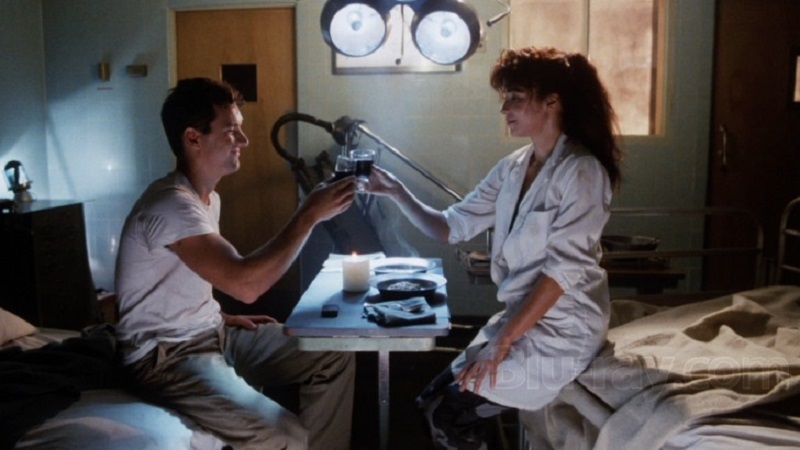
The live action isn't, even if low budget, letting the side down however in ingenuity. I will mock the point of even creating the film as it was, and mock the script, a really bad case of presuming an audience couldn't catch the vibe of the original or even just admiring the pretty pictures in spite of finding it slow, but I won't deny it's a great example in terms of clearly having so little to work with, two locations for sets and a few actors, and trying with some damn good ideas to make something interesting even if the script is gleefully gibberish at point. The two locations were chosen well, the factory in particular also used for Terminator 2: Judgement Day (1991), the kind of evocative set you could find in Andrei Tarkovsky's Stalker (1979) to a b-movie; by all accounts, an actual closed factory, it might've been dangerous to film there with those dust clouds onscreen looking too irradiated in chemicals abandoned there for comfort. Cinematographer Geza Sinkovics does his hardest to help the live action sequences, but its score composer Anthony Moore who deserves a moment of praise. An experimental composer who has worked with the likes of Henry Cow and Pink Floyd, he's a vital element in improving this film, in tandem to some of the other visual tricks at hand the person who comes close to matching the original source material in evocative mood.

Even when the animation is spliced into the live action, to try to make it work, there's also an eeriness that works. The premise, an "angel" sent to save Earth from environmental devastation is depicted by only six cast members (including lead Tony Markes), groans under trying to rationalise an art film into a pulp b-flick, but there's a sense of the unnatural to still appreciate because of this. The anime still has power even in this bastardised form, and the live action is appropriately eerie when you ignore the story.

Instead, the script, by the director, should be appreciated for going into non-sequiturs even weirder than the source, which was strange for its open ended ideas and the psychedelic dialogue but, when characters actually spoke, was very precise and sombre, building to the themes of spiritual ambiguity. Some of what is found here is potent whilst still strange, Markes in a gas mask playing a piano to a female doctor (Filiz Tully) he encounters, but spanking people with asteroids is just the kind of line screaming for baffled reactions. Angel's Egg had limited dialogue, a lot of silence that was clearly seen as unsellable considering the decision to cram voiceover to sell it, all of which adds an unintentional absurdity. Thankfully, it wasn't dull, pedestrian sci-fi exposition; instead, its lore that makes no sense but is fascinating in how this is an attempt to make the original work "makes sense" but becoming something gloriously off. The largest monologue in Angel's Egg, the young soldier retelling the tale of Noah's Ark with the boat drifting on an ocean never finding land, is turned into a nonsensical tale of deception where fish floating in the air on a planet are stolen that has to be heard to be believed.

It makes no sense why this executed plan was meant to be more marketable, but whilst I imagine an alternative world where Angel's Egg was sold as a more avant-garde Ingmar Bergman movie to art film audiences, In the Aftermath was what we got and is still rewarding for how odd it is. The real tragedy is that, whilst it helped introduce Westerners to Angel's Egg, it never lead to Angel's Egg actually being released; New World Pictures, among their work, also released an "Americanized" version of Nausicaä of the Valley of the Wind (1984) as Warriors of the Wind, the original pre-Studio Ghibli film now available whilst that version has vanished, yet nonetheless for a certain generation probably thanked for letting them still see anime for the first time. We thankfully left this need for alternative versions of foreign titles, but considering how extreme and peculiar In the Aftermath is, I am glad it's still available. That it's not an extra to the source and the only restored version in the West of the two films is tragic, but the oddity shouldn't be blamed for that.

Abstract Spectrum: Mindbender/Nonsensical/Psychotronic
Abstract Rating (High/Medium/Low/None): Low

Personal Opinion:
If we were talking about the original Angel's Egg, it would deserve a significantly higher position in terms of the Abstract Rating, alongside utter admiration of its existence as an incredible and unique animated production. As it stands though, not only is In the Aftermath still weird as a creation but, even if its production undercuts the original uniqueness of the source material, its an odd film which doesn't feel even like many re-interpretations of other's work, something to be admired even if an acquired taste.


From https://admitonefilmaddict.files.wordpress.com/
2019/01/In-the-aftermat-1.jpg