Showing posts with label Post-Apocalyptic. Show all posts

Wednesday, 29 November 2023

Moonchild (1994)


Director: Todd Sheets

Screenplay: Todd Sheets

Cast: Auggi Alvarez as Jacob Stryker; Kathleen McSweeney as Athena; Julie King as Rocky; Dave Miller as Talon; Kyrie King as Weasel; Stefan Hilt as Cabal; Cathy Metz as Dr. Andronymous; Carol Barta as Medusa; Jody Rovick as Captain Simpson

A Night of a Thousand Horror (Movies)


There's no debate about your fate. You're tomorrow's lunch!

An aerial shot from a helicopter over a cityscape, followed by a man climbing a barbwire fence to a Slayer-like thrash metal song in the score, sets up the ambition to be found here, especially if you have seen older Todd Sheets films before this, where he has jumped in scale from the films he made from before, drastically, in his shot-on-miniscule budget works even within the pre-opening credits here. There is a moving pick-up van stunt, jumping in to the back of one and someone then being thrown out, and a car chase with pyrotechnics and three vehicles involved. It is not as elaborate as a Hollywood production, but in context as a micro-budget film from the early nineties, this is a bold and challenging set piece to have pulled off, and only a clear superimposition of a car in front of a moving train shows the strain of a micro budget, something you would need a significant production to pull off and now may be done in blockbusters by green screen.

Aesthetically Moonchild feels like a digitized Mortal Kombat rip-off like Way of the Warrior (1994) for the 3DO Multiplayer System, which is an apt comparison as Naughty Dog's video game, long before they made The Last of Us franchise and released the same year as this film, was homemade without a true green screen and costumes including part of a Burger King packaging; here though with Moonchild, with its mix of ninja and samurai costumes out of context, and a post-apocalypse premise where the lead Jacob Stryker (Auggi Alvarez) had his DNA spliced with lycanthropy abilities, you do not have to just appreciate it as a historical piece of ambition, as whilst Way of the Warrior is as stiff as a board to actually attempt to play in modern eyes. Moonchild is from a director who once made Sorority Babes in the Dance-A-Thon of Death (1991), a film to enjoy if you accept it is a film where nothing happens, and over the three years afterwards gained so much from making films over the short time which passed in terms of pacing and keeping the audience entertained. The premise feels like one you would have gotten in a Sega Mega Drive/Genesis game, and Bleeding Skull tantalised with their review describing Moonchild as "an adaptation of an unreleased Sega Saturn game combined with backyard wrestling"1, so there was a lot coming into this even without my interest in Todd Sheets as a filmmaker.


Truthfully, Moonchild is too ambitious, a plot that would require the budget of at least an Italian post apocalypse film to try to pull off, with way too many characters and plot points to juggle, but I cannot help but admire Moonchild as a gold standard for a micro-budget film to gun for this level of ambitiousness. It is a film which was made with fun from the crew but making sure to keep the viewer intrigued, where there are the little details like when a minor henchman produces a saw from their mutant stomach and Sheets has an actual motorized saw blade as a prop. Following a plot of Stryker, who was part of the evil dictatorship's project of creating a werewolf army, rescuing his son with a band of helpers including a female underground leader named Athena (Kathleen McSweeney) and her kid sister, this tries its hardest at every single moment, trying to keep at a pace even when the dialogue can linger on exposition, as Stryker learning he has a bomb implanted in his small intestine has only a 72 hour time limit after escape to get this goal finished. They have martial arts scenes even if there are few of the cast trained, and the werewolf effects, bladder transformation effects indebted to Rick Baker, are applaudable in how they were pulled off. It is certainly distinct for a micro-budget film, where it is one of the few post-apocalypse tales where the underground rebels have a nice cafe to plan within, and the Medusa figure among the villains' gallery is an older woman who, far from out-of-place and stealing the film, such as when she is threatening actual children in the cast with a finger spike in the brain for information.

Probably the only real surprise is that, barring one scene where a hand comes out of someone's mouth and rips a man's eye out, this has none of Todd Sheet's trademark gore from the time and later career, the one oddity in the film in production. This was homemade in the best way aside from this, with pyrotechnics when androids are defeated, alarmingly close to cast at times, and it only stands out because it has been something Sheets embraced as a trademark, especially as there is content here where that would have made sense to include, such as how Chicago is full of mutants and other androids who practice cannibalism, and the abrupt lead villain with "666" branded on his belly. What cannot be denied is the jump in craft however, as you see Todd Sheets leap, ocean sized in distance, in technical improvements and the beats in making entertaining genre films he would watch himself, full vim and vigor shown. So much so, you will not be disappointed you only once see a full werewolf transformation including a wolf man suit on furry steroids.

====

1) Bleeding Skull 50: The Best Shot-On-Video Films, written by Joseph A. Ziemba and Annie Choi, and published on January 2nd 2022.

Wednesday, 23 November 2022

Dead or Alive: Final (2002)


Director: Takashi Miike

Screenplay: Hitoshi Ishikawa, Yoshinobu Kamo and Toshiki Kimura

Cast: Riki Takeuchi as Officer Takeshi Honda; Show Aikawa as Ryō; Maria Chen as Michelle; Richard Chen as Dictator Woo; Jason Chu as Prisoner; Josie Ho as Jun; Tony Ho as Ping

Canon Fodder


Among the three Dead or Alive films by Takashi Miike – three films only connected by V-Cinema megastars Riki Takeuchi and Show Aikawa - they all deserve their own coverage, but among them the third and final one always came off as maligned. The first was a film which helped Miike’s reputation, as much due to its out-of-nowhere ending, the second film is one of his best and a reminder of his emotional and dramatic side, and Final came to the United Kingdom in the wave of Tartan Video DVDs with a dull thud. It was neither helped that at this point, when Arrow Video decided to preserve the entire trilogy for a Blu Ray release, Final was shot on standard digital with burnt in Japanese subtitles, even having included a warning the preserved copy is less than perfect due to one of this film’s many quirks.

Old films onscreen, all fantasy wuxia with homemade monster costumes, open up the film with a melancholic air before we are sent to A.D. 2346 Yokohama, in a post apocalypse when the new major, Major Wu, has enforced the strictest of population and birth control rules. Pregnant women are incarcerated and it is implied they will outright shot children to keep the population down, with Wu’s own birth control pill is mandatory for all couples to take, with an enforcer called Officer Honda (Riki Takeuchi) as his right hand. Obviously there is a rebel group, refusing to take the pill and this introduces Ryo (Show Aikawa), who wanders in abruptly in this, preventing Honda’s men gunning down a young boy, and being introduced to the rebel group, mostly two figures that have made the ill advised decision to hire gangsters to help them stop Wu. Ryo thankfully is a replicant even able to stop bullets with his hands.

Whilst the premise sounds like horrible homophobic propaganda – when Major Wu is introduced having a shirtless sexy sax man, who preaches eternal love being only possible in homosexuality – Miike films, as usual, are more complicated, especially as whilst this is set in Yokohama, most of the cast are speaking in Cantonese, and the film was shot in Hong Kong, which evokes mainland China’s controversial one child policy than anything else. Implemented between 1980 and 2015, and thus still enforced when the film was released, it was a real life attempt at reducing population rates with strict laws, and I would not be surprised this came to mind for the production alongside the idea, set in a post-apocalypse, of imagining population issues being a subject the creators wanted to explore. Wu, played by Richard Chen, is less evil due to being gay but being a bastard, but one who feels the old world, of environmental disaster and chaos, can only be prevented from appearing in these extremes, Honda enforcing this law by the book of logic. The film, is there are any issues, plays its premise as a merely a context, not as fully fleshed out as it could be, but it feels less problematic than it suggests initially.


Contextually the origin in V-Cinema adds a lot to Final as a film, as with the whole trilogy. In lieu to cinema’s constant challenges such as television, Japanese cinema in the eighties gained a new format with videotape, which led to the likes of straight-to-video anime and the cinema Takeuchi and Aikawa made their names in, let alone this being where Miike started as a director originally. Dead or Alive as a trilogy, in hindsight to Miike’s earliest films before the 2000s, with some going to cinemas but others not, feels like a capstone to this period. The sense of its repetition of the two leads, always to cross paths, feels apt for the careers of the two too, as much as the lurid and strange moments in the trilogy coming from the unpredictability of Miike’s earlier films. Here for the last time Riki Takeuchi, Elvis pompadour and cool, and Show Aikawa, eccentric with his own idiosyncratic croaky voice and dyed blonde hair, got to revisit this world one last time. The first Dead or Alice is underappreciated, as it is known for its opening and ending, but with the central crime story being just as interest as a sad, melancholic tale where even the absurdity of the ending befits two men on opposite sides of the law literally destroying the world in their hatred. Dead or Alive 2: Birds (2000) was even more idiosyncratic and bittersweet, with the leads friends and hit men who knew each other from childhood, a drama in crime genre clothing of memory, nostalgia and purpose. In comparison to Birds especially, Final does feel a curious turn, a piece which connects to earlier films, specifically one of Miike’s best Rainy Dog (1997), as passages become Ryo bonding with a woman and the child he rescued in his introduction, but is also an imperfect production next to the other two just for the sense that this could have done with a few more minutes and grown from its virtues.

Shooting in Hong Kong adds something at least for starters, never trying to be futuristic baring some aesthetic details, like CGi giant dragon ships over tower blocks, and the replicant subplot, involving robots from a war far in the past able to eat and be empathetic as much as being dangerous to normal humans. Clearly the film had interest in the country’s history of martial arts cinema, even if it would be fed through CGI, with Show Aikawa trying his own stunts. Here I have to get to its standard digital shooting style too. This is thankfully something changing over the decades, especially with the work of the likes of American Genre Film Archive in preserving shot on video films has caused titles with imperfect technological appearances to be more readily available, but I did have a legitimate concern that an era of early 2000s digitally shot films would be lost. There was some sense of the issue being how something like this, shot likely for practicality, shows the technology in its softness and being out-of-place in a world of 4K and High Definition technology especially when it came to televisions. A production like MPD Psycho (2000), his great mini-series adaptation of the Eiji Ōtsuka and Shou Tajima manga, is something left obscure and with this concern, and here you can see, with its interlacing, Final has a fuzziness to it that will put some off immediately. Considering however though, with MPD Psycho still having huge censorship bars over gore, not for censorship but on purpose, Miike does feel like someone who has toyed with the style of his films deliberately. He is one of the few able to make very obvious CGI work, as here, and the green hue to this world is a slight emphasis on this being a dystopia without overdoing it, all felt with the sense of his usual trademarks of being one of the few directors to go out of the box fully.

This does jar with the beauty of the previous films in this series, but considering the crammed, waste and water logged world of futuristic Yokohama here, it also makes sense to have this style. The film’s hardcoded Japanese subtitles also come with the fact that, continuing his interest in multiculturalism, Miike has a mostly Cantonese speaking cast, with the leader of the resistance also fluent in English. It does not hide its Japanese setting clearly being Hong Kong, and it never feels out-of-place. The golden virtue of Takashi Miike – whilst even Sion Sono could spin his wheels in repetitious content – is that Miike unless you got him on a really bad day is a chameleon, always interesting, and here too, Final becomes more of a drama as Honda’s reality is shown to him and Ryo bonds with the survivors from when the rebels are caught off guard. Here is another film where, even with its absurd moments, it still however has emotional resonance regardless of how bizarre he can get, where even a botched rescue becoming an accidental kidnapping of a child leads to a friendship between two instead.

The film eventually refers back to the two films before by the ending, openly embracing the sense of these films existing within themselves whilst still being serious. Note that, yes, the ending of Final is bizarre, with a penis robot at the end as unexpected as you would presume, alongside the end credits just recording an older man on the street singing a song. This comes with him as a filmmaker - the profound and emotional against this openly silly and juvenile content - and it does not jar from the content from the previous two Dead or Alive films either. The film's true flaw, in truth, is that I have already mentioned, that this does fell slightly undercooked, not fully fleshed out as it could be with the importance of the film, the end of this trilogy, and the virtues already here when it is both serious and it is silly.

Monday, 21 March 2022

Final Flesh (2009)


Director: Ike Sanders

Screenplay: Vernon Chatman

An Abstract Candidate


My beauty is a force, my beauty is a weapon, and that's why I must commit optical suicide.

Ah, Final Flesh...it is a film which never got a release in the United Kingdom, and has disappeared after its DVD print run in the United States, yet it haunts the world. Befittingly it was online, through word-of-mouth, through versions of the film existing online, and being possible to book through the American Genre Film Archive for theatrical screenings. Final Flesh is also a film I openly admit to despising when I first saw it, and I have huge reservations now whilst the opinion has softened, one whose premise is compelling as an idea, has snippets that are inspired, but can stil be worked on for new ideas as this version is far from perfect.

Ironically, the problems I have are entirely from the work of the person who is the most recognisable figure in the film and came up with the project, the writer of the scripts Vernon Chatman. Beginning as a stand-up comedian, Chatman would eventually be a co-creator on such titles like Wonder Showzen (2005-6), and for Final Flesh, he decided to pen deliberately absurdist scripts, full of irrational stream-of-consciousness, and send them to different adult film companies who specialised in filming scripts sent to them and paid for to be produced. This concept is not new even in context of the 2000s, as whilst softcore, some readers may be aware of W.A.V.E Productions, a cult outfit who filmed work from submitted scripts and financed from the public, Where cult figures like Tina Krause worked with as actresses, these were kind of films which do not have Chatman's deliberate intent for perverse surrealism but catered to fetishes; Eaten Alive: A Tasteful Revenge (1999), W.A.V.E's most infamous work, fully encapsulates this because, about a female executive who decides to climb the corporate ladder by shrinking and eating her opposition, it predates vore fetish in internet meme parlance from the time the internet was still a fledgling oddity.

Final Flesh was made in an alternative way however, where the film's main driver, rather than filming others' work, was the person who sent the scripts to unsuspecting adult production teams, who with full professionalism create what is close to the scripts. They have to make heads or tails of deliberately abstract, deliberately random and weird word salads of narrative. There is a danger of this being exploitative, but I suspect the actors and filmmakers were aware of the weirdness they worked on, a day's work, and clues throughout will show this in the film itself. Far more an issue for me is none of the performers or the directors, one audibly giving directions in the third group's film, are properly given credit for being co-authors, something pertinent with how each side of Final Flesh's collaborators influence the final piece. History views this as a Vernon Chatman work, with the figure of "Ike Sanders" given the directorial credit; the lack of reference to who made these does leave a bad taste about Final Flesh, especially when how these are interpreted, from the source material, is just as important for the experience.

The set up for Final Flesh is a family - mother, father, daughter called the Pollards - who live in a post-apocalypse or an imminent one, seemingly being reincarnated in different bodies for the structure of all four parts to the point of being almost cyclical. The first segment sets the tone - in nuclear fallout, the daughter births a meat steak named Mr. Peterson whom she breastfeeds, the mother births eggs and has to bathe in the tears of children, and eventually the father is punished for his behaviour by his mother and daughter. That involves by being tricked into believing he is not a forty plus year old man but still an infant, encouraged to crawl back into his mother's womb, his mother being played by his wife, only for the obvious practical issues of a grown man's size making this physical impossible to pull off. Here, you get the full awareness, alongside a shower scene early on with the tears of orphans, that these are professional adult actors comfortable with being not only naked but performing real sex acts, as you see how impossible this is even if it is comically a man's head between his colleagues legs as a result, the image as if he is comfortable being there between her. More so as the first segment starts the film with a greater positivity for me, than encountering Final Flesh the first time long ago, with this almost being a bonding experience, and strangely sweet for this family, adding to the weirdness.

Final Flesh wants to be irrational, transgressive and shocking. It feels of its time period too - Vernon Chatman shows a clear disdain for organised religion throughout also includes a Koran being read on a toilet, a real copy involved despite none of its sacred passages being read and an improvised story involved as well. It is also apparent however too that, whilst returning to Final Flesh includes a lot of surrealism I admire, it is Chatman himself who proves the weakest link in this collaboration. My hated for Final Flesh originally when I first saw it was from the perspective of it being among titles which represented how badly misunderstood the word "surreal" and the word "weird" are, with the issue that it signposted these with wacky exclamation and without building a logic, usually based on real life, to wrap around itself. I have softened to the film, more so as I will get to the adult film makers and casts' sides of this production, but this is still a film which, for most of the time, will try for humour by having characters quote politics or religion in an inappropriate moment, which outstays itself welcome for being entirely gauche than striking.

The problem is also that Final Flesh manages to be too random in its scripts at times. Non sequiturs are a common gag in general, be it strange turns of phrase to the political references, and eventually Chatman's penmanship does suffer from being a word salad on purpose, never connecting the tissues of some of these ideas at all. I admit, some of the films I would defend now in the obscurer corners of surreal and weird cinema would be random for many to the point of detraction - I admit to being once someone who never got on with the abstract cinema I want to talk and write about now, so I come from the sense of having had the difficulty with getting the logic of even an obscure and easily divisive work. A great example of surrealism with its transgressive and shocking content from the 2000s, from this era, is Takashi Miike's Gozu (2003), which ties itself into a logic, a crime boss' lackey trying to find him when he goes missing, the subtext of his love for him amplified when a beautiful woman appears claiming to be the boss in a new skin. That film was shocking too in how Miike regular actor Renji Ishibashi plays a criminal leader who needs a ladle up his anus to be able to have an erection, and in reverse to one of Final Flesh's more successful moment, concludes with a woman gives birth to a grown man, all done with a blackened humour coursing through its veins and even whimsy.

A surreal film, even if with huge flaws you can accept, should feel like a dream where everything makes sense in mood even if it does not make sense written out. Final Flesh at times feels like a mass of white noise you dream that wakes you up, even the sub consciousness unable to process it, before you fall asleep again only to be woken up again when the mind still cannot process it, over and over in a cycle. It also does not wish to be Brechtian either, to be deliberately jarring, which could have given more to these jarring shifts. In contrast, the homemade pornographic filming helps more in Final Flesh's favour. I write this as well, with how much time having changed, with a maturity now rejecting my dismissal of how the material is very basically edited was acceptable for me now. Nowadays I have no care if the acting can waver. I was once one who said I could not stand with fellow cult film fans in enjoying any z-grade, straight to video production, saying I needed some aesthetic craft or it has to be a rare one-off, the "1% to the dreadful 99%". That has changed considerably, my appreciation for the hard work of any production, especially the lowest of budgeted, grown over the years away from that opinion. Vernon Chatman is still a significant auteur on this project, but the filmmakers who he sent the scripts to are also providing influence on the final form. Knowing they are not properly credited over the years does add a contentious nature to the film's reputation which should be challenged, when they have to figure out how this all connects and add to the results.

The home made form of adult cinema, in clip forms online, is inherently fascinating. With aesthetic choices can actually be described as rooms out of furniture catalogues, there is an inherent surrealism possible from the more stripped down verisimilitude and even the explictly corporal eroticism their casts are willing to bare onscreen, a paradox in how natural reality is interpreted is just as strange as the fantastical. Parts 2 and 3 of the film do show the flaws as much as the virtues of this entire project, Part 2 especially as it has the more fleshed out of the plots, that the family realises they are trapped by God. Able to hear him through the notes He slips under their front door, they try to escape and there is enough here for a bizarre farce already. Chatman derails this with a lot of tangents in just the dialogue, which could have been jettisoned entirely when it has two clear set pieces he could have emphasised - the attempted escape, the daughter distracting God by offensive to let Him see her naked, and the father on his deathbed, in one of the film's most iconic and best moments, being informed by his wife that she is seeing someone else, and then putting a skull mask on as the new boyfriend.

How the segments figure out Chatman's work is really what succeeds for me, where the random ejaculations do become unnecessarily numerous, changing the point when the lengthier sequences in themselves and their set pieces are the real meat, literally in the case of Mr. Peterson in the first segment, forcing the viewer to accept the reality of this. The reality porn has, trying to make everything make sense in a grounded, stripped back reality, even if faked, is an aura you already have as an advantage if you wished to use it, and the best of Final Flesh is less the juggling of new lines and weirdness, more in sustaining those which linger as long as possible before moving on. With limited resources, the casts make do with what they can and prove the more rewarding in engaging with these stories, even in terms of acquiring some of the more unconventional items like seashells for unconventional moments in their working lives to have shot onscreen. They themselves are auteurs for this work too, and even before Part 4, the final one, Part 3 clearly shows the creators influencing the script by feeling it should still qualify as porn - here you get an actual erection onscreen, with self-fluffing, and a pencil being self inserted as an erotic act even if it mean to abort a mind baby.

Throughout as well I could not help but have greater sympathy for the casts for this reason, more so as, whilst professional filming, this does feel like real people in the same way as no budget genre cinema has. Pornography's change from the older films copying cinema has ended up with a lot of verisimilitude as much as the artificial clichés still appear, as any medium honestly, and even the one figure in Part 3 who could be seen visually as the stereotype of a female porn actor, with her dyed orange/blonde hair and buxom figure, still feels like someone who you could bump into on the street. There is a humanising aspect to this type of filmmaking even if its content can be extremely artificial, the extreme artifice of this work in Final Flesh contrasted by the real people bending and uttering these words. Even the one man in Part 4 who looks like Billy Corgan from The Smashing Pumpkins, if he was a David Lynch vampire, is a real person as much as he has a good look for a porn actor as a result.

Part Four, as mentioned, is special as the creators were aware what was posted through their letterbox from Vernon Chatman, this the most successful of the four segments because everyone on and off screen realised they were given a strange object, not a script for someone's sexual fantasies. Alongside the sense they work on more Gothic slanted erotica between this, it is so clear from the dark rooms and the micro budgeted mood that they went head first into making an art film. The other aspect that undercuts Final Flesh with its flaws is the existence of Steven "Rinse Dream" Sayadian, who from his hardcore work as director and/or screenwriter, even his one softcore film Dr. Caligari (1989), managed to balance out explicit sexuality with a legitimately weird stream of consciousness turn of dialogue, full of pop culture and references, weird turns of phrase, which is a height above what Chatman does here. You can sit through a later Sayadian film which is just a compilation of hardcore sex like Party Doll A Go- Go! (1991), and still find a grain of virtue to appreciate even if a lesser one, because even someone like Randy Spears, a figure most know for just being a porn actor in a lot of adult films, gets to run with some of the most idiosyncratic and poetic streams of weirdness possible for basic dialogue between the sex scenes. I have become to appreciate now too how Sayadian even repeated lines over and over again through his actors, like a mantra; here Chatman was pecking at his feet by coincidence and could have taken the lesson from that touch of less dialogue, and more repeating the weirdness he already hit the target with earlier to dumbfound the audience more.

The fourth and final segment does have a Sayadian air around it. Rinse Dream would approve, as everyone watches outside in fear of the atomic bombs being dropped, the main trio beginning to say "They're coming" over and over again until they are all collectively orgasmic, something befitting the other's work. That even unique to Chatman's script here is where he manages with success, what was in pockets beforehand, with the added impact of the onscreen creators filming this are adding to the images by just fleshing them out. We witness birth and reincarnation when the daughter has her parents' corpses copulate, birth many raw chickens which become them again under a sheet a la a magic act, and that is a bizarre image already to picture; it grows in a micro-budget Goth erotic piece of weirdness where everything works. If Final Flesh has focused on fewer strange ideas, and still let the adult filmmakers figure out how to film them, I would be softer on the film more than I am already. When it succeeds, it succeeds. Enough is here that Final Flesh is still abstract, completely so, but with its randomness actually undercutting this at times. This is still a film whose nature I admire, only with both the sense that history has lied by just saying Vernon Chatman made this, and that it could have done with a few rewrites before he sent the scripts off. My compliments to him, for all my criticisms of the work, as he has continued to have success in his own ventures and Final Flesh has a notoriety to this day, is that if he ever decided to try this again for a sequel, in the PornHub and Only Fans era of online pornography, he could make a film that is still special, with lessons learn and still dumbfound the mortified viewers who even liked this one perfectly as it is.

Abstract Spectrum: Grotesque/Quirky/Random/Weird

Abstract Rating (High/Medium/Low/None): Low


Thursday, 30 May 2019

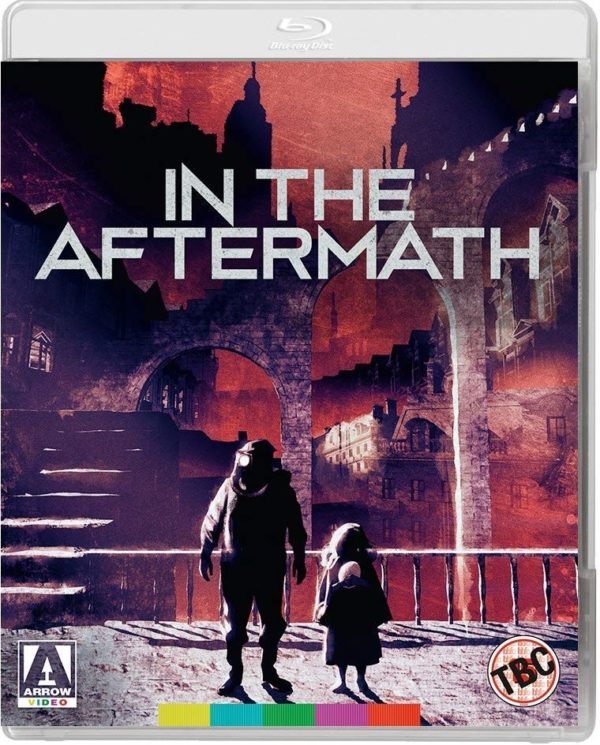
In the Aftermath (1988)

From https://cdn.flickeringmyth.com/wp-content/
uploads/2019/05/In-the-Aftermath-600x745.jpg


Directors: Carl Colpaert (Based on a film by Mamoru Oshii)
Screenplay: Carl Colpaert (Based on a film by Mamoru Oshii and Yoshitaka Amano)
Cast: Katie Leigh as Angel (voice); Tony Markes as Frank; Rainbow Dolan as Angel; Kenneth McCabe as Goose; Kurtiss J. Tews as the Psycho Soldier; Bryan Ellenburg as the Soldier; Ian Ruskin as Jonathan (voice); Lisa Maxwell as the Older Angel (voice); Filiz Tully as Dr. Sarah; Mike Hickam as the Officer
A 1000 Anime Crossover

This is from my other blog 1000 Anime, the same review but with additional material added to the end. As not all my reviews for that blog, covering anime, would be appropriate for this blog's subject, follow the link to the original review HERE and take a gander at the various other reviews you have been missing out on from there.

Let's begin with the obvious - how Mamoru Oshii's original version of Angel's Egg (1985) isn't available in the West but this notorious American reinterpretation from Roger Corman's New World Pictures is baffled me as it has for many. I don't blame those who licensed this version mind, neither Code Red in the United States or Arrow Video in the United Kingdom, as its likely the sad case the license for Angel's Egg is difficult to acquire or priced too high. (If by any chance it's due to New World Pictures or Lakeshore Pictures, the later owning this license, then someone would've grumbled about it by now, but bear in mind anime has been notoriously pricy at times to license from Japanese companies). In contrast, In the Aftermath was, from the looks of things, an entirely different license as a New World Pictures creation, Lakeshore Picture owning the rights since 2002. And honestly, whilst it's a ridiculous train wreck at many points and inferior to the original Angel's Egg, I'm glad we still have a 2k restoration of In the Aftermath, even if my own idealised version would'e been as an extra to the superior Japanese production.

As it goes New World Pictures ended up with the license for Angel's Egg, to which the likes of producer Tom Dugan thought it was an incomprehensible work. Angel's Egg, for those who don't know what it is, is an experimental theatrical animation by Mamoru Oshii, cult anime/live action director of the likes of Ghost in the Shell (1995), in collaboration with the legendary illustrator Yoshitaka Amano, who'd become acclaimed enough to have his work in art galleries after a career starting in anime production in the late sixties. Oshii, originally desiring to become a Catholic priest, clearly made Angel's Egg as a parable about religious doubt, with what you do see in In the Aftermath in terms of original footage enough to show it was very open in the conclusion without ever drawing a line onto either side, the title referencing an egg the iconic animated girl character had which either was an angel's or had nothing inside it. The New World Pictures version still also includes the sequence of fishermen trying to catch shadows of giant fish which cling to their city walls, only destroying what they try to hit with harpoons, a metaphorical sequence that, even if Oshii views the film more of a mood piece nowadays, still has this visible message within itself.

A lot of Angel's Egg is understandably abstract, intentionally so and soaked in a post-apocalypse built around the best representation of Amano own work and some of the best animators on staff from the eighties anime boom. It could've, however, been sold to an American audience by New World Pictures, rather than making an even less comprehensible version in In The Aftermath, if you'd just sold it to the art house crowd Roger Corman once did with Federico Fellini and other European films. Hell, for the visuals alone, this could've appealed to the cult film crowd even if the original film has very little dialogue and a lot of slow, languid scenes as it's a trippy, strange film even without the visible existential message.

Somehow, trying to make the film more sellable, another issue being that at seventy or so minutes Angel's Egg was seen as too short, the people behind In the Aftermath making something even less coherent at times just to fit their perceived parameters. To see it to the VHS market (though it did have an Australian theatrical release), the animation is used as an alternative world overlooking ours, actually like the angels of It's A Wonderful Life (1946) where the original protagonists, the white haired girl and a young male soldier, are now siblings and with the young girl to be sent to Earth, in live action, which is a wasteland where the ozone is poisoned and clean air is a precious resource.

It's actually not as disastrous as the reputation is. The infamy is how not only someone thinking this was a good idea, not helped by the original film not being available in the West still, but that to "make sense" Colpaert, an apprentice to Peter Bogdanovich, wrote a new script of utterly ridiculous (and quotable) dialogue about men crying about a world without fish and the girl being spanked by her older brother with asteroids as punishment for falling asleep. The project, even if I wished an English dubbed version of Angel's Egg was the version released rather than this misbegotten belief of trying to make a more "sellable" version to the West, is still compelling now we know it's an utterly perplexing creative decision, a time capsule to this bizarre cultural reinterpretation to sell films that still happened into the 2000s, whenever Miramax got hold of work like martial arts films for example, but is also alien to many world cinema fans as a practice. In 2K resolution on a Blu Ray, Angel's Egg as an animated production is incredible, causing one to weep that it is available outside Japan barring bootlegs; it is a project of the era, a box office failure whose production was only possible due to how the bubble economy grew in Japan during the eighties and, before the bubble burst at the end, there was enough money going around including in the animation industry to fund these bold projects.

From http://entervideo.net/thumbs/
in_the_aftermath_1988___59d29ac1cdc5b.mp4.jpg

Oshii
himself, whilst he can be difficult for many, is an intellectual auteur, who even when he now claims the film is vague in meaning laced the film with too much clear symbology of his own spiritual crisis. This, as mentioned, is the only project to fully capture Yoshitaka Amano's art style too, so it is painstaking in capturing his gorgeous yet highly detailed illustration right down to the difficulty the animators would've had in just animating the movement of the clothes and hair of characters. The production team, with individuals who'd go on to the like of Akira (1988) to My Neighbour Totoro (1988), were not slouches either.

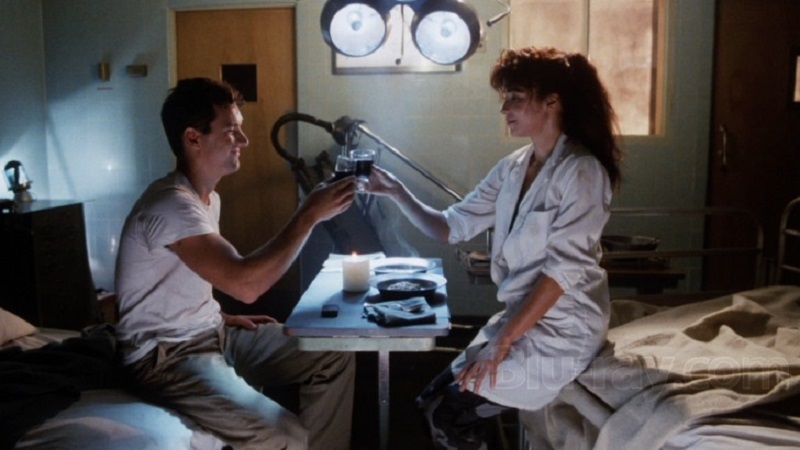
The live action isn't, even if low budget, letting the side down however in ingenuity. I will mock the point of even creating the film as it was, and mock the script, a really bad case of presuming an audience couldn't catch the vibe of the original or even just admiring the pretty pictures in spite of finding it slow, but I won't deny it's a great example in terms of clearly having so little to work with, two locations for sets and a few actors, and trying with some damn good ideas to make something interesting even if the script is gleefully gibberish at point. The two locations were chosen well, the factory in particular also used for Terminator 2: Judgement Day (1991), the kind of evocative set you could find in Andrei Tarkovsky's Stalker (1979) to a b-movie; by all accounts, an actual closed factory, it might've been dangerous to film there with those dust clouds onscreen looking too irradiated in chemicals abandoned there for comfort. Cinematographer Geza Sinkovics does his hardest to help the live action sequences, but its score composer Anthony Moore who deserves a moment of praise. An experimental composer who has worked with the likes of Henry Cow and Pink Floyd, he's a vital element in improving this film, in tandem to some of the other visual tricks at hand the person who comes close to matching the original source material in evocative mood.

Even when the animation is spliced into the live action, to try to make it work, there's also an eeriness that works. The premise, an "angel" sent to save Earth from environmental devastation is depicted by only six cast members (including lead Tony Markes), groans under trying to rationalise an art film into a pulp b-flick, but there's a sense of the unnatural to still appreciate because of this. The anime still has power even in this bastardised form, and the live action is appropriately eerie when you ignore the story.

Instead, the script, by the director, should be appreciated for going into non-sequiturs even weirder than the source, which was strange for its open ended ideas and the psychedelic dialogue but, when characters actually spoke, was very precise and sombre, building to the themes of spiritual ambiguity. Some of what is found here is potent whilst still strange, Markes in a gas mask playing a piano to a female doctor (Filiz Tully) he encounters, but spanking people with asteroids is just the kind of line screaming for baffled reactions. Angel's Egg had limited dialogue, a lot of silence that was clearly seen as unsellable considering the decision to cram voiceover to sell it, all of which adds an unintentional absurdity. Thankfully, it wasn't dull, pedestrian sci-fi exposition; instead, its lore that makes no sense but is fascinating in how this is an attempt to make the original work "makes sense" but becoming something gloriously off. The largest monologue in Angel's Egg, the young soldier retelling the tale of Noah's Ark with the boat drifting on an ocean never finding land, is turned into a nonsensical tale of deception where fish floating in the air on a planet are stolen that has to be heard to be believed.

It makes no sense why this executed plan was meant to be more marketable, but whilst I imagine an alternative world where Angel's Egg was sold as a more avant-garde Ingmar Bergman movie to art film audiences, In the Aftermath was what we got and is still rewarding for how odd it is. The real tragedy is that, whilst it helped introduce Westerners to Angel's Egg, it never lead to Angel's Egg actually being released; New World Pictures, among their work, also released an "Americanized" version of Nausicaä of the Valley of the Wind (1984) as Warriors of the Wind, the original pre-Studio Ghibli film now available whilst that version has vanished, yet nonetheless for a certain generation probably thanked for letting them still see anime for the first time. We thankfully left this need for alternative versions of foreign titles, but considering how extreme and peculiar In the Aftermath is, I am glad it's still available. That it's not an extra to the source and the only restored version in the West of the two films is tragic, but the oddity shouldn't be blamed for that.

Abstract Spectrum: Mindbender/Nonsensical/Psychotronic
Abstract Rating (High/Medium/Low/None): Low

Personal Opinion:
If we were talking about the original Angel's Egg, it would deserve a significantly higher position in terms of the Abstract Rating, alongside utter admiration of its existence as an incredible and unique animated production. As it stands though, not only is In the Aftermath still weird as a creation but, even if its production undercuts the original uniqueness of the source material, its an odd film which doesn't feel even like many re-interpretations of other's work, something to be admired even if an acquired taste.


From https://admitonefilmaddict.files.wordpress.com/
2019/01/In-the-aftermat-1.jpg

Wednesday, 16 August 2017

Masters of Horror Season 1 Part 5

From https://3.bp.blogspot.com/-IseJ3tMA5G8/WVaj4FGql0I/
AAAAAAAANJE/jnq0lE2w
2GMKSp1c0UAV3oj36aChQOqpQCLcBGAs/s1600/g13.jpg

Jenifer (2005)
Director: Dario Argento
Screenplay: Steven Weber
Based on a comic book story Jenifer by written by Bruce Jones and illustrated by Berni Wrightson
Cast: Steven Weber as Frank Spivey; Carrie Anne Fleming as Jenifer; Brenda James as Ruby Spivey; Harris Allan as Pete Spivey; Beau Starr as Chief Charlie; Laurie Brunetti as Spacey
A Night of a Thousand Horror (Shows) #12

Amongst the growing list of disappointing entries by favourite directors in this series, Dario Argento's Jenifer can be added to them. This is neither with a sense of pain other fans of Argento's either as my relationship to his work, past Opera (1987) to be technically accurate, is more complicated than others who merely look down on it all mostly. I'd argue Sleepless (2001), flaws and virtues alike, was a great later gem and I'm not in a minority with that thankfully1. For that period in general, the nineties is the one hazy area of Argento's career I need to view but after Sleepless I'll admit it's not been a great run. Not completely painful to sit through but with lows like Mother of Tears (2007) I couldn't delude myself in viewing as good.

There's still brief snippets of the old Argento though in these later films, like the ending of Giallo (2009), which in amidst the bad (like Adrien Brody in Giallo also) makes it a far more difficult job evaluating what's happened to the quality control of Argento's filmography. Personally the strain of resources available to Argento as a genre filmmaker is the real issue, which ties back into his episode of Masters of Horror if one forgives a tangent for the paragraph. Horror is in a scenario, since the 2000s, where it's in a golden age for many but there's none of the vibrant industry in other places where one would think it could be capitalised on. Older directors in this series (Tobe Hooper, John Carpenter) were edged out of the market at this point and for Argento it was likely a even bigger mountain to climb as (arguably) the last Italian genre filmmaker of the golden age of the industry still churning films out. Not all of them were considered "great", but the iconic and memorable names from the late fifties-early nineties run of Italian genre filmmaking have mostly left or are gone. Others died as the industry also died (Lucio Fulci), retired (Sergio Martino), had to leave or go to television directing other genres (Michele Soavi), or ended careers shooting super low budget films elsewhere until their deaths (Bruno Mattei in the Philippines). Argento, one of the best of them all, is the last of them too. He's also not someone helped by the resources he's stuck with, the screenplays he's stuck with for later work nor the lower budgets and increasing use of materials like CGI. A TV production like Masters of Horror sadly doesn't help either.

I have never read the original comic tale Jenifer originates from, though it does have a considerable reputation, enough to have been included in 1001 Comics You Must Read Before You Die next to legendary titles, something whatever you think of such books is still of considerable interest here for a medium like horror comics. The story as adapted to screen here - another glum policeman for the series - Frank Spivey (Steve Weber) rescues a woman from being killed in the woods only to find she's both deformed severely in the face and a simple minded, cannibalistic entity he becomes obsessive over - doesn't come off well with an immediate problem in the gender depiction. Inherently what should be a fascinating tale of male obsession over women, where one figure still yields a powerful sensuality in spite of drastic birth defects, just evokes the misogynistic phrase involving the words "paper bag". The script doesn't help, lead actor Weber not a good penman as he has male characters say "subtle" dialogue about how beautiful Jenifer is below the neck, the result of which is just the start of how crass the story is instead of showings the innate meanings you could draw from between the lines. 

The problems have nothing to do with actress Carrie Anne Fleming as Jenifer mind. In fact, under heavy makeup baring one dream sequence where she's seen without it, Fleming as an actress I've never seen in any other production does a commendable job, the one little slither of saving grace to an otherwise bland episode by doing something far more rewarding than anyone else onscreen. Playing it as a adult child who doesn't understand the difference between animal or human (even child) as baring when jealously is involved, she does a commendable job of playing a savant who yet welds an knowing, wanting sense of sensuality that proceeds to scramble Spivey's mind. In the best circumstance, a story like this rather than evoking the unfortunate misogynistic ideas I mentioned a paragraph before should've been about the problems underlining the male heterosexual libido, evoking not only ancient myths of female-monster hybrids that complicated men's notions of female beauty, but more modern retellings of this issue such as Junji Ito's pitch perfect take for manga Tomie (1987-2000) where men are easily bended towards amorality against a figure entirely supernatural, to which Fleming is playing her role as. Unfortunately, as much as I view Dario Argento as one of the best horror/mystery directors of all time, he's clearly here not a director meant for small scale character drama especially when it's not presenting him anything to work with baring Fleming herself.

What plays off as a psycho-sexual drama, where an original act of kindness by the protagonist becomes a strangely beautiful love affair, should be something worth so much more fascinating and transgressive beyond merely nasty gore. Even when Jenifer commits atrocious acts, Spivey gladly buries the evidence and flees with her, which could've lead to a rewarding narrative even if it deviated away from the original text. But the wrong person is at the helm. It's also clear the script is not good enough, just for how obvious and crass it is before as much of the blame is on Argento as well. How else does one explain how the immediate reaction to first meeting Jenifer leading to Spivey's emotional state being depicted with an unfortunate choice of moment in the episode, a change of behaviour mid-coitus with his wife later that night in the bedroom which comes off as silly as it is eyebrow raising. As much of this is Argento too in terms of the lack of carefulness to this material felt onscreen.

The utter lack of any of Argento's style is also felt. Even Dracula 3D (2012) has more of his touch in comparison, which is a truly damning comment to say. Only having Claudio Simonetti, a regular collaborator, evokes any of the old magic even if the score's far from memorable. The production style of Masters of Horror feels alien for a director as visual obsessed as Argento, but further enforced as well near the end of this series is that, again, when the story's not up to snuff there's going to be problems, even if its adaptation a stone cold classic from another medium.

From https://riversofgrue.files.wordpress.com/2014/11/
jenifer_masters_of_horror_review-1.png

==========

From https://upload.wikimedia.org/wikipedia/en/c/c2/Masters_of_
horror_episode_dance_of_the_dead_DVD_cover.jpg

Dance of the Dead (2005)
Director: Tobe Hooper
Screenplay: Richard Christian Matheson
Based on a short story by Richard Matheson
Cast: Margot Berner as Marie; Marilyn Norry as Kate; Sharon Heath as Gerri; Jessica Lowndes as Peggy; Robert Englund as the MC; Ryan McDonald as Boxx; Jonathan Tucker as Jak; Don MacKay as Steven           
A Night of a Thousand Horror (Shows) #13

Dance of the Dead, set in a post apocalyptic world where chemical warfare's ravaged the American infrastructure, attempts its hardest to stand out amongst the pack. To do so, it's the most mid 2000s of the entire season in appearance and style but it was a nice try. Shaky camera. Quick editing. Beige, grey and washed out colours. Faux Goth and alt culture at the bar where the title event happens, where people are half naked, bound in leather or thrashing about to the house metal band whilst Robert Englund's the MC for Hell in his snake-like manner and constant potty mouth. Consider Tobe Hooper was in his early sixties at the time of this production, it at least warmed my heart briefly that the director I'll defend more than others was just as wild and unhinged as he was throughout the rest of his career. I'll openly admit to being an apologist, but Hooper's career is much more rewarding than initially thought of after Poltergeist (1982) throughout the eighties. Its only from Crocodile (2000) onwards, the film where any of his trademark manic energy and style was sold out, that the films are more difficult to defend from what I've seen, where even The Mangler (1995) beforehand still had a glorious derangement to it in spite of its silliness. In the beginning it looks like Dance of the Dead will be the same with an added advantage of trying to stand out from the other episodes.

As a story however Dance of the Dead is bad. A tedious drama of a young woman  growing up in post-apocalypse America going with the wrong crowd against her mother's wishes, a drama which doesn't work due to the lack of interest in any of the characters. The plot revolves entirely around its titular event which is obvious from the beginning and leads to clichés of chemical experimentation and exploitation of human life at the club. Even the title event is nothing of particular interest, leading to nothing but actors writhing about on a stage. The other problem, more crucial is that it relies on an emotional hook about the protagonist's older sister throughout the narrative. This is a problem as, baring flashbacks to a birthday party where she's a child, not as an adult, one is not provided with the connective tissue as an adult character one needs for her absence to effect one, thus leaving her as a disconnected non-entity. By its end Dance of the Dead is one of the more difficult episodes of Masters of Horror to write a lot about because it has little to actual write about in detail. Nothing particularly stands out as actually of interest, not even Englund in a very sleazy role, because there's no meat to the material as an actual story. The result after the initial rush of its tone is an immense disappointment for me.

From https://vareverta.files.wordpress.com/2014/02/dance.jpg

====
(1) - If only more people could see it nowadays though. An abrupt legal issue meant Arrow Video in the UK didn't just let the license go out of print, but were forced to pull copies off Amazon etc. Whatever the reason, sadly it means it's more difficult for newcomers to the director to see the film in a decent release. Bolstered by his more creative scenes of the 2000s, Max von Sydow in the best performance in any Argento film, and a killer soundtrack from the form of Goblin who reunited for that production, Sleepless has a lot to admire.

Sunday, 16 October 2016

Halloween 31 For 31: Rats - Night of Terror (1984)

From http://4.bp.blogspot.com/-sCWrm4Q1Z7g/Uc983UB454I
/AAAAAAAACcg/yYXiYqZ8jG0/s1600/posterRATS.jpg
Director: Bruno Mattei (with Claudio Fragasso)
Screenplay: Claudio Fragasso, Bruno Mattei and Hervé Piccini
Cast: Ottaviano Dell'Acqua (as Kurt); Geretta Geretta (as Chocolate); Massimo Vanni (Taurus); Gianni Franco (as Video); Ann-Gisel Glass (as Myrna)
A Night of a Thousand Horror (Movies) #40

Another pairing of Bruno Mattei and Claudio Fragasso, and considering how many times they worked together, one wonders if their relationship went beyond merely collaborating on a film set to a friendship. Imagine the kind of bond, the conversations at lunch between film shoots, that would've forged making films like Hell of the Living Dead (1980) and Rats: Night of Terror. Here, in the meantime from that thought, Fragasso touches upon a theme that does scare and creep many people out in the figure of rodents. Mostly this is due to symbology - a pet rat, for me and for others, would be exceptionally cute, whilst the fear of them is due to their centuries old image as disease carriers in the wild. Wild rats present a sense of unease, suggest general decay, their ability to breed quickly and even go as far as cannibalise their own to survive disturbing in how they spread in rundown environments, their cultural legacy as spreading the likes of the Black Plague still potent centuries on because, even if it was technically their fleas with spread the illness, it killed millions.

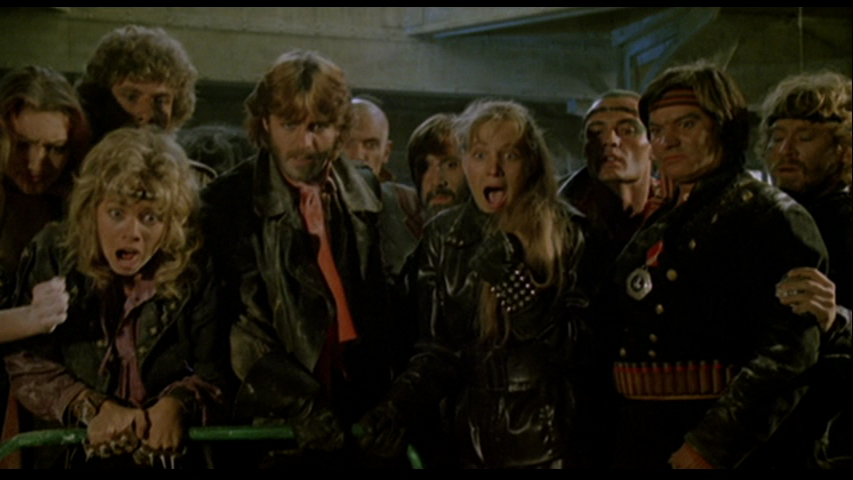
Instead of merely an animal attack film however, which would've continued on the seventies tradition of nature being vindictive and trying to kill human beings constantly, Rats - Nights of Terror takes on an unsuspecting twist that was clearly influenced, as many Italian genre films, by the success of the Mad Max films, setting itself in a post apocalyptic sci-fi future. Set long after society has blown itself up with nukes, a group of marauders male and female, trying to survive on their own as explained in a very complicated opening narrative, find an abandoned building. At first finding crates of still edible food is a joy to them but they immediately find rat chewed corpses littered around the place as well. Soon they'll eventually learn that the rats are only just responsible for cleaning the meat off the bodies' bones but have more than likely killed them beforehand too. The result is even more peculiar considering the style and tone of the material.

I had been tricked by Zombi 3 (1988), itself "special" in some of its dialogue exchanges, that Fragasso was more conventional in his screenwriting style than I had come to learn, something clearly wrongheaded of myself when you get to Rats. Far from a detraction, it does mean that you have characters with very unconventional names - Lillith (Moune Duvivier), Video (Gianni Franco), Chocolate (Geretta Geretta with possibly the biggest hair even seen in an Italian post-apocalyptic film) etc. Than beyond those names, at least in the English dub, to the type of dialogue his characters have, such as Chocolate promise the geeky Video that he can make her pregnant if he fixes a computer they find in the building amongst such brief moments strangeness. Fragasso's obsession with environment issues throughout his career is found here too, Biblical proportions even when you get to the dumbfounding final twist, the group discovering the likes of plants being carefully grown in the basement with a water purifier and realising that a project by scientists was taken place in there, only to be found abandoned with rats on mass everywhere.

From http://1.bp.blogspot.com/-T2oN4Bt6m1w/TV7F4ODkz5I/
AAAAAAAABZ8/j3YA2u7n-0E/s1600/ratscast.png
I have to confess though that, for all its moments of entertainment, Rats does suffer from being surprisingly conventional and repetitious at points. Were it not for the little details, from the groups' military vehicle to the rats being made intelligent through radiation, this could've easily been made an animal attack film set in the regular day. It's a severely restricted film in terms of plot too - the marauders sleeping in the building only to find themselves having to try to survive the night from the rats - meaning that it does repeat itself constantly, from people being slowly picked off to a lot of screaming particularly from the actresses filling the soundtrack. Eventually, despite the idiosyncratic nature of Fragasso's characterisation, where everything borders between the profound to the absurd, it eventually lacks the outrageous nature needed to make up for its sluggish moments, not completely able to have the same strange aura of other Italian horror films from this period. Certainly it has the gruesome practical special effects - an un-PC incident with a woman naked in a sleeping bad, rats exploding out of people let alone out of their mouths - but baring the sub plot where a cowardly member tries to undermine their leader to save his hide, its boiled down narrative does feel lacking in the excitable madness that some of the best of Italy, the legitimately great works of genre let alone the fun ones, had. In fact I prefer Hell of the Living Dead out of Mattei-Fragasso's period here from what I've seen, even in spite of how shambolic it is next to this one's more polished appearance, because of how wider in scope its ambitious story was.

Of course, Rats does have one of the best, most delirious ending twists of any Italian genre film of this period, worthy of seeing Rats and redeeming it greatly, but I cannot ignore that considering the promise it gives as a post-apocalyptic rat attack film, it does lack the maddened energy of other Mattei-Fragasso films I've witnessed. While being of a fly on the wall for their conversations about making the film would've been wonderful to hear, as would how they dealt will all the stunt rats (and guinea pigs and rubber rats masquerading for them) on set, this does feel weaker as a film even in the context of admiring its failures.

From http://horrornews.net/wp-content/uploads/2012/02/
Rats-night-of-terror-1984-movie-6.jpg