Showing posts with label TV Mini-Series. Show all posts

Friday, 13 October 2023

The Owl Service (1969–1970)


Director: Peter Plummer

Screenplay: Alan Garner

Based on the novel by Alan Garner

Cast: Dorothy Edwards as Nancy, Gillian Hills as Alison Bradley, Michael Holden as Gwyn, Francis Wallis as Roger Bradley, Raymond Llewellyn as Huw, Edwin Richfield as Clive Bradley

Ephemeral Waves


I think she longs for the time she was flowers on a mountain.

The Owl Service, first broadcast over eight episodes on regional Granada TV, between December 1969 and February 1970, is idiosyncratic; from the get-go, changing between strings to strange noises on the opening credits, this is an unconventional. Based on a novel by Alan Garner, adapting his own work to the production, this is a Welsh narrative explicitly evoking the stories of the Mabinogion, the earliest tome for Welsh legends, which begins in a manor home in the Welsh countryside where scratching noises in the attic lead our protagonists upstairs in their home, finding old china plates in the attic. These plates cause Alison (Gillian Hills), one of the siblings staying in the manor on vacation, to experience strange images. What this becomes, as well as a class conflict narrative, is not quite horror but a weird folk supernatural tale which fits at home with so many productions at the time, such as for children between this and Children of the Stones (1977), which were dealing with the peoples' relationship with the countryside.

Contextually, this is set around a single father Clive Bradley (Edwin Richfield) who remarried, his son Roger Bradley (Francis Wallis) and him going to the Welsh country home of the father’s new wife, a widow named Margaret who we never see, and her daughter Alison, who acquires the plates and becomes obsessed with their owl patterns. Their maid Nancy (Dorothy Edwards) has a son named Gwyn (Michael Holden) who is developing a chemistry with Alison, finding himself in a romantic triangle as, despite being new step siblings, there is a clear awkward relationship between Roger and Alison too. Their story ends up crossing paths with the tale of Blodeuwedd, a maiden created from flowers who was made for a hero but, understandably, is not impressed and falls for another man, leading to murder. Her punishment is to be turned into an owl, and the first scenes create the catalyst, the ceramic tea set with patterns which almost possess Alison, starting to create paper owls, beginning the cycle which starts to fully come to be with flashes to the cast in face paint for quick cuts and one being chased by birds.

The supernatural tone, as much due to the budgetary limitations, is at first merely implied, also psychological but as part of its tone, The Owl Service becoming more explicit in its plot with this as the episodes continues on. Time is repeated as Roger captures images on his camera mid-way through, clearly the current leads in the roles, of both a man throwing a spear, part of the legend, and of a motorbike, as the story includes Bertram, a cousin of Alison’s whose demise, by crashing his motorbike, may be part of a previous time this tale of Millennia has past. The Owl Service is as curious as my initial interest in the mini-series suggests, a whimsical fantasy tale undercut with grit, neither occult or horror but a family melodrama with implied psychosexual tension and an ending of explicit phantasmagoria as someone is about to turn into an owl unless love helps them. Recaps at the start of each episode will help a lot of viewers keep up with its plot, but at the same time, the legend in its centre keeps merely a frame for its story in terms of these young adults' anguishes and clashes, particularly Roger and Gwyn, as the later is attempting to romance someone "above his station" in Alison, part of a well-off family, much against the family itself, causing a greater schism for the legend to infect the present day.

The Owl Service as a result also becomes about class bias – where the family is English, staying in Welsh countryside, and Nancy and Gwyn are Welsh alongside the gardener Huw (Raymond Llewellyn), who seemingly lives in his own cryptic world, Nancy hating her working class roots due to a secret in her past, even threatening to pull Gwyn out of grammar school and force him to work at a Co-Op. He is later revealed to even have elocution records, because he feels even his Welsh accent is too prominent for him to get anywhere in his life, feeling he needs to speak “proper” English than with his natural accent. Barring in mind the limitations of the story – close up shoots of dialogue scenes, a serene 60s Britain with outside on-location shooting, apt for a supernatural tale where the tension already early on – The Owl Service stands out in terms of “Hauntology” where its themes of the past being vividly part of the present is found here. The elliptical nature of how the story is told, whilst likely to cause some frustrations to some viewers, is compelling when in tuned to its tone, the legend being told as much an outbreak of the emotions of these leads as it becomes real by its final episode. Able to appreciate this, I was able to find a lot in this mini-series which lived up to my expectations.

Wednesday, 26 October 2022

Children of the Stones (1977)


Created by Jeremy Burnham and Trevor Ray

Director: Peter Graham Scott

Screenplay: Jeremy Burnham and Trevor Ray

Cast: Gareth Thomas as Adam; Veronica Strong as Margaret; Peter Demin as Matthew; Ruth Dunning as Mrs. Crabtree; Iain Cuthbertson as Hendrick; Katharine Levy as Sandra; Freddie Jones as Dai

A Night of a Thousand Horror (Shows)


Make it a sherbet butty.

The main theme by music composer Sidney Sager - a breathless chorus of voices - is enough in its distinctness and unnerving form to signpost Children of the Stones, this unsettling ethereal theme to be heard as the main motif and the opening credits piece for all seven episodes of this West HTV Production. Sidney Sager - whose filmography is smaller than I would have presumed but does include episodes of The World About Us (1967-1987), a documentary series about geography, anthropology, and natural history subjects, befitting the tone of this series - did have an extensive career as a composer and conductor, so thankfully his work would have been appreciated in other mediums, here making his mark among many people here in Children of the Stones being a very rewarding dip into British supernatural television from the past.

For clarification, HTV Production is tied to ITV which, launched in 1955 as Independent Television, is a cultural landmark for television anyone from the United Kingdom. Everyone has grown up with unless born before 1955. ITV is the oldest commercial network in the UK, and wishing to let any non-British readers of this review have some context, they became for the early years of television the first big rival for the BBC. They were also a network of separate companies which provided regional television services and also shared programmes between each other to be shown on the entire network, which is where West HTV Production comes in. Eventually they became ITV Wales & West, until December 31st 2013, and thus afterwards being separated into ITV Cymru Wales for Wales and ITV West Country covering the both the West of England sub-region and South West England1.

The broadcasting area was divided into two sub-regions, Wales and the West of England, which is apt as Children of the Stones, whilst set in the made up community of Milbury, is shot in Avebury, Wiltshire, one of the locations covered in their broadcasting at the time. This series would have been broadcast across the country beyond HTV Production, unleashing this unconventional mini-series that, whilst a fantasy story with sci-fi edges, is befittingly dread inducing like a horror story. The "stones" is a stone circle, fifty three, part of the small village of Milbury, where astrophysics professor Adam (Gareth Thomas) and his son Matthew (Peter Demin) are to stay there for three months, part of the father's research on this pagan formation. The stones are the Avebury stone circle, viewed to have been built between 2850 BC and 2200 BC, and seen in this mini-series in aerial shots as a huge circular stone circle which in turn encloses two smaller stone circles2. Originally 100 stones2, there is an argument it is a worship place, but exists in the same way as Stonehenge, a legendary location further in Salisbury Plain in Wiltshire, as an ancient heritage site whose origins and reasons behind it are mysterious, befitting Children of the Stones' esoteric narrative flourishes. Since these incredible ancient monuments exist, why not use them onscreen too?

The entire plot stems from Matthew finding a painting of a stone circle involving a Pagan ritual and a light in the centre from the sky. The painting is enough to cause the elder female maid at the home they are living in to faint, but considering the landlord, and head of the village Hendrick (Iain Cuthbertson), is encouraging both to stay longer, Milbury is an immediately suspicious place. When the term "happy one" and "unhappy one" are used by even by the kids, it is a sign this community is strange, clearly a village of aliens or brain washing with regular people the dwindling minority, where even the classrooms are divided into high level mathematics and forcing the "normals" and the farm boys with simpler sums. What it is, where the locals can just disappear on nights leaving the newcomers alone, is knee deep into the esoteric fortean culture popular at the time, alongside what would become "hauntology" decades after in British pop culture from this time having an uneasiness stemming from the combination of the urban and the rural in our island country. The centre of fifty three ley lines, it is a place of astrological connections, a supernova in the time before Christ documented in Milbury, with a black hole where it is and where the rocks are pointed. Here we are in Pagan versus modern cultural territory, a bear cult in the past around this place and psionic powers involved, which Matthew develops after a glancing touch of one of the stones.

Children of the Stones does evoke fear of conformity; specifically the notion of village life, where everyone knows everyone, as a virtue is undercut, instead posing the chilling idea of everyone being without their real selves, with the juxtaposition of the metropolises in the leads being outsiders against this rural place. The thing I have not mentioned until now is that this is a show made for children, whilst makes Children of the Stones even more interesting as, barring some dialogue and exposition which is heavy handed, this never talks down to its target audience and has all this eerie content which is just as distinct for a viewer of any age group. The creators and writers Jeremy Burnham and Trevor Ray deserve their credit as everyone on and off-screen do. Jeremy Burnham was as much a prolific actor in television and film as a writer, whilst Trevor Ray was more of an actor, with only three credits to his writing career - this, another ITV mini-series Raven (1977), another children's show dealing with Arthurian legends which he worked with Jeremy Burnham for, and an unaccredited hand in The Ambassadors of Death: Episode 1, a Doctor Who episode. It is hilarious that Morris dancing, the most innocuous of folk traditions, is held as a sign of being brainwashed, but for a children's show to scrutinise the notion of an idealised rural community life, the "good old days" concept, as being a sign of being docile and without emotion, is a sticking point for the better, knowing this is family entertainment offering the notion, when we learn the secret of the village, that removing all sadness and permanent happiness is itself controlling.

The smartness of the show, working around its style, is really rewarding. Like a lot of British television dramas from this time, there are stage set interior scenes but a lot of on-location exterior ones, having to work around some aged effects but mostly a dialogue driven show with a creepy edge. The cast is full of people who would have been prolific at the time in various mediums, which includes the delightful appearance of Freddie Jones as Dai, a poacher and one of the few "normals" who has stuck around for a long time in the village, Jones' legacy as much for the likes of David Lynch's The Elephant Man (1980) and it is the ITV soap opera Emmerdale.

The music from Sidney Sager, the one main theme, really does enough in itself to being discomforting, and there are plenty of macabre and openly odd touches to the story. People turn into stone and/or die, and you cannot leave Milbury because, not only does it exist within a protective barrier, but is revealed to exist in its own time zone. Some of the content which is of its era, proudly sticking itself into the fascination with esotericism from the time, may be eyebrow raising for some viewers, but alongside the matter-of-factness the show has for it, taking it serious, but this is in mind to the period it was made. That, being between the British and the North Americans, if not anywhere else, the seventies if rife with the occult and the unexplained as pop cultural fascinating, this screening on television at a time Uri Geller would have already been famous for the likes of bending spoons with his mind and already being challenge by the likes of James Randi, alongside a lot of strange films from the era in the occult and horror which helped created the future Hauntology interest. This fully embraces psychometric themes including psychic powers, which as it is told sincerely is more rewarding than cheesy.

It also has a rare example of a father and son relationship with the leads, and with actors Gareth Thomas and Peter Demin, it is a good one. Matthew, barring his eccentric humour in eating bizarre combinations of fillings for sandwiches, transgressing the savoury and sweet food lines, is a teenager who is as smart as his father, who is neither played as a dolt. This is a horror story where they manage to outsmart the villain with something actually clever - using science to manipulate the clocks in their favour - and this intelligence, or least the sense of letting the characters being alert and act sensibly in this increasingly perverse village, is a huge virtue to Children of the Stones. It is a good show, a sci-fi thriller which does touch horror in its own way, telling even its more unconventional aspects straight faced, as serious drama which never drags over its seven episodes less than thirty minutes each, succeeding as a result .


======

1) ITV Cymru Wales news shake-up under new Ofcom licence, written by Huw Thomas for BBC.co.uk and published on July 23rd 2013

2) A small biography of Avebury for the English Heritage website.

Wednesday, 28 August 2019

Too Old to Die Young (2019)

From https://static.stereogum.com/uploads/2019/05/
TOTDYCover-1557511203-640x640.jpg


Director: Nicolas Winding Refn
Screenplay: Nicolas Winding Refn and Ed Brubaker
Cast: Miles Teller as Martin Jones; Augusto Aguilera as Jesus Rojas; Cristina Rodlo as Yaritza; Nell Tiger Free as Janey Carter; John Hawkes as Viggo Larsen; Jena Malone as Diana DeYoung; William Baldwin as Theo Carter

Realising it in the midst of this review, Nicholas Winding Refn is becoming our new Quentin Tarantino. He doesn't have the reach of the latter, who can still somehow get violent and unconventional films playing in a British multiplex in the middle of the afternoon, but since Drive (2011) and its unexpected breakout success, he's the man whose name is used to promote other work and has spent his own money to restore exploitation films he feels are worth preserving. The later through byNWR, whilst not always great in the choices, is enough to point to in terms of him being a great guy1, but his actual films are divisive. This is an issue in the sense I have nothing but good will for the man, but in this particularly case that'll leave a sadness as what half way through was a great production eventually ends with a bitter taste to the mouth. On paper, following on from giving Sion Sono the mini-series Tokyo Vampire Hotel (2017) to relocate his sense of fun again, Amazon Prime funding this minimalist Refn production created with comic book writer Ed Brubaker was enticing. Whatever your thoughts on Amazon, or just its corporate head, it was at least a huge risk to fund this auteur after the divisiveness of The Neon Demon (2016), but for most of its length, Too Old to Die Young felt like a new, weirder and rewarding turn in Refn's career. Sadly things do take a turn, but let's start at the beginning first before we get ahead of ourselves.

The project was unexpected, deliberately playing to its unconventional history, when Amazon threw wads of cash to Refn, with two middle episodes being premiered at the 2019 Cannes Film Festival, a creation that develops a Jekyll and Hyde personality as, when the mini-series is good, Refn has developed a new style of weird, confrontation avant-garde genre cinema waiting to blossom. At its worst, whilst I will still wait with interest for his next work, I cannot hold Refn as a great director for all his indulgence in violence laced in a deadly amount of pretension, perversely emphasised now Tarantino (for his controversial creative choices) has amazing matured and chewed on polarising ideas with deliberate complexity.

Too Old to Die Young is over ten episodes, and is paced as the most extreme of slow cinema where a simple dialogue scene can last over five or more minutes. Its surprisingly comparable to Filipino director Lav Diaz, for who eight hour plus films are a regularity, but whilst Diaz obscures important stories in way too much padding for me for the most part, Refn's deliberately taking a premise of a two hour film and stretching it to an extreme, but still had to make it with a pace appropriate for Amazon Prime where events do transpire of note. This conflict is a fascinating and rewarding result, as was the case for Sion Sono who had to start bringing back his older eccentricity and stretch a long form story out, and here Refn with Brubaker for the first half of Too Old... does create a compelling work.

Two main sides co-exist at first, conflicting each other in the first chunk of the first episode. A cop Martin (Miles Teller), who is involved with shady dealings, will be there when his cop partner is murdered point blank by Jesus (Augusto Aguilera), the son of a cartel boss taking revenge for the murder of his mother Magdalena, who he has is revealed to have an incestuous obsession with. For Jesus, he will flee to Mexico to his father, who is on death's door in illness. Martin will be promoted to a police detective, all whilst his romantic relationship with Janey Carter (Nell Tiger Free), as well as being problematic in that she is only seventeen and underage, will bring him into her life with her eccentric father Theo Carter (William Baldwin). Eventually this series will split from these two men to two women. Diana DeYoung (Jena Malone), a victim's advocate who secretly has hired Viggo Larsen (John Hawkes), a former FBI agent dying of a terminal illness, to kill rapists and child molesters, and Yaritza (Cristina Rodlo), who is the carer for Jesus' father but is secretly the High Priestess of Death, an urban myth who is killing men who harm women, especially those forced into sex work.

My eventual disappointment with the streaming series is tragic as at the start, Too Old to Die Young is very good. The insanely glacial tone mixes with Refn's obsession with neon is a match made in heaven, cinematographers Darius Khondji and Diego García earning their keep with the bold visual style, and Refn's usual composer Cliff Martinez hits it out the park again with his score. Probably the most interesting detail, working with Ed Brubaker, is that over a longer format, you still have to create enough to fill the detail, and this is where the show finds its best virtues.

Episode 2, in a bizarre paradox against its cold nihilism, even has a warm humanity, regardless if it's discoloured in black humour. For me it's the best episode as, when Jesus returns to his family in Mexico, his ailing cartel father despite being evil is made sympathetic as a tyrant reduced to a dying man, obsessed with football, and repeating a memory of seeing Pele over and over again, to the point he uses it as a peace maker between his group and the corrupt police force in their payroll to deal with tensions. In this, Refn had the potential to make even the worst in humanity perversely human in just giving them this detail. It could seem problematic, in Episode 5 when Martin has to track down and kill two brothers who make "rape porn", to have people who create the material argue over what to put on the radio in the middle of a long duration car chase, but it feels tonally appropriate and hits another highlight of the series when Barry Manilow's Mandy gets used in a montage immediately afterwards.

Points of absurd humour and even full blown weirdness are also a godsend. Be it that that car chase is not helped by an electric car used for one of the participants' runs out of energy in the middle of the desert, or how a confused police station reception asks Martin if someone really shot some ducks in a person's pond. Even something as absolute out of place like Diana DeYoung, in the final episode when we are meant to have a climax, having a scene using virtual reality porn with a head visor, even when the series sadly falls into its biggest problems, has a weight of something utterly unconventional and stands out more as its had no connection to anything that took place beforehand. Hell, William Baldwin's character of Theo Carter feels like he's wandered from a David Lynch film, a creep who's uncomfortably close to his daughter in how he finds her beautiful and, upon first meeting Martin, communicates to him waving around one of her plush tigers and growling at him. Refn has had this weirdness before, and it's one of his best virtues, be it The Neon Demon just beforehand, but it's rarely been funny with the exception of Bronson (2008) in the past.

From http://horrorfuel.com/wp-content/uploads/2018/05/too-old.jpg

Even the nihilism at first is spiked with a humane side perversely skipping throughout. America's going to hell in a hand basket, as the problematic vigilante attitude of Viggo Larsen is counteracted by the fact of his despair both over his declining health and that he's also looking after a mother who is suffering from dementia. The only thing on the radio is a conspiracy disc jockey, and either that's contacted by a puppet making an appearance in the finale scene, and everyone's idiosyncratic, from the Jamaican contractors of hits to random samurai groups in the city. Even Martin is a curious one just for how much Miles Teller spits all the damn time and barely says a thing, not exactly Ryan Gosling in the slightest in style. The less said the better about his fellow police detectives the better, the strangest of them all - homoerotic yet joking about it in mock machismo, proudly singing about fascism in group sing longs, creating a mock version of Christ's crucifixion in the office from Martin's leaving party, definitely the weirdest moment of the entire series, and generally acting in a way that one criminal is horrified to even consider they are actually law enforcement at all.

The problems with Too Old to Die Young begin when the first major character is killed off. Callously, just written off, and whilst I tried keeping my enthusiasm up, I really got tired of the nihilism. Having passed my thirtieth birthday, I realise I cannot stand this. The truth is also that, an issue returning back to the likes of Only God Forgives (2013), the mini-series just comes off as juvenile and contrived after a while. The show literally peters off with the two main female leads as heroic vigilantes, a rewarding change of plotting undercut by how nasty and grim the violence also is.
And frankly, the vigilante content, with the pretension, is problematic in an eyeball rolling way, as Malone has a monologue directly to the camera about how in the future the world will turn to death and concentration camps again but she will protect the innocent. Throughout there are references clearly to the political era after Donald Trump became president, Nazi flags appearing more than once, but the idea of killing the evil doers yourself is like Dirty Harry (1971) without any of the ambiguity or whit. Its inherently a cheap sentimentality, a perverse one, to make the villains killed rapists and paedophiles, as no one morally would defend them, but it's still a cheap ad hoc creative choice that's dumb.

Least when you had Episode Five, starting with a disturbing opening of a young man being dragged into a "performance", it was still a show about moral darkness punctured with corpse black humour and how these figures had quirks. Instead, this evokes Drive, his most well known and probably best regarded film which I always found incredibly shallow and too obsessed with nastiness since it first came out. And this sucks as this turned into an accidental bait and switch. The bait was a subversion of Refn's usual material where clichés - the criminals, corrupt cops, murderers and scum - developed more complexity just through the obtuse pacing and eccentricity of the oddest sort.

However Refn falls back on this dull cool misanthropy masquerading in "profound" final episode dialogue and it sucks - even as I hold a few of his films in my personal canon, this is a time I cannot hold Refn on a high level as he's going to keep doing this and annoy me. Even if I still praise byNWR and still take interest in him, this issue is going to now linger in the back of my mind. It was like when I started becoming disengaged with Quentin Tarantino around 2007 to circle back to the beginning. Tarantino is still divisive, still has the problematic violence, but even if I have thoughts about a film like Once Upon a Time in Hollywood (2019), he's nonetheless grown up and still engaging. The controversial aspects of his cinema are laced in questions whether he wrote material that was deliberately divisive to get uncomfortable reactions from the type of cinema he creates.

Refn is capable of this, but that I have never seen him really be someone where those questions can be asked about his ideas. This is why controversially I consider his best film was Fear X (2003), the John Turturro production which killed off his first attempt to enter American cinema. Now that he has licked his wounds, and even directed a Miss Marple TV movie, he's been able to make idiosyncratic work but there's a danger not in him becoming more divisive, but that the violence and nihilism is just tedious, something to bear in mind as Fear X had none of it and was a dark, Lynchian puzzle of great interest. (The other film behind it was Valhalla Rising (2009), which was violent, but was also a period Viking freak-out where it made sense to have it and wasn't the main subject matter).
Aspects as a result are lost which could've been taken further. An interesting penultimate episode scene of the cartel discussing their heritage in terms of their work, hating on white taco vans invading their turf and Jesus making an apocalyptic view on the subject, shows what could've been, as is the sub current of actual supernatural content as Diana DeYoung is psychic and even, after one particularly strong one, has to get an exorcism so she can get her eyes back to their normal state. The fact each episode references Tarot cards in their titles, which immediately intrigues me, but never feels like they have any weight to the material just enforces a danger of pointlessness. He even ends the show on an old Judas Priest cut which proves Nicolas Winding Refn has the talent and the style; he just unfortunately falls back on ultimately boring themes.

Abstract Spectrum: Grotesque/Minimalism
Abstract Rating (High/Medium/Low/None): None

From https://nypdecider.files.wordpress.com/2019/06/too-old-to-die-young-miles-teller-
ep-1.jpg?quality=90&strip=all&w=646&h=431&crop=1

======
1) Oh, and relocating a presumably lost Andy Milligan film Nightbirds (1970) that was deemed culturally important as a British production for the British Film Institute to come knocking at his door, or he to theirs, so he's done enough there to earn a pat on the back.

Wednesday, 24 April 2019

Non-Abstract Review: Intruders (1992)

From https://upload.wikimedia.org/wikipedia/
en/5/55/Intruders_VideoCover.png


Director: Dan Curtis
Screenplay: Barry Oringer and Tracy Tormé
Based on the non-fiction novel Intruders by Budd Hopkins
Cast: Richard Crenna as Dr. Neil Chase; Daphne Ashbrook as Lesley Hahn; Mare Winningham as Mary Wilkes

Synopsis: Psychologist Dr. Neil Chase (Richard Crenna) is dealing with the case of Lesley Hahn (Daphne Ashbrook), a woman with deep psychological issues stemming from her claim she was abducted and experimented on by aliens. He will encounter Mary Wilkes, a housewife from Nebraska who will also claim to be an abduction victim, causing him to question his scepticism when details that are more inexplicable are uncovered.

Let's go to 1992 - by this year the craze over UFOs was decades long and still going. When Intruders was commissioned as a mini-series by CBS Television, even the thrash metal band Megadeth recorded a song about Area 51, Hanger 18, in 1990, this adaptation of a non-fiction book by Budd Hopkins, said to collect alien abduction testimonies, was just a year from The X-Files (1993-2002) becoming a cultural phenomenon.

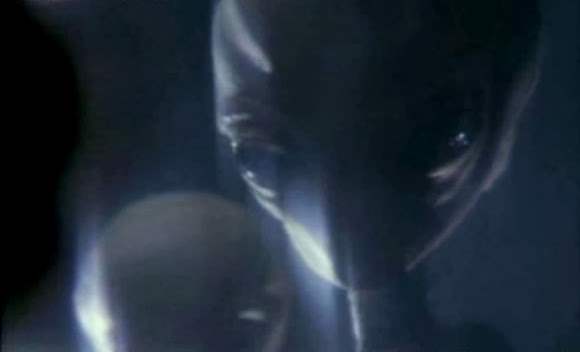
Intruders is a slow burn to say the least, one which does have plenty of little grey men but could've easily been a domestic psychological drama fully confined on Earth. Your appreciation of this film, effectively one single three hour work even though it was originally split over multiple nights, is that it's a tale where its immediately established that the aliens exist in the prologue, but, even as someone who hates when you immediately crowbar a film as in metaphor, is all about the psychological damage to two women from trauma. Though it's not hidden the cause are aliens, this greater metaphorical touch, which is clearly wrapped into the story as it tries to show a greater psychological complexity and try to make the idea of alien abductions credible, is where Intruders gets a lot of virtue.

It's also the journey of sceptical psychologist Dr. Neil Chase to becoming a believer, one which there was clearly an attempt for the production to not blindly leap into it being pro-alien but at least, in its earnest attempts, leaving enough time and evidence in this world so its credible why Chase believes the UFOs are real. Intruders as a result is immensely dry, but the attempt to write this material as thoughtfully as possible is as much a positive as somewhat a potential issue for finding a modern audience.

Of course you do get your aliens, early nineties TV budget CGI for flying saucers and grey alien costumes, very rubbery, alongside very minimalist alien ship sets. In terms of a time capsule, it does offer the stereotype of television from once ago - long dialogue scenes, edited at a moderate paced, idyllic Americana, both rural and urban, which is invaded by aliens. Notably director Dan Curtis is most well know for Trilogy of Terror (1975), a beloved cult horror trilogy notable for the segment where actress Karen Black is stalked by a possessed doll, which to my surprise was actually a TV movie despite coming from the seventies, where Amicus and others was very into releasing horror anthologies theatrically. Intruders does qualify for the horror genre as, even with the time passing and some datedness, the mini-series does get creepy. One scene is legitimately freakish, where telephone repairmen appear at night in front of someone's house, only to not be who they presumably are in uniform, but the really creepy aspect is how Intruders depicts these abductions and their repercussions.

Entirely from the perspective of two female characters, there is an implied sense of sexual violence to this abduction which is, [Spoiler Warning], proven to be true as they are being impregnated only to have their alien-human children stolen from their bodies after some time. The ending does leave a problematic issue in how, in an odd coda, the aliens are shown to be actually good, caring despite everything they've done to these human women and many others. [Spoilers End] Despite how the ending does leave on a troubling note in trying to write the aliens as anything but menaces, before then Intruders is completely concerned with chronically how these types of abductions would be horrifying. It is a dark story where these women are being abducted and the film thankfully tackles from their side as victims; we make jokes in popular culture about the various things aliens and UFOs do, but the idea of anyone (male or female) being a guinea pig in actuality is a horrifying one, the mini-series doing its best to deal with this.

It doesn't hide the aliens are real as mentioned - the prologue is of a cover-up at a military base when a general buries a discovery of a UFO on the radar - but the mini-series does talk about scepticism through Dr. Neil Chase, our protagonist. He does lead to ideas of these visions of alien being repressed trauma of molestation as a child, or how the abductee Mary Wilkes, from Nebraska rather than Chase's home in California, is mentioned to having miscarried earlier in her life. And, to its credit, his scepticism is nuanced, not a man just dismissing alien abductions out of contrivance or an egotism from the creators, but one which changes to him being out of depth when Mary's son is being targeted and his logical views are challenged completely. Like a good horror tale, there's a very good reason when he starts changes his tune.

If anything, Intruders gets really rewarding, in spite of the sense of caution trying to adapt this material before The X-Files and other dived head first into conspiracies, by using its overtly sedate tone to touch some interesting drama. Intruders gets ridiculous, but even when Dr. Chase confesses his new views at a psychology conference, that scene is carefully lead to and calmly depicted in what happens, with people willing to talk to him even if his boss is outraged. It pains itself to go through its subject, theories on psychological explanations talked of, and in arguably my favourite scene, even the idea of a government cover-up when that old chestnut is subverted, a military general meeting Dr. Chase and calmly, and openly, explaining their reasons to not reveal the truth about the aliens. The resulting dialogue, of struggles in research and the awkwardness of having the president speak about it on TV, is one of the best depictions of this subject in pop culture sci-fi, a scene in itself that could redeem Intruders for any faults you could have with it.

There is a sense of the mini-series being designed for a wider, ordinary (and potentially older) audience when it premiered. This is not "I want to believe" a la X-Files, but in the midst of a period where films like Communion (1989) and Fire in the Sky (1993) were made, looking to me like the era trying to calmly integrate these ideas from the fringes before The X-Files kicked the door open. Even when there's an exaggerated performance by Steven Berkoff, as an expert in UFO abductions who abruptly appears in Dr. Chase's life with Asian takeaway at his home, the character is still humanised, through a lot of humour befittingly, just in details like the character being a profession in anthropology who takes his work completely seriously from an open minded view. The emphasis in domestic drama is also an immensely rewarding one for me, an acquired taste in that slowness, but a nice change of pace in trying to tell this story through the day-to-day aftermath of trauma. Even for sceptics of UFO abduction culture, this story for two female characters and the families that have to cope with it with them is the kind of story I wish existed more from science fiction on this subject.

Still to this day, you have TV shows purporting real UFO and alien incidents, and whilst it's no longer the zeitgeist, especially as the 2016 reboot of The X-Files hasn't necessarily set the world on fire, this humane take on the subject was a breath of fresh air in discovering it.


From http://www.wickedhorror.com/wp-content/
uploads/2016/07/intruders-1992.jpg

Thursday, 18 October 2018

Non-Abstract Review: Tokyo Vampire Hotel (2017)


Director: Sion Sono
Screenplay: Sion Sono
Cast: Ami Tomite as Manami; Yumi Adachi as Empress; Megumi Kagurazaka as Elizabeth Báthory; Kaho as K; Shinnosuke Mitsushima as Yamada; Akihiro Kitamura as Gen; Ayumu Yokuyama as Dre

Synopsis: The last days of humanity are upon us, as a centuries old conflict between two clans of vampires, the Dracula clan and the Corvin clan, escalates when the Corvins plan to trap a small group of humans as their permanent, cultivatable food source. In the midst of this is Manami (Ami Tomite), who finds herself pulled from ordinary human life when she learns she has the blood of Dracula within herself.

[Spoilers Ahead]

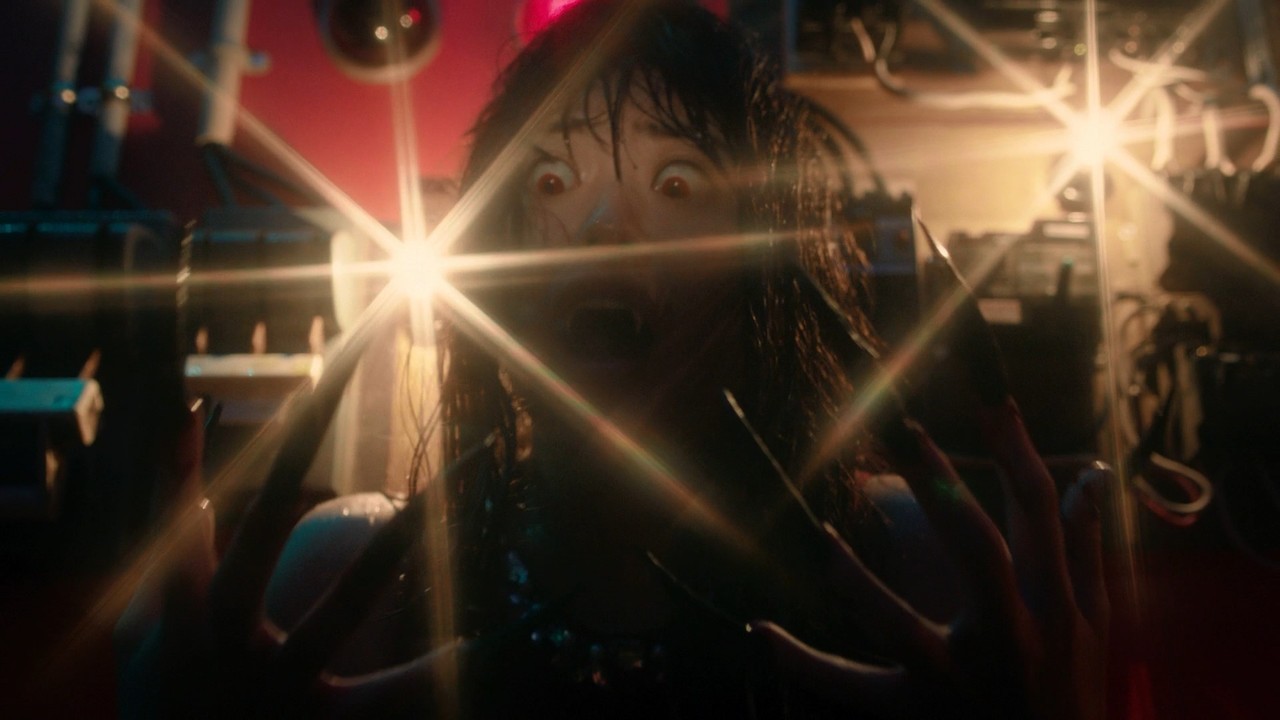
A great sense of excitement was felt finally seeing Tokyo Vampire Hotel. Also trepidation to be honest as, considering Sion Sono has had a spottier record from 2010 onwards, this could've turned into a dud. It neither helps that, out of the gate, the first episode of his Amazon Prime commissioned mini-series is terrible. It set up all the worst aspects of Sono that have come up in his work over the last few years, an abrupt jump into a world full of clichéd horror tropes made worse by the sci-fi touches added. The grotesque violence Sono has in his films is here too and is awful, problematic in how it gleefully delights in a woman in a Goth Lolita dress entering a restaurant with firearms and killing the human beings with relish after dealing with a group of vampires, the flippantness and "coolness" off-putting in works like this even as someone who defends transgressive and ero-guro tropes in art, boredom as well when she excessively stabs a person or two with a fork over and over to death. Thankfully, blissfully, Tokyo Vampire Hotel is not this pilot episode. It's still excessively gory, and gets more over-the-top in the amount of fake blood spilt, but it also returns to the type of films I liked by Sono in Strange Circus (2005) or Suicide Club (2001), strange tales with tangents where genre tropes get mangled in weird and fascinating ways.

From https://m.media-amazon.com/images/M/MV5BZDUwYTFhMDItMWM2Ny
00Y2FiLTk4ZmUtM2E5NTYyNGRjMDIzXkEyXkFqcGdeQXVyNjY5NTM5MjA@._V1_.jpg

It helps this is a mini-series. I have no idea what the feature length version, which cuts this ten episode series down to 142 minitues (!) would be like, but the mini-series as a whole feels less like the stereotype of cult content that is sold to Western viewers but closer to the sincerer Japanese genre films, ironic considering this was sponsored for Western viewers, but probably influenced by the length of the material, forcing Sono's hand in having to have more than the gore on display. At least from episode two onwards the series already gets interesting, skipping years earlier to a human girl given the blood of Dracula being raised in an adoptive family, specifically losers chosen by a literal neighbourhood of vampires to take care of her or they got quickly replaced with other foster parents. From there, weaving the life of Manimi, cursed to been changed by her vampire's blood on her 22nd birthday, and the conflict between the Dracula and Corvin clans, it used its length to expand to include more side characters and events. It can intercut the action and gore with more personality building dialogue scenes, drama which was found in the likes of Suicide Club and made Sono's films stand out as much as his lurid and bizarre set pieces.

The material itself is generic on the surface, vampires versus vampires with a special "one" figure in the centre. Unleashed onto an unsuspecting Amazon Prime viewership this would be weird by itself, especially as Sono now is decorating his films in bold primary colours post-Antiporno (2016), appearing especially for the main building the film is set in, the titular hotel which is actually the lower half of one of the Corvin vampire elders, her children feeding her through a hole in herself what cannot help but come off with vaguely sexual in connotations. What I was glad for however is that, lost in his films over the last few years but flourishing here again, is his eccentricity which is fed by the longer template for the storytelling. The actual plot - that the Corvin clan have humans trapped, pretending a nuclear winter has taken place outside to force them to copulate and breed as their cattle - is merely a backdrop for all these characters, even the villains, to have quirks and issues to deal with. Little touches, like the announcer at the Corvin's lair being way too enthusiastic as he order humans to procreate, or the fact he can still have moments of actual seriousness in-between, mean a lot more when in the last few films I've seen he's not been able to balance seriousness and humour properly as he could in epics like Love Exposure (2008). That this is a major step for Sion Sono in terms of the mainstream spotlight was likely a factor as, befitting the material, he convinced Amazon Prime to let the production shot in Romania too which proved to be in favour of the film, the use of real castles and the Salina Turda salt mine proving worthy production design without much hassle.

From http://altyazi.org/wp-content/uploads
/2017/06/tokyo-vampire-hotel-2017-7.jpg

The series could've been fewer episodes actually, as the middle episodes can lag at points or repeating events like the humans trying to escape the hotel multiple times, but the size of the cast allows interesting factors to come into play nonetheless. That even the villains have sympathies is successful even if it's a few more character details rather than in-depth - one of the main Corvin clan members, Yamada (Shinnosuke Mitsushima), was given by his father to the clan in exchange for a political career where he becomes president of Japan in the current time period, enforcing a hatred of life only softened by his romance with Elizabeth Báthory (Megumi Kagurazaka, Sono's wife and argubly muse). In contrast, the Dracula clan and others have an amorality which, despite my issues within the first episode, plays to interesting dynamics, such as with K (Kaho), a Dracula clan member with both sympathy but also utterly ruthless, making her relationship with Manami, the figure stuck with horrifying abilities about to grow on her twenty second birthday, more complicated. There's also humour, as in the case of Báthory's "mother", depicted rarely with the actress in normal form, but either as a head inside a practical effect or a shrunken stop motion not as tall as a doll's house. Even the whole factor of one of Corvin clan being the actual hotel is played with a legitimately (but well executed) spectacle in between her walls, witnessing the humans fed into her in a never ending orgy of stabbing and smearing blood on themselves that, barring one change in the lighting style, would be if you let Gasper Noe direct the Dante's Inferno.

The moment Tokyo Vampire Hotel fully succeeds however is when, out of ten episodes, episode seven has the actual climatic battle, most of the episode a bloody spectacle where almost every major figure dies at the end. The last three, less than thirty minutes each, leave survivors both of the human and vampire sides awkwardly picking up the pieces of their lives in the hotel, without masters and eventually eating at the makeshift restaurant in the centre hall with a comradery of friendship, staying locked in the hotel as their whole world. Even if there is still insidious plans afoot, these last three episodes are why I eventually liked the whole mini-series entirely, building upon characters (the tragic victim of circumstance in Manami, a new character who is the only teenager among adults who questions her environment) to a chamber piece which adds a great deal. Including a pitch perfect end twist which is hilarious, where the least expected people barge through a door, looking like an actual pair of old men than police officers, and an ending which dabbles in the metaphorical in a way that was completely perfect. This conclusion was exactly the right way to end Tokyo Vampire Hotel, and proved a relief having found myself disillusioned in terms of the quality of Sion Sono's recent output. This mini-series, probably the work more will see over others, has proven then successful for his reputation and for individuals like myself who yearned for those older titles in his filmography.


From https://66.media.tumblr.com/11fd99fcc671bed50edb5
787069c15f4/tumblr_p7tmcrcMFW1rw93m3o6_1280.jpg

Sunday, 6 May 2018

Wild Palms (1993)

From https://images-na.ssl-images-amazon.com/
images/I/71UGPKASQtL._SY445_.jpg


Directors: Peter Hewitt, Keith Gordon, Kathryn Bigelow and Phil Joanou
Screenplay: Bruce Wagner
Based on the comic strip by Bruce Wagner
Cast: James Belushi as Harry Wyckoff, Dana Delany as Grace Wyckoff, Ben Savage as Coty Wyckoff, Robert Loggia as Senator Tony Kreutzer, Angie Dickinson as Josie Ito, David Warner as Eli Levitt, Kim Cattrall as Paige Katz, Ernie Hudson as Tommy Laszlo, Nick Mancuso as Tully Woiwode, Bebe Neuwirth as Tabba Schwartzkopf, Aaron Michael Metchik as Peter Katz, Brad Dourif as Chickie Levitt

Synopsis: In 2007, patent attorney Harry Wyckoff (James Belushi) finds a new career path under senator Tony Kreutzer (Robert Loggia), found of the religion Synthiotics and founder of the Wild Palms group, who are developing both virtual reality television and mimizine, a synthetic drug with allows one to interact with the holograms. Wyckoff's life however becomes a complex spiral not soon after. Caught between the war between The Fathers and The Friends. Discovering that his son Coty (Ben Savage) may not be his own. That Kreutzer is a corrupt wannabe demigod, and his wife Grace (Dana Delany) is suffering from her connections to the Wild Palms group, not least because her mother Josie Ito (Angie Dickinson) is a vindictive, violent person and Kreutzer's sister. And that an old flame Paige Katz (Kim Cattrall), connected to Kreutzer, has re-entered his life and stoked a flame that is eating away at both of them.

Beginning with the first scene - a dream sequence with the older brother of Jim Belushi, James, enters his suburban kitchen only to find a rhinoceros there - one is immediately primed for one of the strangest mini-series made for American television. (Fittingly, the second to last episode screened on May 18th 1993, which would've been my fourth birthday, thus another bizarre project which orbits my life among very curious films). Riding the zeitgeist wave Twin Peaks (1990-1991) created, broadcast on the same station ABC and co-produced by Oliver Stone, the result's a peculiar beast. One where Stone's cameo as himself, being interviewed about secret JFK conspiracy documents proving his theories, is the thing that barely bats an eyelid about what is going on throughout the narrative . That a phone line was set up to explain plot points per episode is a sign of where Wild Palms goes.

From http://www.criticalcommons.org/Members/ccManager/clips/
wildpalmsmimezinecybersex.mp4/thumbnailImage

The plot of Wild Palms is not that difficult when set out. But there are so many plot points to juggle, alongside the tone the series took, which brings things to a heightened head. The perils of virtual reality. Child kidnapping. The conflict between the fascist Fathers and the heroic Friends who are nonetheless capable of shady tactics to win. Wild Palms has a lot of ambition, struggling at times to tell it. Significantly this is piece of nineties paranoia of the future. It's an area of cinema and television which can be silly - as Wild Palms exists in an alternative 2007 between realities as a time capsule. But it's also touching upon still relevant topics, a fitting landmark among others of peoples' fears at the time. Using the growing craze in VR, back then it was still disconnected from the reality of basic effects and having to wear one of Daft Punk's helmets, it however touches upon pertinent ideas of reality and our growing addictions to fantasies even into the modern day. Whilst we're not yet at holograms, that we are with both virtual reality again and the dangers of technology like the internet blinding us with artificial simulacra, it still stands strong.

However I will also confess that my love for Wild Palms is for its flawed but distinct weirdness. The cast certainly helps, certain performances an acquired taste and yet appropriate for what turned into a melodrama in sci-fi dystopia costume. For James Belushi, it's the least expected role he could have as he is known for comedies and family films (until, in a nice piece of synchronicity, being cast in the 2017 series of Twin Peaks). As our cipher into this world, an everyman who realise his life is more entrenched in conspiracy than believes, he's the actor playing the most muted role which means he's easy to dismiss, but someone appreciated by me nonetheless. Especially as he's the sane cog in the midst of everyone else, with only the sadness of Dana Delany as his wife, in her tragic plot trajectory, a grounded emotional current.

From https://ia.media-imdb.com/images/M/MV5BNmJhYzMyMDUtZjkwZS00NThlLW
ExZGYtZWUzODNlMmVhZGUwX
kEyXkFqcGdeQXVyMzQyMTA5Mjg@._V1_SY1000_CR0,0,1332,1000_AL_.jpg

Robert Loggia
, who described his role as Tony Kreutzer in the context of ancient Greek plays when interviewed about the miniseries, chews scenery appropriate for a character who has had people killed and also starts randomly bursting into song in the final episodes, as if an acid flashback to his Al Johnson impersonation in The Ninth Configuration (1980), obsessed with a McGuffin known as the Go Chip which will give him digital immortality. Angie Dickinson, from the likes of Dressed to Kill (1980), however manages to outdo even Loggia as his sister Josie, channelling both Bettie Davis and Joan Crawford from Whatever Happened to Baby Jane? (1962) with her pronounced makeup and heightened performance; appropriate for a character with an obsession with kidnapping her former husband and Friends leader Eli Levitt (David Warner), and gouging peoples' eyes out. Among these figures also includes Coty Wyckoff (Ben Savage), Harry's son who is both a new TV star and a child sociopath, Ernie Hudson from the Ghostbusters films as a Friends member who becomes addicted to mimizine and can hear church bells as a result, and even Brad Dourif in a small role. Another smaller role by director Kathryn Bigelow, who also directed one of the episodes, has additional pertinence as this feels like a dry run for Strange Days (1995), her dystopian sci-fi epic which also deals with the dangers of technology through artificial memories.

The script itself is clogged with countless references to keep up with, original author of the comic strip and series creator Bruce Wagner actually having to tone down his original version of Wild Palms for television but still creating a dense narrative. When a glib reference here is calling a cafe in the background "Eros plus Massacre", a tip to the hat to a three and a half hour Japanese experimental film by Yoshishige Yoshida, we're in different territory to most television at the time. Then it proceeds to juggle spirituality, references to anything from films to Walt Whitman, and Wagner's own quirks like his obsession, spoken by the characters, of rhinos being fallen unicorns. I could absorb this plot, but I know I missed details, and am aware alongside its melodramatic, heightened tone why a phone line was put in place to keep viewers up to speed as it zooms along. For television, it's like Thomas Pynchon's Gravity's Rainbow at points.

From https://ia.media-imdb.com/images/M/MV5BZDU5ZTY4ZDktZTBkNS00Mzg0LWJjNTgt
NDk3ODgzYjE2OGEzXkEyXkFqcGdeQXVyNTgzMTg5Ng@@._V1_.jpg

If there are problems with Wild Palms, it's that its mad ambition is too much for its presentation. It has the length a work like Strange Days could never have but doesn't have the budget. That wouldn't be a problem if it wasn't for Wild Palms not following the idiom "show, don't tell", especially when instead it descends into talking for the last episodes.  Even if it doesn't have the production of a Hollywood film, it was a major TV production and should've taken more time to elaborate on the plot points. To actually depict them. I admire Wild Palms but I'll confess the final episode squanders dynamic weight with important events, like Loggia's failed attempt with the Go Chip or a revolution against the Fathers and the entire political system, being off-screen or barely shown barring a few extras waving signs. For a series with ambition, even scoring a major skirmish with The Animals' cover of House of the Rising Sun, even having The Rolling Stones' Gimme Shelter twice in the score, the final episode feels chintzy to an extreme.

In spite of this, and the silliness of some of the material, Wild Palms to me was like catnip. The early nineties aesthetic, coupled with a Japanese influence is distinct despite the Japanese economy bubble having already burst by this point, making the paranoia of Japan being an ambitious global influence out-of-date like it was in films like RoboCop 3 (1993). In lieu of this, I also adore Ryuichi Sakamoto's score. Sakamoto, of Yellow Magic Orchestra and a major film composer, seems at first to have made an overtly cheesy and dated score just in the opening credits theme, only for it to fill out with depth that, for this production, is worthy as cinematic in depiction.

From http://1.bp.blogspot.com/-LpiqIg82jfI/TWxVNXIVHuI/
AAAAAAAAKUE/rl7XHA6GxpU/s400/screenshot7591.jpg

There is also the general madness on display. In spite of its limitations, Wild Palms is weird in an admirable way. Where swimming pools have secret doors at the bottoms, lairs to the Friends' hideouts. That, as in all dystopian sci-fi of the time, there is a slum district which law enforcement stays out of, a Casablanca of rebels and bootleg holograms. The dichotomy between advanced tech, like virtual reality, against issues like the complete lack of internet, living in a subconscious realm outside of our past or future off the television screen. Something deliriously weird that, even if it came after Twin Peaks' popularity, somehow was bankrolled and exists despite the sense it was never going to succeed even as a miniseries. An instant cult work, not contrived but too weird to live.

Abstract Spectrum: Psychotronic/Weird
Abstract Rating (High/Medium/Low/None): Low

Personal Opinion:
Merely a slither of Wild Palms creates many questions which, even when answered, opens up so many new questions of where they came from. Even as the TV presentation sabotages its virtues at times, Wild Palms gets by as a bizarre TV melodrama, a product of its time which thankfully exists.

From https://ia.media-imdb.com/images/M/MV5BNzUxNjFj
NTgtMDliNS00MDgzLTk4OGMtYjExZjBj
MjExNjEzXkEyXkFqcGdeQXVyNTgzMTg5Ng@@._V1_.jpg

Friday, 9 December 2016

Supernatural (1977)

From https://1.bp.blogspot.com/-m577fgFpb04/UoFG4dmdCuI/
AAAAAAAABDQ/SARqTHGZ7q4/s1600/Supernatural.jpg

Directors: Simon Langton, Alan Cooke, Peter Sasdy and Claude Whatham
Screenplay: Sue Lake and Robert Muller
A Night of a Thousand Horror (Shows) #4

A club of occult minded older gentlemen will allow new members into their fold if only they can tell a story of horror that'll scare the members. If they succeed, that person joins the club; if they don't or the validity of the story is suspect, they are killed. So beings the eight episode horror anthology Supernatural, in which tales of vampires to werewolves are spun to the viewer in the tradition common to BBC television, set bound interiors with natural, on-location exterior sequences, and emphasis on psychological drama and dialogue, following various forms of revenge, haunting or macabre goings-on.

The stories vary in quality, starting off slowly with Ghosts of Venice, about an older retired actor (Robert Hardy) who goes back to Paris under pretences likely due to ghosts or his own fragile mind. Things pick considerably however with the sole two parter early in the series, an elaborate tale of a countess (Billie Whitelaw) getting four lovers who scorned her when she was a commoner to stay her at her late husband's woodland manor, something feral in the woods picking them off one-by-one. The series is an okay programme, respectably watchable, but when it's at its most interesting is when, even if they're a side character, women are primarily at the centre of the episode's story or their motivators. Women getting revenge on those who've wronged them, women who've severed their "morals" whether for good or bad, the two parter in particular taking the idea of a woman getting her justified justice over others to its most blackest, in terms of its ripe melodrama, an even riper performance by Ian Hendry, as a former revolutionary turned government lapdog and arms dealer, and a bleak hearted revenge story of a woman scored tasting, if only a little, of Angela Carter's later novel The Bloody Chamber (1979) even if it doesn't have the sensual intensity in look to the match the book's prose. That the result is both stage bound and yet very elegantly put together in visual look, creation an odd contradiction throughout the series for its artistic aspirations, adds to this mood.

From https://i.ytimg.com/vi/WfWSiZ_J9Y8/hqdefault.jpg

The others are of worthy mention are Viktoria and Night of the Marionettes. The later of an older father travelling Europe with his wife and grown up daughter to research the journey Mary Shelley took to reach her novel Frankenstein (1818), becoming the mother of modern horror literature, weaved into a story still deliciously grotesque for a BBC TV production about life sized marionettes. It leads to the one overtly artistic moment of the whole series when we see a puppet show with creepy costuming mixed with a ting of Asian orientalism and German Expressionist decor. It also has Pauline Moran as the adult daughter stealing the episode with her most heightened moments, with her almost pointed teeth and wild stare.

Viktoria is amongst the eight episodes as personal favourite, a wheelchair bound Romanian countess bumped off by her English husband, but able to get revenge when her old gypsy nanny created a doll with her soul within it and gives it to her surviving daughter. This episode also shows that, at its best, the most interesting episodes could also be feature length stories by themselves as much as they work in their near hour long forms, turning into a constantly shifting concoction of events and plot twists which keep you on your toes. Secrets about the husband, the psychodrama of the second wife (Catherine Schell), who is entirely innocence and well meaning but finds herself in the midst of the emotion vacuum of the family she's married into, the dominance of the very homely governess who looks after the daughter, and of course the daughter's relationship with the doll which naturally turns to more gruesome events.

From http://www.mondo-digital.com/supernatural3big.jpg

That's not to say the other four episodes aren't rewarding - one is a strange take on Dr. Jekyll and Mr. Hyde by way of the myth of doppelgangers in which an Englishman does all her can to ruin a German family who were willing to embrace him into their fold as a son-in-law - but Supernatural is a mix of that which is merely okay and that which is actually memorable. When it succeeds it does well as much as it fluffs good ideas with weak execution. As a result its one of the weakest of the British genre television programmes I've seen from this era but that's not without at least giving the best moments of it their fair due.

From http://4.bp.blogspot.com/-5BfOad2Y_ds/VWrTBi3QBGI/
AAAAAAAALzI/hk8Ub8V_ETw/s1600/508.jpg