Showing posts with label Found Footage. Show all posts

Saturday, 9 October 2021

The Erotic Witch Project 1 & 2 (2000)


Director: John Bacchus

Screenplay: [Erotic Witch 1] John Bacchus, Michael Raso and Joe Ned / [Erotic Witch 2] John Bacchus

Cast: [Erotic Witch 1] Darian Caine as Darian; Laurie Wallace as Katie; Victoria Vega as Vikki / [Erotic Witch 2] A.J. Khan as Dr. A.J. Khan; Darian Caine as Darian; Katie Jordan as Barbara; Rio as Dee Dee; Allanah Rhodes as the Coma Patient

A Night of a Thousand Horror (Movies) #243-4


Yes, I have had a portion of my own faeces...

Countless parodies (and rip-offs) exist of the original Blair Witch Project. A softcore parody not only exists for the film, but there are at least two, with the Jim Wynorski The Bare Wench Project (2000) series, which lasted for a further three films, than this has three sequels. The first two being covered here for this franchise is for a couple reasons. Alongside the practical issues of trying to cover softcore erotica, entirely designed around titillation with only plots to paste the scenes together, they follow a progression from each other alongside being shot within the same year, which is parodying the Blair Witch Project when it was a huge hit only to follow a year later with a very disappointing higher budgeted sequel. They are artefacts of a yesteryear; not only is the softcore erotic aspect not being covered but merely to be talked of, as something that specific in preference for each viewer is pointless to critique, but even if that subject does have to be talked of, the really interesting part of how The Blair Witch Project was such a huge pop culture phenomenon at this time it touches into a variety of other areas, such as a specific era of straight-to-DVD softcore. This pair of films, from a company called Seduction Cinema, shot in New Jersey, comes from a specific wave of softcore made for the then-new straight-to-video market.

This wave is one I vividly remember even when too young to rent these as, in the United Kingdom, this wave of cinema which had its own stars, Erin "Misty Mundae" Brown probably the most famous who worked with actresses who are in this double bill, these films were released and could be found in Global Video, the equivalent to the American Blockbusters we also had, the films found on the highest or lowest shelves, titles with bright red boxes on the covers warning they were for adults only, alongside mainstream releases and the early days of cult cinema where companies like Vipco sold with lurid covers and taglines the likes of The Nostril Picker (1993), another of the strange films found in such stores.

Time is going to raise a curious question of how we look to these films and their stars, especially as whilst the original Erotic Witch film has the perfect parody to work with, a micro-budget smash hit set in real woodlands, going to part two, sent in a grey walled building masquerading as a mental asylum where the only character from the first film is sent too as a sex crazed mess, you are dealing with none of the sheen of classical sexploitation or hardcore erotic cinema, but the shot-on-digital era of the early 2000s. This era could find itself like the shot-on-video genre film movement gaining a cult fan base, but works explicitly about sex have their own hurdles to deal with just for the fact that, whether prudishness or disinterest, most people want to watch genre films which, if they have any sex, they are just part of it. Ahead of time, these are not great parodies of the source material - they are curious works, both to think seriously of rather than dismiss, to think of the people (especially the actresses) as working figures rather than dismiss them, and for how odd these films are, especially when we get to Kimbo the gorilla...


These hurdles present the issue, as much a hesitance, in covering titles like this even if this is part of the Blair Witch history. You are dealing with both work entirely meant to be titillating, to masturbate to if I am blunt, more than story, and the issue of the audience. I could feel uncomfortable covering this if it led to readers viewing me as a tasteless heterosexual male, more so as the point of these two films is explicitly sex scenes between women only, a sexual fantasy used for male viewers and in this case explicitly targeting a male audience as the audience in how it is depicted. Note I did not say "lesbian", which comes with a whole issue in that the term in air quotes, which denotes one's real sexuality and definition for themselves, has been used in pornography and erotica in a way that is problematic. The idea of such scenes in erotic is not problematic in itself, but in terms of how it is depicted, and even that is subjective in a way we oversimplify. Even questioning whether I can cover these is problematic in itself as it makes presumptions - when there is possibly a gay or bisexual woman who has watched and enjoyed these films, who could roll her eyes at me having this moment of awkward existentialism rather than getting on with this review. This is why the concept of the male gaze feels completely inadequate in dealing with the subject for me, an oversimplified concept for tackling the likes of horror cinema and erotica as nowadays, the audience is a vast one in gender, sexuality and gender having become vastly more complex, including transgender politics, to consider. Yes, this is still a review where we will get into some deeply silly stuff, but this is worth raising ahead of time.

Here especially I would argue three to four gazes exist at least, which makes simple erotica, entirely around a witch in Bacchusville in New Jersey who makes people feel horny in her prescience, more complicated to debate with seriousness. One is the gaze of a LGBTQ woman; second is a non-gendered eye, trying to stand back and scrutinise images or art which has sexual interactions between women, cis- or transgender, only, which can be argued to be difficult or even impossible to do; three is the male gaze, not taking into considering the viewer's sexuality which is a factor too; the fourth is the market which sells erotic imagery of women with other women which I would argue is entirely separate to even a male gaze, even a male gaze attracted to such imagery. The fourth gaze is the one which, not for this review to be talked of, but has to be considered in the wider scheme, as this in itself is where biases and perceptions are effected in itself. It is not just what a target audience buys where the considerations of problematic depictions of women, trivialisation, and just openly crass material has to be considered, but also the market which creates the product to sell this, as it has been allowed to be dictate what sells more.

If you stick to the template, and leave the politics to the side, this pair of films is very amateur wacky softcore. The first is a straight ahead parody, where in November 1999, three college co-eds (Darian Caine, Laurie Wallace and Victoria Vega) go to Bacchusville, New Jersey to find the Erotic Witch, the tape found two weeks later. It is as loose a parody as you can get, that in 1812 the erotic witch was a very sexual and pansexual woman tied up in the woods when the locals wished her gone. This never attempts a feminist reading of this at all - it is merely central to one of the many type of erotic and hardcore genres in existence, horror parodies, which vary from the Michael Jackson Thriller music video, Driller (1984), or The Hole (2003), the gay parody of the Ring franchise where watching a cursed video tape turns you gay in seven days afterwards.  

The film knows the joke at points and at others, it feels improvised to a sense half-baked. At first, you have the interviews of the original film, of stereotype creepy guys here. Inexplicably a redneck parody or two live in New Jersey, including one nearly slipping he was having sex with his sister, but seeing amateur actors in fake beards (throughout the duo) are amusing. The film does, as is always the issue with some of these erotic horror films, dangerously veers at first to the horniness of a possessed victim causing them to cross personal boundaries with others. An uncomfortable aspect of a lot of erotica for me as how forceful people are to have relationships with others, as happens to Darian Caine's character when she is possessed first in the woods, something the film has to quickly cross away from. Especially by the second film, when you get to the curse almost being a horny virus, the fantasy is there but ever since David Cronenberg made his debut Shivers (1975), about literally parasites that turn people into horny zombies, I have had thoughts of how that film spoilt the fantasy by emphasising how grotesque it could be in reality to have such a fantasy or even a sex utopia. Maybe that is just being cynical and ruining this fantasy, but Cronenberg was always ahead of his time.


There is some of the humour, the low hanging fruit variety, that this had probably a better received sequel than Book of Shadows: Blair Witch 2 (2000), the openness to parody the sequel the same year it was released ballsy in an admirable way. The sequel does not really follow it at all, but some references do stay. The opening to Joe Berlinger's film, better than the actual movie plot for the original film, is here, where tourists have invaded Bacchusville and spend their time just masturbating together in the open. Or that you have interviews with people like the disgruntled police chief or a tourist (in a ski mask and fake moustache) talking of how he is there to deal with erectile dysfunction with the help of the Erotic Witch. Even the plot point of even video recordings being deceptive is played for one joke, blackmail material on tape turning out just to have two women playing table tennis instead.

The main issue with covering either film is that, only over seventy minutes each, most of their scenes are the sex scenes, choreographed between the actresses, the first playing to the restrictions of the found footage genre of two cameras the co-eds have, the second film having multiple ones (and a CCTV in a room) to work with. No non-diegetic music exists baring a heartbeat sound in places, which is a weird thing to consider. The sequences are prolonged, and they do not vary either, baring the end of the second film where, with five actresses instead of three, there is an orgy sequence to conclude the film, which alongside a scene of a man in a gorilla suit playing cards with an actor playing a male detective, certainly ends these two films, if there were never further sequels, with a spectacle. They are softcore but by the end of the second film, it is surprising these films were not actually hardcore movies by how explicit they are. Obviously, with respect to their female casts, if you are not prepared to go that far in a film, even these films have actresses, whatever you think of the performances, a hell of a lot braver in baring themselves (literally) than most people.

Even this feels weird to type as, due to the issues in how comfortable societies are in talking about real sex in art, and the whole issue of gender bias and pornography's existence, even stating these things may be off-putting to some readers of this without getting into the eyebrow raising, crass type of review language you can get in actually reviews of softcore and hardcore movies. Also trying to critically judge a film entirely about sex, designed for arousal first, is a strange circumstance to have to work with, which adds to this. Really, it is a bizarre sensation to write notes about a softcore sex film entirely about sex, rather than plot, regardless of what I am sexually attracted to; you legitimately feel like an alien studying human culture if any reader looking at this review tried it depending on the work.

Your judgement in the "erotica" is entirely, for each reader, their reaction or interest in that area, which is for any viewer of these films to decide. The one thing to comment about is that, barring one actress in the second film, one named Rio whose appearance is exaggerated*, everyone here actually looks and acts like women you may bump into in New Jersey bar, with their tattoos and piercings, which is a positive. One of the accusations of pornography, alongside its sleazy underbelly, is their unrealistic images of the body and sex, to which these very real women being onscreen is to be praised. This rises as well, if you actually look into these figures in front of and behind the camera, the people who worked with Seduction Cinema are still human beings. For the women especially this should be considered, when sexism could arise to dismiss them for merely being in these and a few straight-to-video horror films, could easily happen.


Darian Caine, who appears in both films, is prolific in these films and straight-to-video genre movies from the era. In part 2, alongside being the most charismatic figure, you have A.J. Kahn; born in India to an Indian mother and Irish father, she plays a doctor with some likably nerdish charisma when introduced in the film, but alongside her own prolific career in these softcore films, her IMDB page credits her to having previously being a professional dominatrix, which whether factually accurate or not really undercuts these films just being dismissible grot by forcing you to think these are regular working women in the entertainment industry. Thinking beyond the surface, to the fact ordinary people who watch these films like us also act in them, especially those for these Seduction Cinema productions these are part of, opens a lot more to consider for them.

Some may be put off by the starkness of the sex scenes, but again this is entire subjective, unless one wants to ask whether it is pleasant to be laid on New Jersey woodland floor or a rock naked.  (It was probably cold outside in the shooting too, as was especially the case with the second film, explicitly set at Christmas and with snow outside.) What I can comment on is that both films have very odd senses of humour. The first film recreates the structure of the first Blair Witch film, but with changes like porn magazines and dildos being left outside the tent, or very bluntly sexually wood decorations instead of menacing stacks of rocks. A blown up doll is found up in a tree as they are apparently funny in context. Stranger for me, set up in the first film and eventually being called Kimbo in the second film, is a gorilla rampaging on the loose, played by someone in a very cheap gorilla costume. In the first film, they are credited as being played by one of the script writers Joe Ned. Kimbo is never involved in any of the sex scenes thankfully, barring the questionable choice of having someone make monkey noises behind the camera during one of the scenes.

My mind, rather than just dismiss it as a dumb running gag, whilst it clearly is, also could not help to evoke Thundercrack! (1975)Curt McDowell's two and a half hour film, seen uncut, is infamous as a cult hit, a hardcore haunted house film which is openly pansexual in content - heterosexual, gay and bisexual sex scenes - whilst being an elaborate horror comedy. Effectively a lewd version of James Whale's The Old Dark House (1932), it has cult avant-garde filmmaker (and the film's screenwriter) George Kuchar in a role where, in a dress, he eventually marries the female gorilla that has been on the loose in that film's narrative since its start. Thundercrack in every way is a superior film, both for what strange and imaginative work you can do even with explicitly sexual content, but I think that probably softened me to Kimbo subconsciously. The character, which is just someone in a tatty gorilla suit, is from the same era where some truly strange things happened in these softcore films, like Jim Wynorski's Busty Cops (2004) having the titular lead's boss being a talking llama. Whether it is surviving being shot by a police detective, humping the sex doll at night in the words, or playing cards, sometimes dumb and embarrassingly slapdash comedy does work when it involves this character. My only disappointment was not exploiting a joke for the second film, where technology allows him to speak through a translator. Thus we learn this is a gorilla who likes twerking his own nipples, making him a lovably and progressive figure in his preferred kinks.

The second film is egregious in some very unfunny characters unfortunately for contrast, namely a female reporter (played by Katie Jordan) with her Eastern European cameraman, who talks of an awful experience in a gulag. At first, they seem a funny bickering comedy pair to have, only to become annoying in their hastily improvised bickering. In general, like those characters, there is a bit throughout these films which feel ill thought-out, where you can roll your eyes and ask, rather than the sexual content, why some ideas where wise to have. The crying confessional scene in the first film, parodying Blair Witch, eventually becomes a close up of a bared breast in the dark, which lasts a really strange and lasts a long length of time. Sound track cues are also perplexing. Heartbeat sounds are the closest to music in these films as mentioned, and the sound of the sea and seagulls in a masturbation scene in the New Jersey woodlands is just questionable. More questionable however, is in the orgy sequence having pig noises on the soundtrack. In mind to the point that it is the most explicit and intense scene, whether you had women, heterosexual couples or gay men acting the scene out, pig noises are acquired taste even if part of a mass witches' curse corruption, only for a really specific kink for a really specific target viewer when, for most viewers, probably just having five really attractive figures in said scene would sell without suddenly feeling the soundtrack from a Throbbing Gristle track has invaded it.


There are two more of these films afterwards - one a period prequel with Erin Brown herself, the other called Lust in Space: The Erotic Witch Project IV (2005) indicating even softcore gets to the point like other horror franchises you have to set them in science fiction. These films clearly churned out alongside all the others from the company who produced these, but in their own way, like the independent regional genre films of the seventies and eighties, and the underground video boom into the nineties,  Seduction Cinema by itself was at this prolific time for in that same ballpark. As regional as you can get, from New Jersey, for every parody they made like The Lord of the G-Strings: The Femaleship of the String (2003), they made many horror parodies, which indicates their film tastes. Without the older mystique of older softcore films, made on digital or in their starkness films which could be dismissed, these films do have a disadvantage in how to view them even as cultural artefacts, but they are curiosities in even how their construction is even exposed, such as one actress, playing one in a coma woken up, is abruptly introduced in a scene to make up numbers.

The more interesting thing for me from these types of films is these people making them. Figures like Darian Caine are visibly enjoying playing the possessed version of herself in a cheap straightjacket, chewing the scenery. That the script occasionally has some curiously memorable moments which make films like these time capsules, such as the suggesting Warren Beatty has likely slept with everyone in New York City, as esoteric and to the era it was made in as any joke can be. Even the director is fascinating to read into, just for the fact back in the day John Bacchus made a film called The Bloody Video Horror That Made Me Puke on My Aunt Gertrude (1989). Eyebrow raising yes, but reading his filmography, Bacchus' career even under pseudonyms can be tracked through an entire time in genre film cinema, from independent and underground work shot on video in the eighties into the nineties, to someone who managed to ride the wave of softcore films like the Erotic Witch Project into the 2000s. He was also working in horror as well including a series of films where each word ends with the letter "Z", like Bloodz vs. Wolvez (2006). I do not view either the Erotic Witch Project films, the first two, as being great parodies in the slightest, but they are interesting to see an industry that was there, with these reoccurring actresses and directors, which faded away. Softcore is still being made, still appearing in the few surviving high street stores in the United Kingdom still in spite of hardcore porn being easy to steal online. This particularly wave and these actresses form a part of forgotten history that, traversing the Blair Witch parodies, is fascinating to have stepped into on this path.  

=====

1) And even then, that is not to dismiss one figure onscreen next to everyone else, nor suggest a reverse body slander either before anyone raises this. If anything her costuming, even for this film, really exaggerated more, if by the standards of nurse costumes more likely to be found in an Ann Summers, a store here in the British Isles, hers is definitely the least likely to pass uniform regulations less for the skimpiness but how flimsy the material looks practically.

Sunday, 25 July 2021

The Blair Witch Project (1999)


Directors: Daniel Myrick and Eduardo Sánchez

Screenplay: Daniel Myrick and Eduardo Sánchez

Cast: Heather Donahue as Heather Donahue; Joshua Leonard as Joshua 'Josh' Leonard; Michael C. Williams as Michael 'Mike' Williams

A Night of a Thousand Horror (Movies) #228

Includes bonus review of The Curse of the Blair Witch (1999)


We will prefix this review by just giving my personal opinion ahead of time. As a film with a legacy of being a great horror film in the era, it is trapped by the inherent issues that surround found footage horror films, but as a micro budget production, it is a huge success. And in terms of regional horror from the United States, shot in Maryland, basing itself off a fictitious folk legend still steeped in the country's history, this is catnip for me. The irony is that what led to the film's legacy, its appeal and the parodies, is all that is the less interesting content, including how it still has to be a scary film in the end with its cast running in the woods at night. As a premise and even the style, in spite of the structural problems of how it's depicted, it is compelling from Daniel Myrick and Eduardo Sánchez.

We need to admittedly start off by removing a myth surrounding Blair Witch - it was not the first true found footage horror film, least in mind to The Last Broadcast (1998), and back in 1985 you can make the argument that Guinea Pig 2: Flower Of Flesh And Blood, filmed as a snuff film from a killer, is the first of the genre in terms of horror cinema.  Yes, Cannibal Holocaust (1980) as well has to be mentioned, as that is in its central premise footage of an exploitative documentary crew having been recovered from jungle where cannibals lived, but that also sets it within a fictional narrative, so it is different even if legitimately innovative, in mind that the found footage films had to challenge themselves with the burden of telling a narrative entirely through footage a cast or prop (like a drone camera) could record. In mind to this, The Blair Witch Project is pretty simple if also a lot more complicated than the premise originally suggests. Three students - named after their actors Heather Donahue, Joshua Leonard and Michael C. Williams - go into the woods of Burkittsville, Maryland to make a documentary about the Blair Witch, the lore to be discussed later in this review but a supernatural witch whose influence in the region has also led to horrifying events. The students, in the opening text, disappeared and the footage is what was recorded by them.

This is admittedly, truthfully, where the first breakout film in this sub-genre already has issues. Simply put, you have to get around the logic of a company licensing footage for cinema release of people who likely died, something in promotional footage said to be real. If this was a television production, playing to verisimilitude, this might have been a much easier logistical route, and a subversive one, to reach around, especially if you added an additional commentary on exploitation. Instead, this is compounded by the fact that The Curse of the Blair Witch exists, a mock television documentary on the titular figure and the trio.

Presented as entirely real, the logistical issues of how this footage would be allowed to be released to cinemas without offending their families is an issue. If this just pretended to be found footage as the later films, we would just as viewers make believe the setting. The attempt at verisimilitude, including a website that became a meme before that was ever a word, and even a soundtrack of pre-existing songs created as a fake replica of a character's compilation tape, does unravel if you think very cynically of what would happen if someone actually found footage of real terrorisation of people. Likely, it would be released online, especially if someone was killed on screen within it, and there would be additional aspects which would make you have a bleak view of modern civilisation. Films would try to deal with these issues themselves. At the time, The Blair Witch Project managed to actually surf on this without anyone asking these questions, with even the main cast's IMDB profiles for the first few years marking them as missing and presumed dead1. The strangeness of this, which was an accident during the production of Cannibal Holocaust and infamously led to its director Ruggero Deodato being taken to court, can only be compounded by testimony from the lead Heather Donahue herself:

"“Well, it doesn’t happen much anymore, but when Blair Witch first came out my Mum kept getting sympathy cards,” she said. “It was all part of their marketing scheme so, yeah, people thought I was dead.  When people found out I was alive a lot of them were kind of annoyed with me and wanted their money back.”"1

With mind to the spectacle and hubbub this film caused in the day, the most compelling content with the film instead for me is its prologue, initial lore itself in terms of the lead trio interviewing the community of Burkittsville, Maryland about the Blair Witch. The film's entire back story is exceptional - drawing from American history of witchcraft, the concept of the Blair Witch combines witch scares of previous centuries, urban legends and conspiracies. It never becomes too broad and uncredible as the narrative includes events having transpired over the decades and centuries, including a child killer, before the events of the film, all peppered through carefully and even in the mock documentary. The faux-documentary The Curse of the Blair Witch in fact, whilst it undermines the logic of the film's existence, is exceptional as an additional context to the world. With the one hour documentary elaborating on the lore of the Blair Witch, it never stretches itself in credibility, with talking head interviewees and even a parody of a seventies New Age/paranormal television series, working exceptionally to add back story which enriches the final film with added narrative.

Especially when, boiling The Blair Witch Project down, sticking to the original film only, it is pretty basic. It is not dissimilar to a fault to other found footage work of later years, that of three people getting lost in the woods, and with the structure of the movie informing you the viewer of the outcome of them, the reason why is the crux of the narrative instead. Credit where it is do, the film is helped by its leads, who keep the appropriate verisimilitude of three people slowly losing their sanity, and breaking down, when large portions of the film are not scares but ill ease or them becoming lost in the woods. The little touches to the sinister forces, by way of creepy stick symbols or stone piles, is appropriately realistic and ominous, and it is meaningful that, even if for budgetary reasons or on purpose, you never see the Blair Witch.

That there emphasises many of the virtues of this film, and arguably why many others that followed from it in the future subgenre, from those I have seen, do not work. This is surprisingly subtle in spite of its narrative having its cast shouting and slowly breaking down, a slow burn of character development which does mean many hysterics but built to in subtle ebbs and flows. It is credible how they get lost, three people carrying a heavy bulk of equipment and tents in obscure woods, and even how the map is lost comes from a credible moment of insanity. What you do not realise too unless you read into the back story, and is explicitly in The Curse of the Blair Witch, is that this is also set in the early nineties, so concerns like access to mobile phones and equipment are not a factor either. The film's does also have the curious touch, as a lost film being presented to us the audience, of being presented in two formats, video for the incident moments, and celluloid film in black and white for the documentary, which adds an addition to the narrative if you try to explain how we see this.

This also has to overcome the issue which plagues so many of these films, the logic of why certain footage is filmed continually, which The Blair Witch Project is not really able to deal with. It tries dramatically, with some success, with Heather's inability to stop recording footage becoming a psychologically barrier to prevent the full extent of their horror from crushing her, but this in truth is still a puncture to the reality that has to be excepted. The film in spite of aspects like this still won me over, that in spite of the many moments which have been parodied - Heather's tearful confession at night with snot on her face, the final in the basement of a house - it has a lot that returning to is compelling. It is not the masterpiece its reputation suggests for me, least returning to the film now after all this time, but recognising a film which caught lightning in a bottle, there was a lot that worked. A lot that we could have transported to the found footage horror sub-genre when it finally came a mainstream concept over the years after, a lot of the virtues of the film missed as always happens with trendsetters and found when entries did remembers to include this.


=======

1) This quote is part of a discussion, upon how the film managed to actually succeed in its marketing, HERE.

Saturday, 31 October 2020

WNUF Halloween Special (2013)


Director: Chris LaMartina

(Additional Direction for the Ads by: James Branscome, Shawn Jones, Scott Maccubbin, Lonnie Martin, Matthew Menter and Andy Schoeb)

Screenplay: Chris LaMartina, Jimmy George, Pat Storck and Michael Joseph Moran

Cast: Paul Fahrenkopf as Frank Stewart; Aaron Henkin as WNUF Announcer (voice); Nicolette le Faye as Veronica Stanze; Leanna Chamish as Deborah Merritt; Richard Cutting as Gavin Gordon; Brian St. August as Dr. Louis Berger; Helenmary Ball as Claire Berger; Robert Long II as Father Joseph Matheson

A Night of a Thousand Horror (Movies) #199


Iron Maiden rules! White Lion sucks! Woo!

WNUF Halloween Special is one of the most inspired shot-on-video/low budget films ever made. Made to look like the content of a local American television special 1987, with fake adverts, it recreates the tone as accurately as possible. Adding to the film's intentions, the first time the film was made available was by Chris LaMartina taking VHS copies of a limited amount and placing them in places, like Goodwill stores, to deliberately cause people to think it was an actual recording.

Set on the holiday, this begins with the local news and moves to their special investigation of a haunted house, evoking in its own way the legendary BBC production Ghostwatch (1992), which was a major production meant to look like an actual BBC live special. Things will go wrong here too, but not after the "Orange Blast-Off" and "Halloween Make-Up Kit" adverts. Contextually this gets the tone perfectly, set up also as a found footage film, befitting Chris LaMartina's original method of releasing the movie, as if it was recorded off television. Beginning with the evening news hosts, dressed for Halloween and the male host Gavin Gordon (Richard Cutting) a pun merchant willing to cram in as many seasonal related ones in as possible, the humour is not with irony but a recreation of the era. The humour instead is sly jokes or the cheesy mood of public television the creators are trying to recreate, LaMartina the main director but some of the adverts involving other collaborators alongside his own work.

Some of the film is even fast forwarded through, which would have still taken work to film those scenes designed to be sped through, fully setting up the presentation with the unseen viewer adding comedy by becoming bored, or that for accuracy to actual television adverts do repeat, especially the one for a carpet store. The individual adverts, and there are a lot of them, are eclectic but as necessary in their amount. The film is as much a nostalgic ode to the eighties but a far more legitimate one as it is not interpreting the era in a distorted idealised, but actually shooting on real television equipment and looking of the era. The humour comes from unintentional comedy or the material likely to have been found of the era, such as a quaintness of old ads (or the bluntness of the political attack ads in the midst of an election year), or from the characters themselves. Gavin Gordon as the male presenter who tries to milk jokes from his news materials, with his co-host Deborah Merritt (Leanna Chamish), or Frank Stewart (Paul Fahrenkopf), the grizzled host of the TV special, promising in-between ads for a Video Arcade with a Pizzeria ad a live séance. Fahrenkopf as Stewart is the stand-out of the film, an exceptional performance, but in general, this film raises the highest bar in terms of quality for a micro-budget genre film, as with everything from the film the acting from everyone is good.  

Everything in the film is pitched at the perfect tone, as much the show to see the presentation as it is the narrative, balancing a story where the TV special becomes increasingly likely to have been invaded by malicious forces, and the cheap-and-cheerful humour of this presentation in tone and in the adverts, having to match the time period and becoming inspired as a result. The fictional TV movies are a hoot for this in particular, from Doggone It!, a TV movie about a working woman who has to learn to take care of a dog, to Sarcophagus, one I would gladly see about an Egyptian mummy rampaging across a metropolis. There are also ads meant to recreate what the period was actually like, such as for wildlife video cassettes.

Nostalgia can be the cheapest pop to entice an audience with, cinema frankly plagued by its inability in the 2010s to move past the eighties or remember the decades beforehand, but WNUF feels like a historical recreation even I, who was born in England in 1988 when the decade was going out the door, can find meaningful due to the heart and hard work for accuracy. It delights not in a handful of mainstream films and pop culture references, but so much of the decade called the nineteen eighties. The local television itself or the jokes about glam metal, be it a reference to a real band like White Lion to a fake metal compilation album "Feel the Steel", with made up bands like Jaxxon and R.O.T.O.R. or all the anti-drug adverts, from the time when saying no to drugs was a huge political campaign in the United States. Not merely one, but multiple ads about the dangers of drug taking.

Eventually the plot drip feeds in more and more, how in the midst of this planned séance, at a home of a son who apparently murdered his parents under the influence of a Ouija Board, there is an ominous prescience there alongside the indignation of the show not going to planned, elaborate enough to have hired a married couple of paranormal investigators involved as interesting eccentric figures in their own right. Most of this still plays out as comedy, and shows the casts' talent in the performances, such as Frank's straining annoyance with members of the public joke they would call the Ghostbusters or phone the séance to tell their dead grandmother she is a bitch, to Robert Long II as Father Joseph Matheson, a Catholic priest very reticent to perform an exorcism after all the times he is called to do so, which has a reason to it plot wise but also feels like an amusing parody of the fact Catholic priests are always the figures brought in when something unnatural is afoot in horror fiction.

The film does build more horror as it goes along, and in this sense the film is as much a tribute to that era as well, even managing a lot more subtle named references to horror directors for minor characters, more so because they are not the known horror stewards referenced but the likes of micro budget filmmaker Todd Sheets or David DeCoteau. Only around the last half an hour does WNUF have more broader jokes, particulate the more adult ads that appear as it gets later in the world's time scale, such as one for a Gentlemen's club (who offers special offer breakfasts) or a video rental store that, as accurate to the time by offering VHS and Betamax, does have its tongue in its cheek by mentioning the Adult Section before the Family one. It has however fully fleshed out a world by this point, with ads even interlinking with references to others, and when it does build to a more serious tone, the structure allows creativity, such as cutting to a news special report on a rise in Satanic vandalisation and animal sacrifice as the producers panic, allowing the film to also reference the Satanic Panic movement of the eighties at the same time.

There is also a bit of anti-fundamentalist content as, in contrast to the celebration of Halloween, there are Christians fervently against the season who are not subtly depicted at all. [Major Spoiler Warning] That plays into the final with no one thinking of the contradiction against Christ's own teachings as they act like sociopaths. [Spoiler Ends] Whilst I was fully aware of how the film ends before seeing the film, affecting my opinion, it does have a twist which does drastically effect the context of WNUF's structure as a found footage film, a subtle one even if the film does lean more into gruesome content in the finale. I will say thought that, as a result of never having the twist jump me from nowhere, it is not really the crux of the film for me with the work. It is helped though by the fact, whilst it confirms some things and is an interesting ending, there is still a lot left unknown which can allow for subjective opinion, allowing it to have more mystery to it to compensate for this fact.

What WNUF Halloween Special is altogether is something really special, and in dire need of greater accessibility even if a cult does grow around the production. SOV films are an acquired taste, but this is arguably the best of them I have seen, good enough to show to anyone with the delight that it was so well put together and ambitious, embracing the cheap when necessary and on purpose without irony, and making sure everything from its tone to the public television aesthetic were properly replicated. It shows this sub-genre of filmmaking's best virtues, the ones I have fallen in love with them for, but also with absolute devotion to making a legitimately good film at the same time. It is also a perfect Halloween viewing experience, a film which in context is perfect to view on the day and, to time stamp this review a little, to deliberately choose to put the first review of mine of this film on the 31st October rather than a more well known production.

Tuesday, 5 May 2020

Slashers (2001)


Director: Maurice Devereaux
Screenplay: Maurice Devereaux
Cast: Sarah Joslyn Crowder as Megan Lowry; Tony Curtis Blondell as Devon White; Kieran Keller as Michael Gibbons; Jerry Sprio as Rick Fisher; Carolina Pla as Rebecca Galley; Sofia de Medeiros as Brenda Thompson; Claudine Shiraishi as Miho Taguchi; Christopher Piggins as Doctor Ripper; Neil Napier as Chainsaw Charlie / Preacherman; Takaaki Honda as The Announcer / Hideo; Koichi Yano as The Technician
A Night of a Thousand Horror Movies #153

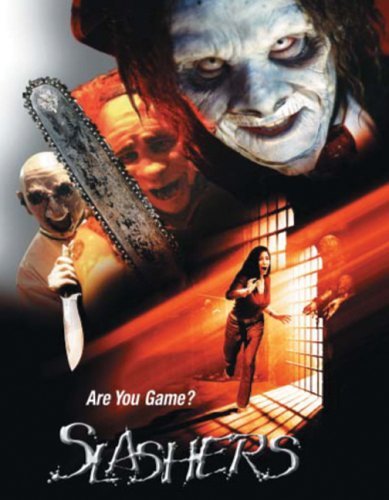
Slashers has been a film I have been interested in since I really ever got into cinema, ten years plus at least for this intriguing premise of a television show about surviving killers. It aptly fits within a period of horror cinema which were keeping their eyes peeled to the growth of reality television. Kolobos (1999), My Little Eye (2002), (which in the early era of DVD had an alternative version where you could change the camera angles with the remote), even Halloween: Resurrection (2002), which was not held as a good film in the slightest but still tried to continue the franchise through reality television tropes. Not a horror film, but worth bringing up to compare Slashers to, is Series 7: The Contenders (2001), in which they are both fictional television shows where the competitors can die. Series 7, in which its cast were chosen by lottery against their will to enter a competition to kill each other, was shot and edited like actual episodes of the show. Slashers, set here as a single episode of a Japanese game show, has willing participants playing for a cash sum where, in the vague premise, you have to survive against three killers or try to kill them if you can for extra money.

Immediately, whilst I will be very positive about Slashers as an idiosyncratic take on slasher film clichés, I will be upfront that the setting has dated and problematic depending on how you view it. Contextually it falls into the exoticisation of Japan as a culture of the perverse and weird, which cannot helped but be noticed in its premise inherently. Japanese game shows can be weird and very painful to their participants, which is something worthy of parodying. I grew up with a repackaged version of Takashi's Castle, when Takashi Kitano wasn't a legendary director/actor but a popular comedian who hosted this show, where just the skipping stones game, with rocks on a pond which occasionally sunk when stood on, could be painful to witness for the competitors who failed. (I also vividly remember clips of another involving inappropriate use of a cactus or two, but sadly, I cannot provide a good enough memory for citation). Providing examples like this does not help still in this one creative choice of Slashers I have reservations of, which really could have been avoided with some tweaks beyond surface aesthetic. This is sad as the film does at least have the decency to cast Japanese actors, who speak in Japanese with onscreen subtitles unless necessary, as this is the first American broadcast which has American participants in the game, a plot in itself that could have negated this issue for myself is we emphasised (even off-screen) how the duplicitous nature of this show is international.

Slashers gets more weight and redeems itself, building up this world in a limited budget first before playing out this game. From the female host in elaborate costumes to their own in-house DJ, the setting works even with the concern I have made. It also has the perfect touch of there being an unseen camera man whose eye is what we see through entirely, not having to worry about being chased or any scenario where it is questionable why he would still be filming as, with even the killers wearing electronic collars, no one is allowed to interfere with his work. The film itself is the entire episode in its entirety.


Its biggest virtue is that this is a subversion of slasher films. It is signalled early on by one female character, a young woman wanting to make a political message, being toyed with by a killer by having her top ripped off, which comes off as lurid until immediately afterwards you realise this is because a) the killer in question Dr. Ripper is a pervert too, and b) the game show is deliberately pacifying its viewers with sex and violence, where another character realises she could survive longer if she strips down to her bra and increase her betting chances. Throughout Slashers the game show, talked of by an ex-soldier who has watched it and knows the rules, it shows itself to be a manipulative programme which forces out the luridness, even having a sex room with a bed where cast can win free time to be safe if they have sex on camera. They are even prompted to explain their back story to add to the experience for viewers. Beyond the environments being designed to separate the players or trap them, Slashers to its credit goes further in mocking the genre, where even the trope of the music becoming more tense for the viewer is talked of, and that the DJ is tirelessly working and is heart by the players in the midst of this to cause them paranoia and panic.

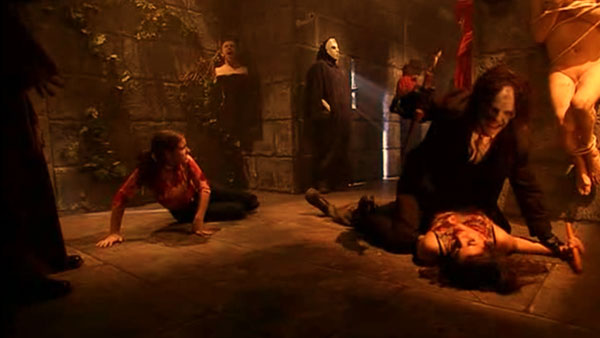
The production value is also perfect, low budget but befitting a fake TV show that has to watch its budget and bear in mind the blood has to be cleaned up. It is a compliment that, if I could have walked on these sets, I would be happy. From creepy clown rooms, to a literal dungeon or a corridor of horror icons, or the main area which looks like a warzone set for a paintball game, the look of Slashers in terms of the sets fit, This is especially as some, like the room all in black with the photos of previously killed players, are as meant to cause psychological effect as they can have actual pits of spikes over a rickety bridge or provide improvised weapons.

The acting, in truth, is shaky. Everyone tries his or her hardest, but almost all the cast never made a film afterwards. The exception, who has appeared in many usually as an extra but has had a healthy career, is Neil Napier who plays two of the killers, the psychotic Preacherman and Chainsaw Charlie, who is providing one of the best performances in both roles. He even gets one of the best scenes, in which in account to those electric collars the cast are frozen in the spot when there is a commercial break, forcing them to interact and even leading to periods of breaking character and arguing as happens with the Chainsaw Charlie figure over the rickety bridge. The tension that scene, where no one can kill each other and a debate of their existence happens, is something you would not have in a Friday the 13th film but is fascinating here.

Details like this are what I like immensely about the film. It still plays with slasher tropes and there are some dark aspects to it - such as a warning to some viewers that there is an attempt sexual assault - but it also toys with them, prodding many which have been pushing me at arms distance from appreciating it as a horror sub-genre. Even when it becomes obvious one of the characters is a bit of a psychopath himself, Slashers' structure is able to turn this on its head too. It overcomes a lot of its limitations by being clever with the structure, far more interesting by deliberately subverting slashers as artifice than Wes Craven's Scream (1996) trying to question them in a normal plot. It was a pleasure. A grim one at times, but never tasteless, the material finding the right balance and succeeding more than my initial interest over the years would have expected.          


Saturday, 14 December 2019

V/H/S (2012)

From https://pics.filmaffinity.com/V_H_S_
VHS-803183291-large.jpg


Directors: Various
Screenplay: Various
Cast: Various

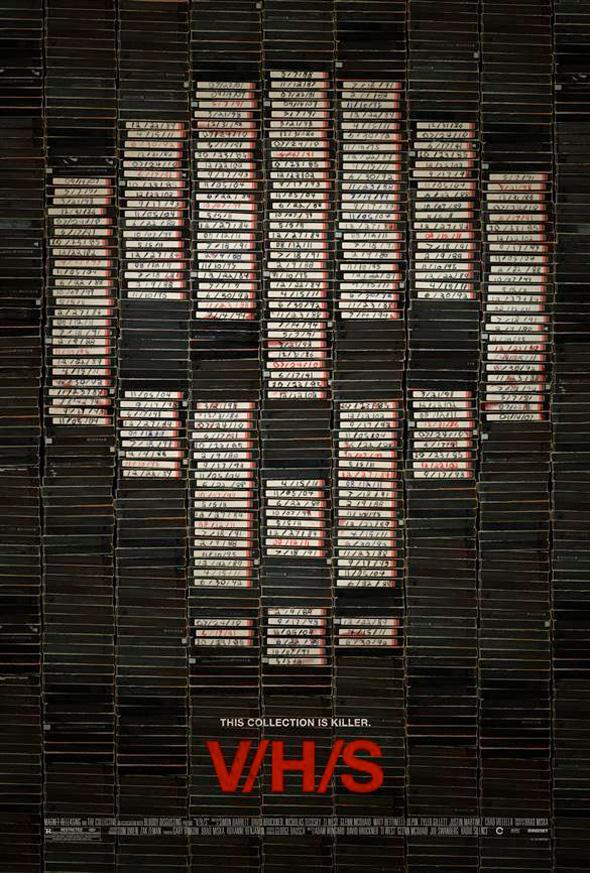
If we look back at the 2010s, we always should bear in mind the last decade's culture washes over the next at first until the midway, where the new era's trends and aesthetics have definitely taken over. The late 2000s gave us the increasing flux of mumblecore cinema, a lo-fi independent movement of American cinema about small dramas, which mutated into "mumblegore" where that aesthetic met horror cinema. Another poignant aspect of this moment is how the circle could encompass figures from genre cinema and mumblecore, such as Adam Wingard being an actor in a Joe Swanberg film. By 2010, films like Ti West's The House of the Devil (2009) were immensely popular or talked about from this movement.  It's not the only movement from the 2000s in the horror genre, but a prominent one.

By 2020, the 2010s changed a bit considerably. A horror film we talk of from the 2010s, probably the most talked of, is Get Out (2017), a film by an African American director about African American characters which tap into modern concerns. Social concerns creep back in considerably.  "Elevated horror", a subjective term for people to use for films they like who don't like horror, exists which doesn't help a really fascinating crop of art house influence, ambitious work. Unfortunately, in these ten years that initial wave of lo-fi creators from the 2000s I mentioned practically dwindle, or move on to higher budgeted work, or vanished. Ti West practically vanished after 2013, and Wingard helmed a Netflix adaptation of a famous manga (Death Note (2017)).

From https://horrorfreaknews.com/wp-content/uploads/2016/05/v-h-s-10.jpg

It's a potentially contrived couple of paragraphs up there, probably lacking a proper historically accurate assessment, and not to dismiss that Ti West eventually went into television work, but returning to V/H/S it feels like an ominous warning that the initial high wave for that late 2000s movement was going to capsize. The horror anthology, crossed with the found footage subgenre, was challenged for its obsession with white hetero male characters, a lot of stories surrounding dangerous female characters, a lot of female nudity, and questions to whether it was actually good with its curious crossing of the growing obsession with VHS tapes and the small boom of anthology horror films in the 2010s. It's already a time capsule at the end of the decade in the horror genre.

One of V/H/S's biggest issues is the wraparound by Adam Wingard, Tape 56, isn't good. Many won't be on board the story as it follows an incredibly loathsome group of young men, creators of shock tapes who at one point accost a woman and expose her bared breasts to camera against her will, so the segment's already at a disadvantage unless you are comfortable with stories following awful people. I don't mind, belonging in the later camp, here a potential cynical comeuppance suggested as their greed to acquire a videotape at a man's house will do then all in, but the segment (interspersed between others) is barely sketched out and abruptly ends. It's not even that I just wanted to punish loathsome bros either, as for myself horror is much more interesting when its either complex or dark morality fables of the worst in human beings to look at like a mirror, a story of potential interest as bastards whose line of work pulls them into a doomed situation they could've avoided if they thought honourably for once.

It's strange considering, out of the set of directors, Adam Wingard (with screenwriter Simon Barrett), the most successful of all those involved, fell the hardest in making that segment, even in mind they were in the midst of making You're Next (2011) around the same time. David Bruckner, co-director of one of the segments of The Signal (2007), who hasn't made much at all, does better whilst still tackling obnoxious bros finding their comeuppance, these ones acquiring cheap camera spectacles to record sex with a drunken female bar patron or two, individuals most wouldn't have sympathy with either. Amateur Night works entirely because of actress Hannah Fierman, playing a strange female figure that tags along and is revealed to not be human; distinct, with giant brown eyes, she steals the entire anthology in terms of a performance, and tragically didn't do much beyond this film that is known. Even under later prosthetics, she has a mix of the animalistic and strange sympathy in her acting, when everything turns south for everyone else, that I have to applaud her. Obviously as well, in an anthology film with a lot of nudity, it would've been a brave performance for her and her stand-in anyway to have to act in a potentially exposing role completely naked and covered in fake blood.

From https://m.media-amazon.com/images/M/MV5BMjE2OTg4MzcyNV5BMl5
BanBnXkFtZTcwNTgzNzAxOA@@._V1_CR0,60,640,360_AL_UX477_CR0,0,477,268_AL_.jpg

After this we get the curious history of Ti West, whose Second Honeymoon is a slow and dialogue heavy psychodrama of a couple (including anthology segment director Joe Swanberg) effectively in a mumblecore minimalist thriller which is an acquired taste, out in rural Americana and being possibly stalked by a third figure. The kind of segment whose abrupt synchronicity, where a fortune telling machine they improvised around managed to provide them with a fortune directly connected to their plot, is worked with. The issue is that, unlike some mumblecore films I've seen, it's sluggish with little reward and too short for characterisation. Ti West' career has been a rollercoaster with a drop at the end, the emperor of horror off the popularity and acclaim The House of the Devil got but into the 2010s meeting diminishing returns critically. Around this time his segment for the first ABCs of Death (2012), an anthology series I really adore, notoriously was criticised for being lazily put together and tasteless as it had a miscarriage as the twist, even in a first film where a ridiculous amount of toilet based segments and indulgences made put off people beforehand. When I mentioned earlier he disappeared, I am referring to the last film of his which got some advertising, The Sacrament (2013), whilst I have heard none of the films he made afterwards into the current day.

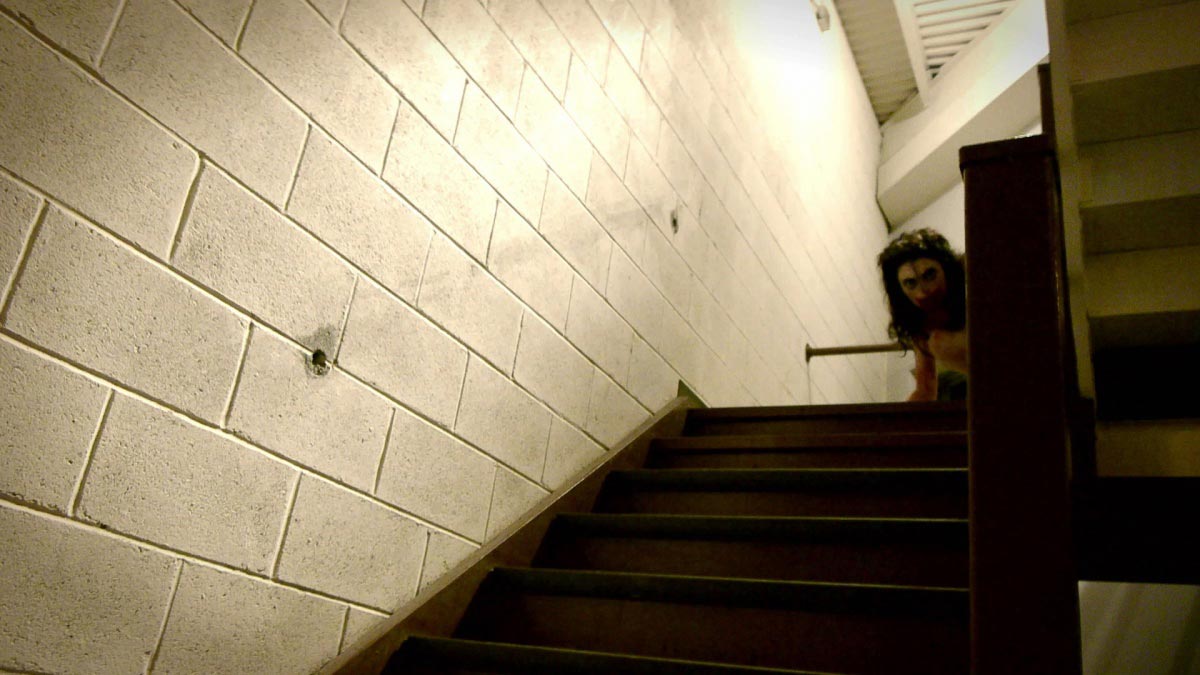
Glenn McQuaid, who made I Sell the Dead (2008) but has also had difficulty making more films, decided to make pastiche of a slasher film, one where the medium itself is prodded with. Subjectively, the original V/H/S is the only one of the three films that follows the actual premise, reflected the growing interest in VHS tapes as those old enough to have grown up with them in the United Stated became nostalgic for the medium - that all these segments are videotapes in the wraparound collected by an unknown source. Even then, whilst the most faithful to the original idea, the original film of the trilogy doesn't really push the concept at all, the exception really Tuesday the 17th which makes an interesting stab with a phantasmagoric and invisible killer who is only noticed the camera as a glitch. It still plays like a slasher, but reduced to a short, it does overcome an issue I have had with the sub genre that I always turned off whenever they got to the prolonged stalk and slash scenes, and the chase scenes, even though they are the main selling points of slasher films. Here there's also a creepier edge as this killer is a literal phantom, something which defies logic as inevitability as Jason Voorhees was at Camp Crystal Lake.

Following this, Joe Swanberg steps behind the camera and keeps the bar high with The Sick Thing That Happened to Emily When She Was Younger. Swanberg was the odd one out from the directors involved, an innovator of the mumblecore movement alongside Andrew Bujalski and others who didn't make horror films at this point. This proves a virtue as whilst trying to include the short in the anthology is awkward, a Skype call recorded onto a videotape, it's a perfect take on a short horror tale. A creepy one at that, a disturbing one of minimalism and manipulation I won't spoil, baring that set around a series of Skype calls between a young woman and her boyfriend, it brings in science fiction and is entirely about the fear of control. It also feels like a cap on the trend throughout of men trying to have control of woman which is a sub current throughout, in which this is the ultimate condemnation. Even the use of nudity becomes uncomfortable in this case and voyeuristic on purpose.

From https://www.filmofilia.com/wp-content/uploads/2012/09/v-h-s-15.jpg

Ending the anthology is Radio Silence's 10/31/98, which I have softened to even though it's still more of a technical exercise out of the anthology, playing to the videotape aesthetic by being set at that time and yet involving some obvious CGI for when hell breaks loose. In this case, a group of bros break the trend of how they've been acting so far to try to help someone when they accidentally stumble into an exorcism. You could argue the twist undercuts this and is crass, but I can see why the production decided to end on this rather than the wraparound, as if has the most high impact effect. Being a traditionalist, you should end on a wraparound unless it's really good, but it was the wiser decision considering the blank squib the framing story turned out to be.

Radio Silence itself fragmented. Of interest is how two members, Matt Bettinelli-Olpin and Tyler Gillett, collaborated on Ready or Not, a 21st Century Fox release which, even if it got an 18 certificate in the UK, got a good wide release at multiplex in 2019. That's a nice epilogue, returning to this review's prologue, that there are figures from this that did continue on and even jump up the ladder in scale of their work. It's a reminder that the early 2010s anthology boom was a huge virtue in terms of letting talent grow and veterans re-sharpen their teeth, a horror subgenre that deserves to be a constantly funded source as it was back at this point.

The original V/H/S is the weakest of the trilogy, which is controversial to say because I'm arguing V/H/S: Viral (2014), the last and least regarded, is actually better. V/H/S 2 (2013) is arguably the biggest hitter, though controversially I feel that the segment that caught everyone's attention, Timo Tjahjanto and Gareth Evans' Safe Haven, had that effect just for how insane and bloody it was. (The real treat for myself, and the one found footage film which got over the logic issue of why a camera would be left on recording in these incidents, was the one where a cyclist with a head mounted camera ended up in a zombie apocalypse, befittingly helmed by Eduardo Sánchez and Gregg Hale, one half of the directors and the producer of The Blair Witch Project (1999) who inspired these found footage films in the first place.) After Viral, this franchise alongside The ABCs of Death subsided and ended, this particular franchise burning the candle at both ends considering how these films were released over only three years. It's a shame as I'd rather have horror franchises like this continue on, letting new talent and veterans work, than a terrible string of sequels and straight-to-video (digital?) work based on a good film that shouldn't have stretched further on. Returning to the original V/H/S, I've softened to it and find fascination in its grimy VHS fuzz tone even if it's really a marker of how all the influences in the film were going to disappear eventually, just from how divisive it was when reviewed. I'm glad the tone drastically changed, just one film like this enough to suffice.

Abstract Spectrum: Lurid
Abstract Rating (High/Medium/Low/None): None


From https://i2.wp.com/projectedfigures.com/wp-content/uploads/2016/
06/ba6pulsrtdlek05rky4w.jpg?resize=620%2C400

Wednesday, 3 July 2019

V/H/S: Viral (2014)

From https://d1nao0k9edgivc.cloudfront.net/
wp-content/uploads/2014/05/VHS-3-poster.jpg


Well, I have covered the V/H/S franchise so it's for the best I get to what was left. V/H/S (2012), which I viewed as a failure as many did but now is worth revisiting, was a curious case in the boom of horror anthologies in the early 2010s which purposely ran with the growing obsession with both VHS culture, the obsession with found footage sub-genre, and (with the directors involved) individuals who circled around the mumblecore movement since the 2000s. V/H/S 2 (2013) was seen as a success, mainly because of the segment by Timo Tjahjanto and Gareth Evans where a television interview with a religious cult goes south as nastily as possible. V/H/S: Viral, when the horror anthology wave hit its peak and subsided, was met with a resounding whimper. It's worth noting that, whilst there was a danger visibly seen that this movement just trapped interesting genre directors into just making anthology segments, the early 2010s horror anthology boom was absolutely worthwhile in just allowing figures of all kinds to get some creative space; I will gladly defend The ABCs of Death series, but there were others, and V/H/S was seen as the other biug rival who got more than one film. Both have subsided since the mid-2010s however.

From https://66.media.tumblr.com/d8703b3e8b66181d28249ff9bdb08558/
tumblr_inline_ndxnz1yL8K1s3nw3m.png

Vicious Circles
Director: Marcel Sarmieto
Screenplay: T.J. Cimfel, David White, and Marcel Sarmiento
Cast: Patrick Lawrie as Kevin; Emilia Zoryan as Iris; Steve Berens as Cop; Stephanie Silver as Eva; Angela Garcia as Carolina; Gary Sugarman as Lewis

The V/H/S franchise gimmick is that all the segments including the wraparound have to be found footage, as if footage found after an incident the viewer watches. It originates (to my knowledge) with Ruggero Deodato's Cannibal Holocaust (1980), where the cannibals are in a film recovered within the initial film we the viewers watch. The Blair Witch Project (1999) was the one which cemented this sub-genre of horror, but it wasn't really until into the 2000s, and especially after Paranormal Activity (2009) became a phenomenon, as a low budget production scooped up by a major Hollywood studio and reaping financial success, where there were so many being made due to their cost effectiveness.

It is however a logistical nightmare as, unlike documents within a piece of literature or a comic, the presence of being "live" within an incident leads to logic gaps such as how the camera is still on regardless of what horrifying events are taking place or how, unless from one camera, it is all spliced together. V/H/S II had the best idea for this for one segment where, by bad luck, a BMX enthusiast with a helmet mounted camera on his head was turned into a zombie, not surprisingly from the directors of The Blair Witch Project who, give or take that film's own logic gags, tried to get around this issue. Viral gives up trying from the beginning, instead the logical holes replaced with a fetishism of all recording mediums spliced together from various recording formats by an unknown form.

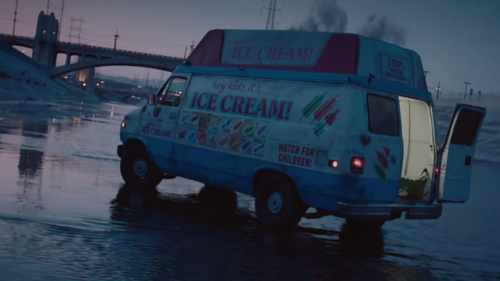
One visibly sinister as, controversially, the much hated wraparound to this sequel is a strange beast, one even more controversially I'd watch again over any of the other segments. Despite its disjointed nature, having to act like a wraparound without context, and a deeply problematic caricature of Hispanics falling out at a BBQ, Marcel Sarmieto's bizarre anti-internet trending epic is the one insanely ambitious, mad and visibly higher produced yarn where our collective obsession with becoming popular online, filming accidents and deaths, literally turns into a John Carpenter approved doomsday scenario at least for the entirety of Los Angeles. All by way of a police car chase with an ice cream truck, one where said truck absorbs peoples' girlfriends, infect people through their phones with bleeding from the nose, and purposely speeding in circles across Los Angeles to deliberately maim and cause deaths to as many bystanders it can, even those recording the chase, in a delirious spectacle that feels completely alien to any of the V/H/S franchise, even the beloved second film segment about the religious cult, in scale and complexity in making. The director made the divisive Deadgirl (2008), which I hated, but we meet again over the years and he keeps surprising me with work like this.

Vicious Circles' only issue for me, barring the stereotypes, is that it's a bit of a mess in plotting and especially in editing. You still have an insanely large scale production - with stunt work, speeding cars, a city environment with panorama shots over the city and many extras - which is insanely difficult and just insane to have went to for what is an anthology structure meant for smaller scale stories in-between. Sarmieto produced this, and his risk in doing so, the internet literally sentient and about to upload until our brains melt, was meet with badly despite it effectively wrapping up the questions about the franchise's lore into an ambitiously oddball segment.

From https://m.media-amazon.com/images/M/MV5BOTc2NDQ2MDY5NF5BMl5BanBnX
kFtZTgwMjYzMDQyOTE@._V1_.jpg

Duke the Great
Director: Greg Bishop
Screenplay: Greg Bishop
Cast: Justin Welborn as Dante the Great; Emmy Argo as Scarlet Kay; Dan Caudill as Detective Gregory Hugues

Bishop made the popular horror-comedy Dance of the Dead (2008), and he here hits upon a funny idea, in which an egotist who wants to be a successful magician finds a cape with actual magical power...only with the caveat that it needs to be sated with human flesh out in a while to cooperate. Again, as a hybrid of a documentary with security footage and Duke's own recordings, it tries to make sense but eventually is still a mess in terms of the "found footage" tag, giving up in the end as it'd ruin the (legitimately good) magician versus SWAT police fight at the end trying to figure out who is recording it all. Probably the biggest compliment to make as well, in lieu to that ending, is that production wise this manages for more inventive uses of special effects than a lot of higher budgeted blockbusters, which Bishop should've been proud of.

From https://vignette.wikia.nocookie.net/horrormovies/images/7/79/MV5BNTI1MzM3Njk4NF5BMl5BanBnXkFt
ZTgwNjM1NjEwMzE%40._V1_.jpg/revision/latest?cb=20171214161231

Parallel Monsters
Director: Nacho Vigalondo
Screenplay: Nacho Vigalondo
Cast: Gustavo Salmeron as Alfonso; Marian Alvarez as Martha; Xavi Daura as Oriol (1); Esteban Navarro as Oriol (2)

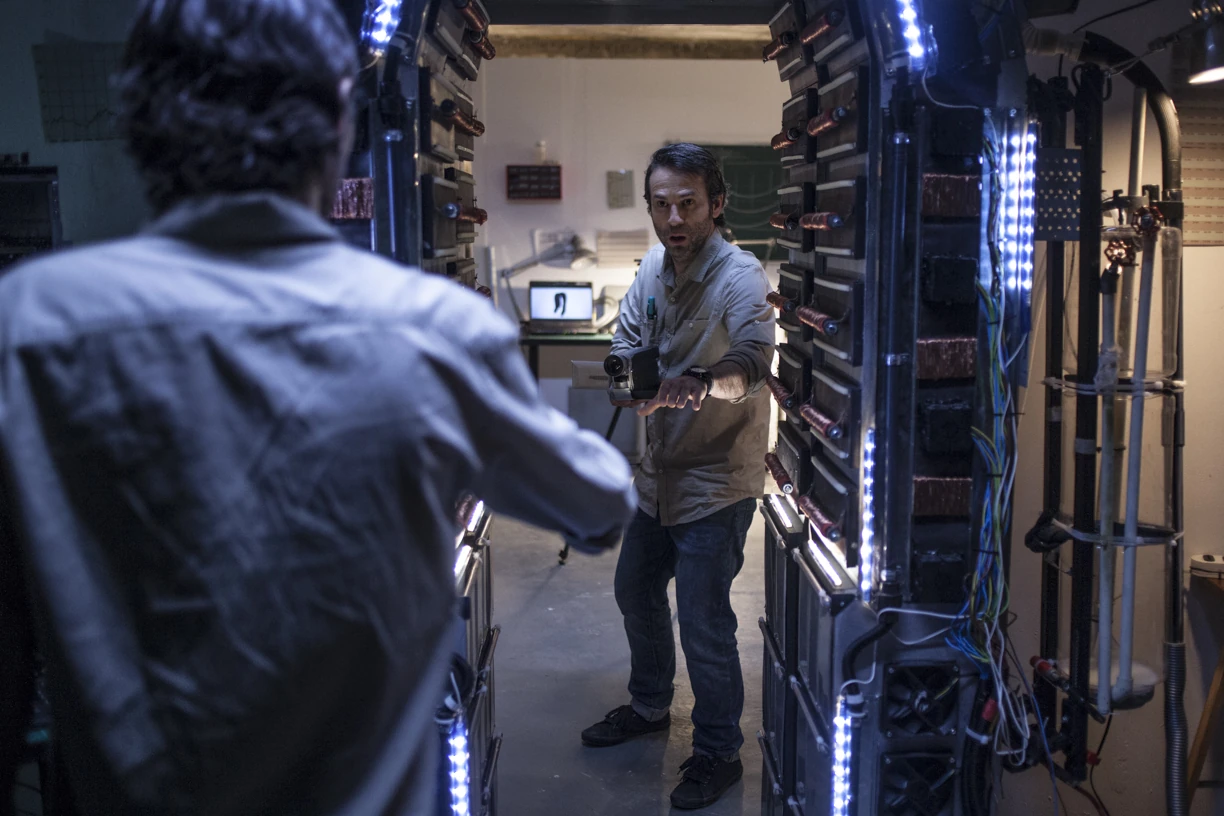
Vigalondo is probably the most well known figure in a directors' seat for this anthology. I am surprised that, though the Spanish director has made a lot of films in his home, up until his English language debut with Anne Hathaway (Colossal (2016)), probably the most well known film of his was still his international breakout Timecrimes back in 2007. Here he has an intriguing premise, exemplifying the dangers of inter-dimensional travel where a man meets himself only for the various cultural and physical differences to be an issue when they exchange places briefly. The found footage structure again raises questions, as it involves two different sets of camera footage having to be spliced together, but it's still the most precise example of we follow the two versions of the man filming each other's exploration. Getting into the bizarre with David Cronenberg approved body horror, it's a fun segment if fun evokes squeamish sentient phallus.

From https://bloody-disgusting.com/wp-content/uploads
/2014/08/VHS-VIRAL-1.jpg

Bone Storm
Directors: Justin Benson and Aaron Scott Moorhead
Screenplay: Justin Benson
Cast: Nick Blanco as Danny; Chase Newton as Jason; Shane Bradey as Taylor; Cristián Toledo as Sam

Honestly the issue with V/H/S: Viral is that it's just okay, not as toxic and bad as some reviews have suggested, but merely a watchable horror anthology. The duo behind films like The Endless (2017) clearly desired to see skateboarders fighting undead cultists in a Mexican industrial area, shot through cameras and head-cams, and that's what we got in terms of a visceral entertainment. Honestly though, a blend of carnage intermingled with potentially annoying protagonists, it's difficult to judge beyond this as it's entirely from the gut where your pleasures lay. And that's a more damning issue, the real issue, among horror anthologies in general in how they can be difficult to review as, take them or leave them, many segments even in the golden era of this format could just be ok scary stories.

Whilst, again, I want to visit the first V/H/S again, this particular franchise since the beginning, tapping into the VHS nostalgia too tentatively, really tentatively when you compare it to a work like Hi-8 (Horror Independent 8) (2013) which actually followed the rules of no-budget video genre filmmaking, has always felt a bit of a mess when even The ABCs of Death at least had a structure. After this, unlike The ABCs of Death which has turned into The Field Guide to Evil in 2018, V/H/S disappeared, all with a sense that especially after the wraparound there was little else to go with even if it was ridiculous....

...except that there was a bonus segment I didn't even learn of until finally seeing Viral...

From http://cdn.collider.com/wp-content/uploads/2015/03/v-h-s-
viral-gorgeous-vortex-jayden-robison.jpg

Glorious Vortex
Director: Todd Lincoln
Screenplay: Todd Lincoln
Cast: Jayden Robinson as The Empress

Glorious Vortex was deleted from the initial version of V/H/S: Viral, reinstated at the end after the final credits on the DVD and eventually released by itself online. It is a non-linear horror segment which surprisingly buddies up to Nicolas Winding Refn's The Neon Demon (2016) despite being made some time earlier, all about a model who in the various fragmented sequences is involved with a secret cabal up to both human experimentation, and the torture and maiming of young women. Vampire parallels arise as does the all pervading sense of everything for the lead being within a family. Then you meet the thing at the end at a certain group meeting and you are fully able to confirm that idea.

Gorgeous Vortex, when it's been championed as being better than the entirety of V/H/S: Viral itself, is also unfortunately pretentious and actually one of the dullest anthology segments I've seen for a long while. I wish I could end on a happy ending, but it's an example of surface images (some striking like the lead actress in appearance, others with the images of bound up and distressed women which evoke the myths of snuff film-making) which never convalescence into a fully formed piece that you emotionally grapple with.

I'm glad it wasn't included in V/H/S: Viral as it represents the worst of watered down, bland avant-garde weirdness, confusing vagueness with none of the risk of true weird cinema, an argument that can be legitimately made for Vicious Circles. That wraparound, befittingly the subject that starts and ends this review, has a much more artistically riskier and stranger tone to itself, in which a boyfriend with an unhealthy habit of filming his life, his work flickering in non-chronological memory over itself, pursues the evil ice cream truck to rescue his girlfriend over increasingly chaotic incidents. Even the problematic Hispanic caricatures, involved in crime as stereotypes, is at least softened by the farce that their piece ends in (where, even as a dog lover, the gag using a barbecue fork was sickly funny). The fact that, the more you think about it, the segment suggests that the Apocalypse or just the downfall of Los Angeles will be caused as much by YouTube cat videos rather than lurid real footage of death is itself far more subversive than anything Gorgeous Vortex could suggest in mere artifice; certainly its ending is weirdly haunting, seemingly shot in the Los Angeles River, with ice cream van jingles scoring the quietness after all the carnage that has taken place.

Abstract Spectrum: Grotesque/Psychotronic
Abstract Rating (High/Medium/Low/None): None