Director: Bertrand Mandico
Screenplay: Bertrand Mandico
Cast: Pauline Lorillard as
Romuald; Vimala Pons as Jean-Louis; Diane Rouxel as Hubert; Anaël Snoek as
Tanguy; Mathilde Warnier as Sloane; Sam Louwyck as Le Capitaine; Elina Löwensohn
as Séverin(e)
Synopsis: Five boys (played by actresses Pauline Lorillard, Vimala
Pons, Diane Rouxel, Anaël Snoek and Mathilde Warnie) are as extreme as you can
get as delinquents - hooligans, blasphemers, lovers of literature, and
"wild boys" who after raping and accidentally killing their
literature teacher find themselves with a sea captain (Sam Louwyck) whose harsh behavioural punishment is contrasted by
the strange island he leads his boat to. The island is a paradise with wonderous
flora, but drastically changes a person physically when they stay there for a
long time, something the current occupier Séverin(e) (Elina Löwensohn) can attest to.
[Spoilers Throughout]
 Starting in the early 2010s, Bertrand Mandico has spend his career in
short form films until The Wild Boys,
now planting his idiosyncratic flag into a theatrical length feature I
sincerely hope catches a lot of attention for him and allows his work to be
known. He openly absorbed a lot of influences to make The Wild Boys - and research will show he'll openly discuss those
influences even on little details - but he is however also his own person, one
still hard for me to define but one that is very aesthetically rich, very
transgressive but in a very pansexual form and, like Guy Maddin, pulls from various genres and influences openly. Unlike
Maddin, the differences in his
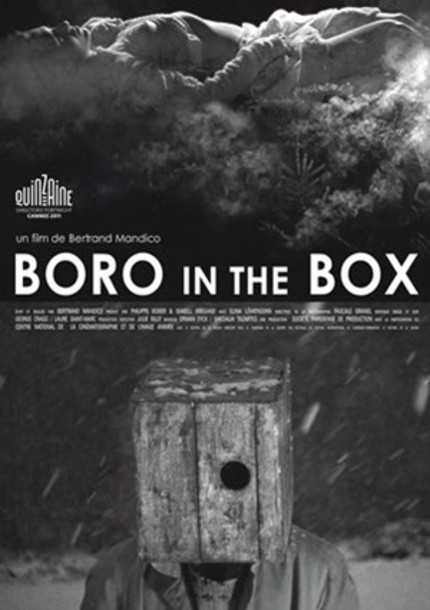
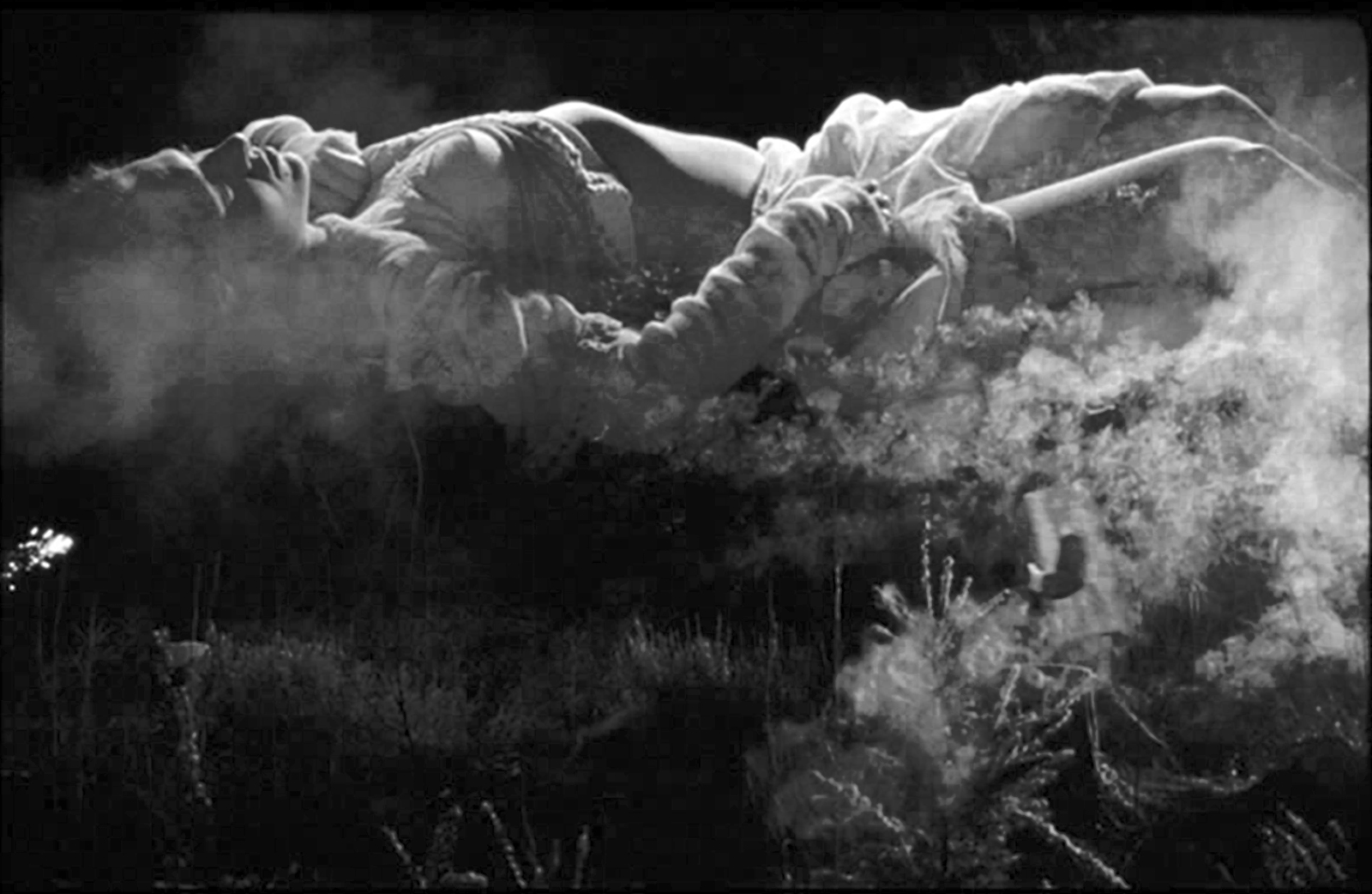
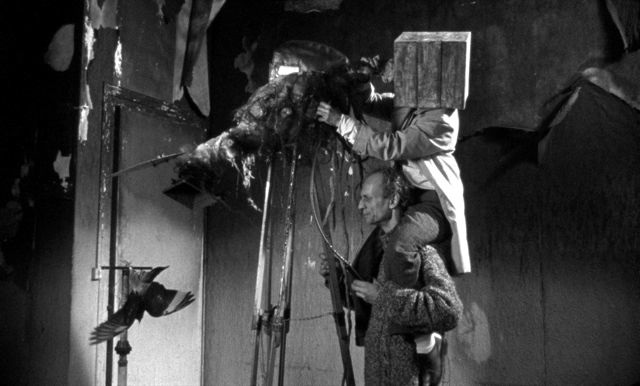
choices are themselves signs of his themes - Boro in the Box (2011), effectively his true debut was a perverse
"biography" of Walerian
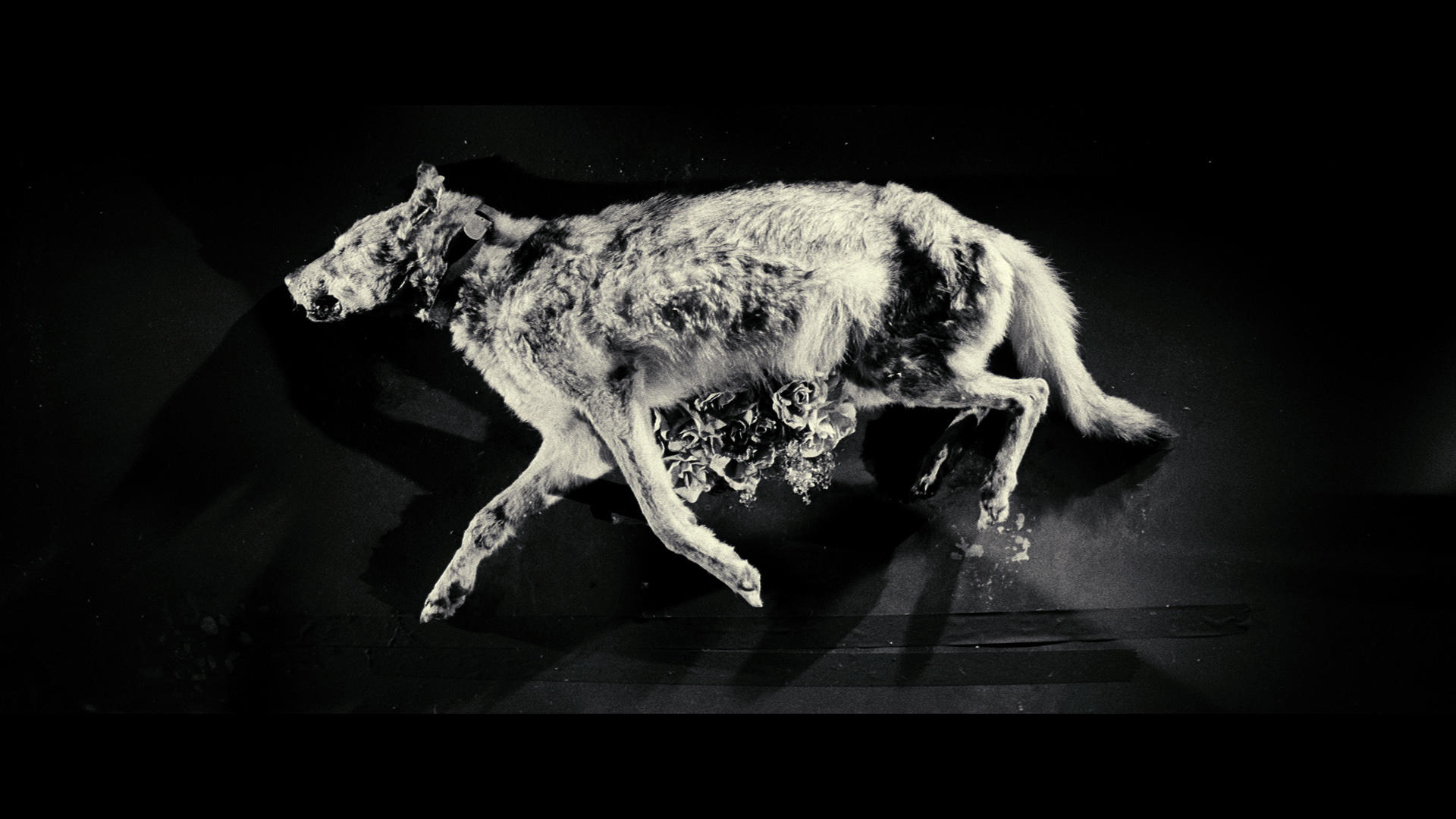
Borowczyk, Living Still Life (2012)
taking animation to its literal extreme with Elina Löwensohn (and the director himself) reanimating actual
animal corpses, and The Wild Boys
taking boy's own adventure storytelling but, in casting women as the boys,
openly flaunting homoerotic, queer and feminised punkish sensibilities. It's
like Derek Jarman's Sebastiane (1976) to find, clutch, any
real tonal comparison; the punk sensibility but filtered through that similar
queer slant and elegance, if to be his trademark in later features, is definitely
a different attitude to Maddin if
any...
Starting in the early 2010s, Bertrand Mandico has spend his career in
short form films until The Wild Boys,
now planting his idiosyncratic flag into a theatrical length feature I
sincerely hope catches a lot of attention for him and allows his work to be
known. He openly absorbed a lot of influences to make The Wild Boys - and research will show he'll openly discuss those
influences even on little details - but he is however also his own person, one
still hard for me to define but one that is very aesthetically rich, very
transgressive but in a very pansexual form and, like Guy Maddin, pulls from various genres and influences openly. Unlike
Maddin, the differences in his
choices are themselves signs of his themes - Boro in the Box (2011), effectively his true debut was a perverse
"biography" of Walerian
Borowczyk, Living Still Life (2012)
taking animation to its literal extreme with Elina Löwensohn (and the director himself) reanimating actual
animal corpses, and The Wild Boys
taking boy's own adventure storytelling but, in casting women as the boys,
openly flaunting homoerotic, queer and feminised punkish sensibilities. It's
like Derek Jarman's Sebastiane (1976) to find, clutch, any
real tonal comparison; the punk sensibility but filtered through that similar
queer slant and elegance, if to be his trademark in later features, is definitely
a different attitude to Maddin if
any...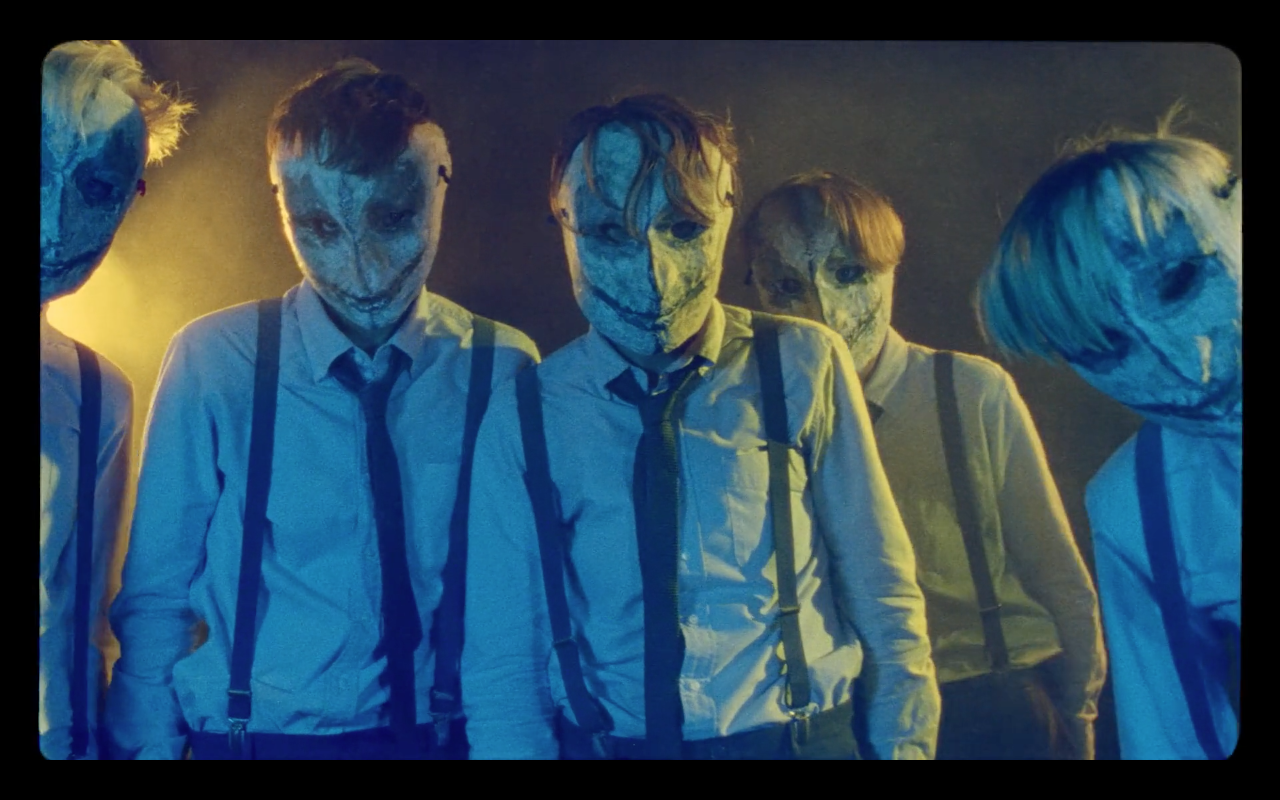 |
| From https://assets.mubi.com/images/notebook/ post_images/26589/images-w1400.png?1536751720 |
There are also the little production differences. That, for his film which takes place on the sea and eventually a strange and curious island lost in the ocean, he actually did film at Réunion, in the Indian Ocean, and merely blended the real life natural landscape into his own worldview. That and the specific blend of the materials such as the casting of the Wild Boys themselves, including a couple of noticeable actresses like Vimala Pons, who play their roles completely straight, someone like Pons throwing herself fully into the most amoral and macho of the five wild boys, whilst everyone has very idiosyncratic stylistic ticks. This gender subversion as a major stylistic choice also leads to the plot itself.
The island itself, when finally
introduced is a paradise, with flora Fantastic
Planet (1973) would be proud of it with its living tendrils and woman
shaped bushes to have sex with. In among all the explicit sexual references,
said flora consists of various sight gags such as that bush's form or the
phallic buds which you can drink very white liquid from for sustenance. Its
fruit, hairy and slimy, is introduced very early on and is so explicit in
sexual meaning it would be absurd for me to blatantly signpost, all coupled
with the fact that eating said fruit and maybe other factors causes a literal
"feminisation" of the male body, turning men into women. If there is
a deeper message to The Wild Boys
aside from being an aesthetic feast for the eyes, wrapped in its own world and
form, it's this subversion through a plot McGuffin, as happened to Dr.
Séverin(e) as played by Elina Löwensohn.
The former titular star of Nadja (1994), and effectively Mandico's muse, plays a Henry
Morton Stanley type in a white suit who turned into a women when he stayed
on the island he and the captain found; having decided to reduce the amount of
war and violence into the world, he decides to "feminise" it through
the island's natural resources, starting with our five miscreant boys.
 |
| From https://medias.liberation.fr/photo/1100427-jpg_ bateau-2jpg.jpg?modified_at=1519765233 |
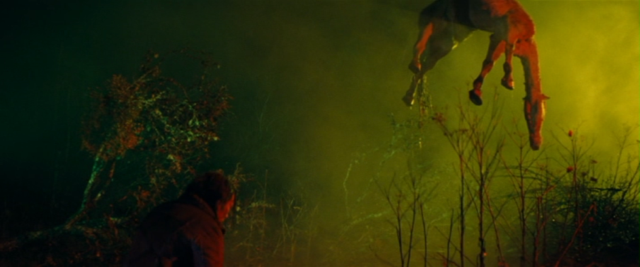
As from the beginning of Mandico's work, he's been openly transgressive; willingly push taboos which may offend some. How the boys got to this position is such a case; explicitly set in the early 20th century, so Mandico openly quotes from the streak of transgressive literature from the time as the boys, in grotesque genderless masks, accidentally kill their teacher when, having raped her in a toxic Dionysian frenzy and tied her to a horse, end up with said horse taking her off a cliff, not pulling any punches in the material from then on. Mandico however from then on takes it further to an equal opportunity mentality when, thinking they have escaped punishment and openly deciding to go with the Captain (Sam Louwyck) out of their free will, the boys learn to late his behavioural training places them his captives.
The gender subversion itself is
part of this, the blurring androgyny of masculinity with breasts, the Captain
not only having a map tattooed on his penis but one mere breast due to the
effect of the island, and the actresses acting like boys with their short hair
and costuming. Through what I have seen, Mandico
is able to be very extreme but in a way that's never lurid, a fantastique
streak through his films which has let him get away with his more extreme
moments alongside his open desire for gender equality in the transgression. The
later is a fine point that must be considered more often when dealing with
transgression in cinema - it is a nuance that can drastically help a film,
particularly as Mandico gives all his
actresses in his films very good roles, in among equal opportunity full frontal
nudity and in this particular case the best example in all cinema, of any
genre, of someone's penis inexplicably falling off and having to be buried on
the beach. Whilst he will offend, he offends with disregard for gender binaries.
 |
| From https://i.ytimg.com/vi/qMAU4LZ1EFE/maxresdefault.jpg |
Tonally, the comparison to Guy Maddin is apt, although you imagine Jack Smith if he had a budget would want to make films this glamorous - the monochrome aesthetic intercut by hazy coloured sequences of neon purples, blues and other striking colours reminiscent of silent cinema aesthetic Maddin uses but with Smith's transgression and Mandico's own grit. That's strange to think, considering especially Maddin has gotten away with transgressive material throughout his own career, but as much of it is the matter of fact nature - Mandico shows nonchalantly what Maddin exaggerates with a sense of humour. Alongside the French fantastique displayed here it's definitely his trademark.
His philosophy for all this? Punk,
as mentioned, feminist definitely, as the actresses are a huge factor to The Wild Boys' success in both their
committed acting and the gender subversion in plot and iconography shown. As
the boys, they are pretty young men but dangerous, wild energy coursing through
their veins which lashes out in dangerous ways, all five with distinct
personalities. The Captain adds more as a combative figure tormenting them -
more perverseness with his tattooed penis but a complex trajectory as a hard,
cruel man who yet loves his pet dog and is revealed to have an honourable
purpose to his cruelty, even if it involves nearly strangling young boys to death
with collars on a boat which can be pulled in. And Elina Löwensohn strides around like a living colossus - she, with a
healthy career alongside her Hal Hartley
work and newer films like this or Hélène
Cattet and Bruno Forzani's Let The Corpses Tan (2017), having
roles like this one she can be proud of.
 |
| From https://blogi.kultuur.info/wp-content/uploads/ 2017/11/les-garcons-sauvages-6-2.jpg |
Abstract Spectrum: Dreamlike/Psychotronic/Transgressive/Weird
Abstract Rating (High/Medium/Low/None): Low
Personal Opinion:
From his debut, around the time
of Boro in the Box, Mandico has started perfectly. Arguably
a film like Boro in the Box is
worthy enough to be a debut even at only forty minutes, but The Wild Boys would be a perfect way to
introduce him to many, with a combination that'd appeal to both cult and art
house audiences. The obvious question is whether Bertrand Mandico will ever get wider recognition, and what he will
do now he's finally made a feature; the question of what a second film will be
like, (and hopefully he'll make a second theatrical length film), is effected
as much by what ideas he still has and what he can do as a follow on. Now I
have utter admiration for him, coupled by grievance in the difficulty now in
seeing his other work, it'll be interesting if he continues or if The Wild Boys is sadly a one-off.
 |
| From https://www.crossingeurope.at/uploads/tx_filmdaten/ CE18_NS_Les-garcons-sauvages_The-Wild-Boys_2_K18.jpg |