Showing posts with label Miu Miu Women's Tales. Show all posts

Saturday, 6 February 2021

Miu Miu Women's Tales Part 3

Ephemeral Waves


I'm not sure how to include the MIU MIU clothes in the movie yet.


The 2018 Films

In terms of figures giving a chance at creating a film through the Miu Miu Women's Tale project, former child actor Dakota Fanning is a distinct choice, particular as her career has also included modelling, a perfectly apt choice to have Fanning direct a short called Hello Apartment for them as a result. It does admittedly cause me to feel old when, despite not that much age difference between us, the image I have of Fanning is as said child actor starring in the likes of Tony Scott's Man On Fire (2004), not the adult actress in films like Once Upon a Time in Hollywood (2019).

Hello Apartment for a first time filmmaker is well made. Entirely based around an apartment, where a young woman buys it and furnishes the walls, we see a life within the environment which is not an original idea but always an effective one nonetheless. We see all that transpires including the house warning and romance, but also the eventual breakup. Also many split liquids on the wooden flooring like wine, the marks and stains as part of the personality of the apartment as an entity. It is not the best of the series, but assured as a debut, said debut is a good one you could build from if Fanning ever wanted to make more films.

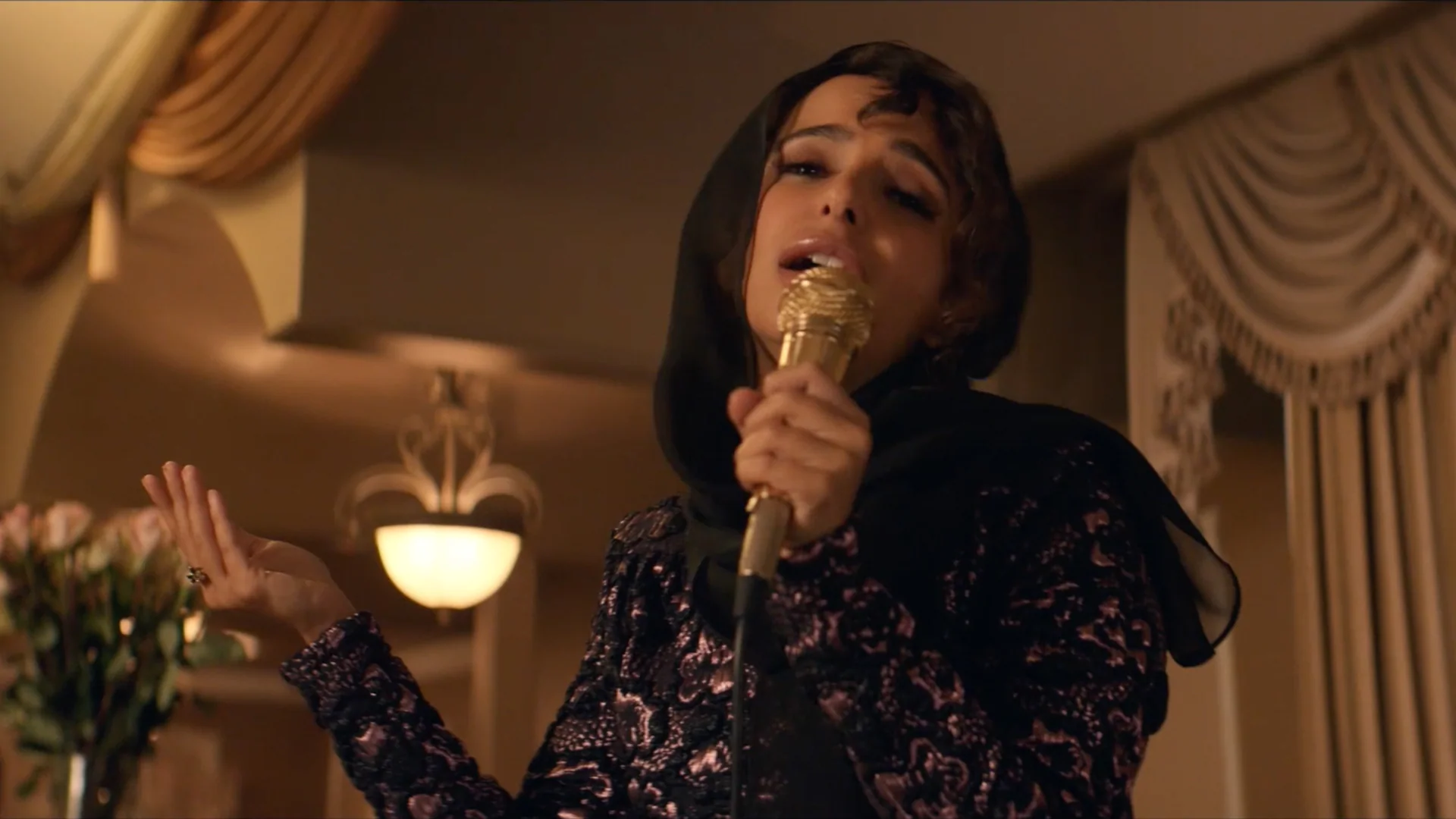
In the same boat, but for other reasons, is Haifaa Al-Mansour's The Wedding Singer's Daughter, the first female Saudi Arabian filmmaker with a segment which is okay but in context is still well made. Having made Wadjda (2012), Al-Mansour would eventually immigrate to the United States, and this comes to mind with the fact impossible to ignore of Saudi Arabia's history of gender politics even into the modern day1, something the short touches upon. Set in Rigadh in 1980s Saudi Arabia, we follow the young daughter of a wedding singer, the main narrative that, in the midst of a performance of her mother for a wedding, suddenly the electric cable for her microphone is disconnected and her daughter goes to find it. This is inherently political in regards to Saudi Arabian attitudes to women's behaviour, a vast contrast in the Miu Miu designed costumes when the women by themselves are uncovered, and when they have to cover up when the men appear. (Or when her daughter overhears someone saying all singers go to Hell from a random speaker). It is a solidly made film, not one of the best for me, but in terms of taking this project and allowing all voices to speak, Al-Mansour's is a distinct contrast, particularly in terms of back-story as the film was shot in the United States. She would return to her homeland for The Perfect Candidate (2019), but she has immersed herself in American cinema and television for the most part in her career.


The 2019 Films

At first, Hailey Gates' Shako Mako suggests another film set in the Middle East, another tale of life from the perspective of women in that region only from a country where the US military are based at and bombings are frequent, as what happens in the street for a female bread seller in the opening. Things are not what they seem, as this was actually a staged performance, a phantom zone for training US military where the bread seller is actually an extra who we then see behind the scenes, at lunch awkwardly contemplating with an amputee actor whether to get one of her own limbs removed to get more work. No one speaks Arabic on location, and the costumes as she points out are from the wrong country. It is a fascinating little drama, of a lead who, in who spare moments has a scene filmed of her in a Miu Miu brand dress for an acting reel, other times is training soldiers to learn of the environments they will be placed in including practice by the women to pickpocket objects off them. It is a film which I am glad is here, an interesting film, and also with the unexpected delight of Free's All Right Now being sung in Arabic, which is delightful as a cover.

Lynne Ramsay's Brigitte, in vast contrast, is probably the curveball of the series because it is a documentary short of French photographer Brigitte Lacombe. Shot in black-and-white, this is unconventional including the pre-shoot interview being spliced over the images in audio. It also has the inspired image (bookending the film) of Bridgette facing the film camera Ramsay has, taking pictures of it with her camera as it dolly moves towards her. And it is odd to realise, with her Scottish accent, Lynne Ramsey herself is an ordinary person who just happens to have helmed the likes of Ratcatcher (1999), a film I saw as a young adult late on British television and leaving a lasting mark as a result, just as this documentary is humanising Lacombe, an acclaimed photographer, itself apt as a Women's Tale but for more than one person. Lacombe talks of herself and her own work as an ordinary woman despite being an acclaimed artist.  Miu Miu is still clearly contributing as, when we see her at work, the costumes of the models are theirs. Reflections of family, art, love and also her sister are casually dealt with, even the reflections of models in the photo shoots themselves, intermingling with the ambient score by Paul Davies adding the perfect tone. This was a good inclusion, and as someone who has not quite found his decision on Ramsay, loving a lot of her work but finding You Were Never Really Here (2017) on the first viewing a disappointment, this was a nice reminder of her skill as a filmmaker.


The 2020 Films

Małgorzata Szumowska's Nightwalk in idea is a noble piece. A young woman of an affluent background is contrasted by a young man from the opposite, though his apparent at one point, with a tiger mural painting on the wall, does evoke a film you might have gotten from Something Weird Video. The man is seen applying lipstick, the women wearing no makeup, the man dressing up as a woman as he walks outside, as the woman dresses down into a tracksuit. Set to Symphony No. 2 in A major op. Allegretto by Beethoven, this dialogueless piece is sweet in its transgender politics, but unfortunately this is marred by the fact commercials screened on television and cinema screens as previews do have this same aesthetic style, this level of basic quality, which complicates how you react to the film when they are made to sell a product in the end. This is in the same unfortunate boat, as this was produced by the Miu Miu group, and especially when other films on the series managed to step away from this to be their own distinct (and progressive) piece, Nightwalk is noble but with this issue and the fact that it is not a inherently spectacular production baring that message.

Finally, we have Mati Diop's In My Room, where things in the real world drastically changed how this film would be made. Even Miu Miu as a company had to exist in the real world where, from 2020 onwards, the COVID-19 pandemic completely changed the globe in terms of its effect, and Diop, whilst in isolation in a lockdown in Paris, made this film in isolation in her home. This drastically contrasts Nightwalk in not looking or sounding commercial in structure in the slightest, and cannot be argued against in terms of its emotional sincerity having greater depth.

What she made was a film which, whilst the dresses are there, is completely alien to the producers' background, a story based on interview recordings with her own passed grandmother Maji, who had been isolated in her home over twenty years, a figure who loved opera who was yet left in an apartment before most people had to by law. Recording from Maji's living room apartment, there is content which is uncomfortably real as much as there are moments of reflection, memories of being a child growing up in the war contrasted by memories of her own mother, contrasted by the reality of an old woman who distrusts her home carer, who comes off as cold in voice recording, and the threat of memory loss threatening to take her life away in meaning alongside the word of a care home being evoked. Contrasting this with Diop herself isolated in her apartment, filming the apartments around her and straying through windows of people stuck in France in the lockdown with her camera. It is a befitting reminder that, whilst law and safety locked many of us in our homes, Maji was tragically someone stuck in her apartment by forces that could have been dealt with, juxtaposed with people including the director herself being in her grandmother's place.

The context that reality itself has affected these productions is even found in how the film is as much about its own making, seeing an email being typed to Miu Miu about what the short film is meant to be about on a computer. When the dresses do appear, they are a miniscule part of a film which has had to tackle greater content or at least provide the moments of levity when Diop dresses up in her own home for a nocturnal play or to lip synch opera. Contrasting the meditative and frankly beautiful images of the world outside, where even the lockdown is unable to stop the beautiful sunsets as vast orange skylines and the birds floating between buildings, In My Room whilst not a personal favourite was itself a perfect end to the Miu Miu Women's Tales into the 2020s. The entire project is a bundle with a variety of potential opinions, but what cannot be ignored is that, alongside the many that buckled against their origins, I found many new figures as much as admiration for those I already liked. In My Room by the events of the world had to be different, but in itself, alongside Diop clearly having a project like this in mind before, it is the perfect encapsulation of these reviews and a fitting conclusion for viewing all the films.

========

1) Such as a brief snippet of her testimony, for various reasons, of the struggles in making Wadjda in the first place you can read HERE.

Friday, 5 February 2021

Miu Miu Women's Tales Part 2

Ephemeral Waves

Chicken coop, catwalk.


The 2015 Films

Continuing on with the Miu Miu Women's Tales series, where the Italian fashion company commissioned short films from female directors, legends and new figures, each year for their summer and winter season, we get for me two the strongest of the series in 2015. I will factor in that, whilst there are a few which I was not fond of still, by this point something changed for the better as the shorts were allowed to be longer and have dialogue, which made them actual short films.

I will start with the second of the shorts though, notably from the late Agnès Varda. Varda is a legend in French cinema, the one woman in among the legendary French New Wave directors, who stood out as a great humane filmmaker. Here, even with this being a commission by a fashion company to sell their products, you can see why. Following Jasmine, a young teen on a farm, who milks goats in her normal life's day, a delivery comes to her of a giant dress, not only too large for her but enormous, big enough that it can be entered through to find oneself in a giant cave. There is not a great deal to say of the short, Les 3 Boutons, but Varda does deliberately contrast this high fashion with an ordinary person, an anti-fairy tale atmosphere shot on the normal urban streets of France which still has a fantasy element, including the titular three buttons which drop and grant wishes. Set to a jazz score, this whimsical production just leaves one feeling happy, whether meeting the older man who collects buttons found on the street, organised in a collection with the date and circumstances of their discovery, to the young boy who plants a button in the soil, waters it and grows a flower. This is a sweet production and grows Varda's reputation for me further as a tiny fragment.

Even with her work like Happy as Lazzaro (2018) being magical realistic and idiosyncratic, I was not expecting the Italian director Alice Rohrwacher to get as gleefully strange and playful for her short from this year. De Djess did however. It says what the film's intention are when, in a throwback to the older commissions having no dialogue, this informs you as a viewer in onscreen text that this has an imaginary language in the dialogue, even if you can pick up snippets that sound like real words in various languages. A nun, with her male assistants, rescues dresses in protective bags from the sea. These dresses are for blonde models to wear, to pose in front of a giant posse of male photographers. In among them is a maid, who usually has to just take the outfits to the stars, who finds herself with one of the dresses, bonding together when they meet. This is a curious choice of language until you get to the touch which, even for the director of Happy as Lazzaro, added a new and unexpected side to this director who started in the 2010s - that she has stop motion sequences with the clothes, the dress rejected by its model and finding the maid. This needs to be emphasised in italics in this text how delightfully surreal this touch was from a director.

In the films I have seen within her filmography, Rohrwacher is a very naturalistic filmmaker even when she has un-aging characters travel forwards in time in her work, of natural Italian environments and the working class. This, alongside the percussion based score by Cleaning Woman, shows she has the capacity to play fully imaginative and inventive stories, here even having the dress able to not only move but also add new patterns to itself. And, bluntly, it is of note in terms of a commentary that, with Caucasian models in blonde wigs or dyed hair, our sympathetic protagonists in the end are for a black female maid and a rejected dress, which stands out as more glamorous and above the hordes of male photographers even in a short commissioned by a fashion brand. By this point, Rohrwacher had not even made Happy as Lazzaro, which was a breakout film for her, but only two feature films with her debut Heavenly Body (2011) completely grounded in reality. This makes this short even more pleasing and meaningful in hindsight.


The 2016 Films

Starting with a woman walking over a bridge, Naomi Kawase's Seed could be seen as slight, but emphasises Kawase's talent in terms of having a film with energy. A director who has gained a growing status, though sadly with early films like the magnificent Shara (2003) not easily available, her short is closer to the earlier productions but you can, even with its musical video moments, see that it comes from a veteran Seed with some wiser creative decisions. Hiring a dancer expressing the emotions through her movements as the lead was a sound idea, playing as well with the speed and frame rate of the film itself to make it more than a generic promotional piece. It is a playful piece, very simplistic of the figure completely free in wildlife and nature being placed in the crowded urban environment of modern Japan, as she arches and stands with an immensely giant red apple and sticks out considerably among the bustle of the crowds. It still works as a theme however. Set to a very playfully poppy soundtrack by Sakanaction, it also still shows her own humane sense of connection just in when, meeting a homeless man, a figure you do not see a lot of in Japanese culture, she exchanges the apple for cloth.

With Seed, you see that with the importance of these shorts being the "Women's Tales", heightening a sense of portraits of women's lives and ideals in subtext, these shorts by an Italian fashion design company at their best for me also are the ones which feel like the creators were less drawn to the company's resources, barring some aesthetic gained from the costumes, but their own idiosyncratic creations. Films which feel important as "women's tales" without pretence but something more emotionally connecting, which is completely witnessed in Crystal Moselle's That One Day, which was used as a prototype to her feature film Skate Kitchen (2018), feels like it merely used this collaboration for one memorable scene. About a young woman trying to ingratiate herself to a skate park, it feels completely alien to Miu Miu entirely set in working class urban America and skateboard culture, drastically contrasting the lavishness of other shorts with its own form of down-to-earth form of this.

It does feel like one short where "Women's Tale" truly applies, as this young woman has to deal with being the only woman at the skate park among male skateboarders, including figures who are completely sexist and even succeed in knocking her off her skateboard out of spite. By way of fantasy after this fall, and in reality, she meets fellow female skateboarders, and if any of these shorts qualify as feminist, That One Day is whilst being perversely so at odds with the Miu Miu company in how this is done. Both in its distinct naturalistic aesthetic in the middle of a metropolis and having Rebel Girl by Bikini Kill on the soundtrack, which is if anything unexpected in context to the backers but makes perfect sense in the film (alongside a pretty awesome song too(. Everyone is wearing jeans, t-shirts and nothing remotely next to the costumes we see in previous shorts, baring one inspired scene of skateboarding in dresses, which is difficult and visibly limits the female skaters movements, but is why you take part in a project like this, indulging with whims and inspired moments when you have carte blanche too. Emotionally too it fits the scene, taken like a ritual for these female skateboarders when they bond.

This was arguably one of the reasons why watching this series was a reward in the end, particularly as now, having never heard of Crystal Moselle beforehand, I am completely enticed to see her work, which is a success. Knowing that this short was adapted in the feature length Skate Kitchen, with these same actors and characters, is even more enticing to see where she expands the material too from an already credible short.


The 2017 Films

Regardless of my thoughts on Carmen, I am a huge admirer of Chloë Sevigny. With a career with numerous idiosyncratic productions - with figures as diverse of Harmony Korine, Werner Herzog, Lars von Trier, and even the notorious Vincent Gallo film The Brown Bunny (2003) not a black mark on her career despite its notorious final scene - she is a good actress. Carmen is interesting, following the real titular stand up comedian Carmen Lynch, going through her routine in the first scenes with no laughter or crowd. It comes off as morbid as a result as she talks of imagining friends dead or date night being a sign of a married couple are on the skids. Stand-up for me, coming from the United Kingdom where it has become part of regular late night television, is interesting if something neutered for me. A short like this is also intentionally pointing out how much of it is based on a person willingly exposing their anxieties, neurosis and their darkest thoughts, the few exceptions optimistic pranksters or Christian stand ups. It says a lot that, mentioned the later, one of the few jokes I have remembered over the years from whole shows or snippets is not a figure like George Carlin in his many rants, but Christian comedian Bone Hampton's tale of the bootleg Rick James Holy Bible, which when most sketch comedy is either light hearted or rants, feels more to my humour from being from the least expected place, i.e. someone who will not be profane, but is still surreal and funny.  And I say this as someone who was once obsessed with Bill Hicks, as profane and up for political rants as he was wishing people to learn to swim when Arizona Bay was created.

As a result of these reasons, it does feel clichéd, and a bit an dip when so many good shorts have appeared, but at the same it is  that is more because stand up comedy does not have a sparkle for me in all honestly. That this is about a female comedia is something not to ignore, as we see her regular life of the lonely time a bar, or being hounded by two guys for no reason in a convenience store, so I do not want to downplay the clear meaningful content of Sevigny's film or Lynch participating, including seeing her sets with an actual audience. It is just that stand up comedy has never been my thing with a lot of it which is predictable or easy to deflate if you could write an argument about it.

The short also feels conventional to Celia Rowlson-Hall's (The [End) of History Illusion], which with its curious appearance in just the title, despite making it awkward to write down, immediately informs you of how odd it will be. In a world where nuclear obliteration or the Cold War is happening, this short is set up with a commercial showing an idyllic underground nuclear bunker with immaculate interior decorating and servants, only to show us over time in the bunker the servants start to lose their sanity. That and the numerous time the warning system goes off, with a red light and "This is a Comrad radio alert" being repeated that everyone has to stand up for. The cast in this production are dancers, from a pair of sibling tap dancers as butlers and a ballet dancer in the kitchen pirouetting to the freshly baked croissants. This odd little film won me over immediately; it is a strange short, proudly so, where in the nuclear holocaust only carrots will grow and carrots alone, where when everything goes off the rails it is signposted by a painting being put in the oven or finding an apple growing in the soil.

Whilst I have not even ended the Miu Miu Tales series, this short does immediately raise points worth carefully going over. One that, yes, my taste is clearly for the weirder and idiosyncratic titles, which is a subjective taste. Secondly however, it is strange to think that, between all these shorts that one like The Door, without taking into considerable director Ava DuVernay's other, is from a director who has done very well with a mainstream career but is very generic, whilst Rowlson-Hall is someone I had never heard of but, again, stood out and would be the kind of person I would fund money to if I was a film producer. Rowlson-Hall herself from the sound of her other work suggests experimental work rather than anything financially successful mind, an American dancer/choreographer/filmmaker who makes very unconventional titles like Ma (2015), a modern day reinterpretation of the Virgin Mary, where Rowlson-Hall herself plays the stand-in Ma, venturing on her way to Las Vegas for the spiritual task of giving birth to a saviour, alongside  surreal touches like giving birth to Him in a  sparsely appointed mansion for showgirls1. Certainly at this point, these are some very strong films within the Miu Miu Women's Tales series, but it is noticeable how many for me are from either the directors who are arthouse films known for idiosyncratic work, or the dark horses behind really unconventional work as here.


To Be Continued... 

===========

1) As detailed of HERE.

Thursday, 4 February 2021

Miu Miu Women's Tales Part 1

Ephemeral Waves


I'm thirsty....water me Carl.

Founded in 1993, Miu Miu is a high fashion brand founded by Miuccia Prada in Italy. In context for this review, since 2011 the company has commissioned a series of short film into the modern day. All of them are directed by female directors from around the world, where the films use their fashions within the production but they have carte blanche for the content inside the films. With two films a year, one for the summer line and the other for the winter line, this review is effectively an anthology project, hence why it is for the better to make the introduction this slight and just establish their origins. If this seems curt for the significance of the productions, in both mind to Miu Miu and that these are all female voices tackling films all about women, do not be afraid as the later products especially will have a lot to talk about.


The 2011 Films

For the first year of productions, there was Zoe Cassavetes' The Powder Room and Lucretia Martel's Muta. The daughter of the legendary filmmaker and actor John Cassavetes and actress Gena Rowlands, Zoe Cassavetes is not the only next generation member of the family who took to film making, her own sister Alexandra "Xan" Cassavetes the director of the horror film Kiss of the Damned (2012). To be completely blunt, The Powder Room presents an immediate problem with the earlier films, many of which were shorter, in that this three minute piece does not really have an impact. Set in London’s Claridges hotel, it presents a world of women in a lounge, set to a synth score, powdering themselves in an ultra-feminine environment. The film is three minutes of style, but not a lasting one. In mind to its context, funded by Miu Miu with their costumes on display, it looks like a generic commercial.

In contrast, Lucrecia Martel's Muta is a curious piece. Hiring Lucrecia Martel is a curious choice in general, but also presenting another side of these films, which is great, where you both see talented female auteurs get involved alongside new faces for someone like myself or the readers to be interested in. The Argentinean director has helmed films like The Headless Woman (2008) which have helped placed her in high regard, but even in mind of how unconventional her films are, Muta was unexpectedly weird. Not abstract enough to separate in its own context, but a pleasantly odd surprise, in which we follow a boat populated by mysterious twitchy catwalk models in extravagant dresses. We never see their faces, figures not truly human in their own rituals on the boat. One, almost like a butterfly in a chrysalis, escapes from her "skin" and dissipates into thin air, leaving her clothes and jewellery behind. Men are never mentioned, though I suspect the hand which we briefly see out of the water cling to the edge was such a figure known as a man, only to disappear and flee. This short was a pleasant surprise in terms of Martel, a very sombre filmmaker, almost become surreal, not the first time thankfully this will appear where a good filmmaker will show an unexpected side to her craft which suggests new potentials.


The 2012 Films

Thankfully continuing this surreal path is The Woman Dress. Giada Colagrande, its director, is someone I had no knowledge of prior to this short, a director/actress who has done a bit of work with the conceptual and performance artist Marina Abramovic. She is also the wife of actor Willem Dafoe, meaning they have worked together in films as well including Abel Ferrara's Pasolini (2014). The Woman Dress itself, whilst short, is at least idiosyncratic, where underground we see witches reinterpreted through high fashion. Thus, the cauldron is reinterpreted as a dyeing pool, and the main ritual of the title involves another woman being ritually undressed, placed in a bath, and transformed, after her finger being pricked and the blood entering the water, into a blood red dress to hang next to other dresses on the wall. The likelihood is that all the other dresses we see were presumably once women too. These earlier films in the Miu Miu series were also clearly designed not to revolve around dialogue, which changes in the later productions, here getting over this with through backwards talking incantations. It is a shame that Colagrande's work as a director is not as easily available, as this was an interesting introduction for me to her.

Massy Tadjedin's It's Getting Late (2012) unfortunately returns back to these shorts being of style but an average form of it. In mind that advertisements themselves are an art form at their best, making a reference to them earlier in the review to them should not be seen as a detrimental comment. The issue instead, a huge factor to consider, is that especially through the 2010s when these shorts came to be, advertisements started to borrow more techniques from mainstream cinema until they reached a level of slickness that is a high quality. Unfortunately that also means techniques they use undermine films which use the same techniques, It's Getting Late unfortunately a case where a lot of its style could be found in an advertisement, and is probably more impactful in ads when done there then here. A montage set to music where a group of women - an older video editor, a housewife, a business executive - get ready and dressed for a night out at a concert, you could have easily seen this as a brazen advertisement for the Miu Miu fashion label, but one which does not really impact even if it was openly such a production. An Iranian-American director/screenwriter, Massy Tadjedin is again someone I had no prior knowledge of beforehand, baring that she is the screenwriter of The Jacket (2005), a curious mindbender involving time travel starring Adrien Brody from the category of intriguing films that managed to sneak through Hollywood production in the 2000. It's Getting Late, unfortunate again being blunt, really does not stand out at all though.


The 2013 Films

Immediately out of the gate, without having seen any of her work beforehand, Ava DuVernay is a pretty well known name especially after her contribution was made. A year later from this short film, The Door, DuVernay would helm Selma (2014), a film depicting the 1965 Selma to Montgomery voting rights marches which would make her name. One of the few prominent African-American female directors, as in likely to be known in the mainstream, one side of her career is through theatrical and documentary work depicting the history of African Americans in American history, the other a taste for the flamboyant if A Wrinkle in Time (2018) is a film to go by, produced by Disney but curiosity of interest. The Door is unfortunate another of these shorts which really does not stand out. Set to what is at first a nice jazz score, until it sadly leads to some bland R'n'B, this presents a very lonely woman in a very modernist designed home, all style but hollow, lost in depression only for a friend to enter and bring her out of herself into positivity. No dialogue, just the music, propels the film but it never really leads to something. In fact, I really wished that instead of what we got, an alternative narrative existed where these two characters were a gay couple rather than friends, as that might have added an emotional essence that does not exist.

Hiam Abbass' Le Donne Della Vucciria (2013) sadly is also in the same boat of lacking an emotional resonance. Promising something different, set at the Vucciria Market of Palermo in Italy, we are introduced to an older woman making dresses on an old sewing machine for a puppet maker, immediately intriguing in suggesting the idea of Miu Miu, the costume designers for these productions, creating designs specifically for puppets to show their skill. Instead, it cuts to the nightlife, below their apartment, of dancing and music which is charming but ultimately bland too. An Israelli-born Arab actress, Abbass has an extensive filmograpy where, in the same year for an example, she starred in Hany Abu-Assad's Paradise Now (2005) and Steven Spielberg's Munich (2005). She also has a small role in Jin Jarmusch's The Limits of Control (2009) which is a pleasant surprise to contrast sadly another disappointing short.


The 2014 Films

By 2014, a change is clearly transpiring with the Miu Miu films, in terms of length but also many more story based narratives with dialogue transpiring. For So Yong Kim's Spark & Light (2014), we have a small drama of a young woman stuck in a car in the icy countryside as her car has stopped. It is a simple drama, where she finds a house. This does not turn into a horror film, but the film plays with the viewer's emotions nonetheless. It is a film which at first suggests something cosy like hot chocolate, only to have a sad ending where we witness the lead's memories and dreams drift through, including the knowledge that she was meant to be getting to a mother who is seriously ill or may have already passed, the complicated emotions involved seen in the short. Born in South Korea, but moving to the United States as a teenager, So Yong Kim is someone I was aware of through the drama Treeless Mountain (2008), helming mostly films and television series mostly in the United States. This particular short is not one of the best, but it is solidly made and does interest me in her filmography, which is the best thing possible as an introduction.

If the reviews have been somewhat anticlimactic, as in slight, thankfully I have Miranda July's Somebody next to follow up with and conclude this part of these reviews. July is, in context of this review, someone I had not seen any work of beforehand, a figure who made a name for herself with Me and You and Everyone We Know (2005), and even becoming a renaissance woman in all the areas of art she has worked in throughout her career so far. Somebody was a delight, set in a world of phone messaging apps which allow you to hire people to communicate your texts in the right emotional tone to others, such as a giant man named Paul having to let a boyfriend of a woman known, in the park, that she is breaking up with him and even offer a hug to help him through the moment. Where, with two women arguing, one asks for an elderly woman to reconcile with her friend just next to her. The costumes here from Miu Miu actually stand out, because July clearly embraces the whimsical and eccentric in the look of the film as much as the content, a film gleefully about its amusing premise and getting the most out of it with the costumes and aesthetic adding a brightness to everything. You could easily imagine a film which fleshed out this premise, but even as a short, this does enough that you have a premise depicted without the risk of being overstretched, such as a restaurant staff member proposing for a man to his girlfriend (played by July herself) at her table. The music as well, chirpy lounge-like music given names like "Hollywood Dream Trip" is also a delight for this.

It does present a nice contrast to what are, barring a few good shorts, a lot which did not stick with me at all in the early years of the Women's Tales, as July is here clearly someone taking advantage of this good offer from Miu Miu to create something of her own voice. I did not expect, when seeing this short, not to be talking about these films about women, directed by women, but instead that plants apparently have the ability to text. In probably the funniest moment of the entire series, completely unexpected and catching me off guard, you witness a policeman, who has already been revealed to have proposed to his girlfriend but is also cheating on her, to be in a weird erotic relationship with the fern in his office too. Where he is asked to "test" its soil in what is clearly role-play for the plant, named Anthony and played by Lee Noble in the end credits. It is completely unexpected but a hoot that has actually succeeded beyond the pleasure of the film, as I am now completely enticed into looking into Miranda July's work as a result.


To Be Continued...