Showing posts with label 2000s. Show all posts

Monday, 31 March 2025

Diary of a Secretary (2007)


Watched Tuesday 4th March 2025

Director: Francesco Fanelli

Starring: Roberta Gemma, Julie Silver, Victoria Lanz, Veronica Belli, Rossella Conti, Marco Nero, Franco Trentalance, Johnny Montoya, Dieter von Stein, Leonardo Conti and Teo Mantera


I decided, like a mad man, to try to rent and watch every new release in 2025 on DVD or Blu Ray from the sole postal rental service to my knowledge that still exists. I made one exception, the later seasons of long running television, but this challenge whilst not likely to be finished also raises that I'll be out of my comfort zone greatly too, as this includes genres and television series I normally would not venture into.

The decision to even break the fourth wall and admit that, whilst this review will be written and completed in March 2025, is to be made available time after is telling. Its not out of embarrassment of watching a softcore cut of an Italian 2000s hardcore porn film, but because this is not a film of any kind to start this idea off with whenever published, the kind that feels disjointed to a negative point regardless of what you were watching it for. Released on Blu Ray in 2025 among imported CGI animated films for families and a David Attenborough documentary series about animals in Asian countries, watching this deliberately distancing yourself from its intended goal of arousal is a very weird thing to do, I admit that, if as a result strangely fascinating to ever do like a bizarre visual experience. However, with this particular one, director Francesco Fanelli's utterly exposes many problems with this on many levels, even if it feels cruel to bury any film for me nowadays.

Distanced from its intentions, the film feels like a series of choreographed rituals, rather than actual erotica, and it is confounded by the very little plot it intended to have, feeling like a distracting factor. The first question to ask, about this tale of a female secretary Roberta (Roberta Gemma) being hired by a male member of the mafia to document his family's sordid behaviour, is why softcore releases are still being produced. Considering the internet exists, that this let alone is available in a high definition version is a side of physical media in the UK of curious note. "Smug without smut", to borrow the term the American Genre Film Archive coined for screening (and releasing) pornography with cut versions in the United States, is a concept of being able to excise the actual sex, which is still divisive for people, and present the story around it as entertainment. Also, the United Kingdom still has stricter rules on pornography, and whilst the internet does exist, still so do the licensed sex shops which find themselves ostracised in the wasteland of cities next to petrol stations. Even without the possible shame, or disinterest, in viewing the extended real sex scenes, there may be additional income to selling these cuts still, and what has to be factored in with this version, and the modern releases in Britain, is that they almost all come now from Salvation Group. A significant company in the history of cult British VHS and DVD cinema under their label Redemption Films, they're behind most of these releases like today's review in the current day, and there's more to releasing this than the factors suggested already.

Salvation/Redemption is a multimedia concept founded in 1993 by Nigel Wingrove, who beforehand was involved in design and is also a man who managed to get one of his short films banned under British blasphemy laws, with Visions of Ecstasy (1989), the only film to only have been in the British Isles. Alongside its promos evoking the more explicit designer work for the metal band Cradle of Filth, who Wingrove has collaborated with, Redemption Film became an arm in making European horror and genre cinema onto British VHS shelves. In the DVD era, it became a way for me to first encounter Jean Rollin and various obscure titles from countries like Italy alongside the likes of Arrow Video's earliest releases. Wingrove has also since the start been fascinated with erotic filmmaking, distributing it in the United Kingdom. Be it softcore/sexploitation cinema through the Jezebel label started in 1994, to Japanese pinku releases and edited version of hardcore filmmaking, the company through its various labels has embraced these films as much as horror and other genres since the origin point. Even including edited versions of modern 2010s-onwards American pornographic cinema, these titles are still appearing in the high street here in Britain, and with Blu Ray releases coming out in 2025, there is a view here of celebrating these types of films too clearly felt.

The delay in the review is out of hindsight that, with respect for the cultural institution, this is mean to Redemption Films as much as to the creators of Diary of a Secretary, because this particular production is neither one thing nor another as desired. Mid-2000s modernist erotica shot in middle class Italian homes, likely rented out to adult productions, could be my thing with its stark, matter-of-fact lighting. Its style would befit a crime soap opera, something that even if sparse and clichéd could've at least gotten to something compelling. Sadly it never gets to this or whatsoever having a real story, not even a low budget aesthetic to depict this premise of the sordid criminal life and the sexual relationships of mafia, which would've least been interesting in itself. Someone in a flashback making life miserable by complaining about a Japanese restaurant's food and then sleeping with the owner's wife is the most dynamic moment, but it leads nowhere. Even if there's a charm to just staging it in someone's home masquerading as a restaurant with some sushi on a plate acquired, you could've had fun, for all the additional issues a lot of pornography still has for people, with the material.


Even with a lack of budget, there's a charm for this particularly viewer in micro budgets, and the idea of pornography with its rented out homes, wondering how much of the backdrop and items around the shelves belong to someone, is a compelling aesthetic if a curious one. Even if it leads to the most uncomfortable idea of having a person's bare torso pressed into the cold steel handle of a weight lift machine, whilst I won't kink shame anyone, at least the production had the wherewithal to hire a gym. None of these locations feel like they were needed, and could be removed, which presents the huge problem here that this all feels perfunctory regardless of the reason you came to it as an audience member.

If this film had entirely embraced being pornography and rested on its visuals, we could've had something interesting, and there is another film Redemption Films released that I still owe an apology for as an example, which was Michael Ninn's Cashmere (1999). Entirely a work about staged real sex scenes, what however stood out about it, and why I completely understand Nigel Wingrove releasing this on DVD back in the day even censored, was that he used it to tackle the sixties, specifically the early sixties where he has adult actresses dressed like Jackie Kennedy and cheerleaders, and fetishises fifties era diners and the colour pink as much as the bodies of his male and female cast. Diary of a Secretary, even if the English dub nearly pushes this into an episode of an old Channel 4 series Eurotrash, could have entirely played off even its look and tone like a televised gangster pastiche even if also erotic scenes only, playing up to this aesthetic and type of characters. The lack of prop firearms on the male cast by itself adds to the perfunctory nature.

The discrepancy in not doing more with the material is felt when this is definitely a softcore cut, as there are moments clearly reshot with clothing still worn obscuring details. Thus, literal dry humping, abstracting the content further as the amount of pouting, gurning and grunting become odd performative rituals here and are abstracting sexual desire. It is 99% of the film, the sex scenes, and without the salacious content, the issues of the film lacking spark is felt in that there is no flair or sense of idiosyncrasy to the footage. The film doesn't help when one woman is offered to mob goons as a gift, and the last line even if being jolted is a misogynistic barb, but I'd prefer women to be the ones to give the opinion on depictions of themselves, and damn specific films like this, whether it be the Andrea Dworkin anti-pornography side or the pro-sex feminists. The actresses here follow a type - all barring lead Roberta Gemma having blonde hair, and even she shares a similar body type to appeal to the targeted male audience - so there is absolutely an issue too that this is very perfunctory in how it depicts these idealised male and female erotic figures too, which I think I can criticise.

The women at least stand out more whilst the men, as is a problem for me even in regular films, are virtually interchangeable in themselves barring their hairstyles. Even if a form of objectification, even a film like this has its actresses in distinct clothes with prop jewellery, whilst the men could have their heads blurred and one would not care who was who, which raises issues for a film trying to be about gangsters and inherently meant to be of interest as cast members. It also raises an issue that porn as much objectifies men at its worse as much as it objectifies the women in the worse cases, if in different ways. Here, one guy is different because he has spiked his hair out with wax, whilst at least the actresses can have access to mesh body costumes, floral dresses, and exaggerated blue eyeliner John Waters would gush over. It is not enough to defend their generic depiction, but is at least something to cling onto, emphasising for me with the male cast in similar dark suits how limited and crap men's fashion can be in comparison.

It feels like shooting fish in a barrel, particularly as other Francesco Fanelli films have had Blu-Ray releases in 2025 and may offer works with more on their mind even in terms of titillation. However, this particular case was abrupt to witness in something which feels as blank as this. In this case, it's with a sense that, even on a purely crass level, there's a complete lack of aesthetics even on a horniness level, nor any sense of the film really revealing in its content. Roberta only starts writing in the first pages of the diary in the last act, as if an accidental metaphor the plot's lack-there-of, and if one has a mad roulette of films they want to see in a year like I want to, you really do feel gut disappointment, even on behalf of the director and cast, when the result feels like it is going through the motions in any medium and genre.

Thursday, 31 October 2024

Thirst (2009)


Director: Park Chan-Wook

Screenplay: Park Chan-wook and Jeong Seo-kyeong

Inspired by Thérèse Raquin by Émile Zola

Cast: Song Kang-ho as Fr. Sang-hyun, Kim Ok-bin as Tae-ju, Kim Hae-sook as Mrs. Ra, Shin Ha-kyun as Kang-woo, Park In-hwan as Fr. Roh, Song Young-chang as Seung-dae, Oh Dal-su as Young-du

A Night of a Thousand Horror (Movies)


When I think about what helped me become a huge cineaste, the 2009 Cannes Film Festival was a huge turning point for this among other factors, a strong line up in terms of just the competition when I took interest in reading the coverage. That festival had the infamous Lars von Trier film Antichrist, and Gaspar Noe's Enter the Void, had acclaimed films likes Quentin Tarantino's Inglourious Basterds, Jacques Audiard's A Prophet and the eventual Palme D'or winner for that year, Michael Haneke's The White Ribbon. There are also the other fascinating films in the official selection, not even factoring in the other screening categories for awards or not, such as Hong Kong film maker Johnnie To collaborating with French actor/singer Johnny Hallyday on Vengeance, or Thirst, Park Chan-Wook making his way from the acclaimed Oldboy (2004), part of a trilogy on vengeance which premiered at Cannes, into a vampire film.

Chan-Wook, a decade later, has had a strong career, The Handmaiden (2016) another huge film alongside a career with a divisive American production (Stoker (2013)) that are mandatory, but also something I would have never had predicted on the bingo card when I first saw films like Thirst, a BBC mini-series called The Little Drummer Girl (2018) based on a John le Carré novel. Thirst comes from a time before this where I vividly remember Western audiences asking themselves what he would do next now the then-completed Vengeance trilogy had ended. Chan-Wook was helped considerably by the wave of interest in Asian cinema, including South Korean, that came in the early 2000s, and whilst the middle film of this eventual trilogy, Oldboy was the film which caught attention and could have won the Palme D'Or in 2004, the unofficial Vengeance trilogy as a whole was what was on peoples' minds especially when he finished it, starting with Sympathy for Mr. Vengeance (2002) and ending with Lady Vengeance (2005). Before Thirst was I'm a Cyborg, But That's OK (2006), a divisive but necessary move into a comedy with melancholic edges about a young woman in a mental hospital because she thinks she is a cyborg. Thirst took a further direction in being a horror film whose erotic and violent love plot centers on a Catholic priest Fr. Sang-hyun (Song Kang-ho) being turned into a vampire. It was a step confidently forwards, whilst absolutely staying as idiosyncratic as I remembered it even in terms of its sudden switches to comedy.

Kang-ho's priest Sang-hyun goes to a research lab tackling a near-if-not-fully fatal disease, and is the one man who survives as a willing test subject. He finds himself meeting a childhood friend as a result of his miraculous recovery, one whose adopted member and wife of this male friend, Tae-ju (Kim Ok-bin), is treated like trash by the mother. This is all in mind his survival comes due to a blood transfer of his involving vampiric blood and that he has fallen in love with Tae-ju; when he changes fully into his new form, alongside the taste for blood, so does the subtext of a man who lived his faith only to be drawn to earthly pleasures. It feels less like an anti-religious film, before one asks, but explicitly riffing on the French novel Thérèse Raquin by Émile Zola, his fight against his own Catholicism part of the psychodrama that this film has, one which just happens to involve vampirism, where it becomes the catalyst for both power but an unquenchable thirst.


The title is perfect for its themes where we sympathetic with our two leads who fall in love but see them slip into a downward spiral confusing between sensual pleasure and needing to murder the son, all amongst the reasons for a growing body count. It is a tangled web where Tae-ju was treated terribly by the mother, overprotective of her hypochondriac adult son, tormented to the point that, when power comes to her in her romance with Sang-hyun, simply running at night to avoid contemplating the son's murder is not enough. Even if she does love Sang-hyun, the tragedy is still there are the film escalates, and here I also have to credit co-writer Jeong Seo-kyeong who became a frequent collaborator from his final Vengeance film onwards, Lady Vengeance (2005). She is arguably a huge factor for the turn of his films from then on, as she worked with him on films like The Handmaiden to Decision To Leave (2022),. She could been seen as a huge catalyst for where his career would go in-between projects with other writers, alongside how she became acclaimed in South Korea for her work as a screenwriter not only his films.

The complexity has grown in this film when having returned to it. Faith exists but if you struggle with your emotions, you will suffer the infernal war, and that is not helped when you've been turned into a vampire that ramps up this war. Song Kang-ho plays his character as a priest that even to the end, when he has killed in horrible ways, is struggling with his real morals as a good person, neither helped that people close to him turn around him at his lowest. Even the priest who raised him spiritually, who willingly slices a wrist to feed him and listens with concern for his vampiric issues, just wants to be turned into one due to a life blinded in the eyes. Tae-ju too, whilst loving him dearly, has been twisted by her situation to effectively use him to get power in her household. It is a great performance from Kang-ho, but that it isn't a surprise, whilst Kim Ok-bin goes between sympathetic, disturbing and, when she becomes a vampire with the makeup and costume upgrade to match, devilish in a compelling way.

Reading the synopsis to Zola's Thérèse Raquin, a surprising amount of the narrative was transferred, a film like Zola's story about studying temperaments of its cast, even when it is reinterpreted in humorous ways here like the dead refusing to leave their murderers' lives even when it comes to the coital bed. Sensuality here is a vibrant, explosive act even in the joys of kissing bruises from self flagellation for sinful thoughts to toe and armpit sucking, the eroticism on display here something that would return significantly with The Handmaiden. The tonal flip-flops make sense in mind to this presentation of these complicated characters in terms of morals and their emotions, a melodrama between comedy and extreme violence for a film that was a huge hit back in its native South Korea. The emotional mind field here is what is central to the story, whilst the horror premise becomes itself the stylization, yet to the production's credit, how this is depicted still stands out. The plasticity of the special effects, in terms of depicting Sang-hyun being able to leap tall buildings and even crawl on walls, is great because it doesn't try to ground the unnatural power he now has. It has a major part to the emotions, like punching a lamppost in half in anger, or the least expected and abrupt neck break in the final act, and the tone of scenes alongside the bloodshed itself befits this hyper-stylized tone to the drama.

Winning the Jury Prize at that Cannes Film Festival where the film premiered, Park Chan-Wook didn't really have to worry in regards to his career after this, and from the strong acclaim he got from his earlier films in 2000s, he has continued on with a healthy career. Thirst itself would have stood out of interest for me just for the fact it was a director not known for horror tackling the subject, catnip for me for what he would bring differently to this area of cinema. Revisiting it this year again, a lot of that different and the surprise in the best of ways is what makes Thrist still a strong film, of tawdry, explosive passion and violence by way of its horror theming.

Tuesday, 29 October 2024

Little Otik (2000)


Director: Jan Švankmajer

Screenplay: Jan Švankmajer

Cast: Veronika Žilková as Božena Horáková, Jan Hartl as Karel Horák, Kristina Adamcová as Alžbětka, Jaroslava Kretschmerová as Alžbětka's Mother, Pavel Nový as Alžbětka's Father, Dagmar Stríbrná as Pani spravcova (the caretaker), Zdenek Kozák as Mr. Žlábek

A Night of a Thousand Horror (Movies)/Canon Fodder


Jan Švankmajer’s tale of a couple who merely wanted a child, but cannot, opens with such strange images like the husband envisioning a fishmonger wrapping a baby up in newspaper outside the pregnancy clinic. Unable to have children due to medical sterility, the couple’s life takes a drastic turn when, as a sweet joke, the husband Karel Horák (Jan Hartl) finds a tree stump that looks like a child vaguely and dresses it up as one, only for Božena Horáková (Veronika Žilková) to literally take the carved and varnished stump as a literal child to his horror. After a contrived nine month pregnancy they fake, a be-careful-for-what-you-wish-for tale transpires when after this pregnancy the tree stump now christened Otik comes to life.

Švankmajer had nearly three decades as a stop motion animator before this film, working on shorts and even one music video for Hugh Cornwell named Another Kind of Love (1988), before he made his first theatrical film with Alice (1988), an Alice in Wonderland interpretation which is whimsical, if surreal and embraces macabre horror tropes, more so as he used real taxidermy animal and bones to create some of the denizens of his Wonderland. Švankmajer made his craft from his native Czechoslovakia/Czech Republic literally animating anything from paper furniture to paper, his later films after Little Otik going onto real cow tongues (Lunacy (2005)) to photo cutouts in Surviving Life (2010), and his work here embraces a macabre humour contrasting the tragedy that will transpire.

For the Horáks, children are what are important for their community in the apartment complex as much as they sincerely want kids, not just take the cat out on a leash for walkies. Whether a good thing or not, it is turned into an obsession that is not just that of Alžbětka (Kristina Adamcová), the one child in the complex lamenting the lack of other children, and overenthusiastic to the point of reading medical texts about sterility and “slow semen”. The set up is from a fairy tale, of the Otesánek by Karel Jaromír Erben which is retold in fairy tale illustrations animated onscreen, but it is streaked by Švankmajer as a card carrying surrealist skewering the weird ritual of proud parents and those around the Horaks who celebrate their consummation of parenthood. Alžbětka’s obsession is as an over inquisitive child, but her mother celebration of the fake pregnancy cycle in the first act is as odd when viewed from afar, as is Mr. Horák being congratulated at work with drinks. Children are a positive thing in the right context, an important moment for any parent even with adopted sons and daughters to undertake, but the ritual is seen as having existed for its own sake. With Mr. Horak’ early hallucinations of babies being everywhere before the tree stump is literally dug out, their wish for parenthood is arguably one as much pressured and forced onto people even when they wish and feel lost without this in their lives.


Švankmajer uses his career to prod at human behavior in its curiosities in the theatrical and short length films. Virile Games (1988) mocked the sport of soccer as a television event as much for an excuse for significant food consumption as much as violence, whilst Conspirators of Pleasure (1996), the theatrical film before this one, whilst sympathetic to its anthology cast was about sexual fetishes, done with the least conventional ones where his own hand crafted pieces for the film, like kitchen utensils like rolling pins fashioned to give pleasurable massages with artificial tongues, matched how all the pieces within itself showed these men and women painstakingly crafting the items and costumes needed for their elaborate sexual fantasies, even the man who dresses up as a papier-mâché bird creature to swoop on a woman who has a stand in he also built.  With Alžbětka’s father always watching adverts on TV and getting drunk constantly, or the really twisted joke you normally would never get, that the old man in the complex is a pervert eyeing up Alžbětka, you see Švankmajer turning ordinary Czech lives into his creations to scrutinize them, as he did literary sources. His obsession with food, the destructive act of eating and its strangeness, is the most prominent example of this from his entire filmography and perfect to see here, as Otik when he comes alive is very hungry and, as he grows, even the post man isn’t safe. Food has been one of Švankmajer’s obsessions for his whole career, continuing it even in one-off surreal moments here like nails being seen in a broth or a sentient breathing pancake.

This is one of his most robust narratives too, where the first act fully sets up the sick humored turn to Otik’s parents having to hide his consumed victims. Little Otik at that point definitely belongs to the horror genre among others as, stripping his food down to freshly bloodied bones by his crib, or guts and blood split on the glass of his bedroom’s windowed door, we will see Otik move from an incredible piece of stop motion magic to a giant practical suit and off-camera implications. Otik himself, let alone the rest of the animation in the film, is visibly the craft of a veteran animator (and all his collaborators on this production) who had four decades before the film to hone his skills, let alone is an acclaimed artist in his own right in various forms of materials shown in galleries over the decades after. Just Otik himself in his initial living version is the result of having to find and put together real pieces of wood visible for all the titular child’s mannerisms and facial expressions in his initial form. All the stop motion in general, whilst at this point in his theatrical career fully focused on making sure his human actors and their performances also suit, had to be painstakingly put together even for pure gags, with the knowledge Švankmajer’s trait of not using conventional items for the motion would have added new challenges for him and an animation team to work with. Even if giant Otik becomes an entity not shown fully onscreen when his parents finally lock him down in the coal cellar of the apartment complex, I see they depict his hands with real twigs that had to be painstakingly collected and likely led to multiple hands needed to accomplish the whole film.

Švankmajer is truly an artist but, whilst Alice is a masterpiece in its own right, the real turn by Conspirators of Pleasure and this film is that he fully embraced these longer films for being dramas too. Whilst Alice focused on one young girl in the lead and his stop motion, here he has a full cast and it feels he felt completely comfortable there too. Actors did exist in his short films, and one The Garden (1968) is entirely around people without animation its central focus, but you see here he found a new side to filmmaking he embraced as he made more theatrical length films which had longer stories. A corpse humour, even pure silliness, is found in the performances too to be as dynamic as the animation, the tragedy matched with the farce. He finds humour in, say, a man pretending to be the postman your child ate and post his mail deliveries at night, even if it leads to questions from far away onlookers of why the postman is late posting his mail. Or the nonchalant conversation that, if forced horrifically to cut your tree child to pieces, you can just ask your soused neighbor for his chainsaw with no questions asked.

Because of this, the story is as good, with its own twisted turns as, with the naivety of a child but her innocence causing as much harm, Alžbětka in the second half befriends Otik in his cellar confinement. Feeding the local pedophile to him is one thing the viewers will applaud, but when she has no qualms in debating to feed anyone including her family members to him, when she cannot get any food for him anymore, you see a nasty little parable about how childhood for all its innocence has a naivety which does not process the consequences of life and death. This can be revealed in as a subversion of proper etiquette but it also shows that, like with Otik himself, our perceived notion of the beautiful innocence of children is just as strange and deserves to be subverted as seen in both children we follow here, all needing to be resolved by the elderly female neighbor in the end. Tellingly the film ends before this inevitable finale to stop all this is seen onscreen, as Švankmajer has already told his parable in its fullest with the fairy tale sequences telling Karel Jaromír Erben’s original story. The parable is this strange tale of wanting a child regardless of the cost, and its sickly humored morals close us out before the unfortunately meeting of an Otik with a garden hoe because that was always inevitable, whilst the journey itself is the delirious and impressive ride we had just experienced over two hours.

Thursday, 24 October 2024

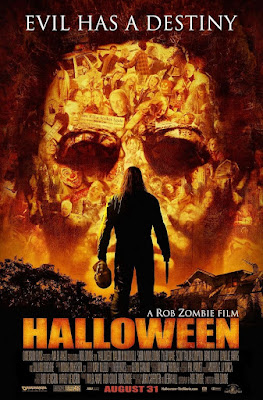
Rob Zombie's Halloween (2007/2009)


Director: Rob Zombie

Screenplay: Rob Zombie

Cast:

Halloween:

Malcolm McDowell as Dr. Samuel Loomis, Brad Dourif as Sheriff Leigh Brackett, Tyler Mane as Michael Myers, Daeg Faerch as Michael Myers (age 10), Sheri Moon Zombie as Deborah Myers, Scout Taylor-Compton as Laurie Strode, William Forsythe as Ronnie White, Danielle Harris as Annie Brackett

Halloween II:

Scout Taylor-Compton as Laurie Strode, Malcolm McDowell as Dr. Samuel Loomis, Tyler Mane as Michael Myers, Chase Wright Vanek as Young Michael Myers, Sheri Moon Zombie as Deborah Myers, Brad Dourif as Sheriff Lee Brackett, Danielle Harris as Annie Brackett, Brea Grant as Mya Rockwell, Howard Hesseman as Uncle Meat, Angela Trimbur as Harley David, Mary Birdsong as Nancy McDonald

A Night of a Thousand Horror (Movies)


Rob Zombie's remake/reimagining of the Halloween franchise was always going to be divisive. I was even an admirer of Halloween 2 (2009) originally, as the film defended as being a powerful and underrated work. Returning to it however, even that has fallen in lustre for the sense that you can be too nihilistic that it actually undermines the virtues of the films, that and the fact that this tone would have made sense for a more riskier, less crowd pleasing horror film, not how to continue the Halloween franchise as a crowd pleasing franchise and still needing to complete the checklist for this. There is a sense that, for me, if Rob Zombie did not have to have the gore and the body count, we would have gotten a superior work that just happened to use the Michael Myers character. People would still hate these films, others will defend them, and they would still be grim, expletive filled takes that is not glamorous about a child who became a serial killer, but why ultimately these films do not work for me is that Rob Zombie needed a striped down version of this premise like Halloween H20 (1998) in structure. Instead, its contractual agreement and his interest in still being a gristly slasher film becomes an albatross around its neck.

The first film is an ugly new take for the time on Michael Myers' childhood. His stepfather is abusive, eyeing up his older step-daughter, whilst Michael himself is being bullied at school about his mother (Sheri Moon Zombie) working at a strip club. From the get-go you also see the era this film was made in too in tone; when Zombie was transitioning to film directing from his music career from House of a 1000 Corpses (2003), we had a run of more extreme horror films from the United States even if the theatrical releases were altered and Director's Cut/Uncensored versions were a popular selling point for DVD/HD-DVD/Blu-Ray releases. Remakes to The Hills Have Eyes to The Last House on the Left also came at this point, and a lot of the era has been described in terms of post-9/11 mood, the result of September 2001 and the Twin Tower attacks, alongside the resulting second Gulf War. This was said to have left the horror films from the United States to reflect the time period in the likes of the "torture porn" sub-genre and more bleaker films, more grimly toned and lacking less hope for its characters to survive, but to have significantly less trauma after the end credits roll.

Brutally, however, I think this era is going to age so much more badly than even the nu metal/pop rock of the early 2000s due to their bleakest being found wanting and grim dark at times. These films can be grim at points to the point of comical levels, like Michael killing animals whilst listening to the band KISS, which poses an issue that the more interesting and emotionally rewarding moments are undercut by the moments which do not work. The most rewarding details of these Halloween films find the right balance between their nihilism, contrasting Rob Zombie's eccentric tastes against moments of quiet pain and psychological damage. Everything in the first act of the first film, Michael's childhood, is actually good despite the points that try too hard, Myers as a psychologically damaged kid from a rough family who is allowed to become a psychopath without intervention to prevent this. Some of the more interesting details reflect too that Zombie was raised as a seventies kid, just from the soundtrack between both films from Nazareth's Love Hurts to Blue Oyster Cult, but also because he grew up in the decades of serial killers that became an obsession in American culture. From Charles Manson (name checked in the film) to Ted Bundy and his ilk by the time the band that made his name originally, White Zombie, formed in 1985, we see him using Halloween to clearly deal with them as a pop cultural concept. We lost a great Zombie film as a result, between grim thriller and sick humoured satire, about serial killers and the culture around them, Zombie able to stop and allow characters to show grief of the loss of loved ones between both films, as we recreate Myers rampage in Haddonfield twice, but also showing there being the fixation of them in unhealthy ways after the survivors are left picking up their psychological pieces.

The controversial decision to turn Dr. Sam Loomis, his psychiatrist, into an alternative world version who sold his soul was clearly meant to depict this. Malcolm McDowell's Loomis becomes one of the actual successes of both films for me, and we forget that Donald Pleasence's take was distorted in later sequels, so a sacred cow was already undercut. McDowell's trajectory is one of the strongest aspects even in its slightness; able to see a young Michael Myers in an asylum, devolving behind his own crafted masks, it does not feel like it is fetishing serial killer iconography, instead the first film meant to be a tragedy as Myers loses what is left. It becomes one including of Sheri Moon Zombie's mother figure, which is heartbreaking with her playing it beautifully, and how McDowell's take becoming an ill fated turn that adds a newer weight, that of if Loomis had not become the noble hero of Donald Pleasence's version. With Loomis as a child psychologist whose heart effectively died, whose first marriage lasted less than the fifteen years working with Michael, the arch of him fully selling out by the sequel is compelling. 

Far from having complete disregard for the source, it feels a widening of the possibilities in the source material, where there is a mocking of the fetishisation of serial killers in Loomis' book tour in the sequel, the book signing scene in that film both with the fan way too into Myers as a person is as well as the father of a slain victim from the first film pulling a gun on him. Zombie rebuts the danger of himself fetishing these types of figures, which slasher films do not tend to do, and it is here where the grim tone can work fully. Where they lose their power is when their relentlessness becomes their ultimate failure, as they numb the pace and emotional weight by their final acts. Zombie managed to do more not in the numerous murders and stalking scenes in Myers, but getting a pointed criticism of media culture on celebrities even in a very silly piece of stunt casting, with musician "Weird Al" Yankovic as himself on a talk show helping to mock Sam Loomis. With one joke, he got a far more compelling take on the lingering nature of gristly murders at the same time.


In their best forms, these films would have allowed more moments of levity if not able to stop the horrors of Michael Myers. Levity comes in moments such as Ken Foree in the first film, with mutton chops and reading porn on the can, but he still dies, levity fleeting in a way that works to emphasise the tragedy Rob Zombie was clearly reaching for. Some moments for the sake of them - one of the guards in the asylum Myers is in during the first film lets his cousin try to rape a new female patient, letting Myers escape - dangerous veer into edge lord territory when there is enough misery and pessimism to work with. There is also the issue that, when it comes to remaking the original 1978 Halloween in the second act, I stopped taking notes and started to switch off.

This proves an Achilles' Heel for the Rob Zombie films as it is important to set up one of the more admirable aspects of these two films, setting up how this world's version of Laurie Strode, played by Scout Taylor-Compton, develops PTSD she has to cope with through Halloween II, and we follow both her at her best coping with the trauma and the worse when she cannot. This is also the one time, when dealing with this, playing as a traditional slasher film succeeds, in how it recreates the original 1981 Halloween II as a fake out dream to establish said trauma. We get to see the aftermath in the hospital of Laurie having her wounds treated even in the dream structure, forcing one to see this, and I will still respect the film, despite my new misgivings, for its use of Nights in White Satin by The Moody Blues, which is exceptional. We also see the flaws still of Zombie overdoing the misanthropic aspects, as whilst I can appreciate the surrealism of Michael Myers' escape from a morgue wagon because it crashed into a cow, having the driver and attendant talking about having sex with the female corpses however undercuts this. In one hand we see one of the best ways to use the slasher structure for a reason, and in the other, there are still the issues that plague the two films.

My problems become that the entire remake project was an ungainly work for a director far more interesting when he is not shooting stranded horror and gore scenes. The whole journey of Laurie is absolutely sympathetic, the White Zombie singer not the first person I would have ever shown such heart in his work, but showing it admirably in how we see her on medication and struggling in therapy, something I have to respect him for. When certain characters die between both films, it is tragic and Zombie actually shows grief. Despite the stunt casting, that fits still; beyond the curious sight of Udo Kier and Clint Howard in the first film sharing the same screen with McDowell, it also leads to one of the best aspects being Brad Dourif, given a great deal to do in terms of a rich performance for a slasher film.

It sucks that, for all these virtues, I have to be a Debbie Downer about how too bleak tonally this becomes. Even if Zombie deliberately changed the film stock used for the sequel to emphasise the grimmer reality, the violence becomes number to the point of not registering emotionally or causing me to question why certain moments were even necessary. There is the sense of the slasher template not helping at all, as Zombie's thesis on trauma is pointless when he has to have random by bystanders killed, like a horny older strip club owner wanting to get it on in a Frankenstein's mark with a female dancer, to keep to the body count high. Even the deeply surreal moments of Halloween II that I initially liked felt bolted on this time, with Sheri Moon Zombie as an apparition with a white horse visiting Michael Myers, because there is no set up for this in the prequel. When seen close to each other, it sticks out from the film two years earlier; despite the fact it gives us one weird, almost Guy Maddin-like dream of pumpkin kings at a dining table, the kind of moment I am into within an instance, it is the only moment of overt surrealism and thus loses power. Bringing this nightmarish side to the film, but never capitalising on it, felt like an abrupt Rob Zombie music video that appears, never meaning anything to the plot trajectory.

None of the deaths are "fun" in these films, all uncomfortable and all awful. There is not enough, even with moments of humour, to separate from the inevitable, the death and tragedy of the characters. But you can overstate this and grind a viewer down to the point this theme itself is lost, which is the issue with the Rob Zombie Halloween films for me. It is to the point they lose their virtues, and Halloween II was not financially good enough to continue on to a third film either, so it lost a few people as well. By Halloween II, it feels for me that for the films which still came out in the early 2010s that continued this trend, this era of edgier horror films from the United States lost their ground by this point. Saw's last entry, before its reboot, was in 2010, and telling a far more financially success horror film in terms of box office in 2009, when the second Halloween reboot film was released, was Paranormal Activity. Still a film with a ghoulish ending, it was not as nihilistic and upfront in its violence, instead capturing peoples' imaginations in terms of supernatural horror. It was also one of the first horror films of note produced by Jason Blum, whose Blumhouse Productions would be a monolith for the US horror cinema into the 2010s onwards. The lasting irony is in knowledge he would be a producer of the next attempt to reboot the Halloween franchise with 2018's Halloween with David Gordon Green, where we close off another part of this franchise's many strange dimensional turns. 

Wednesday, 23 October 2024

Bangkok Haunted (2001)


Director: Oxide Pang and Pisut Praesangeam

Screenplay: Pisut Praesangeam and Sompop Wetchapipat

Cast: Pimsiree Pimsee as Paga / Jieb, Dawan Singha-Wee as Pan, Kalyanut Sriboonrueng as Kanya, Pete Thongchua as Nop

A Night of a Thousand Horror (Movies)


A horror anthology from Thailand, Bangkok Haunted however does something very different in not having the wraparound start the feature, but immediately lunging into the first of three stories, so let us begin as such too. An ancient drum, for the first story, is being transferred in a truck. It is established to have a ghost woman haunting the instrument as the man watching the items in the back is more concerned of leaping out at speed onto the road to get away. The young woman that receives this drum, Jieb (Pimsiree Pimsee), is going to have to deal with the haunted consequences.

We see the drum's origins in 1917, as it is connected to an adopted girl whose parents died of sickness and whose adoptive father is a scholar of music. Raised to become a dancer, Paga (also played Pimsee) befriends another child, a disfigured and ostracised one, who when they become adults is infatuated with her despite Paga only views him as a brother whilst loving another man. This is the most conventional of the three stories in plotting, yet allowed enough space to breathe as Jieb in the modern day with an older male scholar, wandering into flashbacks in the past within her dreams without warning, realise something is amiss with the drum and research its past. It seems like a critique, for a forty four minute segment, that I will not write a lot about this segment beyond this, but it starts with a sound opening for the entire project by co-director Oxide Pang. Oxide Pang with his twin brother Danny came into prominence by the 2000s for films that caught the "Tartan Asian Extreme" wave of interest in the West for Asian genre cinema. Born in Hong Kong, they have juggled genres, action with Bangkok Dangerous (1999) and its 2008 remake with Nicolas Cage, alongside the original 2002 version of The Eye, a horror film about a woman who sees ghosts as a blind woman who was given her sight back through a donor's set of eyes. Their work outside the director's chair deserves credit too as Danny Pang was the editor on the Infernal Affairs trilogy (2002-3), the first one of the many films from the East which caught on fire with interest for Western film fans. They have worked together as brothers but also separately, Oxide Pang making this film instead with Pisut Praesangeam, a Thai filmmaker/producer/screenwriter in the latter's home country, setting this anthology within Bangkok.

The first segment is the pair's most traditional anthology story in tone, one which does provide an appropriately macabre twist - [Spoiler Warning] one of Paga's arms was inside the drum and we learn how it got there [Spoilers End] - and feels the perfect length for its micro-feature tone by itself. After this, Bangkok Haunted's stories are more idiosyncratic in their structures. Probably the biggest virtue, for a film for whatever inexplicable reason I hated when I first saw it, likely due to its slow burn pace, is that all three segments are distinct. Even if the next two as tales entirely set in the modern urban landscape of Bangkok, those two managed to stand out from each other in tone, and since the entire feature is over two hours long and lets them all feel like micro-features, there is no sense of rushing plot points or losing their individual moods either. The wraparound, whilst with a spooky gotcha in the final shot, is not really a story but I still liked it, especially as it feels more like a nice wrapping that does not need to have a dynamic build. It is a curveball when that, only after a forty four minute tale, we have it established three female friends are telling scary stories in a cafe, with them critiquing plot logic or trying to figure out cool titles for each other's stories. It is actually a cool twist on the horror anthology tone to not have a twist, just a trio of interesting story tellers who are friends and engaging with each other.

Story two could be said to be too convoluted and weird for its own good, but it is weird for me as much in a good way. The mature tale of the three, with its explicit nudity and grotesqueness, it is about an essence called Phy Essence. The segment is almost out of order in explaining the plot details, which is why it could be extremely confusing, but as for our female lead, the Phy Essence is a love potion which you can buy hush hush, here in a funny moment in a sex shop where a male customer complains the porn tape he has rented is too damaged at the best parts. The essence is seen once slipped into a man's drink, but is a McGuffin, not really explained but designed to make men fall inescapably in love with the woman who uses it.


The essence, as established in the first scene in a hospital morgue with necrophilia overtones, is collected by one guy who finds recently dead and beautiful female corpses, and is made from the blood collected from their slit open necks. It is a task he secretly gets on with even if he is in danger of being caught, or finds a male colleague getting drunk on the shift and sleeping under a blanket on one of the gurneys among the corpses. That we see the corpses occasionally open their eyes or move their hands suggests that the Phy Essence has ill advised magical aspects too, more so as there is a ghost woman looming about, and that with one of the male suitors, you see the harmful effects of the essence. Not only does he effectively sleep with both a living and dead woman at the same time on a one night stand, but ends up first puking up for the initial symptoms, only to be at death's door with a Buddhist priest trying to help him. Another will be killed by a car and immediately come back as a ghost due to the essence, and it is clear the magic behind it has dangerous properties alongside the gristly nature of the concoction just making the dead angry and come back to haunt those involved in using it.

It is a very idiosyncratic story, probably more vague then it itself realises, very erotic and sexually explicit in a way that it is quite striking with time passing, be it the humour of the lead living next door to a couple in an apartment who are too loud in their passions, or the necrophilia aspects at the morgue. We had some transgressive films from this early 2000s wave that dealt with sexuality - like Takeshi Miike from Japan and the late Kim Ki-duk from South Korea, the later sadly someone we have to put a caveat around due to sexual misconduct allegations - but sexuality was not really as prominent in this era of violence, of action and genre films which did not really tackle those subjects, or the trend for ghost stories influenced from Asian filmmakers modernising them, only to get remade as American films that same decade. You can make the argument this is erotic for the sake of titillation, not for profoundness, but at the same time, you also have a story where despite this women are central to the plot, which is striking within itself. It is effectively a moral tale of women stuck in the position of needing the Phy Essence, because they feel they need to go out into night clubs for men to date, with the essence whose gift is too dangerous. It is a tale when even men who die from its effect become ghosts too, leading to a haunting here where those made to love a woman will do so even if, in one of the best shots of the whole film, they live together in physical embrace after her death in the same grave. With its very electronic, New Age tinged music, it has for all its all-over-the-place plotting a distinct tone that I appreciated, effectively a cousin to a segment for the Three Extremes (2004) anthology, which was expanded into a 2004 feature film by itself, a work directed by Hong Kong director Fruit Chan called Dumplings. Three... Extremes leant into the growing interest in Asian cinema at the time with three directors from three different countries - Fruit Chan from Hong Kong and known for films like Made in Hong Kong (1997), Takashi Miike from Japan, and one of the biggest figures to gain prominent and his career grown from this trend, Park-Chan Wook from South Korea. Dumplings itself in either its versions was explicitly about the theme I feel the Phy Essence is about, the idea of women forced to follow gendered conventions, in that case to stay youthful in a world when men's eyes wander to younger women, through the very twisted concept of Chinese dumplings made with human foetuses. Whilst Bangkok Haunted's own tale of ill advised love charms is stranger, they make a fascinating pair on the cursed love remedies from the perspectives of women if you have a strong stomach for one of the pair mentioned.

Story three begins with a scene of a crime, where a woman has hung herself in a warehouse. The police office on the case suspects it was not a suicide but a murder, believing there was no way for her to get up to where she was found alongside evidence of a struggle beforehand. Whilst the police chief refuses to press on with this idea, he investigates on his own terms, and the coroner cements his concerns when there are suspicious clues complicating her death. This is interesting as a crime mystery steeped in the supernatural; when a scene transpires when a random couple following him swear they saw a woman trying to get out of the moving vehicle, it is clear he is now haunted by her too. All three stories involve ghostly women wronged, and that really becomes apparent for this tale of a horrible series of circumstances for its one innocent, the woman herself.

Whilst in dire need of a high definition re-release, it is by this segment I came to appreciate Bangkok Haunted's general washed out and dingy aesthetic with moments of subtle colour. Even though one of the tales is partially set in 1917, with significantly more colour in the forest locations, this film really emphasises the idea of the back alleys and dark night streets of Bangkok throughout itself. With there being a second scene in this segment within a sex shop, as the lead makes enquiries on the woman leading to her husband, it is very atmospheric in imagining these ghosts drifting among the living in these cramped environments, the places not seen as idyllic and grungy but the real world for normal people stuck in crammed apartments trying to find ways to get on in life. They are not disconnected from the living either, which makes this aesthetic more appropriate, as it leads to suspicion of domestic abuse from her husband, seemingly changed and wheelchair bound from a car crash. The key to the segment from here is a series of red herrings, including a male lover of hers who is a boss at a construction site, where the many men in her life are not good people. This includes the lead himself who is revealed to have been part of it too. There is a sick humour as more people are revealed to be innocent when information is learnt when it is too late, including unfortunate deaths of suspects, and one of the best turns when someone's innocence is proven but through his involvement for another crime of political corruption. One twist comes fully from a murder mystery pot boiler - [Huge Spoiler] with the help of ice to be able to reach a hanging spot [Spoilers End] - and ultimately not even our white knight lead is a good man, just finding excuses to purge his own guilt from the things he did to the woman.

The story has many trigger warnings as already brought up and also revealed, including a deliberate miscarriage with a coat hanger that is not comfortable to witness without being tasteless. They lead to this being the saddest tale of the three about a woman who did not deserve her lot, whose affairs were clearly to escape her misery, and whose fate leaves her a ghost watching those involved discover their own complicity and fall off the rails. It is a perfect conclusion to a trio of stories I unfairly dismissed in my youth, and I have absolute respect for the entire project, with three strong entries, being a very good horror anthology which took risks, be it telling a traditional ghost story, being very weird and sexual, and for this one to actually force one to sympathise for its female lead in its uncomfortable nods to how bad human beings can be to each other.

Saturday, 19 October 2024

Garth Marenghi's Darkplace (2004)


Director: Richard Ayoade

Screenplay: Richard Ayoade and Matthew Holness

Cast: Matthew Holness as Garth Marenghi/Dr. Rick Dagless, M.D; Richard Ayoade as Dean Learner/Thornton Reed; Matt Berry as Todd Rivers/Dr. Lucien Sanchez; Alice Lowe as Madeleine Wool/Dr. Liz Asher

A Night of a Thousand Horror (Series)/ An Abstract Candidate


I have never exploded. But I know what it would be like. Don't ask me how. I just know.

Garth Marenghi - author, visionary, dream weaver - is a prolific horror author, and in the eighties, he worked on a TV series which was never broadcast except for in Peru. That was until Channel 4 in 2004, desperate for content, asked him to resurrect the project, with new interviews with cast members who have not disappeared in the decades after. Breaking kayfabe, with the premise even sustained with the DVD released, is that Matthew Holness created Garth Marenghi originally in 2000, as part of a Richard Ayoade co-written horror parody stage show Garth Marenghi's Fright Knight performed at the Edinburgh Festival Fringe. Brought to this series, he is a parody of the likes of Stephen King, who had his real Marenghi moment when he directed Maximum Overdrive (1986), and also the likes of Dean Koontz or James Herbert1, fellow prolific horror authors. Marenghi is an egotist, a sexist, and has an episode of these six where he exposes his racism against the Scottish, the definition of a man with his head up his arse, thinking of himself as the messiah of horror who can even have profound insights to help humanity but is a tawdry author of terrible ideas and dialogue.

Darkplace itself is a disaster in terms of wooden acting, cheesy props and using slow motion to pad out episodes. A meta-textual work, the actual show is Marenghi directing himself and starring in the main role, as the former warlock Dr. Rick Dagless M.D at Darkplace Hospital, who with side characters encounter increasingly weird and horrifying events. Marenghi in the series-within-the-series was allowed to shoot interviews, mainly with his publisher Dean Learner (Richard Ayoade) who starred as Darkplace Hospital's administrator Thornton Reed too, and later on Todd Rivers (Matt Berry), an actor on the show that visibly became the stereotype of the older star reduced to drinking a lot. When I first saw Garth Marenghi's Darkplace, I found it disappointing after all the build up. The episodes came off as slightly amusing but average altogether as I marathoned the entire series. A lot of the humour is the absurdity and ridiculousness of this set up, both Marenghi's ego, and the pastiche of a badly made horror series where he let his ego run wild, where he is shown as always cool and virtuous to the children in the wards, sexier than even Todd Rivers' heartthrob character, and always right. This time, I appreciated the show on its own terms, when the first scene introduces female lead Dr. Liz Asher (as played by Alice Lowe), who when starting at Darkplace Hospital is introduced to a cat, visibly placed on the hospital set by hands, telling her to "just leave!" in a dubbed over voice.

The show's structure could be a paradoxical one to work with; to create a technically awful programme could lead to making a dreadful show because it is too accurate to the dreariest of this type of programming. My initial issues with the show was that it was too deliberately broad, which leads to an ironic tone I found tedious at the time, growing when this became more common as a form of parody and becoming unbareable at the time onwards for a good few decades in cinema and television. With hindsight, I was too harsh on this, now that common trait has not become as prevalent. Though a version of this which fully depicted some of the strange programming coming from the likes of the BBC to ITV from the eighties would have been just as interesting for me, I just have remind myself I have seen some ridiculous special effects and incidents even in that type of programming which has won me over for their sincerely good parts. Then there are things, admittedly not a Dr. Who viewer but aware of this and seeing it with my own eyes, where you can have Bertie Bassett, the mascot of a British confectionary company, terrorised Dr. Who actor Sylvester McCoy in his sci-fi candy lab2 and think that is the kind of insane moment you could have had in a hypothetical second series of Darkplace, if on a deliberately lower budget, and not bat an eye in standing out as too weird.

The central joke is established around how Garth Marenghi is clueless to how bad he is, and the six episodes we get are entirely focused on this, the first episode contrasting the madness of a man exploding into tiny pieces but Dagless still asking if he is all right afterwards. There are the scenes hastily put in to show Thornton Reed with a shotgun out-of-nowhere, in an entirely different field, when this man, the result of having tried practicing a demonic ritual with Dagless in the lunch hall, refuses to stay in his casket at the funeral, or how Reed himself is so wooden, to the point they have to shoot his scenes usually by himself even in two person conversations. A lot of my growing warmth to the series came from that initial negative reaction, developing a fondness for the production as time went on to its goofy tone as I thought about the series for a good few years, suddenly growing into a person who got the humour entirely. A lot of this is in mind that this is not trying in the premise to be a pitch-perfect parody of this type of television horror, which was the issue initially, but that this is exaggerated around Garth Marenghi's qualities as a creator being central to the joke. The one exception is where the final episode feels like Nigel Kneale's Quatermass mini-series if someone turned into alien broccoli rather than a blob. Instead, it is a very broad mash-up of medical soap opera and horror story where people being attacked by floating staplers, on noticeable strings, as in the second episode are so bad on purpose. The barebones nature of most of the episodes means you cannot really have a plot trajectory, so the humour has to come from the silliness. Also the interviews as integral to this punch line where the actors we have show their bad or misguided sides, such as how the cat somehow died on set or how two technicians died on the Scottish Mist episode, or how Dean Learner even hit a child for criticising how bad his dialogue is.


Cast wise, it is mainly the core four members who dominate the series barring a few surprise cameos, like Stephen Merchant or Julian Barratt as the hospital priest, emphasising that even before his role in Peter Strickland's bizarre horror film In Fabric (2018) Barratt could add gravitas even to the silliest of material, or add a much needed sense of absurdity to even serious material. Matthew Holness as Garth Marenghi, both the writer and star, is interesting, and there are times he is lovably charming as he is actually indefensible, which makes the comedy work especially when it can lead to the abrupt reveal that they added comical amounts of slow motion to the second episode, where Liz goes on a rampage with her powers, or the Scottish Mist episode being about Dagless learning to overcome his intolerance to the Scottish only to expose, as he dodges the accusations of racism in his interview footage, that Marenghi shoot both feet off with his depictions of said Scottish. Richard Ayoade as his publicist hits the right tone and is a highlight - off the show he is a sleaze but in a subtle way that is funnier, whilst as the administrator of the Darkplace hospital, Ayoade inflects perfectly a man who cannot act. Matt Berry likewise hits to the right one too, as a hammy actor who adds w-e-i-g-h-t to his vocals in a way that's memorable, sounding like it is dubbed.

Sadly Alice Lowe as the sole female character is undercut by one of the major running gags, and is one of the moments where the show has flaws, in a show that does try for some social commentary in its humour, such as the final episode explicitly is a parody of terrible programming trying to metaphor AIDs is tasteless ways. The second episode especially, but throughout in her character's depiction, reflects how its author Marenghi has incredibly sexist dialogue and views of Dr. Liz Asher, playing her off as the simplistic female staff member, or in episode 2 going full-Carrie to the point people are menaced by furniture on string. It presents an issue especially as Lowe's character is later revealed to have disappeared, likely dead and buried in a random place in Eastern Europe. It is to the show's credit, whilst arguably the weakest episode, it was deflecting this sense of biting too hard at a difficult subject, sexism in older horror storytelling, with Marenghi coming off ridiculous from the get-go to get around this, as he is a dolt with very stupid ideas, and that we have Matt Berry in this episode having to fight off a homicidal egg whisk. My views on Darkplace have aged well due to seeing another parody of horror pulp, Dr. Terrible's House of Horrible (2001), which is likely to one Steve Coogan project people may have forgotten even exists, where you had the issue of it parodying problematic issues of pulp fiction like Sax Rohmer's Fu Manchu, done with earnestness to still point out this was all racist as a joke but still having an actor in yellow face playing a Manchu pastiche to get the joke over. Episode two here is in the same issue of dealing with gender politics by having the sexism be so over-the-top, which may put people off or even just cause them to roll their eyes at the broadness of the pastiche, not actually dealing with the subject with enough to justify the satire and be comedy at the same time, so this does count as one of the weakest episodes if thankfully with a defter hand than Dr. Terrible.

Episode three clears the palette with probably the most eyebrow raising moment, a male patient being impregnated by an eye creature (with pixelated out genitals to the annoyance of Dean Learner) and immediately dying in childbirth conceiving an eyeball child. Here the humour of both the interviews and the story itself works, as Marenghi's obsession with never having male child but only four daughters, and a eulogy to a dead pet dog, are contrasted by Dagless' past trauma of losing his half-man half-grasshopper son which leaves him trying to protect a potentially dangerous eyeball child. Episode 4 imagines contaminated water turning the hospital into primordial ape people, effectively Planet of the Apes if with a bicycle chase final with an "apeazoid" that briefly turns into an episode of The Krypton Factor, a 1977-2010 game show which emphasises legitimate Mensa-like brain teasers, puzzles, and as the reference became evoked, an obstacle course with rope pulls as here.

By Episode 5, we get to the Scotch Mist, which is John Carpenter's The Fog (1980) if with kilter Scotsmen instead of pirate ghosts, who leave Scottish oats by their victims. Alongside the tangent about using high street bought batteries over cheap ones from markets, it is a story about overcoming prejudice but so prejudiced in the depiction, even subtitling the Scottish ghosts, it undercuts itself, Marenghi thinking Daglass can earn the name of true Scotsman by just apologising and appeasing the ghosts with shortbread. Episode 6 is the other time the series takes a risk in terms of more serious nods, being a tone deaf metaphor for the AIDs scare, which is explicitly talked of and is the one other time Darkplace is in danger of stumbling. Thankfully, it is also the story to contrast this which has the right balance of almost taking itself serious whilst being ridiculous to prevent this undercutting itself with the metatextual commentary taking too broad a scope on this subject. The humour found in Lucien Sanchez falling in love with a female patient slowly turning into alien broccoli due to a highly contagious mutation, that does feel like soap opera, Nigel Kneale and a healthy dose of sex humour in a blender prevents this issue of tackling a risky subject for satire because it is one of the stronger stories in its jokes. It allows Matt Berry more material to work with, which is for the better; it also has the one actual surprise where the episode abruptly turns into a synthpop music video for the character, and does one of the superior metatextual jokes in which a fight scene that breaks out, to save Lucien's life, was lost and had to be reconstructed from photos shot on the film set.

The first time I saw Garth Marenghi's Darkplace, I thought it was a case of acquired taste, because I had always taken an issue to ironic humour at that point. Nowadays, this is not the case, and instead I wished there had been another series to just stretch this premise from that initial set-up, forcing it to have to take risks with the construct. Garth Marenghi never came back barring a cameo in Man to Man with Dean Learner (2006), an in-world talk show hosted by the Learner character which had Marenghi on as the first episode guest, and it would have been interesting to witness how the second series of Darkplace, having established the set-up, could have forced this broad parody into his own discomfort or stranger humour as we could elaborate on the premise of the Darkplace show, or in the interviews. Any more series beyond this might have capsized the premise and become that ironic-for-the-sake of irony I thought this show had, and even with its flaws as is, you would have lost the magic I finally appreciated after time to soak myself in Marenghi's dream weavings.

Abstract Spectrum: Absurd/Ironic

Abstract Rating (High/Medium/Low/None): None


==========

1) Not in the slightest a knock against either man, but they are the apt comparison points for authors who commonly appearing second hand book stores in the United Kingdom, least in my neck of the woods, and how Herbert's blunt titles and covers does really evoke the absurd, crasser ones Marenghi's has as seen in the series.

2) Kandyman befittingly comes from the 1988 era of Dr. Who, emphasising how actual eighties television, though Darkplace is meant to be the early eighties, could really be as ridiculous as the parodies of that era.

Friday, 18 October 2024

Darna Mana Hai (2003)


Director: Prawaal Raman

Screenplay: Atul Sabharwal, Rajnish Thakur and Abbas Tyrewala

Cast: Nana Patekar as John Rodriguez, Saif Ali Khan as Anil Manchandani, Vivek Oberoi as Amar Vashisht, Sanjay Kapoor as Sanjay Joshi, Sohail Khan as Karan Ahuja, Shilpa Shetty as Gayatri Pandit, Isha Koppikar as Abhilasha Malhotra, Aftab Shivdasani as Purav Khandelwal, Boman Irani as the hotel owner, Sameera Reddy as Shruti Kapoor, Gaurav Kapoor as Romi Yadav, Antara Mali as Anjali Deshmukh, Raghuvir Yadav as Dayashankar Pandey, Anuj Pandit Sharma as Varun Goswami, Rajpal Yadav as the apple vendor, Sushant Singh as the serial killer, Malavika as Neha Bhatia, Rahul Singh as Dev Bohra, Peeya Rai Chowdhary as Mehnaz, Kiku Sharda as Amar Varma, Yusuf Hussain as Mr. Khandelwal

A Night of a Thousand Horror (Movies)


A Bollywood horror anthology, there were songs made about the stories within this production and a soundtrack release for this film, but they were left out as bonus features included on the DVD I viewed this through. Whilst I will be very positive about this film in general, thankfully the opening credits by themselves compensated for this and are adore as this film’s own idiosyncratic creative choice for this genre. That being, after a shot of black gore seeping over a blood red apple, a Eurodrance influenced song kicks in. Female dancers in black body suits dance against a red background, with motifs of all the story segments included, whilst the male singer croons the morbid ditty which is the central song. This is not something you would have gotten in a Amicus anthology from the seventies, but here is was a great way to establish its personality, follow the tradition of the subgenre by opening with the wraparound story first that will weave between all the other tales.

A group of college students, alongside one named Vikas with his apple cutting knife looking like he is about to snap at any minute, are driving in the middle of the night until a flat tire leaves them stuck in the jungle. Whilst there are some aged fat shaming at one of the men, who is not even that large physically, thankfully it sets them up stuck at an abandoned old house in the middle of the night whilst trying to find a phone. An improvised game of cricket or a sing-along of Hindi film songs are rejected for telling stories to each other, critiquing them in each cut back to the main cast as a secret figure is picking each one off as each story-within-a-story plays out. The first story is arguably the most conventional, and you need to think of it as more a starter before the main course, about a couple on their honeymoon driving at night. Their car also breaks, and the husband vanishes checking the engine to his wife’s horror. It is the shortest tale, with someone sinking into a bog and a doppelganger, with stab wound sound jump scares. Whilst an obvious one, it is a nice beginning tale to an anthology which gets insanely interesting immediately afterwards and never lost my interest from this point onwards.

The second story is of Anil, another taste of the perils of driving in the middle of nowhere, in this case reaching a hotel. This leads to a fascinating turn as it is about the least expected thing, Anil as a smoker who has ended up at a non-smoking hotel, one ran by a man who loves old Tom & Jerry cartoons and hates smoking, so much so he locks the entrance door and says at gun point he can cure Anil of his bad habit if he stays for six months. Here we have a bleak comedy about a man, forcing Amil to stay, with a seventy per cent success rate in his patients giving up, the other thirty per cent in the basement in plastic body bags. It is such a good, gleefully morbid tale to have, not what you would expect traditionally for a horror story.


The third story is just as good, about a male school teacher, a strict one who punishes the same young girl for forgetting her homework all the time. That is until she finally does, and then the guilt kicks in and spirals out of control. There is more to this, a guilt from pushing a school classmate to his death off a roof, who has seemingly possessed her, but even that plays to that sense of guilt over this poor girl in general. Using very stylish choices of editing and fast forward montage to ramp up this mood, this is a really interesting juggle of its central twist and this theme of the cruelness of a teacher. With “Aum” found on each page of her work, the sigh to him his school friend is involved from the grave, it is as much a psychological tale with a  sick sense of awkward humour as he is the one unraveling, even calling her mother to talk about doing her homework. Or even visiting the home at night to see of how she does the homework, disturbing the mother especially as his least conventional attempt at home intrusion is misinterpreted as nefarious threat on a small child. Even if supernatural as a tale, it is a well told tale with madness as the punishment which also works fully.

The fourth story is about a housewife and a sinister apple merchant, which is the strangest story of them all if the one with arguably the most macabre interpretation, as any who eats his apples, like her cricket loving husband, turns into an apple themselves. There is not a lot more to say than this, barring that this is fun and actually quite disturbing. It brings a new perspective on the Golden Delicious depending on what the merchant does with the new produce. The fifth story is more sobered, another man driving at night who picks up a hitchhiker in a churchyard. As Creedence Clearwater Revival’s version of Good Golly Miss Molly plays on the car radio, the hitchhiker says he has lost his wife ten days earlier, though he is the one who died. There are more twists to this nice little piece, turning between drama and humour, like the preferred term of “spirit” over “ghost” or one twist involving a hidden camera prank, making it a success.

The final main story is also a success, a guy doomed to be on the bottom of life at a college named Purab. That is until he finds a sacred statue in the hills he rants at for his lot in life, and gains the ability to stop time. Power immediately corrupts, and whilst there is a gross hint of what he could do, particularly with a woman he is attracted to at college when he briefly freezes her, but it is thankfully dealt with as wrong as it should be, with most of the story a naïve sense of true evil, thinking he can instead show her how he can stop the world without doing so to her to convince her to love him instead, whilst getting petty revenge on his domineering father and planning the crimes he could get up to. Gaining more and more megalomaniac tendencies, the punch line involves the danger of posing in front of mirrors that cements a strong series of segments. Arguably with the exception of the first, which still works as an introduction, it is one of the strongest anthologies I have seen in terms of consistency.

The wraparound itself is strong as well, as it effectively becomes a slasher film ending involving a killer who hates fear. It even ends on a melancholic note for everyone involved, even for the killer. The result is a very strong anthology altogether, with zero expectations going to this barring optimism. Even the pre-film DVD ads stood out as a fresh remainder, with hindsight, as a complete outsider to Bollywood cinema that I wish to actually dig up more films like this and for more of them to be readily available in terms of the later Blu-Ray era as much as streaming. By the time this film was first release we are already at the point this film’s distributor, Eros International, was celebrating twenty five years of distributing Bollywood films globally. They were still releasing VHS and V-CD releases, but also were also providing online and satellite broadcasting, even providing their own online DVD rental system on their website. It is a tangent, but considering all the very positive things I have said about Darna Mana Hai, and that it is the kind of horror anthology that a lot of people would really dig, the fact that this is a film you do not find on Blu Ray and not licensed from a distributor, when back in the day Eros International were doing their damndest to distribute an entire country’s cinema, speaks a bit from an outsider’s annoyance. That Bollywood is still something, whilst with its own huge audience, felt too separated even if as much my own ignorance is as much to blame too. That is not even taking into consideration this was the debut film for its director Prawaal Raman, which has to be praised for his first film being a really solid horror anthology alongside everyone else on the production.