Showing posts with label Dark Fantasy. Show all posts

Friday, 17 May 2024

Debbie Does Damnation (1999)


Director: Slain Wayne

Screenplay: Slain Wayne

Cast: Ernest Brummer, Jeanin Lake, Tony Nittoli, Lisa Pete, Charles Pinion, William Smith, Michael Sonye and Slain Wayne

A Night of a Thousand Horror (Movies)


Now I’ve got your horn motherfucker.

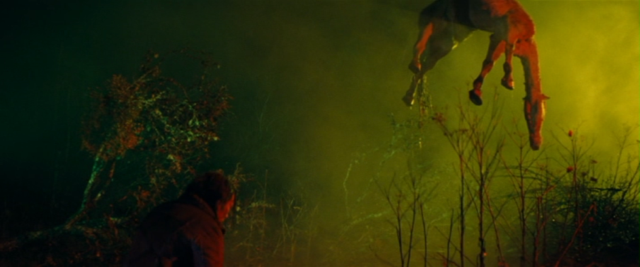
We are in for something out of the ordinary, and not for the widest of audiences, when in stark black and white a cannibalistic demon is munching through corpses in a room with a nude woman tied up on her stomach on a nearby table, ready to be his next meal. A stop motion skull spider with a British accent named Tregor comes to the rescue, on condition to kill the cannibal and go on a quest on his behalf for the Devil’s horns. Unfortunately she gets eaten by a stop motion Hell Dragon and Tregor is forced to find another woman for the quest, one named Debbie who has fallen into Hell recently, despite her guardian angel attempting to save her, and will be centre to multiple sides taking note of her.

A labor of love that looks like it took years to even complete, there will be many stop motion monstrosities onscreen, as there will be a lot of full frontal nudity, as initially Debbie finds herself is Hell without clothes, and a lot of content which will be off-putting for many. There will be content which has not aged well, content that will be random and abrupt, or just perverse, and there will be moments I still have to admire the fact the forty plus minute production even got made. Debbie finds herself in a war over the Devil’s horns, Satan himself reduced to a hornless head who wishes her to get them back, betrayed by two men who have the horns and are now about to start warning with each other in the film to get both for themselves. One of these two men, introduced briefly with two mouse traps on his cheeks, is the MVP for all the profane dialogue with eloquent choices of wording he has as a torture loving figure in the midst of a lo-fi medieval fantasy war with the other betrayer with soldiers and stop motion figures.


Debbie Does Damnation is only corpse paint away from a black metal video at times, scored to ambient music with guitar noodling, full of evil deviants from the Morph plasticine family tree and built from sets varying from Forbidden Zone (1980) to a bizarre avant-garde theatre production primarily using cardboard. Within such sets is stuff that is definitely not-PC nowadays, moments where this is a very unconventional fetish video, and stuff that is unintentionally ridiculous as other moments are pure bravado in getting them onto the screen with clear hard work and visible duck tape. It is unconventional to say the least, all which has to be ingested as really rough material, yet made with love by a porn director with a taste for kink. It was made before he fully went into the video porn director’s chair with titles which do not hide their content, some sounding a tad extreme for comfort, and others involving Kung Fu Girls 3 (2003) which do however ask interesting questions of what they are about even as porn films from the straight-to-DVD era. More so as I learnt of this film from Annie Choi of Bleeding Skull, this is a bizarre experience to get to, strange but undoubtedly a labor of love, hard earned in getting finished and crafted in a way I have to admire even if its own stream-of-consciousness will throw a lot of people off.

As Debbie finds herself with clothes, a sword and a quest between a civil war, as female warriors fight male ones, we see a film shot on Super 8, the director’s last bang (according to the making of including with this) before his full porn career began. In context, it makes sense how its attitude is with zero fucks given in wanting to do whatever it wants. Said to exist with the “R Rated version” I saw and an x-rated version, director Slain Wayne literally built the sets to what feels like being in someone’s skull for a near hour. Made from the gut of what was cool or sexy or deliberately edgy, I openly think aspects of this production are juvenile, some of it is tasteless and an issue, like a monster dubbed “a fucking spud monkey” said to be possibly on crack, but also has moments I have to admire. Even if you have to get into the gruel, weird improvised dialogue in the post-synched dialogue, or the fetishistic moments, like the random scene of Debbie being spanked by a warrior, or a scene of women being threatened with torture that show its hand for wanting to be kinky too, there are others where you did not need to take the time to have all the extensive homemade stop motion monsters which would have been painstaking to animate on any budget, but this nonetheless decided to have. Its extensive use of Barbie dolls in cutaway scenes or mannequin body parts to depict decapitations, sword stabbings and being eaten by plasticine hell hounds makes this considerably a higher bar in terms of a film trying to make a memorable micro budget film, even if it is a very nihilistic take on Hell where no one survives or is safe, even a flying skull finding itself forced into being a flesh light against its will. Its aspects of kink and very rough dialogue will put people off, and I will not defend it whatsoever; the virtues of the film come from the moments away from these which are ridiculous in tone and in actually being realized.

Even its sense of perversity at times has to be admired for its complete disregard for the expected, as you have a sex scene with a Mistress of Darkness involving a man bobbing for tentacles between her thighs, and if that is off-putting to hear, obviously Debbie Does Damnation is not recommended. But with that scene actually a highlight for intentional bad taste and funny lines, there is someone to admire of a film which is completely gunning to be memorable, and never is a lazy ironic way either. It is one which truly lives up to the notion of putting your heart and soul into a project, even if said project is as profane as this. 

Abstract Spectrum: Eccentric/Grotesque

Abstract Rating (High/Medium/Low/None): None


Sunday, 16 December 2018

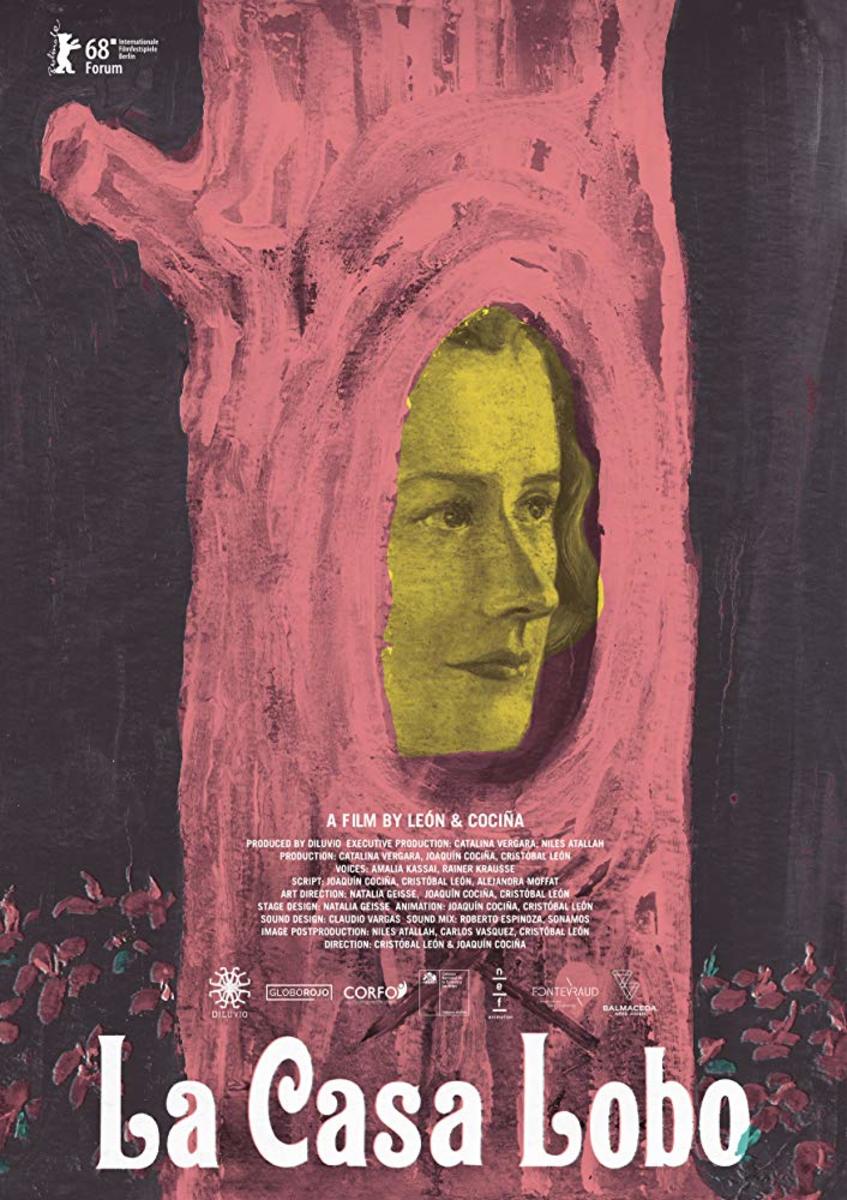
The Wolf House (2018)

From https://usercontent1.hubstatic.com/
14226322_f520.jpg


Directors: Joaquín Cociña and Cristóbal León
Screenplay: Alejandra Moffat, Joaquín Cociña and Cristóbal León
Cast: Amalia Kassai as María; Rainer Krause as the Wolf

Synopsis: Presented as a propaganda film of "the Colony", this stop motion story presents a fairy tale of a girl who flees the commune only for her to learn of the error of her ways when, is closing herself in an abandoned house and helping two pigs become human, they start to turn on her.

[Major Spoiler Warnings]
[Trigger Warnings]

The Wolf House, the co-creation of Joaquín Cociña and Cristóbal León with script collaboration by Alejandra Moffat, does have a historical context which might be missed if only established in the presentation. Many Nazis, after World War II, fled to South America, the discomforting parallels in symbolism found through the film's world. The Wolf House also evokes another historical context that is Colonia Dignidad, an infamous real life commune in Chile that, under the figure of German exile Paul Schäfer, was not only tied to the rise of the Pinochet dictatorship within the country and Nazi war criminals but was a place of abuse, child molestation and various horrifying actions that Schäfer was only arrested for 2005 after fleeing authorities in 1997.

From https://d2u3kfwd92fzu7.cloudfront.net/
catalog/artwork/gallery/2859/casalobo10.jpg

Even without this full context, The Wolf House's prologue immediately puts you on edge, the directors' willingly playing along as fictional collaborators on a restoration of one of the "Colony's" propaganda films as the voice over (the film juggling German and Spanish) is entirely bias to the commune and against any slander to its reputation, a disarmingly creepy children's chorus in the score like the ghosts of the dead.

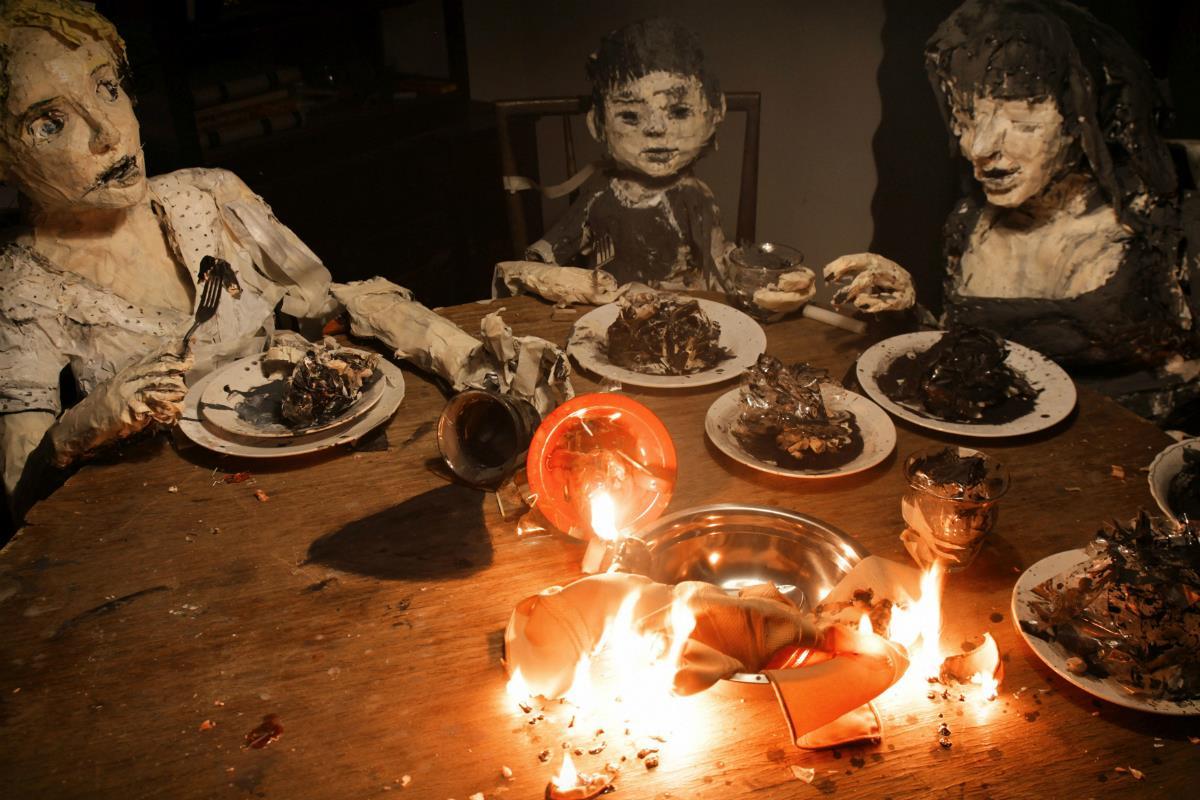
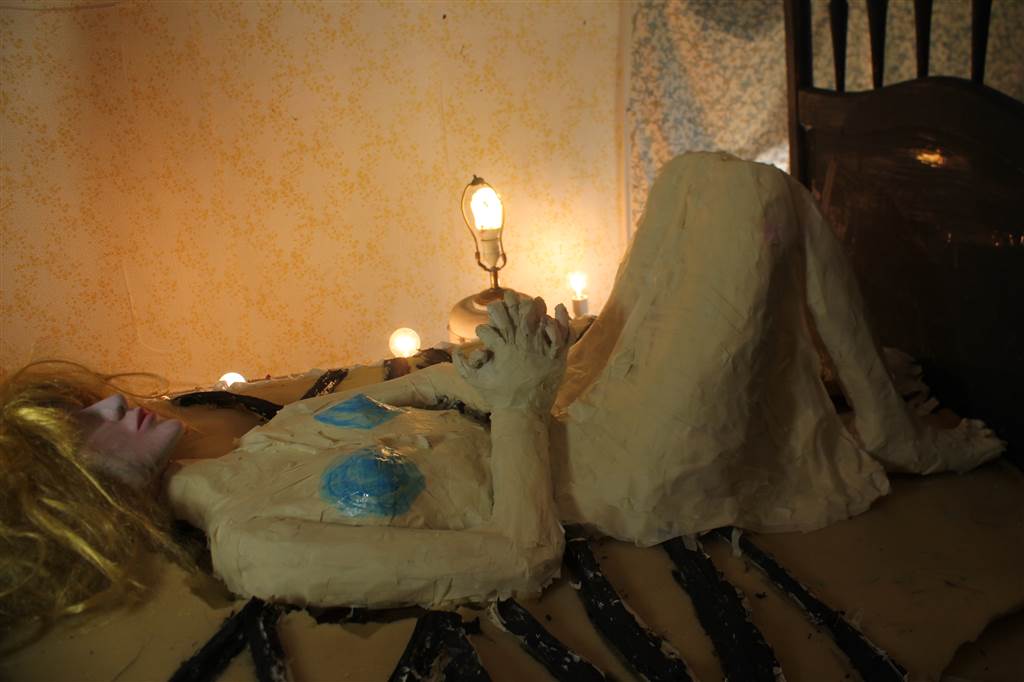
Even without the real, horrifying history context the exploration of this dark and potentially unknown history to the outside world from Chile means the creators already set up, using archive footage of idyllic country life with blond haired children and honey as the images, the perfect tone to set up a dank underbelly that presides over all the images without become overbearing. And The Wolf House, part of a tradition of stop motion animation, can proudly stand out among the likes of Jan Svankmajer and the Quay Brothers as a truly radical, painstakingly executed animation with hard earned artistry, in which Cociña and León to best describe the style starts in bookends with chalk drawn animation when the protagonist Maria (voiced by Amalia Kassai) flees the Colony and enters the titular house, only for the place to be a living and breathing animation itself. As a wolf stalks outside (speaking in German) becomes the sinister menace of the Colony in his sense of superiority and an underlying sexual nature to his comments of his beloved "little bird", the animation inside the home takes place in one giant set which is constantly built and deconstructed, the tape used to keep paper-mâché figures up and in poses sometimes visible, all whilst the film openly records as much the work to construct and tear down each sequence as part of scene transitions as it is the story. Some of the animation as well is painted on the walls and floors, to be erased after in such a way. The jerky motion of all is something that adds to the sense of ill-ease alongside the uncanny nature of the entire artificiality living world.

From https://d1nslcd7m2225b.cloudfront.net/Pictures/2000x2000fit/
9%2F8%2F2%2F1279982_thewolfhouse_199817.jpg

It is the equivalent of taken an abandoned building, and using the content of its garage and second hand furniture to make a film, a lot of paper-mâché and paint used for the production. I view all cinema, with this in mind, as hard work worth praising, even if it can be utterly wasted on bad films, but animation or work that visibly looked like hard work is to be more admired for its laborious, difficult craft especially as it has an innate tactility that is inherently (yet ignored) in the medium of cinema especially now in the digital camera age. It fits the material in terms of story here too as Maria finds two pigs and encourages them to transform into human beings, the characters both existing as figures but also painted only the walls and floors, sometimes using props like picture frames to depict them in extreme close-up. It's inherently skittish and fragmented as a film scene per scene, the animation as mentioned already creepy before you see it move in this fragmented movement.

Following Svankmajer's skill of animating life in an everyday objects, whilst The Wolf House doesn't follow the Czech animator's transgressive details like animating actual meat does have the same nightmarish quality to the material which plays into the story they are used for. The film reaches a moment of idealism for Maria and her pig children, briefly reaching a respite, but even before the Wolf's mocking affection is unnerving and one witnesses sights like pigs with human hands for feet or a papier-mâché boy on a toilet being terrorised and covered in bugs. After, as food is becoming scare and the pig children decide to eat Maria, the film without any direct transgression, aside when the children are accidentally burned by a candle falling on the table cloth and having to recover from their injuries, is riddled in a darkened fairytale mood.

From https://fantasticfest-site.s3.amazonaws.com/films/42331/
wolf_house_15_4web__large.jpg

The back story of what The Wolf House is eluding, if known, makes it more unsettling. The children, beginning as pigs, become children with dark features only for honey, the produce famous from the Colony, turns them into angelic children with blonde hair and blue eyes. The wolf, symbolically evokes Nationalist use of pagan symbols, and its entire bias to the wolf saving Maria in the end after she regrets rebelling against the Colony whilst in lieu to the film being a fake propaganda work is even more disturbing when her monologues clearly evoke hints of abuse, even sexually, and being forced into a collective beforehand. The animation's beauty doesn't stop its coarse and textual style from adding to all of this subtext and, with this in mind, I will be cautious in terms of recommending the film due to how disturbing it is to see. Nonetheless, it's an incredible piece of art that, if you are prepared for that challenging nature, is worthy to witness.

Abstract Spectrum: Handmade/Insidious/Lo-Fi/Nightmarish
Abstract Rating (High/Medium/Low/None): High

Personal Opinion
As a film premiering in 2018, The Wolf House deserves to be seen as an incredible cinematic achievement, more worthy of attention than more publicised films. Whether, baring temporary screening on MUBI, a film this important can avoid being lost in the film festival circuit may be as much entirely helped by a tiny little blog like this bring attention to this fascinating, artistically rewarding animation as much as a proper film critic. In terms of animation as a medium, Joaquín Cociña and Cristóbal León have already shown a unique style in-between them that deserves to be explored further in short and long form filmmaking.


From http://etiudaandanima.pl/wp-content/uploads/2018/11/Dom-wilka.jpg

Thursday, 8 November 2018

The Wild Boys (2017)


Director: Bertrand Mandico
Screenplay: Bertrand Mandico
Cast: Pauline Lorillard as Romuald; Vimala Pons as Jean-Louis; Diane Rouxel as Hubert; Anaël Snoek as Tanguy; Mathilde Warnier as Sloane; Sam Louwyck as Le Capitaine; Elina Löwensohn as Séverin(e)

Synopsis: Five boys (played by actresses Pauline Lorillard, Vimala Pons, Diane Rouxel, Anaël Snoek and Mathilde Warnie) are as extreme as you can get as delinquents - hooligans, blasphemers, lovers of literature, and "wild boys" who after raping and accidentally killing their literature teacher find themselves with a sea captain (Sam Louwyck) whose harsh behavioural punishment is contrasted by the strange island he leads his boat to. The island is a paradise with wonderous flora, but drastically changes a person physically when they stay there for a long time, something the current occupier Séverin(e) (Elina Löwensohn) can attest to.

[Spoilers Throughout]

Starting in the early 2010s, Bertrand Mandico has spend his career in short form films until The Wild Boys, now planting his idiosyncratic flag into a theatrical length feature I sincerely hope catches a lot of attention for him and allows his work to be known. He openly absorbed a lot of influences to make The Wild Boys - and research will show he'll openly discuss those influences even on little details - but he is however also his own person, one still hard for me to define but one that is very aesthetically rich, very transgressive but in a very pansexual form and, like Guy Maddin, pulls from various genres and influences openly. Unlike Maddin, the differences in his choices are themselves signs of his themes - Boro in the Box (2011), effectively his true debut was a perverse "biography" of Walerian Borowczyk, Living Still Life (2012) taking animation to its literal extreme with Elina Löwensohn (and the director himself) reanimating actual animal corpses, and The Wild Boys taking boy's own adventure storytelling but, in casting women as the boys, openly flaunting homoerotic, queer and feminised punkish sensibilities. It's like Derek Jarman's Sebastiane (1976) to find, clutch, any real tonal comparison; the punk sensibility but filtered through that similar queer slant and elegance, if to be his trademark in later features, is definitely a different attitude to Maddin if any...

From https://assets.mubi.com/images/notebook/
post_images/26589/images-w1400.png?1536751720

There are also the little production differences. That, for his film which takes place on the sea and eventually a strange and curious island lost in the ocean, he actually did film at Réunion, in the Indian Ocean, and merely blended the real life natural landscape into his own worldview. That and the specific blend of the materials such as the casting of the Wild Boys themselves, including a couple of noticeable actresses like Vimala Pons, who play their roles completely straight, someone like Pons throwing herself fully into the most amoral and macho of the five wild boys, whilst everyone has very idiosyncratic stylistic ticks. This gender subversion as a major stylistic choice also leads to the plot itself.

The island itself, when finally introduced is a paradise, with flora Fantastic Planet (1973) would be proud of it with its living tendrils and woman shaped bushes to have sex with. In among all the explicit sexual references, said flora consists of various sight gags such as that bush's form or the phallic buds which you can drink very white liquid from for sustenance. Its fruit, hairy and slimy, is introduced very early on and is so explicit in sexual meaning it would be absurd for me to blatantly signpost, all coupled with the fact that eating said fruit and maybe other factors causes a literal "feminisation" of the male body, turning men into women. If there is a deeper message to The Wild Boys aside from being an aesthetic feast for the eyes, wrapped in its own world and form, it's this subversion through a plot McGuffin, as happened to Dr. Séverin(e) as played by Elina Löwensohn. The former titular star of Nadja (1994), and effectively Mandico's muse, plays a Henry Morton Stanley type in a white suit who turned into a women when he stayed on the island he and the captain found; having decided to reduce the amount of war and violence into the world, he decides to "feminise" it through the island's natural resources, starting with our five miscreant boys.

From https://medias.liberation.fr/photo/1100427-jpg_
bateau-2jpg.jpg?modified_at=1519765233

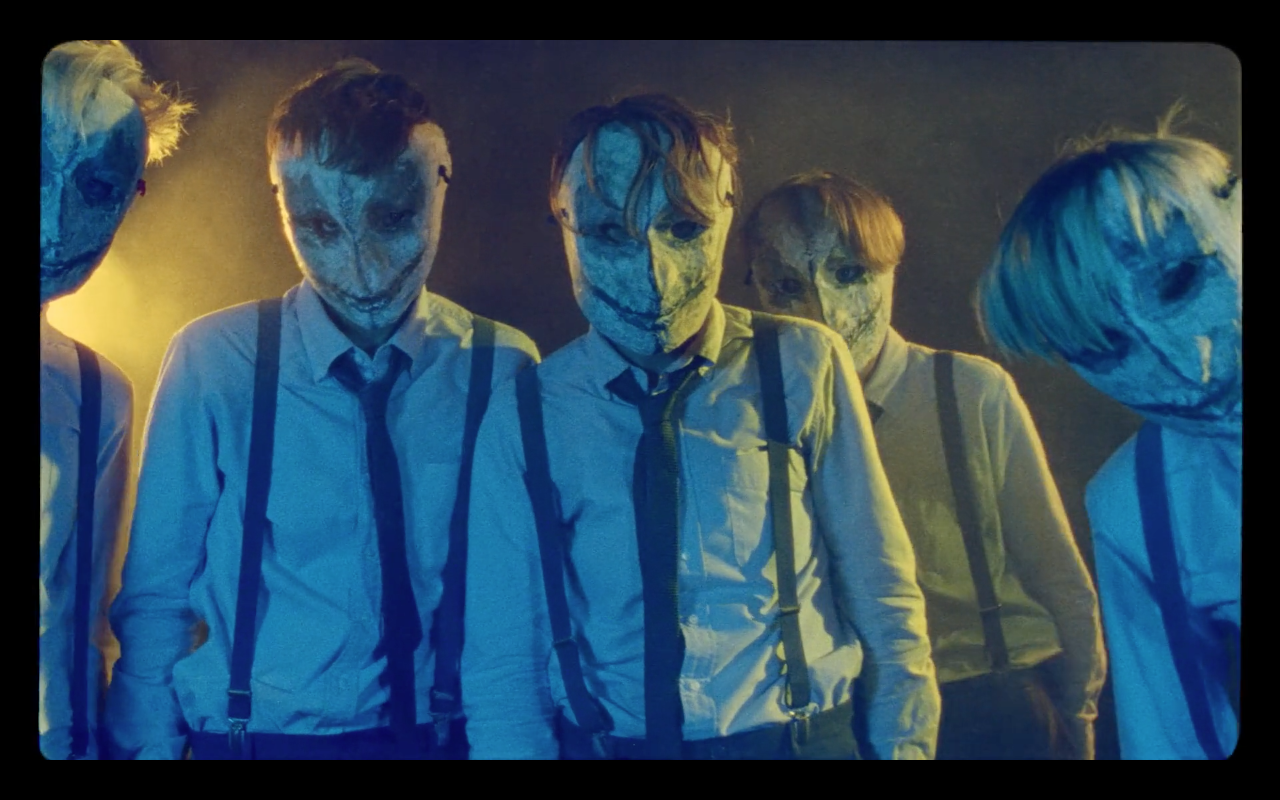
As from the beginning of Mandico's work, he's been openly transgressive; willingly push taboos which may offend some. How the boys got to this position is such a case; explicitly set in the early 20th century, so Mandico openly quotes from the streak of transgressive literature from the time as the boys, in grotesque genderless masks, accidentally kill their teacher when, having raped her in a toxic Dionysian frenzy and tied her to a horse, end up with said horse taking her off a cliff, not pulling any punches in the material from then on. Mandico however from then on takes it further to an equal opportunity mentality when, thinking they have escaped punishment and openly deciding to go with the Captain (Sam Louwyck) out of their free will, the boys learn to late his behavioural training places them his captives.

The gender subversion itself is part of this, the blurring androgyny of masculinity with breasts, the Captain not only having a map tattooed on his penis but one mere breast due to the effect of the island, and the actresses acting like boys with their short hair and costuming. Through what I have seen, Mandico is able to be very extreme but in a way that's never lurid, a fantastique streak through his films which has let him get away with his more extreme moments alongside his open desire for gender equality in the transgression. The later is a fine point that must be considered more often when dealing with transgression in cinema - it is a nuance that can drastically help a film, particularly as Mandico gives all his actresses in his films very good roles, in among equal opportunity full frontal nudity and in this particular case the best example in all cinema, of any genre, of someone's penis inexplicably falling off and having to be buried on the beach. Whilst he will offend, he offends with disregard for gender binaries.

From https://i.ytimg.com/vi/qMAU4LZ1EFE/maxresdefault.jpg

Tonally, the comparison to Guy Maddin is apt, although you imagine Jack Smith if he had a budget would want to make films this glamorous - the monochrome aesthetic intercut by hazy coloured sequences of neon purples, blues and other striking colours reminiscent of silent cinema aesthetic Maddin uses but with Smith's transgression and Mandico's own grit. That's strange to think, considering especially Maddin has gotten away with transgressive material throughout his own career, but as much of it is the matter of fact nature - Mandico shows nonchalantly what Maddin exaggerates with a sense of humour. Alongside the French fantastique displayed here it's definitely his trademark.

His philosophy for all this? Punk, as mentioned, feminist definitely, as the actresses are a huge factor to The Wild Boys' success in both their committed acting and the gender subversion in plot and iconography shown. As the boys, they are pretty young men but dangerous, wild energy coursing through their veins which lashes out in dangerous ways, all five with distinct personalities. The Captain adds more as a combative figure tormenting them - more perverseness with his tattooed penis but a complex trajectory as a hard, cruel man who yet loves his pet dog and is revealed to have an honourable purpose to his cruelty, even if it involves nearly strangling young boys to death with collars on a boat which can be pulled in. And Elina Löwensohn strides around like a living colossus - she, with a healthy career alongside her Hal Hartley work and newer films like this or Hélène Cattet and Bruno Forzani's Let The Corpses Tan (2017), having roles like this one she can be proud of.

From https://blogi.kultuur.info/wp-content/uploads/
2017/11/les-garcons-sauvages-6-2.jpg

Abstract Spectrum: Dreamlike/Psychotronic/Transgressive/Weird
Abstract Rating (High/Medium/Low/None): Low

Personal Opinion:
From his debut, around the time of Boro in the Box, Mandico has started perfectly. Arguably a film like Boro in the Box is worthy enough to be a debut even at only forty minutes, but The Wild Boys would be a perfect way to introduce him to many, with a combination that'd appeal to both cult and art house audiences. The obvious question is whether Bertrand Mandico will ever get wider recognition, and what he will do now he's finally made a feature; the question of what a second film will be like, (and hopefully he'll make a second theatrical length film), is effected as much by what ideas he still has and what he can do as a follow on. Now I have utter admiration for him, coupled by grievance in the difficulty now in seeing his other work, it'll be interesting if he continues or if The Wild Boys is sadly a one-off.


From https://www.crossingeurope.at/uploads/tx_filmdaten/
CE18_NS_Les-garcons-sauvages_The-Wild-Boys_2_K18.jpg

Wednesday, 31 October 2018

A Bertrand Mandico Double Bill: Boro in the Box/Living Still Life (2011/2012)

From https://screenanarchy.com/assets_c/2012/09/
BoroInTheBox-thumb-430xauto-23142.jpg


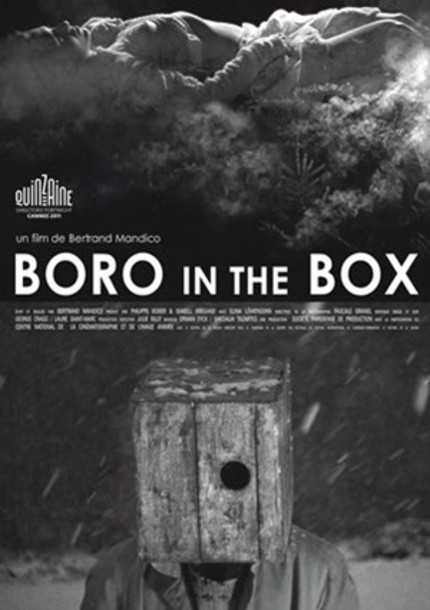
Boro in the Box
Screenplay: Bertrand Mandico
Cast: Elina Löwensohn as Walerian Borowczyk (Voiceover) / La mère; Thierry Benoiton as Jerzy; Jacques Malnou as Grand-père; Elise Hote as Emilia; Laure Lapeyre as Olga; Benoît Serre as L'homme du train; Tom Cholat as Boro enfant; Ruben Lulek as Boro enfant; Audrey Le Corre as La muse; Mika'Ela Fisher as Ligia

Synopsis: A perverse tribute, in vignettes in alphabetical and chronological order, which tells an alternative take on the life of controversial Polish animator and director Walerian Borowczyk.

For the occasional dull quasi-art house films I've put up with, MUBI's streaming gift for the most part has been a gift that has been worth the investment. Sadly it has a thirty day time limit on films, including those you may have difficulty ever seeing again, but to bastardise a famous quote it is better to have watched a film than to never have seen it at all, and if that's the way they were able to access some of the titles they've collected, so be it a necessary evil. It's definitely the case as they've introduced me to directors I'd never heard of but fully deserve coverage as filmmakers of the abstract. One was Khavn, the punkish one-man band of Philippine cinema, now there's Bertrand Mandico from France, a French director who made his first short film in 1999 but only really started to become productive in his work from 2010 onwards, only making his theatrical debut with The Wild Boys in 2017 and making short films beforehand. Parallels can be made to Guy Maddin, in his implementation and open influence to older cinema, but he is his own figure and if it was easier to see his work, defining this distinction would be a hell of a lot easier for me.

From http://fr.web.img5.acsta.net/pictures/14/05/07/10/52/026859.jpg

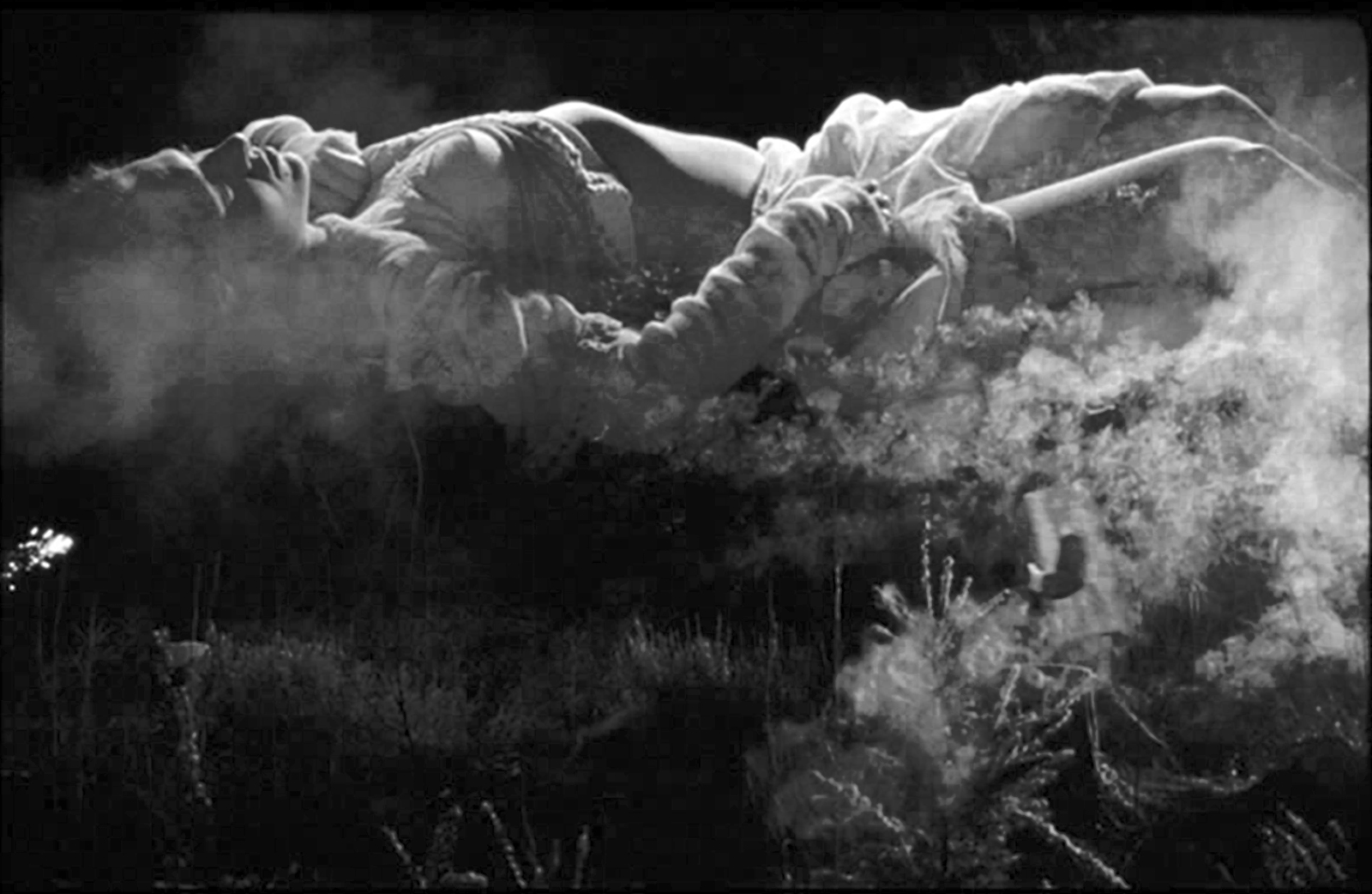
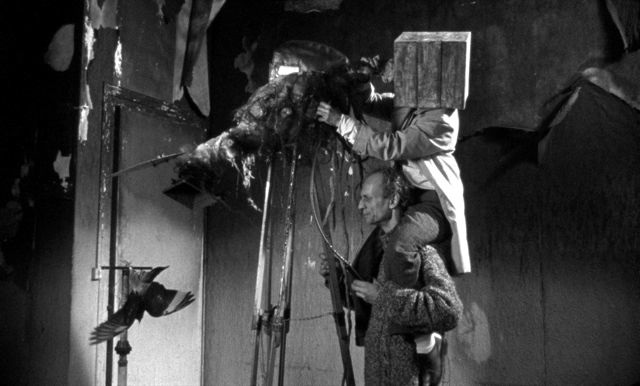
We begin with Boro in a Box, his most famous work in which it loosely interprets the life of Polish director Walerian Borowczyk from birth to throughout his career in A-to-Z format, a visible reference to Borowczyk's own short filmmaking like Grandmother's Encyclopaedia (1963). It's a loose interpretation of his life as some eyebrows will be raised high, on display openly its own fantastical and perverse tale where Borowczyk is a man born as a box, a literal Kino-Eye, whose mother has an erotic dalliance with a horse briefly and his career here consists of long warehouses of naked people he films with a living Cronenbergian film camera. Yet wherever Walerian Borowczyk is, he'd probably appreciate the tone, for Borowczyk was a fascinating figure. Beginning in stop motion - (probably the most debatable moment for me is how Mandico dismisses co-director Jan Lenica of the early Polish shorts completely) - Borowczyk was championed for his animation and then his earliest steps into live action feature cinema in the likes of Blanche (1972). Than he was ostracised, until the recent and justly needed critical evaluation in the 2010s, for decades when he switched to erotic cinema with 1973's Immoral Stories, which he stayed in through his career for the most part afterwards but tragically made him a pariah for many, hence that necessary critical evaluation in the 2010s was a vital necessary, making converts like myself when I witnessed his cinema to be precise, full of texture and elegance, sensual and openly transgressive as a virtue.

So he might respect Mandico depicting him, as mention, born as a literal box on an umbilical cord whose limbs and torso grow out when he grows up, an obsessive who films when his father gives him a living camera and tries to find himself in this raw, dirty world of texture, grimness and explicit sexuality. Beautifully shot in black-and-white, but openly perverse from the get-go, Mandico springs out of the gate with his intentions following Boro's conception, his mother with her sister in the woods, playing "angels" where they choke each other half to death until they see them, only for her future husband to appear dressed as a tree and in an uncomfortable blur of molestation and consensual sex seduce her. This transgression, thankfully, is wide and spans further to deliberately offend anyone - between full frontal male and female nudity, Boro having a similar situation with a man in a train cart who'll become his collaborator, his mother (Elina Löwensohn, who also provides Boro's voice in the narration) having a sensual interaction with a horse, which is explicitly referencing Borowczyk's The Beast (1975) both in its human and beast sex and, in the silhouette of phallus, the more shocking moment of that film at the beginning where Borowczyk filmed an actual horse castration onscreen. The transgressive streak, in any other context if the tone was wrong, would offend many but Mandico manages to make it feels appropriate. It would, in another context, rub people the wrong way how Borowczyk is treated but, like when Isabella Rossellini and Guy Maddin depicted her father Roberto as a giant stomach in My Dad Is 100 Years Old (2005), it feels appropriate, here gleefully playing to Borowczyk's desire even before his later erotic films of playing with transgression and subversion.

From http://www.formatcourt.com/wp-content/uploads/
2012/02/boro-in-the-box.jpg

Whilst it's a fantasised story, the tale of Boro fits the real man named Borowczyk, who was respected for his animation and art films only to be damned for his turn to erotic cinema, Boro the Box Headed and his living camera here becoming marginalised in his own world as tragically Borowczyk was, but neither compromising. And aesthetically Mandico's work is incredible, a dream-like but grimy world where dirt, salvia, and various forms intermingled with a fetishisation of bodies and objects Borowczyk also had. Mandico's clear trademarks, whilst following from influences, is a pansexual transgression in the nude bodies onscreen, and depicting Boro having a sexual experience on a train with a man who'd assist him with his films. That and the overt fantastical details which are constant throughout, such as the aforementioned camera, or Boro seducing a woman at a young age with feather on sticks coming out of pockets in his box, leading to her nude body as a giant projection over a fireworks display and Boro running below back and forth to bring her to orgasm.

And it's clear, even as the first Bertrand Mandico work I have seen, that starting properly with his career here onwards he's built and honed his craft over many years, only finally making a feature length film in 2017 with The Wild Boys and, like a few favourite directors of mine, using the years to churn out shorts that are obsessed with interests he can draw from with greater depth for later feature films if he so wishes to. Boro's tale, even in only forty minutes, is a life fully fleshed out, from recounting experiencing from inside his mother's womb her falling down a cliff to returning home to his parents one last time after decades in France, and in spite of its short length it argues of being as expansive and dramatic as any film considerably longer then it.

From https://medias.unifrance.org/medias
/75/66/82507/format_page/media.jpg

Living Still Life

Screenplay: Bertrand Mandico
Cast: Elina Löwensohn as Fièvre; Jean-Marc Montmont as L'homme

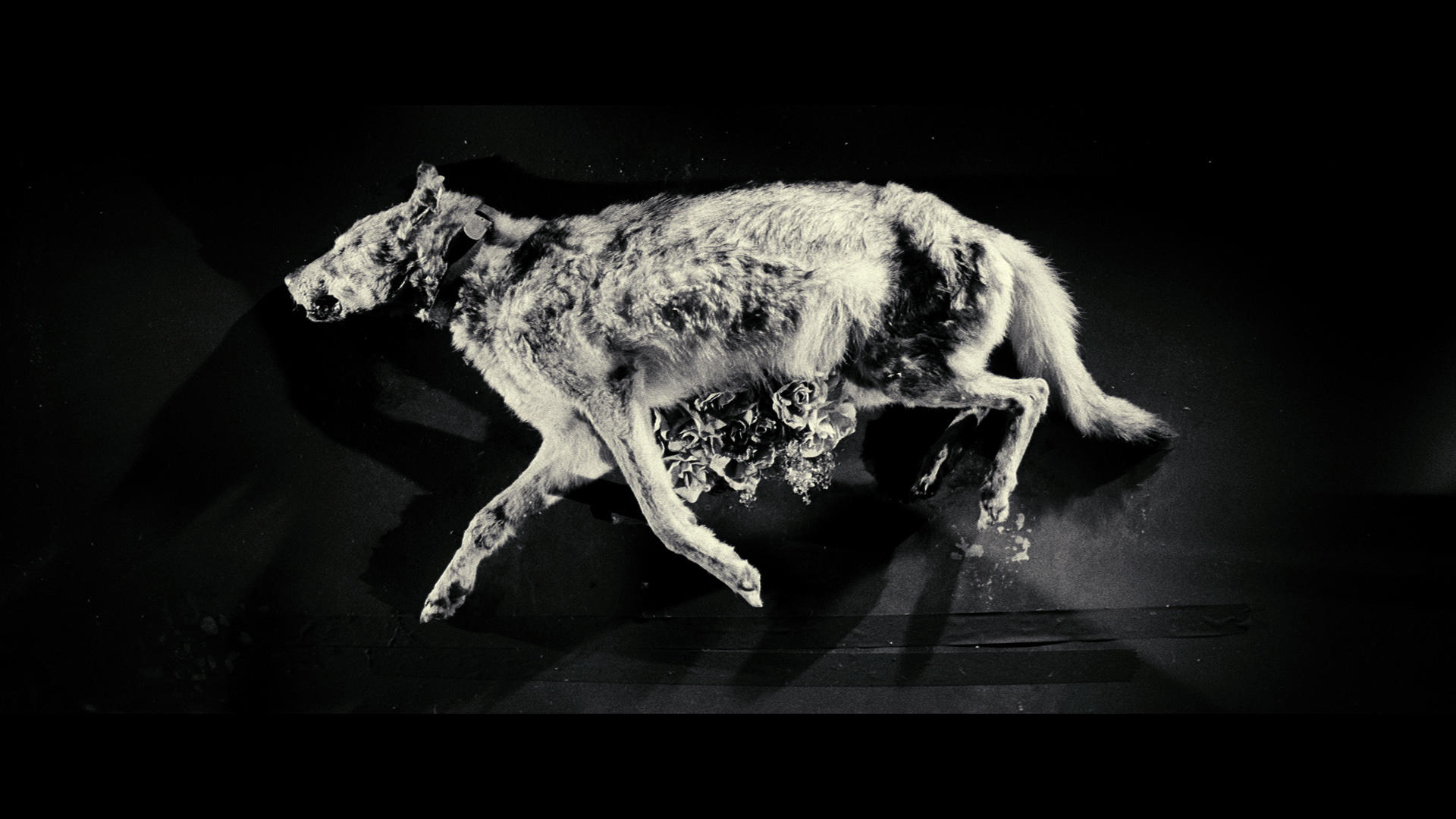
Living Still Life, quoting Walt Disney is French in an intertitle at the beginning, takes animation to an extreme when a woman named Fièvre (Elina Löwensohn) acquires dead animals in the countryside and animates on a giant canvas in her home. It's immediately eye catching, as befitting the quotation this 2012 short looks like a live action Disney film in colour and bright fantastical flora...only to have an eerie, disturbing yet magical story take place that feels like a dark fairy tale. One where a ritualistic act, done four times over four acts, lead to Mandico actually animating dead animals as stop motion creatures.

From https://67d860664f4b00793cde-967809c7cbb0f14b
111df13fc72409e5.ssl.cf3.rackcdn.com/fiona/editionfilm/76047b51-a9a4-41ac-b803-f8ec976d7f2e.jpg

As someone who has brushed against thanatophobia, they are very sobering scenes. Powerful, but knowing (unless an incredible practical effects artist was involve) that real animal corpses were used effected even me and would definitely be unsettling for some, worthy of warning even if the character of Fièvre attaches flowers to the burst open stomach of a dog. As with Boro in the Box, the production is incredible, also even in terms of the music in his work, between the at-times creepy score used for Boro in the Box to here appropriately magical but befitting its effective content. All of this builds to when Fièvre comes aware of a man who spies on her through the acts, someone who [Spoiler Alert] wants her to animate his recently deceased wife, synchronising to her own fantasy of animating a dead woman she directly tells the audience in the first scene of the short. [Spoiler Ends]
It would be criminal not to mention actress Elina Löwensohn at this point, effectively his muse since she started working in his films since Boro in the Box to The Wild Boys. Already a striking figure physically and as an actress in the performances, I was surprised when something clicked in my memory and realised she was the titular Nadja of Michael Almereyda's 1994 spin on the vampire story, having gone from that film over the years into a fascinating run of films with the likes of Hal Hartley to a variety of idiosyncratic directors, the kind of career that'd get ignored barring a few major films like Schindler's List (1993) but for those in the know (and when you see films like Living Still Life) command respect especially as she is great in both Mandico films I am covering. That she works with Mandico now is proof of his abilities, as Boro in the Box demanded a lot from her beyond the nude scenes whilst still treating her toroles actors would die for, in a mere short like Living Still Life providing a complicated character in just a short amount of time. Together, alongside Boro in the Box, it paints a great painting of the pair as collaborators.

Abstract Spectrum:
Boro in the Box: Fantastical/Grotesque/Surreal
Living Still Life: Eerie/Fantastical

Abstract Rating (High/Medium/Low/None):
Boro in the Box: High
Living Still Life: None

Personal Opinion:
In just two shorts, Bertrand Mandico stood out and immediately won me over with his work. I only hope The Wild Boys, his theatrical length debut, makes his work more easily accessible in the future. 


From http://imagizer-cv.imageshack.us/v2/640x480q90/921/2858i4.png

Thursday, 30 March 2017

Dark Myth (1990)

From https://images-na.ssl-images-amazon.com
images/I/51HCBZ7ZBHL.jpg

Director: Takashi Anno
Screenplay: Takashi Anno and Tomomi Mochizuki
Voice Cast: Alan Myers (as Takeshi); Jay Harper (as Kikuchihiko); Peter Marinker (as Takeuchi); Blair Fairman (as the Narrator); Daniel Flynn (as Brahman); John Baddeley (as Hayato); John Bennet (as Jiku); Larissa Murray (as Miya)
A Night of a Thousand Horror (Movies) #93

With the following, I dive into the more marred area of anime horror and fantasy. This may sound immediately dismissive of Dark Myth but, bearing in mind its far from a perfect straight-to-video anime in the first place, the review takes on a nostalgic admiration for this type of obscurer, flawed one-off from the late eighties and early nineties era of animation, one which ended up part of something called The Collection, explained if you follow the link below, which has formed an odd part of my nostalgia getting into anime in the early 2000s. Mostly surrounding more modern anime released by the late ADV Films, The Collection from Manga Entertainment was nonetheless a gateway to older anime for me in spite of only having English dubs, many of them frankly bad, a strange motley bunch of obscure titles and notorious ones like Violence Jack (1986-1990), and symbols on the DVD spines unique to each title who's meaning I've yet to understand. For better and worse, this series which included Dark Myth was as much an important part of getting into the medium as was getting second hand Manga Entertainment releases of Ninja Scroll (1993) and Akira (1988).

For more on this, and a review on this fantasy horror anime about ancient mythology, hungry ghosts and late eighties synth, click for the full review HERE

From http://pm1.narvii.com/6387/
31d73dcc80c9c1b2efa01bea6c46c4f916db1a14_hq.jpg

Sunday, 29 January 2017

King of Thorn (2009)

From http://www.movpins.com/big/MV5BNTdlOWY2YWEtYTMw
YS00MGI0LWJlMzctZGY3YzY3NWUxOTkxXkEyXkFqc
GdeQXVyOTExODQ3OQ/eri-sendai-and-kana-
hanazawa-in-king-of-thorn-(2009).jpg

Director: Kazuyoshi Katayama
Screenplay: Hiroshi Yamaguchi and Kazuyoshi Katayama
(Voice) Cast: Kana Hanazawa (as Kasumi Ishiki); Akiko Yajima (as Timothy Laisenbach); Eri Sendai (as Shizuku Ishiki); Kenji Nomura (as Ron Portman); Sayaka Ohara (as Katherine Turner); Toshiyuki Morikawa (as Marco Owen)
A Night of a Thousand Horror (Movies) #75

For the first time in a while, another anime which slides into horror, although in this case what I thought was a post-apocalyptic movie about a dangerous virus which turned people into stone and monsters rooming the Earth turned out to be something drastically different, involving allusions to fairy tales, sci-fi and a truck load of plot twists. If anything it shows how to never judge something from the initial plot synopsis let alone the cover.

Whether it actually works or not is to be found reading my review of King of Thorns here.

From http://media.animevice.com/uploads/0/8543/577191-thorn4.jpg

Monday, 5 December 2016

Vampire Princess Miyu (1997-8)

From http://pics.filmaffinity.com/kyuketsuki_miyu_
tv_series-747025735-large.jpg

Director: Toshiki Hirano
Screenplay: Chiaki J. Konaka, Mitsuhiro Yamada, Sadayuki Murai, Tamio Hayashi, Toshiki Hirano, Yasutomo Yamada, Yuji Hayami and Yutaka Hirata
Voice Cast: Miki Nagasawa (as Miyu); Asako Shirakura (as Chisato Inoue); Chiharu Tezuka (as Yukari Kashima); Kokoro Shindou (as Hisae Aoki); Megumi Ogata (as Matsukaze/Reiha); Mika Kanai (as Shiina); Shinichiro Miki (as Larva)
A Night of a Thousand Horror (Shows) #3

Originally posted on my other blog 1000 Anime in October during my Halloween viewing, the TV series spin off of the manga of the same name is sadly a case of how I hate episodic storytelling in anime unless it does its best to make every story compelling, or connect it into even a loose framework of some interest. That may come off as a spoiler for the review I'm linking to below, but the experience if nothing else, alongside an ending that would've been great by itself if not with the context of how its set up, is worthy of being read if not seeing the actual series. In lieu to it, the late eighties straight-to-video version is still worthy of interest for me, but in terms of great disappointment, Vampire Princess Miyu is the first big example for this series of reviews of horror television.

A link to the full review is available HERE. Be warned, there are spoilers within it.

From https://animeblurayuk.files.wordpress.com/2013/04/
vampire_princess_miyu_screenshot1.png

Monday, 3 October 2016

Halloween 31 For 31: Death Bed - The Bed That Eats (1977)

From http://stagevu.com/img/thumbnail/ebvnlpsdyvvebig.jpg
Director: George Barry
Screenplay: George Barry
Cast: Demene Hall (as Diane); Rosa Luxemburg (as Sharon); William Russ (as Sharon's Brother); Julie Ritter (as Suzan); Linda Bond (as The Resurrected); Patrick Spence-Thomas (as the Voice of the Artist)
A Night of a Thousand Horror (Movies) #29

It's tragic most will know of Death Bed from the Patton Oswalt skit. A comedian I have little interest in, so I won't unfairly dismiss someone I know little of, and the skit has a humour to it I liked, but the real gripe is thinking that the geek fan base for him celebrates mass produced superhero films that can't get the aspects we love in comic books right, or over bloated blockbusters that aren't as fun or as imaginative as the fan fiction made afterwards, yet a film that tries something unique and succeeds is left as a joke. Even if Oswald's skit is a celebration for the fact it managed to be made, there's still an unfair joke at its existence. Unlike Oswalt's "Rape Stove: The Stove That Rapes People", if he ever gets round to actually writing a script for it, this is a film that openly admits its silliness without becoming ironic and is absolutely serious in a poetic way in spite of its strangeness. It's definitely not the oddest object in existence to be an antagonist of a horror film knowing there's an adaptation of a Stephen King story about a demonically possessed clothes press in existence, nor mentioning at least two killer refrigerator films in existence.

Openly admitting its bizarreness, director-writer George Barry dreamt of a man eating bed and decided to make a film about it, conjuring through cinematic production a true one-off made with lo-fi, uber low budget dream logic about a bed created by a demon. Brought to life by their tears of blood weeping over a lost human lover interest, a rampant monster is born who devours those who lay upon its duvet. It feels like a dream and fittingly even the back-story of the film celluloid itself was a subconscious reverberation that was discovered by modern viewers, lost to the haze of bootleg video even to its creator only to appear into existence again decades after. The scratched film, from the sole surviving print, emphasises its eerie air, post dubbed sound effects and dialogue leaving a ghostliness as the manor the bed is trapped in, in the basement, is a European gothic building falling to pieces in the midst of nowhere rural America. A heavy European influence is felt on Death Bed, a fairy tale openly admitting its flowery back-story as an elaborate birthing is responsible for the living bed, a personification of a greedy, crude and childish monstrosity which burps, growls, whines and plays sadistic tricks of nightmares on its victims before eating them by way of an internal sea of yellow digestive acid. It goes as far as have the ghost of Aubrey Beardsley, the legendary and notorious British illustrator of transgressive and erotic art by way of black ink, trapped behind a painting for a piece of alternative history, belittling the bed constantly and the film's narrator through post dub monologues. It all mixes with its seventies tone, just from the fashion on display, openly taking a risk of being artsy and pretentious above its limited budget. Risky but ultimately a success. 

It's aware of its own humorous premise as well. Unintentional irony couldn't exist from a scene where the bed drinks a whole bottle of Pepto Bismol, only the idea George Barry had an incredible sense of humour. A series of Daily Bugle headlines chronicling the bed's history to the segment about a quack doctor trying to make the bed a sex therapy treatment are all deliberately humorous highlights alongside the unintentional ones that are there, of oddly spoken dialogue to a pair of hands borrowed from a skeleton from a biology class. The seriousness comes from its moments of visual poetry. At first the scenes in the golden yellow digestive acid evoke Andres Serrano's infamous Piss Christ photograph only to turn into a disturbingly serene series of images, bodies writhing in the golden sheen as the red of blood swirls in it as physical mass of colour. The more flowery mythology turns to really creepy scenes, nightmares ranging from a meal of insects to a book of one's death using mirrored pages.

From http://popshifter.com/wp-content/uploads/2014/06/
death-bed-blu-ray-review-header-graphic.jpg
Abstract Spectrum: Fantastique/Psychotronic/Weird
Abstract Rating (High/Medium/Low/None): High
From the midst of the golden era of American independent filmmaking, between the seventies and early eighties of bizarre genre blending and community theatre actors wandering around small town locations not seen in Hollywood cinema for a greater verisimilitude, Death Bed manages to be even more stranger than the entire lot of them I've experienced so far. You witness Death Bed, and the Oswalt sketch, spoken in the tone of not seeing the film, misses out even the hallucinatory experience of stumbling over this film and seeing something entirely contained in itself. With no connection to other films - one movie by George Barry only, no others and seemingly lost to time until this era - its indefinable. The theme by Cyclobe - partially created by Stephen Thrower, former member of Coil and a horror film expert who helped Death Bed become know - is disturbingly beautiful1, a modern piece of music melding seamlessly to a seventies film through time travel, but the catalogue of groaning hums and constant munching sounds from the original materials is just as alien to the ear.

That a large portion of the film follows a bed as an antagonist, one which manages to have so much personality, is bizarre in itself but through stop motion, sound effects and having Aubrey Beardsley's ghost as the straight man of the pair, the result is absolutely amusing when it's not also nasty and cruel, a sawing with a crucifix chain which is agonising to see or the bed playing with severed eyeballs of a former victim to look at someone. The resulting film is both openly silly, the Pepto Bismol, but serious and poetic at the same time, of dreams and red roses growing out of a victim's skull in an evocative Gothic horror image.

Personal Opinion:
Naturally I love the film. Gestated seemingly from nowhere, but able to read of its production through the aforementioned Stephen Thrower's tome Nightmare USA also shows it was a creation of love and invention from George Barry, one at first doomed never to exist properly only for him to discover on the internet decades later an entire hidden history to the film for him. Bootlegging allowed people to develop a mythology surrounding it, leading to official releases, theatrical screenings, a skit by a famous comedian and all his hard work to be for something worthwhile, a fairy tale ending to incredibly unique piece of fantasy horror.

From http://www.mondo-digital.com/deathbed3big.jpg
=======
1 Apparently there was an original score of cheesy saxophone music which makes this one of the few cases of tampering with original film materials that doesn't evoke George Lucas mucking about to the pleasure of few.

Friday, 19 August 2016

The Raven (1963) [Mini Review]

From https://i.jeded.com/i/the-raven-1963.32489.jpg
Director: Roger Corman
Screenplay: Richard Matheson
Cast: Vincent Price (as Dr. Erasmus Craven); Peter Lorre (as Dr. Adolphus Bedlo); Boris Karloff (as Dr. Scarabus); Hazel Court (as Lenore Craven); Olive Sturgess (as Estelle Craven); Jack Nicholson (as Rexford Bedlo)
A Night of a Thousand Horror (Movies) #20

The Raven is one of the few Corman adaptations of Edgar Ellen Poe that's deliberately humorous. One of the best things about these adaptations is that, while fun, they took themselves seriously. The Raven is different in terms of having its tongue in its cheek but because it's still depicted with sincerity, the result is entirely riveting. The original poem of The Raven is merely an opening catalist to start a completely unique story, more drastic than the other Poe adaptations I've seen from this series in changing the original narrative, where isolated but humble magician Dr. Erasmus Craven (Price) lets a raven into his study only to find soon after that it can talk. The raven, once helped by magic, is revealed to be fellow magician and alcohol enthusiast Dr. Adolphus Bedlo (Lorre), turned into a bird after a duel with the sinister leader of the main magician's guild Dr. Scarabus (Karloff), whose maleficent reputation is matched by the possibility he has captured the soul of Craven's late wife Lenore (Court) and made her his possession, leading Craven and his daughter Estelle (Sturgess), alongside Bedlo and his son Rexford (Nicholson) to head to Scarabus' castle.

There's a great sense with The Raven that everyone is having fun while contributing said energy to great performances. Playing a hero for once in these Poe films for Corman, Price is so affable and a gentleman it's not surprising this his real off-screen personality effectively comes through, Craven the warm milk drinking man hesitant to get involved with Scarabus but pressed on to do so through Price giving him nobility rather than plot contrivance. Some might find Lorre's bumbling, drunken Bedlo an embarrassment for the actor, near the end of his life, but for me personally (in drastic contrast to the opinion of Harun Farocki's documentary The Double Face of Peter Lorre (1984)) this doesn't come off as an insult to Lorre but a talented actor gladly throwing himself into a lovable buffoon with decent material. Other actors had worse ends to their careers, such as Karloff sadly, who here thankfully gets to play menacing but by a grace without need for going over-the-top, the elegance of his performance even for slapstick a reminder the most beloved actors in horror cinema then and now had theatre experience or had worked in areas which had them flex their acting talents, not to mention a natural nobility to many of them away from the camera. Add to this Court vamping it up, and chewing more scenery than Price, Karlof and Lorre combined, and a very young Jack Nicholson in a role that surprises knowing where he'd be a decade on, at one point showing the stereotypical mannerisms when possessed while driving a horse driven coach but effectively playing the slightly bumbling son figure to Lorre.

Also significant is how Corman emphasised a clear quality to these films technically. Having Richard Matheson, legendary author and the man who penned the Poe films that came before this one helps, as does the rich production design onscreen. Still low budget, Corman's decision to use the money used to make two smaller films to make one Technicolor work with distinct sets helped immensely, the gothic look of the film elegant even in a film like this that's exceptionally goofy at points, the colour especially restored for Blu-Ray as well immensely appealing for this type of story. While it has significantly less of the psychedelic colours and none of the dream sequences of other Poe films, the distinct style is pitched at a quality above a lot of substandard colour horror films at this point in the sixties which couldn't use any of this then-new aesthetic properly. Even the antiquated magic effects have a handmade charm especially in the final magician's duel which comes off as a series of Looney Tunes punch lines one-after-another. It's with the serious tone here that, even if it has the likes of Price and Lorre involved in comedic pratfalls, it never becomes obnoxious irony and retains a respectability that makes the humour and chills work.

From https://horrorpediadotcom.files.wordpress.com
/2015/02/the-raven-1963.png

Saturday, 2 July 2016

Tale of Tales (2015)

From http://www.impawards.com/intl/misc/
2015/posters/il_racconto_dei_racconti.jpg
Director: Matteo Garrone
Screenplay: Edoardo Albinati; Ugo Chiti; Matteo Garrone; Massimo Gaudioso
Cast: Salma Hayek (as Queen of Longtrellis); Vincent Cassel (as King of Strongcliff); John C. Reilly (as King of Longtrellis); Toby Jones (as King of Highhills); Shirley Henderson (as Imma); Hayley Carmichael (as Dora); Bebe Cave (as Violet, Princess of Highhills); Christian Lees (as Elias, Prince of Longtrellis); Jonah Lees (as Jonah)

Synopsis: Based on the Pentamerone, a collection fairy tales by Giambattista Basile which include the origins of such stories like Rapunzel, a multi-national cast depicts three tales set within a single fantasy kingdom. 1) The attempt of the King and Queen of Longtrellis (Reilly and Hayek) to use a mythical fertility ritual which has lasting complications when the royal son Elias (Christian Lees) is born alongside the son of a maid Johan (Jonah Lee) who is like a brother to him, causing bad blood between Johan's existence and his mother. 2) The lustful King of Strongcliff (Cassel) who falls in love with a woman's singing voice, mistaking an elderly woman Dora (Carmichael) as a young maiden just from voice alone, something she and her sister Imma (Henderson) attempt to take advantage of. 3) The king of Highhills (Jones) whose obsession with cultivating a giant flea as a pet leads to disastrous consequences for his daughter Violet (Cave), shattering her fairy tale view of princesses being romanced and rescued by heroic knights.

From http://flix.gr/en/wp-content/uploads/2015/05/tales-2.jpg
Fairy tales have become more of an obsession of mine when I realise how deep their roots lay in storytelling, how they can be far more vivid and imaginative then I presumed them to be. As a kid I naturally grew up with fairy tales as many readers would have, but now I feel I can appreciate them even more as an adult. With this is it also becomes prevalent how they have been watered down especially when it comes to fantasy cinema - regardless of one's opinion of Tale of Tales, it's existence is justified and worthy by showing how clichéd Hollywood fantasy cinema can be in comparison, this film showing the flexibility fairy tales have especially as I can compare this to such examples I've from around the world, like from Russia, and see the structures sharing similar traits to the original tales. In Tale of Tales' case as well it's an emphasis that fairy tales are for adults as well as children, and it's not merely because of the blood and nudity either but in how these tales in their exaggerations depict humanity and its contradictions.It seemed such a strange tangent for Italian director Matteo Garrone to have made this film when it premiered at the 2015 Cannes Film Festival considering his reputation was sealed by Gomorrah (2008), an ultra realistic inspection of the Camorra crime syndicate based on a non-fiction novel. However when he's explicitly dealing with a work of Italian heritage, regardless of it being in English with a multi-national cast, the prevailing tone of stories dealing with the folly of mankind, especially the kings and queens of this tale causing grief out of their boredom, do find strange connective tissue with Gomorrah and the modern day even if the material is incredibly fantastical.

From http://cdn.collider.com/wp-content/uploads/2015/05/tales-of-tales.jpg
Comparisons could be made to Walerian Borowczyk's films such as Goto, Isle of Love (1968) but it also feels somewhat out of place as the fetishishtic tone of Borowczyk's work for the material world is not here. Instead Tale of Tales is an argument that realism in modern world cinema can work, winning me over when it's used right even for fantastical material. In this context, the natural light and real countryside locations sit perfectly with the sea monsters and ogres that exist within its world. Whilst I first pined for the aesthetic of sixties and seventies fantasy cinema, here the realism is both enticing and helped by the fact that the film willingly dives into its fantastical material, merely bringing a grubby reality to its scenes of peasant huts and castles which adds to its tone rather than detracts. A better comparison would be Alexander Sokurov's Faust (2011) especially as, while CGI is necessary, Tale of Tales gladly embraces practical effects, the unnerving nature of rubber and its tactile prescience felt here. How it was actually done I can't say, but the moment you witness a man in an old diver's suit in the prescience of a giant sea monster underwater its stunning; even if it's done with CGI the creature looks real and is accompanied on land by a real set prop that's incredible, a giant albino water serpent straight out of a Ray Harryhausen or Eastern European movie than a bland blockbuster. Despite only a fifteen certificate in the UK, this physical reality allows Tale of Tales to be explicit without because grimy in tone, a faithful translation of the kind of "uncensored" fairy tales of yore were flesh is depicted as matter of fact, acts of violence even against monsters is nasty, and there's no qualms in dealing with gristly concerns.

From http://2.bp.blogspot.com/-qDW0hcoyekg/VkP2ithfGfI/AAAAAAAAZDM/
onapvEB-0Js/s1600/twins-tale%2Bof%2Btales-movie%2Breview-
2015-AFI-theater%2Bwhore-dante%2Bross-danterants-blogspot-com.jpg
Helping the film is that none of the trio of stories is weaker than the other, the film cutting between them over a certain time frame. None of them end as you'd expect, another aspect of fairy tale lost in most modern film adaptations depicted here - that even if they're only a few pages long these tales can traverse a very long winding narrative which takes very unexpected directions, a tiny paragraph enough to bring in subplots and changes in tone that drastically change the story from its beginning just from the medium's economic use of pacing. Rather than the Joseph Cambell's heroes' journey theory, which has ruined modern cinema because screenplays over use its template, Tale of Tales for anyone wanting a decent comparison is closer to how role playing games can drastically change courses in its plotting to the end, allowing for unpredictability even if their endings are obvious from the beginning, tales here while short that take on numerous different events in their narratives which go against predictable storytelling. With this there is both a visceral nature to the material, the skin of a flea literally felt in a major plot point, and whilst it's not to the extremity of the film like Hard To Be A God (2013) in terms of absorption into its world, a logic exists in Tale of Tales helped by its sprawling plots where its felt fully, a medieval European of travelling carnival performers and fountains spurting from trees feeling more alive and detailed from the tangents.

From http://www.telegraph.co.uk/content/dam
/film/CannesFestivalPics/bebetales-xlarge.jpg
Technical Detail:
Tale of Tales is a sumptuous work particularly in its use of subtle lighting. As much as the overblown or stylised sets of older fantasy films really appealed to my aesthetic views, the decision here makes a rock hard, positive argument for realism. As someone who was sceptical of how it is used in most modern cinema - flat, static rather than pulling one into a reality - the fact the fantasy content isn't out -of-place within this tone but gives it a special style is really surprising in a positive way. The fact the director is the same one who made Gomorrah stands out as, while this is elegant looking fantasy, there's plenty that has a blunt and matter-of-fact reality of mud and fields as Gomorrah was grey beach coast and urban slums. The rejuvenation of youth to the sight of an ogre's mountain lair have their reality to them without losing their magical properties, proof of how this aesthetic decision has succeeded. A lot of this is helped, as mentioned, because of the use of practical effects but it's also from the lavish nature of the work, from the music by Alexandre Despla to the carnivalesque tone to a lot of the world, where tightrope walkers and even a real performing bear gives it the appropriate sense of spectacle.

The more controversial aspect of the film, that it's in English with a largely non-Italian cast, doesn't detract either; remember, even the films of Federico Fellini were post-dubbed in the golden age of Italian cinema, dubbed in multiple languages, and had actors from all around the world in the casts, neither detracting from the films' inherent Italian natures or their artistry. Tale of Tales cannot be mistaken as anything other than a European film in tone if not Italian, the aesthetic swallowing an actor like John C. Reilly and turning him into a figure of this baroque fantasy even if his prescience might surprise people who only know him from comedies. Like The Lobster (2015), another 2015 Cannes Film Festival premiere where Greek director Yorgos Lanthimos made an English language film which also had John C. Reilly in it alongside a mainly English speaking cast, these films still hold their creators' idiosyncratic visions through-and-through.  Only if a film's completely compromised can it be accused of being whitewashed of the director's and production crew's country of origins and personalities for the sake of an English-language commerciality, a film like Tale of Tales exhibiting its European origins proudly in its pace and tone.

From http://1.bp.blogspot.com/-w6ZBfutbV4g/VhbfaEvz2NI/
AAAAAAAAByc/WnzdH6S16PI/s1600/tot1.png
Abstract Rating (High/Medium/Low/None): None
Probably the one disappointment with Tale of Tales is that it's not as weird as fairy tales can be, but that will quickly diminish as time passes; it's like complaining that a beautiful Italian meal wasn't Chinese, utterly absurd as a critique even if the site's called Cinema of the Abstract. The three stories in the film do exhibit qualities of the unconventional that do exist in fairy tales though, which is something still to be happy about - the story with the two elderly sisters has the most unconventional content of the three including witch's breast milk and skin flaying - and seeing the film reveal in this type of content, it does cause me to stop and pause realising how sad it is most of the genre in terms of the mainstream is so completely bland in comparison.

Because of two things the fantasy genre are too obsessed over - ripping off The Lord of the Rings trilogy and replicating Joseph Cambell's heroes' journey theory - fantasy has really descended into such tedious places especially for a genre that, while capable of profound thought, should be able to relish the spectacle even in small, delicate stories. The biggest compliment to Tale of Tales is that, while only faintly like them in tone, it feels closer to the spirit of Pier Paolo Pasolini's Trilogy of Life - The Decameron (1971), The Canterbury Tales (1972) and Arabian Nights (1974) - in terms of adapting classic literature and letting their styles and tone be the filmic structure and mood of the final work. Even as high fantasy, Tale of Tales has an earthly quality, both capable of being nasty and hilarious, the later especially in seeing Toby Jones obsess over a flea like a pet dog, that ditches the generic orcs and battles between armies in favour of more openly fantastical and interesting stories.

Abstract Spectrum: Fantastique/Grotesque
Abstract Tropes: High Fantasy; Monsters; Fairy Tale; Sexuality; Giant Insects; Carnival Motifs

From http://movietvtechgeeks.com/wp-content/uploads
/2015/04/tale-of-tale-movie-images-2015.jpg
Personal Opinion:
A delight to have seen, more so as it came from the least expected of places; to imagine that the director of Gomorrah  decided, with a film called Reality (2012) in-between to add irony to the career choice, to jump into high fantasy and earnestly is such a surprise. The grim realism of Gomorrah's criminal narrative is so alien to this, thought there are clear connections to suggest why Matteo Garrone made Tale of Tales, that the change is wonderful just for how unpredictable Garrone now is. When one pines for directors to be unpredictable, an act like this kind of change of filmic tone is greatly appreciated and leads as much to building a fanbase as becoming an auteur with clear trademarks does. That the film is a success is something that makes this pleasant surprise justifiable.