Showing posts with label Director: Andrzej Żuławski. Show all posts

Saturday, 11 March 2023

Cosmos (2015)


Director: Andrzej Żuławski

Screenplay: Andrzej Żuławski

Cast: Jean-François Balmer as Leon; Sabine Azéma as Madame Woytis; Jonathan Genet as Witold; Johan Libéreau as Fuchs; Victória Guerra as Lena; Clémentine Pons as Catherette / Ginette

An Abstract Candidate


Fuckallismus!

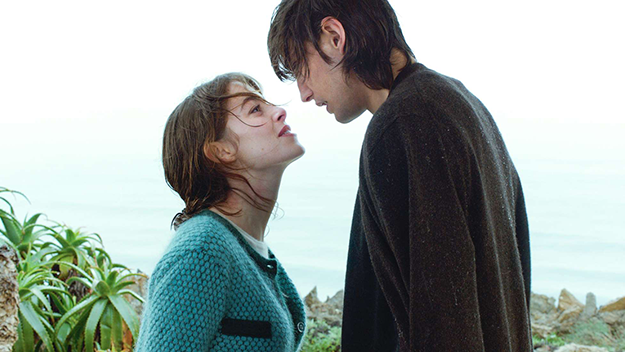
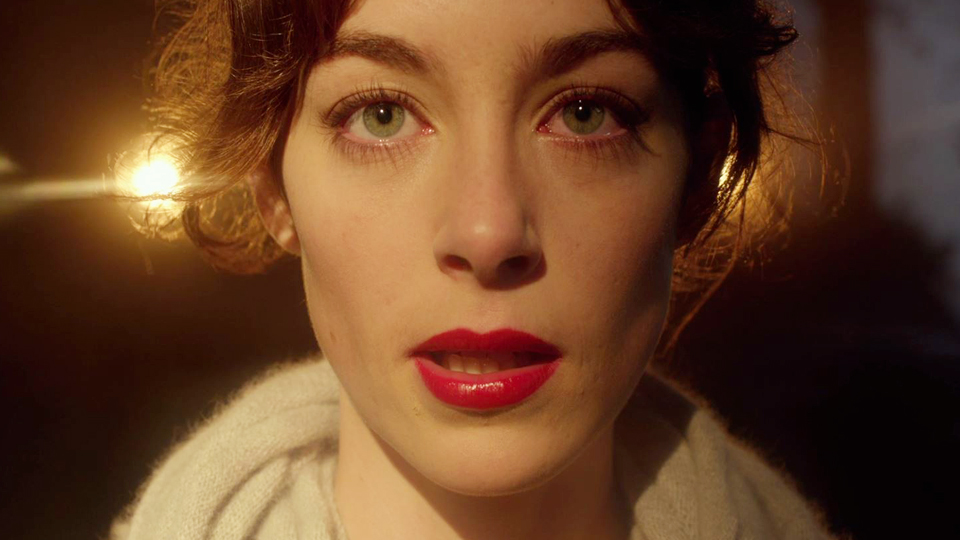
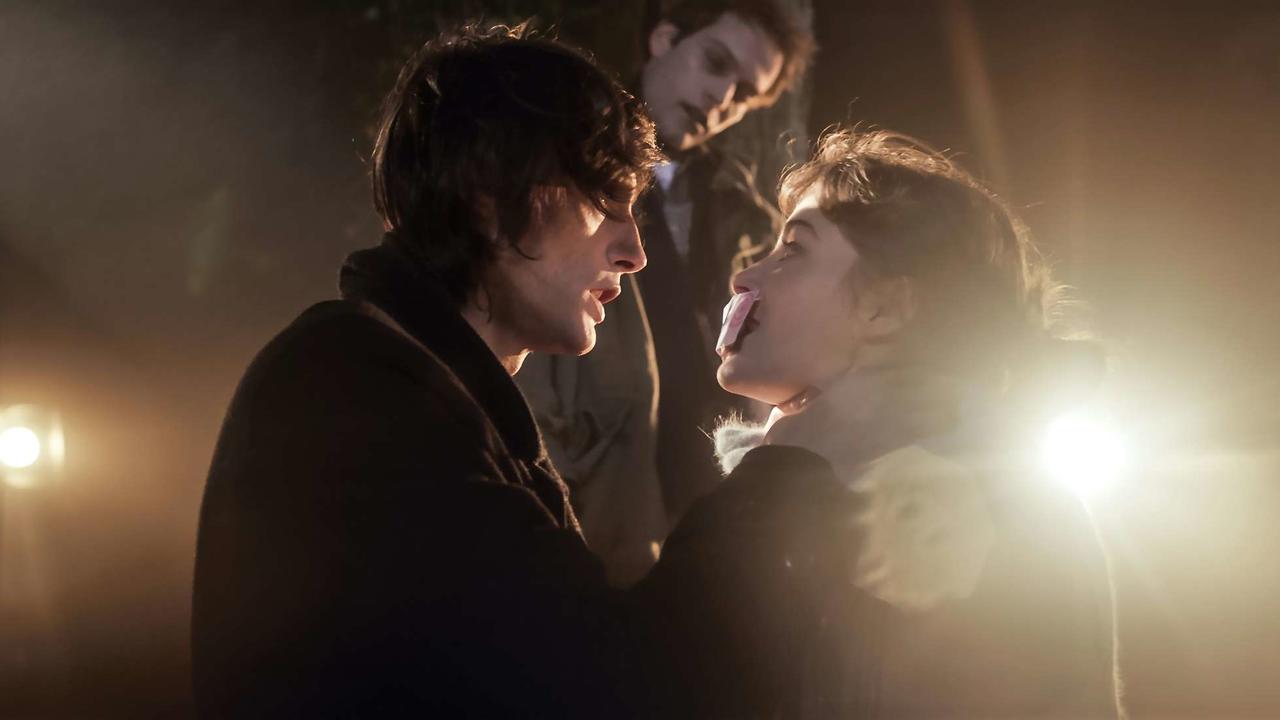
Taking residence in a family run country guesthouse, Witold (Jonathan Genet), an aspiring novelist and law student who has to retake his exams, and his friend Fuchs (Johan Libéreau) believe themselves to be in the midst of a mystery when Witold finds a dead bird hung by its neck on a branch. Witold, visibly in emotional turmoil from the start, is nonetheless convinced of this mystery as further strange sights disrupt his reality - the maid Catherette's (Clémentine Pons) lip disfigurement, a tea kettle in a tree, strange images marked on the wall - as everyone around him in the family is as eccentric and in the midst of their own emotional angst. One such figure, the married daughter Lena (Victória Guerra), becomes a singular obsession for him. From the get-go, the idea that legendary Polish director Andrzej Żuławski's last film is seemingly a comedy of manners is itself a great conclusion for him to have done. Taking a novel by legendary Polish author Witold Gombrowicz, whose namesake fittingly travels through this modernised parody of a mystery, he makes a tale of purpose or coincidence, the seemingly strange choice for a director who was both acclaimed and infamous for his filmmaking style, its hyperbolic emotion, a great joke from the get-go before you get to the story itself. Why the bird is tied to a string like a noose is just the beginning of the questions which may be real, as even before the sparrow hanging, dialogue emphasises this has been happening beforehand the students arrived, with a plucked chicken left in the street a week before to dumbfound people.

Żuławski's unpredictability is his forte; like the best and true definers of auteur theory, they are never predictable in the types of genre they blend and tackle, and the bias of Possession (1981) as the key film of his career, and the only film of his most had been able see, does have a drastic effect on your attitude of his filmography as a whole, which has a vast spectrum of genres he tackled. Cosmos stands in fittingly among them; the only difference is that whilst the likes of Diabel (1971) have characters constantly screaming about death and misery, this is a farce where a family and their paying guests constantly scream about how each other not understanding them or how they have unrequited feelings for another whilst they are trying to collect all the peas dropped on the kitchen floor. Witold in particular, in his attraction to Lena, fits the template of the director-writer's male leads of films before in their obsessions, becoming more on edge than he was before, a neurotic who over thinks, is over enlightened and will eventually set off the catalyst for all this pressure in the guesthouse at the halfway point.

The film is exceptionally dense just in the literary and cinematic references alone, the dialogue and the story needing multi watches to fully digest, but the significant idea behind Cosmos is this pressure cooker farce, between love being a destructive and compelling force, which has been a common theme between the director's films, to that farcical nature, be it the childish older patriarch Leon (Jean-François Balmer), the idiosyncratic turns of phrase and punning, and the piss take of the notion of a mystery. The extremes, the hysterics, were for the psychology of Zulawski's films. This seemingly quaint film, tonally like many middle class French dramas, is exaggerated by hang ups and strange obsessions, when odd details appear or are presumed to be. It becomes slapstick in its own way, hormonal angst found seeing sensuous calves being bend and flexed, or the stain on the dining room wall which may be more of a stain, but could also be Witold's obsessions consuming him. That he is missing things, like the more explicit looking stain on a wall when he sees a rake, adds to this parody, especially as the clues and suspicious are curious, like the aforementioned tea kettle, as much as they can be morbid.

In the end none of the strange circumstances Witold encounters are anything else but odd coincidences or a result of someone's angst, even he going as far as contributing to the events with the most severe of the acts, an incident involving the pet cat that, in any other film, would damn him as a villain, but in the world of Zulawski emphasises the madness of the emotions. Tailed by his trusting friend Fuchs, smartly dressed but appearing in each scene with new bloody noses and bruises each morning from constantly disastrous cruising nights, they have to wrap their heads around the guesthouse owners and their quirks, which are just as irrational to our world as viewers. The matriarch Madame Woytis (Sabine Azéma) can get so overwhelmed, she actually freezes in the spot for a period of time like a malfunctioning machine. Leon, whose dialogue at first is witty and henpecked by his wife, but starts to take on childish plays on words and more swearing as he goes along. Their maid Catherette, who is baring a small lip disfigurement, is the sanest person in the house, but with someone in the family who is also played by Clémentine Pons later on in the film, continuing an obsession the director-writer has had with doppelgangers. And Lena, the object of Witold's overwhelming obsession, who is introduced lying on a bed without the mattress on the springs, does not react to severe events as the viewer would presume her to, and whose husband is more disconnected to her than he wishes to be. Then there is the other character who eventually dresses as Tintin, which in itself is just as strange in context as outside of it.

As the mystery is ultimately a farce, you are instead turning your attention to the world and its little details; a "metaphysical noir thriller" according to its late director, the title Cosmos is apt in how ultimately the mystery Witold is obsessed with is insignificant to the literal cosmos of human behaviour, able to see a rake etched in water stain in the corner of the wall but completely blind to the significantly bigger sexual symbolism in the same spot in the lounge. A pressurised farce, where the performances break into maniac expressions and dialogue as Zulawski trademarked as his own, the anxiety that is normally found in these type of French dramas, even when their scenarios are as absurdist in the plotting, is here acted out literally. Even in terms of the plot, this is the same, as the strange acts are part of someone's plan just to keep the people around them shocked alert. Sometimes as well, Zulawski even breaks into the completely unnatural when, at a dynamic moment, suddenly one man unzips his trousers and bees are projected from them, seemingly the most irrational and unexplained moment but in context a sudden break in the tensions.

As Witold reacts violently to each odd event which bursts his personal bubble, even beating his chest like a deranged gorilla at the dinner table at one point, everyone's internal emotions are literalised as part of Żuławski's trademark, slapstick for him kinetic and as exhausting for the characters themselves as it will be for some viewers. All Witold is able to find is absurdities with little connection, instead the real mystery to be found in dealing with his emotions for Lena, her emotions for him back and how her husband, a likable guy himself, reacts badly when he pegs what is taking place between them as they all decide to go to a summer cottage to escape the stress of the hostel. Żuławski's style is entirely artificial but for the sake of his own form of realism, hence why his most well known trademark, the hyper stylised and extreme acting style, is what it is, the idea mentioned before of literalising his characters' external concerns as much as the events they are negotiating around. Restraining his use of prowling camera movements for his final film, it makes his prescience known instead by gliding through the guesthouse corridor and tracking characters along through their monologues, the irony of his hyper dynamic style tackling a genre which would seem safe and dialogue heavy perfect as the final film in the shift in tone. It is fitting for such an openly brazen and intelligence person to conclude on for his filmmaking career this production, able to get away with actor Jonathan Genet doing one scene directly to the camera, in extreme close-up, in a Donald Duck voice and it making perfect sense in context.

The dialogue in particular, in testament to translator and Żuławski documenter Daniel Bird for creating English subtitles for a film this quickly paced and dense, is a huge chunk of Cosmos' style. Restraining himself in terms of the more extreme moments of his career - from a man who had Isabelle Adjani writhing around in white milky liquid in the subway to On the Silver Globe (1988) and its mass anal impaling crucifixion - or in the use of constantly moving camera, the dialogue is still rapid fire and breath taking to follow, each character having individualistic quirks to them seen in their dialogue which, even if you were to struggle with at times, still paints their character in the poetic flourishes they use. That Żuławski has no qualms with referencing anything from himself to even Star Wars means the dialogue is exceptionally flexible and inventive, a reflection of how imaginative he was as a screenwriter. The acting as well is also exceptional as to be expected from Żuławski's films, able to convey just in exaggerated body language what their emotions are before they even speak. As a result, Cosmos feels like entering an alien environment, yet one relatively close to reality within a guesthouse full of arguments, constantly delicious culinary dishes and nature constantly appearing within the middle class environment, a slug literally letting nature be known sitting on the butter for the croissant. When the extreme emotions of the occupants of the house are shown, and reach their peak however, things drastically change, having to keep pace with Cosmos and see the literal "cosmos" of title in how dynamic and unconventional human behaviour is at its fullest.

As a result of this, the experience of Cosmos is an ever increasing series of stranger events taking place. As the realisation Lena is as interested in Witold is eventually known, the deliberately maniac energy is actually more pronounced in a film like this than in one like Possession as, while the later is more extreme in content and tone, the stereotype of what this type of slice of life drama with possible mystery content is belies the surprise of what actually takes place, having greater impact. Sadly, Żuławski would pass in 2016, just after this film, but with his final production Cosmos he was still as uncompromising as his reputation suggests, delightfully wild with intelligence and actively encouraging people to rewatch it over and over again to catch more details and moments of gleeful humour. Even ending the film, on the end credits, by breaking the forth wall and showing the film itself being produced is the sort of subversion befitting him, aptly ending the film and his life with waking up the audience too.

Abstract Spectrum: Expressionist/Weird

Abstract Rating (High/Medium/Low/None): Medium

Thursday, 21 May 2020

That Most Important Thing: Love (1975)


Director: Andrzej Żuławski
Screenplay: Andrzej Żuławski and Christopher Frank
Based on a novel by Christopher Frank
Cast: Romy Schneider as Nadine Chevalier; Fabio Testi as Servais Mont; Jacques Dutronc as Jacques Chevalier; Claude Dauphin as Mazelli; Roger Blin as Le père de Servais; Gabrielle Doulcet as Madame Mazelli; Michel Robin as Raymond Lapade; Guy Mairesse as Laurent Messala; Katia Tchenko as Myriam; Nicoletta Machiavelli as Luce; Klaus Kinski as Karl-Heinz Zimmer

Warning - Major Plot Spoilers

That Most Important Thing: Love comes in a very important point in Andrzej Żuławski's career, his first film in exile from his native Poland. The Devil (1972) had been banned under communist era authority of Poland, and whilst he would return in the late seventies, that would lead to On the Silver Globe, which would only get a release in 1988 because notoriously this adaptation of his granduncle's pioneering science fiction novel was shut down by authorities mid way through its making, believing it had subversive messaging. That film would only be completed with Zulawski himself narrating the missing pieces between surviving footage and filming modern scenes of ordinary members of the public in a city. He would make many films outside his country of origin as a result, only returning to Poland in his cinema in Szamanka (1996), long after the Iron Curtain fell.

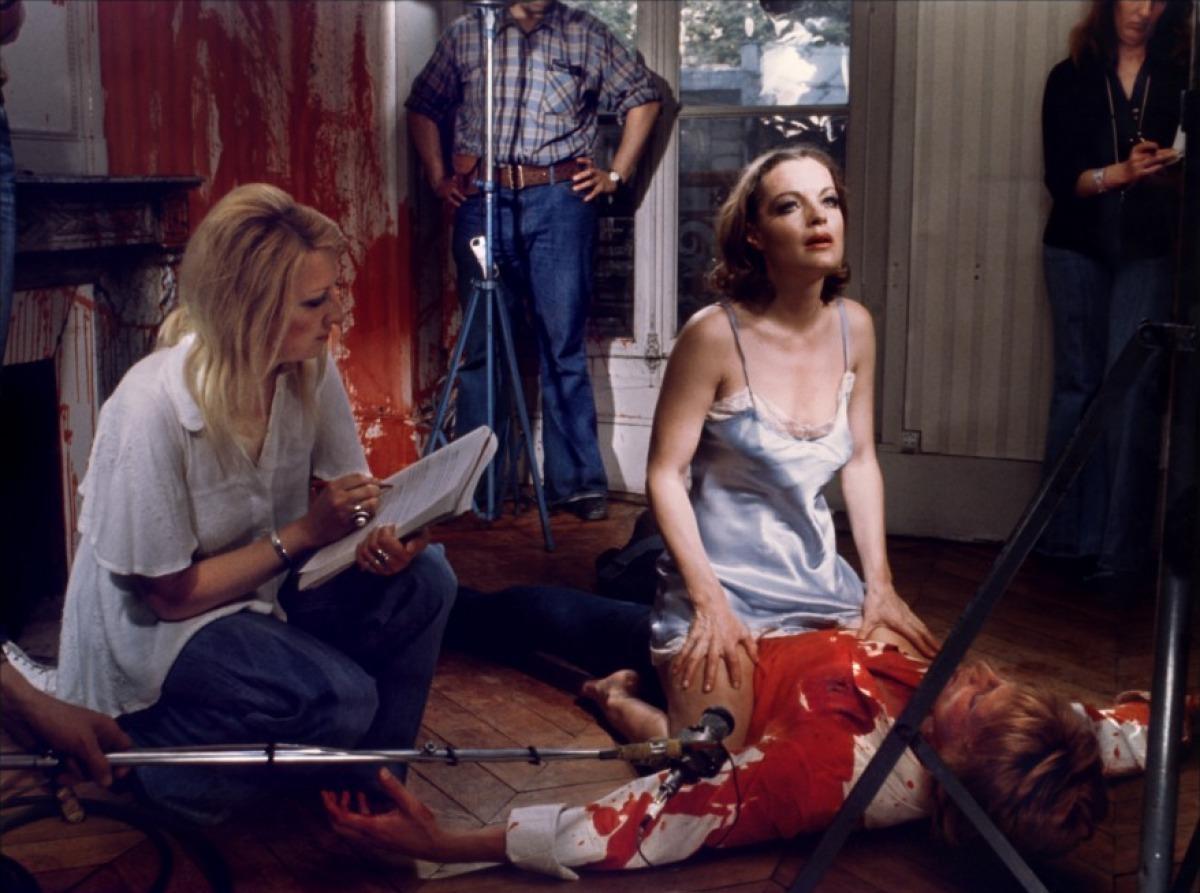
Out of the Żuławski films I have seen, this is very easy to follow, a love story but a very tragic one as it is a doomed romantic triangle between an actress Nadine Chevalier (Romy Schneider) stuck in making sex films to survive, a photographer Servais Mont (Fabio Testi) who is obsessed with her, and her husband Jacques Chevalier (Jacques Dutronc), a guy whose life is to just buy film memorabilia (mostly photos) and cinephilia, but is visibly aware his wife is falling in love with Servais. Love does finally succeed, but it is a painful and agonising route towards it. Żuławski, even when he made a comedy in his last film Cosmos (2015), demands the fullest spectrum of emotion and this is the same. Servais works in the fringes, in debt to a shady elderly mob boss, paying back his debt through under-the-counter pornographic photo sessions, sneaking in the midst of one of Nadine's films in the first scene, being bullied by her female director into acting out a sex scene with a corpse. He tries to help her out of this mess, by pulling strings with a friend, a chronic alcoholic, and getting her into a production of Richard III. Unfortunately, when you see the production, where infamous German actor Klaus Kinski is playing the lead actor Karl-Heinz Zimmer in full samurai armour howling his lines like a maniac, it is clear the stage production is not going to work for anyone. Servais will be in debt, Nadine will be going nowhere in her life, and Jacques will feel both the tragic outsider but also glad, unable to fulfil his wife's sexual and emotional needs, feeling himself trapped in the midst of this.

Oh, and yes, Klaus Kinski in samurai armour is a reminder that this is still a Żuławski production, as whilst this is not as delirious as other films of his for me, narratively driven to the point I do not consider it "abstract" as any of the others, it is still a frenzied experience that is yet structured between sombre and haunting emotional drama. He has always walked a dangerous tightrope between the absurd and the profound, and this is a significant case study of this risk at hand. Already in the first few scenes, you have a staged necrophilia scene that is not working, Servais getting into a fistfight with production crew, gangsters out of a cartoon and a hyper-intense acting style which is interjected with moments of stillness.

Kinski does not even appear until part of the way through, and of all things, for the man notorious for his work with his fellow countryman Werner Herzog, he is the most restraint figure in the cast. He still beats two men up, for one touching his coat, out of the angst of having his performance on stage damned in a review, taking the two women they were with back home to sleep with, but the film unlike the madness of anything between the films before this or to Cosmos is so much subdued in comparison to Żuławski's other work. Even in a film which will violent cut to a sex orgy with very explicit nudity, like this has turned into a European softcore film from the period, the film frames it from a very emotional aspect of Servais being stuck having to photograph this material. Likewise, Kinski's Karl-Heinz, an actor from a wealthy background who takes a charm to Nadine and even tries to help her through the stage rehearsals, is for the most part the most sympathetic figure in opposite to Kinski's real life persona. Their stage director, who decks himself out in ridiculous costumes and is mashing very eras of iconography into his Shakespeare production however is definitely one of the weirdest aspects of the film, and the doomed nature of the production is painted as being inevitable the moment you first encounter him dishevelled on the floor of Karl-Heinz's hotel.


What differs Love from the Żuławski's films I have seen are a couple of factors. Here, he had camera operator/cinematographer Andrzej J. Jaroszewicz follow him from Poland, the man responsible for the director's trademark prowling camera scenes as Jaroszewicz would literally run with the camera handheld in work like The Devil. However, the main cinematographer for Love is Ricardo Aronovich1. Whilst Żuławski's trademark of the prowling camera is here, here it is contrasted by many still scenes, generating melancholia. The look of the film as well, with its muted colours, emphasises a palpable sadness to the story, co-written by Christopher Frank, and for all the outer film's peculiar nature, it is also deeply heartbreaking.

The film ends with the likelihood of Nadine and Servais finally being together, but it is only possible because Jacques kills himself to avoid being a barrier between them, taking rat poison in a public bathroom. Whilst he has had his dark moments, mocking Nadine for working in porn but also being prudish at a dinner with his cineaste friends, Jacques comes off as a clownish young boy in a man's body, obsessed with classic Hollywood and literally a clown at one point, actor Jacques Dutronc shuffling along in many scenes like a stereotypical penguin. He is sad to see as someone clearly meant to be pushed to the side and knowing this, and even between Nadine and Servais, the film ends with Servais beaten to a pulp in the finale scene.

It is fascinating as a transition for Żuławski, working outside of Poland (and mainly in France) for a large part of his career, much of the later work likewise being heavily reliant on emotion. Those later films could be extremer in their tone and content, such as the next film he was able to finish, a work by the name of Possession (1981) that has made his reputation by itself for good reason. Of note is that even that film stems from heartbreaking emotion, more so it was directly channelling a divorce from his wife, whilst even the absurd and funny Cosmos follows a plot point with a male character committing suicide. Even if it is by way of grotesqueness, be it big cartoonish body builders with muscles like cannon balls or how decrepit the mafia boss' entourage can be, the heart is still here in Love in-between all this absurdness.

I have not even talked about Romy Schneider, but befittingly she should have the last paragraph. Fabio Testi, Kinski et al are memorable and do an incredible job in their roles, but That Most Important Thing: Love is her film. Whilst there are clear compromises for her (mainly that nudity is obscured when other scenes with other actors are exceptionally explicit), the legendary actress does absorb the tone of Żuławski's acting style of letting the emotions possess her. She won her first César Award (France's equivalent of the Oscar) for this film, and from anger to passion, she makes every change completely believable. It is quite shocking, and sad, to realise she passed only in her early forties in 1982, only seven years from this production, a startling moment of fate that is sobering1. We can thankfully look to a film like this, where she is the centre of the film and its heart, and find that it was the right way to end any review of Love by talking about her performance.

Abstract Spectrum: Bizarre/Grotesque/Manic/Melancholic
Abstract Rating (High/Medium/Low/None): None


============
1) If confirmable, one of the oddest connections to my taste in cinema is that Ricardo Aronovich was the cinematographer on Christmas Evil (1980), which in spite of that dull title is a Christmas horror film that is mostly a psychological drama. It is a very strange discovery to find.

2) Even Jean-Luc Godard in his obscure TV movie for a TV series, Rise And Fall Of A Small Film Company (1986), remarks of this himself in a small cameo, felt with a huge melancholy as part of many things of how the French film industry was felt to have changed for the worst. I think we can say that even if it influenced one of Godard's experimental productions, the effect of Schneider's passing was significant.

Tuesday, 22 November 2016

Cosmos (2015)

From http://www.impawards.com/intl/misc
/2015/posters/cosmos_ver3.jpg

Director: Andrzej Żuławski
Screenplay: Andrzej Żuławski
Cast: Jean-François Balmer (as Leon); Sabine Azéma (as Madame Woytis); Jonathan Genet (as Witold); Johan Libéreau (as Fuchs); Victória Guerra (as Lena); Clémentine Pons (as Catherette / Ginette)

Synopsis: Taking residence in a family run country guesthouse, Witold (Jonathan Genet) and Fuchs (Johan Libéreau) believe themselves to be in the midst of a mystery when Witold finds a dead bird hung by its neck on a branch. Witold, visibly in emotional turmoil from the start, is nonetheless convinced of this mystery as further strange sights disrupt his reality - the maid Catherette's (Clémentine Pons) lip disfigurement, a tea kettle in a tree, strange images marked on the wall - as everyone around him in the family is as eccentric and in the midst of their own emotional angst. One such figure, the married daughter Lena (Victória Guerra), becomes a singular obsession for him.

Żuławski directing a comedy of manners? Words I'd never expect to write but with Żuławski unpredictability is his forte; like the best and true definers of auteur theory, they are never predictable in the types of genre they blend and tackle. With Żuławski as well, much of his filmography is still difficult to acquire; the bias of Possession (1981) as the key film of his career, and the only film of his most will see, does have a drastic effect on your attitude of his filmography as a whole. Cosmos, based on a novel by legendary Polish author Witold Gombrowicz, whose namesake fittingly travels through this modernised parody of a mystery, is certainly a 180 degree turn from the stereotypical view of his films but very much in his wheelhouse, the only difference is that whilst the likes of Diabel (1971) have characters constantly screaming about death and misery, this is a farce where a family and their paying guests constantly scream about how each other doesn't understand them or how they have unrequited feelings for another whilst they're trying to collect all the peas dropped on the kitchen floor, the childish older patriarch Leon (Jean-François Balmer) sticking cocktail sticks into one at a time and lining them up in a straight line.

From https://4.bp.blogspot.com/-BmsVSiobji0/V0ia1Mu8z4I/AAAAAAAAFdk/
t0cJgMMMnpMTTVqr3MUNhJ7r28e7SCrewCLcB/s1600/Cosmos1.jpg

The film is exceptionally dense just in the literary and cinematic references alone, the dialogue and the story needing multi watches to fully digest, but the significant idea behind Cosmos is to deliberately take the piss out of the mystery genre, where in the end none of the strange circumstances Witold encounters are anything else but odd coincidences or a result of someone's angst, even he going as far as contributing to the events with a very severe, if not most severe, incident involving the pet cat. Tailed by his trusting friend Fuchs, smartly dressed but appearing in each scene with new bloody noses and bruises each morning from constantly disastrous cruising nights, they have to wrap their heads around the guesthouse owners and their quirks. The matriarch Madame Woytis (Sabine Azéma), who can get so overwhelmed she actually freezes in the spot for a period of time like a malfunctioning machine. Leon, whose dialogue at first is witty and henpecked by his wife, but starts to take on childish plays on words and more swearing as he goes along. Their maid Catherette who is baring a small lip disfigurement is the sanest person in the house, but with someone in the family who's also played by Clémentine Pons later on in the film And Lena,  the object of Witold's overwhelming obsession, who sleeps on a bed without the mattress on the springs, doesn't react to severe events as the viewer would presume her to, and whose husband first appears dressed as Tintin.  

As the mystery is ultimately a farce, you are instead turning your attention to the world and its little details; a "metaphysical noir thriller" according to its late director, the title Cosmos is apt in how ultimately the mystery Witold is obsessed with is insignificant to the literal cosmos of human behaviour, able to see a rake etched in water stain in the corner of the wall but completely blind to the significantly bigger sexual symbolism in the same spot in the lounge. As Witold reacts violently to each odd event which bursts his personal bubble, even beating his chest like a deranged gorilla at the dinner table, everyone's internal emotions are literalised as part of Żuławski's trademark, slapstick for him kinetic and as exhausting for the characters themselves as it will be for some viewers. All Witold is able to find is absurdities with little connection, instead the real mystery to be found in dealing with his emotions for Lena, her emotions for him back and how her husband, a likable guy himself, reacts badly when he pegs what is taking place between them as they all decide to go to a summer cottage to escape the stress of the hostel.

From http://www.filmcomment.com/wp-content
/uploads/sites/2/2015/08/cosmos06.png

Technical Details:
Żuławski's style is entirely artificial, very much against the notion of realism throughout his career which is hence why his most well known trademark, the hyper stylised and extreme acting style, is what it is. Restraining his use of prowling camera movements for his final film, although it makes his prescience known gliding through the guesthouse corridor and tracking characters along through their monologues, the irony of his hyper dynamic style tackling a genre which would seem safe is fitting for such an openly brazen and intelligence person to conclude on, able to get away with actor Jonathan Genet doing one scene directly to the camera, in extreme close-up by himself, in a Donald Duck voice and it making perfect sense.

The dialogue in particular, in testament to translator and Żuławski documenter Daniel Bird for creating English subtitles for a film this quickly paced and dense, is a huge chunk of Cosmos' style. Restraining himself in terms of the more extreme moments of his career - from a man who had Isabelle Adjani writhing around in white milky liquid in the subway to On the Silver Globe (1988) and its mass anal impaling crucifixion - or in the use of constantly moving camera, the dialogue is still rapid fire and breath taking to follow, each character having individualistic quirks to them seen in their dialogue which, even if you were to struggle with at times, still paints their character in the poetic flourishes they use; that Żuławski has no qualms with referencing anything from himself to even Star Wars means the dialogue is exceptionally flexible and inventive, a reflection of how imaginative he was as a screenwriter. The acting as well is also exceptional as to be expected from Żuławski's films, able to convey just in exaggerated body language what their emotions are before they even speak.

From http://fr.web.img6.acsta.net/videothumbnails/15/10/16/12/23/368545.jpg

Abstract Spectrum: Expressionist/Weird
Abstract Rating (High/Medium/Low/None): Medium
Cosmos feels like entering an alien environment, relatively close to reality within a guesthouse full of arguments, constantly delicious culinary dishes and nature constantly appearing within the middle class environment, a slug literally letting nature be known sitting on the butter for the croissant. When the extreme emotions of the occupants of the house are shown, and reach their peak however, things drastically change, having to keep pace with Cosmos and see the literal "cosmos" of title in how dynamic and unconventional human behaviour is at its fullest.

As a result of this, the experience of Cosmos is an ever increasing series of stranger events taking place as the realisation Lena is as interested in Witold as the other way round becomes know to the later, the madness of a priest suddenly unzipping his flies and releasing bees into the air deliberately maniac energy is actually more pronounced in a film like this than in one like Possession as, while the later is more extreme in content and tone, the more abstract of the pair, the stereotype of what this type of slice of life drama with possible mystery content is belies the surprise of what actually takes place, having greater impact.

From https://bostonhassle.com/wp-content/uploads/2016/08/cosmos-2015.jpg

Personal Opinion:
Sadly Żuławski is no longer with us, but with his final film Cosmos he was still as uncompromising as his reputation suggests, delightfully wild with intelligence and actively encouraging me to rewatch it over and over again to catch more details and moments of gleeful humour

Monday, 26 October 2015

Halloween 31 For 31: Possession (1981)

From http://www.film.com/wp-content/
uploads/2013/10/possession.jpg
Director: Andrzej Żuławski
Screenplay: Andrzej Żuławski and Frederic Tuten
Cast: Isabelle Adjani (as Anna/Helen); Sam Neill (as Mark); Margit Carstensen (as Margit Gluckmeister); Heinz Bennent (as Heinrich); Johanna Hofer (as Heinrich's mother)

Synopsis: Returning home from an espionage mission, Mark (Neill) discovers that his wife Anna (Adjani) has had an affair. Their marriage starts to break down immediately after, but rather than with her Zen-like, New Age lover Heinrich (Bennent), Anna is occupying an isolated room with an entity scrapped from the bowels of the subconscious. In a narrative that includes spies, body horror and internal turmoil set in the closed-in walls of West Germany, Żuławski's response to Ingmar Bergman's Scenes From A Marriage (1973) is as overwhelming experience.

From http://1.bp.blogspot.com/-2pkRJqkCabc/UffTcXCYLwI
/AAAAAAAAAtU/7Aj_bUrjjMg/s1600/Possession2.png
From the first ten minutes onwards, this is proven as Possession in tone is drastically different from many a film. A heightened intensity is here that is far and away more pronounced that many other films I've covered on the blog. The acting is made to be at a vastly intense level than usually seen, as is common in other Żuławski films, not necessarily theatrical but feral, basic emotions taken to their fullest. A scream is prolonged and stretched longer, as is a state of shock made to look catatonic. Adjani's performance is legendary, spasming and wailing when she's not struggling to keep herself together, culminating in a freak-out in a subway corridor where she is almost possessed demonically, but Sam Neill is just as startling. A man more well known for films like Jurassic Park (1993), his character soon into the film, even before Adjani's Anna, is losing his sanity from the prospect of losing his wife to another person. The actual separation is equivalent to a drug withdrawal, twisting in the foetal position on a sweat drenched and bared bed, and how Neill used a rocking chair onscreen is as if he's able to defy gravity, rocking with the intensity in his eyes of someone lost in another reality. The performances in general from all the actors are just as intense, and the leads are exceptional, but this film does as well prove that any actor can give a truly full bodied performance, willing to go the extra distance for the sake of the intensity required. You see such a drastic difference in something like this in contrast to a lesser film like Neill's Sirens (1993) from what was required from him.

Experiencing Possession is an entirely different prospect than a lot of films. In the cusp of many genres and in an entirely new one of its own, many parts of the film tip over into the ludicrous when it's not being intentionally humorous in a blackened way, but there's always something to crawl under your skin to counteract this. Written during a severe breakup with his first wife, Żuławski's film feels too focused, too real at points for it to trivialise its marital breakup narrative when Anna's lover turns out to be a humanoid squid monster designed by Carlo Rambaldi. The film is too dynamic, too rich in details for that sentence to reveal too much, the pain depicted too real and said monstrosity taking the form of a repressed emotion in all its slimy, visceral birthing.

From http://www.mondo-vision.com/images/photos/possession5lg.png
Technical Details:
Adding to all of this is a prowling, continually moving camera that will yet stay still and focus on an important emotional moment long enough for it to be fully felt. Cinematographer Bruno Nuytten should be as praised for what he does in his role, bringing this elastic camera work that follows the performers onscreen with the same level of intensity as they are depict in front of it. The music by Andrzej Korzyński is just as evocative, providing a similar intensity with each electric wash of the synthesizer heard, never overbearing or drowning out the actors' performances but adding to them.

From https://doctorinsermini.files.wordpress.com/2014/01/possession04.jpg
Abstract Spectrum: Grotesque/Mindbender/Psychotronic
Abstract Rating (High/Medium/Low/None): High
Żuławski's directorial style is a unique one. You can distinctly tell when you're watching a Żuławski film. The few that I have seen can be counted on a full, single hand with one additional finger - in order of preference On The Silver Globe (1988), this, The Third Party of the Night (1971), Diabel (1972) and Szamanka (1996) - and all of them are a perpetual machine of heightened energy that can exhaust a viewer unprepared for them. It's not all shrieking or extremity, as Possession is built as much from moments of calm or immense sadness - Mark coming out of a three week binge of separation anxiety only to realise their son Bob's been left all alone in the family home - the moments of trauma with an electric carving knife or the parents hitting each other of set by tragedy of a relationship breaking to pieces as painfully as possible. The dialogue is poetic, at times difficult to catch from how fast its spoken or how the cracking voices distort it, the unnatural body horror an extension of these emotions. As in David Cronenberg's The Brood (1979), it literalises the ideal of horror cinema being a projection of human anxieties and emotions.

The stranger parts of the film, as in other Żuławski films, add to the maddened tone, at times as if the film is continually hurtling alone to the point it'll collapse like Mark on a motorbike at one point. But somehow it manages to sustain itself at full speed to the end credits. Men in shocking pink socks vie with an unexpected car crash, and there's of course Bennent's performance as Heinrich which is strange in itself, a cat suit wearing Zen lover still living with his mother, in the pains of delirium at points with as much intensity as Mark and Anna, even more so at points until he goes blind in one moment. Trying to locate his soul later on is far from a pointless tangent into the spiritual but becomes real possibility, about to wander in on Mark considering the tone of the film as it stands.

The film already leaps into the metaphysical beyond the tentacled possession with Anna's double, a nursery school teacher Helen also played by Adjani. She is meant to be the saint to Anna's whore, white dress with pigtails and a concern for Bob, but on this viewing there's something far too deep and pulsating in the green contact lenses Adjani has to wear, something too white about the dress and her flirtations with Mark are far more obvious the more you watch the film, a greater depth and mudding of that stereotype. That doesn't even add what the squid entity turns out to be, complicating things further, and when the film ends on an apocalyptic note, the world effected by this relationship, it's the only appropriate ending for a work like it.

From http://4.bp.blogspot.com/-CETv7q5ZEbk/TrhOBHB1FfI/AAAAAAAAHDQ/
FeBc27sO3b4/s1600/possession%2B17.jpg
Personal Opinion:
Possession's a lot to take, still too much for me to fully digest. So much is utterly absurd, some of it even silly, but most of it is still startling to watch. The performances linger in my mind and the tone is so delirious that to use the word "delirious" seems mistaken, instead as if the emotions depicted have been allowed to be felt through every pore of the actors' bodies. Bergman's Scenes From A Marriage, which I've seen the theatrical cut of only, is an intense film and there's actually little difference between the two films despite Żuławski responding with what he felt was a more accurate depiction of the subject matter. The acting in Bergman's film is just as unrelenting but its depicted entirely from a realism. Żulawksi's film includes the unreal and the subconscious, allowing it to walk out into reality. Hence not only the body horror but also the almost hypnotised acting styles from the cast. Experiencing Possession feels like being hypnotised yourself, thrown through one emotional current another without respite. Why would anyone want to watch this reading that sentence? When for someone, cinema is never just a comfort food. It prickles emotions barely touched. The inappropriately silly moments, the disturbing moments, the genre blurring and the unpredictability, all of it's a standard bearer for a cinema of the abstract if there was any.