Showing posts with label Director: Rob Zombie. Show all posts

Thursday, 24 October 2024

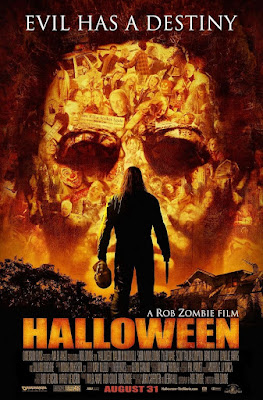
Rob Zombie's Halloween (2007/2009)


Director: Rob Zombie

Screenplay: Rob Zombie

Cast:

Halloween:

Malcolm McDowell as Dr. Samuel Loomis, Brad Dourif as Sheriff Leigh Brackett, Tyler Mane as Michael Myers, Daeg Faerch as Michael Myers (age 10), Sheri Moon Zombie as Deborah Myers, Scout Taylor-Compton as Laurie Strode, William Forsythe as Ronnie White, Danielle Harris as Annie Brackett

Halloween II:

Scout Taylor-Compton as Laurie Strode, Malcolm McDowell as Dr. Samuel Loomis, Tyler Mane as Michael Myers, Chase Wright Vanek as Young Michael Myers, Sheri Moon Zombie as Deborah Myers, Brad Dourif as Sheriff Lee Brackett, Danielle Harris as Annie Brackett, Brea Grant as Mya Rockwell, Howard Hesseman as Uncle Meat, Angela Trimbur as Harley David, Mary Birdsong as Nancy McDonald

A Night of a Thousand Horror (Movies)


Rob Zombie's remake/reimagining of the Halloween franchise was always going to be divisive. I was even an admirer of Halloween 2 (2009) originally, as the film defended as being a powerful and underrated work. Returning to it however, even that has fallen in lustre for the sense that you can be too nihilistic that it actually undermines the virtues of the films, that and the fact that this tone would have made sense for a more riskier, less crowd pleasing horror film, not how to continue the Halloween franchise as a crowd pleasing franchise and still needing to complete the checklist for this. There is a sense that, for me, if Rob Zombie did not have to have the gore and the body count, we would have gotten a superior work that just happened to use the Michael Myers character. People would still hate these films, others will defend them, and they would still be grim, expletive filled takes that is not glamorous about a child who became a serial killer, but why ultimately these films do not work for me is that Rob Zombie needed a striped down version of this premise like Halloween H20 (1998) in structure. Instead, its contractual agreement and his interest in still being a gristly slasher film becomes an albatross around its neck.

The first film is an ugly new take for the time on Michael Myers' childhood. His stepfather is abusive, eyeing up his older step-daughter, whilst Michael himself is being bullied at school about his mother (Sheri Moon Zombie) working at a strip club. From the get-go you also see the era this film was made in too in tone; when Zombie was transitioning to film directing from his music career from House of a 1000 Corpses (2003), we had a run of more extreme horror films from the United States even if the theatrical releases were altered and Director's Cut/Uncensored versions were a popular selling point for DVD/HD-DVD/Blu-Ray releases. Remakes to The Hills Have Eyes to The Last House on the Left also came at this point, and a lot of the era has been described in terms of post-9/11 mood, the result of September 2001 and the Twin Tower attacks, alongside the resulting second Gulf War. This was said to have left the horror films from the United States to reflect the time period in the likes of the "torture porn" sub-genre and more bleaker films, more grimly toned and lacking less hope for its characters to survive, but to have significantly less trauma after the end credits roll.

Brutally, however, I think this era is going to age so much more badly than even the nu metal/pop rock of the early 2000s due to their bleakest being found wanting and grim dark at times. These films can be grim at points to the point of comical levels, like Michael killing animals whilst listening to the band KISS, which poses an issue that the more interesting and emotionally rewarding moments are undercut by the moments which do not work. The most rewarding details of these Halloween films find the right balance between their nihilism, contrasting Rob Zombie's eccentric tastes against moments of quiet pain and psychological damage. Everything in the first act of the first film, Michael's childhood, is actually good despite the points that try too hard, Myers as a psychologically damaged kid from a rough family who is allowed to become a psychopath without intervention to prevent this. Some of the more interesting details reflect too that Zombie was raised as a seventies kid, just from the soundtrack between both films from Nazareth's Love Hurts to Blue Oyster Cult, but also because he grew up in the decades of serial killers that became an obsession in American culture. From Charles Manson (name checked in the film) to Ted Bundy and his ilk by the time the band that made his name originally, White Zombie, formed in 1985, we see him using Halloween to clearly deal with them as a pop cultural concept. We lost a great Zombie film as a result, between grim thriller and sick humoured satire, about serial killers and the culture around them, Zombie able to stop and allow characters to show grief of the loss of loved ones between both films, as we recreate Myers rampage in Haddonfield twice, but also showing there being the fixation of them in unhealthy ways after the survivors are left picking up their psychological pieces.

The controversial decision to turn Dr. Sam Loomis, his psychiatrist, into an alternative world version who sold his soul was clearly meant to depict this. Malcolm McDowell's Loomis becomes one of the actual successes of both films for me, and we forget that Donald Pleasence's take was distorted in later sequels, so a sacred cow was already undercut. McDowell's trajectory is one of the strongest aspects even in its slightness; able to see a young Michael Myers in an asylum, devolving behind his own crafted masks, it does not feel like it is fetishing serial killer iconography, instead the first film meant to be a tragedy as Myers loses what is left. It becomes one including of Sheri Moon Zombie's mother figure, which is heartbreaking with her playing it beautifully, and how McDowell's take becoming an ill fated turn that adds a newer weight, that of if Loomis had not become the noble hero of Donald Pleasence's version. With Loomis as a child psychologist whose heart effectively died, whose first marriage lasted less than the fifteen years working with Michael, the arch of him fully selling out by the sequel is compelling. 

Far from having complete disregard for the source, it feels a widening of the possibilities in the source material, where there is a mocking of the fetishisation of serial killers in Loomis' book tour in the sequel, the book signing scene in that film both with the fan way too into Myers as a person is as well as the father of a slain victim from the first film pulling a gun on him. Zombie rebuts the danger of himself fetishing these types of figures, which slasher films do not tend to do, and it is here where the grim tone can work fully. Where they lose their power is when their relentlessness becomes their ultimate failure, as they numb the pace and emotional weight by their final acts. Zombie managed to do more not in the numerous murders and stalking scenes in Myers, but getting a pointed criticism of media culture on celebrities even in a very silly piece of stunt casting, with musician "Weird Al" Yankovic as himself on a talk show helping to mock Sam Loomis. With one joke, he got a far more compelling take on the lingering nature of gristly murders at the same time.


In their best forms, these films would have allowed more moments of levity if not able to stop the horrors of Michael Myers. Levity comes in moments such as Ken Foree in the first film, with mutton chops and reading porn on the can, but he still dies, levity fleeting in a way that works to emphasise the tragedy Rob Zombie was clearly reaching for. Some moments for the sake of them - one of the guards in the asylum Myers is in during the first film lets his cousin try to rape a new female patient, letting Myers escape - dangerous veer into edge lord territory when there is enough misery and pessimism to work with. There is also the issue that, when it comes to remaking the original 1978 Halloween in the second act, I stopped taking notes and started to switch off.

This proves an Achilles' Heel for the Rob Zombie films as it is important to set up one of the more admirable aspects of these two films, setting up how this world's version of Laurie Strode, played by Scout Taylor-Compton, develops PTSD she has to cope with through Halloween II, and we follow both her at her best coping with the trauma and the worse when she cannot. This is also the one time, when dealing with this, playing as a traditional slasher film succeeds, in how it recreates the original 1981 Halloween II as a fake out dream to establish said trauma. We get to see the aftermath in the hospital of Laurie having her wounds treated even in the dream structure, forcing one to see this, and I will still respect the film, despite my new misgivings, for its use of Nights in White Satin by The Moody Blues, which is exceptional. We also see the flaws still of Zombie overdoing the misanthropic aspects, as whilst I can appreciate the surrealism of Michael Myers' escape from a morgue wagon because it crashed into a cow, having the driver and attendant talking about having sex with the female corpses however undercuts this. In one hand we see one of the best ways to use the slasher structure for a reason, and in the other, there are still the issues that plague the two films.

My problems become that the entire remake project was an ungainly work for a director far more interesting when he is not shooting stranded horror and gore scenes. The whole journey of Laurie is absolutely sympathetic, the White Zombie singer not the first person I would have ever shown such heart in his work, but showing it admirably in how we see her on medication and struggling in therapy, something I have to respect him for. When certain characters die between both films, it is tragic and Zombie actually shows grief. Despite the stunt casting, that fits still; beyond the curious sight of Udo Kier and Clint Howard in the first film sharing the same screen with McDowell, it also leads to one of the best aspects being Brad Dourif, given a great deal to do in terms of a rich performance for a slasher film.

It sucks that, for all these virtues, I have to be a Debbie Downer about how too bleak tonally this becomes. Even if Zombie deliberately changed the film stock used for the sequel to emphasise the grimmer reality, the violence becomes number to the point of not registering emotionally or causing me to question why certain moments were even necessary. There is the sense of the slasher template not helping at all, as Zombie's thesis on trauma is pointless when he has to have random by bystanders killed, like a horny older strip club owner wanting to get it on in a Frankenstein's mark with a female dancer, to keep to the body count high. Even the deeply surreal moments of Halloween II that I initially liked felt bolted on this time, with Sheri Moon Zombie as an apparition with a white horse visiting Michael Myers, because there is no set up for this in the prequel. When seen close to each other, it sticks out from the film two years earlier; despite the fact it gives us one weird, almost Guy Maddin-like dream of pumpkin kings at a dining table, the kind of moment I am into within an instance, it is the only moment of overt surrealism and thus loses power. Bringing this nightmarish side to the film, but never capitalising on it, felt like an abrupt Rob Zombie music video that appears, never meaning anything to the plot trajectory.

None of the deaths are "fun" in these films, all uncomfortable and all awful. There is not enough, even with moments of humour, to separate from the inevitable, the death and tragedy of the characters. But you can overstate this and grind a viewer down to the point this theme itself is lost, which is the issue with the Rob Zombie Halloween films for me. It is to the point they lose their virtues, and Halloween II was not financially good enough to continue on to a third film either, so it lost a few people as well. By Halloween II, it feels for me that for the films which still came out in the early 2010s that continued this trend, this era of edgier horror films from the United States lost their ground by this point. Saw's last entry, before its reboot, was in 2010, and telling a far more financially success horror film in terms of box office in 2009, when the second Halloween reboot film was released, was Paranormal Activity. Still a film with a ghoulish ending, it was not as nihilistic and upfront in its violence, instead capturing peoples' imaginations in terms of supernatural horror. It was also one of the first horror films of note produced by Jason Blum, whose Blumhouse Productions would be a monolith for the US horror cinema into the 2010s onwards. The lasting irony is in knowledge he would be a producer of the next attempt to reboot the Halloween franchise with 2018's Halloween with David Gordon Green, where we close off another part of this franchise's many strange dimensional turns. 

Wednesday, 26 June 2024

Grindhouse (2007)


Directors: Robert Rodriguez (Planet Terror), Quentin Tarantino (Death Proof)

Screenplays: Robert Rodriguez (Planet Terror), Quentin Tarantino (Death Proof)

Cast:

Planet Terror: Rose McGowan as Cherry Darling, Freddy Rodriguez as "El Wray", Josh Brolin as Dr. William Block, Marley Shelton as Dr. Dakota Block, Jeff Fahey as J.T. Hague, Michael Biehn as Sheriff Hague, Rebel Rodriguez as Tony Block, Bruce Willis as Lieutenant Muldoon, Naveen Andrews as Dr. John "Abby" Abbington, Julio Oscar Mechoso as Romy, Fergie as Tammy Visan, Nicky Katt as Joe

Death Proof: Kurt Russell as Stuntman Mike McKay, Zoë Bell as herself, Rosario Dawson as Abernathy Ross, Vanessa Ferlito as Arlene/Butterfly, Sydney Tamiia Poitier as Jungle Julia Lucai, Tracie Thoms as Kim Mathis, Jordan Ladd as Shanna, Rose McGowan as Pam, Mary Elizabeth Winstead as Lee Montgomery

A Night of a Thousand Horror (Movies)


About as useless as a pecker on a Pope.

Grindhouse was a fascinating one-off, and as time has passed, it feels for me like a project that was never going to be a big hit and always the cult title. Considering Quentin Tarantino prior to this created the Kill Bill project, which was split into two theatrical releases, and were tributes to genre cinema with even an animated sequence from a Japanese studio, that may seen questionable as a comment, but I see Grindhouse as more of a niche concept in principal. It was a tribute to certain types of cinemas of the past than necessarily the genre films churned in them 24/7 on the notorious 42nd Street of New York City and other locations, something which is more specific to get the references to in the project itself. Kill Bill had the advantage of being split into two halves, and riding the wave of interest of the likes of martial arts cinema, whilst this was a three hour double bill as a concept rather than the genres chosen by him and Robert Rodriguez. It appeals in principal, but in mind that this was a large budget project too, rather than a fictional double bill made on the lower budget, the project was always going to be in danger if it did not have the right amount of advertising and the right release, which it sadly did not.

The idea of paying tribute to this idea for a large budget projection was a risk, and if anything, when I was just getting into cinema at this time, it did at least catch a wave of interest in old genre and cult films that carried into decades after. It also lead to a wave of "neo-Grindhouse" films not really evoking the old exploitation films but replicating the template Grindhouse itself became, and it neither helped back then, whilst I want to return to them all, I hated most of those films when I watched them. The lack of box office success in the United States also lead to the films being split up into two theatrical features for the British market, including their initial DVD/Blu Ray releases. Contextually, Grindhouse itself came to me in its intended form with me more appreciative of its goal, whilst unfortunately, the lack of box office success when released in the United States lead to the Weinstein Company initally splitting the films up into two theatrical features for the British market. Death Proof, Tarantino's entry, was not a film I received well at all, to the point as a young lad who got into films like Pulp Fiction (1994) I thought he had lost his mojo entirely with this extended theatrical release when I caught up to this on DVD. What it was, remembering how divisive the responses from others at the time was as well, is clearly a transitional stage for his films.

But Grindhouse itself, when finally released as intended eventually, began with Robert Rodriguez’s than-fake trailer for Machete, imagining character actor Danny Trejo as a Mexican immigrant with governmental combat skills being double crossed, and thus going on a revenge mission. Fake trailers were one of the touches that were part of the Grindhouse project, though this one was kept for Planet Terror’s individual releases as here, the others lost in a project that was meant to recreate the experience of these cinemas, including some real ephemeral material shown at cinemas like the ones about age restrictions. They were touches more for a cult film crowd, but were cool to include, and whilst some of it has not aged well, entirely the stuff nodding to The Weinstein Company and the rightly disgraced Harvey Weinstein, the material is all interesting. Machete’s is interesting as it did become a film in 2010 through Rodriguez himself, with a sequel later that got more ridiculous, turning into an exploitation spin on US immigration politics. It also connects to how Planet Terror itself, as that later film, are both jokey over-the-top pastiches at their heart, full of stunt casting as Machete itself would have Lindsay Lohan as one of the roles in the trailer’s biggest gag, Trejo seducing a US senator’s wife and daughter at the same time, and inexplicably Steven Segal.

Planet Terror itself, which is about a bio chemical weapon causing a zombie outbreak, takes this further as we can have six degrees of separation games the TV series Lost, the Die Hard franchise, The Lawnmower Man (1992), and a member of the Black Eyed Peas. Planet Terror was a safer film of the two parts of this production, a pastiche with a budget to get away with violence which would have given eighties moralists a collective heart attack, with a name cast and a complete lack of seriousness meant for a crowd viewing. Planet Terror, as we set up the outbreak and the key leads, such as the mysterious traveller El Wray (Freddy Rodriguez) to ex-go-go dancer Cherry Darling (Rose McGowan), immediately shows the most contentious legacy of the Grindhouse project, that being the artificially created grain and celluloid print damage, more for all the other films which took influence to copy this aesthetic than necessarily being controversial for Grindhouse itself. If you watched any neo-Grindhouse film of the time, and this could even be found in micro-budget productions, between the late 2000s to the early 2010s, you would have seen digitally added film grain and damage, replicated from what Grindhouse did on a considerably larger budget. This is a tribute to how exploitation films in the original cinemas could be old, battered prints and as both halves play, the creators of these new films imagined the worse case scenarios where film reels went missing or salacious moments, as Planet Terror plays with, were cut out by the projectionists for keepsakes. With hindsight, this was preparing us for the tactile nature of any Blu Ray release of a title where the negative was lost and a film was preserved from a screening print, but this also makes one aware Grindhouse was always the imagined version of the thing the creators were paying tribute to. This was an imagined Grindhouse where you could have not really captured the real places, more so as Rodriquez’s is less the ideal of these types of films, from the seventies, but more the eighties films as they were coming to VHS and video rental stores.

Time is convoluted in both films, tributes to the past but made and set at the time they were produced in, and with Planet Terror, as an entire military platoon infected with the bio weapon end up in a deal gone wrong that unleashes the gas onto the local community, the tone also feels closer to a Return of the Living Dead (1985), and that era of cinema. What you get in a post-ironic form is something between the late seventies and a John Carpenter love-in, with the score paying tribute to his music, to the mid-eighties straight to video practical effects driven work. What between the gooey practical effects by Tom Savini, who gets an onscreen role too, and tributes between Lucio Fulci eye trauma, and possibly even Cannibal Apocalypse (1980) by Antonio Margheriti as an action horror film, and this feels slightly different to the goal Tarantino was after with his a seventies throwback. It is amazing to see a large budget tribute to all these, and also managing to get away with a child shooting themselves by accident, as a real taboo, but alongside Rodriguez’s trademark to make his films as independently as possible by his own hands, Planet Terror itself is purposely cool and deliberately absurd in construct.

Even when he has some really nasty gore, and sexual threat at one point, Quentin Tarantino in a cameo having a knack, between this and From Dusk Till Dawn (1996), for playing creepy sexual deviants, Rodriguez plays this with pathos and parody at the same time. You feel real emotional connection to Michael Biehn and Jeff Fahey as brothers in the end, but it surrounds Biehn trying to force Fahey to give up his secret barbecue recipe even in the midst of the zombie apocalypse. Even in mind that Freddy Rodriguez feels one of the weaker figures, because he had to play the mysterious and sombre tough lead, his character finds himself the straight man among everyone else and eventually having to ride a pocket motorbike in a scene deliberately done for humour. There are also the obvious stunt casting moments, like having Bruce Willis as the lead of the military platoon, and the little details of Rodriguez’s own interests, making the kind of film he would want as a viewer in the truest sense. Planet Terror can also claim to have its own obsession with male genital trauma, be it Naveen Andrews, the Lost series alumni as a shady scientist, being obsessed with collecting castrated testicles, to how Tarantino, as long as he gets to name check Ava Gardner and monologue, has his penis melt off before the film ends.

Planet Terror in context made sense to begin Grindhouse, the party starter even if, with hindsight, Death Proof as the film which got the most negative reactions initially became the more interesting to unpack. Planet Terror itself is fun and ridiculous, even if now with a melancholia of how, really, this is Rose McGowan’s film. This is the moment where we sadly do have to talk about Harvey Weinstein, as alongside the fact she drifted away from films very prominently advertised in the 2010s, she is one of the women named as one of his victims, accusing him for horrible crimes, when the MeToo movement came to exist in the 2010s, that finally led to him ending in jail. Rodriguez, who dated McGowan, has talked that he learnt of the trauma she went through, and deliberately cast her in Planet Terror as a rebuttal to her being effectively blacklisted by Weinstein for crimes he committed to her. Rodriquez argued the box office failure of Grindhouse was Harvey Weinstein burying the project for this by under promoting the film1. Whatever the circumstances for why the film was not a box office success, she is also the best thing in Planet Terror too, given Cherry Darling a playful spark between wanting to be a comedian and talking of all her useless little talents through the film. This is even before we get to her character spending most of the film without a leg, the special effects still great to this day, and leading to the image that sold this film even if it only happens near the end of Planet Terror, attaching a rifle with a rocket launcher attachment as an improvised false leg. It is the kind of role, one of two through both films, which should have been a platform for even bigger films but sadly was not to be.

The original way to see the two films that make up Grinndhouse meant we never got the trailers originally meant to split them up. Rob Zombie’s Werewolf Women of the SS, feeling like a pitch reel to an actual project, does encapsulate how exploitation films are historically contextualised and more complicated than Grindhouse itself, in this case the moral quandary that led to the Naziploitation genre. Most of those films got on the Video Nasties list in the United Kingdom and most are still not allowed to be released due to their perceived mix of sex, violence and Nazis by the British Board of Film Classification, the one exception being the one with the really infamous VHS cover, SS Experiment Love Camp (1976), which is just bad taste and inexplicably links to the theme of genital trauma as a male character has his surgically removed, to be given to a high ranking Nazi officer, and is naturally not pleased. How they came to be is not something I can adequately write, in mind they come twenty to thirty years after the fallout of World War II and were as much for illicit sexploitation scenarios as part of the lasting effect of that war, but Zombie’s take is broad and over-the-top. It is not portraying the completely exploitative aspect to an Italian film like SS Experiment Love Camp nor the serious takes on the subject, like The Night Porter (1974), also coming out at the time. Some may know this trailer for Nicolas Cage as the Fiendish Doctor Fu Manchu, another contentious exploitation concept we English, and Sax Rohmer, have to be blamed for, but alongside the fact they do not have him in yellow face as Christopher Lee did playing the character a few times in the sixties, the absurdity is there in the premise of Nazis having a secret werewolf woman project and yet also bringing in this character as a possible sub-contractor to the project. Could it have worked? It would have been highly stylised and divisive as Rob Zombie’s other work, especially as this was the time he helmed two Halloween reboots, though the trailer promised if they were able to make a film with Udo Kier, Sybil Danning and Bill Moseley as a mad Germanic doctor, let alone Nicolas Cage, I would have been interested.

Don’t by Edgar Wright was a really good parody of seventies horror. A tribute to the nastier side of British horror, the world of directors like Pete Walker, the nod to Video Nasties was appropriate in the last paragraph as, at one time, having “Don’t” in the title was seen as a good marketing tool at one point and lead to a lot of films on that Video Nasties list which fit this, such as Don’t Go Into the Woods (1981) to Don’t Go in the House (1979). Wright’s feels like it was meant to be a trailer and nothing else, perfect as it is as a cavalcade of seedy British horror from the seventies distilled into a short work, including the fact they had recognisable faces from our TV to films, making cameos from Nick Frost as a man baby in a diaper in a grungy basement appropriate as a stunt cameo on two levels. Thanksgiving from Eli Roth also pulled out a memorable trailer, though his in 2023 finally became a full feature by himself. How a thanksgiving slasher film never already existed is strange, but he clearly saw Don’t in the editing stages and felt he had to top it, having images as a tribute to murky independent slashers that will scar a few viewers. He gets the aesthetic of slashers, and for a director I do vary on, certainly, for the man who never held back for Hostel (2005) to The Green Inferno (2013), he made sure to make a work that was memorable. He took the type of film that came in the wake of Friday the 13th being successful, and lead to independent producers all jumping on the band wagon, and made the trailer to the imaginary one Roger Ebert and Gene Siskel warned viewers about. The ill advised decision of one girl to do strip trampolining to the human turkey is enough to claw into the human memory against a viewer’s will, but I can now thank Roth, with a human head on chicken for added grossness, for the snapshot of inappropriate use of poultry that will last.

These three trailers are a prelude, and honestly a palette cleaner, for Death Proof as whilst it is set around Quentin Tarantino wanting to stage a car chase in the tradition of classic seventies car chase films like Vanishing Point (1971), to which he and those involved pulled it off completely, his film is a literal gear change on purpose throughout itself. Death Proof for all its potential flaws, subjective to the viewer, is the far more complex film to dissect as the set-up, a tribute to car films without using CGI, however led to a deliberate shift onwards in how his films would be structured. It is close to a slasher premise too in how it follows a homicidal stunt driver named Stuntman Mike (Kurt Russell) who targets women with a “death proof” car, one reinforced as old car stunt vehicles were to allow him to survive horrible crashes, barring some injuries, but still drive head first into victims’ cars and kill them. Where this film did not originally work for me, and I found it a disappointment, is that this is a dialogue heavy work with a simple two act structure, very simple, but lets the dialogue linger far longer than it originally did in older films of his before.

I hated the extended cut, as many, because I came to Tarantino through work which was crime pastiches with sassy dialogue on a surface level, still found here in a different genre but with a clear change in tone. A spoiler has to be nodded to for two films at once, but this is the structure of Alfred Hitchcock’s Psycho (1960) entirely, following one group of women before the second act introduces another set. Tarantino focuses on characters, in a slasher template, you would only linger on for ten minutes for an entitled longer length, forcing one to live with them far longer than other films. It is not perfect: some of the dialogue caused me to cringe and think of how pissed off Spike Lee was with him for certain choices of words for black characters, though the debate about whether Tarantino can write female leads is subjective, as I am not going to dismiss the idea of women who are gear heads and watch Dirty Mary, Crazy Larry (1974) as they exist. I do also have an uncomfortable question of whether sexism ever came into the issue about this film getting a negative reaction from what I perceived of it having back in the day. Even from a male director-writer, it is almost entirely about women talking in the downtime between spectacle scenes, and yet was one of his most divisive films. Certainly there is a sense here we were moving away from monologues about what Big Macs were named in France, ebbing away in favour for the dialogue fully taking over as the prime mover of his stories. Tarantino was already reaching this with Jackie Brown (1997), entering more complex emotions, and I vividly remember Kill Bill Part 2 (2004) already being divisive, as it went against the high octane shock that was the first part, with its memorable sword battle finale, with far more tonal shifts, and even went out of its way to undercut the final revenge against “Bill” himself by having it being a languid character drama for the final act. What is changing from this point and Death Proof feels like the final gasp of the earlier part of his career, the moment he was no longer the “cool” cult director who was mainstream, but the esoteric director-writer who still spoke in cult films, and had the budgets to allow him to make the films he did on after Grindhouse, who instead wanted to play with structure and pace in dialogue driven movies onwards.

The importance of the women in the cast cannot be understated - Vanessa Ferlito, Rose McGowan again in another role, Sydney Tamiia Poitier, Tracie Thoms, Rosario Dawson, Mary Elizabeth Winstead – all giving great performances with dialogue which, whether you think of it, is a lot more dynamic than sadly could still be passed to actresses into films made after this, and by the second half, we switch to Stuntman Mike having the tables turned and the emphasis on a strong female cast in its centre integral to the production. From the cool character that showed Kurt Russell was always good, to being out of his depth and showing he is still good playing a snivelling weasel, he encounters a group including stunt women for that final act, such as New Zealand stunt actress Zoe Bell playing Zoe Bell, Tarantino in probably the sweetest moment of his entire career paying tribute to someone who worked on the Kill Bill project, and would continue to work with him throughout the others film onscreen as an actress. He lets her play herself whilst also getting to pull off an insane stunt involving playing "ship's mass", hanging off a car at fast speed for real on camera, and no less on the same car from one of the films ritualised lavished upon in the dialogue. The second half legitimately emphases this was always a film about strong women and symbolically castrating male ego, making that disconcerting thought sexism played into the reaction to the film’s lengthy dialogue more concerning if purely speculative. It is telling how even a seemingly pointless cameo by Eli Roth actually makes sense, as he makes a good sleaze ball in a more conventional sort, in a dialogue scene in the Grindhouse version where he plans with a friend to get women drunk enough they allow men to join them at a beach house for the weekend, still a scummy toxic male attitude. More examples of this are found in the extended cut, with one extended scene involving an "Italian Vogue" magazine being offered at a gas station, and it is contrasted by a legitimate psychopath in Stuntman Mike, whose modus operandi briefly evokes J.D. Ballad’s controversial novel Crash (1973), and David Cronenberg’s controversial 1996 adaptation, when someone suggests mowing women down in his car, an item symbolically connected to masculinity in a variety of pop culture, as a sexual thrill. The ending even plays to a symbolic act of pegging but with a female driver ramming the male driver's car from behind over and over.

The extended cut complicated this as it alters the pace. It has new scenes, and removes the "Missing Footage" section, tricking the viewer into not being able to see the clothed lap dance set up with Vanessa Ferlito in the first act. It also allows one to appreciate the music as, even when I hated the film, I still got hold of the soundtrack album as, between T. Rex's Jeepster to April March's interpretation of Chick Habit, a Serge Gainsbourg number she added new English lyrics to, Quentin Tarantino always was always good at choosing existing songs for his films. Though the extended cut itself adds scenes that now feel good and of worth in having, in Grindhouse, the pacing works entirely, and it feels as if, after Kill Bill and the car chase that succeeds triumphantly here, Tarantino was waving goodbye to his older films entirely. Action still transpires in films like Django Unchained (2012), but when The Hateful Eight (2015) was set up as a misanthropic chamber piece I saw at the cinema, set in the confines of a western and set in a cabin, I see something changed when we got to Inglourious Basterds (2009) with his attitude to his stories.

Grindhouse altogether is a compelling work, one which was a mad project to get off the ground at all, as unless they stayed with lower budgets, Tarantino and Rodriguez’s dream ballooned out into what it became always placed a harder target for it to reach due to a niche concept. That niche, the re-admiration of cult and genre cinema, did thankfully pay off as, whilst not a success and with half of it divisive originally, it followed a wave of things that happened for the better. The likes of “Ozploitation” became a concept for example, as one documentary Not Quite Hollywood: The Wild, Untold Story of Ozploitation! a year later helped Australian heritage to be celebrated, with this film in Tarantino's end credits thanking a big name in that documentary, filmmaker Brian Trenchard-Smith, in a detail predating this example. Eventually you will get Blu Ray (and 4K) restorations of even maligned filmmakers like Al Adamson in big special edition, and that is ultimately the real success of the Grindhouse project, which was a big and intriguing tribute to these projects which got fans even if the box office was not a success. That did become an industry, and grew into something great, making this a film I would still salute for helping with this trajectory. Also undeniably, in terms of my fascination especially with films which break the three hour plus lengths, as they can be very unconventional films in their own right even as stereotypical "serious dramas", there is something about a three plus hour tribute to an actual genre film double bill that is compelling, especially as so much is to be talked about and appreciated in all its moving parts. In turn, it makes one wish I had greater access to the modern day double bill retrospectives in cinemas which do not have the potential urine smell in the theatre.

======

1) Robert Rodriguez Says Casting Rose McGowan in ‘Grindhouse’ Was an F-U to Harvey Weinstein, written by Brent Lang and published by Variety on October 27th 2017.

Monday, 30 August 2021

The Haunted World of El Superbeasto (2009)


Director: Rob Zombie

Screenplay: Tom Papa and Rob Zombie

Based on a comic by Rob Zombie

Cast: Tom Papa as El Superbeasto; Sheri Moon Zombie as Suzi-X; Paul Giamatti as Dr. Satan; Rosario Dawson as Velvet Von Black; Tom Kenny as Otto / Rover/ Old Man / Herbie; Brian Posehn as Murray the Robot; Dee Wallace as Trixie; Ken Foree as Luke St. Luke; Geoffrey Lewis as Lenny Crumpski / Roy Sullivan

Lew Temple as Adam Banjo

A Night of a Thousand Horror (Movies) #234


There's no cable in the jungle.

Opening with a thirties cartoon aesthetic, with black and white animation, and even orchestral music, I came to one of the more curious titles within Rob Zombie's career with no idea what to expect. El Superbeasto is an animated film, one which was originally started in 2006, a production which really cuts against the image even I had of him, as he lets his hair down and is effectively goofing off here. Even when our titular lead runs over Michael Myers of the Halloween films in his low-rider for a one scene joke, it is not a extreme as what he did in Halloween 2 (2009).

El Superbeasto, a farcical tale set in a horror world metropolis, follows an egotistical luchador-slash-actor in a very tentative narrative, one with a large cast including his far more likable eye patch wearing stepsister and spy Suzi-X (Sherri Moon Zombie), and a plot of a figure named Dr. Satan (Paul Giamatti) wishing to marry a woman with a 666 birthmark to gain great power. This in context of his film making career, Rob Zombie doing comedy is really strange especially when he was a divisive director of very violent horror films of an acquired taste, one I openly admit barring The Lords of Salem (2012) and Halloween 2 I have not caught the same wavelength with. This adds the weird touch, for what is a film I find a lot of problems because it was trying too hard, is how the figure of such work like The Devil's Rejects (2005) is proudly a pop culture geek of material some of his fan base probably did not know of and, unlike including Urotsukidôji sound clip in a White Zombie song, is probably very uncool to them. For example, it is a hardcore reference, of something no one who may have been the target audience of his films at the time would have known, to have a visual cameo of Korla Pandit, an African-American musician who posed as an Indian composer of exotica music, making a cameo as the piano player at the marriage from Hell.

It is also of its era, as with carte blanche, El Superbeasto asks the question whether you can be ironic with having so many animated bare breasts onscreen, even to the point the song composers Hard 'n Phirm, who come from the Black Dynamite (2009) school of explaining what's onscreen, have a song telling viewers it is okay to masturbate to cartoons and feel like true Americans, even if the film was produced with a South Korean studio. And credit where it is due, for a film whose production was a case of a frolic for its creator which expanded in scope and production, this does look good. It does admittedly evoke The Ren & Stimpy Show, a show I grew up with which is a cursed thing nowadays to make comparisons to, not even because of its creator John Kricfalusi being accused of sexual misconduct and grooming of teenagers, but that he infamously rebooted the series as an adult show with Ren & Stimpy "Adult Party Cartoon" (2003), a cursed item for many that even a voice actor for the original (Billy West) refused to work on the project1. That reference, bearing in mind childhood memories are useless to work with, also brings up the issue that El Superbeasto is far more interested in shock value and being silly than actually taking advantage of its tone and world for better jokes.

El Superbeasto is a very crude work, when our lead, a completely unlikable figure prat, is introduced working on a film-within-a-film where, parodying porn, he turns a woman into a living pizza or, really evoking Ren & Stimpy, has another woman erotically sucking one of his rotten, horrible looking toes. At times, the film comes from a time where many people were trying to get away with stereotypes or deliberately shocking comments which, long before "Social Justice Warrior" was considered an insult, was always just low hanging fruit in terms of humour. Rosario Dawson, as Velvet Von Black, a stripper able to inflate her body on command and even mould a breast into a balloon animal, skirts a line of just having Dawson playing all the vulgar and cuss filled stereotypes of a poverty class figure that speaks and farts her mind as much as imagine an unrepentant figure inexplicably finding herself in the plans of marrying Dr. Satan, he himself literally a nerd bullied at school who even without that context was an annoying sex pest. It is also a film which is knowingly being ridiculous and throwing the kitchen sink in with a couple of zombie Nazis, and that too raises the issue that, even without some of the more questionable jokes, this sinks under just wanting to be over-the-top without taking a breath or really embracing the virtues, sunk within itself, which would have been funnier, still incredibly lurid but also even deeply weird in the best ways.

The result is an acquired taste, one which even for Rob Zombie fans would be a great indulgence. This indulgence is what put me off. Moments in this are funny, legitimately so, and some aspects are fascinating to have seen if it was not trying so hard, which makes this more of a strange thing to have to unpick through. Beneath the music by Hard 'n Phirm, whose over explaining for a joke is overbearing, and the over-the-top nature of crude humour and drawn nudity, there is something compelling of being in Rob Zombie's brain, being in a world where the strip club has legendary horror character cameos and monster women dancers, where the most obscure characters he has referenced in lyrics live, not surprising for a man who, whilst reaching trendiness when the likes of Dragula was a track in The Matrix (1999), was referencing The Munsters, an old sitcom from the past even in the nineties when Zombie had Dragula as a popular song.

One of the huge virtues is just Dr. Satan and his assistant Otto, an intelligent ape with a British accent who hates crude things, living in the corpse of King Kong underground with a creator he hates but is stuck with due to Satan being able to twist the screw on his head to turn him into a beast again. Casting Paul Giamatti as Dr. Satan is eyebrow rising but also a beautiful surprise, as Giamatti also happens to steals the film alongside Tom Kenny as Otto, who is a veteran of voice acting famous for playing Spongebob Squarepants. The pair of them and how the characters are written, Satan a dweeb and Otto the figure who has to put up with him, alongside the running gag of Otto's friendship with their elderly elevator operator in very slow conversations, is the sort of thing where you get the perfect mix of humour that is funny in the children's show for grownups tone, and also to funny crude humour when Otto catches Satan wanking and the viewer realises those are dog squeaky toy sounds on the soundtrack to represent it2.

Also having clearly gotten the tone right is Sherri Moon Zombie as Suzi X, with Brian Posehn as Murray the Robot. Yes, her character is a hyper-sexualised cheerleader, ahard-as-nails stereotype of all the sexy action women of nineties pop culture who you can have naked all the time, but alongside the delight in Sherri Moon putting on that high pitched voice for the role, there is the knowledge, regardless of what you think of Zombie having all the nudity and sex humour in the film, which is sweet of always having his wife in his films, always presenting her with admiration, even here in this insanely sexualised figure still feeling it was given to someone who would have been game for the role and knew exactly was going to be animated. More so as, since mocking Nazis is a crude joke that is completely defendable, she even gets to steal Hitler's brain (or his head) and mow down an entire mass of incompetent zombie soldiers with her sexually frustrated robot friend, whose relationship shared is a very kinky and passionate one which shows how you could have had your cake and eat it throughout in having the adult humour.

This does ultimately, sadly, become a barrage of jokes with a knowing wink, an irony that does become more a concern than being consistent or actually be engaging rather than too much to digest. As much of this is not appreciating this type of tone at all in truth - that it would have been better to instead be sincere and try to create a world where everything is weird - and that eventually you are also with a film which is just improvising in the end. When it, alongside cameos by regular collaborators with Zombie like the late Sid Haig, it will end on a parody on old southern music television for the last scenes, it feels crow barred in like a lot of the gags do. It is fascinating to be inside Zombie's head, and see how cheesy it is, and that in itself a worthwhile advantage of witnessing films like this, but as I have found in some of his straight faced horror films, there is here too, for all my interest and like in him, or someone who if he focused or embraced the more esoterically weird touches of his work would have won me over more easily.  


====

1) Referred to in the following interview, though bear in mind of the more "curious" comments within the brief section on that title, including the context that the new version of Ren & Stimpy played up the characters being bisexual for humour. I think we can all agree even the 2000s was a different time even if I do not immediately jump on titles like other amateur reviewers may, with stuff that in hindsight was questionable back then let alone now. Strange as it is too, whilst it would have to come with a warning of John Kricfalusi's problematic accusations for good reason, looking back at the original series and even suffering through Ren & Stimpy "Adult Party Cartoon" would be fascinating, even if the latter especially sounds like stapling your testicles repeatedly.

2) And for less crude jokes, casting Ken Foree as a talking cat, if you are in on the joke by knowing who he is, is the kind of winking joke that does win you over.

Friday, 10 February 2017

Halloween 2 (2009)

From https://static1.squarespace.com/static/522a2049e4b0a0ce7
17e990c/55de13f1e4b07190a0bb7ec7
/55de13f2e4b093bf17695b14/1440617459530/
halloween_ii_2009_4008_poster.jpg

Director: Rob Zombie
Screenplay: Rob Zombie
Cast: Scout Taylor-Compton (as Laurie Strode); Brad Dourif (as Sheriff Lee Brackett); Malcolm McDowell (as Dr. Samuel Loomis); Tyler Mane (as Michael Myers); Danielle Harris (as Annie Brackett); Sheri Moon Zombie (as Deborah Myers); Chase Wright Vanek (as Young Michael); Brea Grant (as Mya Rockwell); Angela Trimbur (as Harley David)
A Night of a Thousand Horror (Movies) #78

[Minor Spoilers Ahead]

With this I've finally finished the Halloween franchise, feeling that it's better to start with the lengthy retrospective now before the review of the final film. Barring The Curse of Michael Myers (1995) and Resurrection (2002), all of them have been rewarding in some way, where sequels I found dreary on the first viewing being more rewarding now and for all the cringe worthy moments within them - death by hot tub in Part II (1981), the music cues in general in Part V: The Revenge of Michael Myers (1989), the entire subplot of Laurie Strode being Michael Myer's sister in the non Rob Zombie films - all of them have something of worth to like. Even as someone who realised, within viewing this series, I'm not the biggest slasher fan as I thought I was turning into, this franchise was ultimately rewarding to sit through without it falling into mediocrity or worse into the later sequels.

Until the new sequel that's been discussed in film gossip actually materialised, stuck within the same development hell since 2009 as Friday the 13th has since the same year, almost all the Halloween films follow a two film cycle in hindsight. The exceptions are Part III: Season of the Witch (1982), a film I love but as an attempt to change the series into a different genre at too late a time should've been its own film, and The Curse of Michael Myers, made when the slasher genre had died and itself dead on arrival with the severity of the theatrical cut's changes to the shot footage*.

The first Halloween in 1978 is an unarguable classic, one that I had to slow warm to but eventually did, able to stand by itself but with Halloween II a visible twin, the original an influence on the eighties slasher boom but the first sequel having to catch up with what the imitators were starting whilst retaining its original style and naturalism in the dialogue, the irony found in a film in the eighties set the same night as the first film made in the late seventies. Parts IV: The Return of Michael Myers (1988) and V, in their own world, reflect the late eighties with their warm bright autumn colours rather than neon and terrible hairstyles and, in spite of their more dumber moments, manage to have a melancholic, gorgeous aesthetic to them that affirm my opinion of Halloween being one of the classier horror franchises in existence. H20 (1998), after Scream (1996) brought the sub-genre back to life like Lazarus, reflected a new mature take on the genre as well as its tongue-in-cheek whit only to lead to Resurrection, mirroring how the sub-genre died again a very painful death involving Busta Rhymes kung-fu kicking Michael Myers. Then finally there's the Rob Zombie remakes, in 2007 and 2009, critically divisive and incredibly flawed but idiosyncratic, especially the sequel I've reviewing here, to the point that I have to admire them.

Halloween 2, Zombie's, is a lot more messier than I remember it to be, certainly with as many flaws as it's prequel had, but controversially for some slasher purists I have to say it's one of the better sequels in the series for how drastically different it is. It finds a more careful balance between the carnivalesque tone and the extreme violence of the previous Zombie film and a lot of the flaws come from having to follow the first part only. I had avoided the 2007 Halloween until now because of how critically panned it was, yet had seen this 2009 sequel because of how unconventional some of its content was said to be and how it manages to get some acclaim from critics. Seeing it for the first time as a sequel is strange in how I had completely disconnected aspects of the prequel. On one hand, it would be perversely absurd how the same event happens to Danielle Harris' character twice, the same way, in both films if they weren't as disturbing and bloody as they were, emotionally devastating in the sequel now Harris is allow more screen time to be a sympathetic character. However for the most part seeing them connected means flaws of the first part of mostly improved upon, to the point that it redeems the first to some extent, even redeeming things from previous sequels in this now openly appropriated ideas from other versions of these characters for its own means. The biggest is how these films took the issue of Laurie Strode (Scout Taylor-Compton) being Michael Myers' sister and made them part of the two films from the beginning, still removing some of the potential horror of the premise, but improved next to other sequels before because this film builds to the weight of psychological damage added to that Laurie already has. Even if it crowbars in the psychic link in this film, which gets discarded for the most part, from other sequels between the characters it a significant attempt to make this plot point more meaningful, the only other time this attempt was done found in H20.

Going as far as use the premise of the original Halloween II, Myers stalking Laurie in a hospital, only to show it was only a traumatic nightmare of hers in the first thirty minutes, this film is purposely dissecting aspects from all the others and reinterpreting them, in ways that would upset some viewers but for me were almost all of reward or at least interest. Myers being terrifying without the William Shatner mask is a brave move in itself as it showed the character could still exist even if you drastically change his visual appearance. The attempt at greater emotional depth are admirable from Zombie in particular as well. Even if it's less subtle than H20, Jamie Lee Curtis a better actor than Taylor-Compton, and playing an older female character with world weariness and quiet reflections to play within the performance, it's still a brave and successful move to this character into one who is at times unlikable in her outbursts but is always sympathetic knowing why this is the case, even with the exaggerated expletive ridden dialogue a figure with moments of vulnerability and happiness you can't help but be sympathetic to. It's a little strange still for Rob Zombie to try to write these alt-culture female characters, sometimes broad when he has Laurie and her new friends jam out to Kick Out the Jams by MC5, but it's actually a blessing, rather than the figures of many eighties slasher films that are frankly paper cut-outs, to have the kind of young women I actually grew up with as a teenager and fell in love with up to the present day, not the bland portraits of white bread final girls and women but miscreants and bold figures with personalities, their clothes and piercings as much reflective of their personalities as their ability to express themselves without censorship. This is important as well as this actually allows the horror of Zombie's depiction of violence, now these characters have an entire film to be shown, to have actual pain to them when you've followed them throughout the narrative.

This applies in general to the whole cast. Zombie helps in terms of the characterisation in limiting the cameos drastically from the first film and, if still using music and pop culture that's recognisable, making it more obscure and diverse so that it'll have affect on people who don't recognise the songs as more part of the emotional tenor of the scene. With the later, he scores one of the best music and visual cues of the franchise by turning a black and white TV performance of Nights in White Satin by The Moody Blues into a haunting warning of death. For the former it means that the two most recognisable faces in the film - Malcolm McDowell and Brad Dourif, get a lot of meat to their stories. McDowell gets to continue on with what's a drastic change to the Dr. Loomis character but one that makes sense to this world, where his failure in helping Myers turns him further into a money grabbing celebrity figure, his place in the film in the sidelines (and inexplicably on a talk show with Weird Al Yankovic as himself) making sense as a narrative tangent in how he has to redeem himself. As for Dourif, what was merely a cameo in the first film is now a great character actor becoming a main character, giving a gravity to his role that only a great actor like him can provide.

This isn't forgetting that Halloween 2 is also a bizarre film. Legitimately strange as a horror sequel goes, going so far from the mould of the previous films that the first implication of this change, a stray cow standing in the midst of the road allowing a character to escape, is fairly normal next to everything else. Now having watched all the sequels in order, the sight of Zombie becoming Tim Burton for a brief moment and show a young Michael Myers in front of a Alice in Wonderland table of pumpkin headed royalty is something unfathomable next to the others. One of the biggest issues with whether you like slashers or not is how they have very repetitive plots, making something as drastically different as this film's tone alien in comparison to most of the sub-genre Even if it gets silly at points, Sherri Moon Zombie as a Goth Lolita kewpie doll pulling along a Freudian white horse, this is the part that cements a lot of the virtues of this film by how far it stays away from everything before and works. Rather than vileness and death, which plagued the prequel, this strangeness spilling out into the film, while abrupt in context of the more grounded first film, allows the director to both bring a sense of greater personality onscreen and also allow his more carnivalesque tendencies to make sense. Here, it makes sense when it would've failed in another Halloween sequel to stage possibly one of the greatest Halloween parties possible in context of the sequel's tone as a central sequence, it's mix of silent films projected on walls, psychobilly music and characters dressed as Rocky Horror Picture Show figures able to work in tone here whilst intercutting to the more nastier moments inbetween the party.

This sense of taking risk, even though I now like most of the straightforward films in the Halloween franchise, is ultimately why I have to appreciate this one higher than others, both the risk at emotional drama and its oddness. The result is still messy and can lunge from tangent especially in the finale, still having to rely on the deeply flawed 2007 film, but I have to applaud its best moments. Until a new sequel eventually appears, whenever that actually is, this is best way to have ended so far with not being a bog standard slasher film but someone distinct in the director's chair taking a chance. If that new sequel ever takes place, it's now going to be interesting after Rob Zombie's two attempts whether it's going to overcome the obstacle of being as memorable as those films or turn out to be conventional or dull, John Carpenter being involved or not.

From http://images3.static-bluray.com/reviews/2278_4.jpg

======
* If the original producer's cut was more easily available in the UK, I'd gladly give Halloween: The Curse of Michael Myers another shot however.

Tuesday, 31 January 2017

Halloween (2007)

From https://s-media-cache-ak0.pinimg.com/736x/13/
99/c0/1399c0b2c120442f8f497c0bd9ec74e7.jpg

Director: Rob Zombie
Screenplay: Rob Zombie (with credit to John Carpenter and Debra Hill)
Cast: Malcolm McDowell (as Dr. Samuel Loomis); Daeg Faerch/Tyler Mane (as Michael Myers, Age 10/Adult); Sheri Moon Zombie (as Deborah Myers); Scout Taylor-Compton (as Laurie Strode); Danielle Harris (as Annie Brackett); Brad Dourif (as Sheriff Lee Brackett)
A Night of a Thousand Horror (Movies) #76

After Halloween: Resurrection (2002), a drastic change was required to attempt to sustain the franchise but the result was incredibly divisive. It didn't help that by this point, remakes were already looked down upon in spite of the trend being with us, in terms of announcements rather than just those that actually got made, for a while in the 2000s and still to this day. The additional area of divide was how the distinct auteur behind this remake, Rob Zombie, who does deserve the auteur banner even if you hate his films, would take a very different direction for the series. Rob Zombie is someone I am split upon - on one side, White Zombie and his shock metal career is peachy, whilst the more experimental he's been as a film maker (The Lords of Satan (2012)), the more rewarding he is. On the other side however, an attempt to rewatch The Devil's Rejects (2005) last year was given up on fifteen minutes into the film for it being vile for the sake of vile and being like the worst music video grotesquery being vomited onto my eyes. Halloween 2007 is split itself in the middle, a sign of what Zombie can do when he's motivated, but with also the various flaws which have led people to hate him.

The most controversial choice is to humanise Michael Myers. It could have been a terrible decision, especially as in less than fifteen minutes it piles on obvious conventions for a serial killer film, of how young Michael (Daeg Faerch) has a terrible childhood, with an abusive step father (William Forsythe) and a loving mother Deborah (Sheri Moon Zombie) who's career as a stripper however gets him mocked by bullies at school, already killing his pet rat Elvis and other small animals when the narrative starts and becoming more sociopathic in an almost amnesiac state of lashing out. However this is part of Halloween the remake eventually becomes brilliant. It jars completely against Michael Myers as the mysterious force that suddenly appeared from suburbia, the issue with remaking the 1978 film in the first place, but when it gets to the middle chapter, after a horrifying mass murder, Michael in incarceration with Dr. Samuel Loomis (Malcolm McDowell) as his therapist, there's actual emotional depth to the scenes thanks to Faerch, McDowell and Sherry Moon's performances, making it compelling as Michael starts to regress, hiding behind masks he creates in his cell, until it leads him turning entirely into a cold blooded hulk of a killer as an adult (Tyler Mane). Even though he has a grimy and seventies worshipping aesthetic, and likes to write characters constantly swearing and screening in the dialogue, it's here Zombie manages to have some maturity to the material, a slow burn especially in the extended Director's Cut I viewed which works to make his decision to explore how a killer is created a mindful direction to have taken.

The issues are when Zombie actually has to remake John Carpenter's original film. His mix of incredible transgressive and sobering violence against a post-modern carnival of pop-culture doesn't really work with what is meant to be a serious drama, lunging into ultraviolent slashing with a split personality. There's points where the violence is questionable in terms of dramatic states, such as how Myers finally escapes his incarceration in the institution because of two orderlies raping a female patient in his cell next to him, or some of the later deaths which linger on the pain for a length of time. Also the pop culturally heavy presentation jars against what came before. At first it's subtle in the background, working perfectly. The pop culture is literally in the background or a song on the radio, whilst the cameos from the likes of the late Richard Lynch to Sybil Danning work because they're playing characters, whilst cameos, placed well into the drama surrounding them. After the film becomes an actually Halloween remake, it like listening to a three disc driving anthem compilation - Rush's Tom Sawyer to Blue Öyster Cult's (Don't Fear) the Reaper from the original film - and going to an entire guest list of a horror and cult film convention in terms of the cameos - Udo Kier, Ken Foree, Clint Howard, Sid Haig - which jars against the very grim and bleak narrative set up originally.

It particularly jars in how the first half, even with clichés and sickening violence, was such a slow burn, the casting of someone like McDowell actually a godsend in how, playing a Dr. Loomis who goes from wanting to help Michael to a money grabbing shill because he failed to help the boy, he brings emotional heft, as does Sheri Moon Zombie as an underrated actress in her husband's films. Even something that could be glib like casting Danny Trejo as an institution orderly actually works because he's with a subtle performance with a through line to it rather than a single scene for him to be recognised as Danny Trejo. After the first half, having to absorb extreme violence and a lurid view on sex and nudity at the same time, this succession of cameos and musical choices becomes much more disjointed.

It doesn't help either that the final half, the actually Halloween remake, for its few moments of virtue is rushed, badly stuck between remaking full moments from the first film to being its own work. Scout Taylor-Compton and a returning, adult Danielle Harris do their best, but they don't have a lot of screen time in the slightest, so much so Kristina Klebe as the PJ Soles' character from the original film is sadly not worth mentioned more on because she's barely in the film. Zombie finds himself stuck, despite a curious attempt to write sassy and expletive filled dialogue for women you'd expected Diablo Cody to pen, trying to remake Carpenter's first film in an ultimately doomed act.  Both with co-writer Debra Hill humanising the dialogue and Carpenter's classical Hollywood directing style, Zombie's attempting to fill out a slim, perfect technical masterpiece in the 1978 Halloween is bound to be a mess.

In general the actual remake in the last half feels like it was something Zombie had little interest in having to do, the result turning in a dreary, nasty slog. If he had made his own film, even if it had to be a Halloween movie, entirely based on the first half it could've been successful, a debate that'll come ahead for myself revisiting Halloween II (2009) to close off the reviews of all the Halloween films, where he stopped caring about pandering to the franchise lore and swan-dived into his own canon. Instead this is an admirable failure crossed with a scrambled mess, utterly disappointing by the end but redeemed by how interesting the first half way before. It's certainly better than Halloween: Resurrection, and whilst it's a failure, it's amazing how violent some people's opinions on this 2007 film was consider when just five years before the franchise was decomposing.

From http://az795576.vo.msecnd.net/bh-uploads
/2015/10/halloween2007-Dee.jpg