Showing posts with label Slasher FIlm. Show all posts

Thursday, 24 October 2024

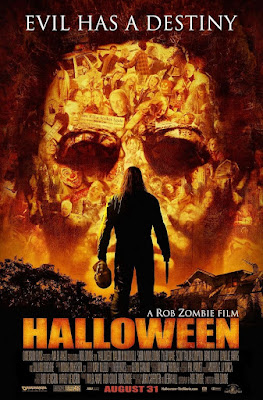
Rob Zombie's Halloween (2007/2009)


Director: Rob Zombie

Screenplay: Rob Zombie

Cast:

Halloween:

Malcolm McDowell as Dr. Samuel Loomis, Brad Dourif as Sheriff Leigh Brackett, Tyler Mane as Michael Myers, Daeg Faerch as Michael Myers (age 10), Sheri Moon Zombie as Deborah Myers, Scout Taylor-Compton as Laurie Strode, William Forsythe as Ronnie White, Danielle Harris as Annie Brackett

Halloween II:

Scout Taylor-Compton as Laurie Strode, Malcolm McDowell as Dr. Samuel Loomis, Tyler Mane as Michael Myers, Chase Wright Vanek as Young Michael Myers, Sheri Moon Zombie as Deborah Myers, Brad Dourif as Sheriff Lee Brackett, Danielle Harris as Annie Brackett, Brea Grant as Mya Rockwell, Howard Hesseman as Uncle Meat, Angela Trimbur as Harley David, Mary Birdsong as Nancy McDonald

A Night of a Thousand Horror (Movies)


Rob Zombie's remake/reimagining of the Halloween franchise was always going to be divisive. I was even an admirer of Halloween 2 (2009) originally, as the film defended as being a powerful and underrated work. Returning to it however, even that has fallen in lustre for the sense that you can be too nihilistic that it actually undermines the virtues of the films, that and the fact that this tone would have made sense for a more riskier, less crowd pleasing horror film, not how to continue the Halloween franchise as a crowd pleasing franchise and still needing to complete the checklist for this. There is a sense that, for me, if Rob Zombie did not have to have the gore and the body count, we would have gotten a superior work that just happened to use the Michael Myers character. People would still hate these films, others will defend them, and they would still be grim, expletive filled takes that is not glamorous about a child who became a serial killer, but why ultimately these films do not work for me is that Rob Zombie needed a striped down version of this premise like Halloween H20 (1998) in structure. Instead, its contractual agreement and his interest in still being a gristly slasher film becomes an albatross around its neck.

The first film is an ugly new take for the time on Michael Myers' childhood. His stepfather is abusive, eyeing up his older step-daughter, whilst Michael himself is being bullied at school about his mother (Sheri Moon Zombie) working at a strip club. From the get-go you also see the era this film was made in too in tone; when Zombie was transitioning to film directing from his music career from House of a 1000 Corpses (2003), we had a run of more extreme horror films from the United States even if the theatrical releases were altered and Director's Cut/Uncensored versions were a popular selling point for DVD/HD-DVD/Blu-Ray releases. Remakes to The Hills Have Eyes to The Last House on the Left also came at this point, and a lot of the era has been described in terms of post-9/11 mood, the result of September 2001 and the Twin Tower attacks, alongside the resulting second Gulf War. This was said to have left the horror films from the United States to reflect the time period in the likes of the "torture porn" sub-genre and more bleaker films, more grimly toned and lacking less hope for its characters to survive, but to have significantly less trauma after the end credits roll.

Brutally, however, I think this era is going to age so much more badly than even the nu metal/pop rock of the early 2000s due to their bleakest being found wanting and grim dark at times. These films can be grim at points to the point of comical levels, like Michael killing animals whilst listening to the band KISS, which poses an issue that the more interesting and emotionally rewarding moments are undercut by the moments which do not work. The most rewarding details of these Halloween films find the right balance between their nihilism, contrasting Rob Zombie's eccentric tastes against moments of quiet pain and psychological damage. Everything in the first act of the first film, Michael's childhood, is actually good despite the points that try too hard, Myers as a psychologically damaged kid from a rough family who is allowed to become a psychopath without intervention to prevent this. Some of the more interesting details reflect too that Zombie was raised as a seventies kid, just from the soundtrack between both films from Nazareth's Love Hurts to Blue Oyster Cult, but also because he grew up in the decades of serial killers that became an obsession in American culture. From Charles Manson (name checked in the film) to Ted Bundy and his ilk by the time the band that made his name originally, White Zombie, formed in 1985, we see him using Halloween to clearly deal with them as a pop cultural concept. We lost a great Zombie film as a result, between grim thriller and sick humoured satire, about serial killers and the culture around them, Zombie able to stop and allow characters to show grief of the loss of loved ones between both films, as we recreate Myers rampage in Haddonfield twice, but also showing there being the fixation of them in unhealthy ways after the survivors are left picking up their psychological pieces.

The controversial decision to turn Dr. Sam Loomis, his psychiatrist, into an alternative world version who sold his soul was clearly meant to depict this. Malcolm McDowell's Loomis becomes one of the actual successes of both films for me, and we forget that Donald Pleasence's take was distorted in later sequels, so a sacred cow was already undercut. McDowell's trajectory is one of the strongest aspects even in its slightness; able to see a young Michael Myers in an asylum, devolving behind his own crafted masks, it does not feel like it is fetishing serial killer iconography, instead the first film meant to be a tragedy as Myers loses what is left. It becomes one including of Sheri Moon Zombie's mother figure, which is heartbreaking with her playing it beautifully, and how McDowell's take becoming an ill fated turn that adds a newer weight, that of if Loomis had not become the noble hero of Donald Pleasence's version. With Loomis as a child psychologist whose heart effectively died, whose first marriage lasted less than the fifteen years working with Michael, the arch of him fully selling out by the sequel is compelling. 

Far from having complete disregard for the source, it feels a widening of the possibilities in the source material, where there is a mocking of the fetishisation of serial killers in Loomis' book tour in the sequel, the book signing scene in that film both with the fan way too into Myers as a person is as well as the father of a slain victim from the first film pulling a gun on him. Zombie rebuts the danger of himself fetishing these types of figures, which slasher films do not tend to do, and it is here where the grim tone can work fully. Where they lose their power is when their relentlessness becomes their ultimate failure, as they numb the pace and emotional weight by their final acts. Zombie managed to do more not in the numerous murders and stalking scenes in Myers, but getting a pointed criticism of media culture on celebrities even in a very silly piece of stunt casting, with musician "Weird Al" Yankovic as himself on a talk show helping to mock Sam Loomis. With one joke, he got a far more compelling take on the lingering nature of gristly murders at the same time.


In their best forms, these films would have allowed more moments of levity if not able to stop the horrors of Michael Myers. Levity comes in moments such as Ken Foree in the first film, with mutton chops and reading porn on the can, but he still dies, levity fleeting in a way that works to emphasise the tragedy Rob Zombie was clearly reaching for. Some moments for the sake of them - one of the guards in the asylum Myers is in during the first film lets his cousin try to rape a new female patient, letting Myers escape - dangerous veer into edge lord territory when there is enough misery and pessimism to work with. There is also the issue that, when it comes to remaking the original 1978 Halloween in the second act, I stopped taking notes and started to switch off.

This proves an Achilles' Heel for the Rob Zombie films as it is important to set up one of the more admirable aspects of these two films, setting up how this world's version of Laurie Strode, played by Scout Taylor-Compton, develops PTSD she has to cope with through Halloween II, and we follow both her at her best coping with the trauma and the worse when she cannot. This is also the one time, when dealing with this, playing as a traditional slasher film succeeds, in how it recreates the original 1981 Halloween II as a fake out dream to establish said trauma. We get to see the aftermath in the hospital of Laurie having her wounds treated even in the dream structure, forcing one to see this, and I will still respect the film, despite my new misgivings, for its use of Nights in White Satin by The Moody Blues, which is exceptional. We also see the flaws still of Zombie overdoing the misanthropic aspects, as whilst I can appreciate the surrealism of Michael Myers' escape from a morgue wagon because it crashed into a cow, having the driver and attendant talking about having sex with the female corpses however undercuts this. In one hand we see one of the best ways to use the slasher structure for a reason, and in the other, there are still the issues that plague the two films.

My problems become that the entire remake project was an ungainly work for a director far more interesting when he is not shooting stranded horror and gore scenes. The whole journey of Laurie is absolutely sympathetic, the White Zombie singer not the first person I would have ever shown such heart in his work, but showing it admirably in how we see her on medication and struggling in therapy, something I have to respect him for. When certain characters die between both films, it is tragic and Zombie actually shows grief. Despite the stunt casting, that fits still; beyond the curious sight of Udo Kier and Clint Howard in the first film sharing the same screen with McDowell, it also leads to one of the best aspects being Brad Dourif, given a great deal to do in terms of a rich performance for a slasher film.

It sucks that, for all these virtues, I have to be a Debbie Downer about how too bleak tonally this becomes. Even if Zombie deliberately changed the film stock used for the sequel to emphasise the grimmer reality, the violence becomes number to the point of not registering emotionally or causing me to question why certain moments were even necessary. There is the sense of the slasher template not helping at all, as Zombie's thesis on trauma is pointless when he has to have random by bystanders killed, like a horny older strip club owner wanting to get it on in a Frankenstein's mark with a female dancer, to keep to the body count high. Even the deeply surreal moments of Halloween II that I initially liked felt bolted on this time, with Sheri Moon Zombie as an apparition with a white horse visiting Michael Myers, because there is no set up for this in the prequel. When seen close to each other, it sticks out from the film two years earlier; despite the fact it gives us one weird, almost Guy Maddin-like dream of pumpkin kings at a dining table, the kind of moment I am into within an instance, it is the only moment of overt surrealism and thus loses power. Bringing this nightmarish side to the film, but never capitalising on it, felt like an abrupt Rob Zombie music video that appears, never meaning anything to the plot trajectory.

None of the deaths are "fun" in these films, all uncomfortable and all awful. There is not enough, even with moments of humour, to separate from the inevitable, the death and tragedy of the characters. But you can overstate this and grind a viewer down to the point this theme itself is lost, which is the issue with the Rob Zombie Halloween films for me. It is to the point they lose their virtues, and Halloween II was not financially good enough to continue on to a third film either, so it lost a few people as well. By Halloween II, it feels for me that for the films which still came out in the early 2010s that continued this trend, this era of edgier horror films from the United States lost their ground by this point. Saw's last entry, before its reboot, was in 2010, and telling a far more financially success horror film in terms of box office in 2009, when the second Halloween reboot film was released, was Paranormal Activity. Still a film with a ghoulish ending, it was not as nihilistic and upfront in its violence, instead capturing peoples' imaginations in terms of supernatural horror. It was also one of the first horror films of note produced by Jason Blum, whose Blumhouse Productions would be a monolith for the US horror cinema into the 2010s onwards. The lasting irony is in knowledge he would be a producer of the next attempt to reboot the Halloween franchise with 2018's Halloween with David Gordon Green, where we close off another part of this franchise's many strange dimensional turns. 

Sunday, 13 October 2024

The Last Matinee (2020)


a.k.a. Al morir la matinée

Director: Maximiliano Contenti

Screenplay: Manuel Facal and Maximiliano Contenti

Cast: Luciana Grasso as Ana, Ricardo Islas as Asesino Come Ojos, Julieta Spinelli as Angela, Franco Durán as Tomás, Pedro Duarte as Mauricio, Yuly Aramburu as Maria Julia, Hugo Blandamuro as Hugo, Daiana Carigi as Maite

A Night of a Thousand Horror (Movies)


From Uruguay, this film is absolutely the creation of a director, Maximiliano Contenti, who loves horror films, and wanted to create a film in tribute to giallo and slasher films he has likely seen. As I will also nod to, as his filmography include non-horror films including documentary work on subjects like the Uruguayan jazz scene, this is a beautiful example of someone from a country whose cinema that is sadly ignored in the West bringing their own voice to the proceedings. "Beautiful" may be inappropriate for a film about a psychopath who kills is victims and steals their eyeballs, but as he is gleefully riffing on films which he proudly nods to in the film posters of The Last Matinee's central location, Contenti is still making a film as a Uruguayan creator and adding to the horror canon alongside the likes of The Silent House (2010).

As a premise, it is an easy one to start with for this Uruguayan-Argentinean co-production, that just when you think it's safe to go to a cinema, there is a serial killer in the aisles. Set in the capital of Uruguay, Montevideo, in 1993 on a rainy day, a mysterious man in black gloves eating the last pickle from a giant jar enters a cinema for its last screening of the night, all with terrible intent for his bloodlust and obsession with collecting eyeballs in that aforementioned jar. Already from the prologue, you get a good glimpse of the style of the proceedings. From the colour palette - bold primaries for a bag of sweets a kid leaving accidentally spills to the murky yellow walls on the stairway - to the neon, the world depicted is stylistic in an engaging way. The score, by Hernán González, fully nods to the fact this is a throwback tribute to older films Contenti has seen, evoking giallo and slasher films as a huge influence whilst being a tribute that helps the movie to have a distinct style.


The set up for potential victims is that Ana (Luciana Grasso) visits the cinema to greet her dad, only to be stuck taking the shift as the projectionist as her father is not medically okay to be doing ten plus hour shifts in the booth. Other characters among this slasher set -up is the kid who managed to stay behind to watch an illicit horror movie he is too young to see, the male and female couple who are awkwardly dating, the young adults already drunk on vodka outside, a girl called "Brooke Shields" in her attractiveness, and the old man who refuses to leave or pay because, out of reality, he believes he has already seen the films. With a real film playing within this one in a nice touch, Frankenstein: Day of the Beast (2011) with its director Ricardo Islas playing the killer himself, there is the growing tension as this figure is seemingly able to pick victims off in staff and patrons with the sick obsession with scoping their eyeballs out for trophies.

It is a really cool idea - horror films have metatextual nodded to their existence, and Contenti has a poster for one, Bigas Luna's Anguish (1987), which was famous for its scenes in a movie theatre, prominent in scenes alongside his first ever feature film Muñeco Viviente V (2008) and Dario Argento's Opera (1987). Unlike, say, Lamberto Bava's Demons (1985) however, which was a deliberately over-the-top film even in the horror canon, the tone is imagining a place in the dark or with people distracted where someone is carefully eliminating patrons quietly without anyone noticing. The film is more exaggerated than this, but this does provide a slow burn pace even within what is a pure style-for-style-sake horror tribute. It takes a while for actual gruesomeness to transpire, when two people get a spike between them to make their kiss more memorable, upping the violence and gore stakes, but the film is helped so much more because we are even setting up the small story beforehand. These characters get to exist to be someone rather than just pure cannon fodder, which was a problem you do find with a lot of original slashers where victims barely get any time to make their demises punch you in the gut. There is at least a sense of tragedy when people are killed here, even as archetypes, due to this pacing choice.

Also, even if confined to said cinema, it is already a pleasure to see a film from Uruguay just in terms of how the cast talk to each other, even the diegetic sound of cinema adverts and decor to set up the time period. Later in his career, Maximiliano Contenti would make another film about the capital of Montevideo, Hot Club de Montevideo (2023), a documentary about the titular club opened in 1950 dedicated to having jazz performed. That one detail really does suggest a great deal about him as a creator, how The Last Matinee itself like quite a few modern horror films is a tribute to the past. In terms to the choice of chronological setting, beyond removing mobile phones from the plot line, it also feels like a time, set in 1993, when he would have been around the age to have already been bitten by the bug of horror cinema in general as a man born in 1984. Even casting Ricardo Islas as the killer feels like a more profound choice as, whilst the flood gates for horror from Uruguay definitely grew from The Silent House onwards, some of the earliest from the eighties onwards were Ricardo Islas' own directorial work, making him a pioneer whose casting here feels even more beautiful as a nod of respect of his career as an innovator. Again, when he gets to eat an eyeball at one point and menace a child, that may not seem appropriate to use the term "beautiful" for, but with my admiration for The Last Matinee for these reasons, and also being a great piece of pure piece of ghoulish horror film making, it works in an appropriately perverse way.

Monday, 23 September 2024

Halloween H20: 20 Years Later/Halloween: Resurrection (1998/2002)


Director: Steve Miner [Halloween H20]/Rick Rosenthal [Halloween: Resurrection]

Screenplay: Robert Zappia and Matt Greenberg [H20]/ Larry Brand and Sean Hood [Resurrection]

Cast:

Halloween H20

Jamie Lee Curtis as Laurie Strode / Keri Tate, Josh Hartnett as John Tate, Adam Arkin as Will Brennan, Michelle Williams as Molly Cartwell, Adam Hann-Byrd as Charlie Deveraux, Jodi Lyn O'Keefe as Sarah Wainthrope, Janet Leigh as Norma Watson, LL Cool J as Ronald 'Ronny' Jones, Chris Durand as Michael Myers, Lisa Gay Hamilton as Shirley 'Shirl' Jones (voice)

Halloween: Resurrection

Jamie Lee Curtis as Laurie Strode, Brad Loree as Michael Myers, Busta Rhymes as Freddie Harris, Bianca Kajlich as Sara Moyer, Sean Patrick Thomas as Rudy Grimes, Daisy McCrackin as Donna Chang, Katee Sackhoff as Jennifer 'Jen' Danzig, Luke Kirby as Jim Morgan, Thomas Ian Nicholas as Bill Woodlake, Ryan Merriman as Myles 'Deckard' Barton, Tyra Banks as Nora Winston, Gus Lynch as Harold Trumble

A Night of a Thousand Horror (Movie)


Trick or treat...motherfucker!

It might seem blasphemous to cover both of these films together, as Resurrection is considered a huge drop after H20, what was considered a great sequel/return to the iconic 1978 film, but there was always a sequel planned when H20 was filmed, so this reboot of the Halloween franchise was tragically sealed in having a sequel that undercut whatever H20 accomplished. It is the curse of any film franchise, to always try to sustain it whether it would work or not, as the three part Thorn trilogy beforehand ended as badly as it did, after The Curse of Michael Myers (1995) and its theatrical cut. Also, as much as H20 is rightly viewed as a great way to continue (and supposedly end) the franchise, Resurrection as a result of watching the previous films before, with the Thorn trilogy sadly having some of the least interesting entries, became a guiltless pleasure this time around without the burden that it ruined a great film's conclusion from before. For a film notorious for rap artist Busta Rhymes calling Michael Myers a killer shark, I accepted the absurdity and got (unintentional) joy from the proceedings.

Resetting the world, to the point that parts four to six now became their own alternative dimension, we begin with a prologue that re-establishes that we are following from Halloween II all the way back in 1981, in which Michael Myers one night in a suburb in Haddonfield killed a series of people. That first ever sequel is still canon because one of the survivors from that night, Laurie Strode (Jamie Lee Curtis), was made into his sister as he went for her again in the last moments of that night, and thus H20's prologue follows on from the logical conclusion that, if he cannot be stopped, he will try to find her even under witness protection. There is a sense of glibness from the dialogue provided by Robert Zappia and Matt Greenberg, with the screenwriter of Scream (1996) Kevin Williamson in a producer's role on this film. Scream, also helped into existence with its director Wes Craven, was an important film to the slasher genre and its influence here cannot be ignored as for other films from after its release, as this does wink in its plotting of slasher tropes whilst still having an actual story. We can find humour in a young Jason Gordon-Levitt as a teen helping himself to a few beers secretly whilst helping a nurse whose home has been broken into, but notwithstanding someone getting an ice skate blade embedded into their face, there is still a serious story set up.

The calm, almost bloodless tone of the original John Carpenter film was gone by that first ever sequel, but co-producer Williamson, alongside the screenwriters and director Steve Miner, who came from the Friday the 13th franchise, brought back the focus onto a small chamber piece rather than the sprawl out into a higher body count that the films onwards from Carpenter's original did. The Thorn trilogy of three films before is gone, and even the additional cast to off in the 198q sequel are nowhere to be found, instead envisioning Laurie Strode under a new name has a new life, as the headmistress of a school, trying to get on with her life. It is still a brisk horror film in length, focusing on the stalking around the campus by Myers halfway through, but we establish so much characterization with a surprising level of effortlessness. We establish Laurie having nightmares from the attacks of a time before, and all the medication she has even under a new name to cope, with alcoholism to match a teaching career. A loving son played by Josh Hartnett, who is passing his seventeenth birthday, due to her over protectiveness is also starting to be at his tether with her, and only this time viewing the film did I ever consider that we never hear anything about his father. Even if the screenwriters forgot to include details of this by pure accident, the gap of the previous husband as a single mother itself raises so much potential unheard back-story to set up how she has had to deal with so much psychological damage due to her brother trying to murder her decades earlier.

On October 31st, her son rather than at a Yosemite camping trip for the whole school has some friends and his girlfriend together, planning their own secret Halloween at the school, whilst Laurie herself is also there with only a male teacher, one around her age, who she is romantically connected with and starts to opens up about the truth of her life finally to him. LL Cool J, a seminal rap artist known for the likes of Mama Said Knock You Out having started in the early eighties, has a small role too but adds a much needed side character as the school campus' guard, entirely for the detail that he is writing erotic novels in his spare moments even if his beau (Lisa Gay Hamilton, only heard by her voice) criticises his lack of decent metaphors for the female chest let alone getting anything published. Even Will (Adam Arkin), Laurie's fellow teacher and lover, gets as much for a minor character just for the fact he is a likable guy, getting time to become fully aware on this fateful night of Laurie's trauma as much as her concerns with her own protectiveness over her son, all in context of Michael Myers having found her and planning a family reunion.

This was why I appreciated the film the first time, and in context of the films that came before which struggled, this is such a breath of fresh air still to this day. Slasher films are usually fun and over-the-top as a horror subgenre, so there is less chances for moments of introspection, which this however still allows and provides an efficient slasher flick to enjoy. It was also made with clear love, Jamie Lee Curtis clearly making this with interest of the character dynamic, but also in how her real life mother Janet Leigh, of Psycho (1960), is a minor character as one of the minor school staff in a beautiful nod to Alfred Hitchcock's film and its legacy on the slasher genre, as much as one woman who defined horror herself being there in a nice interplay with her daughter, who defined horror as well as cinema in her own career. Even the self aware humour has aged well; one joke, whilst actually subversive because it is the female cast who say it, is very edgy and would not exist in a future slasher film, but the snark does not invade the tension, so actually counts as proper character layering. It is seen in how, whilst he has a tiny role, LL Cool J comes off as one of the highlights due to his easy going charisma. It is noted that, a year later in the shark film Deep Blue Sea (1999), his character with more scenes also became a huge highlight. He has a prolific career in cinema and television, beginning long before the Halloween franchise, but it is a shame we did not get any really prominent horror films beyond these two from him, as he could have been a wonderful shot in the arm for a few from the period I was getting into the genre at that time into the modern day.


H20 even when it become fully of its genre, because of all its build, really succeeds and it is noticeable too, after the film before had more gruesome deaths added in the theatrical release, this has only a tiny cast, only a few deaths, and a lot of its pace as a slow burn entirely based around Laurie Strode being forced to face her past. Barring some post-grunge yarling in the diegetic song, this does not feel as dated next to the film before (or after) even with the fashion and lack of mobile phones. The real issue, not the film's fault, is that there was always going to be a sequel. The ending is extreme, Laurie Strode breaking the law to end the horror once and for all, and there are hints that all is not as it seems where a sequel can happen, but if Halloween ended here, [Spoilers] Laurie decapitating her brother [Spoilers End], it would have ended on a high. However, they had intended the sequel from the get-go, even if it took four years to get to, and had to reverse the ending. Whilst I hinted that it could be done, the result as the back-story is explained in a convoluted way, with a newly created medical staff member involved, which gets things off to a bad start.

The huge spoiler, which cannot be dodged with a [Spoiler Warning] is that Halloween: Resurrection kills off Laurie Strode in the prologue, which is a very controversial thing to do, with her in a mental asylum for a few years waiting for Michael Myers. It feels however like a necessary curtain call to allow the series to continue, as she is allowed to be clever and only caught by her hesitance to not make the same mistakes again, if with the conundrum of how the story continues if a huge catalyst for Michael Myers' motives has vanished. It would have been fascinating to see the aimless epilogue of a horror film killer, Myers feeling emptiness, but realising that sounds like it is full of snark as a comment, what made Resurrection infamous was arguably what happened after the prologue as a whole film. Including the muffled noises Busta Rhymes makes in a pale William Shatner mask, I suspect what most people think about with this film was how the attempt to create a new chapter in a franchise, a new beginning from the grave, accidentally shut the doors so much a reboot was required.

Resurrection is trying itself with the bludgeoning trends of horror films, dealing with the new fad called the internet and also reality TV, the era of Yahoo! Chat and the first examples of Big Brother to Survivor breaking trends in television. The Blair Witch Project (1999) as the abrupt micro budget horror film which came out of nowhere, not as a Hollywood production, has to be mentioned too in having prod people and help cement the found footage genre; the idea as Resurrection has of horror as depicted in cameras found on people recording the world around them definitely feels under the shadow of that film even if not a direct influence. Three friends, including lead Sara Moyer (Bianca Kajlich), and three others are invited to an internet company named DangerTainment to star in their new reality special screening online on All Hallow's Eve, filming at Michael Myers' family home with the intention by Busta Rhymes and Tyra Banks, who run the group, to get the six to investigate his origins over one night. With credit to the film, even explicitly referencing Michael Powell's Peeping Tom (1960) even if by accident, with a death involving a film camera with a spike on the tripod, there is an interesting idea here of Michael Myers in the reality television world. A metatextual prod at how these type of figures are fascinating to culture for their gristly crimes is inherently compelling, even in just imagining a Halloween film where the events transpire over the net including the real deaths, with a person who met Sara watching from afar at a costumed party and there to help her when the DangerTainment broadcast collapses into a real bloodbath.

Attempting to reach a new audience off the back of H20 with the new tech being exploited in the story, casting rapper Busta Rhymes in a major role, and playing out the story without the burden of previous films in a claustrophobic, there is still the issue of how you could sustain Halloween as a franchise after, but I see the logic of all this. Even in this story, there is a justification for Myers to be here if sillier - even serial killers care for their family home, and do not want people tampering with it, especially as DangerTainment are planting items in his home to distort the truth, like a baby chair with chains to lock the nipper to the seat. Where the film goes south into comedic territory, and the infamy, is even before Rhymes martial arts kicks Myers, as there are so many absurd moments between intentional humour and unintentional choices undercutting the seriousness. Once not a fan of Halloween: Resurrection, my realisation that I might fall in love with this goofy sequel began when freshly bought fennel in the Myers' spice rack is an early warning which was hilarious, especially as if Michael Myers has a spice rack, I would presume he would prefer thyme.

After the Thorn trilogy, I think I grew a fondness for this after two films as a viewer I found a drag, and with The Curse of Michael Myers in its theatrical cut, and its entire production cycle, a chaotic mess in a way which did not lead to an unintentional gem of surreal but just compromises. There is something more pleasant, with its early 2000s DNA shown even in the drum and bass music in the score, to something which is this consistency ridiculous, directed by Rick Rosenthal, who made the original 1981 Halloween II where Myers boiled a nurse to death in a Jacuzzi which inexplicably was a) in the basement of a hospital, and b) has the temperature reaching up to the "Scalding" with a gauge to show this. As I said in a paragraph before, slashers tend to be more playful and silly, even if unintentional, and this is a great example of the unintentional camp. From dialogue like "Besides, screwing a music major is tantamount to lesbianism", to Myers' family home having an impromptu sex dungeon which requires a giant key from a MS-Dos point and click video game to access it, Resurrection is a goofy movie, and that was the doom sealing for this ever continuing the franchise. An entire section is dealt with Tyra Banks not even seeing something being clearly killed on a CCTV camera due to her being more busy with the portable cappuccino machine in her broadcast room, which emphasises that at times, whilst a lot of this is unintended, there are intentional moments of humour which also fan the fires of camp to all of this. Literally the haunted house version of the franchise, we had reached a time in American horror I remember where ghoulishness met an open sense of silliness even if there was gore - Dark Castle Entertainment's films like the 1999 House on Haunted Hill remake to the Friday the 13th sequel Jason X (2001) which shot Jason Voorhees into outer space - and Resurrection missed the balance for many if you wanted a film to follow H20's more respectable tone.  

Filled with stereotypes and one dimensional figures, from the sex pest who is thankfully the first character in the main crew to die to one whose character dynamic, as a cook, is believing serial killers exist due to lack of protein and bad diets, Resurrection is just as ridiculous as slasher films before that were made independent in the original waves from the eighties. However by the time Rhymes compares Myers to a killer shark in the aftermath, this was not the film to sell to a wider audience without it coming off as unintentionally camp. I found it entertaining with hindsight to previous films, and more so now that Rob Zombie's two films from afterwards, which I soften to once before, are inconsistent noble failures undercut by their attempts at severity. Because I kept finding absurd moments I missed or forgot before, even if in context to Halloween H20 and how this ruined a new chapter in the franchise, there is so much to make it consistently entertainment to find Halloween: Resurrection utterly charming in its variously dumb ways.

Monday, 16 September 2024

Halloween: The Curse of Michael Myers (1995) [Theatrical Cut]


Director: Joe Chappelle

Screenplay: Daniel Farrands

Cast: Donald Pleasence as Dr. Sam Loomis, Paul Rudd as Tommy Doyle, Marianne Hagan as Kara Strode, Mitch Ryan as Dr. Terence Wynn, Devin Gardner as Danny Strode, J. C. Brandy as Jamie Lloyd, Keith Bogart as Tim Strode, Mariah O'Brien as Beth, Kim Darby as Debra Strode, Bradford English as John Strode, Leo Geter as Barry Simms, George P. Wilbur as Michael Myers

A Night of a Thousand Horror (Movies)


It took six years to get a follow up to Halloween 5: The Revenge of Michael Myers (1989), yet we finished the Thorn cult story. In an attempt to elaborate on a premise, in the killer Michael Myers terrorised one Halloween night, the previous two films had brought up a secret cabal based on sinister Druid practices who created Myers. For a story which was never designed to be an entire franchise without having to drastically elaborate on this one night's worth of story and the epilogue, they had set up a drastic change in the world beyond this being a single night of murders from a person who became a psychopath, but an entire conspiracy. They tried, bless them, with this idiosyncratic direction but they ended up finished it with a change of studio with Dimension Films, and not without infamously a drastically altered theatrical release. Director Joe Chappelle himself was left unscathed, but perversely ended up having to work on another horror sequel which faltered and needed him to film reshoots, Hellraiser: Bloodline (1996), which was also from Dimension Films, which presents the ultimate irony with The Curse of Michael Myers itself. This review is not about the Producer's Cut, which got an official release eventually, which changes a lot in tone, but for a series' turn which took the risk of even bringing in supernatural details into the main franchise, not the non-Myers tangent in the third Season of the Witch film from 1982, but the original slasher film premise, the resulting Theatrical Cut even without seeing the other version is visible damaged on arrive to its theatrical release. Removing almost all the main actors from the original films barring Donald Pleasance, we ended up with an abrupt conclusion as a result of this.

Continuing from the fifth film's huge "To Be Continued" ending, we finish off the tale of Jamie, the character who was central to the previous two films, abruptly written out when she was that important to the previous two. She was kidnapped as a child and, whilst never explaining the huge age jump considering the six years are chronologically nodded to in film world time as much as between the sequels, there is the disturbing implication of a young adult Jamie having being forced to have a child with her uncle Michael Myers watching on. Whilst the Producer Cut gives this character more time, the sense of the film having this disregarding her in the first version that was released in edited form, and with what came before, is really felt, and even for those who hated this Thorn story arch, they would still have found this insulting to have even attempted to finish off in this cut. She is the catalyst for this story if cruelly removed, which sadly emphasises this - despite the fact she gave birth the night before or less, and should not be able to walk yet let alone drive, Jamie is allowed to flee (and steal a car) with the baby by a female doctor's kindness. The theatrical cut was also going for more violence, with newly filmed scenes, and nineties edginess, Jamie's end by way of farming equipment in this version, and significant emphasis on sharp cuts in the editing and grungy industrial influences. Whilst it has its grimy charm, the immediate problems come from the production slicing the story up into shreds, and not sticking it back together in a cohesive and sensible way.


One of the kids from the original films, Tommy Doyle (as played by Paul Rudd here), grew up obsessed with the idea Michael Myers will return to Haddonfield, and that in itself was an inspired idea to have, as Tommy from the original narrative crosses over into the Thorn trilogy, finding the baby, staying all night in a public bathroom cupboard unscathed, and decides to protect it. Dr. Sam Loomis as mentioned returns, in one of Donald Pleasence's last roles before his passing, now retired only for Jamie's call to a radio shock hock DJ whilst fleeing to drag him back in. Sadly, Tommy, nor Loomis, have much to do. Neither the female lead Kara Strode (Marianne Hagan), a daughter on the Strode family tree who moved into the old home of the original Strode character from the first film, who is bullied by her father as a college student who had a son named Danny in her teens. Three layers of interesting dynamic are here for a sequel to continue this franchise, of one of the survivors of the original 1978 Halloween as an adult, Loomis closing his story, and a female character with a fascinating back-story never used, and also related to the Myers' family by blood, with Danny likely cursed by their lineage and hearing creepy voices like Michael would have, none of which is found in this mangled cut.

There is a nasty, fun film to have been found in the theatrical cut if it had not been such a pig's ear in presentation - a man does explode from electrocution, and that cannot be ignored - and because of the clear problems with this more initially available cut, there is a sense midway this franchise was not going to get off the ground from this turn into a lucrative franchise into the late nineties. The drastic reinterpretation which ditched three films' worth of lore with hindsight makes little sense, and even the decision to have more gore was an attempt to sell a film which feels a mess in this cut. It also really does not stand out, which is worse. Baring the morbid image of a girl twirling under red, warm rain from a tree at one point, there is the sense the Halloween name is not helped by this, even if you reinterpret the iconic tension stinger in the score with an edgy industrial guitar solo, and the film should have been its own original and be allowed to breathe. It could have been its own Halloween tribute, about a town celebrating the season and getting an edgy Howard Stern-like radio host, one which felt its era of the mid-nineties when Stern was popular, rather than making details like that party and this obnoxious DJ figure barely existent subplots. Even very important plot points, like a conspiracy to cultivate the perfect lineage of Michael Myers-like killers, with a scene in a medical room full of foetuses from possible failed attempts, feels barely detailed in the slightest, making no sense of the plot progression this film's titular "Curse" is meant to be about. I am aware that the Producer's Cut had more idiosyncratic traits, playing more to the Samhain folklore even in how Myers is defeated, but focusing on this version, with its nineties mood lighting and an ending involving green neon toxic needles for the win, as toxic neon green was also very nineties, it would have been a future weirdo cult nineties slasher people would admit a guilty pleasure for if this never had to worry about being a Halloween film or be the mess it came.

As it is, a Frankenstein's cobble of the negative, I can see why Scream (1996) was such an important resurrection for the slasher franchise a year later in the mainstream, a much needed kick in the ribs to shake the subgenre up. It was not just the self-referential tone with hindsight that was important, but arguably more important was updating the template to how people dressed and talked like the new audience for horror even if the idealised version, with the type of male and female characters they would like to see onscreen, like casting Courteney Cox in mind to her success on the Friends television series or Neve Campbell as the lead, who were close to their target audience in having their emotions and dramas as much as now having some self aware snark and irony on the tropes. We cannot even get a logical plot to the theatrical cut of The Curse of Michael Myers, let along real characterisation or even unintentional mangled humour to the proceedings. Thankfully Halloween H20: Twenty Years Later (1998) got Scream's snark, alongside both sympathetic characters and also paying respect to the source in a way which allowed a sequel to work. Halloween 6 in this original theatrical version, even in how abrupt in ends and ends Dr. Loomis in the final, is a deflated mess to the whole Thorn trilogy. All three films have their pleasures, but from Halloween 4: The Return of Michael Myers (1988) to here, we sadly ended this era with this flat conclusion which felt like the two previous films were a nuisance but ends up sabotaging the entire rebooting of the series, requiring another one three years to fix this issue.

Tuesday, 20 August 2024

Wrestlemaniac (2006)


Director: Jesse Baget

Screenplay: Jesse Baget

Cast: Rey Misterio Sr. as El Mascarado, Adam Huss as Alfonse, Jeremy Radin as Steve, Leyla Milani as Dallas, Margaret Scarborough as Debbie, Catherine Wreford as Daisy, Zack Bennett as Jimbo, Irwin Keyes as The Stranger

A Night of a Thousand Horror (Movies)


With a premise about a homicidal lucha libre wrestler, someone like me who grew up with pro wrestling as an obsession would be interested in this. Back in the day, I was so disappointed I viewed Wrestlemaniac as one of the worst films I had ever seen. Nowadays, returning to this, I would never say something like that anymore. It is instead a low budget slasher you would have to come to with lowered expectations than I had, though it does start off with real wrestling footage over the credits, which is cool. The review is actually going to be fairly positive, in that in reality, subjective opinion on whether you the reader would enjoy this or not is really the issue here. Instead I like to view this as a legitimate apology to its director/writer/editor Jesse Baget.

They got an actual figure of note to play the titular homicidal wrestler, which does befit what the premise is about, though we will need to clarify one thing. that Rey Misterio is not the figure most, like I did, grew up with in the World Wrestling Entertainment company, nor if you are older and grew up with as the legendary figure of high flying acrobatics in the late World Championship Wrestling. That is Rey Misterio Jr., the nephew of the man starring in this, Miguel Ángel López Díaz, Díaz taking the name Rey Misterio Sr. to distinguish between the two. He is an important figure in his own right, a figure with a prolific list of records and acclaim, and in mind to an aspect of this involving the villain's personal "mask" collection from defeated opponents, a strong record we will get into about how many people he won the masks (or hair) from in lucha libre bouts. He is also the start of the Rey Misterio lineage which, alongside other figures who donned the mask, also includes the aforementioned Rey Misterio Jr., whose accomplishments alone are worthy to making his uncle proud internationally.

Surprisingly he is not the only other figure with a connection to the profession, as one of the figures who stands out in the cast as well is Leyla Milani, who plays the adult film actress Dallas. Milani, an Iranian Canadian actress/host/model, was in the WWE's own Diva Search, a talent competition to find female stars for their programming which, to be brutally honest, has not aged well as a concept in terms of "Diva" was entirely about figures who could be glamorous and seductive for the male heterosexual audience. This is an issue when wrestling fans and promotions have moved to having female wrestlers as credible as their male counterparts rather than figures meant to appeal to that audience only. This is not either to dismiss women who were comfortable to play to a glamorous image as a wrestler or non wrestler, be they manager to valet, or even played up to being explicitly sexual in their personas, who deserve as much respect in what they have contributed to the history of wrestling; instead the bigger issue is that the WWE's track record of how they have portrayed women, and uncomfortable scandals we will not get into to keep this review light hearted for a review about a deliberately nasty slasher, have left a bitter taste. Even in going back to the likes of the Diva Search competitions that company had will be something, especially because of the scandals, that will have new uncomfortable light. Thankfully, Milani's career is quite a diverse one so we do not need to linger on real history that needs to be brought up in a sombre, fully detailed written piece on the WWE's history of gender politics. By the time of this film, she had already become a model on the American version of the Deal or No Deal game show, alongside roles in a variety of other television and film roles, and by the modern day she founded and runs Leyla Milani Hair1, a luxury hair care company which is adds a nice turn for a review like this to get into. It is certainly a tangent I did not expect to include, but it is a cool one to add.

It is a befitting thing then, in the traditional of legendary wrestlers like El Santo making films in Mexican genre cinema but not taking the mask off, that Rey Misterio Senior took on this role, a slasher film where an amateur porn shoot made the ill advised decision to get lost in the Mexican back roads, and end up at an ominous and abandoned ghost town. Alfonzo the sleazy director and star, three actress (one mostly unconscious from drinking too much most of the role), the camera guy with a knowledge of lucha libre wrestling, and the stoner who lent the van should have taken the warning of the sleazy owner of an abandoned gas station, which got a pop for me as it is Irwin Keyes as the nameless figure. Instantly recognisable, of all things in his list of cameos and turns in many genre and cult films, it is an obscure horror comedy Frankenstein General Hospital (1988) which made him stand out for me since youth, as the Frankenstein's monster. That this is the film, whether its virtues nowadays, I immediately think of when Keyes appears is funny with hindsight for the brief role he gets here.

Keyes warns of an old ghost town where a wrestler who gouged his opponent's eyes out got shoved into, which gets more elaborate for what is a very short film, less than eighty minutes, and director-writer Jesse Baget clearly made with limited resources. Suffice to say, we have a masked wrestler named El Mascarado who just appeared to destroy the Russians at the Olympics in wrestling competitions, likely to have been built from the bodies of multiple luchadores by scientists, but was an ill advised figure to represent his country of Mexico as he murdered his opponents in training. Considering some actual Mexican genre films - The Batwoman (1968) by René Cardona is about luchadores being kidnapped to create a race of fish men - it is a wacky premise you can work with even in a gory slasher premise. What we get is prime example of the 2000s straight-to-DVD era of lower budget genre films, which will inevitably get their Bleeding Skull or retrospective articles to praise them and get nostalgic about. There is certainly an aesthetic to them too now enough time has passed from my younger self hating this, which stands out from the 2010s equivalent in that this visual looks like it was shot just before the clear sheen with high definition cameras of the 2010. With its mix of greyness and moments of dark shadows, it has a grungy feel as a result, and this has enough budget to find a solid location for the ghost town. Set it up well in set design at a lower budget, it is limited to a few cast members and is simplified in the structure, but we do not have a film here like in the 2010s which could have been shot in someone's house, not an insult to those films but showing there was a higher budget here as a comparison.

It is a film, by coincidence, that manages to still be strong in content but with the ironic hindsight that this not be as extreme as other films of this time period. Saw franchise films were out and about at this time, and "torture porn films" were popular enough that, with a trailer on the same British Revolver release DVD I viewed for this review appearing, even Saw found itself so popular to have a low budget film clearly inspired by them like Are You Scared? (2005) exist. Wrestlemaniac comes at an interesting point where there was a greater easing of some nasty gore in British film classification, and means that the films which got the eighteen certifications, the highest outside of porn classification, had to be much more brutal or have content which was more an issue for the classificators, a real turn of time from our notorious Video Nasties era of videotape censorship. It leads to some unintentional results out of the film's hands as, whilst there is some gruesome stuff here, it is odd to have the amateur porn premise as an initial construct as, with a film that was rated as suitable for fifteen year olds in the United Kingdom to see, it merely leads to one scene of a little female nudity. The script is more interested in vulgar one liners off the back of a sex comedy and some cursing, and does not feel sleazy for the possibility of that premise at this time, nor years later, at all. It feels less like this was a compromised part of the film, but that Wrestlemaniac found itself in a shift in horror films of that era where those Saw films, or Eli Roth's Hostel (2005), were theatrical releases that got nasty and wide distribution.

It is a slasher film, and not of the post-Scream (1996) era of self reflection, but a throwback to the older eighties ones, specifically so many which came out off the wave of Friday the 13th which got their hands on one good location as this does, and did their best with what limited production they had. A Doom Asylum (1987) came to my mind this viewing, barring the broader comedic beats, in terms of one location of the titular asylum, some actors and some gore. Slashers even the eighties had archetypes and stripped down plotting, let us not lie. They are charming for their fans, but the basic structure of them, with the acclaimed exceptions or those who deviate, have the same pace of this in setting up the archetypes and then letting the killer pick them off, this one not even needing a weapon, and more boss in using his bare hands as a result. The aesthetic differences, and how the characters are written, are obvious twenty years on from the eighties here, though even the nastier tone is not really that distinct to a time period of when the film was made.

The immediate thing to point out, that I should have not expected, is that this was an actual lucha libre slasher film even with an actual luchador in the main role. No one is killed with flying head scissors or powerbombed into a bed of spikes. Forgive the use of actual wrestling move terms for the non-fans for a moment, but the closest here is death by backbreaker and a top rope (top off a barrel) body splash, but not much else. It is a masked hulking brute in the centre just in a lucha mask, which means that this really does not play to the ideas of the medium. Wrestling in cinema is surprisingly not large, as beyond the luchador films which would include filmed bouts, usually it is real pro wrestlers in acting roles but not expecting them to bring their skills from the squared circle into the scenes. The only true nod to the medium is the concept of mask vs. mask wrestling types. Except the versions where a wrestler, non-masked, sacrifices their hair on a match, the loser would be forced to unmask if both or one put their masks on the line, a tradition especially significant in Mexican wrestling which did cross over at times over the years in other companies around the world. Here however our killer, when you do not have a mask, compensates for this by peeling his victim's faces off. This does, alongside present the idea of Achilles' mask, does mean that the film is still gory especially when it gets to the "mask" collection.

It does everything it wanted to do as a film, including an abrupt choice of final girl which does change things up. Alongside a score full of drones and tense electronica which is distinct, by composer Jim Lang, this does something as well which does require a HUGE SPOILER WARNING NOW. That being that this is the rare slasher film where the villain wins. Going to find himself in the van left after this, heading outwards into the world even if involving ripping more faces off, it comes less as nihilistic but an abrupt change of pace I have to praise the film for, with SPOILERS ENDING NOW. Truthfully, Wrestlemaniac is just not my film in taste. In the right context, I could see people liking this, and it did not deserve to be buried by my younger self. Film making is hard, and as the time has passed and I have seen more of the lower budget films being made over the decades, Jesse Baget is like many from this time onwards, directors who plug away with work and went through the trends that were popular or considered practical as a director in this area of straight-to-DVD/straight-to-streaming era of cinema. Even cult figures of the eighties, the golden VHS age, like Jim Wynorski or David DeCoteau eventually did this, and that goes from making horror films to either making a Christmas film or a cute animal film by the time you enter the 2010s. In the case of Baget, he did a film in 2014 that was both at the same time, named The Three Dogateers, which meant that he did one better.

====

1) Leyla Milani Hair's main website.

Tuesday, 26 December 2023

Halloween 5: The Revenge of Michael Myers (1989)


Director: Dominique Othenin-Girard

Screenplay: Michael Jacobs, Dominique Othenin-Girard and Shem Bitterman

Cast: Donald Pleasence as Dr. Sam Loomis, Danielle Harris as Jamie Lloyd, Ellie Cornell as Rachel Carruthers, Don Shanks as Michael Myers, Wendy Kaplan as Tina Williams

A Night of a Thousand Horror (Movies)


Around Part 5, and you begin to see the cracks start to appear in the Halloween franchise even if I found entertainment within this film over Halloween 4: The Return of Michael Myers (1988). By this point in a franchise, sequels are inherently a nightmare as a concept as producers would like to continue their franchises but logic is stretched as to why to continue with the same characters and tropes as before. With Halloween, whilst it should have done this after the first film immediately, there was the idea to make an anthology series in feature length form with Halloween III: Season of the Witch (1982) which could have made more sense.  Instead, as it stayed with Michael Myers, yes there is an iconic villain and so much iconic aspects of the original film that were already lingering in consciousness by this point, as they are returned to as audio and visual motifs, but you are also finding yourself in the shadow of the first film, a herculean task especially as this attempt to change the series, as this "Thorn" trilogy, would lead to the next film only appearing five years later and through Miramax. Before it even reaches this point, this franchise also fully embraced the slasher genre's cheesier side, not inherently an issue for me at now, but at the time when the original version of the slasher genre was petering out fully.

With fully spoilers, Michael Myers survived the last film, again terrorizing Jamie Lloyd (Danielle Harris) again, but with the end of that film leading to a "curse" being transferred to his niece, leaving her traumatised and having to be kept in a special children's hospital with Dr. Loomis (Donald Pleasence) watching on. By this point we have fully entered the supernatural, with Jamie having a psychic link to her uncle, but we have at least a credible new turn of a traumatised child having to live under the shadow of her uncle's acts, more so as, for all the cheese in this, Harris as a child actor here is good and the thing you can legitimately credit as a real virtue to the piece. Beyond her performance however, this is the kind of slasher that, fun, does lose the veneer of its original John Carpenter version fully, where to recuperate from the last film it seemingly suggests Myers slept in a cabin on the same bed for an entire year until the next Halloween.

For those who enjoy these types of films, even if the wheels are falling off the wagon, this definitely has more spark than The Return of Michael Myers, having a more absurd edge to enjoy. The idea of what was originally a realistic film about a killer with a knife becoming more and more supernatural - Season of the Witch (1982) notwithstanding - is exceptionally strange as this series of viewings have gone on, to think that to literalize the bogeyman the productions had to eventually reach this point, especially with the amount of injuries he took and managed to survive at this entry. Eventually you would need to pull back as in a harsh reverse to this progression when, as this Thorn trilogy, a metaphorical take of Myers as a psychological threat that Halloween H20: 20 Years Later (1998) would go back to where the franchise started. It does not end up where Jason Goes To Hell: The Final Friday (1993) went though, where you need a relative of Jason Voorhees with a magical fantasy sword now to kill him, the psychic link a simple McGuffin to a vicious movie, one which manages to get away with a young girl being terrorised by an adult, even trying to run her over in a car at one point, and depicting it with teeth even there is now a more unintentionally ridiculous edge to everything. You do also have cartoon sound effects over two bumbling comedy police characters, and this is where we are entirely dealing in pure gouda cheese. All the eighties suddenly ploughs in with the music alone throughout the film, and notwithstanding the opening, with heavy editing cuts and all those wasted pumpkins in the credits, this is fully removed from the style of the first three films baring the recreations of iconic sound and visual motifs.

Even if you have a prolonged and moody set piece in an barn at a Halloween party, one upping the cat jump scare from horror with a kitten, you see the tears with this franchise in that Michael Myers is such a simplistic fear, a single minded killer with a knife, that you are struggling to try to add more to him. Unlike A Nightmare on Elm Street where all possibilities are opened by the premise, having to retain a franchise this simple in premise means you strain at the restrictions and repeat the beats from the films before, leaving me with utter sympathy for someone like the director/co-writer Dominique Othenin-Girard, a Swiss-French filmmaker who before this made After Darkness (1985), a Swiss horror film starring John Hurt which was his sole feature beforehand and likely caught enough interest from Halloween's producer to hire him. The psychic subplot does feel unexpected, fully immerging as some form of symbol of Jamie's relation to her uncle, taking an extreme with the idea of inheriting his bloodline, the horrible reputation of his crimes like a real life family of a murderer, whilst giving an excuse for creepy POV shots. It does however feel underutilised and, even for an opening minded person with mysticism, they would suspend disbelief at how easily the police follow leads from a young girl's psychic visions when Myers does come to town again. Everything involving a faceless man in iron toed heels, so evil he punts a small dog to the side, is a bizarre decision to try to sustain the series when you have hindsight; that after it finishes with shocking the viewer with mayhem and a jailhouse on fire, this sequel did so bad at the box office it took six years for the next film in the series, with another company, to be made, dampening this intentional rug pull.

Then there is the most controversial aspect, Donald Pleasance's performance as Dr. Loomis as a man who fully loses his mind and spends most of his time screaming at a young girl to help him like a madman. It is either an apt depiction of him breaking down, desperate to end Myers, or the biggest slice of bowl of ham acting you will ever see. This time around watching the film, it is hammy but makes perfect sense, another of the virtues as by this point, half burnt, and physically and mentally scarred, I would imagine Dr. Loomis just on a frayed strand of sanity which would easily snap if more death transpired, the Ahab comparison from Herman Melville's Moby Dick apt as by this point, he looks like he would sacrifice people to finally sort of his foe.

The unintentional humour and decisions really start to make their way into this series by this point, which is a sign of the scars and struggle of keeping this series aloft really showing, and I admit right from the get-go, we have had sequences involving a piece of Stonehenge being stolen and a hot tub with a scalding temperature mode on the dials in the previous films, so I accept absurdity was here from earlier. Here though you see the series changing its aesthetic entirely and being entirely able to amplify these absurdist edges; the comedic cops are this, and the soundtrack betrays, whilst charmingly of its era like the Romeo Romeo song, that this has become like its brethren in the slasher genre than the one slasher film from 1976 which seemingly sat on a podium higher than most. You also cannot deny too that, with Myers suddenly having a Samhain tattoo on his wrist, the moment your franchise is crow barring a cultist back-story set-up into the franchise, you are in trajectory for it to fail, especially as even if we finally got the final of this trilogy in the franchise, Halloween: The Curse of Michael Myers (1995) notoriously came in a drastically butchered form.

Halloween 5: The Revenge of Michael Myers opened to $5.1 million, with a gross of $11.6 million off a $5 million budget which would prove to be the lowest for the series so far in the franchise1. It would lead to Miramax and their Dimension Films label. Long before we realised Harvey Weinstein was a terrible human being, we only presumed our grievances with Miramax was how films were treated. The horrible truths learnt of his behaviour are too uncomfortably real to have as a tangent in a review of a goofy slasher sequel, so we will stick to the fact that Miramax, for all the acclaimed films in their back catalogue, were terrible for tampering with films, especially those they licensed in genres like martial arts cinema. Whilst from the Dimension Films label, we can also add The Revenge of Michael Myers, which infamously has a theatrical cut which is a legitimate mess to witness, and a Producer's Cut which finally surfaced which managed to salvage some good will from fans of the franchise. The later sadly only came long after the Thorn trilogy in the Halloween series ended, thus closing off this timeline broken and all it's set up in this film obliterated from whatever promise it had.

This leaves Part 5 too in a really peculiar place; it is absolutely a more interesting film to watch than Part 4, entirely just from a fun slasher side, but we are dealing with a series of films, truthfully, finding themselves drifting into a period after the Golden Age of Slasher films, no longer a trend setter for the genre but also not even in the era where they were huge. The nineties is an idiosyncratic time for horror films in general, but Scream in 1996, when it help usher the slasher film back, did so with a change in tone for the new decade, changing the tone and/or simply the aesthetic choices as per what was trendy at the time. It is funny for me that 1989, the year of my birth, signalled the time in horror, just as the nineties were to change the template for this cinema, where the slashers were to fade back, with the three big titles in this genre all showing up in that year. I came to be in the year the three heavy hitters of this genre came with some of their weakest efforts, even if they all have their fun virtues is you ignore the need for them to be "great". A Nightmare on Elm Street 5: The Dream Child is not the worse for me in the franchise, but certainly a law of diminishing returns, and Friday the 13th Part VIII: Jason Takes Manhattan was the last of the Paramount era of the franchise, infamous for promising to be set in New York City but mostly set on a boat and in Canada. They are a trilogy of entertaining films, but the strain of the need of a sequel is felt through them all, and The Revenge of Michael Myers is no different whatsoever.

=====

1) The 40-Year History of Halloween at the Box Office, written by Chris Eggertsen for Box Office Pro, published October 14th 2022.