|
| From https://static.stereogum.com/uploads/2019/05/ TOTDYCover-1557511203-640x640.jpg |
Director: Nicolas Winding Refn
Screenplay: Nicolas Winding Refn and Ed Brubaker
Cast: Miles Teller as Martin Jones; Augusto Aguilera as Jesus Rojas; Cristina
Rodlo as Yaritza; Nell Tiger Free as Janey Carter; John Hawkes as Viggo Larsen;
Jena Malone as Diana DeYoung; William Baldwin as Theo Carter
 Realising it in the midst of this
review, Nicholas Winding Refn is
becoming our new Quentin Tarantino.
He doesn't have the reach of the latter, who can still somehow get violent and
unconventional films playing in a British multiplex in the middle of the
afternoon, but since Drive (2011) and
its unexpected breakout success, he's the man whose name is used to promote
other work and has spent his own money to restore exploitation films he feels
are worth preserving. The later through byNWR,
whilst not always great in the choices, is enough to point to in terms of him
being a great guy1, but his actual films are divisive. This is an
issue in the sense I have nothing but good will for the man, but in this
particularly case that'll leave a sadness as what half way through was a great
production eventually ends with a bitter taste to the mouth. On paper,
following on from giving Sion Sono
the mini-series Tokyo Vampire Hotel (2017)
to relocate his sense of fun again, Amazon
Prime funding this minimalist Refn
production created with comic book writer Ed
Brubaker was enticing. Whatever your thoughts on Amazon, or just its corporate head, it was at least a huge risk to
fund this auteur after the divisiveness of The
Neon Demon (2016), but for most of its length, Too Old to Die Young felt like a new, weirder and rewarding turn in
Refn's career. Sadly things do take a
turn, but let's start at the beginning first before we get ahead of ourselves.
Realising it in the midst of this
review, Nicholas Winding Refn is
becoming our new Quentin Tarantino.
He doesn't have the reach of the latter, who can still somehow get violent and
unconventional films playing in a British multiplex in the middle of the
afternoon, but since Drive (2011) and
its unexpected breakout success, he's the man whose name is used to promote
other work and has spent his own money to restore exploitation films he feels
are worth preserving. The later through byNWR,
whilst not always great in the choices, is enough to point to in terms of him
being a great guy1, but his actual films are divisive. This is an
issue in the sense I have nothing but good will for the man, but in this
particularly case that'll leave a sadness as what half way through was a great
production eventually ends with a bitter taste to the mouth. On paper,
following on from giving Sion Sono
the mini-series Tokyo Vampire Hotel (2017)
to relocate his sense of fun again, Amazon
Prime funding this minimalist Refn
production created with comic book writer Ed
Brubaker was enticing. Whatever your thoughts on Amazon, or just its corporate head, it was at least a huge risk to
fund this auteur after the divisiveness of The
Neon Demon (2016), but for most of its length, Too Old to Die Young felt like a new, weirder and rewarding turn in
Refn's career. Sadly things do take a
turn, but let's start at the beginning first before we get ahead of ourselves.
The project was unexpected,
deliberately playing to its unconventional history, when Amazon threw wads of cash to Refn,
with two middle episodes being premiered at the 2019 Cannes Film Festival, a
creation that develops a Jekyll and Hyde personality as, when the mini-series
is good, Refn has developed a new
style of weird, confrontation avant-garde genre cinema waiting to blossom. At
its worst, whilst I will still wait with interest for his next work, I cannot
hold Refn as a great director for all
his indulgence in violence laced in a deadly amount of pretension, perversely emphasised
now Tarantino (for his controversial
creative choices) has amazing matured and chewed on polarising ideas with
deliberate complexity.
Too Old to Die Young is over ten episodes, and is paced as the most
extreme of slow cinema where a simple dialogue scene can last over five or more
minutes. Its surprisingly comparable to Filipino director Lav Diaz, for who eight hour plus films are a regularity, but
whilst Diaz obscures important stories
in way too much padding for me for the most part, Refn's deliberately taking a premise of a two hour film and
stretching it to an extreme, but still had to make it with a pace appropriate
for Amazon Prime where events do
transpire of note. This conflict is a fascinating and rewarding result, as was
the case for Sion Sono who had to
start bringing back his older eccentricity and stretch a long form story out,
and here Refn with Brubaker for the
first half of Too Old... does create
a compelling work.
Two main sides co-exist at first,
conflicting each other in the first chunk of the first episode. A cop Martin (Miles Teller), who is involved with
shady dealings, will be there when his cop partner is murdered point blank by
Jesus (Augusto Aguilera), the son of
a cartel boss taking revenge for the murder of his mother Magdalena, who he has
is revealed to have an incestuous obsession with. For Jesus, he will flee to
Mexico to his father, who is on death's door in illness. Martin will be
promoted to a police detective, all whilst his romantic relationship with Janey
Carter (Nell Tiger Free), as well as
being problematic in that she is only seventeen and underage, will bring him
into her life with her eccentric father Theo Carter (William Baldwin). Eventually this series will split from these two
men to two women. Diana DeYoung (Jena Malone), a victim's advocate who secretly
has hired Viggo Larsen (John Hawkes),
a former FBI agent dying of a terminal illness, to kill rapists and child
molesters, and Yaritza (Cristina Rodlo),
who is the carer for Jesus' father but is secretly the High Priestess of Death,
an urban myth who is killing men who harm women, especially those forced into
sex work.
My eventual disappointment with
the streaming series is tragic as at the start, Too Old to Die Young is very
good. The insanely glacial tone mixes with Refn's obsession with neon is a match made in heaven, cinematographers
Darius Khondji and Diego García earning their keep with the
bold visual style, and Refn's usual
composer Cliff Martinez hits it out
the park again with his score. Probably the most interesting detail, working
with Ed Brubaker, is that over a
longer format, you still have to create enough to fill the detail, and this is
where the show finds its best virtues.
Episode 2, in a bizarre paradox
against its cold nihilism, even has a warm humanity, regardless if it's discoloured
in black humour. For me it's the best episode as, when Jesus returns to his family
in Mexico, his ailing cartel father despite being evil is made sympathetic as a
tyrant reduced to a dying man, obsessed with football, and repeating a memory
of seeing Pele over and over again, to the point he uses it as a peace maker
between his group and the corrupt police force in their payroll to deal with
tensions. In this, Refn had the
potential to make even the worst in humanity perversely human in just giving
them this detail. It could seem problematic, in Episode 5 when Martin has to
track down and kill two brothers who make "rape porn", to have people
who create the material argue over what to put on the radio in the middle of a
long duration car chase, but it feels tonally appropriate and hits another
highlight of the series when Barry
Manilow's Mandy gets used in a
montage immediately afterwards.
Points of absurd humour and even
full blown weirdness are also a godsend. Be it that that car chase is not
helped by an electric car used for one of the participants' runs out of energy
in the middle of the desert, or how a confused police station reception asks
Martin if someone really shot some ducks in a person's pond. Even something as absolute
out of place like Diana DeYoung, in the final episode when we are meant to have
a climax, having a scene using virtual reality porn with a head visor, even
when the series sadly falls into its biggest problems, has a weight of
something utterly unconventional and stands out more as its had no connection
to anything that took place beforehand. Hell, William Baldwin's character of Theo
Carter feels like he's wandered from a
David Lynch film, a creep who's uncomfortably close to his daughter in how
he finds her beautiful and, upon first meeting Martin, communicates to him
waving around one of her plush tigers and growling at him. Refn has had this
weirdness before, and it's one of his best virtues, be it The Neon Demon just beforehand, but it's rarely been funny with the
exception of Bronson (2008) in the
past.
 |
| From http://horrorfuel.com/wp-content/uploads/2018/05/too-old.jpg |
Even the nihilism at first is spiked with a humane side perversely skipping throughout. America's going to hell in a hand basket, as the problematic vigilante attitude of Viggo Larsen is counteracted by the fact of his despair both over his declining health and that he's also looking after a mother who is suffering from dementia. The only thing on the radio is a conspiracy disc jockey, and either that's contacted by a puppet making an appearance in the finale scene, and everyone's idiosyncratic, from the Jamaican contractors of hits to random samurai groups in the city. Even Martin is a curious one just for how much Miles Teller spits all the damn time and barely says a thing, not exactly Ryan Gosling in the slightest in style. The less said the better about his fellow police detectives the better, the strangest of them all - homoerotic yet joking about it in mock machismo, proudly singing about fascism in group sing longs, creating a mock version of Christ's crucifixion in the office from Martin's leaving party, definitely the weirdest moment of the entire series, and generally acting in a way that one criminal is horrified to even consider they are actually law enforcement at all.
The problems with Too Old to Die Young begin when the
first major character is killed off. Callously, just written off, and whilst I
tried keeping my enthusiasm up, I really got tired of the nihilism. Having
passed my thirtieth birthday, I realise I cannot stand this. The truth is also
that, an issue returning back to the likes of Only God Forgives (2013), the mini-series just comes off as
juvenile and contrived after a while. The show literally peters off with the
two main female leads as heroic vigilantes, a rewarding change of plotting
undercut by how nasty and grim the violence also is.
And frankly, the vigilante
content, with the pretension, is problematic in an eyeball rolling way, as Malone has a monologue directly to the
camera about how in the future the world will turn to death and concentration
camps again but she will protect the innocent. Throughout there are references
clearly to the political era after Donald
Trump became president, Nazi flags appearing more than once, but the idea
of killing the evil doers yourself is like Dirty
Harry (1971) without any of the ambiguity or whit. Its inherently a cheap
sentimentality, a perverse one, to make the villains killed rapists and paedophiles,
as no one morally would defend them, but it's still a cheap ad hoc creative
choice that's dumb.
Least when you had Episode Five,
starting with a disturbing opening of a young man being dragged into a
"performance", it was still a show about moral darkness punctured
with corpse black humour and how these figures had quirks. Instead, this evokes
Drive, his most well known and
probably best regarded film which I always found incredibly shallow and too
obsessed with nastiness since it first came out. And this sucks as this turned
into an accidental bait and switch. The bait was a subversion of Refn's usual material where clichés -
the criminals, corrupt cops, murderers and scum - developed more complexity
just through the obtuse pacing and eccentricity of the oddest sort.
However Refn falls back on this dull cool misanthropy masquerading in "profound"
final episode dialogue and it sucks - even as I hold a few of his films in my
personal canon, this is a time I cannot hold Refn on a high level as he's going to keep doing this and annoy me.
Even if I still praise byNWR and
still take interest in him, this issue is going to now linger in the back of my
mind. It was like when I started becoming disengaged with Quentin Tarantino around 2007 to circle back to the beginning. Tarantino is still divisive, still has
the problematic violence, but even if I have thoughts about a film like Once Upon a Time in Hollywood (2019),
he's nonetheless grown up and still engaging. The controversial aspects of his
cinema are laced in questions whether he wrote material that was deliberately
divisive to get uncomfortable reactions from the type of cinema he creates.
Refn is capable of this, but that
I have never seen him really be someone where those questions can be asked
about his ideas. This is why controversially I consider his best film was Fear X (2003), the John Turturro production which killed off his first attempt to
enter American cinema. Now that he has licked his wounds, and even directed a Miss Marple TV movie, he's been able to
make idiosyncratic work but there's a danger not in him becoming more divisive,
but that the violence and nihilism is just tedious, something to bear in mind
as Fear X had none of it and was a
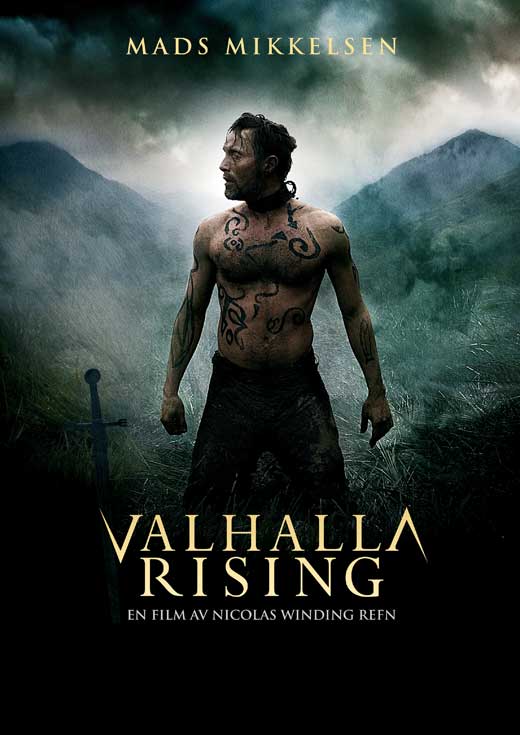
dark, Lynchian puzzle of great interest. (The other film behind it was Valhalla Rising (2009), which was
violent, but was also a period Viking freak-out where it made sense to have it
and wasn't the main subject matter).
Aspects as a result are lost
which could've been taken further. An interesting penultimate episode scene of
the cartel discussing their heritage in terms of their work, hating on white
taco vans invading their turf and Jesus making an apocalyptic view on the
subject, shows what could've been, as is the sub current of actual supernatural
content as Diana DeYoung is psychic and even, after one particularly strong
one, has to get an exorcism so she can get her eyes back to their normal state.
The fact each episode references Tarot cards in their titles, which immediately
intrigues me, but never feels like they have any weight to the material just
enforces a danger of pointlessness. He even ends the show on an old Judas Priest cut which proves Nicolas
Winding Refn has the talent and the style; he just unfortunately falls back on ultimately
boring themes.
Abstract Spectrum: Grotesque/Minimalism
Abstract Rating (High/Medium/Low/None): None
 |
| From https://nypdecider.files.wordpress.com/2019/06/too-old-to-die-young-miles-teller- ep-1.jpg?quality=90&strip=all&w=646&h=431&crop=1 |
======
1) Oh, and relocating a
presumably lost Andy Milligan film Nightbirds
(1970) that was deemed culturally important as a British production for the
British Film Institute to come knocking at his door, or he to theirs, so he's
done enough there to earn a pat on the back.