Showing posts with label Director: F.J. Ossang. Show all posts

Thursday, 23 June 2022

9 Fingers (2017)


Director: F.J. Ossang

Screenplay: F.J. Ossang

Cast: Paul Hamy as Magloire; Luc Catania as Delgado; Damien Bonnard as Kurtz; Lionel Tua as Warner Oland; Alexis Manenti as Springer; Elvire as Gerda; Lisa Hartmann as Drella; Diogo Dória as Le Capitaine; Pascal Greggory as Ferrante; Rafael Mathias Monteiro as Le barman; Gaspard Ulliel as Le docteur

An Abstract Candidate


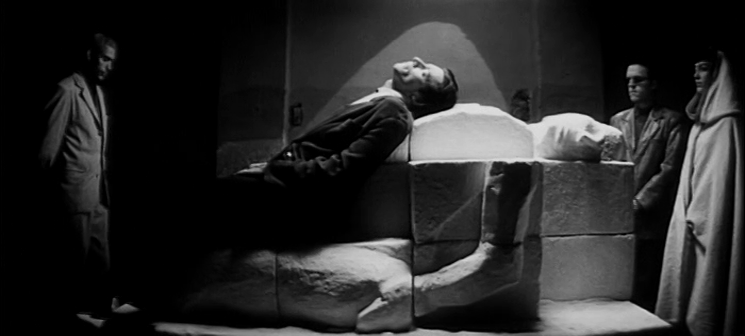
One man, Magloire (Paul Hamy), is like many in a crime narrative, stuck in a scenario that is doomed for even everyone else, where failure or betrayal means your body is cut up into pieces, and burned for waste disposal. Magloire is barely accepted in the gang he is under, a bystander left home with the two women of the criminal group, Drella (Lisa Hartmann) and Gerda (Elvire), when the robbery of a safe does not turn out well, forcing everyone on a cargo ship with the titular 9 Fingers the unseen figurehead pulling the strings, who gained that name from subtracting ones for punishment. This is already a crime noir scenario few protagonists would want to be involved with, but Magloire is in an even worse situation, that the safe box had radioactive material, polonium.

The scenario on the cargo ship is a deadly one, a bomb having gone off when the material was taken, leaving one of the members of the gang with radioactive sickness, all in an apocalyptic scenario in what could be caused with the quantity they acquired. This is just the tip of the iceberg to 9 Fingers, and outside the film, it is sod's law I am only now prepared for the films of F.J. Ossang, and his work is difficult to access. Ossang is truly a cult figure, in terms of a director from another country, a French filmmaker, who is prolific (least since 1985) and has a fan base, has a distinct style blurring genres, but is despite his career being laced with crime and pulp tropes someone who has never seen access least in the British Isles. Streaming from November 2018 to January 2019 temporarily, I was lucky to have seen the MUBI curated F.J. Ossang: Cinema Is Punk1, compiling all his feature films up to and including 9 Fingers; sadly, I was not at the right time to appreciate the films.

I was violently hostile to the films in fact, only won over when the films were beginning to be taken off by Doctor Chance (1997), his idiosyncratic full colour crime film which did end the festival positively with finally understanding his work, with Elvire, found here, as the female lead and Joe Strummer of The Clash in a prominent role talking about gonads. 9 Fingers is not conventional either, as all his films were, the genre director on the surface but with fascination for talking and mood, the tropes of noir and crime here, but not the same. The set up is here, where on the Sri Ahmed Volkenson V, the first name of the cargo ship, there is a dangerous substance in the cargo bay, with the added issue that Magloire has fallen for Drella, whose brother he got killed, and develops a jealous hostility in their leader Kurtz (Damien Bonnard) towards him as a result.

Where Ossang caught me off-guard originally is when you have long contemplative films within the genre tropes he used, rather than what you would have presumed from the punk filmmaker/musician/poet with an interest in noir tropes and characters wearing black. Case in point, Magloire's only solace is a senior member of the cargo ship who talks to him, an older man not happy with his position within this, with his books marks by when the authors died. Ossang is a true punk filmmaker in attitude, yet his dialogue with that one character gets into talking about revolution, but also about God and the Devil existing with plans for the world as mankind has freewill. Ossang for 9 Fingers shots this as a chamber piece, a lot of dialogue with the form of genre here in its moodiness. Especially with how striking the film is, Ossang whether working with cinematographer Darius Khondji on Treasure of Bitch Island (1990), before his memorable work for David Fincher on Seven (1995) or with Jean-Pierre Jeunet, or Docteur Chance being his only colour films, presented with a distinct hue in itself, 9 Fingers with Simon Roca as the cinematographer when you get its groove is eerie. It feels it was more indebted to horror films of a certain vintage than a crime film, whether Val Lewton or Vampyr (1932). Not a lot "happens", which is significant, but paranoia aptly seeps in, not surprising when you have a leader named Kurtz in change, slowly breaking down, on a ship where radioactive polonium is there and eventually a mysterious doctor appears on board that takes power.

The film's pulp tone, stuck at sea drifting past countries, is timeless, modernity but, with Kurtz fixated on an ornate map, ageless in form as much as its fixation of black trench coats and glasses is very "punk". The strangeness is emphasised by when Nowhereland is introduced, an alien island which is the straw which breaks the camel's back for the narrative. Befittingly, it adds to the influence of old horror and pulp melodrama when all goes wrong, even if nothing evil is actually on the island, entirely bare and nowhere in the sea. The film's nihilistic tone, and The Eighties Matchbox B-Line Disaster's Psychosis Safari on the end credits, is punk, but it is a perplexing mood piece in crime trappings, eventually stuck on a void wasteland of an island, and an unseen gunshot for emphasis concluding before Psychosis Safari kicks in. Ossang's work is the kind, with the right frame of mind, that could win people over, but my original frustrations were clearly from how he undercut the expectations, like a three cord three minute punk song, of something fast, edgy and venomous for something more ethereal. He is, with this film's ink black monochrome appearance, more esoteric, the shots of the moon cutting through the black, and growing tensions (and alcohol consumption) on the ship, providing a compelling air now I am aware of Ossang's tone for his work.

Again, shame F.J. Ossang's work is not easily accessible, his being the kind of work which is "niche" but, with the right frame of mind now, I get into greatly.

Abstract Spectrum: Atmospheric

Abstract Rating (High/Medium/Low/None): Low


=======

1) F.J. Ossang: Cinema is Punk, with a link to the main article, The Paradoxes of F.J. Ossang, written by Adrian Martin and published on November 9th 2018 on MUBI, to present 9 Fingers and Ossang to a new audience.

Tuesday, 22 January 2019

Treasure of Bitch Island (1990)

From https://pics.filmaffinity.com/
Treasure_of_the_Bitch_Islands-677757947-large.jpg


Director: F.J. Ossang
Screenwriter: F.J. Ossang
Cast: Stéphane Ferrara as Ponthans; Diogo Dória as Féodor Aldellio; José Wallenstein as Ulysse; Mapi Galán as Ada Della Cistereia; Lionel Tua as Fabiano; Michel Albertini as Bormane; Serge Avedikian as Le docteur Turc; Clovis Cornillac as Rubio; Patrick Quillier as Directeur Palace; Francisco Baião as Xico

Synopsis: The heir of the consortium Kryo'Corp, Ulysse (José Wallenstein), travels to the only place the substances for a new energy source can be found - the titular Bitch Island. Unfortunately, the island divided between its native tribes and the colonisers with their militarised zones, a cocktail of radiaition and drugs feeds into the downward spiral for Ulysses' team as they scrape against the various machinations.

F.J. Ossang has been a frustrating man to meet. Treasure of Bitch Island is the first to make any impression (as would Doctor Chance (1998)) in my discovery and marathon of his work as much as it makes aware how deeply flawed he is as a director-writer since his 1985 debut The Case of the Morituri Divisions, the musician/poet/filmmaker/ punk Ossang someone who should embody the anarchic nature of that era's independent cinema. Unlike Sogo 'Gakuryû' Ishii from Japan or the Cinema of the Transgression group from the United States, as comparison examples, Ossang also presents the worst stereotypes of pretension by accident. Despite lifting from b-movie genre tropes and his punk background, most of the events in his narratives take place off-screen, not an issue as its clearly his trademark with a sense of letting the viewer's imagination fill in the images spoken of, but its undercut by his tendency to spend the time on bland monologues that last ages rather than the moments in his films filled by pure lurid genre subversion.

From http://www.tasteofcinema.com/wp-content/
uploads/2016/12/01-TheTreasureOfBitchIslands.png

Thus 9 Fingers (2017), about a criminal gang on a cargo ship with a nuclear weapon where paranoia and potential radiation poisoning are making things dangerous, focuses more on existential sounding dialogue that sadly isn't profound or with a sense of nuisance (as say) Jim Jarmusch's genre subversions. Rather than direct interaction with the premise itself, that in all the films I've seen have all been interesting, Ossang for his filmography has fallen into many squandered opportunities due to this: see Dharma Guns (2010), where the idea of a man's last experiences before his death from a jet ski accident is his soul going through a sci-fi paranoia thriller, with gothic tinges, sounding like something Guy Maddin would make only to procrastinate. Or his debut The Case of the Morituri Divisions where there is promise of a literal punk film in its rough production, its VHS text captions and futuristic gladatorial fights only for him to clearly not be invested in the film's premise in the slightest. It's neither "punk" to has this much dialogue in his films either, or really subversive, which is the biggest crippling flaw with his style. I quote someone like Ishii specifically as a film like Burst City (1982), whilst two hours long feeling like adrenalin shots directly into a blood vessel and not just for having actual punk bands playing in the film.

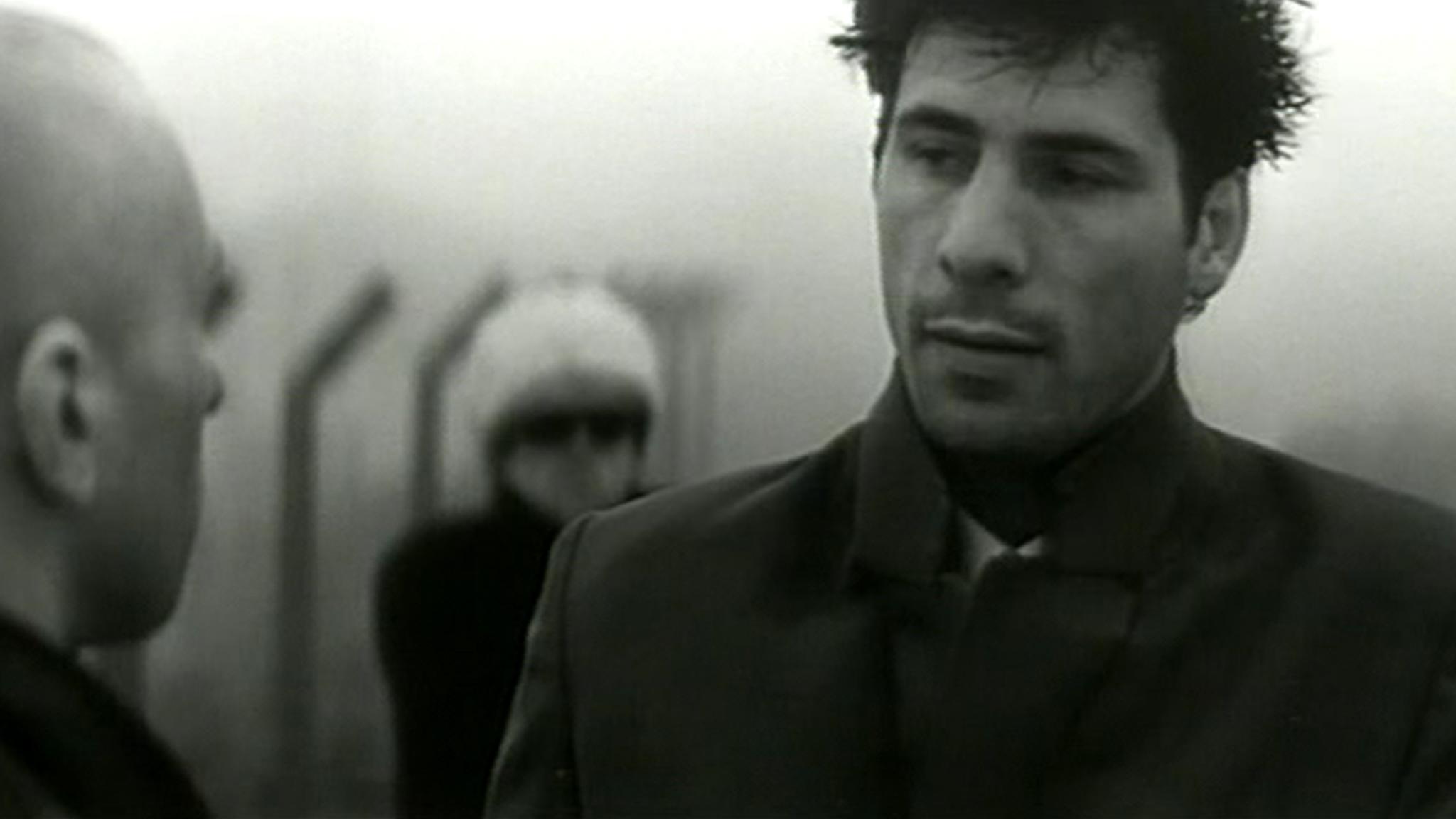
Arguably however his nineties films hit a peak where, for their flaws, he made the films I waited patiently for and have left a mark I will treasure. Bitch Island "somewhat" works and I think it's as much helped, even with Ossang's obstructive style, by the look of the film. Arguable for me is that his older work is far more rewarding than the later ones particularly in their visual palettes, but here he particularly had success, as with Doctor Chance, in terms of the aesthetic style; here Bitch Island has a particularly rancid but stylish monochrome look befitting the world. A place where, inhospitable and made worst by the protagonist's gang being both on drugs and on a doomed mission, it already has an impact; once you get to the titular island through a barb wire covered militarized zone, let alone the vast desert and industrial locations, there's a sense of a living breathing environment despite a lot of Ossang's films, to their detriment usually, being shot in still takes in close-ups, here actually working as the world is built from events only being talked of by implying them rather than depriving the audience of engagement.


Noticeably Ossang's cinematographer here was Darius Khondji, who'd go in to acclaim for David Fincher's Se7en (1995) and in general has an impressive filmography including work with James Gray, Jean-Pierre Jeunet and Marc Caro, and even some idiosyncratic one-offs on his CV like Wong Kar-Wai's sole American film (My Blueberry Nights (2007), Michael Haneke's own remake of Funny Games (2007) and Zidane: A 21st Century Portrait (2006), an attempt in an avant-garde dialogue-less documentary to slow down and examine a football game with Zinedine Zidane as a hyper-sensual experience. Because of Khondji's style, heightened but also able throughout his career to be completely naturalistic too, Ossang is given an advantage as was hiring cinematographer Rémy Chevrin on the atmospherically colourful production of Doctor Chance.

It helps as well that, even in the obtuse style, the story here is at least interesting in what you get too. Baring a hotel with unhelpful staff, Bitch Island is not a safe place; ready to rupture between the natives and the rulers imposing over them, the only poor decision in the premise, and one of poor taste from Ossang, being that the figure the natives worship called the Korean Girl is actually a Caucasian actress. It doesn't completely redeem the film fully, as Ossang's style is, even if going for the theatre of the mind, obstructed by his attempts at romantic nihilism that is one of the worst issues with his screenwriting for me, but Bitch Island particularly as the central group of men get lost in the desert and start to puke and reach death on a mix of despair, their own drug intake and radiation sickness is an evocative scene which in little happening has immense power. Arguably, ironically, it's this tone and the cinematography that adds the edge rather than any of the dialogue spoken, the actors as well gamely losing their minds in-character and carrying the heavy burden unlike many of the other Ossang films which don't have a strand of connection, but because of when the dialogue has more to it in their spiralling madness or the fatalist sense of heroism that eventually overcomes those left.

From https://assets.mubi.com/images/film/33614/image-w856.jpg?1445879977

It does leave me sad that I've had a cold reaction to the director's work beforehand as between Bitch Island and especially Doctor Chance, its tale of (richly coloured) doomed romance in Chile where Joe Strummer is inexplicably there, as just from those two films without any other context Ossang should be a director I love and presume would continue to make films like the nineties productions. Here with Treasure of Bitch Island too I could see myself watching the two nineties productions repeatedly if they were actually available to see. And honestly, as mentioned, if this was the style of film he went with rather than a colder aesthetic style into the 2010s, I'd be surprised that Ossang never had films released even in the USA as - rather than being too stilted for punk cinema, too enamoured with his own voice rather than actually become risky and snotty in attitude - those imaginary films would've been awesome and cult pieces already. Hell, maybe something truly magical would've happened and I'd learn to appreciate the other films in his filmography and even liked them, which would've been even better.

Abstract Spectrum: Psychotronic/Oppressive/Stylish
Abstract Rating (High/Medium/Low/None): None

Personal Opinion:
Treasure of Bitch Island was the first film where I found something within F.J. Ossang, its warts and all actually adding to its personality as the material shone with virtues. It itself would be a film that would test others' patience, but for me it was a bright spot in a director, only discovering, I fear I would merely hate.


From https://67d860664f4b00793cde-967809c7cbb0f14b111df13fc72409e5.ssl.
cf3.rackcdn.com/fiona/editionfilm/48de3364-b427-4f0a-9bba-8155f0d8b64a.jpg