
Creators: Phil Lord, Christopher
Miller and Bill Lawrence
Directors: Ted Collyer and Harold
Harris
Screenplay: Phil Lord &
Christopher Miller, Bill Lawrence, Tom Martin, Erica Rivinoja, Murray Miller,
Judah Miller, and Adam Pava
(Voice) Cast: Will Forte as Abe
Lincoln; Phil Lord as
Principal Dr. Cinnamon J. Scudworth; Michael McDonald as Gandhi; Christa Miller
as Cleopatra; Christopher Miller as JFK / Vice Principal Mr. Butlertron; Nicole
Sullivan as Joan of Arc; Donald Faison as Toots
Oddities, One-Offs and Obscurities
 In the careers of Phil Lord and Chris Miller, who have grown in success with work on Cloudy with a Chance of Meatballs (2009),
21 Jump Street (2012) and The Lego
Movie (2014), all they have strived for by all accounts is to make more of
Clone High, a project of theirs shown as part of MTV's animation wing that was
cancelled after one season. One in which, as succinctly explained in the early
2000s alt-rock theme song, is about the clones of famous figures of history as
teenagers having to go through American high school, a teen high school drama
where Abraham Lincoln is not the legendary politician but a gangly nerd pining
for Egyptian figure Cleopatra, now the popular girl, whilst his friend and
former soldier of God Joan of Arc is the Goth girl who secretly has a crush on
him.
In the careers of Phil Lord and Chris Miller, who have grown in success with work on Cloudy with a Chance of Meatballs (2009),
21 Jump Street (2012) and The Lego
Movie (2014), all they have strived for by all accounts is to make more of
Clone High, a project of theirs shown as part of MTV's animation wing that was
cancelled after one season. One in which, as succinctly explained in the early
2000s alt-rock theme song, is about the clones of famous figures of history as
teenagers having to go through American high school, a teen high school drama
where Abraham Lincoln is not the legendary politician but a gangly nerd pining
for Egyptian figure Cleopatra, now the popular girl, whilst his friend and
former soldier of God Joan of Arc is the Goth girl who secretly has a crush on
him.
Clone High's cancellation is probably one of the most infamous
stories I have heard of as, alongside low ratings, the show unfortunately
stumbled into a cultural controversy of its own doing. One of the other major
characters in the show, as Abraham's dorky comic relief friend, is the clone of
Mahatma Gandhi, who could not live up
the legacy of the Indian political campaigner and became a sex obsessed party
animal. India still holds Gandhi to
importance, and in the midst of another controversy with Maxim magazine, the show was pulled it with the country being
naturally pissed off. This all does have a darker nature that does shadow what
is a fun show, as on January 30, 2003 a hunger strike took place in New Dehli on
the anniversary of Gandhi's death,
alongside the possible threat to MTV's
broadcasting license in the country. Suffice to say, and this is documented, if
Clone High ever had a sequel, two
opinions were to either remove Gandhi
and no one to ever question where he disappeared to, or to write in that there
had been a mistake and he is in fact the clone of child actor Gary Coleman1.
Clone High is, as with a lot of American animation from this time I
grew up with, fast paced with a lot of tiny stories in each episode. The joke is
that each episode is a "very special episode", that this is all a
parody of a wave of teen dramas that were popular in this period like Dawson's Creek, Clone High always basing episodes on parodies of the anti-drug
episode or the episode about dangers of certain behaviours. The difference it
is the 16th president of the United States being informed by French heroine Joan of Arc he has a problem with not
getting sleep, or when Gandhi is
diagnosed with A.D.D. and is treated like a leper.
To Phil Lord and Chris Miller's
credit, when they are funny, they are hilarious in their writing alongside
their co-writers. There is even the added investment that they also voice
characters in the show showing the commitment they had, the most prominent
example another important main character voiced by Miller, John F Kennedy,
portrayed here as the stereotypical sex crazed jock with the added irony of his
forbearer's existence (and his real life womanising). Another of note, voiced
by Phil Lord, to fill out the main
cast is Principle Scudworth, who is barely hiding from the evil cabal funding
the project he intends other plans with the clones, whilst his vice principal
(also voiced by Miller) is Mr. Butlertron,
a robot assistant who is a parody of an eighties show Mr. Belvedere because he
calls everyone "Wesley". Butlertron is also one of the most
sympathetic characters as, whilst he swears like a sailor when annoyed, he is
the only adult figure in this world who offers meaningful advice to these kids
in the midst of hormones and school life, rather than be a character meant to
be absurd.
To this show's credit these
characters and other side ones, voiced by a cast including a lot of future
alumni of the popular comedy show Scrubs
produced by co-creator Bill Lawrence,
do grow on you immensely. Even characters like JFK become hilarious as, whilst
some of the humour has not aged well with characters, including the interesting
note that his adoptive parents are two stereotypically gay men, there was some
basic and pleasing about these characters being able in their archetypes change
over time. Kennedy in particularly a great example as, alongside Miller's mannered intonation of the
voice, a character so obsessed with women to a crass and childlike level can be
oddly charming if an utter idiot, something that the show does deal with. Many
of the show's solid foundations in terms of the voice cast can just be
demonstrated in that, in one of the oddest cameos, you do not just get anyone
to voice Gandhi's remaining kidney in
a one image joke, but get Michael J. Fox
of all people.
The guest stars also emphases
that Clone High is definitely a show
of the early 2000s, because it will constantly reference pop culture from this
era throughout the episodes. The idea that each decade, as sold to us in
consumer nostalgia, is a distinct thing is problematic as well as if you
consider that a) usually the first couple of years have the last decade still bleed
into the newest one until it is replaced, and that b) I will argue as someone
who was a young teen in the early 2000s that the period is its own little area between
the last few years of the nineties and a few of the 2000s.
So much that would not be
understood by younger people in the show as jokes, like Gandhi missing the scene in American
Pie (1999) where Jason Biggs formicates
with one or that Scudworth's plan for a clone amusement park stems from
watching Jurassic Park III (2001),
comes from the era I grew up with, and there is so much even I do not know of
approaching this. Quite a few of the cameos really bring up how time really brings
a lot of thought of what is trendy at one time, as whilst I certainly know who Tom Green is, I could not comment about Ashley Angel of the boy band O-Town (as Episode Seven's main star) or
the entire series of references about the show Full House including star John
Stamos appearing in the final episode. It could be seen as a fascinating
time capsule but also a potential hindrance for younger viewers. You do however
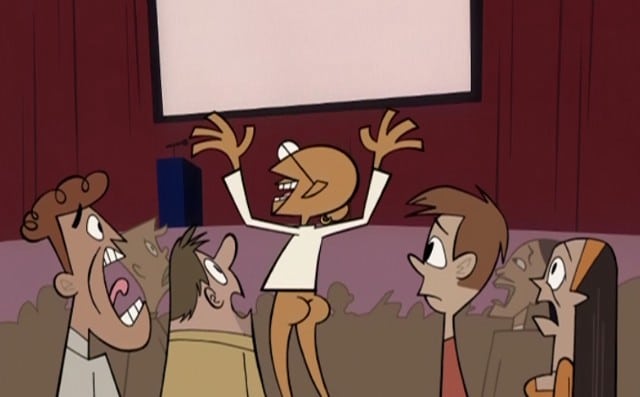
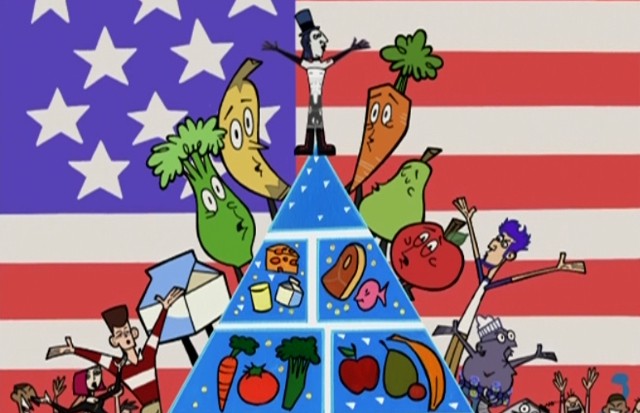
get Marilyn Manson, playing himself, performing
a musical number about how to have a proper diet, which is honestly worth Clone High's existence alone, a still
well regarded artist known for how controversial he is doing something
exceptionally silly as an actual show tune.
The show does have issues, the
one flaw I have in reference before to how fast paced the show is and how it
never settles on a plot in episodes for even a short period of time, in the
first few episodes not really sticking to ideas and really standing out. This
is a common problem and really comes to mind when I transitioned to enjoying
Japanese animation, especially as skit based shows even in that medium rested
on jokes a little longer for the better. There are moments in Clone High in those first episodes where
you could have stretched segments for funnier work, such as when Joan finally
thinks she can hear voices, but is barely covered. It proves somewhat ironic Gandhi was such as a controversial
character as he also happens to have some of the funnier plots, be it
kidnapping the mascot to a rival school's basketball team, only to realise it
is a living creature, to his psychedelic adventures (including being eaten by a
live action cat) after smoking raisins.
Ah the raisins, as whilst these
problems I have with the show are there, it does become a much more consistent
by the middle episodes onwards. By then it improves significantly by the point
it gets to its best episode, a rock opera where the illicit smoking of these
raisins (as in actual fruit, not slang for a narcotic) turns the students into
throwback sixties hippies, all whilst Scudworth goes full blown dictator. In general,
after the first handful of episode everything gets stronger, that episode
(number nine) is a big point of improvement alongside number ten, possibly the
darkest as it plays on the special episodes where characters are killed off.
Here it is a character we have never seen before but the cast presumes we have
called Ponce de Leon, who thankfully
is a real life figure for consistency. His death is absurd as it is literally
caused by littering, as it is also the anti-littering episode, but for a show
which just skirts around violence (which is quite gory when it happens) and
references to sex, it fully invests into parodying this type of episode with
his friend JFK, going through depression and playing out an actual trauma with
pathos in the midst of its humour. It is an episode as a result which might be
too dark for some, even though it is one of the strongest.
By this point in the show, the
cast itself is strong and develops to the point even the aforementioned JFK
gets to be a sympathetic character, as well as an odd one who records his
annual Snowflake celebration albums at home and apparently has a reflection
that talks back. All the characters are stereotypes - Abe being really useless
and clueless, Joan very cynical if earnest, Cleo a vain and sexually open
figure who toys with Abe because she can get him to do things - but they are interesting
stereotypes. Even really weird jokes, like Abe when given to chance to make a student
film creating a story about a giraffe being allowed to play American football2,
and managing to be even more bizarre and awful than that sounds, suit the
individual characters. The show could have gone further with its weirder jokes,
especially as animation wise, it is helped by striking character designs by Carey Yost, who worked on shows like Samurai Jack and The Powerpuff Girls, but what we get that shine does. When the show
is unpredictable, it is a pretty striking series.
[Major Spoiler Warnings]
The likelihood is that Clone High would have continued like
this in tone onwards, but due to the real life circumstances around the show, we
did end on a pretty distinct climax for the entire narrative. Over two episodes
we naturally build to a prom, just happening to take place in a meat locker and
following through with those Full House references
to John Stamos (played by John Stamos) getting a prom crown
through the face. Clone High even
gets melodramatic, befitting its subject of parody, as the love story of Joan
and Abe grows (and curdles) in a dynamic twist. Then most of the cast is
frozen, which has to be one of the most dramatic ways to have to end a show. Phil Lord and Chris Miller could have easily ran from this to new seasons, but as
it stands as a one season wonder the final episode is a really distinct
conclusion in terms of a cancelled television show.
[Spoilers Ends]
Judging Clone High altogether, I had fun and admire it. A fondness has overridden
the initial issues of the show, when it was merely glib and not really standing
out, particularly as the characters were fully fleshed out and the stranger
ideas grew. Yes, it might be blasphemous to have Abraham Lincoln depicted this way, but it is just as compelling to
see him as a clueless guy who bungles throughout the show. The show itself
alongside the teen drama parodies does also reference real life history, as you
have to fill a school with characters. Maybe Marie Curie, who pioneered the discovery of radioactivity but died
of radiation poisoning, as a mutated clone is a bit tasteless but humour is to
be found seeing former war lord Genghis Khan as a lumbering, dim-witted but
sweet friend with a beautiful singing voice, among such idiosyncratic choices.
They even reference Dolly the sheep, the real life major experiment in cloning
from the nineties, by having one of the teachers be half man half sheep.
This is also the show where, for
one joke, Martin Luther King Jr (one
of the many voices by future Scrubs star Donald
Faison, whose biggest role is Joan's blind adoptive father Toots) argue
with Moses (voiced and drawn after Charlton Heston, voiced by other Scrubs co-star Neil Flynn) peacefully resolve a conflict over the lack of ham and
cheese sandwiches in the canteen. Or how Gandhi eventually convinces agricultural
scientist and inventor George Washington Carver
to star in a Lethal Weapon-like
buddy cop student film, but only after a while if Carver can rewrite his dialogue to avoid the ethnic stereotypes in
such films. Only here could you get away with such bizarre moments, and in just
thirteen episodes Clone High has
managed a lot to remember.
Phil Lord and Chris Miller
themselves did very well after this. There has possibly been one roadblock, in
which their desire at parody and silliness bit them back with Solo: A Star Wars Story (2018). Lord and Miller were originally the directors for the film, but at a certain
point Disney pulled them off and
hired Ron Howard to complete the
production, suggesting they were probably committing to some absurd humour the
House of Mouse was not comfortable with. Regardless, they have managed to
become household names, even managing to get Will Forte to re-voice Abraham
Lincoln again in The Lego Movie
for a nice bit of synchronicity. Cast members, as referenced, became stars in Scrubs, a very popular medical comedy I
remember watching which lasted, to the point the parody episode about littering
effectively created Neil Flynn's
famous caretaker character years before that show. Even if Clone High never returns, I think Phil and Miller have
managed to reap the benefits of this, especially as this is also a cult series
with high regard. If it does return one day, they definitely had the plans. One
season was meant to be a repeat of the same academic year due to a time
wormhole3, so it would have gotten weirder if they got additional
season and might have been awesome to witness.
======
1) HERE
2) Ah, the Air Bud jokes, as in 1997 there started an entire Disney produced franchise which stemmed
from a Labrador being allowed to play basketball, joked in the basketball
episode where Joan poses as a male player. In mind to Doggiewoggiez! Poochiewoochiez! (2012), a compilation of such dog
related media, it's amazing how much material like this exists, and that we
rarely stand back on and consider how strange they are.
3) HERE


