Thursday, 12 September 2019

Don't Hug Me. I'm Scared: Episodes 1-3 (2011-2014)


D
irectors: Joseph Pelling and Becky Sloan
Screenplay: Joseph Pelling, Becky Sloan, Hugo Donkin and Baker Terry
Cast: Joseph Pelling as Red Guy / Additional Voices; Baker Terry as Yellow Guy / Duck Guy / Additional Characters; Becky Sloan as Notepad / Additional Voices; Royngtt as Tony the Talking Clock / Shrignold / Additional Voices
[UK]

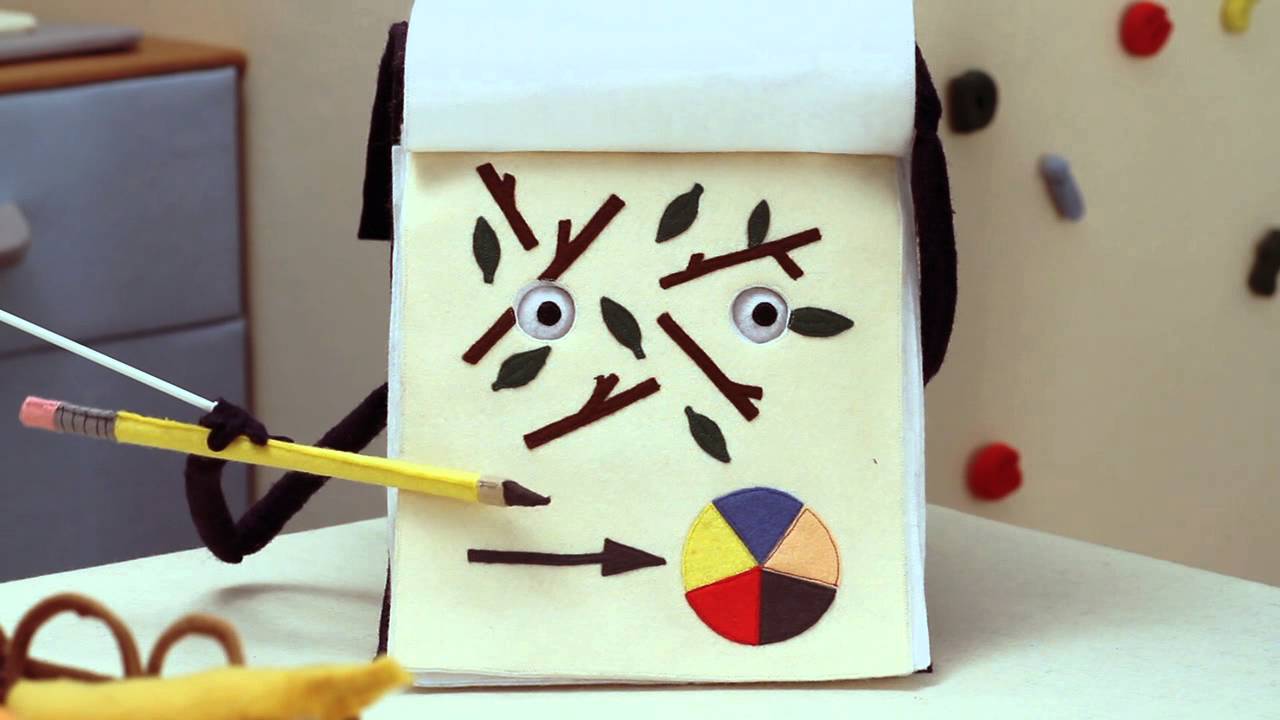
In a room, a red puppet with a mop face, a yellow humanoid puppet, and a green duck puppet are sat around a breakfast table in a kitchen. Wanting something to do, suddenly a notepad comes alive and starts singing about being creative. Very much a children's edutainment show barring the fact it tells the yellow guy green is not a creative colour.

That's mean, but nothing prepares you for the short to end on a nightmarish freak-out involving a cake made with blood and organ meat, or glitter art with an actual heart. Admittedly, the power has been lost now we've corrupted the image of children's entertainment over parodies, mock films and even an officially sanctioned horror film where the Hanna-Barbera characters the Banana Splits are sociopaths. But Don't Hug Me. I'm Scared became something much more, all stemming from this first short film; reflecting back on the entire project, by British artists Joseph Pelling and Becky Sloan, whilst sadly the premise of taking a children's entertainment aesthetic and using it for darker material has been driven into the ground by now, the success and attention this short had lead to five sequel shorts which grew in creativity and layers.

First of all, let's nip the theory in the bud that this is all a metaphor for how corrupt children's media is. It became popular from a YouTube channel The Film Theorists, and whilst the idea does have a subconscious weight, where we should question what our children watch, I a) prefer my surreal work to not have oversimplified meanings, and b) many details complicates this all. Noticeably, according to a Motionographer interview, Becky Sloan likes this type of children's edutainment, and that the project was originally to mock the idea of teaching creativity, the Sesame Street puppet aesthetic only coming afterwards1. There's also the fact that since 2018, the duo have plans to make a TV series with these characters and world which undercuts this entire theory they hate commercial television.
From https://i.ytimg.com/vi/9C_HReR_McQ/maxresdefault.jpg

Instead, there's a lot more interest material to unpack without ever caring to explain what the shorts are actually about. The series got more interesting when they aren't about shocking the viewer, the first episode despite beingthe most famous one of the weakest for me when the others later got more peculiar. The production without a doubt however is exceptional, one of if not the best YouTube made production I have ever seen even over what insane lengths Fatal Farm's Lasagna Cat got to. A world of felt and puppets is constructed with what would've been time consuming and difficult to put together, a history between Joseph Pelling and Becky Sloan in short films, music videos and even an advertisement for St. John Ambulance built around such ideas and trademarks. The comment earlier belay how sadly it's a now lazy juxtaposition to have children's iconography cuss, fuck or murder, since the times of CreepyPasta to SFM porn now exist, but it's a bigger challenge that Don't Hug Me... takes and succeeds in through having a legitimately surreal attitude with its style and tone.

I mean, most productions like this wouldn't be this well made, embracing a cute world where everything has eyeballs and looks cuddly until everything goes to hell. Few would qualify as musicals, and have proper and well put together songs parodying the type found in edutainment work. It's a greater challenge to recreate a children's Saturday morning show with this level of detail - bright and vivid, the songs alone perfect in comparison to recreating the kind I like myself grew up with from these shows. I had originally viewed it a weakness how easily the series fell into shock tactics - "death" spelt out in glitter among details in the first short - and the later episodes thankfully went away from this to much more interesting creepiness. But to the first short's testament, it sets this up, possibly to the point viewers over thought theories about it, a sense of playfulness in deliberately adding all the content it has. The idea of this being about the evils of children television feels far less interesting when the surface itself is more rewarding already, knowledge of how this was meant to comment on the difficulty (and inanity) of "teaching creativity" already poignant as the arbitrary views of the notepad don't help at all, something thankfully played with through all the guest stars in this world's surreal lack of logic.

Even the decision to evoke children's television for the initial idea makes sense not as a slam against capitalist television but in style for the theme - how many shows did I grow up with, let alone Art Attack or Blue Peter, were about being "creative"? The odder aspects, how it cuts to a digital CGI version of the kitchen as a set, does offer many suggestions, whether it was meant to mean a thing or not, but definitely the ideas initially there are strong, and the freakish weirdness were the bloody icing on the cake.

From https://coubsecure-s.akamaihd.net/get/b72/p/coub/simple/cw_timeline_pic/
4068afb517a/4d8b81c63aa8cbf2fab9c/big_1463806097_image.jpg

In 2014, the second short would appear in Time, in which a clock turns out to be a sadistic. Inherently for myself, the balance of horror and subtler weirdness is stronger, the lyrics and events where the clock's behaviour keeps cutting off more existential thoughts of time becoming enough of a commentary on the inability to think enough on such subjects. There's such a danger to over think material like this, not presume aspects of these shorts were Joseph Pelling and Becky Sloan just coming up with dark or weird ideas without greater meaning, whether abruptly cutting to a bath time against the protagonists' will or the abrupt appearances of fish. That said from what could have had no profound meaning can be itself meaningful instead what it's about - the moment that I'd argue hits a more profound meaning that any attempt at a sociological or political commentary is when the duck suggests time is a construct of the human mind, only for this to enrage the clock whose noise in anger is enough to cause yellow guy's ears to bleed.

You don't need to elaborate on this further; the image of someone preventing a more complex question on an established idea we are complacent of is a pointed comment enough. Arguably, when the clock ages them to decay it's just meant to be the horror, with no intellectual symbolism, as I suspect these shorts were always meant to be entertainment first. But the "jokes" for a lack of a better name themselves hit pertinent ideas just in what they are.

This definitely is to mind with episode three, in which distraught by Duck killing a butterfly, Yellow Guy flees a picnic and meets another butterfly who talks about love. What happens next could be easily be a parody of religious cults as Yellow Guy meets a group who sings to him about one's true love and bonds. I'd argue that its closer to a cult as, honestly, one of the most embarrassing things to witness is bad, one note anti-religious commentary in the midst of a piece of art, especially as it's a dangerous thing to confuse a cult with a religion, religions for all their problematic issues a complex structure of dogma and theology, which becomes more complex when you require spokespeople for the God(s) and their morals can slide in or an organised religion, whilst a cult is usually based on a dubious single figure representing the Godhead themselves, not speaking for the actual God or a series of figures, whose dogma is never about the betterment of people but vapid platitudes without any of the struggle religion usually talks of when informed. Also, there's a sense that, as I'd do in their roles, the creators thought the punch line would be funnier if they were a cult of furry woodland animals who worship a giant rock head, which is legitimately funny.

From https://i.ytimg.com/vi/kcgnilFIw0g/maxresdefault.jpg

And dark too, as the commentary comes not mocking religious ideas but that, for all their singing about a true love for everyone, the most inspired part is a tale within the short told of a deformed boy who hides in a cave with nothing about him ever finding true love being brought up as the tale is said to do, made even more striking and powerful in its corpse black humour in that no one bats an eye to this and just go along with singing. I'd wouldn't be surprised, thinking of this scene, whether the commentary of Episode three had nothing to do with parodying religion or the idea of monogamy, but just to take the absolute piss out of Disney musical numbers, and ones in children's animation and entertainment in general, by imagining the woodland creatures of Bambi and other animation practicing a Wicker Man-like cult.

If anything, the greater question to ask is why this is creepy? There is something inherently odd about children's entertainment when we return to it as adults. I accepted this material as a child, in television to toys, but as adults with the knowledge this material is created by other adults trying to appeal to children, these exaggerated forms and aesthetics are strange. Strange creatures like the Teletubbies, baby faces in the sun and all, for example with their garish colours and odd contraptions were weird, even before you take into account the uncanny valley effect of costumes and puppets. The mind of the child drastically changes when they become an adult, and these strange colours and forms are curious to us grown up as a result. The repetition and order, between games and activities repeated every episode, could become hellish like a rejected Albert Camus piece if you over thought it, but the nuisances and the freedom you gain as an adult make these restrictions striking. The one thing I take from the media theory is how, whilst a noble act to teach and educate children through fun, to teach someone in a way that can become almost patronising and encoding environmental influence is an issue in itself even if the lessons of good morality are noble on the surface. If they are not thought about and prodded at the same time, they become hollow and a trap.

Don't Hug Me... also does play with grotesque things, but its better when its less shock related. Having a picnic consisting of raw chicken legs, whilst leading one to hope the production staff washed their hands after handling it all, is jarring in contrasting real meat against puppet felt in a little, clever detail rather than explicit gore. The idea that the lessons of the guest stars make no sense or are authoritarian in a problematic way is ran with further, and for the better, in the episodes after the third one, and really provides a glorious series of ill-logical but quotable dialogue. A lot improves in episode four to six, the best of this little series of web videos, but the ground work here for the first three were already strong. The difference is that the creators decided to stray further from the gore and nastiness, even if it reappears in Episode 5, with more gleefully surreal and rewarding nightmare fuel. When I get to those final three episodes, these same questions through this review will be asked again, but the initial three, if they were the only ones made, were by themselves exceptional pieces of strangeness.

Abstract Spectrum: Grotesque
Abstract Rating (High/Medium/Low/None): None

From https://forum.callofwar.com/index.php?
attachment/4973-maxresdefault-jpg/

====
1) The interview is linked to HERE. 

Saturday, 7 September 2019

Otley (1969)

From https://img.moviepostershop.com
/otley-movie-poster-1969-1020255091.jpg


Directed by Dick Clement
Written by Ian La Frenais and Dick Clement
Based on the novel by Martin Waddell
Cast: Tom Courtenay as Gerald Arthur Otley; Romy Schneider as Imogen; Alan Badel as Sir Alec Hadrian; James Villiers as Hendrickson; Leonard Rossiter as Johnson; Freddie Jones as Philip Proudfoot; Fiona Lewis as Lin; James Bolam as Albert; James Cossins as Geffcock; James Maxwell as Rollo; Edward Hardwicke as Lambert; Ronald Lacey as Curtis; Phyllida Law as Jean
Obscurities, Oddities and One-Offs

Released in the wave of influence James Bond had on cinema - regional interpretations, rip-offs, spy films in general - alongside the more grounded adult versions of espionage especially coming from the United Kingdom like The Ipcress File (1965), Otley is what happens when even these low key and realistic spy dramas were taken further when a snarky former university graduate, coach surfing, has to be the central protagonist in a spy war and web of conspiracies when he's accidentally sleeping in the room when an acquaintance is assassinated. Waking up the night after inexplicably in an empty football/soccer field, he has by fate found himself in the midst of two rival factors in London.

Speaking as someone who actually likes the franchise, I find that Bond has always come off as a stereotype of British culture, an elitist figure for the government of an entirely different type of the cinema viewing audience, reflected as the sixties films were as much tourist documentaries for exotic locations as they were action films. Even the idea of creating a female James Bond that have persisted wouldn't be able to cover the fact that, as an institution, all the potentially problematic cultural baggage of that fact would still be found. Otley's noticeably different as our lead's as working class as you could get. You don't have Sean Connery fleeing police with a bacon sandwich in one hand over canal boats. Even the Roger Moore years, when the franchise got sillier, even Diamonds Are Forever (1971) with Connery, weren't this openly absurd rather than accidentally. An entirely different language is to be found here visually and in content that pops the balloon of spy adventure as a farce.

A very big factor to mind for Otley is that in the director seat is Dick Clement, who co-writers this novel adaptation with his regular collaborator Ian La Frenais. For the British, the pair is more than likely known as writers than filmmaking as, with the many reruns and TV programmes about old British television we still have in the 2010s, they have a legacy of huge hits. Specifically it's Porridge (1974-7), (an institution I even saw episodes of growing up decades later), Whatever Happened to the Likely Lads? (1973-4), (and its 1964-6 prequel The Likely Lads), and Auf Wiedersehen, Pet, (1983-2004 for all its tie-ins), which are huge cultural signposts in British TV. Porridge is the only one I know of so far, but apt with Otley as, shot in a matter-of-fact and following Ronnie Baker as a prisoner, that style of black humour with a lot of dialogue based humour is felt here only with a cinema budget, more ambition and humour that is a lot more caustic.

Barring one offensive comment against a Chinese masseuse, a lot about Otley has aged a lot better when a lot of British humour of the past will wilt in the fires of political correctness, not even from a perspective of a snowflake social justice warrior but that sixties and seventies Britain is an entirely alien to decades later1.. Instead, Otley is amazing nasty and black humoured in a way that hasn't dated but is pretty stark, especially as this is rated "PG", suitable for family viewing in spite of how sharp the witticisms are. This isn't a nice, cuddly British comedy of old, but proudly sharper, as the titular Otley is surrounded by men in suspicious groups who callously call their wives a bitch, or include the bizarre but scene stealing character of an assassin whose day job is a tour coach driver who owns a farm. Even one important side character, who could've easily been a crass gay stereotype, is more interesting with nuisance and because his actor relishes the pithy remarks of his. Even the fact the plot gets confusing does a favour as it adds to our somewhat hero, somewhat anti-hero, being completely lost.

Said Otley is of course played by Tom Courtenay, and he's tremendous. Otley at times is a prick, but he's also a charming one even when he pickpockets valuable possessions throughout the narrative, Courtenay a huge lynchpin among many for this film to actually work. He does nothing amiss, and barring that one offensive one liner, every comment or joke at the expense of his situation is amusing and usually self deprecating first. Drifting through life, it's a fascinating character to dump into this scenario, still a handsome charming figure because of Courtenay's prescience, even making the fact that he woos Romy Schneider's female spy credible as well as in depicting his cluelessness of what is happening. It also adds credibility to what happens even in the context of a comedy which exaggerates this genre, more credible in realism arguably than many spy films to this day.

Again, returning to even the romantic subplot having credibility, this manages as a PG rated film in Britain to be quite frank about sex, so it never feels like it is undercutting verisimilitude by being prudish, instantly showing this as Otley is first found sharing his older landlady's bed, she happy with the night together but still kicking him out for not paying the rent, immediately making even some of James Bond's innuendo childish in comparison from the era. Schneider's prescience is a surprise, a huge actress of European cinema abruptly appearing in this British film, more so as by this point she was already cementing a legendary reputation. This was not the last time she was in a British financed film, Bertrand Tavernier's Death Watch (1980) with Harvey Keitel set in Scotland, but certainly given the role that, frankly, has a lot more nuisance than most Bond Girls, (all?), it was a hell of a casting choice.

Shot in London and out in the countryside, played to humour when the coach driving assassin has Otley as a prisoner but still has him do farm labour to pass the time, the film's verisimilitude does stand out and not just for nostalgia, also adding a lot of character to create some excellent scenes. A lot of this is taking advantage of the locations for humour and effect. A chase on the intercity canal is made between as it involves actual canal boats. The Notting Hill Gate subway becomes a place of a trade where a suitcase may be a trap with sickly humoured results, all with additional historical interest in how the posters of the era look. The countryside, isolated, offers a surrealism of an assassin who'll still offer his prisoner a cup of tea and force them to clear out pig muck in their stay there. And then there's the central scene where Otley tries to take a driving test only for it to abruptly turn into a car chase, which is magnificence and shouldn't be spoiled.

Its amazing Otley is an obscurity, but in general the sixties and seventies could be seen as a lost era for British cinema; for every great film, the likes of the British Film Institute's "Flipside" project took years to uncover a lot of forgotten and underrated gems, not even getting around to this one. This was a Columbia Pictures release, which made it a pretty big production for the era, which was probably not a help in the damndest. Among all the spy parodies, or straight up spy films, Otley could've have easily been lost in the crowd. A shame hopefully to rectify as this was an excellent discovery, a film I knew of for years and could thankfully see.

=====
1) I mean, good God, for all the stick we could level at the Americans, they didn't have a primetime minstrel show, about white performers doing numbers in actual blackface, called The Black and White Minstrel Show that lasted between 1958 to 1978. One which had fucking merchandising and novelty records at that.


From https://i2.wp.com/cinemaderien.fr/wp-content/uploads/
2018/05/Otley1969.jpg?resize=850%2C468&ssl=1

Friday, 6 September 2019

[Archive]: Deatherman (2012)

From https://i0.wp.com/terriblemoviesforterriblepeople.com/wp-content/uploads/2013/03/deatherman_thumb25255B325255D.jpg?resize=396%2C396


Director: Bobby Keller
Screenplay: Bobby Keller
Cast: Dominique Capone as Holley Cooper; Gena Comandy as Tessa Carpenter; Mike Gavern as Dan Anders; Jenni Grasso as Buffy Winters; John Kasper as Dalton Law; Bobby Keller         as Coyote; Jim Keller as Mumbo Chef; Allison LaRussa as Leech

[Preferably, I would like my reviews to be published within some reasonably time soon after viewing each film/media I cover. Unfortunately, in the case of this review, I had written out a version on paper but never typed the document up for publishing, which is entirely against my usual method for creating content for the blog. Desiring to begin including old material on said blog as "Archive" material, and not wanting to waste a review from early 2019, I publish this review now. Due to the nature of what happened, with only those notes available, I apologise for the lack of my usual practice of improving and adding to the material in the midst of creating a typed digital copy. Barring correcting any potential grammar and spelling mistakes, alongside [bracketed text] clears up confusion content, this is entirely the notes typed up so the time spent writing them, and viewing this extremely obscure no-budget film, wasn't wasted.]

It pains me to say this, considering there were moments that amused me, but sometimes your resources can be too small to fully create an interesting work. Deatherman, a throwback to eighties and nineties shot-on-video cinema likewise shot-on-video, and under sixty minutes, does feel flimsy even in knowledge that you can have very little to work with. Improvising is a virtue, but a bar scene that feels like three actors in a room, unless you can add an enthusiastic energy in spite of this, is going to lack mood and drag at any cost of production.

Ostensibly, one weatherman learns that a new female colleague is joining [their station]. A sexist, both dismissing her ability to became a weather reporter and hitting on her, his comeuppance is soon imminent. She and two female friends, who all knew each other in psychotherapy, dispose of the body, only for acid rain to resurrect him, jokes on the loose logic [of this actually being able to work only taking place when its already become] a revenge tale. It's silly, just for the title pun and could've easily been ridiculous. Honestly, the real joy is to be found not in the story, a horror comedy whose lack of structure and unused resources strips the energy out, but in the humour provided by enthusiastic non actors. [The premise is average], as you are following a completely unlikable character, the Deatherman, who cannot be stopped and (barring some gore) throttles most his victims, [the film] only a few times [springing to some life] like with an umbrella [related murder and little else].

Instead it's Marvin, a one scene one joke character for a fake news channel commercial, screeching about his magic shop over a fake news screen and telling his grandmother to go fuck herself [who is of reward], or one of the female lead's friends once wanting to marry a box of cereal. Arguably Deatherman, a film really only an acquired taste[,] grows into something legitimately fun because, contrary to the plot, there's a tiny cast of characters doing incredibly silly things or having some comic timing. Such as the restaurant chef, a guy not even in a chef's costume and a chef's hat, muttering like a madman, bashing vegetables to death with a knife, and repeating words like "Caesar Salad) over and over again. If anything, it's a great case study of how cinema is not about narratives but the importance of the likes of mood and character, great narratives birthed through these too.

By itself, Deatherman wouldn't suffice even for fans of SOV cinema, long patches that are sluggish or compare badly to more ambitious and weird shot-on-video films this was a tribute too. These one joke characters, not to forget a drug dealer who's a fan of the weatherman who even rings him, have a spark of fun which is an absolute blessing; legitimately so, as there's a glee in this silliness [in vast contrast to the problems with the film's structure].


From https://assets.mubi.com/images/film/
183909/image-w1280.jpg?1507919744

Saturday, 31 August 2019

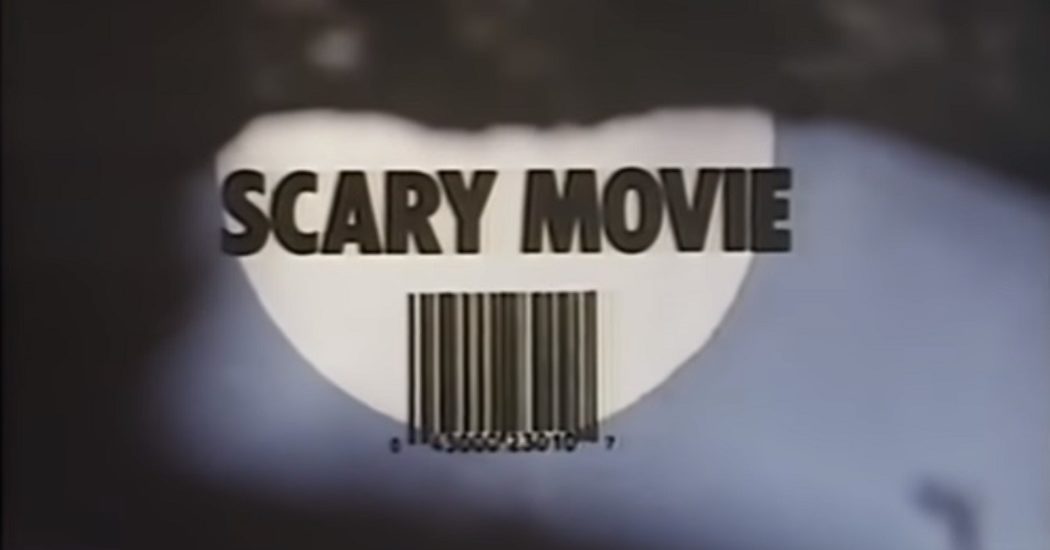
Scary Movie (1991)

From https://www.filmfracture.com/wp-content/uploads/
2019/01/scarymovie_1-1050x550.jpg


Director: Daniel Erickson

Screenplay: Daniel Erickson, David Lane Smith and Mark Voges
Cast: John Hawkes as Warren; Suzanne Aldrich as Barbara; Ev Lunning as Sheriff Pat Briggs; Mark Voges as Jerry; Zane Rockenbaugh as Billy; Jason Russel Waller as Brad; Virginia Pratt as Shelley; Ernie Taliaferro as the Laughing Man; Zeke Mills as Basil; Butch Patrick as Eddie; Lee Gettys as John Louis Barker; Lorne Loganbill as Otto
Obscurities, One-Offs and Oddities

First of all, if you were expecting a review of the parody horror film by the Wayan Brothers, or the sequels, I'm sorry to disappoint you. Can I make it up with a once impossible to see horror film from Texas, not properly released until 2019, instead? Arguably the biggest factor to bear in mind, beyond the fact our fresh face lead is actually a thirty here and would become Oscar nominated John Hawkes, is that director Daniel Erickson was only nineteen when he made Scary Movie. That's pretty incredible especially as, in the midst of all the horror films churned out at this point in history, it's with its flaws still a hell of a lot more accomplished than many.

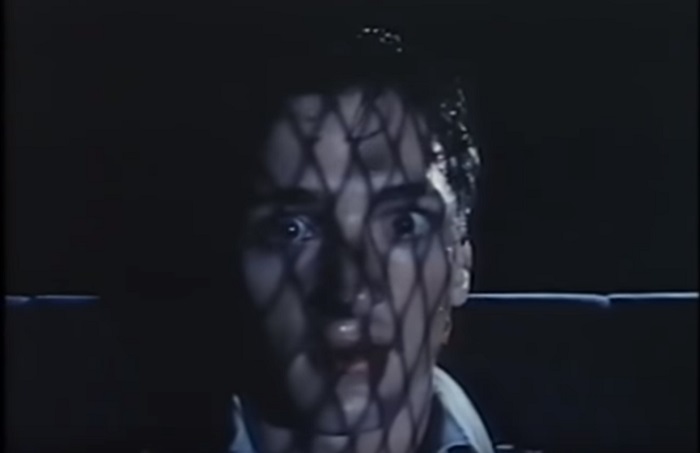
Halloween night - Warren (Hawkes) comes to a haunted house attraction less than in a great state of mind, nervous already having had a vivid nightmare the night before of a Grim Reaper like figure which is also found at this gruesome local haunted house. There's a potential romance - with a near sighted girl with raven black hair, bold eyeliner, in a white virgin maiden costume and with a collectomaniac habit - but he's still jittery. It doesn't help either a known killer has escaped from the nearby mental asylum that same night.

Don't expect a slasher film however, which was a big surprise and honestly a lot more interesting for myself. It's a make-or-break detail of the film for many, but I'm personally not a fan of slasher films as a concept; I enjoy them, but when they, like most, turn into stalk and chase scenes I turn off, when in reality even the emptiest of characterisation is more appealing. I personally found the result we get with Scary Movie a breath of fresh air instead, getting what is a very late regional horror production more interested in mood. Incredibly late, into the nineties, but very much of the type as this production also feels like a time capsule to community haunted houses which stands out; Halloween is an important holiday in British, but especially for the Americans, the traditional having greater weight even in terms of this type of yearly spectacle, where even the Evangelical Christians built their own "Hell Houses" to scare people to Jesus. This one in the film feels a lot closer to reality, to the point of potential verisimilitude, in how it's an immense creation but clearly the product of locals in a small town with enough elbow grease and cooperation between them, right down to the ghouls inside committing horrors being buddies likely to be drinking in the bar the day after.

From https://www.filmfracture.com/wp-content
/uploads/2019/01/scarymovie_4.jpg

It's an interesting mood to latch onto, and it's strange in slight doses in the best of ways. Even without Roky Erickson and the Butthole Surfers on the soundtrack, large portions of Scary Movie are incredibly eccentric. The collectomaniac to the reoccurring large man, the same one wearing a red top, who is always there to laugh at the appropriate moment, the film's openly peculiar. It also means the film wrong foots the viewer deliberately - the aforementioned ghouls from the last paragraph get a clever take on expectations I won't spoil. In general the local flavour right in terms of side characters onscreen add an incredible charm and personality to the material.

A lot of the film is also at a great advantage of both the director and production creating a very atmospheric film, one also aiding by John Hawkes in the lead. The film is built more on tension, as rather than a lot of deaths or jumps, Scary Movie taking its time housed in Warren's mind and his fears by the moment he is literally shoved into the haunted house. In dark, claustrophobic corridors and rooms, the homemade world of the set is idiosyncratic, and thankfully, Hawkes plays the neurotic main character exceptionally well, even with the fact he's clearly been based on Bruce Campbell's character Ash in the Evil Dead series in look. It follows a similar logic if not as cruel as what happens to Ash, but including climbing over pumpkins, the same tension is to be found with a killer in the same environment.

[Major Spoiler Warning]

Expect that isn't the case, and for any criticism that Scary Movie is a slow eighty minutes, Daniel Erickson especially as a nineteen year old filmmaker managed to pull out a morbid plot twist, where Warren has had a psychotic breakdown and maimed, even killed, patrons thinking they were a killer. It's a horror pulp story conclusion to be proud of, befitting as Scary Movie has tricked the viewer into thinking a figure has been killing haunted house staff only to continually undermine it continually throughout the film beforehand. And it makes sense considering how Hawkes' performance is great, built upon an anxiety built up from the start.

[Major Spoilers End]

Laced with an incredible cynical and black sense of humour at the end, Scary Movie does so much to admire, sad in knowledge that it took so much longer for the film to be properly seen. The film only had a semblance of release originally by a few VHS distributed locally in Erickson's home in Austin, Texas. This was the reason the film was unavailable, but also why versions were available as its composer Hank Hehmsoth, who only worked on this film but should be praised for his startling electronic score, put the film up online. As of 2019, the American Genre Film Archive released the film for cinema screenings with plans to be released properly in general, a wonderful conclusion for the film as it's worthy of an actual release finally. Erickson himself never made a lot of work sadly, though intriguingly he did return, with John Hawkes also returning to voice a character, with the utterly compelling premise of Eve's Necklace (2010), a neo-noir entirely acted out with mannequins.

Yes, mannequins...which has to be an inspired creative idea worth investigating for myself...


From https://www.americangenrefilm.com/wp-content
/uploads/2019/06/ScaryMovie3.jpg

Wednesday, 28 August 2019

Too Old to Die Young (2019)

From https://static.stereogum.com/uploads/2019/05/
TOTDYCover-1557511203-640x640.jpg


Director: Nicolas Winding Refn
Screenplay: Nicolas Winding Refn and Ed Brubaker
Cast: Miles Teller as Martin Jones; Augusto Aguilera as Jesus Rojas; Cristina Rodlo as Yaritza; Nell Tiger Free as Janey Carter; John Hawkes as Viggo Larsen; Jena Malone as Diana DeYoung; William Baldwin as Theo Carter

Realising it in the midst of this review, Nicholas Winding Refn is becoming our new Quentin Tarantino. He doesn't have the reach of the latter, who can still somehow get violent and unconventional films playing in a British multiplex in the middle of the afternoon, but since Drive (2011) and its unexpected breakout success, he's the man whose name is used to promote other work and has spent his own money to restore exploitation films he feels are worth preserving. The later through byNWR, whilst not always great in the choices, is enough to point to in terms of him being a great guy1, but his actual films are divisive. This is an issue in the sense I have nothing but good will for the man, but in this particularly case that'll leave a sadness as what half way through was a great production eventually ends with a bitter taste to the mouth. On paper, following on from giving Sion Sono the mini-series Tokyo Vampire Hotel (2017) to relocate his sense of fun again, Amazon Prime funding this minimalist Refn production created with comic book writer Ed Brubaker was enticing. Whatever your thoughts on Amazon, or just its corporate head, it was at least a huge risk to fund this auteur after the divisiveness of The Neon Demon (2016), but for most of its length, Too Old to Die Young felt like a new, weirder and rewarding turn in Refn's career. Sadly things do take a turn, but let's start at the beginning first before we get ahead of ourselves.

The project was unexpected, deliberately playing to its unconventional history, when Amazon threw wads of cash to Refn, with two middle episodes being premiered at the 2019 Cannes Film Festival, a creation that develops a Jekyll and Hyde personality as, when the mini-series is good, Refn has developed a new style of weird, confrontation avant-garde genre cinema waiting to blossom. At its worst, whilst I will still wait with interest for his next work, I cannot hold Refn as a great director for all his indulgence in violence laced in a deadly amount of pretension, perversely emphasised now Tarantino (for his controversial creative choices) has amazing matured and chewed on polarising ideas with deliberate complexity.

Too Old to Die Young is over ten episodes, and is paced as the most extreme of slow cinema where a simple dialogue scene can last over five or more minutes. Its surprisingly comparable to Filipino director Lav Diaz, for who eight hour plus films are a regularity, but whilst Diaz obscures important stories in way too much padding for me for the most part, Refn's deliberately taking a premise of a two hour film and stretching it to an extreme, but still had to make it with a pace appropriate for Amazon Prime where events do transpire of note. This conflict is a fascinating and rewarding result, as was the case for Sion Sono who had to start bringing back his older eccentricity and stretch a long form story out, and here Refn with Brubaker for the first half of Too Old... does create a compelling work.

Two main sides co-exist at first, conflicting each other in the first chunk of the first episode. A cop Martin (Miles Teller), who is involved with shady dealings, will be there when his cop partner is murdered point blank by Jesus (Augusto Aguilera), the son of a cartel boss taking revenge for the murder of his mother Magdalena, who he has is revealed to have an incestuous obsession with. For Jesus, he will flee to Mexico to his father, who is on death's door in illness. Martin will be promoted to a police detective, all whilst his romantic relationship with Janey Carter (Nell Tiger Free), as well as being problematic in that she is only seventeen and underage, will bring him into her life with her eccentric father Theo Carter (William Baldwin). Eventually this series will split from these two men to two women. Diana DeYoung (Jena Malone), a victim's advocate who secretly has hired Viggo Larsen (John Hawkes), a former FBI agent dying of a terminal illness, to kill rapists and child molesters, and Yaritza (Cristina Rodlo), who is the carer for Jesus' father but is secretly the High Priestess of Death, an urban myth who is killing men who harm women, especially those forced into sex work.

My eventual disappointment with the streaming series is tragic as at the start, Too Old to Die Young is very good. The insanely glacial tone mixes with Refn's obsession with neon is a match made in heaven, cinematographers Darius Khondji and Diego García earning their keep with the bold visual style, and Refn's usual composer Cliff Martinez hits it out the park again with his score. Probably the most interesting detail, working with Ed Brubaker, is that over a longer format, you still have to create enough to fill the detail, and this is where the show finds its best virtues.

Episode 2, in a bizarre paradox against its cold nihilism, even has a warm humanity, regardless if it's discoloured in black humour. For me it's the best episode as, when Jesus returns to his family in Mexico, his ailing cartel father despite being evil is made sympathetic as a tyrant reduced to a dying man, obsessed with football, and repeating a memory of seeing Pele over and over again, to the point he uses it as a peace maker between his group and the corrupt police force in their payroll to deal with tensions. In this, Refn had the potential to make even the worst in humanity perversely human in just giving them this detail. It could seem problematic, in Episode 5 when Martin has to track down and kill two brothers who make "rape porn", to have people who create the material argue over what to put on the radio in the middle of a long duration car chase, but it feels tonally appropriate and hits another highlight of the series when Barry Manilow's Mandy gets used in a montage immediately afterwards.

Points of absurd humour and even full blown weirdness are also a godsend. Be it that that car chase is not helped by an electric car used for one of the participants' runs out of energy in the middle of the desert, or how a confused police station reception asks Martin if someone really shot some ducks in a person's pond. Even something as absolute out of place like Diana DeYoung, in the final episode when we are meant to have a climax, having a scene using virtual reality porn with a head visor, even when the series sadly falls into its biggest problems, has a weight of something utterly unconventional and stands out more as its had no connection to anything that took place beforehand. Hell, William Baldwin's character of Theo Carter feels like he's wandered from a David Lynch film, a creep who's uncomfortably close to his daughter in how he finds her beautiful and, upon first meeting Martin, communicates to him waving around one of her plush tigers and growling at him. Refn has had this weirdness before, and it's one of his best virtues, be it The Neon Demon just beforehand, but it's rarely been funny with the exception of Bronson (2008) in the past.

From http://horrorfuel.com/wp-content/uploads/2018/05/too-old.jpg

Even the nihilism at first is spiked with a humane side perversely skipping throughout. America's going to hell in a hand basket, as the problematic vigilante attitude of Viggo Larsen is counteracted by the fact of his despair both over his declining health and that he's also looking after a mother who is suffering from dementia. The only thing on the radio is a conspiracy disc jockey, and either that's contacted by a puppet making an appearance in the finale scene, and everyone's idiosyncratic, from the Jamaican contractors of hits to random samurai groups in the city. Even Martin is a curious one just for how much Miles Teller spits all the damn time and barely says a thing, not exactly Ryan Gosling in the slightest in style. The less said the better about his fellow police detectives the better, the strangest of them all - homoerotic yet joking about it in mock machismo, proudly singing about fascism in group sing longs, creating a mock version of Christ's crucifixion in the office from Martin's leaving party, definitely the weirdest moment of the entire series, and generally acting in a way that one criminal is horrified to even consider they are actually law enforcement at all.

The problems with Too Old to Die Young begin when the first major character is killed off. Callously, just written off, and whilst I tried keeping my enthusiasm up, I really got tired of the nihilism. Having passed my thirtieth birthday, I realise I cannot stand this. The truth is also that, an issue returning back to the likes of Only God Forgives (2013), the mini-series just comes off as juvenile and contrived after a while. The show literally peters off with the two main female leads as heroic vigilantes, a rewarding change of plotting undercut by how nasty and grim the violence also is.
And frankly, the vigilante content, with the pretension, is problematic in an eyeball rolling way, as Malone has a monologue directly to the camera about how in the future the world will turn to death and concentration camps again but she will protect the innocent. Throughout there are references clearly to the political era after Donald Trump became president, Nazi flags appearing more than once, but the idea of killing the evil doers yourself is like Dirty Harry (1971) without any of the ambiguity or whit. Its inherently a cheap sentimentality, a perverse one, to make the villains killed rapists and paedophiles, as no one morally would defend them, but it's still a cheap ad hoc creative choice that's dumb.

Least when you had Episode Five, starting with a disturbing opening of a young man being dragged into a "performance", it was still a show about moral darkness punctured with corpse black humour and how these figures had quirks. Instead, this evokes Drive, his most well known and probably best regarded film which I always found incredibly shallow and too obsessed with nastiness since it first came out. And this sucks as this turned into an accidental bait and switch. The bait was a subversion of Refn's usual material where clichés - the criminals, corrupt cops, murderers and scum - developed more complexity just through the obtuse pacing and eccentricity of the oddest sort.

However Refn falls back on this dull cool misanthropy masquerading in "profound" final episode dialogue and it sucks - even as I hold a few of his films in my personal canon, this is a time I cannot hold Refn on a high level as he's going to keep doing this and annoy me. Even if I still praise byNWR and still take interest in him, this issue is going to now linger in the back of my mind. It was like when I started becoming disengaged with Quentin Tarantino around 2007 to circle back to the beginning. Tarantino is still divisive, still has the problematic violence, but even if I have thoughts about a film like Once Upon a Time in Hollywood (2019), he's nonetheless grown up and still engaging. The controversial aspects of his cinema are laced in questions whether he wrote material that was deliberately divisive to get uncomfortable reactions from the type of cinema he creates.

Refn is capable of this, but that I have never seen him really be someone where those questions can be asked about his ideas. This is why controversially I consider his best film was Fear X (2003), the John Turturro production which killed off his first attempt to enter American cinema. Now that he has licked his wounds, and even directed a Miss Marple TV movie, he's been able to make idiosyncratic work but there's a danger not in him becoming more divisive, but that the violence and nihilism is just tedious, something to bear in mind as Fear X had none of it and was a dark, Lynchian puzzle of great interest. (The other film behind it was Valhalla Rising (2009), which was violent, but was also a period Viking freak-out where it made sense to have it and wasn't the main subject matter).
Aspects as a result are lost which could've been taken further. An interesting penultimate episode scene of the cartel discussing their heritage in terms of their work, hating on white taco vans invading their turf and Jesus making an apocalyptic view on the subject, shows what could've been, as is the sub current of actual supernatural content as Diana DeYoung is psychic and even, after one particularly strong one, has to get an exorcism so she can get her eyes back to their normal state. The fact each episode references Tarot cards in their titles, which immediately intrigues me, but never feels like they have any weight to the material just enforces a danger of pointlessness. He even ends the show on an old Judas Priest cut which proves Nicolas Winding Refn has the talent and the style; he just unfortunately falls back on ultimately boring themes.

Abstract Spectrum: Grotesque/Minimalism
Abstract Rating (High/Medium/Low/None): None

From https://nypdecider.files.wordpress.com/2019/06/too-old-to-die-young-miles-teller-
ep-1.jpg?quality=90&strip=all&w=646&h=431&crop=1

======
1) Oh, and relocating a presumably lost Andy Milligan film Nightbirds (1970) that was deemed culturally important as a British production for the British Film Institute to come knocking at his door, or he to theirs, so he's done enough there to earn a pat on the back.

Tuesday, 27 August 2019

Sparrow's Hotel (2013)

From https://ic.pics.livejournal.com/rotten_k/28560669/
5327089/5327089_original.jpg


Director: Tetsuji Nakamura
Based on a manga by Yuka Santō
(Voice) Cast: Daisuke Kishio as Misono-kun; Haruka Nagashima as Tamaki Shiokawa; Minori Chihara as Sayuri Satō; Asuka Yūki as Yū Kojō; Shūta Morishima as Sakai
A Cinema of the Abstract/1000 Anime Crossover

[Sometimes, due to the fact I have two blogs, one of which also covers anime, i tend to miss the chance to cover some curiosities in the medium unless I deliberately post reviews on both. Here is an example of an older review for that blog, which you can see for yourself HERE, that I have re-reviewed for both this and that one. If anything this show's premise, a hotel management comedy where episodes are only three minutes long with a drastic animation shift halfway through, was odd enough for this blog too]

First thoughts? 480p resolution, as this particularly obscure anime oddity, three minutes per episode over twelve of them, is notorious for those who know of it for its aesthetic appearance and/or the highest quality you could screen it on an anime streaming site Crunchyroll. This gets weirder as that's only the first six episodes where that aesthetic is there, one of the many peculiarities of the kind of title you'd never have gotten a release of in the West were it not for streaming, a feature of modern entertainment which has allowed, in the ability now to have anime stream soon after its premieres on Japanese television, a similar premiere online for the West. (That, hey, it probably costs less to just license than to produce DVDs for, that also meant titles of a greater variety like Sparrow's Hotel can be made available) Considering how esoteric the subject matter is, the day-to-day management of a hotel, it certainly feels odd though that is tempered by aspects of the production. The first is that it's actually an adaptation of a "4-koma" manga, which are normally gag comic strips which have pages divided up by four panels. It's not that different from a Western comic strip in structure, just to give you an idea. The other is that it happens to be a hotel that hired a beauty buxom female employee, one named Sayuri Satō who happens to also have commando combat skills and assassination abilities. But still, pretty strange especially to someone used to the better known anime titles that crossed into the mainstream.

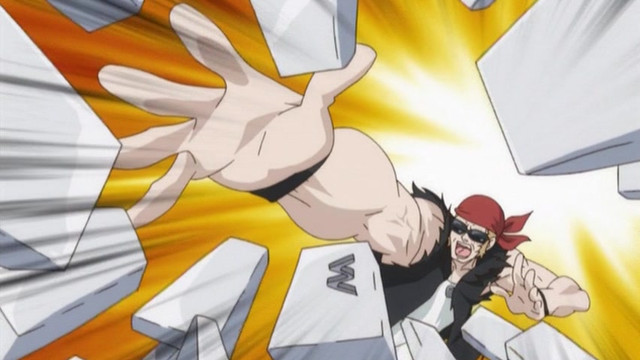
Some have speculated this is a parody of nineties straight-to-video animation, which had a history of high quality work, when it became an industry by the mid-eighties onwards to its down spell in the 2000s, but could also scrape the bottom of the barrel. I question this, having seen many bizarre anime premises especially in these "micro-series", and with knowledge that a lot of them use a lot of low-fi and frankly crude animation, sometimes for deliberate effect but some others clearly what was available. I wouldn't be surprised that this was a sincere production that, as I'll get into, was always meant to be a sex comedy/hotel hijinks show, where one of the jokes is a smaller female character smashing her face into Satō's giant bust as if that's a new concept, but had a major change of guard or how the episodes were being made halfway through.

Start with the first episode and the show's at least an experience, as whilst the second calms down and sets the pace, the first is (at merely three minutes including beginning credits) quick, hectic as it gallops along without pausing for breath as it introduces Satō, the carefree and sweet lass who is also the ultimate killing machine in the body of a voluptuous ditzy Venus, Tamaki Shiokawa the diminutive female manager, Shiokawa her older brother who is her superior and has a creepy incestuous fixation she is disturbed by, and bellboy Misono who is at first the meek, glasses wearing male employee but has a dark despondent side. It's a chaotic mess of a pilot, but the show in general is a series of vignettes which plays off those character traits. Whether they are actually any good is to question as the show never transitions further from just its surface. Yes, it is a curious subplot about Tamaki being freaked out by her older brother's advances (cough), and whilst even played out of humour that's a transgressive plot line to have, it never thankfully crosses into poor taste. Really, the only character who gets a lot of coverage is Satō, the figure on the manga covers who is significantly voiced by Minori Chihara, a singer who just happens to also play a side character, but still one of the main voice cast, of the huge franchise The Melancholy of Haruhi Suzumiya before Sparrow's Hotel.

It doesn't try to hide Satō as a figure of cheesecake fan service. She openly declares, creating the second episode title, that her best assists are her breasts and assassination skills to Tamaki, which leads to a dichotomy that is reoccurring in anime of voluptuous female characters who are nonetheless insanely powerful and/or violent. Is it demeaning or empowering to have these kinds of female characters who are very sexual but strong? It frankly comes off as a kink at times and there are definitely times where it is just a failure and proves sexist when the material's dreadful. Yet there is also the double standard danger of the stereotypical picture of femininity being negative being itself an insult, really the bigger concern with these kinds of characters is whether they are just for sex appeal or if they're going to have some emotion or characterisation to them. Even the case of Satō being very simple and at times naive isn't necessarily something that could be used as a negative characterisation if done properly. If anything, in a better and more fleshed out work, we could've had a lot to work on as already in this there is plenty of subversive material already there to mind - of a sedate, kind hearted soul who can yet can power lift a whole bed by herself, buys gym equipment the same way Tamaki does for handbags, and always carries kunai (Japanese throwing knives) under the skirt, with the ability to use them in an improvised game of William Tell at the company trip to a cherry blossom festival in the park.

From https://theglorioblog.files.wordpress.com/
2013/04/shorts_spring2013_03_3.jpg

The subject of the series is also to be asked about as, honestly, for what is a unique twist; sadly, the show never had enough time to run with its premise of hotel management further. Manga particularly has a heritage of the least expected subjects being covered in stories, and in what little we get here, Sparrow's Hotel had so much to mine here too. A tale in which rowdy people outside are an issue, booking crowds for a nearby anime/manga convention is stressful, or where one has to send off Satō to subdue a drunk and irate customer by knocking him out with a single chop. If it'd been a full length series, it could've easily become worse, but it could've also been actually more interesting and funny to see an anime set in hotel management, as seen in a later episode where a violent storm outside provides a huge swath of customers to the benefit of the empty hotel. As it stands, the show's too short for this, even if it is still to be found in slithers.

Beyond that the episodes' are so short, it's both difficult to analyze them but that in itself is a critique - that for humour, it's not the best but with some amusement, but as mentioned it never fully invests in its premise. There is an additional character of Yū Kojō, a hotel inspector whose attempts to keep that are secret are useless, but a lot of the show never drastically changes for the first half. Really, the moment where things get really interesting is with the art style. The first half follows the source manga in style but is infamous, for those who know of it, for its brash colours and crude character designs, a garishness matched by the manic pace that is compelling in a way but arguably limits the show's potential by being a one note mood. The transition, befittingly set against the episode where renovations lead to a new bathing area being created in the hotel, and the episodes having end credits instead of opening ones, is a shock.

Muted colours, softer character designs, and frankly a leap in budget or craft as the animation becomes more fluid and more ambitious even in the show's comedic double takes and gags; I forgot how impactful it was, the change absolutely distinct and looking like an entirely different adaptation of the same material. There is even a deliberately attempt as well to push the fan service, such as the end credits being a nude Satō sleeping surrounding by underwear and kunai on the bedspread. (Make of that what you will). It however even includes the cast, including Misono, being dressed in cute animal costumes in the mid-episode eye-catches that were added for the later episodes. It doesn't necessarily add more - alongside Kojō returning, there's a possibly American older male fighter named Billy who locks eyes on Satō as his rival, the show teasing the pair fighting continually. A lot of the show is still based on the initial premise mind - your main female staff member a killing machine, the manager is still creeped out by her older brother's thoughts of her, Misono is despondent. It doesn't particularly change a lot and that's honestly the real issue for Sparrow's Hotel even if the show was entertainment. It thankfully did change the aesthetic completely thought, which is arguably why I feel those episodes pass the halfway mark are of a higher quality.

Personally, the fact I've rewatched Sparrow's Hotel shows it has had a lasting mark even an odd curiosity. The micro series as a concept is fascinating - allowing for new talent, odd premises like this can allow for a lot of creativity and opportunity just for strange content. The issue is really how slight the micro-series is, at literally under thirty minutes or so here with Sparrow's Hotel never pushing to a further level than it probably should've. I admit as much of the incentive to re-watch the show was how short it is altogether, but I have as I realise a fascination with these micro-series in general that isn't exactly a guilty pleasure, but a love directly from the gut. That doesn't mean I won't be honest mind.

Is it abstract or strange though? Strange definitely, but not as strange as it potentially could've been, one of the greater ironies beyond Japanese animation that if you play something off as comedy, unless you fully distort the structure or push yourself, it makes an odd premise more normal as a result. And as much as the three minute episode length a surprise, just in terms of how much storytelling you can try to tell with minimal time, Sparrow's Hotel isn't exactly unconventional. In fact it could've done with a lot more preciseness, more weirdness and probably less fan service, unless it was going to be more positive for the main character's depiction, and I might've had a little gem on my hands. Cause I don't know about you the reader, but a thirteen or twenty four episode normal length comedy show about the banalities about running a hotel, if pushed further even with these same characters, would be an utterly peculiar and interesting experience to sit through.

Abstract Spectrum: Quirky/Weird
Abstract Rating (High/Medium/Low/None): None


From https://img1.ak.crunchyroll.com/i/spire1-tmb/d707
fffe1bdfceaa7fa44341858742a41369073669_fwide.jpg

Sunday, 25 August 2019

Season of the Devil (2018)

From https://images.rankingfilms.com/movie/
poster/season-of-the-devil-2018-poster.jpg


Director: Lav Diaz
Screenplay: Lav Diaz
Cast: Piolo Pascual as Hugo Haniway; Shaina Magdayao as Lorena Haniway; Angel Aquino as Anghelita; Pinky Amador as Kwago; Bituin Escalante as Kwentista; Hazel Orencio as Teniente; Bart Guingona as Paham; Joel Saracho as Ahas

Another Lav Diaz film, and honestly, it was going to be a tough viewing experience even for fans of his work. Opening another wound in his country's history, Diaz recreates a situation that took place in the 1970s where, here, a group of soldiers meant to represent the Civilian Home Defense Forces, a non-standard paramilitary force supervised and deployed by the heads of the local government in the Philippines, in the middle of an era of martial law in the country who decide to terrorise and control a remote village by bringing back their fear in superstitions, witches and demons, whilst crushing their opposition. It is four hours long, incredibly short for the director's standards as he is known for films much longer than this, filmed in his usually preferred monochrome with still long takes. This time however it's a "musical". Not a "rock opera", as it's been inexplicably called in reviews, but specifically an a cappella musical in that (with Diaz writing the lyrics) the cast mostly sings without backing music.

On paper, it's inherently abstract and interesting as a structure, and to even tackle a bleak real life historical incident will be both miserable but a noble act. The result however, for me, raises furthers questions to do with Lav Diaz as a filmmaker, which has lead to him becoming even more frustrating as he's held in growing high regard for world cinema. Immediately of question, you never really get a wide picture of this story to provide context, entirely over four hours only really connected to the soldiers and a few characters - a poet and activist who travels to the central village where his wife, a doctor who takes the risk to tend to the sick in the small village in spite of the soldiers marauding within it, an actual witch not impressed by the soldiers' strategy, and an older man in the village. As a result, the village exists as a vague entity, possible due to Diaz working on a restrictive budget filmed outside the Philippines, filming in Malaysia, but probably deliberately. You rarely see this world beyond, say, an early scene showing the poet's urban life of poetry reading and costumes, and as a result a lot of missed out in terms of world building.

These figures mentioned in the last paragraph, then, are our centres, their songs elaborations of emotion but also analogies of the conflict at hand between the oppressive forces and the ordinary populous. There's an issue too here in that, whilst the horrors are felt for what is in store for these characters, they're not particularly distinct either. They have emotion, they feel pain, but as the dialogue is instead a lot of poetic and concept based, not a lot of four hours is truly felt for them to flesh them out. They are props in a political film which discards a psychological depth over four hours, and thus the misery of watching the film, which doesn't end wonderfully with almost everyone you'd want to care being dead, leads to a nihilistic note that feels pointless. It's vague, which raises questions when Norte, The End of History (2013), which I keep returning to, had this same length and imbued greater depth. Is it, dare I say it, a case where Norte was a deliberate attempt at being more commercially accessible, or an attempt with multiple screenwriters including Diaz, a deliberately narrative and plot heavier production. In comparison, is Season of the Devil unfortunately where the director has full freedom but cannot focus himself as much as he should?

The singing itself proves an issue too. When it succeeds, it truly succeeds, the most potent lyric just the sound "La la la" which is the mantra of the soldiers, an ominous mantra which is used to incredible effect. Other times the singers chosen, even if raw due to the production, stand out. But many of the lyrics, which replace the vast dialogue in his other work, are repetitious or don't register at all. The irony is that trying to not be a conventional musical in structure is a greater detriment than if this was to compromise as it doesn't feel fully connected to each other, the exception being mainly whenever the soldiers sing. It's strange, that the soldiers are the most interesting characters but at the same time they as they are the most interesting part of the cast, as they have the most grounded and distinct lyrics, openly understandable and evocative of their blind worship of dictatorship. They also have the one aspect where Diaz is really actually trying anything remotely unconventional in this entire film and creates a powerful image - that of the soldiers' leader, a man who babbles in an incomprehensible language, not translated in the subtitles I had probably on purpose, who has an entirely other face on the back of his neck, a grotesque piece of flesh wearing glasses that adds to the horror of this figure's evil power.

From https://m.media-amazon.com/images/M/MV5BYzEyYjhhYzgtZGFmYS00ZmNmLTg0Ym
UtMTZmMWE0YTBmYjM0XkEyXkFqcGdeQXVyNTc5OTMwOTQ@._V1_.jpg

The issue that our villains, the real life tyrants, have more interest in their horrifying behaviour than those we are supposed to care for is a huge failure for Season of the Devil even as a bleak metaphor of this historical event. The only other song of note is “Talampunay Blues”, which is over the drugging, rape and eventually murder of a female character by them, mostly depicted off-screen with the song a hypnotic trance as they drug her. Its horrifying but actually with reason, where you have utterly care for her and feel your gut as a viewer entangle in revulsion. Everything else however falls into a problematic issue with a lot of art cinema, from the 2010s especially for me, that it's deemed enough to show the worst of humanity to win awards or be "great" without a greater psychological context or insight. Even in context of non-linear, experimental cinema, a vein of trajectory should have a credible logic to it. It is very bad sign when I felt that the village could've easily ganged up on the soldiers and disposed of them, only to procrastinate against a tiny motley bunch of thugs, a far more problematic thought for me to have had as this is based on real history with actual death of innocents involved.

Undeniably, the film looks incredible, but that in itself feels dangerously a crux to fall back behind as a defensive shield. There is a potential backlash with this type of "slow cinema", which has already been talked of, whether it is truly inspired. I am a huge defender of the likes of Tsai Ming-liang or Bela Tarr, who used this style to absorb a world especially as fall all the long takes of nothingness there was still activity being held onscreen. There's a question to ask if shooting long takes in forest, as I have seen from Lav Diaz a couple of times now, is actually profound or just indulgent, a completely subjective answer to make as artistic opinion is not technological fact, but with a sense that one (I) have to ask whether four hours plus of misery actually teaches me about the worst of Philippine's dire, complex history. To be subjective, compare it to a fellow artist like Nick Joaquin, an author who paints numerous histories of his home land of the Philippines in a more expressive form, and it has to be asked whether this extreme minimalism can work as well or have we swallowed a placebo by accident?

Slow cinema definitely succeeds, but you take a huge risk even going up to three hours. Four hours is in cinema still viewed as an epic, eight hours plus a mini-series or an art installation. We build over four hours here with one character left in the bleakest way possible, alone and crying with a loaded gun left to them, but has the film before that strong final image actually used its form well enough to built towards it? It is not a practical concept to spend time watching an audio-visual construct called cinema over three hours let alone more physically but also in the sense that the focus needed for such a construct is difficult to maintain even for the most engaged of cineastes. Unless you intend to make a cinematic equivalent of a trance, length demands justification, and to be honest I'll give Lav Diaz much more grievance over his films just for this fact when over "difficult" cinema is significantly shorter than this.

Is Season of the Devil abstract? No, because far from the length and style creating an unconventional and emotionally relevant mood for this important material as a result, it instead creates instead a very matter-of-fact tone which is paced with extremely long per scenes. Beyond whether you could've told the film in half its length, does the length imbue resonance either? Sadly, even when my viewing experience was unfortunately cut up into awkward sections, as Season of the Devil's length even for one of Diaz's shortest films is a lot to take in, I have to say no. It feels, worse as I have seen this filmmaker make a legitimately incredible film, like an artistic dead end. Not the work, but the sense that a backlash could transpire one day the more his work is made available beyond film festivals and film critics. Even for fans of tough cinema, it has to be asked whether this as is radical as say Satantango (1994) in terms of structure and meaning behind it as, for me, it really feels miscalculated.

Abstract Spectrum: Avant-Garde/Minimalist
Abstract Rating (High/Medium/Low/None): None


From https://cf-images.us-east-1.prod.boltdns.net/v1/static/769341148/31a02c2f-f757-4e58-bfd5
-5492d02a8ce6/e00714af-995a-4718-be9e-a5e14236caf2/928x523/match/image.jpg