Sunday, 12 January 2020

Best of 2019: Part 3 (30-21)


For Part 1

For Part 2


30. House of Seven Belles (1979/2019) [MUBI Streaming Premiere]

A controversial choice, but as part of Nicolas Winding Refn's byBWR website this still technically qualifies as an unfinished Andy Milligan film, one most will not have heard of even if you knew of the notorious cult director, which has been digitally premiered even without an ending and a lack of music. There is even a competition to submit an ending in any form possible that ends in March 2020, which goes to show this is one of the more idiosyncratic aspects of the site that I admire immensely. Even if Refn's own work has disappointed in 2019, he made up for it in this type of production.

If offers a tantalising possibility as, when usually this type of work would be only screened at film festivals or one off screenings, Refn's choice is one of the more inspired ones that emphasises even how an unfinished movie can have a lot of fascinating enticement. Andy Milligan, to be blunt, is an acquired taste - the acting can be broad, he has a very misanthropic view of the world, and barring the lack of his infamous spinning camera shot the film does have an idiosyncratic editing style at times to say the least. Milligan into the 2010s has gained a critical reappraisal, after years in dismissal, so the irony of a film of his getting a streaming premiere on MUBI is not lost. What's also of interest in his attempt at lurid Southern Gothic storytelling is that, with a very complicated history with gender politics due to a terrible childhood, how prominent the female cast are here is a really fascinating change of pace for him, alongside the clear sense of ambition he had. To the point he was behind the costumes himself, Milligan was clearly working on one of his most high budgeted films here which has a style to it, which is compelling to say the least.

To even get this film is of note for 2019, and to be controversial, the climax we do get involving someone falling off a cliff is a good enough even as an abrupt ending in itself.  For a film with an acid attack, his usual gore and really catty dialogue, it's a reminder of how idiosyncratic American grindhouse cinema can be, and as this is an example of one that lived up to expectations rather than disappointed, it does show that byNWR will still grab my attention if they keep up with these ambitious choices. If only there were a few more sites willing to offer this type of material, in art cinema for example, and for free to boot.


29. Dave Made a Maze (2017) [UK Blu-Ray Premiere]

A hipster remake of Vincenzo Natali's Cube (1997)? Not quite but it's my own promotional tag for the film, so I'll stick with it. Another of Arrow Video's acquisitions for the 2019, which sadly is the kind of film you don't get a theatrical release of, which is a shame as when Lords of Chaos (2018) is a poor film for the company to promote, this is one of their sleeper titles which is a reminder that they occasionally take a chance on an obscurity like this.

It's a metaphor for accepting growing into one's thirties, in which a man (almost Michel Gondry in premise) builds a cardboard fort to hide in within his lounge, only with the issue that not only does it bend spayial logic but even if they are made of card, the death traps inside do actually kill people even if they bleed red string. Somehow managing to be sweet and playful even with death involved, Dave Made a Maze was a film I anticipated, felt a little disappointed by, only to grow fond of over the year because of how much it was clearly a passion project for director Bill Watterson, a really strange passion project which is reminder that, whilst sadly a lot of American directors like him didn't get to make a lot of films over the 2010s, there are countless odd one-offs in cult cinema from the last decade. A lot which defy genre like this and are for me many of the most significant signposts for what the 2010s looked like.

Also, you cannot go wrong with a film where the cast briefly turn into puppets. Even The Irishman didn't have its cast turn into puppets. Whilst the ageing computer effects were fascinating, imagine if Robert De Niro's younger self was played by a puppet?


28. Zombi Child (2019) [MUBI Streaming Premiere]

A film I wonder about the release of - is MUBI just waiting for a while as they did with the 2018 Suspiria remake before they release a DVD? - but as further evidence that Bernard Bonello is an idiosyncratic director, what could've been a misguided and problematic tale is actually a really thoughtful tale which deals with Haitian voodoo. It follows two tales of a) a man in Haiti becoming a zombie, not the George Romero brain eater but the real folklore of someone drugged into a daze to become a slave, and b) an ancestor of his, a fictional grand daughter of a real case, living in France and the repercussions of her heritage becoming known to her French classmate as one becomes intrigued by voodoo. It's a calm, methodical drama first which pulls you in with interest, with respect for the religious beliefs. It does eventually become a horror film too, earning it by showing what the actual Baron Samedi is meant to be in all his mad glory rather than the James Bond version. That Bonello is even scoring the film with lovely synthesiser flourishes himself goes to prove he put his heart into the production.
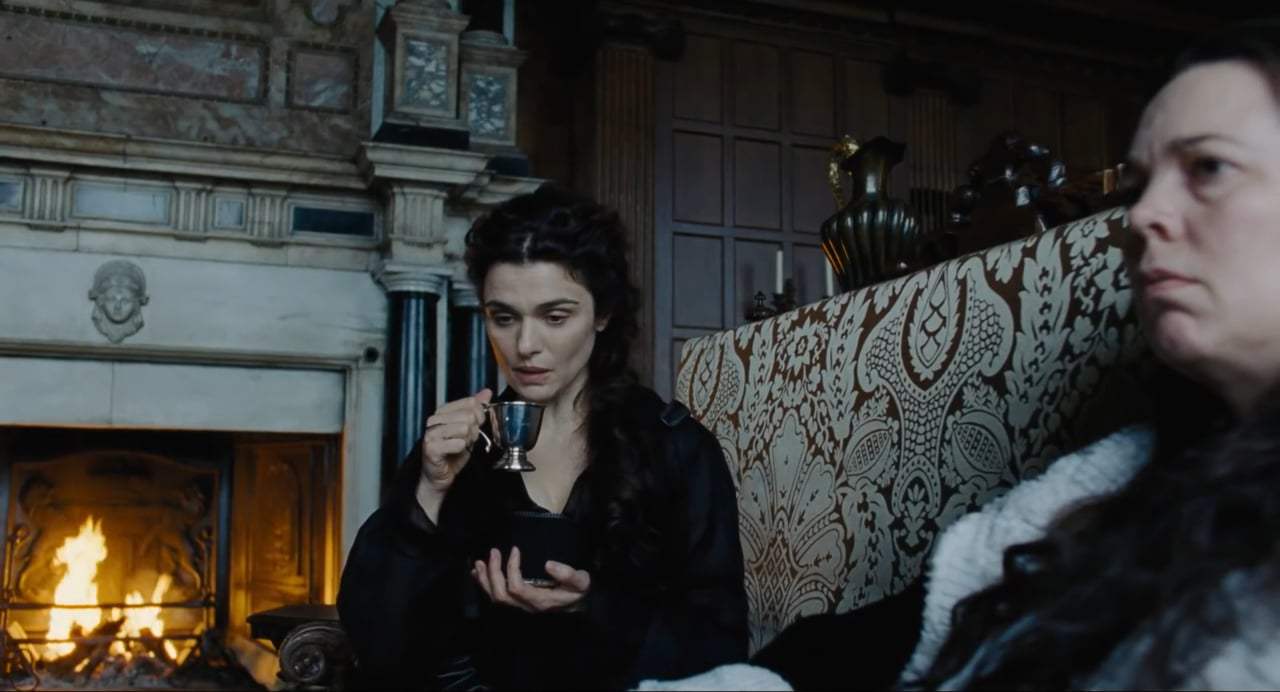

27. The Favourite (2018) [UK Theatrical Premiere]

Yorgos Lanthimos' follow up is probably made one of his weakest films, barring Kinetta (2005) his debut which was a weird little experience very different from his trademarks. It doesn't necessarily have the impact and risk of even the underrated The Killing of a Sacred Deer (2017), but there's stil a lot to admire in The Favourite.

There's also a perversity that I was able to see this film at a multiplex and that it won so many awards, including for Olivia Colman in the Best Supporting Actress category at the Oscars, when it's still a Lanthimos at its heart, a weird scrutinisation of human behaviour that just happens to be set in early 18th century England. Even if not as extreme as some of his other work, its sumptuous as the best of British period drama films this is technically part of, but with a profanity that makes it feel more alive than many. Even if now with screenwriters Deborah Davis and Tony McNamara, the dialogue is just as odd, the sex and violence when occassionally seen is just as striking, and the ritualistic behaviour is the same as any other Lanthimos character from before, be it Nicholas Hoult finding his inner Diva in full period appropriate costume and ridiculously big male wig, to the duck racing indoors among other activities of very bored and misguided gentry.

The result is still worthwhile even if his weakest, better than most peoples' best, and weird enough that you wouldn't have necessarily improved upon it if there was a scene with puppets either.


26. High Life (2018) [UK Theatrical Premiere]

Claire Denis' English language debut is probably one of her weakest films, mainly because outer space nihilism doesn't do it for me. You could probably accuse me as a hypocrite considering how misanthropic Andy Milligan is, but High Life's flaws is just how a bit predictable its cynicism of the human condition can be.

Denis too, like Lanthimos, cannot make a bad film however, and the best of High Life is the idea someone let her helm a sci-fi film with a high profile cast this risky. Everything that is memorable - the perverse ritual sex machine, the astronauts floating in outer space, the moments of heart in among the darkness of the human condition - are her best qualities alongside the sumptuous aesthetic and Tindersticks' Stuart A. Staples knocking the score out of the park. Another aspect, which rarely is mentioned with Denis' talent though, is her knack for great idiosyncratic casting, be it André 3000 from Outkast standing out to Juliette Binoche being as seductively evil as she can.

And of course, there's Robert Patterson. What a fascinating 2010s he had, starting off in the last Twilight films as an actor mocked for his role as Edward the pale sparkling vampire only to, from David Cronenberg's Cosmopolis (2012) onwards, to not only have a taste for idiosyncratic and weird productions, but is in fact a handsome matinee idol who is also an exceptional character actor. He is the kind of person, to keep the running gag for this part of the list going until it gets boring, could actually star in a film with puppets and a) have one of the best performances in it, and b) still be such a known name that, as with Twilight fans reading the source material for Cosmopolis, the possible future Batman star will draw people to his stranger and bolding career choices.

The decade has proven him with the last laugh, after all the mockery he and Kristen Stewart probably got for the Twilight franchise, she also going in a fascinating career direction, and his appeal is going to benefit unique and original voices like Claire Denis' in the long run. For example, the fact that my local former church turned art centre have The Lighthouse (2019) programmed in the upcoming months of 2020, alongside films that'll appeal to a mainstream greying audience, is all because of him in likelihood, all in spite of the fact all I've heard consists of it being a bizarre monochrome nightmare with Willem Dafoe stripping nude, and Patterson in-between masturbating about possible fictional mermaids and being threatened by a one eyed seagull. Even if his role in High Life wasn't also tremendous, he's a guy who I'm proud is a British actor who is good and loves taking risks like he has so far.


25. The Irishman (2019) [World Theatrical Premiere/Netflix Premiere]

With all the praise, articles and arguments over just Martin Scorsese slagging Marvel comic book films that has been generated by his Netflix produced film, let alone the same amount for this crime film itself, I think the truth is that for a three and a near half hour film, the only moment which really stood out for me emotionally is in the last thirty minutes. In a tale based on the real mob hitman Frank Sheeran, that final chapter touches upon something legitimately new in the crime genre as it eventually leads to his old age, forcing one to view criminals from the perspective of the end of their lives, possible jail time to illness and the weight of a life tainted by blood at the end of their own. Everything else is good, but not like this final half hour is.

That said, The Irishman is still a film of note, a handsome production made by a director more ambitious than people who are a quarter of his age. The cast are full of heavyweight who stand out, between Robert De Niro and Joe Pesci (returning from retirement) who are compelling in their roles, with Al Pacino the one standing out of such a strong group just because he steals scenes with premium scenery chewing as a petty ice cream obsessed Jimmy Hoffa, Even if it leaves the young De Niro looking like John Wayne briefly, the digital de-aging effects are fascinating too as a tool to try to tell stories which last over many decades. Certainly, after seeing Tom Hooper's Cats (2019), no one should be able to mock The Irishman even if you find the effect doesn't quite work.

Again, only the fact there are no puppet scenes is in hindsight a disappointment, (all spoken with tongue firmly in cheek), and far from a cheap joke, probably one of the biggest surprises and virtues of The Irishman is that, whilst its melancholic and weighted in Scorsese's Catholic guilt, it has so many hilarious scenes particularly with Pacino swearing the scenes blues that are also some of the strongest moments. If anything too, The Irishman's length, which has been criticised, is actually a virtue in forcing you to feel the weight of time, even though it only picked up for me in the finale, a film that feels worthy of it by being compelling regardless of the hype surrounding the production being a detriment for me.


24. Knife+Heart (2018) [MUBI Screening Premiere]

Yann Gonzalez reappears on this list, and honestly, the only surprise with this fascinating giallo set in gay porno culture is that it's surprisingly not as explicit as I'd presumed it could've been. However, in this tale of a female gay porno producer in 1979 Germany investigating the mysterious murders of her stars, this offers a fascinating new stem of ideas that will hopefully blossom in the 2020s. Namely that, in the 2010s especially, we thankfully got past the ironic neo-grindhouse pastiches to directors actually taking past pulp genres and turning them on their heads in sometimes very experimental forms. The best comparison to Knife+Heart is Hélène Cattet and Bruno Forzani, who also dabbled in the Italian murder mystery genre of giallos, Gonzalez as an LGBT director coming to this genre himself from a different direction of the gaze eroticising the male body and that, in mind the genre was always about style in the best of them, he runs with a smorgasbord of sensual aesthetics for both the eyes and ears.

Helping as well is that giallos, baring a few with good twists, were never really about their plots and could be strange and very erotic, sometimes just lurid and perverted, so here's a film where a rare breed of bird is a major clue, and that the eroticism is a thing of utter celebration with its porno chique. The music by M83 keeps the run of great synth scores on this list, thankfully a reminder that rather than a cheap way to evoke the nineteen eighteens, it's a thing of beauty next to such pretty images and interesting characters.

To see these genres being taken seriously by non-white, female and LGBT directors with high mindedness is only to welcome in cult cinema, especially when the results are great like this. Such a simple chance, a new perspective, is able to bring out some new layers to genres and hopefully more great films.


23. Burning (2018) [UK Theatrical Release]

Since the last film of Lee Chang-dong's I had seen was Green Fish (1997), a contemplative crime-drama film, and the reverse chronology Peppermint Candy (1999), this adaptation of a Haruki Murakami short story over nearly two decades later is a drastic change in pace for him upon catching up together.

Murakami has told a few stories like this in his career - down to earth and usually listless men, no going anywhere, who meet mysterious and beautiful women. The physical and emotional romance is going to end badly, he witnesses the worst of people, and like another tale or so, this even involves a cat as a major plot aspect. The major differences are that this is a South Korean director setting the film in South Korea, where there is clearly an entire layer of political commentary about the South Korean middle class that has gone over my head, as the mysterious woman is involved with a sinister rich man. That, and in being just under two and a half hours, Chang-dong turns a film that could've been much shorter into a slow cinema contemplative experience, stripped down to a realism and pace of time that could be extremely divisive for many.

Whatever the case for each person, Burning worked for me. That and the film has one of the scenes of the year in debuting actress Jun Jong-seo's dance sequence, which steal the film from everyone else, even Steven Yeun, a Korean-American actor more likely known for the likes of the Walking Dead series who doesn't feel out of place here in the slightest as the sinister rich man.


22. Under the Silver Lake (2018) [World Theatrical Premiere]

[Read review HERE] 

Following on from his abrupt horror smash hit It Follows (2014), David Robert Mitchell cashed in on his credit for a bizarro film, which in the history of American cinema usually is the brunt of harsh critical opinion, usually isn't a financial hit, but gets a cult following like Richard Kelly's Southland Tales (2006) did.

Under the Silver Lake is weird, setting this up when a squirrel abruptly drops dead in front of Andrew Garfield at the beginning, apt for a film where clues can be found in SNES video game magazines, Kurt Cobain's guitar makes a cameo, urban legends actually exist like a random dog serial killer, and that one should never disrespect the homeless. Under the Silver Lake does present a challenge that, as a gonzo noir influenced mystery with a Thomas Pynchon like obsession with tangents, the protagonist is a dickhead, a voyeur which is been an issue for some viewers as there is a lot of female nudity. I think the film knows this and sets this up by a) having him assault children even if they vandalised his car, and b) there's a scene where his voyeurism goes too far, with a drone camera watching a woman undress, only for the viewer to be stuck watching this one scene figure visibly in tears and undermine the gaze, a sigh of a film taking a risk by having such a flaw person capable of bad and good things as our guide to this weirdness.

Under the Silver Lake is also gleefully strange. I cannot envision a film in a long while, set in Los Angeles, where it references everything from old Hollywood cinema to REM. It also feels like the tide is changing, thankfully, away from eighties culture to the nineties, which could be unbearable as what I grew up in the decade with as a child gets rammed down my throat, but could also be much more odder. The nineties was also the decade where this type of weirdo genre hybrid cinema which dug into the far flung past, and also was found in other mediums like music, was the most prevalent aspect of the entire decade, so a film like Under the Silver Lake is hopefully not the last of these alongside something potentially god-awful like a Street Sharks reboot.


21. Occidental (2017) [MUBI Streaming Premiere]

[Read full review HERE] 

A film I wish I could see again, Neil Beloufa's Occidental is a very different film in that its very small scale, a tale of suspicion in a hotel between a small cast whilst riots are taking place outside, but definitely made in the 2010s with its lush neon, disregard for conventional genre structures and a sweet synth score. It proves as much an example of one of the past decade's most interesting features, that the old tropes and plots of yore, of suspicion as two mysterious men become the concern of the female hotel manager, when there's new voices who can approach it from sides that haven't until now been open, and with these playful aesthetic touches that add so much to the table.

Suffice to say that when we get to the top twenty in the next part, not only will there be less puppet jokes, although there are many films from the 2019 that were popular that might have been funnier with a parody of in such a form, but this aspect of Occidental, which also has the advantage of being less than eighty minutes, will be found running a gamut of genres and story types. Until then...

To Be Continued...

Wednesday, 8 January 2020

All This and World War II (1976)


Director: Susan Winslow

I've become increasingly frustrated with Disney's accusation of 21st Century Fox, as so many titles will likely be sat on as not being part of the House of Mouse's image. They are not good arbiters of preservation as even their digital preservations of films like Cinderella (1950) have been accused as practically altering the original work, so this is significant as particularly in the seventies 20th Century Fox produced some very idiosyncratic titles. They made the likes of The French Connection (1971) and The Omen (1976), but also oddities like Alan Arkin's only directorial feature Little Murders (1971) or Brian De Palma's musical Phantom of the Paradise (1974). Or anything Robert Altman made for them that wasn't M*A*S*H (1970) but also 3 Women (1977), based on a dream he had, and Zardoz (1974), the John Boorman sci-fi lunacy involving floating stone heads vomiting out guns, penis obsession and Sean Connery in kinky bright orange belts and nothing else. All This and World War II is a candidate for something that managed to be even weirder than Zardoz to have been bankrolled by the studio, and if Fox didn't destroy it themselves Disney are not the kind of company to let the public access these oddities freely.

Beatlemania is why it even exists. The Beatles were a cultural juggernaut in the sixties, a band who even when they stopped perfuming live and become more experimental in the late sixties still generated so much goodwill. Films with the band and based off their work in the sixties - A Hard Day's Night (1964) to Yellow Submarine (1968) - eventually bleed into the seventies when they disbanded in 1970, even a documentary about the notoriously antagonistic recording of Let It Be that lead to it in 1970. They had some diminishing returns, an early Robert Zemeckis film I Wanna Hold Your Hand (1978) more respected than say, Sgt. Pepper's Lonely Hearts Club Band (1978) where Donald Pleasant sang I Want You to the Bee Gees. All This and World War II is much more notorious in a way as, whilst many don't know its existence, it never got a release since its 1976 theatrical release.

The documentary tells the tale of World War II, from the late 1930s as Nazi Germany invaded countries and Britain's attempts at a treaty through Prime Minister Neville Chamberlain fell through, to the involvement of the United States in the forties. This material is told through archival footage and films owned by 20th Century Fox itself, such as Tora! Tora! Tora! (1970), a Japanese-American collaboration telling the tale of the Pearl Harbour attack from both sides. This is not necessarily a bad idea, as you do see a lot of the period in detail. You see just how offensive and ridiculous some of the propaganda in old films were outside the context of the Japanese being the US' enemy, as white actors portraying Asian figures is practically surreal and barely accomplished, and aspects of how life was in the States particularly at the time which add layers to the time period that you don't normally get. It provides real documentary footage of fascination, even those offensive films a curious touchstone when the USA felt it needed to villainize the Japanese the rally against them as enemies in real combat.

The film gets bizarre as this is scored to Beatles songs. There were plans to use the actual songs, but with the prospect of being able to release a soundtrack album, which did happen and lasted longer in public consciousness, the production got a who's who of mainstream seventies music. Even Status Quo, the English personifications of Dad Rock, cover Getting Better alongside songs by Rod Stewart, Tina Turner, Bryan Ferry etc. Even Elton John covers Lucy in the Sky with Diamonds, a song recorded before and ironically with John Lennon playing on it under a pseudonym.

The issue, and where All This and World War II falls off the rails, is that most of the song choices are utterly inappropriate. Sun King arguably makes sense as a double pun on the Japanese army, with their first ever emperor Jimmu said to be a direct descendant of the sun-goddess Amaterasu, and the Rising Sun on their country's flag, whilst Keith Moon singing When I'm Sixty Four is fun in the knowledge Paul McCartney wrote that song in mind to the type of music from an early era like this, but most aren't like this and fail. That I Want You is never used for a recruitment segment is a missed opportunity, nor Back in the U.S.S.R. when Soviet Russia enters the war, is just the tip of the iceberg.

From http://www.midnightonly.com/wp-content/uploads/2011/01/allthis2.jpg

Instead having I Am The Walrus covered by Leo Sayer over the Pearl Harbour attack or the Americans in the Pacific War in combat is absolutely perplexing, as you now have to consider "the Eggman" (written by Lennon as pure nonsense to trick listeners) are now armed. Only a few times do the combinations work. Rod Stewart barking Get Back to Hitler in the Nazis' losing finale, with footage manipulated to make him and the goose-stepping soldiers dance, is one of the only successful moments1. Most don't work because the lyrics are tonally inappropriate, the film making a misguided error to presume the chorus is all that matters, not that you still have to hear everything also. So Come Together is used for the involvement of the Japanese, whilst She's Leaving Home is used for the women working out in jobs or for the war effort.

The point of the documentary is a real question mark. It mainly comes off as nostalgic on the surface but streaks of subversion are found which undercut the entire work. It has a passage, significantly, which deals with the internment of Japanese Americans by their government which is a black eye historically for the States, a really bleak sequence of people being forced into camps, really racist language in newspaper extracts, and even signs of Japanese kanji or phrases from stores and cafes being removed and replaced. It's the best sequence but tonally alien to the film's whole.

That this production changed hands, director Susan Winslow not the original figure in that seat, probably explains a lot. Even some of the footage is jarring too. The aftermath of the Pearl Harbour bombings, and the initial footage showing the USA joining the conflict, inexplicably has a ventriloquist dummy enlisting in the army in a surreal publicity segment. Most of the film visuals tell a succinct tale under ninety minutes, but the juxtaposition with the music is at odds. Even if the documentary was meant to be very subversive, some of the tonal choices throughout do jar from everyone which does, with the former usually more frequent than the successes.

The result was, as mentioned, a film pulled after two weeks of a theatrical run. The soundtrack was much more successful, whilst All This and World War II fits the strange catalogue of films made in the seventies which were nostalgic for the times between the 1920s and 1940s, where Mae West's last film in her eighties was the car crash Sextette (1978), and old stars were repacked into TV and variety shows. This is a film, even with flashes of subversion, which is undeniably about the nostalgia of the era even if its accidental. The film also reminds you of how different a time the forties was, as stars like Jimmy Stewart are shown enlisting in the war effort, and even dealing with the racist propaganda films a peculiar nature is found of there once being a saneness to dressing a white man up and trying to pass him off as Asian as Charlie Chan's cameo attests to.

And the time capsule footage can be compelling, enough that this should've been made available.; even a minor tangent like the art painted onto airplanes, including some that would be too saucy to show outside colour footage that looks like home film recordings, has something of immense reward for me in terms of new details of the era. Seeing the ordinary world of the era, in among the celebrities and fictional war films, including a much appreciated James Mason cameo as a Nazi, is a virtue even if the film is structurally mishandled and the project misguided.

Abstract Spectrum: Bizarre/Haphazard/Nostalgic
Abstract Rating (High/Medium/Low/None): None

From https://i.ytimg.com/vi/nx_Wa-hpbjI/hqdefault.jpg

=========
1) Done later but done better, in its opening credits set to disco funk, of the wonderfully titled and awesome Czech sci-fi gem Tomorrow I Will Scald Myself with Tea (1977), a film deserving of a much wider fanbase and actual availability in the English language territories.

Monday, 6 January 2020

Rise of the Animals (2011)


Director: Chris Wojcik
Screenplay: Chris Wojcik
Cast: Greg Hoople as Wolf; Stephanie Motta as Rachel; Adam Schonberg as Jake; Nikki Preston as Samantha; Charles Bigelow as Grandpa
Obscurities, Oddities and One-Offs

Around the seventies, there were a lot of killer animal films. Sharks, bears, lepus, bees, piranha, supernatural bears and just every animal going nuts. Beyond the seventies, the Italians tried with Wild Beasts (1984), directed by one of the co-directors of the infamous Mondo Cane (1962), but beyond that the idea of the killer animal film these days usually have a whiff of Sy-Fy original film or a Sharknado sequel, a genre which appears mainly in shark films but is more common among the lower budget productions nowadays.

Rise of the Animals, envisioning this tale in Rochester New York, is however a micro-budgeted production which leads to immediate questions of how director-screenwriter Chris Wojcik was able to pull off a genre which, if clips of Night of the Lepus (1972) and its giant superimposed bunny rabbits say anything, wasn't easy to pull off back in a Hollywood film let alone here well. Some CGI animals, and many puppets is the answer. A gleeful amount of puppets are involved, to the point even someone who might find this all to be cheese, in which a pizza delivery guy with a male friend and a tough young woman find themselves in a zoological apocalypse, will still admire the chutzpah and fake blood being liberally split here. From the moment the film properly kicks off, in a scene of dear puppets attacking a house in the middle of the woods, it kick-starts film which already had its tongue in its cheek and charm fully.

It's a ridiculous film, but the experience of Rise of the Animals is of a micro budget film that, whilst isn't one of the most remarkable, does deserve a pat on the back for facing an obvious paramount obstacle (its budgetary restrictions), and manages not only to succeed over them but become more rewarding because of how. The film doesn't try to hide its silliness, not ironic but with humour set out when you see the first scene. A middle age woman having to fight her own cat, flinging a visible plush toy into a sink, alerting you that a lot of fake blood is going to be sloshed everywhere when the in-built trash compactor is used. Trying to rescue her son after this, there's the amusement of a Labrador dog, clearly gentle and playing in the scenes, covered in fake blood and being edited around to look like a killer chasing a child at the end of it. It sets you up for the restrictions at hand but how resourcefulness isn't going to stop the production. It's why these type of films win over fans.

The film doesn't try to hide the CGI either - a gorilla who is from a nineties edutainment video game if he went feral is a major set piece after all - but when used in this context, it works with a charm. And the amount of puppets and fake animal props, even though a surprising number used actual animal materials to built them, are great leading to some of the funnier and more rewarding scenes between a deer bellowing a death scream to killer turtles assaulting a canoe. There's a sense of cleverness and resource at hand happening parallel to absurdity, so that when the protagonists' go on a road trip to local a crush the lead has, there's enough to keep the attention of the viewer. Sometimes it's really captivating too, like the a horse attack that even if it uses a CGI one for the female lead to martial arts kick off its hooves, involves an actual horse riding alongside the actress in a surprisingly bold creative choice for the film.

Plot wise, its simplistic but in a quirky way. Our adventure starts with a pizza guy, having gotten to a party and meeting a very attractive young woman, having probably one of the most awkward and considered takes on a sex scene involving a premature conclusion, not played as a laugh at his expense but a surprising sympathy involved. I will say the film does have a moment where it gets a bit sexist in some of the comments, but it also has a female lead, another woman at that party, whose the most reliable and dangerous person in the midst of the animal apocalypse, someone who when manure hits the fan will fight to protect herself and gladly eat cooked rat off a stick if need be, a tough as nails character who is done without overdoing it as it common in significantly more high budgeted films, just an ordinary person able to strike a horse out cold in a way Arnold Schwarzenegger would be proud of. Even our lead's sometimes creepy lad friend obsessed with sex eventually becomes sympathetic as just a jokey guy in the midst of the lunacy.

Due to the budget, a lot of the film is restricted to empty country roads and woodland, following our trio, but thankfully there's both a cast who are likeable and have good banter to work with, and the location in New York state is very cinematic, so it fits for a film where every animal is dangerous to there to be some dread in wandering desolate countryside environments and fields. When it does get ambitious, it's something like the suburbia sequence which has cops dragging along a post covered in squirrels they've had to cull, a significantly good layer of the blackest humour to the film's open silliness. Even if the logic of the film, where one wonders if the insects have turned too among other things, is vague as a film, it has enough to make this premise work for a splat stick comedy.

Also in Rise of the Animals' favour is that it's only an hour or so long, which is a huge virtue for the film, managing to still have a fully formed narrative without any chaff. Considering disaster films, like Roland Emmerich's 2012 (2009), are notorious for padding and dull exposition, that this without the end credits manages to economise on its length in telling a story better is a blessing. That's also in knowledge that some micro-budget films, even though padding can be a virtue for fans of the work, can just drag even at one hour. Maybe this film was a one-off, but there's a delight in how with such severe limitations, you can still turn out a film like this high concept premise with the economy the restrictions face, and significantly more prudence in using said resources even in terms of not being a two hour film and straining itself.

Sunday, 5 January 2020

Best of 2019: Part 2 (41-31)


Link to the first part HERE.


41. Knives Out (2019) [World Theatrical Premiere]
Mystery stories have never really appealed to me because, once a mystery has been solved and there is no other reason to return to a tale, it's pointless for me for it to exist. The reason the likes of Sherlock Holmes became such a cultural legacy in my eyes was never the mysteries but because Sir Arthur Conan Doyle wrote interesting characters and memorable events even if the clues were spoilt.
Knives Out in reality isn't a film that really stands out once its mystery is solved, a film I'm surprised has garnered so much praise as it has because it is just okay. The aspect which is meant to be more profound, the politics, are utterly unsubtle and are a detriment to this playful world, with pleasures such as its aesthetic and Daniel Craig's earnest attempt to meld a Colonel Sanders /Foghorn Leghorn accent to a curious detective. The politics are entirely, in a tale about a legendary mystery writer being murdered, about the hidden racisms and greed of his surviving family and the plight an immigrant maid played by Ana de Armas has to deal with especially when the will is read out. Armas' character, to be brutally honest, is written for me really entirely about being a minority figure in terms of characterisation, rather than a character who just happens to be from a minority and is still  complex figure, having to put up with the racism especially when the likes of Michael Shannon arch over her ominously halfway through. That distinction really sets up the big issue and my confusion with Knives Out's acclaimed - Rian Johnson is a good ideas man but he's surface level with the material, not expanding upon it in more vivid and creative ways.


40. Us (2019) [World Theatrical Premiere]
Jordan Peele's second film could've reached higher up this list if the ending hadn't been so anti-climatic for me. I'll divide this segment into two paragraphs, the next with full spoilers. Here, I'll just say that for three-quarters of the length, this horror film about an African American middle class family being attacked by doppelgangers, as said doppelgangers rampage in the community on mass, has a curious and compelling blend of sci-fi conspiracy ideas, full blown supernatural horror and a damn good wherewithal when to sometimes drop in a joke, like when NWA's Fuck the Police makes an audio cameo. I think the film's political message isn't as profound as many might suspect, but horror can play with obvious ideas but grow them out in weird and grotesque views, so the idea of the folklore of the doppelganger becoming a parable of the under classes has a gleaming edge, especially as the lead characters they are attacking are African American themselves, well off figures attacked at their summer homes, rather than a white family as is usually depicted in American horror films. The perverse parody of an "arms across the world" American campaign for peace from the eighties is itself one of the better satires Us has - a reminder that not everything is clearly hunky dory in American culture decades later. Sadly, the film by its denouement doesn't become more ambitious and really push this premise to its strangest potential, let alone a greater intellectual one, by resolving it all too cleanly.

[Major Spoilers Onwards] 

I feel the film doesn't have a good enough third act to make this work thought. It looks like it's about to and in the best of ways. Underground escalators into a secret corridor filled world of the doppelgangers, found at a carnival attraction and thus evoking Malatesta's Carnival of Blood (1973), populated by an inexplicable amount of rabbits as it raising a torch to Yorgos Lanthimos' The Favourite (2019) from the same year. Unfortunately what happens, as I have found in a lot of films of any genre, is that it lacks the confidence to jump gleefully into a more ambitious film, thinking Lupita Nyong fighting herself to the death is enough when, for myself, considering how good her performance is there would've been a much better film, a great one, if Jordon Peele were willingly to go on even for just ten more minutes plus into an entirely different ending. Even an entirely different genre considering the film before, evoking conspiracy theories as much as horror, if need be as the film hinted at enticing little ideas. Sadly it didn't and I was left wanting.


39. The Wild Frontier (2017) [MUBI Streaming Premiere]
This is a particular heartbreaker to include so low as its co-director Nicolas Klotz is also the director of The Heartbeat Detector (2007), one of the most criminally under seen films of the 2000s. The Wild Frontier has its heart worthily on its sleeve, a documentary on the refugee camp in Calais in France which documents its end from the perspective of the refugees' lives. It's also three and a half hours long, and at times extremely unfocused, so any morally righteousness in the film and good moments are lost in less than perfect structure.


38. Border (2018) [UK Theatrical Premiere]
Border is just okay. Like Let the Right One In (2008), another John Ajvide Lindqvist adaptation, the source work offers a fascinating spin on mythology, in this case envisioning that trolls exist, following a female troll named Tina who was raised as a human being and became a talented border guard due to her senses. The story has enough of fascination - a complex romance, a very dark (but tonally well handled) tale of a paedophilia ring, a out of nowhere but brilliant gender subversion - but the film itself is just well made and not particularly distinct.


37. One Cut of the Dead (2017) [UK Theatrical Premiere]
Another film that is okay, though to Shinichiro Ueda's credit, his surprise Japanese box office hit does have an inspired storyline twist. I was quite bored by the first part, a one take zombie story, only for the film to eventually make that entirely worthwhile by suddenly negating the horror genre entirely but becoming a comedy farce about making a horror film and everything going wrong. This could easily climb in expectation, but the buzz and acclaimed the film had also proved its undoing, as while I thought it became a sweet and funny film, One Cut of the Dead is just alright in a list of much more ambitious and strange films, even if very flawed, from here on.


36. Too Old to Die Young (2019) [Amazon Prime Premiere]
If ever there was a work on this list, here a mini-series, which let itself down when it could've literally changed a director's career into something even greater, Nicolas Windin Refn's nihilistic slow cinema crime tale was it. Unfortunately, the moment the first major character is killed off glibly, Too Old to Die Young falls into the childish style and nihilism that has plagued his other work, alongside a problematic take on vigilantism which, even if it's clearly from a left wing perspective and targeted at fictional paedophiles, isn't defendable still especially when it's played seriously.

Which is a shame as I admire Nicolas Windin Refn - in fact byNWR, his streaming site, is an admirable achievement even if their catalogue isn't to everyone's liking, becoming a prized catalogue I need to properly invest more time in. And when I say Too Old to Die Young could've been spectacular, half or three quarters of this series was some of the best work Refn has done, offering a new weirder side to him which still had neon cold and death, but was wacky and deliberately confounding viewers. The s l o w n e s s of scenes. The police staging the crucifixion of Christ to celebrate a member leaving, as a truly odd opening scene to an episode. A balance between the violence and its darkness that was careful at first, and the various odd aspects including explicit supernatural details creeping in with Jean Malone's organiser of vigilantes and a living female urban legend, defender of women against men. Refn, with co-writer and co-creator Ed Brubaker, even managed to make a drug baron sympathetic, Episode 2 the best episode as within Mexico it details the slow illness and death of a drug lord, that doesn't hide he was likely a monster, but in his rambling tales of seeing Pele played football/soccer as a child gives humanity to him still.

When Refn succeeds, his work is weird and disturbing, but I have always held Fear X (2003), his notorious box office failure, as his best film from what I saw because it had a human emotional core which melded with the weirdness of the tone, something Too Old To Die Young promised only with significantly more violence and even slower to an almost trance like state. It tragically didn't follow through on that promise.


35. Cold Pursuit (2019) [World Theatrical Premiere]
Cold Pursuit was doomed when Liam Neeson did a certain interview early in 2019 with The Independent. The exactly details of the anecdote, when listened to, are Neeson looking back to a horrible side of himself where he admitted racist bias to black men after a female friend of his was raped, an incident he is ashamed of in a very difficult series of circumstances and in exposing a dark side of himself, looking back, that are completely abhorrent. I don't want to drag this blog post down into politics, but the controversy, whether you think of the actor, does both raise a question of a) what secret prejudices people can have that never come up to the surface except in extreme circumstances, caused as much by our upbringings and environments as it is deliberate behaviours, and b) the complexity particularly as the interview quote itself when heard is one entirely from remorse and regret from the actor, a confession in a lot of ways with a frankness which was inevitably going to cause this controversy because of how shocking the side he revealed of his youth was. Our inability to deal with these issues in their full complexity is just as problematic as the rise of racist language in our current culture, and while most cases of digging up old Twitter posts, a rare case of someone confessing his guilt having as much shock as it did means a long way to go is ahead in terms of dealing with these issues.

The film itself, when separated, is itself a much more complicated film considering Neeson's history in tedious renege films like Taken (2008). A remake of the director's own Norwegian film, probably the aspect that has stuck with me still, and shows this side in this dark comedy where Neeson's revenger is a hapless figure at first, is that everyone person who is killed gets their name, date of birth and death, and their religious beliefs (by symbols) shown on a black screen, which is sickly hilarious but eventually develops a mourning darkness to the joke. Details like this, or the evil villain having a subplot as still being a father, add a level of complexity I had to admire alongside its dark humour and the snowbound setting It's not a perfect film, but I could see myself returning to Cold Pursuit in the sense that, alongside the broad humour and tone of the Coen Brothers, this more complex view of this subject matter is far more compelling.


34. Pity (2018) [MUBI Streaming Premiere]
This Greek New Weird film, co-written by Yorgos Lanthimos collaborator Efthymis Filippou, was more highly regarded by me earlier in the year, and there is a lot to find compelling sick humoured tale of a man literally addicted to sadness and misery. I think though it was in bad luck to be up against films which took much more risks from here on. A lot of it won me over, the auteurism as much found in Filippou and his penmanship especially in the dark little moments, like the lead sabotaging a piano out of spite of happy music or trying tear gas on himself to cry.

It's also a film you'd have had on DVD in the United Kingdom from the likes of Artificial Eye in the 2000s. Sadly this is the case that I cannot really rewatch Pity to see if it was worth the glowing review of mine, as whilst it could be available on streaming, the day in the future you are reading this might show that might not be the case.


33. Joker (2019) [World Theatrical Premiere]
Joker is the film that at first seemed to be the superhero film that was going to ascend to a greater level than other films of the current decade I had seen, deserving its abrupt win of the Golden Lion at the Venice Film Festival, only to chicken out.

For half this film, Joker is something potentially profound following an ill man who is left abandoned by society and becomes a nihilistic psychopath along the way, one whose cribbing of Martin Scorsese was just a leaping pad for a film even emotionally touching as it was disturbing, as we even see in his fantasies of being on Robert De Niro's talk show, the lead who'd become the Joker is just a sad man who wishes only to be something, an idea which becomes toxic by a series of events and bad choices. The fact that this is a major DC Comics character wasn't an issue as superheroes have a plasticity which allow multiple versions to exist, and Joaquin Phoenix is as good a figure as you could get to flesh out this character in this unique spin. Moments of moral ambiguity and even sick humour stood out, succeeding.

Then the film plays it safe for the finale, a bland conclusion which leaves a film of what-ifs and a surprise that Todd Phillips' movie is as highly regarded as it has become when its another example of a production whose initial promise is squandered in the end.


32. Shakti (2019) [MUBI Streaming Premiere]
MUBI's retrospectives of directors can be some of the most rewarding even in cases where a director is tragically difficult to see the work of, as if the case of Argentinean director Martín Rejtman, who was a huge influence on the modern wave of Argentinean cinema in the 2000s getting off the ground so is immediately someone to admire before you get to the films. His work is mainly deadpan comedy - a gem like The Magic Gloves (2003), which follows various characters such as two depressed people who trade pills to an ill advised investment in the titular gloves when it suddenly starts snowing in Argentina, shows his style perfectly alongside his little idiosyncrasies, including one of my favourite aspects of him in how he makes a lot of jokes about heavy metal which I find hilarious as a metal head myself, be it a female character in Silvia Prieto (1999) being part of an odd avant-garde metal band who makes bird noises instead of singing, or The Magic Gloves which has the funniest and repeating of a man who constantly wants to show people a tape of metal on his loud sound system which could blow peoples' heads off.

Shakti is more subdued, more of a drama with lightness about a young man who has to accept the passing of his grandmother, connecting to a young woman whose potential romance with was strayed originally when she realised the food he had left in fridge was the last thing his grandmother baked. Shakti is also only a short, which makes the film sadly difficult to sell, but it manages to tell a full and fascinating story in such a small amount of time, including the fact that our protagonist comes from a Jewish background, which is not explicit to the plot but of interest in seeing food preparation and customs, the type of food cooked a major part of the plot as mentioned. It is rewarding, and only Rejtman becoming better known would be more pleasing to me as MUBI did a great service streaming these films.


31. Islands (2017) [MUBI Streaming Premiere]
Between this short film and Knife + Heart (2018), Yann Gonzalez has my attention as, a while since his curious film You and the Night (2013), he's returned and shown this fascinating side of being an LGBT filmmaker who is dedicated in subverting and manipulating genre tropes especially in terms of sexuality. Like a sensual hypnotic dream, less plot driven, Islands shows it hands when a killer jumps in on a male and female couple in the bedroom, looking like the sexier younger brother of Dr Freudstein from Lucio Fulci's The House by the Cemetery (1981), only to be won over to engage in a bisexual threesome, his deformed face drastically contrasted by explicit sex an immediate challenge to ideas of the body and beauty.

The short continues from this, and is significantly more explicit in its sexuality than the feature length films of his I have seen, with a young woman almost sleepwalking through a park where gay couplings are taking place, the pansexual nature of the material where male and female bodies are gazed over and are participants compelling as the aesthetic. Oh, and that Oneohtrix Point is the person creating the soundtrack for this is a poignant choice, the dreaminess of the film as encapsulated by that score as the visuals.

To Be Continued...

Saturday, 4 January 2020

Bubbles Galore (1996)


Director: Cynthia Roberts
Screenplay: Cynthia Roberts and Greg Klymkiw
Cast: Nina Hartley as Bubbles Galore; Tracy Wright as Vivian Klitorsky; Daniel MacIvor as Godfrey Montana; Shawna Sexton as Dory Drawers; Annie Sprinkle as God; Andrew Scorer as Buck Lister; Sky Gilbert as Rip; Peter Lynch as Dick; Ed Fielding as Jimmy Remington

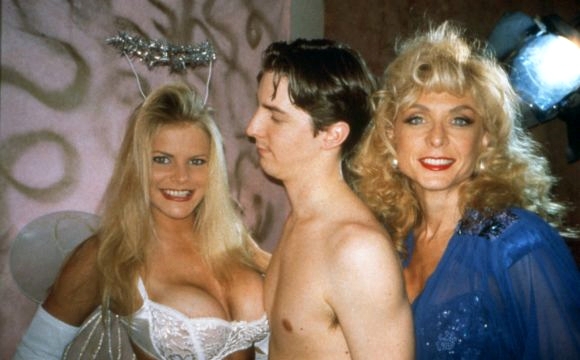
In terms of oddities forgotten in time, a Canadian comedy crime sexploitation film, set at Christmas, with real life adult film star and pro-sex activist/educator Nina Hartley as a former star turned porn director, with porn star/ sexologist Annie Sprinkle as God, is as idiosyncratic as you can get. It's a very low budget film with some quirks to say the least; those who can appreciate this however would get a lot out of a really low budget and resourceful pulp film that's difficult to categorise. Notably this is a film by a female director, who co-wrote the script, that's proudly sexy but hates its chauvinistic male porn producers and goons with a passion, which means the entire notion of the cinematic gaze in terms of gender is upended whilst being proudly feminist in its own erotic way.

I had no knowledge of Cynthia Roberts. I didn't even know the film was Canadian, set in a wintery environment around Christmas, until you see the red and white maple leaf flag proudly waving in one scene. Bubbles Galore is also very much an improvised production, stealing shots in a real hotel and outside environments, mostly set in rooms whose distinct bright lighting have a pronounced affect on the mood. It looks like a George Kuchar film shot if it met the mid-nineties - plastic colours, a fuck ton of pink lighting, and low budget digital layering effects are to be expected.

Premise wise, Hartley is Bubbles Galore, who is in the midst of trying to shoot a film with Dory Drawers (Shawna Sexton), who despite being a visibly voluptuous and attractive woman is a virgin, leading Galore to want to teach her to play the perfect innocent protagonist of her new film. Her assistant Vivian Klitorsky (Canadian mainstream actress Tracy Wright) is openly gay, a cynical person who is however in love with Bubbles, making her uncomfortable when Galore is more interested in Dory romantically during the production. A scuzzy porn filmmaker, who once had Bubbles as his star, is jealous and wants to sabotage her film to force her back as his property, even if it means targeting a veteran male star, now a drunk with erectile dysfunction, to plant a mole on her set.

Casting Nina Hartley was the film's wisest choice from the get-go. Alongside her work in pro sex education later in her life, Hartley is fascinating as someone who started in the eighties but is utterly different from the outsider's stereotype of what a female porn star. Looking closer to a school teacher, helped by a calm but subtly authoritative voice, Hartley in interviews has sounded as an incredibly strong voice, in the early nineties onwards making it a mission to teach sexual education to adults, and bucking trends in ageism as she still works in the adult medium. She could have also starred in mainstream cinema as she's good in the film. Really, really good, commanding a film where a lot of the cast can be broad, only Wright contrasting as the sarcastic assistant who shares a charismatic chemistry with her. Hartley is great, and with Wright, the large part of the film being a romantic tale between them makes the eventual honesty they show in their love for each other sweet.

In completely honesty, whilst I really enjoyed the film, Bubbles Galore is a mess at times, one which like a few micro budget films I've seen is obsessed with long scenes of nothingness. It's a playful indulgence you have to come to enjoying subjectively in the end to be fully able to appreciate this type of cinema, moments repeated and sprawling in a pleasure of insignificant things to the tip of experimentation. The best example, the closest thing (if done more) Bubbles Galore would've become abstract, is a never ending montage (with individual shots repeated over and over again) between Bubbles doing a sexy photo shot for a feminist magazine, the lead villain having an incestuous side revealed with a fantasy of his mother playing out, and what can only be described as two of his thugs roughing up the old drunken stud, to make him complicit to their goals, by pinning him to a hotel bed as one twists around his elephantine (and rubber) knob whilst the other wanks into his face.

The biggest surprise many would have seeing Bubbles Galore is, from a female creator, that it's a film openly embracing titillation and transgression, which will come as a shock as the 2010s onwards have seen this type of material as problematic, not even considering a women actually directing and co-writing it. The film is softcore, everyone barring Wright naked at times, with the exception of oral sex which I am going to presume, considering they are used at least for one character, is done with the male cast having fake stunt cocks. The transgression is much more shocking nowadays, especially as Bubbles Galore is meant to be a pro-sex comedy. The male characters barring the old stud, an old flame of Bubbles, are scumbags using some exceptionally sexist and crass language, objectifying women. There is, which is never explicit, a rape scene which might put people off, notably in mind however in a film where every female character is entirely sympathetic, always on the side of the underdog we route for, and literally under the eye of a female God with female dancing angels. So the film does come from a mind that the sex when positive is very positive,  fun on the porn shot with Hartley in a devil costume by a Christmas tree at one point and a hunky skinny guy in a bear costume, and Bubbles romances with two other characters played as romantic and sensual.

The result is a curious mix, coming from an era of indie transgressive filmmakers like Greg Araki etc. where bad taste and genre pulp were blended together, here with the notable difference however that it's a feminist film of sincerity and camp. The kind for an acquired taste certainly, but encountering a pro-sex film made by woman on and off-screen is certainly a distinction still, one full of vibrant colour and energy that wears its low budget with pride.

Abstract Spectrum: Camp
Abstract Rating (High/Medium/Low/None): None