Friday, 24 October 2014

Halloween 31 For 31: Repulsion (1965)

From http://4.bp.blogspot.com/_ACG6lH-LdJA/TIvbfe-1MlI/
AAAAAAAAAsA/1s5lkZhOXnE/s1600/repulsion1.jpg
Dir. Roman Polanski

A partial thread for the season has been as much about the position of a director in making a film. I am someone who follows the auteur theory, that a director creates a film through their desires for what it will be, but along with the fact that 1) some films I've seen have been made with their director clearly asleep on their directorial chair, and 2) that all the members of a film production crew have an effect on the final work, I add a modification of my own. That like a the captain of a ship, they have the final decision, the control, but everything that can affect the ship internally and externally can have a lasting effect of as much. It also means for me, even a greatly compromised or job-for-hire film production can still be connected to an auteur's traits because they represent instead them as people and their interactions with people like producers, adding layers to their creative web usually ignored or dismissed as going against such theories. This is a pertinent question here, for this season, not for a cerebral reason, but for a simply concern as a hobby - what films and their directors are more than ones I find to be good and view as my best, particularly when one always worries about wasting time on something merely average instead of something that's great.

From http://1.bp.blogspot.com/-9L8ziXhRbXc/UM9u4Ka7uhI/
AAAAAAAAAOY/oaVDwdfe7yU/s1600/repulsion1.jpg
This is skewered further because, when I develop an admiration for a director, in most cases I have a quirk where the least appreciated or obscurer films are the ones I gravitate to, to the point in some cases I find the most acclaimed and well known films for a director's filmography are the least interesting, even though I may see them as great films still. Barely seeing any of Roman Polanski's filmography, I'm in a position here rewatching this film where Repulsion is one of his most well known and acclaimed films, which could lead to a very different attitude to the film after viewing it. It's certainly a film with a strong artistically minded director behind it, but what did I think of the film by itself?* A young woman Carol (Catherine Deneuve) is living in late Sixties London, and it's apparent that something psychologically is wrong with her. There is a literal repulsion, a disgust in her for men that is worsening alongside a complete disconnect and hallucinations, becoming harmful for her state of mind. When her older sister Helen (Yvonne Furneaux) and her boyfriend Michael (Ian Hendry) go on holiday, leaving her along in their shared apartment, Carol's paranoia and fracture is released fully, leading to horrible results.

From http://3.bp.blogspot.com/_ACG6lH-LdJA/TIvbrI654yI
/AAAAAAAAAsQ/ROxAfefD-Ls/s1600/repulsion3.jpg
For the first half of the film, there is an odd sensation of watching a late sixties British film, which is a  psychological horror movie, that is very much a British New Wave film like Saturday Night and Sunday Morning (1960), a documentary influence and emphasis on characters like such films apparent here too. It's odd only in that the film is mostly known for its most delirious scenes, when the actual tone for the film has a drastic change on the content for two reasons. One, how this feels significant different from other Polanski films I've seen in tone but not in his obsessions, which shows the flexible plasticity of a director throughout their career, the other because Repulsion is not a  full blown horror, but a significantly different film between the two genres that has an effect on the material. The emphasis on drama, and a very realistic tone, makes the horror when it reveals itself to be more abrupt and more alien from reality, an added unreality to the mental breakdown that happens to Carol.

From http://www.best-horror-movies.com/image-files/
repulsion-coming-out-of-the-wall.jpg
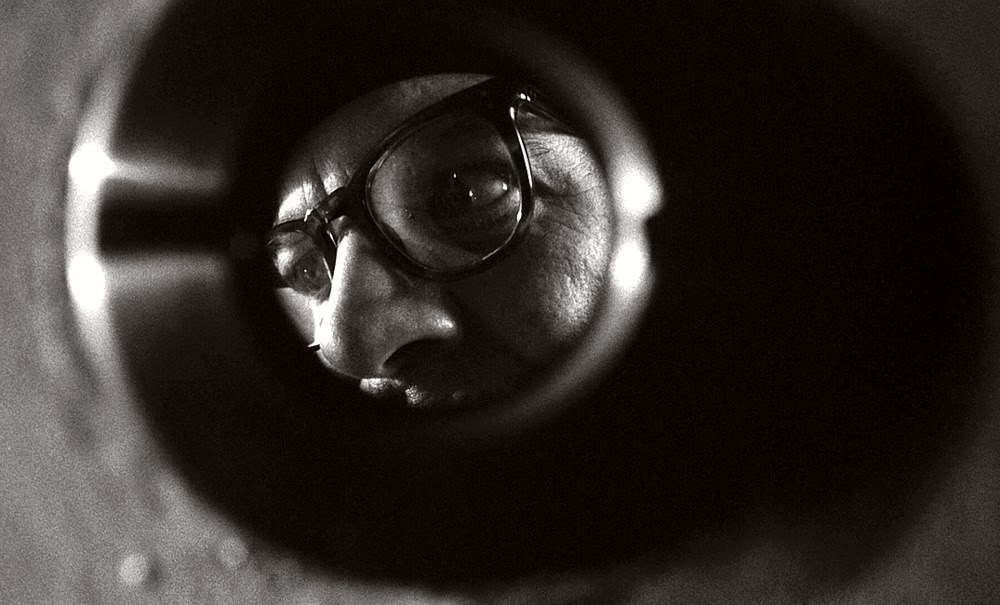
From here, the film dives into completely nightmarish territory while still having a foot in its realism. The apparent incongruous meeting of the realistic drama against hands coming out of the wall is vast yet a perfect melding here, ripe with tension as the trauma Carol has becomes more apparent. The sexual nature of the repulsion and most of the hallucinations is obvious, the terrors Carol experiences of a man materialising out of thin air in her bed and raping her like an incubus potentially suggesting this is a trauma of a sexual assault victim if depicted in a tone of a nightmare, if not that then at least a trauma heightened by how men, even the sympathetic potential love interest, leer at her or view her as someone to be protected. It never feels like a crass psychological study but something much more disturbing in how fearful she is of her environments, or cut-off from it, as much seeing it through her mind as from the outside at her. As she disconnects from the outside world, a testament to Deneuve in suggesting so much in her acting through little, the transition to her being completely isolated in the apartment, claustrophobic and decaying with a rotting skinned rabbit and disarrayed furniture, turns the film as far as possible to the abstract. Deneuve's performance, while with a solid cast with her, was absolutely vital to get right, and the porcelain beauty she has in the character, the quietness, the (frankly) virginal side to her against a clear, explicit sexuality  creates a character that is a completely three dimensional female protagonist anyone can put themselves into. More so as the trauma she feels becomes so obviously horror based and actual death is involved. The drama is kept of as much importance to add to it, still sewn into the horror, the down-to-earth tone adding to the heightened, unsettling content. In how quiet and casual the film is, only for moments to break the reality, and how reality goes against the unreality completely. A blatant, startling crack in the wall that appears in front of Carol, abruptly taking place, may be the best scene in the film for me at this point, a mere jump scare compared to other moments, a minor second of film, because of how this juxtaposition suddenly comes to be and how the film returns back to normalcy, adding to the skewered dread of what is happening to the protagonist. The film succeeds in creating a logic, real character profile but willing to go and create images that, in a bad tone, would be comical but here are disturbing.
From http://michaelklingerpapers.uwe.ac.uk/projectimages/repulsion/8.jpg
Abstract Rating (High/Medium/Low/None): Medium
The nature of the horror against its drama, with consideration, adds to a greater effect on the material, which by itself is already unsettling and unconventional in use and effect. By the end, it is subjective what is real for Carol and not baring a few things, the worst things to have taken place for her, adding to the darkness of the film. She becomes more sympathetic for it, by the end, as everything we see is through the perception of her being confused and disturbed by everything around her. From mysterious, threatening phone calls to a meeting by the landlord, the film escalates in its tone, mixing the realistic and the completely fantastical with full balanced between the two.

From http://33.media.tumblr.com/tumblr_m7ioxdCYIe1qdx4k4o1_500.gif
A Cinema of the Abstract film?
Repulsion does feel like it was created with immense consideration from Polanski, the question that is next being how the other films I'll see of his, for the first time, will match against this one. If I become a fan of the films of Polanski's will Repulsion be one I hold up as one of the best? Right now, I find it to have been a great viewing experience, able to appreciate it more than I ever did before. Certainly a film for this blog, one which is far more appropriate for it than I originally thought, about to give it a Low rating until I actually stepped back and considered how the subtlety masked how explicitly dark and unsettled the film really is. It's a film, in hindsight, that is now crawling under my skin, not through the viewing, but thinking of everything that transpires within it.

===============

*(In this case, I do have to mention the obvious controversy with Roman Polanski, because of the mid seventies rape charge, which was at the back of my mind even if it has nothing to do with the film watching it and purposely pushing the thought back at one point, not connected to anything on screen, but the unfortunate fact that it'll come to mind just thinking of Polanski himself. Aside from this, I can separate the man from his work, though he liked to bring in his own life into the tone of his work which will bring up some serious questions about some of his films when I get to them. He is an immensely complicated individual in his history, not to trivialise the issue in question, but we also forget how many controversial and sordid aspects of artists we tend to hide under the metaphorical carpet, not realising the human beings have sides to them which are immensely difficult to think about even if they've done good things not just in art.)

Thursday, 23 October 2014

Halloween 31 For 31: The Hills Have Eyes (1977)

From http://www.thebestlittlefilmhouse.com/ekmps/shops/tblfh01/images/
the-hills-have-eyes-original-teaser-quad-1977-artist-tom-chantrell--1686-p.jpg
Dir. Wes Craven

My interest in Wes Craven is still strong from the other film I covered for this season, but The Hills Have Eyes has been a film I'm apathetic to. A family gets lost in the middle of a barren American desert, only to be targeted by another family, living there, of cannibalistic killers, the madman Jupiter (James Whitworth) and his offspring, including the most iconic of the film, Pluto as played by the instantly recognisable Michael Berryman.  It's one of Wes Craven's most well known films, yet it's a film that's been shadowed for me by its 2006 remake which, while it's been a long time since I've seen it, still retains in memory far more of an impact on me out of the two. It's not helped I saw the remake before the original; this isn't necessarily the case with every film against its remake, the "remake" a controversial word amongst horror fans, but here there was something more necessarily vicious and darker in the remake that gave it teeth. Here, with the original, it's a lot more divisive about its effectiveness.

From http://static.uloz.to/cdn/c/9/X/xc9XQUU8.640x360.0.jpg
It's a bold film that's for sure, which helps it out. While a more commercial movie, it has the visual palette and feel of The Last House On The Left (1972), a coarseness with a vérité feel that does transfer here to a more accessible film. It's graininess gives it something that heightens the atmosphere of the film. The setting is perfect for the story, the original version retaining a great attitude to depicting it. A vast empty wilderness desert, the hillside littered with back breaking rocks and drops, characters having to wrap themselves through gaps in the formations. The occasional shot of fighter planes in the beginning, the only sign of life where there are not even many animals, the desert partly a bombing site, adding to the isolation. Wes Craven is a good director between this and The Serpent and The Rainbow (1988) in making good horror and thriller sequences, particularly here with moments that catch the eye, such as moving camera shots on the side of the family car's front wheel as it's travelling down a road, or when the family become stuck, in a moment of great frantic editing to depict the actual crash. It's also an immensely nasty film still in tone. While it's remake pushed this further, since it's first half, including the attack on the family trailer, is taken from this film almost entirely, the vicious side of the original version still sticks out. I can add a thread now in Wes Craven's filmmaking of incredibly sickening, uncomfortable violence, far from trivialising it but instead having a tangible sense of pain even in a more commercial film. With The Last House On The Left as your first ever film, this isn't surprising, but what's amazing is that when he became a commercial filmmaker, Craven didn't scale down the violence in tone by that much. One thinks of an iconic moment from A Nightmare On Elm Street (1984), the upside-down-on-the-ceiling murder, or the end of Scream (1996), a prolonged and incredibly bloody ending involving self stabbing and even violence in the humour in someone getting hit by a telephone, and Wes Craven has an uncompromising take on depicting it in his work. (So much so that Scream, while ironically, in breathing life back into horror cinema, lead to more teenager friendly films being made off its back, was censored for American release).

From http://3.bp.blogspot.com/-5_qemlVnL24/UI6slsETKNI/AAAAAAAAEsE/
EG54BCEbkDE/s1600/a18a3880ffb45e8691f8b924df23f5.jpg
In this film though the tension and horror around this violence doesn't feel that carefully done however, aspects here not succeeding as well as in other movies I've seen where Craven is at his best. While the tinge of seventies American genre cinema - where everything slows down, and unknown actors start to talk - has an enjoyment in it, here for such a short film there is not enough sense of threat and terror to make the film really work. Moments occasionally do. The family in the centre of the story, including two dogs, have emotionally dark sequences that the actors do their best to convey, which adds a connection to the film beyond mere brutality. The whole dynamic where one of the dogs becomes almost anthropomorphised, out for revenge against the killers, is ridiculous but adds an entertaining dynamic. The problem is a lot of the film can come off as very silly, undercutting its violence and darkness immensely. For once the age of the film does effect it, the seventies flares and hair incongruous against mountain men. The mountain men as well, the eyes in the hills, aren't that scary either. Berryman, while imposing, feels more of a Mad Max character, Jupiter is a burly bearded man, one of the sons covered in feathers and looks like a giant chicken, another a hippy gone off the pot, and the sympathetic female member Ruby (Janus Blythe) looks like a girl next door with her hair ruffled up and soil on her cheeks. The remake completely sidestepped this problem, adding a further twist in having them actual mutants as a result of generations of atomic testing radiation, and going for the lurid, horrifying character designs from this idea. There is nothing really scary about a hippy with a white man's afro even if, in a scene like the attack in the trailer, it's still disturbing to see innocent people brutalised and the events that take place to happen.

From https://blogger.googleusercontent.com/img/b/R29vZ2xl/AVvXsEj5bU6g0rzEVjGVVKdD2K24pwlReZWytYsIejTEx9VFpIK4TQQEVbQmCEDeR9FQcEmc4CgMCqEquF4Ar9LTqskhAFwXAvYlf5geAPtgJtd-16ey_RN_UaBhizPwjMyqRw2DcwzFtMgGNAIv/
s1600/Heroes+-+Beast+-+The+Hills+Have+Eyes+(1977).jpg
By its end, an abrupt ending, cutting to a red screen suddenly, the necessary tension was not there in this viewing, never feeling as if I should care for the remaining characters. After the main attacks on them, which are impossible not to feel sympathy for them, horror at what happens and Craven creating great scenes, when the tables are turned, the film falters and they are merely average characters played by actors and the film falters in tone. It's not just in comparing the film to the remake that undermines it, but that it's underwhelming by its end by its own faults.

From http://www.cultreviews.com/wp-content/uploads/2009/04/thehillshaveeyes-6.png
Abstract Rating (High/Medium/Low/None): None
No chance of getting on the list.

From http://basementrejects.com/wp-content/uploads/2012/05
/hills-have-eyes-1977-jupiter-pluto.jpg
A Cinema of the Abstract movie?
Well there's the infamous sequel to this film which is silly and was an utter production mess - that may be more interesting in turns of what I do for this site if its anything like I've heard about it. It's prequel isn't a film for the blog - especially in comparison to other films I've seen by Wes Craven or those I've yet to get to that sound the more interesting. In the previous review on a Craven film, I said that it would depend on the finale analysis what my thoughts on him would be, and there's a lot more films to see or rewatch before I 'm going to make a judgement, out of respect and with the potential that my opinion could vary on him with the abruptness shifts up and down of a  rollercoaster. I was left cold by The Hills Have Eyes originally and unfortunately this hasn't changed on a repeat viewing.  

Wednesday, 22 October 2014

Halloween 31 For 31: The Nude Vampire (1970)

From https://blogger.googleusercontent.com/img/b/R29vZ2xl/AVvXsEjfUZV_9Oh7tDAuS0MTQjQoBb2TrH5gQS7o5M7lqQxk4PPCt0hZ__FdzCPVoc3dizu-T2bN74Jhyx15-qBdf7KBaFSdBIjW_l0MQos0qEH5BjvNA22nsSea4wZgWRWCKLZvBaoDxSLpXtw/s1600/Nude+Vampire,+The_002.jpg
Dir. Jean Rollin

After falling over my words with the first Jean Rollin film to be covered, The Shiver of the Vampires (1971), I have a closer grip of why I like the director's work. It required asking why I've been drawn to the films I've been interested in, the sort of thing that would be a question for the whole blog. Feeling that I am too complacent a person, films that knock me briefly out of this complacency attract my attention. Political and serious message films fail because they are so easily absorbed into complacent mindsets. A work, not just cinema, even if it's a joke or tacky which causes my ears to prick up, or my eyes to widen, or pushes me into a brief state of confusion or surprise, trying to grip something which is unconventional and refreshing, is what has affected me the most. And it's been far more relevant to my real life than most educational or critically important documents because the irrational or strangeness forces one immediately to look at things in reality in a new light. Jean Rollin still isn't that popular, only a few in paracinema in his fan base compared to other directors, not given his due completely yet. He made erotic horror movies for the most part, with impoverished budgets and on the fly. He was more concerned in The Nude Vampire in mood and an intentionally vague narrative. But watching a film like this, you cast your eyes to conventional cinema, notice most of it is tedious in comparison to what curious things happen or take place in his films, even when they're trying to have serious messages, and realise in my case that Rollin, if a mere director of softcore lesbian vampire films, was nonetheless able to puncture one's view of how a film could be put together in a way far more entertaining, because he is completely unpredictable in his plotting, mixing genre together, and more rewarding because you aren't a passive viewer to his films, always reacting if through titillation, displacement by his lengthy shot times or thrown in a loop by the content of the films.

From http://4.bp.blogspot.com/_OuC7AtJmM8o/THGKeR8Tv8I/
AAAAAAAACRI/5r04nZm2Nqg/s1600/!The+Nude+Vampire+54.jpg
A business organisation believe they've acquired a female vampire (Caroline Cartier), the son of the company head (Olivier Martin) encountering her during her attempt to escape and doing what he can to try and rescue her. Her own kind make themselves known to help him, planning their own rescue mission while having interest in his and her being together. This plot outline is a mere minimalist interpretation, without spoilers, and doesn't show what tangents take place that may stump some, finding it all sluggish and fickle, beautiful and utterly enjoyable for me. Okay, let's be honest, as much of the joy with Rollin for me is the cultish nature of his work. The unpredictability. The unique take of the genre tropes. And the thing to not hide from the most, the eroticism, though without wanting to sound crass unless there's honesty to it, it's impossible not to feel desire for a person whose beautiful onscreen, in this case as a heterosexual man for beautiful women, regardless if they're naked or not. As with the other Rollin films I've seen, I don't fear having to justify this because the sexuality never feels like you're gazing at the actresses as mere meat, two dimensional figures for male viewers, the characters having active participation to the content and of great importance even if this is one of the more male driven films of Rollin's I've seen.

From https://blogger.googleusercontent.com/img/b/R29vZ2xl/AVvXsEiD5CwwRPEBHx7Y48kWMV88FbXQiFQ7RCidZCVCOgB4CvJ_UMo9cDF6goyJFXa5E-q5wSVeYYl-V0BaiTVZ7WmUfzPda_xmX-rg3HCnXHYmEZjBHVXIkiQOUlBV53nomFOI6O7SXOh9ZCeC/s1600/The+Nude+Vampire+naked+girl.png
With Rollin, both surrealism is an active force in his work, not merely coincidental, and his participation in a way of French cinema to make genre decorative and fanciful even when deathly serious is obvious. The first images, in a lab with men in red hoods and a woman with a blue bag over her head, caused me to think Rollin had suddenly turned into George Franju for a film. Turns out that wasn't far enough to go in terms of genre! From there you get men in startling animal masks and a suicide cult. Twins (Cathy and Pony Tricot) with ridiculous clothes, consisting of tiny blinds of discs barely covering their bare torsos, designed for their boss to play with erotically, along with Velcro skirts, during telephone conversations. Vampires welding burning torches for once, not the usual way around, storming people hiding in the library of a mansion in the countryside, and a plot twist that pushes the film into metaphysical sci-fi by way of Rollin's obsession with beaches. His style is disarming for those expecting the tropes he is using here - vampires, crime thrillers, even the Parisian crime stories of a Louis Feuillade - to be depicted as they are usually, his slow matter-of-fact nature, with mostly monotone acting, (the Robert Bresson comparison isn't that absurd as it may sound to most people), disarming the conventions and alienating those who want what is usually wanted in these films. But it's been inherent in French cinema, including Louis Feuillade for that matter, to both have mystery in their takes on genre and idiosyncratic in how the material around direct plot points are expanded upon and made of the most interest.

From http://www.dvdbeaver.com/film3/blu-ray_reviews56/
nude_vampire_blu-ray_/nude_Vampire_redemption_uk_dvd_00-21-22_cap06.jpg
In Rollin's case, the plot, continually talked of in dialogue, is concentrating on the material around it or makes the plot expedition part of the tangents by making it more of a texture than something of the more importance. Put it like this, in a one example of this which pretty much sums up Rollin's deliberate style, the moment where the protagonist's friend is brought into the events, over a phone call, is usually a minute in most films. Here, the concern before is of the camera being seduced by the friend's lover, a voluptuous black woman who is completely naked, the camera in extreme close-up on body parts, not directly and pornographically, but glancing at her as a goddess and a moving statue, and slightly further back shots to take in her languid expressions to it. Purely titillation on the surface, but as she gazes at the camera out at the audience, playful as she cups herself, pulling us in with her own intent, and wanting to seduce the friend, Rollin, having this play out for a few good minutes before a phone call interrupts the pair being able to sleep together finally, the protagonist needing his friend's help, is as concerned with mood of a sensual moment and everything else surrounding plot events as well as when the phone call takes place. Moments, not just the erotic ones, play out longer than they usually do even in the Italian genre films, basking in the inconsequential moments for other filmmakers. The plot is a game which is to be taken seriously but the participants are as much allowed to rest in the middle of important events, the obvious exception being when guns are shot or someone is stabbed, but immediately after, as in an opening sequence, a pause can take place, a lengthy, hesitant one, before a specific person realises they need to escape.

From http://s3.amazonaws.com/data.tumblr.com/tumblr_l9k4auHRwZ1qcvdh0o1_1280.jpg?AWSAccessKeyId=AKIAJP67HANH6OVWEMMQ&Expires=1414100288&
Signature=oWOh9bSplfPQYpUzH8Sv%2FUpKElI%3D#_=_
This plays out in the whole of The Nude Vampire, the contemporary setting of urban areas, office buildings, and lavish homes and mansions against the gothic and Parisian aesthetics creating a peculiar contrast. Everything feels new and oddly attractive because of it, going along knowing that it's a flush of motifs in a continuous dream, like Rollin's films are. Befittingly like the Italian-US mindbender  The Visitor (1979) - [reviewed here] - found, the importance of corridors and rooms, exterior urban streets and office buildings, as characters is immensely useful to add to the atmosphere of a film, always with an anticipation for a tuned-in viewer of a character stumbling onto a secret behind a door or a potential threat. As Rollin viewed women as even more of interest and of more importance in his films, though male characters as here are treated with importance too, anyone can have a gun pointed on another person, anyone can suddenly appear, of any gender, and be a being of importance and centre of a scene's importance. This means, as well there being no crass gender archetypes to get in the way, that things are much more interesting in Rollin's films for me because he's yet to get predictable, and that's far more a good night's entertainment as well as art because, even when repeating motifs, he is catching me off-guard and bringing out something exciting or an image immensely surreal in each new scene. Here, by the ending, he stumped me in taking his usual vampire film and turning the vampire plot, in his second ever feature film, on its head, the metaphysical science fiction, suddenly introduced with an amusing inclusion rather than pointlessly, undermining the vampire part of the film's title! The greater aspect of this is, barring the exceptions in his filmography, he rifted on the same types of horror film in all I've seen but so far has always made details different in each. The result that even in repetition, it never feels like he is becoming redundant.

From https://blogger.googleusercontent.com/img/b/R29vZ2xl/AVvXsEjLwrs5-wrD65JcpCupOn9YPqkYfb6J61ZVll1-__NmCEyjNIg780yu47xmA8JdLVxhQg-15gyvTk7Mm49-U_TtFEqAAeluf1dyY-YjrGHZ2ih0jA_EGEAJsw9rGa2HvdYkO2PEUMvUGPgC/s1600/The+Nude+Vampire+3.jpg
Abstract Rating (High/Medium/Low/None): Medium
Out of the two Rollin films so far covered on the blog in general, The Nude Vampire is the more "abstract". While The Shiver of the Vampires is closer to Rollin's conventional style - minimalistic in plot - it yet has more of a "mainstream" tone, a gothic vampire film plot in a Rollin movie. This by having a more wildly detailed story which shifts gears makes it more unpredictable. It's avant garde score by Yvon Serault, from noise to melodic pieces, is even more unpredictable than the moody prog rock of the other film. This feels a more freewheeling work which precariously juggles, even throws in, content abruptly, improvised, as it goes along that could've collapsed the whole film, but with an ending that unravels how the film starts, it stands out more. The more contemporary urban locations barring the last quarter in the mansion, while The Shiver of the Vampires was very gothic, adds to the abstract nature, horror twisted through then-modern day reality, to the point it becomes unconventional again. The openly mysterious and surreal ending, nearing the ballpark of David Lynch of a distance travelled into a new dimension between space, even with a thick set of curtains to go through guarded by a pleasant elderly man and women, is much more "quirky" and unpredictable than that of the other film, still going against expectations but still kept in genre traditions.

From http://www.rockshockpop.com/screencaps/NudeVampireBlu/12-1.jpg
A Cinema of the Abstract movie?
Obviously. The question instead is what'll happen as I connect his filmography together. Will any film feel too ordinary within it? Will new pleasures be found in the films I've already seen reflected through those I've just watched? And as for this film in particular? I found it immensely enjoyable. 

Tuesday, 21 October 2014

Halloween 31 For 31: The Visitor (1979)

From http://4.bp.blogspot.com/-IhK_9db3Sf4/TZ1TxQRXtjI/
AAAAAAAAH30/EEBd_dCKPhE/s1600/the%2Bvisitor%2Bposter%2B2.JPG
Dir. Giulio Paradisi (as Michael J. Paradise)

There's always a tinge of concern with viewing films that have become the new cult favourite which The Visitor has been in the United States before getting a release in Britain. Not because of an inherent bias but that they tend to be the more 'mainstream' and the least interesting films for me compared to those less known. The Visitor however has proven to be special. Contrary to the writing on it, the film makes sense. An alien of evil power was defeated but not without mating with human women, leading to the sole woman able to give birth to beings with supernatural beings, Barbara Collins (Joanne Nail), and her daughter Katy Collins (Paige Conner), a being with powers who, with her attitude, her killer pet hawk and death stare behind her pigtails, makes Damien from The Omen (1976) the mere toddler he is. A secret group of men, led by Dr. Walker (Mel Ferrer), want Barbara to have more children, using Raymond Armstead (Lance Henriksen) to try and seduce her, but as Katy Collins makes her powers known, individuals connected to actor Franco Nero sporting Jesus Christ's hairstyle, and a room of bald children, plan to stop the villains and bring Katy Collins to their fold, represented the most by Jerzy Colsowicz (film director John Huston).

From http://nerdreactor.com/wp-content/uploads/2013/11/Visitor1.jpg
Effectively it's a sci-fi twist on The Omen, part the mad Italian film it is, part the curious history of the paranormal in culture of it's era especially in the US of A. After the moon landings, (unless you believe they were faked with Stanley Kubrick directing the footage), the obsession with aliens and UFOs, the obsession with psychics, the after taste of hippy culture moving to New Age culture, Wicca, and Anton LaVay's Church of Satan mistaken as actually being about devil worship rather than anti-conformist beliefs. The thing that makes The Visitor weird is not that it's plot doesn't make sense, but the brew of all these strands with a film structured in a way that makes it much more perplexing. I can get around the back story dropped on you in the first minutes by Franco Nero as Space Christ, or how the film goes narratively, or when Shelley Winters, as a mysterious housekeeper interested in astrology and star signs, starts going into a vague topic on New Age metaphors with the director of Key Largo (1948). What's more off-kilter is the cuts between Barbara at the hospital, after being left paralysed from the waist down by an unexpected gift on her daughter's birthday, with her daughter doing gymnastics or the prolonged sequences with the director of Wise Blood (1979)  conducting bald men around semi-transparent panels like an installation piece. Or the unexpected incident at an ice hockey rink with older boys chasing after Katy Collins, only to turn into tragedy. The perplexing aspects of the film are trying to wrangle to potpourri of ideas, and films it's obviously borrowing inspiration from, into angles and shapes that are unexpected to the viewer. Very rarely does a film that makes no sense come off as fascinatingly odd, just tedious, the films that grab people having a tentative concept within them, even if you have to improvise a narrative for them, and going through the film adrift in the content. Here, every has a rationality to it even if you do have to wonder what was going on in the script. It's how it's presented that makes you go from this and become baffled.

From http://nerdreactor.com/wp-content/uploads/2013/11/Visitor6.jpg
Is it a good film? Well Henriksen has called it "a turkey made out of cement", but with no desire to insult the great and prolific character actor, if this is a "bad" film, it's still one which burns virtues. A technical beauty if any in terms of beautiful cinematography, sharp and startling use of editing, and memorable imagery and sequences. The opening scene on another planet in snowfall with two figures. The ice skating sequence itself in editing between the rink and John Huston going down the longer set of mall staircases possible. The masked men coming out of a truck, in the middle of the night, with a wheelchair nearby. The gruesome use of a garrotte wire on a certain piece of equipment and how the camera is angled. Too many images and sequences, inspired or bizarre, to mention. For a notorious film, produced by producer/filmmaker Ovidio G. Assonitis, of Tentacles (1977) and Piranha II: The Spawning (1981), this has a level of artistry that makes it impossible to view as less than an incredibly accomplished film. Even though it has quirks, this artistry undermines the notions of a so-bad-it's-good movie, because a film like this that runs rings around 'better' films, defined in terms of their plot and logic, is superior to them regardless. For its visuals, for its music by composer Franco Micalizzi, though some of it sounds like the score for a TV cop show, and it's eye for visual tricks such as a scene in a room full of mirrors. As a seventies film as well it is given an additional aesthetic boost. The use of locations, exteriors shot in the US, interiors in Italian, is distinct, of urban streets and modernist architecture, a sense of space and rooms that is bold and memorable. That's not to mention that materials within these spaces, from the clothes to the objects. Peculiar room decorations like a metal tree in one corner that catches your eyes, to the prominent use of a Pong game console, not only used in the plot for the first meeting of two antagonists, but with its giant green screen projected on the wall, tiny blocks of various sizes moving in different directions, almost becoming an avant-garde flourish by accident. All of this adds to the extraterrestrial tone of the science fiction, an era of sci-fi that is dated aesthetically through modern perceptions, but now having an alien mood to them, of then-modern futuristic office buildings contrasting against hot dog stands and the run down building that John Huston spends his time in with his troop of bald performance artists.

From http://horrornews.net/wp-content/uploads/2013/12
/The-Visitor-1979-Trailer.mov.0002.jpg
Yes, the film feels ramshackle at points, times where it nearby falls off the rails in its moments of esoteric gobbledygook. But this film is what the term "marvellous", as the Surrealists used it, might have been for, amazing in how it completely folds conventional filmmaking, or specifically films like The Omen and American paranoia thrillers, inside-out and lets you see the content in an inherently weird light. Plus it helps this is what, viewing it the first time, you'd want from a film labelled "cult". Despite my hesitance, Drafthouse Pictures and American hipsters were right on the money clamouring over this film. Where Paige Conner, as an evil young girl, turns the air blue with some of the obscene words she says or the threats she makes that you may have difficulty in doing now in films. Where another legendary film director, Sam Peckinpah, has a small role and it happens to be in a scene with the most emotional investment. Where one of the main tropes of the film are bird attacks, including one inside of care, or how, as mentioned, the first and very important meeting between two supernatural and cosmic figures is over a game of Pong. A film that has made me appreciate John Huston and want to see more of his films, utterly charismatic in his role and apparently the most charming and kind human being on the set according to the grown up  Paige Conner, his role as a cosmic visitor befitting a man with his legacy and even an accent that is referenced from that went from forties noir to films like this. Where Lance Henriksen, despite his dismissal of the film, got a lead role and in a film that actually has immense quality behind it. So much in this comic mess is too exhilarating for me to care about absurd things like logic when The Visitor is a fest in content I gravitate to anyway.  

From http://www.tribute.ca/images/videos/the-visitor-1979-10671-large.jpg
Abstract Rating (High/Medium/Low/None): Low
The one thing that may surprise some reading this is that I don't find The Visitor that peculiar in context of this blog. Down get me wrong, it's an unconventional movie alright, a weird little cosmos sci-fi film with tinges of horror. A downright weird film in fact, where you have John Huston and Space Jesus against a demonic girl and her pet hawk in the good and bad roles in the film. Of pseudo-religious monologues or a weird mechanical toy bird that talks in a creepy way, and how its all settled with the least expected deus ex machina and everyone being friends whose not human. It's content sieved through its structure makes it even more stranger, undercutting the logic of certain moments, causing one to be left in an unexpected position of what will happen. But it says something about the strictness of the rules for this and how high the bar is positioned in my blog that this is a minor Bronze of the rankings. It really says how more strange the films that get higher than this in the ranking are.

From http://cdn2-b.examiner.com/sites/default/files/styles/article_large/hash/f6/
69/f66994243a64541f0051b711433c9798.png?itok=KZaxWdY3
A Cinema of the Abstract movie?
Absolutely. This is the kind of film that the moment I hear of it I wanted to see it. That's it's been brought back from obscurity for people to see, relished upon, is a great thing, and the film didn't disappoint. In fact I was legitimately blown away by the film in its madness. Writing this, I have an utter glee in thinking about The Visitor¸ enjoying myself writing this review more than some of the others despite liking most of the films for this season, which says good things about this film in the long run. 

Monday, 20 October 2014

Halloween 31 For 31: The Masque of the Red Death (1964)

From http://wrongsideoftheart.com/wp-content/gallery/
posters-m/masque_of_red_death_poster_03.jpg
Dir. Roger Corman

Time for some Edgar Allen Poe. Having only seen two of his Poe adaptations, I can yet say the decision by legendary producer/director Roger Corman to make these films - appealing to a potential cinema audience for their lurid, baroque quality, but with intent for high art and production - was the best for him, able to succeed in both areas. The original short story of The Masque of the Red Death was only a few pages long, a mood piece, so a lot of additional material and a larger plot had to be added for a cinematic adaptation, turning it into a completely different type of story in fact, able to keep the main tone but be its own creation. The original set up is that Prince Prospero, played by Vincent Price here, has locked himself in his castle with lords and ladies, for countless days of dining, decadence and dancing, away from the Red Death, a plague that is killing off the population outside the walls. Here though, Prospero is also a Satanist and a cruel lord who doesn't care if his subjects in the village all die out, blaspheming against Christ and revealing in brutality for entertainment. Devil worshippers may be outraged, but no one would complain when it means Price is cast in the role, deliciously evil and throwing a punt kick verbally at the Christian God occasionally that does sting. Holding village girl Francesca (Jane Asher) captive, with her father Ludovico (Nigel Green) and fiancée Gino (David Weston) in the dungeon, he plans to have his way with them, not knowing that the dreaded spectre of the Red Death is just outside his castle walls, personified by a mysterious figure in a blood red gown covering his face.

From http://4.bp.blogspot.com/-5bfweOtptec/UF61YIfZqGI/
AAAAAAAAFAw/6C4opbqmlBc/s1600/masque+of+the+red+death+2.jpg
The resulting film is a gleefully macabre yarn, a ridiculous film in tone, but never kitsch because it's made with a real artistry. It's a serious film in its plot yet is entertaining as expected with Corman in a very accessible way, comparable to many of Vincent Price's films that have a tongue in their cheek without laughing at the content within them, a playfulness alongside the gristly material. Price is compelling, as to be expected, twirling his moustache as an utterly evil yet charismatic character, as is the individuals on mass that are revealing in the blissful decadence, including Patrick Magee as Alfredo, a Lord who is to be humiliated by the dwarf Hop-Toad (Skip Martin) in Prospero's staff in revenge for the humiliation of someone close to him. If there is a problem with this film on the surface, the actual heroes of the film, played by Jane Asher, Nigel Green and David Weston, are not charismatic at all, the paradox being that we're supposed to see characters like Prospero or his wife Juliana (Hazel Court), who is going through a ritual to become a bride of Satan, as the villains but they're too compelling as onscreen beings and in the people playing them. Instead, the reason the film is entertaining is that it delights in extremely dark content that is surprisingly nasty still, including an unfortunate event of an accidental fire, without become misanthropic and losing the literary tone. In place of Poe's masterful construction of mood, you get an excited ghoulishness to the proceedings, the film as much rolling in its own gristle as it is still a film with an important tone.

Fromhttp://1.bp.blogspot.com/-iWID6J0_L_I/T9ZPlp5FDLI/AAAAAAAAAfY/
A-rPR44wVuM/s1600/masque-redeath-blacktemple.jpg
The production design and look in the other Corman-Poe adaptation I've seen, The Fall of the House of Usher (1960), was special but here the original story was a godsend for the aesthetic design. A key theme of the story is colour, Prospero having seven special rooms, four or so here in the film, all based around a single colour each - same coloured decor and lighting the same colour - except for the last, a black room which yet has a blood red light coming through the crucifix shaped window. The colour obsession is taken further in the other rooms in the castle and how everyone is dressed, before and during the masquerade. A film like this is what colour was made for in cinema, an already good film made even better by the striking use of colour. The sense of scale and tone for the entire narrative, the care taken in creating the setting and the details within it, is the masterstroke for the film's qualities, the care taken showing in the film and adding to its virtues. The entire film takes the Gothicism of the original story and adds to it the many rich aspects of horror cinema, anything from a reference to Poe's story The Raven twisted further along into a ghastly end for one character to a dank dungeon. There's even a psychedelic sixties trip sequence that just happens to surround Satan and a sadomasochistic ritual. The film takes on an occult vibe by its end that is drastically different from the tone of the original story, from the final masquerade as depicted almost as a dance of death to the reveal of what the red gowned figure, who is always with Tarot cards, is part of, adding atone for the final that is beyond the stereotypical good and evil plot set up originally but something much more darker and contrasts from the playful tone of before.

From http://www.mgmchannel.com/data/uddir/
files/view_13_MASQUE-OF-THE-RED-DEATH_jpg.jpg
Abstract Rating (High/Medium/Low/None): None
Out of the films of this series that haven't gotten onto this list, this one does become more and more befitting the concept of "abstract" as it goes whilst still sticking to a strict narrative, becoming more and more about the metaphysical with extra emphasis on the supernatural forces in actual control, where the real force behind most of the narrative is also the being that brought the Red Death to life in the first place. Despite not adding an odd air to the film, the fact that the heroic male character is merely a background character as the story finishes, and the story goes away from the good Christians versus evil Satanists drastically by the final scenes, does come off as an unexpected shock and gave me something to smile about as the film went against my expectations.

From http://sensesofcinema.com/wp-content/uploads/2013/05/
The-Masque-of-the-Red-Death2.jpg
A Cinema of the Abstract film? 
The other interesting thing about this sort of film is that, between these films and those of the later Sixties, you'd see a transition to the more explicit and adult horror films by the Seventies, this nonetheless still a macabre movie despite its age, and moments in terms of the violence and the sexual content give an early sign of what was to come in the genre internationally. The emphasis on style as well here is something that would continue on in the likes of European cinema. The film itself was worthy covering and Corman's career is interesting by itself to be worth discussing. 

Sunday, 19 October 2014

Halloween 31 For 31: The Serpent and the Rainbow (1988)

From http://projectdeadpost.com/wp-content/uploads/
2013/05/TheSerpentandtheRainbow.jpg
Dir. Wes Craven

Lucio Fulci's Zombie Flesh Easters (1979) - [review here] - brought zombies back to their Voodoo roots, but this film tackles the origins of the folklore, not of "destroying the brain" or gut munching, but Haiti and people being brought back from the grave as slaves to sorcerers. The Serpent and the Rainbow is an adaptation of a non-fiction book of the same name by ethnobotanist Wade Davis, but especially from midway through, its best to see this adaptation as a Wes Craven horror film first. Ethnobotanist Dennis Alan (Bill Pullman) is assigned to Haiti by the pharmaceutical company he is working with to investigate an incident of zombism with the help of a local doctor in the region Marielle Duchamp (Cathy Tyson of Mona Lisa (1986)), specifically in the hope he brings them back a biological explanation for the phenomenon that, in chemical form, they can sell as an anaesthetic for medical purposes. As he and Marielle become more closer romantically, and he comes across a witchdoctor, Louis Mozart (Brent Jennings), who may help him acquire a zombie creating powder, he also unfortunately encounters the secret police of the country. The film is set during the last year or so of Jean-Claude Duvalier, son of François "Papa Doc" Duvalier, both notorious for being dictators, the main antagonists for this film being a fictionalised version of the Tontons Macoutes, a paramilitary force active between both reigns, personified in the film as Captain Dargent Peytraud (Zakes Morae), leader of the group who are willing to kidnap and torture people, but with an added force in that Peytraud is a black magic sorcerer of immense power who heads a group of loyal worshippers in the dark arts, who may in fact have captured souls of some of their victims and turned them into zombies amongst his various crimes.

From http://www.100yearsofhorror.com/storage/serpent_and_the_rainbow-1.jpg?__SQUARESPACE_CACHEVERSION=1394546307233
The obvious issue between a non-fiction novel becoming a horror film which is effectively about scary black magic versus good heroes is that it does sound like typical mainstream cinema where the heroic white male comes in to rescue the minority victims of another country and have the local female character, tough but sexy, fall in love with him. The film thankfully avoids this by having a sense of scale and detail, because of the subject matter, which prevents this from happening. The flaw with the film is that it's a conventional horror film at its core, not necessarily an issue in terms of the results but that aspects of the film aren't as creative or engaging as they should be. What makes it interesting is the subject material itself and when the film becomes more of a horror story at the end. The subject matter lifts the film up immensely. When films invoking zombies usually means the brain eating dead, a rare film which takes them back to their origins is something of interest, especially as they are merely a part of a bigger, real mythology from Haiti and Voodoo culture, which the film takes pains to describe and explain for a curious viewer. The zombies themselves, the few included, are people who seem to have had their minds taken from them, able to commute still to others but in a state adrift from everyone, petrified statues that can still walk. They merely are a piece of a film that is more about the supernatural and occult magic. Of souls being taken by evil witchdoctors and ritual combined with motifs common more to Hollywood cinema - nightmares about living corpses, jump scares - that nonetheless do work. It's a film working with an entire brand of religious practice and mythology rarely seen in the genre, and while it may be slightly dodgy in terms of making it more cinematic rather than the accurate reality, the fact remains that the entirely different set of symbology being used is helpful to the film, reliving it from the dust of more frequently used symbology of other supernatural and religious beliefs that have become dulled from overuse. This is as interesting seeing Pullman's character getting involved with Mozart, and the play between them before the later finally gives in and lets Dennis Alan in on how real zombie powder is made, as it is in him being repeatedly threatened by the Tontons Macoutes. Admittedly the fictionalisation of real life events for more dramatic purposes always has an air of tastelessness in not careful, as the revolution that took place in Haiti in real life ends the film, though in this case it's never trivialised baring a teaspoon of syrup, and the decision to make Pullman unable to stand up to the group by himself, capable of being harmed by them in a sequence with a eye-watering use of a nail that you rarely see male heroes in films endure, adds a nice dramatic tension, both in that the white foreigner is not going to be able to merely get by because he should as the white hero in an Hollywood film, and that it's as much the magic that is of importance for the ending.

From http://img.rp.vhd.me/3349321_l2.jpg
The other virtue is that, as the supernatural and black magic content increases, the film develops the same tone as A Nightmare On Elm Street (1984) where a creative dismissal of tangible reality is used in favour of the scares and how the symbology is used in the film. Wes Craven is an odd director in terms of someone who has become a "Master of Horror" cinema, from the same era as George A. Romero or a Tobe Hooper. While with a Hooper a trademark is obvious, and someone like Romero  or John Carpenter has a consistent interest in particular themes, Craven has been all over the place in the type of films he's made - from the repulsive shock of The Last House On The Left (1972) to the meta-slasher Scream (1996) - and does feel more like a working director who follows trends then particular obsessions. I've seen a few films, but there's no sense of a clear through line yet, and it's strange, unless I start giving his career and full overview one day, that he could go from The Last House On The Left, to this, from The Hills Have Eyes (1977), to a musical drama Music of the Heart (1999) aside from the fact that he merely works in films as just a career, a dangerous word to use as it sounds dismissive, but for me in this case means that Craven would probably not care about auteur theory as long as he made films he thought were good. There is one thing, though, that does feel like a consistent trait of his, and it's the creative dismissal of tangible reality that I've already mentioned, the film effectively transforming into A Nightmare On Elm Street as the hallucinations being used against Dennis Adam as a weapon increase when torture isn't enough. Whether the film works as a successful adaptation of a book that was a document of a real case of zombification is really up to debate, that and as a serious dramatic film, but as an entertaining horror film, it does kick up into high gear and a better quality when the hallucinatory and supernatural aspects build up. It's more enjoyable then rather as a popcorn flick, but far from dismissive, Wes Craven has always had a talent for unsettling and creeping out the audience. My inability to find a consistent through line is more because I've yet to see all his work, someone who has dabbled in many types of film, and that doesn't detract from him being a good creator of tension and scariness.

From http://movieboozer.com/wp-content/uploads/2013/
10/the-serpent-and-the-rainbow-zakes-mokae1.jpg
Abstract Rating (High/Medium/Low/None): None
There was no chance for this to be added. It's more nightmarish sequences certainly have a flair for them, but not enough for the list, and the rest of the movie is a conventional horror film.

From http://1.bp.blogspot.com/-aW1bTOKgkww/UmUkyd10duI/
AAAAAAAABvE/pcpTeaZpyd4/s1600/serpent-and-rainbow.png
A Cinema of the Abstract movie?
By itself, The Serpent and The Rainbow is an underrated little horror film, not the best but with a lot to like. The really interesting thing for me, with the above question, is this film's place in terms of building up a director, Wes Craven, by what his work is in quality and content. Whether his career has been consistently good is up to me watching everything and seeing what I enjoy, include films that others would be aghast at. Whether any of it has any interest for the blog's theme depends on the films I've yet to see, but as my interest in Wes Craven has become significant, to be able to see how a director can shift over multiple decades in their work is always something of interest. In this case, it's nice to see a topic rarely done being made into a film, and while not perfect, it's still considerably good.

Saturday, 18 October 2014

Halloween 31 For 31: Dr. Jekyll and Mr. Hyde (1941)

From http://www.doctormacro.com/Images/Posters/D/Poster%20-%20Dr.%20Jekyll%20and%20Mr.%20Hyde%20(1941)_02.jpg
Dir. Victor Fleming

There would eventually be a film in the season like this one. More so that, as this proves, it's not a good idea to cover two films based on the same concept or a remake unless you want to contrast to the point on purpose. It's definitely not a good idea, as here, when this feels like an almost exact remake of the 1931 adaptation with the same plot structure, when you wished going into it the film would take a different spin on the material. The worse thing is that the studio funding this adaptation, MGM, bought the negative for the 1931 version and keep it effectively suppressed, thus adding a worse shadow over their take on the Robert Louis Stevenson version decades after when putting the two side-by-side. It's the exact, same narrative only with different emphasis in aspects and material added that makes it longer. Instead of Fredric March, it's Spencer Tracy as Dr. Jekyll trying to split the good from evil in mankind's minds through chemistry, only to find an elixir that turns himself into Mr. Hyde, all his evil in a personified form. The frustration of being prevented from marring his fiancée Beatrix Emery (Lana Turner instead of Rose Hobart) pushes him forwards to becoming Hyde repeatedly, whose interests lay with bar maid Ivy Peterson (Ingrid Bergman instead of Miriam Hopkins), and in control develops such an influence that Jekyll can turn into him without need of the chemical compound.  

From http://www.spookyisles.com/wp-content/uploads/
2013/06/Spencer-Tracy-as-Dr-Jekyll-and-Mr-Hyde.jpg
While it was an acclaimed film, and an impressive movie for me to first see, Rouben Mamoulian's 1931 film does quality as a the "vulgar" of the two versions, a Pre Hay's Code film that got away with more explicit content for its time and, with Hyde as a literal ape man, was completely comfortable with being a ghoulish horror film as it was a serious literary adaptation. The 1941 take is the "respectable" version, the same narrative beats filtered through a glossier tone. Said 1941 adaptation is...the dullest film of the season so far. The fact I've viewed it next to the previous version is to its detriment, as I originally feared, but it's also noticeably weaker despite this, showing me aspects of cinema that I am not a big fan of, from this era of cinema to now. The elaborate use of cinematic grammar from the first version, including first person scenes, is gone, a more basic and conventional grammar used instead common in American films of the time. The film looks beautiful, to its credit, but has a gradual pace which drags immensely, without a style to it that can further intoxicate the viewer. I also find myself seeing, even with great actors in the roles, how bad casting choices or strained performances can so badly effect a film, especially in the worst cases when the film is trying to be overtly important in tone. Controversially, the worse case of this in with Ingrid Bergman as Ivy Peterson, a great actress who is yet the weakest part of a film full of immense flaws, nowhere near as good or charismatic as Hopkins in the 1931 version. Because of this film's sanitized tone, Peterson no longer is a very flirtatious "loose" woman who is yet lovable and sympathetic, but a more "respectable" bar maid, played by Bergman with immaculate hair and soft focus lighting on her, the character becoming an arch, serious performance I've come to find hollow and painful to watch in movies. This is worse when, with Peterson,  you're supposed to find the character deeply sympathetic and watch on at horror when she is abused by Hyde. This is a problem with the cast in general. Tracy doesn't do bad as Jekyll, and his Hyde, not an apeman but with a maniac, toothy grin, is certainly trying to bring something sinister to the film, but it's against some less than memorable casting and performance choices. Jekyll's colleague Dr. John Lanyon (Ian Hunter) who makes an awkward leap from a jovial chum to seriousness when he discovers the truth, or Lana Turner as an ineffectual stand in for Rose Hobart, admittedly having some additional dramatic meat with extra scenes, but left as a stereotypical blonde innocent on camera.

From http://1.bp.blogspot.com/-Zn1wqVF571w/UjNiaZ0wa3I/
AAAAAAAAFHA/sgP4HJ-SLOg/s1600/Jekyll-and-Hyde-(1941).jpg
What's the real kicker is how the word "sanitised" is really felt throughout this film. It dances around content the 1931 took on bluntly. Peterson's domestic abuse is made more convoluted in presentation when, before the Hay's Code was enforced, the original take didn't hold back on the severity of the situation, of her emotional shock up and covered in bruises. The original version was sexually frank, tinged with the greater "vulgarity" and while done with great seriousness, did share a tone comparable with the Universal horror films of the time, in balancing the seriousness with being a horror picture to creep the audience out with. Also it was more subtle, despite one or two moments of hysteria, able to give the viewer a real gut punch in its message about the futility of separating man from his evil side. Granted, the 1941 version does have an interesting additional scene of Jekyll explaining his theories to an increasingly outraged set of dinner guests, but this is also a film where, to show someone has become evil due a mental disturbance, they are shown shouting at a preacher in a church about preaching rubbish; considering how Christianity, from my vantage point, is more self critical and progressive than it may seen to be, this being the first scene of the film is a warning about the streak of quaint, but eye rolling, conservatism added to the story. That and the scenes with Jekyll talking to a jolly, older guard about a comet about to collide with the Earth and the old man's philosophy of positivity. We have to blame former Postmaster Will H. Hays for this sort of damned lifelessness.

From http://www.rowthree.com/wp-content/uploads/
2013/10/OctoberDrJekyllAndMrHyde1941_7.jpg
Abstract Rating (High/Medium/Low/None): None
The film does attempt at something more artistically unconventional with the transformation sequences, resorting the dream imagery with a Freudian bent. Bergman and Turner as horses being whipped by Hyde, and images on top of other images. It's interesting, but not only doesn't hold a candle to the first transformation sequence in the 1931 version, but for all its lurid aspects, Rouben Mamoulian's film was able to depict symbolism in much more subtle ways. Rather than broad metaphors, an image of a pot bubbling to the point the boiling water inside was coming out violently was vivid a depiction of Jekyll's mind. The rest of the film never tries any of this sort of obvious metaphor, so it doesn't quality for the list anyway.

From http://2.bp.blogspot.com/_xNsN3z6nkO8/S55tH3gOXuI/
AAAAAAAADCc/-x1SIF3Ws3Q/s1600-h/dr+j2.jpg
A Cinema of the Abstract movie?
If I am to watch more horror films from the 1940s, I don't want films like this that feels stuffy and stale. I want films that have the energy or the atmosphere you get in films from this era. As much as I don't want to bang on about the 1931 version again, by itself on this first viewing, this version fails in comparison nonetheless. It was tedious to sit through and I needed to pause it a few times to get through. I recommend the other film far and away before this one.