Saturday, 18 April 2020

[Archive]: The Plagiarists (2019)


One project I had considered writing for this month was ranking all the films and ephemera I saw in March 2020. This was doomed due to how long it was taking and that with some exceptions I want to move away from lists. They take too long and, unless it's the yearly reviews, lazy and not fun to complete due to how long they gestate. One piece of the writing I wanted to salvage is this, which is a barebones fragment which does not completely deal with this lo-fi oddity, but is a hint of it that hopefully will tantalise.

Also, even if this is a negative review, if I had the chance to see the film again I would gladly revisit and possibly cover The Plagiarists, as it was a real curiosity worthy for covering.

I never thought I would see a film with a black screen at the end showing all the books and materials references in a little reference section, but hey, The Plagiarists was an odd misfire. The structure, a mumblecore drama shot on videotape about a pretentious white heterosexual couple whose car breaks down and meets an older man, is compelling if you are open minded, reverberating onwards in the downfall of their relationship when the girlfriend is perturbed by the older man quoting a Scandinavian author off the top of his head and without quoting the reference.

Even shooting this film in Betamax has an unexpected aura that adds to experience, the rival of VHS being a very idiosyncratic choice in itself, which was said to have a higher picture quality and existed more commonly after its mainstream failure in industries like news broadcasts, befitting a film where one of the couple is an advertisement director who has higher inspirations. The problem is that this film decides to be vague in what it actually wants to talk about. Eventually its theme, alongside the breakup of a relationship, is the notion of legitimacy which I honestly have completely forgotten entirely, aside from The Hunger Games being quoted as an example for the argument and that it became nasal gazing over tranquil video fuzzed images of a beach.

I cannot help but think of Hal Hartley's Henry Fool (1997), which managed to ask of these subjects by having a garbage man character write scatological, crude poetry and make it funny. The Plagiarists at times looks like it is going to be subversive, especially as the older man accused of theft of intellectual rights is a working class African American man, only to wander off into something less.  

Monday, 13 April 2020

We Are The Strange (2007)


Director: M dot Strange
Screenplay: M dot Strange
(Voice) Cast: David Choe as Rain; Halleh Seddighzadeh as Blue / Prologue Narrator; M dot Strange as HIM; Stuart Mahoney as Ori / The Pastor; Chaylon Blancett as The Wooo Monster; Benjamin Joel Caron as Member of the Cult of the Strange; John Doremus as Sinistar; Luis Mendoza as Red Arm; Lari Teräs as Member of the Cult of the Strange

What do we get from internet created work? I am not talking about work from major companies either, but ordinary people in public who spend their time painstakingly putting together a parody video, let alone a fully animated feature length film like We Are The Strange which premiered at the Sundance Film Festival and whose existence online is as much to do with its creator M dot Strange wanting to retain the rights to his work. Secretly a lot of us probably appreciate the productions who strain against restrictions more than some films praised by film critics; internet culture and their access means there are probably more people who have seen We Are the Strange than major canonical films. Whilst this paragraph is completely with wild guesses and conjecture which cannot be proven unless we ask every person who has seen the film, it does have to be considered whether the internet and YouTube is now a major driving force of entertainment, even with a project like this which is from the very early days of this type of production being in existence. Certainly, the content and style of the film is ahead of its time in what it is obsessed with.

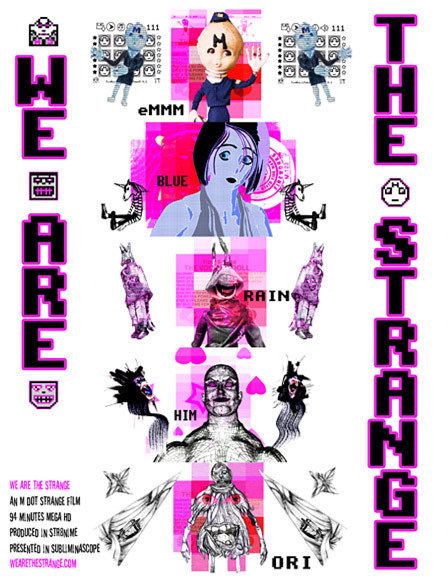
We Are the Strange is a visual creation. Set up as a story within a video game with a character select menu, it has a stereotypical evil character whose only goal in life is to be evil and dominate everything, a female character named Blue who has an ailment which worsens when she talks or smiles, a child-like doll who is supposed to be the savoir, and a mysterious stranger and his paper clown sidekick as heroes. Truthfully, when these characters talk, We Are the Strange slips in quality. It is not the vocal performances, which I come to accept as M dot Strange's first film and made with collaborators over the internet doing their hardest, but entirely because whenever characters talk, it is usually generic clichéd dialogue and exposition. This is clearly a film that tells a story with its visuals, which is where the film is compelling, so when dialogue does appears it usually ends up betrays the creator's own best gifts.

This is more so the case as this is not a very complicated plot to follow either as it involves a stereotypical (frankly one dimensional) villain and characters trying to stop him. Video games have also been more complex at times, especially now but even in the past, with their plots and complexity, but this story fits the type of aesthetic of games which were entirely about the thrill of playing them, carried as much by the rich and energised music through the film. This is also significant as the real fascinating with We Are The Strange is that it is a kinetic collage of action and images, where the dialogue (over shaky at times) is interesting when it is part of the texture, not the exposition to tell what the images themselves do a better job at.


The aesthetic was of immediate interest in the first scenes. At first the independent quality stands out, intentionally evoking games from just the immediate past in the mid to late nineties to early 2000s, down to the motif of Sinistar from the 1983 video game being an evil sign of warning continually in the background, and arcade cabinets being a prop for part of the story. In knowledge that this is a micro-budget animated film, which looks already antiquated at the time, the hard work put into We Are the Strange should not be dismissed considering that even if some of the character animation is jerky at times, it also has an aesthetic which I personally love and gets more elaborate. Any unconventional aesthetic to animation inherently has a dream-like nature to it, and in this case the ambition is there to use various forms as well, including stop motion.

It is rewarding and if We Are the Strange does over complicated and confuse itself over a simplistic plot, the visual material is rewarding. Bleak and desolate video game streets are contrasted with the added strangeness in its motifs of aforementioned arcade cabinets being everywhere or the obsession with ice cream. When the film rests on mood or the weird, M dot Strange gets his best work, like an ice cream parlour that is full of human devouring monsters, the idiosyncrasies of the creator the most interesting parts. One example, whilst the character is a bit underused, is the paper clown, originally a kidnapping victim by the stereotypical gruff man with no name who either went through Stockhausen Syndrome or changed allegiances, a figure that being an "origami actor" is made of paper and can transform himself into various shapes. These kinds of touches are those you pluck out and see for being interesting even if skimmed over in the midst of all the other ideas.

Beyond this, the film is pulp which eventually leads to giant robots fighting and secret superpowers. There are probably too many characters and ideas even for this plot, as Blue whilst the secret heroine does not get a lot to do baring being sad, and even the plot point that the doll child was taught from birth to pilot giant robots is one that could have gone on longer. Nonetheless, even with this flaw and a few others, I did find the film a reward. The dew of what would become common on YouTube, let alone video games, is here in one film, a fascinating if sometimes difficult to follow work. The craft of the content does have to be admired, and that M dot Strange went on to make more films to the current day is of immense interest, suggesting what potential progression took place.

Abstract Spectrum: Kinetic/Psychotronic/Weird
Abstract Rating (High/Medium/Low/None): None


Sunday, 12 April 2020

Steel Justice (1992)


Director: Christopher Crowe
Screenplay: Christopher Crowe and John Hill
Cast: Robert Taylor as Detective Lt. David Nash; J.A. Preston as Jeremiah J. Jones; Roy Brocksmith as Col. Edward Rollin Duggins; John Finn as Lt. Bill Somes; Neil Giuntoli as Jerrod; Geoffrey Rivas as Sgt. Julio Melendes; John Toles-Bey as Detective Steve Totten; Season Hubley as Gina Morelli; Joan Chen as Nicole Loa

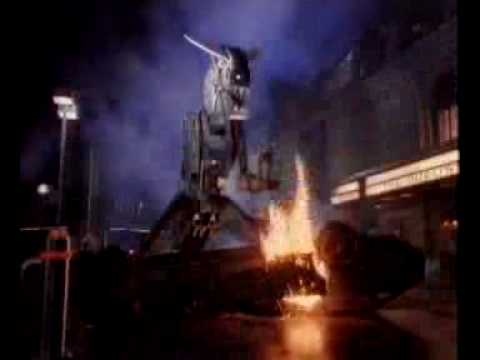
If you want evidence of how strange television could be, NBC financed a dystopian sci-fi drama in which a grizzled police officer, who lost his son tragically, encounters an ageless wizard who teaches him how to grow a toy dinosaur robot possessed with his dead son's soul into a giant fire breathing, car crushing one to deal with an illegal arms dealer whose cover is an ice merchant. This was a TV pilot, left as a TV movie which managed to get a release in the Oceanic territories on video, and clearly costing a lot of money.

I will be upfront that the film is bizarre but not abstract. The show shrouds itself as a neo noir tale with atmosphere, but director-writer Christopher Crowe and the film still shots the production with a pedestrian, static style. Crowe and his co-writer John Hill at this point were veterans of television, though with the fascinating caveat that Crowe himself did write Michael Mann's The Last of the Mohicans (1992). That does not however stop the TV film from being what it is, nothing structurally experimental or unconventional like the material itself, so the work can only be seen as a curious oddity.

That does not belay however that this is as mad as a box of frogs in terms of a premise. How this would have followed the feature length pilot, in a series that was cancelled and never seen, adds a lot of the aura with the experience of watching the production, attempting to meld a high profile superhero premise to a gritty sci-fi dystopia. The sense that this was not even deliberately trying to be surreal, merely part of an era of television where many high profile premises like this never succeeded to get off the ground, adds a greater context. This is of course the same era of Poochinski (1990), a failed thirty minute pilot about Peter Boyle as a cop being killed and resurrected in the body of an English bulldog.

The world itself is strange already without the magical aspects. A post-Blade Runner (1982) work, this is a dystopian world of severe ozone layer damage, surprising relevant to the modern day if by different means about the potential calamity that could behalf the environment. Here the ozone layer been destroyed so badly the climate is permanently warm, and that ice is now a commodity, both with legal ice bars and also the hint that it is also illegally shipped. A multi-ethnic community (mainly Asian) lives in this American metropolis due to severe global conflicts as well, and there are slums everywhere alongside rampant crime. Sounding like a cyberpunk world, this is also the world where drive-by shootings now use rocket and missile launchers even in crowded streets, which is arguably as strange as veteran actor J.A. Preston as an ageless wizard, born from the Macedonian era and who helped grow a wooden horse into a Trojan Horse, now in a world where no one considers the aftershock of using explosives in such tight streets.

Now, I' am game for game for peculiar genre bending, which this is a delight for, whilst also admitting the pilot does comes off as merely a prologue, only taking until the end for our lead Detective Lt. David Nash (Roger Taylor) to finally grow a giant toy robot into a fire breathing dinosaur. The juxtaposition is perplexing. Clearly Robosaurus was the get, a real life creation built in 1989 by inventor Douglas Malewicki, a prolific figure in aerospace engineering and game design as well, able to link in his career both co-designing the Skycycle X-2, a rocket Evel Knievel had to jump the Snake River Canyon in Idaho in 1974, and table top card games like Nuclear Escalation that clearly follow an obsession with the idea we would blow each other to kingdom come in the eighties with nukes, as the games all follow a similar nuclear theme. Robosaurus, who exists to this day, was hired clearly with the idea of being a pre-existing piece of spectacular production that would be big even in a theatrical Hollywood film, an impressively ridiculous creation that inspired the Truckasaurus parody in The Simpsons as a fire breathing car crushing set piece for public shows.


How we got to this breakout role for the vehicle is the question requiring some mental gymnastics, especially as for the most part Steel Justice is a bleak tale, part gritty cop drama and part grounded dystopian drama, with some exaggerated and kitsch futurism but still grounded in the cesspool of crime. This is a tale about a police officer who can only come to his power by channelling his grief, with the unexplained issue that the toy Robosaurus is clearly possessed, likely by the soul of his dead son. Further complications arise as, whilst a bullet proof tank-like monstrosity, you have the concern that the emotions might be in there especially as there is at least one confirmed kill it is responsible for. Even in terms of a television series, this premise raises questions due to what the big production get is. Robosaurus is a very big creation to stalk the streets of this world, which would make him easy to spot, and it would requiring a bigger antagonist each time to be able to make up one full season of television, let alone if this every became a success.

The aesthetic, which I found the most rewarding in spite of the conventional composition of the series, is also dank. Many fog machines were used alongside neon lighting, TV budget sci-fi where even the immortal wizard has a part time job playing a saxophone in a night club to make sure he does not stick out like a sore thumb aesthetically. Quite a bit was clearly spent as you also have big names even in the tiniest of roles. Alongside character actor Roy Brocksmith as the villain, a weapons merchant who likes blowing up the competition so he can show his customers the worth of his products, you have a post-Twin Peaks Joan Chen as Nash's neighbour and potential love interest, a woman who may be a sex worker in the little we see of her life but would have likely grown in role if this had continued. R. Lee Ermey is also in the film, but in a cameo only consisting of two scenes, which is surprising as this is some time after the impact of his role in Full Metal Jacket (1987).

Most of this failed pilot is predictable in terms of structure, but it is amazingly lavish, an expansive production full of large crowds of extras, large metropolis sets and a big explosions budget which yet, in spite of its illegal weapons/revenge plot, has a lead hero from a superhero story or an episode of The Tick parody franchise. The result is not helped by how generically it is presented, but the combination is still peculiar. The question earlier worth repeating is trying to figure out how this premise came to be. The other is where would have it all gone in Episode 2. The show is not as talked about as other infamous failed TV pilots like Poochinski, but they exist in the area of conventional mainstream television when someone spiked the coffees, were so desperate to try something different regardless of logic, or were so exhausted in production idea meetings that accidental surrealism like this happens. Or all the above for all we know.

Even in terms of what we get, many questions are left unanswered. Our wizard character, who is following Nash to unlock his abilities, suggests that eventually a wider level of magic would appear in this city if the production had gone on. The issue mentioned earlier of what to do with Robosaurus also springs to mind as, having to juggle a weekly schedule and smaller budgets than films, this series if it had succeeds would have to cut costs or would still be cancelled for being too expensive, something which has happened a lot even with successful work but did not get big enough numbers into the modern day, the type of numbers Game of Thrones gets.

Thinking about it, I would like to see a cleaned up version and a proper release of this, even if it is pure cheese, considering how much trashy theatrical cinema is dug up and given 2k and 4k restorations since the mid-2010s. In an alternative world, we could have had this bizarre premise have a series and even a big blockbuster reboot, where you could imagine Dwayne "The Rock" Johnson channelling the ghost of his dead son from a tiny robot into a giant CGI one. Admittedly this is not that dimension, so we just have this TV oddity in a fuzzy rip out there on the internet. It is not a great work, just from how stilted director Christopher Crowe does shoot it. That is a shame as, bad premise or not, the TV budget sci-fi noir look is a style the production team should have been appreciated for. Even if lead Robert Taylor is very generic, an Australian actor whose career has lasted into the modern day in television and cinema both in his homeland and outside it, it is only because he is stuck with a generic grizzled cop role. There is the advantage of J.A. Preston as the secondary character, even in the generic exposition and magical helper role getting to be playful as a man who views everything as a lark, even in someone as interesting as Joan Chen in her little role who is tragically underused. Definitely, as someone who believes that everything including material I hate should be preserved and made available, Steel Justice should be available, but just in knowledge of such a curiosity even existing, it would get a bit of interest if you brought up its entire premise. Sounding like the premise concocted from a child's imagination on one hand, the other trying to be serious and sombre at the other, it's a contradictory mess but never boring.

Abstract Spectrum: Psychotronic/Weird
Abstract Rating (High/Medium/Low/None): None


Saturday, 11 April 2020

Cinema of the Abstract 2020 Assessment


This piece is dated to when it was penned on purpose, as we cannot hide from the great and terrible effect COVID-19 has had on society globally. This has affected us all differently, to which I am among those who still has to go to work, but there has been a drastic change existentially which is fully starting to influence how I perceived the world around myself. I still have to walk on streets in a small town where stores I was complacent about entering have now gained an aura now they are no longer open, or that the community and world around me in general is one I will to attach myself to with a greater emphasis than ever before. I am beginning in my reappreciation of the simplest of aspects of my day-to-day life that have grinded to a hault during this period.

In cinema, the pandemic has had a pronounced effect. As cinemas have had to close, we have leaned more on the reliability of streaming services and the internet more. Unfortunately the problems I have always had with them are still there, that to be able to see everything you have to amount a monthly bill that is expensive, that not everything is available globally, and that there is probably not as much online as there might be if you are still comfortable buying physical media, making these sites' use as an archive with some cases as practical as a chocolate fireguard. There have however been good things from this. MUBI in particular, and like minded sites, even if they have temporary licenses are beacons of hope. Creators and owners of motion picture work have made their work for free online even if it only temporary, to which this is a fascinating world between HBO to Trent Harris among many who have let a mad variety of curiosities available without cost. And, for every group like the Cannes Film Festival who have decided to delay themselves until everything is normal, a very egalitarian attitude has been taken by the likes of the South By Southwest festival or the BFI Flare festival to make their premieres available online through streaming services, with the potential of wider audiences for premiers that might have not done beforehand1.

This is as important for me as, whilst I have enough to cover until next year, this scenario also brings up the fact that, whilst productions that were finished or can still be completed will be premiering over the year, if the pandemic and social lockdowns last in countries for the year, new work will eventually dry out. Unless homemade work produced in self isolation becomes popular, or at least very elaborate and spectacle Twitter creations come in existence, there will be a drought, potentially forcing people to have to watch older films unless the time is spent merely watching what Netflix and Disney Plus has. This is interesting for me, whose blog here is devoted rarely to new work, and whilst I do not have the time many others have in their mandatory confinement, the world has stopped in England and the time I have spare has started to take its effect in positive ways for all the paranoia and dread.

Namely, that many simple things have grown in meaning for me and, as someone on the autistic spectrum, the moment this finally resolves I wish to be in contact with people fully than before. Also, it means I have to re-listen, rewatch and reread the materials I own after all these years, which is for the better; the longer this lasts there is the potential for my appreciation of them to actually be a true form of it. This is of note as the idea of Cinema of the Abstract has changed; this has transformed into a natural time to come forth with this as the additional free hours can be used for this change and improve upon the blog. First, in mind to the only methodology I have on this site being a charmingly cringe worthy post early on, I intent to post up a proper and simple methodology of what "abstract" means for me and what makes something more than that. If this can be defined in one sentence, it is thus: a tribute to the moving image that stands outside the idea of a mass produced product or even the work viewed as the best by film critics. This blog is one written by someone who is always suspicious, even if a character flaw at times, of anything which gets universal acclaim and popularity, especially for how it leaves a narrow canon in existence. This is the blog that desires to see the wider and sometimes strange world of figures who lead to these various works, even those that are terrible for me and indefensible.   

There will be some slow changes over this month or so. The output has been numerous every month, but has also been unwieldy and erratic for my sometimes overbearing perfectionism. Once the pace has been improved however, the plan is to just fine tune this blog. Rather than exasperate the simple ideas in mine, it will be kept to these precise points. The abstract film reviews will be the same, as is the "Obscurities, Oddities and One-Offs". I intend to bring back "A Night of a Thousand Horrors", which was a subtitle for any horror films and shows, stopped when I was just covering horror over actual abstract films; this time I also intend to track down the most obscure work, even if it is the bottom of the barrel, as part of the growing ideal of the whole blog I will get to later.

The most important aspect is that there will be more emphasis on a canon, to which it will be updated much more often, and that there will be more emphasis on the people behind and in front of the camera. Eventually a greater emphasis on an actual canon in terms of the men and women behind these films, TV series and ephemera will be built upon. This includes expending the attitude beyond cinema to its origins in the "moving image". When this is talked about in most mainstream critical publication it is only for "the Golden Age of Television", a limited usually English language period of television usually heavily promoted which is very narrow minded. Neither is this "vulgar auteuism", which I was a witness to its development on the MUBI forums (when they were still called The Auteurs website) in the late 2000s, which was admirable in its attempt to look critically at pop culture but limited itself to American action cinema. The attitude for this blog instead is to look to the many fascinating productions being made on new mediums, like YouTube, but also the work that is forgotten or ignored, even in disreputable areas. The point is not for artistic masterpieces, unless they are found, but cinema and moving images as an extension of the human society in its cultures, facets and curiosities.

Probably the most important moments to this change in attitude for myself was a) the review of the instructional video Surviving Edged Weapons (1988) but in a very serious non-ironic way, b) the review of the French porn film Liberté sexuelle (2012) by former adult actress and director Ovidie, and the trio of films covered from American practical effects creator and director Joe Castro. (HERE, HERE and HERE). These three examples would rarely be covered even in podcasts and amateur reviews about cult cinema (barring the few exceptions to be admired). This attitude is not an attack on a canon, but the reality that cinema is a vast form in itself before you even step outside of it, where even the likes of Sight & Sound magazine and professional critics can have a predictable opinion on the medium when they cover the most advertised art cinema. Considering that even an admired auteur like Raul Ruiz, who has been covered on this blog, has most of his work still unavailable is already a problematic issue with how we treat cinema and moving pictures, before you consider a lack of equality. Instead this site wishes to be where the disreputable mediums like pornography are considered, where ephemeral filmmaking is not ignored, and fascinating work can be found in homemade web videos and outsider gonzo videotapes from the past are looked are with interest. Even the unintentionally compelling work should be treated with seriousness, not with irony, but from a perspective of asking where it is from.

Art is communication, which is what I have come to consider it as, a form that creates artificial dreams but also can tell one about their creator, which presents themes and ideas but is far more interest not for politics but the world in reality and imagined form being interpreted. It allows one to enter other's minds in how they express their perspectives of the world, and even if it is less than well made or morally problematic, it can usually be far more fascinating than a merely well made and manufactured production. Originally this blog was for "abstract" cinema, but that has grown into a fascination for outsiders, artists, reprobates, figures clutching at pennies in their time periods, and my fellow viewer who found a camera to shoot something themselves. Like a combination of a dreamt exposition and amateur anthropology of the silver and digital screen, I am more concerned for what is spoken and what is between the lines. Not of hiding spoilers or chasing trends, the notion that all around me is worth studying in what the language means and where the figures in them came from.

Particularly now, as the pandemic has left me with an absence of the world before I had looked at in complacence, I have grown both a fonder appreciation for what is temporarily lost and also a desire to grow in connection to the wide world around me. One such thing is the idea many of us, when cinemas open again, will go to any film just for the pleasure of the experience of communal screenings. I will likely do this too yet, truthfully, even back when they were open the choice was inherently limited and felt behind in terms of the fascinating work I have covered both good and bad away from theatrical screens, entirely because geographically I am not in a metropolis where such media was available to me. For every good film I carefully choose, the cinemas themselves could be far more interest as a form of human culture than any of the blockbusters they were actually showing. Exceptions good (The Lighthouse (2019)) and exceptions bad but still stuck with me (Cats (2019)) have been covered over the last month, their existences but also their background history worthy of covering2, but if anything this period challenges the stereotypical image in a county like mine in Lincolnshire of cinema, which is usually multiplexes and rare one-offs screenings, more so. Being forced to slow down and improve upon my work like this has increased my passion to champion the outsiders and the ignored more so.

=========
1) The distributors of Japanese anime have actually, arguably, been ahead of the ball for streaming as they have to rely on online distribution or physical media for the most part to get Western fans to see their licenses. The cost for every site together is still expensive, and the British do not get everything the Americans do, but between new shows premiering new episodes at the same time as in Japan to old classic work, the template the likes of Crunchyroll is something the cinema distributors should look to.

2) Cats will likely be re-reviewed one day, entirely in light to the background of the production being made available and that, to truly figure out how it came to be, looking at things like the T.S. Elliot source material and the original musical itself is worth bearing in mind. That and the phrase "jellicle cats" has been stuck in my mind since January 2020 and refuses to budge.

Wednesday, 8 April 2020

Clone High (2002-3)


Creators: Phil Lord, Christopher Miller and Bill Lawrence
Directors: Ted Collyer and Harold Harris
Screenplay: Phil Lord & Christopher Miller, Bill Lawrence, Tom Martin, Erica Rivinoja, Murray Miller, Judah Miller, and Adam Pava
(Voice) Cast: Will Forte as Abe Lincoln; Phil Lord as Principal Dr. Cinnamon J. Scudworth; Michael McDonald as Gandhi; Christa Miller as Cleopatra; Christopher Miller as JFK / Vice Principal Mr. Butlertron; Nicole Sullivan as Joan of Arc; Donald Faison as  Toots
Oddities, One-Offs and Obscurities

In the careers of Phil Lord and Chris Miller, who have grown in success with work on Cloudy with a Chance of Meatballs (2009), 21 Jump Street (2012) and The Lego Movie (2014), all they have strived for by all accounts is to make more of Clone High, a project of theirs shown as part of MTV's animation wing that was cancelled after one season. One in which, as succinctly explained in the early 2000s alt-rock theme song, is about the clones of famous figures of history as teenagers having to go through American high school, a teen high school drama where Abraham Lincoln is not the legendary politician but a gangly nerd pining for Egyptian figure Cleopatra, now the popular girl, whilst his friend and former soldier of God Joan of Arc is the Goth girl who secretly has a crush on him.

Clone High's cancellation is probably one of the most infamous stories I have heard of as, alongside low ratings, the show unfortunately stumbled into a cultural controversy of its own doing. One of the other major characters in the show, as Abraham's dorky comic relief friend, is the clone of Mahatma Gandhi, who could not live up the legacy of the Indian political campaigner and became a sex obsessed party animal. India still holds Gandhi to importance, and in the midst of another controversy with Maxim magazine, the show was pulled it with the country being naturally pissed off. This all does have a darker nature that does shadow what is a fun show, as on January 30, 2003 a hunger strike took place in New Dehli on the anniversary of Gandhi's death, alongside the possible threat to MTV's broadcasting license in the country. Suffice to say, and this is documented, if Clone High ever had a sequel, two opinions were to either remove Gandhi and no one to ever question where he disappeared to, or to write in that there had been a mistake and he is in fact the clone of child actor Gary Coleman1.

Clone High is, as with a lot of American animation from this time I grew up with, fast paced with a lot of tiny stories in each episode. The joke is that each episode is a "very special episode", that this is all a parody of a wave of teen dramas that were popular in this period like Dawson's Creek, Clone High always basing episodes on parodies of the anti-drug episode or the episode about dangers of certain behaviours. The difference it is the 16th president of the United States being informed by French heroine Joan of Arc he has a problem with not getting sleep, or when Gandhi is diagnosed with A.D.D. and is treated like a leper.

To Phil Lord and Chris Miller's credit, when they are funny, they are hilarious in their writing alongside their co-writers. There is even the added investment that they also voice characters in the show showing the commitment they had, the most prominent example another important main character voiced by Miller, John F Kennedy, portrayed here as the stereotypical sex crazed jock with the added irony of his forbearer's existence (and his real life womanising). Another of note, voiced by Phil Lord, to fill out the main cast is Principle Scudworth, who is barely hiding from the evil cabal funding the project he intends other plans with the clones, whilst his vice principal (also voiced by Miller) is Mr. Butlertron, a robot assistant who is a parody of an eighties show Mr. Belvedere because he calls everyone "Wesley". Butlertron is also one of the most sympathetic characters as, whilst he swears like a sailor when annoyed, he is the only adult figure in this world who offers meaningful advice to these kids in the midst of hormones and school life, rather than be a character meant to be absurd.

To this show's credit these characters and other side ones, voiced by a cast including a lot of future alumni of the popular comedy show Scrubs produced by co-creator Bill Lawrence, do grow on you immensely. Even characters like JFK become hilarious as, whilst some of the humour has not aged well with characters, including the interesting note that his adoptive parents are two stereotypically gay men, there was some basic and pleasing about these characters being able in their archetypes change over time. Kennedy in particularly a great example as, alongside Miller's mannered intonation of the voice, a character so obsessed with women to a crass and childlike level can be oddly charming if an utter idiot, something that the show does deal with. Many of the show's solid foundations in terms of the voice cast can just be demonstrated in that, in one of the oddest cameos, you do not just get anyone to voice Gandhi's remaining kidney in a one image joke, but get Michael J. Fox of all people.

The guest stars also emphases that Clone High is definitely a show of the early 2000s, because it will constantly reference pop culture from this era throughout the episodes. The idea that each decade, as sold to us in consumer nostalgia, is a distinct thing is problematic as well as if you consider that a) usually the first couple of years have the last decade still bleed into the newest one until it is replaced, and that b) I will argue as someone who was a young teen in the early 2000s that the period is its own little area between the last few years of the nineties and a few of the 2000s.

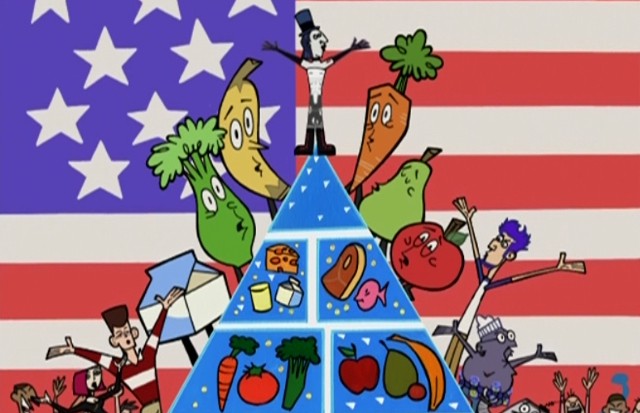
So much that would not be understood by younger people in the show as jokes, like Gandhi missing the scene in American Pie (1999) where Jason Biggs formicates with one or that Scudworth's plan for a clone amusement park stems from watching Jurassic Park III (2001), comes from the era I grew up with, and there is so much even I do not know of approaching this. Quite a few of the cameos really bring up how time really brings a lot of thought of what is trendy at one time, as whilst I certainly know who Tom Green is, I could not comment about Ashley Angel of the boy band O-Town (as Episode Seven's main star) or the entire series of references about the show Full House including star John Stamos appearing in the final episode. It could be seen as a fascinating time capsule but also a potential hindrance for younger viewers. You do however get Marilyn Manson, playing himself, performing a musical number about how to have a proper diet, which is honestly worth Clone High's existence alone, a still well regarded artist known for how controversial he is doing something exceptionally silly as an actual show tune.
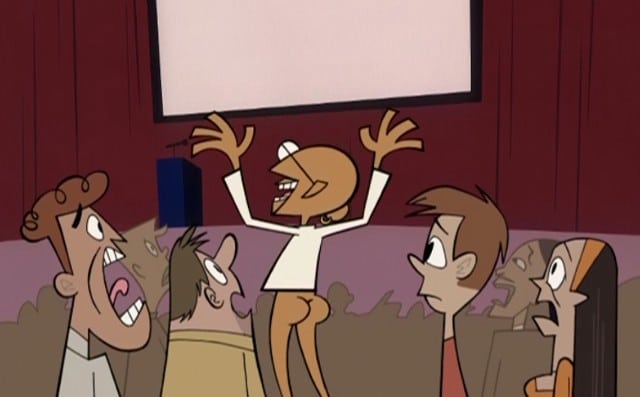

The show does have issues, the one flaw I have in reference before to how fast paced the show is and how it never settles on a plot in episodes for even a short period of time, in the first few episodes not really sticking to ideas and really standing out. This is a common problem and really comes to mind when I transitioned to enjoying Japanese animation, especially as skit based shows even in that medium rested on jokes a little longer for the better. There are moments in Clone High in those first episodes where you could have stretched segments for funnier work, such as when Joan finally thinks she can hear voices, but is barely covered. It proves somewhat ironic Gandhi was such as a controversial character as he also happens to have some of the funnier plots, be it kidnapping the mascot to a rival school's basketball team, only to realise it is a living creature, to his psychedelic adventures (including being eaten by a live action cat) after smoking raisins.

Ah the raisins, as whilst these problems I have with the show are there, it does become a much more consistent by the middle episodes onwards. By then it improves significantly by the point it gets to its best episode, a rock opera where the illicit smoking of these raisins (as in actual fruit, not slang for a narcotic) turns the students into throwback sixties hippies, all whilst Scudworth goes full blown dictator. In general, after the first handful of episode everything gets stronger, that episode (number nine) is a big point of improvement alongside number ten, possibly the darkest as it plays on the special episodes where characters are killed off. Here it is a character we have never seen before but the cast presumes we have called Ponce de Leon, who thankfully is a real life figure for consistency. His death is absurd as it is literally caused by littering, as it is also the anti-littering episode, but for a show which just skirts around violence (which is quite gory when it happens) and references to sex, it fully invests into parodying this type of episode with his friend JFK, going through depression and playing out an actual trauma with pathos in the midst of its humour. It is an episode as a result which might be too dark for some, even though it is one of the strongest.

By this point in the show, the cast itself is strong and develops to the point even the aforementioned JFK gets to be a sympathetic character, as well as an odd one who records his annual Snowflake celebration albums at home and apparently has a reflection that talks back. All the characters are stereotypes - Abe being really useless and clueless, Joan very cynical if earnest, Cleo a vain and sexually open figure who toys with Abe because she can get him to do things - but they are interesting stereotypes. Even really weird jokes, like Abe when given to chance to make a student film creating a story about a giraffe being allowed to play American football2, and managing to be even more bizarre and awful than that sounds, suit the individual characters. The show could have gone further with its weirder jokes, especially as animation wise, it is helped by striking character designs by Carey Yost, who worked on shows like Samurai Jack and The Powerpuff Girls, but what we get that shine does. When the show is unpredictable, it is a pretty striking series.

[Major Spoiler Warnings]

The likelihood is that Clone High would have continued like this in tone onwards, but due to the real life circumstances around the show, we did end on a pretty distinct climax for the entire narrative. Over two episodes we naturally build to a prom, just happening to take place in a meat locker and following through with those Full House references to John Stamos (played by John Stamos) getting a prom crown through the face. Clone High even gets melodramatic, befitting its subject of parody, as the love story of Joan and Abe grows (and curdles) in a dynamic twist. Then most of the cast is frozen, which has to be one of the most dramatic ways to have to end a show. Phil Lord and Chris Miller could have easily ran from this to new seasons, but as it stands as a one season wonder the final episode is a really distinct conclusion in terms of a cancelled television show.

[Spoilers Ends]

Judging Clone High altogether, I had fun and admire it. A fondness has overridden the initial issues of the show, when it was merely glib and not really standing out, particularly as the characters were fully fleshed out and the stranger ideas grew. Yes, it might be blasphemous to have Abraham Lincoln depicted this way, but it is just as compelling to see him as a clueless guy who bungles throughout the show. The show itself alongside the teen drama parodies does also reference real life history, as you have to fill a school with characters. Maybe Marie Curie, who pioneered the discovery of radioactivity but died of radiation poisoning, as a mutated clone is a bit tasteless but humour is to be found seeing former war lord Genghis Khan as a lumbering, dim-witted but sweet friend with a beautiful singing voice, among such idiosyncratic choices. They even reference Dolly the sheep, the real life major experiment in cloning from the nineties, by having one of the teachers be half man half sheep.

This is also the show where, for one joke, Martin Luther King Jr (one of the many voices by future Scrubs star Donald Faison, whose biggest role is Joan's blind adoptive father Toots) argue with Moses (voiced and drawn after Charlton Heston, voiced by other Scrubs co-star Neil Flynn) peacefully resolve a conflict over the lack of ham and cheese sandwiches in the canteen. Or how Gandhi eventually convinces agricultural scientist and inventor George Washington Carver to star in a Lethal Weapon-like buddy cop student film, but only after a while if Carver can rewrite his dialogue to avoid the ethnic stereotypes in such films. Only here could you get away with such bizarre moments, and in just thirteen episodes Clone High has managed a lot to remember.

Phil Lord and Chris Miller themselves did very well after this. There has possibly been one roadblock, in which their desire at parody and silliness bit them back with Solo: A Star Wars Story (2018). Lord and Miller were originally the directors for the film, but at a certain point Disney pulled them off and hired Ron Howard to complete the production, suggesting they were probably committing to some absurd humour the House of Mouse was not comfortable with. Regardless, they have managed to become household names, even managing to get Will Forte to re-voice Abraham Lincoln again in The Lego Movie for a nice bit of synchronicity. Cast members, as referenced, became stars in Scrubs, a very popular medical comedy I remember watching which lasted, to the point the parody episode about littering effectively created Neil Flynn's famous caretaker character years before that show. Even if Clone High never returns, I think Phil and Miller have managed to reap the benefits of this, especially as this is also a cult series with high regard. If it does return one day, they definitely had the plans. One season was meant to be a repeat of the same academic year due to a time wormhole3, so it would have gotten weirder if they got additional season and might have been awesome to witness.  

======
1) HERE

2) Ah, the Air Bud jokes, as in 1997 there started an entire Disney produced franchise which stemmed from a Labrador being allowed to play basketball, joked in the basketball episode where Joan poses as a male player. In mind to Doggiewoggiez! Poochiewoochiez! (2012), a compilation of such dog related media, it's amazing how much material like this exists, and that we rarely stand back on and consider how strange they are.

3) HERE

Friday, 3 April 2020

Wicked World (1991)


Director: Barry J. Gillis
Screenplay: Barry J. Gillis
Cast: Barry J. Gillis as Grant Ekland; Maria Delgado as the Nurse; Eddie Platt as Harold

What was my interest in Wicked World? Of course this all stems from Things (1989), a shot-on-video film whose most prominent onscreen figure Barry J. Gillis was the lead, here directing and writing a film. Things is notorious, its entire production stemming from a notion of improvisation, where it was built on limited resources of what was felt to be "cool" or engaging for a group of Canadian horror fans. Improvisation like this on a micro-budget can lead to idiosyncrasies, but Things took this notion to an utter extreme impossible to top. Stemming from wanting to shock a viewer or to keep them on their toes, to seem profound as Gillis has a speak about reading a sci-fi novel about a boy who was as "big as a fridge", because they managed to hire porn actress Amber Lynn and needed to improvise scenes for her, and honestly because I do not think they knew what they were doing for large swathes of it. Alcohol probably played a part, but I do not want to speculate out of respect for everyone in that production as, honestly, it is accidental surrealism in a rare form.

This is pertinent as Wicked World is just as unpredictable. The plot is supposed to be about a serial killer played by Eddie Platt, who is an older man with white hair, that has been left lobotomised after being finally caught, but still likes to spin stories of death in his brain as he is now pushed around by a nurse he does not particularly like.  The corrupt cop who got him finally, played by Gillis, is still grief stricken over the killer having murdered his girlfriend from then, and is not going to take his release kindly. That the killer might be fabricating the truth adds subjectivity to the proceedings but Gillis' cop is still there and tormented by the "Wicked World". Following on from Things having a tribute to Tony Iommi from Black Sabbath, the title is a reference to one of their song, and is the theme in the nutshell about the world being a hostile, miserable place of continuous murder and death. The film itself is not so straight forward and would leave most on the floor trying to accept its logic and technical issues.

Suffice to say even the official release of Wicked World is complicated. Made in 1991, it never had a proper release. With mostly a trailer on YouTube in 2006 the only sight of it, it was only until 2019 that American Genre Film Archive in collaboration with the website Bleeding Skull got the film a Blu-Ray/DVD release with a new director's cut. The Blu Ray format has an irony as, shot on 16mm but edited on video, Wicked World does look like it was shot with Vaseline smeared on the camera lens, there a befitting additional layer of weirdness to a film that could have sufficed on mere DVD.

Its biggest difference from Things is also its biggest hindrance as well as its most compelling detail. Complicated? Yes, but this film is a peculiar one, where it is necessary to bastardise the philosophical term "the banality of evil" by suggesting this movie perfectly encapsulates a curious concept of "the banality of exaggerated evil", where for whatever reason human beings like the exaggerate the worse even outside of art and pop culture. We cannot help to make a fictionalise crime or atrocity more extreme and nihilistic, sometimes with real problematic but even in terms of edgy culture in trying to be bleaker and "more real". Not surprisingly, whilst we never got Wicked World properly until in the next decades, it was being made in the early nineties, about the time after lurid horror films in the eighties on VHS, right around the time just before the controversy over video games like Mortal Kombat, bands as notorious like Cannibal Corpse taking things to an extreme, and controversial cultural items like the Traces of Death series of atrocity video compilations. The world of Wicked World, which is possibly trying to the United States but clearly is Canadian, is one with little happiness, just death. It is not enough for a character to say they have lost faith in the world due to their parents divorcing violently, but that they witnessed one commit suicide by hanging. It might not be blackly comical to some viewers to imagine this in this film's ham-fisted tone, and frankly some of it is bleak even for a desensitised person like myself, but imagine this for a whole hundred plus minutes with the mad ramblings of having been spiked with a narcotic directly through the eyes, the result of which is not necessary funny in even in ironic way but is definitely not conventional.

This is a film where a group of young Canadians spout nihilistic platitudes in the middle of the countryside before their token male gets pervy on the women to take their clothes off for a swim, a film which thinks with its nihilism and its second head in fast succession of each other. It is a film, from Gillis who also wrote the script, that provides an almost showman's sense of over the top bravado in its message, even when the film at the end inexplicably has a text suggesting that some time into the nineties we would all have brain implants soon that would control our violent impulses for the better. God knows where that piece of onscreen text came from, but structure and logic is not worth arguing about, not to dismiss the film but admitting it was probably gestated from a haze. The production, which was documented in a behind the scene work that is on the AGFA release, shows that everyone including Gillis are just likeable ordinary people struggling in a production where an actor cannot stop smirking in a scene of a grocery store hold up, or the camera running out of film. What happens to ideas after creation though, as in all artistic mediums, makes them extremer, odder and more bemusing than their creators may have intended in their need to create, especially when they are making genre material to keep people in their seats.

So Wicked World is comically over the top and in the post-slasher film boom of trying its best to be lurid. The prologue does not suggest where the plot will go but definitely warns of what to expect, in which a party of four involves the brother of one female character watching her and her boyfriend having a very explicit lovemaking session from the nearby chair, the actress one comfortable with doing a nude scene down to merely the bottoms of her underwear being only pulled down at the back, which has to be mentioned because the scene of titillation is long and stretched further than in any other film. It has the absurdity of our killer, Eddie Platt in a gasmask, standing outside the window watching on but not having to get his hands too dirty as the brother decides to shot almost everyone else in a psychological breakdown. This exaggeration is the film encapsulated, but it will get nastier, and a lot more haphazard and chaotic with the editing and sound.

The story is a string of horror story tropes, really a collection of murder scenes strung together with only a bit of drama, not really connected together. A lot of dialogue was audibly post dubbed, and the soundtrack (the sound design, not the music) in general is cacophonous and a mess. The scene with the nihilists in the woods, to give an example, has geese noises so loud in the audio mix it could by itself cause a viewer without the fortitude of this cinema to lose their mind if they have not already.  It would be mean to talk about the technical issues or plotting in gory detail, but it does have to be warned (and alerted to) that they are a very distinct part of this film's personality, for better or for worse. Also, to be honest, this is still better put together than Things, so it is a subject which eventually becomes subjective in one's personal taste of films, especially as someone who has watched Things enough even its scenes of red lighting bleeding over the videotape images are part of the experience.

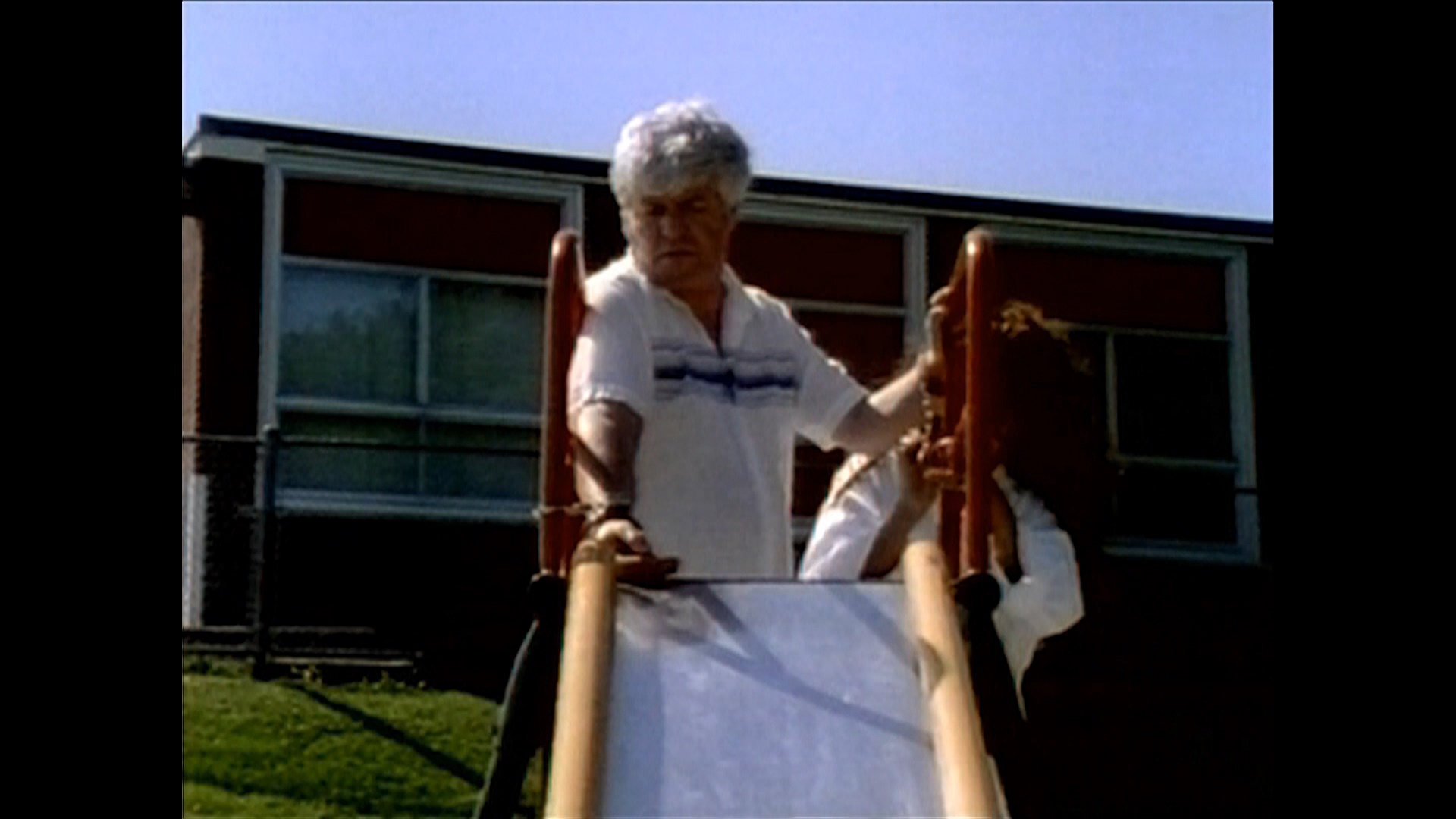
Whilst Things was continually funny to the point of whimsy in what strange idea it got fixated on, like a moth to a lightbulb, Wicked World has all its naive nihilism to contend with, which can be humorous when our killer confesses on a slide that "I hate slides. I hate helicopters. I hate life.", but also can be nasty in an off putting way with its attitude. It is here where moral issues come to mind. Gillis' film has the sense of baffled madness, but aspects which without stepping back or ironically view them are problematic if thought about. This is where a group like Bleeding Skull, the individuals who uncover no budget oddities like this, skirt a line in strange cult circle; that whilst we thankfully have an adult view of this material, coming into them with a caution of their potential issues, we can sometimes not fully deal with them in between cool sounding proclamations of them being fun cult films when it is vital to bare these concerns in mind.

One unsavoury and misguided aspect is the anti-political correctness speeches, which considering the film was shot in the early nineties was around the time when this subject was becoming a bigger issue. They were still on Gillis' mind however long after as, in one of the endless onscreen white text quotations on black that end the film, he quotes film maker Nick Palumbo (director of Murder Set Pieces (2004)) from the DVD box of his own work. I am someone who has concerns about political correctness when it dodges topics deliberately rather than discussing them frankly, but likewise especially from the late 2010s it comes evident that people hide behind the term "freedom of speech" without realising it both comes with responsibility and that it is an excuse for being an arsehole for many. It comes as a solipsistic childishness, especially as rants against PC culture are also juvenile, as a transgressive artist would just get on with their work even if it ever caused them difficult to work, whilst making really lurid and extreme splatter cinema is not the same as even a genre based filmmaker like Shinya Tsukamoto. That the killer says some of this, but other characters as well, makes it really confusing as well what the actual opinion is of this subject.

Circling back to the whole issue of the exaggerated evil, unfortunately alongside this there is one scene which comes off as misguided, not because anyone in the production has malice, but Gillis clearly thought of having a scene out of Abel Ferrara's Bad Lieutenant (1992), a year before it was even made, of a corrupt cop only for the presentation and tone to make the choice ill advised. Definitely not dressed as American cops, Gillis' character and another actor are playing the worse of police in as over-the-top fashion as you would expect, but with one little detail where they and their police chief are racists, targeting a trio of non-white characters, with racist language involved does become jarring in how nasty it is. It is a reminder that it is one thing to depict the worst in humanity in cinema, even if the result fails, but that it feels like Gillis was exaggerating as in the same way his characters' nihilism is, or in the decision for death scenes to cover the screen in digitally added gore and limbs. This raises some concerns.

This is the aspect which makes it difficult to fully appreciate Wicked World in general. I will say I enjoyed the film, but it is so obsessed with being bleak and "real" about the way the world truly is that it is not a charming film to get along with, curdled to an extreme. As with the scene mentioned in the paragraph before, or the anti-PC rants, the film is not going to be like Things, a film that for all its gore and attempts at nastiness was just fun. That is not to say the Wicked World experience is not mad as a box of frogs though, as it certainly joins the older film in mangling one's consciousness whilst experiencing it. With the exception of the music which, even the cheesy and sexist glam metal, is actually good from a group of composers, everything else in the film is just experiencing a series of hallucinations. Some of them are dark, like Gillis himself pounded on by a gang of people wanting to make him a martyr, or some deeply silly moments like the dialogue. Even the end credits are likely to drive people off the tipping point, a rarity in abstract cinema I have covered, as they are at least over five minutes long if not longer, with at least two songs used in full and in the director's cut continuous cutting to an image of a goose, going on the point of absurdity. Despite the film itself being difficult and to proceed to with caution, Wicked World is a dumbfounding experience in terms of wondering how it ended up as it did.

Abstract Spectrum: Atonal/Bleak/Chaotic/Illogical/Maddening/Mindbender/Weird
Abstract Rating (High/Medium/Low/None): High


Monday, 30 March 2020

On Body and Soul (2017)


Director: Ildikó Enyedi
Screenplay: Ildikó Enyedi
Cast: Géza Morcsányi as Endre; Alexandra Borbély as Mária; Réka Tenki as Klára; Zoltán Schneider as Jenő; Ervin Nagy as Sanyi; Itala Békés as Zsóka

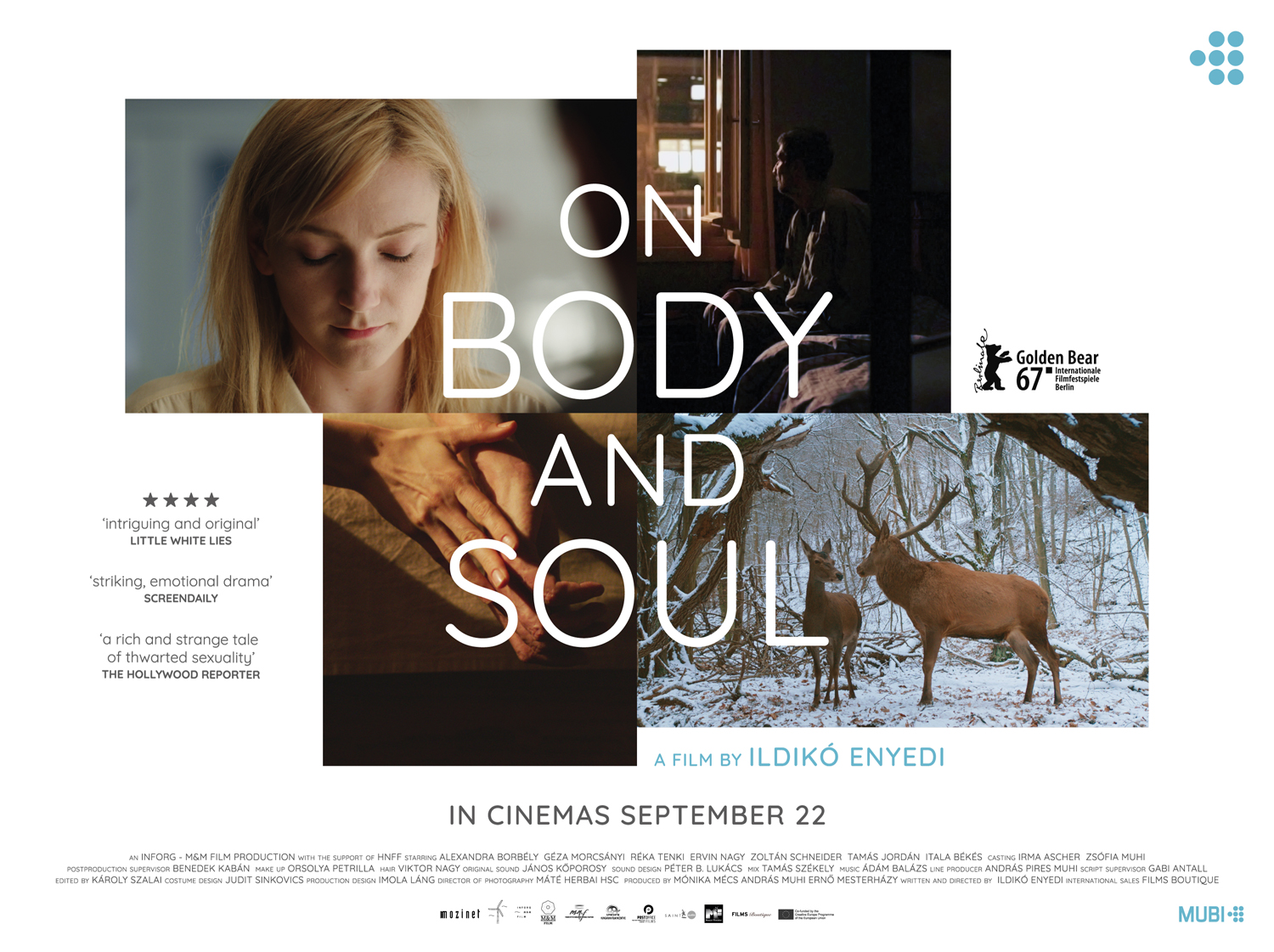
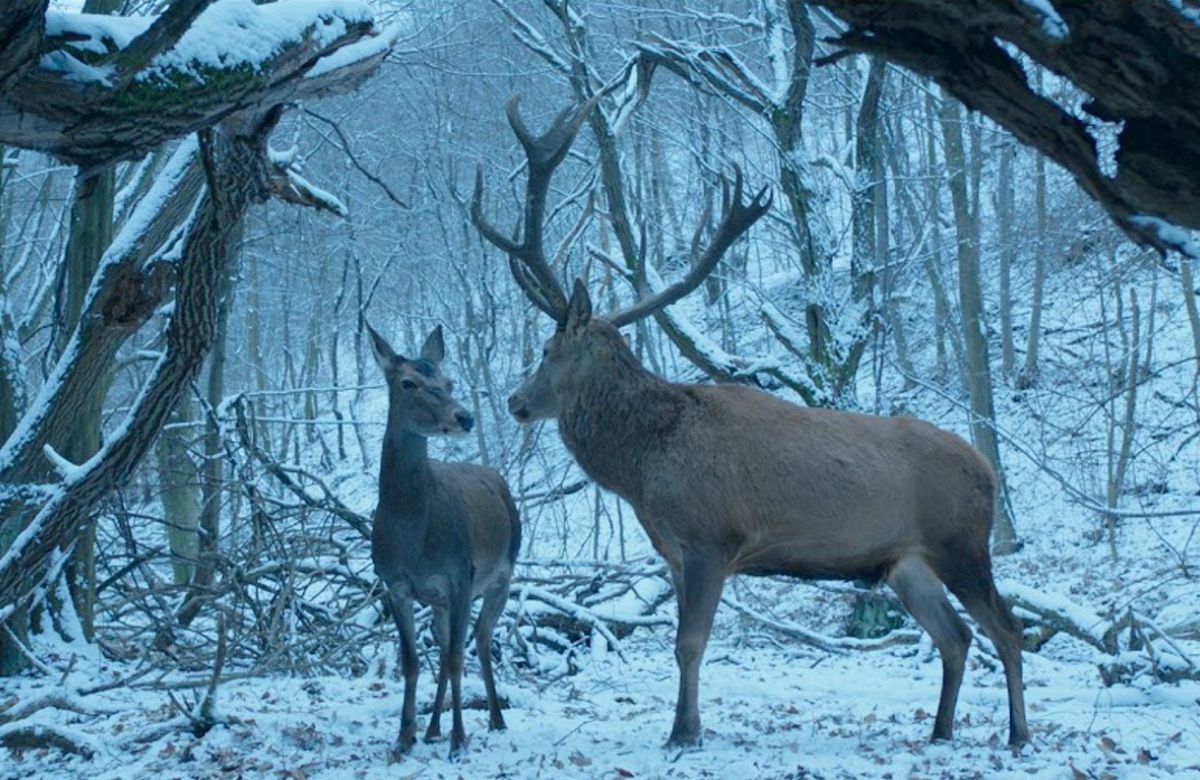
After a hiatus of eighteen years, Hungarian director Ildikó Enyedi returned back with a success, On Body and Soul the 2017 Golden Bear winner at the Berlin Film Festival, and was nominated for the Best Foreign (International) Oscar. Befitting the director of My 20th Century (1989), an idiosyncratic debut crossing together separated twin sisters to Thomas Edison's light bulbs, On Body and Soul is a growing romance tale which takes place at an abattoir, in which a significantly older male chief financial officer Endre (Géza Morcsányi) and a very introverted quality inspector Mária (Alexandra Borbély) develop a connection due to a shared dream, finding themselves continually dreaming they are a deer and a doe respectably in a winter snow covered woodland.

Shot in an abattoir, all septic white and cold, with their connection pushed together when someone steals medical goods for mating the cattle, I will warn viewers there are scenes with real cows being killed and cut up for meat. The images of a slaughterhouse and the real place, (i.e. including smell and spatial environment), do differ for me but I will make the reader aware of this out of warning. On Body and Soul also, depending on how you view Mária, is one of the best depictions of a learning/mental disability even if it is never explicit on the story about her. A new staff member with an uncanny ability of memory recall, but called "Snow White" by colleagues who view her like one might do an actual alien, Mária's characterisation is fascinating from this perspective.

Quiet, nervous and able to remember even the twelfth sentence spoken to her, Mária became interesting for me, as a viewer born with autism as an avatar for being an adult with learning disabilities, when we see she still goes to counselling. She has, amusingly, still gone to the consoler for children (due to the location looking like a children's room and he asking her if she preferred someone else), but that was where the idea came into consideration. Distant from everyone due to extreme shyness, able to describe how one's dilating eyeballs can tell if they are lying or not but with difficult able to communicate, as if this skill was instead learnt by her artificially than naturally in adaptation, she is blatantly an isolated person but it is only with context it comes off as written as someone on the autistic spectrum.


As someone who also has a pedantic and vital talent, extremely good at her work that complaints about her reducing the beef to class B comes from her being able to tell its far fatter than regulation by mere inches, she could have easily become a distant character were it not for how in depth to film deals with her as a figure and the world around.  Almost alien to anyone else, she is only really able to express herself using (of all things) PlayMobil toys by herself to figure out how to talk to people like Endre next time, a more extreme case of a disability than myself in my own personal take on the film. The bond grows only part of the way through between Endre and Mária due to accident, a psychologist brought in due to the consideration the theft of under the counter hormones might have some sexual hang-up in place, which means that this potential romance is one that is awkward and takes a long time to actually develop as the dream is the only initial connection. Alexandra Borbély's performance is the best regardless of fan interpretation; hers alongside the script is a hell of a superior take on such a figure if you did describe it as such, even as a proxy interpretation of a disability superior than many films about disabled characters which are cloying, saccharin, patronising or squander potential by becoming all the above.

Beyond this, On Body and Soul follows the virtue of world cinema of pure unpredictability, a romantic drama in the least expected of places and in an unfamiliar world, with a foot firmly planting into reality, a starkly shot drama, and the other in the ethereal with the serene scenes of the deer. The cast beyond Borbély , especially Géza Morcsányi as Endre, are just as strong which adds a credibility to this entire premise without it coming off as absurd. Everything is ordinary and characters are far from perfect, such as the running gag of one of Endre's co-workers and a friend who is a larger middle age man, who says man have control over woman in the typical chauvinistic manner, only for his relationship to his wife clearly the opposite but still an existing one.  It is amazing to think, in On Body and Soul's balance of incredibly black humour and emotional depth, which the film manages to go through some incredibly dark humour and frankness in its disarmingly quiet tone. There is an Oscar nominated film now because of this one, even over Dogtooth (2009), that following the joke Mária watches porn to understand how sex works, you get images of actual hardcore porn explicitly shown in the background to one scene, managing to make it come off as a quiet amusing surprising as the film succeeds in finding a balance between its eccentricities and its warmth.

As a result, the film can be both hilarious at points but also utterly emotional even within the same plot point. Like a cousin to Argentinean director Martin Rejtman, who continually made jokes involving heavy metal in his films, a gag about Mária trying to find "love music" starts with death metal, only for the song found as a result of the scene tying into when heartbreak takes place and a very close to the bone, and uncomfortably realistic, attempted suicide with wrist cutting happens in the last act. (Again, I'll warn the viewer about this whilst wondering how the practical effects creator made it look realistic on an actor completely naked during the scenes.) Comparing back to My 20th Century, an incredibly stylish and magical fantasy film shot in monochrome, On Body and Soul is a much more subdued work in tone but you can tell it is the same filmmaker here. Something very unpredictable underneath it surface that, to confess something, I openly had a chance to see much earlier ago from when I covered this only to turn off after a few minutes, a lack of patience which I can thankfully rectify with the statement that On Body and Soul is a very good film. An exceptional one to add weight to this, from a director whose work is sadly not as well seen but will hopefully reap that benefits that this production's success (and a restored and available version of My 20th Century) for the better.

Abstract Spectrum: Eccentric
Abstract Rating (High/Medium/Low/None): None