Sunday, 21 July 2019

Hukkle (2002)

From https://i.pinimg.com/474x/75/b8/13/
75b81336caeec1105cc85fe9d83f81cd.jpg


Director: György Pálfi
Screenplay: György Pálfi

[SPOILERS THROUGHOUT]

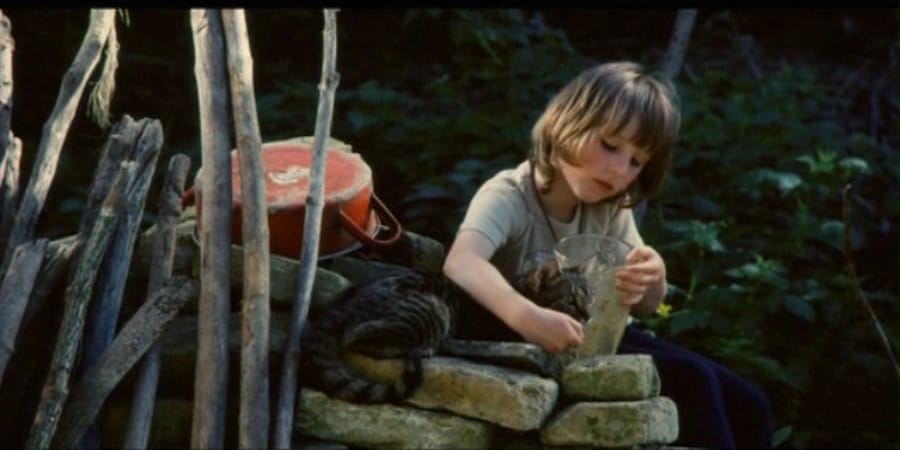
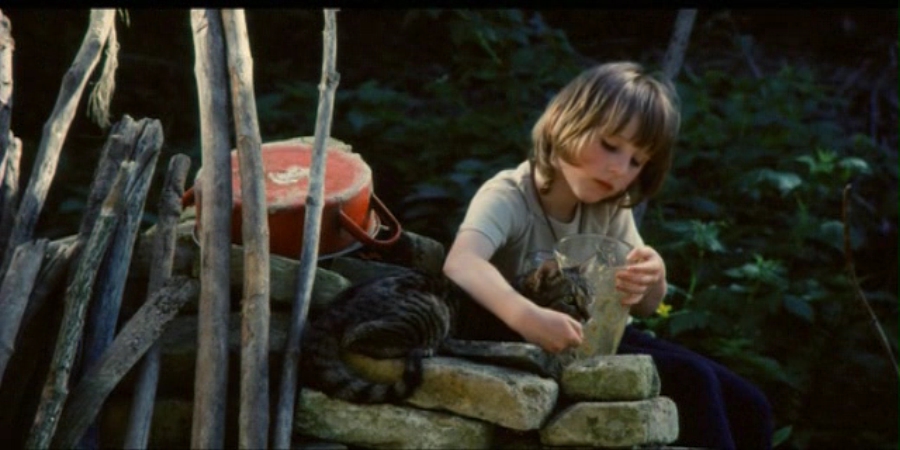
As the most prominent figure of Hukkle, its befitting one of the first images we begin with is an old man, his face a tapestry of age, hiccupping on a wooden bench outside, intercut with a geese trying to eat by sliding its head through a fence. A rickety bench, it wobbles as ants scatter underneath, as predominant as he is rather than isolated background features. Thus Hukkle, the debut of underrated director György Pálfi, begins...

We rightly celebrate the cinema of Eastern Europe. Czechoslovakia had a rich heritage of great films, with Slovakia as a separate country now rightly claiming the films shot in its borders as its own, and the now Czeck Republic still creating distinct films. Poland has a legendary history as equal to it in cinema, as does Russia. Estonia is growing in interest, new film films like November (2017) creating a unique language of their own, and we know Romanian cinema well around the world. We must not forget either countries from the region with their own histories of cinema - Ukraine, Lithuania, Slovakia, Serbia and Montenegro etc. - or even a country like Bulgaria who, unfortunately, are more well known for straight-to-video films being shot there when American based locations aren't available, rather than their own cinematic heritage1.  Hungary, the subject of today's feature, is a huge influence on this movement of Eastern European cinema, but we are in danger of forgotten sons and daughters being forgotten from the recent decades who have contributed to innovating and unique cinema.

One such figure is György Pálfi, whose reputation comes from the notorious Taxidermia (2006), a triptych of three decades of Hungarian culture which is slightly revolting. However most of his career, sadly smaller than I wish it was, is unavailable; I can understand a film like Final Cut: Ladies and Gentlemen (2012) being a nightmare to release, as it creates a new film from pre-existing copyrighted material from major classics, but you also have Hukkle, film as pure audio-visual spectacle following a small Hungarian rural town. No musical score until the end credits, no dialogue in the slightest until one of the last scenes (where the plot revelation explaining everything is sung at a wedding), but entirely filled with the diegetic sounds of nature, rural life and fine culinary arts.

The plot is very simple if you piece the narrative fragments together - that the women in the village are poisoning the men with belladonna liquid provided by an elderly woman. To those who want it to remind a surprise, I'll obscure the narrative and only mention in easily readable text the fact that people (all men) are abruptly dying in the town for suspicious reasons, all whilst Pálfi shows us the natural and rural world that weaves around this scenario and human society in their own world.

It is slow, meditative cinema except that the director/writer belongs to a type of filmmaker from the 1990s but especially the 2000s who broke down art cinema into a level of unpredictability that could even win over cult film fans and, growing up in the 2000s and slowly getting interested in the reviews of these films from 2005 onwards, made these filmmakers with their more controversial films (like Taxidermia) get emphasis in mainstream British film magazines like Total Film. Beyond this however there is a greater sense with someone like Pálfi of all the tools and influences of cinema being at hand, comparable to idiosyncratic Hungarian filmmakers who came around the same time like Kornél Mundruczó, who can take a superhero origin plot with a realistic drama and make Jupiter's Moon (2017), or even Nimrod Antal, who did get lost in Hollywood but qualifies for his debut Kontroll (2004), which is a surreal murder mystery set within the Hungarian subways. The kind of film Hukkle is means Pálfi constantly shows you new layers to this world, between the contemplation of meals being made to the perspective of a mole under the soil, the creature's perspective one of many alongside countless other animals and insects we see. Then, randomly, an airplane flies close to the ground in a shot that I'm still trying to grasp, or we even see an x-ray of a character eating food, witnessing it go down the gullet with tension in a shot that does show the few moments where the CGI has dated but doesn't dampen the ambition.

From http://4.bp.blogspot.com/_atW2inZj-G4/TG-H8FrOR8I
/AAAAAAAABfA/xupcTEe4OHQ/s1600/hukkle_screenshot_4.png

As a result, with little dialogue at all, you experience the film in sound, in the mood, in the images, but here is a whole world that gleefully amuses in crudeness as well as entices with beautiful images, men playing a game of bowls suddenly cut to an extreme close-up of a hog's bulbous wobbling testicles, belonging to a stud walked by his owner down the road to impregnate other peoples' sows. The worlds of animals is that as vivid as ours, their voices as vivid and distinct in the soundtrack between various insects (ladybird on a girl's ear buds for a music player), birds, amphibians (a frog swimming before its unfortunate demise by trout), and mammals who all pass each other occasionally but other times live outside each other and human society in its nefarious Midsomer Murders level of body count and suspense.

The story, if you are eagle eyed (or know your botany), can be pieced together with ease, and can be seen to be precisely built up, but Hukkle without any spoken dialogue doesn't speak in exposition in the slightest, instead telling this tale in the world of ordinary life between cooking, interaction, work in a sewing factory, police cars having to reverse down a road to allow farming equipment to move along, and various moments between intentional laughs and fascinating vignettes of ordinary life in human and animal life. Arguably, the film is an avant-garde production but that doesn't negate immersion, rather than forcing one's attention to abstraction filling it with details which we have a terrible tendency in mainstream cinema in negating the importance of, and how it's all captivating when spotlighted on. Certainly, for those who are easily hungry, the amount of cooking in this film is bound to have an effect on foodies, which I haven't exaggerated for comic effect.

The humour is found, a black sense of humour which is found throughout in the cutaways and tone, our hiccupping old man the one person Greek chorus who merely looks on at the world around him in peace, even having the post-end credits sequence happy in his own world. The reference to Midsomer Murders might go over the heads of my non-British readers but are poignant here; imagine a British Sunday night television drama that has lasted many seasons, always following murder mysteries within a rural community, middle class rather than Hukkle's working class, with so much murder taking place in just one episode the population would've been at negative, evoking as much Hot Fuzz (2007) without the action scenes. Hukkle would've been a detective mystery, only with a cop who seemingly has a mullet under his uniform hat, were it not the fact György Pálfi is interested in the natural ecosystem to co-exists within such a tale, and the ordinary humdrum life that would not be depicted in a show like Midsomer Murders, even the jokes like the reversing cop car shot in long shot sideways down a country road. Even the mystery is a banal one, stemming ultimately from folk culture with a dark smirk to what it is entirely about.

Helping is the Hukkle is less than eighty minutes, containing a fully fleshed out plot with this style fully felt and immersive, so it manages never to have too little or feels pointlessly padded. It proved a great start for Pálfi who, with Taxidermia as his follow up, effectively continued his obsession with Hungarian culture but definately ramped out the crass humour and even blacker humour, this offending the masses. Sadly, after that film, he's become obscure. That's an absolute shame as revisiting a film as Hukkle enforces how the innovations of Eastern European cinema were still strong into the Millennium onwards.

Abstract Spectrum: Avant-Garde
Abstract Rating (High/Medium/Low/None): High
From https://ilarge.lisimg.com/image/9048934/900full-hukkle-
---------------------------------%282002%29-screenshot.jpg

====== 
1) Not to insult straight-to-video genre films shot in Bulgaria. It just sad, how as Canada is used to represent American cities, like being forced to dress up as the metaphorical girlfriend/boyfriend unavailable and more longed after than the location used itself.

Saturday, 20 July 2019

In Fabric (2018)


Director: Peter Strickland
Screenplay: Peter Strickland
Cast: Marianne Jean-Baptiste as Sheila; Hayley Squires as Babs; Leo Bill as Reg Speaks; Gwendoline Christie as Gwen; Julian Barratt as Stash; Steve Oram as Clive; Barry Adamson as Zach; Jaygann Ayeh as Vince; Richard Bremmer as Mr. Lundy; Terry Bird as Bananas Brian; Fatma Mohamed as Miss Luckmoore; Sidse Babett Knudsen as Jill; Fatma Mohamed as Miss Luckmoore

[Some Spoilers Throughout]

Peter Strickland returns, and I can confidently say, baring an interesting tangent to watch filming a Bjork concert, he's qualified as an auteur now. Thankfully he's the definition I feel an auteur should be - distinct style, obsessions, and most importantly a sense even if he was a working director more than someone with control over his work that any genre or type of film in his hands will still feel like his work, where every film I wait for is as distinct and worthy of dissection as the last. That said, even if arguably the same Strickland world of The Duke of Burgundy (2014), which was strange enough, he's somehow topped himself and made In Fabric weirder. It was apt I went to a subtitled cinema screening by accident as, not only did it help appreciate the nuisance of Fatma Mohamed's dialogue, as a female Nosferatu shop assistant, or the nuisances of washing machine maintenance technical speak, but it fit a film that can be best described as legitimately surreal already.

In Fabric is fascinating already as, presuming it was set in the past because of the fashion, the late sixties to mid-seventies in hauntology and nice cloth wear, the characters and their scenarios are of the modern day. Strickland is openly indebted to his influences - Euro horror and erotica between Jess Franco and Jean Rollin - but exactly as with Hélène Cattet and Bruno Forzani, he isn't an imitator, instead taking these aesthetics and creating new art from them. In this case, the premise was of a cursed dress, but I couldn't help but have my own interpretation of the film being as much his satire about the modern day, between horror and comedy, of not only consumerism but even the malaise of neo-liberalism of morality and social behaviour turned into a series of banal, ever present spectres.

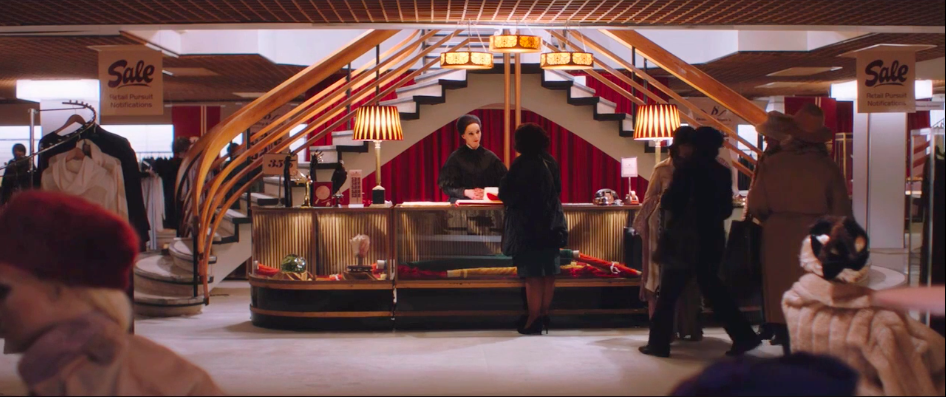
The dress, bold crimson red and likely vampiric, has multiple owners as, in a twist of the plotting structure, this film is actually of two halves. The first is with Sheila (Marianne Jean-Baptiste), a divorced older woman, her son Vince (Jaygann Ayeh) a young adult dating a much older woman (Gwendoline Christie) with his own kinks, who buys the dress for a lonely hearts date. The dress is naturally alive and evil, but the story is as much her life and the dress store of origin. Sheila's own life though is also that of disconnect from her son and, in lieu to my theory, a bank job where (with Julian Barratt and Steve Oram as am ambiguous couple and her scene stealing managers) one is reprimanded just for taking too long for bathroom breaks and there is a leaflet for a proper hand shake. Even without the creepy clothing store with hypnotic ads and a tubing system rather than a cash machine, she lives in a strange and suffocating world of deadened existence, emphases by the second half introducing the characters of washing machine repair man Reg Speaks (Leo Bill) and his fiancée Babs (Hayley Squires), emphasising an empathy for these two working class characters as, with Sheila's tale being more serious horror and their's a pure kitchen sink farce, everything around them is just sinister and/or part of what is revealed to be a reality bending conspiracy.

From https://m.media-amazon.com/images/M/MV5BZGU2ODVhNzItM
TY3ZC00ZWY2LWI1NWQtNzQ2ODVjNzY3Nzc2XkEyXkFqcGdeQXVyMTc5OTQwMzk@._V1_.jpg

Comedy has been seeping further into Strickland's career from Berbarian Sound Studio (2012), his debut Katalin Varga (2009) (an art house take on a rape revenge film shot and set in Romania) the other anomaly in hindsight. I wasn't expected it, however, to be as pronounced as it is in In Fabric, probably emphasising the curious tangents somehow as well, despite being only a fifteen certificate in the UK, how far we can push explicit sexual references as long as you just hint the literal flying semen and not where it comes from, the aforementioned scene managing to be kinkier and weirder than more "extreme" films involving a fetish for mannequins. Legitimately funny, deadpan humour surfaces throughout the film, never compromising the legitimately haunting sequences, making curious bedfellows however made for each other.

Sex and the subterranean in desires is a huge part of the film in general, the entire story with an entire air of absolute strangeness that stands out even in Strickland's filmography. The difficult, strained relationship between Sheila and Vince's girlfriend Gwen; the whole quasi-gothic nature of the clothing store with bleeding (?!) mannequins; the intentional humour; even that Julian Barratt and Steve Oram have a rack of Edwardian period costumes just in their meeting room, meant to be there for them to encourage people to wear them with them (even for hand shake practice to make "it easier") for some obscure obsession. I nearly forgot to mention the dream sequences for this film, where Barratt and Oram's characters are obsessed with asking people about their dreams, leading to two, one more haunting, and the other involving a birthing that is batshit bizarre. 

Aesthetically as well, Strickland pushes himself further, as his first film actually set in Britain, openly embraces what has been called the "Hauntology" idea of cultural haunting of British seventies pop entertainment and culture but dragged into the modern day. Synth, very comfy and innocuous aesthetic styles, photos and images of the time period researched from archives (even those in Sheffield, the city I had to go to so I couldsee the film), as well as a score from Cavern of Anti-Matter who, considering among the instruments they used include "twigs" as well as obscure electronic equipment, is at times playful and others utterly alien to the 2010s and any other time period for that material. Between everyone working on the film and all you see as well, the film emphasises how British Peter Strickland is - in that, as we expected a horror tale about a dress, which he delivered, I found myself watching a film deliberately going off into tangents, becoming surreal, including locations like a charity shop or a stag party, which are very British idiosyncrasies, intermingling with the clear influences taken from European cinema and its lurid underbelly.

And it's unpredictable in the best ways, challenging in the sudden second act switch which undercuts the viewer's predictions or how, in the end, the climax is a massive riot in the clothes store rather than the slow burn supernatural story we were originally presented with. Thankfully as well this never undercuts its premise into something predictable, the red dress a diabolical entity never turned into a banal creation in a lot of boring horror, but something else as (according to the ending reveal) its shown to be a parasitic entity who devours and claims souls constantly, all with intentions of continuing. And it's a weird film. Very weird and for the better.

Abstract Spectrum: Abstract/Grotesque/Mindbender/Weird
Abstract Rating (High/Medium/Low/None): Medium


From https://www.ihorror.com/wp-content/uploads/2018/11/IF1.png

Thursday, 18 July 2019

Surviving Edged Weapons (1988)


Director: Dennis Anderson

Screenplay: John W. Randle
Cast: Mickey Dawes; Leo T. Gaje Jr.; Dean Gilmore; Kathleen A. Handal; Robert Henke; Dan Inosanto; Gary Klugiewicz; Jan Lewis; Richard Menzel; Kevin Parsons; James Phillips; Ronald Rolland as the Narrator
Obscurities, Oddities and One-Offs

It has been such a long time waiting to see Surviving Edged Weapons which is, yes, an instructional video for the police, produced in Milwaukee in Wisconsin, about the dangers of knife attacks. The reason, however, this film has been slowly developing a little cult, even deserving an even wider access, is that if you have to point to an instructional video to represent this medium, there's nothing else quite like Surviving Edged Weapons in existence. Over a feature length it has real emotionally sobering honesty about the harm knives can cause, including real images I have to warn of before anyone goes watching the film, eighties USA hysteria over crime, and pure madness. Never, dear reader, would you think an instructional video on knife injury would begin in prehistoric time with cavemen (actors in costume and fake wigs) shanking each other. Yes, you still take this subject seriously, the film not shying away from the trauma and injury the police officer testimonies talk of, but the director and production had ambition, and literally through the Dawn of humankind, with Leonard Nimoy approved voice over, to no budget action film set pieces they keep the viewer on the edge of their seats in the bizarre content on display.

Because of these details, and those yet talked of, the experience is complex in watching Surviving Edged Weapons, difficult at times to sit through due to its content. Suffice to say, all the real material can be gruesome (close ups of real wounds including of the dead), shocking (real footage of an Asian country where a man slashes multiple people at a crowd gathering), dumbfounding (a fork managing to be shoved DEEP into a chest), and sad (the testimonies, especially the last which ends the film with a male police officer in tears). Where the infamy comes is in the recreations, between director Dennis Anderson having clear ambitions of spectacle and some utterly nonsensical creative choices. In anticipating the unexpected, this envisions a cop knocking on a door with a warrant only for the disturbed home owner to be sat dishevelled on a chair with a broadsword near the door, one which does get used. A knife blade is attached to a petrol tank cap and razors are suggested as being attached to baseball caps as if a common threat. In the section later on teaching you how to scan and monitor an environment for danger with an acronym, the film of all things has cops bursting in on a woman conducting a Satanic ritual, Iron Maiden poster on the wall to add to the eighties paranoia with Satanic panic, as if it's a normal trial for the American police at the time.

Even when the hypothesized scenes aren't as out there, there are many details to consider. The director clearly wanted to make crime films one day, even on an instructional video budget trying here, so even if it's tentatively about the virtue of keeping cover, the film spices this important message by depicting it through cops raiding a drug bust straight out of a straight-to-video action movie. Some of this material, mind, is legitimately fascinating - moments like how, if a police officer is severely wounded, they control the situation and help themselves through stab wounds - but other times you bask in the rich Milwaukee accents, and witness the over-the-top-scenarios and moments of pure cheese.

From https://assets.mubi.com/images/film/
193169/image-w1280.jpg?1515366942

Obviously, as an instructional video, the notion of "entertainment" is very subjective. It is informative, if visibly laced in scare tactics - in this world, many people carry more than one knife on their person at all times, or have a broadsword, or in the most abrupt wig splitting scene possible, a butch muscle guy can appear at a domestic dispute with a cleaver abruptly. The film extrapolates various ridiculous if still nasty looking improvised weapons, even in a driving license. Hysteria is felt, from the abrupt satanic ritual to how prevalent knives as a dangerous weapon can be. Yet the point of an instruction film like this is to protect its officers and it gets into some legitimately poignant ideas. Complacency, putting yourself at risk as an officer by not fully checking a bystander or preventing someone getting a drop on you, is a very big and significant aspect of the film it deserves praise for emphasising.

Whilst the scene can be comical, the various versions of a stabbing where the distance between an officer and a criminal is constantly increased, until the point an officer can safely unsheathe their gun and prevent themselves from being stabbed, is interesting to watch1 as the film, for all its farce, does talk about the messiness of a real fight, and depicts it, in a way for more realistic and of importance to depict than any action film. (Horror as well as, including a shot of horror VHS tapes like Halloween (1978), rather than going into hysteria over violent films the video instead refutes the idea of the stereotypical way a knife if used in slasher films, front downward stabs, in favour of real life blade related violence being chaotic and liable to slash and attack any part of a bystander or police officer's body). It's also important in emphasising how dangerous merely an inch of a sharpened object can be, even an improvised blade in context able to main and even kill someone if an individual isn't prepared. We may find it funny during a scene that someone caught speeding threatens an officer in full thick Wisconsin accent, but it is apt to recognise anyone might argue back in such a situation, wave (as this person does) as something as tiny as the blade on a Swiss Army Knife, and have to be dealt with safely. Said actor, who plays various other roles, also relates the real incident where his face was splayed open by a knife as was "flapping in the wind", requiring surgery as a result; even if his out-of-blue exclamation of such events being "all over sports fans" is colourful he utters it with full sincerity directly to the camera as someone speaking from true trauma.

And I feel that avoids the potentially gross offense to view Surviving Edged Weapons ironically. Its moments where real death or injury are depicted, like a more morally conscious Faces of Death (1978), are uncomfortable, revulsion found in some of the weapons improvised like the fork mentioned paragraphs earlier, whilst the scene of a real incident at an Asian public event is used for emphasis, within seconds, in how multiple people can be harmed immediately if someone is allowed to attack without being prevented to. There is a sense, uncomfortably timed, of how I have watched Surviving Edged Weapons in the midst of a huge increase in knife crimes within England in the late 2010s, especially among teenagers with many tragic deaths. I will not trivialise this concern, that has been talked of in media and even had Donald Trump tweet about it, but considering how serious the film takes its subject, it does feels like a sobering reminder that, whilst there is humour and dated material here, the instructional video feels prescient in the need for its existence, even a version to exist for teaching the public nowadays.

The reason we can laugh is that, with knowledge director Dennis Anderson and everyone on board the production was creating an arguably noble and morally righteous work, everyone involved should be thanked for this work regardless. We can laugh because, separate from the serious material which is treated seriously, they made a film which starts with cavemen; that it has abrupt cameos of Satanists; that it has unintentional comical exaggeration; it has men running at officers with machetes or the narrator blankly mentioning the term of a "martial arts yell". Even the real life examples, like a man throwing pieces of glass at officers off his room, with knowledge no one was harmed, show the absurdity that can take place in these incidents but unlike the fictitious ones come as a reminder of how the unpredictable can happen and should be prepared for. So, yes, entertainment is here but so is an informative document, a historical object of real interest, and a sombre rumination of these issues. The emotions will vary violently throughout as a result, but it becomes better as a result.

From https://i.imgur.com/y97jsaPh.jpg

======
1) This "21 foot rule", which is part of what is called the Tueller Drill, teaches an individual to recognize and react to an approaching threat crossing a set distance of 21 feet. It's to be debated but, having been the influence for the video to include this as a major sequence, it's a rule which (in its various interpretations) is of great interest as an outsider to law enforcement to learn of especially as its be apparent subject to debate too. Even if there are many variables which could undermine the specific nature of the rules, its point to also influence a person's judgement and reaction time to a threat is still a credit to its existence. Teaching about "situational awareness", its importance for helping American law enforcement in protecting itself is of interest, and probably would be of benefit, modified, for a bystander to protect himself or herself from such a threat. Hell, if Mythbusters effectively tackled this rule when they tackled the famous phrase "never bring a knife to a gun fight", ideas to ask about how to safely deal with a threat carrying a knife will be worth discussing even if with many revisions.

Tuesday, 16 July 2019

Othon (1970)

From https://acmi.s3.amazonaws.com/media/thumbs
/uploads/images/Othon.jpg.0x600_q85.jpg


a.k.a. Eyes Do Not Want to Close at All Times, or, Perhaps One Day Rome Will Allow Herself to Choose in Her Turn
Directors: Jean-Marie Straub and Danièle Huillet
Based on the stage play by Pierre Corneille
Cast: Adriano Aprà as Othon; Anne Brumagne as Plautine; Ennio Lauricella as Galba; Olimpia Carlisi as Camille; Anthony Pensabene as Vinius; Jean-Marie Straub as Lucus (as Jubarite Semaran); Jean-Claude Biette as Martian

With Jean-Marie Straub and Danièle Huillet again, we have here a legitimately difficult film, an adaptation of a stage play by Pierre Corneille set in Ancient Rome, a series of political and romantic strafes set within the short-lived rule of Emperor Galba, in which ambitious senator Othon finds himself next in line in the power, his mind distracted by being unable to love the woman he desires, who has been forced into the arms of the infamous Roman Emperor Nero. Two young women, Camille, Galba's niece, and Plautine, daughter of the senator Vinius, are in love with Othon. Unfortunately a series of manipulations and power plays will everyone dissatisfied or corrupted, particularly as Lacus (co-director Jean-Marie Straub) wants to keep Orthon in power, and Plautine's father Vinius is trying to manipulate Orthon for his and his daughter's sake even if it means sacrificing both his daughter and Camille.

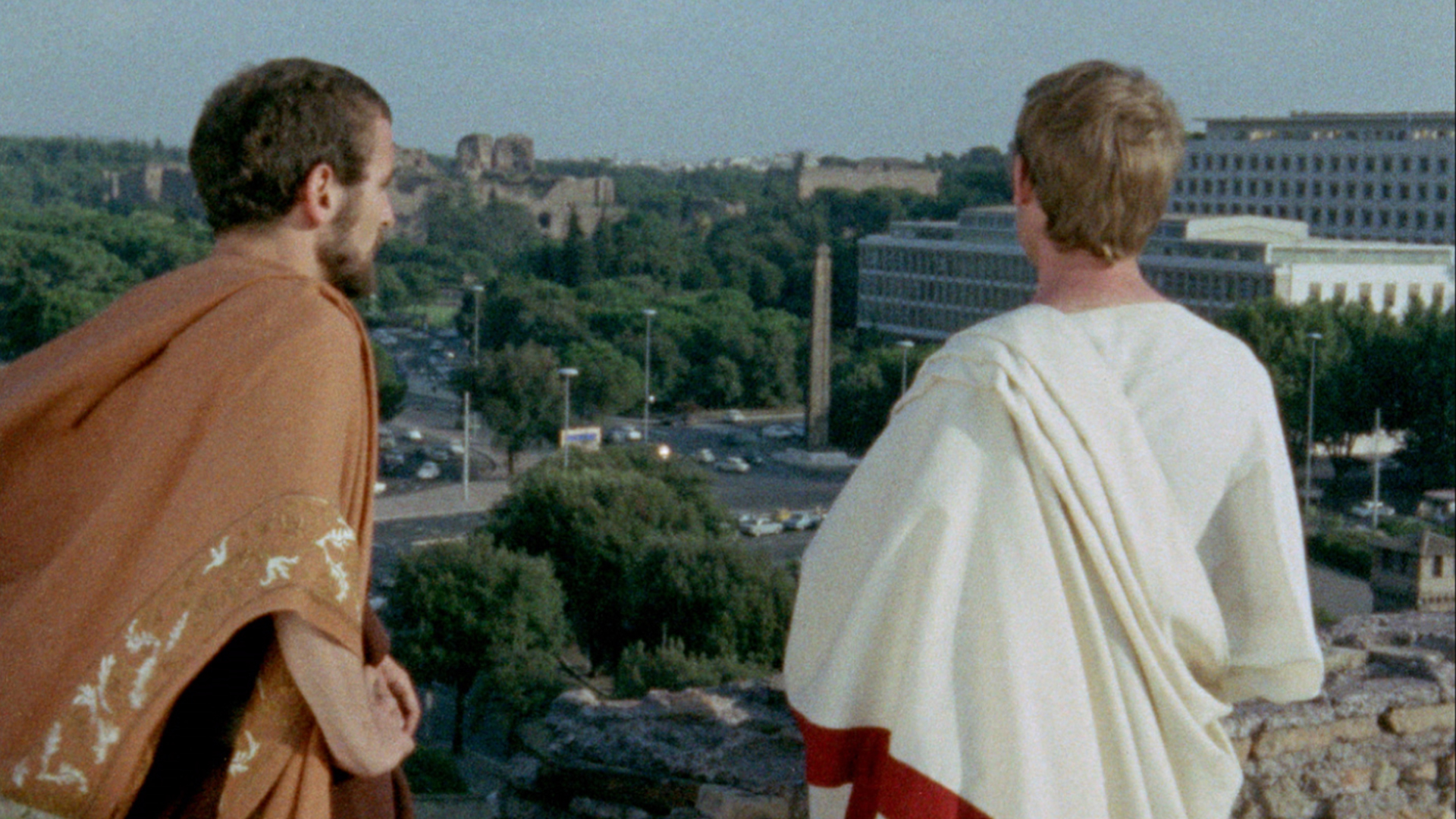
All that is witnessed is intentionally set as having universal illusions to the follies of people - emphasised as whilst the cast are actors in appropriate dress, they're filmed in regular Italian environments of the time, right in front of backgrounds of cars and streets below, immediately jarring and creating an effect on the viewer. The initial scenes on a hill overlooking the metropolis behind these characters, far from comical, actually have a great effect in showing these characters existing in a timeless state, like ghosts, whose ancestors would keep finding themselves in these scenarios regardless of time and dress.

From http://store.grasshopperfilm.com/mm5/
graphics/00000001/Othon_101.jpg

Orthon
, for me, is an artistic failure but with not want of ambition, an admirable attempt at breaking audience connection with the work to pieces and rebuilding the relationship. Orthon is dense - even next to Robert Bresson's minimalist (and amateur-cast) performances, the dialogue is quickly spoken here, even hastily spoken at a rapid fire, bluntly with little emotion, with the added factor that Danièle Huillet was interest in having the subtitles drop out of purpose which has continued on past her death in Orthon's screenings, leaving (in the version I saw) entirely un-translated scenes. It is almost all minimally shot, though tracking shots of the cast walking around do occasionally happen and stand out artistically as we follow their lengthy conversation in motion. There is also, unintentionally funny at times but also possibly an intentional influence from (of such unexpected a place) Straub's love of directors like Ernst Lubitsch and Charlie Chaplin, a tendency in the midst of long scenes for new participants to abruptly appear on camera as if they have waiting in the wings patiently, a technique that I have to confess is a distinct and creating style you would have to consider using as here rather than abruptly allow to take place. Again, despite the directors' reputation for sternness through the tone of Orthon, it still has a precise style. This is more so as, later on, the locations leave the city panoramas to within woodland, by old fountains, and locations which feel closer to these Ancient Romans even if jarring to our perceived image of them.

The issue is that, the cast always stood still or sat still, you need to engage the viewer even if you desire to obfuscate and/or frustrate them, or the art is pointless. This is another film from these creators which needed to be rewatched, which does help clarify the drama, but unlike Not Reconciled (1965), which innovated in narrative presentation, Orthon especially on another viewing feels pointlessly obtuse. There is no real sense of gain for them from being this flat, rather than minimal, when Robert Bresson's style lead to a stripping away of artifice to find real emotion. Orthon's visual style is still standing out, deliberately contrasting period drama to the then-modern day, but the issue for me is that, whilst a strange suggestion, so much of the cast is just sat or stood around when there should have been minimal drama just from some more movement or some attachment to the material beyond what is seen. Instead, the experience is like watching living statues with a lack of specific reason for their placement.

Again, I view Orthon as a noble failure, as it's a concept which I see the intention of, the universal nature of its drama not dissimilar to the modern day, the juxtaposition infesting to me too. Even the drops in subtitles, like Jean-Luc Godard's later 2010s work, force the viewer to focus on those you do have onscreen and the images when the text vanishes. The structural ideas meant to obfuscate the viewer actually focus one's attention, leading you to avoid the usual habit, which afflicts even me with some films, of drifting off in other thoughts and keeping one alert to properly engage with the material. The stiffness of the performances, however, feel inappropriate, especially as films like Not Reconciled have gained so much more from a minimal but still emotionally engaging acting style that suited Straub-Huillet and still kept to their desire to clearly strip it of all contrived heightened emotion. One little flaw is enough to mar a great concept with Orthon as a result.

Abstract Spectrum: Avant-Garde/Minimalist
Abstract Rating (High/Medium/Low/None): None


From https://jojud265nia2bj9sy4ah9b61-wpengine.netdna-ssl.com/
wp-content/uploads/2017/11/Othon-5-1600x900-c-default.jpg

Friday, 12 July 2019

The Brown Bunny (2003)

From https://posteritati.com/posters/000/000/
053/717/the-brown-bunny-md-web.jpg


Director: Vincent Gallo
Screenplay: Vincent Gallo
Cast: Vincent Gallo as Bud Clay; Chloë Sevigny as Daisy; Cheryl Tiegs as Lilly; Elizabeth Blake as Rose; Anna Vareschi as Violet; Mary Morasky as Mrs. Lemon

The Brown Bunny...a very banal title, actually in reference to a pet rabbit the main female character had, this figure the obsession of motorcycle racer Bud Clay (Vincent Gallo) who only materialises as Chloë Sevigny near the end but instead becomes a spectre hanging around this existential, slow cinema mystery. The term "Brown Bunny" however, if referenced amongst knowledgeable cineastes, evokes one of the most infamous premieres at the 2003 Cannes Film Festival where the second directorial feature of character actor Vincent Gallo played. Gallo is someone who has always come across as deliberately annoying or offending people on purpose, rather than a lot more problematic figures in cinema history who have actually done absolutely despicable things or sincerely say offensive ideas under the guise they sincerely believe in them. If "shit stirring" every got into the English dictionary, Vincent Gallo's portrait should be sat next to the definition just in lieu to how the fallout to The Brown Bunny screening went, between the apparent caterwauling and boos from critics, to the ongoing trading of barbed witticisms between Gallo and the late film critic Roger Ebert.

Question is, did The Brown Bunny have any actual merit beyond the controversy, stemming from the notorious ending sequence involving explicit (real) oral sex,and what does one reflect upon when you revisit the film a decade plus after its buzz of notoriety?

The immediate issue with that answer is that, well, ninety percent of the film is incredibly minimal almost experimental (if not experimental) cinema which is entirely on mood, and eventually is dependent on that finale to work. Aware the notorious Cannes cut was originally around two hours, having thirty minutes trimmed away in places like the opening race, a lot of The Brown Bunny is Gallo in character driving around various locations in numerous US states, a cross between Chris Petit's 1979 minimalist road movie Radio On, right down to vignettes with characters the protagonist encounters, with an extreme interpretation of Michelangelo Antonioni, befitting as set in the US and a desert at one point this immediately evokes Zabriskie Point (1970) if the Italian maestro had gutted all the free love and counterculture symbolism of that film.

Of actual praise, on the get go, is that The Brown Bunny is at least incredibly well made with a distinctive style, really emphasising the bold creativity of American independent cinema even into the 2000s. Gallo shot the film in 16mm and as a result, with every shot looking like it was sun kissed, the grainy images created are absolutely enticing. In the malaise the entire film is, a languid pace of minimal dialogue and that which is there through Gallo being very quiet onscreen, it would be easy to block out how much of the American landscape is also used, from the urban to the rural, from motorways to suburbia, or how appropriately melancholic and effective the soundtrack choices are, particularly the country songs.

From https://assets.mubi.com/images/notebook/
post_images/21379/images-w1400.jpg?1463290375

Gallo
, in spite of his reputation and notoriety back at this time, which including (whether serious or not) rumours of him wanting to sell his own semen or bigger controversies of him saying offensive comments, had a fascinating career as a character actor. He's not been helped by his bluntness or his lack of filter in his comments, which has imbued accusations of being an utter egotist. Yet you look at his filmography and its fascinating - he has been with Claire Denis in her English/bilingual films with the exception of High Life (2018), like Trouble Every Day (2001); he made an impression in Emir Kusturica's American film Arizona Dreams (1993) just for the scene where he recreates the crop-duster sequence from North By Northwest (1959) onstage; or his interesting turn in Tetro (2009), one of Francis Ford Coppola's "experimental" films. He is also in The Brown Bunny, for any accusations of ego onscreen or how uncomfortable the finale scenes are, incredibly quiet and even isolated in terms of how he plays the character of Bud Clay, to the point of extreme introversion that few director-writer-actors would willingly want to portray. Even if introversion can be egotistical, a woo-is-me aura that could accidentally be created or unconscious, Gallo's scenes with the few character interactions with his mumbling and guardedness are so distinct especially when little of the film is with any "action" or "scenario" that the mood tempers this potential issue.

The content of the first three-quarters is entirely minimalistic - starting with the aforementioned scene of Gallo racing, and spending his time drifting across the country aimlessly. He shuns most contact, as with the case of passing various female sex workers on the street, or acts in a difficult strained way, asking the last of the former he meets to just follow him about before he abruptly changes his mind. A character called Daisy (Chloë Sevigny) is for the most part an off-screen figure, known only through her elderly parents and the titular bunny. It's slow, at times exasperating, yet its intentionally a mood piece, coincidentally running current to a trend in Gus Van Sant's filmography of a similar style, between Gerry (2002) and Paranoid Park (2007), of a similar obfuscation and emphasis on mood. The exact slow pace of time is felt according to regular time outside of cinema in The Brown Bunny, the emotion more found in that aforementioned score. Also in lieu to where the film ultimately leads to, a tragedy that haunts the lead, The Brown Bunny ultimately is a film structured on this trauma and only wraps together coherently depending on its reveal.

[Major Spoiler Warning]

Of course, the denouement is notorious for, when Daisy finally appears, an explicit sex scene including actual oral that riled up many*. It was a huge risk for Chloë Sevigny, as an actress with a considerable stature at the time of the film, where a huge distinction is still made between actresses in cinema and actresses who star in adult films where real sex takes place; even those films which have real sex that aren't in the adult genre, it is still a tendency of non-actors or unknowns, as Canadian broadcaster Sook-Yin Lee found when, staring in Shortbus (2006), the Canadian Broadcasting Corporation considered firing her for that film's real sex scenes she participated in until fans and celebrities criticised them. Thankfully, having talked about this film in the last few years, Chloë Sevigny not only has no regrets about The Brown Bunny, saying the scene was done with care for her concerns, but also, as an actress I have always liked, she's never been out of work.

It's also an uncomfortable sequence because Gallo's character starts using misogynistic language in the midst of it, with violence felt within the scene, but its revealed as the damaged trauma of a boyfriend who lost his girlfriend (and unborn child) in the midst of a part where she was gang raped, a literal phantom as he ends up curled up in the foetal position in that room.

[Spoilers End]

The finale, when all the reasons behind Gallo's character acting his way is revealed, is abrupt, never brought up as little premonitions in the film before, and all a sudden jolt after the trance of before. Does it work? Entirely subjective, but Gallo's at least trying a very complex characterisation. Any accusations of ego is also undercut by how much of the film he (even if unintentional) comes off as vulnerable and disconnected from his environment; and in lieu to the revelation, he builds and argubly justifies why the film is structured as it is. Its, from then on, where it is subjective; a lot of the notoriety and anger at Cannes, the crowds there at a drop of a pin to jeer an unconventional film by all accounts, just comes from how extremely glacial the initial cut probably was and, yeah, the whole issue of depicting real sex in cinema with two known actors. In truth, with the layer of subjectivity that can be a virtue and a flaw with American independent cinema, it's so open to interpretation you the viewer are forced to think about The Brown Bunny long afterwards. No wonder Gallo took his ball home after the welcome he got, whether you agree with this review or hate the film - he only made one other film after this at this point in his career, Promises Written in Water (2010), which he screened at the Venice Film Festival and Toronto International Film Festival, but purposely hasn't released it since.

Abstract Spectrum: Minimalistic
Abstract Rating (High/Medium/Low/None): None


From http://motorcycleboy.fr/wp-content/uploads/
2015/02/TBB_02__1422994718_2.216.89.3.jpg

Monday, 8 July 2019

The Spirit (2008)

From https://i.pinimg.com/originals/26/36/14/
26361421e21fa3ca4e36b9f18572e123.jpg


Director: Frank Miller
Screenplay: Frank Miller
Based on the comic book series created by Will Eisner
Cast: Gabriel Macht as Denny Colt/The Spirit; Samuel L. Jackson as The Octopus; Scarlett Johansson as Silken Floss; Eva Mendes as Sand Saref; Sarah Paulson as Ellen Dolan; Stana Katic as Morgenstern; Louis Lombardi as Phobos, Logos, Pathos, Ethos, Bulbos, Huevos and Rancheros, Mangos, Adios and Amigos, etc.; Jaime King as Lorelei Rox; Paz Vega as Plaster of Paris
Obscurities, Oddities and One-Offs

If American comic books were more value for money, like Japanese manga, or I could afford them I'd read more of this medium. I'd naturally scan the obscurer and idiosyncratic creations in the superhero genre rather than Spider Man and Superman - the failures, the cult heroes, the acclaimed work like Alan Moore's run of Swamp Thing, and significant figures of history deserving more eyes like Will Eisner's The Spirit. Annoyingly, Eisner's acclaimed creation is less available then his later era rejuvenation into a graphic novel writer, Eisner's legacy including the Eisner Award existing named after him as the standard of great comic book/graphic novel work based as much on his transformation into the likes of A Contract with God (1978) as it has been the man in the forties who created Denny Colt, The Spirit, and leap genres on those pages in a single bond. I have an unfortunate gut feeling, whilst this review isn't going to go down the route expected for the notorious adaptation by fellow graphic novel creator Frank Miller, that the 2008 adaptation of The Spirit for the cinema and its failure has left a spectre still needing to be exorcised.

The Spirit is no way near as bad as its reputation suggests, but let's not kid ourselves either that we have a film that is both all over the place but in this curious position of not being weird enough, inappropriately strange, and a mess. It does feel like the first film in a director's career, as I have always viewed his co-directing with Robert Rodriguez of Sin City (2005), based on his own comic series, was a faithful (even panel to screen transition) adaptation where the author was there more to bring it to life with his thoughts, a very different type of work than taking another creator's work and making an entirely new story for film from it. Using dominantly green screen as with Sin City, Miller does have a lot of room for improvisation, but he chooses directions that, for obvious reasons, raised many questions.

We will get to Samuel L. Jackson, as the villain the Octopus and beholder of some of the stranger creative choices, proclaiming toilets are funny and such things, later but the immediate curiosity with The Spirit is that its tonally scatterbrained, between Gabriel Macht as the hero speaking very sombre Miller style monologues of his true mistress being the city itself, against incredibly silly slapstick humour like The Spirit  losing his trousers down to his ankles in the midst of escaping a perilous drop off the side of a building, all with the Octopus (alongside Scarlett Johansson as Octopus' henchwoman) being played off as comedic villains from the get-go, what with their cloned minions (all played by Louis Lombardi) who are complete idiots wearing pun based black t-shirts. I see how, in a comic book, the passage of time would be clearer - for a film, where time is told different, the results here are hectic in its tonal shifts.

The humour itself is also not particularly funny, just perplexing in how odd it gets. You find yourself with a one scene kooky French sword fetishist called Plaster of Paris for one scene, in a skimpy Parisian belly dancer costume walking bare feet (and nearly bare) in the snow, having just skewered the Spirit on a whim, and you are wondering the hell was meant with the character. You don't get enough time to as ingest this as you immediately find The Spirit on death's door, his apparent immortality with limits as Death herself Lorelei (Jaime King) looks to claim him. Seriously, between this and the abrupt melting of a cat named Muffy a scene earlier, you don't get time to digest this material before another out of place joke or odd change appears.

And yes, let's go back to Muffy, as that's the scene that really encapsulates the issues and curiosities of The Spirit, at its most distilled. The one in which the Octopus, Samuel L. Jackson, is in full Nazi officer uniform among other details. The character, by all accounts, was an unseen figure whose name literally described a phantom whose tentacles were a metaphor for his control of the metropolis. Jackson, frankly, whilst he tries feels innately strained, a buffoon rather than menacing between his absurd costume changes (like samurai leisure wear) and obsession with eggs, neither feeling like a completely weird figure and pushing the absurdity further, in vast contrast to Johansson who, as the real brains of the operations, stands better out as a glib straight woman who just enjoys her work. Yes, Jackson in Nazi uniform is incredibly uncomfortable in imagining what was going on in his head during the take - thought I wondered more for Johansson, who is of Jewish descent, also in costume and at one point in front of a portrait of Hitler - though it's a scene where I don't think its Frank Miller being offensive but trying to be weird on purpose, a cack-handed attempt which misses the mark between this, Muffy appearing only to buy the farm, Plaster of Paris and admittedly one good idea in the film, that against a hero who regenerates chopping The Spirit up into little pieces and posting them separately in the mail might be effective against what is effectively an undead revenant.

From https://movies-b26f.kxcdn.com/wp-content/uploads/2014/08/Spirit.jpg

Where it does have the right tone, and why I cannot fully damn The Spirit, is when the tone is a gee whiz old pulp one. It leans heavily on the Sin City aesthetic, but its heart's clearly to an older, slightly silly type of pulp in which everything is meant to be a lark, emphasised as the plot McGuffin, alongside the Golden Fleece of Jason being discovered, being that of Hercules' blood which has been kept in a horn for millennia and can offer immortal strength. It's meant to be a bit over-the-top, somewhat saucy and making a deal that Denny Colt, whilst a good guy and a hero, has a wandering eye which is played to with some credible attempt alongside the character of nurse Ellen Dolan (Sarah Paulson), daughter of the police detective who helps the Spirit whenever he is harmed but, in love with him, has to put up with his constant womanising, more so as an old childhood friend has returned as Eva Mendes.  Even if the plot is predictable, I see what Frank Miller was after with these scenes.

Yet he decides, abruptly, to have Colt enter monologues of exposition to himself (to us? To the cat that keeps following him around?), which even when I can accept the transitions between serious protector of the city and a doofus do feel jarring. There's also the cheesecake, which I'd have to deal with as Miller is at least obsessed with Mendes' figure and dresses most of the female cast in very revealing costumes, even diving costumes with strategically unzipped areas. Frankly, Miller's other work could reveal more problematic content, but in what I have read (Daredevil, even Sin City with its obvious issue of sex workers and femme fatales in armed fetish wear) the man still comes off as a saint next to the unfortunate and more objectionable issues with gender politics in American comic books, the lesser of two evils for good and for worst between the "woman in the refrigerator" concept spun from the frequent horrible death of female side characters to extremer body dysmorphic inducing character designs. The issue for me with The Spirit is that Miller comes off as being more juvenile than sexist, with all the issues that beholds.

And I saw this again knowing the late 2000s was when a backlash was seemingly brewing against Frank Miller, emphasised by The Spirit's box office and critical failure by a major marker of this string of events starting the era, vastly contrasting the love for the cinematic adaptation of Sin City and the surprise box office success of Miller adaptation 300 (2006) was. Even with a minimal reading knowledge of Miller, I know enough he is a talented creator, seen in his drawings on the end credits reinterpreting The Spirit character, and the various issues that came about in the 2000s seem like a series of waves that at the same time suddenly made him a man out of step of time - Batman: The Dark Knight Strikes Again (2001-2) which became a divisive follow up to The Dark Knight Returns (1986); All Star Batman and Robin the Boy Wonder (2005-8), which may be as terrible as everyone says it is, but made "I'm the goddamn Batman!" a meme; the entirety of his negative views of Occupy Wall Street, which as someone who has entirely rejected both conservative and liberal sides, comes off more as petty arguing between sides; the belated, insanely late sequel to the first Sin City film in 2014, and its failure, where I still scratch my head, after the success of the first film, as to why it took so long to be green lit when the chance was clearly gone; the entire controversy around Holy Terror (2011), originally meant to be Batman versus Islamic terrorists until he had to create original characters, probably as offensive as its reputation suggests, but in mind that he regrets the work in the current day, seeing that it came from a huge swelling of extreme emotion and anger after 9/11 that, whilst still problematic, left a lot of spiritual injury on the USA that unfortunately led to a lot of ill advised ideas like that one. Suffice to say, unlike an Alan Moore or a Grant Morrison, a string of events like this didn't Miller bulletproof into the current day.

The Spirit at times does show this sense of being out of step, or at least a first time director biting too hard in ambition in terms of this jumble of genres and strangeness, something which Miller seems to deliberately play to as his own cameo is that of an older, gawky police officer. When he does focus, you get a moment like, falling to the bottom of a harbour, Colt floating pass the giant heads of all the women in his life rather than his life flashing before his, which is by far more artistically credible than from any of the Marvel Universe films I have seen. When the film is entirely riffing on old forties pulp, like its source material, what with Gabriel Macht playing the heroic but somewhat naive chad, The Spirit does actually start to have good humour and a sense of where it is going, and as much as the aesthetic of Sin City (comic and film) of monochrome with colour is superior, with more emphasis on the style rather than misguided comic beats, this almost sepia style would've worked.

Ultimately, it's a fascinating failure. It's not deserving of its reputation next to some utterly tedious superhero films over the years, but with honesty that it's not held highly for all its curious little mistakes for a very good reason. It really instead falls into my fascination for oddities, those films I don't necessarily defend but strangely find myself falling back to because they are so much more interesting in what they offer about their creators, as people rather than film makers, rather than a bland highly acclaimed work where the creator seems a blank slate.


From https://upload.wikimedia.org/wikipedia/it/c
/ce/The_Spirit_-_Trailer_2.jpg

Wednesday, 3 July 2019

V/H/S: Viral (2014)

From https://d1nao0k9edgivc.cloudfront.net/
wp-content/uploads/2014/05/VHS-3-poster.jpg


Well, I have covered the V/H/S franchise so it's for the best I get to what was left. V/H/S (2012), which I viewed as a failure as many did but now is worth revisiting, was a curious case in the boom of horror anthologies in the early 2010s which purposely ran with the growing obsession with both VHS culture, the obsession with found footage sub-genre, and (with the directors involved) individuals who circled around the mumblecore movement since the 2000s. V/H/S 2 (2013) was seen as a success, mainly because of the segment by Timo Tjahjanto and Gareth Evans where a television interview with a religious cult goes south as nastily as possible. V/H/S: Viral, when the horror anthology wave hit its peak and subsided, was met with a resounding whimper. It's worth noting that, whilst there was a danger visibly seen that this movement just trapped interesting genre directors into just making anthology segments, the early 2010s horror anthology boom was absolutely worthwhile in just allowing figures of all kinds to get some creative space; I will gladly defend The ABCs of Death series, but there were others, and V/H/S was seen as the other biug rival who got more than one film. Both have subsided since the mid-2010s however.

From https://66.media.tumblr.com/d8703b3e8b66181d28249ff9bdb08558/
tumblr_inline_ndxnz1yL8K1s3nw3m.png

Vicious Circles
Director: Marcel Sarmieto
Screenplay: T.J. Cimfel, David White, and Marcel Sarmiento
Cast: Patrick Lawrie as Kevin; Emilia Zoryan as Iris; Steve Berens as Cop; Stephanie Silver as Eva; Angela Garcia as Carolina; Gary Sugarman as Lewis

The V/H/S franchise gimmick is that all the segments including the wraparound have to be found footage, as if footage found after an incident the viewer watches. It originates (to my knowledge) with Ruggero Deodato's Cannibal Holocaust (1980), where the cannibals are in a film recovered within the initial film we the viewers watch. The Blair Witch Project (1999) was the one which cemented this sub-genre of horror, but it wasn't really until into the 2000s, and especially after Paranormal Activity (2009) became a phenomenon, as a low budget production scooped up by a major Hollywood studio and reaping financial success, where there were so many being made due to their cost effectiveness.

It is however a logistical nightmare as, unlike documents within a piece of literature or a comic, the presence of being "live" within an incident leads to logic gaps such as how the camera is still on regardless of what horrifying events are taking place or how, unless from one camera, it is all spliced together. V/H/S II had the best idea for this for one segment where, by bad luck, a BMX enthusiast with a helmet mounted camera on his head was turned into a zombie, not surprisingly from the directors of The Blair Witch Project who, give or take that film's own logic gags, tried to get around this issue. Viral gives up trying from the beginning, instead the logical holes replaced with a fetishism of all recording mediums spliced together from various recording formats by an unknown form.

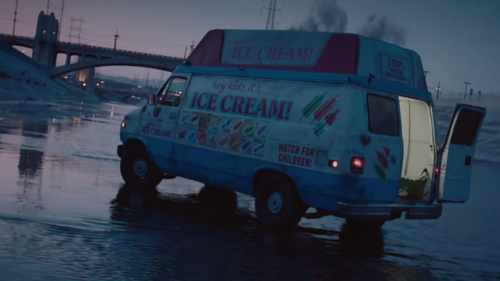
One visibly sinister as, controversially, the much hated wraparound to this sequel is a strange beast, one even more controversially I'd watch again over any of the other segments. Despite its disjointed nature, having to act like a wraparound without context, and a deeply problematic caricature of Hispanics falling out at a BBQ, Marcel Sarmieto's bizarre anti-internet trending epic is the one insanely ambitious, mad and visibly higher produced yarn where our collective obsession with becoming popular online, filming accidents and deaths, literally turns into a John Carpenter approved doomsday scenario at least for the entirety of Los Angeles. All by way of a police car chase with an ice cream truck, one where said truck absorbs peoples' girlfriends, infect people through their phones with bleeding from the nose, and purposely speeding in circles across Los Angeles to deliberately maim and cause deaths to as many bystanders it can, even those recording the chase, in a delirious spectacle that feels completely alien to any of the V/H/S franchise, even the beloved second film segment about the religious cult, in scale and complexity in making. The director made the divisive Deadgirl (2008), which I hated, but we meet again over the years and he keeps surprising me with work like this.

Vicious Circles' only issue for me, barring the stereotypes, is that it's a bit of a mess in plotting and especially in editing. You still have an insanely large scale production - with stunt work, speeding cars, a city environment with panorama shots over the city and many extras - which is insanely difficult and just insane to have went to for what is an anthology structure meant for smaller scale stories in-between. Sarmieto produced this, and his risk in doing so, the internet literally sentient and about to upload until our brains melt, was meet with badly despite it effectively wrapping up the questions about the franchise's lore into an ambitiously oddball segment.

From https://m.media-amazon.com/images/M/MV5BOTc2NDQ2MDY5NF5BMl5BanBnX
kFtZTgwMjYzMDQyOTE@._V1_.jpg

Duke the Great
Director: Greg Bishop
Screenplay: Greg Bishop
Cast: Justin Welborn as Dante the Great; Emmy Argo as Scarlet Kay; Dan Caudill as Detective Gregory Hugues

Bishop made the popular horror-comedy Dance of the Dead (2008), and he here hits upon a funny idea, in which an egotist who wants to be a successful magician finds a cape with actual magical power...only with the caveat that it needs to be sated with human flesh out in a while to cooperate. Again, as a hybrid of a documentary with security footage and Duke's own recordings, it tries to make sense but eventually is still a mess in terms of the "found footage" tag, giving up in the end as it'd ruin the (legitimately good) magician versus SWAT police fight at the end trying to figure out who is recording it all. Probably the biggest compliment to make as well, in lieu to that ending, is that production wise this manages for more inventive uses of special effects than a lot of higher budgeted blockbusters, which Bishop should've been proud of.

From https://vignette.wikia.nocookie.net/horrormovies/images/7/79/MV5BNTI1MzM3Njk4NF5BMl5BanBnXkFt
ZTgwNjM1NjEwMzE%40._V1_.jpg/revision/latest?cb=20171214161231

Parallel Monsters
Director: Nacho Vigalondo
Screenplay: Nacho Vigalondo
Cast: Gustavo Salmeron as Alfonso; Marian Alvarez as Martha; Xavi Daura as Oriol (1); Esteban Navarro as Oriol (2)

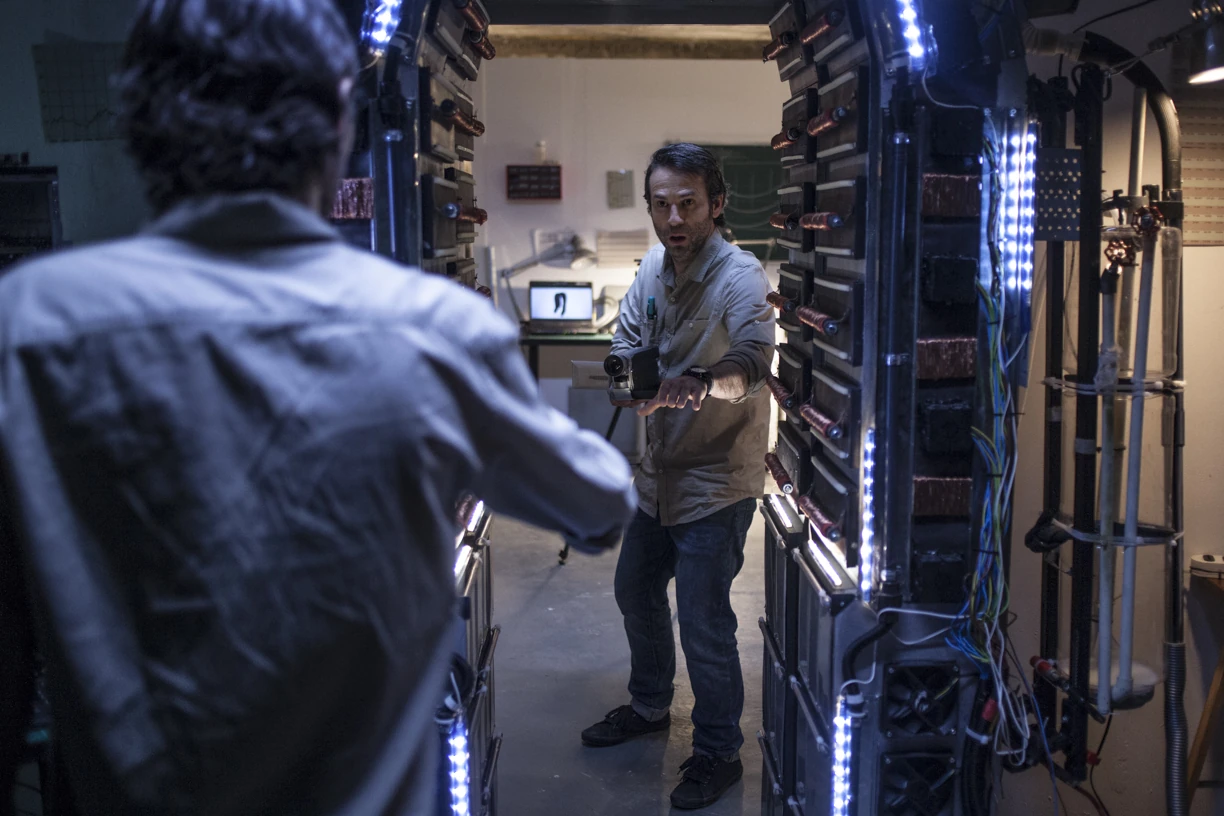
Vigalondo is probably the most well known figure in a directors' seat for this anthology. I am surprised that, though the Spanish director has made a lot of films in his home, up until his English language debut with Anne Hathaway (Colossal (2016)), probably the most well known film of his was still his international breakout Timecrimes back in 2007. Here he has an intriguing premise, exemplifying the dangers of inter-dimensional travel where a man meets himself only for the various cultural and physical differences to be an issue when they exchange places briefly. The found footage structure again raises questions, as it involves two different sets of camera footage having to be spliced together, but it's still the most precise example of we follow the two versions of the man filming each other's exploration. Getting into the bizarre with David Cronenberg approved body horror, it's a fun segment if fun evokes squeamish sentient phallus.

From https://bloody-disgusting.com/wp-content/uploads
/2014/08/VHS-VIRAL-1.jpg

Bone Storm
Directors: Justin Benson and Aaron Scott Moorhead
Screenplay: Justin Benson
Cast: Nick Blanco as Danny; Chase Newton as Jason; Shane Bradey as Taylor; Cristián Toledo as Sam

Honestly the issue with V/H/S: Viral is that it's just okay, not as toxic and bad as some reviews have suggested, but merely a watchable horror anthology. The duo behind films like The Endless (2017) clearly desired to see skateboarders fighting undead cultists in a Mexican industrial area, shot through cameras and head-cams, and that's what we got in terms of a visceral entertainment. Honestly though, a blend of carnage intermingled with potentially annoying protagonists, it's difficult to judge beyond this as it's entirely from the gut where your pleasures lay. And that's a more damning issue, the real issue, among horror anthologies in general in how they can be difficult to review as, take them or leave them, many segments even in the golden era of this format could just be ok scary stories.

Whilst, again, I want to visit the first V/H/S again, this particular franchise since the beginning, tapping into the VHS nostalgia too tentatively, really tentatively when you compare it to a work like Hi-8 (Horror Independent 8) (2013) which actually followed the rules of no-budget video genre filmmaking, has always felt a bit of a mess when even The ABCs of Death at least had a structure. After this, unlike The ABCs of Death which has turned into The Field Guide to Evil in 2018, V/H/S disappeared, all with a sense that especially after the wraparound there was little else to go with even if it was ridiculous....

...except that there was a bonus segment I didn't even learn of until finally seeing Viral...

From http://cdn.collider.com/wp-content/uploads/2015/03/v-h-s-
viral-gorgeous-vortex-jayden-robison.jpg

Glorious Vortex
Director: Todd Lincoln
Screenplay: Todd Lincoln
Cast: Jayden Robinson as The Empress

Glorious Vortex was deleted from the initial version of V/H/S: Viral, reinstated at the end after the final credits on the DVD and eventually released by itself online. It is a non-linear horror segment which surprisingly buddies up to Nicolas Winding Refn's The Neon Demon (2016) despite being made some time earlier, all about a model who in the various fragmented sequences is involved with a secret cabal up to both human experimentation, and the torture and maiming of young women. Vampire parallels arise as does the all pervading sense of everything for the lead being within a family. Then you meet the thing at the end at a certain group meeting and you are fully able to confirm that idea.

Gorgeous Vortex, when it's been championed as being better than the entirety of V/H/S: Viral itself, is also unfortunately pretentious and actually one of the dullest anthology segments I've seen for a long while. I wish I could end on a happy ending, but it's an example of surface images (some striking like the lead actress in appearance, others with the images of bound up and distressed women which evoke the myths of snuff film-making) which never convalescence into a fully formed piece that you emotionally grapple with.

I'm glad it wasn't included in V/H/S: Viral as it represents the worst of watered down, bland avant-garde weirdness, confusing vagueness with none of the risk of true weird cinema, an argument that can be legitimately made for Vicious Circles. That wraparound, befittingly the subject that starts and ends this review, has a much more artistically riskier and stranger tone to itself, in which a boyfriend with an unhealthy habit of filming his life, his work flickering in non-chronological memory over itself, pursues the evil ice cream truck to rescue his girlfriend over increasingly chaotic incidents. Even the problematic Hispanic caricatures, involved in crime as stereotypes, is at least softened by the farce that their piece ends in (where, even as a dog lover, the gag using a barbecue fork was sickly funny). The fact that, the more you think about it, the segment suggests that the Apocalypse or just the downfall of Los Angeles will be caused as much by YouTube cat videos rather than lurid real footage of death is itself far more subversive than anything Gorgeous Vortex could suggest in mere artifice; certainly its ending is weirdly haunting, seemingly shot in the Los Angeles River, with ice cream van jingles scoring the quietness after all the carnage that has taken place.

Abstract Spectrum: Grotesque/Psychotronic
Abstract Rating (High/Medium/Low/None): None