Wednesday, 20 February 2019

The Beast Pageant (2010)

From http://media.tumblr.com/tumblr_mf6p3wchhc1qgrnfv.jpg


Directors: Albert Birney and Jon Moses
Screenplay: Albert Birney and Jon Moses
Cast: Jon Moses as Abraham; S. Michael Smith as The Watermelon Man; Ted Greenway as The Machine Man; Ron Bauerle as The Milkmother; Samantha Bennettlepel as Rock; Chelsea Bonagura as The Machine Woman; Janice Dowd as The Receptionist; Jon Eaton as The Artichoke Man

Synopsis: In a future urban environment, where fishing and tuna are the main activities and produce, a man named Abraham (Jon Moses) spends his days in an awful nine-to-five job at a fish factory, or in front of a TV/home computer which dictates his life and constantly tries to sell him goods, all the while as bitter memories of his girlfriend's demise at the hand of fish haunts him. When a miniature cowboy grows out of his side, things are about to change drastically.

Funded with the assistance of Kickstarter and taking over three years to actually finish, The Beast Pageant crosses a fine line between the intentionally eccentric and the intentional (and weird) darkness in the midst of this, succeeding for me if a tonal juxtaposition between the whimsical and twisted that also caught me off guard. At times it becomes nightmarish with its watermelon man illicitly trying to sell hammers under his duffel coat, other times evoking the failed Beatles TV special Magical Mystery Tour (1967) both, when the film turns into a musical, for some of the songs but also when the protagonist Abraham (co-director Jon Moses) ends up in the woodlands from his apartment, and the literal tree people appear, images you could synch I Am The Walrus up to.

The idea behind the film, once the film already sets up its intentions for surrealism in the opening with a completely naked man on a beach, part of the film's admirable equality in male and female cast members in terms of nude scenes, is a pretty travelled road of one figure's complete dissatisfaction with life. It's done with eccentricity but it's still a dull, aimless life and the search of esoteric transformation that is an obsession for many films of this type of psychotronic cinema. In this case, when your girlfriend, in flashbacks here, is covered in dead fish and all that remains of her is a head part of one's automated television/home set-up, there's a greater sense to ask what the point of life is as it is for Abraham. It's very commonplace themes at hand here, which even for the whimsical directions this has, does leave it with a very adult underbelly alongside material deeply inappropriate for children.

It also has the television constantly trying to sell Abraham commercial goods by way of 8-bit and web animation-like advertising, part of the film's own idiosyncrasies at play. The darker tone, in one of the more distinct details, is constantly seesawing with a homemade eccentricity where stop motion contrasts intentionally crude animated sequences with folk jingles, between a giant catfish riding race shilling sunglasses to the fact Jon Moses also has to play all these characters in the advertisements including the women. The hard work behind the production cannot be dismissed, its low budget forcing in the best of circumstances to use inventing production ideas and to just openly embrace its production values' flaws as an aesthetic depth. Even with mind of the directors' past history with music videos, there is also the decision to have filmed The Beast Pageant on an old Bolex camera they have said to have found, the moulding of an old style monochrome with the kind of sequences embraced by vaporwave a unique melding.

The shifts between whimsy and flat out perverseness, ramped up when an actual singing cowboy grows from the side of Abraham (also played by Jon Moses attached to himself for added oddness), are the most surprising detail The Beast Pageant can claim as its own. Michel Gondry meets lo-fi Guy Maddin is the initial blub, one which is also a musical. The music in particular emphasises the hard work at hand, as usually I would find this type of indie folk music awful weren't it for the fact here, especially when more musicians of a form of orchestra are introduced later on, it's a rich and beautiful one to listen to. You can argue the creators let the musical sequences indulge themselves, but they themselves add to the strange mood, such as a giant Abraham at a tiny house where a miniature nudist couple dance along to the cowboy's song.

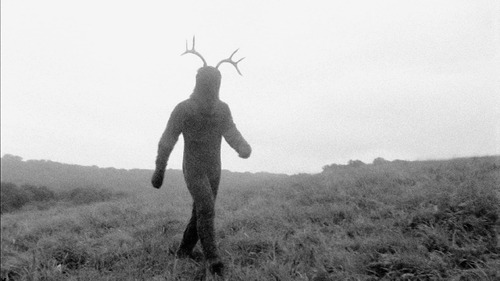
Whilst the initial half of the film with its bombardment of obscure advertisements is fun, I'd argue the final half in those woodlands is where I was won over by The Beast Pageant, among those genderless bush people I've already mentioned, the film despite its folk whimsy aesthetic and creepy Lynchian aspirations suddenly getting into pop folklore by way of the I Am The Walrus vibe. The music, now the musical aspect is fully embraced, even has the style of sweet folk songs, all the while with the possibility of having been a charming family film if it didn't purposely undercut it with freaking and exceptionally dark moments. From the baby being born out of a giant breast to the deer man with an axe who cuts a off a musical number literally, it purposely undercuts its moments of charm and it feels absolutely deliberate, the emotional rollercoaster for us as the viewer as well as Abraham startling. In the end of the day it leads to Abraham, having escaped his industrial prison, a dull job being berated by his elderly management (literal old men), and having found himself. The project from Albert Birney and Jon Moses was likely one of experimenting in their wildest ideas but it all returns to an idea even the silliest of weird films, and a production like this does, of trying to find oneself in a topsy-turvy world, all the existential angst and transformation found in The Beast Pageant too.

Abstract Spectrum: Eccentric/Grotesque/Homemade/Lo-Fi/Weird/Whimsical
Abstract Rating (High/Medium/Low/None): Medium

Personal Opinion:
Whilst it does find itself among a lot of influences and similar films which might marginalise it - I sadly never knew of the existence of this film until recently - I was delighted to discover The Beast Pageant, a fascinating creation whose hard work should be better known. Albert Birney and Jon Moses definitely could go from this aesthetic style - the monochrome or even the juxtaposition of whimsical material you'd find on YouTube violently juxtaposed with a naturalist homemade style shot in the woodlands of at least three different American states - and turn it into their own unique filmography whether from more low budget productions like this or if they were ever to get funding for a larger scale project.

Friday, 15 February 2019

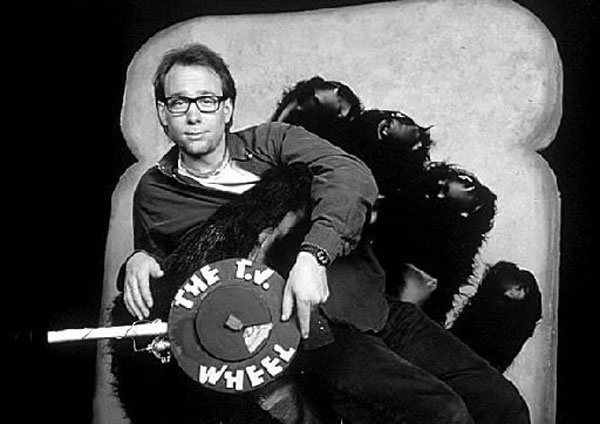
The TV Wheel (1995)

From http://www.timidfutures.com/wp-content/
uploads/2012/09/tvwheel__span.jpeg


Screenplay: Judd Apatow, Nick Bakay, Morwenna Banks, Paul Feig, Joel Hodgson, Nell Scovell
Cast: Joel Hodgson, Nick Bakay, Morwenna Banks, Steve Bannos, Doug Benson, John Carney, Lilly the Chicken, David Cross, Clark the Dog, Paul Feig, Andy Kindler, Melissa Samuels, Fred Stoller, Lawrence T. Wrentz

Synopsis: Devised as a return to live comedy where mistakes were part of the thrill of viewing them, the creator of Mystery Science Theatre, Joel Hodgson, divised the "X-Box", a giant segmented wheel where various sets are built upon whilst the camera is fixed in one place, the audience witnessing a flurry of sketches as the cast have to move quickly as the wheel does.

So let's begin with the obvious, that barring their infamous episode covering Manos: The Hands of Fate (1966), I've never seen Mystery Science Theatre 3000, the legendary cult series where trashy films were commented on by its creator Joel Hodgson, playing a janitor on a space station forced to watch "bad films", at least for four seasons, and a gaggle of robots. For better and for worst, MST3K is legendary, beloved, but also with the stigma of having birthed the idea of ironic viewing of films where improvising jokes rather than watching the film is encouraged. I don't think its Hodgson's fault for that one, just a minor slight out of his hands as - after ten original seasons, a 1996 theatrical film, and two Netflix series so far from 2017 - his creation gained a fan base with a lasting effect. Hell, I have to thank him just for bringing Manos to existence, no one knowing of the film until it was dusted off for an episode, where even the jokes themselves were losing to that feature's madness, and helping that creation of a literal fertiliser salesman with a camera have a cultural legacy. After Hodgson left the series mid-way through, he would devise The TV Wheel, an attempt to recreate the unpredictability of live comedy he grew up with, involving a very curious piece of set sized equipment known as the X-Box, and an ideal to literalise the television screen as a window.

The premise isn't as convoluted as the twenty or so minute introduction by Hodgson himself makes it. Originally, this was a HBO project before Comedy Central picked it up and screened the one-off pilot with a newly filmed segment where the creator explains his premise with literal diagrams; the introduction nearly killed my engagement with the episode, a long and utterly convoluted elaboration by Hodgson which, as much as I admire his love for his idea, echoes the sentiment "kill your darlings" in how long he goes with the premise. It tries, the playful almost Michel Gondry nature of the diagrams and boards moving in front and behind him, alongside the funny attempt at livening the segment up by having puppets staging a strike in the midst of his introduction, complaining CGI is going to replace them, but the intro takes too long and would've immediately killed the chances of the idea getting a whole series as it'd put viewers off.

As simply as I can try to explain the actual TV Wheel, he built a revolving "carrousel-like" stage originally called the X-Box which, whilst the camera stayed perfectly still in one fixed place, which rotated with segmented and various different sized sets, some merely a window, some larger, and one great running gag about ridiculous mini-golf courses in the gag off the stage itself, which interchange when the wheel itself spins. The point was that the performers and their stage itself, rather than camera edits and movements, were dynamic and changed quickly. In the midst of this, many recognisable figures from in front and behind the camera for comedy in the next few decades - including future director Paul Feig and with material written by Judd Apatow - have to hastily switch between costumes or improvise as they have a set time limit for the episode. Any cockups would be included, any sense of ad-lib welcomed, and Hodgson's obsession with puppets is found here alongside all manner of optical gags and (Gondry-like) inspired set production with paper signs and windows.

It's far from perfect, and the humour isn't as punchy as it should've been, especially as the live audience heard is more bemused at points then on-board with the concept, but the result is gleefully weird. As much as there are compromised to Hodgson's own introduction, not one single take but cutting to the top of the wheel and figures like the live orchestra to show its mechanics, it's a fascinating experience which I think could've worked. Its definitely one of the strangest sketch comedies I've seen in a while in structure and aesthetic design, knee deep into the nineties and (even in fuzzy VHS sheen) with bright plastic colours and moments weirdly reminiscent of Cafe Flesh (1982) but with significantly less porn. That doesn't stop it from having moments which could've come from such a cult film, such a robot which recommends drinks only to seduce a guy's girlfriend, the miniature golf gag starting from the Mouse Trap board game to heaven itself, and those aforementioned puppets.

Whether it's a snide comment on racism, as red robots claim their servant race will be inferior because they're green robots, or the Thunderbirds piss-take, everything has a jaunty and off edge tones to it which for its moments of light humour and pure silliness also gets dark, helping with even the failed gags. One of the female comedians, when her gag immediate fails before it starts, takes her top off with the creepy darkness found in her desperate question to the camera "Is this what you want?", follow by one of the male comedians in his way to also say the exact same words and take his shirt off, as if the TV Wheel is some perverse trap for comedians. That a man is later naked and being tortured on a giant pinball machine for one gag is also pretty bizarre just as an image, more so as it turns into the machine being used to get him to confess to an alcohol problem.

Not all the humour is this weird - the KISS sketch, where everyone is just heads on mannequin bodies and Gene Simmons is annoyed everyone has a gimmick in the band unlike him, is one of the best including the Foghat reference - but even apparently innocuous jokes get odder. Paul Feig, whilst not a great director if Bridesmaids (2011) is an indication of his work for me, is great onscreen as a charismatic magician welcoming the audience to his living book of gags and tricks, all the while his monkey sidekick warns us that he's been locked in the book like it's a horrifying Lovecraftian never space. The joke is among the best as it uses the TV Wheel and the production design to its advantage, like the Thunderbirds sketch, in both having the wheel move backwards and forwards but, in using the various windows and paper craft, creating clever live tricks of manipulation with special effects, the Thunderbirds one switching between live actors and puppets for a perfect live close-up of someone accidentally sabotaging a test craft with coffee on the control panel. Sometimes in other sketches, they just resort to actual magic tricks like the unfortunate, connected to Feig's sketch, which turns his dog into a chicken with one of his items but doesn't know how to change the dog back.

Clearly, the premise, the literal TV Wheel, is a prop which had to be carefully put together and probably the other factor which might've doomed it is that sketch comedy shows can be made with merely a host and guests trading off jokes to an audience, doing away with prop comedy for the most part. This is a shame to consider as, with fine tuning or even a simplified version of the premise, The TV Wheel itself was a unique viewing experience which, by itself including the end credits being literally taped onto the screen and rushed through, was charming enough but could've gone further than this.

Abstract Spectrum: Handmade/Quirky/Weird
Abstract Rating (High/Medium/Low/None): Low

Personal Opinion:
Just by premise along, it's a peculiar creation from mid-nineties American television, and in spite of the over long introduction it has a lot to admire as a concept. Even if it was an idea to weird and complicated to get off the ground, a few more polished examples of the show would've sufficed at least.

Sunday, 10 February 2019

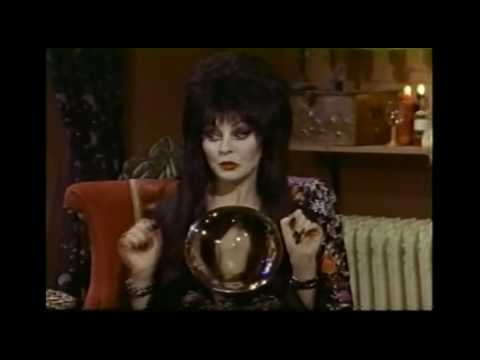
Non-Abstract Review: The Elvira Show (1993)

From https://m.media-amazon.com/images/M/MV5BNzlkYzM0ZmUtMTA1MS0
0ZjNlLWJlYzMtNjE3Y2RmODA2NjhmXkEyXkFqcGdeQXVyMTM2Mzg4MA@@._V1_.jpg


Screenplay: Anne Beatts
Cast: Cassandra Peterson as Elvira, Mistress of the Dark; Katherine Helmond as Aunt Minerva; Phoebe Augustine as Paige; Cristine Rose as Lindsay; Ted Henning as Chip; John Paragon as the voice of Reinfield

Synopsis: Elvira (Cassandra Peterson), posing as a fake medium despite being an actual witch and living with a relation Aunt Minerva (Katherine Helmond), lives in peaceful existence in Manhatten, Kansas until their niece Paige (Phoebe Augustine) arrives and the police are trying to catch her out for fake love potions.

So Cassandra "Elvira" Peterson was involved with an unaired pilot for a sitcom in which her character, created as the host for a show showing old b-movies only to become a cult institution all by herself, gets to be in the central of the kind of popular television from this era. The pilot, made by CBS, was never released - stories abound that the level of sexuality to the Elvira character, Cassandra Peterson more than happily using her busty figure for comedy and sharp with sexual one liners, was something unprepared for by certain CBS executives which killed the pilot's chances immediately. A further irony is to be found, as I researched this pilot, was that in 1996 a show with a similar premise (two aunts and a niece, all witches, and a talking black cat) would go forth as Sabrina the Teenage Witch and be incredibly successful, a series I watched a lot in my own youth and is probably as big an influence on me as an Englishmen as for many Americans growing up in the nineties.

I'll be brutally honest in saying The Elvira Show wasn't for me. Immediately the laugh track, recorded live in front of an audience, welcomed me into the strange and unreal world of sitcoms again, where each line (no matter how cheesy or bad) has to illicit a laugh unless a "sweetened" fake laugh track was included. Having not encountered one for a long time, pawing over each line, I felt its strange contrivance placed up a barrier, not like how with the BBC Red Dwarf series at its best where the laughs were won, but uncomfortably mannered. Here it reminds me where the rabbits sequence from David Lynch's INLAND EMPIRE (2006) was drawing its influence for laughter appearing for the most abrupt lines.

From https://i.ytimg.com/vi/c-P6bHZc7ZY/hqdefault.jpg

A funny premise is had in the idea Elvira, the character built in films as well having actual magical powers, is pretending to be a charlatan to keep her head down whilst Aunt Minerva (Katherine Helmond) is more inclined to enchant a shopping trolley blithely to follow her in public. (Their talking cat Reinfield, voiced by regular Peterson collaborator John Paragon, sadly doesn't work and feels like a bad Garfield stand-in). With this in mind, the pilot pushes the sexual innuendo as far as it could, "stiff cop" and all pushing the material to the point the talking black cat Reinfield has to double check one line as if almost an apology for the smuttiness; in the modern day however it is fairly innocuous stuff. It's still a sitcom episode which contrives a tiny, bit sized plot which easily resolves - in this case a hunky male cop under cover to help bust Elvira's love potion ring, Petersen's character gladly trying to seduce him. With a niece raised in a convent, the aunts attempt to hide their abilities throughout the episode only to establish said nieces are like themselves more than she knew. It's pretty predictable stuff and when the comedy is mainly from obvious sexual humour and lame puns, it did become tiring.

The production for early nineties television doesn't help. The staged nature shouldn't be detraction in the slightest, especially when there's one gag about the carpet flipping up to swallow dust Elvira sweeps underneath it, suggesting it could get away with some magical weirdness for laughs, but it adds to the flatness to the material, the aforementioned predictable sitcom. There's a sense, having no previous experience of Petersen's work, it was the sitcom format for me that caused the problems rather than the character herself. It's still an amusing curiosity but a little innocuous for my tastes.


From http://nightflight.com/wp-content/uploads/ELVIRA-SHOW-9.jpg

Friday, 8 February 2019

Non-Abstract Review: Happy Hour (2015)

From https://sites.lsa.umich.edu/cjs-blog/wp-content/
uploads/sites/333/2017/03/hh_default.png


Dir: Ryūsuke Hamaguchi
Screenplay: Ryūsuke Hamaguchi, Tadashi Nohara and Tomoyuki Takahashi
Cast: Rira Kawamura as Jun, Hazuki Kikuchi as Sakurako, Maiko Mihara as Fumi, Sachie Tanaka as Akari, Hiroyuki Miura as Takuya, Yoshitaka Zahana as Kohei, Shuhei Shibata as Ukai
[Japan]

Synopsis: The lives of four thirty plus year old women in Kobe, Japan are changed when one of them, Jun (Rira Kawamura), admits to have taken part in an adulterous affair and is about to good through divorce court.

Into the 21st century, cinema's constant evolutions challenge the perceptions of what cinema is meant to be. Unfortunate this leads to biases and ill advised tangents which go both ways. One way is to presume the new way is the best when they should co-exist as much as possible - found when cellioud film is still used for certain productions and archival purposes when there was talk of digital taking over, as has been the fact the promotion of 3D cinema has declined immensely after the push into the 2010s, a medium worthy preserving if just to see the films made within its various past lives as they were intended. The other way is preconceptions which undercut only the most boring of views of cinema: that animation is only for children; that no one watches black-and-white or foreign films; that cinema (to take another side) must be respectable and not be grungy genre work; that, in this particular example, films should only be two hours maximum unless award season productions and (inexplicably) superhero blockbuster, this rule dictated as much by cinemas wanting to show a film as many times in a day as possible for profit as it is the belief the human bladder couldn't take it.

There have been films in the past that pushed this rule. Technically Jacques Rivette's legendary Out 1 (1971) was originally meant for television, at 12 hours 53 minutes, but Béla Tarr's Satantango (1994) (7 hours 30 minutes) to far less known works like Joris Ivens' documentary How Yukong Moved the Mountains (1976) (12 hours 43 minutes) definitely were meant for cinema. Even Hollywood itself has made long three plus hour epics in their golden eras, and even outside the USA you have Bernardo Bertolucci's five hour plus epic 1900 (1976) among other examples in world cinema. Digital filmmaking however, returning back to it beyond of off-the-cuff reference, or at least the advancements in economical use of film making equipment has allowed individuals to push the lengths of films further, Filipino filmmaker Lav Diaz the best example of this as he clearly belieies he cannot tell his country's pass without at least usually breaking the 200-300 minutes length with a few brisker exceptions.

They are films which undermine the traditional notions of viewing, forcing one to have to view a film as a day's single experience depending on length and forcing a commitment. Wisely even in cinemas, with the exception of Andy Warhol who had no issue at all with people walking in and out (or interacting) in the midst of his epic film experiments, intervals are a necessary and part of their dialogue. Unfortunately these films are marginalised as being entirely indigestible to mainstream or even mainstream art house cinema, ironic considering Bollywood cinema (usually pushing the three hour mark even with light entertainment) from India lionises a film as being an experience and superhero films (as mentioned) are pushing the three hour mark usually reserved for historical dramas.

The epic film is a gamble, but the risk can prove worthwhile if, now with the slither of hope that (even if temporarily) you can watch them at home split into pieces, such a film when actually available able to use the extreme lengths for incredible depth when you willingly plunge into their time frames. One such film, at five hours plus, is Ryūsuke Hamaguchi's Happy Hour which, with the exception of a book reading/Q&A sequence after four hours in, never feels like an experiment film of endurance but actually passes in time with a surprising briskness. It's instead of an accessible, thoughtful drama about women which just happens to use this momentous length to draw this narrative of four women, including their subplots, out in fully fleshed form, closer to a novel in structure than a filmic visualscape.

It contrasts the origins, suggesting an experiment, where Ryusuke Hamaguchi created the film through a workshop and amateur thespians, the remarkable thing being how it feels a superior dramatic work as a result of this practical work shopping, breathed through a felt, carefully considered structure. One catalyst starts an actual plot - Jun entering divorce proceedings with her cold scientist husband Kohei (Yoshitaka Zahana) - but it happens to exist in a film with much space before and after alongside following the worlds of her three female friends too, all with characters in their own lives who have stories.

Fumi (Maiko Mihara), a manager of non-profit art spaces responsible for the bookends of the film of the workshop and the Q&A that play out as the longest chapters, realises her marriage is not truly peaceful, a subplot within a subplot that of her husband's interactions with a female novelist he is working having more to it than a professional relationship. Akari (Sachie Tanaka), a headstrong nurse whose friendship with Jun is betrayed by learning of her adulterous fling, whose criticisms of a young female nurse for mistakes turn on herself when a freak mishap in the final hours of the story lead to her breaking her leg. And Sakurako (Hazuki Kikuchi), who as the conventional housewife the four women, despite an understanding mother-in-law, has to deal both with the frosty relationship with her own husband and also her son's romantic yearnings leading to a girl becoming pregnant. The length of Happy Hour is thus, like the aforementioned novel, from fleshing out these plot threads into a rich and vibrant web, played matter-of-factly over its length without deliberate obfuscation or pausing in length in meditation.

 Its length also plays a game in undercutting the viewer's perceptions by swimming the psychological depths of the characters. Ukai (Shuhei Shibata), a New Age-like guide, starts off as a nice if eccentric figure found balancing objects on a beach and now, despite the strangeness of his workshop ideas, manages to at least open up the participants to speak more freely through his mix of bonding exercises; by the end of the film he's opened up from his layers to show a sinister lounge lizard especially when he follows Akari, a figure trying to seduce women even if it means kicking a person's crutches away. In contrast Jun's husband Kohei comes off as a cold robot of a man originally, detestable especially as the divorce court sequence is an agonising series of a woman being embarrassed by the judicial system's lack of empathy and focus on cold facts; tragedy is found as, becoming an improvised host of the Q&A, Kohei is shown capable in his own way of being anopen man but found it too late, as Jun's friends chastise him for this late discovery and especially as Jun herself vanishes through the film in the narrative's elaborate plotting. This level of character depth is usually to be found in visual shorthand or economic skill by the best in cinema; Ryusuke Hamaguchi instead lets it be told as much and fully as possible, itself a success too and a rarity in a medium usually now seen as a protracted, disappointing fireworks display by mainstream cinema.

 Only at two times in Happy Hour does it feel like a deliberate challenge due to its length, for the workshop and Q&A sequences. The workshop, which lasts over thirty minutes, is early in the film preparing you for what to expect, including the post workshop bar scene that starts the drama properly, experienced as an energetic build up of key characters alongside slowly reaching a crescendo when Jun confesses her adultery through a carefully considered pace in terms of the time and amount dialogue beforehand to reach it. The Q&A, including the female author reading her work before, does become something that'll test the patience of some audience members, a sense to whether it is deliberate on Hamaguchi's part to stretch of time here emphasised with moments of the audience shuffling in their seats and characters in their own stories at the same time. It's the only moment where the middle class, artistically minded nature of some of the characters really stand out, potentially testing just for how the story being read of potential romance at a bathing resort is entirely subjective itself, a work in its own way is elusive and tense in its slowness as the words are spoken about microscopic detail. Considering that it's so late into a film that's already passed four hours by this point, before the sense of length is felt here, I cannot judge a film which has managed to succeed over that length, even if I had to split it into usually two hour pieces, the kind of casually told drama found here not just in Japanese cinema but East Asian cinema in general (like Edward Yang's Yi Yi (2000)), only longer in length.

Ryusuke Hamaguchi as a visual filmmaker is definitely a sedate one, preferring his long takes with a still camera immensely. He's at an advantage that set within Kobe with stretches among the countryside, Japan aesthetically in its modern and period settings has always been one of the most distinct in any type of cinema. This applies to many countries when one opens your eyes to so much cinema you can tract a country's idiosyncrasies, but even a back alley and conventional public buildings (baring my own pet obsessions) have a distinction in Japanese cinema over others, something with the way they are shot even no budget splatter films having an aesthetic charm over their Western counterparts.

Altogether, Happy Hour succeeded - at the 2015 Locarno film festival it gained a special mention but more so won the award for Best Actress rightly shared between all four leads. Not for a film even remotely as mannered in its naturalism as a Yasujirō Ozu, the archetype of Japanese dramatic cinema, but still with the matter-of-factness of ordinary life visible and embraced. Even if it has a more overt plot eventually, all the intrigue and darkness is casually brought in within one which defiantly has humour against the darkness, and comes to it all casually, many scenes over food and drink in languid conversation and one moment undercutting any sinister intentions of Ukai's when a woman with a broken leg gets held aloof by the patrons of a dance floor in an euphoric crowd surfing moment. Of course a huge point with the film is, whilst it has prominent male characters, it is an entire female driven narrative and, rather than just merely ticking a check list of having two female characters having a conversation, it's an actual feminist (or frankly humane) story of women who bond, become divided, aren't perfect but fully fleshed out in what makes each of them up. Enough time over five hours and with the right cast, including non-actors from the workshop the film came from, is spent to make everyone (even minor characters like the authoress) have a soul onscreen. That itself makes Happy Hour a relief and it does so as if as easy as taking an actual gulp of air.


From https://www.slantmagazine.com/wp-content/
uploads/2016/03/happyhour2015.jpg

Tuesday, 22 January 2019

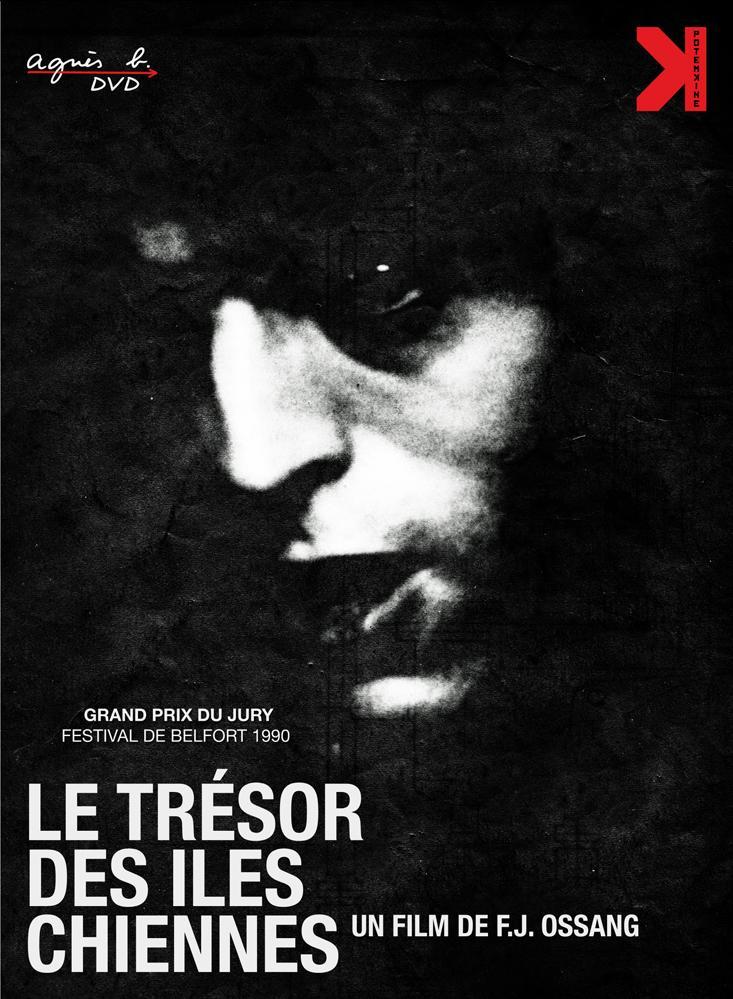
Treasure of Bitch Island (1990)

From https://pics.filmaffinity.com/
Treasure_of_the_Bitch_Islands-677757947-large.jpg


Director: F.J. Ossang
Screenwriter: F.J. Ossang
Cast: Stéphane Ferrara as Ponthans; Diogo Dória as Féodor Aldellio; José Wallenstein as Ulysse; Mapi Galán as Ada Della Cistereia; Lionel Tua as Fabiano; Michel Albertini as Bormane; Serge Avedikian as Le docteur Turc; Clovis Cornillac as Rubio; Patrick Quillier as Directeur Palace; Francisco Baião as Xico

Synopsis: The heir of the consortium Kryo'Corp, Ulysse (José Wallenstein), travels to the only place the substances for a new energy source can be found - the titular Bitch Island. Unfortunately, the island divided between its native tribes and the colonisers with their militarised zones, a cocktail of radiaition and drugs feeds into the downward spiral for Ulysses' team as they scrape against the various machinations.

F.J. Ossang has been a frustrating man to meet. Treasure of Bitch Island is the first to make any impression (as would Doctor Chance (1998)) in my discovery and marathon of his work as much as it makes aware how deeply flawed he is as a director-writer since his 1985 debut The Case of the Morituri Divisions, the musician/poet/filmmaker/ punk Ossang someone who should embody the anarchic nature of that era's independent cinema. Unlike Sogo 'Gakuryû' Ishii from Japan or the Cinema of the Transgression group from the United States, as comparison examples, Ossang also presents the worst stereotypes of pretension by accident. Despite lifting from b-movie genre tropes and his punk background, most of the events in his narratives take place off-screen, not an issue as its clearly his trademark with a sense of letting the viewer's imagination fill in the images spoken of, but its undercut by his tendency to spend the time on bland monologues that last ages rather than the moments in his films filled by pure lurid genre subversion.

From http://www.tasteofcinema.com/wp-content/
uploads/2016/12/01-TheTreasureOfBitchIslands.png

Thus 9 Fingers (2017), about a criminal gang on a cargo ship with a nuclear weapon where paranoia and potential radiation poisoning are making things dangerous, focuses more on existential sounding dialogue that sadly isn't profound or with a sense of nuisance (as say) Jim Jarmusch's genre subversions. Rather than direct interaction with the premise itself, that in all the films I've seen have all been interesting, Ossang for his filmography has fallen into many squandered opportunities due to this: see Dharma Guns (2010), where the idea of a man's last experiences before his death from a jet ski accident is his soul going through a sci-fi paranoia thriller, with gothic tinges, sounding like something Guy Maddin would make only to procrastinate. Or his debut The Case of the Morituri Divisions where there is promise of a literal punk film in its rough production, its VHS text captions and futuristic gladatorial fights only for him to clearly not be invested in the film's premise in the slightest. It's neither "punk" to has this much dialogue in his films either, or really subversive, which is the biggest crippling flaw with his style. I quote someone like Ishii specifically as a film like Burst City (1982), whilst two hours long feeling like adrenalin shots directly into a blood vessel and not just for having actual punk bands playing in the film.

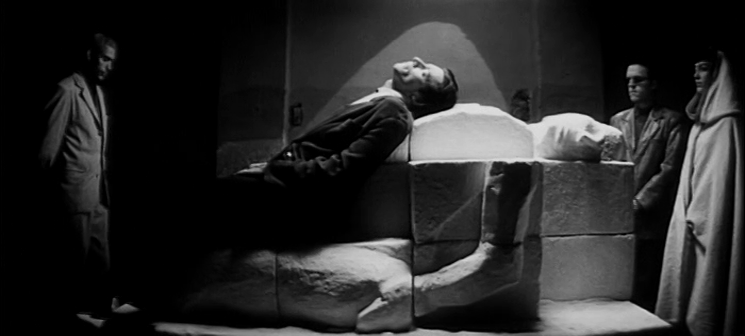
Arguably however his nineties films hit a peak where, for their flaws, he made the films I waited patiently for and have left a mark I will treasure. Bitch Island "somewhat" works and I think it's as much helped, even with Ossang's obstructive style, by the look of the film. Arguable for me is that his older work is far more rewarding than the later ones particularly in their visual palettes, but here he particularly had success, as with Doctor Chance, in terms of the aesthetic style; here Bitch Island has a particularly rancid but stylish monochrome look befitting the world. A place where, inhospitable and made worst by the protagonist's gang being both on drugs and on a doomed mission, it already has an impact; once you get to the titular island through a barb wire covered militarized zone, let alone the vast desert and industrial locations, there's a sense of a living breathing environment despite a lot of Ossang's films, to their detriment usually, being shot in still takes in close-ups, here actually working as the world is built from events only being talked of by implying them rather than depriving the audience of engagement.


Noticeably Ossang's cinematographer here was Darius Khondji, who'd go in to acclaim for David Fincher's Se7en (1995) and in general has an impressive filmography including work with James Gray, Jean-Pierre Jeunet and Marc Caro, and even some idiosyncratic one-offs on his CV like Wong Kar-Wai's sole American film (My Blueberry Nights (2007), Michael Haneke's own remake of Funny Games (2007) and Zidane: A 21st Century Portrait (2006), an attempt in an avant-garde dialogue-less documentary to slow down and examine a football game with Zinedine Zidane as a hyper-sensual experience. Because of Khondji's style, heightened but also able throughout his career to be completely naturalistic too, Ossang is given an advantage as was hiring cinematographer Rémy Chevrin on the atmospherically colourful production of Doctor Chance.

It helps as well that, even in the obtuse style, the story here is at least interesting in what you get too. Baring a hotel with unhelpful staff, Bitch Island is not a safe place; ready to rupture between the natives and the rulers imposing over them, the only poor decision in the premise, and one of poor taste from Ossang, being that the figure the natives worship called the Korean Girl is actually a Caucasian actress. It doesn't completely redeem the film fully, as Ossang's style is, even if going for the theatre of the mind, obstructed by his attempts at romantic nihilism that is one of the worst issues with his screenwriting for me, but Bitch Island particularly as the central group of men get lost in the desert and start to puke and reach death on a mix of despair, their own drug intake and radiation sickness is an evocative scene which in little happening has immense power. Arguably, ironically, it's this tone and the cinematography that adds the edge rather than any of the dialogue spoken, the actors as well gamely losing their minds in-character and carrying the heavy burden unlike many of the other Ossang films which don't have a strand of connection, but because of when the dialogue has more to it in their spiralling madness or the fatalist sense of heroism that eventually overcomes those left.

From https://assets.mubi.com/images/film/33614/image-w856.jpg?1445879977

It does leave me sad that I've had a cold reaction to the director's work beforehand as between Bitch Island and especially Doctor Chance, its tale of (richly coloured) doomed romance in Chile where Joe Strummer is inexplicably there, as just from those two films without any other context Ossang should be a director I love and presume would continue to make films like the nineties productions. Here with Treasure of Bitch Island too I could see myself watching the two nineties productions repeatedly if they were actually available to see. And honestly, as mentioned, if this was the style of film he went with rather than a colder aesthetic style into the 2010s, I'd be surprised that Ossang never had films released even in the USA as - rather than being too stilted for punk cinema, too enamoured with his own voice rather than actually become risky and snotty in attitude - those imaginary films would've been awesome and cult pieces already. Hell, maybe something truly magical would've happened and I'd learn to appreciate the other films in his filmography and even liked them, which would've been even better.

Abstract Spectrum: Psychotronic/Oppressive/Stylish
Abstract Rating (High/Medium/Low/None): None

Personal Opinion:
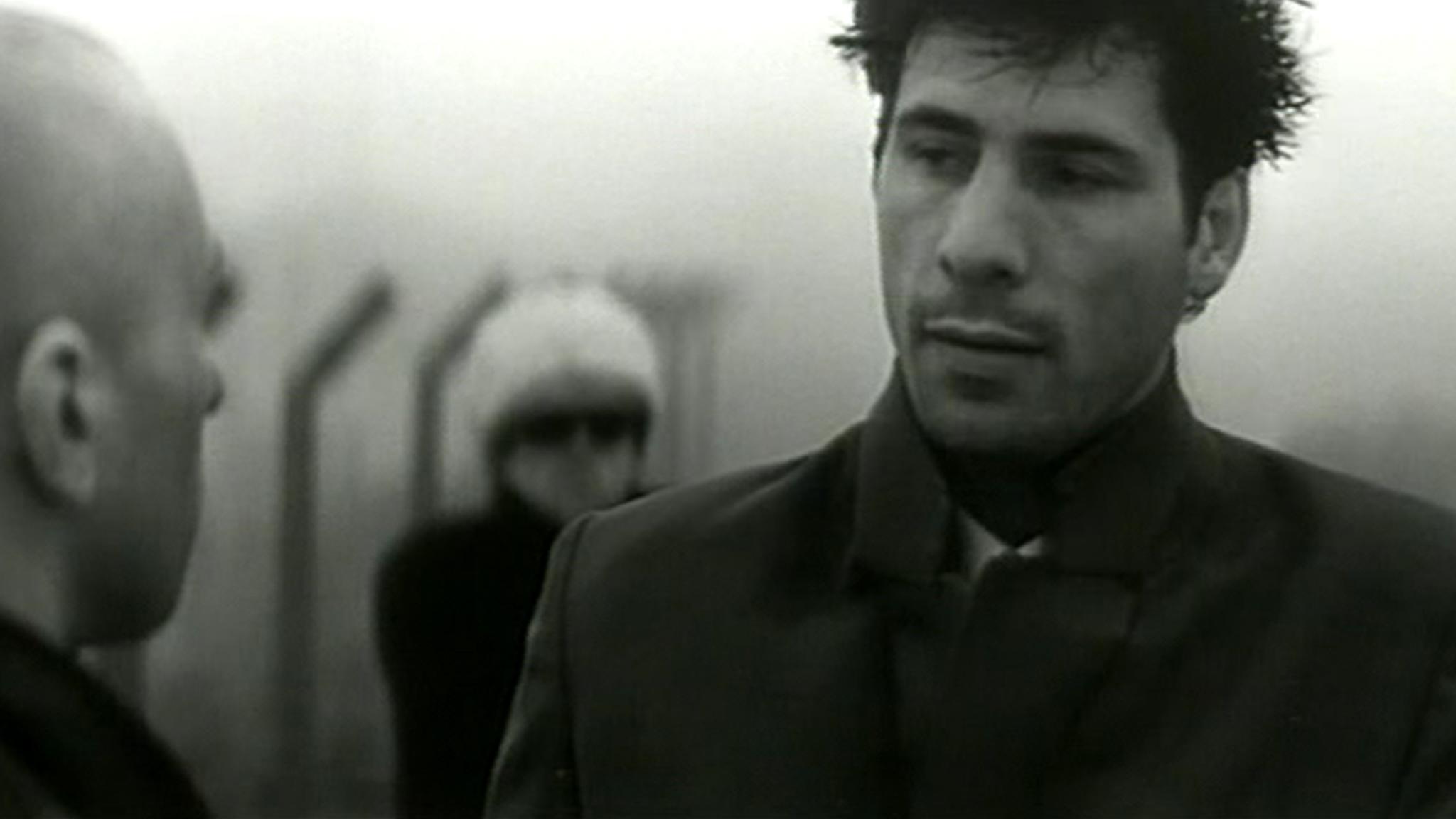
Treasure of Bitch Island was the first film where I found something within F.J. Ossang, its warts and all actually adding to its personality as the material shone with virtues. It itself would be a film that would test others' patience, but for me it was a bright spot in a director, only discovering, I fear I would merely hate.


From https://67d860664f4b00793cde-967809c7cbb0f14b111df13fc72409e5.ssl.
cf3.rackcdn.com/fiona/editionfilm/48de3364-b427-4f0a-9bba-8155f0d8b64a.jpg

Saturday, 19 January 2019

Female Human Animal (2018)

From https://www.edgehill.ac.uk/events/files/2018/08
/Human-Female-Animal-1920x1080-1024x576.jpg


Director: Josh Appignanesi
Screenplay: Josh Appignanesi and Chloe Aridjis
Cast: Chloe Aridjis as Chloe Aridjis; Marc Hosemann as the Man; Angus Wright as the Publisher; Patrick O'Kane as the Detective; Leonora Carrington as Herself

Synopsis: An author and curator on an exhibition on the surrealist artist Leonara Carrington, Chloe Aridjis (playing herself), encounters a strange yet handsome man (Marc Hosemann). Things do not go to plan.

It's not worth elaborating on a prologue when I openly found Female Human Animal completely missing the point of the subject. Surrealism is arguably my first ever obsession, even before cinema, finding books on the subject in my secondary school library at between the age of eleven to thirteen, developing from my adolescence a greater awe and influence from the movement even in my daily life in how I think about the world around myself. In hindsight to this, the film is the sort that would be dismissed outright by surrealist artists from the era themselves, and that's a tragedy as Leonora Carrington as a painter and author is, from the few pieces I know, someone who should have a greater reputation within the movement. More so as, reading a lot in my obsession, I'm fully aware for all their virtues the original French Surrealist movement were unfortunately chauvinist and sexist too. They had flaws and gender politics is such a case, even beyond the questions of how they festished and found danger in the female body but even how they treated their own like Germaine Dulac, director of The Seashell and the Clergyman (1928) which infamously had a cold reception from even her fellow surrealist artists. The boy's club has slowly been chipped away as the women who were also surrealists or even muses have been proven to be as exceptional as their male counterparts, more so now as Surrealism is as viewed for its various movements globally as it is the original French movement, and a film about Carrington would've been wonderful to see if it had succeeded.

Sadly, Female Human Animal is a case of an utterly intriguing hybrid which should have succeeded in showing the world of Carrington, even if it completely steps away from her motifs and tried its own curious ideas with merely her ideas on display. A study of Carrington's work, including not only scholar Chloe Aridjis playing herself but archive footage of Carrington being interview used as a voice of goddess over the proceedings as well; a psycho drama, in which a potentially dangerous dark eyed handsome stranger appears in Aridjis' life as her world in general becomes strange; and, noticeably, shot on VHS tape, a really peculiar stylistic choice that not only reminds you how much detail is lost in videotape, fuzzy as hell as it swallows clear outlines and detail, but was the most intriguing detail about Female Human Animal for myself viewing it.

From https://thefword.org.uk/content/uploads/2018/10/Screen-Shot-
2018-10-18-at-14.32.33-e1539869828189-759x500.png

The truth of the matter is, whilst it has its moments, the film is slight. It also has the unfortunate effect of presenting the art world and English metropolis as pretentious and utterly tedious, way too good at doing so to begin our protagonist's sense of disenchantment but never adding a sense of greater depth, coupled by never feeling like a truly in-depth interpretation of Carrington's work. Her work (understandably) could only be recreated uncensored for cinema as animation, but the lo-fo attempt has motifs (Aridjis' in-film cat, the creepy father who can predict the weather over the phone) which briefly exhibit a tantalising surrealist edge. The VHS look, set among ordinary Liverpool environments, presents an additional advantage of its murkiness, how bright coloured artificial lights bleed onscreen or a warehouse becomes ominous in the shadows. However, it never feels like a true tribute to Carrington's subversion.

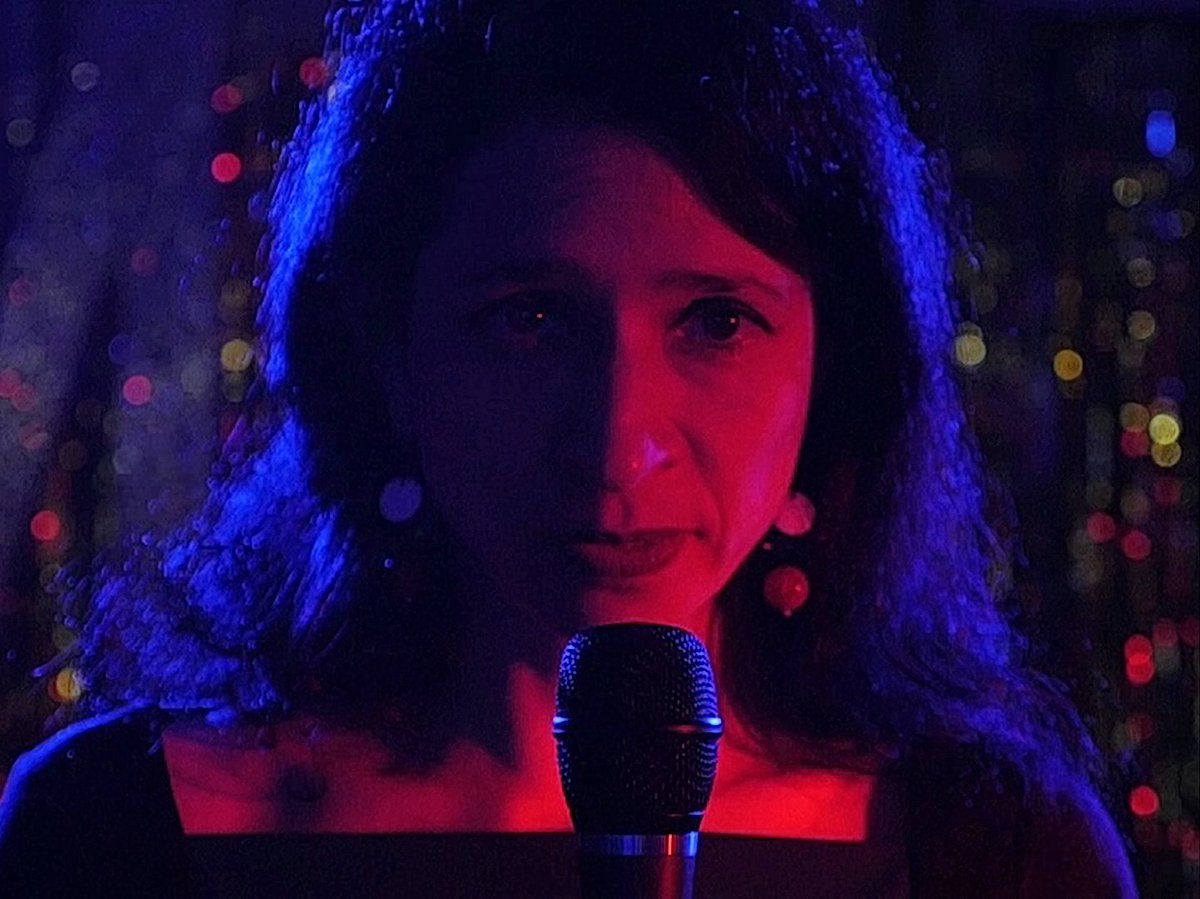
Instead, it becomes a very clichéd, trite psychodrama about a sociopath stalking Chloe Aridjis that (ironically) exhibits the worst aspects usually found in no-budget genre cinema of telling rote versions of stories from larger budgeted films, never being inventive as it forcibly tells a predictable story instead. It never feels subversive, which is the biggest sin and there's an uncomfortable sense of exploitative especially as, voicing the figure providing themes on love and sexuality, the slight and malnourished story doesn't justify the interview footage of Carrington at all. The only really interesting thing is Marc Hosemann's strangely magnetic performance as someone clearly off from the get-go, but has enough charisma that, in one of the few interesting plot dynamics, Aridjis can willingly let herself be brought into a relationship clearly dangerous when her life is bland beforehand and he intrigues her by literally invading her environment.

Another surprise is how bland the film is in terms of premise and content, and it amazes me I can actually cross reference Female Human Animal to the type of shot-of-video genre films of yore that are usually dismissed as garbage or even unheard of by the type of publications that will cover Female Human Animal. These films, loved by fans like myself, are openly known for being technically deficient in most cases and needing to be approached with an understanding of their immense failures, but are celebrated for their unintentional moods of delirium.

From https://frieze.com/sites/default/files/female_human_animal_online_7.jpg

FHA
, despite being shot on video too and trying to evoke an uneasy weirdness, does place its head on the guillotine with such films rarely given critical praise like Boardinghouse (1982) would completely overshadow it completely in terms of truly surreal sense of  mood. The surrealists did watch "bad" cinema in their heyday but the goal, in one of the most meaningful things I read on them in terms of my own cinephilia, was never for irony but the result of finding the marvellous even in technical failure, the unnatural edge which a film like the infamous Canadian production Things (1989) would've rewarded someone like Salvador Dali tenfold. In contrast FHA is sedate, a deliberately put together production with no sense of the unearthly, transgressive, feminist or interesting within itself, feeling more like a tedious erotic thriller in premise.

The only real surprise is an ending credits sequence of boxes being wrapped up, following the motifs of plastic bags and suffocating cellophane throughout the production, one of the only remotely "odd" moments in the entire film.

Abstract Spectrum: Lo-Fi/Weird
Abstract Spectrum (High/Medium/Low/None): None

Personal Opinion:
Female Human Animal is a neutered, sanitised take on surrealism in spite of the worthy figure it idolises in Carrington and its intriguing production style. It's a film which has many different aspects but masters none of them as it is spread out too dully.


From https://pbs.twimg.com/media/DcsfWdkXUAANCw-.jpg

Monday, 14 January 2019

Régime sans pain (1985)

From https://www.scaruffi.com/director/ruiz/ruiz117.jpg


Director: Raul Ruiz
Screenplay: Raul Ruiz
Cast: Anne Alvaro as Alouette; Olivier Angèle as Jason/William III; Gérard Maimone as Professeur Pie

Synopsis: In a dystopian future, the former leader of the surviving world named William III (Olivier Angèle) has his memory wiped. Convinced by a female fan of the former leader named Alouette  (Anne Alvaro) to reconsider this decision however, she and the scientist behind the wipe named Professeur Pie (Gérard Maimone) train him to join the contest to become William IV and lead the world again.

Even for Raul Ruiz's career, Régime sans pain is weird; it was originally a planned music video for French musical duo Angel & Maimone that became this feature. Whether the case or not, it feels like Ruiz shot a whole batch of music videos for the duo which were linked together into a feature: one where the political power is won by a popularity contest, the Church teaches the sacred song but only allows parrots in the convert nowadays, and part of William III's phoenix like resurrection into William IV involving finding the right clothes, even if it's on a dying man in a burning car.

From https://i.ytimg.com/vi/ZKrDgJ3Dcxs/hqdefault.jpg

Régime sans
pain is definitely a wacky production from Ruiz, more significantly as this is knee deep into the eighties, his mere eclectic and vibrant period between countries, projects and formats at their most extreme. This is certainly, out of those I've seen, of its era in a good way as he embraced Angel & Maimone's synth songs and a lo-fi futuristic aesthetic. This is, openly rather than implied, the only sci-fi film in Ruiz's career too, a perplexing world which is a subdued and almost ramshackle universe, between the desolate urban streets and the powerful high class elite, is contrasted by Ruiz openly embracing a pop art absurdity that even Lady Gaga's music videos seem conventional in comparison. There's an idea which thankfully keeps it all tied together well as an extended music video and a fully fledged film - that William III has every part of him wiped away (even his in-head credit cards) only to be offered a chance to become a new man, the next ruler William IV, a contest where he must become popular to the people by being less an active figure head but an idol, hence why finding his singing voice again is an excuse to use Olivier Angèle's singing but is written with having a purpose.

And when allowed to use the dreamlike logic of music videos, Ruiz gets incredibly strange, the dialogue becoming increasingly blurred in the illogical whilst the emphasis on stark colour aesthetic from his other eighties productions stands out more here due to its originals. Even as Gérard Maimone gets into a fencing duel with a morgue coroner over a dead man's clothes, this fits into the Ruzian patchwork of before and after in the director's career, the only distinction being Ruiz's most time stamped fit, not a bad thing if you want to have eighties aesthetic stretched and bent under the Chilean director's camera. Also as a tale of a figure becoming a new man, Olivier Angèle playing the naive yet charismatic blank to be rebuilt, scenes merely take ideas Ruiz would've had in another context but filtered through science fiction here, like a brothel where the female sex workers (rather than ghosts in another of his films) are holograms. It even hits an emotional point as, becoming a man again, William takes a decision which squanders his chances but is the more altruistic path, even if it doesn't conclude as such in an ironically convoluted way.

From https://www.scaruffi.com/director/ruiz/ruiz118.jpg

And the music itself, the music video sequences themselves, are interesting: good music but appropriately batty in what you witness visually, especially the extended scene in a building part of the hospital where you can claim the clothing of the dead as your own, Angèle going through clothes taken from the recently deceased in a blackened space choked in racks. The music itself is appropriate for Ruiz's world as, whilst Angel & Maimone's work is a laid back synth pop, Olivier Angèle's own use of English and French is apt for a filmmaker who confuses and obscures, his co-opting of a somewhat artsy and obscurer musical duo, clearly willing to be involved, feeling like a very clever decision on Ruiz's part. That and Angèle's partner in crime Gérard Maimone being a very cinematic actor in his own right in beard and with his deep voice. Together, they have arguably the best of results to their advantage too as, whilst I unfortunately never knew of them until seeing this film, they do come off as an interesting musical duo whose willingness to be in this production by a legendary cultish director gives them a lot of respect in itself.

Abstract Spectrum: Eccentric/Eighties/Music Video Logic/Weird
Abstract Rating (High/Medium/Low/None): Medium

Personal Opinion:
Even a 'minor' Raul Ruiz production like this is one to peak your attention. The eighties was a very productive and eclectic era where he worked on a dance/ballet film (Mammame (1986)) to a TV mini-series (Manoel on the Island of Marvels (1985)), so a music video that became a picture was an apt investment. It's a unique piece in his career - his sole hardcore sci-fi tale - and definitely as mad as a box of frogs just from what I have described. It's also absolutely worth being preserved and restored again, especially as whilst a dreamy VHS rip with Japanese hard copy subtitles suits the strangeness, Ruiz's rich aesthetic style even on a low budget deserves a clearer image, ever a director undermined by the prolific nature of his career and how obscurity and copyright is inevitably going to be a pain to see a film like Régime sans pain (1985) as intended.

From https://www.scaruffi.com/director/ruiz/ruiz124.jpg