Saturday, 13 August 2016

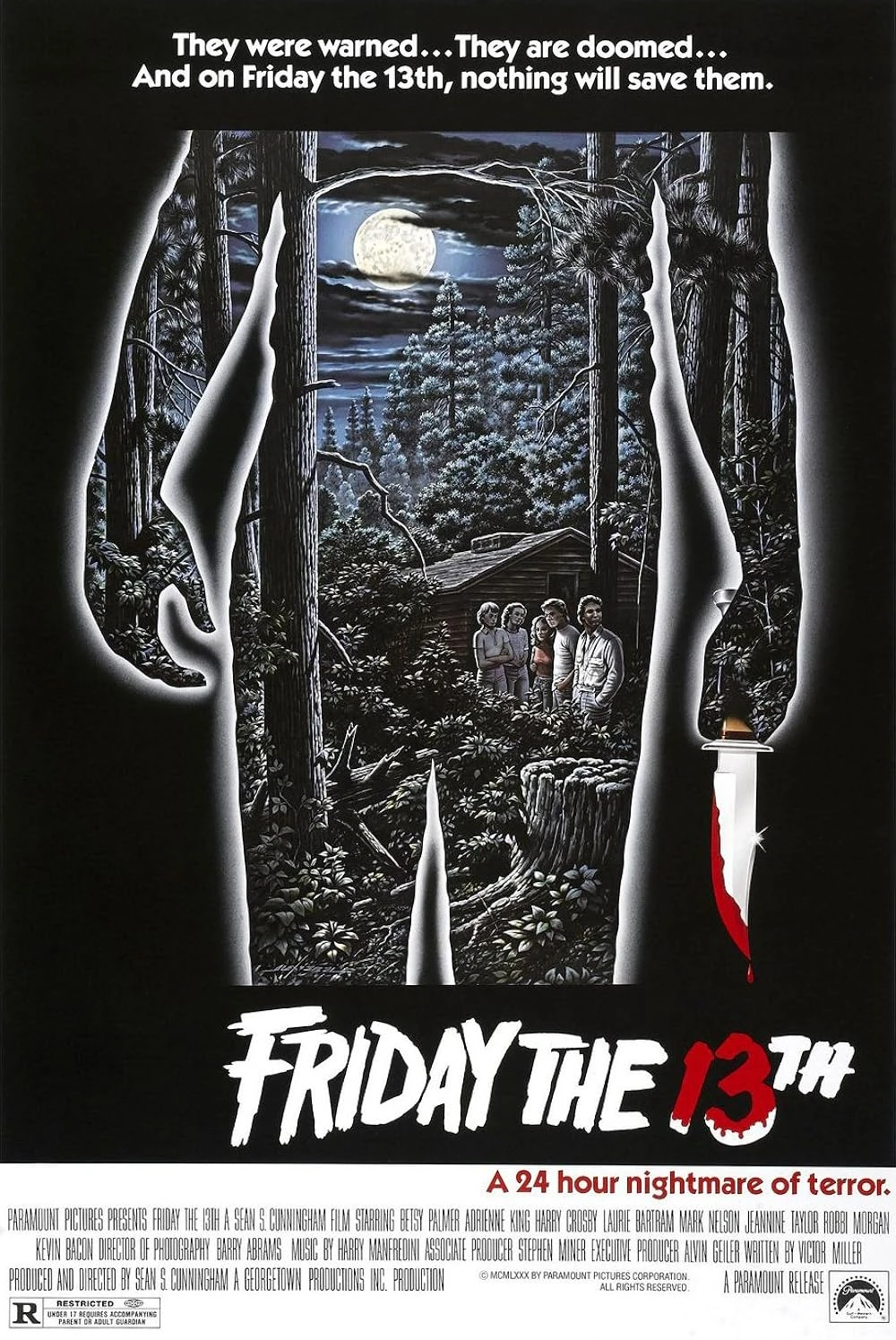
Friday the 13th (1980) [Mini Review]

From http://vignette4.wikia.nocookie.net/fridaythe13th/images/9/91/
FridayThe13thPoster.jpg/revision/latest?cb=20151028231925
Director: Sean S. Cunningham
Screenplay: Victor Miller
Cast: Adrienne King (as Alice L. Hardy); Harry Crosby (as Bill Brown); Kevin Bacon (as Jack Burrell); Jeannine Taylor (as Marcie Stanler); Mark Nelson (as Ned Rubenstein)
A Night of a Thousand Horror (Movies) #16

I've had the intention of going throughout the Friday the 13th films even if there might've been difficult to get a few of the later sequels (did I get rid of my copy of Jason Goes To Hell: The Final Friday (1993) or is it lost in the netherrealm of the wardrobe? I really don't want to shell out of lot of money for a bad film like that second hand...). I've however found a roadblock already, knowing how important the first film let alone the franchise is in American horror history but with a weary and ambivalent opinion of the first. This small review has taken needing a rewatch of the first Friday the 13th two times, with the immediate sequel watched inbetween, before I could write this, the one I had the most familiarity to from the series when I watched it years ago. What I realise is that, once my original hatred of slasher films was broken down and I'm starting to go through them, this film is the plain vanilla of the sub-genre and not interesting compared to all the obscurer ones.

I compliment the film in look and tone. Ironically, despite the franchise being the catalyst for a lot of how the eighties American horror films would be in presentation, even the non-slashers, this is a seventies movie entirely in aesthetic. Lust, rugged forest locations and normal people in the cast, the girls you'd met and date from next door and chummy jocks you'd bump into on a street, Kevin Bacon amongst them always seeming to be far more down-to-earth and approachable to the point you could see him transition from this to being a Hollywood star later on. Unfortunately having now caught the bug of appreciating slasher films even for their repetition of plots, I have already found better made, more schlocky, weirder and more entertaining ones whilst barely scrapping the surface of it as a sub-genre.

A lot of this is that it's failed as a horror movie in many ways, intentionally wanting to capitalise on Halloween (1978) but not having any really distinct character to it if it wasn't for its rural camp setting, something that can be found in many other slashers like Madman (1981) and The Burning (1981). It relies on a build up to the kills compromised by the characters being exceptionally bland, even the final girl played by Adrienne King we're meant to finally get behind, the less the memorable dialogue without unintentional camp or menace to it even less interesting than some of these slashers can have. Also, while its great music, I entirely blame Harry Manfredini's score and how it's used for a lot of the problems with overeager and overused scores in modern horror films in terms of jump scares and deflating tension. The famous whispering in the score is excellent and chilling, but altogether the score when it builds up is overbearing. In direct comparison, the score for John Carpenter's Halloween, while signposting jumps, had a greater subtlety and allowed for moments of stillness. The Texas Chainsaw Massacre (1974) realise that just a collage of noise, pig sounds and screaming would terrify anyone.

When it leads to the dynamic ending, I feel Friday the 13th lets itself down. While Betsy Palmer is memorable and a much needed injection of charisma, the film doesn't build itself up throughout its narrative to make her inclusion into the narrative have greater weight. Even when it gets to the famous scene on the lake, which is a great sequence possessing a great, serene synth track, the film undermines it by having more scenes afterwards rather than letting it be the last moment before the end credits to leave viewers with a buzz afterwards. Altogether, with these flaws, Friday the 13th is just bland, a film that may have kick-started the slasher craze in the early eighties but not one for me personally that really stands out in the slightest.

From http://deathensemble.com/blog/wp-content/uploads/2011/
08/Heading-to-an-offscreen-death.jpg

Wednesday, 10 August 2016

Teenage Caveman (2001) [Mini Review]

From https://images-na.ssl-images-amazon.com
/images/I/5137K9CGFCL.jpg
Director: Larry Clark
Screenplay: Christos N. Gage
Cast: Andrew Keegan (as David); Tara Subkoff (as Sarah); Richard Hillman (as Neil); Tiffany Limos (as Judith); Stephen Jasso (as Vincent)
A Night of a Thousand Horror (Movies) #15

In the early 2000, a series called Creature Features was created between US cable and satellite station Cinemax and American International Pictures (AIP), an independent film production company known for b-movies from the fifties and sixties which Roger Corman would grow into a legendary director and producer from. Creature Features remade five of AIP's older films for the new Millennium, the one which stood out the most for me for all these years the least expected one to ever exist and standing out of the set as the potential oddity. The idea that the producers took Teenage Caveman, based on a 1958 prehistoric teensploitation work directed by Corman, and let it be directed by the legendary and notorious photographer and film director sounds like a bizarre masterstroke I'd be compelled to see. Clark made Kids (!995), a controversial cult drama where youths have sex, take drugs and get into grim situations, and continued down this path with as much controversy. With all this in mind, I had for years since I was a young naive cineaste wondered what the hell a film about (preferably) teenage cavemen would be like from Larry Clark. Lots of sex? Likely. Nubile youths waxing lyrically on their lives naively? Possibly, thought stranger if its teenage cave people musing about their lives living in caves eating brontosaurus. Violence? Definitely and since Clark has tackled violence in films before, such as someone being battered nearly to death with a skateboard in Kids, he's able to tackle to visceral in affecting ways that would make it a pretty nasty genre flick.

A post apocalypse tale, mankind is reduced back into a new prehistoric age living in caves again. David (Keegan), the protagonist, has to live with a father who uses his position as the tribe's priest to restrict others and try to sleep with as many of his son's friends as possible. After David commits patricide, he and his friends wander in exile only to find a ruined metropolis and encounter two survivors. One a drug and drink fuelled guy named Neil (Hillman) who missed the chance to have become a rock star in the old world, the other his caring girlfriend Judith (the beautiful Limos), they welcome the youths into their home, openly admitting they are immortal due to being guinea pigs in an experiment to save humanity but not revealing how they intend to pass it onto the youths even if the side effects of the failed mutation is death by internal explosion in gore and guts if the transition isn't successful. It was interesting to see whether Clark would be censored slightly for a TV movie even if it's for cable and could get away with a lot more; while there's still a lot of nudity, drug taking and sex, as Neil and Judith encourage their guests to partake in drunken orgies, there's something innocent to the material in a schlocky T'n'A filled horror movie sort of way appropriate for an updated b-movie. Unfortunately while this sounds good in a silly way the result is an abominable disaster. The first issue is that it's not a film about teenage cavemen. Once it gets to the metropolis and Neil and Judith's home, the rest of the film is in corridors and is another cheap sci-fi horror movie. The film looks bland and like the TV movie it is to a severe detriment, claustrophobic corridors that are lacking in style and even the outdoor moments not offering a change of look.

The other, even bigger issue is that the screenplay by Christos N. Gage is garbage. Clark can have young characters who sound real in his films but it's clearly a case of who is working on the screenplay, such as having the than-teenage Harmony Korine write Kids with the realism of being around the age of the characters he wrote about. Gage's script is a botched attempt at broad, exaggerated youth dialogue, the kind that one wishes Greg Araki made this film instead to get this done properly, spliced with the bland exposition dialogue of terrible modern sci-fi horror movies. Where the hero is bland and uninteresting, his girlfriend Sarah (Subkoff) is whiny and emotionally stunted rather than likable, and the teenagers are merely fodder for a body count. Neil and Judith are more interesting characters, especially as villains who actually want to help humanity by way of sexually transmitted immortality, the least expected and memorable intention for any villain to have, but the finale has Neil becomes embarrassing in terms of how actor Richard Hillman has to chew the scenery from then to the conclusion. At first, like a man whose drug and drink intact would even make Keith Richards blush and balanced on a knife edge between charisma and being scummy, the character alongside the more likable Judith are the only real virtue of the film especially as they are technically the villains; when terrible CGI effects and prosthetics that look dire on Hillman's head, even by the late Stan Winston, are involved Neil becomes the worst example of a villain who won't shut up thus making the viewing experience even more painful.

As a result, Teenage Caveman is not even a fascinating failure, which fans of a director would still like because the director's personality is there, but a film so compromised and bad that one would prefer if it was buried never to be watched by said fan again. Like Tusk (1980) for Alejandro Jodorowsky or The Mother of Tears (2007) for Dario Argento for examples, it's an incredibly embarrassing work from a director I admire that I really and significantly doubt I would want to witness again, preferring amnesia and watching other Larry Clark films instead to revisiting Teenage Caveman again. 

From https://image.tmdb.org/t/p/original/
6Z0p92sXNAblWs0QT6XS4HYGWnT.jpg

Monday, 8 August 2016

The Undertaker and His Pals (1966) [Mini Review]

From http://ayay.co.uk/backgrounds/b_movie_posters/
1960s/THE-UNDERTAKER-AND-HIS-PALS.jpg
Director: T.L.P. Swicegood
Screenplay: T.L.P. Swicegood
Cast: Warrene Ott (as Friday/Thursday); James Westmoreland (as Harry Glass);  Marty Friedman; Sally Frei (as Ann); Rick Cooper
A Night of a Thousand Horror (Movies) # 14

Post Blood Feast (1963), when gore first made its real impact American genre cinema, The Undertaker and His Pals starts with three masked motorcyclists breaking into a woman's apartment and killing her, stealing a leg or so for their nefarious means with red paint blood split . The photograph of her sailor boyfriend reacts to all this with a variety of horrified expressions as he watches on, the same ghoulish humour here as in Herschell Gordon Lewis' splatter films. Like Blood Feast, this is a one hour long film about cannibalism, an undertaker and two dim-witted owners of a rundown diner killing people (mainly women) to improve their businesses, the undertaker able to charge ridiculously expensive funeral costs for the victims and the diner owners able to supply their courses with cheaper meat. It does emphasis that, once the door was kicked down in terms of adult content - gore, sex and nudity etc. - sixties American cinema got even more stranger as small independent companies churned out these exploitation films, and that's before the decade changed to the seventies and even stranger materials were produced. The film gets weirder from the opening, but whether it's a detriment to the film or for future enjoyment on re-watches is entirely vague for me, especially from how much slapstick there is between the gruesome content. This silly humour works at points, like the unfortunate person who's dunked into a vat of acid, but you also have the undertaker accidentally stepping on a skateboard and gliding along a long stretch of street in a moment of Jerry Lewis slapstick.

The result feels like a mutated cross between more older innocent films in its comedic content and tone, like the cast waving to the viewer in the end credits in their various forms of death, really stands out against the violence and sick humour. Not only, while sparse, is the gore actually quite gruesome for its time and the film has a misanthropic streak that tonally jars against the broad humour. Blatant sight gags, puns and absurd jokes, such as actress Warrene Ott playing twins named after the days of the week, contrast against some of the more eyebrow raising content, such as how main hero detective Harry Glass (Westmoreland) glibly accepts that his lovesick secretary has been killed and is immediately lusting after women after her death, part of the continuing question of where the film's gender politics lay. Particularly when the film has an intentionally exaggerated tone, the undertaker played as flamboyantly as possible with his two cronies as dumb as you could get, the moments of meanness in the humour or sights such as someone getting run over by a truck really do stick out more. No surprisingly to match this the ending is a series of absurdities of increasing insult to injury and a door literally backfiring for someone. This tonal discrepancy, between the sick humour and moments of innocence, is likely to charm many as it is to baffle others. It's a step higher in quality than some of Herschell Gordon Lewis' work at this time, but is still likely to even baffle some diehard fans of this weird type of American exploitation cinema. 

From https://horrorpediadotcom.files.wordpress.com/2013/05/under6.jpg

Sunday, 7 August 2016

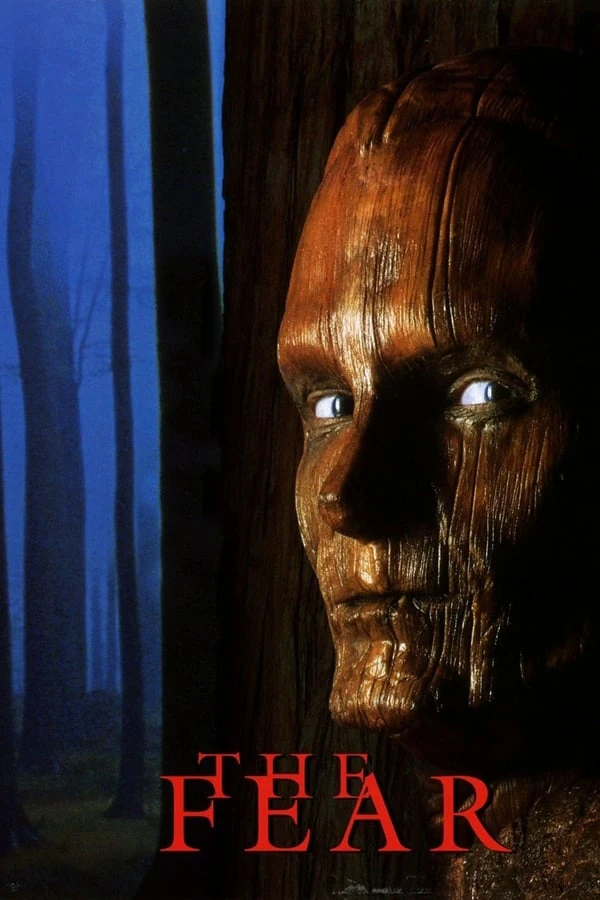
The Fear (1995) [Mini Review]

From http://vignette2.wikia.nocookie.net/headhuntershorrorhouse/images
/5/54/The_Fear_(1995).jpg/revision/latest?cb=20111215174521
Director: Vincent Robert
Screenplay: Rob Ford
Cast: Eddie Bowz (as Richard); Heather Medway (as Ashley); Ann Turkel (as Leslie); Vince Edward (as Uncle Pete); Darin Heames (as Troy); Anna Karin (as Tanya); Antonio Lewis Todd (as Gerald)
A Night of a Thousand Horror (Movies) # 13

The Fear has a potentially killer premise. Richard (Bowz) is a grad student who decides to make his thesis in psychology a group therapy session where a small group including himself analysis their own fears in his family's old home and overcome them. There, the group find a disturbingly realistic wooden mannequin that was used for fashion display, it's prescience helping to bring out the traumas of the guests, including Richard's over the death of his mother and strange dreams he is having, with the possibility that the mannequin is alive.

If anything the film has a lot of promise. Its slap bang in the middle of poor mid-nineties fashion, and even as someone with an embarrassing lack of knowledge about hip-hop I could choose better tracks to play on the soundtrack, but it reels in you for something interesting with strange dreams opening the film of masked people and freshly made graves in the middle of the woodland. The late Wes Craven plays the teacher who encourages Richard to try his idea, informing him that he should find the missing piece of himself while at the home, setting up the plot line. There's also the bizarre fact that it's effectively a Christmas film even if set out of season. A creepy Christmas themed fairground Richard's uncle (Edward) has plays a part for a key sequence which, with Black Peter statues and dark corridors amongst the rides, would've made a great setting by itself and changes the pace of the movie briefly when its mostly a psychological drama with mannequin based creepiness at first.

The Fear eventually tries to cram so many plot points into itself however that it gets ridiculous. The death of a mother, possible incest, fear of water, stolen money, contempt for religion and a campus serial rapist is amongst the plot points for such a small cast of characters, unable to develop most of them properly when one could've stretched a single narrative. That it's also tackling more serious content becomes problematic from this because of its awkward tonal shifts; the campus rapist subplot, a large portion of the film which includes a female character in the main cast being raped, becomes deeply inappropriate and bungled, out of place with the content of a spooky post-Night on Elm Street narrative. The film also confuses to a detriment the point of the mannequin. It's an excellent creation, more so as it's clearly an actor in full body costume and prosthetics at points even when not moving, but The Fear confuses whether it's completely evil or punishing the guilty, the confusion especially with the more problematic subject matter causing further issues. What could've created an iconic horror character for the nineties fails, lost to obscurity, because of how it fails to keep to one idea and do it well.

From http://zombiehamster.com/wp-content/uploads/
2015/06/The-Fear-1-624x325.png

Saturday, 6 August 2016

The Host (2006) [Mini Review]

From http://www.hancinema.net
/photos/photo19669.jpg
Director: Bong Joon-ho
Screenplay: Baek Chul-hyun and Bong Joon-ho
Cast: Song Kang-ho (as Park Gang-du); Byun Hee-bong (as Park Hee-bong); Park Hae-il (as Park Nam-il); Bae Doona (as Park Nam-joo); Go Ah-sung (as Park Hyun-seo);
A Night of a Thousand Horror (Movies) #12

The Host is an interesting case of a kaiju/monster movie if shrunk to concentrate on a small character piece; while Hollywood blockbusters tend to downscale their drama to one character and their family to a detriment, this is deliberately a drama about a dysfunctional family first which just happens to centre around a crisis that effects the local population. Chemicals poured into the Han river creates a mutated aquatic beast that terrorises the locals and may spread a virus to those who come into contact with it, but the central drama is not a scientist or the military trying to destroy the beast like in a Toho film from Japan, but a less than perfect family. A divorced slacker (Kang-ho), whose daughter (Ah-sung) is captured by the beast, and is followed by his father (Hee-bong), his sister (Doona) who is a professional archer, and the washed up, alcoholic second son (Hae-il) to try to rescue her when they discover she's still alive.

The combination of comedy and drama, more common in Asian cinema and trademark especially with modern South Korean cinema, does work exceptionally well as it fleshes out the characters rather than feel inappropriate, helped by the fact that once you've adapted to it its paced out carefully. What does falter the film a litter, dating the film to the Bush Jr. era, is the anti-American political context where the US military take a heavy handed and problematic attitude to trying to stop the beast. This does feel like the one flaw of the film when the 1954 Godzilla film could simply present a beast created from nuclear power and just hint from that image of themes hidden between the lines of such a creature. Instead it's the family drama that's significantly more rewarding.

What's dated well, as it uses extensive CGI, is the beast itself, a Weta Workshop creation digitally, with animatronics from another studio, that still looks exceptionally good and is helped by the fact that, because Bong-Jong Ho made the film a quiet dramatic-comedy in-between the action, the most extensive scenes with the beast have a greater effect and don't present it in a way that'd reveal its seams. That the film matches the type of subtlety that the director showed in Memories of Murder (2003), including a more honesty and bitter sweet ending, does cement the great qualities of the film.

From https://cinefilesreviews.files.wordpress.com/2015/10/the-host-bong-joon-ho-
creature-feature-2006-horror-film-movie-review.png?w=1038&h=576&crop=1

Friday, 5 August 2016

Blood Shack (1971) [Mini Review]

From http://4.bp.blogspot.com/-fSNe2V8RBJY/UBqx74B82fI
/AAAAAAAAAn4/bWeB2QEtfSY/s1600/72240577.jpg
Director: Ray Dennis Steckler
Screenplay: Ron Haydock and Ray Dennis Steckler
Cast: Carolyn Brandt (as Carol); Ron Haydock (as Tim); Jason Wayne (as Daniel); Laurel Spring (as Connie); John Bates (as Charlie)
A Night of a Thousand Horror (Movies) #11

What image stands out from Blood Shack? A man in full black costume called the Chooper suddenly materialising into camera frame to kill someone with what appears to be a sharpened stick. While the figure is connected to the titular shack, killing anyone who goes near it for over a hundred years according to legend, the abruptness of his appearances including jumping off the shack's roof at one point is funny for reasons I can't put my finger on. The Chooper's appearances feel like theatrical stage appearances than actually wanting to kill another character on-screen.

Blood Shack is an oddity. The seventies is growing as one of the best decades for horror for me both for the films being made in Europe and the US, and part of that is to do with the latter's independent productions and how strange and unique they could be. Blood Shack is a lesser example but it's my introduction to the world of Ray Dennis Steckler, most well known for Rat Pfink a Boo Boo (1966) and The Incredibly Strange Creatures Who Stopped Living and Became Mixed-Up Zombies!!? (1964), one of the most memorable and infamous titles for a genre film. One major trait of his career, documented in Jonathan Ross' The Incredibly Strange Film Show (1988-9) in an episode devoted to him, was his habit to not follow scripts at all and improvising the content, which is a likely explanation for how erratic Blood Shack is even at less than sixty minutes long. It starts off as a Southern fried horror story where a woman makes a bet to stay in the shack, the local ranch hand Daniel (Wayne) complicit in burying the bodies left from the shack if they don't heed his warnings. The tone jumps however when the female protagonist Carol (Brandt)  appears, the owner of the property who leads to the film suddenly being punctured by her internal narration that feels closer to an introspective art house drama about self discover than for a horror movie.

From here the result is a peculiar mix; a man called Tim (Haydock) continually pesters Carol to sell the property to her and people are randomly killed by the Chooper but Steckler starts splicing into this narrative with what was clearly him taking advantage of rodeo that was also taking place in the small town he was filming in at the same time. The rodeo footage is actually more interesting at points than the story itself, the characters weaved in abruptly to visit it multiple times, feeling like a time capsule unexpectedly threaded into a short movie to pad out the time. Seeing the real cowboys riding horses, and children riding ponies in competition is actually fascinating merely to see what this kind of culture was like in the US in the flesh. The resulting film in general, because of this but also Steckler's odd pacing choices, goes possess a weirdness to it in places - a murder is followed by the heroine describing the lovely pony given to two young girls in a way that's as ridiculous a tonal change as you could get. I also suspect the aforementioned young girls, as he cast relatives in his films constantly, were related to Steckler or a friend's children, sweet in how they play along to what they're supposing to be doing on camera, one merely a toddler, and acting out scenes like playing musical chairs with only themselves and one chair in a way that confuses whether they were play-acting or just playing around the set on-camera. The resulting film is less interesting as a proto-slasher it's plot suggests, too thread bare and assaulted by random tangents to work, but for its curio home-grown quality in aspects like this. 

From http://leglesscorpse.us/wp-content/uploads/
2015/04/vlcsnap-2011-04-10-18h23m31s14.png

Thursday, 4 August 2016

The Forbidden Room (2015)

From http://www.filmdispenser.com/wp-content/uploads
/2016/03/the-forbidden-room-titles-2.jpg
Directors: Guy Maddin and Evan Johnson
Screenplay: Guy Maddin, Evan Johnson, Robert Kotyk, John Ashbery and Kim Morgan
Cast: Roy Dupuis (as Cesare); Clara Furey (as Margot); Louis Negin (as Marv/Smithy/Mars/Organizer/Mr. Lanyon); Udo Kier (as Count Yugh/The Butler/The Dead Father/Guard /Pharmacist); Gregory Hlady (as Jarvis/Dr. Deane/A Husband); Mathieu Amalric (as Thadeusz M___/Ostler); Noel Burton (as Wolf/Pilot/The Captain)

Synopsis: Based on Guy Maddin's Séance project, live and filmed performance pieces where lost films are "conjured" like spirits in acted out séances, The Forbidden Room is a series of stories within stories within stories. From a monologue about taking a bath from actor Louis Negin, the bathwater leads to men trapped in a submarine at the bottom of the sea with explosive jelly and rapidly depleting oxygen trying to find their captain. A lumberjack inexplicably appears leading to dreams and reflections that lead to dreams and reflections of those in the first ones. Of the lumberjack trying to rescue a woman Margot (Furey) from thieves, of aswang vampire bananas, poison absorbing leotards, Mathieu Amalric as a man living in an elevator killing his butler to cover up using his possessions as his wife's birthday gift, Udo Kier's ghost giving his son his moustache so he can pretend to be him for his blind mother (Maria de Medeiros), Kier also as a man obsessed with derrieres as sang by legendary duo Sparks and various forms of madness beyond that.

From the above synopsis, The Forbidden Room can claim to be out-there even for Guy Maddin, the Canadian hauntologist of films existing in alternative worlds like Careful (1992) to Dracula: Pages From A Virgin's Diary (2002). Co-director with Evan Johnson, this is amongst Maddin's most surreal films, an obsessive tribute to cinema that has sadly perished to the spectre of time or never got made. The film's from the Séance project, recreated here to, including works from legendary directors like Jean Vigo to Erich von Stroheim; for example, the tale of the son wearing his late father's moustache to comfort his mother is based on a lost Mikio Naruse work called The Strength of a Moustache (1931). Doing this Maddin and Johnson decided to take a page out of the film adaptation of The Saragossa Manuscript (1965) of relishing storytelling for its own sake, the stories segmenting into each other as character within them tell their own stories. The film in terms of ingesting it over two hours is a massive work, but significantly the result is a series of star studded and elaborate short stories which intercut between each other, all with beginnings that lead to ends but not necessarily all ending as you'd expect them to.

From http://www.slantmagazine.com/assets/film/24952/forbiddenroom.jpg
The stories vary between the melodramatic - an escaped prisoner (Jacques Nolot) becoming the servant of a man (Slimane Dazi) even if he has to hide his chains - to the exceptionally phantasmagoric and bizarre, such as another man developing an evil side to him called Lug Lug because of his obsession with a Janus statue, only for his narrative to end with his doppelganger appearing at an auction. Like a stream-of-consciousness the resulting structural style, intercutting the stories in-between each other depending on the mood of the moment of the whole film, allows for Maddin's feverish imagination to become even more absurd for the sake of it - that vampiric bananas is merely a small anecdote in a much larger work explains what one should expect.

From http://67.media.tumblr.com/89bf2e3b17a7714d756c0e7
d721480c3/tumblr_nzag3sZkbB1qzoziho7_1280.jpg
Technical Detail:
The Forbidden Room is the first Maddin film to fully embrace extensive computer effects which will stand out aesthetically for many. In general the look and tone of the film however is like various different aging film reels being attached together, just as important to what the film is doing as the content is. Like a constantly distorting and decaying image, actors are introduced by their name and their character's in on-screen text, existing behind the veil of faded film stock of various colour tints and digitally added film scratches. Far from the worst of this type of technique, this feels like the creation of people who've watched a lot of older cinema and have learnt the style of these type of films even in their inter-title text fonts to make this effect actually work, giving this film the look of living celluloid as a result. Able to go from bold three-strip colour to monochrome, the result is entirely seamless.

From http://www.bfi.org.uk/sites/bfi.org.uk/files/styles/full/public/image/forbidden-room-
the-2015-012-suited-man-looking-back-to-doorways-ORIGINAL.jpg?itok=xy8VtyHP
Abstract Rating (High/Medium/Low/None): High
Is this the peak of Maddin's style? Not necessarily. Other films before this are just as abstract from his filmography in different ways, such as with Cowards Bend The Knees: The Blue Hands (2003) and its original peek-a-boo machine art installation context and its content. With The Forbidden Room the difference is found in how emphasised and constant the barrage of content is, the collage of narratives a barrage that literally crashes into each other as a character finds a book of climaxes which the viewer witnesses the examples of, including two blindfolded lovers crashing personal hot air blimps into each other. Instead of explaining the blatantly obvious, that this gets the High mark on the rating system, it's better to list some of the more memorable moments in a list since there are so many of them to choose from.

From http://cbsnews1.cbsistatic.com/hub/i/r/2015/09/27/a088ec7d-
5fce-4165-be39-39e523b8aba1/thumbnail/
620x350/d119232d2604c34dcc38cf1546de43cc/the-forbidden-room-montage-620.jpg
The fairytale quest of the lumberjack to rescue the damsel, which goes as far as picking up allies with special abilities, only for it to deflate in an anti-climatic ending with feminist leanings. Sparks cameoing, but with singer Russell Mael's face obscured by damage in the celluloid, and composing 'The Final Derrière', about the love and bottoms and scrapping brain matter out of someone's head to cure this fixation. Udo Kier appearing continuously, like many actors, in multiple roles as part of the film's dreamlike tone, actors playing characters in one story and then in another dreamt by a character in their original narrative. Charlotte Rampling in one single story, as Mathieu Amalric's ailing and bed ridden mother, but with her face appearing continually in the flashes of the film's memory. The continuous references to amnesia - from children fighting a trench warfare being told they'll suffer from an ailment where their relatives will forget them to a psychologist literally bringing a woman's inner child back to her on a train - which can be argued to be a key theme of the entire film and its resurrection of lost films. The gleeful perversion that's Maddin trademark, from nudity to eroticism, that manages to get away with being suitable for twelve year olds here in the UK in this particular film and how it presents it. The aswang narrative, of vampires whose footsteps hear from a distance actually mean they're close and could harm you. The simple fact that the film exists even in the context of Maddin's already unique career and has so much left un-discussed in this paragraph awaiting any viewer of The Forbidden Room.

Abstract Spectrum: Fantastique; Mindbender; Surreal; Weird
Abstract Tropes: Too many to write down

From https://reencuadres.files.wordpress.com
/2015/03/the-forbidden-room_still1.png
Personal Opinion:
An absolute, delirious delight. My only regret is having missed the chance of seeing it on the cinema screen which, on Boxing Day 2015 when it was possible to, would've made a memorable Christmas memory. It's immensely rewarding as well due to how dense it is, apt for multiple rewatches and, in context of Maddin's career especially as the Séance project will be released as its own entity, it offers an exciting new page for his career. Especially as with Keyhole (2011) he switched to digital cameras, this film with his co-director Evan Johnson offers a paradoxical but fascinating tangent of his obsession with cinema's history becoming even more central to his cinema.