Wednesday, 8 October 2014

Halloween 31 For 31: Amer (2009)

From http://img.filmsactu.net/datas/dvd/a/m/amer/xl/4c6e55cf2e080.jpg

Dirs. Hélène Cattet and Bruno Forzani

With Amer, the sensitory experience is of the most importance. There is a story to the work that adds to its content, split into three segments. A young girl (Cassandra Forêt) is terrorised in her own home when she takes the pocket watch from her recently deceased grandfather. Segment two, when she becomes a teenager (Charlotte Eugène Guibeaud), depicts an incident in a summer afternoon. The finale, as an adult (Marie Bos), involves her being stalked by a razor welding maniac in her old family home. While the film varies between different story types, the trait that was picked up on and ran with was its inspiration from the Italian giallos, murder mystery films, from the symbology to music from the original movies being reused. Out of the directors' two feature films, I feel The Strange Colours of Your Body's Tears (2013) may be the superior of them, but along with any short films of them one could see, there is a very oneiric tone to their work. There is a nightmarish feel to their films, including Amer. The exception within this film, depicted in a more realistic tone, is in the second segment as the centre character, as a bludgeoning young woman, goes with her mother to the hairdressers, far from horror but all about the perception of being a teenager in an everyday environment, as fixated on what she sees, like the grey in her mother's hair to the leather jackets of bikers, as it is the same on her by lustful men. The other segments are far more hallucinatory, the first a supernatural domestic horror that contains the most dreamlike imagery, the final piece about a killer and when the film becomes violent and much more unsettling with its imagery.

From http://www.onemetal.com/wp-content/uploads/2010/10/AMER-2009-teenager-500x213.jpg
The film is heavily stylised, but it is also apparent, while there is a luridness to the material, that an avant garde flair is there which drastically recalibrates the giallo and horror related tropes being used into a collage of colour, image and sound. In lieu of the directors having released a second feature, The Strange Colours of Your Body's Tears, Amer is also all about the surface qualities. An obsession with sexuality - from childhood to adulthood, puberty inbetween - is there throughout, from a feminine perspective and from a fetishishtic gaze, but it is a film entirely about stimulating the senses too. Is this a bad thing? There is a view that films have to have deeper meanings, that style over substance is a bad thing. But the substance of Amer is its sensitory content. It is an all-consuming work which you get the best out of from its Dario Argento inspired style with added experimentation. Scenes depicted in bright, multicoloured lighting, swathed in shadows and blindingly bright summer sun depending on the scenes. Distinct, layered diegetic sound design. Extreme close-ups, editing tricks and various forms of cinematic grammer that is meant to incorporate as many senses as possible for a film. The reason why directors Hélène Cattet and Bruno Forzani have become amongst the few directors I will try to see all their work of when it's released, able to see The Strange Colours of Your Body's Tears at the cinema, is because of their maximalist style that, while gobsmacking in its cool and sensuality, is also a rare case of cinema as a medium being pushed in form to its furthest. The directing duo linger in cult cinema, the music including tracks from Black Belly of the Tarantula (1971) and What Have They Done to Your Daughters? (1974), but they are a mere step away from full-on experimental cinema, only needing to manipulate the film form itself along with the content to get there. I wouldn't be surprised if this sort of film could push people towards experimental cinema in general, the blurring of reality, or the heightening of it in the second segment until you feel every sensation the main character feels, made accessible because of its obsession with masked killers, undead beings and women in peril. Even in a hyper fetishishtic take on Euro horror and giallo movies, to hear the sound of leather gloves in vivid detail, to see the pore and freckles on a person's face, and to have every detail, including horrible moments like a blade between teeth, be felt at its fullest is nigh on rare in cinema.

From http://www.onemetal.com/wp-content/uploads/2010/10/amer-2009-red-blue.jpg
The notion of realism in cinema is undermined by how film records and separates the images and sounds from their original reality. Instead it would make sense to view cinema, even as entertainment, as a way to expand and maximalist every little in life, made up or depicting real life as a sensation to be scrutinised. Sound, sight, texture, light, even space of time should be taken into account. Some of the best films are those that veer towards the vague or the style over substance category because their obsession with detail adds the character to the films that is ignored, but if concentrated on turns them in more enriching experiences. Amer is a pulpier take on this, techniques I have seen in experimental films, from the flux of reality in Maya Deren's Meshes of the Afternoon (1943) to the rapid editing of Peter Tscherkassky, but it still follows the ideal of making all the content heard, seen and felt on the screen. Giallos, while lurid b-movies, were ironically very well made at their best for all their sleaze and illogical plots, because the best technicians in the Italian film industry were building their foundations, music that could shuffle between jazz rock to Ennio Morricone's avant-garde pieces for The Bird With The Crystal Plumage (1970), elaborate close-ups to widescreen shots, and even if it could be incredibly kitsch and dated, seventies aesthetics, architecture and fashion which obsessed itself over colours and form. The melding of art and pulp is not that strange a combination and with Amer, the most nightmarish of moments, such as a little girl finding herself closed in on in her bedroom, a bath filling itself with an occupant inside it already, or the woman later in life being pursued in the final act, have added force through their heightening of the littlest of sounds or objects on screen.

From http://www.enclavedecine.com/wp-content/uploads/
2010/11/vlcsnap-2010-11-03-10h11m33s179-1.jpg
Abstract Rating (High/Medium/Low/None): High
The result of this is that, in the right frame of mind, Amer succeeds in engulfing you in its world, where every object, from a woman's lips to a pocket watch are imbued with an importance. The curious thing is that I find, having learnt basic cinematic techniques in Film Studies class and watching many films, the common ways to bring a viewer into a film emotionally, that manipulate them to feel certain effects, through techniques in editing to the framing of actors usual in mainstream cinema, have become alienating to me, distancing me from them from being able to recognise the techniques and that, now, it is only films that can give me a facsimile of the sensations I could feel in real life outside a cinema, or in my dreams, that are far more powerful and technically brilliant works. A film that breaks it's reality, showing its artificiality, is now paradoxically more 'real' for me because everything within it is given importance, as one can imbue everything in front or in vicinity of you with importance too when concentrated on. Baring to clear my head of a day's stress, to unwind, cinema is now dictated by how it is going to be effected by my perceptions, not the other way round as a passive viewer, which means it can only effect me if it goes out of its way, in my case, to cause me to feel every or as many sensations as possible from it, to perceive things in the greatest detail. Traditional film grammar, found in many Hollywood films, cannot do this for me anymore because the manipulative, and that word is not used menacingly, but in how the grammar pulls your emotions to what is needed to be felt, ignores vast layers of detail the cinematic image could enrich to concentrate on that emotion.  It can be through a narrative or as an avant garde piece, but a film that concentrates more on these vast layers of detail have become some of my favourite films, and even a schlocky cult film, like the giallos being reinterpreted in this, have been more rewarding as a result. Amer and the films of Cattet and Forzani have been able to do this successfully, and in context of what cinema is, it is utterly alien to how cinema is usually made and is something completely abstract as a result.

From http://ruthlessculture.files.wordpress.com/2011/09/cm-capture-1.jpg
A Cinema of the Abstract movie?
As a film, beyond the heavy description of perception I've tried to describe, this engaged viewing habit of mine, to ask for films to cause me to feel everything within them, means that I can go for the most minimalist works to, here, being an utter sucker for style. Amer's clear purpose is an experiment in sensation.  To hear the sound (including the giallo scoring music) in more detail than in most films. To feel the colours to the point, to paraphrase Carlo Carrá's The Painting of Sounds, Noises, and Smells (1913), "the rrrrrreddest rrrrrrreds that shouuuuuuut" are felt, or what would happen if you watched Dario Argento's Suspiria (1977) and Inferno (1980) on an IMAX screen.  To go beyond merely the fetishishtic nature of the films Amer is pastiching/celebrating to a full fetishisation of all one could perceive, from the body to materials of a pair of gloves. The result is spectacular, really bold and special for me, its three stories melding together into a perplexing take on a woman's life that, on this viewing, is made much more peculiar by how the ending for her may now be not what it seems, especially when I swore I saw eyes about to open when the end credits came up. That it is through the prism of cult Italian movies that the film is gestated from, that the directors clearly are enraptured with, is magnificently unexpected, when usually experiment cinema is seen as cold, technical formalist work, and tributes to cult films usually leave me in hives.

Tuesday, 7 October 2014

Halloween 31 For 31: The Deadly Spawn (1983)

From https://blogger.googleusercontent.com/img/b/R29vZ2xl/AVvXsEht3ScyVHFvdAXJqtUlUbpS0bqUtTO0zEtnqR2ON4jEq6R1ttbh2GSkThygT7A12ILUyG_HLEgzJotpmbo-2sfwAMe0kdPjAky_NCJnKOxMU3O_TkutqZhON8msGp6qCMfsQtlOFETRVbk/s1600/DEADLY+SPAWN_2.jpg

Dir. Douglas McKeown

In a fitting piece of connective tissue, a film mentioned in passing during my first review of this series, Things (1989), is being covered now. I still believe that as a first attempt at a film, made in someone's back garden, it is a success in terms of structure and technical quality. But my preferred film? I think a lot more personal opinion is involved, though I found enjoyed The Deadly Spawn. The titular spawn appear from outer space, breeding in an unsuspecting suburbs of a small American town. An aquatic species, the constant rain makes it a very bad day as they multiply and grow, a cross between tadpoles, sperm (let's be honest), and giant teeth stuck in various places. The spawn are flesh eating, ready to eat your mother or relative if one ever gets close to their new home inside the basement of one poor family. The film itself, made with the resources the director had, is a testament to resourcefulness and ingenuity. I also cannot help but love the fact this is a fifties b-movie transposed to the eighties. There are a lot of eighties films that reference the fifties, a love-in for a period when Ronald Regan wasn't a president but just a b-movie actor. The creators of this film decided to make a fifties sci-fi, without irony, within the context of the period the film was created in. Which means far and away more gore and prosthetic effects. A lot more prosthetic effects until the point you have to wonder how much fake blood and materials had to be bought for the production, and how much of a mess it made in the house the film was shot in. In the era of The Evil Dead (1981) I cannot help but be happy that there was a boom in this time of people who watched horror films making their own, some with varying results, some with legitimately great qualities.

From http://4.bp.blogspot.com/-6sk64IdSZO4/TYkFi_hVBaI/
AAAAAAAAXdo/P13cDhNMjCw/s1600/PDVD_034.BMP
It's a film that was made by genre film fans for genre film fans, going as far as having the closest to a hero be the youngest brother of the family the spawn have invaded. A Famous Monsters reading kid obsessed with horror films, watching them in the morning and waking his aunt and uncle, posters on the wall, and trying to scare his relatives with elaborate masks and costumes, adding effect with chemicals he could buy in magazines. I didn't have this sort of childhood, but my own had plenty of similar things that led to me loving this sort of material. Tiny books, smaller than the palm of my adult hand, about specific monsters (vampires, mummies, zombies etc.) including a chapter devoted to as many of the films made about them, many I still need to see. Books of ghoulish real events, and demons, aliens, monsters and urban legends like Bigfoot. I was once even forced to stand at the playground wall, looking at it, in primary school as punishment for scaring the girls with a plastic scorpion, something which has probably left some subconscious trauma lingering still inside me. It also, in a clever part of this very simplistic film, has an importance to the plot in that his knowledge finally can have real life use in reacting to this threat, while traumatised after, with stern courage, taking matters in his own hands as everyone is being eaten and his older brother and his friends are terrified. Rather than being an excuse for cheap references, it's a nicer tribute, even if its self service, in-love for these types of film, to see it part of the plot itself. The odd thing is that Things was also made by horror fans, the references in that film a layer to the illogical nature of it which made no sense and were difficult to see as tributes, more closer to lovable gibberish.

From http://www.horrorphilia.com/wp-content/uploads/2012/02/Deadly-Spawn-2.jpg
I wish if I made a film, I could make it with the technical accomplishment this has. The gore, as said, is suitably well made and quite disgusting at times, and the spawn themselves, while very rubbery, are suitably comparable to the obviously fake fifties American sci-fi monsters, but also have a real weight to them. The, ahem, little sperm spawn in particular are freakish in how someone managed to make them, with tails like tadpoles, swim in blood and water quickly. They also have character. Like Joe Dante's gremlins, they will gladly destroy anything while also eating anything, even vegetables. The thing is, while I find a lot to love about this film, I much prefer Things for its complete lack of comprehension and madness. I admit I was not well viewing this film, an unfortunate stomach bug that thankfully left me after that day, but I like my films, b-movies as much as the a-movies, to have more texture, more detail, and of course with Things complete lunacy. What I liked in The Deadly Spawn returning to it, beyond the technical achievement, is not the story and horror. It mainly is scenes of the spawn eating people and people running in fear of them, which makes up most of the film but is slight. Watched with having to fast forward through the commercials, the film so brisk that it gets to the next ad break quickly, and the film viewed as it was originally intended to is still very short. The few moments of personality the film show, which it needed much more of and, ridiculously, Things had, are the best. That the closest to the protagonist is the horror nerd but he takes his goal to kill the spawn with a seriousness that is bad ass. The moment his uncle asks his questions about his obsession for his psychology conference. Some slight romance with the older brother. And the kooky segue into a vegetarian party that goes ire, the best scene and the closest to Gremlins (1984) in anarchic tone. It's also a film surprisingly vicious, contrary to the original fifties sci-fi it's a recreation of, where anyone can be killed, leading to one really startling death that, while the film is jaunty in tone, is done seriously for its aftermath for the one moment it has more of a depth. My only regret is that The Deadly Spawn is slight. Unfortunately its director Douglas McKeown never made another film. Doing this review, I've discovered a continuation of this film, from another director, exists, but having never heard of it until now, with some knowledge under my belt, it's a shame that nothing more was continued from this film baring the cult appeal it developed.

From http://sinsofcinema.com/Images/Deadly%20Spawn/Deadly%20Spawn%208.jpg
Abstract Rating (High/Medium/Low/None): None
Never really a chance for this one to get on the list. A b-movie monster film which doesn't get esoteric. It's to be watched for being a b-movie tribute that shows what one can do if they try their hardest.

From http://www.chrisandphilpresent.co.uk/wp-content/uploads/2012/02/deadlyspawn2.jpg
A Cinema of the Abstract movie?
No, Things is. But again, the advantage of writing these reviews is that I appreciate the film more having thought more about it. I was really not that interested in writing this review, a little ambivalent about doing so, but with both the hectic pace this project will get to and the sense that a film like this is the kind of underdog cinema I can, if anything, get behind for its virtues, I'm glad now to have put up this review. It feels unfair to compare it to the Canadian entry though the comparisons can be made - while The Deadly Spawn is about aliens, Things is an alien floating in orbit around planet weird.

Monday, 6 October 2014

Halloween 31 For 31: Whispering Corridors (1998)

From http://2.bp.blogspot.com/-MwJHGP4fw3o/T6SScItaaKI/AAAAAAAAAcg/zM4oo37fRRc/
s1600/9Y0WOBUQCVsmVEJzUtRjs0mSaXs.jpg

Dir. Park Ki-Hyung

With horror, it is case of comparing apples to oranges in terms of preferences. I appreciate my lurid cinema, with (obviously) fake gore every ten minutes, and other times I prefer a slow, methodically paced ghost story. Part of a five film series, individual narratives but with the same theme of all-girl schools, Whispering Corridors is a very thoughtfully paced film. A teacher is found hung on campus of an all girl's school, but as the viewer sees before the characters, there is a clear supernatural prescience at the place, one which openly targets teachers who practices cruel and strict behaviour on their students. With an alumni returning back to investigate what has happened, the film is far more a drama for most of its length. An hour or more passes before the supernatural horror content of the movie reappears, the greater horror within the film more the pressure and cruelty within the school. Bullying, especially from the teachers, strict hierarchy and teaching methods, and the emotions felt by the female students as young adults and teenagers. The film gained a lot of controversy in its home country for its negative depiction of the schooling system; while I have no real knowledge of the South Korean schooling system, the fact this film even existed, becoming a box office hit, would automatically suggest there are real problems with a country's education system, from some individuals' perspectives, even if the depiction in this is not that common. Like a few Japanese genre film, schooling appears to be depicted as harsh and unnecessarily brutal at times in Asian cinema, more than in the West, where it chews up teenagers rather than lead them to becoming adults of moral rigor, although it is a universal problem that is translatable to any country. It can translate from Another Brick In The Wall being sung by Roger Waters to something much more serious like this.

From http://www.craveonline.com/images/stories/2011/2012/December/Film/Terror%
20Cult/Korean%20Ghost%20Stories/Whispering_Corridors.jpg
Most of Whispering Corridors is dramatic than horror based. It's superior as a drama in that there isn't any pretention to it. No arch acting suggesting its importance. No overburdening music. No attempt at being realistic or, even with Whispering Corridors' real critique of education, any attempt to see itself as vital and desiring to change social norms, merely pointing it out in a narrative. None of the hysterics or self importance that causes me to run far away from any dramatic film that has had an Oscar, a Golden Globe, most film festival awards or high praise from film critics. This film is well acted, emotionally engaging and sincere with its message, whilst heavy handed occasionally, still a horror film and never becoming preachy. As a horror film it thankfully follows the motto "less is more" that films that try to be moody can fail miserably at; as some films are better following the motto "more is better", it's only a problem when a ghost story that is trying to be eerie descends into loud string sounds in the score and quick editing. This film is slow paced, building up its mood through the quiet dramatic scenes, and when there is a moment of violence, it's not too over the top but is still considerably nasty. It can be taken seriously without becoming pretentious.

From http://2.bp.blogspot.com/_uU5VR4RVD_I/TOhjaVXqegI/AAAAAAAAAGY/
Gi8MbuzMEHU/s1600/vlcsnap-2010-11-20-15h47m51s86.png
The director also has a knack for using practical effects or using the tools for making films for the horror. Editing, camera angles, even the use of jump cuts in succession after each other in one moment, all of which add to an effective spookiness. The dramatic scenes of school life have a darkened mood to them too, because of the issues being tackled, the horror melding together with it seamlessly. The obvious plot point is that the supernatural entity at the school is the result of the pressures and educational bullying at the school. Again, the film does descend into moments of heavy handedness - particularly with a male teacher who is a brute, sadistic and a pervert - but it is for the most part balanced, where even a single nasty comment is enough for the worse to happen, to the regret of the person who said the comment themselves. Anything overly horror, supernatural, within this never becomes jarring, not even a final moment, the bloodiest, if not most spectacular, way to conclude a narrative, while not the exact end, made better by the fact that everything in the film is clearly done practically or in-camera. How quiet and methodically paced the film is gives Whispering Corridors it's best virtues; the fact that it is for the most part a drama, which could have the horror aspects removed from it, means that it is still engaging and never becomes a prolonged series of scenes which contribute nothing but empty self importance. That it is a horror film is good in that the material is both taken seriously and is spine tingling when need be.

From https://www.asiatorrents.me/imgz/images/w13.png
Abstract Rating (High/Medium/Low/None): None
Nothing particularly 'abstract'. It's moody and eerie, but it's a narrative film with a conventional structure and tone. What's interesting is how it's told the narrative.

From http://s2.dmcdn.net/APzFh.jpg
A Cinema of the Abstract movie?
As a film for the site's main subject, no, but as the kind of film you'd hope to see, absolutely. What feels like one of the more commercial films covered so far in this series didn't mean that it would be typical, in its subject matter or how its told. It's amazing to say that you don't get as many films this quiet and subdued in tone. The other films I have seen, Wishing Stairs (2003), while somewhat flawed, is just as interesting and good, using the same virtues this film had to its advantage, and generally I'd like to see the two other entries in this franchise whenever possible. These films didn't get as much acclaimed  in the West either when it came to the growing interest in South Korean cinema, more interest held for the more violent and action packed entries, a shame because something like this in particular is just as interesting.

Sunday, 5 October 2014

Halloween 31 For 31: The Sadist With Red Teeth (1970)

From http://i34.photobucket.com/albums/d106/becole05/Sadist.jpg

Dir. Jean Louis Van Belle

Whether the film in question is great or merely fascinating on the first viewing, the fact remains that, when you have a movie that is at least different, it'll never be a dull viewing experience. With DVD label Mondo Macabro, while importing their stock is going to be the only way to access their back catalogue, (though they did released DVDs for the UK once), the likelihood is for myself, as for others, every disc will introduce a new side of cinema I would never know of before, in this case the work of director Jean Louis Van Belle. After a tragic car crash, a comic book artist suffers from mental trauma where he is under the belief he is a vampire. Unfortunately rather than curing him of this, his psychiatrist is a mad one, desiring to push his psychosis to the point he becomes an actual blood drinker of the night. All it takes is a push, some hypnosis and him finding novelty vampire teeth in a joke shop. The Sadist With Red Teeth, excuse the pun, is a batty film. It's a movie that plays around its plot rather than be progressed along by it, deliberately absurd in its tone.

From http://www.vampirisme.com/wp-content/uploads/galery/
2014/08/van-belle-sadique-dents-rouges-1970-3.png
The film is quick to undercut its narrative with various forms of experimentation that goes on in-between the campy narrative of a man turning into a vampire. Opening credits, featuring scenes from later in the film, done in negative. Spiders superimposed in blood red over pieces of black card placed on the main actor's eyes or in his mouth in non-plot related sequences. Most curious of all is the use of stock black-and-white footage of a tornado hitting a town, of buildings being demolished and other footage to represent the protagonist's detachment from reality; it evokes the improvised feel of Bruce Conner's A Movie (1958), of putting various types of stock footage together, than for a conventional symbolic touch. The film is incredibly delirious, not taking itself seriously at all. Actors suddenly appear with faces painted in various colours in a scene set in a butcher's shop, the more odd for its matter-of-face nature as the main character shrugs off the hallucinations of his mind calmly. There is a comparison between cops and chickens as said character with his girlfriend encounters the later and asks for handcuffs when he buys one. The content is general is very exaggerated. Despite its narrative - as the psychiatrist, with his assistant with a continuous facial tick, continually check up on their patient and help him on his way to vampirism, leading to people dying of neck trauma - the farcical tone the movie takes is to the point, using the visual experimentation and odd sequences, that it is much more the playful game of viewing the film rather than the plot which is of importance.

From http://2011.luff.ch/typo3temp/pics/080229fc6a.jpg
The film's bright sixties aesthetic against the grey, urban streets, in the cusp of one decade with its own cinema into the next, emphasises this. It becomes obvious that, in material with him talking about his career, included in the only existing DVD release of The Sadist With Red Teeth, that director Jean Louis Van Belle is a very self deprecating man who likes to undercut perceptions, so it makes natural sense that there is a jokey, self humoured to the film even if it's still played "straight" without any irony. The vampirism is depicted as ludicrous when the protagonist is pushed towards becoming an actual vampire. It eventually leads to a rampage at a costume party where everyone - the police, his girlfriend, the doctor and his assistant, and a boastful, loud mouthed former lion tamer planning to claim a reward for the vampire's capture - give chase after him like a Benny Hill sketch with the fast forwarding or silly music. The only serious vampirism until the exact end is the protagonist's transformation, meeting an older man who will bite his neck and turn him. It's serious because the older man is from the director's 1969 mondo documentary Forbidden Paris, the last vampire who is seen getting his freshly prepared blood from a slaughter house, the reality leading to this fictional tale and, admirably, nodding back in respect to the real man and treating him with respect by making him the being who bequests the protagonist into his world. As for the protagonist, it only when the film ends on a supernatural note that his vampirism is taken seriously, the rest not mocking the idea but depicting it's story as a lark. One that skirts Euro horror tropes - like a nude photo shot with two women involving hallucinations of paint red blood over bared torsos - but always inserts a winking nod to its absurdity. It's not really the film I was expecting to see in tone, to be honest, so this was an unexpected surprise to have to adapt to. Rather than a narrative, as usually the case is, of a wannabe vampire stalking various people, a Euro horror film with blood, maybe some sex, the melding of the Gothic with the then-contemporary, the vampire threat is kept to the last quarter, the rest of the eighty minutes beforehand a lark that completely goes against this perception.

From http://2.bp.blogspot.com/_m6aJOwGpyfI/S8liViOAP8I/AAAAAAAAGrA/
Ur8n9eq7YZE/s1600/sadist+with+red+teeth_coloured+faces.jpg
Abstract Rating (High/Medium/Low/None): Low
If one was to remove Jean Louis Van Belle's playful tone and the experimentation, then the result wouldn't be The Sadist With Red Teeth. It's a film that is quirky, not in a lame, jokey way, but one that likes having fun with its material, playing with the format, but not in an intellectual dissertation, instead having a jest in its story, as it pushes it to the side in favour of moments for the sake of the images being created. As already suggested, it's very much a lark in its attitude to itself, the result coming off as very different from many European films, even from unconventional directors like Jean Rollin, that would've taken this premise down the route of erotic/gothic jolts.

From http://img200.imageshack.us/img200/7017/lesadiq5.jpg
A Cinema of the Abstract movie?
While 'Personal Opinion' is not being used to close this particular set of reviews, this is the case where writing about the film really creates position attitude where I like the movie in question more so having thought about it. Maybe I liked Forbidden Paris from the two disc set this film is on, I can't say for certain yet. This film does tie into the question set for these Halloween reviews that, yes, this counts as part of the blog, not just getting onto the key list, but because you don't get a film like The Sadist With Red Teeth more often, especially now. I am grateful for Mondo Macabro making the film available, letting people know the existence of Jean Louis Van Belle's work, but it would've required them to have done their digging for films like this, in many ways the same mentality I have for my blog here, but for distributing obscure films from around the world, trying to find the least conventional of cinema, having a definition for what that means that is as widely encompassing and all embracing as they can with it. I can only hope the kindness of someone's massive heart releases more of the director's directorial efforts. If not Mondo Macabro, then any other DVD distributor.

Saturday, 4 October 2014

Halloween 31 For 31: Dead & Buried (1981)

From https://blogger.googleusercontent.com/img/b/R29vZ2xl/AVvXsEgdx7qXoMzDgzJ7A6dOnOMNGSVJp31ZlaSyFFRFfbvlwCjQnL1kmn7X3MGL-FlwP7H0h-UWXBoZqVDu67J1NxhPQqT5ftI4rIwA91r1hCWUf-A_YeHLSHWQ6Xglf5h3CYC314GJTyR5_hpf/s1600/dead+and+buried+movie+poster.jpg

Dir. Gary A. Sherman

Returning to the Video Nasties well again for a review, there is a big question to ask myself since I've seen a lot of them by now: how many of them are any good? Common perception is that many are terrible. The highest tier, The Evil Dead (1981) to Dario Argento's inclusions, are seen as great films. Lucio Fulci's entries are held in high regard as well as Cannibal Holocaust (1980) and a few other works. Most of the films are seen as rubbish. Personally, barring one or two, the quality of the films are far and away better than their reputation are. This is bearing in mind that some of them are technically terrible, but even a film like Mardi Gras Massacre (1978) is amusing and memorable, always having something of worth in hindsight to like. For example, I can include a film I reviewed on my old blog, Frozen Scream (1975), which I originally hated but in the year or more from viewing it has retained a mad quality in its failures in my memory. (Only a film like Forest of Fear (1980), for anyone interested, is unable to be entertaining even in this context for me). The second and third tier films of quality, in the middle, are for debate depending on your individual tastes, the hidden gems that shine out for each person. The Witch Who Came From The Sea (1976) is one of the best of the Video Nasties for me, but it would also be a hidden gem for others. Dead & Buried is another example. In a small quaint costal town, Potter's Bluff, where everyone knows everyone and everyone is seemingly happy, strangers to the town are starting to be killed, becoming obvious to the viewer than to Sheriff Dan Gillis (James Farentino) that something is amiss, the later investigating the murders but with the foreboding sense of sinister machinations hidden in the community.

From http://4.bp.blogspot.com/_qeg1OcClj7U/S71u1ztF7AI/
AAAAAAAADP4/8ZfmXjED1s4/s1600/dab1.JPG

Dead & Buried becomes the equivalent of a horror comic or a short story which builds and builds up to a ghoulish plot twist for the finale. It is established before the protagonist is introduced that something very wrong is taking place in Potter's Bluff, but it is added upon with a greater, macabre addition and details befitting a comic book like narrative. Logically, a lot of the narrative itself, as Gillis juggles suspicions of his wife (Melody Anderson), the odd behaviour of resident mortician William G. Dobbs (Jack Albertson) and the murders themselves, makes no realistic sense especially as new information is made available and when it gets to its final plot twist. What it becomes instead is a film that firmly sits itself in the dreamlike, though its kept in the tone of a Tales from The Crypt narrative, little touches for most of its length that push it towards this unexpected combination of moods. Out of most of the nasties, this is one of them that has the visibly higher production values, one of the closest to being a 'mainstream' film. Interestingly I've encountered the director  Gary A. Sherman before with Raw Meat (aka. Death Line) (1972), and while I wasn't necessarily the biggest fan of his debut, the transition almost ten years later to this, his second, does show someone with a considerable skill in creating solid, atmospheric horror cinema. Dan O'Bannon is in the credits as one of the scriptwriters, someone of considerable legacy, though the other man credited Ronald Shusett has as much of an interesting pedigree, writing for both Alien (1979) and Total Recall (1990). The film itself in terms of its story feels like it's been  influenced by pulpy genre mediums like sci-fi and horror comics that come from the decades long before rather than the slasher films and b-movies of the early eighties or the exploitation cinema of the seventies. With a serene jazz and classical theme by Joe Renzetti, Dead & Buried has an elegance to the work, set in a tiny, close-knit town that drastically contrasts the gruesome (and noticeably latex effect heavy) deaths that take place, far more inclined to a lyrical, moody horror film from another generation than this period. The one thing, already mentioned, that puts it into the eighties is the death scenes and acts of violence, that were more than likely why it was on the Nasties list; even today thirty years later, a man being set on fire for the opening sequence is still vicious for a modern viewer to see and does become a message, despite feeling like a fifties or sixties horror movie in tone, that it's still not appropriate family viewing as a horror film.

From http://1.bp.blogspot.com/-s6ZZXSMWoq0/UbplrAXr9yI
/AAAAAAAAF04/XnLn2Hl8oJ0/s1600/dead5.jpg

The luridness contrasts against the grace as the narrative quickly elevates into the fantastical for the story, the supernatural quickly introduced and adding to the comic-like nature of the narrative. Sufferance to say it involves human hearts and occultism, and I won't reveal any more barring that an already creepy premise, as presences gather around unsuspecting victims, grows more so with the gristly suggestions of what has taken place in Potter's Bluff before what we see in the film. It's advantage as a film is that, as much as I enjoyed say, Mardi Gras Massacre or Don't Go Into The Woods...Alone! (1981), Dead & Buried's technical advantages, in terms of being a Video Nasty,  give it an immense advantage that it thankfully uses to full effect. A melancholic tone to the proceedings added by many scenes that are inherently eerie, especially when it comes to scenes set at night, one of which involves an abandoned house with an innocence group of people who, in context to what has happened to others previously in the plot, you instantly feel tension upon viewing as you do not want them to befall the same way others have. Were it not for the gristly death scenes, this would be something like I Bury The Living (1958) in style, but having the deaths, including one nasty instance with a rock, another with acid, all with added creepiness in that cameras are involved, firmly pushes it into being much more macabre. There is a slow, lingering pace to the film that, despite how ridiculous the content is when thought about, packages it together with a cohesive elegance mixed with these shocking moments. That the film is set in a quiet American town with a small population, including Robert Englund in a small role, where almost everyone knows each other, must tap into a fear for at least American viewers of the isolation that could take place in what should be an idyllic place to live, where Sherriff Gillis is completely at a loss of each discovery he finds and even his wife's behaviour, despite being the kind hearted, loving wife who is a school teacher, is up to question when the paranoia and stranger sights ramp up. It has a quality to its creation that makes it possible to take it serious in vast contrast to many a Video Nasty that one would merely find hilarious. In particularly for actor James Farentino, he has to bear the brunt of a plot around his character that spirals out of control into more gruesome, strange and twist heavy content. The film in general managed to balance itself out into the subdued and the content that takes place, able to take you into the reality being depicted as well as be cartoonish in premise. It's great virtue is that, while its the finale that knocked me for six, when it becomes its most outlandish, that film before it has plenty of moments just as memorable and good.

From http://besthorrordecades.com/wp-content/uploads/2014/06/DeadBuried_2.jpg

Abstract Rating (High/Medium/Low/None): None
No, it doesn't qualify for the Abstract list for the simple reason is that it's not abstract enough. While it does get ridiculous as it goes along, it's more of a pulpy spine tingling tale than something from an odder state of mind.

A Cinema of the Abstract movie?
Not necessarily, though it qualifies as the kind of film I am always to happy to discover - an underseen or underrated film, here particularly from the Video Nasties list, that is both a good film and also leaves a lasting effect for me. I like films that this, with no potential for sequels, very individual and different from a lot of films, which balance in a dicey position of being good and ludicrous and succeed in the end in their sprawling, unconventional tones. What Dead & Buried doesn't do in terms of being "abstract" it makes up for by being a good cult film and catching me by surprise in its quality. 

From http://deeperintomovies.net/journal/image09/deadburied2.jpg

Friday, 3 October 2014

Halloween 31 For 31: Faust (1926)

From http://filmnitrate.com/wp-content/uploads/2013/01/Faust-Poster.jpg

Dir. F.W. Murnau

Revisiting Murnau's adaptation of the legend - of Faust (Gösta Ekman) signing his soul to the Devil (Emil Jannings) - has both been a wonderful experience but has been an eyebrow raising one, abruptly meaning a lot more beyond seeing the film again and this season I'm covering it for. I admit that I wasn't a fan of it the first time I viewed it, not as yet fully appreciate the virtues of films like it, but it had importance in hindsight back when I did see it originally because I saw it while I was at college. This period, between seventeen to nineteen or so, while I wish I could've been more of a freespirit and opened up, rather than merely study and be the good student, was when I started developing the interests and fascinations that I have now. I read literature like Vladimir Nabokov's Lolita which drastically changed my attitude to how the written word could be used. I discovered music as diverse as Kraftwerk to the Butthole Surfers which did the same for music. It was also the period where my habit for cinema fully started, originally more inclined to video games as a teenager but growing out of them at this point. Amongst my other subjects, I took Film Studies, opening my mind further, learning the basics of how films were constucted, and seeing movies I'd never considered viewing before, alongside having access to an online DVD rental service and renting films like Faust from the college library. Frankly, I didn't appreciate a lot of the films I saw at the time, artistically important ones, even cult movies I'd love now, many I'm still needing to rewatch after seven years or so from then, but that doesn't detract from what grew in terms of my interest. I found films back then - like The Cabinet of Dr. Caligari (1919) - in Film Studies class or in my curiosity that stuck out then as great pieces of art even back then, alongside discovering directors like Jan Svankmajer who'd become some of my most treasured auteurs still today. Able to revisit Faust, as I did with Sunrise: A Song of Two Humans (1927), another film from the collage library I didn't appreciate until I was much older, I not only find it strange that I once held some flashy, contemporary films of my generation as being significantly superior to them, now having become gimmicky and average, but particularly now with seeing Faust again, I've been given back an emotion from my college days that I can now appreciate more so and use to my advantage. That mindset of being openly curious without bias, without snobbery and able to appreciate anything. The mind that suddenly watches Andrei Tarkovsky's Mirror (1975) for the first time on television on a late night, and while unable to fully grasp it, is still fascinated by it. The mind that never gave a time of whether I had the time to go through everything, and could go from listening to a CD of Spanish guitar music and than a book of classical literature, a sponge with no sense of pickiness to what it contacted with. The mind that decided to watch Faust because the DVD cover looked interesting.

From http://constructiveconsumption.files.wordpress.com/2013/07/murnau-faust.png

Murnau's Faust is a giant melodrama, less concerned with the cerebral musings about life and morality, or the murkier side of humanity that could be covered in the folktale. This is so drastically different from the 2011 adaptation of the folktale by Alexander Sokurov as you can get. Instead you have a film in Murnau's take that, along with Sunrise, can seem naive, but is far from sickly sweet, instead passionate and felt from the heart. With Faust falling in love with a young woman Gretchen (Camilla Horn), after being given his youth back by the Devil, and being desensitised and dulled by decadence, the film becomes much more of a fantastical, religious based romantic tragedy than a take on the morality behind the concept of the Faustian pact. Murnau's work here and with Sunrise are significant arguments though for the failure of modern dramatic cinema. When usually "drama" evokes for me transparent musing, material to pad out magazines and festivals, this film, while not even considering to tackle the philosophical nature of the folktale, does nonetheless have a far greater sense of humanity by just being a melodrama in its core. Faust in unashamedly dramatic, a fantasy romance drama that is elaborate, one of the most extravagant looking silent films made in Germany at this time, Murnau's last in his country  before he went over to the US afterwards, and not ashamed to be melodramatic within this style. It certainly fits the season of Halloween, the story of a pact between a man who rejects faith and science with the Devil, the film containing some of the most fantastical and technically complicated special effects from what I have seen of the 1920s. The gristly looking Horse Men of the Apocalypse riding the clouds, Emil Janning's Devil looming as a giant above Faust's town spreading the plague over it to push the moral man into signing a blood contract, and countless model and superimposition tricks used to create the supernatural and Christian iconography. They are obviously artificial to modern eyes, but these effects are so much more spectacular than CGI because they flux between realism and being fake in a way that is inherently more cinematic. Tonally, what is dark is dark, comedic moments are exaggerated and the romantic melodrama cuts at the heart strings.

From http://www.craveonline.com/images/stories/2011/2012
/November/Film/Terror%20Cult/German%20Expressionism/Faust.jpg

It's an incredible work of cinema in construction, both by Murnau and the individuals part of the film, from the actors acting out the scenes without audible dialogue, to the crew of film technicians behind the cameras, working together to create images I remembered, despite my disinterest in the film originally, up until the day I saw it again for this season, images from back during that single viewing retained in my memory. The Devil's first appearance to Faust, summoned by him, casually sat on a rock in the blackest night by the crossroads. The Devil's brief moment of as a jolly comedy character as Gretchen's aunt tries to wrap her arms around him in passion, a brief moment in the middle of the film where it becomes wonderfully light-hearted and silly. Gretchen in the perishing snow as the tragedy takes place. This version of the story is not a serious, existential take on the folktale, like Sunrise easy to criticise for a black and white morality the same shade as its exquisite lit monochrome images. Certainly, modern eyes, or at least the eyes that I viewed it through originally at college, could easily use their own presumptions to dismiss the film's qualities, where wholesome, very moral characters are good and there is nothing to question this barring that there should be a tragedy that befalls them leading to a happy ending. But the sincerity wins over this. Never mind that here particular, while God is in the background, an angel representing Him against the Devil, the film's melodramatic plot in current day context paints most of the peasantry and populous, Christian believers, as puritanical and believing a form of Christianity that is blind and cruel as it punishes our protagonists of the narrative. Murnau's humanity means that that for anything that may seem like it's from a different time, of attitudes of the early 20th century, there is still an undated, sincere belief in the good of people - from Sunrise, to Nosferatu (1922), Phantom (1922) and the other films I've seen - where his view on love and humanity negates anything that would be incredibly dated or conservative in any other context. The empathy shown in his narratives, his desire to show the best in his characters, is still relevant and powerful today. It means by the end, as the angel makes his last speech to the Devil, even an atheist or a cynic is going to find the final message beautiful, the apparent naivety still much more weighty and important than dismissible fluff.

From http://www.leninimports.com/faust_masters_of_cinema_series_gallery_uk_dvd_2.jpg

Abstract Rating (High/Medium/Low/None): Low
The spectacle of the film wraps together around it's beautiful emotional core to show how good cinema can be, even if Faust is usually behind films like Sunrise and The Last Laugh (1924) when people think of Murnau's contributions to the medium. Silent cinema, especially with the German films I've seen - by Murnau, Fritz Lang, G.W. Pabst - be it drama or pulp, or both, has shown how good cinema can be, it's spectacle and its craft. It's also shown a horrible discrepancy with a lot of cinema after them, not just now, but from the last century, where a few films forgot the importance of the visuals in the medium silent cinema had to depend on. I love film before and after sound was introduced, but looking at how films like Faust and Metropolis (1927) were the zenith of silent cinema, the use of visuals and techniques around them like editing are a textbook directors should be inspired by. The way a film like Faust is made also means it is abstract while still able to be absorbed the first time easily by the viewer. Because the practical effects were literally practical. Because Faust is such a fantastical film. Because with few exceptions, such like Guy Maddin films, the techniques used in silent films are noticeably absent now, giving them an alien quality in their rarity. As a result, bordering between German Expressionism as much as legend, Murnau's Faust is as much a smorgasbord of phantasmagorical cinema as it is an emotionally sweet drama.

A Cinema of the Abstract movie?
For this review, Faust does mean more beyond this blog. Not just for the nostalgia of finding films like it in collage, but the emotions they all evoke still upon going back to them, by memory or revisiting them. That I've managed to write a review that links F.W. Murnau and the Butthole Surfers together is as much about this too, a mass of varying, drastically different pieces that yet connect into a semiotic whole, also representing my personality through my interests as well as the world around me in the art I've encountered. Whether Faust sustains the passion I have writing about it here, too early to say what its virtues are in the long run, it's going to be an important film regardless that showed me how cinema can be its best. It doesn't matter if I found it dull the first viewing; upon seeing it again, it's shined and lingered in my memory far more than films I once found superior to it that have vanished from my thoughts completely. The result, which any of my Film Studies teachers at college would be happy to hear if any found this review, is that not only have I reappraised a film and found its greatness, but the result of this is beneficial in reflecting back at how I fell in love with this medium originally.

From http://www.filmlinc.com/page/-/Faust1926.jpg

Thursday, 2 October 2014

Halloween 31 For 31: Unhinged (1982)

From http://ia.media-imdb.com/images/M/MV5BMjEw
ODgyOTYzOV5BMl5BanBnXkFtZTcw
MDY4ODUyMQ@@._V1_SY317_CR7,0,214,317_AL_.jpg

Dir. Don Gronquist

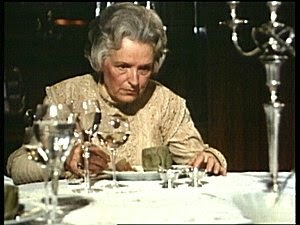
As you watch a lot of video nasties, you realise that, with a few exception, it was politicians and moral crusaders picking on little companies and non-Hollywood films - low budget independent movies for the most part, Italian and European imports, and the few Hollywood films were the likes of the slasher films that were made with small cost. The films themselves are varied in qualify, drastically so, but they're becoming closer to what I view horror cinema as, disreputable, critically unpopular movies made sometimes by small crews, with low budgets, fighting the restraints of the material available to them as they filmed. Unhinged is one of the greatly obscure entries for the video nasties list, which has a taste of the slasher movie, horror and a lot of dialogue sequences. Upfront, the younger Michael Hewis would've hated this film, not at a time before to be patient with this film's flaws, an unconventional pace or the mood common with a lot of these American independents, stripped of gloss, of having to build the films up in very limiting conditions. Quite a few viewers will find this film to be awful, as many have become fans of it as, when this review exists, a new restored DVD version will be released in Britain in the late 2014. It's a film that is difficult to gauge with through any of the above mentioned factors, while as for myself, my tastes having come to embrace such things, I was very surprised with how good Unhinged is.

From http://4.bp.blogspot.com/-8vnrBituWPg/T1Hm5MiU4EI/AAAAAAAAJTk/
dCbcsZDY-SY/s400/Unhinged%2B%255B1982%255D%255B%2528068
742%252913-49-33%255D.JPG
Three young women get into a car accident on the way to a music concert. They are taken in by a mysterious mother and daughter of another time and reality in mind. The mother, of a upper class family, is delusional, wheelchair bound and believes her daughter keeps bringing men into the house, while said daughter merely puts up with it, looking after the home and interacting with their accidental guests, the first in a very long time. There is something obviously amiss with the house, as one of the girls keeps hearing rough male breathing at night and there is someone clearly stalking outside, though the danger is far more complicated than merely that. Especially when you find a tooth on the bedroom carpet but don't find anything disconcerting about it. Unhinged cannot be dismissed as a badly made film. Barring one moment where a boom mike is clearly visible poking in at the top of the screen, for the most part it has what I'm finding myself adoring in these films of a rough atmosphere, of these films of a small crew filming in the woodlands of the United States, the clothes worn by the cast possibly their own or bought at a local store. The acting may not be perfect, but its immensely interesting, especially as the background to why the mother is the way she is becomes apparent and the slasher aspect appears.

From http://3.bp.blogspot.com/-fkOtv5Yioq8/TkuyUeq-LjI/AAAAAAAAAXA/SxlENID1G_g
/s400/Don+Gronquist%2527s+Unhinged+%25281982%2529+04.jpg
It was befitting, while obvious differences were there, that I encountered my first Andy Milligan films around the same time of seeing this. In both cases the flaw that they are too prolix is obvious, Unhinged full of lengthy dialogue sequences that are longer than the gore or horror content, making up most of the film, over elaborate, wordy conversations. Three quarters of the film is this, the two young women who weren't badly hurt by the car crash spending nights having awkward dinners with the owners, the mother going on about her daughter being a slut and staring at what appears to be glass dining table ornaments in brief trances, as if with a fascination of bric-a-brac that borders on the psychotic. The young women in smart dress, playing dominoes in the lounge while the daughter plays the piano, the film is closer to an unconventional drama than a Friday The 13th movie. The moment the daughter mentions how this all doesn't really make any sense, or the elaborate argument about whether one of the girls should trek in the woodlands to phone their parents. While able to appreciate these sort of films now, I'm still at the stage where the beginning, and all these dialogue exchanges, were disarming at times, difficult to sit through even, the film concerned with putting in a sordid backstory for the house while still having the actors talk out the lengthy dialogue. Once I was part of the way through the film, I could adapt to this tone, find enjoyment in this alienating presentation and then have the horror content when it appears that one is hopeful for from the movie. I can reveal in the messy, somewhat illogical tone of the film and over excess of dialogue, more so when the creators of the film did at least try.

From http://www.devildead.com/uncut/unhinged08.jpg
The main location, an elaborate mansion heavily decorated and from another era, greatly helps the film in tone, with many an image of the building in the dark, in the rain, as lightning flashes, evoking a Gothic horror story though the film mostly feels like a throwback to dingy, seventies horror films. I also like the synth score immensely, by composer Jon Newton, a basic series of notes and drones that add an appropriate mood to the proceedings. When the film reaches its finale, having grown fond of its tone throughout before, it really became something good, from an exceptional use of slow motion for a major, gruesome revel to the utterly bleak ending, all of which, making the last quarter of the film, being the reason why this film has stood out for me. Limited to only six actors onscreen, one main location and its surroundings, and very few deaths, it works immensely well despite the flaws as a gristly chamber piece that for its moments of silliness - the lengthy dialogue, the sequence with the tooth - is suitable creepy and gave me a chill in the spine through its ending. With a passing, clear nod to a famous film which is a clear influence on Unhinged, without giving anything away, the uneasiness and sinister undercurrent to the indie shocker worked immensely for me. Especially with the variability of the video nasties, this is a great advantage to have.

From http://www.devildead.com/uncut/unhinged02.jpg

Abstract Rating (High/Medium/Low/None): None
Not quite. Aspects push it towards being a Low. The droning synth score. The setting. It's mood. That finale. It all adds a lot to it, as does the structure which could alienate certain viewers or add to the effect, but I've set the bar to how to get a rating too high, making it difficult to add because of how most of it is still a narrative driven horror rather than something else.

A Cinema of the Abstract movie?
As I find myself forgiving mistakes in these earnestly made, lower budget genre movies, yes. While not going to be on the abstract list, Unhinged has everything I'd want - feeling like it was hard work the creators put everything into, was different from the run-of-the-mill, and unpredictable. Weaknesses and all, it's the kind of maligned, obscurer movie I'd be drawn to and can appreciate more now.