Showing posts with label End of Blog Year Retrospective. Show all posts

Wednesday, 1 January 2020

Best of 2019: Part 1 (52-42)


Prologue

Keeping this to a basic introduction, it's the least favourite to my favourite that premiered in the United Kingdom in 2019. Theatrical releases but also streaming and premieres only on physical media like DVDs and Blu Ray, which opens the floodgates for me to films as far back as 2017.

This is significant as MUBI is an unofficial sponsor of this list as on the top and bottom of the list are countless films, feature and short length, populate this list.

I intended the cut off point to be the 1st January 2019, consisting of films, shorts, one mini-series, and an unfinished film from 1979 released in 2019. [One animated TV series that finish a narrative in just one season will get an honourable mention in a later part. Whilst I am against separating television from cinema, annoyingly sites like Letterboxd don't include them, making it a nightmare to keep a list together] As someone who doesn't hold these formats as separate to each other, just part of "motion images" which happen to have their own rules and forms that vary, they all qualify for the list.

In terms of the year for me, reaching my thirties, the biggest aspect of this era was honestly streaming's impact on cinema when a major auteur like Martin Scorsese is a Netflix exclusive. It is a strange era, in a sense that streaming is a poisoned chalice even with its virtues. For the virtuous nature of MUBI, who make hard to see films available if temporary, the delusion of streaming offering more choice and being more permanent is an issue. A) There is probably more choice of Cinema Paradiso, a British company who are still renting out DVDs by post in this time who offer me almost everything long after print since the medium started. B) Licensing is temporary, so a work you the reader might like may be pulled off the web. A lack of democracy in this art form is still there, even if aspects like The Irishman being able to be seen at the cinema, and Alfonso Cuarón's Roma (2018) getting picked up by Criterion, offer hope that we preserve this work.

Some titles on here, tragically, will be difficult for me to ever see again, because the United Kingdom's film distribution industry is letting great titles fall in the cracks of obscurity, only appearing on streaming or never. Brexit - a spectre that is haunting England if the Scottish ditch us - is not going to help, whether one voted to stay in Europe or leave, because as the year as proved, the politics around this for me made every side look bad and showed how much of a mess politics can be. If the Irish border is a nightmare, than the British cinema industry may have to negotiate around how European cinema is going to be licensed again with new rulings unless plans were hopefully implemented beforehand. 

Other issues? Ethics, as Disney's acquisition of 21st Century Fox raises concerns as they are sat on a back catalogue arguably more richer and utter at odds with a lot of their ideals, and how they are getting way too much foothold in cinema, especially as they'll probably effect the type of films Fox make if they still can. Environmental issues, which the penny has dropped on this year barring to the most closed minded; it will eventually drip down into how we make, screen and preserve cinema too.
Also how we actually show films is an issue for me personally - Bi Gan's Long Day’s Journey Into Night (2018) is a film that, in its many idiosyncrasies, switches to 3D halfway through, a title that even in a cultural metropolis like Sheffield where I saw it was only available in 2D.

This is pertinent for me as, whilst that was a distinct example I will get into later in this series, especially with my eyes cast back to the entire 2010s a lot of potentially great cinema and motion images are not necessarily conventional narratives. They are peculiar; they are art installations tragically impossible to see if you are living in a small working class town as I do; they have formats like Bi Gan's film which are cumbersome due to a lack of coordination of how to access this work properly outside of great film and art institutions a fair distance from me. Mariano Llinás' La Flor for example, which got a UK theatrical release, is another difficult film to handle in our homogenised cinematically restrictive market, just for the fact it's over fourteen hours long. Unless it's put for streaming, or a cost effective TV box set-like release is done, that experience is going to be a nightmare for someone like myself to actually see.

This includes what can be seen and at what cost. I only realised this year, late, the existence of Vue Cinema and that they charge five English pounds, which is insanely cheap for me and allows me to take a greatest risk in terms of seeing mainstream films. Most people where I come from however will probably illegally download films from the cinema even if they could afford it, the peril of cinema being merely a product rather than a democratic form of communication it should be. That needs to be rectified, especially as I found some of the best films of this list were not conventional experiences.

One director, aptly this particular director by the name of Raul Ruiz, made a film long past his mortality as a ghost; his films, alongside two others, were old unfinished cinema finally made available to the outside world in different ways, which as a trio bring about a more positive aspect of this era that, as we dig into the past, even the work prints are potentially worth screening as cinema.

Of the ones I wished I saw there were quite a few directors - Carlos Reygadas, Masaki Yuasa, Jim Jarmusch etc, whilst I would've have gladly witnessed Midsommar even if it made me want to bash my head in a wall. Others - Terence Malick, Bong Jong Ho, Portrait of a Lady on Fire, The Lighthouse etcetera - are going to be 2020 releases here. Actress Mati Diop's Atlantics was snapped up as a Netflix exclusive and, missing it in the cinema, the Portuguese oddity Diamantino has inexplicably not had anything but streaming on the BFI Player, both of which are issues I take with the streaming era in that, to see everything if you can't see it at the cinema, you are going to end up with large costs as a result paying for subscriptions rather than the cost of a DVD or Blu Ray, even a downloaded file off iTunes.

As for the future, we shall see. The current world comes off as a misery outside of cinema, but considering human history, the worst has always existed. And like the unpredictable nature of the 2010s, things could drastically change to a positive simply if current trends are found wanting or fail miserably due to human folly.

Cinema is going to be interesting though. Will physical releases stay in existence, or will the streaming bubble eventually burst and the flaws are exposed? Who on Earth from the current general of newer filmmakers will become auteurs fully in the new decade, and will we find dividends and reward in the progression in "minority" filmmakers to the point that term is an insult to them? Whilst I find that being progressive is not enough to make a good film, it's actually the best sign of hope in the real world and the reel world that car adverts now have gay characters without that being the point of the advert, that Get Out (2017) is a significant film, and major superhero films are being made by female and non-white filmmakers. I wish there was more unpredictable cinema, but when I can look forward to The Lighthouse, A Hidden Life, and films I will only learn of next year, my only complaint is not enough of it is getting a release over here.

Now onto the first part....


52. Lords of Chaos (2018) [UK Theatrical Premiere]
I knew in my heart this biopic of the infamous beginning of the Norwegian band Mayhem - a band who helped innovate the genre of black metal but had members kill themselves or murder others (including band members) before they released their debut album De Mysteriis Dom Sathanas. I forgot, like Jonas Åkerlund's Small Apartments (2012), how the director could be so bland. This is a tedious film, even dragging Sigur Ros in the mire by having them inexplicably score this. It feels like a film made by an outsider of heavy metal who wants to make it look bad, more of a true crime story that plays it all as lurid and incompetent, whilst also being utterly empty in how it never deals with the history of black metal, and skimming over huge details of this morally problematic band history which are troubling. How a former drummer for Bathory, who helped inspire the black metal bands, makes it worse.


51. Faust (2018) [MUBI Streaming Premiere]
I love MUBI as a streaming service, but picking up a lot of festival work that rarely is seen, I have become more suspicious of obscure work like this, Faust a very dull mood piece. This is worse because the narration is of a great film - urban myths and folktales intermingling, be it how turtles on an island are being disturbed by human created influence to the woman who has two graves - but none of the digitally shot scenes in a tropical environment fit in the slightest.


50. Renzo Piano, an Architect for Santander (2018) [MUBI Streaming Premiere]
Another MUBI festival film, in this case a documentary of the titular architect, which shows that unfortunately a lot of modern documentary techniques, and the reliance on talking heads, can lead to a lack of profoundness and innovation but a film I have entirely forgotten any details of in hindsight. At least with the older era, like BBC documentaries from the far past, there filmmaking had a more idiosyncratic style that would bring energy to a subject like this.


49. Bride of the Werewolf (2019) [UK Streaming Premiere]
If you are going to study the entirety of cinema, you should delve into micro budget cinema. Whilst it is the home of innovation, it's also a home to an acquired taste in genre cinema I have grown to love - where the acting varies, the resources are scarce, but when it works, it works for its audience. Mark Polonia, with his late twin brother John, is also a big name in this type of cinema making films together in the eighties like the infamous Splatter Farm (1987). Bride of the Werewolf is however not a good film even on this fun level I have grown to accept. There is a charm in a film posing its locations in Eastern Europe, when its clearly set in middle America with no one trying an accent, and the werewolf being an actor in a cheap werewolf costume, but it suffers from trying to copy a trope I hate in old horror films. This is meant to be inspired by the likes of Paul Naschy, thinking exposition dialogue in meant to be fun in itself. It isn't, and baring a single sequence of a mummy going on a rampage into the corridor of an erotic dance club, never actually into it, this is not a great example from a director I feel a respect to investigate his older works of, nor this type of amateur but utterly hard earned type of cinema which sweats blood, sweat and tears to make something for people like me to enjoy.


48. Dumbo (2019) [Worldwide Theatrical Premiere]
Dumbo was the only film in Disney's live action remake cycle I wanted to see, entirely due to it being directed by Tim Burton, but it's also an example of when an auteur can be subsumed by the work if the movie is clearly a product first. Moments shine - Michael Keaton is a godsend when he appears, and there are some beautiful sequences throughout - but Dumbo is a predictable story. The CGI elephants look ugly, and there's a perversity to this anti-corporation story coming from a corporation, just at the time of this film's release having been in the purchase of 21st Century Fox. As a result, I have no interest in any of the others.


47. Brexit: The Uncivil War (2019) [British TV Premiere]
My hopes were probably too high for this being more of peculiar political cash in at a tumultuous time in Brexit politics in early 2019. However considering there are two legitimately good scenes, this tale of political strategist Dominic Cummings should've been more. One scene of an ordinary older woman, brought in for a survey, breaking down and unloading all the factors, the lack of control she feels, that probably led to so much reactive voting for authorities figures let alone Brexit in the world. The other a one take of hurried Remain campaign Craig Oliver, trying to communicate with other politicians over the phone in his own kitchen whilst trying to just prepare fish fingers, chips and peas for his daughters and their friends, the line between an ordinary working man and politician exposed in a way we rarely think about these figures.

The rest of the film is bland however, be it the stunt casting of actors to play the likes of Boris Johnson to the film skimming over a lot of the chaotic history of Brexit which could've been an epic of moral complexity in the end. It came off instead a chance to see Benedict Cumberbatch swear and match the real life headlines, the likes of which have become more complicated now at the end of the year, as Boris Johnson became Prime Minister and the Conservatives won a huge number of seats in December. Its look half hearted in hindsight as a study of this, the tale needing to be returned to in the future, preferably not a patriotic peace of propaganda but a farce where every side looked bad as it was.


46. If Beale Street Could Talk (2018) [UK Theatrical Premiere]
I feel disappointed having to put Barry Jenkins' film this far down the list. To its testament, wanting to try to unpick this I read James Baldwin's original novel of an African American woman trying to clear her jailed husband's name, only to consider my issues with the filmic adaptation is that the tone was entirely off. Prominently this is felt, and the moment I had doubts with the film beforehand, in the immense conflict of words between her family and his, a barrage of obscenities and spiked language that on the page has a black humour to it but an intensity, but comes off as a deleted scene in a John Waters film in the performances, which miss the tone completely. It feels like a film that wants to be profound, but notably the inclusions entirely of the film, more overtly political in an era where African Americans have become more active in the likes of Black Lives Matter, but comes off heavy handed when the source material is a calmer, steelier piece.


45. Season of the Devil (2018) [MUBI Streaming Premiere]
Another film I am sad to include here, as Lav Diaz is responsible for Norte, The End of History (2013), one of the most respectable films of the decade. Diaz's Achilles Heel for me however is his obsession with long lengths, to which considering his films are usually the minimum of eight hours plus, makes Season of the Devil slight at only over four. It feels padded, an anti-musical dealing with the horrors of the Marcos Dictatorship in the late seventies, and unbearably nihilistic to the point of being off-putting rather than a scream of rage at the horrors of the era, all whilst with the sense that whilst Norte deserved its length, this film could've just been under two and gotten the point more sharply. With his single shot takes and monochrome aesthetics, Diaz has all the potential, but baring Norte I have struggled with how languid and frankly indulgent his films can be even when he has good moments that startle even here.


44. Fugue (2018) [MUBI Streaming Premiere]
Agnieszka Smoczyńska caught peoples' attentions with her musical horror oddity The Lure (2015), a film I will need to get to, but Fugue is a very predictable and merely average film for me. The tale of a woman who returns to who former family with amnesia, it never felt like a film that was going to really take a risk, only in a taste for a frankness in the human body I have to admire but little else.


43. Madeline’s Madeline (2018) [MUBI Streaming Premiere]
Sadly this is just a film that completely left me despite its virtues, a moral drama in which a young girl with mental health issues joins a theatrical trope only for its leader to be suspiciously using her own life far too much for the comfort of everyone else. Not as surreal as I was expecting, but really I could've appreciated it more if it had left a greater emotional effect on me, only a little in the end resolution, a mass rebellious dramatic performance with animal masks, and everything else not. 
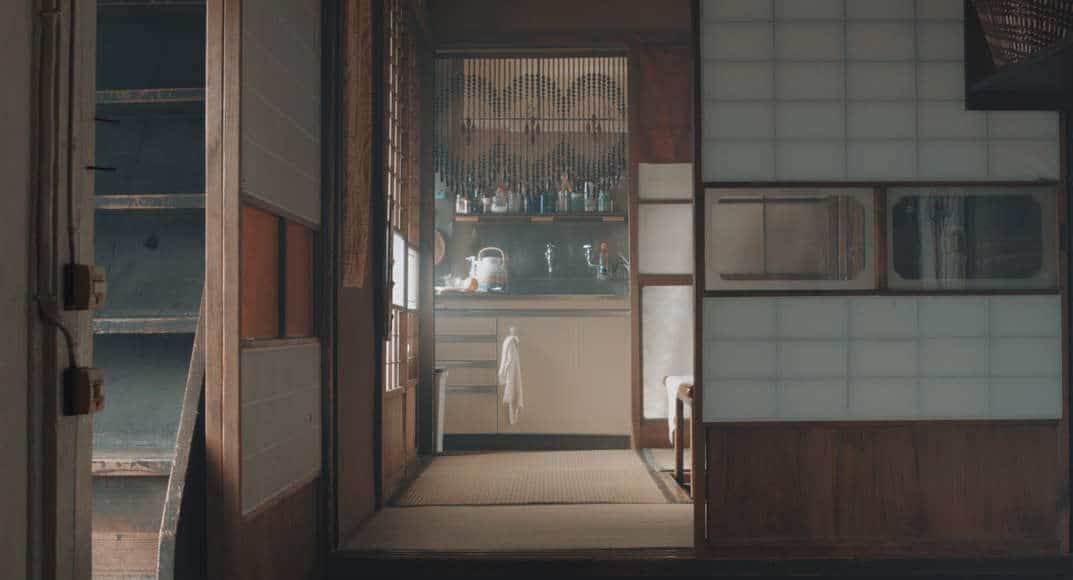

42. Our House (2017) [MUBI Streaming Premiere]
As a graduation film, I have hope from this Yui Kiyohara, a Kiyoshi Kurosawa protégée, could take the best parts of this project, a curious anti-haunted house tale of two stories of women seemingly overlapped in the same house, and cut out the dead weight. I will have likely annoyed a few readers with having some films at the bottom of this list, but in this case, everyone has to start somewhere and I have hope Kiyohara will improve from here as, to end this part on an optimistic note, there is definitely enough her to wait upon with excitement if she makes more films.

To Be Continued....

Tuesday, 18 June 2019

The Cinema of the Abstract Class 2018-19 [Part 2]

 For the beginning of this end of blog year retrospective, follow the link HERE.


Best Acting Performance(s) for Women:
Honourable Mentions:

d. Occidental (2017): You cannot talk about Neil Beloufa's film without mentioning Françoise Cousin in her canary yellow jumper and Anna Ivacheff as the paranoia (but strong minded) hotel manager. They work with the male cast as a perfect team of performers together.

c. Flexing With Monty (1994/2010): Actress and stage performer Sally Kirkland exposed herself literally and figuratively, as a nun who enters halfway through this film to divide the central brothers, and she jumps to the occasion appropriate for such a bizarre film.

b. Gdgd Fairies (2011-13): Voice acting is an underappreciated art, seen sometimes at its best in Japanese anime in comedy. For actresses Kaoru Mizuhara, Satomi Akesaka and Suzuko Mimori however, what in the first half of an episode is absurd sketch comedy about three fairies always turns into actual improvised skits for the second, where they had to literally have to improvise over what bizarre, cheap CGI artefacts they were seeing even if they flub over their words, start giggling or abruptly start singing. At one point Satomi Akesaka, who steals the improvisation scenes, actually says she's a disgrace to anime performing for screwing up her joke; she isn't, and the willingness to go into this silly comedy show, with Mizuhara and Mimori, should be something they should be proud of and the trio knock such absurd roles out the part.

a. John from Cincinnati (2007): Again, John from Cincinnati isn't for many, but the cast does their best and are memorable: Rebecca De Mornay chews scenery like a John Waters character, and in the one figure out of all the actresses who deserves to get on the list, the best character of the show and most inspired piece of non-professional actor casting comes from real life surfer Keala Kennelly who comes off as absolutely charming as the most sympathetic character.

5. The Wild Boys (2017): A lot of this list is a celebration of ensembles of actresses who all bring great performances by themselves but are even better together. Bertrand Mandico's The Wild Boys is a great example, as part of the film's gender fluid transgressions, because the main cast (Vimala Pons, Mathilde Warnier, Diane Rouxel, Pauline Lorillard and Anael Snoek) are all playing characters original young Sadean male youths who only turn into women when we get introduced to the island of phallic plants and hairy sexually suggestive fruit. They themselves are excellent, but I haven't even mentioned Elina Lowensohn striding the flora in full white suit and hat like the Dr. Livingstone figure of most viewers' fantasies.

4. The Discreet Charm of the Bourgeoisie (1972): Again, Bunuel's most surreal films tend to be more about their style which just happened, in his final French work, had the best casts he could get.  But let's not kid ourselves, when you cast Delphine Seyrig, Bulle Ogier and Stéphane Audran you can even make vain and awful Bourgeoisie characters strangely sympathetic for all their flaws, thus showing why you cast such great actresses back in the sixties and seventies.

3. 3 Women (1977): Three women...Janice Rule in a virtually dialogue-less role still great, but this is definitely a film where you introduce Shelley Duvall to Sissy Spacek and everything in Robert Altman's film, literally created from a dream, turns into platinum.

2. Happy Hour (2015): Built from a workshop with director-writer Ryūsuke Hamaguchi, Happy Hour stands and falls because of its four actresses - Sachie Tanaka, Hazuki Kikuchi, Maiko Mihara and Rira Kawamura - who are central, even when one character disappears, to engaging you with the entire work. They exceed exponentially.

1. Jeanne Dielman, 23 Commerce Quay, 1080 Brussels (1975): One actress, the legendary Delphine Seyrig, commands the entire three plus hours with even a single mistake in stitching causing one to feel fear.


Best Director:

Honourable Mentions:

d. Wax, or the Discovery of Television Among the Bees (1991): Alongside being an absolute innovator who is underappreciated - creating both one of the first actual websites on the internet with this film's hypertext version AND streaming the feature online decades before Netflix was even a thing - David Blair's barrage of psycho-surreal digital images is something to behold and admire.
Happy Hour (2015): On a list that wasn't this crammed with directors who deserved to be in similar positions, Ryusuke Hamaguchi's magnum opus in which he takes five and a half hours to create an intimate and quiet drama, and succeeds, would've shot him to Number 1. But, whilst he's mentioned, Hamaguchi deserves applause for this achievement.

c. The Territory (1981)/Régime sans pain (1985): Raul Ruiz is going to become a regular on the blog, (if his work ever got easier to find), but even for a man known for his truly unique filmography the eighties was the decade of his most insanely prolific and oddest work, especially as Ruiz had no qualms with working in cinema, television, dance films, shorts and whatever ephemera he could burn his imagination on and never drain his creativity through. No one else can claim, within just four years alongside other films, to switch from a horror farce where American tourists get stuck in the woods and have to resort to cannibalism, that had Wim Wenders film his own movie in the midst of its protracted shoot, to what was originally a music video for cult French musicians Angèle/Maimone that turned into a bizarre and brilliant musical dystopian sci-fi about a brain wiped king having to go back into competition to become king again. Ruiz's filmography before his death in 2011 was over a hundred films, so two curiosities that would be the strangest and best in another director's work were probably another day at work for him.

b. Let the Corpses Tan (2017): Hélène Cattet and Bruno Forzani are still going strong with this genre jump to crime cinema, turning it inside out as they did with giallo.

a. Boro in the Box/Living Still Life/The Wild Boys (2011/2012/2017): Since being introduced to Bertrand Mandico through MUBI, he's immediately become a director to watch for these phantasmagoric and incredible films. Shame his work is not easy to see in Britain beyond that small window, but what I got through MUBI were glorious.  

5. The Discreet Charm of the Bourgeoisie (1972): Luis Bunuel's most well known film is great; what you don't realise, however, until revisiting it again is how quickly the film was put together, how effortlessly he made it, and how he and Jean-Claude Carrière made something legitimately subversive and funny from what was improvised material between them.

4. The Wolf House (2018): It feels like Cristóbal León and Joaquin Cociña put their blood, sweat and tears into making this fake propaganda animation, inspired by the real life horrors of Paul Schäfer's Chilean sectarian community that was able to get away with horrifying acts under a dictatorship, and their hard work is absolutely successful as a metaphor without ever explicitly detailing this. Even if you didn't have this historical context, it's not a film you forget easily.

3. 3 Women (1977): Only in the seventies would 20th Century Fox fund a film entirely based on a dream the director had. Thankfully, said director was Robert Altman, a man who could turn in a subdued and truly weird psychodrama from this origin.

2. Night is Short, Walk on Girl (2017): Because Masaaki Yuasa is Godlike and now has thankfully gotten so much attention he's never going to be out of work for a while now.

1. Jeanne Dielman, 23 Commerce Quay, 1080 Brussels (1975): Chantal Akerman's cinema here is daunting but felt fully, something impossible not to take as merely a subdued, primal scream in slow burn form. Anyone else at this position would've been an insult.


Best TV Project (Abstract or Not):
Honourable Mentions:

b. The TV Wheel (1995): Mystery Science Theater 3000 creator Joel Hodgson never got this curious sketch comedy premise beyond a pilot, a live show where a who's who of future comedy stars and writers have to perform live on a giant rotating stage, but the experiment (puppet uprising and all) is worth witnessing as a valiant failure.

a. Darknet (2013-4): Vincenzo Natali tried to refresh the horror anthology series by remaking a Japanese one; sadly, he only got six episodes, and stumbled badly for the whole of the fifth, but playing on the CreepyPasta and urban myth crazes did produce some inspired results.

5. TerrorVision (198X): Not "great", frankly how this micro-series shot on VHS and with the most limited of resources ever got made is a question worth raising, but that's just as much part of the fun as its absurdly cheap horror storytelling.

4. Tokyo Vampire Hotel (2017): Sion Sono wins me back, especially after the experiment pinku failure Antiporno (2016), by using Amazon Prime money to go to Transylvania and spill comical amounts of fake blood everywhere.

3. Gdgd Fairies (2011-13): On the surface, this just looks like a series of ironic and cheap gags just about its cheap CGI animation. After two seasons, you realise the usually confused three voice actresses and the production loved creating the strangest and funniest jokes about three fairies bumming around their magic kingdom as much as you do watching it. Even when a major collaborator left after the first season, the second got so much more ambitious and ridiculous it was practically bulletproof.

2. John from Cincinnati (2007): The ill advised attempt at Deadwood creator David Milch to create a spiritual and weird cult surfing series is an acquired taste but, hell, I enjoyed it. I realise why many could see it as one of the worst series of that decade (the 2000s) but we still talk about this series to this day because it was truly unique for better and worse.

1. Boogiepop Phantom (2000): Much more difficult to understand as the sequel to a live action adaptation, but still a true one-off, a strange and mesmerising horror sci-fi story which (barring one detail or so) makes you earn the ability to understand what the hell's going on with great aesthetic style and script writing. Everything from a lounge ballad of all (inspired) choices over the opening credits to its nerve wracking noise electronic score is perfect.


Best Non-Abstract (The Oddities, Obscurities and One-Offs Award):

As of now, these reviews will be called the Oddities, Obscurities and One-Offs, so let us transition from "Non-Abstract" to this new title in a respect passing of the torch...

Honourable Mentions:

c. Darknet (2013-4): An imperfect but bold Canadian horror anthology from Vincenzo Natali, playing with myths about technology and insanely non-chronological narrative structures; I wished it'd least have more than six episodes and not ended on that dumb final scene twist, but it was innovative in turning clichés into some unique shocks.

b. Intruders (1992): An alien abduction mini-series for CBS which is cheesy at points, marred by an attempt to soften itself that leaves a bad taste, an ending inappropriate for a dark story of women being abducted by aliens, but the final work is still a compelling. At three hour, the greatest virtue of this work is how it tries to add psychological complexity to this well worn paranormal topic, bringing actual fear to the material whilst adding greater emotional resonance.

a. Welcome to Marwen (2018): A somewhat troubling, sometimes unintentionally dark take on artist Mark Hogancamp, sometimes deliberately weird and ridiculous too, but considering the director of the Back to the Future films could've just spent the rest of his career making dull motion capture films, better this flawed oddity came to be instead where he took on this challenging material.

5. Year of the Nail (2007): Not a fan of Alfonso Cuarón, but his son Jonas' debut composed of photographs put together into a narrative a la La Jetee (1962) is worthy of rediscovery.

4. Occidental (2017): Sadly a film that's going to be difficult to see again, but Neil Beloufa's neon and synth soaked black comedy of mistaking identity of paranoia in a hotel in the midst of a street protest hit all the right notes.

3. Tokyo Vampire Hotel (2017): My love/hate relationship with post-2010s Sion Sono was softened by this ultra-gory but playful Amazon Prime mini-series. The clichéd shocks of his other recent work is here, but something about a longer length to play with brought back his much missed eccentricity too.

2. Cry Baby Lane (2000): Wasn't this TV movie pulled off Nickelodeon because it was too frightening for children? Probably not, but the CreepyPasta and urban myth helped the likes of me see this strange Goosebumps-like horror story worthy of a proper rediscovery, which is far more interesting in terms of its actual weird subtexts on adolescent sexuality and growing pains, the theme score turning into a Cramps riff and Frank Langella making the best Tom Waits replacement for a useless but lovable undertaker.

1. Happy Hour (2015): Over five and a half hours, a drama which justifies this length because like the best of novels, its tale of four Japanese women over thirty and their various stories are expanded and layered to the point that you are fully immersed into their work.


Best Abstract Film:
Honourable Mentions:

e. Régime sans pain (1985): Beats out The Territory from Raul Ruiz because I wasn't expecting a sci-fi film which states stealing a jacket from a dying man in a burning car is required to qualify into the semi-finals of becoming king of an entire nation.

d. Let the Corpses Tan (2017): Hélène Cattet and Bruno Forzani return with a much needed transition into new material without needing to leave their original and still innovative mix of genre and avant-garde.

c. Wax, or the Discovery of Television Among the Bees (1991): Bees, living missiles escaping off to the moon, being your own grandfather, and I can list more from there to adore.

b. 3 Women (1977): Robert Altman makes a film of changing identities without anything stranger than just one dream sequence and the entire tone of everything else just being off.

a. Alipato: The Very Brief Life of an Ember (2016): Khavn's profane, tragic, sickly funny and at times just sick explosion of rage about child criminals eventually forced as adults back into more violence.

5. Boro in the Box/Living Still Life/ The Wild Boys (2011/2012/2017): Bertrand Mandico enters my life, making a completely unsanctioned biography of Walerian Borowczyk he'd be proud of, a morbid yet perversely beautiful short about film literally animating the dead, and a gender-fluid boy's (girl's) own adventure and thus wins my heart.

4. The Discreet Charm of the Bourgeoisie (1972): Bunuel's Oscar winning farce about the middle class being unable to have a dinner party has finally won me over after not seeing each other for a long, long time. Befitting that sentence sounds like one of the many dreams recounted by characters within this same film about encountering dead friends.

3. The Wolf House (2018): A legitimately uncomfortable, but artistically masterful, subversion of Chile's dark history by way of a propaganda animation made from one's own nightmares.

2. Night is Short, Walk On Girl (2017): Masaaki Yuasa returns to the world of The Tatami Galaxy (2010), a wonderful animated series back when he was merely a cult figure barely accessible in the West, to follow another character in the world with the energy and creativity of a man whose touch for many (even Adventure Time fans) turns any animated production to gold.

1. Jeanne Dielman, 23 Commerce Quay, 1080 Brussels (1975): At first possibly a bizarre choice for a blog about "abstract" films until you actually watch this seminal seventies work, in which three plus hours of domestic stagnation play in slow time over a period of three days forces the viewer into a stupor before everything breaks in a sudden violence at the end. That if anything is truly, absolute, what abstract cinema is defined as for me, rejecting representation of external "cinematic" reality in mainstream cinema and forcing one to experience it in an entirely different way. I usually define this attitude from the most unrealistic or surreal of techniques, but this film, a monolith in feminist cinema, proved you can reach this same goal through unbearable realism.


The Abstract Hall of Fame (Class of 2018-19)

I felt that, in lieu to Cinema of the Abstract as a blog being a passion project entirely for myself I want to treat as seriously as possible, recognising the figures responsible for this type of cinema felt necessary. So, hopefully for the first of these, may I present the first nominees for recognition for these great creations I have watched over the years, be they director, actor, writer, even (hopefully in the future) other individuals in underappreciated roles in creating this work. This is a toast for them with sadly no promise of an actual award unless I somehow become successful for this blog...


I haven't covered a film from Fulci this year, (though in June 2018 I did cover the truly weird later film Touch of Death (1988) which was just out over the cut-off point), but the legendary Italian director is a name to remember in terms of his deliberately surreal and unconventional genre films which I have covered a lot of, with many left to tackle. Not just a horror director, who was actually incredibly diverse in his genres of choice up to the mid-eighties, but even his iconic and notorious splatter horror films are unlike anyone else's, strange and deliberately obfuscating logic deliberately.


Over ten years ago in university, who were legally allowed to keep TV recordings of television and films for educational purposes, I saw Löwensohn for the first time in Nadja (1994), Michael Almereyda's idiosyncratic take on the vampire film which is worthy of coverage here. I didn't expect over a decade later for Elina Löwensohn to reappear and with as much reoccurrence as it did, now a muse for unconventional and unique European filmmakers who skirt genre and transgression like Bertrand Mandico to Hélène Cattet and Bruno Forzani. Whether striding the jungle in white suit and pure swagger, or playing the one person Greek chorus of an artist shooting holes in her paintings, Löwensohn from her striking appearance to her clear ease in even very explicit scenes in films like Boro in a Box (2011) to The Wild Boys (2017) is absolutely magnetic onscreen, an incredible figure who lives up to the notion that you can have a healthy career in this territory of cinema as she seems to be having now. Considering how she started back with films like Nadja, this slowly growing career reassurance, at least in public consciousness for cult and art film fans, should hopefully reward her in the end.


A life couple and a strong duo, the release of Let the Corpses Tan proved that, thankfully, Cattet and Forzani weren't a one trick pony. They are the best working directing duo barring the Coens (no joke) as they at least provide something truly unique, a sense driven experience each time you watch one of their films. Leather gloves and fetishism were never the same when they came into cinema.


Somewhat of a risk as I have only known of the French director's existence since 2018, and he could drop the ball if a worst case scenario happens, but its notable that his debut, mini-feature Boro in a Box, was not only incredible but only from 2011, meaning that he is a new figure and one that, if he keeps progressing through shorts and a successful debut theatrical length film (The Wild Boys), is going to make great waves for the better.


Now roll on the 2019-2020 year...

The Cinema of the Abstract Class 2018-19 [Part 1]


What's the practically goal of a fake series of awards for an amateur film blog? Keeping track of what was really the best I found and discovered, and that I revisited after many years, which thus keeps me focused as well as helps define what really abstract work is. Mainly this is for the best, the favourites and the one list of failures whose existence was still there if thankfully a tiny list from a good year.

It's also a very good way to keep the blog tidy and efficient, the cut off point the 14th June 2018 to the 14th June 2019. Why? That was the day I started this blog, thus sandwiching these lists' choices (cinema/TV/even internet meme) between the ill fated final film of Mae West (Sextette (1978))  to Robert Zemeckis' curious doll based drama Welcome to Marwencol (2018), which if anything is as appropriate a duo for a list of oddities, the surreal and misbegotten as you could get.

Oh and before you the reader ask, how does a blog nominate, when it's entirely about strange and experimental productions, the "Weirdest" for one aware? Simple, the films/shows whose histories and productions are as strange as the content, just to clarify those choices; the rest are written as clearly as hopefully possible with links to the original reviews.


Most Disappointing:

No one's perfect...

5. Ultraforce (1995): Arguably the work here, an ill-fated attempt to adapt Malibu Comic's line of heroes into a super hero team animated series, I had the most fondest thoughts of (still thinking of it or just the episode which ends on a hero playing a saxophone on top of a skyscraper in victory), but I'll be the first to say it's also a lame and cheap American cartoon show production which was as much a pain to sit through.

4. Sextette (1978): No way near as bad as its reputation suggests, but a legitimately tragic final role for eighty four year old Mae West is an ill-advised attempt to recoup her old Hollywood sex appeal with bad music, worst sexual innuendo, and Timothy Dalton and Alice Cooper dragged into the midst of it.

3. Carnival Magic (1981): [Spoiler Warning] Not even an ending where a hyper intelligent talking chimpanzee trying to commit suicide, which is truly memorable,  doesn't make up for the first three-thirds of Al Adamson's attempt at a family film sleep inducing. [Spoilers End]

2. Female Human Animal (2018): Shot on videotape, a psychosexual drama inspired by the work of Surrealist painter/author Leonora Carrington, with interview footage of her, should've been something truly unique but instead becomes tedious and feels like it completely missed the point of the subconscious subject. Only the end credits filming the production of film wrapping felt remotely weird.

1. The Amazing Bulk (2012): A no budget Incredible Hulk pastiche entirely shot on green screen with pre-existing animated models. No way near as bad as expected, and in the middle it get legitimately weird when they throw in all the random animation they purchased, but it still feeling trying how lazy the production was even with its miniscule resources.


Underrated:

For those works tragically maligned by the stiff competition...

Honourable Mentions:

c. Automatic at Sea (2016): Matthew Lessner's curious oddball psychodrama was at points obvious but thankfully got much more inventive and rewarding halfway through, by the time the meta breaking of reality, inappropriate activities with bicycles, abrupt Togo (from Manos the Hands of Fate) cameos and a great synth score were introduced.

b. Disconnected (1984): Director Gorman Bechard sadly finds embarrassment in his ultra low budget slasher oddity, but thankfully let Vineger Syndrome in the States still restore and release it, understandable as it feels a bit of a mess, literally bisected in two by two separate plots including one of being menaced by phantom phone calls, but the viewing experience is as gleefully unique as you'd want from an obvious genre recovery like this.

a. Blood Feast 2 - All U Can Eat (2002): It was Herschell Gordon Lewis' return to his infamous splatter genre creating nasty...only to have more nudity, more irony and be a hell of a lot more weirder beyond John Waters as a Catholic priest. And I mean fucking weird, emphasis on appropriate use of an expletive to emphasis this...

5. Ai City (1986): One of the maddest things created in the eighties Japanese anime boom, a dystopian psychics sci-fi movie which seems to have written its script in cut-and-paste form.
4. Poison (1991): Todd Hayne's impeccable and emotionally resonant anthology of three parables of homosexuality.

3. The Beast Pageant (2010): Two men, Albert Birney and Jon Moses, even had to use Kickstarter to create this bizarre musical/horror/lo-fi film about a man who escapes a totalities hellhole, lead on by a singing cowboy that suddenly grows out of his side away from his TV/advertising delivery system/metaphorical prison. Everything is as weird as it sounds, and bless the creators' cotton socks, they made something both utterly sweet at times as well as freakish.

2. Rise And Fall Of A Small Film Company (1986): Jean-Luc Godard's feature length episode of a detective TV show where, instead of adapting the novel he was meant to, he uses it as a basis of his musings of the state of film making as well as still make a fun and legitimately entertaining drama still. As long as Godard's career has been as insanely prolific as it is, we're going to recover these old titles and preserve them, as this recently restored work was, and hopefully more gems like this one will be uncovered.

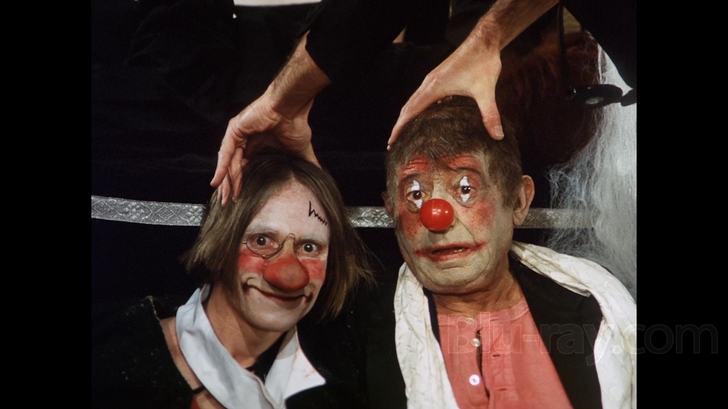
1. The Clowns (1970): Considering Federico Fellini's TV movie documentary/fictional hybrid is about the history of clowns, it's as exciting and good as that sounds.


Weirdest:

The longest list of nominees for good reason, as befitting this blog which covers weird productions a lot, these curious tales just in terms of their production histories aren't easily forgotten let alone their final results.

10. Redneck County Fever/Re-Animator Academy (Both 1992): A no budget shot-on-video production...but a hicksploitation comedy with Bill and Ted wannabes? Yep its as peculiar to watch as it is to imagine ever being a success, but the same individuals behind this film, as one of the leads makes a cameo in the later, also made Re-Animator Academy, a shot-on-video mockbuster of the Re-Animator franchise with ridiculous amounts of fake heads being punched off, an unnecessary (and bad tasting) streak of sexism, gangsters straight from a cartoon and a burnt severed head of a stand-up comedian cracking one liners. They're strange and deserve each other, especially as in marathon they only got a bit past the two hour mark together.

9. Lasagna Cat: Sex Survey Results (2017): Start a Garfield parody web series on YouTube in 2007, where you recreate strip followed by videos set to pre-existing (and potentially copyright infringing) songs of note. Then you return ten years later with a new series you spend a budget on, have a shot-by-shot Miani Vice parody within, a shampoo bukkake joke with John (or his perfect real stand-in) from Garfield involved, John Blyth Barrymore the existential truth of a Garfield newspaper strip over the score to Kundun (1997) for an entire hour, and end on a four hour plus marathon of your fans' number of sexual partners that finishes on a freakish horror-shock feast partially spoken in Polish and with explicitly full frontal male nudity.

And the weirdest part? I gave a very negative review for the most part and yet, aware that copyright issues could easily harm Fatal Farm's creation in the future, I'd now gladly sit through the web series again. Its also given me the most traffic directly to the blog, by way of a two part blog post that may have been too bloody long, which just adds to the madness of the thing on a personal level.

8. Wax, or the Discovery of Television Among the Bees (1991): The first film streamed over the internet (in the early nineties) also happens to be about bee television, living missiles and reincarnation, and was made with stock footage, early nineties digital animation and footage of the director-writer in a bee keeper's suit wandering various locations. And it's not weirder than most films...?

7. TerrorVision (198X): One day, or who knows when, the Lifetime Channel supposedly screened a shot on video micro-series horror anthology with very risible practical effects and curious plotting. Dissapearing for decades until suddenly finding itself online, that show was thus TerrorVision.

6. Holy Pafnucio (1977): A black humoured opera from the cinematographer of El Topo which includes shocking images and a Patty Hurst stand in among its curiosities.

5. In the Aftermath (1988): Mamoru Oshii's Angel Egg re-cut with live action footage by Roger Corman's New World Pictures to make more sense, but becomes significantly less so.

4. Escape from Tomorrow (2013): Secretly filmed at Disneyland and as strange as that turned out...

3. Régime sans pain (1985): Raul Ruiz is given a music video project, turns it into a musical sci-fi drama a feature's length.

2. John from Cincinnati (2007): HBO commission a religious surfing noir oddity, surprised it only lasted a season

1. The Evil Within (2017)/Flexing With Monty (1994/2010): Two films with tumultuous filming histories and the tragic passing of one figure of importance each between them - The Evil Within a tale of obsession for its late creator Andrew Getty, a heir of the legendary Getty family whose creation is uncomfortably but also triumphantly presented onscreen, the latter the promo reel for the late Trevor Goddard that should've been which is as mad as a box of frogs. I will not trivialise either film, as both tales of passing are sad, but said films not only turned out to be utterly memorable, both deserving the award, but the pair happen to be as mad as a box of frogs equally.


Best Production:

As aesthetic and craft are as vital to great abstract cinema as their content...

Honourable Mentions:

e. Holy Pafnucio (1977): Considering Rafael Corkidi's talent as a cinematographer, his work here as a director with his production crew were just as elegant as his famous work with Alejandro Jodorowsky. Yes it's controversial at points, just in the opening scenes with the Ku Klux Klan appearing among others, but his precisely shot style is memorable and the treatment of the opera compositions, even with nearly added and profane lyrics, magnified his strange ideas even more in the respect shown.

d. Poison (1991): Juggling three different aesthetic styles - bright saturated colour, stark b-movie horror monochrome, a documentary structure - Todd Haynes manages to make all three stand out considerably.

c. Welcome to Marwen (2018): It may been probably one of the least advised films to make in his career, just from strong negative reaction and box office, but Robert Zemeckis' animation of artist Mark Hogancamp's World War II doll village is something to admire in blending live action with CGI.

b. The Clowns (1970): Even on a TV budget, Federico Fellini makes films better than most.

a. Boro in the Box/Living Still Life/The Wild Boys (2011/2012/2017): How the hell do you describe director Bertrand Mandico's style? Guy Maddin's pansexual ultra-lush and colourful French cousin.

5. Jeanne Dielman, 23 Commerce Quay, 1080 Brussels (1975): One of the most formally precise, and intentionally claustrophobic and stressful films made, entirely appropriate for showing the psychological downward trajectory of a Belgium widowed mother.

4. Boogiepop Phantom (2000): A very difficult but utterly rewarding anime sci-fi horror TV series whose non-chronological structure, washed out and drained aesthetic, and heavy (and inspired) use of noise and music is something to behold, likely to have induced tremors from its original audience on 2000 era Japanese midnight television.

3. Alipato - The Very Brief Life of an Ember (2016): Khavn De La Cruz goes "fuck it", varies between a camera being briefly placed on top of a moving goat, emotionally sincere still scenes of contemplation and pure visual-audio mayhem.

2. Night is Short, Walk on Girl (2017): Because Masaaki Yuasa cannot be pinned down in the slightest as an animation director.

1. The Wolf House (2018): A difficult Chilean production where the entirety of its film is animated using a stage, furniture, paper-mâché, ordinary objects, painting animation on the walls, and so much more that this absolutely masterful production feels like a constantly shifting art form than a filmed work.


Best Acting Performance(s) for Men:

Honourable Honourable Mention:

Happy Hour (2015): I feel embarrassed forgetting how good the male cast of Happy Hour was and how important their characters were, in lieu to this being one of the best female ensembles you could get in any production, so here I'll break the rules a little to make up for it.

Honourable Mention:

d. Intruders (1992): CBS' mini-series adaptation of Budd Hopkins' book Intruders: The Incredible Visitations at Copley Woods, of UFO abduction testimonies, is helped a lot in its eventual progression to actual aliens with  Richard Crenna playing the sceptical but open minded psychologist tackling two abduction cases.

c. The Headless Eyes (1971): Not a great film, not necessarily a "great performance", but Bo Brundin as an eye gouging artist serial killer literally sounds and acts like he was actually insane mid-shooting.

b. Occidental (2017): An ensemble - Paul Hamy, Idir Chender and Hamza Meziani - nobly play this game of mis-presumption and cat-and-mouse in a hotel, making even the paranoia that Chender's got too much Coca Cola in his possession sinister as well as funny.

a. Rise And Fall Of A Small Film Company (1986): Legend Jean-Pierre Léaud obsesses over casting extras in a delusional but noble act, whilst Jean-Pierre Mocky as his producer has kittens and laments when French cinema production was once so much better than it was.

5. Keep An Eye Out (2018): Benoît Poelvoorde as police Commissaire Buron interrogates Grégoire Ludig as a witness to an expected death, even appearing in each other's recollections as eyewitnesses. Add Marc Fraize as an (unfortunately too) enthusiastic one-eyed police officer and you have many laughs to be had.

4. Welcome to Marwen (2018): Robert Zemeckis' film is problematic in how it deals with the traumas and life of real life artist Mark Hogancamp, even though I'll defend the film as a flawed gem, but at least Steve Carell both in the sympathetic and uncomfortable moments does his best to add layers to the character and his doll stand-in.

3. The Discreet Charm of the Bourgeoisie (1972): Is it blasphemous to have a legendary Luis Bunuel film, with the crème of European cinema actors of the time, this low on the list? I've always found his work like this more driven by the script and his style, but when even Michel Piccoli in a comically short cameo steals the film briefly, this is still a heavy weight in terms of great performances.

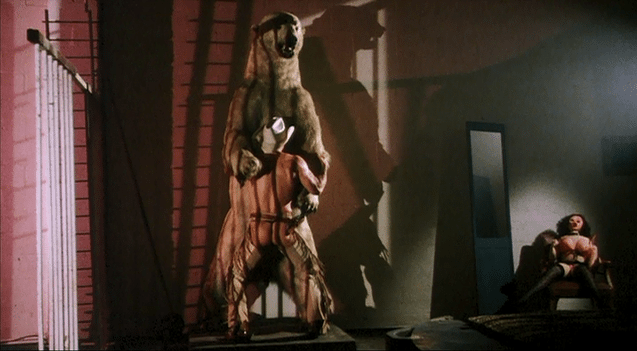
2. Flexing With Monty (1994/2010): Tragically only really known for Kano in the 1995 Mortal Kombat film, the late Trevor Goddard should be known for this - shouting like a maniac about the virtues of body building, cut like a Greek god in his giant man sized hamster wheel of steel, and farting whilst representing the worst aspects of a body obsessed egotist whilst humping a stuff Polar bear in arseless leather chaps.

1. John from Cincinnati (2007): Whilst I will completely understand most people not liking this series in the slightest, I have to at least give John from Cincinnati credit for an ensemble who, in spite of bizarre dialogue and scenarios, stands out and are utterly memorable whether the show ever got any depth or not - Ed O'Neill having full conversations with his pet birds, Dayton Callie as a saxophone playing drug dealer who finds his consciousness, Luis Guzman as the sane one in the middle, even Austin Nichols as the titular John who, for all his potential annoyance, has a naive charm that lingers long after the series might've baffled many.


TO BE CONTINUED...