Showing posts with label Web Video Series. Show all posts

Sunday, 15 September 2019

Don't Hug Me. I'm Scared Episodes 4-6 (2015-16)

From https://image.tmdb.org/t/p/original
/uMTxurEGfwxTKejuWMf8FC0UgIF.jpg


Directors: Joseph Pelling and Becky Sloan
Screenplay: Joseph Pelling, Becky Sloan and Baker Terry
Cast: Baker Terry as Yellow Guy / Duck Guy / Additional Characters (voice); Joseph Pelling as Red Guy (voice); Becky Sloan as Lamp / Spinach Can / Sketchbook / Additional Voices (voice); Royngtt as Colin / Additional Voices (voice) ; Kellen Goff as Additional Voices (voice)

[The following is a continuation of a review covering the first three segments of this web video series. Follow the link HERE to that first review.]

[Some Plot Spoilers Ahead]

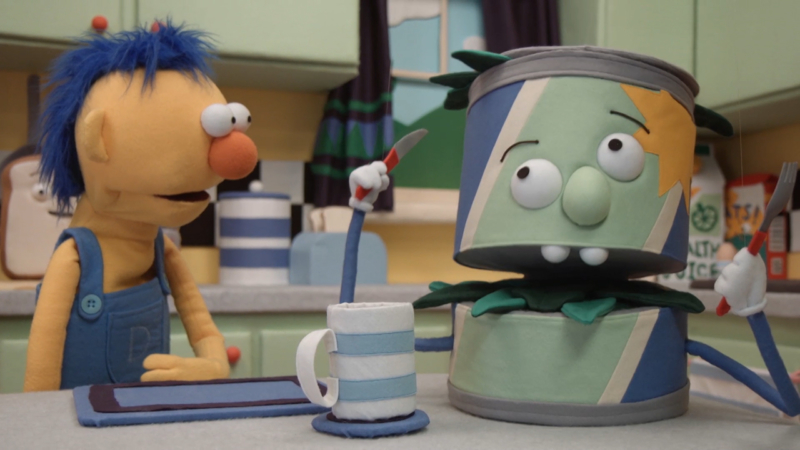
Episode 4 is my personal favourite of the entire web series. Already beginning with a delayed gag, expecting another object to suddenly begin singing, it gets off to a great start in which an obsolete computer, down to his electronically distorted voice, starts to go on about the virtues of computers. The virtue of this episode is how it doesn't even need to use the gore and nastiness of before for its creepy horror, instead being working against this in creative ways. This involves deliberately dated glitchy animation, which appeals to my love for obsolete animation, and a slyer sense of humour. The message is pretty obvious too - a computer that never gets around to answering the question the trio initially wanted settled, and the computer world a place of time wasting tasks such as consumerism or "DIGITAL STYLE!!", to repeat probably the most quotable dialogue of the whole series.

At this point, this is without question one of the most lavishly put together web-exclusive productions outside of large conglomerates, and this is worth bringing up in knowledge that the later episodes from two to six, including Kickstarter campaigns, were soon put into production when the show started gaining a fan base, becoming as much a production that showcased their talents alongside with everyone making these props and characters. Episode four does start to build to a larger scale story as well as Red Guy, our most matter-of-fact figure with his deadpan rebuttals, ends up breaking out of this reality and in a curious set of circumstances literally has his head explode. The result of this plot thread is open to interpretation, but it offers a lot of material to keep the series afresh, especially as this figure has the most dynamic plot thread onwards, even if he's not actually in Episode 5 barring the end credits.

From https://i.ytimg.com/vi/dWGBNC0roEs/maxresdefault.jpg

Episode 5 is a flashback to the ghoulishness of the first half, but with knowledge of the series building, it makes a good follow on. If anything the joke's strong on the get-go as, with Duck and Yellow Guy being tormented by a pair singing about healthy eating, something which I can't help is openly mocking fads as much as it is a gabled lesson as done before in the series, as they contradict themselves, recommend white sauce as a staple diet one minute and not the other, and have a convoluted diagram of the body being represented by a literal house where good food stays for a party. The nonsensical lessons grow revisiting this web series, in that fan theories can have a detrimental effect on what could have intentionally been written as nonsense on purpose, the completely illogical still able to be intelligent and a critique of society in how their guides to people can be up to question if holes are punched into their logic. One interesting idea, suggested by YouTuber Inside the Mind1, which evokes this is how, in his idea the series is about growing up, that the show comes from the perspective of a child, the lessons coming off as nonsense as kids might not understand the words spoken to them, which is a fascinating take on from one of the show's funniest and more rewarding aspects.

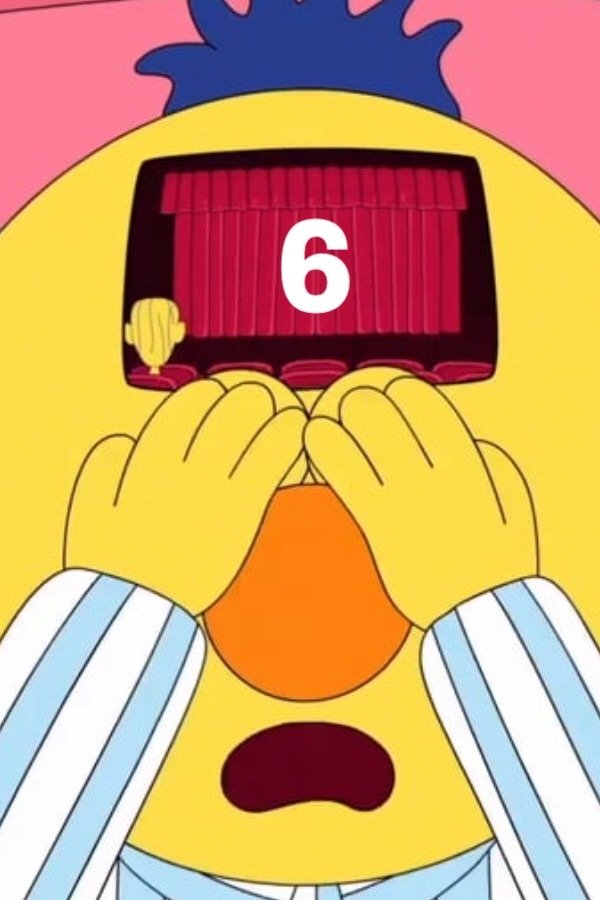
Episode 6, which was the conclusion before an announcement of a series was brought up n 2018, ends on a very different note. Notable there's a suggestion that there's another world, shot in a realistic aesthetic, where Red Guy lives a banal life working in an office. This has made a healthy amount of speculation about what the Episode's about be created, which isn't to deny considering it's a bold choice that would've led to these theories just in the sudden change in reality that's taking place. That the final episode, without spoiling it entirely, as the Yellow Guy is left in the original house tormented by various singing figures, involves the plug being pulled literalised is with a sense of built up spectacle, a reset button that concludes in a logic of its own.

Episode 6 was also built up to even as far back as Episode 2, with the series having various cameos by Roy Gribbleston, a figure painted as Yellow Guy's father who even had a production credit on the Don't Hug Me... episodes themselves, adding layers which clearly left a lot unsaid to tease the viewership. Certainly this web series builds to a great conclusion, a risk taken with almost a pastiche mood of David Lynch felt throughout, such as with Gribbleston floating along at one point with a comically stretched arm. There's also a clear influence from British comedy, Red Guy in an office pissing about with a folder, as if it could sing, much to the bafflement of his similar looking co-worker clearly indebted to post 2000s comedy.
From https://blinkinkcdn.s3.amazonaws.com/_wide_800/Becky_and
_Joe_DHMIS_5_H264.00_01_19_14.Still002-copy.jpg

Don't Hug Me. I'm Scared
is an applaudable project, especially now on revisiting it I can move beyond its initial premise of perverting this type of children's show aesthetic and see what it was built like. A lot of questions were left open to what it actually means - interestingly, as Inside the Mind points to, Joseph Pelling and Becky Sloan co-wrote an episode of The Amazing World of Gumball called The Puppets (2017) in which the protagonists are tormented by their childhood toys and end up walking away from their childhood memories to grow up, an interesting comparison to make with some of the symbolism found here. Admittedly, there's also a lot of speculation that means taking this and any idea with a pinch of salt, especially as the lead creators aren't telling us anything. For me, even if it wasn't the intention of the first episode, there was clearly a lot of satire about children's programming peppered throughout, and certainly when we get to the final, once you start bringing in alternative realities when Red Guy is being heckled on karaoke night for trying to start an edutainment sing-along, you are playing into the idea for me of the original context being either a nightmare or a trap to escape.

Also, it is interesting to see a production which could've easily been dismissed, as I initially did, as another web video that just turns children's iconography into nightmare fuel. In comparison, this is the high bar, a high quality labour of love which got more idiosyncratic for the better as the sequel episodes were created. Another question is left about the promise of a TV series, an entirely different structure to work with and certainly an entirely different conversation to have if it ever happens...

Abstract Spectrum: Grotesque/Surreal
Abstract Rating (High/Medium/Low/None): None

From https://i.redd.it/ii1x619ae0uz.jpg

Thursday, 12 September 2019

Don't Hug Me. I'm Scared: Episodes 1-3 (2011-2014)


D
irectors: Joseph Pelling and Becky Sloan
Screenplay: Joseph Pelling, Becky Sloan, Hugo Donkin and Baker Terry
Cast: Joseph Pelling as Red Guy / Additional Voices; Baker Terry as Yellow Guy / Duck Guy / Additional Characters; Becky Sloan as Notepad / Additional Voices; Royngtt as Tony the Talking Clock / Shrignold / Additional Voices
[UK]

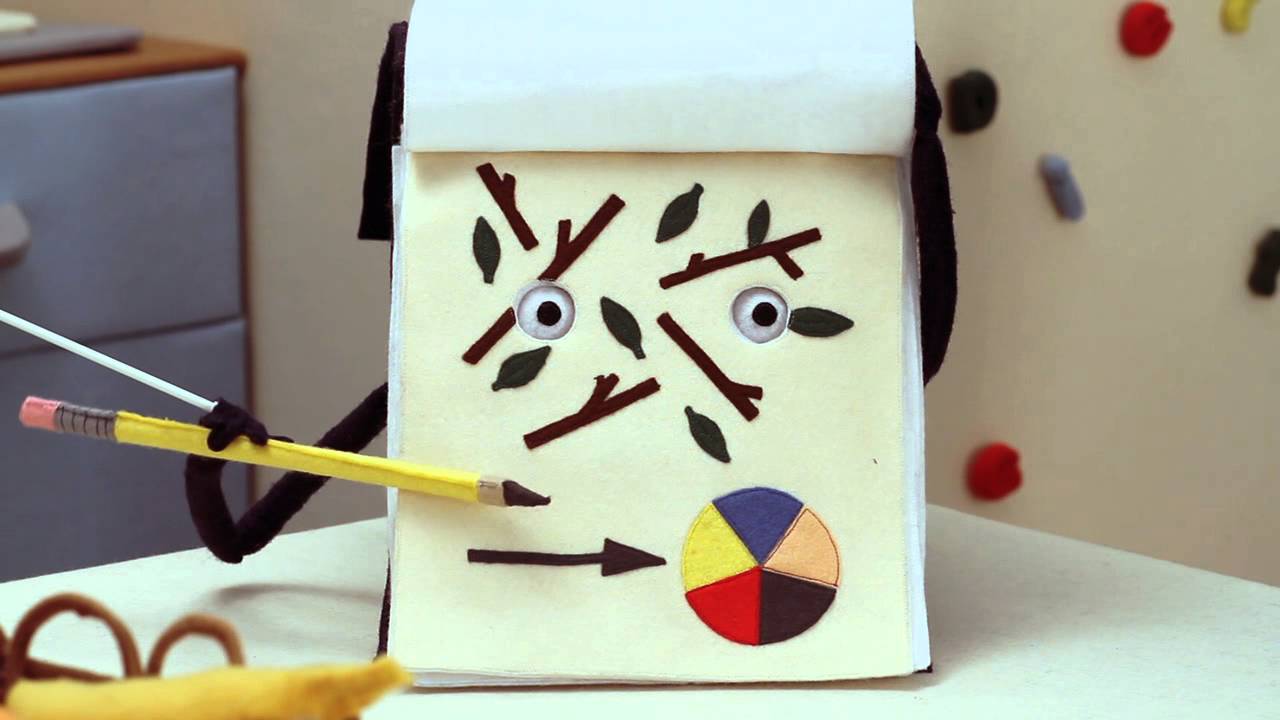
In a room, a red puppet with a mop face, a yellow humanoid puppet, and a green duck puppet are sat around a breakfast table in a kitchen. Wanting something to do, suddenly a notepad comes alive and starts singing about being creative. Very much a children's edutainment show barring the fact it tells the yellow guy green is not a creative colour.

That's mean, but nothing prepares you for the short to end on a nightmarish freak-out involving a cake made with blood and organ meat, or glitter art with an actual heart. Admittedly, the power has been lost now we've corrupted the image of children's entertainment over parodies, mock films and even an officially sanctioned horror film where the Hanna-Barbera characters the Banana Splits are sociopaths. But Don't Hug Me. I'm Scared became something much more, all stemming from this first short film; reflecting back on the entire project, by British artists Joseph Pelling and Becky Sloan, whilst sadly the premise of taking a children's entertainment aesthetic and using it for darker material has been driven into the ground by now, the success and attention this short had lead to five sequel shorts which grew in creativity and layers.

First of all, let's nip the theory in the bud that this is all a metaphor for how corrupt children's media is. It became popular from a YouTube channel The Film Theorists, and whilst the idea does have a subconscious weight, where we should question what our children watch, I a) prefer my surreal work to not have oversimplified meanings, and b) many details complicates this all. Noticeably, according to a Motionographer interview, Becky Sloan likes this type of children's edutainment, and that the project was originally to mock the idea of teaching creativity, the Sesame Street puppet aesthetic only coming afterwards1. There's also the fact that since 2018, the duo have plans to make a TV series with these characters and world which undercuts this entire theory they hate commercial television.

From https://i.ytimg.com/vi/9C_HReR_McQ/maxresdefault.jpg

Instead, there's a lot more interest material to unpack without ever caring to explain what the shorts are actually about. The series got more interesting when they aren't about shocking the viewer, the first episode despite beingthe most famous one of the weakest for me when the others later got more peculiar. The production without a doubt however is exceptional, one of if not the best YouTube made production I have ever seen even over what insane lengths Fatal Farm's Lasagna Cat got to. A world of felt and puppets is constructed with what would've been time consuming and difficult to put together, a history between Joseph Pelling and Becky Sloan in short films, music videos and even an advertisement for St. John Ambulance built around such ideas and trademarks. The comment earlier belay how sadly it's a now lazy juxtaposition to have children's iconography cuss, fuck or murder, since the times of CreepyPasta to SFM porn now exist, but it's a bigger challenge that Don't Hug Me... takes and succeeds in through having a legitimately surreal attitude with its style and tone.

I mean, most productions like this wouldn't be this well made, embracing a cute world where everything has eyeballs and looks cuddly until everything goes to hell. Few would qualify as musicals, and have proper and well put together songs parodying the type found in edutainment work. It's a greater challenge to recreate a children's Saturday morning show with this level of detail - bright and vivid, the songs alone perfect in comparison to recreating the kind I like myself grew up with from these shows. I had originally viewed it a weakness how easily the series fell into shock tactics - "death" spelt out in glitter among details in the first short - and the later episodes thankfully went away from this to much more interesting creepiness. But to the first short's testament, it sets this up, possibly to the point viewers over thought theories about it, a sense of playfulness in deliberately adding all the content it has. The idea of this being about the evils of children television feels far less interesting when the surface itself is more rewarding already, knowledge of how this was meant to comment on the difficulty (and inanity) of "teaching creativity" already poignant as the arbitrary views of the notepad don't help at all, something thankfully played with through all the guest stars in this world's surreal lack of logic.

Even the decision to evoke children's television for the initial idea makes sense not as a slam against capitalist television but in style for the theme - how many shows did I grow up with, let alone Art Attack or Blue Peter, were about being "creative"? The odder aspects, how it cuts to a digital CGI version of the kitchen as a set, does offer many suggestions, whether it was meant to mean a thing or not, but definitely the ideas initially there are strong, and the freakish weirdness were the bloody icing on the cake.

From https://coubsecure-s.akamaihd.net/get/b72/p/coub/simple/cw_timeline_pic/
4068afb517a/4d8b81c63aa8cbf2fab9c/big_1463806097_image.jpg

In 2014, the second short would appear in Time, in which a clock turns out to be a sadistic. Inherently for myself, the balance of horror and subtler weirdness is stronger, the lyrics and events where the clock's behaviour keeps cutting off more existential thoughts of time becoming enough of a commentary on the inability to think enough on such subjects. There's such a danger to over think material like this, not presume aspects of these shorts were Joseph Pelling and Becky Sloan just coming up with dark or weird ideas without greater meaning, whether abruptly cutting to a bath time against the protagonists' will or the abrupt appearances of fish. That said from what could have had no profound meaning can be itself meaningful instead what it's about - the moment that I'd argue hits a more profound meaning that any attempt at a sociological or political commentary is when the duck suggests time is a construct of the human mind, only for this to enrage the clock whose noise in anger is enough to cause yellow guy's ears to bleed.

You don't need to elaborate on this further; the image of someone preventing a more complex question on an established idea we are complacent of is a pointed comment enough. Arguably, when the clock ages them to decay it's just meant to be the horror, with no intellectual symbolism, as I suspect these shorts were always meant to be entertainment first. But the "jokes" for a lack of a better name themselves hit pertinent ideas just in what they are.

This definitely is to mind with episode three, in which distraught by Duck killing a butterfly, Yellow Guy flees a picnic and meets another butterfly who talks about love. What happens next could be easily be a parody of religious cults as Yellow Guy meets a group who sings to him about one's true love and bonds. I'd argue that its closer to a cult as, honestly, one of the most embarrassing things to witness is bad, one note anti-religious commentary in the midst of a piece of art, especially as it's a dangerous thing to confuse a cult with a religion, religions for all their problematic issues a complex structure of dogma and theology, which becomes more complex when you require spokespeople for the God(s) and their morals can slide in or an organised religion, whilst a cult is usually based on a dubious single figure representing the Godhead themselves, not speaking for the actual God or a series of figures, whose dogma is never about the betterment of people but vapid platitudes without any of the struggle religion usually talks of when informed. Also, there's a sense that, as I'd do in their roles, the creators thought the punch line would be funnier if they were a cult of furry woodland animals who worship a giant rock head, which is legitimately funny.

From https://i.ytimg.com/vi/kcgnilFIw0g/maxresdefault.jpg

And dark too, as the commentary comes not mocking religious ideas but that, for all their singing about a true love for everyone, the most inspired part is a tale within the short told of a deformed boy who hides in a cave with nothing about him ever finding true love being brought up as the tale is said to do, made even more striking and powerful in its corpse black humour in that no one bats an eye to this and just go along with singing. I'd wouldn't be surprised, thinking of this scene, whether the commentary of Episode three had nothing to do with parodying religion or the idea of monogamy, but just to take the absolute piss out of Disney musical numbers, and ones in children's animation and entertainment in general, by imagining the woodland creatures of Bambi and other animation practicing a Wicker Man-like cult.

If anything, the greater question to ask is why this is creepy? There is something inherently odd about children's entertainment when we return to it as adults. I accepted this material as a child, in television to toys, but as adults with the knowledge this material is created by other adults trying to appeal to children, these exaggerated forms and aesthetics are strange. Strange creatures like the Teletubbies, baby faces in the sun and all, for example with their garish colours and odd contraptions were weird, even before you take into account the uncanny valley effect of costumes and puppets. The mind of the child drastically changes when they become an adult, and these strange colours and forms are curious to us grown up as a result. The repetition and order, between games and activities repeated every episode, could become hellish like a rejected Albert Camus piece if you over thought it, but the nuisances and the freedom you gain as an adult make these restrictions striking. The one thing I take from the media theory is how, whilst a noble act to teach and educate children through fun, to teach someone in a way that can become almost patronising and encoding environmental influence is an issue in itself even if the lessons of good morality are noble on the surface. If they are not thought about and prodded at the same time, they become hollow and a trap.

Don't Hug Me... also does play with grotesque things, but its better when its less shock related. Having a picnic consisting of raw chicken legs, whilst leading one to hope the production staff washed their hands after handling it all, is jarring in contrasting real meat against puppet felt in a little, clever detail rather than explicit gore. The idea that the lessons of the guest stars make no sense or are authoritarian in a problematic way is ran with further, and for the better, in the episodes after the third one, and really provides a glorious series of ill-logical but quotable dialogue. A lot improves in episode four to six, the best of this little series of web videos, but the ground work here for the first three were already strong. The difference is that the creators decided to stray further from the gore and nastiness, even if it reappears in Episode 5, with more gleefully surreal and rewarding nightmare fuel. When I get to those final three episodes, these same questions through this review will be asked again, but the initial three, if they were the only ones made, were by themselves exceptional pieces of strangeness.

Abstract Spectrum: Grotesque
Abstract Rating (High/Medium/Low/None): None

From https://forum.callofwar.com/index.php?
attachment/4973-maxresdefault-jpg/

====
1) The interview is linked to HERE. 

Tuesday, 17 July 2018

Lasagna Cat - Sex Survey Results (2017) [Part 2]

From http://old.daps.tv/wp-content/uploads/2017/02/lasagna-cat.jpg


[Part 1 can be read HERE]

Three Colours: Yellow (07/27/1978)
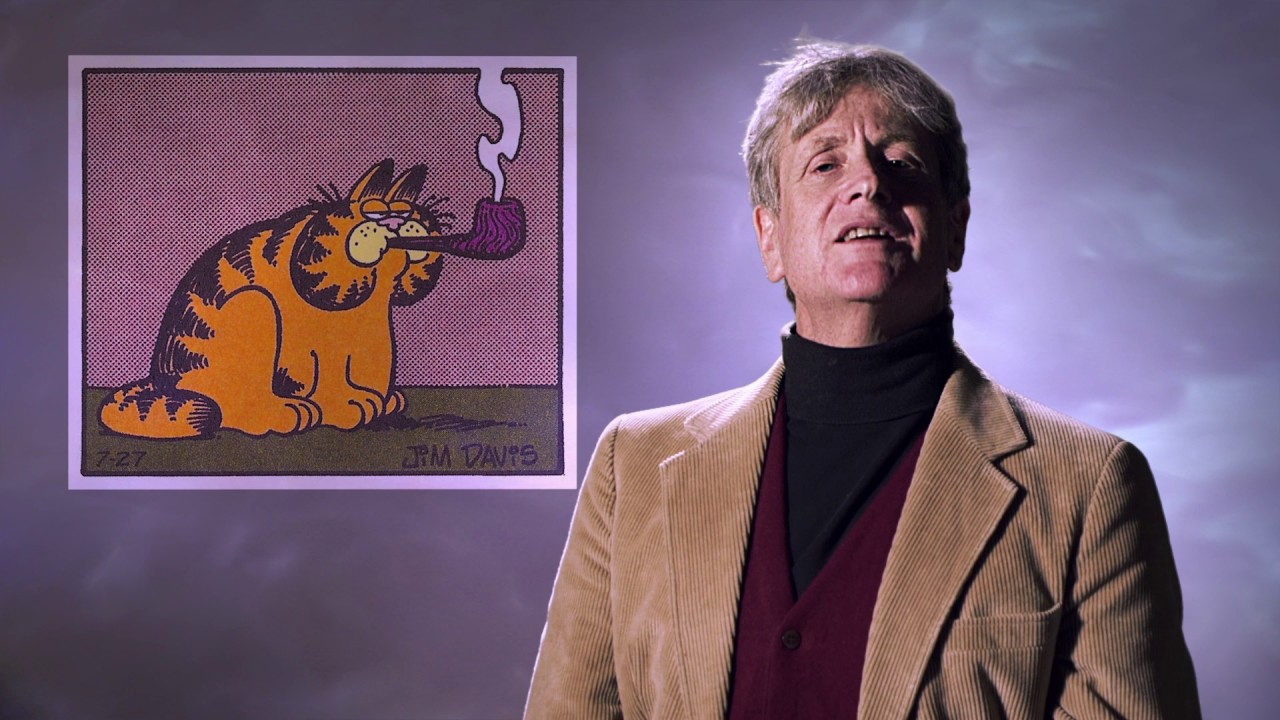
The one moment Lasagna Cat overcomes its flaws isn't actually the Sex Survey Results, but 07/27/1978. The second longest of all these videos, at an hour, it stars actor John Blyth Barrymore (half-brother of Drew Barrymore) as a man who read a very early strip in Garfield's existence, before it had the titular cat as the more cartoonish figure we know him now, stealing and smoking John's pipe. Set to Philip Glass' score to Kundun (1997), which causes a copyright issue but works nonetheless, said obsession became religious when now, as an older man, he can monologue for an entire hour about how the strip led to him finding the meaning of life.

It's absurd, but it's the one moment in all of Lasagna Cat where it transcends into actual good art. Barrymore's performance, a one take with the graphics behind him in green screen, is exceptional both in how complex and long the material is to both remember and give emotion to, but also how much conviction he puts into said material. What begins as a series of coincidences, leads to strange circumstances and finally spiritual profundity is found in his monologue, arguably as much a feat from Fatal Farm in making the script compelling but especially through his acting channelling it.

It is entirely about a simple strip, merely three panels - John reading (First Panel), John asking "Now where could my pipe be?" (middle panel), and Garfield smoking it in the yard (last panel) - but dissects it in the background from its illustrations to dialogue to the point a simple gag newspaper strip is cherished even if you find the idea of it being profound ridiculous. It helps the central text from that middle panel, "Now where could my pipe be?", is so succinct that the script can lead it through Barrymore's search for meaning. Talking of all the research he did from the strip's origins to whether a cat could actually smoke a pipe (which it couldn't and the tobacco would kill it), all of which is intentionally heightened, intentionally absurd, but built in performance and script to suggest that he could indeed become an environmentally conscious, Zen-like old man nonetheless, better as a human being passing this message onto the viewer. In fact it builds, sincerely, to any tale of an abrupt enlightenment, where a person is transformed to become a better human being due to a strange phenomena, only the enlightenment (and the humour) to be through a Garfield comic book strip. And set the Glass' incredible music, it manages to succeed with meaning and be hilarious as a result.

From https://i.ytimg.com/vi/NAh9oLs67Cw/maxresdefault.jpg

Here with 07/27/1978 there's an attempt at an apology for the maliciousness of some of Lasagna Cat's humour too. There's an issue throughout the work what exactly Fatal Farm think of Jim Davis himself and his strip. As they have admitted in interviews, they've come to admire him whilst admitting the materials' not necessarily their cup of tea, or else they wouldn't have spend so many resources on Lasagna Cat in the first place. Most of the series, including Sex Survey Result, however dangerously belies an obnoxious cruel streak against Davis and Garfield, doomed (especially in Sex Survey Results) to be immortalised through Garfield and its middlebrow humour in a two dimensional view of how people view the character. 07/27/1978 however is the one moment where it prevents itself from becoming a bitter taste in the mouth, because Barrymore's character goes on to an alternative view that, in hundreds of years after him, Davis' Garfield strips will still be read by children and preserved even when the Earth is no more. It's a sweet conclusion in itself and, honestly, should've been that conclusion than Sex Survey Results wasn't. The actual conclusion proves an overindulgence but 07/27/1978 itself would've been the perfect conclusion on Lasagna Cat.

From https://i.ytimg.com/vi/jznLSp1KnGs/maxresdefault.jpg

Three Colour: Orange (Sex Survey Results):
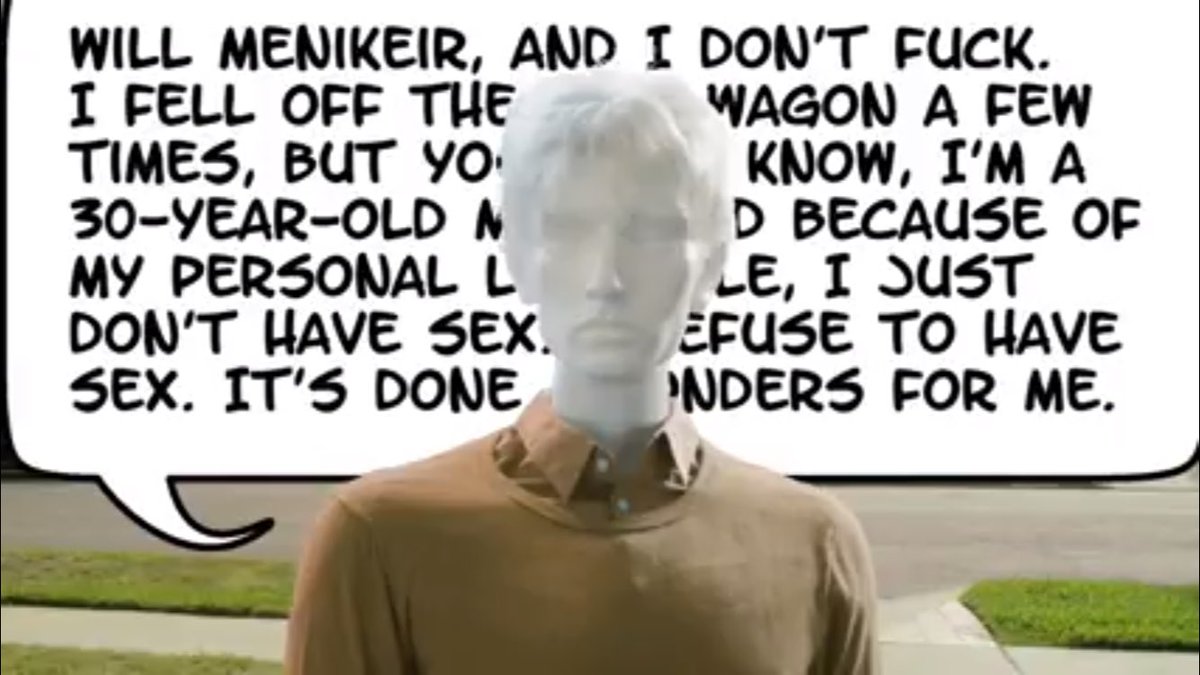
Sadly that wasn't the ending, and the build up to Sex Survey Results, [including splitting this review over two blog posts to avoid it being too much to read at once], is needed both for context and to also exorcise having spent nearly two months on the entire Lasagna Cat series. I openly confess it too two weeks to finish Sex Survey Results in its entirety, with an accident where I forgot a thirty minute piece and had to go back to watch that missing passage just to be a completist. The idea is compelling even if masochistic. Beginning with John sitting in his armchair, a knock is at the door where a mannequin (male or female) is outside, allowing one of the phone messages from a fan to be played with a text bubble showing it in text, a person's name, the number of sexual partners, and any other details they include. Then it becomes the strip in a newspaper Garfield is reading, a knock on the door and a mannequin, becomes a newspaper strip Odie is reading and a knock on a door etc., returning back to John in a cylindrical form. What is such a simplistic thing on the screen turned out to be so technical, the creators had to invent a method to make this work, with the potential effect for the ouroboros structure.

There are gag calls. Fake names. Women as well as men making up numbers of sexual partners. Max Landis as himself. People claiming to be Adolf Hitler, claiming to be Saddam Hussein, claiming to be Donald Trump, made up name and other comments directly to the characters including desiring to hook up with Garfield. There are also a lot of fascinating calls, who will gladly give their full names and details of their sex lives frankly. Alongside the distressing number of depressed and suicidal entries, depending on whether they are all real or mocked, it has to be asked how this bizarre project managed to open people up in speaking of their intimate lives, just by offering a phone number to call. One figure named Raymond is a fascinating caller just by himself, appearing in multiple messages and using the phone line to exorcise his past, including a snapshot of early internet sex chat rooms, where as he explains men posed as women and Raymond himself role-played a man eating plant for women's vore fetishes.

In premise, whilst an endurance test, its sound. Structurally in practice, it's a failure. It feels too much like the end credits for contributors to a Kickstarter project, too many of the calls just the barest minimum. Having tried to please everyone undermines Fatal Farm's point, as few would actually watch the whole film even if in chunks like I did, a pointless endeavour for me to watch it within hour chunks like I originally planned to, and pointless in the long run. There is some structure - John gets many of the awkward phone calls, Garfield the ones to get the most sarcastic reactions from or about him, Odie difficult names to mangle in his dog woofs - but it feels arbitrary how you have to slog through over hundreds of calls. The attempts to keep the experience interesting, having the mannequins distort more and more as it goes from day-to-night in full time, gets tiresome as well, to the point the most memorable and scene stealing figure is a very loud ice cream truck halfway through.

From https://pbs.twimg.com/media/C5ZECGXU8AAaxSt.jpg

Then there's the final ten minutes. The culmination of two months worth of viewing, four hours and thirty minutes of knock knocks jokes, and it feels like I have been ripped off. All the talk of it being shocking, profound and "screaming at the void" like a profound nihilistic track as one Letterboxd review suggested, and its kindergarten transgression feels tame, all of its shock value from other better productions. Fatal Farm sited 2001: A Space Odyssey (1968) and The Holy Mountain (1973) as influences, neither really felt at all. A graphic birth scene, whilst shocking with a prosthetic prop, is not as emotionally complex as witnessing an actual birth recorded by Stan Brakhage for Window Water Baby Moving (1959). Neither is the use of Polish, reminiscent of INLAND EMPIRE (2006), especially when the translated dialogue is the worst kind of clichéd, dark dialogue meant to be profound about a curse, laughable when now I know the context whence it came.

 [Spoiler Alert]

It also causes further issues about where Fatal Farm's view of Jim Davis are even if unintentional. Set up by the original trailer when John rings the phone booth, the last knock knock joke involves answering himself, only to shut him out. From there it is of Old John who is meant to go through death and reincarnation, turned into worms and reborn in a school toilet by a Polish schoolgirl, Garfield in some form (be in taxidermy animal or actual orange cat) always there besides him. It tries too hard to be suddenly nightmarish when even the series' most transgressive moments, from shampoo bukkake to Odie's suicide, had a deliberate silliness to them. The use of Jim Davis' words from an interview, discussing the creation of Garfield, is meant to reflect the images but feel incongruous. It also feels offensive, a cheap gag that Davis is doomed to be known for the strip when 07/27/1978 was a more positive form of this character's longevity.

[Spoiler Ends]

The only compelling moment is when Old John Arbuckle meets a curious man in the desert. A portly, large man who is completely naked barring tribal jewellery and body paint in the colours and pattern of Garfield. In an evocative desertscape, I realised that Sex Survey Results should've been referencing Werner Herzog films instead of what we got, with John Arbuckle doing a Klaus Kinski. If the Jim Davis narration had to stay, it could've had a dash of Terence Malick narrative as Davis had autobiographical details in the character. Instead what you get is no way near as interesting. Just when it manages to become something profound, in segment 07/27/1978, Lasagna Cat however falls back into the style of the original 2008 videos and go for the cheap joke.

Abstract Spectrum: Avant-garde/Grotesque/Psychotronic/Weird
Abstract Rating (High/Medium/Low/None): None

Personal Opinion:
Having never heard of Lasagna Cat until this year, I came to Sex Survey Result in the midst of a binge, completely against the natural progression of content fans had. And I'll admit to being an outside to this type of online video, which means I'd easily be dismissed. But with the weight of expectation for a bizarre and bold artistic project, one at over four plus hours longer than some legendary films, having such a mild attempt at shock tactics in the end is a terrible way to have ended a video which in itself didn't justify its length either. One which misses out a lot of comic potential for parodying Garfield or even in terms of its idiosyncratic way of interacting with fans. Just as I was getting into Lasagna Cat through the other shorts, when they hired John Blyth Barrymore, it ends on a sour note.

From http://bh-s2.azureedge.net/bh-uploads/2017/04/Lasagna_11a.jpg

Lasagna Cat: Sex Survey Results (2017) [Part 1]


From https://i.kym-cdn.com/entries/icons/original/000/022/199/lasagna-cat.jpg

Directors: Jeffrey Max and Zachary Johnson

Synopsis: In 1978, cartoonist Jim Davis created an orange cat who hated Mondays and loved Lasagna. Skip forwards to the 2000s and two men who would found Fatal Farm, Jeffrey Max and Zachary Johnson, would find a ghastly looking Garfield costume and, inspired by its discover, decided to replicate old newspaper strips for a YouTube parody series in 2008. Time passes without any new content until 2017, with the curious request for fans to call a number and provide their name and number of sexual partners.

From https://3m3cna178rlp1rclw43v482p-wpengine.netdna-
ssl.com/images/garfield.jpg

Prologue (01/14/2008):
Your eyebrows will be raised high at that title. Some will even cry blasphemy as, (gasp!), this is not a film I'm covering but a web parody series found on YouTube and its own official sight. That poses an issue, as it uses copyrighted material and digital preservation is a fraught idea online despite its advantages in uncovering obscurities. (More so when one has to worry about litigation or new copyright laws attempted to be passed for online sites). Yet I am covering this work alongside the entirety of the material that came before under the belief that, part of the idea of moving images in general as with cinema, web videos deserve a chance even if this will become a historical chronicle of my viewing experience.  

And Garfield is a character iconic enough to have a parody. It effectively immortalises a figure when, alongside the infamous The Disneyland Memorial Orgy poster first published May 1967 in The Realist, among other examples, a parody exists which takes a character and does transgressive material about such a figure. (That Garfield's copyright owners have been okay with Lasagna Cat baring one video is itself an advantage as, unlike other attempts to censor such parodies, it makes a company look great). Jim Davis' creation is one everyone to this day probably recognises, even if they've never read the original newspaper strips. We have live action films where the character is voiced by Bill Murray, animated series and specials, and merchandise like a picture I owned, in a blue frame, of Garfield being a bastard and using a chainsaw on John Arbuckle's computer. There is enough knowledge of the orange cat to make such a parody work for many.

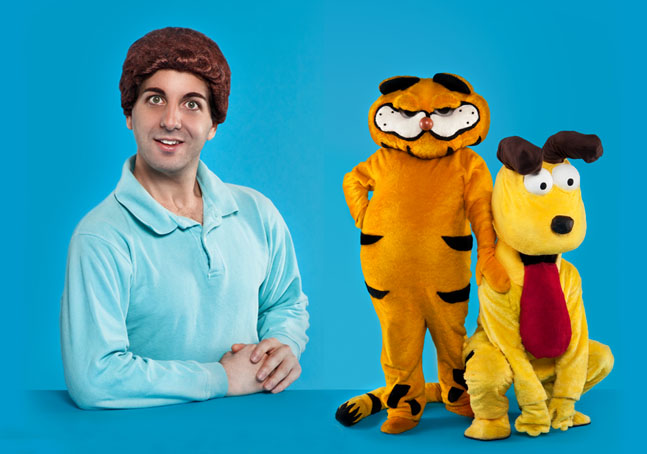
On the same day, 14th January 2008, Season 1 was all uploaded at once on YouTube. An actor, who I will compliment in recreating the character perfectly, plays John Arbuckle, matching blue shirt and black trousers, another actor in an adult size Garfield costume, and they recreate original newspaper strips titled after the day they were originally published. Canned laughter is played over the end of each strip, followed by the original newspaper comic for comparison. Garfield is usually superimposed as smaller in a cheap effect, the aesthetic and backgrounds meant to fully replicate the original strips. Garfield's actual costume is creepy, a head like a partially rotting Jack-o-Lantern, but the actor doing the voice does a commendable replication of his sardonic voice. Odie, the yellow dog, is very shortly introduced with an adult sized costume you could credibly sell on the high street without scaring children. For one short, out of the entire two seasons, they briefly have the character of Liz, played by a young woman, for one strip about Garfield eating her handbag.

From http://www.joeydevilla.com/wordpress/
wp-content/uploads/2008/01/jon_and_garfield.jpg

If Lasagna Cat had only been the original 2008 videos I wouldn't have reviewed any of this. How it turned into a Twin Peaks and abruptly returned in 2017, after nearly ten years, with a four hour and forty minute conclusion is when the series gets interesting. The original 2008 videos aren't. The videos are average parody videos which are antiquated already. I believe videos uploaded to YouTube have the potential to be art, or at least preserved for future generations, but we can slide the conventional parody videos like this alongside all the Let's Plays which aren't about obscure videogames with interesting hosts narrating. There's little to the humour that's actually successful. The music videos that follow after each recreation, to conclude each video, are mostly tedious for me, between an extended piss take of Garfield the Movie (2004) as a masterpiece to a compilation of Americana images set to Alan Jackson's Chattahoochee not sustaining a lot through them even if there was an occasional chuckle. The use of licensed music, from Johnny Mandel's Suicide Is Painless to the Jurassic Park theme, can be inventive but it's not enough, alongside the obvious issue that, whilst they include the name of the artists always as part of a "Jim Davis Tribute Album", they are fraught for copyright problems. [As of 2018, the only original video pulled from their official YouTube page has Desperado by The Eagles. The fucking Eagles to quote Jeffrey Lebowski.]

The mocking nature of these videos to Jim Davis, whose picture appears at the end of each video, is an issue that crops up again and again throughout Lasagna Cat. Unexpectedly, whilst Season One is entirely about viewing Garfield as utterly unfunny, the recreations are the best moments of the entire series of videos. Yes, one about John accidentally brushing his hair with the cat brush is not a comedy classic, but a) these are family friendly strips made per day of a newspaper, which would suck the creative juices dry, and b) making the parodies like Arbuckle in Goth makeup trashing around to Head Like a Hole by Nine Inch Nails, as in that example are incongruous to the strips themselves.

There's also the fact, knowing their autobiographical nature from Davis, that he was already predating the anti-humour, weird parodies long before they came, some of the strips replicated here being worthy enough in their live action remakes themselves without any mocking humour. John's generally strange behaviour, like cheering each time the toast pops out (12/03/1991) or being daring by sleeping with his socks on (08/14/1986) already have enough weirdness to them, and that's before you get to a couple where John's viewed as a lonely, desperate man, predating the Garfield Minus Garfield parodies where everyone else is erased baring John off original strips, suggesting he's in the midst of psychosis. The irony is that half my humour was found in Davis' work re-enacted, not through Fatal Farm's original material itself.

From http://splitsider.awlnetwork.com/
wp-content/uploads/sites/2/2017/02/lasagna_cat.jpg

Three Colours: Blue (02/06/2017)
Time passes, nearly ten years in fact. Jeffrey Max and Zachary Johnson build a reputation professional working on Adult Swim programming, working on segments for Key & Peele and their infamous contribution to -- fan remake of Our RoboCop Remake (2014) where they went far and beyond the bar expected from them with additional exploding penises. They had worked on segments on Lasagna Cat during this gap only for them to be gathering dust on a hard drive (hard drives?), decided it was now or never to release them or not. They planned it out with promotional trailers on the 6th February 2017 only to then release a more bombastic trailer on 9th February 2017. The noticeable increase in production value was immediately seen, money invested into material that Fatal Farm cannot gain profit from, such as which means a huge sacrifice was done for the project to have actual camera movement, special effects and budget even for a one scene Terminator joke with Garfield with a glowing robot eye.

Some of these new videos are memorable. Most of the Lasagna Cat entries, before Sex Survey Results, are family friendly but a few aren't. One of the 2017 entries, following a strip where John is going to try every shampoo he has in his arms, parodies a Japanese bukkake video. For those too innocent to know what that term means, imagine John knelt between Japanese actors in a paper walled set who have shampoo bottles, censored, placed in a very specific place by their crotches whilst shaking their contents out on Arbuckle, who coquettishly talks in Japanese. I wonder what it is was like to be one of those Japanese extras having to even act out this segment, the look of bafflement mid-take as they were taking par. It has to be asked, as is an issue with the entirety of Lasagna Cat,  to what ends for humour or more the video is actually getting at, but its memorable in a life scarring way as much for being funny.

From https://1835441770.rsc.cdn77.org/splitsider.com/
wp-content/uploads/sites/2/2017/02/lasagna_cat-1.jpg

Unfortunately, as with the original videos but worse due to the higher cost involved, most of the Season Two videos are undercut by their humour merely being pop cultural references without any further joke or a substantial enough one. As back as Season One, the first ever video a Final Fantasy parody, most of project especially in the 2017 videos is scuppered by the fact that, without the reference recognition, they are entirely without anything else to latch on to. The first of the Season Two videos underlies this major issue immensely, in that it's a full replication of a scene from the pilot episode of Miami Vice (1984-1990); whilst it tries to connect back to an original strip of Garfield mistaking Odie in a picture frame as his own reflection, it's a convoluted six degrees of separation from Michael Mann's eighties TV series to a parody involving Garfield and Odie and Crockett and Tubbs, with an off-key rendition of Phil Collins' In The Air Tonight, and if you don't get the joke it makes less sense even for intentionally nonsensical humour.

Most of the humour is, aside from the references, the same type of "wacky" music videos as Season One only with a budget and a diverse soundtrack between Kraftwerk to the videogame EarthBound (1995). One video worked - Odie's rise as a fashion icon due a paper bag over his head, set to Lady Gaga's Bad Romance, with a tragic ending of celebrity scandal, suicide and Hell full of John Arbuckle/scorpion hybrids. Some are amusing - Kenny G soft jazz over shots of sunshine and John on the phone. Some waste production value above them - the one video Garfield's rights owners asked to be pulled, because it includes their address and they didn't want to be hassled, has an elaborate model suburbia entirely made from breakfast food, with John waving to his bagel neighbour, only for a cheap joke about Deep Blue Something's Breakfast at Tiffany's having lyrics changed to being about Garfield. Many just vanish from memory or never succeed.

[Continue on to Part II]

From https://i.ytimg.com/vi/o0Lv8irN66U/hqdefault.jpg