Showing posts with label Vampire. Show all posts

Thursday, 31 October 2024

Thirst (2009)


Director: Park Chan-Wook

Screenplay: Park Chan-wook and Jeong Seo-kyeong

Inspired by Thérèse Raquin by Émile Zola

Cast: Song Kang-ho as Fr. Sang-hyun, Kim Ok-bin as Tae-ju, Kim Hae-sook as Mrs. Ra, Shin Ha-kyun as Kang-woo, Park In-hwan as Fr. Roh, Song Young-chang as Seung-dae, Oh Dal-su as Young-du

A Night of a Thousand Horror (Movies)


When I think about what helped me become a huge cineaste, the 2009 Cannes Film Festival was a huge turning point for this among other factors, a strong line up in terms of just the competition when I took interest in reading the coverage. That festival had the infamous Lars von Trier film Antichrist, and Gaspar Noe's Enter the Void, had acclaimed films likes Quentin Tarantino's Inglourious Basterds, Jacques Audiard's A Prophet and the eventual Palme D'or winner for that year, Michael Haneke's The White Ribbon. There are also the other fascinating films in the official selection, not even factoring in the other screening categories for awards or not, such as Hong Kong film maker Johnnie To collaborating with French actor/singer Johnny Hallyday on Vengeance, or Thirst, Park Chan-Wook making his way from the acclaimed Oldboy (2004), part of a trilogy on vengeance which premiered at Cannes, into a vampire film.

Chan-Wook, a decade later, has had a strong career, The Handmaiden (2016) another huge film alongside a career with a divisive American production (Stoker (2013)) that are mandatory, but also something I would have never had predicted on the bingo card when I first saw films like Thirst, a BBC mini-series called The Little Drummer Girl (2018) based on a John le Carré novel. Thirst comes from a time before this where I vividly remember Western audiences asking themselves what he would do next now the then-completed Vengeance trilogy had ended. Chan-Wook was helped considerably by the wave of interest in Asian cinema, including South Korean, that came in the early 2000s, and whilst the middle film of this eventual trilogy, Oldboy was the film which caught attention and could have won the Palme D'Or in 2004, the unofficial Vengeance trilogy as a whole was what was on peoples' minds especially when he finished it, starting with Sympathy for Mr. Vengeance (2002) and ending with Lady Vengeance (2005). Before Thirst was I'm a Cyborg, But That's OK (2006), a divisive but necessary move into a comedy with melancholic edges about a young woman in a mental hospital because she thinks she is a cyborg. Thirst took a further direction in being a horror film whose erotic and violent love plot centers on a Catholic priest Fr. Sang-hyun (Song Kang-ho) being turned into a vampire. It was a step confidently forwards, whilst absolutely staying as idiosyncratic as I remembered it even in terms of its sudden switches to comedy.

Kang-ho's priest Sang-hyun goes to a research lab tackling a near-if-not-fully fatal disease, and is the one man who survives as a willing test subject. He finds himself meeting a childhood friend as a result of his miraculous recovery, one whose adopted member and wife of this male friend, Tae-ju (Kim Ok-bin), is treated like trash by the mother. This is all in mind his survival comes due to a blood transfer of his involving vampiric blood and that he has fallen in love with Tae-ju; when he changes fully into his new form, alongside the taste for blood, so does the subtext of a man who lived his faith only to be drawn to earthly pleasures. It feels less like an anti-religious film, before one asks, but explicitly riffing on the French novel Thérèse Raquin by Émile Zola, his fight against his own Catholicism part of the psychodrama that this film has, one which just happens to involve vampirism, where it becomes the catalyst for both power but an unquenchable thirst.


The title is perfect for its themes where we sympathetic with our two leads who fall in love but see them slip into a downward spiral confusing between sensual pleasure and needing to murder the son, all amongst the reasons for a growing body count. It is a tangled web where Tae-ju was treated terribly by the mother, overprotective of her hypochondriac adult son, tormented to the point that, when power comes to her in her romance with Sang-hyun, simply running at night to avoid contemplating the son's murder is not enough. Even if she does love Sang-hyun, the tragedy is still there are the film escalates, and here I also have to credit co-writer Jeong Seo-kyeong who became a frequent collaborator from his final Vengeance film onwards, Lady Vengeance (2005). She is arguably a huge factor for the turn of his films from then on, as she worked with him on films like The Handmaiden to Decision To Leave (2022),. She could been seen as a huge catalyst for where his career would go in-between projects with other writers, alongside how she became acclaimed in South Korea for her work as a screenwriter not only his films.

The complexity has grown in this film when having returned to it. Faith exists but if you struggle with your emotions, you will suffer the infernal war, and that is not helped when you've been turned into a vampire that ramps up this war. Song Kang-ho plays his character as a priest that even to the end, when he has killed in horrible ways, is struggling with his real morals as a good person, neither helped that people close to him turn around him at his lowest. Even the priest who raised him spiritually, who willingly slices a wrist to feed him and listens with concern for his vampiric issues, just wants to be turned into one due to a life blinded in the eyes. Tae-ju too, whilst loving him dearly, has been twisted by her situation to effectively use him to get power in her household. It is a great performance from Kang-ho, but that it isn't a surprise, whilst Kim Ok-bin goes between sympathetic, disturbing and, when she becomes a vampire with the makeup and costume upgrade to match, devilish in a compelling way.

Reading the synopsis to Zola's Thérèse Raquin, a surprising amount of the narrative was transferred, a film like Zola's story about studying temperaments of its cast, even when it is reinterpreted in humorous ways here like the dead refusing to leave their murderers' lives even when it comes to the coital bed. Sensuality here is a vibrant, explosive act even in the joys of kissing bruises from self flagellation for sinful thoughts to toe and armpit sucking, the eroticism on display here something that would return significantly with The Handmaiden. The tonal flip-flops make sense in mind to this presentation of these complicated characters in terms of morals and their emotions, a melodrama between comedy and extreme violence for a film that was a huge hit back in its native South Korea. The emotional mind field here is what is central to the story, whilst the horror premise becomes itself the stylization, yet to the production's credit, how this is depicted still stands out. The plasticity of the special effects, in terms of depicting Sang-hyun being able to leap tall buildings and even crawl on walls, is great because it doesn't try to ground the unnatural power he now has. It has a major part to the emotions, like punching a lamppost in half in anger, or the least expected and abrupt neck break in the final act, and the tone of scenes alongside the bloodshed itself befits this hyper-stylized tone to the drama.

Winning the Jury Prize at that Cannes Film Festival where the film premiered, Park Chan-Wook didn't really have to worry in regards to his career after this, and from the strong acclaim he got from his earlier films in 2000s, he has continued on with a healthy career. Thirst itself would have stood out of interest for me just for the fact it was a director not known for horror tackling the subject, catnip for me for what he would bring differently to this area of cinema. Revisiting it this year again, a lot of that different and the surprise in the best of ways is what makes Thrist still a strong film, of tawdry, explosive passion and violence by way of its horror theming.

Thursday, 10 November 2022

Subspecies (1991)


Director: Ted Nicolaou

Screenplay: Jackson Barr and David Pabian

Cast: Angus Scrimm as King Vladislav; Anders Hove as Radu; Irina Movila as Mara; Laura Mae Tate as Michelle; Michelle McBride as Lillian; Ivan J. Rado as Karl; Mara Grigore as Rosa; Adrian Vâlcu as Ian

A Night of a Thousand Horror (Movies)


This is a case where my tastes do not appreciate Subspecies being what it is. It offers something initially promising for me before we even start the film properly, which does disappoint once it is clear Subspecies will not to it. Angus Scrimm, of the Phantasm franchise, is introduced in a puffy white wig as a vampire lord, not impressed by the prescience of his Orlok-looking older son Radu (Anders Hove) and telling him he cannot have the bloodstone, a McGuffin. Before Radu can even have his “your time is over old man” speech, Scrimm wisely kept a lever by his throne to drop cages on people, but Radu can break his own fingers off and summon stop motion red demon imps from them to win the argument. That certainly opens a film well on a pure entertainment level.

Scrimm is sadly not in the film after this, though considering horror and exploitation cinema’s history of selling themselves on known actors barely in the productions, this is less a concern. What this is, from Full Moon Pictures, is the enticing idea of an American-Romanian co-production-. For a vampire film, in which two female American students of mythology and folklore have come to the country, meeting a locale female friend, to study for a paper, this is on paper a masterstroke in actually setting a Dracula or vampire film in Romania, the old Slavic world used for this folklore entity considering Dracula was said to occupy Transylvania.

And the film, as a low budget production, is helped so much here by this. There is lore, which is something to realize with Full Moon between this franchise and the Puppet Master one, in which vampires fought off invading Turks in the past and thus, with a peace treaty and a bloodstone involved, have not attached any of the locales in the centuries past, which is actually an interesting concept to consider even if this is set in the then-modern day. The world onscreen, the rural Romania which is clinging to its past in the building choices, is distinct and would have been an incredible advantage if this had been closer to what I would have preferred over what you get – a horror film made in Romania made by Romanians, even if this had been an American film with a largely American creative team, in terms of tone and leaning on the cultural background. Even its lore involving this treaty, with someone, a Radu, is going to ignore this peace between moral and immortal, and a bloodstone which is a stone with the infinite blood of saints within it, sounds like it could have had layers even if it had stayed a lurid b-movie vampire film.  Even as a traditional vampire plot, Radu taking interested in these women’s pale necks, and a good younger vampire brother who is falling in love with one of them, is all stuff that could have worked, especially as there are quirks here, the stop motion demon imps, which are eccentric and are charming in their existence.

The location choice does add a personality. Something is here which is atmospheric inherently in the gothic Eastern European locations, and little touches shooting rosary beads into vampires’ hearts, adds a slither of individuality to the proceedings. The problem is simply, for me, how very conventional this is in wishing to tell an obvious story without anything unpredictable by its conclusion – bad vampire versus good = conflict in the end involving stakes being waved about and some female characters turned into vampires. Even in terms of decades which have passed since Bela Lugosi’s 1931 Dracula or those after, this has not really decided to do more beyond those original films. There is a salacious side, of victimized sensuality, which is slight but, mingling with the gore, might put some off, but even this is proceeding extremes from Jess Franco who took his own very idiosyncratic takes on these vampires stories. Vampires have been in space or come from it, been in ballet musical interpretations, and knowing when this was released, had a Francis Ford Coppola Dracula film made in 1992 which managed a year after Subspecies, even as a huge Hollywood film with tie-in videogames, to be gorier, more sexually explicit, more resplendent in production and mood, and even more out there and unpredictable in its content, in terms of tone, production style or idiosyncratic choices like Tom Waits as a maniac Renfield.

Neither is this cheesy enough – barring the realization even vampires can be confounded by a net – which does not help too, and considering the huge virtue its Romanian setting is in look and potential experience, the local Romanians are just depicted as mostly backwards and superstitious extras, that undercut the point of this creative decision. There will be some who will like Subspecies, but considering even by this point a vampire film shot in someone’s backyard as a shot-on-video film would have provided more idiosyncrasies for me to enjoy, even just a shot-on-video vampire film like Todd Sheets’ Dominion (1992) also released a year after, there was a need for Subspecies to have taken more risks, or for a greater amount of personality here, just make the obvious plot structures and conventions here.

Monday, 19 September 2022

Dominion (1992)


Director: Todd Sheets

Screenplay: Todd Sheets and Misty Wolfe

Cast: Carol Barta as Elizabeth; Frank Dunlay as Roger Williams; Auggi Alvarez as Clarence Theopolis; Charles Monroe as Stan Lotus; Tonia Monahan as Jamalia; Jody Rovick as Gazelle; Ray C. Merrill as Asmodeus; Veronica Orr as Mistianna

A Night of a Thousand Horror (Movies)


Some Todd Sheets for a quick shot-on-video fix is a pleasure for me. These "SOV" films from the USA are still a niche, least when you are English and they rarely get a release in the United Kingdom barring American Genre Film Archive titles or when they are available on line legally. These films are an acquired taste, but I admit there are within them, including the ultra low budget titles of the digital era into the 2000s, a compelling aesthetic them. With VHS shot titles themselves, with their video produced opening credits and a format, VHS haze, which I have no nostalgia for, and will not view as superior to Blu Ray or even DVD, there is yet for these productions something compelling to watch within them because of this sheen. Todd Sheets, his older films let alone new ones, are as much their own fascination in this territory.

Clearly Dominion is going to be a vampire film from the Salem's Lot (1979) reference in the first scene, of the scene from Tobe Hooper's TV adaptation of a person floating outside a window, though the police here at least consider the recent spree of blood draining killings involving at least a person who thinks they are a vampire, rather than waste time baffled by the bizarre murders, having drained thirteen people by the opening scenes. Alongside an older woman who is clearly a vampire expert, as she keeps a stake in her luggage, the police find themselves having contend with a vampire cult living underground led by her brother, a young boy where the child actor himself is gunning for scenery chewing in how he reads his lines.

As an early Todd Sheets film, those of a certain time period are separate to the others, their productions likely to be (with affection for them) ramshackle or at least silly, this not taking itself too seriously when these vampires have low targets - wishing both to dominate the world but also grocery shops, one female vampire wishes to rule the cosmetics world to fix her pale complexion. They plan to resurrect the boy's master through the Satanic power of rock, Todd Sheets' in-house band Enochian Key, not just having a score credit but onscreen as Enochian Key, playing demon worshippers who eat human flesh. It is fascinating, knowing he was ending even the goriest of films from this time with a thanks to Jesus Christ, that Todd Sheets does pastiche the Satanic Panic on rock and metal music from the eighties here, and that he has the religious zealot mother, formerly a hippy, for a brief scene as an antagonist even though her daughter's decision to go to the Enochian Key concert proved her mother right. These early films, truthfully, are lacksidasical, but they have a charm from this. An actual long form plot may be unlikely in this case to draw out, only scraping through its plot points over nearly seventy minutes, including the least expected romantic melodrama between two older supernatural experts which is barely scratched upon. But this is an aspect of all these early films, as it would not be a Sheets film from this time without a lingering scene or two with gore and animal organ meat as practical splatter effects.

It is a delight, considering they are tied to Todd Sheets into the modern day, I got to see Enochian Key performing onscreen (in character) rather than just in the score, as a homemade metal soundtrack. Soundtracks to Sheets' films, even in the rougher films from this era, are always interesting, and whilst moody at times, one or two pieces do sound like a Philips CD-I lounge track from composer Matthew Jason Walsh. That is neither a ultra obscure joke at a games console few can even emulate either as, alongside tracks which evoke Italian horror composer Fabio Frizzi, not just his pieces from Zombi 2 (1979) but the tropical cuts from that soundtrack, a banger in this case, but there are moments in Dominion which evoke Jim Andron's score for the Philips CD-I version of Tetris (1992). Made available in the modern day as a soundtrack in the streaming era in 2020, it is amusing, especially in a scene for a romance where the crew hired a horse and carriage, how similar they sound, coming from the same year, to the point I did wonder, with no accusations at either side, if any of these tracks from both accidentally blurred similar notes on their synthesizers unintentionally.

Sheets' films from this era do end up being messes as mentioned, which is a warning, as by a Clownado (2018), even with that ridiculous title premise, he fixed his cinematic style and pacing with considerable decades of work, having worked over the years baring a fallow creative period between 2005 to 2013. The early "primitives", to give them a name, have charm though. Some ambition is there - the close-up of keys being thrown to someone, with the camera behind them simulating their travel across in the air, is inventive. There is the gore and the horror fan here behind the camera too - with another least expected moment, that being the least expected chainsaw scene, with limb removal, transpiring because they wanted the scene. The sense this does not follow what is expected, by accident, of what even a low budget horror film should do is also here - it abruptly ends, not with the conclusion of the story, but randomly on two female vampires snacking on a john. This is to be expected with Todd Sheets' films from this era, and I love them now as much for this.

Tuesday, 30 August 2022

Violent Delights (2020)


Director: Edin Martinez

Screenplay: Edin Martinez

Cast: Ana Paulina Martinez as Alani; Guillermo Zapata as Gabriel; Ernesto Salinas as Javier; Jitzel Galicia as Lizbeth; Paola Hernandez as Claudia; Olivia Adriana Pérez as Vania

A Night of a Thousand Horror (Movies)


This was a disappointment. A Mexican made erotic vampire film which plays out as a melodrama in plot, it sounds absolutely to my tastes, and with respect to those involved, shows this at times only to have lost this particular viewer, whilst others may have appreciated its wavelength further. Alani (Ana Paulina Martinez) is a red headed vampire who hooks up and bites on patrons in bars and clubs, connected to another vampire named Gabriel (Guillermo Zapata) she is romantically tied to. He is an older balding lover who has an air of a Satanist even if he was not a vampire, and makes one night stands with younger men potentially more uncomfortable for appearing in the room with nothing below the belt, even when wearing an opened dressing gown, and bringing other women into the room to feed off the blood of.

Alani has her hooks into a young man Javier (Ernesto Salinas) who is an expecting father with his girlfriend Lizbeth (Jitzel Galicia), but it becomes clear Javier and Alani are falling in love much to the anger of their significant others. This is where the melodrama is there, and a thing that I wished had been more prominent through Violent Delights in the end, as whilst Gabriel is a traditional anti-God vampire, he also does not want kids. Even as an immortal vampire, this is something Alani wants. Gabriel instead prefers his theatrical side hobby to children, of an onstage feeding on victims which leaves a lot to be imagined, unless you like languid erotic pawing and reminiscences of Club Silencio from Mulholland Drive (2001), even down to wondering where the singing is coming from.

In a position, of the modern day genre film, of digital filmmaking and its own idiosyncratic chances to be distinct, Violent Delight does at least have its own distinct personality just in its huge emphasis on garish neon colours, but honestly, a lot of my issue with this is that, as a horror drama as Javier is being seduced by Alani, but will lead to a grotesque tragedy, it feels conventional and too serious at times from what the tone would ask for. And it does get grotesque, including a scene which requires a warning involving a foetus being brought to the night's air which is extreme. But barring that this does have a vampire ripping his own skin off, involving a lot of goo and Vaseline, this feel conventional even in terms of its desire to be shocking and upsetting in the final act.

It did feel like by the halfway point, I had drifted off, in mind to this being entirely subjective opinion. There is in the film something distinct to it, even in terms of its enclosed, even claustrophobic settings swallowed in the colour lighting scheme, from apartments to bars, and as an erotic vampire film, which equal opportunity nudity, that in itself even if pure titillation has its own mood setting whatever the type of film and from what era. This is a film whose most prominent scene, and the one which catches you off-guard in a good way, and sets the profane tone off in a way that should have been continued, is when Gabriel is trying to seduce and corrupt Lizbeth 's two female friends. It is not that one is turned into a vampire, wishing to feed off the other, but the joke which comes out of nowhere beforehand involving a clitoris cake of all things. It looks as delicious as it is anatomically accurate, truthfully, and that alongside a vampire ripping his own skin off should have set the tone of the film fully.

Maybe this was the case of being in the wrong mood, but there was a sense that, even when Violent Delights was being transgressive with its finale, in its death and blasphemy and the foetus scene, it was doing something obvious rather than escalating this to a tone I would have liked. The tone comes closer to the 2000s into the 2010s transgressive horror film, in its tone, than the histrionics melodrama this did hint at early on. That type of "edgy" film is not as interesting to me, this production's seriousness to its detriment as embracing a campier side as colourful as the lighting scheme would have won me over.

Monday, 5 October 2020

The She-Butterfly (1973)


Director: Đorđe Kadijević

Screenplay: Đorđe Kadijević

Based on the short story by Milovan Glišić

Cast: Mirjana Nikolic as Radojka; Petar Bozovic as Strahinja; Slobodan 'Cica' Perovic as Zivan 'Dusman'; Vasja Stankovic as Kmet; Aleksandar Stojkovic as Purko; Tanasije Uzunovic as Pop; Ivan Djurdjevic as Sredoje; Bogoljub Petrovic as Ceba

A Night of a Thousand Horror (Movies) #179


You're worse than a bunch of kids, hunting Vulkodlaks.

Today we have a made-for-TV horror film from the former Yugoslavia, directed by Serbian director Đorđe Kadijević, based on a story by Serbian writer Milovan Glišić. That explains, among cultural details I read into, this film's tone immensely, which did feel like a short story in adaptation form. Glišić, a varied figure in the work he did during his life from 1847-1908, has been described as Serbia's equivalent of Nikolai Gogol. This is an enticing comparison for me as a huge admirer of Gogol's, the Russian writer who could vary between gothic tales to stories of village life, Glišić in very basic reading of his life as enticing as someone, from the perspective of a Serbian directing a 19th century Serbian story with this adaptation, who could adapt folklore but was also someone who started in satirical newspapers, and was a realist chronicling peasant and working class people.

It does also suggest, expecting a straight forward horror film, why a lot of The She-Butterfly has a deliberately humorous edge, and emphasises a lot of its length on the humdrum life of a rural village. The tale's outline, that a vampiric figure Sava Savanović has killed at least four millers at the same watermill in the village, belies how so much horror literature is actually about human drama that happens to be invaded by the unnatural. That, prevented from marrying the beautiful daughter of a farmer, because the father has a bias against his poverty, the male protagonist initially wishing to leave the village decides to take over the watermill on request of the villagers for additional money. The horror intertwined between this narrative.

Director Đorđe Kadijević, whilst dealing with a very supernatural story, films most of The She-Butterfly vary naturalistically, the location looking like a village of the past before cinema even existing, tranquil and idyllic barring that, surrounded by woodland, this environment is still one in this world full of supernatural figures, where at night at the watermill a figure will come to attack the miller constantly whilst they are isolated and alone in the dark, always scooping up grounded flour and letting it fall out of its hands before each kill. Sava Savanović, if you do not presume is not just a name given to the vampire "vulkodlak", is actually the most famous vampire figure of Serbian culture, a figure that was said to live in an old wooden mill on the Rogačica River, who was said to kill and drink the blood of millers. Why I am unsure still, but it is a fascinating piece of cultural knowledge to have gained from trying to learn what this Serbian horror film does differently from others in folklore. The significance of this figure is that, when the actual mill collapsed in 2012, the municipal authorities issued a public health warning, whether with a humorous edge or not, that Savanović was wandering around looking for a new home1.

In knowledge of the source material's author, the tone made far more sense and becomes rewarding. Sava is still prominent and the lore is still taken seriously in regards to a snapshot of peasant life, including a detail for Slavic vampires, evoked here beautifully, that they could appear as butterflies, based on symbolism of butterflies as departing souls as, even when the villages find a vampire's grave and put a stake through the coffin lid into the heart, they have to catch the white butterfly that flies out of the staked hole immediately. The film is also for large parts of its length, only around an hour, not horror. Large portions of taken by plot point such as the attempt by the lead just to be able to marry his love, even if it means helping her flee her father's farm. The comedic side is also prominent, because the older male villagers who make up most of the cast bumble about considerably, such as trying to learn about Sava Savanović from an old woman only for one of them to have to continually shout at her because she is half deaf. One of the highlights of the film in fact, far from an anti-religious caricature but a lightly mocking view of an authorities figure, is how the Christian priest among those villagers is such a pushover, especially when he is drunk, a figure I would not be surprised is adapted from Milovan Glišić's original text, and in mind to his work in satirical writing.

The She-Butterfly, whilst a one-off TV movie, feels like an episode of a larger series on Serbian folktales that should have been, as this does have a horror tale twist and that, whilst you could see it coming, the real interest is as a campfire tale told in cinema, causing me to wish a large scale series of Serbian/Yugoslavian tales had existed in this style. Director Đorđe Kadijević was prolific in television and theatrical cinema, but a parallel world suggested however a great large scale project would have been compelling.

The irritance, which is going to be felt whenever I tackle an obscure production, is that I wrote this review having to search for The She-Butterfly, and that my knowledge of cinema from former Yugoslavian countries is frankly anaemic, with a sense that it is made non-existence by total ignorance. My knowledge of The She-Butterfly (and other horror films from countries like Serbian and Croatia) came from the fact, on a site called Letterboxd, a Serbian cineaste saw a list of mine trying to locate horror films from around the world and rightly schooled me when there was a complete lack of films from the various countries that were part of Yugoslavia. This does emphasis the problematic dominance of English-language cinema in general, in how whilst those films should not be dogmatised and are great, trying to even find a Serbian horror film like this which, at less than an hour long and is completely accessible, should have been a hell of a lot more easier to locate. If more people talk about it, like I am, one would hope that it also acts as an act of cultural exchange just from the little this film covers.


=======

1) Reference HERE

Thursday, 18 October 2018

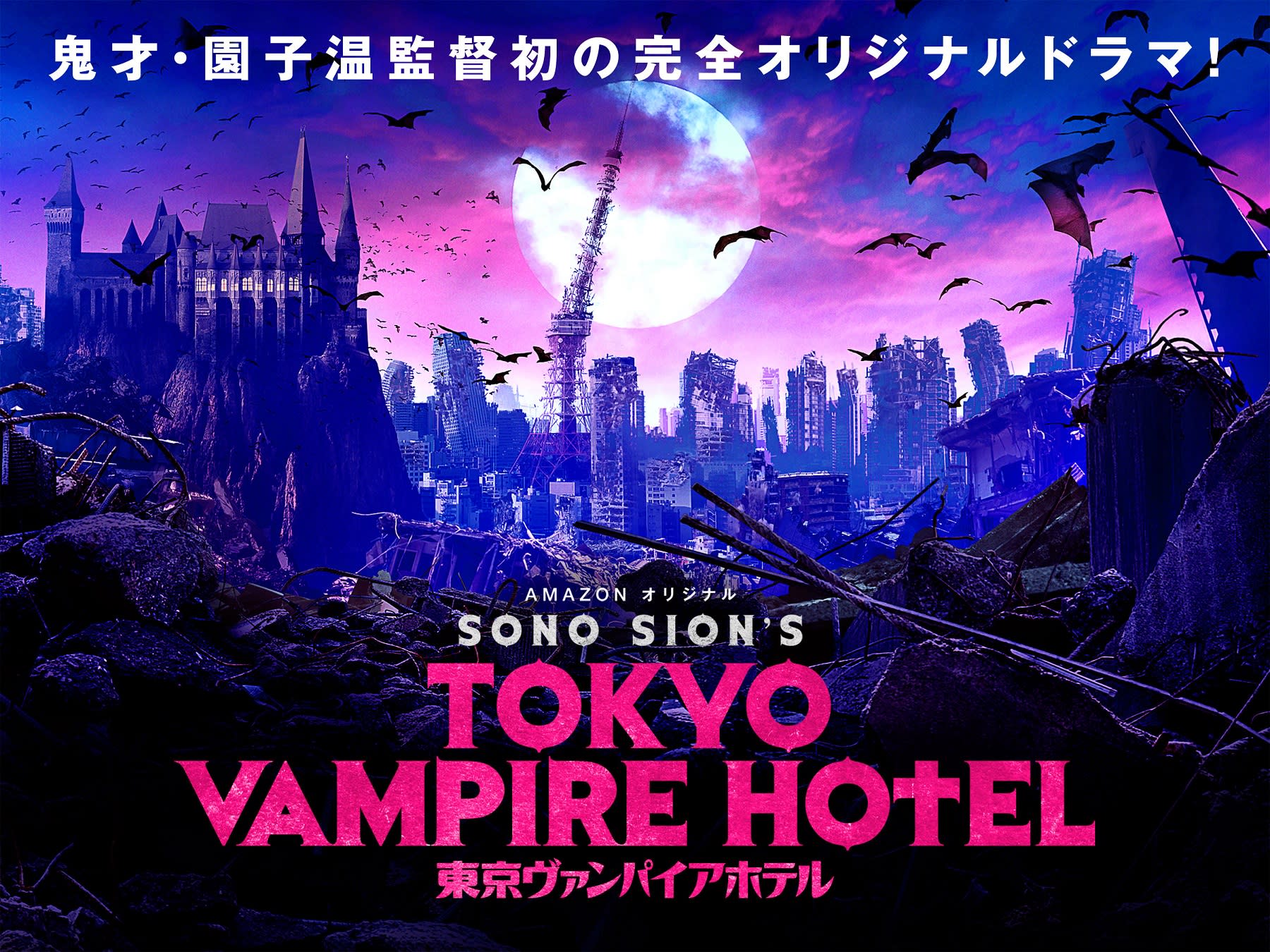
Non-Abstract Review: Tokyo Vampire Hotel (2017)


Director: Sion Sono
Screenplay: Sion Sono
Cast: Ami Tomite as Manami; Yumi Adachi as Empress; Megumi Kagurazaka as Elizabeth Báthory; Kaho as K; Shinnosuke Mitsushima as Yamada; Akihiro Kitamura as Gen; Ayumu Yokuyama as Dre

Synopsis: The last days of humanity are upon us, as a centuries old conflict between two clans of vampires, the Dracula clan and the Corvin clan, escalates when the Corvins plan to trap a small group of humans as their permanent, cultivatable food source. In the midst of this is Manami (Ami Tomite), who finds herself pulled from ordinary human life when she learns she has the blood of Dracula within herself.

[Spoilers Ahead]

A great sense of excitement was felt finally seeing Tokyo Vampire Hotel. Also trepidation to be honest as, considering Sion Sono has had a spottier record from 2010 onwards, this could've turned into a dud. It neither helps that, out of the gate, the first episode of his Amazon Prime commissioned mini-series is terrible. It set up all the worst aspects of Sono that have come up in his work over the last few years, an abrupt jump into a world full of clichéd horror tropes made worse by the sci-fi touches added. The grotesque violence Sono has in his films is here too and is awful, problematic in how it gleefully delights in a woman in a Goth Lolita dress entering a restaurant with firearms and killing the human beings with relish after dealing with a group of vampires, the flippantness and "coolness" off-putting in works like this even as someone who defends transgressive and ero-guro tropes in art, boredom as well when she excessively stabs a person or two with a fork over and over to death. Thankfully, blissfully, Tokyo Vampire Hotel is not this pilot episode. It's still excessively gory, and gets more over-the-top in the amount of fake blood spilt, but it also returns to the type of films I liked by Sono in Strange Circus (2005) or Suicide Club (2001), strange tales with tangents where genre tropes get mangled in weird and fascinating ways.

From https://m.media-amazon.com/images/M/MV5BZDUwYTFhMDItMWM2Ny
00Y2FiLTk4ZmUtM2E5NTYyNGRjMDIzXkEyXkFqcGdeQXVyNjY5NTM5MjA@._V1_.jpg

It helps this is a mini-series. I have no idea what the feature length version, which cuts this ten episode series down to 142 minitues (!) would be like, but the mini-series as a whole feels less like the stereotype of cult content that is sold to Western viewers but closer to the sincerer Japanese genre films, ironic considering this was sponsored for Western viewers, but probably influenced by the length of the material, forcing Sono's hand in having to have more than the gore on display. At least from episode two onwards the series already gets interesting, skipping years earlier to a human girl given the blood of Dracula being raised in an adoptive family, specifically losers chosen by a literal neighbourhood of vampires to take care of her or they got quickly replaced with other foster parents. From there, weaving the life of Manimi, cursed to been changed by her vampire's blood on her 22nd birthday, and the conflict between the Dracula and Corvin clans, it used its length to expand to include more side characters and events. It can intercut the action and gore with more personality building dialogue scenes, drama which was found in the likes of Suicide Club and made Sono's films stand out as much as his lurid and bizarre set pieces.

The material itself is generic on the surface, vampires versus vampires with a special "one" figure in the centre. Unleashed onto an unsuspecting Amazon Prime viewership this would be weird by itself, especially as Sono now is decorating his films in bold primary colours post-Antiporno (2016), appearing especially for the main building the film is set in, the titular hotel which is actually the lower half of one of the Corvin vampire elders, her children feeding her through a hole in herself what cannot help but come off with vaguely sexual in connotations. What I was glad for however is that, lost in his films over the last few years but flourishing here again, is his eccentricity which is fed by the longer template for the storytelling. The actual plot - that the Corvin clan have humans trapped, pretending a nuclear winter has taken place outside to force them to copulate and breed as their cattle - is merely a backdrop for all these characters, even the villains, to have quirks and issues to deal with. Little touches, like the announcer at the Corvin's lair being way too enthusiastic as he order humans to procreate, or the fact he can still have moments of actual seriousness in-between, mean a lot more when in the last few films I've seen he's not been able to balance seriousness and humour properly as he could in epics like Love Exposure (2008). That this is a major step for Sion Sono in terms of the mainstream spotlight was likely a factor as, befitting the material, he convinced Amazon Prime to let the production shot in Romania too which proved to be in favour of the film, the use of real castles and the Salina Turda salt mine proving worthy production design without much hassle.

From http://altyazi.org/wp-content/uploads
/2017/06/tokyo-vampire-hotel-2017-7.jpg

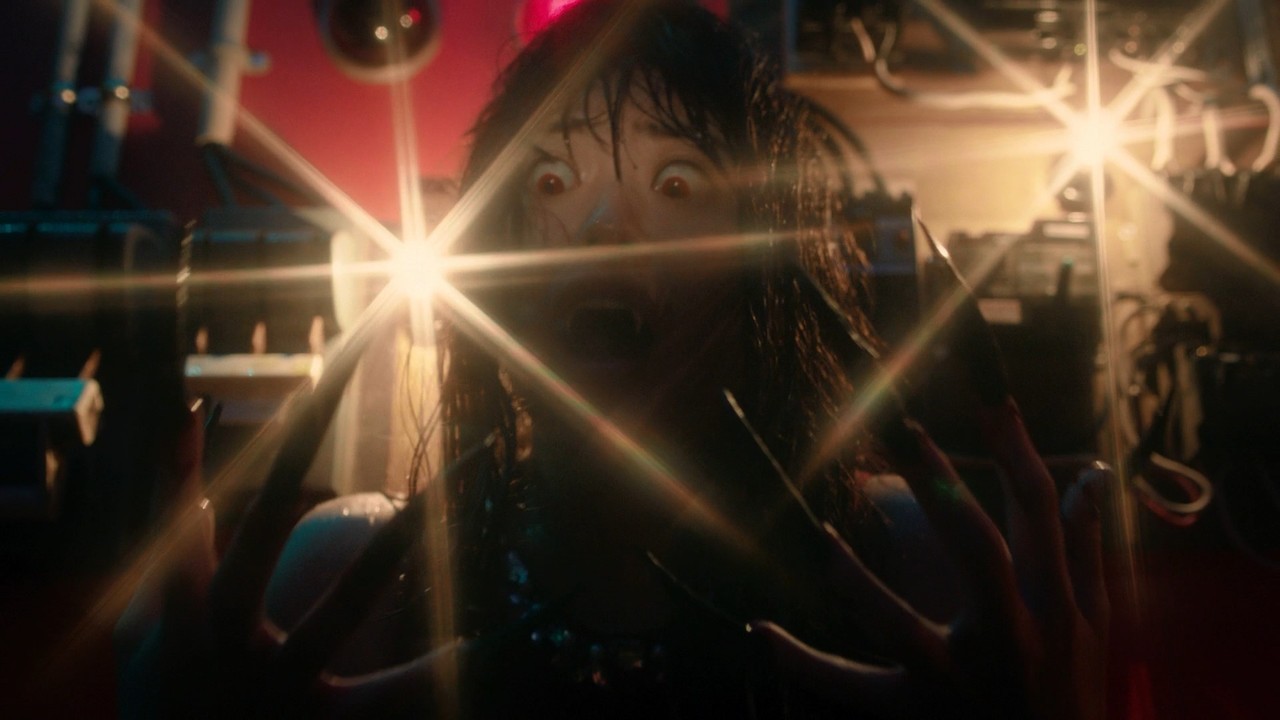
The series could've been fewer episodes actually, as the middle episodes can lag at points or repeating events like the humans trying to escape the hotel multiple times, but the size of the cast allows interesting factors to come into play nonetheless. That even the villains have sympathies is successful even if it's a few more character details rather than in-depth - one of the main Corvin clan members, Yamada (Shinnosuke Mitsushima), was given by his father to the clan in exchange for a political career where he becomes president of Japan in the current time period, enforcing a hatred of life only softened by his romance with Elizabeth Báthory (Megumi Kagurazaka, Sono's wife and argubly muse). In contrast, the Dracula clan and others have an amorality which, despite my issues within the first episode, plays to interesting dynamics, such as with K (Kaho), a Dracula clan member with both sympathy but also utterly ruthless, making her relationship with Manami, the figure stuck with horrifying abilities about to grow on her twenty second birthday, more complicated. There's also humour, as in the case of Báthory's "mother", depicted rarely with the actress in normal form, but either as a head inside a practical effect or a shrunken stop motion not as tall as a doll's house. Even the whole factor of one of Corvin clan being the actual hotel is played with a legitimately (but well executed) spectacle in between her walls, witnessing the humans fed into her in a never ending orgy of stabbing and smearing blood on themselves that, barring one change in the lighting style, would be if you let Gasper Noe direct the Dante's Inferno.

The moment Tokyo Vampire Hotel fully succeeds however is when, out of ten episodes, episode seven has the actual climatic battle, most of the episode a bloody spectacle where almost every major figure dies at the end. The last three, less than thirty minutes each, leave survivors both of the human and vampire sides awkwardly picking up the pieces of their lives in the hotel, without masters and eventually eating at the makeshift restaurant in the centre hall with a comradery of friendship, staying locked in the hotel as their whole world. Even if there is still insidious plans afoot, these last three episodes are why I eventually liked the whole mini-series entirely, building upon characters (the tragic victim of circumstance in Manami, a new character who is the only teenager among adults who questions her environment) to a chamber piece which adds a great deal. Including a pitch perfect end twist which is hilarious, where the least expected people barge through a door, looking like an actual pair of old men than police officers, and an ending which dabbles in the metaphorical in a way that was completely perfect. This conclusion was exactly the right way to end Tokyo Vampire Hotel, and proved a relief having found myself disillusioned in terms of the quality of Sion Sono's recent output. This mini-series, probably the work more will see over others, has proven then successful for his reputation and for individuals like myself who yearned for those older titles in his filmography.


From https://66.media.tumblr.com/11fd99fcc671bed50edb5
787069c15f4/tumblr_p7tmcrcMFW1rw93m3o6_1280.jpg

Sunday, 22 October 2017

Vamp (1986)

From https://www.movieposter.com/posters/
archive/main/173/MPW-86856

Director: Richard Wenk
Screenplay: Richard Wenk and Donald P. Borchers
Cast: Chris Makepeace as Keith; Robert Rusler as AJ; Grace Jones as Queen Katrina; Dedee Pfeiffer as Allison; Gedde Watanabe as Duncan; Billy Drago as Snow; Sandy Baron as Vic
A Night of a Thousand Horror (Movies) #136

Richard Wenk, before he directed Vamp, had already tackled vampires in a humorous way with Dracula Bites the Big Apple (1979), a short length farce in which Dracula (Peter Loewy) gets sick of Transylvania and decides to go to New York City. I really liked the short, an obvious but playful comedy which never took itself serious, imagining Dracula and a Renfield figure (Barry Gomolka) stuck in the midst of  New York nightlife, the casket full of his homeland's soil left in a taxi cab and the attempts to feed on potential victims much more difficult to accomplish in the lit up, urban environment which never sleeps. I was not expecting the short to suddenly burst into a musical number for one thing, which emphasised that Dancing in the Moonlight wasn't a bland song from a band named Toploader I heard way too much in my childhood in the early 2000s1, but actually a good song done with an actual, accomplished music number here with choreographed hobo car washers. One which even breaks the fourth wall as the short takes nothing for granted for the sake of a joke. (It even manages one legitimately great gag I wished another vampire film did, where Dracula gets caught out finally getting a victim in his clutches in her apartment only to be at their surprise birthday party). Adding to the tone of the short was that it was shot on-location in New York City. Before the cleanup of the city in the nineties, this grungy porn theatre filled environment is utterly cinematic, as interesting here as it was in more serious horror films like The Driller Killer (1979), ending at the beach under a pier where Dracula decides to float back to his homeland using a coffin as an improvised boat.

From https://4.bp.blogspot.com/-aLSwv9clc00/V-rOj3rLGOI/AAAAAAAAFDg/rQpiq2gecQQ
HcwVTI87nkCMMLaLLleHIwCEw/s1600/Vamp1.jpg

In comparison Vamp, his film for New World Pictures, does feel a little more cleaned up compared to the short. Vamp has a lot of the same virtues but it's not the same type of film, not as strange and inventive, removed from the real New York City locations but in its own cinematic world. Instead it's a solid if frankly conventional horror-comedy from the mid eighties. The advantage it has, taken from Dracula Bites the Big Apple, is a similar charm with the material, already playing with the viewer in the first scene when one presumes a conventional flashback to a medieval castle. Then its revealed to be an only for it to be the over elaborate introduction ritual for a college fraternity, the soundtrack of ominous music in the background starting to skip and our protagonists for the film Keith (Chris Makepeace) and AJ (Robert Rusler) to get immediately bored and stop acting the ritual out. Instead they offer the frat brothers another way to get into their fraternity, promising to bring a stripper to the house that night. Having to borrow a car from Duncan (Gedde Watanabe), a rich college student who has to pay for friendship and only wants to hang out with people, they go to a strip club in the middle of the city that's bad for any of them to have entered.  

From https://professormortis.files.wordpress.com/2012/09/snow.jpg

Even if their bargain to get into the fraternity and the kick-starter for the plot could be seen as sleazy, the two main male protagonists are played never less than likable, which is a huge advantage to Vamp particularly as there's later emotion drama brought in to the hijinks surrounding its main premise, a nightclub used by a vampire (Grace Jones) to supply her food. Less chauvinistic arseholes, more cocky but ultimately lovable scamps. Even Duncan, whose car they commandeer, never comes off as an annoying joke character, actor Watanabe playing a geek whose lack of friends, and the excitement he finds in this journey to the club, is sympathetic. Watanabe actually steals his scenes on camera throughout the film making how his trajectory plays out even more sympathetic, wishing more sympathy was there for him. How even AJ's trajectory plays out, wrong footing viewers, is as interesting, bringing more emotional weight because the actors can bring out more to these characters than caricatures.

From http://manisthewarmestplacetohide.com/sites/manisthewarmestplacetohide.com/
files/styles/blog_main_images/public/gracejones1_med.jpg

Grace Jones
was a huge "get" for Vamp and, compared to the divisive views of A View to a Kill (1985), the James Bond film she stars in, this feels more rewarding. Here even if it's a mainly silent role with her in various states of prosthetics for a large part of the film, Jones' real life charisma is shown. A View to a Kill is a "guilty" pleasure for me, able to find entertainment in it despite the glaring issues, one of which is that Jones really doesn't stand out in spite of the heavy handed attempt to make her both a menacing henchwoman for Christopher Walkens' and a Bond girl for the aging Roger Moore, her charisma lost in a film that's as kitsch as you could get in has a lot within it that pushes her prescience to the side. Here in Vamp, I'd argue she is an utterly beautiful woman but you also see the figure who is a living embodiment of an Amazon. Blue eyes that could cut through a person, who memorably for me in an interview for The Guardian said all men "should be penetrated at least once to know how it feels"2. It's not a role to fully show her as the powerful person she's seen for many, as a famous musician and a public figure, but especially in the elaborate makeup and costumes, you still get a sliver of it, more than enough to have an impact.

From https://forgottenfilmcast.files.wordpress.com/2012/09/vamp-4.png

This cast sustains a predictable plot as does the aesthetic. Visually, not only do you have the gritty urban squalor of its urban location, but someone in the lighting crew clearly obsessed with Mario Bava and his gift for coloured gels. The colour, even for a film from the neon soaked era of eighties cinema, is bright even when its dark, managing even to make a frequently used sewer location vibrant. Colour is such a hugely neglected aspect of horror in the modern day, where digitally shot realism usually means dull browns and greys without a palette, even the deliberate lack of colour a conscious choice that can add so much to a film. The moment the transition to colour from monochrome was adapted to begot the advantage of the colour spectrum tempering an audience's mood especially for horror cinema. A lot of the eighties horror that is beloved, even when flawed, had the advantage of cinematographers, technicians for the visuals and lights, and production and costume designers who were willing to use colour to their advantage, a lot of these films now in High Definition becoming a macabre, ecstatic fest for the eyes. Even one like Vamp which contrasts it to the garbage filled urban squalor and desolate back streets has its use of colour to its advantage.

From https://pic.yts.gs/yt/20160626/31739/screenshot3.png

It's this which helps Vamp greatly. The plot eventually becomes more conventional, where Kevin finds himself with Allison (Dedee Pfeiffer), a girl working as a waitress at the club who knows him from the past, really the major issue with Vamp in how it follows an expected plot trajectory and that their chemistry is far less interesting than if following Kevin and AJ or if Duncan's on screen. Far more interesting is everyone else surrounding this eventual narrative. Where Billy Drago, with a significantly better performance than in Takashi Miike's Imprint (2006), inexplicably exists in this weird urban environment as the leader of an all albino male gang who have no real connection to the plot, merely a part of the wonderland environment the protagonists cannot escape. Where bus drivers, even small girls, are vampires who live in this nocturnal reality they've stumbled into. And of course Sandy Baron as Vic, Grace Jones' lackey and the manager/host of the strip club that supplies her nourishment. Baron alongside Gedde Watanabe are the real sparks of entertainment in the film just in terms of their performances, Baron helped by Vic being a fascinating and amusing creation in himself. His untold back story, obsessed with trying to set up shop in Las Vegas, no matter how much Grace Jones ignores this idea, and playing a lounge lizard persona gives the character such a compelling dynamic, back story that doesn't need to be explained but adds richness to Baron's scenes. This type of personality is what you get the most out of Vamp. The main plot is pretty predictable, concluding as one would presume it to. Far more interesting is these quirks that appear from Dracula Bites the Big Apple, Richard Wenk's sense of humour and oddness the reason to view the film.

From https://professormortis.files.wordpress.com/2012/09/deepduran.jpg

====
1) Nineties and early Millennial Top 40s music in the United Kingdom just from my memories is a weird, frightening thing. Cotton Eyed Joe by Rednex, Swedish euro dance line dance music, was a Number 1 hit in 1994 for example.

2) Link HERE to the whole interview. 

Friday, 20 October 2017

Masters of Horror Season 2 Part 7 and Conclusion

From https://upload.wikimedia.org/wikipedia/en/thumb/
0/04/TheVWord.jpg/220px-TheVWord.jpg

The V Word (2006)
Director: Ernest Dickenson
Screenplay: Mick Garris
Cast: Arjay Smith as Kerry; Branden Nadon as Justin; Jodelle Ferland as Lisa; Michael Ironside as Mr. Chaney; Lynda Boyd as Carolyn
A Night of a Thousand Horror (Shows) #30

The director career of Ernest Dickenson has horror films like Tales from the Crypt: Demon Knight (1995) and Bones (2001) with Snoop Dogg. Of also considerable importance is that, until after Malcolm X (1992) he was Spike Lee's cinematographer from his film debut and including Do The Right Thing (1989), whose visual look is as much of that film's legendary status as other factors. The V Word, a vampire story, certainly looks visually interesting, a shadow filled atmosphere set within suburbia where two teenagers Kerry (Arjay Smith) and Justin (Branden Nadon) decided to go to a funeral home at night to see a real corpse. Unfortunately one of them is bitten by a vampire, later revealed to be Mr. Chaney (Michael Ironside), once a math teacher known for paedophilic tendencies before his un-death, trying to get the two boys to join him within his circle.

The film unfortunately is stuck with how overdone vampire stories are. They need more creativity to work. So many, in written and visual form exist that it's not the plots which stand out but their design, their characterisation and tones which need to. Sprinklings of potential ideas abound but none go anywhere. That it starts, as one character plays Doom 3, with the other in an argument with his father over the phone, having separated from his mother and dating a secretary. Said father figure is removed halfway through the plot and is worthless, wasting an interesting plot point. It tries something interesting in depicting the first signs of the vampire "virus" infecting someone, a half awake dazed figure their mother and little sister presume has stayed up all night in the more successful scenes, but it never gets expanded upon more. When the prologue has finished the episode is halfway through and about to end on a generic conclusion, preventing a lot else happening. Even Michael Ironside doesn't get as much as one would wish considering how always reliable he is, standing out as an inherently sinister, nearly Count Orlock form of vampire who walks around with an umbrella and has an insidious back-story that would add more threat for the young teenage leads.

I'll argue Season 2 of Masters of Horror is still better than Season 1, but there's still episodes like The V Word which have virtues but the plots don't have a lot to them. Episodes which surprisingly last over fifty five minutes but with if little in terms of events having happened, exposition taking up so much time when a vampire and its mythos is pretty well known by now for many. The result here is immensely disappointing and has little to actually write about.

From http://images2.fanpop.com/image/photos/10000000/
The-V-Word-masters-of-horror-10068775-500-332.jpg

====
From http://www.moviegod.de/images/
dvd/00020/1916/1916_xxl.jpg

Dream Cruise (2007)
Director: Norio Tsurata
Screenplay: Naoya Takayama and Norio Tsuruta
Based on a short story by Kôji Suzuki
Cast: Daniel Gillies as Jack Miller; Yoshino Kimura as Yuri Saito; Ryo Ishibashi as Eiji Saito
A Night of a Thousand Horror (Shows) #31

Sadly Masters of Horror Season 2 officially, and for my own viewing marathon, ends with the worst episode of all two season. It's feature length, eighty three minutes uncut, is as much of the problem. But this episode is also where a lot of the problems with the Masters of Horror brand really shows its ugly face. It should be exciting to witness Dream Cruise. A second Japanese co-production which learnt from the mistakes of forcing Japanese actors to phonetically speak in English, as Takashi Miike's Imprint (2006) was stuck with, by having a bilingual script in English and Japanese subtitles from actors who can speak both languages. A story, significantly, based on a short story by Kôji Suzuki, the original author of Ringu, whose life has more than likely be canonised by how many adaptations that story has happened let alone sequels and remakes. Unfortunately Norio Tsurata was chosen to direct said episode.

Tsurata is a director of a lot of horror films, but none of his work I've seen has stood out. Nor does he have the personality that even a flawed director like Jôji 'George' Iida had, who even when the films are failures still have so much to appreciate. Tsurata feels invisible with his work as a director, which doesn't stand outs even by itself in terms of their stories. The first I saw was Premonition (2004), arguably an okay film about supernatural newspapers that predict ominous events. It was still however, within the context of the J-horror boom and the market for it in the West, pretty average. Heavily reliant on cheap jump scares and only helped by how surprisingly nihilistic the film's conclusion was. Ring O: Birthday (2000) on the other hand was just tedious, already with the issue of being a prequel (even if based on a prequel story written by Kôji Suzuki) and a miserable experience to sit through.

Dream Cruise continues as Tsurata's least rewarding of the trio I've seen, as a Western lawyer living in Japan, Jack Miller (Daniel Gillies) is invited on the boat of one of his clients Eiji Saito (Ryo Ishibashi). Jack has been having an affair with Eiji's wife Yuri (Yoshino Kimura), who has always viewed her husband as a cold hearted, detestable human being, something which Eiji desires to prove by driving his boat into the middle of the ocean with nowhere for the lovers to run.  It's a conventional plot, but always one ripe for good as there's also skeletons in the closet for everyone on the boat which come back, but Dream Cruise is so monotonously paced and obvious in its plotting as this slow pace is experienced that it's a nightmare to sit through.

It would be amazing how obvious the plot is if it wasn't also so tedious to suffer. The acting makes this worse in how bland it is, Gillies not compelling as a lead, his character the generic good man in spite of the plot having a lot to work with, both being in an adulterous affair with a married woman and that he's haunted by a childhood memory of seeing his brother drown in the ocean, a subplot which leads to something out of place for this type of story. More incongruous is how Dream Cruise manages to take Ryo Ishibashi, the lead actor of Takashi Miike's Audition (1999), and pulls out as generic a performance from as good an actor like him as you see, a generic evil character who is haunted alongside his wife by a stereotypical black haired female ghost, none of which stands out. It has all the hallmarks of all the series' problems. Then at a feature's length these flaws are amplified.

Dream Cruise feels like all the clichés of the era's wave of slow burn Japanese ghost stories, what was coined "J-horror" subgenre in the west, slowly dying a horrible death in a TV special here. When the appropriation of clichés from this trend, even if it's a Japanese co-production made in that country, have none of the actual dynamics which made these films rewarding for Westerners in the first place. Arguably this is an awful way to have ended the second season, especially to end the entire Masters of Horror franchise. Having watched this extra long episode with two big boxer dogs, pets who've sat in on viewings like this of horror films, the sensation of one of them laying on my waist crushing me was not only more pleasurable than the entirety of Dream Cruise but actually made getting through the final quarter bearable. The frustration felt both by a person aware he was wasting his life throughout this, and that of animals unaware of what he was going through but unable to settle and lay down, is something spectacularly awful for this TV episode to have accomplished.

From http://www.dreadcentral.com/wp-content/uploads/mohdream1big.jpg

====
From http://static.tvtropes.org/pmwiki/pub/images/24644360_5029.jpg

Masters of Horror Season 2 Conclusion

With this, Masters of Horror Season 2 comes to a close and I have ended both seasons as well. Having never seen Season 2 before, I'll controversially suggest that it's superior to Season 1. Sadly that doesn't mean the season was perfect. Whilst the issue surrounding the show's premise was pushed to the back - famous directing episodes which however were compromised by tight production schedules and what resources in scripts and technical content were available -  there were still problems. Mainly that if the stories weren't interesting, or well made, you get duds. Season 1 is much more erratic, and there are even episodes that were deeply overrated, but Season 2 still had failures as well. Sadly due to how the second season was released on DVD in the United Kingdom most on them were at the back end of my viewing experience, making the finale more lacklustre. The late Tobe Hooper never got a great episode in either series, nor did John Carpenter even if Pro-Life wasn't as bad as its reputation suggests. Peter Medak's The Washingtonians, Tom Holland's We All Scream For Ice Cream and Ernest Dickenson's The V Word were all victims of lacklustre screenplays, and Dream Cruise was a terrible decision in general. A lot of generic plotting plagued the worst episodes in both season. Whilst Season 1 as obsessed with troubled cops, Season 2 made this problem worse by being heavily reliant on stories about bland families put in peril, no stakes or reward in these stock types who'd be okay afterwards in every story. Ironically the best episodes of Season 2 either did the unthinkable with family archetypes, like The Screwfly Solution, or was the episode Family, which satirised this with a serial killer who made up his perfect family with the skeletons of his victims.

But the greater consistency helped this season. With only one disappointing episode acclaimed by others - Stuart Gordon's The Black Cat - and none others unlike Season, everything was interesting or actually great. So much so I can have an honourable mention with Rob Schmidt's Right to Die. Schmidt was one of a couple of directors in this season who are arguably controversial to have been chosen as "Masters". Whilst someone like Peter Medak is not known as a horror director, he at least had one canonical classic like The Changeling (1980) that qualified him, whilst someone like Schmidt is known only for a film like Wrong Turn (2003) which hasn't had the same love or cult following placed onto it. But his episode undermined this, making the point of the "Masters of Horror" title pointless by making an episode so much more appropriate to what the series should've always been. Fun, misanthropic and lurid, the one episode that evokes gristly comic books of yore but with more blood and sex. His episode argues that the two series should've emphasised getting the stories right, not necessarily the stunt casting of legendary directors unless the restrictions that undermined their creative processes weren't such an issue over these two seasons. His episode is the kind that made you want to see what someone like Rob Schmidt would do next; sadly his filmography after is not as prolific as one would wish after seeing Right to Die for whatever reason.

From http://horrorsnotdead.com/images/family.jpg

Third and second place were solid stories made with great performances, both following varying forms of madness, both from directors not necessarily making horror throughout their career. Third is Sounds Like, Brad Anderson the up-and-coming director picked for Season 2 who, like Lucky McKee in Season 1, made a very different film from most everyone else. Anderson's is practically psychological drama which just happens to be increasingly more gruesome and tragic as it hangs on Chris Bauer's central performance. Second is John Landis' Family. Out of all the veteran directors who worked in both seasons, its John Landis who managed the most consistency. Even if some might disagree with me on Deer Woman from the first season, it'll be hard to knock Family, another psychological drama but played for sick laughs where another central performance, by George Wendt, is the lynchpin that all the other virtues are rested on.

From http://images.static-bluray.com/reviews/136_1.jpg

And first place, without a doubt, flaws and all, is Joe Dante's The Screwfly Solution. Whilst Homecoming from Season 1 has become a dated time piece, The Screwfly Solution whilst an exaggerated interpretation on the subject of misogyny has tragically become more relevant, making my viewing of the episode [in 2017] a more disturbing experience. It's the episode out of both seasons which feels like it's taking the greatest risk, the most experimental alongside Sounds Like with its use of digital cameras and greater, more elaborate set pieces using them. It has the largest cast and number of set pieces of all the episodes. It has Elliot Gould of all people in a major role. It's also the bleakest of the entire two seasons. Far from fun, but instead something which even if its tinged with black humour is still scary. Willing to jump into sci-fi, and utterly willing to take greater risks than many of the other episodes with an ending that's actually apocalyptic, scary and a kick to the guts. Something which ends as bleak as it should and mortify the viewer afterwards. Even taking into consideration its flaws, areas which feel potentially too broad, or not fully fleshed out, this however is so much more rewarding for me than Homecoming, taking a short story by a female writer Alice Sheldon from a  period of major feminist dialogue, and showing it had greater relevancy in the 2000s and 2010s than anything else.

From http://images2.fanpop.com/image/photos/10000000/
Sick-Girl-masters-of-horror-10068397-500-300.jpg

With this season, Masters of Horror ended. There was a continuation of a similar premise with producer Mick Garris called Fear Itself (2998) but, made for another channel (NBC) and with restrictions on content, I'd view that series as a spin-off rather than the third season, a one series production for another day. Altogether I admit Masters of Horror wasn't perfect. It emphasises, like anthology films, how even if you have the best of a genre together, the entries could only work if their content was actually interesting. Add to this the restricted nature of television - time schedules and resources - and it adds further potential disadvantages, that and each other episode (mainly) being fifty five minutes long, which is a lot of time to take  to tell as story. I will not lie that both seasons had a lot of generic fodder which could've done better. When these seasons succeeded - Sick Girl, Deer Woman, Pick Me Up, The Screwfly Solution etc. - they worked, but significantly these were episodes that took risks. For me altogether whilst I enjoyed the experience I admit the franchise was a failure. One which offered rewards but also showed its inherently flaws symbolically with what happened to Takashi Miike's Imprint - sever restrictions even affecting a Japanese co-production allowed to breathe from the rest, script issues and the question of what the point was of Masters of Horror philosophically, particularly as for a series that wanted to be uncensored and adult, they pulled Imprint from US cable television and undermined that ethos. I wouldn't argue against having committed to this two season marathon, just for the fact that it offered up so many different subjects. From old horror stables like vampires being reinterpreted to more modern concepts being included like serial killers. The source material for episodes - Edgar Allen Poe, HP Lovecraft, EC Comics, Ambrose Bierce etc. - is in itself the Masters of Horror Literature. Barring giant ants, as there was fifties sci-fi arguably in The Screwfly Solution, there was a lot on offer which wasn't completely success but still of interest. It just has to barred in mind that all 26 episodes are unpredictable in their overall quality. A single season made from all the best episodes is possible, and would be exceptional. Two long seasons however is a lot of material and not perfect.

From http://images.mefeedia.com/the-screwfly-solution-33436159-orig.jpg