Showing posts with label Religious Horror. Show all posts

Wednesday, 9 October 2024

Dark Waters (1993)


Director: Mariano Baino

Screenplay: Mariano Baino and Andrew M. Bark

Cast: Louise Salter as Elizabeth, Venera Simmons as Sarah, Maria Kapnist as Mother Superior

A Night of a Thousand Horror (Movies)


A British-Italian co-production shot between Ukraine and Russia, predominantly in Ukrainian locations, this does follow on from many Italian genre films by the end of the golden era of Italian genre cinema where they were more pronounced in their international productions. Probably the most unconventional I have seen, whilst really obscure, is the action film The Ultimate Mission (1988) starring Mark Gregory, who most will know for 1990: The Bronx Warriors (1982), which was shot in North Korea. Dark Waters is something very different from that example, setting itself up as an incredibly atmospheric Lovecraftian-like religious horror tale. This is even established in the prologue, even when set in the daylight, where on an island, a priest nearly drowns only to be impaled in the neck on a statue like in a Lucio Fulci film set piece. A nun sacrifices her life, seemingly pushed off a cliff or jumping off it deliberately, to destroy a demonic talisman. Unfortunately, the pieces are collected back up by the others nuns, and it will come back to haunt the entire environment.

Twenty years later, a young woman named Elizabeth (Louise Salter) goes back to the island where this all transpired, where the convent was being sent payments from her recently passed father. It should immediately set alarm bells for her when she is even about to reach the island, passing hooded monks carrying burning totems in a field at night for one of the first strong images of the production. Not in terms of this writer being anti-religious but, considering what ungodly blasphemy has transpired on that aforementioned island near them, the monks had the hindsight to have the break out the most ominous looking ritual, all to purge any influence creeping inland. To even get to the island, Elizabeth struggling to, the only person with a boat willing to take her on a rainy night is a man explicitly saying he is not afraid of death, and whose closest thing to a cabin boy is a half feral man who eats raw meat straight off the poop deck.


Dark Waters does have some cheese, some slow passages needing to set the plot up, and feels the limitations that literature or a video game could have dealt with. This film has atmosphere through the gills, but unlike those mediums, the issues of limited film budgets or production difficulties can plague cinema, and it feels like Mariano Baino's sole theatrical length work had teething issues off-camera alongside the oppressive nature of the premise. I am fully aware director Baino had a difficult production cycle making Dark Waters, at a cost of the distinct on-location sets in Ukraine which add so much production value, so as much of the issues could have come from this messy cycle. When the film is focused, cutting into Lucio Fulci's more morbidly gorgeous horror movie moments, it really crawls under the skin. The broken talisman established in the prologue, and its connection to an unknown evil of a beast, "the alpha and the omega", leads to a religious convent on the island which has slowly unravelled the longer this beast is there radiating its evil. Something like a whole group of nuns flagellating themselves in the candle lit underground caves is pure Catholic Gothicism, but even without one of the nuns being murdered when investigating the convent, there are clear signs of madness here which make of a lot of the film's best aspects and show more is hidden here for Elizabeth to accidentally find out about.

The beast apparently takes the sight of those who see it, and evoking the ending of Fulci's The Beyond (1981), Elizabeth will encounter a lot of blind individuals, including the matriarch of the nunnery, evoking this alarm. Even when the beast is rendered, if still lovingly, by a rubber monster effect, there are the disturbing sights which are far more potent, such as the image of the beach covered entire in dead fish, never explained but is the type of production detail that adds far more than explicit sights. It is the type of sight, perfectly executed here, where atheists and Christians, even the Satanists, would join forced to stop the influence causing it, and a huge virtue and the most disturbing parts of Dark Waters are the slowly creeping dread than the explicit horror. As Elizabeth slowly regains her memories of the island, having been born there, the filming locations add a great deal to the production as does the almost atonal score by Igor Clark, catching you off guard at times with its hair rising and at times unpredictable spikes in the soundtrack.

As Elizabeth realises her direct connection to the beast, even if the practical effects for once are more ridiculous for the tone, the mood is what bolsters the film fully. The sense of the peace having long been unravelled is found in the odd touches, like one of the few men on the island, alongside the weird one in a beach cabin, being a blind painter who seemingly depicts the future in his craft. Details like this adds so much to the proceedings and really made this a compelling horror story in the best of ways, even if this would be the sole production by its director/co-writer, the only other being The Trinity of Darkness (2014), a compilation of three of his older short films. This is a shame, and with what Dark Waters manages to accomplish by its final images, we could have had many potent horror films if Mariano Baino had been allowed/or wished to continue in theatrical film productions.


Friday, 15 November 2019

Hell House (2001)

From https://images-na.ssl-images-amazon.com
/images/I/41qFfKYoAdL._SY445_.jpg


Director: George Ratliff
Oddities, Obscurties and One-Offs

As a documentary unfortunately under seen, Hell House offers the curious counterbalance to Halloween in the "hell house", which were innovated within American conservative Christian culture through Jerry Falwell in the late seventies, to which the Presbyterian church Trinity Church Youth Group is the subject of this film, making a haunted house for Halloween that depict the worst in humanity and the fires of Hell to scare people to Jesus. Director George Ratliff first tackled the subjects in a short documentary (1999's The Devil Made Me Do It) before expanding it into a feature.

Notably, and probably the huge virtue of Hell House the documentary is that it doesn't take a bias viewpoint but an entirely subjective view to a very controversial subject, significant in that we confuse debating religious and moral ideas for troublesome qualities for anti-religious attitudes and a lack of collected, thoughtful opinion. Make no bones about it, a trigger warning is required for watching the film as, even whilst they have fake blood and cheesy amateur acting from the church's youth members, these hell houses can be unsettling for their subject matter and take on, as in this case, conservative attitudes which are problematic.

The idea of taking the modern world, in its harshness, and scaring people to thought rather than just goose bumps is a thoughtful concept; Christianity has a tenant of wanting to help people to salvation, and they do so by bringing up the worst of a society that lacks compassion and virtue, which is something which can be implemented by a person secular or religious to bringing about contemplation. The issue, which is where I'd argue has become a huge factor into religion losing ground in importance especially in the late 20th century onwards, is that as modern society has taken on more reflective viewpoints on these subjects, the ideas particularly seen in this particular hell house are offensive, insensitive and naive.

The Trinity Church Youth Group got controversial, and had media attention, because they recreated the Columbine high school shootings of 1999. To take a controversial stance, if done with sensibleness and respect to those who had die, you could recreate such an event if you intended to show people the perilous slippery slope leading to the horror and tragedy of the event; here however, even referencing the media scare fear that video games were responsible, with Doom (the old one) playing on a TV, there's a complete lack of subtlety, mere shock tactics made even more startling as, in mind that blanks are still dangerous to use, the Church use actual fire arms and fire them into the ceiling. Then there are the other exhibitions.

A gay man dying of AIDs and going to Hell, including the idea that he became gay because he was abused by his uncle, is homophobic and in the last part arguably childish, in how it comes off as an immature attitude that does not comprehend a far more complex worldview and adult would develop, thus falls into a problematic stereotype that has rightly been written off over the years1. A girl who is date raped in a nightclub commits suicide and goes to Hell is another pronounced example, which has become far more problematic as mental health has become a greater issue in the current times, the attitude of suicide immediately condemns a person is itself becoming an abhorrent attitude to many. Arguably, its examples like those two I have mentioned that has helped pushed people away from Christianity and religion in general, due to a viewed lack of empathy or even humanity, even without anyone asking if they actually believe in a God or not. Also the general tone of the hell house you witness, recorded by the production from its planning for that year to the final act opened on Halloween, has a sub current of patronisation, in which the last part of the house is a room where people only have a few minutes, if that, to go into a prayer room or to symbolically be walked out the hell house with a sense of shame.

What's fascinating with Hell House the documentary, and why it's such a virtuous piece of film making in a time when unfortunately the genre became weighed down by bias and lack of clarity, blameable on people like Michael Moore who went to tubthumping his ideals, is that whilst all the following can be plucked from its material, it also finds that sense of complexity too in them, that the creators of these hell houses are still human beings who are not one dimensional monsters, but figures with their own complex emotional baggage and moments where you can even still sympathise with them.

If you can get past of the troublesome ideas they pass on, you see that the naivety, as a result of where they've closed themselves off to the point of having their own Christian schools, is a factor in where the problems with their ideologies originate, how that without fully connecting to ordinary live outside the Church their ideas seem antiquated if not offensive. A poor female secretary is lost when the head who puts together the hell house, Bob, tries to explain to her what Magic: The Gathering is with neither of them clearly knowing what it is, a fantasy card game that was popular at the time which goes into their black magic, Satanist exhibit which is woefully misinformed. Full on Satanic panic, its literally a black magic human sacrificing ritual which, briefly seen, if comedic and completely neuters the entire hell house, envisioning that reading Harry Potter and playing Magic: The Gathering is enough to become one with Satan. Something as simple as the guy who plays the nightclub DJ having to actually bring in knowledge of night club life, because he felt it was woefully inaccurate, is a reminder that this is "middle America"; other times its something as woefully misguided as wanting to decorate sets with a 5-pointed pentagram, but accidentally putting up the 6-pointed Star of David, where one goes from the gut without clarity and lead to howlers like this.

From https://image.tmdb.org/t/p/w500_and_h282_face/
gZbxHzUSgCYEvFZ9OLI3okIiF18.jpg

Yet the film also succeeds in even gaining sympathy for these people, because the little we get from when they speak complicates them. Hell House is a standard documentary but one that succeeds as a document rather than cinematic in a way that shouldn't be an insult, doing so much that even if you see this group of Christians as a community, even speaking in tongues at one point, you also have them as ordinary people rather than the stereotypical villainous zealots. Particularly as simplifying sides has become a huge issue regardless of political belief, made worse in the late 2010s, the greyness of these figures is fascinatingly radical. Personal stories are interspersed in direct-to-camera interviews, and a few are eye raisers, such as one woman who discusses that she was raped when she was younger and, playing the teen date rape victim who commits suicide, saw her rapist among the patrons there, an emotionally complex issue which led to her forgiving him, a controversial but really powerful concept which is one of Christianity's best virtues that it is possible to even forgive someone who has committed the worst transgression to you.

The man who runs the Hell House, Bob, is also such a complicated figure with so much emotional baggage left unpacked in what we see he should've eventually had gone for therapy even if he felt his faith was enough. Single, his wife walked out with someone she met on the internet and left him with four kids, his youngest son also an infant with cerebral palsy, a fit caught on camera one of the most harrowing moments. Whilst he comes off as an emotionally steady person at first, focused entirely on the Hell House attraction, he notably wrote part of his own life into an exhibition of domestic abuse. Specifically even referencing the dalliance on the web of the wife, whilst it comes off as part of the healing process, seeing him suddenly in tears watching this performance realises many issues in his person.

Even if you cannot get past their beliefs, one scene is there where one person makes the most powerful agreement against the hell house, in one sentence, in how it lacks the complexity of the outside world. It's a thought made by a young woman in a red Slipknot hoodie and hits the nail on the head fully and potently. The scene in question was wisely the only one where the director ever shows a criticism of the Church's work, in which her male friend in a Fear Factory is emotionally angry and, despite using "faggot" a lot, is actually offended by the blatant homophobia, between him and his two friends actually referencing liberal Christian ideas.  That his female friend hits upon this argument of hers with full impact makes the point for their side fully, whilst the staff member debating with them can merely say their work is a subjective exhibition meant to encourage thought. It was the entire documentary ever needed to do and it adds more to ponder alongside the great material it shows around the scene from the Church's side.

If I am to bring in my own opinion, than let me admit one thing, that I have always found the concept of Hell in itself in Christianity always had a logistical flaw I found problematic. As someone who isn't part of an organised religion but does believe in a deity and human soul of an unknown form, Hell has always as a concept come both as a) a mere scare tactic which it always was in terms of being a threat to force people to be good, like a bogeyman to scare children to go to bed, and b) very simplified to the point that if you over think it, there are paradoxes. No complex deity would want to let a Devil have most peoples' souls, through damnation, and would provide forgiveness and eternal life instead, and no sane Devil would encourage an image of themselves as the punisher of wickedness when, if you go by the more human version painted in Thomas Milton's Paradise Lost, the more subversive ideal would be to band as many souls together to slight God.

These are ideas which people do hold as real and to be respected, but a very simplified view of Hell does exist in most people's mind which doesn't presume the actual complexities of human emotions. Likewise, Jesus Christ dying for the sins of all humanity as the Son of God so they could all be forgiven, through the most agonising death of crucifixion in the mortal human flesh, completely negates both the idea of Hell as a concept. A huge, problematic elephant of how a lot of conservative Christian culture from the United States worship, even if you have to first content with the likes of their homophobia, is faintly found here as well in the documentary, in how the Church can be said to argue that you have to worship the right God under the right Church, not as severe as an Estus Pirkle piece but still to be found in these hell houses. There is an irony to this as the Church itself is quaint - they are ordinary people, who say that their ideas are their own and they are open to be thought of by outsiders. It also doesn't ignore that, when casting, most of their youth group is a lot more excited to play the teen suicide or a devil than say an angel, a tantalising vicarious pleasure clearly had in the dark side even from these people meant to be virtuous. Hell is apparently more creativity rewarding than Heaven, which is a question in itself to ask
.
As for the director himself? George Ratliff went into fiction cinema, including a 2018 work Welcome Home that, by all accounts, is a soft-softcore thriller with not a lot of softcore. It's a weird tangent to end up in after making such a great documentary a decade earlier.

From https://dr56wvhu2c8zo.cloudfront.net/hellhouse/assets/
5b4d8716-6635-4e28-8e1a-b3bf905e2182/02_abort_color_1200.jpg

=======
1) Reflecting on the Church's clear disconnect from the world around them, a lot of anti-gay Christian rhetoric clearly comes from people that don't understand the ordinary life of an LGBTQ person, and this kind of rhetoric is clearly where a split between more liberal Christians (and gay Christians) from more conservative ones came to be. Personally I blame the fact that, in lieu to also how the ancient texts have been translated over millennia, if we're just sticking to the New Testament its particularly the likes of Romans 1:26–27 and 1 Corinthians 6:9–11 which are the biggest offenders for this attitude, in how even explicit in their tenants they were influenced by millennia of translation and just the viewpoints of their scribes. Then there's the confusion to what "sodomite" in lieu to the original sings of Sodom and Gomorrah actually were, which has not helped.

Sunday, 30 June 2019

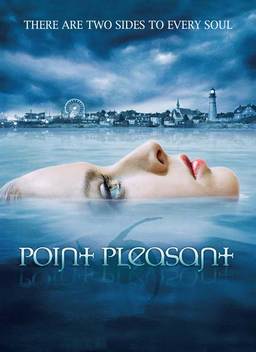
Point Pleasant (2005)

From https://images2.static-bluray.com/
products/20/7462_1_front.jpg


Creator: John McLaughlin and Marti Noxon
Cast: Elisabeth Harnois as Christina Nickson; Grant Show as Lucas Boyd; Sam Page as Jesse Parker; Aubrey Dollar as Judy Kramer; Dina Meyer as  Amber Hargrove; Cameron Richardson as Paula Hargrove; Clare Carey as Sarah Parker; Brent Weber as Terry Burke; Susan Walters as Meg Kramer 13 episodes; Richard Burgi as Ben Kramer; Alex Carter as Sheriff Logan Parker; Ned Schmidtke as Father Matthew; John Diehl as David Burke; Adam Busch as Wes; Marcus Coloma as Father Tomas; Elizabeth Ann Bennett as Holly
Obscurities, Oddities and One-Offs

The Omen: The New Jersey Shore Years? Call this the result of listening to a podcast about cancelled tv series, Cancelled Too Soon, but I have gone out watch the material they have covered, and usually covered it on this blog alongside my own oddities, all in spite of the fact that, beyond anime and certain significant titles, my interest in television is virtually nonexistent. I gave up television just for watching DVDs (and streaming) about ten years ago out of disinterest in the product and being sick of adverts. In many ways, seeing the style and tone of a show like Point Pleasant, which I once grew up with, is better now in terms of being able to judge the material when it isn't saturated in my everyday life and can be a different experience from the rest of what I watch. Stepping out of my comfort zone is worthwhile, especially when this thirteen episode series, from co-writer of Buffy the Vampire Slayer Marti Noxon on board, is a teen soap opera where the female lead is the Antichrist immediately tickled me pink as a premise.

She washes up at Point Pleasant and goes by the name of Christina Nickson (Elisabeth Harnois), daughter of Satan and a human woman as established immediately. Caught between his minions, mainly former human Lucas Boyd (Grant Show) trying to egg her on to kick-start the Apocalypse, and the deeply divided but kind Kramer family who keep her humanity, the melodrama intermingles with the religious horror (as she unwillingly draws out peoples' worst sides in the first few episodes), but also tempers it in its own unique bombast as her state of mind gets rolled about over the episodes.
The first thing that comes to mind now, with time to reflect on the series, is the Twilight franchise, which for all the understandable criticisms was enjoyable for the first film, all because it retold horror genre tropes through this type of intimate melodrama about characters first; alongside the increasing issues with the gender politics, the death kneel for me that it became obsessed in the later films with the scourge of mainstream cinema, lore and CGI ladled fight scenes with the moments of interesting dynamic, of a romantic triangle between a mortal woman with a vampire and a werewolf, dwindled out more and more. Point Pleasant dangerously veered to this near its finale, more intrigued by the religious horror we have seen in a lot of work before and after, but never became overcome by it thankfully.

Again, when you've purposely isolated yourself off this type of mainstream American TV, as I did, it's nice to occasionally watch a work like this that, slick and conventional, feels like a change of pace rather than drilled into me as a constant prescience. There's little that has dated baring the occasional CGI (evil black birds in particular), not feeling like the early 2000s in frosted tops in the hair or a pop punk/post-nu metal soundtrack, instead set in a quiet beach town whose residents are mild manned but start to become enveloped in a less transgressive version of Peyton Place (1957). Whether they are mild mannered - Sarah (Clare Carey), church devotee and mother of lifeguard Jesse who rescues Christie - or from soap opera - her sceptical, angry and easily jealous cop husband Sheriff Logan Parker (Alex Carter), or friend and notorious man chaser divorcee Amber Hargrove (Dina Meyer) - or from teen drama - the aforementioned Jesse (Samuel Page), who with Christie has a won't-they-will-they crush or the many frequently shirtless young men in the cast - there's enough to work with in stories. It's to a virtue for all its macabre tone, even getting Danny Elfman to compose the main theme, that it's still a melodrama at heart that is timeless to any era.

It actually, unintentionally, exposes how in terms of Christian lore as is interpreted by popular culture how pointless and misguided the plans of literal demons are. Destroying the Earth here is actually a waste of resources the longer you listen to the likes of Boyd, even when Grant Show steals scenes like an evil cad, when a more pragmatic and practical goal (when Earth allows, for every good person, many evil ones too) would be more worthwhile, such as just pushing Christie to a hierarchy of power where Satan would get more resources for his side. Even the one attempt at nuisance, to dispose the failed experiment of mankind, is just exposing how Western pop entertainment is severely falling behind the likes of Eastern pop entertainment where even a villain in a children's show had actually sound arguments to their ideas.

In reality, and why I am actually glad the series ended at one season as this became more increasingly relied upon, the more absurd aspect of the entire series isn't the soap opera but the religious horror, especially when it becomes more increasingly relied upon, and the weakest parts are those which are entirely plot lines from a tedious horror film from around this era.  A lot of what comes off as camp, even when it's still entertaining because of the melodrama, is entirely the apocalyptic material, 666 literally tattooed on Christine's eye and enough clichés to decorate your walls with appearing, including for all I know ones from the Italian Satanic panic rip off films made in the seventies. If I ever properly read the Bible, beyond going to a school as a child the vicar frequently visited and the one time I read Revelations for some reason, I'll gladly wager to you the reader that, for all the contradictory and problematic scripture, the religion that gestated Dante's Divine Comedy, and William Blake's poetry and art, is both far more morally and intellectually stimulating than the usual tropes of devils disturbing the priesthood, to batardise a Black Sabbath song title, whilst being underused to a detriment for great entertainment. So much so, and why Point Pleasant won me over, that the earnest if over-the-top melodrama managed to refresh the kind of clichés I'd eye roll at and add spark to them.

From https://cdn-static.sidereel.com/episodes/111061/webtv_featured/127232.jpg

This is more so having grown up with a lot of generic satanic horror in the late nineties to early 2000s, such as when Arnold Schwarzenegger fought Satan in Arnold Schwarzenegger, giving something like this from much later and after its co-creator created such a major nineties horror series beforehand more credit for just taking a risky gamble. (And that's in knowledge, from the likes of American Gothic (1995-6), that shows like this come from ten years earlier that follow this genre blending premise and are now of great interest to me). It makes the material much more rewarding even if there's as much subterfuge and misdirects to spin episodes longer than logically there should, all due to teenage angst and inexplicable bog zombies cameos, to romantic rivalry or characters developing abrupt serial killer urges. Here, a priest discovering Christie's secret, only to get killed by a burning boat accident, is made compelling again when the boat's part of an annual boating festival, in an episode as concerned that Jessie's original girlfriend Paula (Cameron Richardson), daughter of Amber Hargrove, is jealous he's being wooed to Christine whilst said mother is eyeing up Ben Kramer (Richard Burgi), a doctor with skeletons in his own closet as well as a wife Meg Kramer (Susan Walters) who has had mental illness since the loss of her older daughter Isabelle, but is also revealed later in the series to have actual supernatural aspects behind this. That, over forty four minutes per episode, alongside being tongue twister of a sentence to read, just gives you an example of how much is crammed into just one early episode. It is such a breath of relief from po-faced but average religious horror I've grown up with, to watch this instead; many which barely get anywhere, despite being on a global scale, are dwarfed by a work that focuses on one town but has so many stories, subplots and character interactions intertwining with each other.

It also means my growing admiration with melodrama is with good reason - once housed with "women's pictures" in cinema, like those made by Douglas Sirk, its arguably a vibrant, layered art where even something more trashier here helps get a lot of nuisance from this premise. Even if I've found the evil side's plans utterly pointless and one dimensional, the melodrama makes sure there is something else to add engagement to these characters. It allows good performances at least. Dina Meyer, most well known for Starship Troopers (1997) and a lot of television has always been good, as a woman who sides with Boyd to seduce Dr. Kramer only for her humanity especially to her friend Meg Kramer to become a greater factor, Susan Walters as Mrs. Kramer herself giving a potentially trite character (mental health issues, actually with supernatural gifts) more humility especially as the series progresses. And of course, Grant Show's Boyd is good, more so when his back story shown in Episode 5 ("Last Dance") casts more light on his previous life and leads to a new character being introduced later on; set within the Great Depression for part of its length, as Boyd recreates a dance marathon in the current day town, Episode Five is arguably the best as, whilst it has silly details like the aristocracy of old Point Pleasant gleefully watching impoverished couples dance to near death, it adds to his character when before he was one dimensional, despite Show's magnetism, and has a remake of Carrie (1978) with a blood shower and a disco ball of death that is a plus for any television episode.

If there's any moment which feels like Point Pleasant stretches itself, it's at the climax. It does lean, as mentioned already, further into the religious horror the further it goes, introducing a mirror to Christie's Antichrist which is dramatically ironic for tragedy, but thankfully for all the moments where the melodrama merely takes a backseat or is merely a catalyst for the other half, such as a secret group of anti-Antichrist individuals not above emotional blackmail for their sacred cause, there's plenty to still appreciate. The final episode in particular, likely made with knowledge Point Pleasant was to be cancelled, goes knee deep into a crazed family psychodrama, one slightly undernourished in production but still literally with hell breaking loose as [PLOT SPOILER] Christie turns full blown evil like an angry super powered teenager [PLOT SPOILER ENDS], the dead brought back just to psychologically damage siblings whilst someone complains about stale cookies. Even if you skipped that spoiler, I can reveal that, whilst the show clearly wanted another season and a bigger budget, Point Pleasant still got a conclusion which is open ended, but of great importance, feels like a natural conclusion most cancelled series wished they had. The issue of whether this series would've dropped that great melodrama comes to mind, but what we got was assured for this and thankfully ended on its best virtues.

It was a series I'm surprised didn't last. It is, for all its quirks, the kind of PG-13 work with a bit of sex (no nudity but a bit of hinted at facsimile alongside many shirtless guys) and horror that, with its heightened emotion, should've gotten a fan base as well as won me over decades later. Obviously, as well for me, it's probably for the better it only lasted this long so any stagnation didn't corrupt its virtues, but the mix if anything is the kind I wish took place more in Hollywood cinema. Again, Twilight is evoked as that should've been like this, with bigger production value, but squandered its best in the first film for a convoluted, boring lore of action fantasy rather than its original romantic love triangle as interpreted by Universal horror monsters. Pointedly as a criticism as, with a female lead, Point Pleasant can so be read as a metaphor for adolescence, the moral chasms she has to face as much a character trying to find her morality whilst every other drama is an exaggeration of real life issues soap operas use. Again, especially if Point Pleasant focused even more on its community that just also happened to be a warring state between the forces of good and evil, "The Omen: The Jersey Shore Years" despite being an opening review joke was a perfect description of what it should've followed fully and at times thankfully did.


From http://3.bp.blogspot.com/_mpBGa4P5jUo/TSHsaixkAiI/
AAAAAAAAGE8/fzkDS-IPKzY/s1600/pointpleasant3.jpg

Thursday, 14 September 2017

Masters of Horror Season 2 Part 2

From http://www.theofficialjohncarpenter.com/wp-content/uploads/2016/
01/john-carpenter-masters-of-horror-pro-life-poster.jpg

Pro-Life (2006)
Director: John Carpenter
Screenplay: Drew McWeeny and Scott Swan
Cast: Caitlin Wachs as Angelique; Ron Perlman as Dwayne; Emmanuelle Vaugier as Kim; Mark Feuerstein as Alex O'Shea; Biski Gugushe as Kiernan
A Night of a Thousand Horror (Shows) #19

Openly Pro-Life is superior to Cigarette Burns (2005) from the previous season. A contrary statement but whilst the Season 1  episode from John Carpenter reduced a great idea for me to dull didactic series of exposition, Pro-Life takes an idea (the moral quandary of abortion), and through adding Satan to the proceedings, creates a story that doesn't need to be paused constantly but climbs in event fully to the ending. I will openly admit that, from Carpenter, it's still not as good as it should've been, and in terms of a story tackling abortion, barely gets out of the gate in terms of tackling it with any depth. Probably the best thing about Pro-Life however is that, whilst Cigarette Burns felt like any other person could direct it, the tone of Pro-Life evokes the more nihilistic entries that formed Carpenter's series of "apocalyptic" films; even if it's not up to the quality of even Prince of Darkness (1987), that same streak of grit missing from Cigarette Burns is appreciated and gives this episode a closer bond to the director's career.

It's a broad film in tone, in which the daughter of an anti-abortionist preacher named Angelique (Caitlin Wachs) enters one such clinic with a conscious desire to terminate her unborn child only for said father (Ron Perlman) to follow with her brothers and firearms in tow. It's a pretty liberal leaning film in its politics on the subject although the real issue is entirely the lack of subtlety without all the teeth being in its mouth to make a nasty bite. Lack of subtlety, as with films in the director's filmography like They Live (1988), doesn't detract from their worth in the ideas still sting. It tries - a father of another young girl in the clinic is utterly loathsome and the head doctor of the clinic immediately snaps when threatened, going immediately to his own firearm cabinet - but this proves to be the less interesting aspect of the episode. It does thankfully have Ron Perlman as the anti-abortionist preacher which softens how blatantly sociopathic the character becomes. Even a viewer like myself pro-choice will appreciate Perlman's ability to give the character's arguments some weight even if he's a stereotype. The slithers of moral greyness are far more interesting, despite being jettisoned early, when it comes to the fact the daughter's unborn child is likely Satanic in origins but the father has voices in his head he believes are heavenly and asking him to protect it, leading to all manner of existential devastation even for his character is a one note figure.

It's also interesting to see how it also evokes Carpenter's filmography in general. The action director in its scenes of gunfire which are solidly handled. And of course the apocalyptic tone within the main clinic setting as the deaths start to pile up. It gets more gruesome than even Carpenter's previous episode, with Ron Perlman experimenting with some of the equipment in the clinic, but there's also a more tragic and severer tone which benefits Pro-Life. Whilst Cigarette Burns felt like it was trying too hard to surf on its trendy cine-literate plot without fully fleshing it out, Pro-Life is entirely within a morally complex subject that strays outside of cinema into real life, and even if it could've done so much more, it stands out more inherently for this for the better. Even if it leads to at least one ridiculous full body costume I appreciate what starts off with a tantalising start and leads to a fully successful conclusion of what would likely happen if this type of event ever took place. Where the ending is technically happy but with a terrible emotional aftermath that you never see as, like in a classic Carpenter film, he's cuts immediately beforehand and deprives you of a comfortable denouement.

From http://film.thedigitalfix.com/protectedimage.php?
image=JohnWhite/PRO_LIFE-2.jpg_14042007

=====

From https://blogger.googleusercontent.com/img/b/R29vZ2xl/AVvXsEgbT8bEfUEssDW3DfLGZC3oO4LEhKw1Jj8-Z5mdEYYtpxFbGz-eWuMwczIApFW616ChV88DSG_NimLqwvfiL1uSUVx0RqXZ1gaPHX1D0LJffzgNsyoMiFLp15hb9jtLKAdmFKa5hfCvdbJ2/s1600/MastersOfHorrorFamilyMoviePoster.jpg

Family (2006)
Director: John Landis
Screenplay: Brent Hanley
Cast: George Wendt as Harold Thompson; Meredith Monroe as Celia Fuller; Matt Keeslar as David Fuller; Haley Guiel as Sarah; Kerry Sandomirsky as Jane; John B. Scot as Grandpa; Nancy Whyte as Grandma
A Night of a Thousand Horror (Shows) #20

John Landis, as of seeing Deer Woman (2005) from the first season and Family now in Season 2, is two for two for great segments in Masters of Horror. Again, like with Deer Woman, it's surprising that whilst he is known for An American Werewolf in London (1981) his career is mainly been outside of horror, and yet within the series named Masters of Horror he's been the figure the most consistent out of the old guard. It may however be that discrepancy which has helped with these episodes of his. Deer Woman was a comedy first within the horror genre, likely sneaking in more serious material within the farce, but still a comedy. Family is a grim, nasty little tale but there's still a streak of gallows humour presiding it, and with at least a cast member from Cheers helping him out in the lead.

Structurally, from screenwriter Brent Hanley (most well known for the script of the late Bill Paxton's Frailty (2001)), the story's a simple and low key tale with an easy to understand set up. A middle aged, single man Harold (George Wendt) lives in peaceful Americana suburbia, only for it to be immediately revealed that he's been kidnapping people, murdering them and with the help of a bathtub of acid building up his own perfect family from their bones and clothes they were taken in. His world is idealised - wife, daughter, even grandparents - with the episode cleverly depicting this through having actors in the roles for his delusions but also intercutting the prop skeletons in the same costumes during these conversation scenes. Very simple, easy to accomplish things which should be obvious for a good story, which even a layman like me who doesn't work in the film and television industry would know would help lead to a good production. The flashiest things about the entire episode is just how Landis decided to be more flamboyant in visual style, with swooping cameras, and in terms of music with the curious (but rewarding) choice of old, beautiful gospel songs chosen in a rather sacrilegious ways. The rest of Family is deceptively simple in presentation.

And that's actually why it's one of the best episodes of both seasons so far, as this basic and well thought out plotting succeeds as expected. Harold takes interest in a younger couple (Meredith Monroe and Matt Keeslar) who have moved in across the street, having interest in the wife much to his skeleton wife's chagrin. This obviously leads to a sting in the tail, but everything fleshed up around this (pun not intended) is done well. The most important factor is how George Wendt excels in the lead. This is not his first time in the horror genre - he was in House (1985) in a major role [a review is available HERE], but most of his career is outside of said genre. But it feels as if this helps allow him to really flesh out the character from a career that includes playing Santa Claus in a TV movie the same year as this, giving him the ability to depict a character who comes off as actually lovable were it not for the fact of how horrifying his behaviour is outside his warm, family valued hallucinations. There's been a little disappointment in how, in spite of Season 2 being far more consistent and better in terms of the quality of the episodes, the stand out character performances haven't been as noticeable yet, but out of both seasons Wendt is going to be amongst the best particularly in the lead.

His delusions talking back to him, even as far as potential victims speaking directly to him (and to us) from afar in one sequence all simplistic and yet credible way to depict this. And also, considering where the story goes, there's definitely moments where the viewer would question on a rewatch what was within Harold's head and what was actually said, having some clever whit to the material from Brent Hanley. Between him and Landis, the story never overcomplicates itself with subplots and plays its tone as both humorous and dark before the ending. Said ending, which I won't spoil, is as twisted as you can get, and even if you guessed it before the end, it still has that aforementioned sting because of the quality of everything built from beforehand. In general Family will rank amongst one of the best of the series and its simplicity is the reason.

From http://cps-static.rovicorp.com/2/Open/Hulu_1693/Program/5939882/_
derived_jpg_q90_600x800_m0/hulu039c2fd49-822b-48e0-b864-467ad98d95ff.jpg?partner=allmovie_soap

Wednesday, 17 May 2017

The Exorcist: The Version You've Never Seen (1973/2000)

From https://images-2.wuaki.tv/system/artworks/14034/master/
the-exorcist-the-version-you-ve-never-seen-1426838574.jpeg

Director: William Friedkin
Screenplay: William Peter Blatty
Cast: Ellen Burstyn as Chris MacNeil; Max von Sydow as Father Lankester Merrin; Jason Miller as Father Damien Karras; Linda Blair as Regan MacNeil; Mercedes McCambridge as the Voice of the Demon; Lee J. Cobb as Lieutenant William F. Kinderman
A Night of a Thousand Horror (Movies) #Bonus 1

Concluding my travels through the Exorcist franchise, the following will be briefer than the others. The director's cut of The Exorcist was a special case, like Francis Ford Coppola's 2001 "Redux" of Apocalypse Now, of an extended cut of a culturally important film getting a theatrical release decades later from the original version and having success. There was also something symbolic with this version's theatrical release, whether it had been released in British cinemas or not, knowing that in 1999 the original version was unbanned from video finally in the United Kingdom. One of the many embarrassing moments of the James Ferman headed British Board of Film Classification, it feels almost symbolic, like when another of Ferman's personal targets The Texas Chain Saw Massacre (1974) was also unbanned soon after his retirement, of a new age we still live in now that, for all the moments that still raise eyebrows, the BBFC became more clearheaded from censorship bans and illogical cuts for the better. At least a victory lap for the better.

I was however too young to see this version until now. My experience with The Exorcist has always been the original theatrical version, both in the story of my uncle on my mother's side seeing it back in the early seventies and finding the shocked reactions to the film (and the film itself) funny rather than scary, and my own viewing of the 1973 theatrical release. The director's cut has not really replaced the theatrical version in the slightest; unlike the many butchered original releases of films buried by the superior director's cuts, the one for The Exorcist is more subtle in its inclusions and not that significant to outright obscure the original from existence. In fact baring one major moment which became part of popular culture cut off by itself, I find the director's cut of this more of a new perspective of the original for a change of pace.

It's a version with a slightly different pace, slower but never feeling like b-roll has been pointlessly stuffed in. The inclusions are mostly new dialogue scenes which, admittedly, are not of worth in exposition as the theatrical version was exceptional enough trimming them out and still conveying information, but are worthy instead of re-inclusion as to adding new details on these richly woven characters of William Peter Blatty's script. Max von Sydow, though its only a few more lines, gets more screen time and with a cast like Ellen Burstyn, Jason Miller and George C. Scott, even pointless additional exposition still works as character building instead. One of the only major differences in tone is the "happier" ending sequence with Scott, which Blatty wanted in the film to affirm that the story did end with a victory for good in spite of the finale tragedy. Either way, both the theatrical and director's cut versions have memorable ending shots, so you have two good ones instead of just one. There's little need to say ones better as the other, as the first is a potent image of stairs with no dialogue, the other a sweet end to a melancholic finale with loved characters.

The scene which is also distinct and the one the film is still remembered for is the "spider walk" sequence, which split off into being part of pop culture lexicon of something the demonically possessed act in horror films. Even wrestling fans have seen the influence of this scene on their entertainment if you google "Bray Wyatt". It's however a terrible scene in context of the film and actually comparable to Renny Harlin's terrible 2004 prequel in terms of being a crass jump scare I'd expect from that film. It's not only at the end of a major plot event which lessens its impact, but the type of scare is out of place as well for both the tone and the context in the narrative, having yet to progress to the more extreme supernatural incidents which are far more fittingly depicted through the infamous crucifix masturbation sequence. The irony that it's this small moment, originally cut out of the film for tone, that's remember is actually sad as, when the rest of this version of the movie is still excellent, it's stands out badly.

Baring this, the director's cut is actually a nice tribute to what qualities The Exorcist in either version has, appreciating it more now than before seeing these films in order. It also emphasises how well the franchise has been in spite of two sequels, only one of them legitimately bad in Renny Harlin's whilst even Exorcist II: The Heretic (1977) has a compelling weirdness to it. Most of the films on this viewing of the director's cut actually fit within the world of the original, enough within dialogue and moments in both the original theatrical cut and this version that evoke the potential for all the films that would come after. Particularly how even exposition dialogue has a distinct personal style to them evokes how good William Peter Blatty would be in his directed script for The Exorcist III (1990). The greater testament, as this can qualify as an epilogue for viewing all the films, is knowing that barring Harlin's all the films, even John Boorman's, have this air of higher quality than a lot of horror franchises. Fittingly for an original film that was directed as much as a drama as it was a horror film, most of the sequels would share the same care with its themes, the respect future creators had far better than other franchises with greater results1.

=======
1 For anyone curious, I'll gladly watch The Exorcist TV series from 2016 if it was easier to acquire, (and baring in mind a second series is also on the way as of 2017). Blind buys for a digital download only show is a bit of a risk unless it's something immensely special for myself. When it is easier to see, I'll add a new chapter later on after completing this franchise touching on it.

From https://sunparched.files.wordpress.com/2013/06/exorcisttheversion
youveneverseen19732000br-mp4_005829-313_thumb.jpg?w=644&h=364

Monday, 15 May 2017

The Exorcist Prequels (2004-5)

From http://horrornews.net/wp-content/uploads/2014/02/
Exorcist-The-Beginning-2004-movie-Renny-Harlin-1.jpg

Exorcist: The Beginning (2004)
Director: Renny Harlin
Screenplay: Alexi Hawley
Cast: Stellan Skarsgård (as Father Lankester Merrin); Izabella Scorupco (as Sarah); James D'Arcy (as Father Francis); Ralph Brown (as Sergeant Major); Julian Wadham (as Major Granville); Andrew French (as Chuma); Ben Cross (as Semelier)

Dominion: Prequel to the Exorcist (2005)
Director: Paul Schrader
Screenplay: William Wisher Jr. and Caleb Carr
Cast: Stellan Skarsgård (as Father Lankester Merrin); Gabriel Mann as (Father Francis); Clara Bellar as (Rachel Lesno); Billy Crawford (as Cheche); Julian Wadham (as Major Granville); Ralph Brown (as Sergeant-Major Harris); Israel Aduramo (as Jomo)
A Night of a Thousand Horror Movies #104-5

The following is not just a review of either Exorcist: The Beginning or Dominion, but both at the same time. It's a truly curious, one-off viewing experience to see both films for the first time together in a double bill, an experience I actively recommend readers to try for themselves if they can. It actually justifies the auteur theory at least in terms that,  with the almost exact cast and same type of story, but a different director, the person meant to steer a film can chart its course an As this is going to be a large review, using bullet points was wiser in comparing the two movies:

- The history, for the uninitiated, was that Morgan Creek commissioned a prequel for The Exorcist (1973) fourteen years after they produced The Exorcist III (1990). As unconventional as that production was in hiring William Peter Blatty to both direct and write it, this new prequel had Paul Schrader to helm it,. A legendary screenwriter and director, from writing Taxi Driver (1976) to making films like Mishima: Life in Four Chapters (1985), he would immediately bring something different to the film alongside his Calvinist Christian background. However Morgan Creek balked at the film he made, wanting a lurid scare film rather than a serious work like the original Exorcist, so they hired Cliffhanger (1993) Renny Harlin to "remake" the prequel with almost the exact same resources. Paying for two films, a backlash lead to Schrader's actually given a release a year after their official version was critically mauled at the box office.

- I vividly remember, through reading the mainstream film magazine Total Film, all this history as it played out, from the negative reviews of Harlin's at the theatres to Schrader's getting a DVD release, and its ironic to think, whilst Schrader's had some negative reviews as well, that ultimately a weird folly took place and now both exist within a Exorcist blu-ray set on my shelves almost like mirror opposites of each other that yet share alarming similarities..

- Both set after World War II, with Stellan Skarsgård as a young and disillusioned Father Merrin in both, Harlin's has the character sent to an archaeological site within British occupied Kenya to retrive an artefact, signposted from the beginning as a typical Hollywood redemption story where he gains his faith back. Schrader's already has him as the main man behind the dig, with greater concern as the British soldiers in the area make their prescience more know and develop animosity with the native villagers nearby. An ancient church, out of time and place, is found in both versions - Harlin's a decadent mausoleum in dire need of being in a Lucio Fulci film instead, Schrader's more minimal - which was meant to bury a sinister site of demonic power below it. Schrader's film, unlike Harlin's, actually explains the events that are about to happen so everything makes sense before it's all set up, allowing you to gain more detail to help engaging with the narrative.

From https://blogger.googleusercontent.com/img/b/R29vZ2xl/AVvXsEgP-hqNUeO7i9gWVVyZSWMJq2VYyxFpW8cHb-ecwIT2KFHVvb05O6XcI2yt3vFXdQM6jVz0clg82LZmNj2N-OEyTLO-V6GDsjtKAZdUc0kSA11uXhSuNfoZ05fGTff1wbHvZgUjcFjV7dZQ/s1600/Exorcist+The+Beginning+6.jpg

- Harlin's film exemplifies the hyper stylist tone of early 2000s Hollywood cinema, which still gets inflicted on viewers now in horror cinema with its over use of editing and a grim grey look that's yet glossy and sheen. Whilst it's still a drama at first, it begings to follow the trope with this type of filmmaking of treating any non-action genre as an action film in pace and bombastic music. Even with legendary director of cinematography Vittorio Storaro on board, giving his version some morbid beauty like his Italian genre work of the seventies, its washed out by the heightened gloomy tone. In comparison, Schrader's is incredible sedate.

- It's understandable why some viewers might find it dull, but in lieu of Harlin's over produced version, the quieter more apocalyptic tone Schrader uses, with legendary Storaro's work much more rewarding as a result. The gradually paced plotting of Scharder's as various factors build up - doubt in God, the looming ghost of World War II, tensions between the local black African tribe and the white British colonists - works a lot better than Harlin's which eventually ends [Spoiler Alert] with nearly everyone being killed off for the sake of it.

- Noticeable, an entire character and plot point was erased from Harlin's, the character of Cheche (Billy Crawford), who starts off as being a trite stereotype of the physically disabled young boy who the viewer is meant to sympathise with, only for his apparent "miracle" healing which even heals the permanent birth deformities to start to become more supernatural and at odds alongside the other strange incidents taking place at the archaeological site. At least it stands out more than the horror clichés of evil  that takes place in Harlin's. If the film wasn't meant to be an Exorcist film and trying to take itself seriously, it would've been a great Italian schlock demon film, with butterflies on a pin board suddenly turning into a crow's corpse and its ghoulish revelling in blood and goo. It's actually a surprise the film still gained only a 15 certificate in the UK because it manages to be so lurid in tone and gory, as almost the same script from the Schrader film gets turned into one of the Italian Exorcist rip-offs from the seventies like The Antichrist (1974).

From http://images4.static-bluray.com/reviews/10649_4.jpg

- Sadly Harlin's still has pretentions to being serious, and coupled with the over stylised tone, what could've been entertaining in its brazenly luridness actually borders on the tasteless even for a desensitised horror fan like myself. Having a young boy mauled to death by CGI hyenas, especially as Schrader doesn't need to resort to such a thing in his version, becomes an overindulgence alongside scenes of gun assisted suicide or conflict. There's a lack of even justifiable ghoulishness from how much editing and shock value is placed into these scenes; rather than just a bed becoming alive and a room become ice cold like the original, the wall's smeared with gore and God knows what at one point as a pitch perfect example of how over the top it is. The entire film because of its portentous tone become distasteful rather than lurid in a fun way. It doesn't help either that, in both versions, the Nazis and the Holocaust are an explicit part of one character's back-story - nurse Rachel Lesno/Sarah (Clara Bellar in Scharder's, Izabella Scorupco in Harlin's) - Harlin at first trying to take it seriously but with the ramping up of demonic obscenities and CGI aided gore becoming problematic when the character is a concentration camp survivor with the number code permanently tattooed on her arm and mental scarring from the incident. Schrader's tries well to bring some great weight to this, whilst its shrugged to the side with deeply problematic outcomes in Harlin's for the sake of the shocks in the finale.

- The different casting of this nurse character is the only really drastic change in terms of the casts. Scorupco, in fairness, has a lot more going for her in performance than being cast (in a problematic move) as the more sexy, super model version of this character in Harlin's, but frankly Clara Bellar is a much more interesting actress and more charismatic onscreen. Ironically Bellar is in less of her version of the film, not central to it as Scorupco is in Harlin's, but has more weight to her lines because Schrader's is more subtle and juggling countless characters' dramatic threads within a  demonically possessed environment. Harlin's is the only one of the two which replicates the possession of the original film, Scorupco made up in grotesque make up and screaming (in dubbed in demon voices) sexually explicit comments at Father Merrin; not played as intentionally ridiculous it's terrible, emphasising the risk the original 1973 film took in having this content but still being able to be a serious drama.

- In terms of the rest of the cast, most of them are in both films, presenting a curious scenario (regardless of the quality of one film compared to another) of the same characters existing in two different parallel universes with different fates, which would've made both films existences worthy if Harlin's was any good. Stellan Skarsgård, though, is good in both, able to overcome any issues with either with the same intent as Max von Sydow, as the older Father Merrin in the original, can in any film no matter how bad.

From http://basementrejects.com/wp-content/uploads/2013/09/
exorcist-the-beginning-church-sarah-possessed-backbend-joseph-izabella-scorupco.jpg

- Schrader's, if there's any criticism to it, is not a scary film, instead a drama within the trappings of horror, occasionally leaping into horror with some good creepy effect (such as when cows have killed hyenas, rather than the other way around, and started eating the fresh corpses in one particularly sinister moment). The CGI is also worse than even Harlin's, though that could be as much its unfinished nature due to its production history. Where it succeeds however is as a fascinating character study which builds and escalates in tension to an almost apocalyptic tone. At first its significantly more subdued in visual look and tone, but gradually builds to a greater sense of intensity with Merrin's religious doubt in the centre properly built up for effect. Schrader is also willing to be stylish, such as a strange dream sequence almost tipping the hat to The Exorcist III, or its apocalyptic tone of the finale where the African landscape under a fantastical lowering sun has great impact thanks to Vittorio Storaro's work. Whilst Harlin's should've become the Lucio Fulci rip-off it clearly wanted to be on a Hollywood budget, rather than the misfire where an exorcism leaves invisible blows on a demonically possessed person like a Stephen Chow film, Schrader's for its flaws is a deeply underrated work. Especially in context to most horror series sequels, it's a peak above many in actually wanting to be serious and of artistic worth, succeeding in most places.

From https://assets.mubi.com/images/film/12466/image-w856.jpg?1481135509

Friday, 12 May 2017

The Exorcist III (1990)

From https://i.jeded.com/i/
the-exorcist-iii-legion.32260.jpg

Director: William Peter Blatty
Screenplay: William Peter Blatty
Cast: George C. Scott (as Kinderman); Ed Flanders (as Father Dyer); Brad Dourif (as The Gemini Killer); Nicol Williamson (as Father Morning); Scott Wilson (as Dr. Temple); Nancy Fish (as Nurse Allerton); George DiCenzo (as Stedman)
A Night of a Thousand Horror (Movies) #103

[Spoiler Warning Throughout]

After the critical debacle of Exorcist II: The Heretic (1977), a thirteen year gap took place which led to film production company Morgan Creek gaining the rights to The Exorcist franchise. They had the inspiration, as the author of the original source material of the first film, to not only have William Peter Blatty again adapt one of his novels, Legion (1983), but also direct it, having back in 1980 made his directorial debut with The Ninth Configuration. Sadly The Exorcist III was tampered with violently for theatrical release, the original version only able to be rebuilt from VHS footage and released in 2016. However this is a rare case of a film so unique that none of its later additions in footage ruined it. In fact it's an even rarer case of tampering with the production, when the theatrical version was put together, where the result created its own virtues.

The Exorcist III is a respectful sequel in context to the original. But Blatty's film by itself is also an exceptionally different, stranger film. You are immediately hit by both how serious it is, with its gristly narrative of a series of copycat killings with gruesome and elaborate staging of the bodies, but how between this and Blatty's obsession with good versus evil you also have borderline surrealism not found in the original Exorcist in the slightest, beginning with an evil form invading a church and the representation of Christ on a crucifix opening His eyes in alarm of the evil invading His sanctuary. Whilst aspects do evoke the original 1973 film there's aspects from the original in terms of characterisation and tone which are amplified far more here to the point this second sequel becomes very different.

There's also a noticeable jump in humour, Blatty taking a very risky tightrope walking between the dark contemplation on morality, the murders all based on a long dead figure known of the Gemini Killer (Brad Dourif) who is yet inside the mental ward of a hospital in the present day, whilst having moments of lightness and eccentricity. It succeeds because Blatty is an incredible writer, from the class of figures in seventies New American cinema who desired to created complex characters who spoke nuanced and elaborate dialogue that fit them perfectly. He's helped further by the cast themselves. George C. Scott, reappraising Kinderman from the first film, gets to take centre stage after being a side character and the risk succeeds, absolutely engaging and the central lynchpin in how both humorous he is with his constant sarcasm, but also powerful as a cynical, agnostic person facing against a supernatural entity that evokes his nihilism about society. Orbiting him is as strong a cast. Ed Flanders as Father Dyer, sparring off Scott perfectly in their characters' friendly bickering. Scott Wilson as Dr. Temple, a small but utterly memorable role as the head of the main hospital setting whose body language and tone of voice are so distinct the way he has a cigar held high up in his hand in one of his earliest scenes immediately helps to flesh the character, as does the moment we seen him having to rehearse his words for Kinderman in a memorable moment. The dialogue is rich enough to help the cast immensely, brisk and to the point when needed, elaborate and powerful when the film can stop and bask in both lightness and darkness.

As a director, Blatty was also exceptional here for a man who only directed two films in his entire life, the gap from the previous one to here the entirety of the eighties. He has ambition, especially as the result is completely different in tone to the original. You don't come into a sequel like this expecting a whimsical dream sequences set in heaven, with an angel brass band and Samuel L. Jackson in a cameo, but it's here and used as much for emotional effect, giving a clear sign that, like in snippets from the original Exorcist, when something very odd or unconventional takes place its deliberately put there by Blatty for effect. Were it not for exorcism added in the studio version, it's an entirely different reflection on the original's subject matter, good having to be found in the world by Kinderman, an entirely different struggle not as a priest but a regular man on the street with a family. Even the demon from the original is fleshed out into a different direction, the demon of Christian mythology now fully based on "Legion", a figure of multiple beings within the form of only one, the struggle less against purely demonic forces but also human evil in a serial killer found within this maelstrom of voices.

From https://pimg.mycdn.me/getImage?disableStub
=true&type=VIDEO_S_720&url=http%3A%2F
%2Fvdp.mycdn.me%2FgetImage%3Fid%3
D50355374846%26idx%3D12%26thumbType%
3D32&signatureToken=ORi0pk18EoZ157NCmgS97A

And, while Blatty would be more concerned with tackling his philosophical themes, he still makes a horror film in terms of entertainment, managing with this to have generated one of the best jump scares in the genre. Considering his inclinations it's even better, knowing a writer-novelist-director with interests in dogma and existential questions still manages to out do a lot of seasoned veterans of horror cinema in how he presents it - a deliberately long, even patience testing scene of quiet, a long shot showing space to catch you off guard, a cheat scare to knock you off guard, then hammer the impact in with all the shock of an incredibly put together scene. It's sad actually that Blatty only directed two films before his death - The Ninth Configuration as well - as here he shows not only a talent for putting a film together, but with his dialogue and plotting, an idiosyncratic writer's voice entirely his that's a rare gift to have acquired.

In talking about The Exorcist III, it's impossible to ignore the significant tampering in post production which I'll end this review on. The only aspect which feels awkward in the Frankenstein-like creation is the titular exorcism, where Nicol Williamson as Father Morning feels completely distant from everyone else, even when sharing scene space in re-shoots, and suddenly appears out of nowhere into this already complex narrative. His scene introducing him, where a bird he's taking care of sadly dies and an evil form makes itself known to him in his apartment room, does stand out as a highlight but he's like Scott Gleen in Michael Mann's The Keep (1983), a mysterious figure whose existence is only to defeat the evil, and has even less time to be fleshed out in personality. The only tragedy of the theatrical cut, the one real sin, is knowing most of Brad Dourif's performance was left on the cutting room floor. Dourif is an actor who has had a healthy cult and genre cinema career, but as one of the best character actors of his era one wishes he had at least one more major role in the One Flew Over the Cuckoo's Nest (1975) template in his later career. Even with voice manipulation here, it's terrifying how his character is depicted with body language, entirely within a straight jacket restricting the actor's arms, dragging the franchise away from the absurdity of the locusts of the first sequel to someone real and legitimately twisted.

But whilst Dourif is only in a few scenes, an accident with how Morgan Creek attempted to replace him in scenes only for a compromise to take place, brings something incredible in the version mostly known to the public. Jason Miller, returning as Father Karras, was brought in only to be able to do some of the scenes, leading to both footage of his and Dourif's performances to be melded together. This leads to making the "Legion" character far more powerful in cutting between the two like multiple personalities of the one person. It adds a dark tragedy in knowing Karras, thought to be dead at the end of the original Exorcist, suffered as a living corpse in a brain damaged body with demons and a serial killer living in the same space. The decision to switch between Miller and Dourif with Scott in both sets of footage gives  a phantastical nature of immense power where, as visual shorthand for the viewers, a literal physical change take places between the two sides. What was reedits for the additional footage became an incredible artistic flourish, one notion rarely found when usually studio tampering just butches good material. 

From https://shoutfactory-productionsite.s3.amazonaws.com/system/asset/file/
997e5f1c68d637e15b922654c57d71ff/product_detail_3162030205001
_4998706144001_4998610270001-vs.jpg