Showing posts with label Puppetry. Show all posts

Tuesday, 2 February 2021

Head (2015)


Director: Jon Bristol

Screenplay: Jon Bristol and J.R. Calvo

(Voice) Cast: Manda Vasas as Vicki; Nick Foreman as Tom; Mike Finland as Bruce; Sally Arlette-Garcia as Nelly; Ben Farley as Lenny; Jon Bristol as Joe

A Night of a Thousand Horror (Movies) #213


So Bigfoot has a goddamn driver's licence?

A slasher film cast entirely with puppets? Yes please, as Elmwood Puppets and director/co-writer Jon Bristol presents us with Head, a structurally curious production as before the main feature, we effectively get a separate piece by itself which needs to be reviewed by itself.

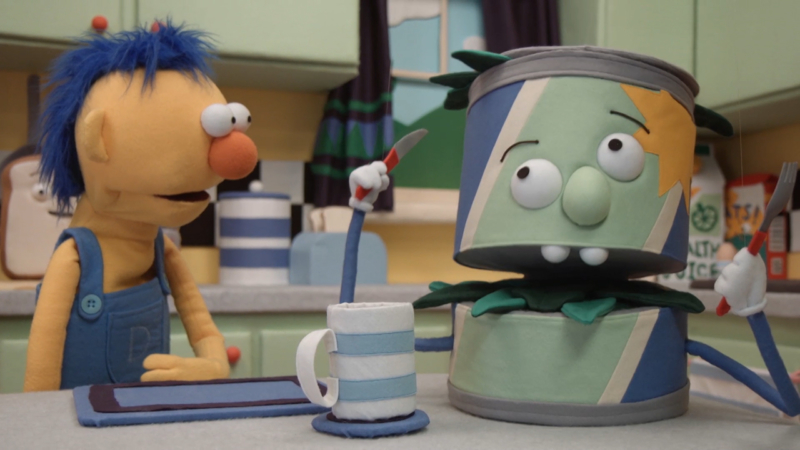
It introduces Graveyard Gil, a horror host puppet who leads in the main film Head, of campers in the woods of New England, who is a smarmy bastard and offers personalised dynamite alarm clocks to his viewers. He also has to delay the main feature due to his cousin Ernie, a talking can, being late. This leads a short film by producer Rich Passmore called The Walking Path, beginning with two male puppets watching Night of the Living Dead (1968), a classic but also a title in the public domain, allowing so many to take advantage of its lineage or have it in clips in their own films decades. This short is not very long at all, barring that it involves these puppets walking for food down a dark path at eight pm, only to encounter zombie puppets, which are creepier due to them having no eyes. Honestly, a zombie puppet film would have been interesting in itself, if that is a tangent for this film.

If there is a flaw with Head, it is that these segments do feel jarring, even if they are clearly meant to be here so the production could be feature length. They are a curious tangent, for a film only over sixty minutes, as whilst Head shows some very broad humour, it is a slasher film told in complete earnestness, with only the fact it is cast with puppets breaking the reality. Even that eventually becomes something a viewer can adapt to with ease. What happens if you recreate horror films with puppets? It is an interesting experience, following all the slasher tropes including all the casual chit-chat and banal conversation to set the premise up. The prologue within the main feature itself, where two women and two men are killed as a set-up, does suggest at first this could have been a comedy, but only because puppet sex when depicted is very bizarre, in a fully explicit way with female puppet nudity, but only because puppets usually star in children's productions in the stereotypical view of their acting choices, making such scenes almost a transgression. Taking it seriously in context of lurid eighties slashers however, in films which did the same thing with human actresses, it is less strange if a surprise. That it is the one thing which could turn this film into a parody1 but the rest is entirely sincere.

Head does not become a joke, telling a slasher tale exactly as expected with the female protagonist to the dumb puppet jocks, to the point that hearing them arguing over not bringing the food and drinking all the beer, even telling each other to fuck off, feels more natural as beyond the cast, everything else about the production is a traditional micro budget genre film which never gives away a silly tone. The puppets themselves are well made too, with the actors also their puppeteer, which adds so much to the film. Elmwood Puppets have been in existence since 2001, so they have had a long time to hone their skills, something which means I really would like to see what the group does in their other productions2.

It also helps that, whilst playing to the tropes, they have work around the puppets' limitations which changes what can be done in terms of slasher film clichés. On one hand you can be resourceful, such as have close-ups of a car to simulate driving, or closing in on a DIY store shelf with the camera when someone off-screen ominously buys an axe.  On the other hand, you cannot have chase scenes, unless you were to painstaking create them or have full sized costumes for close-ups, and have to rely on more dialogue to limit puppets' physical acting abilities. This is actually an advantage, and finally explains where my ambivalent attitude to slasher films always came from, in that like action films, scenes of kinetic event meant to cause an emotional reaction like chase scenes rather than dialogue or a narrative progression do not interest me in the slightest. The exceptions feel like they were carefully thought out or are bizarre. This is the reason why I grew to fully admire Halloween (1978), but John Carpenter created such a technically precise and incredible work, and why however I prefer the batshit and weirder entries in the sub-genre, or those with a lot more drama and story to them, hating when they clearly went for the cheap plot twist or a padded out chase scene.

In context of these restrictions is also that, rather than artificial environments, Head is shot in real locations including woodland, the territory frequently used in micro-budget productions but noticeable here in its use. Having this usual environment for this type of cinema with puppets adds a really distinct touch. Even one of the more exaggerated aspects, the surprising amount of puppet decapitation and gore, is contrasted by the actual ghoulishness of the content, especially when the leads finds a tree in the middle of the woods covering in eyeless decapitated puppet heads, the practical effects throughout literal as the cast were created too. [Major Spoilers] All in mind too that, involving puppet Satanists collecting eyeballs to evoke a demon, Head is still very much of the slasher genre in terms of its more exaggerated and odder narratives as they continued onwards, to the point that this retains all the pleasurable aspects of the horror sub-genre and jettisons those I never liked in structure. [Spoilers End]

Barring that prologue, which is an odd inclusion, I have to admire Head. A Kickstarter project, Jon Bristol build his own puppets, and it says so much of the film itself, despite its gore and tone3, that the end credits including him thanking his mother for letting him watch horror films when he was growing up. Despite the possible paradox of a horror film being recreated with puppets, which would usually suggest a parody or humour, that this is deathly serious in tone like other slasher films which is also a benefit. That this curious project also explained my relationship to slashers, and why some I adore are contrasted to those I have no interest in, is something I have to thank Bristol for as he finally pinpointed the problems and virtues for me, all from what he and the production (including the puppeteers) would have to work around. In fact, it suggests further experiments need to be made where we recreate genres with puppets, even with those I like as they are just to see what is boiled down when you have this restriction placed upon them and invention is required. A puppet mountain film, a la The Holy Mountain (1926) for example, or a puppet western. If you the reader actually read the notes below on my reviews, you already know a puppet porn film already exists, so that has already been covered, even if not for everyone...


=========

1) And this is not the first time either puppet sex is a concept, as Deep Throat director Gerard Damiano made Let My Puppets Come (1976), a hardcore film with human actors and puppets.

2) Their website can be found HERE if you the reader are interested.

3) There is some homophobic dialogue, which was the one unneeded aspect, even in mind of a bunch of puppet jocks naturally being jocks, and especially from who are ultimate revealed as the villains. Thankfully, this is not something to completely dismiss Head on, especially if it was simply the case of not trying to write characters that are all likable, just not carefully dealt with.

Sunday, 15 September 2019

Don't Hug Me. I'm Scared Episodes 4-6 (2015-16)

From https://image.tmdb.org/t/p/original
/uMTxurEGfwxTKejuWMf8FC0UgIF.jpg


Directors: Joseph Pelling and Becky Sloan
Screenplay: Joseph Pelling, Becky Sloan and Baker Terry
Cast: Baker Terry as Yellow Guy / Duck Guy / Additional Characters (voice); Joseph Pelling as Red Guy (voice); Becky Sloan as Lamp / Spinach Can / Sketchbook / Additional Voices (voice); Royngtt as Colin / Additional Voices (voice) ; Kellen Goff as Additional Voices (voice)

[The following is a continuation of a review covering the first three segments of this web video series. Follow the link HERE to that first review.]

[Some Plot Spoilers Ahead]

Episode 4 is my personal favourite of the entire web series. Already beginning with a delayed gag, expecting another object to suddenly begin singing, it gets off to a great start in which an obsolete computer, down to his electronically distorted voice, starts to go on about the virtues of computers. The virtue of this episode is how it doesn't even need to use the gore and nastiness of before for its creepy horror, instead being working against this in creative ways. This involves deliberately dated glitchy animation, which appeals to my love for obsolete animation, and a slyer sense of humour. The message is pretty obvious too - a computer that never gets around to answering the question the trio initially wanted settled, and the computer world a place of time wasting tasks such as consumerism or "DIGITAL STYLE!!", to repeat probably the most quotable dialogue of the whole series.

At this point, this is without question one of the most lavishly put together web-exclusive productions outside of large conglomerates, and this is worth bringing up in knowledge that the later episodes from two to six, including Kickstarter campaigns, were soon put into production when the show started gaining a fan base, becoming as much a production that showcased their talents alongside with everyone making these props and characters. Episode four does start to build to a larger scale story as well as Red Guy, our most matter-of-fact figure with his deadpan rebuttals, ends up breaking out of this reality and in a curious set of circumstances literally has his head explode. The result of this plot thread is open to interpretation, but it offers a lot of material to keep the series afresh, especially as this figure has the most dynamic plot thread onwards, even if he's not actually in Episode 5 barring the end credits.

From https://i.ytimg.com/vi/dWGBNC0roEs/maxresdefault.jpg

Episode 5 is a flashback to the ghoulishness of the first half, but with knowledge of the series building, it makes a good follow on. If anything the joke's strong on the get-go as, with Duck and Yellow Guy being tormented by a pair singing about healthy eating, something which I can't help is openly mocking fads as much as it is a gabled lesson as done before in the series, as they contradict themselves, recommend white sauce as a staple diet one minute and not the other, and have a convoluted diagram of the body being represented by a literal house where good food stays for a party. The nonsensical lessons grow revisiting this web series, in that fan theories can have a detrimental effect on what could have intentionally been written as nonsense on purpose, the completely illogical still able to be intelligent and a critique of society in how their guides to people can be up to question if holes are punched into their logic. One interesting idea, suggested by YouTuber Inside the Mind1, which evokes this is how, in his idea the series is about growing up, that the show comes from the perspective of a child, the lessons coming off as nonsense as kids might not understand the words spoken to them, which is a fascinating take on from one of the show's funniest and more rewarding aspects.

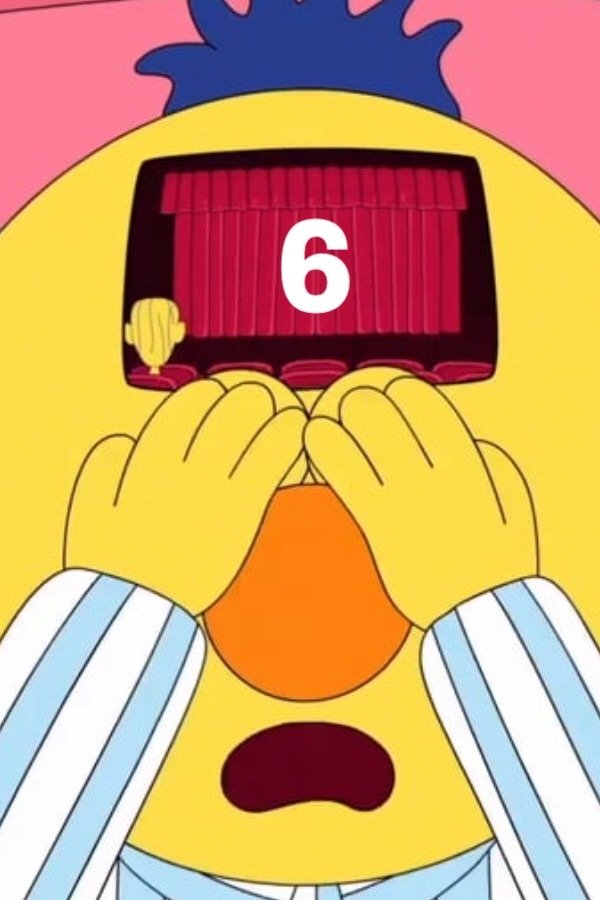
Episode 6, which was the conclusion before an announcement of a series was brought up n 2018, ends on a very different note. Notable there's a suggestion that there's another world, shot in a realistic aesthetic, where Red Guy lives a banal life working in an office. This has made a healthy amount of speculation about what the Episode's about be created, which isn't to deny considering it's a bold choice that would've led to these theories just in the sudden change in reality that's taking place. That the final episode, without spoiling it entirely, as the Yellow Guy is left in the original house tormented by various singing figures, involves the plug being pulled literalised is with a sense of built up spectacle, a reset button that concludes in a logic of its own.

Episode 6 was also built up to even as far back as Episode 2, with the series having various cameos by Roy Gribbleston, a figure painted as Yellow Guy's father who even had a production credit on the Don't Hug Me... episodes themselves, adding layers which clearly left a lot unsaid to tease the viewership. Certainly this web series builds to a great conclusion, a risk taken with almost a pastiche mood of David Lynch felt throughout, such as with Gribbleston floating along at one point with a comically stretched arm. There's also a clear influence from British comedy, Red Guy in an office pissing about with a folder, as if it could sing, much to the bafflement of his similar looking co-worker clearly indebted to post 2000s comedy.

From https://blinkinkcdn.s3.amazonaws.com/_wide_800/Becky_and
_Joe_DHMIS_5_H264.00_01_19_14.Still002-copy.jpg

Don't Hug Me. I'm Scared
is an applaudable project, especially now on revisiting it I can move beyond its initial premise of perverting this type of children's show aesthetic and see what it was built like. A lot of questions were left open to what it actually means - interestingly, as Inside the Mind points to, Joseph Pelling and Becky Sloan co-wrote an episode of The Amazing World of Gumball called The Puppets (2017) in which the protagonists are tormented by their childhood toys and end up walking away from their childhood memories to grow up, an interesting comparison to make with some of the symbolism found here. Admittedly, there's also a lot of speculation that means taking this and any idea with a pinch of salt, especially as the lead creators aren't telling us anything. For me, even if it wasn't the intention of the first episode, there was clearly a lot of satire about children's programming peppered throughout, and certainly when we get to the final, once you start bringing in alternative realities when Red Guy is being heckled on karaoke night for trying to start an edutainment sing-along, you are playing into the idea for me of the original context being either a nightmare or a trap to escape.

Also, it is interesting to see a production which could've easily been dismissed, as I initially did, as another web video that just turns children's iconography into nightmare fuel. In comparison, this is the high bar, a high quality labour of love which got more idiosyncratic for the better as the sequel episodes were created. Another question is left about the promise of a TV series, an entirely different structure to work with and certainly an entirely different conversation to have if it ever happens...

Abstract Spectrum: Grotesque/Surreal
Abstract Rating (High/Medium/Low/None): None


From https://i.redd.it/ii1x619ae0uz.jpg

Thursday, 12 September 2019

Don't Hug Me. I'm Scared: Episodes 1-3 (2011-2014)


D
irectors: Joseph Pelling and Becky Sloan
Screenplay: Joseph Pelling, Becky Sloan, Hugo Donkin and Baker Terry
Cast: Joseph Pelling as Red Guy / Additional Voices; Baker Terry as Yellow Guy / Duck Guy / Additional Characters; Becky Sloan as Notepad / Additional Voices; Royngtt as Tony the Talking Clock / Shrignold / Additional Voices
[UK]

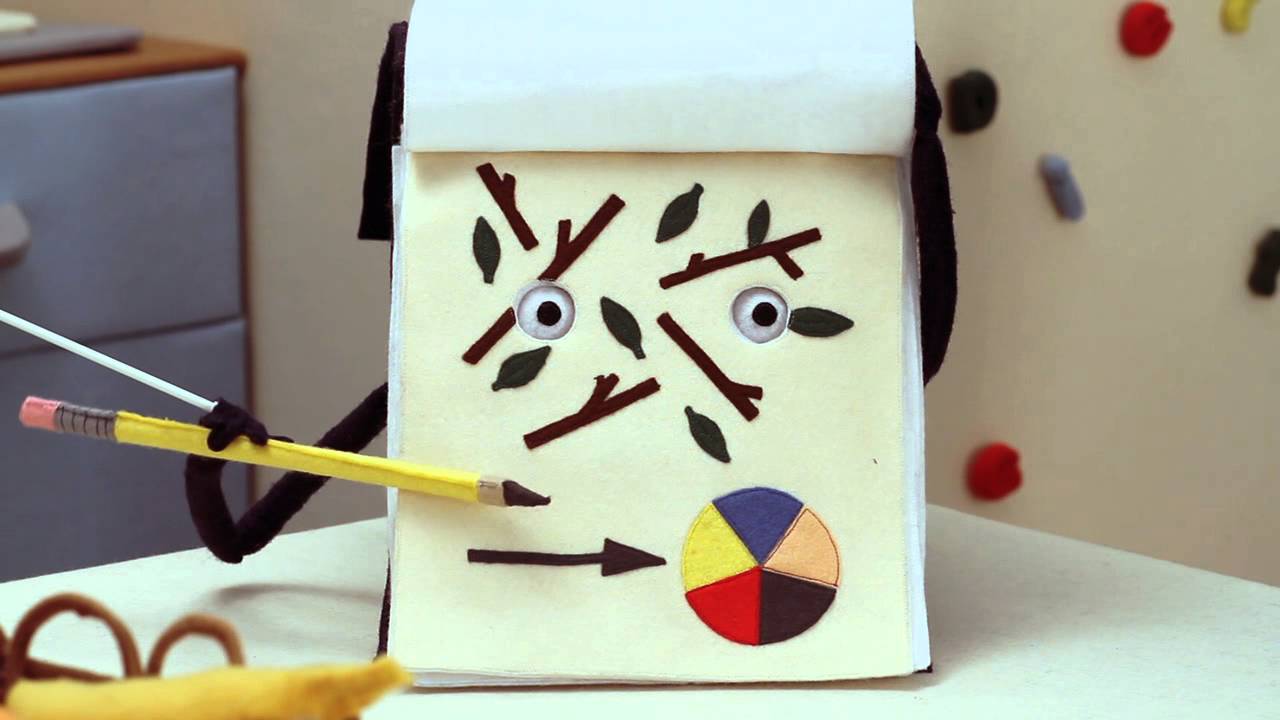
In a room, a red puppet with a mop face, a yellow humanoid puppet, and a green duck puppet are sat around a breakfast table in a kitchen. Wanting something to do, suddenly a notepad comes alive and starts singing about being creative. Very much a children's edutainment show barring the fact it tells the yellow guy green is not a creative colour.

That's mean, but nothing prepares you for the short to end on a nightmarish freak-out involving a cake made with blood and organ meat, or glitter art with an actual heart. Admittedly, the power has been lost now we've corrupted the image of children's entertainment over parodies, mock films and even an officially sanctioned horror film where the Hanna-Barbera characters the Banana Splits are sociopaths. But Don't Hug Me. I'm Scared became something much more, all stemming from this first short film; reflecting back on the entire project, by British artists Joseph Pelling and Becky Sloan, whilst sadly the premise of taking a children's entertainment aesthetic and using it for darker material has been driven into the ground by now, the success and attention this short had lead to five sequel shorts which grew in creativity and layers.

First of all, let's nip the theory in the bud that this is all a metaphor for how corrupt children's media is. It became popular from a YouTube channel The Film Theorists, and whilst the idea does have a subconscious weight, where we should question what our children watch, I a) prefer my surreal work to not have oversimplified meanings, and b) many details complicates this all. Noticeably, according to a Motionographer interview, Becky Sloan likes this type of children's edutainment, and that the project was originally to mock the idea of teaching creativity, the Sesame Street puppet aesthetic only coming afterwards1. There's also the fact that since 2018, the duo have plans to make a TV series with these characters and world which undercuts this entire theory they hate commercial television.

From https://i.ytimg.com/vi/9C_HReR_McQ/maxresdefault.jpg

Instead, there's a lot more interest material to unpack without ever caring to explain what the shorts are actually about. The series got more interesting when they aren't about shocking the viewer, the first episode despite beingthe most famous one of the weakest for me when the others later got more peculiar. The production without a doubt however is exceptional, one of if not the best YouTube made production I have ever seen even over what insane lengths Fatal Farm's Lasagna Cat got to. A world of felt and puppets is constructed with what would've been time consuming and difficult to put together, a history between Joseph Pelling and Becky Sloan in short films, music videos and even an advertisement for St. John Ambulance built around such ideas and trademarks. The comment earlier belay how sadly it's a now lazy juxtaposition to have children's iconography cuss, fuck or murder, since the times of CreepyPasta to SFM porn now exist, but it's a bigger challenge that Don't Hug Me... takes and succeeds in through having a legitimately surreal attitude with its style and tone.

I mean, most productions like this wouldn't be this well made, embracing a cute world where everything has eyeballs and looks cuddly until everything goes to hell. Few would qualify as musicals, and have proper and well put together songs parodying the type found in edutainment work. It's a greater challenge to recreate a children's Saturday morning show with this level of detail - bright and vivid, the songs alone perfect in comparison to recreating the kind I like myself grew up with from these shows. I had originally viewed it a weakness how easily the series fell into shock tactics - "death" spelt out in glitter among details in the first short - and the later episodes thankfully went away from this to much more interesting creepiness. But to the first short's testament, it sets this up, possibly to the point viewers over thought theories about it, a sense of playfulness in deliberately adding all the content it has. The idea of this being about the evils of children television feels far less interesting when the surface itself is more rewarding already, knowledge of how this was meant to comment on the difficulty (and inanity) of "teaching creativity" already poignant as the arbitrary views of the notepad don't help at all, something thankfully played with through all the guest stars in this world's surreal lack of logic.

Even the decision to evoke children's television for the initial idea makes sense not as a slam against capitalist television but in style for the theme - how many shows did I grow up with, let alone Art Attack or Blue Peter, were about being "creative"? The odder aspects, how it cuts to a digital CGI version of the kitchen as a set, does offer many suggestions, whether it was meant to mean a thing or not, but definitely the ideas initially there are strong, and the freakish weirdness were the bloody icing on the cake.

From https://coubsecure-s.akamaihd.net/get/b72/p/coub/simple/cw_timeline_pic/
4068afb517a/4d8b81c63aa8cbf2fab9c/big_1463806097_image.jpg

In 2014, the second short would appear in Time, in which a clock turns out to be a sadistic. Inherently for myself, the balance of horror and subtler weirdness is stronger, the lyrics and events where the clock's behaviour keeps cutting off more existential thoughts of time becoming enough of a commentary on the inability to think enough on such subjects. There's such a danger to over think material like this, not presume aspects of these shorts were Joseph Pelling and Becky Sloan just coming up with dark or weird ideas without greater meaning, whether abruptly cutting to a bath time against the protagonists' will or the abrupt appearances of fish. That said from what could have had no profound meaning can be itself meaningful instead what it's about - the moment that I'd argue hits a more profound meaning that any attempt at a sociological or political commentary is when the duck suggests time is a construct of the human mind, only for this to enrage the clock whose noise in anger is enough to cause yellow guy's ears to bleed.

You don't need to elaborate on this further; the image of someone preventing a more complex question on an established idea we are complacent of is a pointed comment enough. Arguably, when the clock ages them to decay it's just meant to be the horror, with no intellectual symbolism, as I suspect these shorts were always meant to be entertainment first. But the "jokes" for a lack of a better name themselves hit pertinent ideas just in what they are.

This definitely is to mind with episode three, in which distraught by Duck killing a butterfly, Yellow Guy flees a picnic and meets another butterfly who talks about love. What happens next could be easily be a parody of religious cults as Yellow Guy meets a group who sings to him about one's true love and bonds. I'd argue that its closer to a cult as, honestly, one of the most embarrassing things to witness is bad, one note anti-religious commentary in the midst of a piece of art, especially as it's a dangerous thing to confuse a cult with a religion, religions for all their problematic issues a complex structure of dogma and theology, which becomes more complex when you require spokespeople for the God(s) and their morals can slide in or an organised religion, whilst a cult is usually based on a dubious single figure representing the Godhead themselves, not speaking for the actual God or a series of figures, whose dogma is never about the betterment of people but vapid platitudes without any of the struggle religion usually talks of when informed. Also, there's a sense that, as I'd do in their roles, the creators thought the punch line would be funnier if they were a cult of furry woodland animals who worship a giant rock head, which is legitimately funny.

From https://i.ytimg.com/vi/kcgnilFIw0g/maxresdefault.jpg

And dark too, as the commentary comes not mocking religious ideas but that, for all their singing about a true love for everyone, the most inspired part is a tale within the short told of a deformed boy who hides in a cave with nothing about him ever finding true love being brought up as the tale is said to do, made even more striking and powerful in its corpse black humour in that no one bats an eye to this and just go along with singing. I'd wouldn't be surprised, thinking of this scene, whether the commentary of Episode three had nothing to do with parodying religion or the idea of monogamy, but just to take the absolute piss out of Disney musical numbers, and ones in children's animation and entertainment in general, by imagining the woodland creatures of Bambi and other animation practicing a Wicker Man-like cult.

If anything, the greater question to ask is why this is creepy? There is something inherently odd about children's entertainment when we return to it as adults. I accepted this material as a child, in television to toys, but as adults with the knowledge this material is created by other adults trying to appeal to children, these exaggerated forms and aesthetics are strange. Strange creatures like the Teletubbies, baby faces in the sun and all, for example with their garish colours and odd contraptions were weird, even before you take into account the uncanny valley effect of costumes and puppets. The mind of the child drastically changes when they become an adult, and these strange colours and forms are curious to us grown up as a result. The repetition and order, between games and activities repeated every episode, could become hellish like a rejected Albert Camus piece if you over thought it, but the nuisances and the freedom you gain as an adult make these restrictions striking. The one thing I take from the media theory is how, whilst a noble act to teach and educate children through fun, to teach someone in a way that can become almost patronising and encoding environmental influence is an issue in itself even if the lessons of good morality are noble on the surface. If they are not thought about and prodded at the same time, they become hollow and a trap.

Don't Hug Me... also does play with grotesque things, but its better when its less shock related. Having a picnic consisting of raw chicken legs, whilst leading one to hope the production staff washed their hands after handling it all, is jarring in contrasting real meat against puppet felt in a little, clever detail rather than explicit gore. The idea that the lessons of the guest stars make no sense or are authoritarian in a problematic way is ran with further, and for the better, in the episodes after the third one, and really provides a glorious series of ill-logical but quotable dialogue. A lot improves in episode four to six, the best of this little series of web videos, but the ground work here for the first three were already strong. The difference is that the creators decided to stray further from the gore and nastiness, even if it reappears in Episode 5, with more gleefully surreal and rewarding nightmare fuel. When I get to those final three episodes, these same questions through this review will be asked again, but the initial three, if they were the only ones made, were by themselves exceptional pieces of strangeness.

Abstract Spectrum: Grotesque
Abstract Rating (High/Medium/Low/None): None

From https://forum.callofwar.com/index.php?
attachment/4973-maxresdefault-jpg/

====
1) The interview is linked to HERE.