Showing posts with label Remake. Show all posts

Sunday, 8 September 2024

The Wicker Man (2006)


Director: Neil LaBute

Screenplay: Neil LaBute

Cast: Nicolas Cage as Edward Malus, Ellen Burstyn as Sister Summersisle, Kate Beahan as Sister Willow Woodward, Leelee Sobieski as Sister Honey, Frances Conroy as Dr. T.H. Moss, Molly Parker as Sister Rose / Sister Thorn, Diane Delano as Sister Beech, Mary Black as Sister Oak, Christine Willes as Sister Violet, Erika Shaye Gair as Rowan Woodward

A Night of a Thousand Horror (Movies)


OH, NO, NOT THE BEES! NOT THE BEES!

The perfect introduction to this remake is stating I had wanted to revisit the original 1973 directly to make comparisons, but decided against this as that would put Neil LaBute's film under an unfair shadow cast over it, let alone with the problems this has even if it had been an original premise. Contrary to popular belief though, I am going to argue no matter how ridiculous Nicolas Cage in a bear suit punching people out is, the real folly for this was how generic a lot of this film actually was for me to revisit, a slight horror film which missed out much of its loaded premise of a male cop Edward Malus, played by Cage, going to the island of Summersisle of the USA coast to track down a missing girl in a matriarchal commune.

The original Robin Hardy directed film has to be talked of in some form, and in context, that was the tale of a very Christian police office played by Edward Woodward, sent over to Summersisle off Scotland to a pagan community lead by Christopher Lee, a tale of the conflict of Judeo-Christian values and pagan heritage at a time past the sixties of re-evaluating mortality and spirituality. It was not always a canonical masterpiece, maligned as the b-side to a double feature bill and infamously with excised footage buried in a road under construction. Rebuilt to its intended form, it has lasted, and the issue the 2006 film had, with all remakes and sequels attempting to re-adapt these horror classics, is as with adaptations of classic horror literature, that they should be more what you can bring to them, something that needs to be more a concern then being "faithful". Screw remaking a film exactly, Neil LaBute could have really made his own weird folk horror film from an American's perspective, but instead you probably know how this (and laugh as I admit too) at Nicolas Cage screaming about the bees. Even as a huge fan of Cage who says he is one of the better parts of this production, this film became notorious for his career too.

Even without the shadow of the original Wicker Man over this, a lot of the issue I have is how LaBute made a pretty conventional horror film from the mid-2000s, which I sat through many from that time and was put off by their entire storytelling template even now. LaBute was from the American independent boom with films like Your Friends & Neighbours (1998), which suggested the potential for something very idiosyncratic with this film when it was being produced. These were also films however which lead to accusations that he was a misogynist for content in them, starring the likes of Aaron Eckhart as less than morally white male figures. LaBute, in mind to this, positioned himself in a loaded premise of Cage as the lone male in a world of women, where they are manufacturers of honey with any men he encounters mindless drones. Tellingly though, with Nicolas Cage reflecting on how he originally wanted the ending of the film more gruesomely absurd than it became, with him keeping the bear suit on even for the denouement1, there was a sense that, in another context, this could have been more intentionally ridiculous than unintentionally as it became. The issue of gender politics part of the tonic whiplash this could have used for a point becomes less interesting, or one would hope would be for LaBute as he was the screenwriter as well as the director, because Cage plays his role as increasingly more dubious as he goes on. Considering Cage's character progresses from a heroic figure to become a questionable loose cannon, you see there was a misanthropic edge to all this. The original film had this, where Edward Woodward would be the hero to some, but with others in the cinema likely cheering on the pro-sex, musically vibrant pagans to roast him alive. Even if I became a mindless drone, a man like me would still cheer on the matriarchal cult here, led by Ellen Burstyn, over a man who pulls a gun on a woman to steal her bicycle, even if to rescue his daughter from a sinister cult she belongs.

The issue with the film instead becomes how standard this is, in that you have to wade through a lot of stock scenes of suspense which were the reason I once viewed this as one of the worst I had seen. Cage's character offers a potentially interesting figure, scarred by seemingly seeing a mother and daughter die as a highway patrolman, and reconnecting to an old flame (Kate Beahan) who left his life and whose daughter he is trying to find is likely his too. Cage plays this as a neurotic, as this nods to the question whether this community, said to sacrifice someone for replenishing their harvest, really believe that would happen and would attempt to try it out. Unfortunately nothing is made of Cage's mind in context of this, buying positivity self help tapes and someone with clear emotional issues, a type of character Cage would work with well, as he is very good at playing neurotic and morally unstable figures. I admit a bias to him, but his performances makes sense, already someone who hallucinates and is anxiety ridden, only to become more deranged and eventually expose himself with misogynistic comments. Even before the end, he shows as Woodward a sense of superiority that makes him a literal phallus, and that sense our hero, even if the mission is a noble one, is the wrong person for this. In another work this moral ambiguity, as the first version of this film, would be compelling.

This film was not helped by when it was made, absorbing a lot of the trademarks of horror films coming from Hollywood I grew up with at the time in the mid-200s, including coming at a time when a theatrical cut and an uncensored "mature" cut existed to sell the HD discs. For what could potentially be a problematic film in subject, it becomes not really about "evil feminists", but one where the feminist cult could be replaced with a vague one with any genders in power. Nowadays Cage's increasingly notorious line readings feels on point, even if he was the only one to read the tone right, to someone losing his mind as he goes, whilst my problems are from that everything else, that did not become on online meme, plays it too safe as a horror film. This leaves the middle acts to the bad habit in horror films I saw from this decade, minus jump scares, of pulling the carpet under your viewers over and over until it loses all weight to them. Be it false attempts to put Cage in peril to the many times he thinks he is seeing his daughter, only to realise he is dreaming, it is the tone of an action film in an inappropriate position, causing one to react as for an action film when we should only accept this pacing tone for a horror action film or a really good haunted house equivalent. This is the problem here as we never really get more about Cage, barely touching his character, or Ellen Burstyn as the leader of this commune of women and how they exist as more than just a sinister entity that may burn children, something explicitly part of the virtues of the original 1973 film even if they had not had the inspired decision to cast Christopher Lee who could provide sympathetic gravitas.

The thing about the original 1973 Wicker Man too, why it likely did not succeed back in the day but has its legacy, is that it is an unconventional and eccentric film. The plot is far less important in the original to its themes, its sensuality, and how it is technically a musical, as famous for its folk music and traditional songs as the performances and shocking conclusion. None of this is to be found in equivalence in the 2006 Wicker Man, and it is telling Cage became the iconic figure here because everything else is safe and/or not standing out at all. [Spoilers] Yes, it is pointlessly lurid, to a sick humoured level, to break his legs and sting him with bees, before putting him in the Wicker Man, but Cage screaming “Killing me won’t bring back your goddamn honey!” is among the few moments of personality, even if I laughed, because it has an energy to it. [Spoilers End] The notoriety of the film does feel over the top with hindsight, especially as whilst Nicolas Cage was able to ride the wave of this, Neil LaBute whilst still thankfully working after this probably took a shot in the chest with this as a big studio film for him, an albatross he would be stuck with. In the end, it is bad, but not infamous, just generic.


=======

1) Nicolas Cage on his legacy, his philosophy of acting and his metaphorical — and literal — search for the Holy Grail, written by David Marchese and published for the New York Times on August 7th 2019.

Sunday, 8 December 2019

Suspiria (2018)

From https://m.media-amazon.com/images/M/MV5BMjQ2MTIy
NjM2MF5BMl5BanBnXkFtZTgwMDE3NDMyNjM@._V1_.jpg


Director: Luca Guadagnino
Screenplay: David Kajganich
Based on Suspiria by Dario Argento and Daria Nicolodi
Cast: Dakota Johnson as Susanna "Susie" Bannion; Tilda Swinton as Madame Blanc, Lutz Ebersdorf as Dr. Josef Klemperer, Mia Goth as Sara Simms, Angela Winkler as Miss Tanner, Ingrid Caven as Miss Vendegast, Elena Fokina as Olga Ivanova, Sylvie Testud as Miss Griffith, Renée Soutendijk as Miss Huller, Christine LeBoutte as Miss Balfour, Małgosia Bela as Mrs. Bannion, Fabrizia Sacchi as Pavla, Jessica Harper as Anke Meier

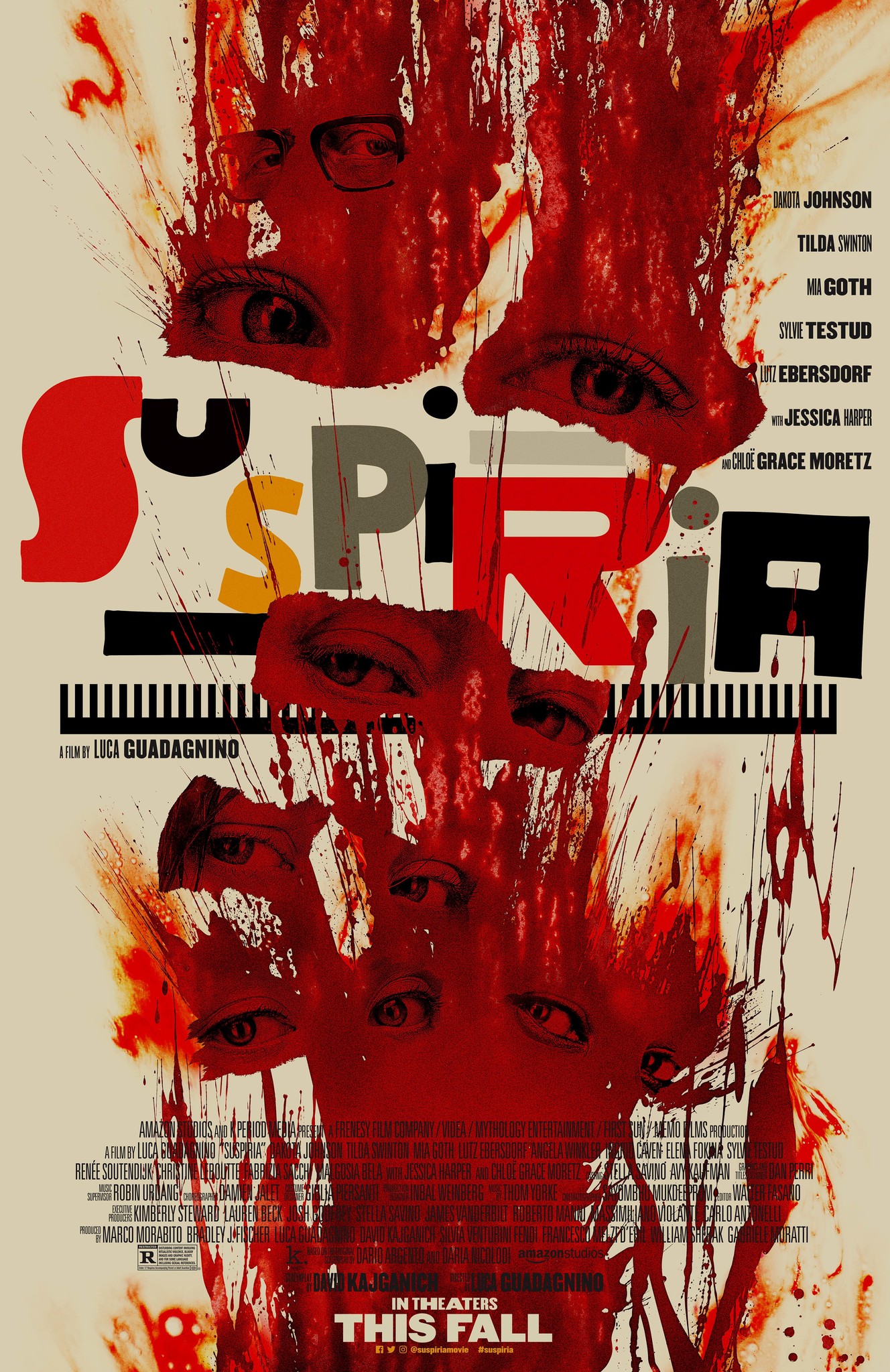
Suspiria has been the subject of many planned remakes for a long time. Dario Argento captured lightning in a bottle, when taking a story from his then-wife Daria Nicolodi and, combined with Technicolor and fairy tale logic, created a true one-off in horror cinema. Even before we get to the remake that came to be, he'd follow it up with Inferno (1980), the film I've held as my personal favourite from the "Three Mothers" trilogy, and the unfortunate Mother of Tears (2007), which wasn't exactly the finale we hoped for. I'd be remised not to mention the unofficial third film, Luigi Cozzi's The Black Cat (1989), a lost work (as in trying to locate a pristine version) which cashed in on the films by making a film in the same lore, which befittingly was a cash-in made by the Italians themselves before anyone else could do.

The remake concept circled around David Gordon Green, an American director who began as a critical darling with dramas like George Washington (2000) before his curious journey into genre cinema from the late 2000s on; he'd never make his version, but did effectively remake Halloween H20 (1998) as Halloween (2018), trying to be the proper sequel to John Carpenter's 1978 film. There was talk of a Japanese animated version of Suspiria1, which is befitting knowing Suspiria was insanely popular in the country; the choice of studio, Gonzo, might've been a bad choice as, whilst known for a lot of Western co-productions and glitz, the company who started properly in the medium in 2000s were notorious for work which dropped in quality halfway through, a CV barring some gems and loved shows full of critical failures, and would eventually leave the 2000s so economically crippled they're a shell of their former selves.

The person who finally got a Suspiria remake done was befittingly also Italian, another curious choice as it was filmmaker Luca Guadagnino, who made his announcement of this plan at the 2015 Venice Film Festival. He beforehand was hailed for a string of world cinema dramas, including collaboration with muse Tilda Swinton, which doesn't scream out horror cinema in the slightest. It's the same as when Werner Herzog remake Nosferatu (1922) in the 1979 version, the German director not known for genre films wishing however to remake what he held as a masterpiece of his nation, not however without taking a hugely different tone though it followed the same narrative. Suspiria 2018 has the template, but is a very different animal.

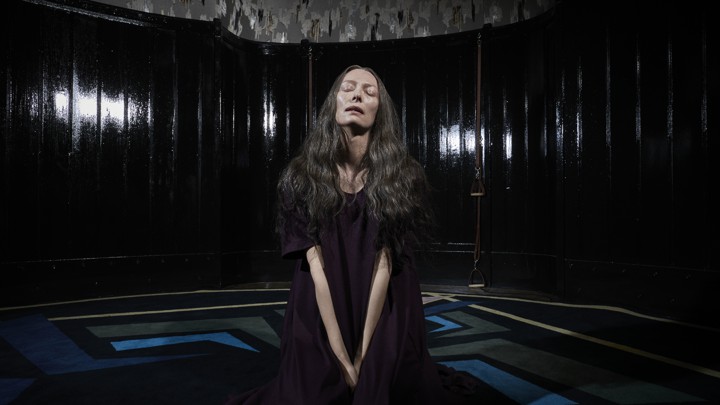
Six acts (plus an epilogue), shot by Apichatpong Weerasethakul's cinematographer until Uncle Boonmee Who Can Recall Past Lives, Sayombhu Mukdeeprom, which means a man behind some of my favourite films is on staff, as if Thom Yorke of Radiohead, who was imposed with the impossible challenge of topping Goblin's one-of-a-kind score for the original. Guadagnino also decides to flesh out the premise. No longer has hyper-coloured, but a lush muted series of browns, blacked surfaces and natural reds make up this new world, and still set in Berlin. This version openly decides to reference the political turmoil of the era, set around the time that the Baader-Meinhof group, an extreme left wing group who terrorised West Germany in the seventies with bombings and crimes, eventually collapsed. Tapping into a moment when for this group, who were like rock stars in appearance, violently dissolved, in an era of extreme political chaos in countries like Italy and Japan around the world, this Suspiria in its two and a half hours is filtered through the tone of the real world of nothing being grounded and prone to destruction, even the witches coven of the original Suspiria now imagined as an actual community, seen even voting for their leaders, that can still collapse.

From https://m.media-amazon.com/images/M/MV5BZWY3NjBhYWEtMzczZi00ZmZkLWE0ZWIt
NmZkNzBlMzIzYzM2XkEyXkFqcGdeQXVyMzU4ODM5Nw@@._V1_.jpg

Probably the oddest aspect though is that Guadagnino, in love with the original film, eventually embraces the lurid Italian schlock of gore to a surprise. He adds a greater weight of severity before this. The ballet school that is secretly a witches' coven is seen from their perspective from the get-go, with meetings and leadership votes, one which is had to survive the likes of World War II and Nazi rule as a matriarchal group but with the issues as a clan whose methods to keep themselves safe include murder will eventually be their downfall. Tilda Swinton, who has been with the director since his first film The Protagonists (1999), is the figure of Madame Blanc, whose work explicitly pulls from avant-garde dance history as a character who, when not being a witch, is trying to innovate new work in the medium. The 1977 Suspiria really didn't have any dancing to speak of, merely a setting to set-up the actual plot, but the 2018 film makes up for this and even manages to have a death by it, probably the most gruesome of them all with a relish Argento would love, wherein a figure is contorted from afar beyond recognition. That scene, the first of these in a very bloody film, is also a reminder that whilst Guadagnino is taking this very serious, he eventually is willing to step out of his usual type of cinema into the over-the-top luridness of his fellow countrymen.

He doesn't pull punches, bless him, and this is where the 2018 Suspiria really won even a person like me, suspicious of this entire premise before seeing the film, because Guadagnino as an outsider to horror in his career doesn't play safe and can bring an entirely different perspective that offers fresh territory. He goes for the gore and grotesquery, the weird nightmare sequences and even a nude demonic dance ritual in the ending, all whilst fleshing out a world of his own from the initial premise. That the witches have a power struggle, bitterness felt with the fact that despite their goals as much being a feminist one, who survived through the Nazi patriarchy, they're devolving into violence and arguing that is as more likely to rid them of students as it is going to harm them. And Susie Bannion this time, our American protagonist now played by Dakota Johnson, is a curious figure with a deeply religious background she fled from, almost turn of the century when we cut to her mother's death bed through the film as it's an Amish background, one less like Jessica Harper's curious fairy tale figure of the first film but a more focused, determined one.

[Major Spoiler Warnings]

Since we're not holding back on spoilers, she's actually the real Mother of Sighs, Guadagnino still retaining the mythology Argento built up of the "Three Mothers", three great witches of terror and fear inspired from Thomas de Quincey's Suspiria de Profundis, turning this film into a kind of twist that I'd find in one of the Italian films of movies from a Luigi Cozzi or Umberto Lenzi, with added mass implosion of heads for good measure. It's a pinch of salt whether each viewer will like this, alongside all the other details throughout, but I have softened to it as it comes from a director whose love for the original film clearly spurred him to want to do something very different, and decided to my glee to embrace the kind of lurid pulp of directors I have mentioned, far from dismissing, I have always loved even though they can be ridiculous. He also finds a way for Jessica Harper herself to make a cameo which brought the hairs up on the back of my neck, a real of sign of tribute and actually beautiful in that it's for plot importance to.

[Major Spoilers End]

In one of his other curious choices, whilst it would've been nice to have Udo Kier return to have an abrupt exposition scene, we have Tilda Swinton in two roles, between Blanc and also an elderly male psychologist Dr. Josef Klemperer, whose investment in the ballet school's underbelly stems from the loss of his wife in their youth during WWII. Suspiria 2018 is long enough this character has his own back-story and conclusion, a journey where he'll eventually learn the truth of her, which is actually a sad scene even if tonally it might seem odd as an epilogue after the gory madness that transpires, something that strangely is reminiscent of Brian Yuzna's Faust: Love of the Damned (2000) but significantly better produced. You can tell its Swinton under heavy makeup effects in her voice, even if the prospthetic effects team behind the disguise deserve an honorary award in achievement; when the choice was made I don't know, buts its definitely a fascinating choice to a film that is rife in idiosyncratic choices, and Swinton is good in both roles. I mentioned "muse" before, as she has been in a few of his films, and it's fascinating to know that once, before she was ever a cultural intitution by herself, Swinton was a muse for Derek Jarman, as unique a British filmmaker you could get. Her career has never ebbed, never become predictable, as who can claim to have a Bela Tarr film and a Marvel Studios role under her belt aside from her?

From https://cdn.theatlantic.com/assets/media/img/mt/2018/10/suspiria_16_427_AB_SUSPIRIA_
08_0298_5_g_Fandango_rgb/lead_720_405.jpg?mod=1540316161

In terms of point, the original Suspiria was a fever dream, an intense haze nightmare where everything onscreen is symbolically kicked off when Jessica Harper exits automatic doors out into Berlin from the beginning. Suspiria 2018 is a reflection on its existence, very much a dialogue to its older self, but you can see it as a new direction with the same material that can exist by itself, really what a remake should do. Envisioning this film, still set in the late seventies, with lieu to real life politics, it images that witches would have to go through the real world as Germany itself did. The references aren't pointless, as the likes of the Baader-Meinhof group existed because ex-Nazis were still getting in important seats in Germany, not to mention (whilst less references) this is a fractured country, where Berlin itself in the middle of East Germany was a curious entity part of West Germany but geographically was an island surrounded by Soviet occupied land. An irony is not lost either in that, as the Baader-Meinhof group should have been seen as a heroic group, but were just violent and completely indefensible because their ideals were twisted into death, the ballet school's ideals are corrupted by their need to kill and silence.

Even the ballet is now like an incantation each time it's seen, vibrant and (literally) violent in how the female bodies distort and move. When Blanc says it can no longer be beautiful but reflect the world, it's a literal glance of the political world referred to. The failure of the Baader-Meinhof gang itself can even be parallel to the failure of this coven, which has now devolved into "removing" patrons (i.e. leave limbless ballet students like husks in the basements) and their splitting sides like how eventually, when the Baader-Meinhof group leaders eventually committed suicide in prison, their flanks split into significantly weaker pockets.

That this is still a horror film is the really curious thing. Arguably, it belongs to this controversial idea of "elevated horror", a term used for films like The Witch (2015) which is a catch term that can dangerously denote films for people who don't want to be embarrassed into admitting to liking horror films. This Suspiria however is still, for its high-mindedness, still full of things that'd be found in Italian b-movies of the eighties, which is a fascinating curiosity I have to admire. I have to admire, in general, the balls Guadagnino had with the project in general. Remakes have always had a stigma to them, something I attest to as I once embarrassingly tried to put a petition together to stop the American remake of Let the Right One In (2008) before even seeing to the Swedish version, a folly of dumb youth. A lot of the issue, admittedly, was the 2000s-early 2010s I'd argue when remake usually meant lazily putting together the films of yore in the same ways but less well. A little difference goes a long way - even flair, as whilst no way near as good, Gore Verbinski could make a 2002 version of the 1998 Ring film that was his own2 - but fully embracing a new tone is something to admire.

Yes, Thom Yorke can't top the Goblin score, but Goblin's score is still one of the best ever created, and they had to hire the lead singer of Radiohead to even attempt the challenge, creating a droning and eerie piece of art in itself. Yes, the cinematography of the original is still spellbinder, but hiring the man who shot Uncle Boonmee, a Thai cinematographer of dreamlike imagery, is an inspired choice as, alien to the territory and time period, he creates something both oppressive yet strangely luxurious. The production and design staff were clearly given carte blanche to work, and whoever was hired to be the dance choreographer embraced their inner Pina Bausch in terms of ritualistic bacchanal rites. So yes, it's a film that has understandably been divisive, but my God, Luca Guadagnino gave it a shot and I have to applaud that.

Abstract Spectrum: Grotesque/Nightmarish
Abstract Rating (High/Medium/Low/None): None

From https://m.media-amazon.com/images/M/MV5BMTBkMGNjMDQtYmYwNS00YTllLWJhM2
YtYTc3YzFhMzFjMTJmXkEyXkFqcGdeQXVyMzU4ODM5Nw@@._V1_.jpg

====
1) Reference HERE 
2) Plus South Korea remade the film in 1999 with The Ring: Virus, so let's not kid ourselves in the proliferation of remakes being inevitable and a global language.

Wednesday, 4 December 2019

Psycho Vs. Psycho (1960/1998)

From https://fffmovieposters.com/
wp-content/uploads/74343.jpg


Directors: Alfred Hitchcock (1960)/Gus Van Sant (1998)
Screenplay: Joseph Stefano
Based on the novel by Robert Bloch
Cast: Anthony Perkins/Vince Vaughn as Norman Bates, Janet Leigh/Anne Heche as Marion Crane, Vera Miles/Julianne Moore as Lila Crane, John Gavin/Viggo Mortensen as Sam Loomis, Martin Balsam/William H. Macy as Milton Arbogast, John McIntire/Philip Baker Hall as Sheriff Al Chambers, Simon Oakland as Dr. Fred Richman/Robert Forster as Dr. Simon Richmond
Obscurities, Oddities and One-Offs

[Spoilers throughout. Even if this is Psycho, one of cinema's most iconic films twice over, doesn't mean I still need to add this.

So Gus Van Sant tried remaking Alfred Hitchcock's most famous film shot-by-shot? Well, that's in itself a fallacy, something of an illusion as upon rewatching Psycho from 1960 in the morning, revisiting Psycho from 1998 in the evening the same day. There's a strange déjà-vu but so much between them which is different; to shoot an exact shot-by-shot film would have meant dialogue and concepts of the past were left in1, the film shot in the past fully transferred into the nineties (money not changed to a higher value, no Rob Zombie heard in the scene when Marion Crane changes her transport at a used car showroom). It would mean the dialogue was not changed (the "transvestite" line from the psychoanalysis's speech about Norman Bates' back-story not being removed), but also the pace and tone would be kept, which would be strange to experience as over thirty years of influences changed nineties Hollywood cinema considerably.

Its stranger to compare the two's origins. Psycho was a risk for Hitchcock and we forget that, ignored that he had to make the film with his TV crew from his television work, in monochrome rather than the rich Technicolor of his fifties masterpieces, because the sordidness of the material he was adapting was controversial. In an alternative world, he would've fell into the fate Michael Powell did when he made Peeping Tom, also released in 1960, a transgressive film that appalled people and kneecapped his career. Hitchcock, with his promotional ballyhoo, managed to have an incredible hit from a risk in his career. Psycho in 1998 is created by a director, Gus Van Sant, who after a beginning in American indie cinema of the eighties managed to have a huge Oscar winning hit Good Will Hunting the year before; when given the chance to, he decided to spent his metaphorical success coins on that infamous concept I yet love, of artistic follies. The kind where Steven Spielberg makes 1941 (1979), a WWII comedy epic, or Richard Kelly made Southland Tales (2006), the bugnuts zeitgeist of mid 2000s culture, the absolutely divisive production usually hated when first release that get their little cults as time passes.

From http://www.thedoublenegative.co.uk/blog/
wp-content/uploads/2015/03/Psycho-slider.jpg

Here, given the keys to make whatever he wants, Van Sant had a thought experiment knowing what films Universal owned the rights to, tried to remake Psycho but almost exactly. It's actually insulting to call his film "Psycho (but in colour)", as colour drastically alters the mood. This is nineties cinema colour, bright and layered, in a time when people wore chartreuse coloured clothing, shot by Christopher Doyle; Doyle, who made his name working with Wong Kar-Wai, is cinematography's Keith Richards, in lifestyle and look, as good with a camera as Richards is with a guitar. The colours are something to cherish in a film full of questions, quirks and misfires; a vibrant and almost plastic at times that, when the original Psycho credits are recreated in green, its an appropriate introduction to how colour itself changes so much of this world before you get to any other adaptation detail.

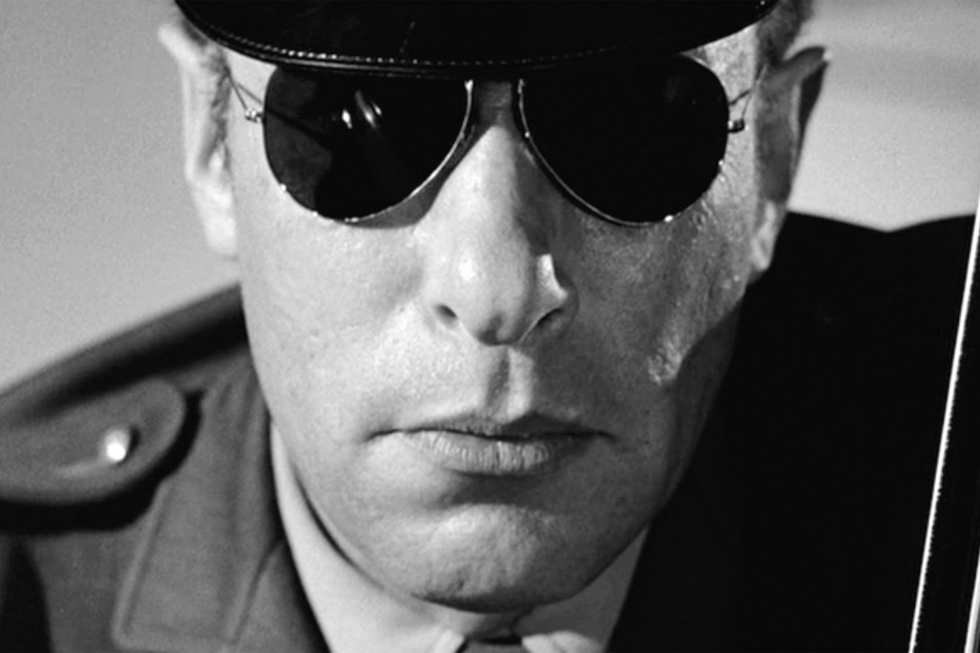
I'll be blasphemous and say aspects of the 1998 version are superior to the original even though it's ultimately an utter failure. Psycho, whilst a classic worth of praise and canonisation, is not remotely Hitchcock's best work for me, falling a little too in pace when the characters of Sam Loomis and Lila Crane search for her sister, dragging somewhat for a brief bit in the middle and just a series of exposition scenes. The opening skyline shot is awkwardly edited to transition to Marion Crane and Loomis in a motel, reflected that Hitchcock would have appreciated the panorama shot done in the 1998 version. (Whilst not better than the original, I like the 1998 version ending from the car being dragged out of the swamp to linger over the police and the countryside under the end credits, all done with a surf-like guitar piece). And knowing how the exposition dump of the psychoanalysis in the finale is infamous in how long it, to clarify material rarely covered in thrillers at that time, casting Robert Forrester in the role was perfect. In fact, both films can claim to having a pair of Milton Arbogast figures, the detective hired to find Marion, that no person should have to argue about in terms of the best; when one is Martin Balsam, famous for 12 Angry Men (1957), and the other William H. Macy, both are as good.

From https://thejar.hitchcock.zone/files/misc/Psycho1998/py98_005.jpg

Let's talk about the casting. This for me is where remaking Psycho is a poisoned ideal in that an actor who can be great is unfairly forced to compare to someone else, emphasis on why with a story that is repeated a lot (let's say Shakespeare for an example) an actor returning to King Lear or Lady Macbeth must be allowed to breathe in the role even if they say the exact lines as everyone else. Here, the attempt to remake the film of before almost exactly is a trap, where in fact you need an actor to bring their own personality even if the canon is the same as before. Viggo Mortensen I'd argue, honestly, is more interesting than John Gavin as Sam Loomis, an issue in Hollywood's past that they forced many actors into bland white bread figures2, whilst Mortensen comes from the period onwards where you could be both a pin up icon but also a serious character actor.

Julianne Moore's Lila Crane however raises a modern concern that, to make you for the marginalisation and sexism of the past, you still need to keep a balance between a credible character as well as a strong one. Even if she's allowed to even kick Norman Bates in the face at one point, the role comes off as patronising than what Vera Miles did in a more sedate version. Also, what was the deal with the headphones? That was an odd decision - she even says she has to go get them even though they are going to Bates Motel in an unintentionally hilarious line of dialogue - and feels like a merchandise tie-in gone wrong; her entire look and attitude, brash in casual clothing listening to her canary yellow Walkman everywhere, would make more sense if the character was a teenager, not Julianne Moore.

From http://cinemajam.com/mag/wp-content/uploads/2015/04/325140756.jpg

Then there is Marion Crane and Norman Bates. Amy Heche tried, though on revisiting the original I realise Janet Leigh's performance is incredible. There is a nuisance when Crane is on the run with the money which Leigh gets perfectly, balancing hesitance and suppressed panic, a stress to her voice when confronted with a police officer when found sleeping in her car that sadly flees out of Heche's hands in the same scene. Psycho is built on the gimmick that Marion is killed halfway through, to the point that Hitchcock had marquees in cinemas saying not to spoil the ending, to even bar people from the cinema if they missed the beginning; but Leigh is as vital as Anthony Perkins is, to the point its part of the reason the original Psycho flags for me, as whilst Perkins as I will get to is exceptionable, once Leigh is gone the film is following actors for the most part who aren't as compelling.

Then there is Norman. Vince Vaughn cannot play nervous - he is like a school jock, not just because of his height but his natural charisma, the nervous laughter more sarcastic. He is good when his Bates gets angry or sad talking about mental asylums or his mother's illness, an actor who was mainly known for comedy who could have untapped potential in this, something to bear in mind as he is clearly S. Craig Zahler's muse in films like Dragged Across Concrete (2018). He has unfortunately been forced to try to recreate Anthony Perkins' role, when his Norman Bates is arguably one of the best horror film performances in American cinema, arguably of all horror cinema. It is tragic he was typecast as a result of this film's iconic nature, unfortunately horror having a narrowness surrounding it when actors capable of potentially more great performances, like Perkins, really don't get a lot of choice after they create an iconic character in horror cinema. His Bates is nervous but charming, a gentleman at first only to slowly unravel so much neurosis and untreated psychological damage to cause a person to worry. The entire speech leading to "we all go a little mad sometimes", despite having seen this film many times before, scared me this time due to his performance. As a horror fan who would argue scaring a viewing is not the most important thing for the genre, when it does frighten me it's something of a mercurial success to experience, next to Brad Dourif's performance scaring me even in the theatrical cut of The Exorcist III (1990) in terms of both being about subdued, nuanced roles; also trust me, whilst the exposition scenes do drag, when Joseph Stefano's script, adapted for the 1998, is allowed to add flavour to itself, its full of many sparks of whit.

From https://www.townereastbourne.org.uk/wp-content/uploads/
Screenshot-Psycho-1960-Hitchcock.jpg

Neither helping Vince Vaughn are the really bad decisions Gus Van Sant made, the moments where Psycho 1998's reputation is understandable due to them. He flubs the shower stabbing, but considering how intricate and difficult the original was to put together, recreating it would be a challenge for anyone. Even intersecting odd details in subliminal images in the murder scenes - clouds, masked nude women, the strangest a sheep on the road - just come off as playful. Bates masturbating to Marion through the peephole and Lila Crane finding a porn mag in his childhood bedroom however are dreadful. They remind me that, controversially, I hated Bloch's original source novel when I read it, thinking Hitchcock's film is superior because he gutted out all the contrived clichés about Norman Bates, who was original balding and overweight, studying occult texts and every unnecessary detail that is an annoying aspect of horror storytelling, something evoked as the sexual undertones Van Sant adds fell like these same heavy handed mistakes.

So Gus Van Sant's Psycho failed but I prefer we would talk of it more even as a curiosity one. I am becoming more intrigued by Sant as, whilst he has made "conventional" dramas, this is a man who jumped genres and types of film regularly. Starting in LGBT low budget cinema with Mala Noche (1985), he has done black comedy in To Die For (1995), oddball premises like Restless (2011), the entire Bela Tarr inspired "Death Trilogy" which absorbed slow cinema aesthetic, or reteaming with Christopher Doyle again with Paranoia Park (2007), a hybrid of the Death Trilogy and his roots in a skate mystery drama. His Psycho is infamous, but its admirable in the way, whilst very different, very comparable to Luca Guadagnino's idiosyncratic remake of Suspiria (1977) from 2018, two art house directors taking a risk touching sacred cows in horror cinema but at least making something memorable between them. It is also ironic knowing Hitchcock took a huge risk with Psycho himself anyway; the remake itself neither forgets the fact where it came from, offering a sincere nod to the maestro in its end credits, and even if he might've found the challenge absurd, a part of me would consider Hitchcock himself, famous for his experiments over the years, to find this entire project of interest.


=====

1) According to an LA Weekly retrospective, the original screenwriter Joseph Stefano was hired to modify his original script, which is an admirable decision from Van Sant's part.

2) John Gavin to his credit worked with Douglas Sirk twice, such as in A Time to Love and a Time to Die (1958), so I won't dismiss his acting skill in the slightest.