Showing posts with label TV Episode. Show all posts

Saturday, 11 June 2022

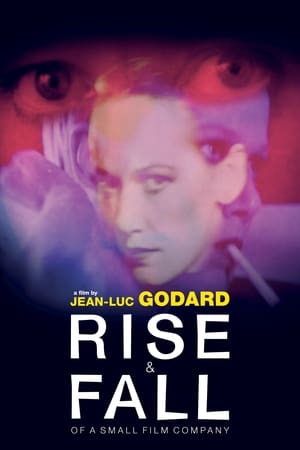
Rise And Fall Of A Small Film Company (1986)


Director: Jean-Luc Godard

Screenplay: Jean-Luc Godard

Meant to be based on the novel The Soft Centre by James Hadley Chase

Cast: Jean-Pierre Léaud as Gaspard Bazin; Jean-Pierre Mocky as Jean Almereyda; Marie Valera as Eurydice

An Abstract Candidate Re-Review


ALBATROSS

FILMS


For Jean-Luc Godard, the state of cinema is assessed by way of an adaptation of a James Hadley Chase crime novel, or what should have been one, originally produced for the crime story series Série noire (1984–1991) in France. In this episode of the series, we are introduced to producer Jean Almereyda (Jean-Pierre Mocky), once a matinee idol and major producer explicitly referenced later on in this world to having funded Georges Franju's Head Against the Wall (1959), and lost his career from the failure of Sergei Parajanov's The Colour of Pomegranates (1969), now reduced to TV movies. He is also now dogged by a case of stolen money, all whilst his main director Gaspard Bazin (Jean-Pierre Léaud), once an acclaimed figure, spends his time in an obsessive ritual for casting extras that eats up the funds they do have. Almereyda's wife Eurydice (Marie Valera), feeling herself a caged bird, crosses paths with Bazin, becoming a potential creative source when she desires to be an actress.

This, in that premise, befits the time period of theatrical films Godard made, but as mentioned, this was for television, clearly shot with video. It is strange we can uncover lost films by Jean-Luc Godard, one of the biggest names in all cinema, but we can forget that even after ten years, obscurer films in a director's filmography can be neglected absentmindedly, especially when Godard's career for many was the sixties French New Wave era, or his Film Socialisme (2010) period onwards, not even considering his work in television or short film creations. That even a great American director can have material not available means that the Swiss director, even if he is a legend in cinema, can have probably more unavailable, as both being a director who worked in a foreign language to English, and has experiments in television and short work more rife than many in his career. Rise and Fall..., taking place when he returned with his second "debut" Every Man For Himself (1980) after his experimental and Dziga-Vertov Group era, comes a year before his infamous Cannon Films production King Lear (1987), but even here, as a big name to bring in to his assignment with Série noire, he did not do as likely intended.

At one point, Godard does buries the book through Jean-Pierre Léaud's Bazin, and Rise and Fall..., rather than the adaptation of a crime novel as like intended, is a meeting place between his return to narrative cinema in the eighties, and the video experiments that would lead him to his career in the current day, the video and use of clips here a prototype for Histoire(s) du Cinema (1988-1998). The noticeable limitations - the TV screen ration, the limited aesthetic, the video sheen and digital text captions - are things that would undermine another director, but are like providing Godard with new tools to work with here. He is someone, known to use VHS rips of old films on purpose still to this day, completely polymorphous when it comes to technology, already working on television productions in the seventies and, in the 2010s in his older statesman position, having his own 3D camera built by scratch and making a 3D feature in Goodbye to Language (2014). Still working with a plot, he uses this context around one which contrary to his famous quote does have a beginning, middle and end in that order, the struggles of a TV movie company mid adaptation of James Hadley Chase's The Soft Centre, the novel Godard is meant to adapt, in which he weaves his state of unrest, looking at cultural critiques in the midst of the tired producer Jean Almereyda, and the deranged genius Gaspard Bazin.

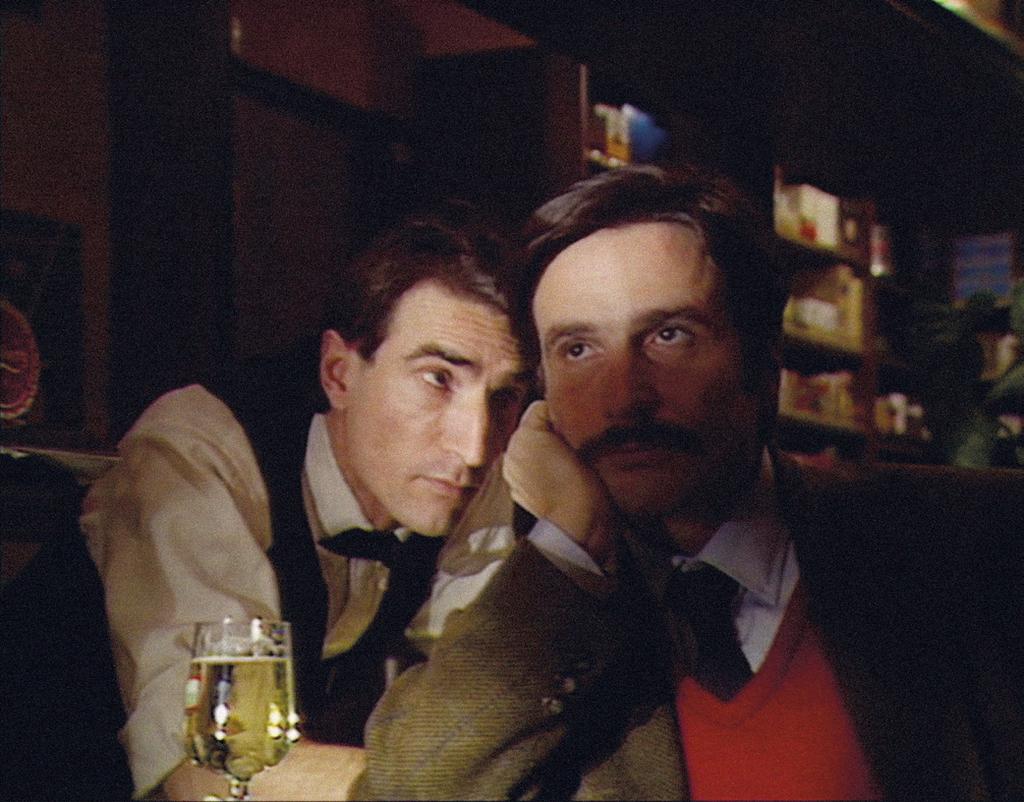
Léaud, meeting back with Godard and thus evoking his many moments in the latter's work, could if you cheated a little be the exact character he would later play in Olivier Assayas' Irma Vep (1996). The same director hired to remake Les Vampires (1915-16) in that film, he here as Bazin rather than that film's character is stuck in a wilderness era in the late eighties, his obsessive ritual with the extras of having them move through rooms in a conveyor belt his fixation. Having them quoting at one point the same passage contracted together between them, the ritual is much him attempting to find his creative sanity as madness. He is less irritated by being stuck making television work, but more that, (with the film biting the hand financing this feature), he wished he was adapting Dashiell Hammett instead, alongside the sense of the world being entirely alien to him, someone in his back story having been as broken mentally as his producer Almereyda in status by the industry.

In a world where he and his producer sit in front of a television showing a fire, rather than a real one, to stay warm, the world has become stranger than the sixties they made their fames in, that strange and very funny moment pretty much the best statement from Godard of what he is aiming at, in the all pervasive air of a television, all within telling a really good narrative in his unconventional way. The film making world is so different from France's before, where Bazin's arcane ritual with the casting chews up money for a company who cannot even get a TV movie off the ground and shown. That Jean Almereyda has stolen German marks, an act that will doom him, to run the company, is as much caused by the struggle of his own career as it is because Bazin is not helping.

Admittedly, Godard's criticisms of the state of cinema and life, as he has been doing them since the sixties, could dangerously fall into shouting into the wind, worse a man trying to joust windmills thinking they are dragons. I view the Film Socialisme Godard, onwards to this day, as cinema's Prospero now, in his magical tower in Switzerland creating his cinematic incantations, or like his character Professor Pluggy in King Lear with patch-cord dreadlocks in his hair, isolated from the world entirely but still incanting on the state of it with a world weariness to his voice. Bazin's test to people, which Eurydice actually succeeds in, of being able to see the true number of characters within classic art, not the exact number but those who are the most important, feels like Godard himself. We must realise in hindsight, for the innovations he brought to cinema with his peers with Breathless (1960) onwards, his career has morphed from the innovator to the figure looking even beyond art to culture in general. Going into literature, classical art, older films, and with this having a crow's murder of soundtrack choices - Leonard Cohen, Bob Dylan, Janice Joplin's Mercedes Benz perfectly used for an intertitle - Godard became someone who is not just the cineaste but the curator of art, a man who can appreciate Jerry Lewis in his youth, but by this point in his career brought in classical music and even Scott Walker into his scores.

His philosophical concerns here are not only enlightening but constantly evolving over time, the ones of yore still relevant to the current day or time capsules to new problems per era, especially as like many of the films from this eighties period, he returned to narrative, and the narratives are interesting even if unconventional. Here, ironically when he was asked to make this TV film, he is practically spiting at the producers by having the pair of Bazin and Almereyda as doomed figures of the past, floundering even in commercial television, but that is still a compelling little noir tale in itself. Calling the female lead Eurydice is a loaded choice too, but like the women and femme fatales of noir, she is also the focal point here for the drama, as the female heroine also dragged down in tropes of those films of corrupt and the underbelly of life, here the figure kept in an unhappy marriage as a trophy wife to an older husband. She is ultimately not the person that leads someone to doom unlike other noirs, instead the one who, from an unhappy marriage, actually finds happiness in the end here.

Their lives are small scale, the television budget and style of Rise and Fall... helping this. It is too rye to be an out-and-out comedy, but humour is to be found especially in side characters like the accountant, who in deadpan handing out paltry earnings to the extras discounting their social security. Or Léaud playing up his character's out-of-control behaviour, be it interrupting a phone call between a potential actress with acute abruptness, brought to she suspiciously suspected to be erotic shot, when asked to bring a bikini alongside her, or breaking into a Woody Woodpecker impression. Godard's also one of the few directors able to get away with casting himself as the wise sage as well. Much of it, by this time, is because Godard was such an iconic name it was impossible to get around this, common in narrating his own films since the sixties and having a reputation as a figure outside of cinema, making his work (usually dialectic anyway) completely attached to him. Rise and Fall... offers him playing himself, amusingly (as I want to picture it) visiting Reykjavik in Iceland because he had to witness the greatest chess game being played there, but here appearing to find a deal back in France, his scene turns into something else with his talk about Romy Schneider.

Schneider's reference is also one of the most important, and bitterly sweetest, of this film, as thus his scene turns to an appropriate melancholic air about the period, of Schneider, in real life, passing in 1982 in only her early forties. An actress of considerable talent, starting in the fifties and connected to the multi-continental era of European cinema, from France to Italy, the scene in general as well as the clear empathy for her in the dialogue becomes one of the film's most meaningful scene, with Godard with his fictional creation Jean Almereyda, of two old professionals lamenting their careers in cinema being affected by the change in tide, left adrift within it, with Schneider's death for Godard marking a symbolic change in the industry. Even if Godard would become more and more a legendary filmmaker who made films to the current day, he eventually drifted far from narrative cinema again into the nineties, into experimental features entirely, all bolstered by the reputation he developed allowing him to leave mainstream cinema behind whilst French cinema would evolve again into the Millennium into its own form.

His critiques are matched by a willingness to play with the form of film a way few would. The limitations, the flaws, of this television work are devices for him to exploit, superimposition to the hair-raising use of slow motion on a female extra's emotions mid-performance all his hand with collaborators constructing the images and audio. He even deliberately has the sound abruptly halted as if the film has failed, followed by a technical difficulties screen, for a joke about how that would have likely happened in television in that era. The marriage between the two sides is like a much underrated theatrical feature Godard made within this era, Detective (1985) with Johnny Hallyday and Nathalie Baye, a small scale crime narrative confined to one hotel, perfect for Godard's experimentation as well as providing an actual story. Rise and Fall... still tells an interesting tale - for Jean-Pierre Léaud's Bazin, a spark of life is found in Eurydice, who he compares to actress Dita Parlo known for films like Jean Renoir's Grand Illusion (1937); for Almereyda, an embarrassing conclusion to his life, made more embarrassing trying to flee in the silliest costume possible for an escape. Bazin's connection to Eurydice is also not a romantic or sexual relationship either, instead Bazin finding artistic clarity, Eurydice her independence and freedom, finding business in the end to work as head of. Even when the tables turn, and Bazin is now an extra by the ending, he finds happiness nonetheless.

Restored and premiering at the 2017 Locarno Film Festival, sadly the reappearance of Rise and Fall of a Small Film Company is not as readily available as one would hope. However if Godard's Dziga Vertov years can be accessed, insanely difficult to appreciate (and even defend) films, and high definition versions no less, than one day one hopes Rise and Fall... would join those available. It is a title absolutely worthy of availability, like many of Jean-Luc Godard's eighties and early nineties work a hidden part of his career which is compelling and virtuous.


Abstract Spectrum: Avant-Garde/Diegetic

Abstract Rating (High/Medium/Low/None): Low

Friday, 29 October 2021

The Boy from Hell (2004)


Director: Mari Asato

Screenplay: Seiji Tanigawa and Naoteru Yamamoto

Based on the work by Hideshi Hino

Cast: Mirai Yamamoto as Setsu/Dr. Emma; Mitsuru Akaboshi as Daio

A Night of a Thousand Horror (Shows) #38


One more brain transplant will save him!

Hideshi Hino, the manga author behind the source material, does not play the meek author in the opening of The Boy from Hell, an episode of the show Hideshi Hino's Theatre of Horror (2004). Hino is not like Junji Ito who, whilst having depicted himself in his manga as a man close to insanity, in real life is a meek man, as well as writing mind bending tales like Uzumaki (1998-9), who also wrote manga about his cats. Hino depicts himself here entirely on the cusp of the void, wishing his nightmares on a person in voice over, his manga written in a grimy apartment based on his real sins, as a young woman perishes in a doomed fate before the episode proper starts. Only the grotesqueness of his work, and a knowing sense of humour throughout, prevents this turning into Garth Marenghi, even if The Boy from Hell is a fun piece to introduce myself to his work.

The TV episode, nearly feature length, clearly has a sense of humour when said boy, the resurrected son of a female doctor, jumps head first into his own reflection at one point, and smashes his face into it, staring at himself confused afterwards. The set-up does not hide the absurdity of this, even if it becomes a grimly humoured work with gristly content. In a green screened car, the son named Daio reminds one why you never stick your head out of a moving vehicle when, cruising with his mother Dr. Emma (Mirai Yamamoto) and their elder male servant, he gets decapitated by a truck. Mrs Emma is informed by a random old woman at his grave that, if she uses the tusk the old woman has, slicing a boy's throat open onto the grave, Daio will be resurrected. One terminally ill boy in her hospital later, and Daio is resurrected. Unfortunately, he looks like a ghoul once he springs out the grave, with a similar ghoul's taste in human flesh.

Set to an almost Goblin-like score, barring the Theremin like synth, this low budget work is over-the-top, and one of the incentives as well is that this is directed by Mari Asato, one of the few horror films directed by a woman from the 2000s. Here she is playing with an over-the-top farce as, puffy eyed and fanged, Daio keeps escaping and eating the locals at night, as the film skirts between intentional and unintentional humour as a low budget TV production with a lot of gore. Some of this is exceptionally dark, as this has no qualms even off-screen of killing many children, but the humour is clearly there on purpose, with an idyllic scene of mother and son undercut, alongside him being in a wheelchair with his head entirely bandaged, by the shot of a pigeon having landed on his head. Nor the fact that the other main character cannot be ignored as anything else by intentionally farcical, a detective who can smell crime and the actor I noticed near the end has a giant fake nose on. Even his introduction suggests this, involving finding the old woman from earlier dead on Dr. Emma's doorstep, having crawled all the way there, and not questioning Dr. Emma for how the elderly woman got there.  

The film is helped, even in mind to its clear budget limitations, because of these tone, the gristly contrasting with the silly, all heightened knowing it is schlocky and embracing it regardless of the matter-of-factness of the ordinary locations. Hideshi Hino's work, looking at it, is very exaggerated and unrealistic at times just in character designs, which this looks virtually alien to, but he would have been proud of how this compensates for this in tone, such as including the most awkward birthday party ever when the birthday boy is chained up with a Hannibal Lecter mask on. Mari Asato does as much as she can with a limited budget, one of the weirdest moments reflecting its lack of budget by constantly referring to a superimposed nightmare hell, Buddhist Hell as depicted by way of early 2000s low budget computer layering. With a giant version of Daio imposed over actors in black undergarments being beaten, chewed on and crushed, it becomes more bizarre as the detective himself does eventually find the entrance there in a tunnel, when you presumed before it was just a reoccurring dream sequence.

It is an acquired taste, undeniably, but as part of this era, it follows my great taste for obscurer Japanese horror. Whether animated or live action, even something like this has an unique energy, coupled by the fact this still takes itself seriously, even here ending as a tragedy despite the fact this narrative has had an attempted brain transplant to cure Daio, which does not work, or the genre trope of glass jugs of dangerous acid which someone always gets in the face. Mari Asato has thankfully progressed on, making it her filmography to stay in horror cinema, even getting to higher budgeted work like Fatal Frame (2014), which is a good thing. As for Hideshi Hino, and his TV show, The Boy from Hell was defiantly an incentive to explore his work now; even with the absurdness of the initial introduction video, this stands out for depiction his lurid works.

Monday, 27 August 2018

Rise And Fall Of A Small Film Company (1986)

From https://image.tmdb.org/t/p/w300_and_h450_
bestv2/3CmVcJhPYWcJCue3fs38SaiFyoi.jpg


Director: Jean-Luc Godard
Screenplay: Jean-Luc Godard
Meant to be based on the novel The Soft Centre by James Hadley Chase
Cast: Jean-Pierre Léaud as Gaspard Bazin; Jean-Pierre Mocky as Jean Almereyda; Marie Valera as Eurydice

Synopsis: The state of cinema by way of an adaptation of a James Hadley Chase crime novel, originally produced for the crime story series Série noire in France. Where producer Jean Almereyda (Jean-Pierre Mocky), once a matinee idol and major producer, is now reduced to TV movies and dogged by a case of stolen money from his past. All whilst Gaspard Bazin (Jean-Pierre Léaud), a director who now, after acclaim, spends his time in an obsessive ritual for casting extras that eats up their budgets, finds Almereyda's wife Eurydice (Marie Valera) a potential creative source when she desires to be an actress.

It's strange we can uncover lost films by Jean-Luc Godard, one of the biggest names in all cinema, but we can forget that even after ten years obscurer films in a director's filmography can be neglected absentmindedly. There is, of course, when new blood in the fan base don't know common knowledge that the older members do, something which can happen be it for horror fans to art house aficionados, and in that case we need to provide that information or doom ourselves to obscuring works of the past. Retrospectives are thankfully more common too as are physical released, but there are cases, with a director like Godard who made so much outside of theatrical screenings, that once it was a lot more difficult to access this material and a lot of it hasn't even been gotten around to until now. That even a great American director can have material not available means that the Swiss director, even if he is a legend in cinema, can have probably more as both being a director who worked in a foreign language to English, made very difficult work that contrasts his famous early sixties works immensely, and has experiments in television and short work more rife than many other filmmakers which always tend to be neglected with any auteur. So, yes, you have the clues to why we trip over these obscurities like so.

Even in the theatrical corner of Godard's wing, where for many his debut Breathless (1960) is his most well known film, there are productions neglected especially in the late eighties when, returning with his second "debut" Every Man For Himself (1980) after his experimental era, which are not available. Now which his Dziga-Vertov Group films (mostly) available in high definition, even if many are some of the most painful failures of his career, the Holy Grail alongside films like the controversial Hail Mary (1985) is his television work. Experiments like Rise and Fall of A Small Film Company.  From a time where he was going to return back to experiments until the unforeseeable day and was in-between various projects, a year before his infamous Cannon Films production King Lear (1987). One very much not taking his assignment with Série noire as intended.

From https://medias.unifrance.org/medias/252/193/180732/
format_page/rise-and-fall-of-a-small-film-company.jpg

Rise and Fall
, rather than the adaptation of a crime novel as likely intended, is that meeting place between the return to narrative cinema in the eighties and the video experiments that would lead him to his career in the current day. The noticeable limitations - the TV screen ration, the limited aesthetic, the video sheen and digital text captions - are things that would undermine another director, but are like providing Godard with new tools to work with. He's someone, know to use VHS rips of old films on purpose still to this day, completely polymorphous when it comes to technology, already working on television productions in the seventies and, in the 2010s in his older statesman position, having his own 3D camera built by scratch and making a 3D feature in Goodbye to Language (2014). Here though he's still working with a plot, around one which contrary to his famous quote does have a beginning, middle and end in that order. The struggles of a TV movie company mid adaptation of James Hadley Chase's The Soft Centre, the novel Godard is meant to adapt, which he weaves his state of unrest cultural critiques in the midst of through the tired producer Jean-Pierre Mocky (Jean Almereyda), and the frankly deranged director Gaspard Bazin (Jean-Pierre Léaud).

Léaud, meeting back with Godard and thus evoking his many moments in the latter's work, could if you cheated a little be the exact character he would later play in Olivier Assayas' Irma Vep (1996). The same director hired to remake Les Vampires (1915-16) in that film, who decided to cast Maggie Cheung, once before with an entirely different name stuck in these wilderness years in the late eighties, his obsessive ritual with the extras of having them move through rooms in a  conveyor belt, quoting at one point the same passage contracted together between them, as much him attempting to find his creative sanity as a madness. He's less irritated by being stuck making television work, but as he confesses (and shows Godard biting the hand financing this feature) wishing he was adapting Dashiell Hammett instead. In a world where he and his producer sit in front of a television showing a fire, rather than a real one, to stay warm, the world has become stranger than the sixties they made their fames in. It's not an absurd comparison either between films as, whilst the ending of this suggests a happy ending for Léaud's character, the film making world is so different from France's before, where his arcane ritual with the casting is chewing up money for a company who can't even get a TV movie off the ground and shown.

From https://i.ytimg.com/vi/069Xaf__6nM/maxresdefault.jpg

Admittedly Godard's criticisms of the state of cinema and life, as he's been doing them since the sixties and hasn't stopped since, could dangerously fall into shouting into the wind, worse a man trying to joust windmills thinking they're dragons. (Even if that's the case for some now, I'd at least want to picture him as cinema's Prospero, in his magical tower in Switzerland creating his cinematic incantations, or like his character Professor Pluggy in King Lear with patch-cord dreadlocks in his hair). What doesn't allow this to be the case is that, generally, his philosophical concerns are not only enlightening but constantly evolving over time, the ones of yore still relevant to the current day or time capsules to new problems per era. Here, ironically when he was asked to make this TV film, he's practically spiting the producers by having the pair of Bazin and Almereyda as doomed figures of the past floundering even in commercial television. Their lives are small scale, the television budget and style of Rise and Fall... helping this. It is too rye to be an out-and-out comedy, but humour is to be found especially in characters like the accountant, who in deadpan just doing his job hands out paltry earnings to the extras discounting their social security. Or Léaud playing up his character's out-of-control behaviour, be it interrupting a phone call between a potential actress with acute abruptness, brought at what she suspiciously suspected to be erotic when asked to bring a bikini alongside her, or breaking into a Woody Woodpecker impression.

Godard's also one of the few directors able to get away with casting himself as the wise sage. Much of it, by this time, is because Godard was such an iconic name it was impossible to get around this, common in narrating his own films since the sixties and having a reputation as a figure outside of cinema, making his work (usually dialectic anyway) completely attached to him. Rise and Fall... offers him playing a character as himself, amusingly (as I want to picture it) living in Reykjavik in Iceland because he had to witness the greatest chess game being played there, here appearing to find a deal back in the left for him with a (fictional?) producer and Romy Schneider. Thus his scene also turns to an appropriate melancholic air about the period, when both said producer is dead and Schneider, in real life, passed in 1982. When that comes to pass it becomes one of the film's most meaningful scenes, more so because Godard is playing himself interacting with a fictional creation of his, two old pros lamenting their careers in cinema being affected by the change in tide and left adrift within it. Even if Godard would become more and more a legendary filmmaker who made films to the current day, he's eventually drift far from narrative cinema into experimental features entirely, all bolstered by the reputation he developed allowing him to leave mainstream cinema behind.

From http://media.flix.gr.s3.amazonaws.com/cache/
bf/17/bf17279cd12d76950b8214b952776420.jpg

His critiques are matched by a willingness to play with the form of film a way few would. The limitations, the flaws, of this television work are devices for him to exploit, superimposition to the hair-raising use of slow motion on a female extra's emotions mid-performance. He even deliberately has the sound abruptly halt as if the film's failed, followed by a technical difficulties screen, for a joke. Musically he picks interesting pieces like from Leonard Cohen to Janice Joplin, the latter's famous rendition of Mercedes Benz amusingly used on a moving computer square with the technical screen colourbars. The marriage between the two sides is like a very underrated theatrical feature Godard made within this era, Detective (1985) with Johnny Hallyday and Nathalie Baye, a small scale crime narrative confined to one hotel, perfect for Godard's experimentation as well as providing an actual story. Rise and Fall... still tells an interesting tale - for Jean-Pierre Léaud's Bazin, a spark of life is found in his producer's wife Eurydice (Marie Valera), who he compares to actress Dita Parlo known for films like Jean Renoir's Grand Illusion (1937). Theirs is not a romantic or sexual relationship, instead Bazin finding artistic clarity as, testing her, she is one of the only people when giving an old painting will not point out all the figures within it but say the characters are actually the most important themes of said painting. Sadly, apt for a small scale crime drama about a little company, it's the producer's shady past with stolen money that does them in.  

Abstract Spectrum: Avant-Garde/Diegetic
Abstract Rating (High/Medium/Low/None): Low

Personal Opinion:
Hopefully, restored and premiering at the 2017 Locarno Film Festival, the reappearance of Rise and Fall of a Small Film Company is not restricted from public access beyond being temporally streamable on MUBI. If Godard's Dziga Vertov years can be accessed, as difficult and un-cinematic in his career's work as you can get, an uncovered gem like this can have appeal. If anything it hopefully leads closer to the vast television and video work in his catalogue finally appearing in wider access.


From https://assets.mubi.com/images/notebook/post_
images/26139/images-w1400.png?1530550709

Friday, 20 October 2017

Masters of Horror Season 2 Part 7 and Conclusion

From https://upload.wikimedia.org/wikipedia/en/thumb/
0/04/TheVWord.jpg/220px-TheVWord.jpg

The V Word (2006)
Director: Ernest Dickenson
Screenplay: Mick Garris
Cast: Arjay Smith as Kerry; Branden Nadon as Justin; Jodelle Ferland as Lisa; Michael Ironside as Mr. Chaney; Lynda Boyd as Carolyn
A Night of a Thousand Horror (Shows) #30

The director career of Ernest Dickenson has horror films like Tales from the Crypt: Demon Knight (1995) and Bones (2001) with Snoop Dogg. Of also considerable importance is that, until after Malcolm X (1992) he was Spike Lee's cinematographer from his film debut and including Do The Right Thing (1989), whose visual look is as much of that film's legendary status as other factors. The V Word, a vampire story, certainly looks visually interesting, a shadow filled atmosphere set within suburbia where two teenagers Kerry (Arjay Smith) and Justin (Branden Nadon) decided to go to a funeral home at night to see a real corpse. Unfortunately one of them is bitten by a vampire, later revealed to be Mr. Chaney (Michael Ironside), once a math teacher known for paedophilic tendencies before his un-death, trying to get the two boys to join him within his circle.

The film unfortunately is stuck with how overdone vampire stories are. They need more creativity to work. So many, in written and visual form exist that it's not the plots which stand out but their design, their characterisation and tones which need to. Sprinklings of potential ideas abound but none go anywhere. That it starts, as one character plays Doom 3, with the other in an argument with his father over the phone, having separated from his mother and dating a secretary. Said father figure is removed halfway through the plot and is worthless, wasting an interesting plot point. It tries something interesting in depicting the first signs of the vampire "virus" infecting someone, a half awake dazed figure their mother and little sister presume has stayed up all night in the more successful scenes, but it never gets expanded upon more. When the prologue has finished the episode is halfway through and about to end on a generic conclusion, preventing a lot else happening. Even Michael Ironside doesn't get as much as one would wish considering how always reliable he is, standing out as an inherently sinister, nearly Count Orlock form of vampire who walks around with an umbrella and has an insidious back-story that would add more threat for the young teenage leads.

I'll argue Season 2 of Masters of Horror is still better than Season 1, but there's still episodes like The V Word which have virtues but the plots don't have a lot to them. Episodes which surprisingly last over fifty five minutes but with if little in terms of events having happened, exposition taking up so much time when a vampire and its mythos is pretty well known by now for many. The result here is immensely disappointing and has little to actually write about.

From http://images2.fanpop.com/image/photos/10000000/
The-V-Word-masters-of-horror-10068775-500-332.jpg

====
From http://www.moviegod.de/images/
dvd/00020/1916/1916_xxl.jpg

Dream Cruise (2007)
Director: Norio Tsurata
Screenplay: Naoya Takayama and Norio Tsuruta
Based on a short story by Kôji Suzuki
Cast: Daniel Gillies as Jack Miller; Yoshino Kimura as Yuri Saito; Ryo Ishibashi as Eiji Saito
A Night of a Thousand Horror (Shows) #31

Sadly Masters of Horror Season 2 officially, and for my own viewing marathon, ends with the worst episode of all two season. It's feature length, eighty three minutes uncut, is as much of the problem. But this episode is also where a lot of the problems with the Masters of Horror brand really shows its ugly face. It should be exciting to witness Dream Cruise. A second Japanese co-production which learnt from the mistakes of forcing Japanese actors to phonetically speak in English, as Takashi Miike's Imprint (2006) was stuck with, by having a bilingual script in English and Japanese subtitles from actors who can speak both languages. A story, significantly, based on a short story by Kôji Suzuki, the original author of Ringu, whose life has more than likely be canonised by how many adaptations that story has happened let alone sequels and remakes. Unfortunately Norio Tsurata was chosen to direct said episode.

Tsurata is a director of a lot of horror films, but none of his work I've seen has stood out. Nor does he have the personality that even a flawed director like Jôji 'George' Iida had, who even when the films are failures still have so much to appreciate. Tsurata feels invisible with his work as a director, which doesn't stand outs even by itself in terms of their stories. The first I saw was Premonition (2004), arguably an okay film about supernatural newspapers that predict ominous events. It was still however, within the context of the J-horror boom and the market for it in the West, pretty average. Heavily reliant on cheap jump scares and only helped by how surprisingly nihilistic the film's conclusion was. Ring O: Birthday (2000) on the other hand was just tedious, already with the issue of being a prequel (even if based on a prequel story written by Kôji Suzuki) and a miserable experience to sit through.

Dream Cruise continues as Tsurata's least rewarding of the trio I've seen, as a Western lawyer living in Japan, Jack Miller (Daniel Gillies) is invited on the boat of one of his clients Eiji Saito (Ryo Ishibashi). Jack has been having an affair with Eiji's wife Yuri (Yoshino Kimura), who has always viewed her husband as a cold hearted, detestable human being, something which Eiji desires to prove by driving his boat into the middle of the ocean with nowhere for the lovers to run.  It's a conventional plot, but always one ripe for good as there's also skeletons in the closet for everyone on the boat which come back, but Dream Cruise is so monotonously paced and obvious in its plotting as this slow pace is experienced that it's a nightmare to sit through.

It would be amazing how obvious the plot is if it wasn't also so tedious to suffer. The acting makes this worse in how bland it is, Gillies not compelling as a lead, his character the generic good man in spite of the plot having a lot to work with, both being in an adulterous affair with a married woman and that he's haunted by a childhood memory of seeing his brother drown in the ocean, a subplot which leads to something out of place for this type of story. More incongruous is how Dream Cruise manages to take Ryo Ishibashi, the lead actor of Takashi Miike's Audition (1999), and pulls out as generic a performance from as good an actor like him as you see, a generic evil character who is haunted alongside his wife by a stereotypical black haired female ghost, none of which stands out. It has all the hallmarks of all the series' problems. Then at a feature's length these flaws are amplified.

Dream Cruise feels like all the clichés of the era's wave of slow burn Japanese ghost stories, what was coined "J-horror" subgenre in the west, slowly dying a horrible death in a TV special here. When the appropriation of clichés from this trend, even if it's a Japanese co-production made in that country, have none of the actual dynamics which made these films rewarding for Westerners in the first place. Arguably this is an awful way to have ended the second season, especially to end the entire Masters of Horror franchise. Having watched this extra long episode with two big boxer dogs, pets who've sat in on viewings like this of horror films, the sensation of one of them laying on my waist crushing me was not only more pleasurable than the entirety of Dream Cruise but actually made getting through the final quarter bearable. The frustration felt both by a person aware he was wasting his life throughout this, and that of animals unaware of what he was going through but unable to settle and lay down, is something spectacularly awful for this TV episode to have accomplished.

From http://www.dreadcentral.com/wp-content/uploads/mohdream1big.jpg

====
From http://static.tvtropes.org/pmwiki/pub/images/24644360_5029.jpg

Masters of Horror Season 2 Conclusion

With this, Masters of Horror Season 2 comes to a close and I have ended both seasons as well. Having never seen Season 2 before, I'll controversially suggest that it's superior to Season 1. Sadly that doesn't mean the season was perfect. Whilst the issue surrounding the show's premise was pushed to the back - famous directing episodes which however were compromised by tight production schedules and what resources in scripts and technical content were available -  there were still problems. Mainly that if the stories weren't interesting, or well made, you get duds. Season 1 is much more erratic, and there are even episodes that were deeply overrated, but Season 2 still had failures as well. Sadly due to how the second season was released on DVD in the United Kingdom most on them were at the back end of my viewing experience, making the finale more lacklustre. The late Tobe Hooper never got a great episode in either series, nor did John Carpenter even if Pro-Life wasn't as bad as its reputation suggests. Peter Medak's The Washingtonians, Tom Holland's We All Scream For Ice Cream and Ernest Dickenson's The V Word were all victims of lacklustre screenplays, and Dream Cruise was a terrible decision in general. A lot of generic plotting plagued the worst episodes in both season. Whilst Season 1 as obsessed with troubled cops, Season 2 made this problem worse by being heavily reliant on stories about bland families put in peril, no stakes or reward in these stock types who'd be okay afterwards in every story. Ironically the best episodes of Season 2 either did the unthinkable with family archetypes, like The Screwfly Solution, or was the episode Family, which satirised this with a serial killer who made up his perfect family with the skeletons of his victims.

But the greater consistency helped this season. With only one disappointing episode acclaimed by others - Stuart Gordon's The Black Cat - and none others unlike Season, everything was interesting or actually great. So much so I can have an honourable mention with Rob Schmidt's Right to Die. Schmidt was one of a couple of directors in this season who are arguably controversial to have been chosen as "Masters". Whilst someone like Peter Medak is not known as a horror director, he at least had one canonical classic like The Changeling (1980) that qualified him, whilst someone like Schmidt is known only for a film like Wrong Turn (2003) which hasn't had the same love or cult following placed onto it. But his episode undermined this, making the point of the "Masters of Horror" title pointless by making an episode so much more appropriate to what the series should've always been. Fun, misanthropic and lurid, the one episode that evokes gristly comic books of yore but with more blood and sex. His episode argues that the two series should've emphasised getting the stories right, not necessarily the stunt casting of legendary directors unless the restrictions that undermined their creative processes weren't such an issue over these two seasons. His episode is the kind that made you want to see what someone like Rob Schmidt would do next; sadly his filmography after is not as prolific as one would wish after seeing Right to Die for whatever reason.

From http://horrorsnotdead.com/images/family.jpg

Third and second place were solid stories made with great performances, both following varying forms of madness, both from directors not necessarily making horror throughout their career. Third is Sounds Like, Brad Anderson the up-and-coming director picked for Season 2 who, like Lucky McKee in Season 1, made a very different film from most everyone else. Anderson's is practically psychological drama which just happens to be increasingly more gruesome and tragic as it hangs on Chris Bauer's central performance. Second is John Landis' Family. Out of all the veteran directors who worked in both seasons, its John Landis who managed the most consistency. Even if some might disagree with me on Deer Woman from the first season, it'll be hard to knock Family, another psychological drama but played for sick laughs where another central performance, by George Wendt, is the lynchpin that all the other virtues are rested on.

From http://images.static-bluray.com/reviews/136_1.jpg

And first place, without a doubt, flaws and all, is Joe Dante's The Screwfly Solution. Whilst Homecoming from Season 1 has become a dated time piece, The Screwfly Solution whilst an exaggerated interpretation on the subject of misogyny has tragically become more relevant, making my viewing of the episode [in 2017] a more disturbing experience. It's the episode out of both seasons which feels like it's taking the greatest risk, the most experimental alongside Sounds Like with its use of digital cameras and greater, more elaborate set pieces using them. It has the largest cast and number of set pieces of all the episodes. It has Elliot Gould of all people in a major role. It's also the bleakest of the entire two seasons. Far from fun, but instead something which even if its tinged with black humour is still scary. Willing to jump into sci-fi, and utterly willing to take greater risks than many of the other episodes with an ending that's actually apocalyptic, scary and a kick to the guts. Something which ends as bleak as it should and mortify the viewer afterwards. Even taking into consideration its flaws, areas which feel potentially too broad, or not fully fleshed out, this however is so much more rewarding for me than Homecoming, taking a short story by a female writer Alice Sheldon from a  period of major feminist dialogue, and showing it had greater relevancy in the 2000s and 2010s than anything else.

From http://images2.fanpop.com/image/photos/10000000/
Sick-Girl-masters-of-horror-10068397-500-300.jpg

With this season, Masters of Horror ended. There was a continuation of a similar premise with producer Mick Garris called Fear Itself (2998) but, made for another channel (NBC) and with restrictions on content, I'd view that series as a spin-off rather than the third season, a one series production for another day. Altogether I admit Masters of Horror wasn't perfect. It emphasises, like anthology films, how even if you have the best of a genre together, the entries could only work if their content was actually interesting. Add to this the restricted nature of television - time schedules and resources - and it adds further potential disadvantages, that and each other episode (mainly) being fifty five minutes long, which is a lot of time to take  to tell as story. I will not lie that both seasons had a lot of generic fodder which could've done better. When these seasons succeeded - Sick Girl, Deer Woman, Pick Me Up, The Screwfly Solution etc. - they worked, but significantly these were episodes that took risks. For me altogether whilst I enjoyed the experience I admit the franchise was a failure. One which offered rewards but also showed its inherently flaws symbolically with what happened to Takashi Miike's Imprint - sever restrictions even affecting a Japanese co-production allowed to breathe from the rest, script issues and the question of what the point was of Masters of Horror philosophically, particularly as for a series that wanted to be uncensored and adult, they pulled Imprint from US cable television and undermined that ethos. I wouldn't argue against having committed to this two season marathon, just for the fact that it offered up so many different subjects. From old horror stables like vampires being reinterpreted to more modern concepts being included like serial killers. The source material for episodes - Edgar Allen Poe, HP Lovecraft, EC Comics, Ambrose Bierce etc. - is in itself the Masters of Horror Literature. Barring giant ants, as there was fifties sci-fi arguably in The Screwfly Solution, there was a lot on offer which wasn't completely success but still of interest. It just has to barred in mind that all 26 episodes are unpredictable in their overall quality. A single season made from all the best episodes is possible, and would be exceptional. Two long seasons however is a lot of material and not perfect.

From http://images.mefeedia.com/the-screwfly-solution-33436159-orig.jpg

Friday, 6 October 2017

Masters of Horror Season 2 Part 6

From https://image.tmdb.org/t/p/w300_and_h450_
bestv2/ebsysvQwhMI6l2MHiB9BFF7gxAE.jpg

The Washingtonians (2007)
Director: Peter Medak
Screenplay: Richard Chizmar and Johnathon Schaech
Based on a short story by Bentley Little
Cast: Julia Tortolano as Amy Franks; Venus Terzo as Pam Franks; Johnathon Schaech as Mike Franks; Myron Natwick as Samuel Madison III; Esme Lambert as Nancy Arnold; Abraham Jedidiah as Jared Barkish
A Night of a Thousand Horror (Shows) #28

[Spoiler Alert?]

Peter Medak qualifies for the Masters of Horror directorial chair because of The Changeling (1980), a taut and slow burn Canadian production which is underrated, a haunted house story which works as a drama and as a chilling supernatural story which uses subtlety for its impact. (I presume not for Species II (1998), the only other horror feature in his career which I saw at a young age, to be honest, alongside Species (1995) for the titillation it promised, only for schlock and H.R. Giger creature designs instead). Medak in general has one of those fascinating filmographies I would like to see more of. Hungarian born, his career includes extensive work in the British film industry during the late sixties and seventies with recognisable movies. I'm thinking in particular of The Ruling Class (1972), an epic two-and-a-half hour long satire where Peter O'Toole plays New Age Jesus much to the horror of stuffy British upper class society, a farce which has been said to including anything from musical numbers to Nigel Green as The High Voltage Messiah. One of those careers that, whilst The Changeling is one of the best horror films of its era, is worth exploring in its own right in other genres.

Sadly I can't say The Washingtonians was great despite that introduction. It's premise is utterly silly but could've made an interesting farce - imagining whether the founder of the United States of America, George Washington, was a cannibal. It's a heavy handed idea but one with potential, that the history one hold as idealised is likely to soften the real historical events, even completely go against them for the sake of myth, "printing the legend" to quote The Man Who Shot Liberty Valance (1962). Particularly with individuals like Abraham Lincoln, an idealised hero who represents his country's people centuries later contrasts the more complicated version who actually lived. However I'd argue, even though it's been ten years or more since I saw the episode, that The Simpsons episode (guest starring Donald Sunderland) about the founder of Springfield  actually being an arsehole and Lisa Simpson having to deal with this issue was a far more interesting depiction of this issue.

The Washingtonians instead is pretty obvious. A lot of the problems with these lesser episodes of Season 2 are the bland families you're meant to sympathise with in the leads, presuming that a mere happy family is enough to connect to when, in reality, they should have more to them than merely an innocent kid in potential peril and their parents being generically wholesome. Said family are pitted against creepy older locals in a small town who are clearly weird in their first scene, behaving so at the start during a funeral. It's kind of obvious they're in on something from the start, and there's an absurdity unused of lunatics in powdered wigs and wooden teeth trying to get into a house and threatening to eat the occupants inside. A lot feels missing as  result A whole level of satire that could've been crammed into less than fifty five minutes. A twist from the original short story that isn't used for a dated joke from the period the episode was made, which misses out another satirical spike.  A whole level that could've happened, thinking about it mid-viewing, if there was a plot twist that George Washington was actually innocent and the Washingtonians had based their flesh eating cult on a fringe delusion. That Ravenous (1999) is a more rewarding take on pioneer era American cannibalism when this was an episode that's not got a lot to say about.

From http://images2.fanpop.com/image/photos/10000000/
The-Washingtonians-masters-of-horror-10069148-500-320.jpg

===============
From http://www.moviegod.de/images/
dvd/00020/1917/1917_xxl.jpg

The Damned Thing (2006)
Director: Tobe Hooper
Screenplay: Richard Christian Matheson
Based on a short story by Ambrose Bierce
Cast: Sean Patrick Flanery as Sheriff Kevin Reddle; Marisa Coughlan as Dina; Brendan Fletcher as Deputy Strauss; Alex Ferris as Mikey Reddle; Brent Stait as John Reddle; Georgia Craig as Jodi Reddle; Ted Raimi as Father Tulli
A Night of a Thousand Horror (Shows) #29

[Major spoiler warnings]

The attempt with The Damned Thing was admirable. But I don't know what to say about Tobe Hooper's second contribution to the Masters of Horror series. The most noticeable thing is that it drastically alters an Ambrose Bierce's story and turns it into a curious mix between an environmental story and an apocalypse narrative. Sheriff Kevin Reddle (Sean Patrick Flanery), the central character, suffered trauma when his father on his birthday suddenly snapped for no explainable reason, killing his wife and trying to kill Kevin as a child before he was ripped to shreds by an invisible force. This force is a curse on the men in the family, one when it goes after the males over generations brings an evil influence on everyone surrounding them, local communities turned towards irrational insanity and violence, both self harm and aggression to others, that leads to destruction and mass death.

While its subtle in back-story, the "damned thing" accidentally woken up by oil drilling and a force which has hexed the generations of people in one family, it's vague without reward. There's too many pieces missing that could've added a greater impact to the material. Especially when the monster is revealed as a CGI oil slick creature, there's a sense of too many plot points being unfocused and lacking, a misbegotten narrative as a result which should've been feature length. It also feels pointless for this to have even adapted the Bierce story as whilst that tale has enough material of interest in itself, an invisible creature and the fall out of a death its caused, it feels utterly pointless to have kept this potentially evolved predator in this episode when it's trying to be more of a literal evil from the Earth.

I cannot argue that Hooper, an older man at this time, showed so much energy with his frenzied production style here, the violent editing and intensity much more controlled and effective here than in his season one episode Dance of the Dead (2005).  There's an aggressive mood which suits a director whose famous work always had a sense of the mad and dangerous to it, heightened still here after three decades of it before. Particularly as it means Ted Raimi, he of permanent cameos in his brothers films for me, plays a priest who eventually starts howling like a madman, I can appreciate the energy.The issue is that the plot is a jumble which doesn't gel, something I have to wonder is the fault of screenwriter Richard Christian Matheson, as he also wrote Dance of the Dead which was also failed in this area. The Damned Thing because of this is a disappointment. 

From http://images4.fanpop.com/image/photos/15700000/
2x01-The-Damned-Thing-masters-of-horror-15714550-500-281.jpg

Tuesday, 3 October 2017

Masters of Horror Season 2 Part 5


We All Scream For Ice Cream (2007)

Director: Tom Holland
Screenplay: David J. Schow
Based on a story by John Farris
Cast: William Forsythe as Buster; Brent Sheppard as Kent; Maxwell Neck as Kenny; Tim Henry as Papa Joe; Lee Tergesen as Layne; Laura Drummond as Darlene; Colin Cunningham as Virgil
A Night of a Thousand Horror (Shows) #26

First scene. A father begs his young son to not eat an ice cream he has in his hands. He refused, unwrapping it and taking a bite. Said father melts into a puddle of ice cream, a sweetly sick and delicious death. Immediately my attention was piqued by We All Scream For Ice Cream, in which a local community is terrorised by an undead ice cream man dressed as a clown called Buster (William Forsythe) out for revenge against a group of boys, now adults, responsible for his death. It evokes, well to not beat around the bush, It (1990) based on the Stephen King novel (and its subsequent 2017 re-adaptation), but what you should get here is not It's tale of adults dealing with a monster of their pasts, but the gristly horror stories of yore with misanthropic comeuppance.

Sadly that doesn't come to pass. Instead it follows Layne (Lee Tergesen), one of those boys as a man now being targeted by Buster, even responsible for a major part of his death, who is always seen throughout the narrative as a good man. From the episode's director Tom Holland, there isn't necessarily an issue with playing the material straight. We are talking of the man whose reason for becoming a "Master" for this series is because of a film like Fright Night (1985), a film which no one can argue didn't deserve him getting a slot in this television franchise even if that was the only horror movie in his filmography. It was a rock solid vampire film where the hero was a clearly defined hero, the villain a clearly defined villain. Unfortunately it was also a film which had memorable characters and a feature length running time to flesh them out which isn't available for We All Scream For Ice Cream.

This episode should've been utterly cynical with more sympathy for Buster himself as the transgressed against clown, especially with how sympathetic and good Forsythe's performance is.  It should've been like Poetic Justice, the third segment of Tales from the Crypt (1972), in which Peter Cushing plays an utterly lovable man destroyed by a bastard played by Robin Phillips, the comeuppance is utterly deserved. What it calls for is actually what Holland is more than capable of as, even with flaws, he managed perfectly  to capture this tone with Thinner (1996). Ironically, in context of this episode, it was a Stephen King adaptation from his Richard Bachman pseudonym days in which with utterly grim humour almost none of the characters were innocent, all detestable human beings, and  there was an absurd edge both in the lead actor's weight related prosthetics and what can only be described as an actual evil pie made with human blood.

Sadly the episode here is not this. Everything wraps up nicely, a literal vanilla ice cream without even a grit of a weirder flavour added, not even a 99 flake of taste if you forgive the dumb ice cream puns. It's over emphasised by Tergesen not being that compelling as a lead, as much because he's given a bland saintly figure to play as much as the lack of good characterisation in the script. This is sad in the case of We All Scream For Ice Cream as it means that it suffocates a legitimately great performance, that deserved better surrounding it, from Forsythe. Not as the undead clown his character becomes but, completely playing against his tough onscreen persona, the living Buster. A guy with a learning disability who however finds the perfect calling in life as an ice cream man, able to bring humour and magic tricks into selling his wares, even able to make something as incontinent as having to provide a lot of change back into part of his act to please the child customers. A man who could arguably be the happiest person alive were it not for some dumb, insensitive teenagers managing to kill the poor guy during a botched prank. This performance, in the flashback scenes, is legitimately up there as one of the best performances of the whole Masters of Horror seasons. But it's a shame the whole episode around this performance is average at best.

From https://lh5.googleusercontent.com/--HrJf0bVX7o/TySx1erLFNI/AAAAAAAAAjQ/eVcrhBItBLU/s450/weallscreamclowndownclowndown.jpg

=================
From http://ilarge.lisimg.com/image/8148894/
800full-masters-of-horror----sounds-like-cover.jpg

Sounds Like (2006)
Director: Brad Anderson
Screenplay: Brad Anderson
Based on a short story by Mike O'Driscoll
Cast: Chris Bauer as Larry Pearce; Laura Margolis as Brenda; Richard Kahan as David; Michael Daingerfield as Jim
A Night of a Thousand Horror (Shows) #27

Brad Anderson, growing up with cinema really from 2004 onwards, was a hot new critical darling at this point when he directed a Masters of Horror episode. Session 9 (2001) was a cult sleeper and by the point of The Machinist (2004), fed by the publicity of actor Christian Bale's extreme form of method acting to play an emaciated lead, Anderson was looked upon as a new director with some excitement. One would presume at that point he would've become like Vincenzo Natali, a fascinating cult genre director whose new film would immediately illicit some interest due to his reputation of sculpting genre into distinct quirks, in Anderson's case by way of psychological drama to go from The Machinist and Sounds Like. Unfortunately after Transsiberian (2008) he had a long delay until Vanishing on 7th Street (2010) and The Call (2013), a Halle Berry thriller co-produced by World Wrestling Entertainment's film branch WWE Studios. After that he's sadly not had as much attention to him himself as a director like back in the mid 2000s.

Sounds Like is arguably, in mind of this, one of the best of Season 2 amongst stiff competition, making this history after this production quite sad. It's also one less interested in ghoulishness, but dark psychological drama instead. Chris Bauer, in a great performance, plays Larry, a quality control supervisor at a software company's call centre, his frankly superhuman sense of hearing useful in allowing him to even pick up on when an employee is about to burst into rage at a customer over the phone. Sound design becomes a major part of the story, in which Larry's bottled up grief for his young son's death becomes a key to madness, like a Lowercase album as ordinary sounds like the shuffling of book pages to rain drops on a car windscreen become amplified, the visual tone of the episode using extensive use of inventive camera techniques including a lot of micro-shot images of objects and even flies to emphasise how this gift becomes his downward spiral. All inventive for a TV episode but also dramatically important, , as Larry starts to slowly unravel in his sanity, between his wife Brenda (Laura Margolis) and her desire to have another child to his increasingly erratic behaviour at work. The result's in the area of Roman Polanski's psychological horror like Repulsion (1965), slow burn drama which draws out alien, nightmarish signs of the protagonist's insanity in ordinary surroundings, the most extreme being the sounds of whining  Larry hears in one scene only for him to discover a litter of offspring in the wall.

It's a sad story ultimately, a tragedy which does so much in less than sixty minutes that it's perfect throughout, without need for expanding it out further to a feature length. In vast contrast to some of sillier episodes, it's a complete tonic that stands out for a more cerebral, quieter work. It becomes more extreme and gristlier as it reaches its climax, as the noises in Larry's ears vary from complete disarming silence to the kind of sounds which evoke what Edgar Allen Poe wrote in The Telltale Heart, of a motif tormenting a guilt person to despair, but never ignoring the calmer tone and that it's still about a father who never overcame the death of a child. As with The Machinist, its symbolising real emotional damage by way of the character's world unfolding for them. As a Masters of Horror episode, it feels like with Lucky McKee's Sick Girl (2006) a new talent outclassing veterans. And yet sadly, whilst still making films, one wishes Brad Anderson's name came up more often as it did around the mid-2000s, growing up reading the likes of Total Film that took interest in him.

From http://images2.fanpop.com/image/photos/10000000/
Sounds-Like-masters-of-horror-10068811-500-331.jpg