Showing posts with label American Independent Cinema. Show all posts

Sunday, 10 December 2023

Night of the Demon (1980)


Director: James C. Wasson

Screenplay: Mike Williams and Jim L. Ball

Cast: Michael Cutt as Professor Bill Nugent; Melanie Graham as Wanda McGinty; Shannon Cooper as Carla Thomas; Bob Collings as Roy; Jodi Lazarus as Linda; Michael Lang as Pete; Ray Jarris as Gary; William F. Nugent as Lou Carlson; Barrett Cooper as Reverend Emmet McGinty

A Night of a Thousand Horror (Movies)


Let your seeds of evil grow within her!

Among the Video Nasties of the 1984 Video Recordings Act, all of them present their own fascinating history and with Night of the Demon, we find ourselves following the trends of "cryptid" culture, including the legendary 1967 Patterson–Gimlin film footage which was said to capture onscreen images of an ape-like humanoid and feed interest in this legendary figure in cinema. With Night of the Demon, there is obviously the dichotomy that this is also a splatter film in tone, where films which helped pave an interest in making them were more family friendly; films like The Legend of Boggy Creek (1972), a huge independent success, and when Monsters! Mysteries or Myths? (1974), a TV documentary with Rod Serling as the narrator, was expanded into a feature film with new footage (and actor Peter Graves taking over narration) for The Mysterious Monsters (1975) for another hit. This is not even the first gorier Bigfoot film as, whilst its plot involves a fake one, Shriek of the Mutilated (1974) exists, but Night of the Demon among some pretty strong competition in the Video Nasties list still stands toe-to-toe with a level of extremity.

With Night of the Demon, the explanation for how it came to be explains everything about the tone and content - originally this was a suspense film, in which Professor Nugent (Michael Cutt), in a bookend disfigured and recovering in a hospital bed, recounts to doctors and the police about his trip with students to a forest region which is said to be terrorised by a bigfoot creature, only for the production to struggle to be sold and producer Jim L. Ball to film additional gore footage which gained its infamy. This is immediately established when a man has his arm ripped off, both the gore intercut to and showing this is not a friendly Bigfoot. Even without this initial context, where after a first version played off mood and tension from director James C. Wasson, you had the gore added which gained a lot of notoriety for those who had seen the film, Night of the Demon from the first time I saw it, and did not appreciate it, to a growing one for it now, is curious in its pacing and tone. Immediately after that arm is pulled off a man like a doll's, it cuts to seventies flute music over an ordinary school, a reminder the early eighties in horror reflects the previous decade in style until the hairspray came in during the mid-eighties. With the daughter of one of the male victims of this creature in tow, what this becomes is a mystery as the team of Bigfoot finders go to the woods in Northern California, where the sightings are, and first ask around before going further into the woodlands.

The gore scenes are mostly linked to flashbacks from tales recounted by Nugent, filtered throughout, be it a man swung in a sleeping bag by Bigfoot and impaled, to the infamous scene of a motor biker having his penis ripped off, which is more for the sake of spectacle splatter than cohesive in their presentation, more a series of scenes to get reaction from than a cohesive series of attacks by a cryptid. It becomes more of a series of exposition scenes, getting to the culprit, until the later half where "Crazy" Wanda (Melanie Graham), a woman living in the deepest woods, is introduced, someone traumatised by a religious zealot father and a significant encounter with Bigfoot. Alongside its tangents, like the moment involving the Bigfoot cult in the woods, there is material with Night of the Demon with hindsight which is out-there even among the Nasties, particularly as this has as a key plot point a child conceived between cryptid and human being. It is a transgressive and uncomfortable scene in presentation, and meant to be to its credit, and it is another story if one of a few of a cryptid creature in a scenario like this, if one here which attempts to be much more serious and a disturbing take on the matter than, say, The Geek (1971), a porn film which exists and was released by Something Weird Video. It is strange how many films, even as far back as Creature from the Black Lagoon (1954) with the Gill Man obsessed with Julie Adams, fixate on the monstrous having desires with human women, and in mind that there is a world of cryptid erotic novels, many actually written by women1, this is a concept for an entirely different piece but is important to keep in mind with human beings fascinated by the monstrous as something to fear but also having a physicality to them that can even be sexual. In some cases it is erotic, but as Wanda's story becomes central to this film, whilst it can be viewed as tasteless in this context, one of the stronger (credibly) aspects to the production as a drama is that it is meant to be a horrifying story. Of religious zealotry distorting and hurting a young girl, and especially with what happened to the conceived child, which can be lost in the film's tone and included splatter scenes, but should be pointed to as the real attempt at a narrative within this.

There is an absurdity that cannot be denied due to how the film was put together, where you are watching in one scene Bigfoot literally forcing two Girl Scouts to stab each other, which is as ridiculous as that sounds, and the languid tone of what was supposed to be a suspense picture from director James C. Wasson is felt and does make it a slower paced experience. It is to be admired nonetheless for a regional production, knowing how hard film production is, and the figures behind this are fascinating, making this an even weirder and rewarding Video Nasty in its context. Producer Jim L. Ball, coming to this business from an obsession with Maria Montez and films she starred in like Cobra Woman (1944) as a kid2, even working at American International Pictures alongside Roger Corman in the sound department. He would end up creating a trilogy of these horror films with Night of the Demon sandwiched between Fraternity of Horror (1964), a 16mm production never released until the 2022 Severin Films/88 Films Blu Ray release, and Prophecy of Blood, a video shoot mummy film that is insanely obscure. Director James C. Wasson's career is even more idiosyncratic as he was a singer before this production, a writer of songs and a musical manager, even writing the musical composition for a song written by one of the men behind the legendary Patterson–Gimlin film, which was an influence on him taking this film as a director3. Night of the Demon on screen and off-screen does gain a lot from this. As much as the production onscreen is a lurid and bizarre bigfoot film which is idiosyncratic to witness, this background context adds to the cherry on the cake for appreciating the work behind it, and its infamy as a Video Nasty has more meaning knowing the first proper release this had in distribution was in the British VHS market2, and we know how that went.

Only the knowledge of Tab Hunter being offered a role, and declining, suggests an alternative version of the film I admit I wish I could have seen2.

=====

1) Figures like author Virginia Wade, who even became controversial that Amazon was clamping down on their ebook "cryptid erotica", are a fascinating reminder that unconventional (and eyebrow raising) depictions of sexuality have no gender bias, as is documented in MONSTER PORN: Amazon Cracks Down On America’s Latest Sex Fantasy, written by Eric Spitznagel for Business Insider.

2) Just a Little Green Kid Outta Waco, Texas, a Blu Ray interview short with Ball included for the 2022 USA Severin Films Blu-Ray release, and transferred over to the 88 Films 2022 release in the United Kingdom.

3) The Demon Made Me Do It, the Blu Ray interview short with Wasson included for the 2022 USA Severin Films Blu-Ray release, and transferred over to the 88 Films 2022 release in the United Kingdom.

Wednesday, 11 October 2023

Dream No Evil (1970)


Director: John Hayes

Screenplay: John Hayes

Cast: Edmond O'Brien as Timothy MacDonald; Brooke Mills as Grace MacDonald; Vickie Schreck as young Grace; Marc Lawrence as the Undertaker; Michael Pataki as Reverend Paul Jessie Bundy; Paul Prokop as Patrick Bundy; Arthur Franz as John the County Psychiatrist; Donna Anders as Shirley; William Guhl as Sheriff Mike Pender

A Night of a Thousand Horror (Movies)


Err Shirley, your duck is bleeding very badly.

From John Hayes - a working director whose career varied between World War II set action films to adult movies - Dream No Evil is part of a stint of horror films he made in the seventies, and is a woozy and idiosyncratic one you can happily slot among the many from the seventies. Arguably something like this, upon revisiting it, explains why I have felt ambivalence at times to the period of "elevated horror" movies from the 2010s on, or the late 2000s on films from figures like Ti West, christened auteurs but at times never capturing the unpredictability even a Dream No Evil possesses even when it has some obvious plot tropes front and centre.

Grace (Brooke Mills), in the prologue, is an orphaned child adopted into a church who, searching for her father, works with her future brother-in-law as an adult when he has taken it over and turned it into a travelling faith healing show, she part of a carnival stunt of her falling off a giant ladder for his preaching. With John Hayes having written the script as well, this becomes a proper creative piece for a genre and he emphasises a slow burner, set up with Jessie (Michael Pataki) the dubious preacher brother-in-law and her fiancée, a doctor who is developing a relationship with a female colleague where he is working from, all whilst Grace's story is one of reality fading away. From here, the film is peculiar, the narrator in particular an idiosyncratic touch as an inclusion, like this was a horror story for a TV show, far from a critique but tonally setting up the tone.

The biggest flaw is that you know what this twist is, that the narrator even gives it away early on bluntly, without hiding it, as Grace rescues her father from the morgue table but is unsure of reality. That the film has the narrator not hide this clearly emphasises that this, however, is of the least importance. The film's emphasis is on different priorities, as it takes a long passage of time to get to the central premise, but not without having used this time to spend it with the cast. It allows them to breathe until Grace is set on course by an undertaker with a second job as a pimp, whose older sex workers are catering to elderly men, the rumour her father having passed undercut when he gets up off the morgue table and gets a scalpel as an offensive weapon.

It takes forty minutes of an eighty minute film to reach this, but it is worth it, especially as it is clear the film realised the twist was obvious even without the narrator, working around it in both the drama before this point, and afterwards with its strange melodrama between reality and dream. The obviousness of the plot twist comes in mind that, even when it is explicitly dealt with onscreen, that it was clearly not the point as a film still goes on and even Grace herself debates this, questioning her father at one point for being an illusion. Instead what prove the apparent filler is the concern, such as the extended scenes of the fiancée trying to get a tired and strung out female colleague woken up to go to an important exam, character building where even the landlady who is there for that sole scene gets a lot to build herself with. That this is ultimately a tragedy, of what happens to Grace even if this follows genre trappings, including someone getting a scythe in the torso, is itself the most important thing to consider, this ultimately a bleak drama at its heart where we see someone unravel, a story John Hayes wanted to tell and the genre trappings far from undercutting this emphasises this central aspect. Dream No Evil, which has thankfully been re-evaluated and made more readily available, is among a lot of films which have had these characteristics, but together it really emphasises the worth of that older era of genre films from American independents when any, like this one, can shine.

Monday, 25 September 2023

The Ghastly Ones (1968)


Director: Andy Milligan

Screenplay: Hal Sherwood and Andy Milligan

Cast: Veronica Radburn as Martha; Maggie Rogers as Hattie; Hal Borske as Colin Trask; Anne Linden as Vicky; Fib LaBlaque as Rich; Carol Vogel as Liz; Richard Romanus as Don; Eileen Hayes as Veronica; Don Williams as Bill; Hal Sherwood as Pastor Walter; Neil Flanagan as Dobbs; Ada McAllister as Ada; Robert Adsit as Robert

A Night of a Thousand Horror (Movies)


Andy Milligan got on the Video Nasties list, and whilst with gore to be found here, you do watch The Ghastly Ones, and I find myself thinking of people who were disappointed by this, hated it, or came to this because of a cult surf-garage band named the Ghastly Ones, and see how much a farce the Video Nasties panic was. Yes, there were some extreme films in that list - the Nazisploitation genre, Cannibal Holocaust (1980) - and people not used to horror films being gory would have been shocked, but with how this is matched by how more extreme Hammer films got by the seventies in their own way to match the trends, it would be like they were living in a cave. I am coming to this too with admiration for the production too, but with prior knowledge of Andy Milligan cinema as being about lengthy monologues and dialogue scenes, usually full of misanthropy, from a producer/writer/director that started in independent theatre and found that horror cinema was the best way to get to make films. Acquired taste is the appropriate word here.

Milligan has been reassessed - it helps as well a cult filmmaker, Nicolas Winding Refn, is obsessed with buying seemingly lost films and helping get them preserved - but Milligan himself is as idiosyncratic as you can get in terms of actually watching the films, low budget dramas with misanthropic views of humanity and low budgets, The Ghastly Ones set in the late 1800s where an inheritance of a deceased father naturally leads to someone picking people off. The tone is set up fully in its presentation - extreme low budget independent cinema, using what period appropriate costumes could be found, sets which masked the real world of the time, in this case filming at a home from the appropriate era on Staten Island in New York City, and a cast mainly of people who, if not prolific in small roles, only have a few usually in exploitation cinema or even in Milligan's own filmography. Milligan would attempt this in a Civil War period, only for the film never to be properly finished if thankfully made available, in House of Seven Belles (1979), and here as there he does manage to create a period horror film which is not going to be as immaculate as a higher budget period film, but let's one enter the time period with suspension of disbelief.

A will is to be confirmed at a late father's mansion, isolated on an island, where his three daughters, who had to be married first before the will could be opened, will have to stay there to complete the requests of the document and claim their rights, within three days of "sexual harmony". A threat with a dead animal left on someone's white linen offers the first warning signs harmony will not last, and for those uninitiated with Andy Milligan, as stated he really liked dialogue and to have it spoken, characters emoting their anxieties and grievances for large passages of the film. Watching said lengthy dialogue scenes, whilst enjoying them myself, does with hindsight make police prosecutors in the period when this got on the Video Nasties list look bad, the sense no one bothered to actually watch the film. It takes a long time from its opening, where a man and a woman are butchered by the titular ones, to when our leads start to be picked off themselves. Slanted camera shots and close-ups make up the look of the film, and neurosis is filtered throughout until it explodes out into actual bloodshed.

The will is how it is because the father, reflecting on his own issues with his wife, felt there was no love in their marriage; this is something which in mind to who turns out the killer, [Huge Spoiler] a daughter from another relationship who was treated like dirt and as a servant [Spoilers End], proves to be his fault as much as his wife's, for creating a literal monster who serves a human head at the dining table on a silver platter. Disabled characters are a subject in his work, whether they are dealt with well or not with hindsight; here the figure with a mind of a child among the servants on the island, Colin (Hal Borske), is definitely a sympathetic figure who is as manipulated, that despite the broadness of his performances is someone who is a real casualty among the figures who probably did deserve their fates in contrast. Among Milligan films, this becomes one of the more focused in terms of genre tropes, as a figure starts bumping people off, wearing black hooded robes and aiming pitchforks into necks, but you have a slower paced proto-slasher in many ways here where the dialogue is its central prerogative. Considering one of Milligan's visual trademarks has been to swing the camera around erratically in a violent scene, as seen here, we are dealing with a director in the fringes, pulled into the light with this film when the British video watchdogs came a knocking.

It is, for those able to pick up its vibes, the slasher/murder mystery of his career which for a pure pulp title is deliciously camp. His career can be summed up well with one of the films he made in his brief stint in my home of Britain, The Body Beneath (1970). For a prominent moment, the low budget vampire story takes a back seat to scenes of the vampires, debating whether to leave the country for bloodier pastures, factor in how drugs has made the blood supply worse and how difficult it is to get anything done due to the police out at night. The Ghastly Ones is a Ten Little Indians scenario in his career, one of his most prominently known due to its Video Nasties credits, which is just as idiosyncratic for where it tangents off into.

Friday, 1 September 2023

Alabama’s Ghost (1973)


Director: Fredric Hobbs

Screenplay: Fredric Hobbs

Cast: Christopher Brooks as Alabama - King Of The Cosmos; Peggy Browne as Zoerae; E. Kerrigan Prescott as Carter's Ghost; Steven Kent Browne as Otto Max; Grantham as Granny / Moxie / Gault; Karen Ingenthron as Dr. Caligula; Ann Weldon as Mama-bama; Ann Wagner Ward as Marilyn Midnight; Joel Nobel as Doc

A Night of a Thousand Horror (Movies)


I'm not afraid of no white racist ghost!

The narrative exposition out of the gate of Alabama's Ghost befits its charm, like a parody of a genre film or a fever dream - Nazis attempted to get a substance, made using a form of hashish, from the magician Carter the Great (E. Kerrigan Prescott), one that can turn people into drones when introduced into the body. Carter seemingly died in the past taking this secret with him. It is however befitting this wonderfully eccentric film made entirely by Fredric Hobbs. Serving in the military as an Air Force officer from 1953 to 19551, Hobbs became also an artist, pioneering the "Parade Sculpture", where he transformed automobiles into travelling ritualistic artworks he could drive around the United States2, one of which makes a prominent appearance in Alabama's Ghost, among the four films he had a hand in directing and writing. Contrasting his legacy with his art sculptures and other media, even having his work in permanent collections such as the Museum of Modern Art (New York), the Metropolitan Museum of Art (New York), the San Francisco Museum of Modern Art, and the Fine Arts Museum of San Francisco1, emphasising a legacy of great legitimacy by his 2018 passing, there is delightfully however as well his psychotronic genre cult films which make up his career.

The most famous of his tetralogy, least the most well known, will likely be Godmonster of Indian Flats (1973), which got a Something Weird Video release. It befits as a sibling of Alabama's Ghost; alongside the titular Godmonster being a lovably sad creature I legitimately wish you could get a plastic action figure of like horror icons of bigger franchises. These two films, Roseland (1971) and Troika (1969) sadly much more obscure, part of a huge trend of American independent genre films made by people with their own resources, where the idea of a sculptural artist getting involved in the filmmaking medium makes sense among the many who came to the medium and only managed to make one genre film in their time next to Hobbs' four. His decision to make genre films though, unlike more overtly experimental cinema, is something distinct, and the results of deliciously idiosyncratic, Alabama's Ghost the oddest of the most easily available pair.

Letting his imagination run wild, he takes tropes and genre ideas into his own idiosyncrasies, cutting from the exposition of this film's start to the Turk Murphy Jazz Band to introduce the film proper with an out-of-time jazz swing song. Alabama (Christopher Brooks) himself is a bar staff member at this opening location, who wishing to become a musician, will become an acclaimed magician instead when he drives a forklift by accident through a wall whilst cleaning up, finding Carter's real tomb or at least his possessions and secrets. Contacting his elderly sister - who is actually a male leader of evil vampires that wants to use Alabama - our hero will inherit and be trained in the skills to be a huge draw, if in the danger he is to be the tool in the vampires' plans. Alabama found the hashish Carter had found too, which the leader of the vampires wishes to use for mass brainwashing of the world through a television broadcast of Alabama making an elephant disappear and reveal the secret to the trick. Written, produced and directed by Fredric Hobbs, this is a hangover of the sixties, where the manager who takes him, with an English accent, is a throwback to the late Sixties hippy movement, part of the aesthetic tropes now knee deep in the seventies and surreal due to the juxtaposition. Sixties psych rock now is now performed at one of Alabama's performances, which evoke seventies variety shows, and if there is artistic concepts behind this from the artist directing and writing it, I cannot help but see a cynicism explicitly there with a figure of a business being a legitimately evil vampire who wants to control people. It is obvious, but like Godmonster of Indian Flats having a corrupt mayor as its antagonist, framing visitors and conning the townspeople for his own gains, natural suspicion of authority in some form is here even as a pair of wacky genre flicks.

It is both an insanely languid film, drifting through its plot like many independent genre films from the US at the time, and also delirious like many from then too. The dinosaur bone car alone is a personal touch never explained, one of the creator's Parade Sculptures, but becomes also one of the more conventional aspects than a plot which lunges sincerely into its strange turns. It is technically a horror film, but also its own strange thing, barely factoring this in barring moments of supernatural images, such as the scene where the horrors of these Nazis vampires, whose evil female scientist is even called Dr. Caligula for emphasis, is fully shown when they have a blood gathering conveyor belt. Nothing is more sinister when vampires bite hippies moved along as they pass like the conveyor belts at a sushi restaurant.

Strengthen by Christopher Brooks as Alabama, a figure so full of charisma it is annoying he is not someone I know of beyond the Fredric Hobbs' films he was in - sadly an actor with a small filmography baring with Hobbs, the Sun Ra project Space is the Place (1974), and playing Jesus Christ in The Mack (1973) - Alabama's Ghost is a film of its time for the better for me. The plotting and tone is entirely filtered through its own desires and whims, and this does produce some results that are unexpected, such as the fact, whilst still exaggerated, this is a rare case of a positive depiction of voodoo. The priest here is to help Alabama when he is spooked by the people he is with and finds himself literally cowering in his mother's arms, needing an exorcism and still there in the finale to save the day with Alabama's mother. Even if with mechanical doppelgangers of Alabama inspired by Disney World's Abraham Lincoln automaton is involved in the plot, which might distract from this one character and passage of the plot. Just having this figure is a positive in showing a depiction of the religion that unfortunately has not been done in many films at all, let alone in horror, very well or in a progressive way.

The ending is undeniably bombastic, Fredric Hobbs choreographing together a mass concert involving a sea of hippies at an open end festival, a real elephant, whose species clearly hate vampires, and like Godmonster of the Indian Flats, a taste for endings where everyone goes mad, run about and chaos transpires. The film will not be everyone, and it would be hilarious to know what fans of Hobbs the artist would have thought of this, but this shows just how rich and peculiar that independent era of genre cinema was in its own distinct way from examples in the later decades.

======

1) In Memory of Fredric Hobbs, an obituary from Ever Loved.com.

2) From the Vaults of Streaming Hell: Alabama’s Ghost, written by Pat Padua for Spectrum Culture, published January 12th 2022.

Wednesday, 20 April 2022

Hellbent (1988)


Director: Richard Casey

Screenplay: Richard Casey

Cast: Phil Ward as Lemmy; Lyn Levand as Angel; David Marciano as Mr. Tanas; Cheryl Slean as Sally; James Orr as Spike; Phil Therrien as Duke; Stan Wells as Jones; Leigh Dego as Jane

Ephemeral Waves

Hey Lemmy, are you going to eat that burger, or wear it?

Major Spoiler Warnings

With a love song called Van Goh's Ear being one of their few original songs, a punk band performing in a club, grinding by, finds itself with the potential deal with Tanas (David Marciano), a shady figure whose sense of corruption is found, as the band plays, with a shooting he sets up at the same time. Not only a normal shooting, but at Christmas, with a motorcyclist wearing a Santa hat and beard, with a machine gun, hired to assassinate a man and wife leaving their child an orphan. Tanas can inexplicably appear uncalled for offering a mainstream contract to Lemmy (Phil Ward), head of the band, his base a strange strip club with topless women are bound to strange art installations, and wheelchair bound Vietnam vets ranting about Agent Orange in front of the dancers, a den to hide his shady operations with drugs and murder.

Tanas is a Satan figure, dangling a Faustian contract for Lemmy, literally for his immortal soul in Tanas' red lit chamber. The irony is that neither side seem competent, and this comes to the strange tone of Hellbent, a kitsch eighties tone which ultimately helps the film win me over after its initial rocky start, one which eventually it takes risks and gets compelling adds the bow to what succeeds. Lemmy and his band only get particularly good when they sell out, and unfortunately by then, with Tanas' henchmen frankly as incompetent, everyone's on a destructive trip. Tanas wants Lemmy, and his fellow member and love interest Angel (Lyn Levand) to go on a downward spiral, whilst his own men including a philosophical one whose only contributions is to rip off when the legend of Ozzy Osbourne biting the head off a bat1, the other a sex deviate drunk he introduces Lemmy to getting high on cough syrup with hard liquor at the same time.

No one is going to leave this great, when the band was an amateur one who are not great at the beginning, even when they cover the Appalachian folk song Oh Death onstage, but the tragedy they will get into, involving firing firearms in the recording booth, and the kidnapping of a child whose mother will become an angel of vengeance over alongside her slain husband, will make Hellbent the most fascinating of American indie curiosities. Genre is vague here, which is for the better, and yes, I cannot talk of this without the late eighties fashion access and colour choices, from red skeleton earrings, and earrings everywhere even on the men, to red cling film sex dungeons which comes from the same aesthetic tangents of Rinse Dream films and late eighties excess. The film's tone wildly swings directions between goofy to serious, from men inexplicably bringing watermelons to a punk concert to yet having a compelling plot where, yes, Tanas is going for the cruellest if contrived revenges for a grievance he had for Lemmy and his band.

[Major Spoiler Warnings]

Tanas is actually Satan or a devil, the supernatural suddenly kicking in at the finale, adding a final touch that worked for the film and its strange air when the phantasmagoric erupts in the conclusion. That this all resolves around Lemmy's band having mocked him onstage is itself the kind of eccentric touch which works. That this ends with the curious touch, after all the happens, with Lemmy being reincarnated as a folk hippy preaching goodness and salvation adds to the many curious touches of Hellbent.

[Major Spoilers End]

There is a lot to Hellbent which is absurd - Satan's plot, if like this, would be undermined if a punk band bothered to play like Motorhead, or to a lesser extent a more energetic punk band from this era, rather than kill a snake onstage, especially as they had managed to get the riffs quicker and better beforehand. This is however a film where the female coroner, at a crime scene, proudly and blankly informs a newly christened widow of how her husband was precisely shot in the head, so Hellbent is clearly made with a sense of humour. The film is just one of many from the decades of independent genre cinema from the United States, and the amazing thing is that this is another I have found which is just as interesting, managing to have a story which is compelling. Director-writer Richard Casey had previous made a film Horror House on Highway Five (1985), which is held as being just as weird, maybe more so for a slasher film with a fake Richard Nixon masked killer. With no other feature films in his career after, baring a return with Horror House on Highway 6 (2014), sadly we lost an idiosyncratic voice just in Hellbent. It is a shame as Hellbent does exhibit all the personality (and eccentricity you would wish from such a film). Certainly, the tone, once it figures itself out, works in Hellbent's favour; with the soundtrack filled with obscure but good punk/post-punk music, and performance art appearance to everything, this has its own compelling logic that wins you over. We can only presume, since it is entirely of its era, we had enough to enjoy here and any more would spoil it.

=======

1) Or when Alice Cooper, very early in his career for him and his titular band, accidentally got a chicken ripped to shred by a crowd because he failed to realise they do not fly and chucked it into the audience.

Friday, 18 March 2022

House of Dreams (1963)


Director: Robert Berry

Screenplay: Robert Berry

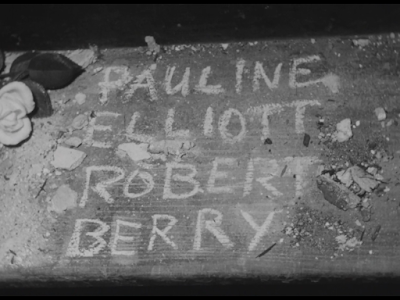
Cast: Robert Berry, Lance Bird, Charlene Bradley, Pauline Elliott and David Goodnow

An Abstract Candidate


[Major Plot Spoilers]

You can encounter some truly idiosyncratic films, ones you have never heard of and have no expectations entering them, which are something to be cherished. The most rewarding, even if flawed, feel like being in the creator(s)' minds, translated onto a format of any type. Even larger budgeted productions can sometimes be like this, but the lower budgeted films are more likely to be as personal as you can achieve. House of Dreams is fascinating as, made by Robert Berry - directing, producing, editing, partly shooting and starring - it feels like the lost sibling of Herk Harvey's Carnival of Souls (1962), a revered film whilst most of us, as I was, have never heard of this film at all.

House of Dreams is a supernatural mystery, horror but not as presumed to usually mean, more a curious short tale where one man, an author entirely fixated on his work, has macabre dreams that involve a strange house, each dream revealed if by fate or a sickly reoccurring chance to chime the death of someone he knows. These dreams are never explained, and I will have to warn a potential viewer you will never have a culprit to what this all means. The dreams are merely ominous predications already adding to a man's life. There is enough to deal with, between his writer's block and his distancing relationship with his wife, a sobered alcoholic who went into a clinic for mental health, who just wants her husband to show care for her.

Here, drama's tendrils in genre are found fully. Drama is a genre which is a vague one because of how vast and varied that term can cover, on itself likely to be found in any form as much as in danger of being dismissed as really bad melodrama unfairly, as much as horror is so vast yet can be dismissed as schlock. The amount of horror and gothic stories fully of dramatic beats which are compelling show they are natural bedfellows, and even the least appropriate examples that could be conceived, such as a splatter film, are inherently enticing to me to imagine. House of Dreams fully fits a micro-budget "art horror" genre tag, one where I realise one of the things I love in films, and why drama and horror are an enticing pair, is simply that even when heavy handed, as this can be, the moment a character opens up whether about their neurosis or quirks is inherently compelling for me.

The tone of the film, and its complete lack of a conventional explanation for itself, suits this, where the first death our writer lead dreams of, in real life a car accident, just leads to a very awkward post wake meeting with the wife in a scene imbibed in late fifties and early sixties bland suburbia, the wife with a bouffant hairdo and everyone mumbling around coffees in the lounge, the kind which feels closer to real life and also inherently suits the eeriness then a conventional acting performance from the cast. Here where it is more appropriate to, with the neurosis on display, it feels stiff at points in the tone to the point of ghostliness, a film in monochrome whose almost sibling nature to Carnival of Souls feels so eerie in itself, because both films have so many common traits, both why they succeed and how they were made, which also emphasises this compelling type of horror drinking from a form of drama. Two films, just a year out of each other, shot in the early sixties shot outside of Hollywood, with Carnival of Souls was shot in Utah and Kansas, House of Dreams entirely in Indiana; Carnival...  is fixated on an amusement park for its lead's obsessions, Saltair Amusement Park near Magna in Utah used, whilst House... about the titular house the protagonist dreams of too; both have idiosyncratic scores; both are about comfortable conservative middle America of the early sixties, sedate Americana, undercut by uncomfortable emotions under the skin; both have curious acting choices and dream sequences for the leads which take very little yet cause everything to be likely to dissipate into vapour if the images were touched. [Major Spoilers] And both end with the protagonists dead, or already being dead, with epilogues where the local police have to come and clear up the tragedies. [Spoilers End]. Neither is traditional horror, though fully indebted to tropes of the genre, as they are neither traditional drama yet indebted to its tropes too.

If there is a difference, House of Dreams is a chamber drama, more so the drama, that just happens to have nightmares in their centre, preludes to deaths in car accidents or suicides. Metaphors are for cowards spoke the horror author Garth Marenghi, and honestly, I come more to the conclusion for any work that attempting to strip the unnatural and supernatural in stories down to having a hidden meaning undercuts them and is pointless. When the emotions felt by a character experiencing them, and how the viewer processes this, is weighty enough. There is also enough surrounding House of Dream just in the lives of these characters anyway, even without the protagonist's gothic nightmares in the titular house to unpack. Even without the fixation on a rundown yet haunting place in the protagonist's dreams, you have a writer struggling to write, his gothic prose full of dread and horror, with a wife felt unloved and with a fragile state of being already which, between alcohol and anxieties, she could fall prey to again as he ignores her. In little time to tell this narrative, this manages a lot in its own style.

House of Dreams is the kind of film, whilst out of the period covered, of Stephen Thrower's Nightmare USA: The Untold Story of the Exploitation Independents (2007). The musician/author/commentator's book on regional horror cinema from the United States for me is a book of great reverence for, and alongside his enjoyment of the more openly pulpy side of them, he has championed idiosyncratic works of great depth, House of Dreams the kind of film this amateur writer would feel he would find so much within. Whilst feeling its incredibly low budget, production which feels like it was created with only a few people, no one with a lengthy acting career or an acting credit at all but still trying their hardest, everything that is imperfect to the film just adds to its aura, where its style is found even in having to use what was at hand. One major set, the titular house, manages to evoke a great deal before the more overt and eerie symbolism is used, and even that is based on the inherent ghostliness a person could feel wandering an abandoned house where ghosts, literal or those of another's memories gone, linger. Even a little detail like painting the film's credits around the house and its floor in the opening adds uniqueness to the production. Thankfully, the Indiana University Cinema Archive also found virtue in this film made in their state, preserving the film as part of their own cultural history. As someone who has only now heard of House of Dreams, I am happy for its preservation and for more to learn of this. It is the kind of unique film, once ultra-obscure and in some ways still is, that is a compelling discovery to find.

Abstract Spectrum: Dreamlike/Eerie

Abstract Rating (High/Medium/Low/None): Medium

Friday, 21 January 2022

American Job (1996)


Director: Chris Smith

Screenplay: Doug Ruschaupt, Randy Russell and Chris Smith

Cast: Randy Russell, Matt Collier, Ed English, Gary Ganakas, Dan Layne, Eric Lezotte, Dave O'Meara, Charlie Smith, Tom Wheeler

Ephemeral Waves


Some may be aware of American Movie (1999), the follow up to this film from director-future producer Chris Smith, which was a documentary on Mark Borchardt, a micro budget filmmaker from Wisconsin who, in a deadpan humorous tone, strived to produce and make the no budget Coven (2000). Almost no one has likely heard of American Job, a film I openly admit to only seeing finally due to someone leaking a VHS rip online, doomed to a rare ultra obscurity in spite of the follow-up from co-writer/director/producer Chris Smith becoming a cult hit and warranting interest. If Smith however was able to release this again, I would recommend we all pay for a copy, with only the caveat that you have a taste for the bleakest (and blandest) of humours in regards of the existentialism of minimum wage work.

Randy Russell, playing an unnamed character I will just call "Randy" too, is a thin bespectacled young man drifting in his twenties. Job searching, which I can attest to at least many years unemployed trying to even find work, is a nightmare, but even I look to this depiction of minimum wage wincing, more so as unfortunately American Job  decades later has not aged at all in what it depicts barring technological tweaks to work environments. It is difficult to avoid politics in a review like this, but the film is so deliberately beige in tone that it is not really politics based on parties, but a greater existential one of why things work as they do. You will watch the doldrums of work here, and know how little Randy and real people would be paid for similar jobs, and it would force one to contemplate even with a sick humour how society actually functions.

It is weird how minimal paid work can yet be some of the most important that you need to have in a functioning society. Yet here work is purely abstract, even with its listless tone being humoured forcing one to consider half these jobs to feel strange if you were to stop and reconsider why they exist. Randy, as he travels on, is as befuddled by how everything works as much as willingly drifts onto a new job. What you get here, in the netherworld of middle Americana, feels like an exhibition of the strange social mechanisms of the modern day, or frankly even early human civilisation. Even if a telephone marketer for insurance could argue their work is important for society, the job Randy is on in the end, as depicted, is so bland I am glad that it questions the validity of many. Even if fast food is viewed by some as more than just a luxury of the modern day, someone like Randy has to work in one, the image of long hours and the possibility no one has changed the fry cooker as unpleasant as it questions the nature of the work. It is neither a sense of business being inherently evil, unless it directly sacrifices lives or the environments, but when in this context, everyone is doing a job that really does not make sense, does not get paid well or feels like accidental purgatory, as one point Randy does read a book, one which leads to one of the bleakest jokes. This even evokes Franz Kafka, an author arguably bleaker than this film, on one of his more perversely happy days, the first job we see involving a machine, among many using chemicals for plastics likely harmful to person or tree, to make plastic pellets. It is a machine which only allows seconds between action to rest and is apparently making these plastic pieces for "testing reasons" with no further detail. It could a machine for the sake of manufacturing for all we know.

The sense of bleakness, the VHS rip watched adding a further blank inertness, is contrasted by how in the right mood you could find this funny. Director Chris Smith clearly does not paint even the managers in this world as bad in principal, only likely cogs in a machine where everyone is middle age or aimless younger men, and the work is just work without any sense of context. Environments look bland and even if working around what was practical in terms of sets and casting of women, the fact the strip club Randy is taken too at one is a blank room in red light is apt, as men watch aimlessly on at a woman nearby, only seen by her feet and for all we know not even nude. It is with a perverse sense of modern life also being humorously banal in a societal way as well. Randy in his own way defies the world around him as much as follows it as everyone else, from ignoring the money pools among multiple staff for lottery tickets, which he tragically ends the film not doing by being tempted into buying one from a store, to sneaking a trip into the bathroom to eat what looks like a dough-like substance. Considering as well, at the fast food restaurant, we as he looks as surprised as day's food left is deliberately ruined so no one can have it, you do have the moments of seeing business as evil when it is purely mechanical without any grip of reality to it, wasting resources for the sake of a place which, least in this film, the staff are as likely miserable as the customers we never see.

Here the passions are found, in a graveyard shift team, in the guy who feels you can recycle coke bottles by cutting them in half to have funnels and cups, even if he realises there would be less demand for funnels. It is a film, if you said it was a comedy, which would get many blank faces in response to this, with its static scenes being documentary-like to the point of blankness, where even the commentary on an amateur level you can make on its themes feels perverse due to its deliberately inert nature. Based on scenarios by Doug Ruschaupt, Randy Russell and Chris Smith together, you can argue American Job baring little details is a film about nothing, for the prepared compelling and testament to its virtues in how I want to revisit American Movie. Among documentaries I have seen which were praised, only to feel slight when I viewed them, I want to revisit American Movie, and feel these two films by Chris Smith may actually need to exist as a permanent double bill, as one provides the inert day-to-day, whilst American Movie's Mark Borchardt now feels like a person to idolise. Better to make low budget films whose titles are pronounced "oven" when you can, regardless of budget, than to merely drift through life.

Thursday, 15 March 2018

Blood Beat (1983)

From https://www.twistedanger.com/media/catalog/product/cache/3/
image/9df78eab33525d08d6e5fb8d27136e95/b/l/blood.beat.1983_front.jpg


Director: Fabrice A. Zaphiratos
Screenplay: Fabrice A. Zaphiratos
Cast: Helen Benton as Cathy; Terry Brown as Gary; Dana Day as Dolly; James Fitzgibbons as Ted; Claudia Peyton as Sarah; Peter Spelson as Uncle Pete; Franck Miley as Paul

Synopsis: Christmas season, Wisconsin. At the family retreat in the countryside, a family soon finds the merry season to be at ill-ease, the mother a psychic aware something is amiss in the homestead, and the new girlfriend of one of her sons disconnected from them. Could the random killings by a samurai in the environment be connected?

[Spoilers Throughout]

The infamy of Blood Beat, an obscure film but one which has slowly crept back into interest for those thirsty for odd American genre films, is that it is about a samurai ghost conjured to kill a person every time a young woman has an orgasm. Blood Beat does not exactly follow this premise exactly, in fact like a lot of exploitation/horror films deviating from these premises in the actual content. What sounds like a strange and lurid premise is something else entirely, as Blood Beat is still pretty weird as premises go. It does not get into the fact that it is still a film about sexual repression, family conflict, and a samurai inexplicably walking around the Wisconsin woodlands killing people.

Most of Blood Beat plays out like a very nihilistic family drama, where tensions are so high even Ingmar Bergman films have more levity compared to the attitudes and neurosis shared among these characters. Quite a few independent American genre films from this era have this peculiar trait, where they ingest other genres within them. They are the more rewarding, as rather than the generic exposition padding that the dull exploitation films have, independent productions like this instead ingest older types of cinema their creators grew up with or take on aspirations for more dramatic interaction between the characters. These films can  turn into dramas riddled with putrid emotional turmoil and this is among many.

From https://vinsyn-wpengine.netdna-ssl.com/wp-content/
uploads/2017/08/BB_1.1.3.jpg

That it is set at Christmas offers a hilariously strange tone to Blood Beat, considering its premise, but emphasises this dramatic tone. Where the (step)father has moments of frustration with his wife's behaviour, that which may be due to her psychic powers but also has a side found in drama where she spends her days locked in a room painting by herself. Where her relationship with the new girlfriend of one of her sons has the awkwardness of a new person in one's life meeting the family for the first time, only with the added issue that said girlfriend is acting strangely and has a black magic aura surrounding her which erupts through sensuality. Even the side characters meant to just be slasher film fodder have toxic relationships, such as an older couple where the husband barks orders to his wife whilst in the other room with the dog. It can be ridiculous how nasty and bleak these films can be - the most extreme like Carnival of Blood (1970) and Andy Milligan films being practically nihilistic of the entire human species - and Blood Beat whilst not as extreme has an unintentional streak of negativity for human relationships until its ending, suggesting family and their ancestral bond literally leads to spirit strength.

Whilst it can be seen as extremely crass, that her libido is a destructive, not depicted in a way that I feel is sexist but just a bit silly, the girlfriend character for three quarters of Blood Beat is depicted in a way that leads to the film's more rewarding aspects. Whilst it is a family drama inexplicably draped is slasher kill scenes, her plot thread is depicted as a low budget psychodrama, play in a low budget, not-quite Repulsion (1965) style with overt references of Carrie (1976). It never explains why the family has samurai armour in the house, or why a samurai was chosen for this very rural and American type of genre film, but she has before being revelled to be possessed by black magic a fascinating character for this film to have, one who is nervous amongst the family and troubled. One who flinches during a hunt, refusing to see an animal be killed, fleeing from the scene and beginning one of the first deaths. Her sensuality, whilst potentially eye rolling in how it leads to death, does play to Blood Beat's weird tone.

From http://media7.fast-torrent.ru/media/files/
s4/lx/df/krovavoe-mesilovo-scene-3.jpg

Director/screenwriter Fabrice A. Zaphiratos helps in this regard by incorporating avant-garde techniques that create a sense of disorientation. The droning electronic score, found in many a production like this at the period, helps in its atonal noises further for this sense that Blood Beat is going to drag itself into stranger places as it tried to juggle domestic sequences with disconnected slasher kill sequences. That it eventually includes the girlfriend's sexual repression, whilst potentially crass, nonetheless lets the film edge closer to being to psychotronic version of Repulsion with added psychic shenanigans, objects in the kitchen assaulting a character at one point for evidence, where even a box of cereal is potentially threatening.

Sadly Blood Beat decides to end the film in pure gobbledegook. Not compellingly strange, almost logical ideas which ultimately make no sense, but the cod-mysticisms that a lot of horror cinema has which has no actual sense of mysticism even for a fun premise. Eventually the girlfriend is shown, as mentioned, to be possessed by an evil black magic figure, whilst the mother and her children are represented as being forces of good, all with the type of practical effects rotoscoped on screen you see in Indonesian films like Mystics in Bali (1981). Not necessarily a bad thing but unfortunately in context of where Blood Beat was going, with its regional flavour and lengthy scenes of low budget drama, it is a tonal shift that is not compelling weird but just arbitrary. It is an issue as well as betraying the tone Even in an exploitation film, a more honest and rewarding way to tell a supernatural/paranormal story would be to accept the irrational as that which invades normal reality and is beyond logic. Even if it has a pseudo-dramatic cause, confusion is more profound in lurid cinema and art house drama alike. To attempt to explain it rationally is deceitful, and in most cases never is satisfying anyway, where the mystery is loss and the films unravel themselves in having to try to explain something which comes off as convoluted. It is poisoned for a psychotronic film like Blood Beat to make sense, so the ending does in spite of the film's pleasures does slip its qualities down a little.

From http://horror.wpengine.netdna-cdn.com/wp-
content/uploads/2016/05/bloodbeat-1982-ted.jpg

Abstract Spectrum: Psychodrama/Psychotronic/Weird
Abstract Rating (High/Medium/Low/None): None

Personal Opinion:
The film is still strange and memorable, but stepping back, even if you are willing to forgive Blood Beat for its flaws and admire its homemade quality from its French-Vietnamese director, he did drop the ball in story logic and in pure psychotronic entertainment by suddenly turning into a series of inexplicable coloured lights and psychic powers in the ending.

From https://vinsyn-wpengine.netdna-ssl.com/
wp-content/uploads/2017/08/BB_1.1.8.jpg

Saturday, 3 March 2018

The Jar (1984)

From http://2.bp.blogspot.com/-uMOUCrsYdAc/UT0PPnPPZgI/
AAAAAAAABAc/93GRnYSptxo/s1600/the+jar.jpg


Director: Bruce Toscano
Screenplay: George Bradley
Cast: Gary Wallace as Paul; Karin Sjöberg as Crystal; Robert Gerald Witt as Jack

Synopsis: A man named Paul (Gary Wallace) has a car crash, taking the old man in the other car to his appartment to recover. The old man however disappears without a trace, leaving behind a jar he was obsessed with taking along despite his severe injuries. Paul realises that, even when he himself tries to rid of the jar, the obsession and hallucinations that he is suffering through only get worse and real.

The Jar is a bizarre film, one of the more curious examples of independent genre film from the US. Information about where The Jar came from is scarce - the closest piece of origin story, a titbit of information from episode #31 of Killer POV, suggests it was a student film that got taken and made into a commercial release. This little titbit explains a lot, but even if this information could not be confirmed, you see the sense of a project where its creator crammed as many ideas as they could into the picture in spite of a very low budget, enthusiasm invading logic in favour of the inspiration.

From http://1.bp.blogspot.com/-R8MaG5w59PA/VZ6VfFJIYWI/
AAAAAAAACTE/vo8Hj-K-2VE/s640/400blows2.jpg

The jar itself at its centre is curious to say the least. Yes, it does have a ridiculous rubber monster inside it, looking like a gargoyle baby and an example of the more schlocky aspects to the material, but it cannot override what a curious thing the jar is. It is far less strange and imaginative than the jar itself, an unexplained object which causes distress for the protagonist in spite of not knowing why. Stephen Thrower in Nightmare U.S.A suggests a gay subtext of repression but the jar itself can stand in for countless anxieties and fears. The jar itself could just be a symbol of an unknown fear which feeds Paul countless nightmares. The jar inherently evokes a fear of that which is inexplicable, an object which by for whatever reason is inherently diabolical, the foetus creature straight from any other strange horror films unleashed on VHS at the time something which could have easily been removed. The jar itself is even more frightening regardless of what inside of it represents as he cannot escape merely the glass object itself, even when he gets rid of it, even when he destroys it many times. The jar creates He cannot escape the jar even when he gets rid of it, even when he destroys it many times. The jar creates violent forms transgression against his sense of reality, either hallucinations or even his world being sucked into various others legitimately.

From https://i.ytimg.com/vi/88hINrAJcL8/maxresdefault.jpg

From there you see The Jar as legitimately inspired and yet also a mess due to its structure. It is what one would hope to find with this type of obscurer production that, even if it can be frustrating and make no sense at points even for abstract reasons, the results are still compelling rather than predictable. The results are both those you would never get in other films but you are caught out with. You do not expect this type of internalised horror, where Paul is plagued in his apartment most of the film's length, to suddenly be dropped into a warzone near the end with soldiers without any further reference or content. Nor Paul entering an underworld in a religious, church environment where a figure burns a tarot card in front of him. A frenzied mass of inspiration is found within The Jar and in many ways this is for the better, even if nonsensical, rather than for the film to have become a predictable monster film based upon the jar's contents.

There is still a graspable trait to grab onto too. The subplot surrounding a building relationship with Paul and a neighbour named Crystal (Karin Sjöberg) does help The Jar a lot in having a solid foundation to tie onto. Even if it leads to a cheesy end where he mistakes her for another person in a gristly manner, it also helps with the potential metaphor of what the jar actually, a paranoia to his dialogue as he opens up to her about an evil force outside of himself which he is fighting against. Like a psychological fault which prevents him from being with her, it helps the film be more interesting for all its genre trappings by placing it as a psychodrama where the drama just happens to lurch into other realities. It becomes the lynchpin to at least prepare the viewer for the more heightened moments, grounding the film until eventually it become more and more seeped in the irrational, even lurching into black and white for a decrepit urban environment, even leading to Christian symbology you would expect from a heavy metal album for an utterly unexpected conclusion to the events preceding it. Even the fact the performances have an amateurish nature to them help as, whilst the attempted romance and drama is helpful to paste the scenes together, their stiltedness help as much to The Jar's eerie air. The stunted line readings are appropriate for a film that feels like a hallucination, a synth score droning underneath which sucks into its maddened nature further.

From https://images-na.ssl-images-amazon.com/images/M/MV5BM
mFlN2Y3ZjMtODRkOC00MmIxLWE1NTYtZTdm
MTVjOWI5ZjU1XkEyXkFqcGdeQXVyNDUxNjc5NjY@._V1_.jpg

That the film ends with the jar attaching itself onto another person gives it an even more interest side, in the sense that in the VHS sheen of what I experienced, this could repeat and repeat all over again with more and more people becoming fixated and damned by the jar for no known reason. Horror even at this messiest is more rewarding when it plays to a more irrational side where one cannot fully define it, not a conventional monster but weird like this. Even if the poster looks cheesy and ridiculous, The Jar stands out more as an underbelly of strange American genre filmmaking which, viewed on tape or DVD or even online rip, is still compelling in a vague hallucinatory nature. Yes, this is bearing in mind that viewers could find the film irritating in its slow pace and lack of conventional plotting. And it is sloppy as hell in construction. But, like the most interesting of these oddities, they are compelling for the same reasons they confound.

Abstract Spectrum: Psychotronic/Surreal/Weird
Abstract Rating (High/Medium/Low/None): Medium

Personal Opinion:
This is the kind of film that capsulate how any work could get released on video back in the eighties and. For those who are patient,  you find artefacts like that do induce a haze on a viewer amongst the generic crude. Where someone on a very low budget crammed as many ideas into the project as much as possible. Some of it does not make any sense, but it evokes a sense of maddened creativity even if unfocused. A sign of where these curious productions succeed even against adversity in this case, or at least strange enough to appeal beyond its limitations.

From https://assets.mubi.com/images/film/112671/image-w384.jpg?1445944698