Showing posts with label LGBTQ Cinema. Show all posts

Thursday, 4 November 2021

The Watermelon Woman (1996)


Director: Cheryl Dunye

Screenplay: Cheryl Dunye (with Douglas McKeown)

Cast: Cheryl Dunye as Cheryl; Guinevere Turner as Diana; Valarie Walker as Tamara; Lisa Marie Bronson as Fae 'The Watermelon Woman' Richards; Cheryl Clarke as June Walker (as Cheryl Clark); Irene Dunye as Irene Dunye; Brian Freeman as Lee Edwards; Ira Jeffries as Shirley Hamilton; Alexandra Juhasz as Martha Page

Ephemeral Waves


It is a question to ask even if crass, but how should a white heterosexual male like myself approach reviewing a film by a lesbian black filmmaker, especially in mind to the point of the film being about the lack of representation for someone like Cheryl Dunye, attempting to deal with this subject which even decades after the film was released is still a concern in terms of representation? By admitting this immediately, to be honest, an outsider who wanted to see this film for years and comes to what is Cheryl Dunye effectively playing herself. This is a tale where, as a struggling filmmaker who becomes obsessed with a reoccurring African American actress in old thirties films, she will reach the point she has to tell the stories of gay black women like herself and this actress, even if she ends the film by herself having decided to focus on what morally is more important to her. Even if it means sacrificing a romantic life, even if it means being argumentative with people and confrontational on the lack of representation, and even if it means a schism with her outspoken friend Tamara (Valarie Walker).

Cheryl works in a video rental store, with side work filming weddings on the side, searching through old thirties and forties films until she encounters a Southern plantation melodrama and a mysterious figure known as "the watermelon woman", an unaccredited African American actress in a minor role who she becomes emotionally attached to. Wishing to know even her real name, this woman becomes the mystery we follow through to learn of as a real person. The mysterious woman, and the film she stars in is fake, the film existing in a world where "Fae Richards exists", the figure whom Cheryl will come to know her as and the existential journey that follows throughout the whole film, stemming from an unnamed black actress playing the stereotype of a "mammy" maid figure to finding the real woman, an openly gay black woman who worked in nightclubs as a singer and lived a life beyond one film. Even as a fictional figure, in a nineties film, she represents a voice of a minority lost and needing to be pierced together from a slog of hard work to represent. Whilst the film is of its era of the nineties, this is pretty ahead of its time of critically uncovering and representing voices unheard from, something that would come far more, especially for non-white hetero male voices, in the decades after.

It is admittedly part of the film too, adding an amusement, to look at how nineties said film is too. I am not even referring to the way the film looks, a low budget film with a zippy aesthetic of the era, but just the content onscreen. A reference, in this era of growing numbers of indie productions, to Spike Lee appears for a joke for example, specifically School Daze (1988) where someone Cheryl is stuck with in a double date tried to get an audition by singing terribly. (She then proceeds to try Lovin' You by Minnie Riperton, the song with the heighted vocal pitch required to sing parts of to emphasis this). Having to explain what a videotape rental store is to a younger viewer, and I just missed this era myself, is going to be something to raise too, as alongside the store having a shelf for David Cronenberg you have to explain you once rented reeled tape with film in plastic cases1. Everything else has not aged at all - in fact, at this point in a decade is when I consider pop culture decided to eat itself, looking back at the 20th century and reflecting on the culture of that time even in what was adapted for Hollywood blockbusters. Here, this proved for a great purpose, as even in fictionalised form, this is referring to an earlier era of low budget films made for black audiences, black performers and black performed night clubs of the thirties and forties, and the culture for black lesbians of the time.

Here as well, Cheryl Dunye is willing to get into a much thornier take on what her own identify and others is. As herself even in a fictionalised version, feminist scholar Camille Paglia appears with a very awkward monologue about racial stereotypes. On one hand, it is striking for her to talk about the watermelon, a problematic stereotype for African Americans, in her childhood of Italian heritage being something of joy, almost something of call for African Americans to reclaim these problematic tropes in North American pop culture...except this is still a white feminist, suggesting to African Americans to scrutinise these ideas themselves and reclaim them, compromised by the sledgehammer lack of subtlety as an outsider. It is something Cheryl Dunye was more than likely hinting at its complicated form by having the sequence in the film in the first place.

Dunye   herself arguably reclaims the "mammy" image briefly, even performing a drag version full heartedly, and does openly mock whit feminism without qualm when Cheryl goes to C.L.I.T. (Centre for Lesbian Info & Technology) in New York City, a feminist archive where the black lesbian section is only two boxes, and the woman running the group, played by LGBTQ novelist and activist Sarah Schulman, is an obnoxious and overbearing person. The film is willing to get into the thornier side of people in general. Her version of Cheryl does get confrontational to an extreme, but the most extensive cases are her having to hit against people who carry a negative wall of approach - most prominently, when Fae Richards is revealed to have been dating a gay white female director, the sister of the late director lives under the view denying her sister's sexuality. Likewise, Cheryl's own life is complicated, eventually taking the noble goal, sacrificing her own wishes, for the better of representing voices like her own.

Her friend Tamara is more openly confrontational, constantly chastising Cheryl for not just trying to date and staying single in her obsession with being a film maker, and eventually shows real biases of her own, especially to people not gay black women like herself who want to date a lot. Cheryl's own romance with a white woman Diana (Guinevere Turner) is marred realising, as a bisexual woman from out-of-town, Diana is revealed is not really engaging to Cheryl emotionally, though their romance is the one aspect of the film which is arguably not as fleshed out as the other subplots. The one thing Cheryl can fall back on, in this complex place in her life, is finding who Fae Richards is. The hours taken, the distances walked and travelled, even the criticisms absorbed to improve herself by asking what the documentary in Richards is meant to be if ever finished.

Obviously, what Cheryl Dunye perceives in all these characters herself deserves priority over an interpretation. She does however not need metaphor to hide the message out in the open, representing a lost voice and those like herself in dire need of representation. This is something, ironically, which is why a film like The Watermelon Woman is both a time capsule of the time but also ahead of its time in what its themes are. One scene in the film played as awkward comedy, where Cheryl attempts to find research material in a library, demonstrates this. Another is about one piece of research she comments on in her documentary, a book on the subtext of lesbian women working in classic Hollywood, which she shows annoyance of being written by a man, but finds it more problematic how it reduces someone like Fae Richards to a brief sentence.

Saying this is a lower budget film is absurd from my context, as an amateur writer who feds himself on shot-on-video productions of far less budget, which is the one thing I can make a legitimate claim of as an outsider to this film, in how as a result this film looks ambitious and elaborate within its limited budget to a virtue.(Also contrast this to a film like Mark Rappaport's From the Journals of Jean Seberg (1995), one of the many projects of his from his era, including one about Rock Hudson's sexuality, which is an attempt to reclaim the life of an actress who did exist, by way of a stand-in in Seberg talking directly to the audience and film clips of her career. That is a very low budget affair in comparison which still has a noble ambition). The recreations are the only aspect of The Watermelon Woman you can see the limitations on, as the story of Fae Richards is ambitious to tell in fake film clips, fake newsreels and photos, the costumes the aspect in some cases that provide the historical time frame with severe restrictions. The photos are still effective in historical accuracy, and the home movie footage of Richards at the end of her life is completely poignant, using the appropriate film equipment for this for bringing a viewer into the world of this fictitious figure.

That this is a fiction film with a comedic edge is something that can be easily forgotten to. As much as this is a profound film in its themes, this is still a laid back comedy, whether it is commenting on how awkward a blind date with a girlfriend's friend who is "very spiritual" is, or that Tamera, despite being the proudest of gay women, still sneaks in heterosexual porn tapes into customer orders for herself out of curiosity to see what the other gender's genitalia in action looks like. This is also a film, whilst one sequence only, where for a sex scene Cheryl Dunye herself takes a rare step as a filmmaker, with co-star Guinevere Turner, to do nudity herself which is bold and admirable. That this is also a scene meant to be erotic, but directed from a gay woman's gaze, is of note even if it is just one scene for a film about many, many other things.

The Watermelon Woman was a film I had wanted to see for years, as mentioned, but I am glad, rather than exhilaration felt, it was more a quieted reaction that had to be followed by contemplation. It means actually having to consider the pieces that make up the film, with a greater respect then a flash-in-the-pan emotion of jubilation. The time, allowing this to sink in, shows more of the virtue of the film tenfold to applaud.

=====

1) A really unexpected is the sight of a poster for Urotsukidôji: Legend of the Overfiend (1989) on a back wall in one scene, a really bizarre background detail to consider nowadays for an entirely different review, but worth mentioning of being of the era.

Sunday, 6 June 2021

Shakedown (2018)


Director: Leilah Weinraub

Cast: Egypt, Jazmyne, Mahogany, Ronnie-Ron, Slow-Wine and Keyonna Taylor

Ephemeral Waves


Some places are just hard to find.

In the midst of the COVID-19 pandemic when it began in 2020, where many were likely watching films on the internet unless they had also acquired large DVD collections to finally go through and rewatch, there was a perfect time to appreciate cinema's more maligned areas when blockbusters were being held back for a year or unable to be completed. At a time where there were films lucky to have been finished, but many were instead delayed or not yet released, the time useful for the sake of bringing attention to both retrospective titles, like the virtual We Are One film festival which screened on YouTube between May 29th and June 7th 2020, but also smaller independent releases. This context is worth bringing up as, alongside being a fascinating documentary built from footage director Leilah Weinraub filmed through the early 2000s of a lesbian African-American strip dancing group known as Shakedown, Shakedown's history should also include the fact it premiered on PornHub1 even before going onto the Criterion Collection's streaming service or the film's own website. That is a distinct thing consider, especially as this is proudly an LGBT work about lesbian African-American culture, juxtaposed by this distribution context.

This detail has thankfully not overshadowed the film, in mind to Pornhub and mainstream pornography being still seen as a local leper, due to problematic attitudes to sexuality worth questioning as much as problematic puritanical attitudes that single out porn for no justifiable reason. Historically, it will show alongside entrepreneurism that Shakedown's director Leilah Weinraub took this brave risk, and she deserves blessings for a great work but also for having a promotional decision that, as this would afterwards be on The Criterion Channel, blurs media sides. It also fits a film whose (evocative) poster and its footage within itself is not shying away from being sexually frank too. Within a world of "studs" and "fems", the world of Shakedown is of female dancers in erotic and explicitly sexual dances for a female clientele, surrounding them on the dance floor and even slipping dollar bills in their g-strings. Shakedown both is a film proud of being sexually explicit, and also one without needing to spell it out that really forces one to question notions of gaze and idealised physical attractiveness.

Coming to this as a male heterosexual viewer, obviously this world is for me from being an outsider, and as a white viewer as much so. It would be frankly stupid to consider my opinions the ones to follow in thought on this document. As an outsider however, probably the most fascinating immediate detail is that, whilst the dancers and patrons are of all shapes and sizes, many of the women we follow and interview dress and perform in deliberately hyper-feminised ways in their performances, usually seen from a male heterosexual form of eroticism when depicted. The film has discussions on this whilst stereotypical images such as money placed into g-strings and twerking are witnessed in a world of proud gay black women who dress and act how they want.

It is technically a documentary, but it is more meaningful to call the work an archival project experienced in first person by the director, Weinraub putting together filmed pieces shot by her during the nineties into the early 2000s following female go-go and strip performers at black lesbian bars. As someone who is remotely alien to this world, it is an uncensored lens to the world which is greatly appreciated as much for its pride in showing itself. We see the people in this world and talk about a world of theirs. Egypt, among the many dancers with such distinct stage names like "Slow Wine" and "Jazzybelle", is one of the most prominent voices, who openly admits to having once as a teenager in high school, not coming out as gay, having beat up other girls in high school who tried to make a pass at her in cheerleading groups, a long progression to finding her sexuality when having been brought to a gay club called Catch 1 without realising its target patrons. We see these dancers as ordinary people, Egypt's girlfriend both a former teen fan who found a poster of her and that is the real woman against her persona Egypt. We see the backstage, dancers getting changed and ready to go out, and there is a lot on how many of them came out of the closest later in their lives. One of the most distinct figures, the MC Ronnie-Ron, talks of having been from a Jehovah's Witness upbringing, not coming out as gay and originally when she had being a "fem" only to find herself as a "stud" dressed down much later, become one of the most charismatic figures in the documents as much for the brash personality that would have came to her in that time.

We see gay parents, one a female dancer with their daughter the first "Shakedown baby", one of the absolutely sweetest segments to see, including footage of an interview show called Issues in the Hood, where for the one person surprised of one of the female parents' occupation, another person calling in says they should be proud of themselves regardless of said occupation. In contrast, returning to the poster of Egypt, that is one of a couple of tales of how posters of her advertising the club, homemade posters for Shakedown and other "parties" shown throughout, became fixations for teen girls. Against discovering their sexualities there is also however a tangled web in the cases brought up. Even in mind to an anecdote of one girl stealing a poster from her mother to keep under her bed, and being beaten for it, a lot of blatant outward text of one's inner life when one's parents having posters for these clubs, even if married, is talked of a few times, alongside the fact that Egypt's friend who brought her to the club, which led to her finding her sexuality, was gay to her surprise too and unaware of.

Throughout there is a nice and subtle reminder, without hammering it home, to never make snap judgements of what sexuality should be as, between a performer who deliberately exaggerates her costumes to the point of drag to Egypt herself, who was came out gay only when she was brought to such clubs. These are all individuals and their sexual attractions vary wildly. Their matriarch Mrs/Mother Mahogany, who runs the clubs, even talks of there being a vast difference between stripping for male patrons and for women, for the later far greater need for dress, pose and how to portray femininity to tantalise the female audience, whilst the flexibility and openness of the community means that, costume and body diversity alone, all the dancers here are vibrant and powerfully eroticised figures in full control of their own image. Whether first wearing a full fireman's costume, street clothes to suits or costumes deliberately chosen to barely conceal a thing, this is as vast and creative as you can get from these performers in how to express them. Particularly, again with mind as an outsider, of the stereotypes of how black women are sexualised in mainstream media, it is really ironic and fascinating that those stereotypes are embraced by quite a few of these dancers, including in dressing and acting in a way to emphasise their figures, alongside women in the crowd or running the establishment who do not wear makeup, dress down and act the complete opposite. 

It is only seventy plus minutes long, which is a shame as this subject matter (if the materials recorded at the time were plentiful) could have been longer. A timeline of this culture in Los Angeles with footage shot by the director on early digital cameras, it is low resolution and of its time, among the homemade posters and DIY attitude of the performers and their MCs. The film is proudly sensual and erotic for any viewer of any gender and sexuality, but entirely from a perspective of a minority in LGBT culture with its own characteristics, which is a huge virtue of the film coupled by the complete lack of patronisation and lecturing within this world, throwing them instead into the middle of it with some onscreen text and talking head interviews for context. Entirely working class, with a lot of background in Baptist and Christian churches, this world is shown and allowed to breath. There is even male figures, such as an older guy who talks of being in this area the Shakedown headquarters are at since the fifties, who looks to the club we follow with friendliness and mutual respect as someone who is hired as an employee.

The only time Shakedown depicts anything oppressive is when two male white police officers abruptly appear in the middle of a performance and arrest a dancer halfway through her act for soliciting, not even bothering to cover her up as they handcuff her hands behind her back in a way that comes off as humiliation. The sense of this club, and these gay women, being outsiders is finally felt as it is male police officers who continually appear to interrupt the club, disguised in plainclothes and abruptly appearing as outsider threats. Their sense of banality, when the director manages to get conversation with them (even if lying about having turned her camera off), makes it far more troubling especially in how, in the middle of 2020 and the COVID-19 pandemic, the United States went through the entire Black Lives Matter movement and a lot of greater existential questions of how police should be. Ultimately the male owner of the building not wanting sex taking place in his establishment is what tragically ends the Shakedown parties, he feeling like an outsider without understanding the wholesome environment he is intruding on, forcing eventually the tale of a safe place being torn down and having to be rebuilt as the ending.

Shakedown is a film I admire just from the perspective as an outsider to this culture being permitted access to this environment. Hence documentary as a genre tag would be a disservice when this deserves to be called a home movie, to embrace the intimacy of Leilah Weinraub being a participant of this world, and an archival piece, worthy of those tags as positives as it is a snapshot to a place and community bristling in energy and excitement. More so as this is a community of progressive ideals, not stereotypes stand-ins as framed ideals, but women who are a variety in who they are and themselves a far admirable image to raise up as an LGBTQ ideal. The decision to premiere for free on PornHub was only until the end of March 2020 and, sadly, this is easily a film that can slip through the cracks after the initial surprise of that promotional strategy, when in truth it is one worthy to see. Choosing PornHub ultimately has a rewarding existential question in itself too. In late 2020 as well, PornHub flushed half if more of its user generated content when accusations of unwholesome content were made at them2. They themselves too as the mainstream face of porn is an albatross around their necks too when, in image, the stereotypes of mainstream pornography can easily stick to them even for all their amateur and professional figures of all types who create material for the site. Not even in terms of questioning the tropes in mainstream porn either honestly, but whether the tropes are in themselves gauche.

Something like Shakedown is a rewarding and even subversive work to briefly have connected to such a site, with real LGBTQ women proud of themselves, and painting an image of their own desires and sexuality which, as mentioned, defied many presumptions. That of a) what is eroticism for a gay female gaze and b) that presumed stereotypes of the male heterosexual gaze, in shapes and sizes, do not necessarily exist as things merely only men like, but that the problem was always the male objective gaze, not a woman's dress sense and figure. The film also does not in the damndest hide the explicitness of the sexuality, both in how explicit the nudity seen is, and even with eroticised smothering of whipped cream at one point mid-dance, and a mock strap on performance, among scenes. A hell of a lot more powerful erotic imagery can be found here regardless of the average viewer and their sexuality and gender, greater knowing it is for gay women by gay women.


========

1) More detail on the film can be read HERE.

2) HERE.

Tuesday, 11 February 2020

Benzina (2001)


Director: Monica Stambrini
Screenplay: Anne Riitta Ciccone, Monica Stambrini and Elena Stancanelli
Cast: Maya Sansa as Stella, Regina Orioli as Lenni, Mariella Valentini as Eleonora's mother, Luigi Maria Burruano as Padre Gabriele, Chiara Conti as Pippi, Marco Quaglia as Sandro, Pietro Ragusa as Filippo
Obscurities, Oddities and One-Offs

Benzina, which translates to Gasoline, is a forgotten film that is of interest in hindsight to LGBT cinema, from an female Italian director, about a gay female couple who run a petrol shop. A premise that feels post-nineties in aesthetic, its a post-nineties work with a slick punkish energy. Benzina's closest contemporary is Bound (1996) which was made by the Wachowskis, who back then before they came out as transgender decades later could've accidentally made a crass film but even went as far have an advisor to get its depiction of its female characters right, all with a slick looking genre film that just happened to be about two women in love.

Certainly Benzina is stylish, not excessive but neither of the Italian neo realistic genre in the slightest. It wears this on its sleeve by having a print of Nina Hagen etched as a wall mural on the garage wall, a legendary East German post punk singer, and even references her in a character's backstory, in which Maya Sansa's Stella talks, as someone who didn't know her mother picturing Hagen as her instead. One particularly piece of aesthetic style is even made part of the plot with the main antagonists, two chauvinistic males, whose girlfriend tagging along has a film camera that is recording everything they see and we the viewers see through constantly.

Structurally, the film is set up with the mother of Lenni (Regina Orioli), enraged by her daughter living in a romantic relationship with another young woman named Stella (Sansa) running a garage, is accidentally killed, the pair trying to dispose of the body with setbacks in the way, including those two men who are encountered many times in increasing escalation of dangerousness just because, as two loud mouth chauvinists, they're initially set off by Stella scratching their car out of spite. The film never becomes over the top with this, and honestly never becomes dated either, with the obvious exception of the drum and bass soundtrack. That musical choice is definitely of the nineties but works nonetheless.

Benzina is a loosely plotted film, the roadblocks in the way of the main duos' plan continuous as their own drama is told, including even when they are stuck having to let a disillusioned Catholic priest hitch a ride, providing them a monologue about the falsity of love as they drive in urban Italy at night. Its meshing with genre cinema is poignant for the simple reason it is cantered around a romance between two female protagonists, the more strong minded Stella and the quiet Lenni, which is arguably still not common decades later still outside of LGBT productions as it should. The Bound comparison feels right as, like it, Benzina is entirely matter of fact about its protagonists being two women in love with each other, mostly shown in their interactions. The few times it's shown physically, as in Bound, are slight but erotic without being objectifying.

And credit to Orioli and Sansa, they stand out as the leads. In a film which plays to some obvious plot tropes done many times before even this film - being forced to move the body around, a car pursuit that eventually leads the leads to a giant indoor party in the middle of a field, and a lot of scenes at the garage including the tumultuous sequence of property damage for the climax - their relationship is always at the forefront, always about their conflicts in their relationship and the clear love for each other too. Even the main antagonists have a sense of why they are who they are due to toxic machismo, even the sexual threat not inappropriate but a result of problematic behaviour and the characters throughout the film being drunk on alcohol and later drugs, factors which make their dangerousness not cartoonish nor tasteless as they eventually get riled up and high on coke like a pair of obnoxious idiots who cross a line. That the film's McGuffin happens to be one of the main character's dead mother, for a character with clear emotionally issues which causes her to act erratically under immense trauma to the scenario, feels natural to the plot and of weight. Especially as Orioli, in vast contrast to Sansa's confident body language, plays the bespectacled and mousy woman in the couple who is visibly with personal issues, and does it well, she makes a lot of the conflicts and quirks in the way of their task credible.

Obviously, there is the issue that the film does end with a tragedy without spoiling too much. This is more of an issue due to many films having tragic endings for gay female characters, the unfortunate result of repetition and stereotypes rearing up in cinema that naturally would make this an issue. In Benzina's defence, even this has a triumphant blaze of glory attitude to it that is exhilarating. Beyond this, the result is a good film, one I'm surprised is this obscure. I learnt of it when, back in the 2000s getting into cinema, I collected magazines for DVD release news and reviews, once ago when that could actually be lucrative. The review for this when it was released was negative, but the little it talked of, of this transgressive film which described early on a death and puking, which does happen, caught my attention and lasted over a decade plus. It's not as transgressive as it was painted, but thankfully, Benzina was something of great interest to finally uncover. Sadly, whilst she has still made films to the current day, director/co-writer Monica Stambrini has become obscure as well.


Wednesday, 21 August 2019

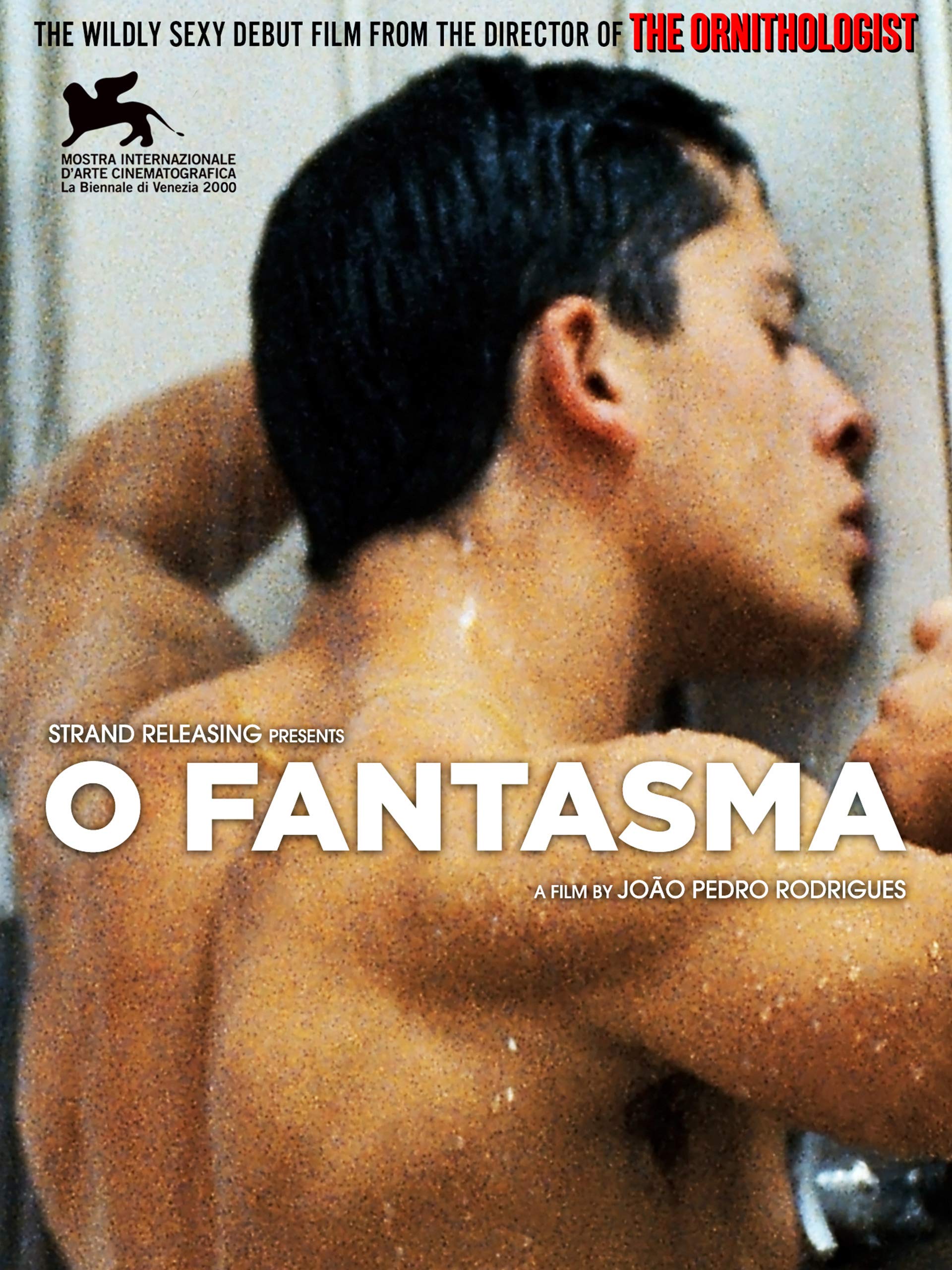
O Fantasma (2000)

From https://images-na.ssl-images-amazon.com/
images/I/81zflOAcOmL._RI_.jpg


Director: João Pedro Rodrigues
Screenplay: João Pedro Rodrigues, José Neves, Paulo Rebelo and Alexandre Melo
Cast: Ricardo Meneses as Sérgio; Beatriz Torcato as Fátima; Andre Barbosa as João; Eurico Vieira as Virgilio

[Full Spoilers Ahead]

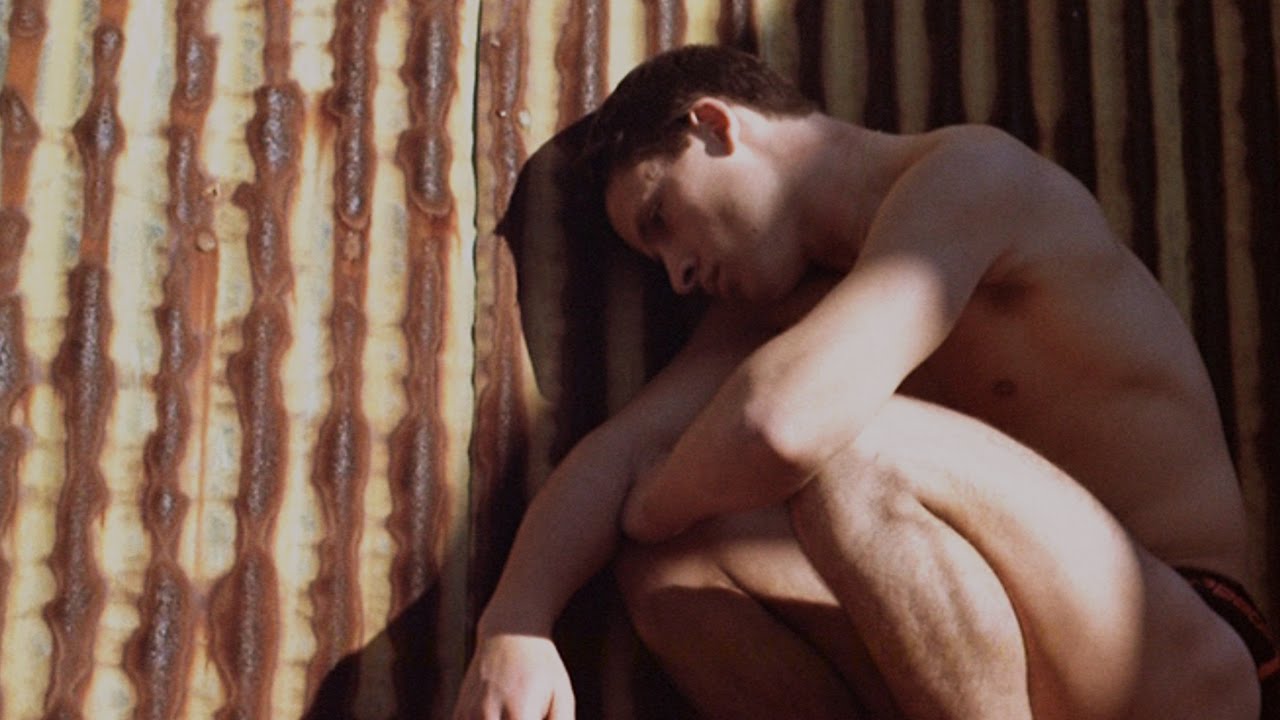
In mind that for many people, life is a cruel existence of constant yearning, I've probably developed a greater ability to follow protagonists in cinema who could be entirely duplicitous or even evil, but the experience in the best of cinema can be a trail to map their obsessions and the route leading to their downfalls and experiences. Even if the plot is minimal, it's at least with a logic that has meaning for them. In the case of Sérgio, protagonist of Portugeuse director João Pedro Rodrigues' debut, his particular yearning is a sexual one, the garbage collector desensitized by even a hook-up and BJ by another man in a urinal. Even when he gets into the strange erotic experience of masturbating a cop handcuffed in a car, it's only because he's abruptly encountered the sight and is curious.

O Fantasma isn't a "nice" film, a reminder that the wave of LGBTQ cinema of yore had teeth, a necessity felt from the likes of Kenneth Anger up to bisexual director Gregg Araki's Teen Apocalypse films, all in many ways reminding the viewers that the life of a gay man is not a one-dimensional construct. (The same for gay female filmmakers, though the fact that their work feels still maligned at times is frustrating). Admittedly, a film like O Fantasma starts immediately with a sharpness that will immediately make or break the film, where a leather gimp is shunting a handcuffed man from behind as a dog is pawing at the closed doo outside in the corridor, the film become even more transgressive and dark as it goes. As a heterosexual man, I am aware I am an outside looking in the metaphorical window, always in danger of distorting the image a gay viewer has more to be concerned of in interpreting, but it can probably be agreed upon that when we delve into the life of this anti-hero, a guy completely disconnected from the world barring a vague stimulus, his journey has a weight. The tangent from finds Speedos in the garbage he likes rubbing against himself to wandering a landfill on all fours in the aforementioned homemade gimp outfit is felt with having a logic to him even if that's bizarre to write as a journey in one sentence.

Another particular obsession is this rise in an idiosyncratic type of world cinema, very relaxed paces but yet to meet the post-Michael Haneke style of minimal filmmaking, instead a very idiosyncratic verisimilitude I grew into cinema with through the mid 2000s onwards. Films that are closer in looser plotting and introspective to novels, and have a realism in shooting on location, but had a tendency growing up for me, no matter no country of origin and similar production styles, of always being unpredictable, a wonderful richness in how they could never be signposted in clichés and that, not in this case but found in Rodrigues' The Ornithologist (2016), not afraid to enter magical realism or full blown surrealism. They also could be transgressive, O Fantasma somewhat early to the controversies the likes of Carlos Reygadas would get to in the mid 2000s but around the proto- era with a character in Sérgio who isn't exactly like an open book. He's a young man who has a love-hate relationship with Fátima, the young female member of the garbage collection team that is almost entirely male, her physical attractiveness confounded by a potential romantic rivalry with their boss, with the added complication that a) Sérgio is gay, or at least more attracted to sex on a raw level to anyone but Fátima, and b) more closer to the group's station dog in terms of friendliness.

From https://i.ytimg.com/vi/P349Z7C1YG8/maxresdefault.jpg

Filmmaking wise, this is a muted, down-to-earth production which I commonly connect to an international style as mentioned a few paragraphs ago. This is from what I gather Rodrigues' most down-to-earth work in stylistic aesthetic; O Fantasma is proudly grotesque instead to a deliberately provocative style that contrasts these strange events we see with a logic. Mainly that the world of Portuguese urban life looks dull, Sérgio literally a nocturnal figure who comes out in the light out of work with no defined time where he sleeps. So comfortable in dirt from his job, he finds clothing like a black thong in the garbage and takes them home to festishised and wear unwashed, an ordinary thin and handsome guy who looks like anyone, whose compassion is shown in how he loves the dog, but is utterly disconnected from all. Even, as mention, sex in a bathroom is abruptly ended for him because he cannot gain anything from it.

Hence, he eventually becomes a literal phantom, culminating over the tensions he encounters, the film wilfully touching upon the idea of sexual violence from one male to another but as a fantasy, an even more taboo concept the older the film becomes, handcuffs and extreme fantasies played with. The film shows no judgement, doesn't damn or praise, merely depicts and you the viewer are forced to make up your mind on, which I see as the other virtue of world cinema into the Millennium. Eventually our protagonist ends up in a landfill, lucky enough to have created a costume that can allow him to relieve himself but doesn't have pockets for food in its skin tight nature, forcing him to catch a rabbit to sustain himself, drink muddy water in a ditch even if it's likely the cause of him puking later, all felt without a sense of a man degrading himself but someone who snapped, the tensions at work against his own little world merely colliding.

Is it all worth it? Yes, in mind I have viewed this type of world cinema less in terms of plot narrative but that it merely was a backbone for mood and introspective chamber pieces, subconscious narratives inside our casts' heads onscreen. Certainly in the small but growing filmography of João Pedro Rodrigues, who sadly isn't a hugely known figure despite carving a name in the small canon of prominent known Portuguese filmmakers, has never clearly cared for conventionality. Instead, he willingly deals with characters thrown into scenarios which deal with sexuality and in an existential state, taking to a greater point in The Ornithologist in how a secular ornithologist ends up on a spiritual journey through surreal vignettes, even to the point he transforms into the director himself playing the same character, literally taking its prangs of thought and placing them directly onto himself in a way that offers me a chance to be even more empathetic to him as an artist willing to bare himself.

Obviously, I wish these films were more easily available, but what I see by luck (and MUBI's streaming services) is to keep treasured, even when seeing a gimp in a cavernous industrial work area taking a dump isn't conventional Saturday night viewing imagery. Far from tasteless and problematic, human if profane is the best word to describe this film, philosophical regardless of a viewer's sexuality and gender. That it's still provocative to this day, and never in a way that's trying too hard to shock, is also a virtue that I wish was more common, something to be learnt from in this film.

Abstract Spectrum: Grotesque/Provocative/Sensual
Abstract Rating (High/Medium/Low/None): None


From http://fr.web.img4.acsta.net/r_1280_720/medias
/nmedia/00/02/23/73/69197521_ph1.jpg

Saturday, 2 March 2019

Poison (1991)

Fromhttps://m.media-amazon.com/images/
M/MV5BNjY1Njk3MTA4Ml5BMl5BanBnXkFtZTcwMzQ2Mzk2NQ@@._V1_.jpg


Director: Todd Haynes
Screenplay: Todd Haynes
Cast: Scott Renderer as John Broom; James Lyons as Jack Bolton; Edith Meeks as Felicia Beacon; Millie White as Millie Sklar; Buck Smith as Gregory Lazar; Rob LaBelle as Jay Wete; John Leguizamo as Chanchi; Anne Giotta as Evelyn McAlpert; Lydia Lafleur as Sylvia Manning; Ian Nemser as Sean White; Evan Dunsky as Dr. MacArthur; Susan Gayle Norman as Dr. Nancy Olsen; Marina Lutz as Hazel Lamprecht; Barry Cassidy as Officer Rilt; Richard Anthony as Edward Comacho

Synopsis: Poison is a triptych of three tales - "Hero", "Homo" and "Horror". Hero is a mock-documentary exploring a tale of a young boy who murdered his father, only for the image of him to drastically change as more is learnt. Homo follows a male prisoner in a 1930s jail, his erotic experiences with another man in the past rekindled when that person is transferred to his jail. And Horror follows a male scientist who, having found he can extract the compound of the libido into liquid form, accidentally consumes it and unleashes a virulent STD among the populous.

Poison wasn't Todd Haynes's debut; it was his first theatrical length production but the first was the acclaimed by infamous Superstar: A Karen Carpenter Story (1987), an innovative depiction of Karen Carpenter's life by way of Barbie dolls which got into trouble for using licensed songs by The Carpenters without permission and likely pissed off her surviving brother Richard by showing him in a very negative light.  That film now lives in a legal limbo which nonetheless hasn't stopped a copy being preserved in The Museum of Modern Art and the production to mysteriously be available online; Poison, whilst with acclaimed from the 1991 Sundance Film Festival, was just as controversial. The spectre of the AIDs crisis and a repellent homophobia marked the era; Todd Haynes, as a gay man, isn't hiding any of his anger and frustrations from his perspective. Horror, his monochrome sci-fi horror segment, is openly a metaphor about infection and pariah status and that's just a piece of the whole puzzle.

From https://fqtemporary.files.wordpress.com
/2011/10/fq-65-1-12-figure-2.jpg?w=840

Poison's
structure is different as effective it's a three part anthology where the three segments are very different in style and intercut between each other, openly references an influence of French author Jean Genet (alongside Genet's only attempt at directing a film, Un Chant d'Amour (1950) which Poison does explicitly take visual iconography from). Haynes was making films this unconventional even when he went mainstream, like I'm Not There (2007) dealing with the problem with trying to portray Bob Dylan by casting six actors (one Cate Blanchett) as him in vignettes, but there was a period I merely viewed him as having settled into a comfortable niche, probably because his most successful work (from Far From Heaven (2002) to the mini-series remake of Mildred Pierce (2011)) have been conventionally plotted melodramas. Poison is a fresh reminder of how unconventional he is, even Safe (1995) being a horror film without no horror.

Hero is a pastiche of a documentary with direct to camera interviews and a documentation style, where the obsessions of a boy we never see, alongside the reason for him shooting his father, become increasingly complicated. Homo explicitly draws from Genet's film, both its eroticism of prison life (including a dark masochism) and a scene of idyllic in scenes of forest woodland, twisted and turned further in rich colour. Horror, pure b-movie black-and-white, feels like a clear mock-up of a strange fifties drive-in film but given the saddest and humane underlying message.

From http://thecinemaarchives.com/
wp-content/uploads/2018/06/poison-picture.jpg

Homo is stepped in sensuality, and yet that dark masochism is to be constantly found, jarring against the tasteful depictions of gay relationships; in Un Chant d'Amour, there were moments of tenderness, the kissing of one's hand clearly lifted for Poison, but it also had the eroticised moment of a prison guard pushing a gun barrel down a prisoner's throat. Jean Genet is a blind spot for me, but I am aware as a gay man he a) viewed homosexuality as being an outlaw status, and b) eroticised and wrote of criminality in a heightened way, something even John Waters ran with in deliberately bad taste comedies. Hero in vast contrast takes the cynical nature of an expose documentary, the true crime tales that are as numerous in the 2010s as back then, but subverts it as we see the explicit yearnings the boy had (an obsession with spanking Haynes tackled further making Dottie Gets Spanked (1993) later) but also showing the tale of an actual angel among normal heteronormative life's rancid underbelly of domestic abuse and broken marriages. Horror is about the plight of infection, how one is ostracised in pain, more striking as its surrounding a heterosexual relationship between the protagonist and a female love interest, the disease which causes growths on the face without any bias for sexuality as AIDs itself was.

Abstract Spectrum: Psychotronic/Strange/Unconventional
Abstract Rating (High/Medium/Low/None): Low

Personal Opinion:
Altogether, Poison is a striking production. The shock of some of its scenes has been replaced by more transgressive LGBT work, like the explicit moments of sexuality, but others are still impactful, such as a crowd of prisoners in a flashback for Homo (including a John Leguizamo cameo) spitting in a figure's mouth. I cannot help but think even Bernard Mandico for a film like The Wild Boys (2018) has been openly influenced by Poison, a work still in terms of how it fragments and intercuts the three segments between each other, and how they are different in technical style, very unconventional. That's before you have to try to decode and read the images onscreen, including those which feel like their own piece such as the first person from a child or youth pawing at colourful jewellery, in a full and vivid moment not dissimilar to what Kenneth Anger was after in tone in Puce Moment (1949).

Altogether, these moments come together with an earnest, striking thought in mind. Homo with a sense of immense eroticism, sometimes as colourful as its look and other times morbid, Horror a tragedy which takes ropey b-movie tropes and turn them into something deeply sad, and Hero the climax a happy ending where the camera literally floats into the sky. The result's an absolutely fascinating work and a reminder for me of Todd Haynes' talents.


From http://www.moma.org/media/W1siZiIsIjM3NDk4
NCJdLFsicCIsImNvbnZlcnQiLCItcmVzaXplIDIwMDB4MjAwMFx1MDAzZSJdXQ.jpg?sha=89ffb18208876cfd

Thursday, 8 November 2018

The Wild Boys (2017)


Director: Bertrand Mandico
Screenplay: Bertrand Mandico
Cast: Pauline Lorillard as Romuald; Vimala Pons as Jean-Louis; Diane Rouxel as Hubert; Anaël Snoek as Tanguy; Mathilde Warnier as Sloane; Sam Louwyck as Le Capitaine; Elina Löwensohn as Séverin(e)

Synopsis: Five boys (played by actresses Pauline Lorillard, Vimala Pons, Diane Rouxel, Anaël Snoek and Mathilde Warnie) are as extreme as you can get as delinquents - hooligans, blasphemers, lovers of literature, and "wild boys" who after raping and accidentally killing their literature teacher find themselves with a sea captain (Sam Louwyck) whose harsh behavioural punishment is contrasted by the strange island he leads his boat to. The island is a paradise with wonderous flora, but drastically changes a person physically when they stay there for a long time, something the current occupier Séverin(e) (Elina Löwensohn) can attest to.

[Spoilers Throughout]

Starting in the early 2010s, Bertrand Mandico has spend his career in short form films until The Wild Boys, now planting his idiosyncratic flag into a theatrical length feature I sincerely hope catches a lot of attention for him and allows his work to be known. He openly absorbed a lot of influences to make The Wild Boys - and research will show he'll openly discuss those influences even on little details - but he is however also his own person, one still hard for me to define but one that is very aesthetically rich, very transgressive but in a very pansexual form and, like Guy Maddin, pulls from various genres and influences openly. Unlike Maddin, the differences in his choices are themselves signs of his themes - Boro in the Box (2011), effectively his true debut was a perverse "biography" of Walerian Borowczyk, Living Still Life (2012) taking animation to its literal extreme with Elina Löwensohn (and the director himself) reanimating actual animal corpses, and The Wild Boys taking boy's own adventure storytelling but, in casting women as the boys, openly flaunting homoerotic, queer and feminised punkish sensibilities. It's like Derek Jarman's Sebastiane (1976) to find, clutch, any real tonal comparison; the punk sensibility but filtered through that similar queer slant and elegance, if to be his trademark in later features, is definitely a different attitude to Maddin if any...

From https://assets.mubi.com/images/notebook/
post_images/26589/images-w1400.png?1536751720

There are also the little production differences. That, for his film which takes place on the sea and eventually a strange and curious island lost in the ocean, he actually did film at Réunion, in the Indian Ocean, and merely blended the real life natural landscape into his own worldview. That and the specific blend of the materials such as the casting of the Wild Boys themselves, including a couple of noticeable actresses like Vimala Pons, who play their roles completely straight, someone like Pons throwing herself fully into the most amoral and macho of the five wild boys, whilst everyone has very idiosyncratic stylistic ticks. This gender subversion as a major stylistic choice also leads to the plot itself.

The island itself, when finally introduced is a paradise, with flora Fantastic Planet (1973) would be proud of it with its living tendrils and woman shaped bushes to have sex with. In among all the explicit sexual references, said flora consists of various sight gags such as that bush's form or the phallic buds which you can drink very white liquid from for sustenance. Its fruit, hairy and slimy, is introduced very early on and is so explicit in sexual meaning it would be absurd for me to blatantly signpost, all coupled with the fact that eating said fruit and maybe other factors causes a literal "feminisation" of the male body, turning men into women. If there is a deeper message to The Wild Boys aside from being an aesthetic feast for the eyes, wrapped in its own world and form, it's this subversion through a plot McGuffin, as happened to Dr. Séverin(e) as played by Elina Löwensohn. The former titular star of Nadja (1994), and effectively Mandico's muse, plays a Henry Morton Stanley type in a white suit who turned into a women when he stayed on the island he and the captain found; having decided to reduce the amount of war and violence into the world, he decides to "feminise" it through the island's natural resources, starting with our five miscreant boys.

From https://medias.liberation.fr/photo/1100427-jpg_
bateau-2jpg.jpg?modified_at=1519765233

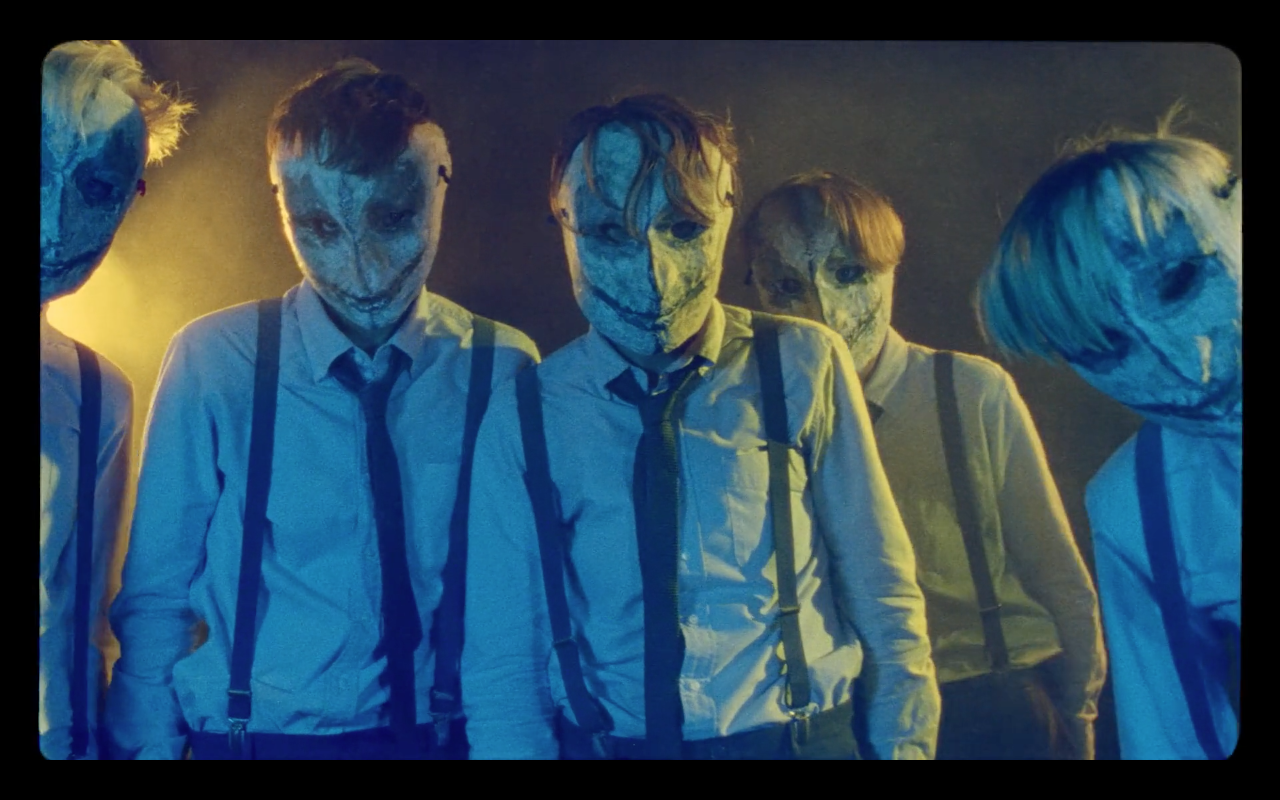
As from the beginning of Mandico's work, he's been openly transgressive; willingly push taboos which may offend some. How the boys got to this position is such a case; explicitly set in the early 20th century, so Mandico openly quotes from the streak of transgressive literature from the time as the boys, in grotesque genderless masks, accidentally kill their teacher when, having raped her in a toxic Dionysian frenzy and tied her to a horse, end up with said horse taking her off a cliff, not pulling any punches in the material from then on. Mandico however from then on takes it further to an equal opportunity mentality when, thinking they have escaped punishment and openly deciding to go with the Captain (Sam Louwyck) out of their free will, the boys learn to late his behavioural training places them his captives.

The gender subversion itself is part of this, the blurring androgyny of masculinity with breasts, the Captain not only having a map tattooed on his penis but one mere breast due to the effect of the island, and the actresses acting like boys with their short hair and costuming. Through what I have seen, Mandico is able to be very extreme but in a way that's never lurid, a fantastique streak through his films which has let him get away with his more extreme moments alongside his open desire for gender equality in the transgression. The later is a fine point that must be considered more often when dealing with transgression in cinema - it is a nuance that can drastically help a film, particularly as Mandico gives all his actresses in his films very good roles, in among equal opportunity full frontal nudity and in this particular case the best example in all cinema, of any genre, of someone's penis inexplicably falling off and having to be buried on the beach. Whilst he will offend, he offends with disregard for gender binaries.

From https://i.ytimg.com/vi/qMAU4LZ1EFE/maxresdefault.jpg

Tonally, the comparison to Guy Maddin is apt, although you imagine Jack Smith if he had a budget would want to make films this glamorous - the monochrome aesthetic intercut by hazy coloured sequences of neon purples, blues and other striking colours reminiscent of silent cinema aesthetic Maddin uses but with Smith's transgression and Mandico's own grit. That's strange to think, considering especially Maddin has gotten away with transgressive material throughout his own career, but as much of it is the matter of fact nature - Mandico shows nonchalantly what Maddin exaggerates with a sense of humour. Alongside the French fantastique displayed here it's definitely his trademark.

His philosophy for all this? Punk, as mentioned, feminist definitely, as the actresses are a huge factor to The Wild Boys' success in both their committed acting and the gender subversion in plot and iconography shown. As the boys, they are pretty young men but dangerous, wild energy coursing through their veins which lashes out in dangerous ways, all five with distinct personalities. The Captain adds more as a combative figure tormenting them - more perverseness with his tattooed penis but a complex trajectory as a hard, cruel man who yet loves his pet dog and is revealed to have an honourable purpose to his cruelty, even if it involves nearly strangling young boys to death with collars on a boat which can be pulled in. And Elina Löwensohn strides around like a living colossus - she, with a healthy career alongside her Hal Hartley work and newer films like this or Hélène Cattet and Bruno Forzani's Let The Corpses Tan (2017), having roles like this one she can be proud of.

From https://blogi.kultuur.info/wp-content/uploads/
2017/11/les-garcons-sauvages-6-2.jpg

Abstract Spectrum: Dreamlike/Psychotronic/Transgressive/Weird
Abstract Rating (High/Medium/Low/None): Low

Personal Opinion:
From his debut, around the time of Boro in the Box, Mandico has started perfectly. Arguably a film like Boro in the Box is worthy enough to be a debut even at only forty minutes, but The Wild Boys would be a perfect way to introduce him to many, with a combination that'd appeal to both cult and art house audiences. The obvious question is whether Bertrand Mandico will ever get wider recognition, and what he will do now he's finally made a feature; the question of what a second film will be like, (and hopefully he'll make a second theatrical length film), is effected as much by what ideas he still has and what he can do as a follow on. Now I have utter admiration for him, coupled by grievance in the difficulty now in seeing his other work, it'll be interesting if he continues or if The Wild Boys is sadly a one-off.


From https://www.crossingeurope.at/uploads/tx_filmdaten/
CE18_NS_Les-garcons-sauvages_The-Wild-Boys_2_K18.jpg

Wednesday, 2 August 2017

Masters of Horror Season 1 Part 3

From https://s-media-cache-ak0.pinimg.com/736x/4b/81/4f
/4b814f86cdc88f2f8d136c0e3d944a5c--horror-television.jpg

Chocolate (2005)
Director: Mick Garris
Screenplay: Mick Garris
Based on a Short Story by Mick Garris
Cast: Henry Thomas as Jamie; Lucie Laurier as Catherine; Stacy Grant as Vanessa; Leah Graham as Elaine; Matt Frewer as Wally
A Night of a Thousand Horror (Shows) #8

Some might've found it egotistical for the executive producer and creator of Masters of Horror, Mick Garris, to not only direct an episode but base the story off a script he's written based on one of his own short stories, but at this point in the mid 2000s Garris would've been asked anyway to contribute if he hadn't developed the entire series himself. Whether you like his filmography or not, Garris just from his Stephen King adaptations for film and especially television has left a cultural mark for anyone growing up in the 1990s and 2000s who saw any of these adaptations. King has always been huge, but those adaptations by themselves were their own institutions even if they weren't all great. I should know in particular about this - when my parents were adamant, in the early boom of the DVD industry, to acquire as much of Stephen King on film or mini-series as they could on disc, Mick Garris' name found its way on the back of many of their case covers as I watched these adaptations continually in my childhood. Outside of this, his prescience as a gatekeeper of horror culture in recent years, from collaborating with other directors to starting his own podcast to interview them, gives him legitimacy as someone worth talking to about the subject whether you like any of this works or not.

Blasphemously, when many have viewed this as one of the weakest entries of the series, I'll actually hold Chocolate up as one of the stronger above even more acclaimed ones. As time as past, and future reviews of certain acclaimed episodes will take a very opposite view in a way close to slaughtering sacred cows, Garris' actually has a nugget of originality coupled with a willingness to tackle something within this idea even if there's some major problems I'll accept openly. The story of a food laboratory employee Jamie (Henry Thomas) who, in the midst of a painful divorce, suddenly tastes chocolate on his lips waking up one morning and proceeds to feel, see and have every sensual experience of a woman he's never met before, is fascinating. If there's a flaw it's that its within a generic flashback story. It's far from perfect, more crime than horror, which resolves itself matter-of-factly when it could've gone further, but one that nonetheless does have moments of reward.

With Chocolate Garris manages to wring out some subversive moments from this premise. When others in the series have been (frankly) generic in terms of intriguing premises, what would happen if you could feel all five senses of a person far away by telepathy does immediately stand out as different. To see the room they sleep in. To have classical music drown out every other sound in a club you're in as a friend is playing in his indie rock band (Matt Frewer, as the protagonist's chirpy, older co-worker plays another side character from the series who steals their episode). To feel everything of another as if you were them. Couple this with that person being of the other gender, Lucie Laurier as the woman, and it gets stranger and touches, even if not as fully as I'd wish, on something subversive.

A perverse potential love story draws out which is both creepy  yet oddly compelling as Jamie falls in love with a woman that he's been in the mind of by pure accident, the equivalent of falling in love with another's reflection from afar and the entire complexity and moral quandary of ever trying to lead that infatuation to actual romance. Garris, managing to show something that's actually transgressive for me when other more acclaimed episodes have failed to stand out and a person placing their intestines in a film projector feels ho-hum, even goes as far as show how Jamie even experiences her sexual pleasures, which could've become utterly crass in another's hands but here actually stand out. It also leads to a scene where a man in our protagonist feels the experience of what a woman feels having sex with another man, something which in one context could lead to an entire window of perception being opened to Jamie, not when he's with a woman he's spent the night with who thinks he's having a seizure and, to make this utterly comfortable, his ex-wife and son are visiting at that exact time.

Sadly Chocolate doesn't really goes in a direction one would wish for its premise, a crime story of murder which dwindles in interest. It dangles another potential profound idea of imaging killing yourself through another's eyes, but it does ebb out with conventional normalcy. Even when it's the only episode to acknowledge how these episodes were shot in Canada, with tourism of Canadian urban life in the last half, it could've gone further with the premise once it gets to this new setting. What manages to sooth this disappointment, and still stand out, is those scenes and ideas mentioned already, another in themselves to actually raise Chocolate as being a lot more rewarding for the originality it brings to the table.

From http://3.bp.blogspot.com/-pDb9bWYgmlE/T48XMA8eOcI/
AAAAAAAABB8/y0T5I3llCzE/s1600/Masters+of+Horror+Chocolate.png

=======

From http://1.bp.blogspot.com/-u2vsGBG4VIw/UPfG3f7QiCI/
AAAAAAAADoU/gMyPjmWU2hc/s1600/sick+girl+cover.jpg

Sick Girl (2006)
Director: Lucky McKee
Screenplay: Sean Hood
Cast: Angela Bettis (as Ida Teeter); Erin Brown (as Misty Falls); Jesse Hlubik (as Max Grubb); Marcia Bennett (as Lana Beasley); Chandra Berg (as the Ladybug)
A Night of a Thousand Horror (Shows) #9
[USA]

Once the first season of Masters of Horror is in the bag, I'm more than confident Sick Girl is going to remain one of the top episodes of the lot, and perversely it's not the creation of one of the "Masters" of veteran status but one of the new blood of the roster Lucky McKee, called in as part of a reshuffle due to schedule conflicts with the production but, with May (2002) under his belt by that point, a justifiable choice who would've been brought in to direct an episode anyway. McKee is one of the only directors so far in this series whose entry also feels like his own work in style and tone merely brought to television. May is arguably one of the first "indie horror" films influenced by American independent cinema of the nineties; films definitely came before (like Abel Ferrara's The Addiction (1995)), but the notion of stories with a huge emphasis on dialogue and characterisation like those American independent films but are fully submerged in horror tropes and plots have grown up through the 2000s and May for me is one of the originals. This, as I'll get into, alongside the fact May is still one of the most underappreciated horror films of the early 2000s, is more than likely why Sick Girl works so well.

The emphasis on dialogue and drama that happens within a horror story is such a drastic change on tone from other episodes which felt malnourished in this area. There's an important distinction here where the two main performances are legitimately great by themselves allowing for emotional connection. Angela Bettis as Ida Teeter plays a nerdy entomologist whose ideals of romance are always compromised by the fact every woman she's dated so far is put off by her beloved zoo of insects she keeps in her apartment, Bettis in the role playing a type of female geek that's still rarely depicted, not a fantasised version through a male gaze but one that feels closer to an actual person who is utterly loveable and charismatic, and also allowed to play the awkwardness and eccentricities fully, through her performance. Ida finally seems to have found true love when she meets Misty Falls (Erin Brown), a free spirit she always sees in the entrance hall of her work place who's obsessed with fairies, has no issue with insects whatsoever, and falls in love with Ida back when they finally interact. Brown, who most like myself will know more as Misty Mundane, star of numerous softcore sex films in the early 2000s, should have gone on to more mainstream roles as she's just as rewarding, the tougher of the roles as someone who develops almost a split personality in how drastically she changes in the film, a figure for Ida who's the ideal soul mate but, due to a Brazilian monster bug that escapes in her apartment complex and infects Misty with a body mutating sting, also becomes a figure of potential tragedy as Ida's perfect romance could lead to agony.

Simply, the premise and execution feel more nuanced. The body horror of its premise, appropriate as its shot in the Canadian home land of David Cronenberg, is horrifying but likewise also dealing with the emotional trauma of its results, Misty's transformation as frightening to the viewer as a metaphor of a love one become ill mentally and/or physically as Ida is forced to witness it reveal itself over time. The fact that this is also a story of two lesbian woman, Ida Teeter originally meant to be male, is also significant as what could've been seen as tokenism in the wrong hands is inherently a story that's both universal regardless of the gender of the characters but does openly show its characters as gay, especially as Ida's older landlady Lana (Marcia Bennett) reacts with violent hostility to her sexuality when she finally learns of it. LGBT characters are still rare in horror cinema, so it will still stand out when such characters are in the centre stage, and thankfully here is a tale both focused on this but also above merely being a message film but a story that matter-of-factly is about two lesbian characters in the midst of this cocktail of comedy, insectoid body horror, illness and love, coupled with an unexpected happy ending which is also openly transgressive. Only McKee's interest in indie rock really feels like a negative, a minor quibble especially as most of the Masters of Horror series has fallen prey to dated mid-2000s bland rock. Aside from this it's an utter stand out especially when compared to the disappointments from the series so far. 

From http://images2.fanpop.com/image/photos/10000000/
Sick-Girl-masters-of-horror-10068397-500-300.jpg