Showing posts with label Psychological Thriller. Show all posts

Thursday, 11 July 2024

Schizo (1976)/The Comeback (1978)


Director: Pete Walker

Screenplay: David McGillivray [Schizo] / Michael Sloan and Murray Smith [The Comeback]

Cast:

Schizo: Lynne Frederick as Samantha Gray, John Leyton as Alan Falconer, Stephanie Beacham as Beth, John Fraser as Leonard Hawthorne, Jack Watson as William Haskin, Queenie Watts as Mrs Wallace, Trisha Mortimer as Joy, Paul Alexander as Peter McAllister

The Comeback: Jack Jones as Nick Cooper, Pamela Stephenson as Linda Everett, David Doyle as Webster Jones, Bill Owen as Albert B., Sheila Keith as Doris B., Richard Johnson as Macauley, Patrick Brock as Dr. Paulsen, Holly Palance as Gail Cooper

A Night of a Thousand Horror (Movies)


Never mind symbolic sunshine...it was fucking here!

Immediately from the opening images, Schizo will not be a sensitive take on mental health, not just by the title but even in the opening narration, where even I without a psychology degree am aware schizophrenia and multiple personality disorders are separate concepts. It sets up a lurid thriller bordering on the horror genre, a snapshot not only of this era and how mental illness was depicted in cinema, but a snapshot of old England including the old Co-Op logo on a milk delivery float, or a supermarket with discounted baked beans. It sets up a distinct tone to this premise even if it is indebted to its American or Italian brethren, as we start with an older man incensed about a newspaper about a young "ice princess", ice skater Samantha Gray (Lynne Frederick), about to marry, taking a knife the size of a machete covered in dried blood and bloody pieces of broken glass in his travel case on a mission, to see her in London. One of the clear selling points behind Schizo, central to this, is Lynne Frederick herself. Her career has probably been shadowed by Peter Sellers, the legendary comedian she was married to until his 1980 death, and his own complicated career, whilst her filmography is full of cult films like this or Phase IV (1974).

She does okay in what is a film where the plot twists are obvious, but the lurid spectacle is emphasised, as this is from Pete Walker, a British filmmaker known for being one of the genre filmmakers of the era who made more edgier productions, infamous for films like House of Whipcord (1974) and Frightmare (1974), films which ramped up the gore and sexual content of old pulp genre tropes. He is merely adding to a story which is timeless, as premise wise this story is one you would have gotten in a thirties/forties production from Hollywood or an earlier British shocker. This belongs in the tradition of gristly thrillers which has been updated to the newer decades even if the seventies aesthetic here is charmingly quaint. The film leans into horror genre in terms of the more overt gruesomeness of the murders which begin as Samantha is being stalked, arguably in debt to the Italian giallo, even in terms of the black gloved killer. A subplot about the maid's psychic sessions with her daughter being telepathic feels like a British take on a scene from Deep Red (1975), where a psychic catches wind of the killer telepathically. Admittedly, Dario Argento would have not had a moment talking about the free tea and biscuits for four pence as found in this meeting.

Even when Samantha is stalked, it is obvious what the final twist is, its mental health plot set up with the factors of her family ties being very vague with no one at her wedding reception on her side of the family tree, or how the stalker is set up blatantly from the get-go as a prominent character. Instead, this becomes the tropes shot through its British personality, an intercontinental exchange of plot tropes found in similar films from others countries at the time if with pithier one-liners from characters. Some of the more rewarding scenes are with characters casually having extra marital affairs and even leaving plastic spiders in the soap dish to scare the newlyweds for a joke. The laxness of security for the wedding reception, comical in the modern day for a thriller as someone can casually get away with slipping a bloodied knife by the wedding cake, actually becomes one of the best scenes for casually touching on this sense of personality you only get in British films, less logical but in terms of morbid humour nestled against the ordinary locales. By the time someone can manage surviving being impaled on a bed of spikes, to the point an eyeball is hanging out from a spike going into the head, we are not dealing with a film to take seriously, but charming in its own perverse way as a film from my home country.

The Comeback opens up, coming after Schizo, with a nods to the slasher films whose tropes would be fully codified into the eighties, with a murder scene in the opening that certainly would have been censored for British VHS with a hand graphically lopped off with a scythe, followed by that person's death with the weapon by someone wearing an old woman costume. The film itself, whilst the plot is conventional in set up, is a lot more idiosyncratic than this though. The premise is that of an older American pop star, a former teen idol Nick Cooper (Jack Jones), returning to Britain to record his comeback album, and finding himself staying at a traditional British manor house whilst he is recording the album. Jack Jones himself is an American singer, which is a meta moment of casting I do have to appreciate especially as, befitting how lurid the story becomes, his casting is perverse on purpose for sick humour if you learn a little about him. Jack Jones sang songs like Lollipops and Roses, and the opening theme for the Love Boat American TV series, which makes his casting here, eventually dropping f-bombs and having a sex scene, adding a much more perverse touch to the film knowing that this man with a two time Grammy winner of wholesome music. This was naturally at a time in his recording career where he was doing renditions Little Feat's Dixie Chicken, and a tribute album to the band Bread, so this feels close to the bone of a man who could be like the Nick Cooper character as a star trying for one last grab at success after his sixties pop success.

The grotesqueness of the ex-wife's corpse being left in the old crib after the murder feels apt to the perverse melodrama this turns into, with not as constant need for such shocks as a giallo or a slasher, but with those moments coming when need be. Pete Walker clearly also had access to all the live maggots he could get to depict decay of gruesome corpses just to emphasise that fact. At its heart, this is the updated form of the gothic creepers of yore, where an older singer is effectively being tormented psychologically. It is not just creepy Harry (Peter Turner) who sets the tone, a minor character obsessed with getting Nick's items out of the penthouse, or women's breasts, which he will talk about at length menacingly to a potential love interest of Nick's, a man who makes woollen hats creepy due to osmosis to his personality. No, it is the gothic horror trope of the voices and horrible sights only Nick sees whilst at the manor, the crying and screams from a phantom woman at night, or the current occupants looking after him, "Missus B" (Sheila Keith), an older woman with ominous gravitas to her voice, or her husband who talks of the ancient tree in the garden he tends to screaming due to the carving of a couple's love for each other into the bark, or reading a book on Chinese mythology and Buddhist Hell because he cannot find his tree surgery book.

The plot twist is obvious in hindsight in The Comeback too, but this is a delightfully weird amalgamation of tones. This is a film where the potent red flag of this film having aged like one of the corpses, when a key character is revealed to dress as a woman in the privacy of his own home, is not a red herring even or proof of anything suspicious, but a character beat abruptly placed in the middle of this simple minded shocker of more going on in his mind, the weird sense this genre film with a few more of these turns could have become something even cooler if it had been more unconventional. Both The Comeback and Schizo are conventional, in pace and plotting, which are really the biggest issues with both, but like the best of cases, even weaker genre films as here can have these unexpected turns and delights in them worthy of praise. 


Monday, 7 August 2023

Vertigo (1958)


Director: Alfred Hitchcock

Screenplay: Alec Coppel and Samuel Taylor

Based on the novel D'entre les morts by Pierre Boileau and Thomas Narcejac

Cast: James Stewart as John "Scottie" Ferguson; Kim Novak as Madeleine Elster; Tom Helmore as Gavin Elster; Barbara Bel Geddes as Marjorie "Midge" Wood


Vertigo was once a critically maligned film from Alfred Hitchcock only to grow into one of his most critically lauded, so much so it knocked off Orson Welles' Citizen Kane (1941) from the top spot of the Sight & Sound magazine poll for greatest film ever made in 2012. That was not exactly an easy achievement to have completed when Citizen Kane was number one before it for five plus decade, and the fact Vertigo has gained this stature is both an achievement but also strange for me when viewing the film. Vertigo is a true one-off deserving to have done this, but it is a difficult film to digest, one which is possible to criticise for being too languid, too obvious and at times too stripped of Hitchcock's precise, expert filmmaking, even having something the director himself considered a plot flaw in how reliant the protagonist’s acrophobia would be for the plot the succeed1. It is also justifiable to champion, even if it involves digging into his own psyche at the same time as a filmmaker, for how alien, disquieting and hypnotic as a film it is. The premise is one perfect for a Hitchcock thriller: when he develops acrophobia and vertigo at heights, San Francisco detective John "Scottie" Ferguson (James Stewart) is forced to retire from his career, but is asked by an old friend to follow his wife Madeleine Elster (Kim Novak) under the belief she has been possessed by one of her late ancestors. The results of taking this job lead to Scotty becoming detached from reality chasing after a woman he falls in love with, one who might not be all she seems. This however leads to a very different result, an unnerving melodrama with vaguely Gothic tinges.

You have to accept a lot of poetic license. That Scotty's vertigo is a MacGuffin. That a major plot twist is shown earlier than it would in any other film, and very obvious if you are attuned to these types of plots, turning the rest of the movie into a type of psycho-dramatic character piece that roots itself into a direction detached from the rational. If you "get" Vertigo's tone and appreciate its crafted elegance, however, it is an unnerving film about psychological breakdown and neurosis, the plot crux more to do with the emotions of two characters, Scottie and Madeleine, who become more emotionally disconnected from reality and pull the rest of the film with them into their heightened worlds. For the moments of lightness that take place, screwball comedy with Scottie's friend and ex-fiancée Midge Wood (Barbara Bel Geddes), who still loves him, most of the film is connected to Scottie almost entirely, onscreen for most of the film in the centre during his descent into dark obsession.  When the film shifts to its second half, the already mentioned plot twist which would usually happen at the end of another thriller is suddenly revealed halfway through with half the film left, leaving Vertigo in uncharted waters where one is disturbed by Scottie's increasingly erratic behaviour after he is briefly hospitalised.

Passages of Hitchcock's career have this film's tone, an odd supernatural or psychological murkiness. Rebecca (1940) is an obvious cornerstone of supernatural melodrama, even Under Capricorn (1949) expressing his interest into slow burn dramas based on hidden neurosis. However even the dream sequence in Spellbound (1945) is safeguarded by the fact, despite being designed by Salvador Dali, that it is a dream whilst Vertigo, despite also having a dream sequence, is entirely in the vague and mysterious. In Vertigo the characters are drawn along narratively by emotions and unseen forces, not elaborate plots of other Hitchcock films, locations such as flower shops, woodlands and a mission called Mission San Juan Bautista all becoming imbued with ghosts of many forms, literally in an image at the ending in the bell tower of the mission. The use of striking colour especially adds to this. Made in the height of Hollywood's Technicolor era, the film is striking in its aesthetic and use of San Francisco locations, but it is especially when you get to the interiors this stands out. Those scenes emphasises the ghostly air from the red walls of a restaurant that is repeatedly entered by the characters and the reoccurrence of the colour green in the second half which purges the world into a sickly obsessive form. It is a deeply perverse film in its themes, carefully dictated by Stewart and Novak, between them managing to keep the film's tone in the right groove, despite the visible age difference, Stewart able to switch himself from the stereotypically jovial and charming man he is seen as in cinema to someone almost shell shocked or a walking comatose, while Novak also has to juggle a complicated role when the film pans out in the end.

Shot in said lush Technicolor by director of photography Robert Burks, a regular collaborator with Hitchcock into the early sixties, Vertigo is as much able to work because the aesthetic of classic Hollywood that the story is depicted through, especially when this takes the studio system style of Hollywood, always evoking for me the sense of the elaborate and stylish, literally the "Dream Factory" creating dreamy films even when shot on location, and undercut it with this tale of obsession. The rear-screen projection for actors driving cars to the colour palettes now become unintentional tools for creating heightened dreams, here becoming more and more unsettling as this narrative of a love for a construct continues. The San Francisco locations, especially the gorgeous panoramas of the sprawling metropolis, add a sense of scale, keeping a Gothic tone for the plot but setting it in a modernist urban environment. Another big contribution to the film is Bernard Hermann's orchestral score, the drama contained in it solidifying the characters' emotions as a lush but far-from-generic score, adding further to the mysterious air surrounding all Scottie encounters and does. That it can switch from the legitimately romantic to the disturbed, and you can pick up the difference in the orchestral instruments and the notes they play, is evidence of its success as a score.


The most openly unconventional aspects of Vertigo are specially created animated sequences. The first is the opening credits by Saul Bass, the title emerging from a woman's eye in extreme close-up, the very modern design of Bass' work for Hitchcock still to this day incredible for their craft but also unique compared to modern title designs still, the use of colour and shape. They become almost avant-garde especially as the credits do not portray anything that takes place in the movie but sets up an unnerving mood it has. The other is the mid-film dream sequence designed by abstract artist John Ferren that takes the same route, flower petals spiralling outward and a figure falling into the void, one of the most iconic images of Hitchcock's career being James Steward's disembodied head staring straight at the viewer which comes from this sequence. It is an iconic image as he is sucked into a mental abyss of his own psyche that he is chained to for the rest of the narrative. It aptly sets up the emotional shock, in the series of events that set up the second half, which will turn Scottie drastically.

Barring its style, including the innovative depiction of Scottie's vertigo, a distortion of our perception as well as his as it is always in first person, cinematic space growing in size without any seemingly actual movement, the rest of the film's unconventional tone is internal. Alfred Hitchcock was a Hollywood director who made commercial films, his auteurism coming from how clear and involved in their craft he was from the get-go of each production, but Vertigo does reach its tendrils into the expressionistic, with its languid pace, in that it is all induced and affected by its characters' minds. When it gets to the second half as Scottie meets another woman similar to Madeleine, the ghosts of the first half change from historical ones to psychological baggage of sexual and gender issues. About a man's memory and view of others becoming distorted and affected as he tries to control and groom this second woman to be Madeleine, Hitchcock was completely blunt about the sexual meaning of this in his interviews with Francois Truffaut, even going as far as say that Scottie was “indulging in a form of necrophilia2, but there is as well the notion of idealism and how it can become poisoned is noticeable. It also cannot be denied that, to an uncomfortable degree after this with his problematic history with Tippi Hedren, Hitchcock himself had blatantly obvious fixations on the idealised woman, and whether he can be defended as an artist for this or not, Vertigo becomes a text unintentionally, but with greater weight, in seeing obsession as a concept for the perfect woman be dissected by its plot.

[Spoiler warning. Skip italicized text if you do not want the film to be spoilt for you]

Adding to this is knowing the woman Scottie is obsessed with is a mere image, a fake stand-in for his friend's real wife in a twist Italian giallo filmmakers would have ran with. The woman he loves manages to die twice in fact, his love only existing for the form of Madeleine, wearing a certain flower, a certain way to their blonde hair style tied up in the back, a certain grey suit dress designed for the film by Edith Head, and an image created based on the real wife, the individual Kim Novak's character actually is and Carlotta Valdes, the ancestor Madeleine is said to be possessed by, amalgamated together. The image of femininity he adored is a mere picture, while the stand-in who promises to love him is rejected for admitting how she is not the Madeleine he wanted and that she was used to trick him into a murder scheme. The "abstract" I am obsessed with in cinema, how I use the word, is as much about the questioning of subjective reality, and the theme of Vertigo of an idealised image, a beautiful woman, being both impossible to be reach and not even existing is a good example of this type of questioning, when the symbols of femininity for Scottie not the woman herself is what he desires. As an entertainment film, this makes the film a cautious tale of this obsession, and that the film is as languid as it is befits this.

[Spoiler ends]

Whilst there would be a film later on which is stranger than this in tone - The Birds (1963) even as a monster film is more stranger and chilling in the baggage it evokes - Vertigo is haunting as an entertainment feature, and as art, because its conceit is about the image one has overtaking reality as Scotty is chasing after a phantom in many a sense. This comes with mind as I have had to gradually warm to Vertigo over the times I have seen it. It does meander significantly halfway through, noticeably slower in pace to other Hitchcock films, and that makes it a film whose acclaim is fascinating in that it shows visible flaws in plotting and pacing that cannot be denied. It possesses something which overcomes this, even if it is unnerving, even before the Sight & Sound polls, back when the film was not readily available to see, causing someone like Brian De Palma to openly riff on the same theme of perception in Obsession (1976), the title spelling out the themes openly. Film critics dug into this film when it was more readily available to see, and what virtues the film has - its performances, the music, the aesthetic style - make what would be a hammy melodrama at points in another's hands enticing as it is disconcerting.


Abstract Spectrum: Expressionist / Mind Bender/ Weird

Abstract Rating (High/Medium/Low/None): Low


====

1) Truffaut, François (1985). Hitchcock/Truffant, Revised Edition. First Touchstone Book Edition. Pg. 247.

2) Truffaut, François (1985). Hitchcock/Truffant, Revised Edition. First Touchstone Book Edition. Pg. 244.

Friday, 23 June 2023

Zyzzyx Road (2006)


Director: John Penney

Screenplay: John Penney

Cast: Leo Grillo as Grant; Katherine Heigl as Marissa; Tom Sizemore as Joey

Ephemeral Waves


Zyzzyx Road‘s name is already a curious one, a title which you would automatically find near the bottom of a list of all cinema alphabetically unless you included films in their original Russian and Indian languages. The tale of this one – produced, written and directed by John Penney - has the additional twist that this low budget film had a cinema release in the United States, and only grossed $30.00. That is a weird touch to this film, made by the screenwriter of Return from the Living Dead III (1993) and other horror genre films beforehand, to any film. The tale goes how, screening for a whole seven days, at Dallas' Highland Park Village Theater, with a single screening each day at noon, only six people went and it earned $30.00 against a budget of $1.2 million1. Truthfully even this theatrical screening was not really meant to happen, fulfilling a Screen Actors Guild agreement that permitted low-budget films to pay actors a lower rate as long as the film gets a domestic theatrical release1; as a production produced by lead actor Leo Grillo’s company, the focus for him was instead on non-domestic distribution of the film in other countries like Bulgaria1, and in truth the story of all this does not really talk about what the film actually is.

In this particular case, you have in the centre three people - Leo Grillo himself, an actor who made his name more in animal rights; Katherine Heigl, working on the film as she was starting in the television series Grey’s Anatomy (2005-), and before she made films like Knocked Up (2007), and Tom Sizemore, who had a lengthy career beforehand but had also unfortunately had a reputation off camera for his legal and drug issues, which came to the fore here as he was arrested before he was meant to be shooting this film, violating his parole with a drug arrest, but still able to continue on the shoot with no delays1. What it is, with these three people at the film’s centre, was a genre hybrid you could have actually depicted as a theatre production with a few touches changes, all centered around an older married man named Grant (Leo Grillo) and a young woman Marissa (Katherine Heigl) who, whilst she is more curious about Justin Bieber and Britney Spears’ romance at the time, have been having an affair. Driving at night, their affair may compromise his marriage with his wife, leading to his daughter being taken in the divorce, but there is an additional problem that they have to hide the body of Joey (Tom Sizemore) that is in the trunk, going to the titular Zyzzyx road and the road to nowhere.

Joey, unfortunately, is not quite dead, and even then there are a lot of twists which undercut the reality and subjective reality in what is a tale of a supposedly dead body hat needed to be buried in the desert. The plot goes in some obvious twists following what we begin to learn: how Grant is also hallucinating and having headaches; how Joey’s story is a strange figure seemingly wandering around like a spirit, with the absurd aspect he was brained to death with a giant vibrator/back massager to even get to this point; and how Marissa even represents the folly of a man’s midlife crisis without her being the cause of all this anxiety but merely a bystander caught in the crossfire, someone likely eighteen or younger, which is against the law, and in an unfortunate position for Grant unload all his neurosis over. It is a chamber piece in a desert, where the secrets come out, and it is insanely obvious where this is going to go with some idiosyncratic touches. One such touch, worth a slight plot spoiler warning, is how it touches upon full blown supernatural paranoia based on the fear of women between two men, especially as there is no explicit reference to what she actually is by name to them as an apparently no-human figure, emphasizing the paranoia.

The real issue with Zyzzyx Road however is that, from its initial set up to becoming a slasher in its finale, there is not a lot more to the production to flesh out the basics. It is a film which could have elaborated on its content more than it has, where barring some use of post digital effects and some idiosyncratic use of colour saturation to show levels of reality, there is not a lot which sticks out from a skeleton which you could have done more with. That is not to be taken as an insult against its director-writer either, as this was his debut helming a film as well as write one, and it would have been an obstacle to climb to even get the production completed with hope that later films would develop his voice. Unfortunately, the infamous $30 box office gross gave this production its legacy which would have not helped in the initial aftermath of its theatrical screenings. An article published by a website named CHUD, What If They Released a Movie and Nobody Came?, written by Devin Farcaci about the film on 1st January 20071b would have allowed the ball to start rolling in terms of, optimistically, a wider interest but sadly this became a case of a film, when I had first heard of it, was only known for its theatrical screening and nothing about the content within the feature.

It is a film where all of it has interest, including the titular road. Zzyzx is a real place, outside of Las Vegas in the middle of the Mojave Desert, just off of Interstate 15, where a man named Curtis Howe Springer caught wind of the local springs in the area and in the 1940s established a spa where he sold "miracle cures" using the spring's fabled water. With the name coined by him from being “the last word” in health, his place there becoming popular until April 11th 1974 when he was forcibly removed from the land by the Bureau of Land Management, as he did not actually own the land at the formerly named "Soda Springs" but merely claimed the right to mine in the land, which was different from occupying or developing on it2. That could have added flavor to this story about deceptive reality, as alongside the fact that, alongside the California State University's Desert Studies Center to study the desert’s ecology and geology, there are remnants of the old days, including abandoned buildings and even advertisements for Springer’s old mineral miracle cures2, which is free surrealism for even a low budget film to have used.

Even in terms of its notoriety, in 2011 it would be outmatched by The Worst Movie Ever!. Written, produced, directed by, and starring Glenn Berggoetz, it ended up by accident despite its name getting just $11 during its premiere from one person3. Befitting the legacy of a film starring Santa Claus and Abe Lincoln together for the first time, it was nonetheless not a great scenario for Berggoetz’s film to have ended in as well, and in that case it did due from from struggles in terms of being able to promote the production3. In that case, a few years later, that infamy helped when people began to write about the incident, alongside 70,000 people watching the film’s trailer on YouTube during August 2016 so it came out as a badge of honor3. As a result it leaves Zyzzyx Road in a weird place, where John Penney thankfully directed more, but with an infamy for his debut directorial feature which could have done a little bit more, whilst with virtues I admired, and tied to an aforementioned infamy that does not even factor in whether you can appreciate the film, but the perils of film distribution.

=======

1) How 'Zyzzyx Road' only grossed $30.00, written by Rob Brunner for Entertainment Weekly, published on February 9th 2007.

1b) What If They Released a Movie and Nobody Came?, written by Devin Farcaci for CHUD.com, posted 1st January 2007.

2) The Story Of Zzyzx, The Eerie Ghost Town Along A Dead-End Road In The Middle Of The California Desert, written by Erin Kelly (and edited by Maggie Donahue) for All That’s Interesting, published on May 9th 2023 with June 7th updates.

3) "The Worst Movie Ever!" Lives Up to Its Name with Epically Bad Grosses, written by Matt Singer for IFC, and published August 26th 2011.

Monday, 31 October 2022

Cure (1997)


Director: Kiyoshi Kurosawa

Screenplay: Kiyoshi Kurosawa

Cast: Kôji Yakusho as Kenichi Takabe; Masato Hagiwara as Kunio Mamiya; Tsuyoshi Ujiki as Makoto Sakuma; Anna Nakagawa as Fumie Takabe; Misayo Haruki as Tomoko Hanaoka; Yoriko Dôguchi as Dr. Akiko Miyajima; Denden as Oida

A Night of a Thousand Horror (Movies)


Disarmingly chirpy music plays over a man beating a female sex worker to death with a pipe, and that is the only unsubtle moment in all of Cure, the one moment which is lurid in its intentional creepiness. The rest of this film is one whose legacy is part of a slow burn which follows seemingly random killings by people oblivious to why they committed them. There is a mystery man in the centre of all this introduced early on, one no one should give a lighter to, a cigarette or even allow access to water for, someone whose vagueness in his motives become as much part of the disquieting core of Cure.

This is considered the breakthrough film for Kiyoshi Kurosawa, who had been before working since the early seventies on shorts, in the early eighties for his first few theatrical films. Pinku erotic films, a 1989 horror film Sweet Home, lost to licensing but whose videogame tie-in is held as a huge innovator for the survival horror genre, even a whole TV movie franchise called Suit Yourself or Shoot Yourself (1995-6) all came before, but Cure was a film who helped paved the direction for a working director into his future legacy. The premise is that you could find in any genre film, something of a huge virtue to Kiyoshi Kurosawa as his films, even his more drama based works, have very easy to grasp premises, but their tones are what stand out. He has even talked about his interest in genre films, so the passion was here, Cure explicitly in tribute to the American horror movies he grew up watching and able to capitalise at that time in the Japanese film industry to tackle such a film1. In this case, it is a crime thriller with overt horror tones where, with these mysterious killings transpiring, detective Kenichi Takabe (Kôji Yakusho) finds himself trying to figure out these random killings. Cure however becomes a film which perturbs, all in spite but befitting to those films the director-writer grew up with.


Takabe's situation is a tightly winding coil. His wife, due to psychological injury, has a lack of short term memory, lost in a past before with behaviors of someone needing extensive care and therapy, such as repeatedly turning on the tumble dryer with nothing within it. His training as a police officer, as he talks of, is to bury his emotions, which becomes a challenge against a mysterious figure, later learnt to be a medical student named Mamiya (Masato Hagiwara) who, as the antagonist, is almost a cipher in his existence. Mamiya is a no one who seems oblivious to existence, asking the same questions over and over, until it is clear he lulls people into traps.

It is a spoiler, but early on it is explicit that hypnotic suggestion is the cause of these murders, but Cure’s tone crawls under the skin, its sedateness bristling in an increasing dread. Cure is not an elaborate film in style, exceptionally subdued as was to become Kurosawa’s trademark even with a short film like Beautiful New Bay Area Project (2013), a production which was a tribute to martial arts action fight scenes. All his films even with the supernatural are grounded in reality, even here in Cure when the gruesomeness of this scenario is not held back from. The murders, where a police office can suddenly point blank shoot another, is implicitly shown as people’s darkest emotions being unlocked, their angers or thoughts and grudges taking over as they are unaware of what is happening in their actions. This is more uncomfortable in moments, like the husband who had nothing but seemingly love for his wife he kills, and in little pieces as Kurosawa’s film becomes increasing more disturbing.

Thanks to films like Cure, Kiyoshi Kurosawa became an acclaimed auteur, beyond genre films to the likes of Wife of a Spy (2020), his thoughtful period thriller set in World War II with the same DNA from this film, where he is respected as a director who easily slides into genre and dramas with ease. Pulse (2001) was another legendary film, another breakthrough for him if Cure had not succeeded, as a supernatural ghost film which managed to be even more unsettling in its slow burn released not long afterwards. Cure is a pure horror thriller, but it stands out in how its growing sense of dread escalates. The premise, not overtly loaded in moral themes nonetheless becomes so for subtext in how it deals with neurosis and blocked violence in people if allowed to be let loose. Even the concept becomes virus like for those who get involved in the investigation, so no one is safe. When you see the growing back-story of Mamiya's life, it opens likes layers of an onion and yet will never be fully answered, only with the work of Franz Mesmer the one clear guide, a real German physician who developed the concept of "animal magnetism", an invisible natural force (Lebensmagnetismus) possessed by all living things, including humans, animals, and vegetables, which would later influence the concept of hypnotism in his own "mesmerism" acts to cure patients. It is befitting, considering the disturbing force which holds sway on people, even those who spread its influence, especially as the finale ends on a frankly supernatural centre, a Dr. Mabuse-like voice on an old phonograph cylinder, literally a voice, behind all this as we will never find the true culprit, only those who followed this chain. As was Pulse’s central ghosts, who followed rituals which were unnatural but made sense, this makes Cure scarier and more powerful. That Mamiya acts like he is helping people, when cognisant, unloading their anxieties even if it means killing people, adds to this discomfort.

The sleight of hand Kurosawa has, where his talent was on display, is when the quiet filmmaking style is toyed with; the first time, where there is an abrupt and unseen before jump cut in the editing, to a caged monkey, and Takabe experiences a horrible nightmare scenario, is where you see the mastery of Kiyoshi Kurosawa. Trying to review a film in text is at times a perverse act, and here it is especially the case as, unless I gave up the entire premise and spoilers, I cannot explain more, and yet that in it would miss the point of what Cure managed, able to explain less than what the film wishes to never disclose to the audience. The best thing to do is, simply, to watch Cure, as even with all the plot details explained, this is one of those cases where plot details are meaningless explained out of context, where the tone and what is implicit is where the talent of the film’s craft, and when it buries itself in one’s flesh, is felt as a dread.


=====

1) Embrace the role of chance in filmmaking, says Qumra Master Kiyoshi Kurosawa, published for the Doha Film Institute on March 29th 2020.

Sunday, 6 February 2022

Labyrinth of Dreams (1997)


Director: Gakuryû "Sogo" Ishii

Screenplay: Gakuryû "Sogo" Ishii

Cast: Tadanobu Asano as Tatsuo Niitaka; Kotomi Kyôno as Chieko Yamashita; Tomoka Kurotani as Tsuyako Tukikawa; Kirina Mano as Aiko; Reiko Matsuo as Mineko Matsuura; Kyûsaku Shimada as Kuro-Tonbi no kyaku; Takeshi Ikeda as Tsuwaomote

An Abstract Candidate


The change Sogo Ishii made, the trajectory, to becoming Gakuryû Ishii means more and more when you start to see the films made during the decades from the transition. Slowly, but surely, his work is being made available, but even in little pieces, you can suddenly see an abrupt transition from Burst City (1982), his punk dystopian film with abrasive editing and a punk soundtrack, and how alien it is by the time you get to Labyrinth of Dreams, a sombre period based drama set in yet its own dream world. Yet the transformation is compelling for an auteur that clearly evolved, realising after his initial films he wanted to step in other directions and managed to succeed fully. Ishii found, here as with Angel Dust (1994), a drastic change in direction, building from the eighties, that lead to him finding his own distinct eeriness which he constructed for these films.

Labyrinth of Dreams is set in the past, a comparison apt to another Japanese film hard to see appropriate, that being Mikio Naruse's Hideko, the Bus Conductor (1941). A quiet drama, set in the era it was made into the forties, both films tackle the concept of the "bus girls” (basu gâru), of a tradition from between the early 1920s to the mid-1960s when buses would have only a driver, male in both films, and a female bus girl to assist him1. In Hideko..., it is a lighter drama where a duo attempt to salvage their bus service, in danger of being lost in a rural town with their boss more interested in money, by adding a tourist side of explaining the historical locations of their routes for the bus conductor Okoma, played by Hideko Takamine, so popular her name rather than her character's gets the film title billing. Labyrinth of Dreams, clearly set in the thirties to forties, is a much ominous narrative where a mysterious male bus driver has been seducing the bus girls he has worked with, only for him to, like an unmarried Bluebeard, dispose of them in faked bus accidents. For Tomiko (Rena Komine), working at one company and still dealing with the death of someone dear to her was a victim, she believes her company's new hire Tatsuo (Tadanobu Asano) is that man. Tatsuo immediately tries to get close to her, with Tomiko deliberately trying to stay her distance as much to catch him. His aura however proves a wear-and-tear which may seal her fate, drawn to him more with the danger itself part of the aura.

The premise is one, even in its historically specific context, that you could adapt in any aesthetic, a romantic thriller in premise which you could sell easily, but Gakuryû Ishii makes a film from material that is unconventional but not from any deliberately aesthetic choice. Beyond the fact, as a late nineties films, he made the film in black-and-white this film takes it time to draw you in. Like Angel Dust, Ishii manages the mercurial trick of taking these premises, slowing them down to an eerie and intense mood which crawls under the skin. This is different to that film because it is almost timeless despite its clear history context. You see this as a time with Western influences and modernity influencing the rural town setting, Tatsuo introduces himself on his first day with Western sweets for the female co-workers and Western cigars for the male ones, but with the bus travelling through the countryside, including isolated environments, stillness can be felt throughout.

Until later on it is entirely a gently paced drama, taking its time until only when Tomiko starts to fall for Tatsuo to change, falling into his trap as the film around her drifts to being more dreamlike without the need for surrealism or unconventional editing techniques. The acting helps considerably, alongside being a poignant reminder, virtually ageless, of how Tadanobu Asano became one of my favorite actors, instantly the cool actor of cult Japanese cinema for many by the 2000s, but someone who always picked great roles, always did great performances even in ultraviolent work like Ichi the Killer (2001). That the film is also reliant on a very idiosyncratic aspect too, as the deaths are caused by staged bus accidents, adding the one perverse side of the drama. One of the bus girls' main jobs in this world, as for Tomiko, is to step outside the bus and help the drivers be aware of crossing rural train lines when no trains are moving nearby. Used to considerable effect in the climax, a film sweltering in dreamy unease, the resulting film in its glacial tone is compelling.

Abstract Spectrum: Dreamlike/Eerie

Abstract Rating (High/Medium/Low/None): None

=======

1) This information barely details the "bus girl" with any knowledge. Yet the knowledge of the likes of Modern Girls on the Go: Gender, Mobility, and Labor in Japan, a 2013 non-fiction text by Alisa Freedman, Laura Miller and Christine Yano exists out there for people like me to desperately want to read on subjects like this.

Thursday, 29 October 2020

Perfect Blue (1997)


Director: Satoshi Kon

Screenplay: Sadayuki Murai

Based on the novel by Yoshikazu Takeuchi

(Voice) Cast: Junko Iwao as Mima Kirigoe; Rica Matsumoto as Rumi; Emi Shinohara as Eri Ochiai; Emiko Furukawa as Yukiko; Hideyuki Hori as Sakuragi; Masashi Ebara as Murano; Shiho Niiyama as Rei; Shinichiro Miki as Taku; Shinpachi Tsuji as Tadokoro; Tohru Furusawa as Yatazaki; Yoku Shioya as Shibuya; Yousuke Akimoto as Tejima

A Night of a Thousand Horror (Movies) #197


The following review is to be found on my other blog 1000 Anime as well. If this is of interest to you the reader, follow the link HERE for many more reviews.


Who are you?

Once seen, a long time ago, Perfect Blue has stayed with me for a long time. The irony is that, in another context, this plot would have become a lurid and dumb thriller, as clichéd as the one in the television show, Double Bind, that lead Mima Kirigoe transitions to from an idol singer to an up-and-coming actress from her idol group Cham. Alongside the fact Satoshi Kon was a one-off, this also became an animated production, the tone and rules changed alongside the people behind the theatrical film taking the best route forwards to make a great film from such material. The irony is that this production was meant to be live action, adapting Yoshikazu Takeuchi's source material, only for the 1995 Kobe earthquake to prevent that version and an alternative animated version from Madhouse studios to be created on a lower budget. It says the final film's advantage that, even with a 2002 live action existing, this Kon helmed version is the definitive adaptation to many.

Returning to Perfect Blue, this film's deconstructive nature immediately begins with a live tokusatsu performance beginning the film as a cold opening. These are a cultural detail, especially with knowledge of this film getting such notice in the West it even inspired American filmmaker Darren Aronofsky, that I have seen in many anime but are very idiosyncratic and likely to be ignored without batting an eyelid, where actors dress as Power Ranger-like heroes or monstrous villains to entertain kids at theme parks or at least outside, two stating how disappointing this looked to the original television show. Cham are introduced, a three woman idol singing group who are struggling to find success, and the film intercuts the performance with the banality of our lead Mima away from work buying groceries.

Satoshi Kon, who tragically died at too early an age at only forty six, due to pancreatic cancer, would build a reputation as a director, baring Tokyo Godfathers (2003), of stories breaking down reality, exploring psychological states and even dreams. This is where, literalised, Perfect Blue takes a new level as a suspense thriller, where Mima is transitioned by her agency to become an actress, with a stalker soon to murder people "debasing" her. Throughout there is a meta tone, as when we are on the TV show Double Bind, where she is a secondary character on, there are scenes being acted out and also behind-the-scenes ones of the cast breaking character. Mima, as she fears a doppelganger of her exists, is also beholden to her old self to obsessive fans despite trying to grow as a person.

All the fans of the idol group with their own versions of Mima are seen, including the sinister Me-Mania, an obsessive fan connected to the doppelganger. I could not help but think of how much of the film now is tackling gender politics, as this film is structured around a fragmentation between an idealised version of Mima as the Cham idol singer, the star of a lurid TV show and who poses in nude photographs, and Mima Kirigoe herself, a twenty or so year old woman not from the metropolis, wandering along in this career of hers as work, who is neither. The idol singer is another cultural aspect from Japan that is distinct. It is in itself not a squeaky clean industry, but it is also prominent how strict some of the rules imposed on female idol singers can be, some including not even allowing their stars to date, to impose an idealised image for fandom without scandal.  

Mima, as she fears a doppelganger dressed in her old Cham costume haunts her, is beholden to her old self to obsessive fans. All the fans have their own versions of her as mentioned which we see, Kon himself tackling this subject of obsession in a negative light, from this to nostalgia, throughout his career, but in this particular case there is an added poignancy of following a young woman having to step out of her squeaky clean persona, an innocent who sings twee love songs only to now become a fully formed human being, who lives in a tiny apartment and has a regular life. Even though this was based on a novel by a man, and directed by a man, bearing in mind the animators and production team too, there was on this viewing a lot which stood out in terms of gender politics, a strikingly poignant line in particularly, when confronted by her doppelganger, when the other mocks her with the equivalent of "nobody likes idols with tarnished reputations".

But the other side is not glamorous either. Probably one of the darkest theatrical anime made, it has one of the most uncomfortable but morally well executed rape scenes in either live action or animation, involving one Mima acts out on the Double Blind TV show as her character turns to stripping only to be mobbed by the male pundits. It includes the behind-the-scenes of everyone breaking character, the main rapist just an actor asking between takes if she is okay, yet the scene is still uncomfortable with emotional aftershocks for her, acted out in the shooting of the film in full with complete intensity to the content. Now there is a new edge that, in the machinations, there is an added creepiness of the screenwriter writing a scene for an ex-idol, as spoken in the dialogue in regards to her agency wanting more of a role for her, to shed her innocence. Even that it leads to her character developing a multiple personality and being revealed to be the killer of women feels more like a lurid shock to get TV viewers on this viewing, Mima having to put up with this to become a great actor as she goes along.

Outside of notoriously lurid anime like Urotsukidôji or others with dangle precariously (or fall into) the same ball park, Perfect Blue is a dark and intense production in terms of adult content but without stepping over into trashiness. With industrial synth and eerie group vocals adding to the mood, by Masahiro Ikumi before Kon found his frequent collaborator Susumu Hirasawa, Perfect Blue does quality as a thriller but is definitely of the horror genre in mood and content. Even the one dated aspect, from a time when the internet was new and had weird terminology like "URLs", is still uncomfortably relevant about false personas, a false autobiographical diary of Mima's life she finds online scaring her, starting her psychological breakdown, because of how it even knows accurately what foot she steps off a subway train with first.

It is a bloody film, probably the most intense in Kon's career thought his work could be very adult, even over Paranoia Agent (2004) which did not shy away from subjects like suicide, but there is a tone and details here that in the modern day would startle even the world of uncut fan pleasing anime with erotic content. Some of it is unexpectedly subversive, such as how most of the victims in a series of murders are male characters. Some of it is the intensity of scenes of violence in general. One such thing is that, with Mima's nude photo shoot, you have depiction of female pubic hair. In Japanese culture, I have seen male and female genitals blurred in art, and even Japanese pornography is censored for depictions, and whether Perfect Blue was an exception in its home land or not, it would have a greater shock for a viewer (even Western fans outside of uncensored hentai) to see. One scene, where a male victim is stabbed to death with a phallic weapon of a screwdriver, even goes as far as have cuts to the nude photo shot mid-stab, and projected on the television in the background of the murder, intercutting an eroticised female body to a man being penetrated violently with a weapon.

Where Perfect Blue fully hits its stride is when all reality breaks down, starting with little tricks, such as seeing police sirens in the next scene but only to pull back to see a child riding a toy ride-on vehicle. With very realistic character designs, even having a playful touch of cutting to an exaggerated stereotype of a female anime character in one scene, a toy model with comically big eyes up against the camera, you could wonder why this could not be in live action aside from the fact that Kon's film is completely plastic in its ability to distort reality as a result. Literalising psychological states, contrasting the real Mima with a Cham idol Mima whose skin even glows and looks unreal, and with far more preciseness get away with the "it was all a dream" twists by television plotting invading her real life and bending reality. Double Blind scenes blur to psychological analysis Mima herself with obvious ideas, clichés from a trite TV show coming more meaningful when she herself is scrutinised. This became Kon's trademark, a willingness to bend his worlds to scrutinise its characters.

[Major Spoiler Warnings] You can argue this uses broad caricature. The culprit is actually Rumi, an older larger woman, and Me-Mania looks completely alien, but Perfect Blue is thankfully still more complicated than this. This is a very simple plot, with resolution, a clear conclusion where Mima even states in the last shot and line she has found herself, but the execution completely succeeds in adding weight...especially when the final scene I have mentioned, in the Japanese dub, has a play with which voice actor says the final line for added distortion of what is real. [Spoilers End]

Returning to Perfect Blue, it is still a success. It did not come from an abrupt spark of genius mind. Kon worked his way up as an animator, as well as in writing screenplays, and this was created by Madhouse, so this was a collaborative effort where everyone was on fire creating with. The great thing is that, making a lasting impression when Manga Entertainment acquired the licence, Perfect Blue is still held aloft, not an obscurity, and that Satoshi Kon in his brief career never dropped the ball after this initial promise.

Saturday, 3 October 2020

Angel Dust (1994)


Director: Gakuryû "Sogo" Ishii

Screenplay: Yorozu Ikuta and Gakuryû "Sogo" Ishii

Cast: Kaho Minami as Setsuko Suma; Takeshi Wakamatsu as Rei Aku; Etsushi Toyokawa as Tomoo; Ryoko Takizawa  as Yuki Takei

A Night of a Thousand Horror (Movies) #178 / An Abstract List Candidate


With sad eyes the camel pleads, "Kill me".

The synopsis suggests a traditional murder mystery, the kind that was popular in the West as they were here in the nineties onwards. Setsuko Suma (Kaho Minami) is a forensic investigator known for her ability to enter the mind state of killers, brought in to a seemingly random series of murders of women on crowded subway trains. All clues point to her former lover Rei Aku (Takeshi Wakamatsu), a researcher in an incredibly controversial psychological practice of deprogramming religious cult members. Inherently that evokes a couple of films like Manhunter (1986) with a couple of idiosyncratic touches, but Angel Dust is something else entirely.

Within a decade, made during a ten year absence of theatrical cinema when he worked in other mediums, what a surprising change took place to Sogo "Gakuryû" Ishii, the cult director who in the the late seventies  and early eighties started off having directed punk sci-fi films like Burst City (1982) or filming Einstürzende Neubauten performances. Into the nineties here, Ishii (long before he adopted the name "Gakuryû" as he did into the 2000s) changes completely and mixes what David Fincher's Se7en (1995) wanted to do alongside the crime thriller tropes evoked in that synopsis, and turning them into this cold, glacially oppressive piece of psychological drama. Whilst Michael Mann, director of Manhunter, is cool and collected on the dangers of entering the mind of a killer, and Fincher in Se7en had a highly elaborate art style he would chip away over the decades as he evolved, Angel Dust is undeniably without ever straying in genre tropes outside of crime and murder thrillers an incredibly unsettling psychological horror film which creeps you out to the end.

A noticeable aesthetic is here. Mid nineties Japanese pulp genre film making, Japan's psycho geographical and aesthetic style as a landscape, is shown at its richest here, from the neon soaked streets to cramped and darkly lit night train rides, with brief glimmers of natural wildlife from the outside only. All of it is at ill ease, the modern environments befitting the neurosis that Angel Dust is laced in, one immediately wrong footing viewers as the first scenes are a man and a woman in the wilderness, going on an expedition deep in a cave that seemingly makes no sense to what happens in the rest of the film. The woman is Setsuko, who is assigned on a case where a figure is killing seemingly random women on crowded subway trains with a poisoned syringe of some sort. How Setsuko is even introduced, this sequence in the cave leading to the discovery of the bones of the dead, and her to be awaken from inside an isolation tank having dreamt this, immediate sets up something dreamlike in this, setting up a film just this side of psychic and supernatural inferences being involved.


Soon into the case, from one of the first victims, we are introduced to Rei, a sinister figure who worked with a murder victim of the case who was a former member of a religious cult he deprogrammed. His sinister nature is compounded by how, whoever exactly is the killer, he has an unnatural influence over Setsuko still, a command that he uses in his work and makes him an alarming candidate for the killer. Setsuko herself finds she is falling off the rails the longer she is in the mindset of this killer to try to capture them. It is, plot wise without spoiling it, a bleak film, the ending a disturbing one as control over a person psychologically, brain washing them through suggestion, even spiritual and mental poisoning, to emotional isolation taking place and leaving one  sick.

That and how Ishii, with this pulp story plot, creates the film through a sleep and quiet ill ease. Unlike Michael Mann's aesthetic, Ishii has a plot which drifts in and out of its plot, one prolonged scene an entire video of a deprogramming of a female cult member which comes off, just with words, as torture than removing superstition from them. The sound design includes of sharp noise and jolts. The film's plot for long parts of its length is seen through other forms. Recreations of the murder on a subway train with stand ins. Security footage or photographs. On screen, neon green newspaper headlines chronicling the case. Everything is cold and distant. Plot points, like Setsuko's psychological illness the longer she stays in this case, isolating herself from her loving husband, initially the safe haven from all this, are as calmly and casually dealt with as possible without great emphasis on exposition.

It is, as this genre was coming into its popularity in the nineties onwards, an incredible rebuttal to them in how subdued it is, even the murder weapon a mere needle to the breast. The one moment which feels from a more lurid film is surreal as, the killer moving away from the subways, someone finds a pair of sever hands spinning in a washing machine. It would be silly if not in context absolutely disturbing. As Setsuko starts to lose control, everything becomes more claustrophobic, with streaks of the unconventional felt throughout. Noticeably, judging from the rest of his filmography, Ishii (to the point he changed his name) took on more mystical and abstract ideas, added them to his work. Psychology fights religious superstition transpire in the background here but neither looks good, psychology here under noble ideas but able to be used as a tool of control and death however. Even if the ending should be a happy conclusion, it comes with a numbed conclusion where, unexpectedly, a recognisable Western song plays over the end credits (The Zombies' Time of the Season) which is an inspired and eerie choice. There is, as a result, the best of balances where a film heavily reliant on a plot which drags you in on twists and turns eventually leads to an emotional resonance that lingers.

And even in terms of how idiosyncratic some of the dialogue is, Angel Dust beneath its sleek and guarded veneer is splitting with strangeness. Something from within it, which breaks out when a character is locked in a room, the television with Rei on it, even in recorded footage, telling them instructions yet saying they have freewill, lurches and causes the flesh to crawl as the film takes its time to progress. It is, as mentioned, bleak and can be seen as too uncomfortable for some. How Setsuko progresses from a strong female character to the finale in itself might be too uncomfortable for some too, but everything in Angel Dust is un-remotely exploitative or cheap, but more creepy and profounder.  

Abstract Spectrum: Claustrophobic/Cold/Disturbing/Oppressive

Abstract Rating (High/Medium/Low/None): None

Sunday, 2 February 2020

The Number 23 (2007)


Director: Joel Schumacher
Screenplay: Fernley Phillips
Cast: Jim Carrey as Walter Sparrow/Fingerling; Paul Butcher as Young Walter Sparrow/Fingerling; Virginia Madsen as Agatha Pink-Sparrow/Fabrizia; Logan Lerman as Robin Sparrow; Danny Huston as Isaac French/Dr. Miles Phoenix; Rhona Mitra as Laura Tollins

[Some Mild Spoilers]

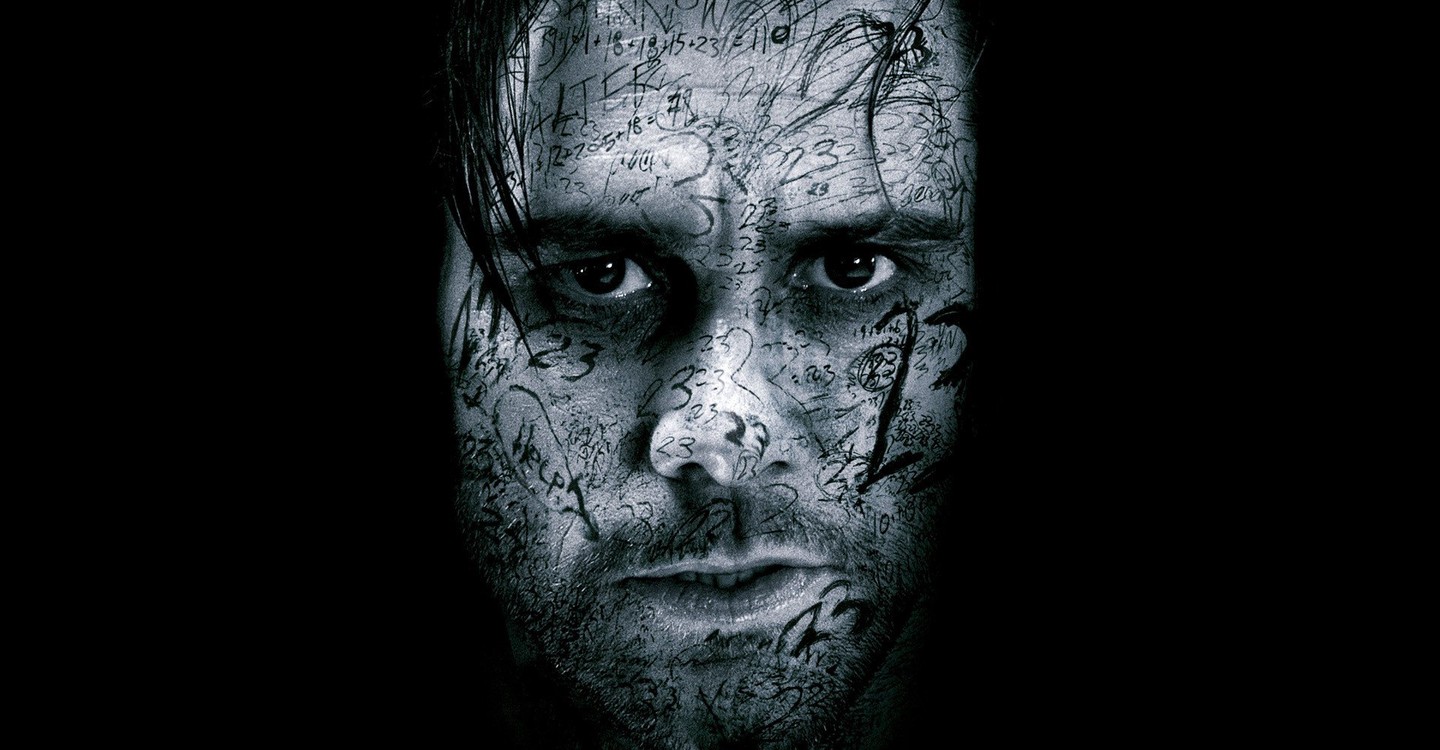
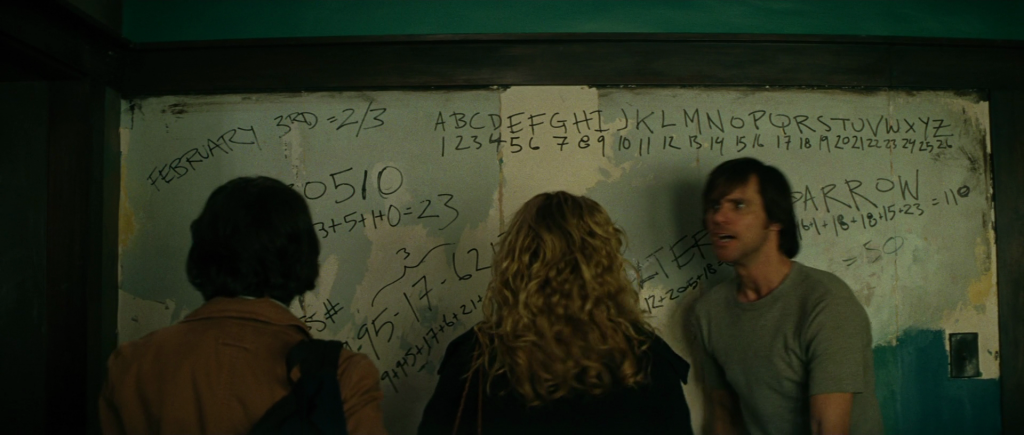
I remember The Sun newspaper running a promotional article on this film. To explain to some readers before we continue, The Sun was a right politic leaning newspaper notorious for the "Page 3 Girl", female models who'd pose topless in the page, something they stopped in 20151. The ad for what is frankly a bizarre proposition for a mainstream Jim Carrey film ran with the number 23 enigma, explained in that the number had power in that it could be found in multiple events if you added dates and data together, such as the date Kurt Cobain of the band Nirvana committed suicide. The Joel Schumacher film itself is entirely different from this. In fact a debate between Carrey, who becomes obsessed with this number when his wife Agatha (Virginia Madsen) gives him a strange self published crime novel about this, and Danny Huston, whose existence is to give monologues as he does here, debate this in one scene, as if the film itself wants to be more than this premise.

For me, I'm not particularly interested in arguing for or against the conspiracy. It's for me, as I have been obsessed with this film for a long time, more of an argument of the issue of objective truth, although I am fascinated by details like author William Burroughs being an early obsessive, recording every incident involving the number. It's surprising how many examples this film can bring up, and if you look online there will likely be more. It can be argued a) human beings can find patterns in everything, and b) some of the mathematical choices in the film, even as someone here who was always poor at maths, seem contrived in the choices the characters jump to calculating them. If anything though, if twenty three still appeared at certain events a lot, let's mimic Danny Huston's warm and proud vocals inherited from his father John that "twenty three is a very good number for this", and make it like how lucky number seven is. Superstition is not just a realm of the mystical and if also happens to exist even in calculus, it raises questions of how difficult it is to be able to fully gauge the concept, especially considering it would involve testing every example in a numerous world where examples would grow ad nauseam.

It is the thing the film is sold on even in the title, which proves a silly concept especially when Schumacher signals out the number in signs, as if the number itself is going to start stalking Carrey like a spectre ready to shank him in the end. The more controversial thing I could say, even over believing in the enigma, is being an unapologetic Joel Schumacher fan who even likes Batman & Robin (1997), even if it's a gaudy mess. Schumacher is a working director who is stylish but is dependent on the material being good - when it's not its nipples on the batsuit and ice puns. The result here, even if I am in the minority, is a curious hybrid between sincere drama, unintentional comedy, and some good material.

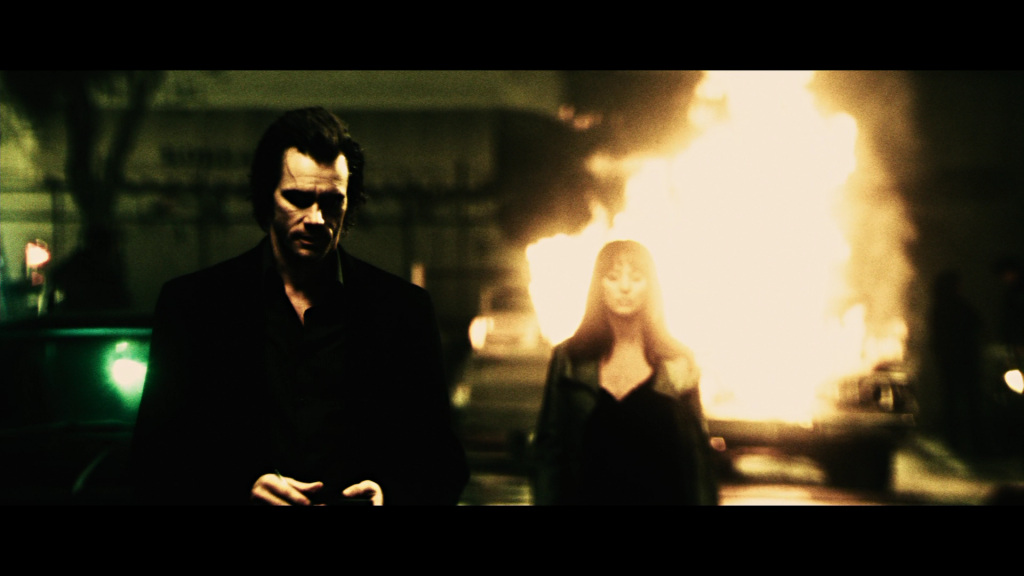
Jim Carrey at this point in his career is fascinating to consider to, as the beginning of the film even feels inexplicably like a throwback to his early career in films like Ace Ventura: Pet Detective (1994), as a dog catcher in a wacky segment trying to catch a dog. Eventually in the same film he will get his alter ego Fingerling in that book his character's wife finds for his birthday, decked out in tribal tattoos, stubble and playing a saxophone in a Sin City-like noir world. Carrey whilst known predominantly as a comedy did prove his dramatic chops in the late nineties and early 2000s, a film like Eternal Sunshine on a Spotless Mind (2004) the film many turn to for him being a great dramatic actor. Unfortunately most of his career had been not as heavy on this or not well remembered, as whilst it's unfair to dismiss a film like Mr. Popper's Penguins (2011) without actually seeing it for myself, they do disappear from public consciousness unless they are a big hit, a franchise creator or a critical/cult/kid's succeeds. He has babbled in drama occasionally since - one, Dark Crimes (2016), was not held very well - but he's fallen back into comedy or television, which is a same as he is as greater in drama as he is in exaggerating his body like rubber. Admittedly this is probably as much to do with his real life being a complex one, possibly drawing on real emotional issues, but he is good at these roles.


The Number 23 does show the strange position he is in where he's talented enough to pull off the angst of his character in the later half, where he eventually discovers that a murdered woman whose body was never found in central in the tale, but having to play the troubled family man against a premise with its layers of absurdity. When he's Fingerling, it is unintentionally hilarious just because of how he's been dressed and how everything has been shot, as whilst Schumacher is stylish as the best of Hollywood, and I like this bizarre aesthetic choice here, he can over do it at times depending on the tone. Also as much of this is the premise itself, how it plays at the aspect something every viewer has to grapple with as it leads to a series of coincidences having had to all transpire to make the premise work, be it secret sides and shocking lack of proper mental institution policies. If it was looser and more avant-garde, a premise like this from the Chilean filmmaker Raul Ruiz or someone as idiosyncratic would be digestible as the odd tangents would be matched by a director aware of how to present them. Here, because this is a mainstream film in a region where more traditional storytelling is expected, suspension of disbelief is a question for every individual viewer of this.

Ultimately, and one of the reasons I appreciate the film alongside its weirdness, is that it eventually becomes a story of redemption and has the courage to play this out fully, even if it might come off as hackneyed in context. The obvious twist is obvious to the point of being absurd itself, but Carrey's protagonist having to eventually make the most humane choice is more rewarding as a deliberate anti-climatic and moral choice than what's usually expected in these films. That in hindsight is an earnest but subversive streak of goodness to be surprised with from Fernley Phillips' script, when most films would not admit to the protagonists' having a justifiable guilt to redeem. That earnestness is matched by the touches I have grown fonder of in revisit, even if they are kitsch and silly, like the dog I have already mentioned being the curious watcher of the unsaved, all of which would be mocked by most people in that era of the late 2000s let alone our current one.

It isn't an abstract film, let's not get carried away, and there's definitely a bit of pure gouda cheese to pieces. Most people would have a time trying to get around the over-the-top edgy noir clichés, probably the most significant Virginia Madsen both as Carrey's wife and a death obsessed femme fatale caricature even Frank Miller would reject from his graphic novels, to the "suicide girl", a woman obsessed with the number 23 who kick starts the main crux of the film but definately belongs to the empty and questionable gender depictions. When you learn the novel's a confession, fed with a mad obsession with that number of pulp crime stories, it makes sense in hindsight alongside when Schumacher shoots the story within a post-Seven (1995) world. But bless him, even as a fan it just reminds me of his own snuff film thriller 8mm (1999), which was earnest in an extreme naivety in its darkness, as here it comes off as broad beforehand, especially as in contrast the real world with its dark and rick colours, a more naturalistic depiction, is so drastically different even in emotional tone to this stereotypical imagery and better as a result2. That the film plays off a lot closer to a drama of a father potentially losing his sanity, everyone providing a solid performance, offers another fascinating tonal layer in spite of all that I have already mentioned which complicates as much as finds much for myself to enjoy.

It's not surprising New Line Cinema released this when you've read the premise above, they who invested in some curious productions over the years, from Xtro (1982) to Snakes on a Plane (2006). It's sad that they no longer truly exist as even the franchise that put them on the map, the Nightmare on Elm Street series, was weird from the first film and progressed onwards.  They were not long for the world after this, thanks mainly to The Golden Compass (2007) being such an expensive production that didn't pay off, but I seriously doubt the likes of The Number 23 and Snakes on a Plane were helping either. It fits the company that, if this had been a low budget genre piece, it might've at least had a cult audience, but as a bigger budgeted work, it's now one of those films that I am amazed was bankrolled in the first place. And I openly admit enjoying the film in its own odd existence, but I will also be the first to admit its a perplexing creature to exist, between sincerity and ridiculousness, mostly entirely because it latched onto its premise.

Abstract Spectrum: Weird
Abstract Rating (High/Medium/Low/None): None


===========
1) That most of the models were around if younger than twenty years old, from memory, raises some questions for myself about the entire concept but, yeah, we once had a newspaper (or two) in Britain where no one batted an eyelid to there being a topless model among the news, The Sun the tabloid which was the most famous for this. It didn't bat an eyelid to have this newspaper easily available for kids to see either, and I openly admit it was something as a young teenager I deliberately glanced through for that page, on my late grandmother on my father's side at her house, eventually just reading upon articles like the one mentioned in the review in the end.

2) The cinematographer was Matthew Libatique, who is mostly known for working with Darren Aronofsky throughout his career, which does mean he worked on Pi (1998) but also mother! (2017), which looked go but because of its director I'd argue is more ridiculous than The Number 23 will ever be.