Showing posts with label Director: Francis Ford Coppola. Show all posts

Friday, 27 September 2019

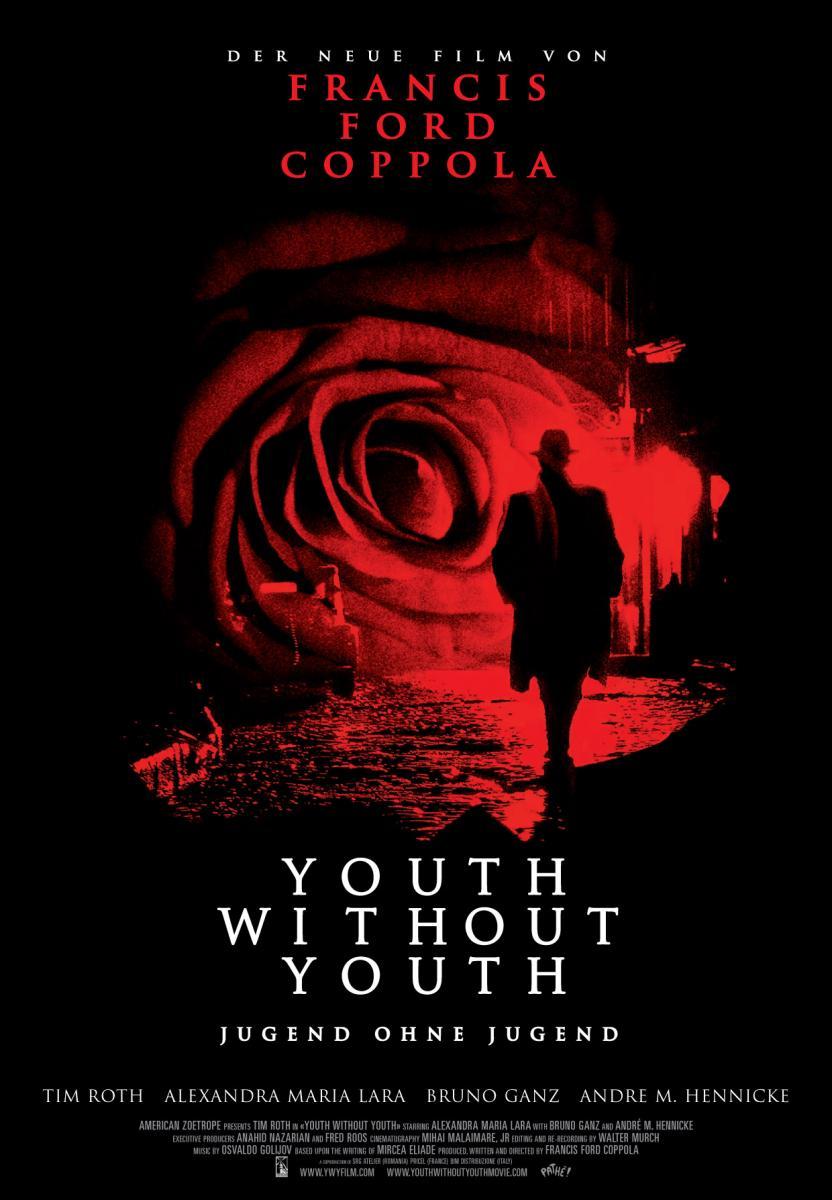
Youth Without Youth (2007)

From https://pics.filmaffinity.com/
Youth_Without_Youth-959559384-large.jpg


Director: Francis Ford Coppola
Screenplay: Francis Ford Coppola
Based on the Novel by Mircea Eliade
Cast: Tim Roth as Dominic Matei; Alexandra Maria Lara as Laura/ Veronica; Bruno Ganz as Professor Stanciulescu; André Hennicke as Josef Rudolf; Marcel Iureș as Professor Giuseppe Tucci; Adrian Pintea as Pandit

Youth Without Youth is an odd film, I won't deny it. Admittedly adapted from a novel by Mircea Eliade, a lot of this curious premise - in which an old lecturer Dominic Matei (Tim Roth) is hit by lightning grows young, can read books by merely looking at time, and becomes a superhuman intelligence - is likely from there, something I will get into later. As much of it though is knowing Francis Ford Coppola made the film without compromise, wrote the film clearly with no compromise and will shot the material like a boss.

He's not made a film since Twixt (2011)1, part of a trilogy not connected together barring the fact that, returning to cinema briefly, the legendary director of the Godfather trilogy made three films on his own whims having spent over ten years away tending his winery - Tetro (2009) and Twixt, the later an odd experience meant to be a horror film co-edited by viewers but becoming a 3D horror film where Val Kilmer occasionally talks to the ghost of Edgar Allen Poe, were idiosyncratic to say the least, but Youth Without Youth was a sudden return which referenced back to both his virtues and his notoriety of being obsessed with making distinct films.

Starting under Roger Corman and a string of films by the end of the sixties to find his own voice, his career reached its peak in the seventies, not only with the incredible success of the first two Godfather films but The Conversation (1974), before finishing the decade with Apocalypse Now (1979), famously the Vietnam War adaptation of Hearts of Darkness that turned into a warzone on set in its chaos. It's only into the eighties where, while he'd make highly regarded films like One From the Heart (1981) and Rumble Fish (1983), his star started to falter in terms of One from the Heart's disastrous box office success forcing him to have to spend the rest of the eighties recouping its cost. In fact into the early nineties, economic reasons was one of the reasons the divisive third Godfather film was even made, thought at least he also made making Bram Stoker's Dracula (1992), which I'll defend barring Keanu Reeves trying an English accent.
From https://www.cinemaclock.com/images/580x326/77/
youth_without_youth__2007_1179.jpg

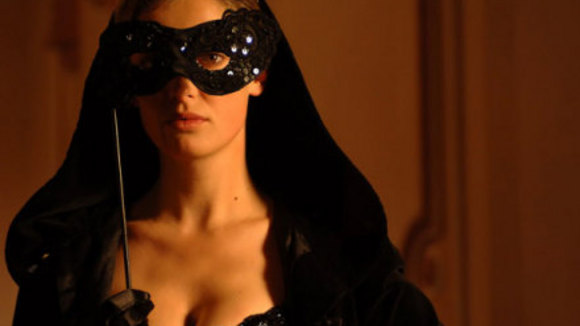
By the end of the nineties, whilst The Rainmaker (1997) was more of a John Grisham adaptation than a Coppola film, the Robin Williams family film Jack (1996) was considered a nadir. Returning in 2007, Coppola made both a luscious and frankly bug nuts film, as in Roth plays a man whom as if given a second chance of life, grows young through the thunderbolt of youth, exploring the history of human language, and human intelligence in general, whilst in the midst of Nazi occupied Austria finding himself eyed by Nazis wanting to make superman from his example. Having lost of the love of his life years ago, she'll eventually return as Veronica (Alexandra Maria Lara), almost reincarnated and also hit by lightning, becoming a conduit for ancient female Buddhists and souls that regress to her physical ailment to the beginning of human communication.

It's a difficult film in them to unpack, its source material clearly belonging to magical realism which intermingled World War II drama, a drama about linguistics, romance and tragedy, all alongside an ending which seems like it's going to cop out and say it's all a dream, which it might've all been still, but plays more like a circular story of a man's life that is from an entirely different era of cinema than the 2000s. It's a film, bluntly, where you need to accept the premise entirely or you'd hate it. The first half, set in WWII Romania does calmly take you through the premise, in which the late Bruno Ganz is a doctor fascinated by him during his treatment for the lightning strike, showing slowly the curious abilities and quirks Roth's characters has acquired. The second half onwards however, when it jumps in time over decades with Veronica possessed by spirits, excursions to Buddhist tombs in other countries and a random cameo by Matt Damon, is a further leap to go with. The notable thing is that the source novella author Mircea Eliade, from Romania, was a historian of religion, fiction writer, philosopher, and professor at the University of Chicago who wrote about the concept of the religious experience and was, befittingly, fluent in multiple languages. Naturally for someone who wrote fiction and non-fiction work equally, his source material if Youth Without Youth is accurate is a very idiosyncratic work nourished by the kind of esoteric subject matter Eliade studied in his life. Its however subject matter that is an acquired taste for a larger audience, so you as an audience have to come to this particular adaptation with this in mind.

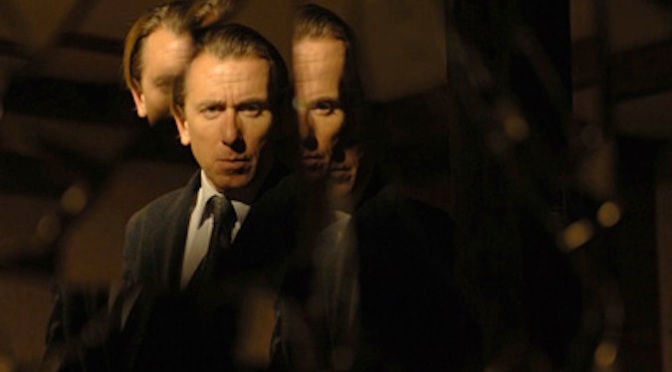
Coppola, mind, has always shot his films with an incredible scale, which can seesaw in terms of the content between the elegant to the opposite spectrum of the hallucinogenic. Both sides are felt with Youth Without Youth, a lush period film which transitions from WWII Romania to over the next few decades to the seventies, all with the tone of a classic period drama. It's a scale appropriate for a film where the film gets surreal, like Tim Roth having a doppelganger he can talk to in both mirrors and his dreams, Coppola really qualifing as deserving the term "cinematic" with his work. It works with Youth Without Youth, the one virtue to take from it that at least its logic makes sense because the world is built enough to make it acceptable. It effectively takes a film like The English Patient (1996), the same period war drama with English speaking actors in exotic locals, but imagines if Ralph Fiennes had psychic powers. The supernatural content has deeper themes however, which is why it still works - Roth, good in the lead, eventually finding himself asking whether his obsession is worth the sacrifice, finding himself also becoming obsessed in the Atomic Age that nukes are going to destroy the world, all whilst his doppelganger argues it's a necessary for the evolution of super humans to take place.

Does Youth Without Youth work? For myself yes, as a curious hybrid. It is, for obvious reasons, very esoteric and wouldn't have won over casual fans of Francis Ford Coppola's work. It is however clearly made by a man who didn't need to get back into the director's seat and, when he decided to, was because he wanted to make this film and as good as possible. As mentioned, he'd make two more films in this unofficial trilogy, none of them connected in the slightest in terms of style or subject matter, but in terms of a director having a short burst of creativity between 2007-2011 where he was still being experimental, Tetro still (as a drama starring Vincent Gallo) with a bold monochrome look and tone having a boldness alongside Youth Without Youth and Twixt. Whilst Youth Without Youth is not abstract, it's certainly engaging.

Abstract Spectrum: Magical Realism/Surreal
Abstract Rating (High/Medium/Low/None): None
From https://motionstatereview.files.wordpress.com/
2014/09/photo_38.jpg?w=672&h=372&crop=1

=======
1) Well, there is an ongoing film project named Distant Vision, which I didn't know about until this review, which has had "proof of concept" screenings at two American education institutions between 2015 and 2015.

Friday, 17 October 2014

Halloween 31 For 31: Bram Stoker's Dracula (1992)

From http://thefilmexperience.net/storage/bram-stoker's-dracula-poster.jpg?__SQUARESPACE_CACHEVERSION=1396885037902
Dir. Francis Ford Coppola

After the ill-advised film by Dario Argento, I need to wash out the bad taste. I needed something that showed how you really made a lurid yet artistically brilliant adaptation. Francis Ford Coppola, whatever you think of him, is always someone, even now, always pushed his work to the best quality whatever it was. Yes, I realise he made Jack (1996), to a lesser extent The Rainmaker (1997), but I've yet to get to them. Like Argento as well, the kind of directors I'm drawn to have a tendency to be "difficult" or at odds with commercial cinema though they're more than capable of making more mainstream films, some of the best in fact, having a film like Argento's Dracula inexplicably appearing in their filmographies, usually for work or the desire to make another film from it. Thankfully Coppola's take on the same Bram Stoker story is a lot more interesting and impassioned. Jonathan Harker (Keanu Reeves) goes to Transylvania to work for Count Dracula (Gary Oldman) only to find out soon after he is a vampire, one who has interest in his fiancée Mina (Winona Ryder) and travels to England to cause terror to anyone in his way. Coppola's take becomes far more elaborate from them on in plot, treated with the attitude of a full bloodied, erotic and madly heightened horror, and as a piece of high art influenced and using the techniques of silent cinema, allowing Coppola to push filmmaking through the material further.

From http://www.ferdyonfilms.com/wp-content/uploads/2011/03/BSDracula03.jpg
My attitude to him, as a fan of his, is blasphemous in that I found the first two Godfather films, while great filmmaking, to be the least interesting films I've seen of his, or at least at this moment, needing to rewatch them but drawn to everything else in his career instead. Coppola's apparent misfires are better films than most directors' best work, and then you get to his masterpiece, The Conversation (1974), or a film that is awe inspiring like Apocalypse Now (1979) and you see that when he hits his best work, he succeeded immensely. This is in mind that I appreciate his extravagance, work that does show an egotism and a bullish personality behind it, but used for the best in that he wanted to make films that were powerful to get the ordinary cinema going public to feel something, including as entertainment. A human drive to create incredible movies.  His take on Dracula is utterly spectacular, a fest of mostly practical effects and classic film grammar techniques, as a result of budget restrictions but with his son Roman Coppola as second unit director, using it to his advantage to show how much you could create nightmarish imagery without needing to go to computers. Uses of superimposition of images, additional actors playing character's shadows etc. adding to the fantastique nature of the film. Of Dracula's eyes leering over the skies as Jonathan Harker  travels to Transylvania, men turning into a mass of rats or strange distortions of pace to show Dracula stalking towards a victim from their garden. It's as baroque a take on the vampire film as you can get, drenched with a grandeur that is drastically different from either the 1922 or 1979 Nosferatu films. It's the style that was probably in mind for Dario Argento's Dracula, but much more well made, from the rich cinematography to the bold costumes and set designs by the late Ishioka Eiko, which is all captivating. Here, the Italian American succeeds in where the Italian born director failed years later in that this not only feels like a Hollywood film from the nineties, the last hurrah in terms of weighty, old school filmmaking, but like a seventies Italian genre film on a much higher budget. Very sexually explicit not just in its scenes of actual nudity but in the mood of many scenes, and references suggested from homoeroticism between the males, lesbianism, female vampires taking a male victim sexually as much as for his blood, and a general haze of the dark erotic that is out there for a blockbuster, and extremely violent in a way that would never be mainstream American cinema in the current decade for a licence like this, where a decapitation isn't a brief slosh of CGI gore but messy and not comfortable for either the person acting it out or for the viewer. It's as if Coppola is actually as much inspired by Mario Bava's Black Sunday (1960) as he is the silent films, and considering his generation of American directors from the seventies who got hooked on cinema and took inspiration from others to make their own, I wouldn't be surprised the dense, atmospheric, set bound style of that film and similar ones, more explicit in content, were in his mind making this.  

From http://www.jonathanrosenbaum.net/wp-content/uploads/
2010/08/bram-stokers-dracula-21.jpg
The film has had a divisive history for people because of this. The first issue I'm going to tackle instantly is the issue, as I had before, with Keanu Reeves. Actually he's not that bad, and he's does a good job, listening to him, in trying to do an English accent and in his performance, but the problem is that the accent, even if it is one that exists, is that it's a stereotypical posh English voice that English people like myself openly mock and sound theatrical to us, as would Oldman's Romania voice would be for an actual Romania. As for his apparent stiffness, considering the nature of all the Harker characters in the best films on Dracula - this one, F.W. Murnau's, Werner Herzog's - where they are actually weak people, and in this case too held back, it doesn't matter if one can't help but imagine him saying "Dude" or "Excellent!" at any time during the narrative, because whatever the case his apparent stiffness works for this intentionally artificial and crafted film. For the theatrical nature of the film, the artificiality that is found in aspects like Reeve's accent, or the hysterics of Anthony Hopkins as Van Helsing, or the uber lurid content involving sexuality and gore, or the dreamlike content such as gravity not existing when one attempts to descend the outside walls of Dracula's castle, is opposite what most people think a horror film should be, especially now, and the inherently bombastic and elaborate tone Coppola takes to this style is immensely different. Around a simple plot, you get a film, as in many of Coppola's work, that is carefully constructed, many of them balancing cautiously between the absurd and the powerful, as he did with Apocalypse Now, with Rumble Fish (1983) or a Twixt (2011). What has become apparent with viewing his Dracula again, is that Coppola for all this bombast, his infamy making some of his films, and the way that eventually took him and his company American Zoetrope down to the point he now occasionally makes a film and mostly deals in wine making, he has a possibly naive, but rich emotional core to his work that, for all the luridness of this film, is full of a more thoughtful take on the Dracula character than most adaptations could be. It's not a horror film as we usually see one has, with jump scares or throwing gore directly at the viewers' faces, but a macabre, lucid take on the material where the supernatural entities, even if they are evil undead, exist in a profoundly more alive world where reality is more sensual and vivid then the Victorian world that the mortal characters come from. Moments in the film are legitimately creepy, but not through nasty imagery but that the violence is painful or that the aesthetic and design of the film pulls from art and design that is both unsettling and beautiful at the same time. The director infamous for losing his mind during the filmmaking of Apocalypse Now is yet someone who, for all his broad gestures in some of his films, is very subtle when he needs to be, especially when you notice the moments in this film that are of most importance are treated with less of the broadness of everything else.

From http://classic-horror.com/files/images/bramdrac-still.jpg
The masterstroke that comes out of the film from this viewing is that, for all the violence and death, it's not a horror film, but a romance story between Mina and Dracula. Unlike Argento's Dracula which tries to cram in sympathy in a garbled way, only to pull the rug out from under the viewers' feet immediately after, this film sets this relationship up in the prologue, Mina a reincarnation of the bride of Dracula when he was a mortal man, rejecting God after her death and becoming the vampire. It becomes subversive both because the film, in its depiction of Mina, or her more sexually open friend Lucy (Sadie Frost), is far more open minded to them but because you can have Gary Oldman's Dracula, who feeds babies to his vampire brides and kills those he drains the blood from, still as a sympathetic character whose redemption through love is the finale for the story. Daringly, it's suggested that while we cheer on the heroes - Helsing, Jonathan Hawker, the three suitors of Lucy (Richard E. Grant, Cary Elwes and Billy Campbell) - the tragedy is not the damage Dracula has done, but Mina, who becomes a main character for the film soon into it, is forced into a lifeless existence as a Victorian married women once the end credits have finished. And its not a syrupy, badly included romance either, but one that is fleshed out, is brought up from the beginning, and in how its treated, is amazingly against the usual messages that are hidden in these sorts of films about gender and sexuality.

From http://screenmusings.org/Dracula/images/bram-stokers-dracula-0456.jpg
It's differences also means that the film is different from many other horror films for how exaggerated it is. Where you can have musician Tom Waits as Renfield, not an important character in the plot, but with his accent, mannerisms and almost pompadour hairstyle becomes instantly memorable, and in scenes in this role against Richard E. Grant and Winona Ryder as this is normal, especially doing so with a plate of insects in his hand that he daintily eats from. Where, while Gary Oldman is giving the best performance in the film in an incredible take on Dracula, he is still doing a Romanian accent as broad as Keanu Reeve's English one, partially dressed in a blood red kimono with his hair in buns, or as a young, mesmerizingly beautiful man, with hippy glasses and a giant top hat. Where the first moment of romance taking place between Dracula and Mina takes place in a primitive picture house, Coppola taking time to tribute his medium, where early porn is being shown in the background and a white wolf suddenly causes havoc in the tents. Having seen a lot of his films and becoming a fan of his, Coppola has films, even acclaimed ones like Apocalypse Now, that are split between the profundity and material that would come off as ridiculous if seen in the wrong frame of mind as a viewer. This is a lot of reason why his Dracula is derided as much as it's acclaimed, but the cohesion between the sides, to the point that the romance story in its centre, for its early nineties love song on the end credits, and Ryder and Oldman staring lovingly in each others' eyes in scenes where Dracula isn't a horrifying wolf man chowing down on someone's neck, can be taken seriously yet is still depicted in the heightened, extravagant tone of the horror content, is a success for the film.

From http://iztokgartner.blog.siol.net/files/2014/06/
223956-bram_stokers_dracula_1992_zpsae8d933f.jpg
Abstract Rating (High/Medium/Low/None): None
Unfortunately I can't add the film to the list, just off it because it's still pretty mainstream in structure and tone despite everything that's different about this film, more so now in comparison to current horror films. I'm probably going to kick myself eventually for not doing so, but whatever the case it doesn't dampen the virtues of it.

From http://www.moviepilot.de/files/images/0554/1357/Bram_Stoker_s_Dracula_2.jpg
A Cinema of the Abstract movie?
In fact, while I would've three years old when this film was first released, I had some tentative idea of it's existence around that time, admittedly through a first person video game tie-in, probably the least spectacular way one could learn of this film's existence, but still some curiosity about it. The menacing and sinister iconography from it, even in screenshots in a magazine showing a Doom clone, managed to have a power of their own that fascinated me, which I was rewarded in having the experience of when finally seeing the film itself. Thankfully from then on, as I became a massive fan of Francis Ford Coppola films, I've fallen in love with this one now, which goes as far as possible as a gothic horror film as you can. One which is well made and well acted. It is a technical feat still. It  has grown further rewatching it for this review as the character of Mina, when women are usually potential victims in these sorts of horror films, and her relationship with Dracula is the real narrative of the film, giving it a still-to-this-day progressive tone without losing the full-on gore, sexuality and upfront baroque tone that is also an experience. And the greater virtue is that, contrary to other directors, including one whose own adaptation is why I needed to watch this one to clear it from my mind through a better example, Coppola hasn't lost his skills as a filmmaker despite what some people say. He's become more divisive, doesn't give damn, clearly, for commercial worth of his newer films, instead doing what he wanted to do, and still utterly rewarding for me to view, glad that he still has it.