Director: Al Adamson
Screenplay: William Pugsley and
Samuel M. Sherman
Cast: Lon Chaney, Jr. as Groton; J.
Carrol Naish as Dr. Durea/Dr. Frankenstein; Zandor Vorkov as Count Dracula; John
Bloom as the Frankenstein Monster; Jim Davis as Sergeant Martin; Regina Carrol
as Judith Fontaine; Russ Tamblyn as Rico; Anthony Eisley as Mike Howard; Anne
Morrell as Samantha; Maria Lease as Joanie Fontaine; Angelo Rossitto as Grazbo
A Night of a Thousand Horror (Movies) #264
It's like Dial-a-Prayer on the telephone.
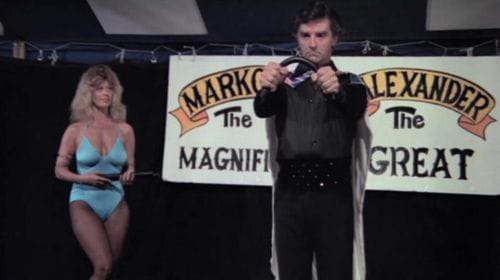
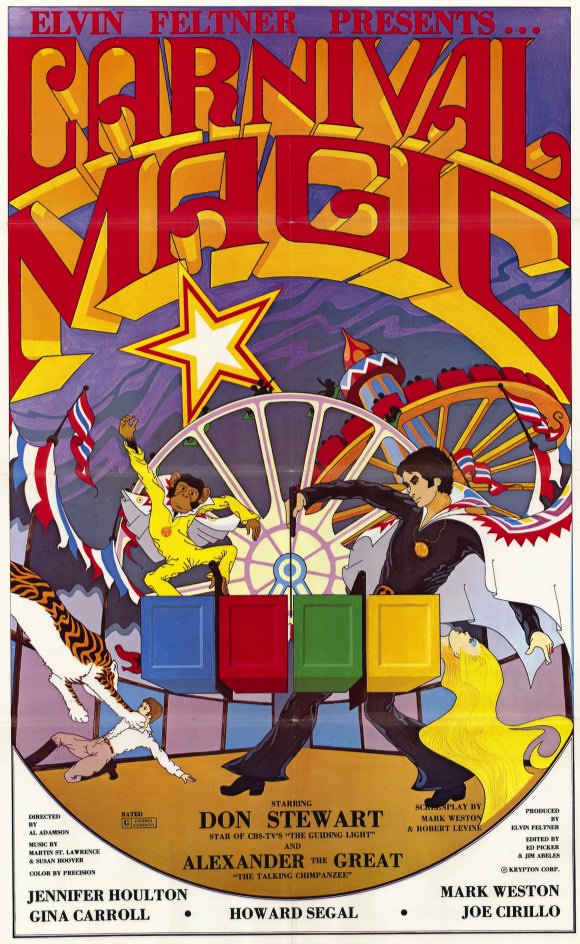
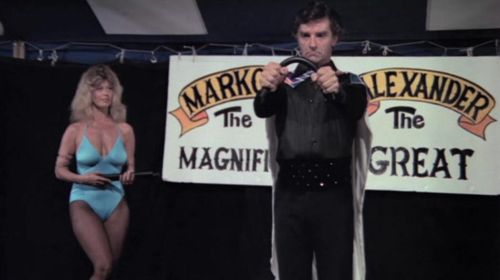
You can see Al Adamson as a filmmaker in one film. As documented in Blood & Flesh: The Reel Life and Ghastly Death of Al Adamson (2019), he started off with a thriller with a female singer to promote. This film did not sell, was re-cut as Psycho A-Go-Go (1965) with scintillating go-go dancers. Again, this does not sell, so it is re-cut again into The Fiend with the Electronic Brain (1969), and then again as Blood of Ghastly Horror (1971), becoming a horror film with zombies and John Carradine. This is an apt prologue for Dracula vs. Frankenstein as, before you point out even this was recut too for its final version, Al Adamson was once someone I saw an occasional film by (Jessie's Girl (1975) on an obscure satellite channel, Black Samurai (1977) on Amazon Prime), someone with a notoriety but not a figure I thought of baring he made quite a few films in exploitation cinema. He was someone who worked and worked, trying to keep up with the trends of the era, even if his work had to be re-cut, and even trying to make a children's film, Carnival Magic (1983), even if considered lost for a long time afterwards.
Blood & Flesh, connected to a large scale restoration of his work by Severin Films in 2020, has to try to compact a lot, which is always an issue with cult film documentaries, but it offers a great diving board into Al Adamson as a filmmaker. His tale has sadly become infamous for the tragic ending, a filmmaker who was murdered and buried where the Jacuzzi was in his own home, but Adamson's career is fascinating and bizarre even if this had never happened for how, in the golden era of exploitation cinema in the sixties and seventies, he managed to cross with so many people, so many genres that came about, and even crossed paths with Charles Manson and the Manson family when he shot on Spahn Ranch. He is a text book example where auteurism as a concept does not always work as it should, as his films were made to entertain, and his reputation has been low for many, but he has a trademarks with his reoccurring casts, and his life and how his films came to be really add so much to the material itself onscreen.
Films like Dracula Vs. Frankenstein are divisive - I can think of the text on American regional horror films, Nightmare USA by Stephen Thrower, and how he buries the Al Adamson films (and Adamson himself) in those which exist in the period he covers - and I will be honest in saying, despite being a film where Jim Kelly fights an actual vulture, I thought Black Samurai when I saw it, as a Marc Olden novel adaptation in the Blaxploitation era, as tedious to sit through. Adamson as I get into cinema's outside world however is a curious outlaw, apt for the son of a New Zealand cowboy who, successful as a silent film western star, strove to be entirely independent with his films and, when his son stated making films as an independent, would star in his son's films as the cinematographer could. One thing Blood & Flesh highlights, in terms of an auteurist viewpoint, is that whilst the films were not necessarily of ideas of his, his work with his crews influences them. This can include staff being onscreen as much as in the back, his love and wife Regina Carrol in roles as in Dracula vs. Frankenstein, and a gamut of unexpected figures, those like Lon Chaney Jr. as aging film stars of the past, Russ Tamblyn of West Side Story (1961), who was an outsider soon after that film, and here even the stockbroker Roger Engel under the name Zandor Vorkov as Dracula.
The irony is knowing, according to Blood & Flesh, that Al Adamson's favourite films were musicals, and before I could imagine what an Al Adamson musical looked like, as a man who made films in other genres, he did make a musical and it was called Cinderella 2000 (1977), which even for me would to be something to be seen to be believed. Regardless of what you think of Dracula Vs. Frankenstein too, his career is also affected by the fact, even in the drive-in era where films were churned out, he struggled and was stuck in limbo with films shelves and constantly re-cut to try to sell them. Dracula Vs. Frankenstein, as mentioned, was an example, where those titular titans were not even in the original form, originally a tale of a mad doctor, played by Hollywood actor J. Carrol Naish near the end of his life, who out of a carnival exhibit in a coastal fair is experimenting on the resurrection and rejuvenation of human flesh, even if it means drugging the docile Lon Chaney Jr to a state of being kill-crazy, with an axe ready for decapitating a woman who with be put back together by Naish afterwards.

Unable to be sold, the film was changed with new footage, in this case introducing Dracula as interpreted by "Zandor Vorkov", who having acquired the puffy faced decayed corpse of Frankenstein's Monster, comes to Naish, the last heir of the Frankenstein family, to cut a deal to benefit each other. This all feels disjointed before anyone in the readership asks about this to himself or herself, this titular plot sequence bolted onto a work which would have structurally made more sense in its original form. That original narrative has a singer (Regina Carrol), after a musical number from an era before, searching for her missing sister at the fair Naish is. Dracula and the Frankenstein's monster, until the final act, are barely in the film, to the point that whilst there is an attempt to write Dracula into the narrative, the monster has no point baring one or two rampage sequences.
Considering that the film instead has a tangent into a guy named Mike, an older guy living on the beach with a shark tooth necklace, as a romantic lead and even some snapshot of the early seventies hippy movement, with demonstration footage and even a pair of hippies wanting to go to one in dialogue regardless of what it is for, I can see why Al Adamson gained the notoriety he did. His film here, regardless if it works, tries to be an entertaining film in spite of logical holes, and can wander off into tangents of he would rather be doing, especially anything with the love of his life Regina Carrol can be the centre of. The lengthy musical number in which she is introduced now makes so much sense knowing his tastes, his habit to cram in recognisable stars of the past (and a still young Russ Tamblyn as a sexually violent possessive biker) into the film causes more tangents happen.
With the only connective tissue being Naish's doctor apparently needing "donors" to feel feat to extract what he needs for his resurrection serum, the film as a result of its structure is a facsimile of a narrative, tropes floating between its stunt casting and what Adamson felt was interesting. This is where he gets interesting however, where even if he has a habit of making very slowly paced genre films means Dracula Vs. Frankenstein is frankly a mess, he nonetheless created films vibrant with who crossed his path and how this plays onscreen1. The figures that appear onscreen bring so much to the material. Lon Chaney Jr., not talking at all and having throat cancer, still is dynamic with his facial features. J. Carrol Naish is clearly reading lines off-screen with cue cards at points, and yet is stil dynamic as a figure of classic Hollywood, and it shows an accidental progressiveness, for all his questionable choices, that Adamson cast him regardless of that fact he was wheelchair bond. The same goes for Angelo Rossitto, famous for films like Tod Browning's Freaks (1932) and Scared to Death (1947), who is cast as a carnival show barker helping Naish. Considering Scared to Death played off Rossitto's dwarfism as a demonising factor, in a film with Bela Lugosi, this also feels more progressive as, even if playing a villain, here he is spry and energetic for a man, feeling younger than his sixty plus years, who gets a lot of time onscreen, even pulling out a trick of eating money.
In mind to this film's convoluted origins, it does require an appreciation of a film like Dracula Vs. Frankenstein beyond its base form, of its creators and a willingness to find amusement, not irony, in when this film does waver. If you cannot, this sis not recommended seeing. If you can, as I am slowly becoming to appreciate in films like this, this was a very entertaining film. As I come to view films less in terms of standard forms of "quality", whilst that is important for some of the best ever made, but as constructs of the people behind them, Al Adamson is going to be of interest. He is going to have one potential barrier in that he wanted to make "entertaining" genre films, which means we are less likely to have the personal obsessions with the likes of a Jesus Franco or an Andy Milligan, but a film this notorious wins me over for the people who appear in it, its context of why everyone is there, and letting the film wander on in its mad world.

========
1) As well as off-screen influencing onscreen too. Adamson had Vilmos Zsigmond, the legendary cinematographer, on Psycho A-Go-Go, as a Hungarian exile needing to find work early in his American career, and László Kovács on The Fakers, before it became the biker film Hell's Blood Devils (1970). Kovács, alongside the legacy of Easy Rider (1969) which he worked on, and was a film that helped other Adamson biker films be sold on, would cross paths between as eclectic as people as Adamson, Steven Spielberg on Close Encounters of the Third Kind (1977) (which Zsigmond worked on), and Colonel Sanders, the founder of Kentucky Fried Chicken, when it was not the mega business, who appeared onscreen in Hell's Bloody Devils as he did in a Herschell Gordon Lewis film from the exploitation film era.


-screenshot.jpg)