Tuesday, 30 January 2018

The Bloodettes (2005)

From http://superselected.com/wp-content/uploads/2014/08/Les_Saignantes.jpg

Director: Jean-Pierre Bekolo
Screenplay: Jean-Pierre Bekolo
Cast: Majolie as Adèle Ado); Chouchou (Dorylia Calmel); Emile Abossolo M'bo as Ministre d'Etat;  Josephine Ndagnou as Natou; Essindi Mindja as Essomba; Alain Dzukam Simo as Rokko Véronique Mendouga as Dr. Amanga

Synopsis: In an unknown African state in 2025, a Bloodette named Majolie (Adèle Ado) accidentally kills the Secretary General of the Civil Cabinet, a very important man in the government, after sex. Getting the assistance of another Bloodette and close friend Chouchou (Dorylia Calmel) to dispose the body, they find themselves pulled into the local custom of funeral mornings for important figures, which immediately causes problems with their attempts to dispose the SGCC, particularly as a corrupt male political figure in the government becomes aware of the pair and tries to sexually blackmail them in exchange for money. The women however have one advantage on their side, the ancient ritual of the Mevoungou, presided over by older sorceresses and their own abilities.

The Bloodettes, even if it isn't perfect, presents an ambitious idea of a Film Noir soaked political sci-fi film made in Cameroon. Shot on the streets rather than attempting an elaborate fantasy world, the film's minimal nature is for the better and for a sense of mood. Director Jean-Pierre Bekolo explicitly presents an African country of 2015, not dissimilar to 2005 Cameroon or  to most places within the 2010s. Barring the voice automation to drive cars and little details, post-colonial Africa is still stuck in a terrible scenario, corrupted by politics and industry regardless of the era. Whilst old depictions of the future, even the campiest, can be as rewarding Bekolo's intent for the film is greatly helped by shooting in real locations. That amongst the murky back streets and industrial areas, it's an environment which suits the sense that his lead heroines have to scrape to survive.

Patriarchy is still a huge issue within this world that is very bleak and inhospitable. The Bloodettes, Majolie and Chouchou, have the advantage of an ancient magical rite. Yes, said rite to a Western viewer can literally be described as a woman's own sex being magical. This ritual, the Mevoungou, is however a real custom that was eroded away by Western influences and the director discovered through anthropological documentation of his own Beti heritage. One of the biggest problems  so what may seem strange and trite for a Western viewer is actually a very political and feminist subject being brought to screen.
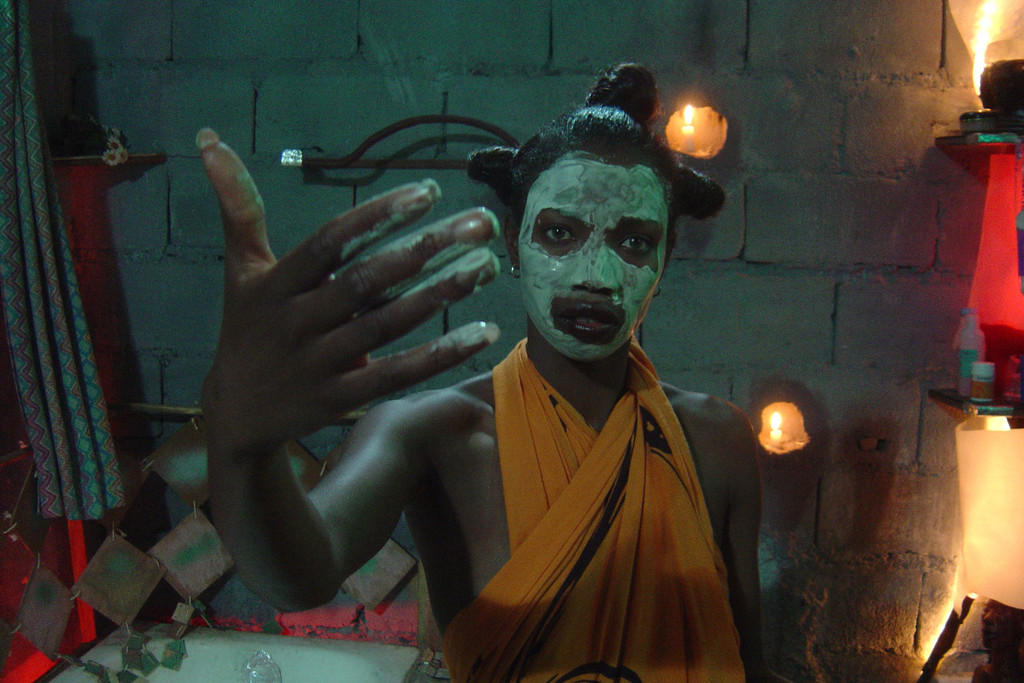

There is, without any of this context, a slight absurdity at first to the Bloodettes using their sexuality to force stun people a couple of times, through synchronous dancing and gyration. But that not only reveals a  conscious bias and shame in a viewer (even myself honestly) when talking of sexuality, but knowing that it's based on a real culture of female empowerment, lost in the wave of Western influence and practices like female genital circumcision, forces one to step out of this childish viewpoint. To realise how sex magic (magick) alongside ancient traditions like Mevoungou come from the state of reassessing the human sexual body as a force of great power. Its more significant as this is an African custom, not a Western one, and alongside the huge stumbling blocks in Western culture itself with sexuality, there's also the huge issue of how the West ostracises "exotic" customs behind our history of material social progression by showing it as another even within that culture's own history, forgetting that we're viewing a lot of this never actually within these countries. In this film's case as well, this is a topic with racial and engendered politics which means not knowing the context of the Mevoungou, which I only learnt of through writing this, places a viewer in danger of entirely dismissing a film as merely a cultural oddity when it's a cultural film in its own country with a very loaded context.

Two very strong women are our leads. Whilst they are likely in sex work, they are very strong figures looking out for themselves. Barring one shower scene, very little in terms of sexualisation of a male gaze is found, instead the sensuality of the protagonists theirs and in their control, both of their own bodies in front of others and the Mevoungou. Everything else is entirely about these figures trying to overcome corrupt male figures. Sometimes with their whits about them, like trying to convince a butcher that the  SGCC's body is good beef, eventually trying to acquire a body for the head when they find themselves in the midst of funeral morning customs. Then however they have the Mevoungou. An essay Re-Imagining West African Women’s Sexuality: Jean Pierre Bekolo’s Les Saignantes and the Mevoungou by Naminata Diabate describes that, yes, the Mevoungou is literally a Beti custom surrounding the female clitoris. That it has a profound magical importance which older and younger Beti women were participants of and gave their power with a literal spiritual edge over men. In this, even against the corrupt younger male politician with his own strategies, our heroines have their ancestral ritual to assist them, alongside a council of older women who can bend reality such as vanish in a blink of the eye.

From https://images-na.ssl-images-amazon.com/images/
M/MV5BM2NiNzI5YjEtZWU5OS00ODFkLTlmNzItMjA4
NzAwZGM3ZWMyXkEyXkFqcGdeQXVyNzczOTc5ODI@._V1_.jpg

If the film has a problem is that it's trying to flesh itself out as a fully built work but with some obvious problems with its structure. What happens in the plot does feel anaemic by the end, an attempt to rip off a corrupt politician losing a great deal without knowing its context in terms of feminist/folk cultural politics. Neither does it help that this involved awkward under-cranked fight scenes which don't help any production. That the subplot where morning very influential people have replaced night's entertainments could've been established further more too, especially as disposing a body is a huge part of the plot originally. Where The Bloodettes stands proud and can overcome these issues is its attitude and style. How stylish its low budget and economic look is, especially as its entirely shot at night, an atmosphere both in the dark streets and the harshness of indoor lighting. Even the almost Godardian cutaways, to a bill board with different statements on them commenting how different genres are not possible - such as horror when death is a party - mean a lot more on this viewing as interesting self-reflections on the content within, the director clearly pastiching genres on purpose. And of course there's its empowerment of women, and especially black women from a non-English speaking country, with this film both in its use of a cultural ritual for women that could've been lost in history and how it generally depicts its leads as very resourceful figures helping to push over the stain on their country's soul. Something which we are in dire need of more in cinema and preferably in an unconventional work like The Bloodettes, not a sanitised and toothless creation to appeal to bland white English speaking middle class communities like some of the worst films for tokenism are made for.

Abstract Spectrum: Genre Hybrid/Psychotronic
Abstract Rating (High/Medium/Low/None): None

Personal Opinion:
A gem. Imperfect but shining with originality. It's a film in dire need of rediscovery for this and as a capsule of both an environment and a folklore that, alongside being more progressive than some modern "progressive" ideals, is something that you wouldn't know of unless you had films like this, the Mevoungou and its importance for women of a specific African culture allowed to thrive onscreen and not seem like a mere relic. 

From https://images-na.ssl-images-amazon.com/images/M/MV5BZWI3ZGU5OTQtNzFjZC00NWU2LTgy
MWEtOGE3ZGQ5OWU2MTVmXkEyXkFqcGdeQXVyNzczOTc5ODI@._V1_.jpg

Saturday, 20 January 2018

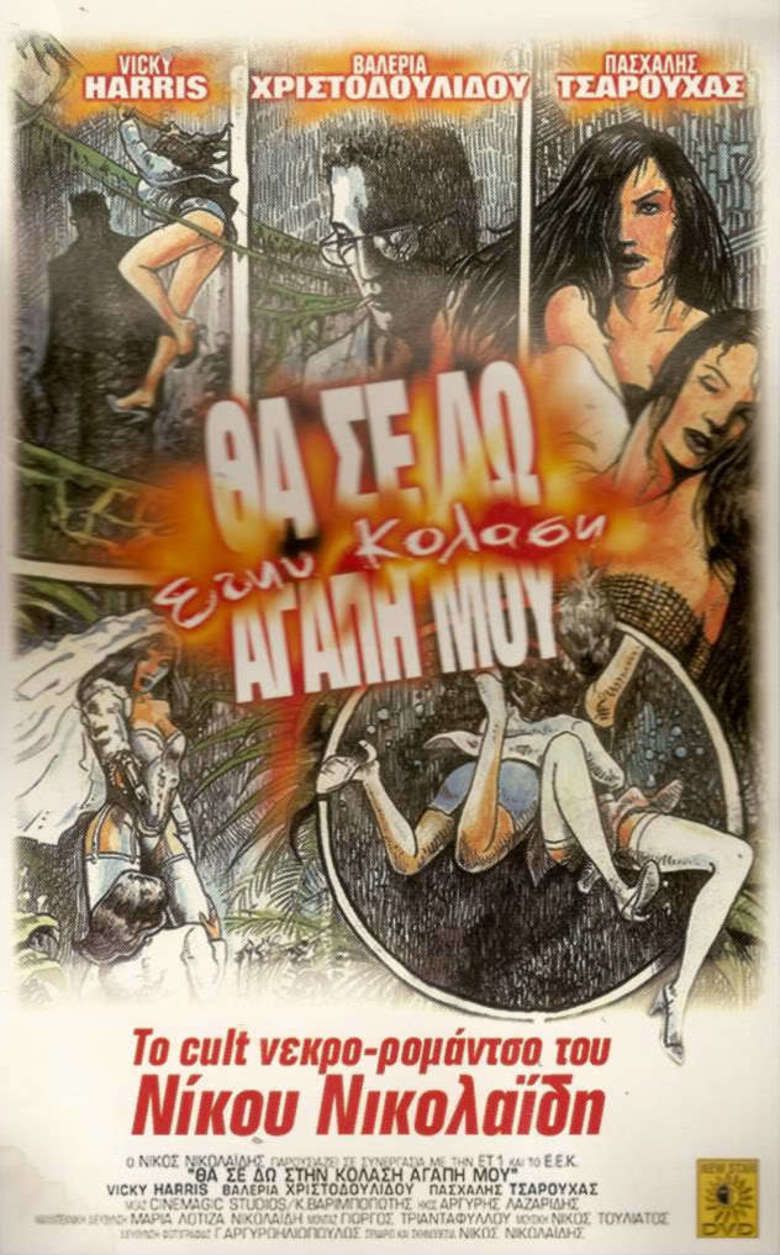
See You In Hell, My Darling (1999)

From https://alchetron.com/cdn/See-You-in-Hell-My-Darling-
images-e32781a0-de5a-41ea-929b-c4571fee205.jpg

Director: Nikos Nikolaidis
Screenplay: Nikos Nikolaidis
Cast: Vicky Harris as Elsa; Valeria Christodoulidou as Vera; Paschalis Tsarouhas as The Dead Man

Synopsis: Living in a purgatory all within a large house, childhood friends Vera (Valeria Christodoulidou) and Elsa (Vicky Harris) are struggling with their memories of before, a heist which ended poorly and returns back to them issues of jealously and animosity between the two women. It grows as the body in the pool (Paschalis Tsarouhas) starts walking around, a man both women are attracted to. That Elsa is still interested in the money they have adds to the growing tensions.

Nikos Nikolaidis is sadly an obscure secret. All the transgressive "New Weird" of Greek cinema that came to be in the 2000s, not just Yorgos Lanthimos but even subtler films like Chevaliar (2015) owes a debt to him. The differences between the sides is that Nikolaidis was a stylist, rejecting the cinema verité of the later directors in favour of exaggeration in style as much as content, a director of the sixties and seventies onwards who is chameleonic in production and unpredictable in what each film will be like, whilst still driven by clear obsessions. Sadly only one film of his has had availability and attention to it in a larger scale outside Greece, and is still obscure for many. Thankfully that film was Singapore Sling (1990), his infamous genre hybrid which could be seen as just a shock film - possessing violence, nudity, vomiting, BDSM, inappropriate rubbing with a kiwi fruit - were it not also a film noir pastiche with beautiful monochrome cinematography to die for. Skip over the end of the nineties and See You In Hell, My Darling rifts on that film's structure as a continuation. Two women, one man, some of the straight-to-camera monologues of the older film also by the actresses in character, but different still. Shot in colour and looking like a late nineties erotic thriller, but as with his other films, utterly against any predictable expectations.

The film never explicitly states where it is set. "Purgatory" is the only to describe where Vera and Elsa are, a place entirely confined to one house and a beach where moments of the unnatural puncture its nocturnal realm, the only other characters baring them and Paschalis Tsarouhas' role being a brief cameo by creepy, masked ambulance attendants, the environment aside from them  existing outside of mortal life. Flashbacks, in video, of a heist that went sour suggest as much, still tied down by the weight of their lives before. Vera encumbered by constant nausea and vomiting, Elsa obsessed with a jealously and continued desire for the money they acquired. Their beau played by Tsarouhas comes back in spite of having floated face down in the swimming pool for a long while, adding further tensions. From there it's difficult to define See You In Hell, My Darling as it plays not with large scale plot twists but small emotional dynamics over its length.

From https://i.ytimg.com/vi/R_xz3tNPLpw/maxresdefault.jpg

This is also where you realise why a film like and Nikolaidis' other work is likely been neglected so far despite the small cult around him. Singapore Sling was helped by a level of infamy, whilst still obscure. See You In Hell, My Darling is just as sexual, nudity and moments evoking a sensual relationship between the main female characters, but the story is more subjective. It's the type of film that's only starting to get more appreciated now the availability of cinema is slowly widening, not a film you can work out by simple big plot twists nor based on a simplistic drama as many mainstream art films. As a result you have to work with a more expressionist experience. Nikolaidis is an openly transgressive director and a corporal one obsessed with the human body in its form - thus someone goes to the bathroom only to puke up in response to the awful thing they witness - but he is also someone who likes his characters to be fluctuating. Morally grey figures who evolve and change over time, behaving in ways more realistic to the viewer themselves even if some of their acts are utterly surreal, not genre stock behaviour that are easy to archetype.

With this in mind, the performances from the main actresses especially are compelling. Vicky Harris and Valeria Christodoulidou have to do the heavy lifting for the film with only one other actor to work with. This is particularly a success as, exactly like Singapore Sling, they dominate the screen even if acting out scenes which be seen as tasteless or the director being a dirty old man if there wasn't a strength of conviction to their performances, allowing the pair to make such scenes make sense in the moment and far from contrived, dominating the screen and forcing us the viewer to follow them. This connects See You In Hell, My Darling to other later works of directors like Walerian Borowczyk or Andrei Zulawski, later pictures in their filmographies ignored or having been only started to be appreciated too where, even if they have their actresses commit to nude scenes or more transgressive plot moments, are dominated by actresses like Iwona Petry and Marina Pierro who take what could come off as humiliating moments and be dominant, always in these films the most complex and rewarding characters against the males and the actors' performances. It's the same here with Nikolaidis' film.

From https://videoth.uloz.to/M/m/v/xMmvfAN.640x360.1.jpg

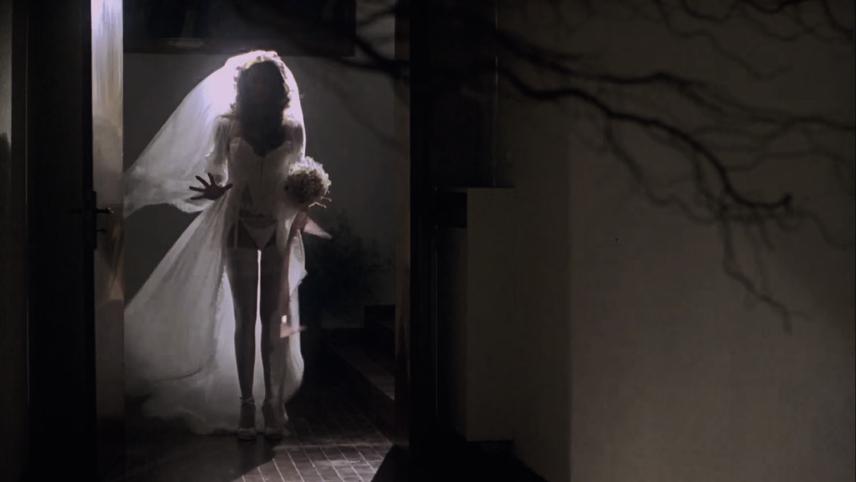
The style I admit could wrong foot viewers, as like those other directors mentioned (or others with filmographies barely in access like Raul Ruiz) Nikolaidis willingly changed in aesthetic and technical differences per decade like water in a stream bends to its form. Thankfully nothing in See You In Hell, My Darling is an embarrassing time capsule of the late nineties, a film which uses its limited sets and actors to an advantage in how it gives the world onscreen an uneasy wyrd atmosphere. Even objects that time stamp the film like the use of a VHS player are limited and feeling like they have a logic, the ghostly edge of an afterlife where the obsolete technology also goes to. The overly surreal aspects also work so well because the director merely has to represent them with ordinary objects that stick out strongly in appearance to the main environments, from weird masks or the wedding dress Elsa wears, all of them appropriate for a film which is meant to be a crime pastiche, turning it in on itself and still living up to its narrative of betrayal, firearms and poisons.  

Abstract Spectrum: Expressionistic/Psychotronic
Abstract Rating (High/Medium/Low/None): Low

Personal Opinion:
Cinema which defies a genre and even dramatic expectations, likely to infuriate many, but as a unique blending of an erotic crime thriller with a purgatorial character drama this is imaginative and truly rewarding for me. That it is also a Greek film is itself a fascination, knowing that a country like Greece has such a complex and rich culture - from ancient Greek mythology and culture to films like the strange genre films to Nikolaidis - but is one that is severely under appreciated as an outsider looking inwards. Arguably the New Weird Wave of Greek cinema needs to call attention back to Nikolaidis as he personifies the country's defiance of country's defiance of conventionality with depicting the human condition.

From https://assets.mubi.com/images/film/23564/image-w856.jpg?1469410685

Saturday, 6 January 2018

Pepperminta (2009)


Director: Pipilotti Rist
Screenplay: Pipilotti Rist and Chris Niemeyer
Cast: Ewelina Guzik as Pepperminta, Sven Pippig as Werwen, Sabine Timoteo as Edna, Elisabeth Orth as Leopoldine, Oliver Akwe as Kwame

Synopsis: Pepperminta (Ewelina Guzik) is a free spirit who has been taught to live life to the fullest by her grandmother, now a mechanical eye in a container, who also taught her to power of colour. With these in mind she starts to acquire allies in her goal to bring joy to the world.

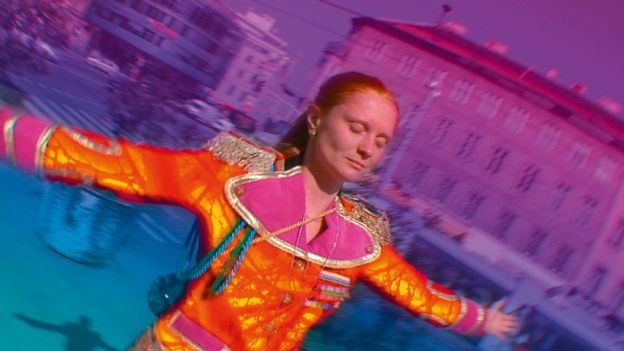
Pepperminta, if one wants of a more known comparison, is Amelie (2001). However this is directed and written by instillation artist Pipilotti Rist, so rather than a man depicting a female free spirit, you have a woman's perspective which changes a lot of the attitude. Pepperminta is a sweet, soft-hearted film in which one character desires to bring the world to a better place, a mischief which involves her gaining the assistance of   a man kept inside by his mother due to perceived health issues, a woman who purposely dresses like a man and binds her breasts out of discomfort of herself, and an older woman who fears her encroaching death. Pepperminta acts before and after acquiring these allies is harmless, posting mail to hijacking a fancy restaurant, where such curious sights such as green spaghetti and a whole roast pig surrounded by Lego are created by her group.

Complimenting this is Rist's style, a perfect blending of old filmmaking techniques for the YouTube general such as stop motion, used for such memorable moments as police officers being assaulted by a sentient flock of fruit. It's a playful, fun style which thankfully never becomes coy and irritating. A huge factor is that Rist's reputation for colour in her work is on display, playing up the entire spectrum explicitly in the plot. Even in naturalist digital, the film is full of vibrant colour which plays onscreen.

From https://hirshhorn.si.edu/wp-content/uploads/2012/03/image_1_483.jpg

Pepperminta
however is not a family friendly film. Amongst dealing with subjects like death, it also explicitly tackles content breaking perceived taboos.  Menstrual blood, which Pepperminta collects in a goblet, is a subject for example rarely tackled let alone with characters eventually drinking it. That and nudity where stereotypes of bodily perfection are through out of the way. This is however where Pepperminta slips, a sense of seriousness within what should be fun and light, but also shows the ideas are juvenile rather than helping the viewer overcome their own fears. If it is going to tackle the taboos of menstrual blood, it never feels fully developed Pepperminta herself, whilst admirably played by Ewelina Guzik, could come off as utterly annoying, in danger of becoming the free spirit whose behaviour is actually counterproductive in helping people, risky and in cases like randomly licking random objects behaving not in ways to show individuality but wasting energy. There's also heavy handed moments which feel out of place even amongst the serious material. The police that try to catch Pepperminta evoke such antagonist figures in cartoons, but adding religious priests amongst the police and snooty people (likely evoking Rist's atheism from a protestant background) feels counterproductive to a film whose message should be above that, which should be thinking out of the box rather than going for obvious things such a character like Pepperminta would find absurd.

The bigger issue is that, it's not Amelie that's the biggest comparison, but Věra Chytilová's Daisies (1966) that comes to mind in comparison to Pepperminta. Another female filmmaker, but with two female characters named Marie I (Jitka Cerhová) and Marie II (Ivana Karbanová).  In terms of films, Daisies is one of the best ever made in the medium, and in context of having been made in the oppressive communist regime, makes Pepperminta look like a trivial First World Problem movie. It also feels like it has no teeth next to Daisies. Daisies is a fun film, but it's also aesthetically and technically on a higher level, and it's so much more liberating and transgressive, the kind where the Maries would mock Pepperminta's pretentions for improving the world. Whilst the message sounds nihilistic, Daisies was made in the context of a social environment such films deemed unhealthy and destructive for human beings.

It's a sweet film but it, unlike Pepperminta, isn't "cute" but a manifesto that was against a real target, whilst Pepperminta is targeting stereotypes as cheap targets with the same tone of a self health book. Pepperminta and her assistants take over a dinner hall; Marie I and Marie II in Daisies find that destroying it is far more constructive in being destructive. Pepperminta doesn't become cloying in emotion but it's still pretty childish, the latter having greater power and making Rist's sole feature length work minor.

Abstract Spectrum: Experimental/Expressionist/Whimsical
Abstract Rating (High/Medium/Low/None): None

Personal Opinion:
It was fun whilst it lasted, but Pepperminta does not stand up beyond looking really nice and colourful.

From http://www.pepperminta.ch/wp-content
/themes/pepperminta/images/backgrounds/24.jpg

Friday, 29 December 2017

Blood Freak (1972)

From https://www.grindhousedatabase.com/
images/Blood_Freak_poster.jpg

Directors: Brad F. Grinter and Steve Hawkes
Screenplay: Brad F. Grinter and Steve Hawkes
Cast: Steve Hawkes as Herschell; Dana Cullivan as Ann; Heather Hughes as Angel
A Night of a Thousand Horror (Movies) #151

[Spoilers Throughout]

Synopsis: Herschell (Steve Hawkes) is a God fearing, everyday Joe and former Vietnam vet who just happens to be tempted by Ann (Dana Cullivan), the beautiful pot smoker who is less interested in the Bible than he or her sister Angel (Heather Hughes) is.  Her attempt to bring Herschell closer to her, with a special extra addictive narcotic, backfires as it mixes with an experimental chemical used at his new turkey factory job, asked to eat a sample turkey. The result leads to him become a half-man, half-turkey who has to feed on the blood of freshly lit up drug addicts.

"We live in a world subject to constant change. Every second, of every minute, of every hour, changes take place. These changes are perhaps invisible to us, because our level of awareness is limited..." If there was a statement appropriate to borrow as the blog's mantra, co-director/co-writer Brad F. Grinter in his constant Greek chorus narration within the film has material like this to work with. Even scrapping the bottom of the barrel as I do here, it's either coincidence or a universal thread that connects everything in art, where even z-grade material like Blood Freak speaks the same language of debating one's rational perception of reality. Especially when F. Grinter himself, eventually on an anti-drug and anti-chemical rant, having smoked throughout the filming of these scenes, starts to cough his lungs out to such a violent extent he cannot continue, the sort of legitimately uncomfortable moments most films would not include in the final print but he must've been stuck with, his black tar lunged retching adding to the strange circumstances of his conspiracy/environmental monologues.

The real weirdness to Blood Freak is not its reputation as a bizarre Christian anti-drug splatter movie but really its whole existence and what the director-screenwriters were trying to create here. These monologues, honestly, are the only truly weird moments of Blood Freak because they feel like they're directly from its co-creator's mind. The rest is far from the bizarre film I have read it to be.  You have to wait almost an hour for any gore, and baring one gristly leg removal involving an amputee actor and a prop table saw, most of it is generic neck slitting with the screaming looped for so long one of my relatives asked what I was watching from the other room. The anti-drug message is like any older (weirder) anti-drug films. And there's barely any truly Christian message to the material. Yes, there's a half-turkey man on his knees praying for salvation, there's not even scripture quotes and only the outline of redemption through Christianity. In fact I have to consider Blood Freak's reputation as a weird film really only comes from sceptics and atheists mocking its contrived take on faith.

That does need a tangent. Regardless of my own faith, spiritually inclined Agnostic who has never had resentment to Christianity as a belief system, I find especially reading some of the reviews of Blood Freak online really problematic for how snarky they are, an elitism that is compounded by the fact I seriously doubt anyone watched Blood Freak until Something Weird Video released it. Even a more infamous example of this type of seventies self produced Christian cinema - those produced by Baptist minister Estus Pirkle like If Footmen Tire, What Will Horses Do? (1971) - feel like the odd sideshows you cannot argue a whole nation's or whole world's Christian views on, like evaluating an entire zoo based on just the howler monkeys. The kind of films which are frankly used to depict American Christians like a sideshow freak show when its significantly more diverse than this, from The Passion of the Christ (2004) to Pacific International Entertainment releases, make some of these reviews a glib view in dire need of more focused one or just accepting the bizarre existence of a pro-Christian turkey-man premise that doesn't live up to that sentence's promise. Holy Ghost People (1967), a document of real American Christianity, this is not and its suspect what made a monster splatter movie the right idea to convince people off drugs. It's likely an excuse just to cash-in on the Christian productions of the time. but for every Church that might've booked this to screen, there's countless ones back in the seventies who'd looked at the distributor like they were insane.

From http://www.agonybooth.com/wp-content
/uploads/2016/05/splash_780-21-720x340.jpg

It's far more interesting for me as an extreme example of American independent cinema of the period, one of the least defendable but still strangely sympathetic. It certainly was the case lead star/co-writer/co-director Steve Hawkes only contributed to the film for the money, paying off medical bills for a severe burn incident on a Spanish Tarzan film. F. Grinter I have no idea on in terms of his idea behind the film baring the fact he had Veronica Lake in her last role trying to preserve Hitler's body. Its real claim to fame is the failed decision to create a premise from three different areas of independent cinema from before and around its time. Anti-drug films were around at least from the thirties. Splatter films, which started in the sixties from Herschell Gordon Lewis, ironic considering main character is also called Herschell. And then the Christian film, which have been around in American cinema since the medium's beginning. This mix comes to us thanks to prolificacy of regional productions, still with us in the modern day, but with an advantage that you could still have celluloid film rather than cheap digital to film these oddities on back in the day. I've hesitated from speaking of the film in more detail yet as, to now use a cooking analogy, this is what happens when one uses stale ingredients and there's not even enough to reach the required weights needed for the final product. As a drug warning, it saddled against its turkey monster plot, adding absurdity before you get to the horrible image of Brad F. Grinter nearly dying from his coughing fit. The gore only comes into the last act, which is a long wait with the film's wooden acting and slow pace. The religious aspect is not that impactful unless just to be seen as a joke, which is not enough in itself and problematic as mentioned above.

With that last sentence in mind, with all the failure that is Blood Freak, left out in the Florida sun for too long, its compelling for me for the reason I'm watching these American exploitation films now. Feeling more like a dated exploitation movie dragged kicking and screaming into the seventies with bolted on gore and flares, I've never been interested in gore or sleaze but how with these films they're creators are clearly replicating the old Hollywood films of yesteryear but with budgets smaller than even the poverty row features. Most of them are the most threadbare of melodrama or old pulp genre if you examine them closely, this one definitely the melodramatic here. There's  humour in the papier-mâché turkey head Herschell eventually ends up wearing but what's more compelling is how, even before he starts grabbing people just after they've taken drugs (from weed to heroine) to bleed out, Herschell is treated as a victim of a horrible accident. Ann completely pushes Angel off to the side as she becomes his love interest, trying to rehabilitate him, even having a dialogue sequence where she wonders whether she would ever marry with him looking like this or how the children will look.

Whilst it follows a template of redemption that's stereotypical, it also means compared to other anti-drug films from before like Reefer Madness (1936) and Alice in Acidland (1969) this is so much more sympathetic, imagining Herschell as an already damaged war vet whose medical prescription turned to illegal drugs, and Ann after her severe mistakes redeeming herself, the pair becoming a happy couple. People will scoff with how contrived it is, but consider how absurd and cruel Reefer Madness was for its characters just smoking pot, Blood Freak is surprisingly humane for a contrived message movie. The fact Herschell's turkey man transformation is revelled just to be a dream caused by the mixing of the wrong chemicals is actually to the film's favour. Not only does it led to the only technically well made and inspired moment - which unfortunately means an actual turkey's head being lopped off off-camera, but with the surreal suggestion of Herschell being killed and eaten for Thanksgiving - but it emphasises a sense of redemption. When even this z-grade mess can have a heart it inexplicably brings out some sincerity even to something as hopeless as this, as the creators could've easily had a hellfire and brimstone ending. It begs the idea that such a folly like Blood Freak probably is a better snapshot of its creators' minds than anything remotely so-bad-it's-good, too sluggish and unrewarding expect for this.

Abstract Spectrum: Psychotronic/Weird
Abstract Rating (High/Medium/Low/None): None

Personal Opinion:
If it sounds absurd to find slivers of sincerity in pure exploitation, that's because Blood Freak is the type of American indie cinema where it's strange creation forces one to think where it came from. Too normal to be truly strange, next to other oddities dug up by the likes of Something Weird Video, but too weird in premise to have sanely been show at churches. Instead - for a Christian splatter film not dogmatic enough, nor gory enough - I found more reward in the film for being a bizarre hodgepodge. For others who don't normally watch these films, just avoid.

From http://monsterhuntermoviereviews.com/wp-content
/uploads/2014/03/Blood-Freak-3.jpg

Saturday, 23 December 2017

Antiporno (2016)

From https://1.bp.blogspot.com/-34j1S7FdAbI/WWe3ascZLrI/AAAAAAAAA8w/TAZO
-mrCYBMw7VLBRqnAtBbD-jMiZqn9ACLcBGAs/s1600/antiporno-cartel.jpg

Director: Sion Sono
Screenplay: Sion Sono
Cast: Ami Tomite as Kyōko, Mariko Tsutsui as Noriko

Synopsis: Kyōko (Ami Tomite) is a psychologically disturbed novelist/painter who one morning decides to start tormenting her older female secretary just as a group arrive at her apartment for an interview. Then a voice off-screen shouts "Cut!" with the camera panning to a director and film crew....

Knowing how Antiporno, within the context of Nikkatsu's recent reboot project of the Roman Porno line, is the one that is getting the most vocal interest and critical critique, I cannot help but roll my eyes at the idea this is meant to be a philosophically important film on misogyny in erotica. I intend to revisit Antiporno, and likely to rewatch it, even if this review is still the same in the future, out of fascination of more esoteric and unconventional film making which is my preference. But not only is it embarrassing from a director who was capable of better, but it's also from a film written and directed by a man a retroactive step back in terms of erotica critiquing itself. It's a self critique this Roman Porno Reboot project didn't need, a bigger concern which should've been tackled that there were no female directors chosen for any of the films. A film as obvious and unsubtle as Antiporno is galling as, whilst misogyny and erotica is still problematic, there's a growing source of women actually dominating and creating their own erotica. Photography, literature, comics, even pornographic films. Even pinku, whilst full of utterly offensive work, has its own actresses from the golden era championing their work as progressive and liberating. A film that names itself Antiporno feels like a betrayal of these women who have decided that a more constructive way forwards is to not just keep criticising the past but take control of the pornographic and make their own work surrounding women's desires. Against this Antiporno is not only irritating for me because Sion Sono should be better than this, but also its patronising view on a medium better off from women themselves taking it over, not such a bloody obvious and badly told message.

But God help us if Antiporno, screaming with no indoor voice, is seen as a clever feminist subversion of pornography when it feels like Sion Sono losing more of the qualities he had in his earlier films, effectively making a pretentious remake of a much better film in his early canon called Strange Circus (2005). He encapsulates a strange set of circumstances in modern auteurism where a lot of cult directors who gel the art house with exploitative genre machinations are actually not that different from each other technically or aesthetically - the bright colours, the use of fourth wall or alienation techniques, the extreme levels of violent and sex - and it's to debate whether they actually have anything original to their transgressions when I step back and really question them. As with Park Chan-Wook and Nicolas Winding Refn, Sono dangerously compares himself to earlier era subversive genre directors, even a peer like Takashi Miike, and is in danger of being found wanting.

The problem is the art house sensibility. It should equate meaning. Love Exposure (2008) was such a film. Even a messy film like Suicide Club (2001) is helped by the fact its origins, in Japan's history of churning out genre films in the nineties and early 2000s, films that were inventive and contrasted their naturalistic paces and locations with bizarre events, and were open to idiosyncratic and unpredictable flourishes from their directors. Now after Love Exposure every film I've seen from Sono, even with virtues, feels too deliberate and too serious. Too predictable and increasingly obvious. The violence in films like Cold Fish (2010) became too grim next to their contrasting tonal shifts, Guilty of Romance (2011) whilst a good film too front loaded with cliches, and with Antiporno coming off like a farce. Even if it's a deliberate moment of humour, when an actual cake is pulled out for lead Ami Tomite to smash her face into, whilst making philosophical comments on the sexism of Japanese culture, you get the nadir of Antiporno being something you can take seriously.

From http://filmanias.com/uploads/posts/2017-11/
1511027758-1920304818-antiporno-filmanias-2.jpg

The simplicity to Antiporno's screed on sexuality is the worst aspect, something that a sensible person would've figured out without the film. Wet Woman in the Wind (2016), the other film of this reboot series given as much distribution, does have its problematic moments in terms of its view of sexuality being aggressive and violent at points within its sex comedy plot, but it was also a film where the female protagonist beat up the male one and forced him to comply with her whims. Antiporno's premise and message is so simplistic that, once you brush past its dreamlike structure taken heavily from David Lynch's INLAND EMPIRE (2006), it's a whoring of old clichés. A young woman whose parents were puritanical about sex but sexually active themselves. Whose younger sister, never given any depth, committed suicide and plays a one dimensional bright spot for the lead. A life as an artist that is empty and bitter or, depending on how the twists in reality suggest, an assistant for an older, bitter female writer who tormented her as her character in the first scene does to the older woman. All of which feels asinine. An old view on transgression in film for sexuality (a character forced to crawl around like a dog while sexual insults are thrown at her) that feels utterly at odds with the modern day, something post-Salo which feels more like the acts of dictators than libertines. More so as a neglected pinku film like Marquis de Sade's Prosperities of Vice (1988) from Nikkatsu is so much more better made and thoughtful about transgression.

It also doesn't have the overlong first sequence of Antiporno, a cacophony of screaming and torture of the older female secretary as the lead spouts philosophical platitudes. An uncomfortably homophobic taste in how the group of interviewers include stereotypical butch dykes, one of which rapes the secretary with a strap-on until she enjoys it. Sono critiques this as being inherently problematic by being set within a film set, a world within a world where off-stage Tomite's character is a nervous woman tormented and even slapped about by co-stars and the male director. But its stained in a patronising air in how because its meant to be a critique the aggression of the content feels more pointlessly done. Antiporno doesn't deserve being seen as superior because its critiquing this type of scene because its idea that pinku is corrupting, the lead joining a pinku production because she wants to debase herself, is juvenile. In fact its in its own la-la land considering that we live in a world where Hollywood is a hot bed of horrifying sexual harassment and casting couch incidents against actresses.  When the message is obvious, the way Sono also tastefully depicts Tomite laid on a bed with her underwear just peeled under her buttocks or walking through a longue completely naked, following the Reboot project's rules of a sex scene every ten minutes, is such rank hypocrisy.

From https://www.ica.art/sites/default/files/styles/banner-landscape
/public/images/antiporno-web.jpg?itok=JsmoNBPg

As with Park Chan-Wook's The Handmaiden (2016) being somewhat useless as a critique of pornography for its one dimensional villains and gorgeously shot sapphire sex scenes between the feminist heroines, Antiporno is somewhat useless as a pinku critique when there's surely better examples. The comparison to Takashi Miike is especially pertinent. His 1999-2001 works were amongst his most controversial and criticised for their extreme content, especially Ichi the Killer (2001) and Visitor Q (2001), but those films for all their problematic depictions of rape, violence and even necrophilia never treated the content as pleasant, even if there was a sick sense of humour, and always repulsed the viewer. There was always a clearly defined and bitter taste which alongside the complexity of those two examples in how they affected the viewer - the return to a happy family in Visitor Q, how Ichi the Killer deprived viewers of an easy ultra-splatter end fight and reduced its two male anti-heroes as disappointed, psychological messes - which Antiporno doesn't have the courage to do. Whilst his earlier nineties work has some un-defendable content, the stuff Miike made from Audition (1999) onwards makes something like Antiporno amateur in provocative ideas of sexuality including its dark side and gender politics.

Aesthetically Antiporno is interesting. It feels like the uber low budget version of Seijun Suzuki's Taisho trilogy between 1980 to 1991 (Zigeunerweisen, Kagero-za and Yumeji) in their open artificiality. Moments of Antiporno do stand out, such as Kyōko being surrounded by versions of her younger self, but its unfocused symbolism which is not used to its fullest and expanded upon with other connecting symbolism. The bright colours also do not amount to anything but being a superflat postmodernism, a shallowness as deliberate artistry that instead accidentally brings up the film as empty. The political phrases used - such as ”1. This nation’s men are shit! 2. The freedom they created is shit! 3. The world they dream of is shit! “, statements made after Kyōko has her face in the aforementioned cake - are as shallow, the tone suggesting Sono is mimicking Godard for sharp, bullet like statements but forgetting Godard could also become introspective and elaborate with a vulnerability in his language. Its language of an obvious hardcore punk album, not rich enough as a feminist statement. A truly feminist statement has to be lengthier and as willing to wound a feminist back as it would damn misogynistic patriarchy.

Abstract Spectrum: Abstract/Expressionist/Grotesque/Mindbender
Abstract Rating (High/Medium/Low/None): None

Personal Opinion:
A embarrassing experience and a potential Emperor's New Clothes scenario if it gets a lot of critical praise. A critique of its own erotic film project aiming for the wrong target, not well done if pretty to look at. From a director like Sion Sono, seeing more films like this from him against his superior older films is a dire warning against directors becoming self aware of their critical recognition and trying too hard to appease that crowd.

From http://i.imgur.com/E29oAny.png

Wednesday, 13 December 2017

Postcards from the Zoo (2012)

From https://patriciadwi.files.wordpress.com/
2012/03/postcard-from-the-zoo.jpg

Director: Edwin
Screenplay: Edwin, Titien Wattimena and Daud Sumolang
Cast: Ladya Cheryl as Lana; Nicholas Saputra as The Cowboy; Klarysa Aurelia as Young Lana


Synopsis: Lana (Ladya Cheryl) has been brought up in a zoo since she was a child. She will come to see the world outside the zoo when a cowboy magician (Nicholas Saputra) walks into her life.

This was something of a disappointment after all these years of wanting to see the film...Edwin, he with only one name, made some pretty inventive and idiosyncratic short films before this feature, from slice of life realism with a hazy sheen similar to Apichatpong Weerasethakul to an odd silent film, mythological tale hybrid. From these shorts, any chance for there to be an idiosyncratic filmmaker from Indonesia would've been welcomed, as long as he either honed his style into a distinct one from these vastly different sources or just made a great feature. As much of this is a desire to be a celluloid tourist of the world, that cinema should spring up from all the countries of the world, even the most obscure former colony islands, and have individuals within them who produce films uniquely of their own heritage and styles. Indonesia in particular, considering its exceptionally large cinematic output, is talked about with more interest (and availability of the films) in terms of cult audiences, from the crazier films of the eighties or so like Mystics in Bali (1981) to Gareth Evan's work with films like The Raid (2011). Considering the size of its industry, it's bizarre you only hear of films in detail with a festival review, rarely accessible for the common folk. In fact only Postcards from the Zoo has really had any extensive availability in terms of Edwin's work.

That said, Postcards from the Zoo is not the film I wished for, having waited years to finally see it. Those shorts Edwin made were wildly varying in their stylistic influences, and sadly this feature is an unfocused mess of influences, one which manages over ninety minutes to not have any real interest to it. Thankfully we live in an era where films from the furthest regions of the globe can be made with greater ease and presented to someone in a far away country...unfortunately, there are also films like Postcards from the Zoo structured around the homogenised version of post 2000s art house aesthetic, where the camera rarely moves and realism means there's little sense of individuality to these films, less about a person's home land and possible to switch geographic location of with little impact to the string bare plots. For every director who has used this style to create their own voice - from Weerasethakul to earlier directors from beforehand like Tsai Ming-liang - there's also those which cause me to reconsider and realise that the rushed and hurried genre films churned out from countries like Indonesia actually more rewarding as cultural artefacts as they are more entertaining.

From https://s3.amazonaws.com/filmlinc/assets/uploads/comment/
film_comment_blog/1148636_postcards_from_the_zoo.jpg

It's quite dumbfounding how little actually happens in Postcards.... With its chaptered structure based on dictionary explanations for words that would be discussed in a zoo-based environment, metaphorical of the female lead's change from a young girl who grew up in the zoo to the giraffe obsessed, Amelie-like pixie she is as an adult, there's little that actually happens in terms of her plot or any events that happen within the film. Neither is there a fully fleshed out sense of this being merely a slice-of-life story of zoo keepers which would've been as rewarding, especially as the few slivers of joy to find in the film surround the zoo animals. Be it a keeper trying to convince a tiger to eat, role playing its fear of killing and eating chickens, to the film camera merely shooting a live hippopotamus, these are the only periods where a real sense of pleasure comes from the film. The story of this young woman we follow could've been a fascinating mix of naturalist slice of life (especially as the zoo follows both zoo keepers and unofficial staff who live on the premises in tents), zoological facts, and magic realism but the final work is none of this.

Edwin does tries to have a plot eventually, but with our heroine joining a cowboy magician, a plot thread that never reaches anything remotely interesting in itself, the film never committing to it as a plot and having become too wacky as a result of this plot thread to change directions. The material surrounding this - the woman suddenly dressing like a stereotypical Native Indian maiden and being his assistant - is strange with no connective tissue to the story before. Neither does her transition to working in a message parlour that also offers sexual favours, when the cowboy disappears inexplicably, reach anything of interest as its also unfocused and like Audrey Tautou's Amelie, the heroine is completely in her own world of whimsy even in those circumstances, undermining the sharp transition.  Neither strange and whimsical, continually returning to an animal theme playground with rides, neither realistic and adult with anything of interest to say.

Abstract Spectrum: Magic Realism/Whimsical
Abstract Rating (High/Medium/Low/None): None

Personal Opinion:
In the best of esoteric art cinema, you will be surprised to find the best directors even with their slow, minimalist styles can have levity, lightness and even full blown playfulness, the cultural vegetables of the medium as they're unfairly described having a surprising amount of sauce and flavour to them. Postcards from the Zoo is not one such work. Neither one tone or another, just a cobbled together creation that I sadly anticipated for years to see.

From https://www.berlinale.de/media/filmstills/2012_1/
wettbewerb_7/20126625_7_IMG_FIX_700x700.jpg

Tuesday, 12 December 2017

Non-Abstract Review: Wet Woman in the Wind (2016)

From https://pbs.twimg.com/media/
C0c5TIaUcAAENZP.jpg

Director: Akihiko Shiota
Screenplay: Akihiko Shiota
Cast: Yuki Mamiya as Shiori; Tasuku Nagaoka as Kosuke; Takahiro Katô as Yuzawa; Michiko Suzuki as the Theatre actress; Ryushin Tei as Kubouchi

Synopsis: Reclusive playwright Kosuke (Tasuku Nagaoka) finds his imposed isolation from the modern world, in his self sufficient hut in the woods, transgressed by a very sexually active woman named Shiori (Yuki Mamiya) who refuses to leave him alone. Add to this her previous relationship with the owner of a coffee resturent and an actress at his former theatre appearing with four male acting protegees and a shy female secretary, and Kosuke is forced towards Shiori and her almost primal sense of carnality.

So Nikkatsu have re-launched the Roman Porno line for a celebratory event, commissioning five directors to make five films under the line's original guidelines, that as long as there was titilation every ten minutes and that they were under eighty minutes, these films were very liberal in what their directors could do. These films were their savour in the seventies until its end in the late eighties, started as a way to survive the decline in Japanese cinema box office. However the Nikkatsu line like the rest of the pinku (erotic) films from Japan have a high reputation to them nonetheless. For every one that's probably offensive in the modern climate and every one that's probably terrible or a cheap softcore porn film like their Western counterparts, pinku cinema from Japan has a lustre of great artistry to them. Even the European erotic films of the past can fail to have what they've always possess, as whilst they could be more kitsch or fun genre schlock, the pinku can be anything from fun comedy, serious drama and potentially inspiring in their artistic concerns, all because of the rule that as long as there is sex and nudity in them, even the lowest of budget works can have carte blanche in their ideas. There can be anything from Akio Jissoji's spell binding Marquis De Sade's Prosperities of Vice (1988) to Takahisa Zeze's dank but compelling drama Dirty Maria (1998). Even pure silliness like The Strange Saga of Hiroshi the Freeloading Sex Machine (2005) can be a delight in how a lack of budget doesn't stop them from being playful and emotionally concerned for their characters.

Now originally this was going to be a more negative review of Wet Woman in the Wind here, but the real issue at hand isn't that this film isn't fun or rewarding. It's a film which has slowly burnt in quality over the days I've watched it. The issue is that it's not the barnburner you'd expect from this Roman Porno reboot project. However in light of Sion Sono's Antiporno (2016), whilst not the best of this genre of films from Japan, I have to admit Wet Woman in the Wind is a lot more rewarding as I've reflected on it. Not helping is that there's fives of these films in this reboot project and there's no word of the other three in the project being released in the United Kingdom - Hideo Nakata's White Lily, Isao Yukisada’s Aroused by Gymnopedies and Kazuya Shiraishi’s Dawn of the Felines (all 2016). A project like this needs all five films to be freely available as a packaged deal, which hasn't happened irritatingly in the UK. Even if the project was ultimately a failure, this idea as with all ambitious one-off concepts like it needs all the parts to be visible or one is not going to get the full picture, a full picture that would've helped considerably add various shades of new colour to the other films.

Premise wise this is pretty simple. A modern man attempts to get back to his roots, living in the woods in his own hand built hut and sustaining himself on basics, even drinking distilled rainwater, only for true enlightenment not to come from his attempt at a very modern and masculine concept, to cut oneself off from modernity in a Walden-like isolation, but from sensuality and passion for life. That's immediately where Wet Woman... is deceptively simple because that is actually a pretty thoughtful concept to play with, all the men in the film frustrated and with pretensions to themselves whilst a figure of literal carnality like Shiori can yank them from these traps through sex. It's a concept that could easily be dismissed as crass, as Shiori is an archetype of the sexually active female figure who liberates others through herself. Then there's the complexities like the restaurant owner having left his wife for her, which has to be resolved, to that even the two other female figures of the actress and the secretary have to go through their own disregard for their previous issues to arrive at a better place emotionally. That it's played through a fluffy sex comedy which is light in drama and broad in its sex, between farcical camper van group sex to a threesome where two women kick Kosuke out the hut, is the most disarming aspect because it suggests a pinku film that's more about the softcore than any deeper thoughts.

From https://i.ytimg.com/vi/B3vXnkkIgQA/maxresdefault.jpg
In the context of the Roman Porno reboot series, it's pretty normal with the weight of expectations against it unfairly. When you consider the ballyhoo behind this series of five films, you expect a film like Underwater Love (2011), one of the best modern pinku to be released in the West. Admittedly that was a one-off musical pinku with cinematography by Christopher Doyle, but that's what you'd expect this project to be full of. And yet, considering how very obvious and ultimately overrated Sion Sono's Antiporno, trying to have its cake and eat it by being important but transgressive, literally having the female lead slam her face into a giant cake as if to extract urine at itself, Wet Woman in the Wind is actually more rewarding in hindsight. It's efficient and ordinary erotica in tone, but that's actually to its benefit. It's eroticism in particular is a virtue, never viewed in a sinful and destructive light, any drama found in the worst in people (the older man who has left his wife for the heroine, the playwright trying to isolate himself off from the world only for that to be more a regressive act than actually liberating) that is eventually healed through sex, the kind of rampant sex that's absurdly prolific only in these sorts of films but manages to work within the world's logic. A tone which openly embraces absurdity from the beginning when Shiori's introductory scene has her making herself known to the protagonist by riding her bicycle into a river.

It's playfulness with this erotica is for laughs, never overtly absurd but with passion literally bringing a house down in the end for good measure. The eroticism is helped by the restrictions in Japanese censorship in fact. Ironically, whilst it's been the cause of the more problematic content in Japanese pop culture in terms of sexuality because creators have had to work around the restrictions of even showing actual pornography without blurring, this law is actually to an advantage for pinku like Wet Woman in the Wind to have to be more creative, becoming more sensual and titillation in tone as a result because you cannot show anything below the waist from the front because of censorship. As much as I admire the Borowczyks, Rollins, Francos etc. of Europe, European and American softcore from the seventies to the modern day, with far less restrictions, can be some of the most dated and embarrassingly tacky material you could ever sit through, their greater allowance for luridness also meaning any Tom, Dick and Harry could churn out material as long as it has full frontal nudity and sex without thought to what's on camera. Even a sex comedy like Wet Woman..., rather than some of the more aesthetically ambitious examples of the genre, has to rely on their style instead. That many of these films were made by talented working directors and production crews, or were the first films for great future talents in their industry is fittingly paid tribute to by the individuals who were chosen for this reboot project.

That the film feels pretty conventional is as much its failing as it is a virtue, a severe double edged sword if there was any for this material. To kick-start a legacy again like Roman Porno is one that's always going to evoke the issue of whether it's going to live up to its origins, especially as this is meant to be five films only, not as yet a continuation of the series. Within what feels like a bold artistic project, it's nice to have a light hearted sex comedy in the midst, it's just unfortunate that that also means Wet Woman in the Wind is going to be unfairly compared to a work like Antiporno, which screams and flails its limbs around, making the biggest noise proclaiming itself to be IMPORTANT whether critically justifiable or not. Whilst played as a comedy, Wet Woman in the Wind does have a lot of admirable moments within it that seem considerably smarter. How its view of sexuality is carnal and beyond any crass surface, the leads biting each other at one point in consensual role-play. That there's little plot details - the lead's male friend who is an bad amateur poet, that there's a strange creature in the woodlands that is only heard - which weave in and out like screwball comedy beats and add to the playfulness. The farcical nature of the four young actors (having to replay the same ghost story narrative over and over in one scene) looking like Kosuke and how Shiori, part of defining her character's greater sense of freedom as a person, starts mimicking dog noises to be sarcastic, all  of which having a greater subtlety.

In imagining the film as a take on repressed male sexuality, and having so many scenes I'm looking on for their humour or just being sensual, this has been slowly burning in the back of my mind as time has passed viewing the film. As a result this is such a better viewing experience than I previously thought and in Wet Woman's favour, probably the kind of film you'd rather want from a project to resurrect old style Japanese pinku as it feels closer to the ethos of erotica. That which was originally made by Nikkatsu wanting to make erotic films which could yet still be viewed by couples, men and women a target audience equally, which were playful and with whit.

From http://eigabouei.com/eigabouei/wp-content/
uploads/2016/11/WetWomanintheWindfeatured.jpg